


10284 Résultats
Classification:
livres
livres
Actions:
Exemplaires:
Description:
xx, 192 pages : illustrations ; 25 cm.
Description:
xx, 192 pages : illustrations ; 25 cm.
Auteur:
Sujet:
Publication:
New York : G.K. Hall, 1994.
New York : G.K. Hall, 1994.
Titre:
J. Craig Annan : selected texts and bibliography / edited by William Buchanan.
Actions:
Exemplaires:
Description:
xx, 192 pages : illustrations ; 25 cm.
J. Craig Annan : selected texts and bibliography / edited by William Buchanan.
Actions:
Exemplaires:
Description:
xx, 192 pages : illustrations ; 25 cm.
Classification:
livres
livres
Publication:
New York : G.K. Hall, 1994.
New York : G.K. Hall, 1994.
Auteur:
Sujet:
Classification:
livres
livres
Titre:
Palimpsests : buildings, sites, time / edited by Nadja Aksamija, Clark Maines, Phillip Wagoner.
Palimpsests : buildings, sites, time / edited by Nadja Aksamija, Clark Maines, Phillip Wagoner.
Actions:
Exemplaires:
Description:
247 pages : illustrations (chiefly color), maps, plans ; 28 cm.
Description:
247 pages : illustrations (chiefly color), maps, plans ; 28 cm.
Auteur:
Sujet:
Publication:
Turnhout, Belgium : Brepols, [2017], ©2017
Turnhout, Belgium : Brepols, [2017], ©2017
Titre:
Palimpsests : buildings, sites, time / edited by Nadja Aksamija, Clark Maines, Phillip Wagoner.
Actions:
Exemplaires:
Description:
247 pages : illustrations (chiefly color), maps, plans ; 28 cm.
Palimpsests : buildings, sites, time / edited by Nadja Aksamija, Clark Maines, Phillip Wagoner.
Actions:
Exemplaires:
Description:
247 pages : illustrations (chiefly color), maps, plans ; 28 cm.
Classification:
livres
livres
Publication:
Turnhout, Belgium : Brepols, [2017], ©2017
Turnhout, Belgium : Brepols, [2017], ©2017
Auteur:
Sujet:
Classification:
livres
livres
Actions:
Exemplaires:
Description:
352 pages : illustrations (chiefly color), plans ; 31 cm
Description:
352 pages : illustrations (chiefly color), plans ; 31 cm
Auteur:
Sujet:
Publication:
Weil am Rhein : Vitra Design Museum ; Berlin : Ruby Press, [2017], ©2017
Weil am Rhein : Vitra Design Museum ; Berlin : Ruby Press, [2017], ©2017
Titre:
Together! : the new architecture of the collective / editors, Mateo Kries, Mathias Müller, Daniel Niggli, Andreas Ruby, Ilka Ruby.
Actions:
Exemplaires:
Description:
352 pages : illustrations (chiefly color), plans ; 31 cm
Together! : the new architecture of the collective / editors, Mateo Kries, Mathias Müller, Daniel Niggli, Andreas Ruby, Ilka Ruby.
Actions:
Exemplaires:
Description:
352 pages : illustrations (chiefly color), plans ; 31 cm
Classification:
livres
livres
Publication:
Weil am Rhein : Vitra Design Museum ; Berlin : Ruby Press, [2017], ©2017
Weil am Rhein : Vitra Design Museum ; Berlin : Ruby Press, [2017], ©2017
Auteur:
Sujet:
Classification:
livres
livres
Titre:
Literature & photography interactions, 1840-1990 : a critical anthology / edited by Jane M. Rabb.
Literature & photography interactions, 1840-1990 : a critical anthology / edited by Jane M. Rabb.
Actions:
Exemplaires:
Description:
lx, 634 pages : illustrations ; 27 cm
Description:
lx, 634 pages : illustrations ; 27 cm
Auteur:
Sujet:
Publication:
Albuquerque : University of New Mexico Press, ©1995.
Albuquerque : University of New Mexico Press, ©1995.
Titre:
Literature & photography interactions, 1840-1990 : a critical anthology / edited by Jane M. Rabb.
Actions:
Exemplaires:
Description:
lx, 634 pages : illustrations ; 27 cm
Literature & photography interactions, 1840-1990 : a critical anthology / edited by Jane M. Rabb.
Actions:
Exemplaires:
Description:
lx, 634 pages : illustrations ; 27 cm
Classification:
livres
livres
Publication:
Albuquerque : University of New Mexico Press, ©1995.
Albuquerque : University of New Mexico Press, ©1995.
Auteur:
Sujet:
Classification:
livres
livres
Exemplaires:
Description:
xv, 252 pages : illustrations (chiefly color), maps (chiefly color) ; 25 cm
Description:
xv, 252 pages : illustrations (chiefly color), maps (chiefly color) ; 25 cm
Auteur:
Sujet:
Publication:
London ; New York : Routledge, 2012.
London ; New York : Routledge, 2012.
Titre:
Urban wildscapes / edited by Anna Jorgensen and Richard Keenan.
Actions:
Exemplaires:
Description:
xv, 252 pages : illustrations (chiefly color), maps (chiefly color) ; 25 cm
Urban wildscapes / edited by Anna Jorgensen and Richard Keenan.
Actions:
Exemplaires:
Description:
xv, 252 pages : illustrations (chiefly color), maps (chiefly color) ; 25 cm
Classification:
livres
livres
Publication:
London ; New York : Routledge, 2012.
London ; New York : Routledge, 2012.
Auteur:
Sujet:
Classification:
livres
livres
Actions:
Exemplaires:
Description:
vii, 360 pages : illustrations, maps ; 24 cm
Description:
vii, 360 pages : illustrations, maps ; 24 cm
Auteur:
Sujet:
Publication:
Philadelphia : University of Pennsylvania Press, 2012.
Philadelphia : University of Pennsylvania Press, 2012.
Titre:
Global downtowns / edited by Marina Peterson and Gary W. McDonogh.
Actions:
Exemplaires:
Description:
vii, 360 pages : illustrations, maps ; 24 cm
Global downtowns / edited by Marina Peterson and Gary W. McDonogh.
Actions:
Exemplaires:
Description:
vii, 360 pages : illustrations, maps ; 24 cm
Classification:
livres
livres
Publication:
Philadelphia : University of Pennsylvania Press, 2012.
Philadelphia : University of Pennsylvania Press, 2012.
Auteur:
Sujet:
Classification:
livres
livres
Actions:
Prix:
$52.50
(disponible en magasin)
Résumé:
Eating and drinking images may seem like an anomalous notion but, since antiquity, in the European and Mediterranean worlds, people have swallowed down frescoes, icons, engravings, eucharistic hosts stamped with images, heraldic wafers, marzipan figures, and other sculpted dishes. Either specifically made for human consumption or diverted from their original purpose so as(...)
$52.50
(disponible en magasin)
Résumé:
Eating and drinking images may seem like an anomalous notion but, since antiquity, in the European and Mediterranean worlds, people have swallowed down frescoes, icons, engravings, eucharistic hosts stamped with images, heraldic wafers, marzipan figures, and other sculpted dishes. Either specifically made for human consumption or diverted from their original purpose so as(...)
Titre:
Iconophages: A history of ingesting images
Actions:
Prix:
$52.50
(disponible en magasin)
Résumé:
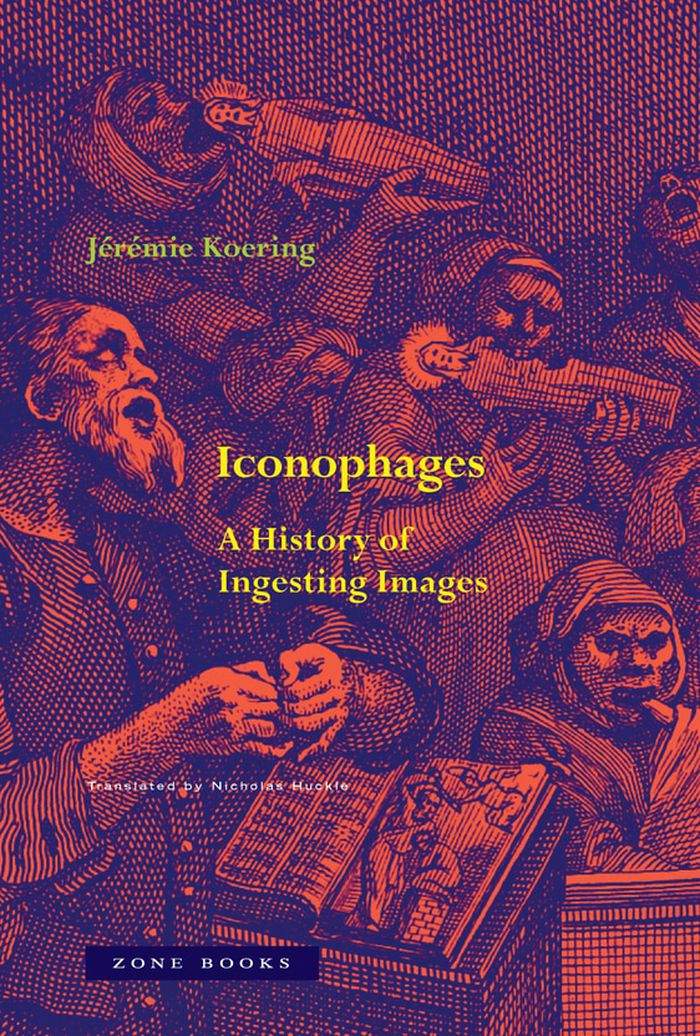
Eating and drinking images may seem like an anomalous notion but, since antiquity, in the European and Mediterranean worlds, people have swallowed down frescoes, icons, engravings, eucharistic hosts stamped with images, heraldic wafers, marzipan figures, and other sculpted dishes. Either specifically made for human consumption or diverted from their original purpose so as to be ingested, these figured artifacts have been not only gazed upon but also incorporated—taken into the body—as solids or liquids. How can we explain such behavior? Why take an image into one’s own body, devouring it at the risk of destroying it, consuming rather than contemplating it wisely from a distance? What structures of the imagination underlie and justify these desires for incorporation? What are the visual configurations offered up to the mouth, and what are their effects? What therapeutic, religious, symbolic, and social functions can we attribute to these forms of relations with icons? These are a few of the questions raised in this investigation into iconophagy. "Iconophages" aims to retrace, for the first time, the history of iconophagy. Jérémie Koering examines this unexplored facet of the history of images through an interdisciplinary approach that ranges across art history, cultural and material history, anthropology, philosophy, and the history of the body and the senses. He analyzes the human investment, in terms of culture and imagination, at stake in this seemingly paradoxical way of experiencing images. Beyond the hidden knowledge unearthed here, these pages bring to light a new way of understanding images, just as they illuminate the occasionally outlandish relations we maintain with them.
Iconophages: A history of ingesting images
Actions:
Prix:
$52.50
(disponible en magasin)
Résumé:
Eating and drinking images may seem like an anomalous notion but, since antiquity, in the European and Mediterranean worlds, people have swallowed down frescoes, icons, engravings, eucharistic hosts stamped with images, heraldic wafers, marzipan figures, and other sculpted dishes. Either specifically made for human consumption or diverted from their original purpose so as to be ingested, these figured artifacts have been not only gazed upon but also incorporated—taken into the body—as solids or liquids. How can we explain such behavior? Why take an image into one’s own body, devouring it at the risk of destroying it, consuming rather than contemplating it wisely from a distance? What structures of the imagination underlie and justify these desires for incorporation? What are the visual configurations offered up to the mouth, and what are their effects? What therapeutic, religious, symbolic, and social functions can we attribute to these forms of relations with icons? These are a few of the questions raised in this investigation into iconophagy. "Iconophages" aims to retrace, for the first time, the history of iconophagy. Jérémie Koering examines this unexplored facet of the history of images through an interdisciplinary approach that ranges across art history, cultural and material history, anthropology, philosophy, and the history of the body and the senses. He analyzes the human investment, in terms of culture and imagination, at stake in this seemingly paradoxical way of experiencing images. Beyond the hidden knowledge unearthed here, these pages bring to light a new way of understanding images, just as they illuminate the occasionally outlandish relations we maintain with them.
Classification:
livres
livres
Publication:
janvier 2026
janvier 2026
Sujet:
Théorie de l’art
Théorie de l’art
Classification:
livres
livres
Actions:
Prix:
$63.95
(disponible sur commande)
Résumé:
The Scottish urbanist and biologist Patrick Geddes (1854-1932) is perhaps best known for introducing the concept of "region" to architecture and planning. At the turn of the twentieth century, he was one of the strongest advocates of town planning and an active participant in debates about the future of the city. He was arguably the first planner to recognize the(...)
$63.95
(disponible sur commande)
Résumé:
The Scottish urbanist and biologist Patrick Geddes (1854-1932) is perhaps best known for introducing the concept of "region" to architecture and planning. At the turn of the twentieth century, he was one of the strongest advocates of town planning and an active participant in debates about the future of the city. He was arguably the first planner to recognize the(...)
Titre:
Biopolis : Patrick Geddes and the city of life
Actions:
Prix:
$63.95
(disponible sur commande)
Résumé:
The Scottish urbanist and biologist Patrick Geddes (1854-1932) is perhaps best known for introducing the concept of "region" to architecture and planning. At the turn of the twentieth century, he was one of the strongest advocates of town planning and an active participant in debates about the future of the city. He was arguably the first planner to recognize the importance of historic city centers, and his renewal work in Edinburgh’s Old Town is visible and impressive to this day. Geddes’s famous analytical triad--place, work, and folk, corresponding to the geographical, historical, and spiritual aspects of the city--provides the basic structure of this examination of his urban theory. Volker Welter examines Geddes’s ideas in the light of nineteenth-century biology--in which Geddes received his academic training--showing Geddes’s use of biological concepts to be far more sophisticated than popular images of the city as an organic entity. His urbanism was informed by his lifelong interest in the theory of evolution and in ecology, cutting-edge areas in the late nineteenth century. Balancing Geddes’s biological thought is his interest in the historical Greek concept of polis, usually translated as city-state but implying a view of the city as a cultural and spiritual phenomenon. Although Geddes’s work was far-ranging, the city provided the unifying focus of nearly all of his theoretical and practical work. Throughout the book, Welter relates Geddes’s theory of the city to contemporary European debates about architecture and urbanism. Foreword by Iain Boyd Whyte.
Biopolis : Patrick Geddes and the city of life
Actions:
Prix:
$63.95
(disponible sur commande)
Résumé:
The Scottish urbanist and biologist Patrick Geddes (1854-1932) is perhaps best known for introducing the concept of "region" to architecture and planning. At the turn of the twentieth century, he was one of the strongest advocates of town planning and an active participant in debates about the future of the city. He was arguably the first planner to recognize the importance of historic city centers, and his renewal work in Edinburgh’s Old Town is visible and impressive to this day. Geddes’s famous analytical triad--place, work, and folk, corresponding to the geographical, historical, and spiritual aspects of the city--provides the basic structure of this examination of his urban theory. Volker Welter examines Geddes’s ideas in the light of nineteenth-century biology--in which Geddes received his academic training--showing Geddes’s use of biological concepts to be far more sophisticated than popular images of the city as an organic entity. His urbanism was informed by his lifelong interest in the theory of evolution and in ecology, cutting-edge areas in the late nineteenth century. Balancing Geddes’s biological thought is his interest in the historical Greek concept of polis, usually translated as city-state but implying a view of the city as a cultural and spiritual phenomenon. Although Geddes’s work was far-ranging, the city provided the unifying focus of nearly all of his theoretical and practical work. Throughout the book, Welter relates Geddes’s theory of the city to contemporary European debates about architecture and urbanism. Foreword by Iain Boyd Whyte.
Classification:
livres
livres
Publication:
novembre 2001, Cambridge, Mass.
novembre 2001, Cambridge, Mass.
Sujet:
Théorie de l’urbanisme
Théorie de l’urbanisme
Classification:
livres
livres
Actions:
Prix:
$75.00
(disponible sur commande)
Résumé:
Today the world is focusing unprecedented attention on Asia and the Middle East, rediscovering a cultural, political, and geographical landscape that has fascinated and frustrated Westerners since the time of Alexander the Great. "Mapping the Silk Road and Beyond", traces the history of the European age of exploration and its lasting effects on these regions through(...)
$75.00
(disponible sur commande)
Résumé:
Today the world is focusing unprecedented attention on Asia and the Middle East, rediscovering a cultural, political, and geographical landscape that has fascinated and frustrated Westerners since the time of Alexander the Great. "Mapping the Silk Road and Beyond", traces the history of the European age of exploration and its lasting effects on these regions through(...)
Sujet:
Dessin d’architecture
Dessin d’architecture
Publication:
septembre 2004, London, New York
septembre 2004, London, New York
Titre:
Mapping the silk road and beyond : 2000 years of exploring the east
Actions:
Prix:
$75.00
(disponible sur commande)
Résumé:
Today the world is focusing unprecedented attention on Asia and the Middle East, rediscovering a cultural, political, and geographical landscape that has fascinated and frustrated Westerners since the time of Alexander the Great. "Mapping the Silk Road and Beyond", traces the history of the European age of exploration and its lasting effects on these regions through beautifully rendered and imaginative maps drawn by explorers, merchants, and colonial administrators of the time. The book focuses on both maritime exploration and overland discovery via the ancient Silk Road, a network of trading posts that encompassed China, Tibet, Pakistan, India, Kurdistan, Iraq, Ethiopia, Eritrea, and dozens of other places known in ancient times by fabled names, including Abyssinia, Malacca, Macassar, Siam, and Cathay. The maps provide visual keys to the fascinating history of Asia and the Middle East; illuminating a cast of historical figures ranging from great leaders (the Queen of Sheba, Mohammed the prophet, King Charles V) to legendary explorers (Marco Polo, Columbus, Magellan, Sir Francis Drake, Capt. James Cook) and influential cartographers. "Mapping the Silk Road and Beyond", depicts over eighty maps organized chronologically, from Alexander the Great’s map of the world, first created in 323 BC and reproduced in a sixteenth-century atlas, to maps from the nineteenth century by French and Dutch explorers that detail the growing interaction between Europeans and Eastern cultures. The maps represent the finest examples in existence in museums, libraries, and archives around the world, chosen because they depict the most important milestones in the mapping of Asia.
Mapping the silk road and beyond : 2000 years of exploring the east
Actions:
Prix:
$75.00
(disponible sur commande)
Résumé:
Today the world is focusing unprecedented attention on Asia and the Middle East, rediscovering a cultural, political, and geographical landscape that has fascinated and frustrated Westerners since the time of Alexander the Great. "Mapping the Silk Road and Beyond", traces the history of the European age of exploration and its lasting effects on these regions through beautifully rendered and imaginative maps drawn by explorers, merchants, and colonial administrators of the time. The book focuses on both maritime exploration and overland discovery via the ancient Silk Road, a network of trading posts that encompassed China, Tibet, Pakistan, India, Kurdistan, Iraq, Ethiopia, Eritrea, and dozens of other places known in ancient times by fabled names, including Abyssinia, Malacca, Macassar, Siam, and Cathay. The maps provide visual keys to the fascinating history of Asia and the Middle East; illuminating a cast of historical figures ranging from great leaders (the Queen of Sheba, Mohammed the prophet, King Charles V) to legendary explorers (Marco Polo, Columbus, Magellan, Sir Francis Drake, Capt. James Cook) and influential cartographers. "Mapping the Silk Road and Beyond", depicts over eighty maps organized chronologically, from Alexander the Great’s map of the world, first created in 323 BC and reproduced in a sixteenth-century atlas, to maps from the nineteenth century by French and Dutch explorers that detail the growing interaction between Europeans and Eastern cultures. The maps represent the finest examples in existence in museums, libraries, and archives around the world, chosen because they depict the most important milestones in the mapping of Asia.
Classification:
livres
livres
Publication:
septembre 2004, London, New York
septembre 2004, London, New York
Sujet:
Dessin d’architecture
Dessin d’architecture
Classification:
livres
livres
Actions:
Prix:
$27.00
(disponible sur commande)
Résumé:
This new survey provides a complete history of American art and architecture from its seventeenth-century colonial beginnings to the latest installation and video work. Structured chronologically, the book defines the characteristics of the different periods and highlights the consistent forms, techniques, and styles that mark the art and architecture as distinctively(...)
$27.00
(disponible sur commande)
Résumé:
This new survey provides a complete history of American art and architecture from its seventeenth-century colonial beginnings to the latest installation and video work. Structured chronologically, the book defines the characteristics of the different periods and highlights the consistent forms, techniques, and styles that mark the art and architecture as distinctively(...)
Titre:
American art and architecture
Actions:
Prix:
$27.00
(disponible sur commande)
Résumé:
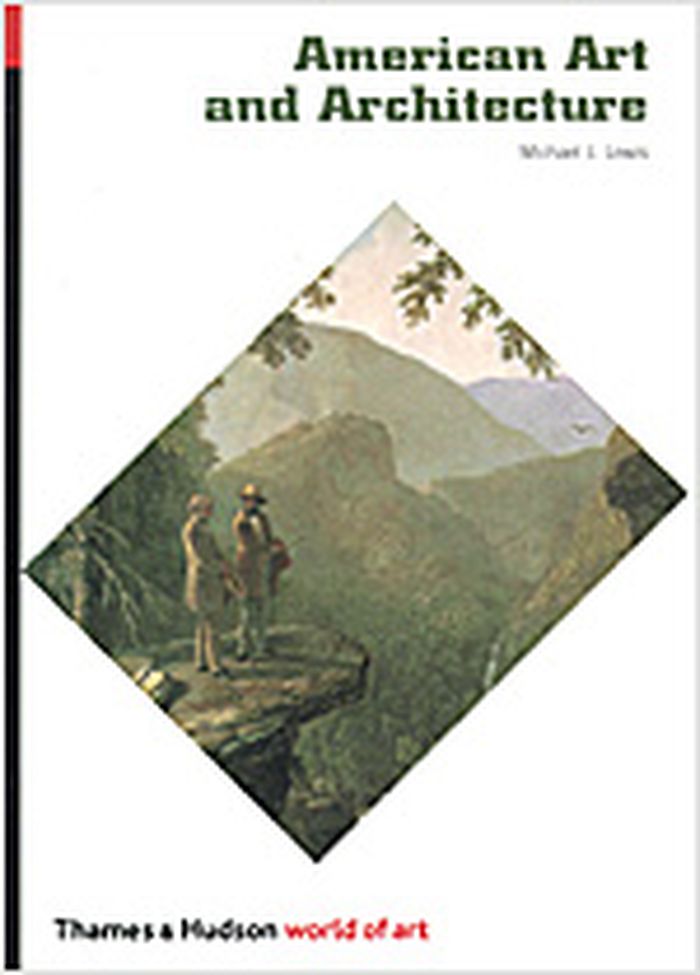
This new survey provides a complete history of American art and architecture from its seventeenth-century colonial beginnings to the latest installation and video work. Structured chronologically, the book defines the characteristics of the different periods and highlights the consistent forms, techniques, and styles that mark the art and architecture as distinctively American. Michael J. Lewis charts the ways in which American artists and architects both adopted and diverged from earlier European models to create an original visual language of their own. He also shows how that language in turn came to influence and eventually dominate art and architecture around the world. The author integrates discussions of both buildings and works of visual art, revealing the shared social and aesthetic concerns that underlie the two. Vernacular, religious, secular, and corporate architecture appears alongside paintings, sculpture, photography, and new-media art. Major American artists and works from the seventeenth century to today are included, such as epic history paintings by Benjamin West and John Singleton Copley; sublime landscapes by Thomas Cole, Albert Bierstadt, and Frederick Church; society portraits by John Singer Sargent; groundbreaking abstract expressionist and pop art by Jackson Pollock, Barnett Newman, and Andy Warhol; and challenging sculptural, installation, and video works from more recent years by Robert Gober, Fred Wilson, and Matthew Barney. In architecture, dozens of different building types are illustrated and discussed, from the earliest colonial houses and churches to the most spectacular modernist and postmodernist houses, stations, museums, and iconic skyscrapers. 275 illustrations, 175 in color.
American art and architecture
Actions:
Prix:
$27.00
(disponible sur commande)
Résumé:
This new survey provides a complete history of American art and architecture from its seventeenth-century colonial beginnings to the latest installation and video work. Structured chronologically, the book defines the characteristics of the different periods and highlights the consistent forms, techniques, and styles that mark the art and architecture as distinctively American. Michael J. Lewis charts the ways in which American artists and architects both adopted and diverged from earlier European models to create an original visual language of their own. He also shows how that language in turn came to influence and eventually dominate art and architecture around the world. The author integrates discussions of both buildings and works of visual art, revealing the shared social and aesthetic concerns that underlie the two. Vernacular, religious, secular, and corporate architecture appears alongside paintings, sculpture, photography, and new-media art. Major American artists and works from the seventeenth century to today are included, such as epic history paintings by Benjamin West and John Singleton Copley; sublime landscapes by Thomas Cole, Albert Bierstadt, and Frederick Church; society portraits by John Singer Sargent; groundbreaking abstract expressionist and pop art by Jackson Pollock, Barnett Newman, and Andy Warhol; and challenging sculptural, installation, and video works from more recent years by Robert Gober, Fred Wilson, and Matthew Barney. In architecture, dozens of different building types are illustrated and discussed, from the earliest colonial houses and churches to the most spectacular modernist and postmodernist houses, stations, museums, and iconic skyscrapers. 275 illustrations, 175 in color.
Classification:
livres
livres
Publication:
mai 2006, London
mai 2006, London
Sujet:
Modernisme
Modernisme


