


13794 Résultats
Classification:
livres
livres
Prix:
$19.95
(disponible sur commande)
Résumé:
Cet ouvrage est le reflet des débats qui ont animé la rencontre "Villes, voyages, voyageurs : regards sur l'Autre et l'ailleurs", organisée dans le cadre de la première Biennale de la ville et du voyage qui s'est déroulée à Villeurbanne, Rhône du 11 au 15 mai 2004. Cette rencontre se proposait, à travers une série de "tables rondes" thématiques, de "croiser les regards"(...)
$19.95
(disponible sur commande)
Résumé:
Cet ouvrage est le reflet des débats qui ont animé la rencontre "Villes, voyages, voyageurs : regards sur l'Autre et l'ailleurs", organisée dans le cadre de la première Biennale de la ville et du voyage qui s'est déroulée à Villeurbanne, Rhône du 11 au 15 mai 2004. Cette rencontre se proposait, à travers une série de "tables rondes" thématiques, de "croiser les regards"(...)
Titre:
Villes, voyages, voyageurs : actes de la rencontre de Villeurbanne
Actions:
Prix:
$19.95
(disponible sur commande)
Résumé:
Cet ouvrage est le reflet des débats qui ont animé la rencontre "Villes, voyages, voyageurs : regards sur l'Autre et l'ailleurs", organisée dans le cadre de la première Biennale de la ville et du voyage qui s'est déroulée à Villeurbanne, Rhône du 11 au 15 mai 2004. Cette rencontre se proposait, à travers une série de "tables rondes" thématiques, de "croiser les regards" sur un horizon urbain fortement marqué par la croissance des échanges, en particulier - mais pas seulement - touristiques, et par l'impact de la mondialisation. Le compte-rendu de ces tables rondes a été enrichi de plusieurs éclairages complémentaires rédigés par des intervenants ou des auteurs issus de diverses disciplines contribuant à l'approfondissement de la réflexion histoire, anthropologie, sociologie, philosophie, littérature... Ce volume constitue ainsi une invitation collective à la poursuite du débat sur le devenir de la civilisation urbaine. "La littérature voyageuse n'épargne pas les tares d'un environnement urbain souvent perçu comme inhumain et irrespectueux des hommes, qu'ils soient autochtones ou touristes. La ville met mal à l'aise les écrivains voyageurs. Elle les gêne, car le "chaos urbain" les perturbe. Il leur faut de grands espaces libres, la nature sauvage, la force de la confrontation des êtres, les yeux dans les yeux. Le plus souvent, ils fuient la ville comme une malédiction..."
Villes, voyages, voyageurs : actes de la rencontre de Villeurbanne
Actions:
Prix:
$19.95
(disponible sur commande)
Résumé:
Cet ouvrage est le reflet des débats qui ont animé la rencontre "Villes, voyages, voyageurs : regards sur l'Autre et l'ailleurs", organisée dans le cadre de la première Biennale de la ville et du voyage qui s'est déroulée à Villeurbanne, Rhône du 11 au 15 mai 2004. Cette rencontre se proposait, à travers une série de "tables rondes" thématiques, de "croiser les regards" sur un horizon urbain fortement marqué par la croissance des échanges, en particulier - mais pas seulement - touristiques, et par l'impact de la mondialisation. Le compte-rendu de ces tables rondes a été enrichi de plusieurs éclairages complémentaires rédigés par des intervenants ou des auteurs issus de diverses disciplines contribuant à l'approfondissement de la réflexion histoire, anthropologie, sociologie, philosophie, littérature... Ce volume constitue ainsi une invitation collective à la poursuite du débat sur le devenir de la civilisation urbaine. "La littérature voyageuse n'épargne pas les tares d'un environnement urbain souvent perçu comme inhumain et irrespectueux des hommes, qu'ils soient autochtones ou touristes. La ville met mal à l'aise les écrivains voyageurs. Elle les gêne, car le "chaos urbain" les perturbe. Il leur faut de grands espaces libres, la nature sauvage, la force de la confrontation des êtres, les yeux dans les yeux. Le plus souvent, ils fuient la ville comme une malédiction..."
Classification:
livres
livres
Publication:
janvier 1900, Paris
janvier 1900, Paris
Sujet:
Théorie de l’urbanisme
Théorie de l’urbanisme
Classification:
livres
livres
Titre:
Dangereux, insalubres et incommodes : paysages industriels en banlieue parisienne, XIXe-XXe siècles
Dangereux, insalubres et incommodes : paysages industriels en banlieue parisienne, XIXe-XXe siècles
Actions:
Prix:
$54.95
(disponible sur commande)
Résumé:
Le paysage industriel n’est pas le fruit de la nécessité. L’État intervient dès 1806 pour protéger la capitale des nuisances – olfactives et visuelles – générées par l’artisanat et la toute nouvelle industrie. Généralisée à tout l’Empire en 1810, l’enquête préalable à toute nouvelle implantation, dite commodo et incommodo, est le premier manifeste du développement(...)
$54.95
(disponible sur commande)
Résumé:
Le paysage industriel n’est pas le fruit de la nécessité. L’État intervient dès 1806 pour protéger la capitale des nuisances – olfactives et visuelles – générées par l’artisanat et la toute nouvelle industrie. Généralisée à tout l’Empire en 1810, l’enquête préalable à toute nouvelle implantation, dite commodo et incommodo, est le premier manifeste du développement(...)
Sujet:
Théorie de l’urbanisme
Théorie de l’urbanisme
Publication:
novembre 2004, Seyssel, France
novembre 2004, Seyssel, France
Titre:
Dangereux, insalubres et incommodes : paysages industriels en banlieue parisienne, XIXe-XXe siècles
Actions:
Prix:
$54.95
(disponible sur commande)
Résumé:
Le paysage industriel n’est pas le fruit de la nécessité. L’État intervient dès 1806 pour protéger la capitale des nuisances – olfactives et visuelles – générées par l’artisanat et la toute nouvelle industrie. Généralisée à tout l’Empire en 1810, l’enquête préalable à toute nouvelle implantation, dite commodo et incommodo, est le premier manifeste du développement durable, entre l’économique, le social et le politique. Le décret du 15 octobre 1810 gère ainsi la géographie des manufactures parisiennes: les plus dangereuses sont chassées du centre et vont essarter les faubourgs, alors que les quartiers aisés et les communes résidentielles se protègent en refusant les nouvelles implantations, donnant ainsi naissance au paysage "typique" de la première couronne francilienne Appliqué avec fermeté au début, surtout dans la capitale, le décret réduit notablement la pollution des fabriques en contenant les émanations, en élevant les cheminées et en enterrant les eaux usées. Puis, devant la volonté de faire de la France la première puissance industrielle d’Europe, il s’efface devant les grands établissements pour ne s’appliquer qu’aux petits métiers. Dès la deuxième moitié du XIXe siècle, la croissance industrielle déborde les "fortifs" et se déploie sur la banlieue, surtout au nord-est et au sud-est. Celle-ci intègre les basses couches sociales rejetées par l’haussmannisation vers les usines délétères. Dans les banlieues toujours plus ouvrières, plus sombres, la pollution échappe au contrôle de l’administration. Les bidonvilles s’étalent dans les creux du tissu industriel. L’espace est saturé, le paroxysme atteint dans l’entre-deux-guerres. Le paysage séculaire ne se transforme qu’à partir des années 60, grâce à la politique de décentralisation et de déconcentration industrielle.
Dangereux, insalubres et incommodes : paysages industriels en banlieue parisienne, XIXe-XXe siècles
Actions:
Prix:
$54.95
(disponible sur commande)
Résumé:
Le paysage industriel n’est pas le fruit de la nécessité. L’État intervient dès 1806 pour protéger la capitale des nuisances – olfactives et visuelles – générées par l’artisanat et la toute nouvelle industrie. Généralisée à tout l’Empire en 1810, l’enquête préalable à toute nouvelle implantation, dite commodo et incommodo, est le premier manifeste du développement durable, entre l’économique, le social et le politique. Le décret du 15 octobre 1810 gère ainsi la géographie des manufactures parisiennes: les plus dangereuses sont chassées du centre et vont essarter les faubourgs, alors que les quartiers aisés et les communes résidentielles se protègent en refusant les nouvelles implantations, donnant ainsi naissance au paysage "typique" de la première couronne francilienne Appliqué avec fermeté au début, surtout dans la capitale, le décret réduit notablement la pollution des fabriques en contenant les émanations, en élevant les cheminées et en enterrant les eaux usées. Puis, devant la volonté de faire de la France la première puissance industrielle d’Europe, il s’efface devant les grands établissements pour ne s’appliquer qu’aux petits métiers. Dès la deuxième moitié du XIXe siècle, la croissance industrielle déborde les "fortifs" et se déploie sur la banlieue, surtout au nord-est et au sud-est. Celle-ci intègre les basses couches sociales rejetées par l’haussmannisation vers les usines délétères. Dans les banlieues toujours plus ouvrières, plus sombres, la pollution échappe au contrôle de l’administration. Les bidonvilles s’étalent dans les creux du tissu industriel. L’espace est saturé, le paroxysme atteint dans l’entre-deux-guerres. Le paysage séculaire ne se transforme qu’à partir des années 60, grâce à la politique de décentralisation et de déconcentration industrielle.
Classification:
livres
livres
Publication:
novembre 2004, Seyssel, France
novembre 2004, Seyssel, France
Sujet:
Théorie de l’urbanisme
Théorie de l’urbanisme
Classification:
livres
livres
Titre:
La spéculation immobilière
La spéculation immobilière
Actions:
Prix:
$9.95
(disponible sur commande)
Résumé:
Dans un merveilleux mélange de poésie et de quotidien, de contestation et d'ironie, c'est le boom économique de l'italie du nord dans les années 50 qui éclate sous nos yeux.
$9.95
(disponible sur commande)
Résumé:
Dans un merveilleux mélange de poésie et de quotidien, de contestation et d'ironie, c'est le boom économique de l'italie du nord dans les années 50 qui éclate sous nos yeux.
Titre:
La spéculation immobilière
Actions:
Prix:
$9.95
(disponible sur commande)
Résumé:
Dans un merveilleux mélange de poésie et de quotidien, de contestation et d'ironie, c'est le boom économique de l'italie du nord dans les années 50 qui éclate sous nos yeux.
La spéculation immobilière
Actions:
Prix:
$9.95
(disponible sur commande)
Résumé:
Dans un merveilleux mélange de poésie et de quotidien, de contestation et d'ironie, c'est le boom économique de l'italie du nord dans les années 50 qui éclate sous nos yeux.
Classification:
livres
livres
Publication:
août 2000, Paris
août 2000, Paris
Sujet:
Théorie de l’urbanisme
Théorie de l’urbanisme
Classification:
livres
livres
Actions:
Prix:
$31.95
(disponible sur commande)
Résumé:
The underground has been a dominant image of modern life since the late eighteenth century. A site of crisis, fascination, and hidden truth, the underground is a space at once more immediate and more threatening than the ordinary world above. In Subterranean Cities, David L. Pike explores the representation of underground space in the nineteenth and early twentieth(...)
$31.95
(disponible sur commande)
Résumé:
The underground has been a dominant image of modern life since the late eighteenth century. A site of crisis, fascination, and hidden truth, the underground is a space at once more immediate and more threatening than the ordinary world above. In Subterranean Cities, David L. Pike explores the representation of underground space in the nineteenth and early twentieth(...)
Titre:
subterranean cities : the world beneath Paris and London, 1800-1945
Actions:
Prix:
$31.95
(disponible sur commande)
Résumé:
The underground has been a dominant image of modern life since the late eighteenth century. A site of crisis, fascination, and hidden truth, the underground is a space at once more immediate and more threatening than the ordinary world above. In Subterranean Cities, David L. Pike explores the representation of underground space in the nineteenth and early twentieth centuries, a period during which technology and heavy industry transformed urban life. The metropolis had long been considered a moral underworld of iniquity and dissolution. As the complex drainage systems, underground railways, utility tunnels, and storage vaults of the modern cityscape superseded the countryside of caverns and mines as the principal location of actual subterranean spaces, ancient and modern converged in a mythic space that was nevertheless rooted in the everyday life of the contemporary city. Writers and artists from Felix Nadar and Charles Baudelaire to Charles Dickens and Alice Meynell, Gustave Doré and Victor Hugo, George Gissing and Emile Zola, and Jules Verne and H. G. Wells integrated images of the urban underworld into their portrayals of the anatomy of modern society. Illustrated with photographs, movie stills, prints, engravings, paintings, cartoons, maps, and drawings of actual and imagined urban spaces, Subterranean Cities documents the emergence of a novel space in the subterranean obsessions and anxieties within nineteenth-century urban culture. Chapters on the subways, sewers, and cemeteries of Paris and London provide a detailed analysis of these competing centers of urban modernity. A concluding chapter considers the enduring influence of these spaces on urban culture at the turn of the twenty-first century.
subterranean cities : the world beneath Paris and London, 1800-1945
Actions:
Prix:
$31.95
(disponible sur commande)
Résumé:
The underground has been a dominant image of modern life since the late eighteenth century. A site of crisis, fascination, and hidden truth, the underground is a space at once more immediate and more threatening than the ordinary world above. In Subterranean Cities, David L. Pike explores the representation of underground space in the nineteenth and early twentieth centuries, a period during which technology and heavy industry transformed urban life. The metropolis had long been considered a moral underworld of iniquity and dissolution. As the complex drainage systems, underground railways, utility tunnels, and storage vaults of the modern cityscape superseded the countryside of caverns and mines as the principal location of actual subterranean spaces, ancient and modern converged in a mythic space that was nevertheless rooted in the everyday life of the contemporary city. Writers and artists from Felix Nadar and Charles Baudelaire to Charles Dickens and Alice Meynell, Gustave Doré and Victor Hugo, George Gissing and Emile Zola, and Jules Verne and H. G. Wells integrated images of the urban underworld into their portrayals of the anatomy of modern society. Illustrated with photographs, movie stills, prints, engravings, paintings, cartoons, maps, and drawings of actual and imagined urban spaces, Subterranean Cities documents the emergence of a novel space in the subterranean obsessions and anxieties within nineteenth-century urban culture. Chapters on the subways, sewers, and cemeteries of Paris and London provide a detailed analysis of these competing centers of urban modernity. A concluding chapter considers the enduring influence of these spaces on urban culture at the turn of the twenty-first century.
Classification:
livres
livres
Publication:
septembre 2005, Ithaca / London
septembre 2005, Ithaca / London
Sujet:
Théorie de l’urbanisme
Théorie de l’urbanisme
Classification:
livres
livres
Actions:
Prix:
$22.50
(disponible en magasin)
Résumé:
A revelatory conversation between two major figures in visual culture. What is a singular object? An idea, a building, a color, a sentiment, a human being. Each in turn comes under scrutiny in this exhilarating dialogue between two of the most interesting thinkers working in philosophy and architecture today. From such singular objects, Jean Baudrillard and Jean Nouvel(...)
$22.50
(disponible en magasin)
Résumé:
A revelatory conversation between two major figures in visual culture. What is a singular object? An idea, a building, a color, a sentiment, a human being. Each in turn comes under scrutiny in this exhilarating dialogue between two of the most interesting thinkers working in philosophy and architecture today. From such singular objects, Jean Baudrillard and Jean Nouvel(...)
Sujet:
Théorie de l’architecture
Théorie de l’architecture
Publication:
octobre 2005, Minneapolis, London
octobre 2005, Minneapolis, London
Titre:
Jean Baudrillard and Jean Nouvel : the singular objects of architecture
Actions:
Prix:
$22.50
(disponible en magasin)
Résumé:
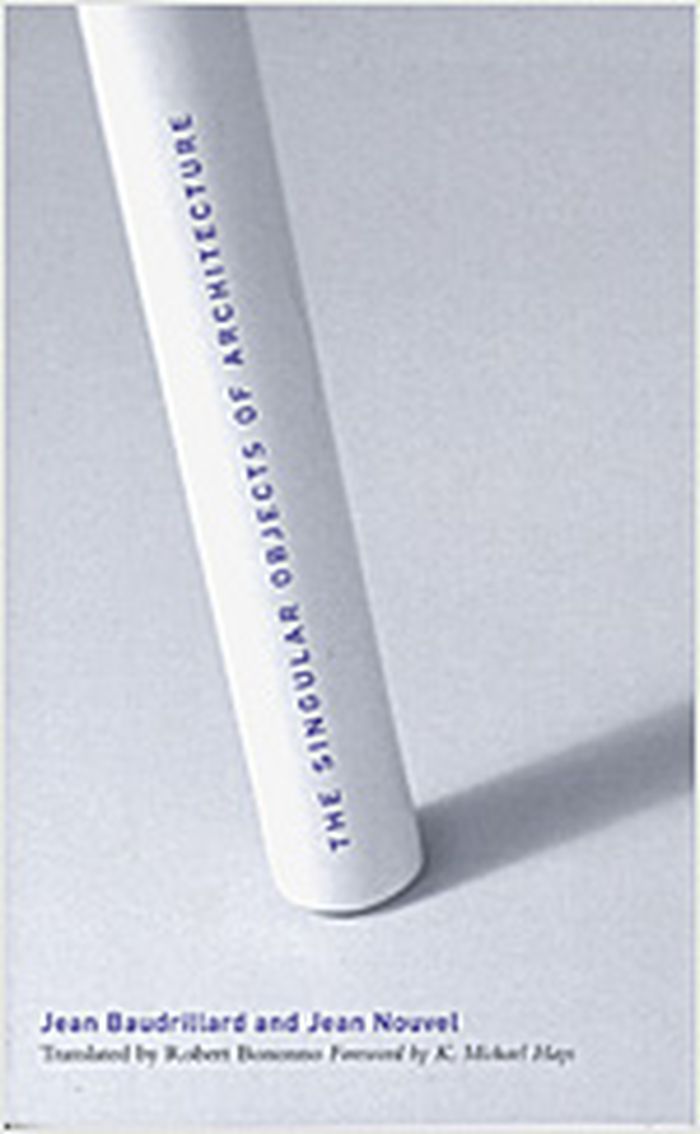
A revelatory conversation between two major figures in visual culture. What is a singular object? An idea, a building, a color, a sentiment, a human being. Each in turn comes under scrutiny in this exhilarating dialogue between two of the most interesting thinkers working in philosophy and architecture today. From such singular objects, Jean Baudrillard and Jean Nouvel move on to fundamental problems of politics, identity, and aesthetics as their exchange becomes an imaginative exploration of the possibilities of modern architecture and the future of modern life. Among the topics the two speakers take up are the city of tomorrow and the ideal of transparency, the gentrification of New York City and Frank Gehry's Guggenheim museum in Bilbao. As Nouvel prompts Baudrillard to reflect on some of his signature concepts (the virtual, transparency, fatal strategies, oblivion, and seduction, among others), the confrontation between such philosophical concerns and the specificity of architecture gives rise to novel and striking formulations-and a new way of establishing and understanding the connections between the practitioner and the philosopher, the object and the idea. This wide-ranging conversation builds a bridge between the fields of architecture and philosophy. At the same time it offers readers an intimate view of the meeting of objects and ideas in which the imagined, constructed, and inhabited environment is endlessly changing, forever evolving.
Jean Baudrillard and Jean Nouvel : the singular objects of architecture
Actions:
Prix:
$22.50
(disponible en magasin)
Résumé:
A revelatory conversation between two major figures in visual culture. What is a singular object? An idea, a building, a color, a sentiment, a human being. Each in turn comes under scrutiny in this exhilarating dialogue between two of the most interesting thinkers working in philosophy and architecture today. From such singular objects, Jean Baudrillard and Jean Nouvel move on to fundamental problems of politics, identity, and aesthetics as their exchange becomes an imaginative exploration of the possibilities of modern architecture and the future of modern life. Among the topics the two speakers take up are the city of tomorrow and the ideal of transparency, the gentrification of New York City and Frank Gehry's Guggenheim museum in Bilbao. As Nouvel prompts Baudrillard to reflect on some of his signature concepts (the virtual, transparency, fatal strategies, oblivion, and seduction, among others), the confrontation between such philosophical concerns and the specificity of architecture gives rise to novel and striking formulations-and a new way of establishing and understanding the connections between the practitioner and the philosopher, the object and the idea. This wide-ranging conversation builds a bridge between the fields of architecture and philosophy. At the same time it offers readers an intimate view of the meeting of objects and ideas in which the imagined, constructed, and inhabited environment is endlessly changing, forever evolving.
Classification:
livres
livres
Publication:
octobre 2005, Minneapolis, London
octobre 2005, Minneapolis, London
Sujet:
Théorie de l’architecture
Théorie de l’architecture
Classification:
livres
livres
Actions:
Prix:
$23.95
(disponible sur commande)
Résumé:
More than ever, architectural design is seen as a means to promote commercial goals rather than as an end in itself. Frank Gehry’s Guggenheim Museum in Bilbao, for example, simply cannot be considered apart from its intended role as a catalyst for the economic revitalization of Bilbao and its ability to attract tourist dollars, regardless of its architectural merits. A(...)
$23.95
(disponible sur commande)
Résumé:
More than ever, architectural design is seen as a means to promote commercial goals rather than as an end in itself. Frank Gehry’s Guggenheim Museum in Bilbao, for example, simply cannot be considered apart from its intended role as a catalyst for the economic revitalization of Bilbao and its ability to attract tourist dollars, regardless of its architectural merits. A(...)
Sujet:
Théorie de l’architecture
Théorie de l’architecture
Publication:
novembre 2005, Minneapolis, London
novembre 2005, Minneapolis, London
Titre:
Commodification and spectacle in architecture
Actions:
Prix:
$23.95
(disponible sur commande)
Résumé:
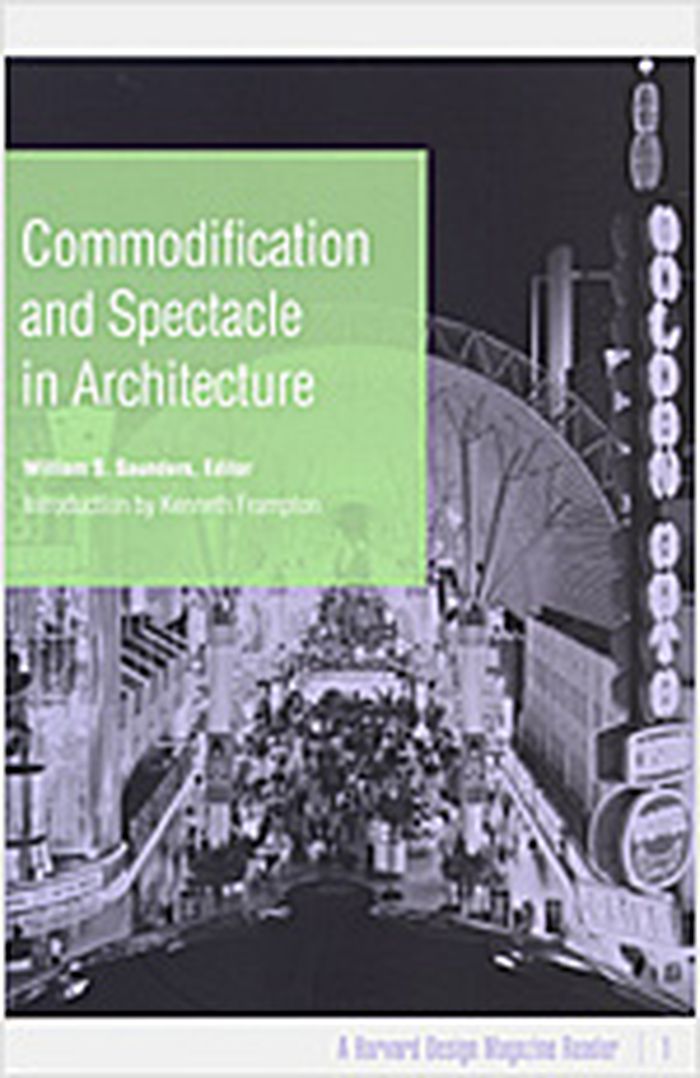
More than ever, architectural design is seen as a means to promote commercial goals rather than as an end in itself. Frank Gehry’s Guggenheim Museum in Bilbao, for example, simply cannot be considered apart from its intended role as a catalyst for the economic revitalization of Bilbao and its ability to attract tourist dollars, regardless of its architectural merits. A built environment intended to seduce consumers is more likely to offer instant gratification than to invite independent thought and reflection. But how harmful, if at all, is this unprecedented commercialization of architecture? Framed with an introduction by Kenneth Frampton, the contributions to "Commodification and spectacle in architecture" stake out a variety of positions in the debate over the extent to which it is possible—or desirable—to escape from, resist, or suggest plausible alternatives to the dominant culture of consumer capitalism. Rejecting any dreamy nostalgia for an idealized present or past in which design is completely divorced from commerce—and, in some cases, celebrating the pleasures of spectacle—the individual essays range from indictments of particular architects and critiques of the profession to broader concerns about what the phenomenon of commodification means for the practice of democracy and the health of society. Bringing together an impressive and varied group of critics and practitioners, "Commodification and spectacle in architecture" will help to sharpen the discussion of how design can respond to our hypercommodified culture.
Commodification and spectacle in architecture
Actions:
Prix:
$23.95
(disponible sur commande)
Résumé:
More than ever, architectural design is seen as a means to promote commercial goals rather than as an end in itself. Frank Gehry’s Guggenheim Museum in Bilbao, for example, simply cannot be considered apart from its intended role as a catalyst for the economic revitalization of Bilbao and its ability to attract tourist dollars, regardless of its architectural merits. A built environment intended to seduce consumers is more likely to offer instant gratification than to invite independent thought and reflection. But how harmful, if at all, is this unprecedented commercialization of architecture? Framed with an introduction by Kenneth Frampton, the contributions to "Commodification and spectacle in architecture" stake out a variety of positions in the debate over the extent to which it is possible—or desirable—to escape from, resist, or suggest plausible alternatives to the dominant culture of consumer capitalism. Rejecting any dreamy nostalgia for an idealized present or past in which design is completely divorced from commerce—and, in some cases, celebrating the pleasures of spectacle—the individual essays range from indictments of particular architects and critiques of the profession to broader concerns about what the phenomenon of commodification means for the practice of democracy and the health of society. Bringing together an impressive and varied group of critics and practitioners, "Commodification and spectacle in architecture" will help to sharpen the discussion of how design can respond to our hypercommodified culture.
Classification:
livres
livres
Publication:
novembre 2005, Minneapolis, London
novembre 2005, Minneapolis, London
Sujet:
Théorie de l’architecture
Théorie de l’architecture
Classification:
livres
livres

Titre:
Shaping things
Shaping things
Actions:
Prix:
$27.50
(disponible sur commande)
Résumé:
Sterling offers a brilliant, often hilarious history of shaped things. We have moved from an age of artefacts, made by hand, through complex machines, to the current era of "gizmos." New forms of design and manufacture are appearing that lack historical precedent, he writes; but the production methods, using archaic forms of energy and materials that are finite and toxic,(...)
$27.50
(disponible sur commande)
Résumé:
Sterling offers a brilliant, often hilarious history of shaped things. We have moved from an age of artefacts, made by hand, through complex machines, to the current era of "gizmos." New forms of design and manufacture are appearing that lack historical precedent, he writes; but the production methods, using archaic forms of energy and materials that are finite and toxic,(...)
Sujet:
Théorie du design
Théorie du design
Publication:
septembre 2005, Cambridge, Massachusetts
septembre 2005, Cambridge, Massachusetts
Titre:
Shaping things
Actions:
Prix:
$27.50
(disponible sur commande)
Résumé:
Sterling offers a brilliant, often hilarious history of shaped things. We have moved from an age of artefacts, made by hand, through complex machines, to the current era of "gizmos." New forms of design and manufacture are appearing that lack historical precedent, he writes; but the production methods, using archaic forms of energy and materials that are finite and toxic, are not sustainable. The future will see a new kind of object - we have the primitive forms of them now in our pockets and briefcases: user-alterable, baroquely multi-featured, and programmable - that will be sustainable, enhanceable, and uniquely identifiable. Sterling coins the term "spime" for them, these future manufactured objects with informational support so extensive and rich that they are regarded as material instantiations of an immaterial system. Spimes are designed on screens, fabricated by digital means, and precisely tracked through space and time. They are made of substances that can be folded back into the production stream of future spimes, challenging all of us to become involved in their production. Spimes are coming, says Sterling. We will need these objects in order to live; we won't be able to surrender their advantages without awful consequences. The vision of ‘Shaping Things’ is given material form by the intricate design of Lorraine Wild. ‘Shaping Things’ is for designers and thinkers, engineers and scientists, entrepreneurs and financiers - and anyone who wants to understand and be part of the process of techno-social transformation.
Shaping things
Actions:
Prix:
$27.50
(disponible sur commande)
Résumé:
Sterling offers a brilliant, often hilarious history of shaped things. We have moved from an age of artefacts, made by hand, through complex machines, to the current era of "gizmos." New forms of design and manufacture are appearing that lack historical precedent, he writes; but the production methods, using archaic forms of energy and materials that are finite and toxic, are not sustainable. The future will see a new kind of object - we have the primitive forms of them now in our pockets and briefcases: user-alterable, baroquely multi-featured, and programmable - that will be sustainable, enhanceable, and uniquely identifiable. Sterling coins the term "spime" for them, these future manufactured objects with informational support so extensive and rich that they are regarded as material instantiations of an immaterial system. Spimes are designed on screens, fabricated by digital means, and precisely tracked through space and time. They are made of substances that can be folded back into the production stream of future spimes, challenging all of us to become involved in their production. Spimes are coming, says Sterling. We will need these objects in order to live; we won't be able to surrender their advantages without awful consequences. The vision of ‘Shaping Things’ is given material form by the intricate design of Lorraine Wild. ‘Shaping Things’ is for designers and thinkers, engineers and scientists, entrepreneurs and financiers - and anyone who wants to understand and be part of the process of techno-social transformation.
Classification:
livres
livres
Publication:
septembre 2005, Cambridge, Massachusetts
septembre 2005, Cambridge, Massachusetts
Sujet:
Théorie du design
Théorie du design
Classification:
livres
livres
Prix:
$49.95
(disponible sur commande)
Résumé:
Un-volumetric architecture expresses a new condition acquired in dealing with and designing open and public space from the nineties to today. This volume is therefore intended to offer a theoretical reflection conducted through 100 construction projects worldwide that have faced the difficult challenge of delineating and building a new identity for that transient and(...)
$49.95
(disponible sur commande)
Résumé:
Un-volumetric architecture expresses a new condition acquired in dealing with and designing open and public space from the nineties to today. This volume is therefore intended to offer a theoretical reflection conducted through 100 construction projects worldwide that have faced the difficult challenge of delineating and building a new identity for that transient and(...)
Sujet:
Théorie de l’urbanisme
Théorie de l’urbanisme
Publication:
janvier 1900, Milan
janvier 1900, Milan
Titre:
Contemporary public space : un-volumetric architecture
Actions:
Prix:
$49.95
(disponible sur commande)
Résumé:
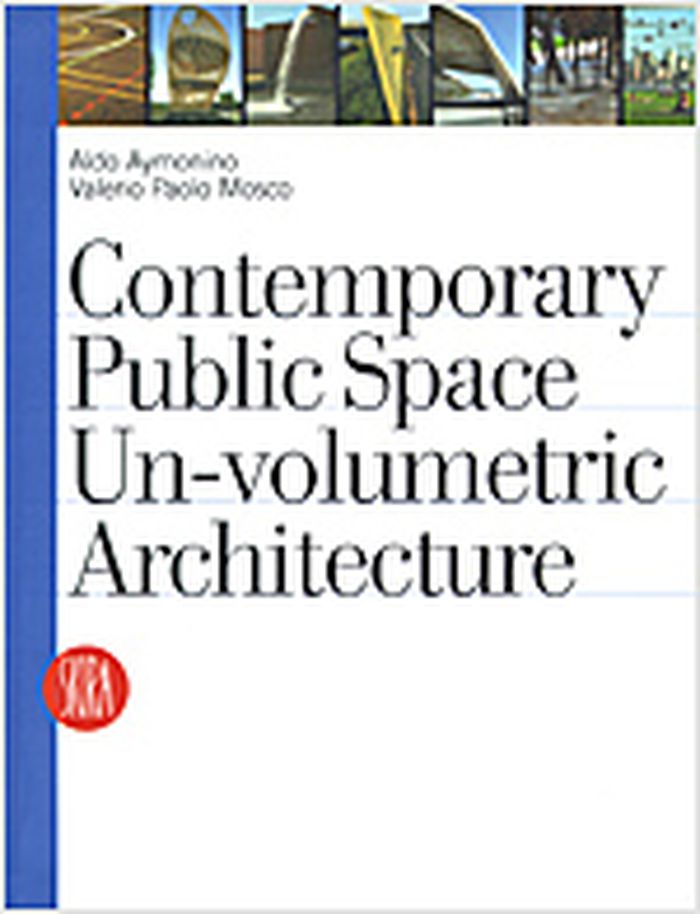
Un-volumetric architecture expresses a new condition acquired in dealing with and designing open and public space from the nineties to today. This volume is therefore intended to offer a theoretical reflection conducted through 100 construction projects worldwide that have faced the difficult challenge of delineating and building a new identity for that transient and continually metamorphosing category that is the contemporary open space. The considerable creative freedom, the low budget, the sophisticated relationship with the landscape and geography, the dialogue with new metropolitan realities, the possibility of offering temporary solutions, all make these projects among the richest, freest and most stimulating collections currently available, through the work of major protagonists and many emerging authors on the international scene. The volume is divided into 10 sections: Surfaces, Vertical, Enclosures, Design, Shelters, Environment, Earthworks, Figures, Technique and Events, which attempt to accompany the reader around a complex world of solutions and projects ranging from the traditional public space to the landscape, from the rock concert to the provisional space for cultural and artistic events, from the design of infrastructures to the most sophisticated garden. Each section is introduced by a small essay, written by such important authors on the contemporary scene as Denise Scott Brown, James Wines, Pippo Ciorra, Wes Jones, Enrico Morteo, Alberto Ferlenga, Ilhyun Kim, Kengo Kuma, Arie Graafland, Juan Purcell and Bernardo Secchi, who attempt to tackle the theme of the contemporary open space, offering stimuli for theoretical reflection.
Contemporary public space : un-volumetric architecture
Actions:
Prix:
$49.95
(disponible sur commande)
Résumé:
Un-volumetric architecture expresses a new condition acquired in dealing with and designing open and public space from the nineties to today. This volume is therefore intended to offer a theoretical reflection conducted through 100 construction projects worldwide that have faced the difficult challenge of delineating and building a new identity for that transient and continually metamorphosing category that is the contemporary open space. The considerable creative freedom, the low budget, the sophisticated relationship with the landscape and geography, the dialogue with new metropolitan realities, the possibility of offering temporary solutions, all make these projects among the richest, freest and most stimulating collections currently available, through the work of major protagonists and many emerging authors on the international scene. The volume is divided into 10 sections: Surfaces, Vertical, Enclosures, Design, Shelters, Environment, Earthworks, Figures, Technique and Events, which attempt to accompany the reader around a complex world of solutions and projects ranging from the traditional public space to the landscape, from the rock concert to the provisional space for cultural and artistic events, from the design of infrastructures to the most sophisticated garden. Each section is introduced by a small essay, written by such important authors on the contemporary scene as Denise Scott Brown, James Wines, Pippo Ciorra, Wes Jones, Enrico Morteo, Alberto Ferlenga, Ilhyun Kim, Kengo Kuma, Arie Graafland, Juan Purcell and Bernardo Secchi, who attempt to tackle the theme of the contemporary open space, offering stimuli for theoretical reflection.
Classification:
livres
livres
Publication:
janvier 1900, Milan
janvier 1900, Milan
Sujet:
Théorie de l’urbanisme
Théorie de l’urbanisme
Classification:
livres
livres
Actions:
Prix:
$37.95
(disponible en magasin)
Résumé:
Fils aîné du greffier du conseil de guerre de l'armée française occupant la Sarre, RHG est né à Sarrebrück le 6 juillet 1923: la conscience de cet ancrage européen ne l'a jamais quitté. Après une scolarité secondaire marquée par une révolte permanente contre ses maîtres, il affrontera l'enseignement supérieur donné à Paris (Sorbonne, Institut d'Art et d'Archéologie, Ecole(...)
$37.95
(disponible en magasin)
Résumé:
Fils aîné du greffier du conseil de guerre de l'armée française occupant la Sarre, RHG est né à Sarrebrück le 6 juillet 1923: la conscience de cet ancrage européen ne l'a jamais quitté. Après une scolarité secondaire marquée par une révolte permanente contre ses maîtres, il affrontera l'enseignement supérieur donné à Paris (Sorbonne, Institut d'Art et d'Archéologie, Ecole(...)
Titre:
À contre-voie : mémoires de vie sociale 1923-2000
Actions:
Prix:
$37.95
(disponible en magasin)
Résumé:
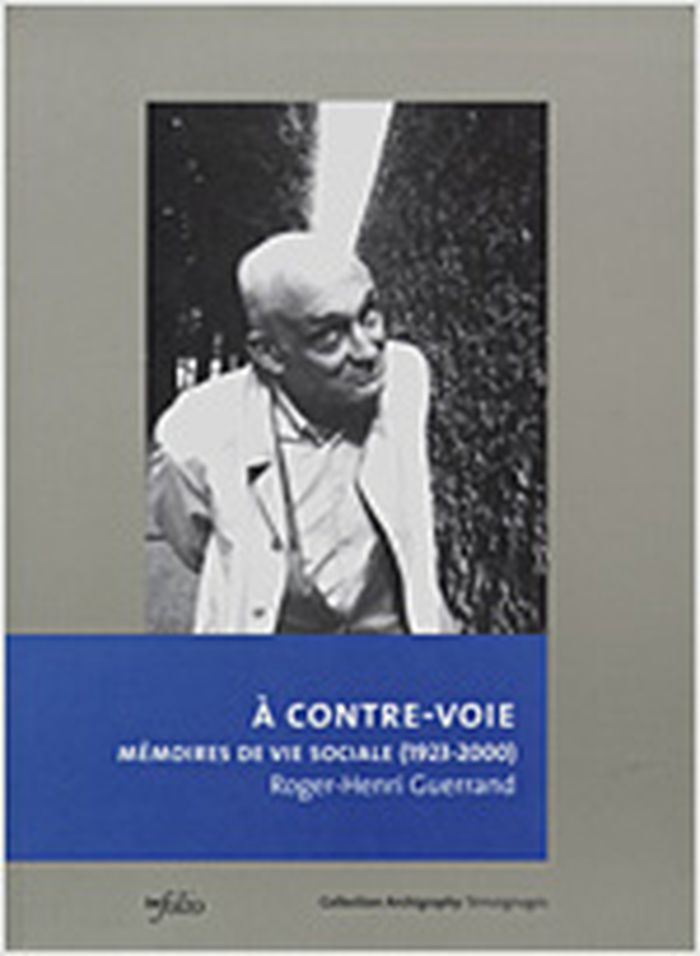
Fils aîné du greffier du conseil de guerre de l'armée française occupant la Sarre, RHG est né à Sarrebrück le 6 juillet 1923: la conscience de cet ancrage européen ne l'a jamais quitté. Après une scolarité secondaire marquée par une révolte permanente contre ses maîtres, il affrontera l'enseignement supérieur donné à Paris (Sorbonne, Institut d'Art et d'Archéologie, Ecole pratique des Haute Etudes) avec le même esprit de contestation. Très tôt attiré dans la mouvance de l'anthropologue Paul-Henry Chombart de Lauwe, par l'investigation de tous les aspects de la vie quotidienne, il se consacrera rapidement à l'histoire du logement populaire: les étudiants-architectes de l'Ecole des Beaux-Arts de Paris – qui préparent dès 1967 le mouvement de l'année suivante – l'accueilleront parmi leurs nouveaux «intercesseurs». Se risquant de plus en plus profondément dans l'abîme du trivial, RHG, ces dernières années, s'est lancé dans l'histoire du matériel hygiénique, un complément indispensable à la compréhension de l'évolution des mœurs dans le domaine jusque-là occulté...
À contre-voie : mémoires de vie sociale 1923-2000
Actions:
Prix:
$37.95
(disponible en magasin)
Résumé:
Fils aîné du greffier du conseil de guerre de l'armée française occupant la Sarre, RHG est né à Sarrebrück le 6 juillet 1923: la conscience de cet ancrage européen ne l'a jamais quitté. Après une scolarité secondaire marquée par une révolte permanente contre ses maîtres, il affrontera l'enseignement supérieur donné à Paris (Sorbonne, Institut d'Art et d'Archéologie, Ecole pratique des Haute Etudes) avec le même esprit de contestation. Très tôt attiré dans la mouvance de l'anthropologue Paul-Henry Chombart de Lauwe, par l'investigation de tous les aspects de la vie quotidienne, il se consacrera rapidement à l'histoire du logement populaire: les étudiants-architectes de l'Ecole des Beaux-Arts de Paris – qui préparent dès 1967 le mouvement de l'année suivante – l'accueilleront parmi leurs nouveaux «intercesseurs». Se risquant de plus en plus profondément dans l'abîme du trivial, RHG, ces dernières années, s'est lancé dans l'histoire du matériel hygiénique, un complément indispensable à la compréhension de l'évolution des mœurs dans le domaine jusque-là occulté...
Classification:
livres
livres
Publication:
mai 2005, Gollion
mai 2005, Gollion
Sujet:
Théorie de l’architecture
Théorie de l’architecture
Classification:
livres
livres

Titre:
Nuages
Nuages
Actions:
Prix:
$29.95
(disponible sur commande)
Résumé:
Considérant la nature comme une chaîne nécessaire à comprendre et à apprivoiser, Gilles Clément décrit les phénomènes météorologiques comme la pluie ou le vent, non comme des ennemis mais comme des éléments naturels qu'il faut accueillir. Des phénomènes stupéfiants sont présentés. V. Schaefer, en 1946, montre, notamment, qu'ensemencer le nuage à l'aide de neige carbonique(...)
$29.95
(disponible sur commande)
Résumé:
Considérant la nature comme une chaîne nécessaire à comprendre et à apprivoiser, Gilles Clément décrit les phénomènes météorologiques comme la pluie ou le vent, non comme des ennemis mais comme des éléments naturels qu'il faut accueillir. Des phénomènes stupéfiants sont présentés. V. Schaefer, en 1946, montre, notamment, qu'ensemencer le nuage à l'aide de neige carbonique(...)
Titre:
Nuages
Actions:
Prix:
$29.95
(disponible sur commande)
Résumé:
Considérant la nature comme une chaîne nécessaire à comprendre et à apprivoiser, Gilles Clément décrit les phénomènes météorologiques comme la pluie ou le vent, non comme des ennemis mais comme des éléments naturels qu'il faut accueillir. Des phénomènes stupéfiants sont présentés. V. Schaefer, en 1946, montre, notamment, qu'ensemencer le nuage à l'aide de neige carbonique produit aussitôt de la pluie.
Nuages
Actions:
Prix:
$29.95
(disponible sur commande)
Résumé:
Considérant la nature comme une chaîne nécessaire à comprendre et à apprivoiser, Gilles Clément décrit les phénomènes météorologiques comme la pluie ou le vent, non comme des ennemis mais comme des éléments naturels qu'il faut accueillir. Des phénomènes stupéfiants sont présentés. V. Schaefer, en 1946, montre, notamment, qu'ensemencer le nuage à l'aide de neige carbonique produit aussitôt de la pluie.
Classification:
livres
livres
Publication:
mai 2005, Paris
mai 2005, Paris
Sujet:
Théorie du paysage
Théorie du paysage


