


1018 Résultats
Classification:
livres
livres
Titre:
Cabinet 45: Games
Cabinet 45: Games
Actions:
Prix:
$12.00
(disponible sur commande)
Résumé:
In the nineteenth century, Marx rejected the notion of homo sapiens, offering instead homo faber to indicate how consciousness follows from the primary activity of making. Against this, a certain ludic tradition has imagined a homo ludens, humans defined through their relationship with games and play. Cabinet 45 features Joshua Glenn on H.G. Wells’ “Floor Games”; D.(...)
$12.00
(disponible sur commande)
Résumé:
In the nineteenth century, Marx rejected the notion of homo sapiens, offering instead homo faber to indicate how consciousness follows from the primary activity of making. Against this, a certain ludic tradition has imagined a homo ludens, humans defined through their relationship with games and play. Cabinet 45 features Joshua Glenn on H.G. Wells’ “Floor Games”; D.(...)
Titre:
Cabinet 45: Games
Actions:
Prix:
$12.00
(disponible sur commande)
Résumé:
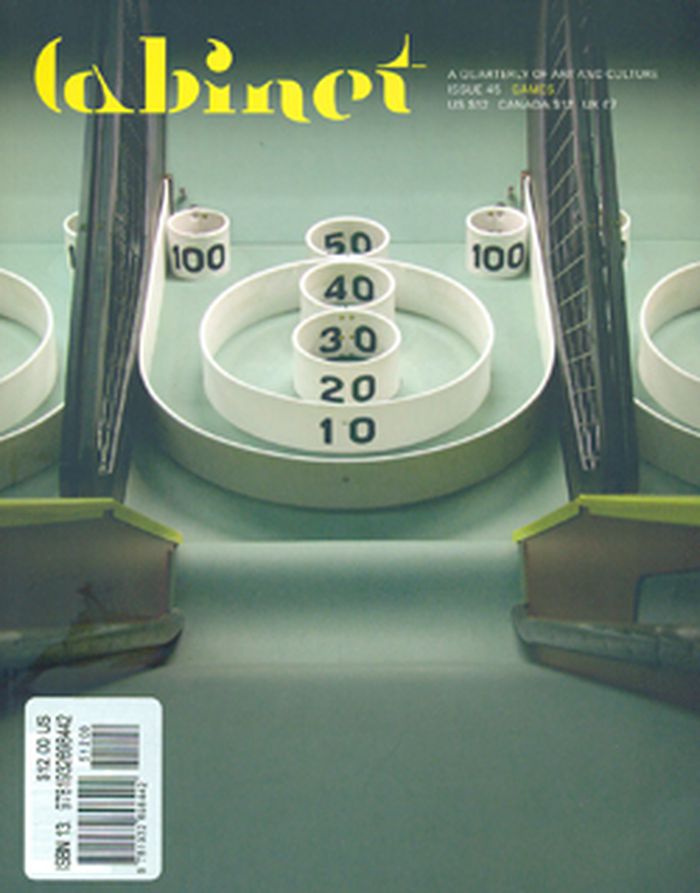
In the nineteenth century, Marx rejected the notion of homo sapiens, offering instead homo faber to indicate how consciousness follows from the primary activity of making. Against this, a certain ludic tradition has imagined a homo ludens, humans defined through their relationship with games and play. Cabinet 45 features Joshua Glenn on H.G. Wells’ “Floor Games”; D. Graham Burnett on games played by game theorists; Barbara Levine and Jessica Helfand on dexterity games; James Trainor on the lost world of “adventure” playgrounds; Dana Katz on Brian Eno and Peter Schmidt’s “Oblique Strategies”; an interview with Bertell Ollman, inventor of the board game “Class Struggle”; and Jeff Dolven on poems as games. Elsewhere in the issue: Helen Larsson on the history of applause; Wayne Koestenbaum’s legendary “Legend” column; Naomi Muller on eating the zoo animals in Berlin during World War II; Jeremy Crichton on “spite” houses; and much more.
Cabinet 45: Games
Actions:
Prix:
$12.00
(disponible sur commande)
Résumé:
In the nineteenth century, Marx rejected the notion of homo sapiens, offering instead homo faber to indicate how consciousness follows from the primary activity of making. Against this, a certain ludic tradition has imagined a homo ludens, humans defined through their relationship with games and play. Cabinet 45 features Joshua Glenn on H.G. Wells’ “Floor Games”; D. Graham Burnett on games played by game theorists; Barbara Levine and Jessica Helfand on dexterity games; James Trainor on the lost world of “adventure” playgrounds; Dana Katz on Brian Eno and Peter Schmidt’s “Oblique Strategies”; an interview with Bertell Ollman, inventor of the board game “Class Struggle”; and Jeff Dolven on poems as games. Elsewhere in the issue: Helen Larsson on the history of applause; Wayne Koestenbaum’s legendary “Legend” column; Naomi Muller on eating the zoo animals in Berlin during World War II; Jeremy Crichton on “spite” houses; and much more.
Classification:
livres
livres
Publication:
juin 2012
juin 2012
Sujet:
Revues
Revues
Classification:
livres
livres
Actions:
Prix:
$17.50
(disponible sur commande)
Résumé:
Vern Blosum does not exist. The story can be told in just a few lines: in 1961 an artist paints five canvases inspired by pages in a horticulture book; then came parking meters bearing temporal commentaries, water hydrants, and animals. Some of them were shown at Leo Castelli Gallery, sold to collectors and public institutions, included in seminal exhibitions or books on(...)
$17.50
(disponible sur commande)
Résumé:
Vern Blosum does not exist. The story can be told in just a few lines: in 1961 an artist paints five canvases inspired by pages in a horticulture book; then came parking meters bearing temporal commentaries, water hydrants, and animals. Some of them were shown at Leo Castelli Gallery, sold to collectors and public institutions, included in seminal exhibitions or books on(...)
Titre:
Vern Blosum : planned obsolescence
Actions:
Prix:
$17.50
(disponible sur commande)
Résumé:
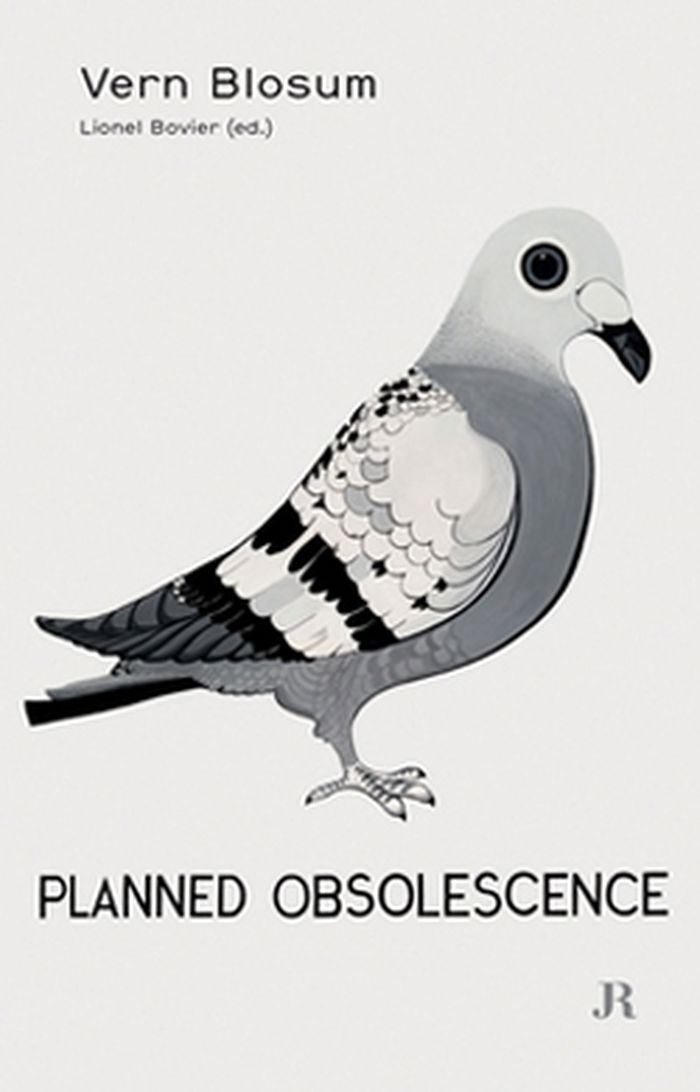
Vern Blosum does not exist. The story can be told in just a few lines: in 1961 an artist paints five canvases inspired by pages in a horticulture book; then came parking meters bearing temporal commentaries, water hydrants, and animals. Some of them were shown at Leo Castelli Gallery, sold to collectors and public institutions, included in seminal exhibitions or books on Pop art: a seemingly normal progression in an artist’s career, were it not for a rumor that emerged regarding his true identity. Alfred H. Barr, the director of MoMA, started to worry about it in 1964 and, after extensive inquiries, came to the conclusion that Vern Blosum did not exist. His paintings were taken down or sent back to storage, and the artist’s name fell into oblivion. Vern Blosum does not exist, but his work does. And that is precisely what this book aims to reveal.
Vern Blosum : planned obsolescence
Actions:
Prix:
$17.50
(disponible sur commande)
Résumé:
Vern Blosum does not exist. The story can be told in just a few lines: in 1961 an artist paints five canvases inspired by pages in a horticulture book; then came parking meters bearing temporal commentaries, water hydrants, and animals. Some of them were shown at Leo Castelli Gallery, sold to collectors and public institutions, included in seminal exhibitions or books on Pop art: a seemingly normal progression in an artist’s career, were it not for a rumor that emerged regarding his true identity. Alfred H. Barr, the director of MoMA, started to worry about it in 1964 and, after extensive inquiries, came to the conclusion that Vern Blosum did not exist. His paintings were taken down or sent back to storage, and the artist’s name fell into oblivion. Vern Blosum does not exist, but his work does. And that is precisely what this book aims to reveal.
Classification:
livres
livres
Publication:
février 2015
février 2015
Classification:
livres
livres
Actions:
Prix:
$41.99
(disponible sur commande)
Résumé:
One of the fundamental dimensions of urbanization is its radical transformation of nature. Today domestic animals make up more than twice the biomass of people on the planet, and cities are replete with nonhuman life. Yet current accounts of the urban remain resolutely anthropocentric. ''Lively cities'' departs from conventions of urban studies to argue that cities are(...)
$41.99
(disponible sur commande)
Résumé:
One of the fundamental dimensions of urbanization is its radical transformation of nature. Today domestic animals make up more than twice the biomass of people on the planet, and cities are replete with nonhuman life. Yet current accounts of the urban remain resolutely anthropocentric. ''Lively cities'' departs from conventions of urban studies to argue that cities are(...)
Titre:
Lively cities: Reconfiguring urban ecology
Actions:
Prix:
$41.99
(disponible sur commande)
Résumé:
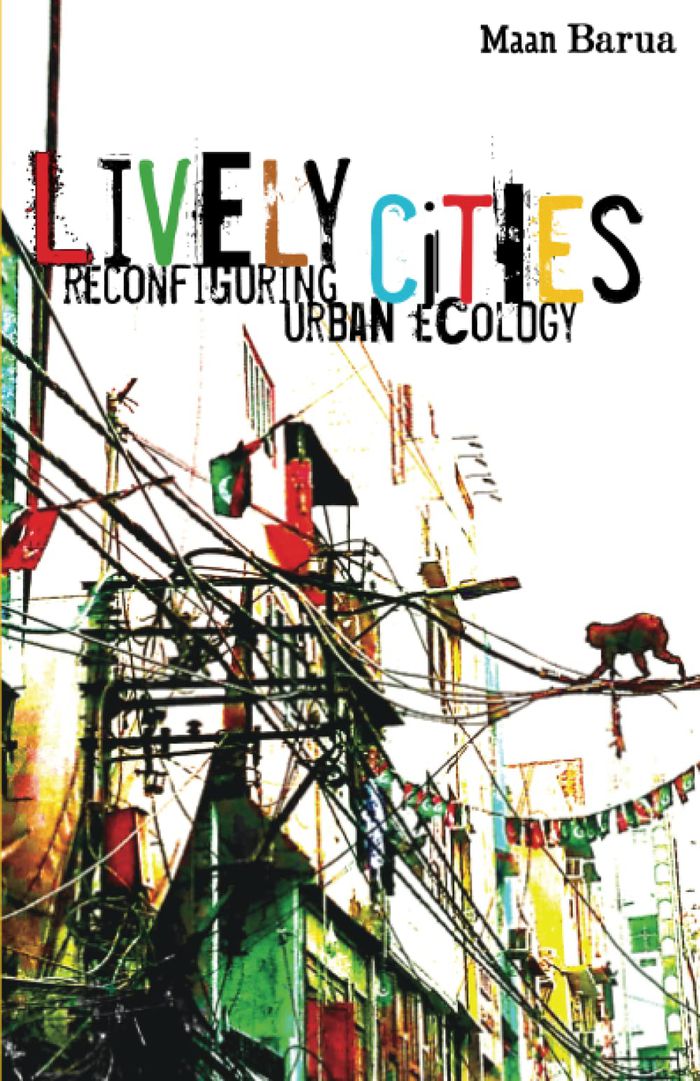
One of the fundamental dimensions of urbanization is its radical transformation of nature. Today domestic animals make up more than twice the biomass of people on the planet, and cities are replete with nonhuman life. Yet current accounts of the urban remain resolutely anthropocentric. ''Lively cities'' departs from conventions of urban studies to argue that cities are lived achievements forged by a multitude of entities, drawing attention to a suite of beings— human and nonhuman— that make up the material politics of city making. From macaques and cattle in Delhi to the invasive parakeet colonies in London, Maan Barua examines the rhythms, paths, and agency of nonhumans across the city. He reconceptualizes several key themes in urban thought, including infrastructure, the built environment, design, habitation, and everyday practices of dwelling and provides a critical intervention in animal and urban studies. Generating fresh conversations between posthumanism, postcolonialism, and political economy, Barua reveals how human and nonhuman actors shape, integrate, subsume, and relate to urban space in fascinating ways.
Lively cities: Reconfiguring urban ecology
Actions:
Prix:
$41.99
(disponible sur commande)
Résumé:
One of the fundamental dimensions of urbanization is its radical transformation of nature. Today domestic animals make up more than twice the biomass of people on the planet, and cities are replete with nonhuman life. Yet current accounts of the urban remain resolutely anthropocentric. ''Lively cities'' departs from conventions of urban studies to argue that cities are lived achievements forged by a multitude of entities, drawing attention to a suite of beings— human and nonhuman— that make up the material politics of city making. From macaques and cattle in Delhi to the invasive parakeet colonies in London, Maan Barua examines the rhythms, paths, and agency of nonhumans across the city. He reconceptualizes several key themes in urban thought, including infrastructure, the built environment, design, habitation, and everyday practices of dwelling and provides a critical intervention in animal and urban studies. Generating fresh conversations between posthumanism, postcolonialism, and political economy, Barua reveals how human and nonhuman actors shape, integrate, subsume, and relate to urban space in fascinating ways.
Classification:
livres
livres
Publication:
mai 2023
mai 2023
Sujet:
Théorie de l’urbanisme
Théorie de l’urbanisme
Classification:
livres
livres
Actions:
Prix:
$78.95
(disponible sur commande)
Résumé:
South of Geneva, Switzerland, the Aire River runs across a plain that for centuries has been agricultural land. Since the late nineteenth century, the waterway has been embanked for flood protection, which has caused a gradual loss of habitat for a large variety of plants and animals. In 2001, a decision was made to renaturalize the river. Yet rather than merely(...)
$78.95
(disponible sur commande)
Résumé:
South of Geneva, Switzerland, the Aire River runs across a plain that for centuries has been agricultural land. Since the late nineteenth century, the waterway has been embanked for flood protection, which has caused a gradual loss of habitat for a large variety of plants and animals. In 2001, a decision was made to renaturalize the river. Yet rather than merely(...)
Titre:
Aire: the river and its double
Actions:
Prix:
$78.95
(disponible sur commande)
Résumé:
South of Geneva, Switzerland, the Aire River runs across a plain that for centuries has been agricultural land. Since the late nineteenth century, the waterway has been embanked for flood protection, which has caused a gradual loss of habitat for a large variety of plants and animals. In 2001, a decision was made to renaturalize the river. Yet rather than merely reconstructing the river’s former natural bed, Superpositions, the association of firms commissioned with the project, applied “topographic imagination,” a method that combines the embanked channel with a newly designed pasture landscape. This new book documents that renaturalization project through drawings, images of construction work, and images of the new waterway. Essays and commentary by international contributors Jean-Marc Besse, Lorette Coen, Gerorges Descombes, G. Mathias Kondolf, Elissa Rosenberg, Gilles A. Tiberghien, and Marc Treib demonstrate how the restored river has been transformed, becoming again a characteristic feature of this landscape on the fringe of the city.
Aire: the river and its double
Actions:
Prix:
$78.95
(disponible sur commande)
Résumé:
South of Geneva, Switzerland, the Aire River runs across a plain that for centuries has been agricultural land. Since the late nineteenth century, the waterway has been embanked for flood protection, which has caused a gradual loss of habitat for a large variety of plants and animals. In 2001, a decision was made to renaturalize the river. Yet rather than merely reconstructing the river’s former natural bed, Superpositions, the association of firms commissioned with the project, applied “topographic imagination,” a method that combines the embanked channel with a newly designed pasture landscape. This new book documents that renaturalization project through drawings, images of construction work, and images of the new waterway. Essays and commentary by international contributors Jean-Marc Besse, Lorette Coen, Gerorges Descombes, G. Mathias Kondolf, Elissa Rosenberg, Gilles A. Tiberghien, and Marc Treib demonstrate how the restored river has been transformed, becoming again a characteristic feature of this landscape on the fringe of the city.
Classification:
livres
livres
Publication:
août 2018
août 2018
Sujet:
Jardins
Jardins
Classification:
livres
livres
Actions:
Prix:
$54.95
(disponible en magasin)
Résumé:
The moment human fingertips lifted from the ground, upright walking became a privilege rather than a mere posture. The liberated hands could now be used to create tools for defense and hunting. The pupils’ gazes shifted from a level view to a downward perspective, a physical change that also translated into an awareness that overlooked other species. The spine, situated(...)
$54.95
(disponible en magasin)
Résumé:
The moment human fingertips lifted from the ground, upright walking became a privilege rather than a mere posture. The liberated hands could now be used to create tools for defense and hunting. The pupils’ gazes shifted from a level view to a downward perspective, a physical change that also translated into an awareness that overlooked other species. The spine, situated(...)
Titre:
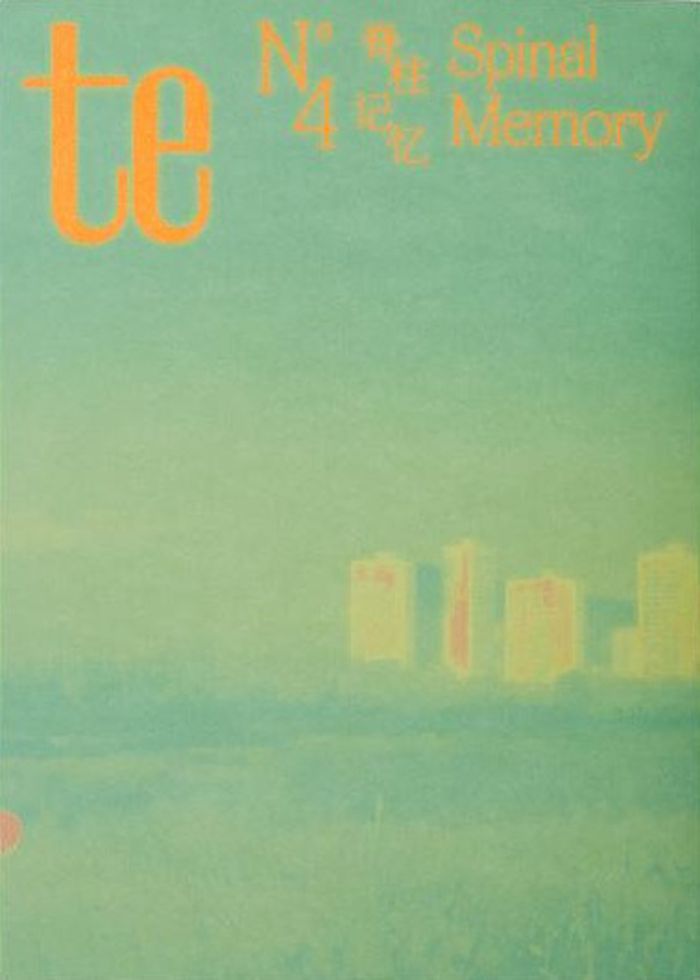
te magazine no.4: Spinal Memory
Actions:
Prix:
$54.95
(disponible en magasin)
Résumé:
The moment human fingertips lifted from the ground, upright walking became a privilege rather than a mere posture. The liberated hands could now be used to create tools for defense and hunting. The pupils’ gazes shifted from a level view to a downward perspective, a physical change that also translated into an awareness that overlooked other species. The spine, situated at the center of the human body, acts like a covert ruler, measuring the scale of evolution and supporting the illusion of being "human-centric." Thus, humans stand, placing themselves far above all other creatures. Following this profound gestural revolution came the imagination and manipulation of non-human animals (the Others), turning them into livestock and companions, as their wildness was rewritten as docility. Their bodies became resources to be medicated and refined, transforming into instruments for milk and nutritious meat production. They became basic knowledge and research data, linking humanity’s ever-expanding and illusory colonial territories.
te magazine no.4: Spinal Memory
Actions:
Prix:
$54.95
(disponible en magasin)
Résumé:
The moment human fingertips lifted from the ground, upright walking became a privilege rather than a mere posture. The liberated hands could now be used to create tools for defense and hunting. The pupils’ gazes shifted from a level view to a downward perspective, a physical change that also translated into an awareness that overlooked other species. The spine, situated at the center of the human body, acts like a covert ruler, measuring the scale of evolution and supporting the illusion of being "human-centric." Thus, humans stand, placing themselves far above all other creatures. Following this profound gestural revolution came the imagination and manipulation of non-human animals (the Others), turning them into livestock and companions, as their wildness was rewritten as docility. Their bodies became resources to be medicated and refined, transforming into instruments for milk and nutritious meat production. They became basic knowledge and research data, linking humanity’s ever-expanding and illusory colonial territories.
Classification:
livres
livres
Publication:
mai 2026
mai 2026
Sujet:
Revues
Revues
Classification:
livres
livres
Titre:
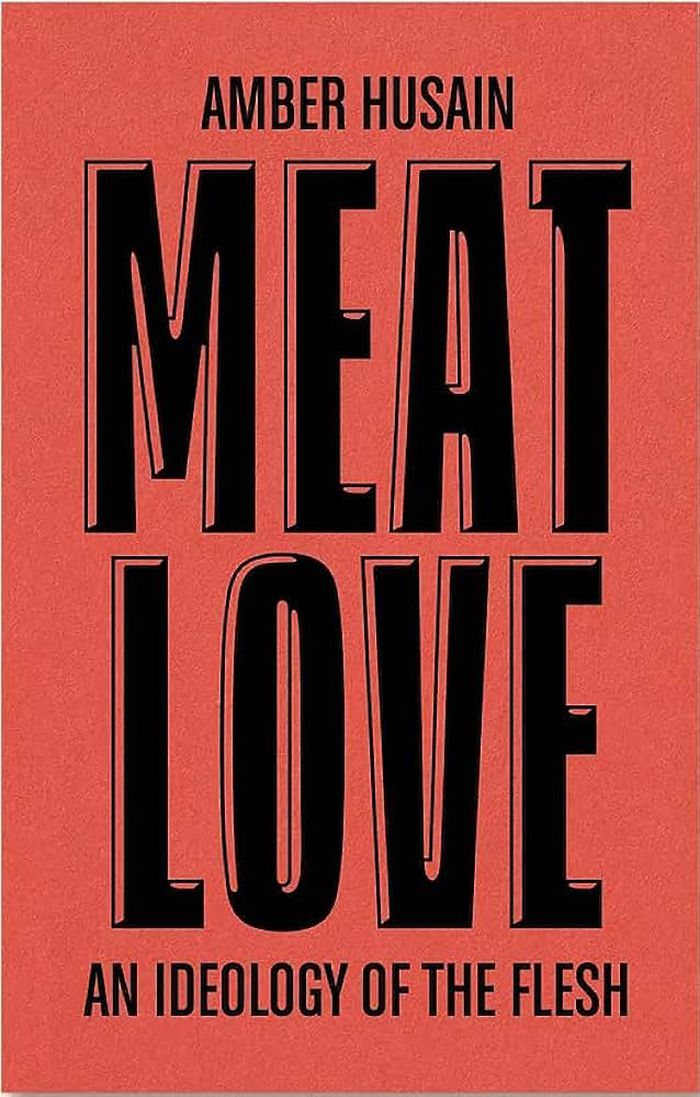
Amber Husain: Meat love
Amber Husain: Meat love
Actions:
Prix:
$25.00
(disponible sur commande)
Résumé:
In an era of climate catastrophe and corporate agribusiness, meat has been decisively made over. Urbanites across the West are called upon to look at the animals we eat, and by looking, learn to treat them with love. We are asked to tenderise our carnal desire for flesh and dignify our relationship with the land. Yet can our appetite for meat be redeemed by this new way(...)
$25.00
(disponible sur commande)
Résumé:
In an era of climate catastrophe and corporate agribusiness, meat has been decisively made over. Urbanites across the West are called upon to look at the animals we eat, and by looking, learn to treat them with love. We are asked to tenderise our carnal desire for flesh and dignify our relationship with the land. Yet can our appetite for meat be redeemed by this new way(...)
Titre:
Amber Husain: Meat love
Actions:
Prix:
$25.00
(disponible sur commande)
Résumé:
In an era of climate catastrophe and corporate agribusiness, meat has been decisively made over. Urbanites across the West are called upon to look at the animals we eat, and by looking, learn to treat them with love. We are asked to tenderise our carnal desire for flesh and dignify our relationship with the land. Yet can our appetite for meat be redeemed by this new way of seeing? Can an ‘ethical’ approach to the farming, sale, and consumption of meat really save both the planet and our souls? In ''Meat love'', Amber Husain deconstructs the beauty, tragedy, and mystery with which our images of meat are embellished, drawing on a range of visual sources from contemporary art and film to Instagram and advertising. Probing the nature of ‘love’ in contemporary human-animal relations, this illustrated essay casts a materialist’s critical eye on the visual culture of meat as it gentrifies and mutates, informing, for better or for worse, our political imaginations.
Amber Husain: Meat love
Actions:
Prix:
$25.00
(disponible sur commande)
Résumé:
In an era of climate catastrophe and corporate agribusiness, meat has been decisively made over. Urbanites across the West are called upon to look at the animals we eat, and by looking, learn to treat them with love. We are asked to tenderise our carnal desire for flesh and dignify our relationship with the land. Yet can our appetite for meat be redeemed by this new way of seeing? Can an ‘ethical’ approach to the farming, sale, and consumption of meat really save both the planet and our souls? In ''Meat love'', Amber Husain deconstructs the beauty, tragedy, and mystery with which our images of meat are embellished, drawing on a range of visual sources from contemporary art and film to Instagram and advertising. Probing the nature of ‘love’ in contemporary human-animal relations, this illustrated essay casts a materialist’s critical eye on the visual culture of meat as it gentrifies and mutates, informing, for better or for worse, our political imaginations.
Classification:
livres
livres
Publication:
juillet 2023
juillet 2023
Sujet:
Théorie de la photographie
Théorie de la photographie
Classification:
livres
livres

Actions:
Prix:
$16.00
(disponible en magasin)
Résumé:
''Raum'' simply affirms an undefined 'space' and with this work for Angle the Japanese photographer Hayahisa Tomiyasu selects a tiny slice of the richness of public space. An observation of a lizard basking in the sun on a summer’s day in Zürich has led to a photographic sequence in black and white – in portrait as well as landscape format. The demarcation of the(...)
$16.00
(disponible en magasin)
Résumé:
''Raum'' simply affirms an undefined 'space' and with this work for Angle the Japanese photographer Hayahisa Tomiyasu selects a tiny slice of the richness of public space. An observation of a lizard basking in the sun on a summer’s day in Zürich has led to a photographic sequence in black and white – in portrait as well as landscape format. The demarcation of the(...)
Titre:
Angle 26° : Hayahisa Tomiyasu, Raum
Actions:
Prix:
$16.00
(disponible en magasin)
Résumé:
''Raum'' simply affirms an undefined 'space' and with this work for Angle the Japanese photographer Hayahisa Tomiyasu selects a tiny slice of the richness of public space. An observation of a lizard basking in the sun on a summer’s day in Zürich has led to a photographic sequence in black and white – in portrait as well as landscape format. The demarcation of the photographic space – the extremely limited detail – is consistently kept low, around ground level. Through the sequential and the serial, with a point of departure in the close surroundings, Tomiyasu is preoccupied with new views of various territories in the shared space where we are separated from others’ invisible boundaries. Here the animals are subject to an alternative, instinct-driven logic. But humans too operate with distance, marking and ownership. An urge for invisibility and camouflage can appear on the radar at any time, and make us want to scuttle away like a lizard.
Angle 26° : Hayahisa Tomiyasu, Raum
Actions:
Prix:
$16.00
(disponible en magasin)
Résumé:
''Raum'' simply affirms an undefined 'space' and with this work for Angle the Japanese photographer Hayahisa Tomiyasu selects a tiny slice of the richness of public space. An observation of a lizard basking in the sun on a summer’s day in Zürich has led to a photographic sequence in black and white – in portrait as well as landscape format. The demarcation of the photographic space – the extremely limited detail – is consistently kept low, around ground level. Through the sequential and the serial, with a point of departure in the close surroundings, Tomiyasu is preoccupied with new views of various territories in the shared space where we are separated from others’ invisible boundaries. Here the animals are subject to an alternative, instinct-driven logic. But humans too operate with distance, marking and ownership. An urge for invisibility and camouflage can appear on the radar at any time, and make us want to scuttle away like a lizard.
Classification:
livres
livres
Publication:
octobre 2023
octobre 2023
Sujet:
Monographies photo
Monographies photo
Classification:
livres
livres
Actions:
Prix:
$33.95
(disponible sur commande)
Résumé:
The current ecological crisis brings about a new relational landscape: an unprecedented collapse of distances creates interspecies promiscuities and a crisis of the human scale. In his latest book, Nicolas Bourriaud proposes that artists are the anthropologists of this new era. Artists acknowledge the fading of the division between nature and culture, which has been the(...)
$33.95
(disponible sur commande)
Résumé:
The current ecological crisis brings about a new relational landscape: an unprecedented collapse of distances creates interspecies promiscuities and a crisis of the human scale. In his latest book, Nicolas Bourriaud proposes that artists are the anthropologists of this new era. Artists acknowledge the fading of the division between nature and culture, which has been the(...)
Titre:
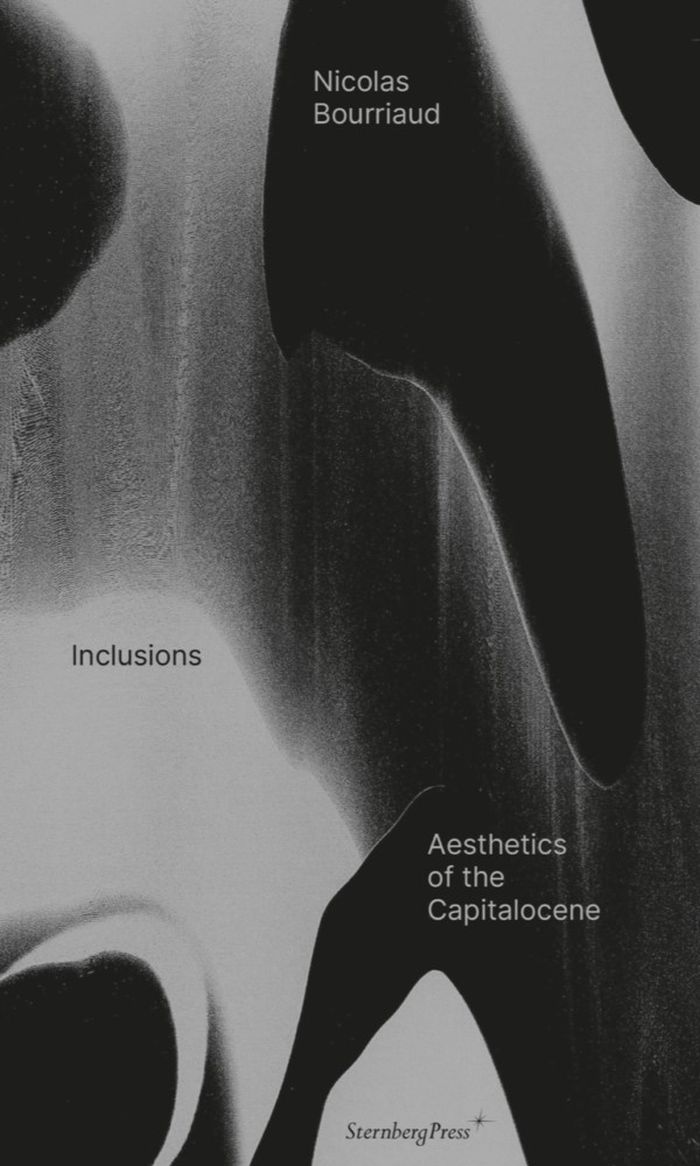
Inclusions: Aesthetics of the Capitalocene
Actions:
Prix:
$33.95
(disponible sur commande)
Résumé:
The current ecological crisis brings about a new relational landscape: an unprecedented collapse of distances creates interspecies promiscuities and a crisis of the human scale. In his latest book, Nicolas Bourriaud proposes that artists are the anthropologists of this new era. Artists acknowledge the fading of the division between nature and culture, which has been the matrix of segregation for millenia. Capitalism, patriarchy, slavery, social segregation, the exploitation of land, subsoil, and animals—all are based on status distinctions between subject and object. Against the commodification of natural elements, Bourriaud sees a new generation of artists calling for a molecular anthropology that studies the human effects on the universe and the interaction between humans and nonhumans. Contemporary art reconnects to archaic magic, the witches, sorcerers, and shamans of precapitalist societies. Against the devitalization of the world, art has managed to preserve certain aspects of the social function and spiritualist practices of these societies.
Inclusions: Aesthetics of the Capitalocene
Actions:
Prix:
$33.95
(disponible sur commande)
Résumé:
The current ecological crisis brings about a new relational landscape: an unprecedented collapse of distances creates interspecies promiscuities and a crisis of the human scale. In his latest book, Nicolas Bourriaud proposes that artists are the anthropologists of this new era. Artists acknowledge the fading of the division between nature and culture, which has been the matrix of segregation for millenia. Capitalism, patriarchy, slavery, social segregation, the exploitation of land, subsoil, and animals—all are based on status distinctions between subject and object. Against the commodification of natural elements, Bourriaud sees a new generation of artists calling for a molecular anthropology that studies the human effects on the universe and the interaction between humans and nonhumans. Contemporary art reconnects to archaic magic, the witches, sorcerers, and shamans of precapitalist societies. Against the devitalization of the world, art has managed to preserve certain aspects of the social function and spiritualist practices of these societies.
Classification:
livres
livres
Publication:
septembre 2021
septembre 2021
Sujet:
Théorie/ philosophie
Théorie/ philosophie
Classification:
livres
livres
Titre:
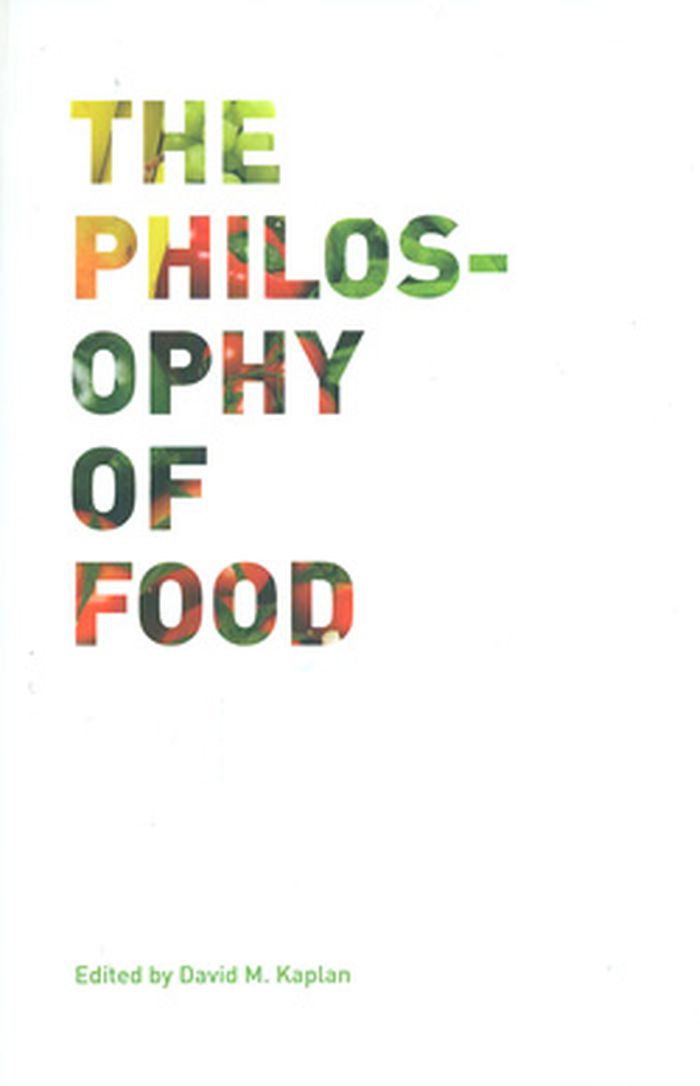
The philosophy of food
The philosophy of food
Actions:
Prix:
$37.95
(disponible sur commande)
Résumé:
This book explores food from a philosophical perspective, bringing together sixteen leading philosophers to consider the most basic questions about food: What is it exactly? What should we eat? How do we know it is safe? How should food be distributed? What is good food? David M. Kaplan's erudite and informative introduction grounds the discussion, showing how(...)
$37.95
(disponible sur commande)
Résumé:
This book explores food from a philosophical perspective, bringing together sixteen leading philosophers to consider the most basic questions about food: What is it exactly? What should we eat? How do we know it is safe? How should food be distributed? What is good food? David M. Kaplan's erudite and informative introduction grounds the discussion, showing how(...)
Titre:
The philosophy of food
Actions:
Prix:
$37.95
(disponible sur commande)
Résumé:
This book explores food from a philosophical perspective, bringing together sixteen leading philosophers to consider the most basic questions about food: What is it exactly? What should we eat? How do we know it is safe? How should food be distributed? What is good food? David M. Kaplan's erudite and informative introduction grounds the discussion, showing how philosophers since Plato have taken up questions about food, diet, agriculture, and animals. However, until recently, few have considered food a standard subject for serious philosophical debate. Each of the essays in this book brings in-depth analysis to many contemporary debates in food studies--Slow Food, sustainability, food safety, and politics--and addresses such issues as "happy meat," aquaculture, veganism, and table manners. The result is a resource that guides readers to think more clearly and responsibly about what we consume and how we provide for ourselves, and illuminates the reasons why we act as we do.
The philosophy of food
Actions:
Prix:
$37.95
(disponible sur commande)
Résumé:
This book explores food from a philosophical perspective, bringing together sixteen leading philosophers to consider the most basic questions about food: What is it exactly? What should we eat? How do we know it is safe? How should food be distributed? What is good food? David M. Kaplan's erudite and informative introduction grounds the discussion, showing how philosophers since Plato have taken up questions about food, diet, agriculture, and animals. However, until recently, few have considered food a standard subject for serious philosophical debate. Each of the essays in this book brings in-depth analysis to many contemporary debates in food studies--Slow Food, sustainability, food safety, and politics--and addresses such issues as "happy meat," aquaculture, veganism, and table manners. The result is a resource that guides readers to think more clearly and responsibly about what we consume and how we provide for ourselves, and illuminates the reasons why we act as we do.
Classification:
livres
livres
Publication:
mars 2012
mars 2012
Sujet:
Bouffe
Bouffe
Classification:
périodiques
périodiques
Titre:
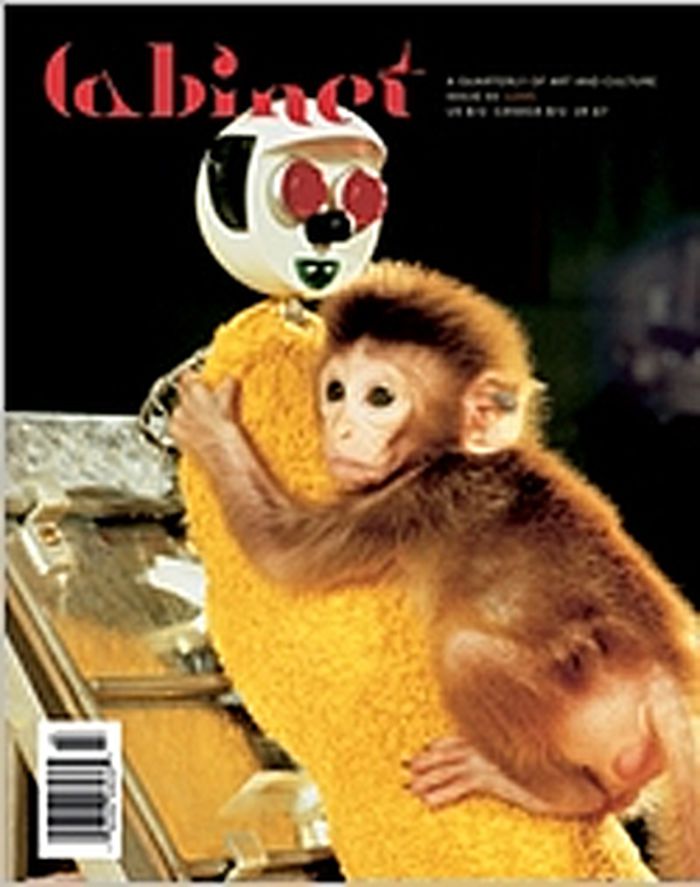
Cabinet 55: love
Cabinet 55: love
Actions:
Prix:
$17.50
(disponible sur commande)
Résumé:
Love was classically thought to come in four distinct varieties--agape (spiritual love), eros (physical passion), philia (friendship) and storge (familial affection). It might be argued that with modernity, one of these--eros--has come to dominate our landscape, where romance and its obstacles inform so many of our cultural narratives and consumer fantasies. Nonetheless,(...)
$17.50
(disponible sur commande)
Résumé:
Love was classically thought to come in four distinct varieties--agape (spiritual love), eros (physical passion), philia (friendship) and storge (familial affection). It might be argued that with modernity, one of these--eros--has come to dominate our landscape, where romance and its obstacles inform so many of our cultural narratives and consumer fantasies. Nonetheless,(...)
Titre:
Cabinet 55: love
Actions:
Prix:
$17.50
(disponible sur commande)
Résumé:
Love was classically thought to come in four distinct varieties--agape (spiritual love), eros (physical passion), philia (friendship) and storge (familial affection). It might be argued that with modernity, one of these--eros--has come to dominate our landscape, where romance and its obstacles inform so many of our cultural narratives and consumer fantasies. Nonetheless, all of these modalities of love continue to structure the relationships that govern human societies. Cabinet issue 55, with a special section on "Love," features Christopher Turner on the "celestial bed" of eighteenth-century proto-sexologist James Graham; Margaret Gordon on epistolary friendships; and Olga Lemerova on the love between humans and their pets. Elsewhere in the issue: Sasha Archibald on the decorative fabric or leather patches worn in the seventeenth century to conceal facial blemishes; D. Graham Burnett on watermarks; and Babak Sadr on how zoos perform annual inventories of their animals, both countable and uncountable.
Cabinet 55: love
Actions:
Prix:
$17.50
(disponible sur commande)
Résumé:
Love was classically thought to come in four distinct varieties--agape (spiritual love), eros (physical passion), philia (friendship) and storge (familial affection). It might be argued that with modernity, one of these--eros--has come to dominate our landscape, where romance and its obstacles inform so many of our cultural narratives and consumer fantasies. Nonetheless, all of these modalities of love continue to structure the relationships that govern human societies. Cabinet issue 55, with a special section on "Love," features Christopher Turner on the "celestial bed" of eighteenth-century proto-sexologist James Graham; Margaret Gordon on epistolary friendships; and Olga Lemerova on the love between humans and their pets. Elsewhere in the issue: Sasha Archibald on the decorative fabric or leather patches worn in the seventeenth century to conceal facial blemishes; D. Graham Burnett on watermarks; and Babak Sadr on how zoos perform annual inventories of their animals, both countable and uncountable.
Classification:
périodiques
périodiques
Publication:
août 2014
août 2014
Sujet:
Revues
Revues


