


13794 Résultats
Classification:
livres
livres
Actions:
Prix:
$85.00
(disponible en magasin)
Résumé:
The notion of “Baukultur” marked a fundamental step towards a comprehensive definition of the environment. The idea that landscape, historical architectural heritage, and the existing built context could converge to portray the richness and complexity of our future habitat now points to a collective strategic approach to design. In this context, the value of architecture(...)
$85.00
(disponible en magasin)
Résumé:
The notion of “Baukultur” marked a fundamental step towards a comprehensive definition of the environment. The idea that landscape, historical architectural heritage, and the existing built context could converge to portray the richness and complexity of our future habitat now points to a collective strategic approach to design. In this context, the value of architecture(...)
Sujet:
Théorie de l’architecture
Théorie de l’architecture
Publication:
septembre 2024
septembre 2024
Titre:
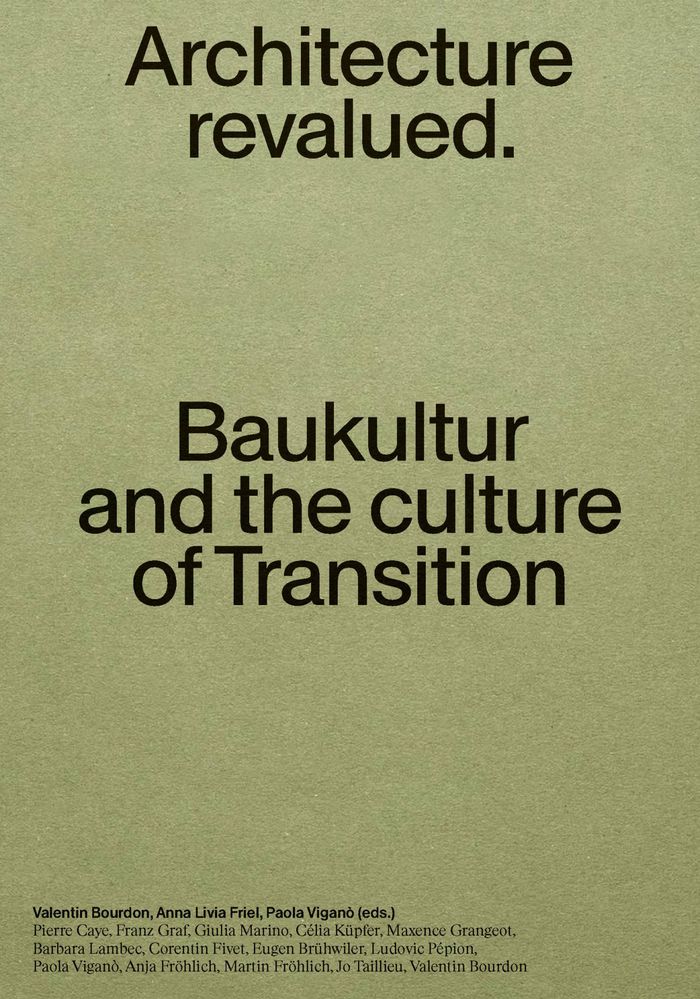
Baukultur: Architecture revalued
Actions:
Prix:
$85.00
(disponible en magasin)
Résumé:
The notion of “Baukultur” marked a fundamental step towards a comprehensive definition of the environment. The idea that landscape, historical architectural heritage, and the existing built context could converge to portray the richness and complexity of our future habitat now points to a collective strategic approach to design. In this context, the value of architecture emerges in several economic aspects, but also and essentially as a tool to convey the culture of transition within the Baukultur. Baukultur structures a theoretical framework around these concepts leaning on the research, design, and academic experience of six architectural and urban design practices, as specific readings of the existing built environment.
Baukultur: Architecture revalued
Actions:
Prix:
$85.00
(disponible en magasin)
Résumé:
The notion of “Baukultur” marked a fundamental step towards a comprehensive definition of the environment. The idea that landscape, historical architectural heritage, and the existing built context could converge to portray the richness and complexity of our future habitat now points to a collective strategic approach to design. In this context, the value of architecture emerges in several economic aspects, but also and essentially as a tool to convey the culture of transition within the Baukultur. Baukultur structures a theoretical framework around these concepts leaning on the research, design, and academic experience of six architectural and urban design practices, as specific readings of the existing built environment.
Classification:
livres
livres
Publication:
septembre 2024
septembre 2024
Sujet:
Théorie de l’architecture
Théorie de l’architecture
Classification:
livres
livres
Prix:
$52.00
(disponible sur commande)
Résumé:
In 1966, Billy Klüver and Fred Waldhauer, engineers at Bell Labs in Murray Hill, New Jersey, teamed up with artists Robert Rauschenberg and Robert Whitman to form a nonprofit organization, Experiments in Art and Technology (E.A.T.). E.A.T.’s debut event, 9 Evenings: Theatre & Engineering, integrated art, theater, and groundbreaking technology in a series of performances(...)
$52.00
(disponible sur commande)
Résumé:
In 1966, Billy Klüver and Fred Waldhauer, engineers at Bell Labs in Murray Hill, New Jersey, teamed up with artists Robert Rauschenberg and Robert Whitman to form a nonprofit organization, Experiments in Art and Technology (E.A.T.). E.A.T.’s debut event, 9 Evenings: Theatre & Engineering, integrated art, theater, and groundbreaking technology in a series of performances(...)
Titre:
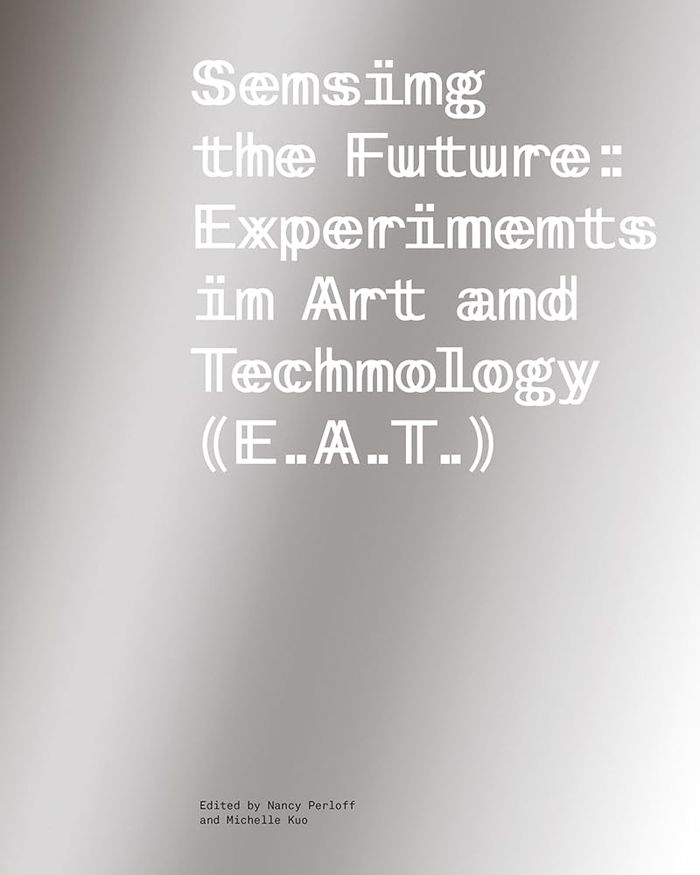
Sensing the future: Experiments in Art and Technology (E.A.T)
Actions:
Prix:
$52.00
(disponible sur commande)
Résumé:
In 1966, Billy Klüver and Fred Waldhauer, engineers at Bell Labs in Murray Hill, New Jersey, teamed up with artists Robert Rauschenberg and Robert Whitman to form a nonprofit organization, Experiments in Art and Technology (E.A.T.). E.A.T.’s debut event, 9 Evenings: Theatre & Engineering, integrated art, theater, and groundbreaking technology in a series of performances at the 69th Regiment Armory in Manhattan. Its second major event, the Pepsi Pavilion at Expo ’70 in Osaka, Japan, presented a multisensory environment for the first world exposition held in Asia. At these events, and in the hundreds of collaborations E.A.T. facilitated in between, the participants—including John Cage, Lucinda Childs, Deborah Hay, Steve Paxton, Yvonne Rainer, and David Tudor—imagined innovative ways for art and science to intersect and enrich society. "Sensing the future" tells the story of these collaborations between artists and engineers and how they led to new installations and technology-based artworks.
Sensing the future: Experiments in Art and Technology (E.A.T)
Actions:
Prix:
$52.00
(disponible sur commande)
Résumé:
In 1966, Billy Klüver and Fred Waldhauer, engineers at Bell Labs in Murray Hill, New Jersey, teamed up with artists Robert Rauschenberg and Robert Whitman to form a nonprofit organization, Experiments in Art and Technology (E.A.T.). E.A.T.’s debut event, 9 Evenings: Theatre & Engineering, integrated art, theater, and groundbreaking technology in a series of performances at the 69th Regiment Armory in Manhattan. Its second major event, the Pepsi Pavilion at Expo ’70 in Osaka, Japan, presented a multisensory environment for the first world exposition held in Asia. At these events, and in the hundreds of collaborations E.A.T. facilitated in between, the participants—including John Cage, Lucinda Childs, Deborah Hay, Steve Paxton, Yvonne Rainer, and David Tudor—imagined innovative ways for art and science to intersect and enrich society. "Sensing the future" tells the story of these collaborations between artists and engineers and how they led to new installations and technology-based artworks.
Classification:
livres
livres
Publication:
octobre 2024
octobre 2024
Sujet:
Théorie de l’art
Théorie de l’art
Classification:
livres
livres
Actions:
Prix:
$73.95
(disponible sur commande)
Résumé:
Architecture manifests as a space of concealment and unconcealment, lethe and alêtheia, enclosure and disclosure, where its making and agency are both hidden and revealed. With an urgency to amplify narratives that are overlooked, silenced and unacknowledged in and by architectural spaces, histories and theories, this book contends the need for a critical study of hiding(...)
$73.95
(disponible sur commande)
Résumé:
Architecture manifests as a space of concealment and unconcealment, lethe and alêtheia, enclosure and disclosure, where its making and agency are both hidden and revealed. With an urgency to amplify narratives that are overlooked, silenced and unacknowledged in and by architectural spaces, histories and theories, this book contends the need for a critical study of hiding(...)
Sujet:
Théorie de l’architecture
Théorie de l’architecture
Publication:
janvier 2024
janvier 2024
Titre:
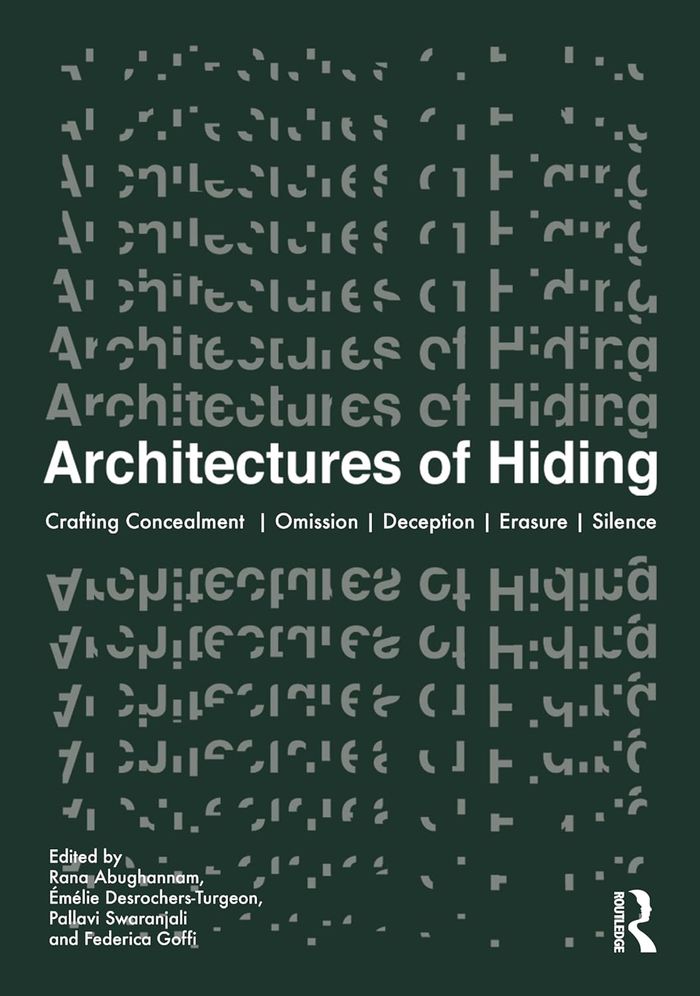
Architectures of hiding: Crafting concealment, omission, deception, erasure, silence
Actions:
Prix:
$73.95
(disponible sur commande)
Résumé:
Architecture manifests as a space of concealment and unconcealment, lethe and alêtheia, enclosure and disclosure, where its making and agency are both hidden and revealed. With an urgency to amplify narratives that are overlooked, silenced and unacknowledged in and by architectural spaces, histories and theories, this book contends the need for a critical study of hiding in the context of architectural processes. It urges the understanding of inherent opportunities, power structures and covert strategies, whether socio-cultural, geo-political, environmental or economic, as they are related to their hidescapes – the constructed landscapes of our built environments participating in the architectures of hiding.
Architectures of hiding: Crafting concealment, omission, deception, erasure, silence
Actions:
Prix:
$73.95
(disponible sur commande)
Résumé:
Architecture manifests as a space of concealment and unconcealment, lethe and alêtheia, enclosure and disclosure, where its making and agency are both hidden and revealed. With an urgency to amplify narratives that are overlooked, silenced and unacknowledged in and by architectural spaces, histories and theories, this book contends the need for a critical study of hiding in the context of architectural processes. It urges the understanding of inherent opportunities, power structures and covert strategies, whether socio-cultural, geo-political, environmental or economic, as they are related to their hidescapes – the constructed landscapes of our built environments participating in the architectures of hiding.
Classification:
livres
livres
Publication:
janvier 2024
janvier 2024
Sujet:
Théorie de l’architecture
Théorie de l’architecture
Classification:
livres
livres
Prix:
$48.99
(disponible sur commande)
Résumé:
For almost seven years after World War II, a small group of architects took on an exciting task: to imagine the spaces of global governance for a new political organization called the United Nations (UN). To create the iconic headquarters of the UN in New York City, these architects experimented with room layouts, media technologies, and design in tribunal courtrooms,(...)
$48.99
(disponible sur commande)
Résumé:
For almost seven years after World War II, a small group of architects took on an exciting task: to imagine the spaces of global governance for a new political organization called the United Nations (UN). To create the iconic headquarters of the UN in New York City, these architects experimented with room layouts, media technologies, and design in tribunal courtrooms,(...)
Titre:
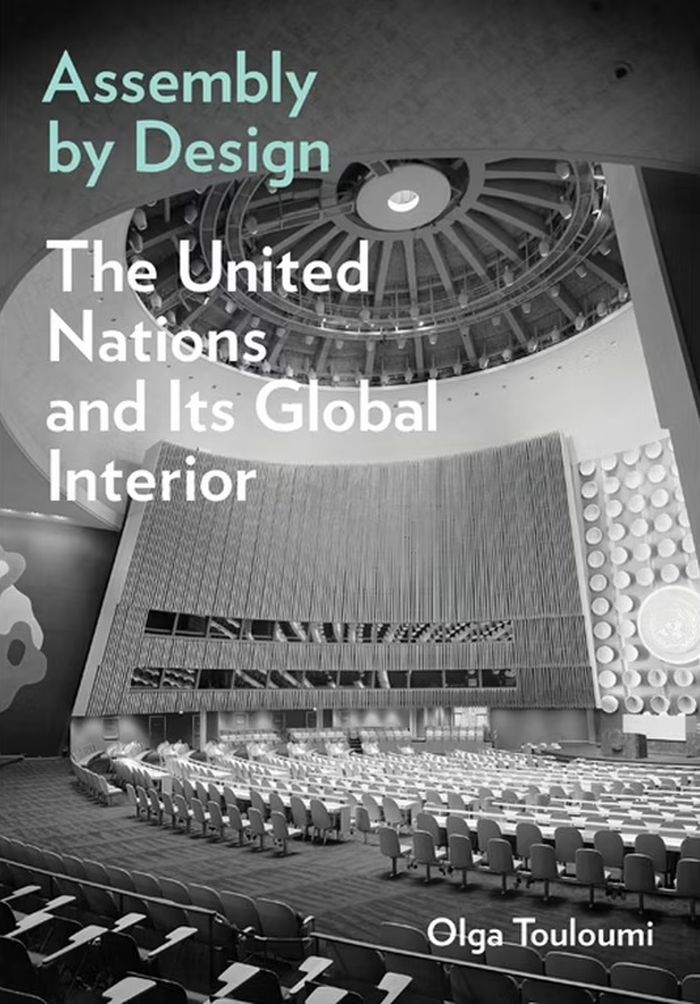
Assembly by design: The United Nations and its global interior
Actions:
Prix:
$48.99
(disponible sur commande)
Résumé:
For almost seven years after World War II, a small group of architects took on an exciting task: to imagine the spaces of global governance for a new political organization called the United Nations (UN). To create the iconic headquarters of the UN in New York City, these architects experimented with room layouts, media technologies, and design in tribunal courtrooms, assembly halls, and council chambers. The result was the creation of a new type of public space, the global interior. "Assembly by design" shows how this space leveraged media to help the UN communicate with the world. With its media infrastructure, symbols, acoustic design, and architecture, the global interior defined political assembly both inside and outside the UN headquarters, serving as the architectural medium to organize multilateral encounters of international publics around the globe. Demonstrating how aesthetics have long held sway over political work, Olga Touloumi posits that the building framed diplomacy on the ground amid a changing political landscape that brought the United States to the forefront of international politics, destabilizing old and establishing new geopolitical alliances.
Assembly by design: The United Nations and its global interior
Actions:
Prix:
$48.99
(disponible sur commande)
Résumé:
For almost seven years after World War II, a small group of architects took on an exciting task: to imagine the spaces of global governance for a new political organization called the United Nations (UN). To create the iconic headquarters of the UN in New York City, these architects experimented with room layouts, media technologies, and design in tribunal courtrooms, assembly halls, and council chambers. The result was the creation of a new type of public space, the global interior. "Assembly by design" shows how this space leveraged media to help the UN communicate with the world. With its media infrastructure, symbols, acoustic design, and architecture, the global interior defined political assembly both inside and outside the UN headquarters, serving as the architectural medium to organize multilateral encounters of international publics around the globe. Demonstrating how aesthetics have long held sway over political work, Olga Touloumi posits that the building framed diplomacy on the ground amid a changing political landscape that brought the United States to the forefront of international politics, destabilizing old and establishing new geopolitical alliances.
Classification:
livres
livres
Publication:
octobre 2024
octobre 2024
Sujet:
Théorie de l’architecture
Théorie de l’architecture
Classification:
livres
livres
Actions:
Prix:
$13.99
(disponible sur commande)
Résumé:
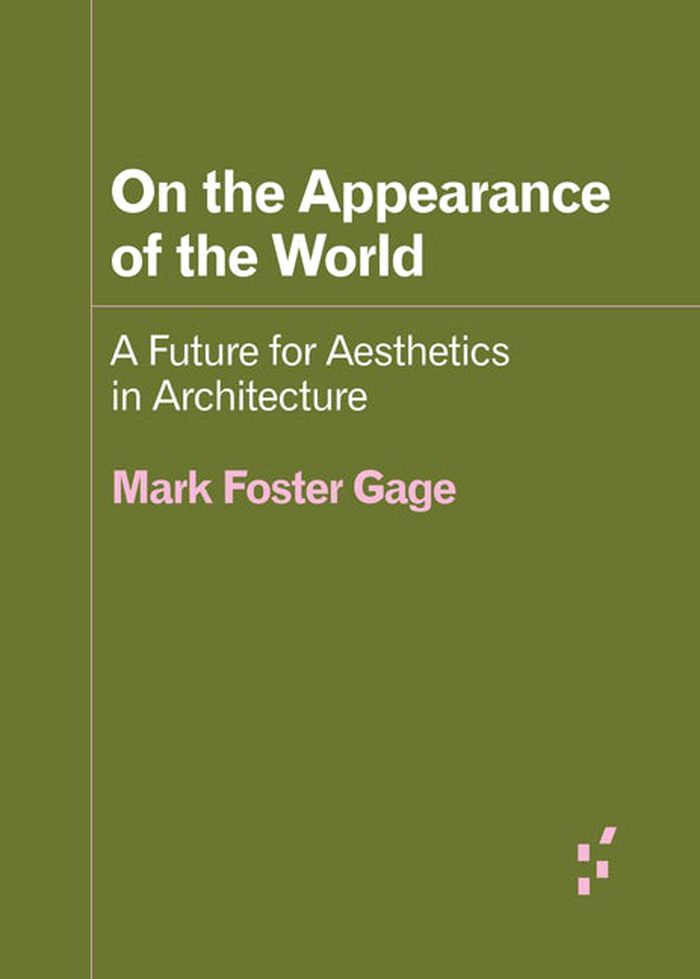
Our world, increasingly defined by efficient but unconsidered architecture and cities, seems to be getting uglier. In" On the appearance of the world," Mark Foster Gage asks why. He imagines a future scenario where architectural design and ideas from aesthetic philosophy align toward the production of a built world that is more humane, habitable, beautiful, and just.
$13.99
(disponible sur commande)
Résumé:
Our world, increasingly defined by efficient but unconsidered architecture and cities, seems to be getting uglier. In" On the appearance of the world," Mark Foster Gage asks why. He imagines a future scenario where architectural design and ideas from aesthetic philosophy align toward the production of a built world that is more humane, habitable, beautiful, and just.
Titre:
On the appearance of the world: A future for aesthetics in architecture
Actions:
Prix:
$13.99
(disponible sur commande)
Résumé:
Our world, increasingly defined by efficient but unconsidered architecture and cities, seems to be getting uglier. In" On the appearance of the world," Mark Foster Gage asks why. He imagines a future scenario where architectural design and ideas from aesthetic philosophy align toward the production of a built world that is more humane, habitable, beautiful, and just.
On the appearance of the world: A future for aesthetics in architecture
Actions:
Prix:
$13.99
(disponible sur commande)
Résumé:
Our world, increasingly defined by efficient but unconsidered architecture and cities, seems to be getting uglier. In" On the appearance of the world," Mark Foster Gage asks why. He imagines a future scenario where architectural design and ideas from aesthetic philosophy align toward the production of a built world that is more humane, habitable, beautiful, and just.
Classification:
livres
livres
Publication:
mars 2024
mars 2024
Sujet:
Théorie de l’architecture
Théorie de l’architecture
Classification:
livres
livres
Actions:
Prix:
$25.95
(disponible sur commande)
Résumé:
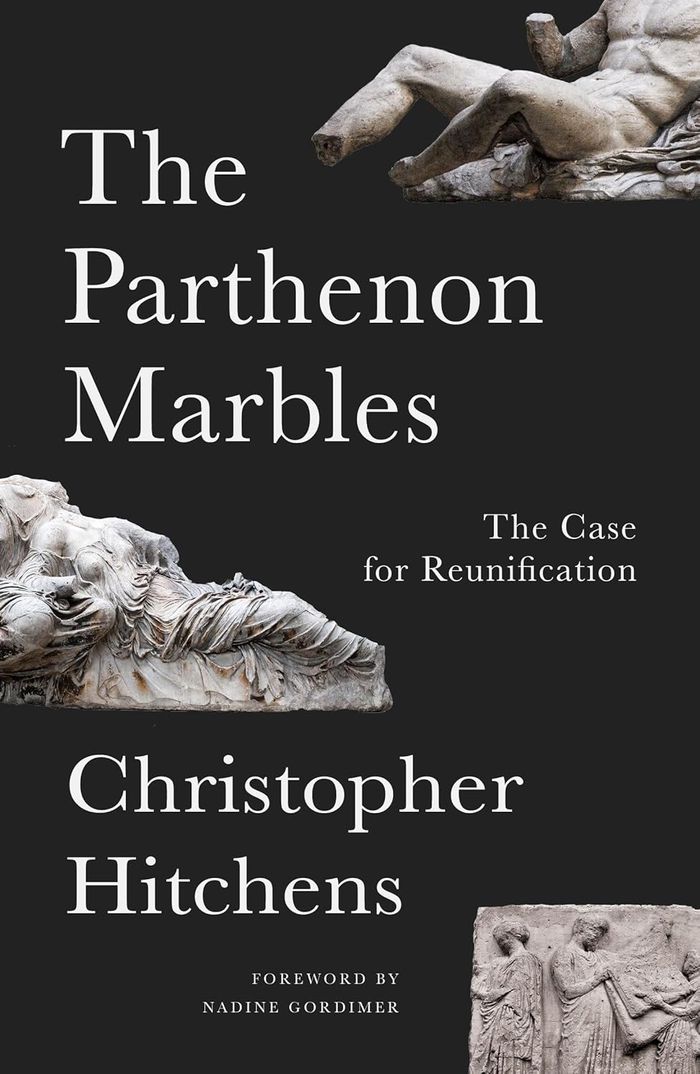
The Parthenon Marbles (formerly known as the Elgin Marbles), designed and executed by Pheidias to adorn the Parthenon, are perhaps the greatest of all classical sculptures. In 1801, Lord Elgin, then ambassador to the Turkish government, had chunks of the frieze sawn off and shipped to England, where they were subsequently seized by Parliament and sold to the British(...)
$25.95
(disponible sur commande)
Résumé:
The Parthenon Marbles (formerly known as the Elgin Marbles), designed and executed by Pheidias to adorn the Parthenon, are perhaps the greatest of all classical sculptures. In 1801, Lord Elgin, then ambassador to the Turkish government, had chunks of the frieze sawn off and shipped to England, where they were subsequently seized by Parliament and sold to the British(...)
Titre:
The Parthenon Marbles: The case for reunification
Actions:
Prix:
$25.95
(disponible sur commande)
Résumé:
The Parthenon Marbles (formerly known as the Elgin Marbles), designed and executed by Pheidias to adorn the Parthenon, are perhaps the greatest of all classical sculptures. In 1801, Lord Elgin, then ambassador to the Turkish government, had chunks of the frieze sawn off and shipped to England, where they were subsequently seized by Parliament and sold to the British Museum to help pay off his debts. This scandal, exacerbated by the inept handling of the sculptures by their self-appointed guardians, remains unresolved to this day. In his fierce, eloquent account of a shameful piece of British imperial history, Christopher Hitchens makes the moral, artistic, legal and political case for re-unifying the Parthenon frieze in Athens.The opening of the New Acropolis Museum emphatically trumps the British Museum’s long-standing (if always questionable) objection that there is nowhere in Athens to house the Parthenon Marbles. "The Parthenon Marbles" will surely end all arguments about where these great treasures belong, and help bring a two-centuries-old disgrace to a just conclusion.
The Parthenon Marbles: The case for reunification
Actions:
Prix:
$25.95
(disponible sur commande)
Résumé:
The Parthenon Marbles (formerly known as the Elgin Marbles), designed and executed by Pheidias to adorn the Parthenon, are perhaps the greatest of all classical sculptures. In 1801, Lord Elgin, then ambassador to the Turkish government, had chunks of the frieze sawn off and shipped to England, where they were subsequently seized by Parliament and sold to the British Museum to help pay off his debts. This scandal, exacerbated by the inept handling of the sculptures by their self-appointed guardians, remains unresolved to this day. In his fierce, eloquent account of a shameful piece of British imperial history, Christopher Hitchens makes the moral, artistic, legal and political case for re-unifying the Parthenon frieze in Athens.The opening of the New Acropolis Museum emphatically trumps the British Museum’s long-standing (if always questionable) objection that there is nowhere in Athens to house the Parthenon Marbles. "The Parthenon Marbles" will surely end all arguments about where these great treasures belong, and help bring a two-centuries-old disgrace to a just conclusion.
Classification:
livres
livres
Publication:
février 2025
février 2025
Sujet:
Théorie de l’art
Théorie de l’art
Classification:
livres
livres
Titre:
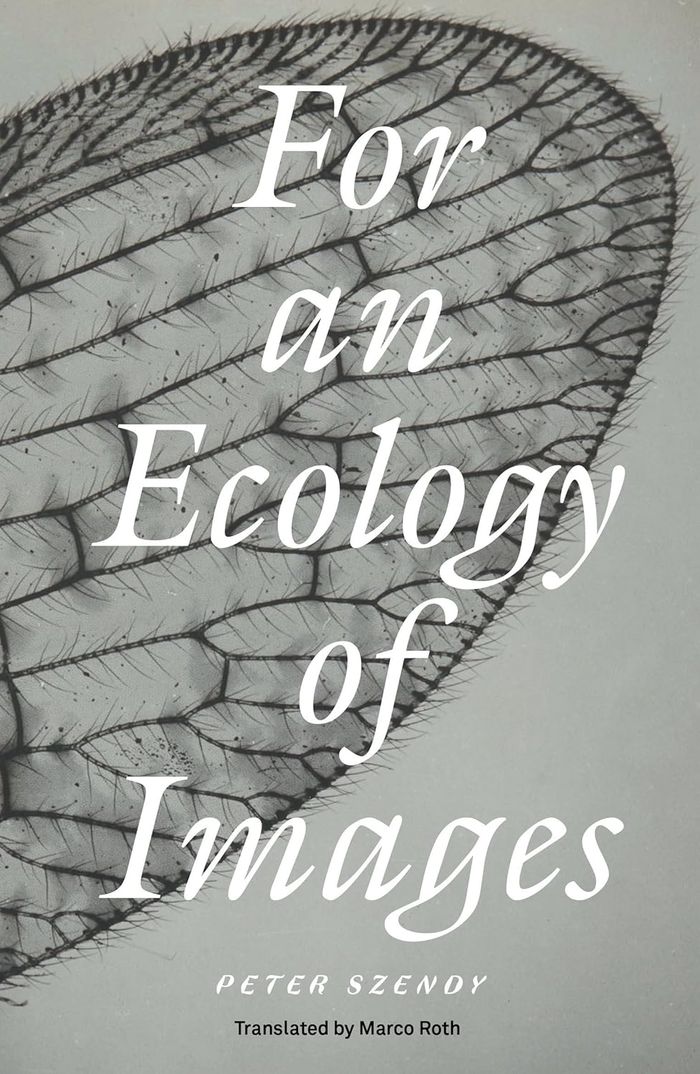
For an ecology of images
For an ecology of images
Actions:
Prix:
$25.95
(disponible sur commande)
Résumé:
When Susan Sontag first proposed the idea of an "ecology of images," she meant it as an exhortation to be vigilant against the vast surplus of pictures threatening our ability to truly see. Today, beyond the deep anxieties over a diminishing attention economy, concern focuses on the environmental cost of storing and circulating the digital images that confront us with(...)
$25.95
(disponible sur commande)
Résumé:
When Susan Sontag first proposed the idea of an "ecology of images," she meant it as an exhortation to be vigilant against the vast surplus of pictures threatening our ability to truly see. Today, beyond the deep anxieties over a diminishing attention economy, concern focuses on the environmental cost of storing and circulating the digital images that confront us with(...)
Titre:
For an ecology of images
Actions:
Prix:
$25.95
(disponible sur commande)
Résumé:
When Susan Sontag first proposed the idea of an "ecology of images," she meant it as an exhortation to be vigilant against the vast surplus of pictures threatening our ability to truly see. Today, beyond the deep anxieties over a diminishing attention economy, concern focuses on the environmental cost of storing and circulating the digital images that confront us with unprecedented speed. Against the disposable rapidity demanded by digital media, Peter Szendy emphasizes the labor and time required for images to develop and come into view. This inquisitive essay takes us from mimicry in the animal kingdom to the history of the shadow, Pliny’s story about the birth of painting to Nabokov’s butterflies, the first use of slo-mo in film to the first aerial photograph.
For an ecology of images
Actions:
Prix:
$25.95
(disponible sur commande)
Résumé:
When Susan Sontag first proposed the idea of an "ecology of images," she meant it as an exhortation to be vigilant against the vast surplus of pictures threatening our ability to truly see. Today, beyond the deep anxieties over a diminishing attention economy, concern focuses on the environmental cost of storing and circulating the digital images that confront us with unprecedented speed. Against the disposable rapidity demanded by digital media, Peter Szendy emphasizes the labor and time required for images to develop and come into view. This inquisitive essay takes us from mimicry in the animal kingdom to the history of the shadow, Pliny’s story about the birth of painting to Nabokov’s butterflies, the first use of slo-mo in film to the first aerial photograph.
Classification:
livres
livres
Publication:
janvier 2025
janvier 2025
Sujet:
Théorie de l’art
Théorie de l’art
Classification:
livres
livres
Actions:
Prix:
$42.95
(disponible en magasin)
Résumé:
Homme de conviction, Paul Chemetov a compté parmi les architectes et urbanistes qui, dès les années cinquante et soixante, ont donné un coup de pied dans la fourmilière, faisant valser les certitudes de l'académisme des Beaux-Arts. Membre actif de la coopérative de l'AUA de 1960 à 1985, dont la radicalité a ouvert une brèche dans l'architecture conventionnelle de(...)
$42.95
(disponible en magasin)
Résumé:
Homme de conviction, Paul Chemetov a compté parmi les architectes et urbanistes qui, dès les années cinquante et soixante, ont donné un coup de pied dans la fourmilière, faisant valser les certitudes de l'académisme des Beaux-Arts. Membre actif de la coopérative de l'AUA de 1960 à 1985, dont la radicalité a ouvert une brèche dans l'architecture conventionnelle de(...)
Titre:
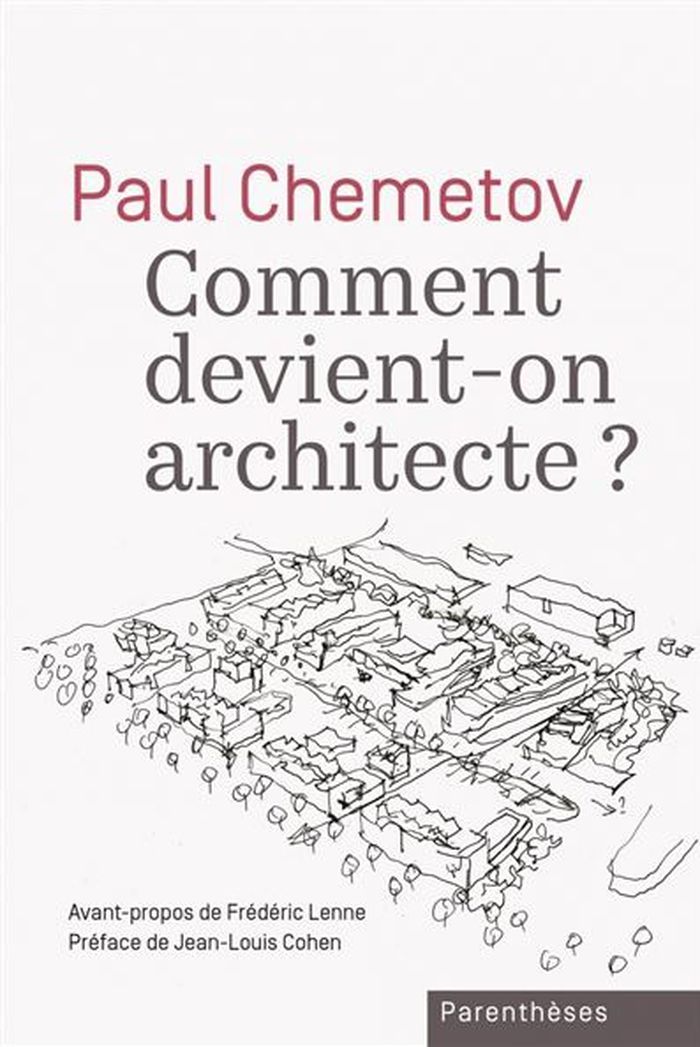
Comment devient-on architecte ?
Actions:
Prix:
$42.95
(disponible en magasin)
Résumé:
Homme de conviction, Paul Chemetov a compté parmi les architectes et urbanistes qui, dès les années cinquante et soixante, ont donné un coup de pied dans la fourmilière, faisant valser les certitudes de l'académisme des Beaux-Arts. Membre actif de la coopérative de l'AUA de 1960 à 1985, dont la radicalité a ouvert une brèche dans l'architecture conventionnelle de l'après-guerre, il a toujours plaidé pour une pratique collective, politique, sociale et réflexive. Concepteur prolifique de logements sociaux et de bâtiments publics, enseignant dans plusieurs écoles d'architecture, il a ainsi souvent écrit et fait entendre sa voix sur les questions les plus contemporaines. Servi par une écriture au style personnel et non privée d'humour, son regard analytique se porte ici sur sa propre vie. Sur la formation qu'il a suivie, ses prises de position, ses rencontres fondatrices et les grandes étapes de sa carrière.
Comment devient-on architecte ?
Actions:
Prix:
$42.95
(disponible en magasin)
Résumé:
Homme de conviction, Paul Chemetov a compté parmi les architectes et urbanistes qui, dès les années cinquante et soixante, ont donné un coup de pied dans la fourmilière, faisant valser les certitudes de l'académisme des Beaux-Arts. Membre actif de la coopérative de l'AUA de 1960 à 1985, dont la radicalité a ouvert une brèche dans l'architecture conventionnelle de l'après-guerre, il a toujours plaidé pour une pratique collective, politique, sociale et réflexive. Concepteur prolifique de logements sociaux et de bâtiments publics, enseignant dans plusieurs écoles d'architecture, il a ainsi souvent écrit et fait entendre sa voix sur les questions les plus contemporaines. Servi par une écriture au style personnel et non privée d'humour, son regard analytique se porte ici sur sa propre vie. Sur la formation qu'il a suivie, ses prises de position, ses rencontres fondatrices et les grandes étapes de sa carrière.
Classification:
livres
livres
Publication:
septembre 2024
septembre 2024
Sujet:
Théorie de l’architecture
Théorie de l’architecture
Classification:
livres
livres
Actions:
Prix:
$94.00
(disponible sur commande)
Résumé:
"Building Institution" chronicles the expansion of architecture as a profession and discipline in the postmodern era. Kim Förster traces the compelling history of the Institute for Architecture and Urban Studies, which was active in New York from 1967 to 1985. Drawing on extensive archival research and oral histories, he constructs a collective biography that details the(...)
$94.00
(disponible sur commande)
Résumé:
"Building Institution" chronicles the expansion of architecture as a profession and discipline in the postmodern era. Kim Förster traces the compelling history of the Institute for Architecture and Urban Studies, which was active in New York from 1967 to 1985. Drawing on extensive archival research and oral histories, he constructs a collective biography that details the(...)
Titre:
Building institution: the Institute for Architecture and Urban Studies, New York 1967-1985
Actions:
Prix:
$94.00
(disponible sur commande)
Résumé:
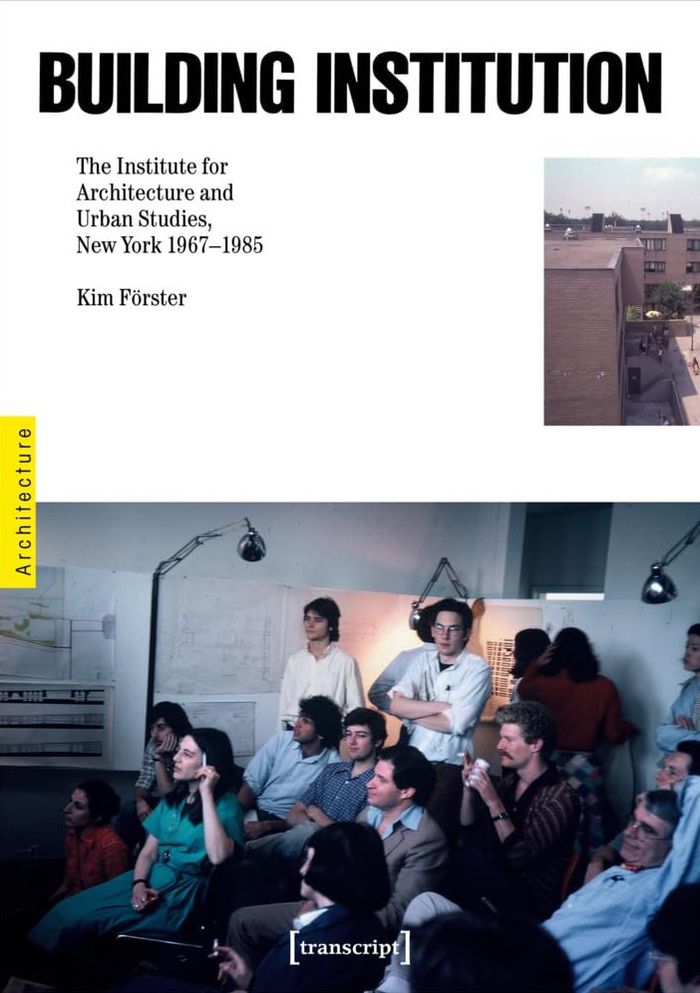
"Building Institution" chronicles the expansion of architecture as a profession and discipline in the postmodern era. Kim Förster traces the compelling history of the Institute for Architecture and Urban Studies, which was active in New York from 1967 to 1985. Drawing on extensive archival research and oral histories, he constructs a collective biography that details the Institute's diverse roles and the dynamic interplay between research and design, education, culture, and publishing. By exploring the transformation of cultural production into a practice as well as the culturalization and global postmodernization of architecture, the volume contributes significantly to the institutional history of architecture.
Building institution: the Institute for Architecture and Urban Studies, New York 1967-1985
Actions:
Prix:
$94.00
(disponible sur commande)
Résumé:
"Building Institution" chronicles the expansion of architecture as a profession and discipline in the postmodern era. Kim Förster traces the compelling history of the Institute for Architecture and Urban Studies, which was active in New York from 1967 to 1985. Drawing on extensive archival research and oral histories, he constructs a collective biography that details the Institute's diverse roles and the dynamic interplay between research and design, education, culture, and publishing. By exploring the transformation of cultural production into a practice as well as the culturalization and global postmodernization of architecture, the volume contributes significantly to the institutional history of architecture.
Classification:
livres
livres
Publication:
octobre 2024
octobre 2024
Sujet:
Théorie de l’architecture
Théorie de l’architecture
Classification:
livres
livres
Titre:
Forms of Errantry
Forms of Errantry
Actions:
Prix:
$23.00
(disponible en magasin)
Résumé:
How can the form of experimental documentary address the legacies of colonization as they are lived today? Between India and Haiti, Scholar Lakshmi Padmanabhan and filmmaker Miryam Charles follow the routes opened up by this question to explore histories of survival and the aesthetics of errantry. Contributors offer poetic responses explored in the fissures between image(...)
$23.00
(disponible en magasin)
Résumé:
How can the form of experimental documentary address the legacies of colonization as they are lived today? Between India and Haiti, Scholar Lakshmi Padmanabhan and filmmaker Miryam Charles follow the routes opened up by this question to explore histories of survival and the aesthetics of errantry. Contributors offer poetic responses explored in the fissures between image(...)
Titre:
Forms of Errantry
Actions:
Prix:
$23.00
(disponible en magasin)
Résumé:
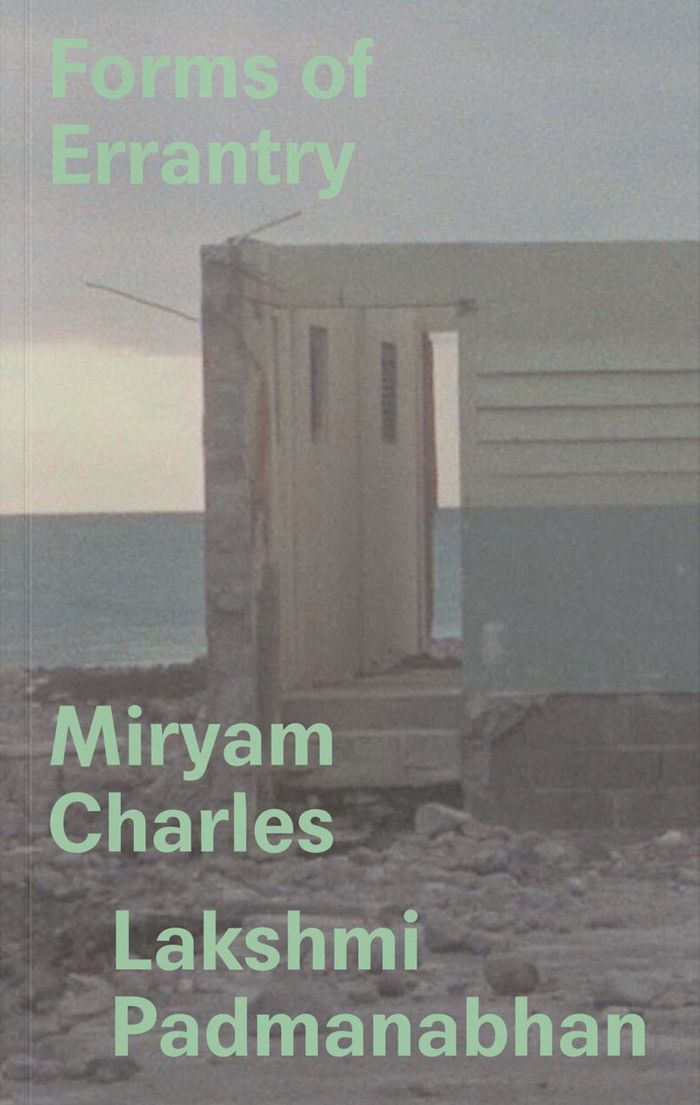
How can the form of experimental documentary address the legacies of colonization as they are lived today? Between India and Haiti, Scholar Lakshmi Padmanabhan and filmmaker Miryam Charles follow the routes opened up by this question to explore histories of survival and the aesthetics of errantry. Contributors offer poetic responses explored in the fissures between image and sound, personal narrative and political history, and in the juxtapositions between the dream of an anticolonial future, and the nightmare of our globalized present.
Forms of Errantry
Actions:
Prix:
$23.00
(disponible en magasin)
Résumé:
How can the form of experimental documentary address the legacies of colonization as they are lived today? Between India and Haiti, Scholar Lakshmi Padmanabhan and filmmaker Miryam Charles follow the routes opened up by this question to explore histories of survival and the aesthetics of errantry. Contributors offer poetic responses explored in the fissures between image and sound, personal narrative and political history, and in the juxtapositions between the dream of an anticolonial future, and the nightmare of our globalized present.
Classification:
livres
livres
Publication:
septembre 2024
septembre 2024
Sujet:
Théorie de l’art
Théorie de l’art


