


13794 Résultats
Classification:
livres
livres
Actions:
Prix:
$38.95
(disponible sur commande)
Résumé:
Le ve´lo est a` nouveau un mode de de´placement central dans la me´tropole parisienne. Le de´veloppement d’ame´nagements et de services stimule´s par les mobilisations citoyennes a permis de multiplier par dix l’usage du ve´lo au cours des trente dernie`res anne´es. Ce renouveau cycliste rappelle que Paris et le ve´lo entretiennent une relation e´troite depuis plus de(...)
$38.95
(disponible sur commande)
Résumé:
Le ve´lo est a` nouveau un mode de de´placement central dans la me´tropole parisienne. Le de´veloppement d’ame´nagements et de services stimule´s par les mobilisations citoyennes a permis de multiplier par dix l’usage du ve´lo au cours des trente dernie`res anne´es. Ce renouveau cycliste rappelle que Paris et le ve´lo entretiennent une relation e´troite depuis plus de(...)
Titre:
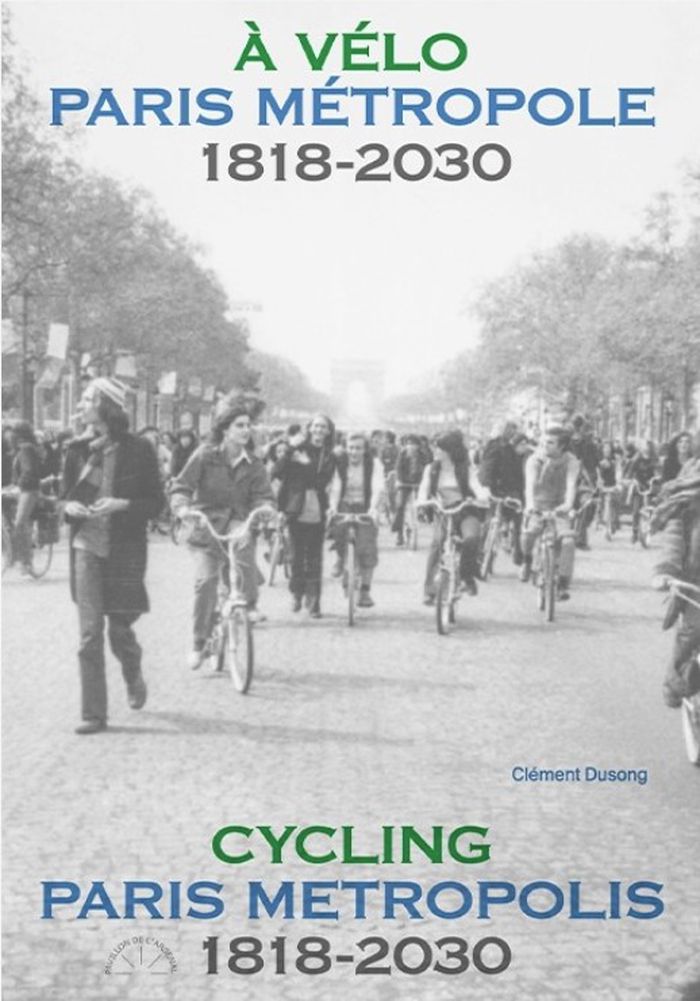
À vélo: Paris métropole1818-2030 / Cycling: Paris metropolis 1818-2030
Actions:
Prix:
$38.95
(disponible sur commande)
Résumé:
Le ve´lo est a` nouveau un mode de de´placement central dans la me´tropole parisienne. Le de´veloppement d’ame´nagements et de services stimule´s par les mobilisations citoyennes a permis de multiplier par dix l’usage du ve´lo au cours des trente dernie`res anne´es. Ce renouveau cycliste rappelle que Paris et le ve´lo entretiennent une relation e´troite depuis plus de deux sie`cles. Ce lien remonte d’ailleurs a` son invention puisqu’en 1818, son cre´ateur choisit la capitale pour sa premie`re de´monstration mondiale.
À vélo: Paris métropole1818-2030 / Cycling: Paris metropolis 1818-2030
Actions:
Prix:
$38.95
(disponible sur commande)
Résumé:
Le ve´lo est a` nouveau un mode de de´placement central dans la me´tropole parisienne. Le de´veloppement d’ame´nagements et de services stimule´s par les mobilisations citoyennes a permis de multiplier par dix l’usage du ve´lo au cours des trente dernie`res anne´es. Ce renouveau cycliste rappelle que Paris et le ve´lo entretiennent une relation e´troite depuis plus de deux sie`cles. Ce lien remonte d’ailleurs a` son invention puisqu’en 1818, son cre´ateur choisit la capitale pour sa premie`re de´monstration mondiale.
Classification:
livres
livres
Publication:
juin 2024
juin 2024
Sujet:
Théorie de l’urbanisme
Théorie de l’urbanisme
Classification:
livres
livres
Titre:
Walking as research practice
Walking as research practice
Actions:
Prix:
$59.95
(disponible en magasin)
Résumé:
What might be considered the research output of a walking practice? An important caveat to this would be to ask where and when the research occurs in relation to the walk, the walking, and the walkers. Does the walk activate our senses, or do our senses demand that we walk? Since walking involves encounters with various objects and subjects, how might it help us emphasise(...)
$59.95
(disponible en magasin)
Résumé:
What might be considered the research output of a walking practice? An important caveat to this would be to ask where and when the research occurs in relation to the walk, the walking, and the walkers. Does the walk activate our senses, or do our senses demand that we walk? Since walking involves encounters with various objects and subjects, how might it help us emphasise(...)
Titre:
Walking as research practice
Actions:
Prix:
$59.95
(disponible en magasin)
Résumé:
What might be considered the research output of a walking practice? An important caveat to this would be to ask where and when the research occurs in relation to the walk, the walking, and the walkers. Does the walk activate our senses, or do our senses demand that we walk? Since walking involves encounters with various objects and subjects, how might it help us emphasise our connection to the more-than-human world? In addition, walking reveals different entry points to a city. Could walking provide a path toward more socially just urban spaces and commons? With an introduction by design critic and educator Alice Twemlow and urbanist and researcher Tânia A. Cardoso. Published in collaboration with Soapbox Journal.
Walking as research practice
Actions:
Prix:
$59.95
(disponible en magasin)
Résumé:
What might be considered the research output of a walking practice? An important caveat to this would be to ask where and when the research occurs in relation to the walk, the walking, and the walkers. Does the walk activate our senses, or do our senses demand that we walk? Since walking involves encounters with various objects and subjects, how might it help us emphasise our connection to the more-than-human world? In addition, walking reveals different entry points to a city. Could walking provide a path toward more socially just urban spaces and commons? With an introduction by design critic and educator Alice Twemlow and urbanist and researcher Tânia A. Cardoso. Published in collaboration with Soapbox Journal.
Classification:
livres
livres
Publication:
septembre 2024
septembre 2024
Sujet:
Théorie de l’art
Théorie de l’art
Classification:
livres
livres

Actions:
Prix:
$28.00
(disponible en magasin)
Résumé:
"A tree," is about vegetal agency, plant knowledge, and the interaction between plants and people, with a specific focus on trees. This book comprises a variety of contributions that take a multitude of approaches to tree life, from sensory to ancestral, intimate to speculative. Taking the time to think about trees through imagination, art, music, storytelling, poetry,(...)
$28.00
(disponible en magasin)
Résumé:
"A tree," is about vegetal agency, plant knowledge, and the interaction between plants and people, with a specific focus on trees. This book comprises a variety of contributions that take a multitude of approaches to tree life, from sensory to ancestral, intimate to speculative. Taking the time to think about trees through imagination, art, music, storytelling, poetry,(...)
Titre:
A tree: A reader on arboreal kinship
Actions:
Prix:
$28.00
(disponible en magasin)
Résumé:
"A tree," is about vegetal agency, plant knowledge, and the interaction between plants and people, with a specific focus on trees. This book comprises a variety of contributions that take a multitude of approaches to tree life, from sensory to ancestral, intimate to speculative. Taking the time to think about trees through imagination, art, music, storytelling, poetry, and images, the works in this reader share the aim of nurturing and furthering dialogue that exercises arboreal kinship. Moreover, the contributions inspire us to move beyond large systems of oppression and towards exorcizing anthropocentrism, capitalism, individualism, heteronormativity, and coloniality, by learning from and with tree time.
A tree: A reader on arboreal kinship
Actions:
Prix:
$28.00
(disponible en magasin)
Résumé:
"A tree," is about vegetal agency, plant knowledge, and the interaction between plants and people, with a specific focus on trees. This book comprises a variety of contributions that take a multitude of approaches to tree life, from sensory to ancestral, intimate to speculative. Taking the time to think about trees through imagination, art, music, storytelling, poetry, and images, the works in this reader share the aim of nurturing and furthering dialogue that exercises arboreal kinship. Moreover, the contributions inspire us to move beyond large systems of oppression and towards exorcizing anthropocentrism, capitalism, individualism, heteronormativity, and coloniality, by learning from and with tree time.
Classification:
livres
livres
Publication:
juillet 2025
juillet 2025
Sujet:
Théorie de l’art
Théorie de l’art
Classification:
livres
livres
Titre:
Is art history?
Is art history?
Actions:
Prix:
$58.00
(disponible sur commande)
Résumé:
A definitive volume of writings by one of the most renowned art historians of the past century, "Is Art History?" brings together Svetlana Alpers’ contributions to the art historical discipline. Her writing spans over six decades: beginning with seminal essays written in examination of the constraints of the art historical discipline, including a foundational essay on(...)
$58.00
(disponible sur commande)
Résumé:
A definitive volume of writings by one of the most renowned art historians of the past century, "Is Art History?" brings together Svetlana Alpers’ contributions to the art historical discipline. Her writing spans over six decades: beginning with seminal essays written in examination of the constraints of the art historical discipline, including a foundational essay on(...)
Titre:
Is art history?
Actions:
Prix:
$58.00
(disponible sur commande)
Résumé:
A definitive volume of writings by one of the most renowned art historians of the past century, "Is Art History?" brings together Svetlana Alpers’ contributions to the art historical discipline. Her writing spans over six decades: beginning with seminal essays written in examination of the constraints of the art historical discipline, including a foundational essay on Vasari (1960), "Is Art History?" (1970), "Style Is What You Make It" (1979) and "Art History and Its Exclusions" (1982); two never before published lectures and other unpublished public presentations; notable critical essays on art and recent texts on contemporary artists including Alex Katz, Catherine Murphy and Shirley Jaffe. "Is Art History?" also includes new prefatory notes written by the author for this occasion, an unexpected introduction by her former student, the esteemed scholar-critic Richard Meyer, and an interview with the German author and critic Ulf Erdmann Ziegler. This extensive view of Alpers’ prolific and varied career appeals both to new readers in need of an introduction and to audiences familiar with her essential writing on the great European tradition of painting.
Is art history?
Actions:
Prix:
$58.00
(disponible sur commande)
Résumé:
A definitive volume of writings by one of the most renowned art historians of the past century, "Is Art History?" brings together Svetlana Alpers’ contributions to the art historical discipline. Her writing spans over six decades: beginning with seminal essays written in examination of the constraints of the art historical discipline, including a foundational essay on Vasari (1960), "Is Art History?" (1970), "Style Is What You Make It" (1979) and "Art History and Its Exclusions" (1982); two never before published lectures and other unpublished public presentations; notable critical essays on art and recent texts on contemporary artists including Alex Katz, Catherine Murphy and Shirley Jaffe. "Is Art History?" also includes new prefatory notes written by the author for this occasion, an unexpected introduction by her former student, the esteemed scholar-critic Richard Meyer, and an interview with the German author and critic Ulf Erdmann Ziegler. This extensive view of Alpers’ prolific and varied career appeals both to new readers in need of an introduction and to audiences familiar with her essential writing on the great European tradition of painting.
Classification:
livres
livres
Publication:
septembre 2024
septembre 2024
Sujet:
Théorie de l’art
Théorie de l’art
Classification:
livres
livres
Actions:
Prix:
$22.95
(disponible sur commande)
Résumé:
« La nature oppose ses ciels calmes et ses raisons à la folie des hommes. » Ni « éclaireur » de l’écologie radicale, ni « pionnier » de la décroissance – les deux termes n’apparaîtront que bien après sa mort –, le philosophe, écrivain et journaliste Albert Camus (1913-1960) peut cependant être qualifié de lanceur d’alerte. En effet, il a su avertir du danger des(...)
$22.95
(disponible sur commande)
Résumé:
« La nature oppose ses ciels calmes et ses raisons à la folie des hommes. » Ni « éclaireur » de l’écologie radicale, ni « pionnier » de la décroissance – les deux termes n’apparaîtront que bien après sa mort –, le philosophe, écrivain et journaliste Albert Camus (1913-1960) peut cependant être qualifié de lanceur d’alerte. En effet, il a su avertir du danger des(...)
Titre:
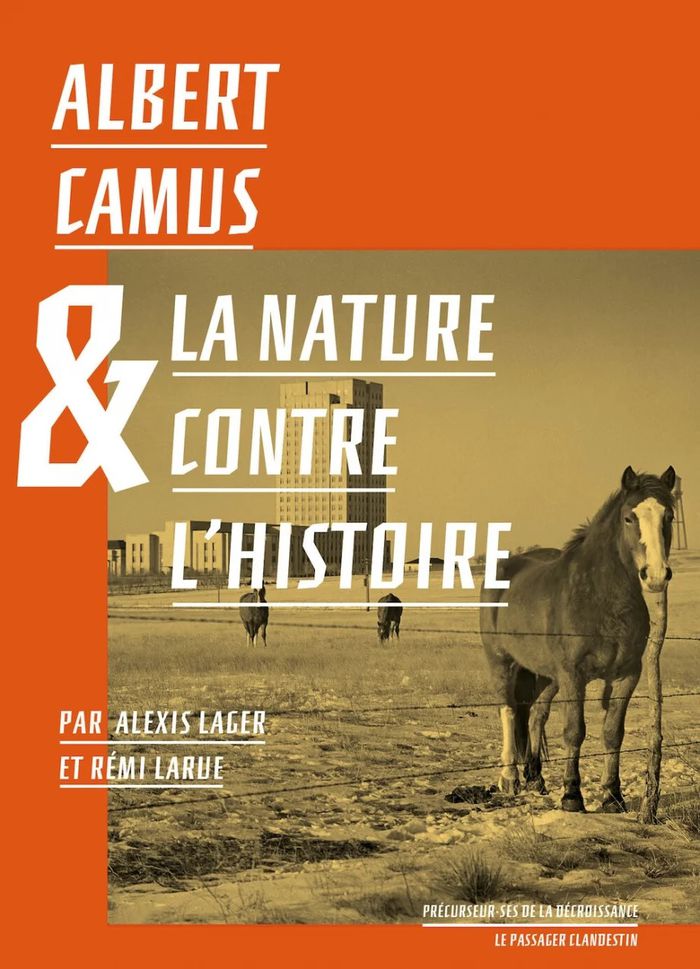
Albert Camus & la nature contre l'histoire
Actions:
Prix:
$22.95
(disponible sur commande)
Résumé:
« La nature oppose ses ciels calmes et ses raisons à la folie des hommes. » Ni « éclaireur » de l’écologie radicale, ni « pionnier » de la décroissance – les deux termes n’apparaîtront que bien après sa mort –, le philosophe, écrivain et journaliste Albert Camus (1913-1960) peut cependant être qualifié de lanceur d’alerte. En effet, il a su avertir du danger des idéologies totalitaires, s’élever face à l’exploitation de l’homme par l’homme, dénoncer la défiguration des paysages par la civilisation industrielle, le culte de la raison et du progrès ainsi que l’exil de la beauté naturelle.Alexis Lager et Rémi Larue souhaitent ici interroger la tension entre les notions de « nature » et d’« histoire » afin de mieux mettre en lumière ce que la pensée d’Albert Camus a pu, directement ou indirectement, léguer à l’écologie politique et aux pensées de la décroissance.
Albert Camus & la nature contre l'histoire
Actions:
Prix:
$22.95
(disponible sur commande)
Résumé:
« La nature oppose ses ciels calmes et ses raisons à la folie des hommes. » Ni « éclaireur » de l’écologie radicale, ni « pionnier » de la décroissance – les deux termes n’apparaîtront que bien après sa mort –, le philosophe, écrivain et journaliste Albert Camus (1913-1960) peut cependant être qualifié de lanceur d’alerte. En effet, il a su avertir du danger des idéologies totalitaires, s’élever face à l’exploitation de l’homme par l’homme, dénoncer la défiguration des paysages par la civilisation industrielle, le culte de la raison et du progrès ainsi que l’exil de la beauté naturelle.Alexis Lager et Rémi Larue souhaitent ici interroger la tension entre les notions de « nature » et d’« histoire » afin de mieux mettre en lumière ce que la pensée d’Albert Camus a pu, directement ou indirectement, léguer à l’écologie politique et aux pensées de la décroissance.
Classification:
livres
livres
Publication:
septembre 2024
septembre 2024
Sujet:
Théorie/ philosophie
Théorie/ philosophie
Classification:
livres
livres
Actions:
Prix:
$46.95
(disponible sur commande)
Résumé:
Explorer les relations subtiles entre l’art concret et la nature, tel est le dessein de cet ouvrage placé sous le signe d’une sculpture de Jean Arp dont le titre, Homme vu par une fleur, invite à renverser toutes nos certitudes. Des chemins de traverse sont empruntés pour observer la manière dont la nature s’immisce dans les problèmes mathématiques de Max Bill, s’octroie(...)
$46.95
(disponible sur commande)
Résumé:
Explorer les relations subtiles entre l’art concret et la nature, tel est le dessein de cet ouvrage placé sous le signe d’une sculpture de Jean Arp dont le titre, Homme vu par une fleur, invite à renverser toutes nos certitudes. Des chemins de traverse sont empruntés pour observer la manière dont la nature s’immisce dans les problèmes mathématiques de Max Bill, s’octroie(...)
Titre:
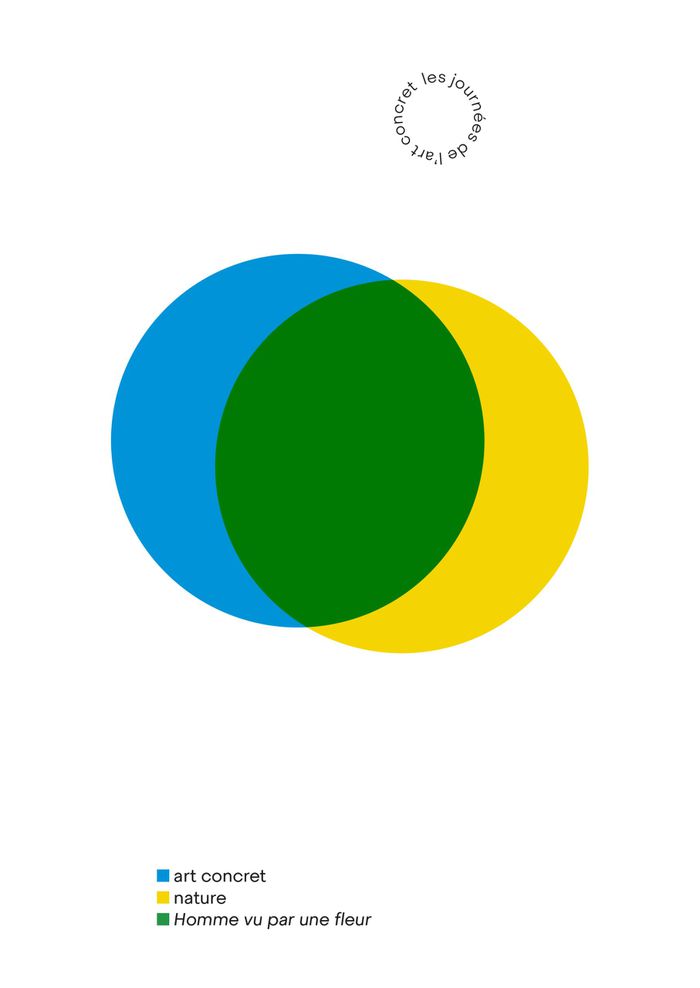
Art concret + Nature = Homme vu par une fleur
Actions:
Prix:
$46.95
(disponible sur commande)
Résumé:
Explorer les relations subtiles entre l’art concret et la nature, tel est le dessein de cet ouvrage placé sous le signe d’une sculpture de Jean Arp dont le titre, Homme vu par une fleur, invite à renverser toutes nos certitudes. Des chemins de traverse sont empruntés pour observer la manière dont la nature s’immisce dans les problèmes mathématiques de Max Bill, s’octroie une place non négligeable dans la création de la pionnière du Computer Art Vera Molnár, préside à la pensée écologique de Gottfried Honegger, constitue un modèle essentiel pour les artistes de ZERO tels que herman de vries ou Heinz Mack, offre un espace infini qu’explore la poète spatialiste Ilse Garnier. Pour concrétiser cette rencontre entre l’art et la nature, des jardins d’artistes, d’architectes, de designers, de paysagistes tels que Sophie Taeuber-Arp, Gabriel Guévrékian, Herbert Bayer, Roberto Burle Marx ou Gilles Clément ouvrent le champ des possibles.
Art concret + Nature = Homme vu par une fleur
Actions:
Prix:
$46.95
(disponible sur commande)
Résumé:
Explorer les relations subtiles entre l’art concret et la nature, tel est le dessein de cet ouvrage placé sous le signe d’une sculpture de Jean Arp dont le titre, Homme vu par une fleur, invite à renverser toutes nos certitudes. Des chemins de traverse sont empruntés pour observer la manière dont la nature s’immisce dans les problèmes mathématiques de Max Bill, s’octroie une place non négligeable dans la création de la pionnière du Computer Art Vera Molnár, préside à la pensée écologique de Gottfried Honegger, constitue un modèle essentiel pour les artistes de ZERO tels que herman de vries ou Heinz Mack, offre un espace infini qu’explore la poète spatialiste Ilse Garnier. Pour concrétiser cette rencontre entre l’art et la nature, des jardins d’artistes, d’architectes, de designers, de paysagistes tels que Sophie Taeuber-Arp, Gabriel Guévrékian, Herbert Bayer, Roberto Burle Marx ou Gilles Clément ouvrent le champ des possibles.
Classification:
livres
livres
Publication:
septembre 2024
septembre 2024
Sujet:
Théorie de l’art
Théorie de l’art
Classification:
livres
livres
Prix:
$24.95
(disponible sur commande)
Résumé:
Dans ce nouveau livre, László Földényi recrée le rêve de la ville idéale à travers l'histoire et son destin inéluctable : la ruine, « qui marche comme un spectre à travers la perfection immaculée, » la ruine, comme « un filigrane dans la structure des édifices destinés à l'éternité. » Du totalitarisme à la peinture de la Renaissance ou aux peintures métaphysiques sur(...)
$24.95
(disponible sur commande)
Résumé:
Dans ce nouveau livre, László Földényi recrée le rêve de la ville idéale à travers l'histoire et son destin inéluctable : la ruine, « qui marche comme un spectre à travers la perfection immaculée, » la ruine, comme « un filigrane dans la structure des édifices destinés à l'éternité. » Du totalitarisme à la peinture de la Renaissance ou aux peintures métaphysiques sur(...)
Titre:
Les espaces de la mort vivante : Kafka, De Chirico et les autres
Actions:
Prix:
$24.95
(disponible sur commande)
Résumé:
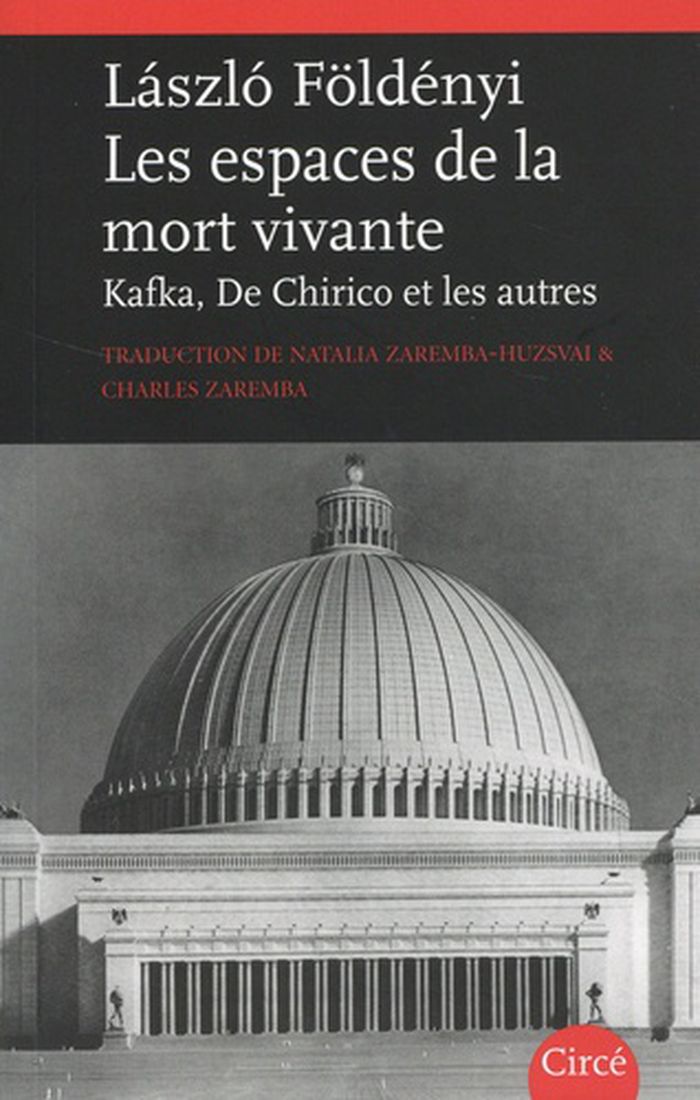
Dans ce nouveau livre, László Földényi recrée le rêve de la ville idéale à travers l'histoire et son destin inéluctable : la ruine, « qui marche comme un spectre à travers la perfection immaculée, » la ruine, comme « un filigrane dans la structure des édifices destinés à l'éternité. » Du totalitarisme à la peinture de la Renaissance ou aux peintures métaphysiques sur lesquelles de Chirico a travaillé pendant la Première Guerre mondiale, en passant par la perfection descriptive des espaces bureaucratiques de Kafka, où la mort, la vie et le sommeil s'amalgament. László Földényi affiche une capacité de réflexion qui enrichit sans aucun doute celle des lecteurs et le confirme comme l'un des plus brillants essayistes et historiens des idées en Europe aujourd'hui.
Les espaces de la mort vivante : Kafka, De Chirico et les autres
Actions:
Prix:
$24.95
(disponible sur commande)
Résumé:
Dans ce nouveau livre, László Földényi recrée le rêve de la ville idéale à travers l'histoire et son destin inéluctable : la ruine, « qui marche comme un spectre à travers la perfection immaculée, » la ruine, comme « un filigrane dans la structure des édifices destinés à l'éternité. » Du totalitarisme à la peinture de la Renaissance ou aux peintures métaphysiques sur lesquelles de Chirico a travaillé pendant la Première Guerre mondiale, en passant par la perfection descriptive des espaces bureaucratiques de Kafka, où la mort, la vie et le sommeil s'amalgament. László Földényi affiche une capacité de réflexion qui enrichit sans aucun doute celle des lecteurs et le confirme comme l'un des plus brillants essayistes et historiens des idées en Europe aujourd'hui.
Classification:
livres
livres
Publication:
septembre 2024
septembre 2024
Sujet:
Théorie/ philosophie
Théorie/ philosophie
Classification:
livres
livres
Actions:
Prix:
$44.95
(disponible sur commande)
Résumé:
Philosophe, sociologue, Jean Baudrillard fut dès les années 70 un penseur de la « dissolution du réel », que la société de consommation aurait substitué par une série de « simulacres ». Connu pour ses analyses de la postmodernité, il décrit la façon dont l’image (d’un objet, d’une œuvre) apparaît comme plus réelle que l’original. Quel rapport le philosophe a-t-il(...)
$44.95
(disponible sur commande)
Résumé:
Philosophe, sociologue, Jean Baudrillard fut dès les années 70 un penseur de la « dissolution du réel », que la société de consommation aurait substitué par une série de « simulacres ». Connu pour ses analyses de la postmodernité, il décrit la façon dont l’image (d’un objet, d’une œuvre) apparaît comme plus réelle que l’original. Quel rapport le philosophe a-t-il(...)
Titre:
Baudrillard et le monstre (l'architecture)
Actions:
Prix:
$44.95
(disponible sur commande)
Résumé:
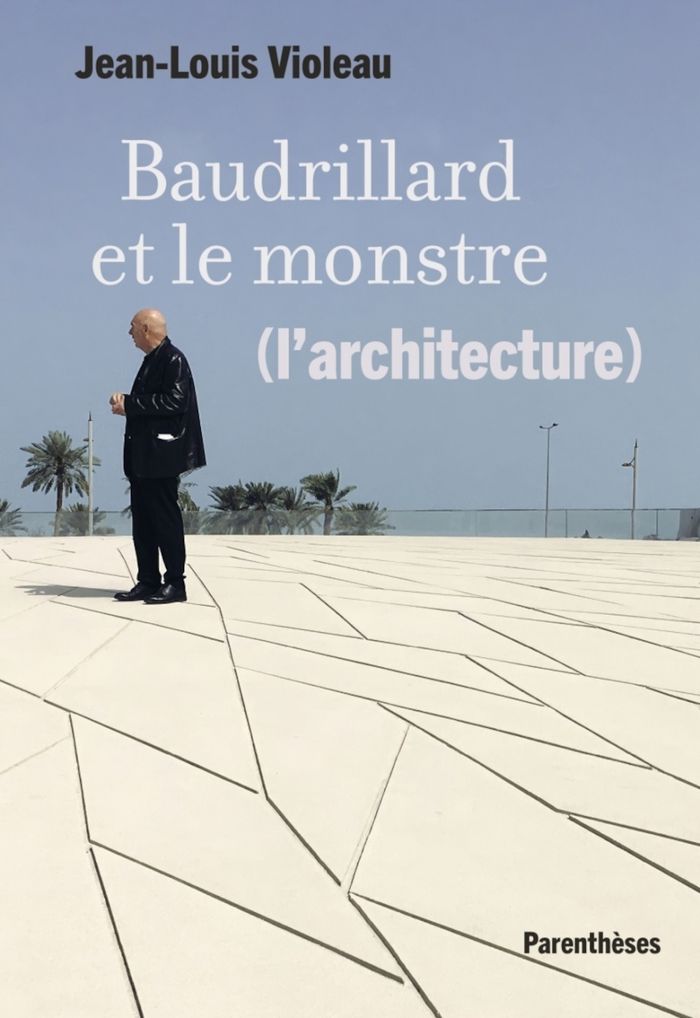
Philosophe, sociologue, Jean Baudrillard fut dès les années 70 un penseur de la « dissolution du réel », que la société de consommation aurait substitué par une série de « simulacres ». Connu pour ses analyses de la postmodernité, il décrit la façon dont l’image (d’un objet, d’une œuvre) apparaît comme plus réelle que l’original. Quel rapport le philosophe a-t-il entretenu avec [le monstre qu’est] l’architecture, lui qui, en 2013, a coécrit, avec Jean Nouvel « Les objets singuliers, Architecture et philosophie » et publié « Vérité ou radicalité de l’architecture »? Cet ouvrage au ton incisif entreprend d’y répondre au travers d’exemples d’une architecture qui s’affranchit de la nécessité, et de la fatalité du solide – de Disneyland à Europacity – et fait le jeu des starchitectes.
Baudrillard et le monstre (l'architecture)
Actions:
Prix:
$44.95
(disponible sur commande)
Résumé:
Philosophe, sociologue, Jean Baudrillard fut dès les années 70 un penseur de la « dissolution du réel », que la société de consommation aurait substitué par une série de « simulacres ». Connu pour ses analyses de la postmodernité, il décrit la façon dont l’image (d’un objet, d’une œuvre) apparaît comme plus réelle que l’original. Quel rapport le philosophe a-t-il entretenu avec [le monstre qu’est] l’architecture, lui qui, en 2013, a coécrit, avec Jean Nouvel « Les objets singuliers, Architecture et philosophie » et publié « Vérité ou radicalité de l’architecture »? Cet ouvrage au ton incisif entreprend d’y répondre au travers d’exemples d’une architecture qui s’affranchit de la nécessité, et de la fatalité du solide – de Disneyland à Europacity – et fait le jeu des starchitectes.
Classification:
livres
livres
Publication:
août 2024
août 2024
Sujet:
Théorie de l’architecture
Théorie de l’architecture
Classification:
livres
livres
Actions:
Prix:
$95.00
(disponible en magasin)
Résumé:
"The anatomy of the architectural book" examines approaches to structuring, constructing and designing architectural books and traces how they have changed over time. The discipline has been exposed to debates, just as building construction has been exposed to the charms of book making. Examining the crossovers between book culture and building culture makes the axes(...)
$95.00
(disponible en magasin)
Résumé:
"The anatomy of the architectural book" examines approaches to structuring, constructing and designing architectural books and traces how they have changed over time. The discipline has been exposed to debates, just as building construction has been exposed to the charms of book making. Examining the crossovers between book culture and building culture makes the axes(...)
Titre:
The anatomy of the architectural book, 2nd edition
Actions:
Prix:
$95.00
(disponible en magasin)
Résumé:
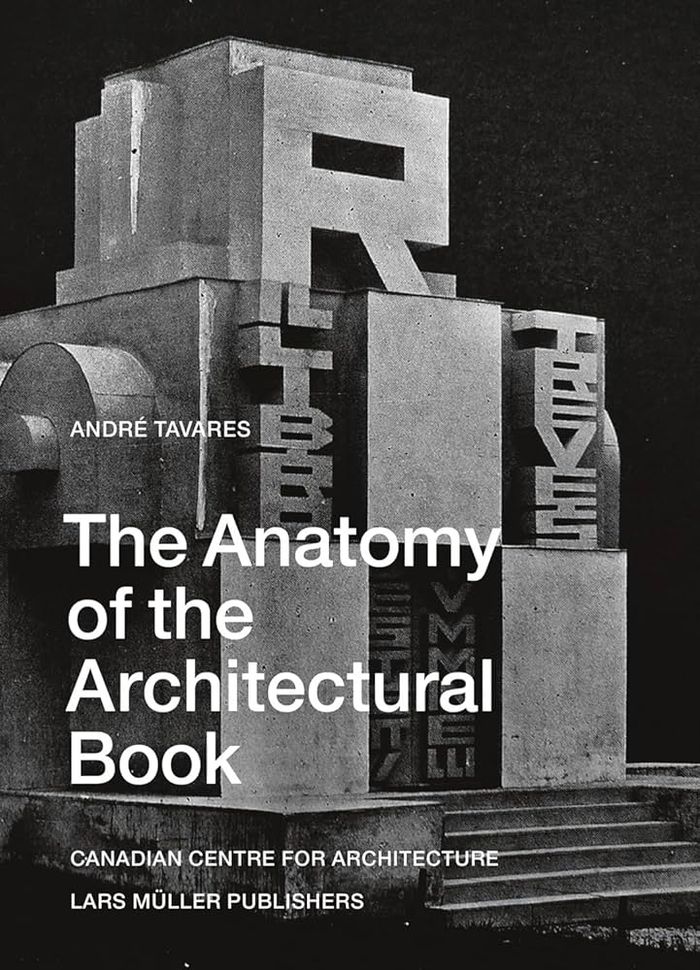
"The anatomy of the architectural book" examines approaches to structuring, constructing and designing architectural books and traces how they have changed over time. The discipline has been exposed to debates, just as building construction has been exposed to the charms of book making. Examining the crossovers between book culture and building culture makes the axes visible along which architectural knowledge circulates through books into buildings and back – from the celebration of specific architectural practices to the production of unique books, using pages and print to convey architectural ideas. Dissecting a wealth of books through five conceptual tools – texture, surface, rhythm, structure and scale – André Tavares analyzes the material qualities of books in order to assess their crossovers with architectural knowledge. The detailed history of Sigfried Giedion’s Befreites Wohnen and the two incarnations of the Crystal Palace in Hyde Park and Sydenham provide a background that confront us not only with the rise of the industrialized book but also with the configuration of the book as a unique visual device. Richly illustrated with samples from the library of the Canadian Centre for Architecture, the volume discusses a wide range of authors, including Vitruvius, William Morris, Gottfried Semper, El Lissitzky and Le Corbusier.
The anatomy of the architectural book, 2nd edition
Actions:
Prix:
$95.00
(disponible en magasin)
Résumé:
"The anatomy of the architectural book" examines approaches to structuring, constructing and designing architectural books and traces how they have changed over time. The discipline has been exposed to debates, just as building construction has been exposed to the charms of book making. Examining the crossovers between book culture and building culture makes the axes visible along which architectural knowledge circulates through books into buildings and back – from the celebration of specific architectural practices to the production of unique books, using pages and print to convey architectural ideas. Dissecting a wealth of books through five conceptual tools – texture, surface, rhythm, structure and scale – André Tavares analyzes the material qualities of books in order to assess their crossovers with architectural knowledge. The detailed history of Sigfried Giedion’s Befreites Wohnen and the two incarnations of the Crystal Palace in Hyde Park and Sydenham provide a background that confront us not only with the rise of the industrialized book but also with the configuration of the book as a unique visual device. Richly illustrated with samples from the library of the Canadian Centre for Architecture, the volume discusses a wide range of authors, including Vitruvius, William Morris, Gottfried Semper, El Lissitzky and Le Corbusier.
Classification:
livres
livres
Publication:
novembre 2024
novembre 2024
Sujet:
Théorie de l’architecture
Théorie de l’architecture
Classification:
livres
livres
Actions:
Prix:
$66.95
(disponible en magasin)
Résumé:
''Designed Forests: A Cultural History'' explores the unique kinship that exists between forests and spatial design; the forest’s influence on architectural culture and practice; and the potentials and pitfalls of “forest thinking” for more sustainable and ethical ways of doing architecture today. It tackles these subjects by focusing on architecture’s own dispositions,(...)
$66.95
(disponible en magasin)
Résumé:
''Designed Forests: A Cultural History'' explores the unique kinship that exists between forests and spatial design; the forest’s influence on architectural culture and practice; and the potentials and pitfalls of “forest thinking” for more sustainable and ethical ways of doing architecture today. It tackles these subjects by focusing on architecture’s own dispositions,(...)
Titre:
Designed forests: A cultural history
Actions:
Prix:
$66.95
(disponible en magasin)
Résumé:
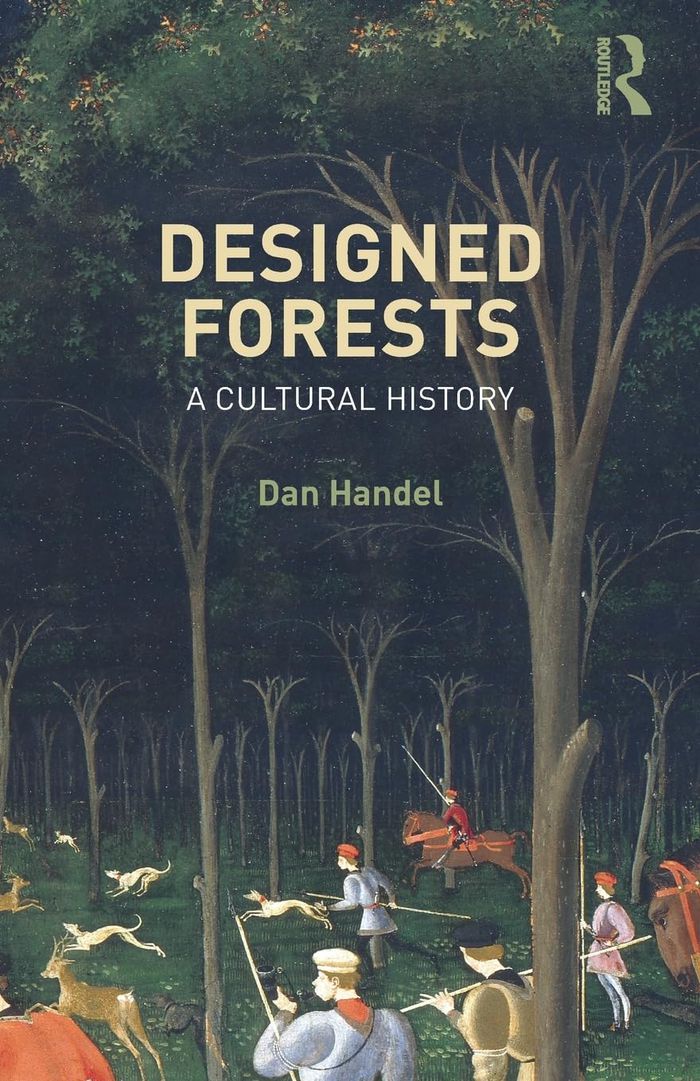
''Designed Forests: A Cultural History'' explores the unique kinship that exists between forests and spatial design; the forest’s influence on architectural culture and practice; and the potentials and pitfalls of “forest thinking” for more sustainable and ethical ways of doing architecture today. It tackles these subjects by focusing on architecture’s own dispositions, which stem from an ecology of metaphor that surrounds its encounters with the forest and undergird ideas about Nature and natural systems. The book weaves together global narratives and chapters explore a range of topics, such as the invention of forest plans in colonial India, the war waged on the jungles of Vietnam, economic land use concepts in rural Germany, precolonial ecological pasts in Manhattan, and technologically saturated forests in California. This book is essential for landscape architects, urbanists, architects, forestry experts, and everyone concerned with larger environmental contexts and the ever-evolving relationship between nature and culture.
Designed forests: A cultural history
Actions:
Prix:
$66.95
(disponible en magasin)
Résumé:
''Designed Forests: A Cultural History'' explores the unique kinship that exists between forests and spatial design; the forest’s influence on architectural culture and practice; and the potentials and pitfalls of “forest thinking” for more sustainable and ethical ways of doing architecture today. It tackles these subjects by focusing on architecture’s own dispositions, which stem from an ecology of metaphor that surrounds its encounters with the forest and undergird ideas about Nature and natural systems. The book weaves together global narratives and chapters explore a range of topics, such as the invention of forest plans in colonial India, the war waged on the jungles of Vietnam, economic land use concepts in rural Germany, precolonial ecological pasts in Manhattan, and technologically saturated forests in California. This book is essential for landscape architects, urbanists, architects, forestry experts, and everyone concerned with larger environmental contexts and the ever-evolving relationship between nature and culture.
Classification:
livres
livres
Publication:
décembre 2024
décembre 2024
Sujet:
Théorie du paysage
Théorie du paysage


