


1897 Résultats
Classification:
livres
livres
Actions:
Prix:
$24.95
(disponible en magasin)
Résumé:
A revival of the Renaissance genre of the same name, isolarii (meaning 'island texts') is a very small publication; each issue of which focuses on a different, stand-alone theme or idea. The sixth edition is titled ‘The Archipelago Conversations’ and is based on 15 years of conversations between Caribbean philosopher Édouard Glissant and his friend Hans Ulrich Obrist.(...)
$24.95
(disponible en magasin)
Résumé:
A revival of the Renaissance genre of the same name, isolarii (meaning 'island texts') is a very small publication; each issue of which focuses on a different, stand-alone theme or idea. The sixth edition is titled ‘The Archipelago Conversations’ and is based on 15 years of conversations between Caribbean philosopher Édouard Glissant and his friend Hans Ulrich Obrist.(...)
Titre:
The Archipelago conversations
Actions:
Prix:
$24.95
(disponible en magasin)
Résumé:
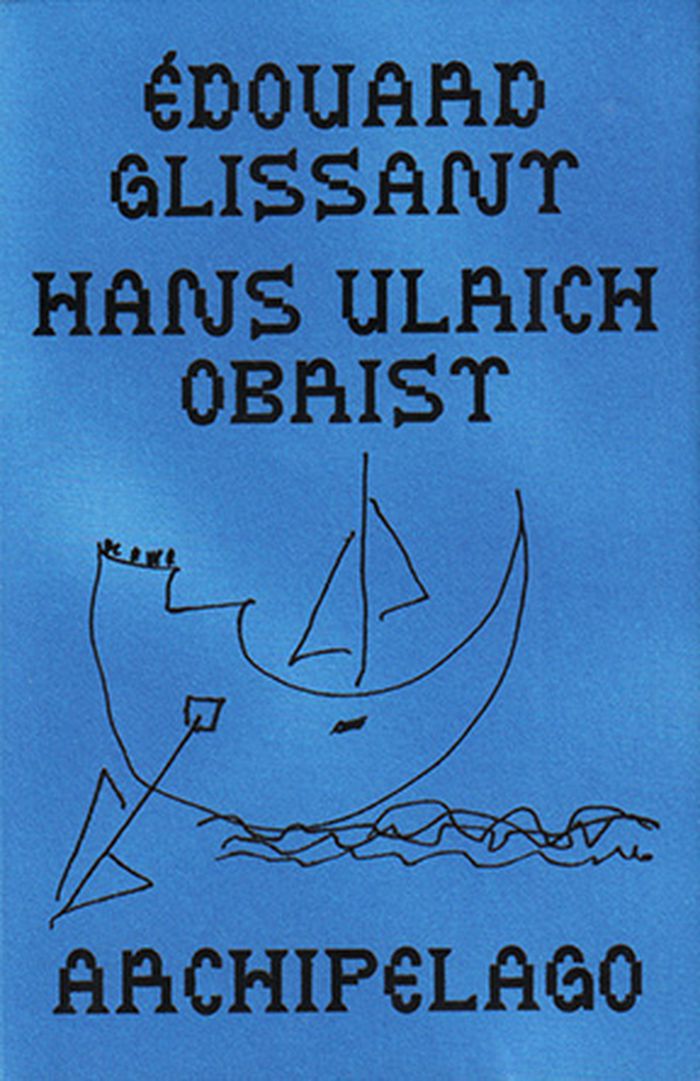
A revival of the Renaissance genre of the same name, isolarii (meaning 'island texts') is a very small publication; each issue of which focuses on a different, stand-alone theme or idea. The sixth edition is titled ‘The Archipelago Conversations’ and is based on 15 years of conversations between Caribbean philosopher Édouard Glissant and his friend Hans Ulrich Obrist. It marks the tenth anniversary of Glissant's passing. Translation by Emma Ramadan. Hans Ulrich Obrist met the Martinique-born philosopher, poet, and revolutionary Édouard Glissant in the mid-nineties; the encounter influenced the direction of Obrist's work for years to come. As one of today's most prolific producers of culture, Obrist has left an indelible mark and Glissant, in part, through him. Throughout 2021, during the pandemic and ten years after Glissant's death, Obrist has edited, reworked, and arranged their conversations in their entirety for the first time. THE ARCHIPELAGO CONVERSATIONS is the result: a book designed to introduce the most important philosopher of the 21st Century to a broad, public audience - a ready-to-hand tool for building an interdependent Earth.
The Archipelago conversations
Actions:
Prix:
$24.95
(disponible en magasin)
Résumé:
A revival of the Renaissance genre of the same name, isolarii (meaning 'island texts') is a very small publication; each issue of which focuses on a different, stand-alone theme or idea. The sixth edition is titled ‘The Archipelago Conversations’ and is based on 15 years of conversations between Caribbean philosopher Édouard Glissant and his friend Hans Ulrich Obrist. It marks the tenth anniversary of Glissant's passing. Translation by Emma Ramadan. Hans Ulrich Obrist met the Martinique-born philosopher, poet, and revolutionary Édouard Glissant in the mid-nineties; the encounter influenced the direction of Obrist's work for years to come. As one of today's most prolific producers of culture, Obrist has left an indelible mark and Glissant, in part, through him. Throughout 2021, during the pandemic and ten years after Glissant's death, Obrist has edited, reworked, and arranged their conversations in their entirety for the first time. THE ARCHIPELAGO CONVERSATIONS is the result: a book designed to introduce the most important philosopher of the 21st Century to a broad, public audience - a ready-to-hand tool for building an interdependent Earth.
Classification:
livres
livres
Publication:
mars 2022
mars 2022
Sujet:
Théorie/ philosophie
Théorie/ philosophie
Classification:
livres
livres
Actions:
Prix:
$64.00
(disponible en magasin)
Résumé:
Gordon Matta-Clark has never been an easy artist to categorize or to explain. Although trained as an architect, he has been described as a sculptor, a photographer, an organizer of performances, and a writer of manifestos, but he is best known for "un-building" abandoned structures. In the brief span of his career, from 1968 to his early death in 1978, he created an(...)
$64.00
(disponible en magasin)
Résumé:
Gordon Matta-Clark has never been an easy artist to categorize or to explain. Although trained as an architect, he has been described as a sculptor, a photographer, an organizer of performances, and a writer of manifestos, but he is best known for "un-building" abandoned structures. In the brief span of his career, from 1968 to his early death in 1978, he created an(...)
Publication:
octobre 2022
octobre 2022
Titre:
Gordon Matta-Clark: An archival sourcebook
Actions:
Prix:
$64.00
(disponible en magasin)
Résumé:
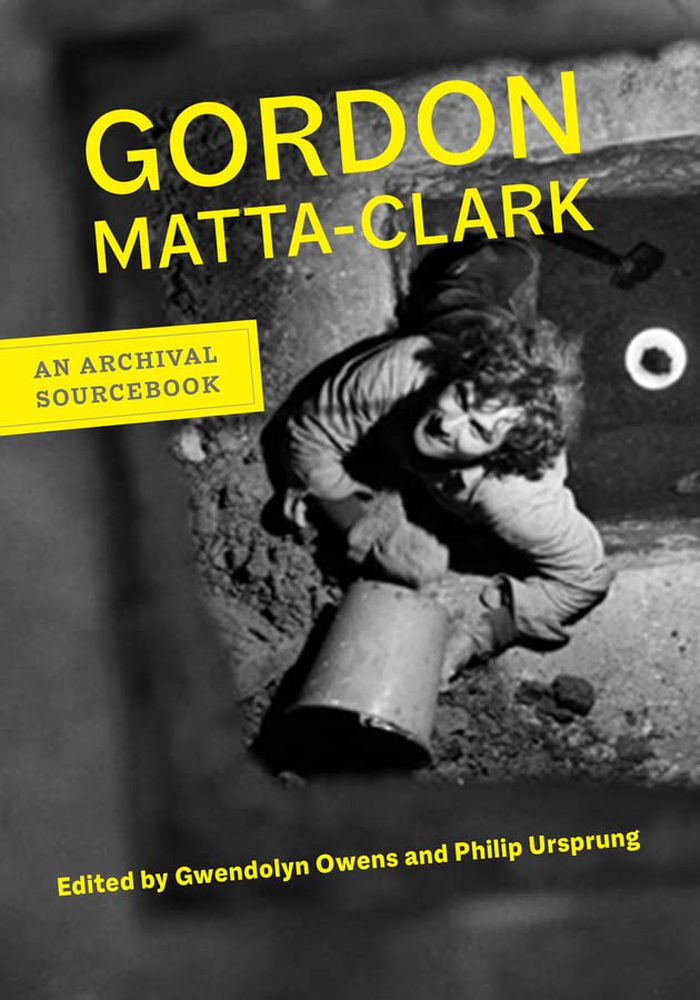
Gordon Matta-Clark has never been an easy artist to categorize or to explain. Although trained as an architect, he has been described as a sculptor, a photographer, an organizer of performances, and a writer of manifestos, but he is best known for "un-building" abandoned structures. In the brief span of his career, from 1968 to his early death in 1978, he created an oeuvre that has made him an enduring cult figure. In 2002, when Matta-Clark’s widow, Jane Crawford, put his archive on deposit at the Canadian Centre for Architecture in Montreal, it revealed a new voice in the ongoing discussion of artist/architect Matta-Clark’s work: his own. Gwendolyn Owens and Philip Ursprung’s careful selection and ordering of letters, interviews, statements, and the now-famous art cards from the CCA as well as other sources deepens our understanding of one of the most original thinkers of his generation. This publication creates a multidimensional portrait that provides an opportunity for readers to explore and enjoy the complexity and contradiction that was Gordon Matta-Clark.
Gordon Matta-Clark: An archival sourcebook
Actions:
Prix:
$64.00
(disponible en magasin)
Résumé:
Gordon Matta-Clark has never been an easy artist to categorize or to explain. Although trained as an architect, he has been described as a sculptor, a photographer, an organizer of performances, and a writer of manifestos, but he is best known for "un-building" abandoned structures. In the brief span of his career, from 1968 to his early death in 1978, he created an oeuvre that has made him an enduring cult figure. In 2002, when Matta-Clark’s widow, Jane Crawford, put his archive on deposit at the Canadian Centre for Architecture in Montreal, it revealed a new voice in the ongoing discussion of artist/architect Matta-Clark’s work: his own. Gwendolyn Owens and Philip Ursprung’s careful selection and ordering of letters, interviews, statements, and the now-famous art cards from the CCA as well as other sources deepens our understanding of one of the most original thinkers of his generation. This publication creates a multidimensional portrait that provides an opportunity for readers to explore and enjoy the complexity and contradiction that was Gordon Matta-Clark.
Classification:
livres
livres
Publication:
octobre 2022
octobre 2022
Classification:
livres
livres
Actions:
Prix:
$60.00
(disponible sur commande)
Résumé:
A widely connected pioneer of Pop and mail art, Ray Johnson was described as ''New York’s most famous unknown artist.'' Best known for his dense, allusive collages, he stopped exhibiting in 1991, but his output did not diminish. Between 1992 and 1994, using 137 disposable cameras, he created a large body of work that is only now coming to light. Staging his artworks in(...)
$60.00
(disponible sur commande)
Résumé:
A widely connected pioneer of Pop and mail art, Ray Johnson was described as ''New York’s most famous unknown artist.'' Best known for his dense, allusive collages, he stopped exhibiting in 1991, but his output did not diminish. Between 1992 and 1994, using 137 disposable cameras, he created a large body of work that is only now coming to light. Staging his artworks in(...)
Titre:
Please send to real life: Ray Johnson photographs
Actions:
Prix:
$60.00
(disponible sur commande)
Résumé:
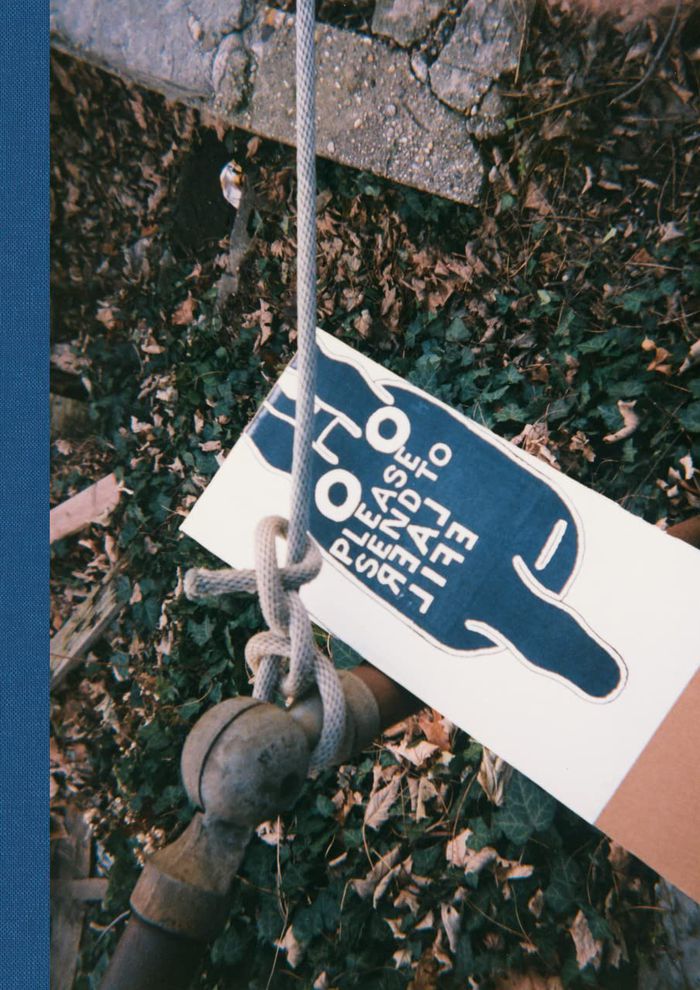
A widely connected pioneer of Pop and mail art, Ray Johnson was described as ''New York’s most famous unknown artist.'' Best known for his dense, allusive collages, he stopped exhibiting in 1991, but his output did not diminish. Between 1992 and 1994, using 137 disposable cameras, he created a large body of work that is only now coming to light. Staging his artworks in settings near his home in Locust Valley, Long Island — parking lots, sidewalks, beaches, cemeteries — Johnson made photographs that make the world of everyday ''real life'' a part of his art. Within a few months, he devised a large new freestanding format for the simplified collages he began calling the ''movie stars'' of his camera tableaux. When he swam to his death at sea on 13 January 1995, Johnson left behind a vast archive that included over three thousand of the late photographs. What he called his ''new career as a photographer,'' which makes its debut in print here, marked the close of a romance with the camera that had spanned four decades of relentless invention.
Please send to real life: Ray Johnson photographs
Actions:
Prix:
$60.00
(disponible sur commande)
Résumé:
A widely connected pioneer of Pop and mail art, Ray Johnson was described as ''New York’s most famous unknown artist.'' Best known for his dense, allusive collages, he stopped exhibiting in 1991, but his output did not diminish. Between 1992 and 1994, using 137 disposable cameras, he created a large body of work that is only now coming to light. Staging his artworks in settings near his home in Locust Valley, Long Island — parking lots, sidewalks, beaches, cemeteries — Johnson made photographs that make the world of everyday ''real life'' a part of his art. Within a few months, he devised a large new freestanding format for the simplified collages he began calling the ''movie stars'' of his camera tableaux. When he swam to his death at sea on 13 January 1995, Johnson left behind a vast archive that included over three thousand of the late photographs. What he called his ''new career as a photographer,'' which makes its debut in print here, marked the close of a romance with the camera that had spanned four decades of relentless invention.
Classification:
livres
livres
Publication:
juin 2022
juin 2022
Sujet:
Monographies photo
Monographies photo
Classification:
livres
livres
Actions:
Prix:
$60.00
(disponible sur commande)
Résumé:
The Ballets Russes was a phenomenon of the early twentieth century, permeating daily life wherever the company traveled and leaving a lasting impact on dance, theater, and the visual arts. Sergei Diaghilev, impresario from 1909 until his death in 1929, fused the most avant-garde, groundbreaking movements in dance, choreography, art, design, and costume into unique and(...)
$60.00
(disponible sur commande)
Résumé:
The Ballets Russes was a phenomenon of the early twentieth century, permeating daily life wherever the company traveled and leaving a lasting impact on dance, theater, and the visual arts. Sergei Diaghilev, impresario from 1909 until his death in 1929, fused the most avant-garde, groundbreaking movements in dance, choreography, art, design, and costume into unique and(...)
Sujet:
Design, époques et styles
Design, époques et styles
Publication:
décembre 2009
décembre 2009
Titre:
The ballets russes and the art of design
Actions:
Prix:
$60.00
(disponible sur commande)
Résumé:
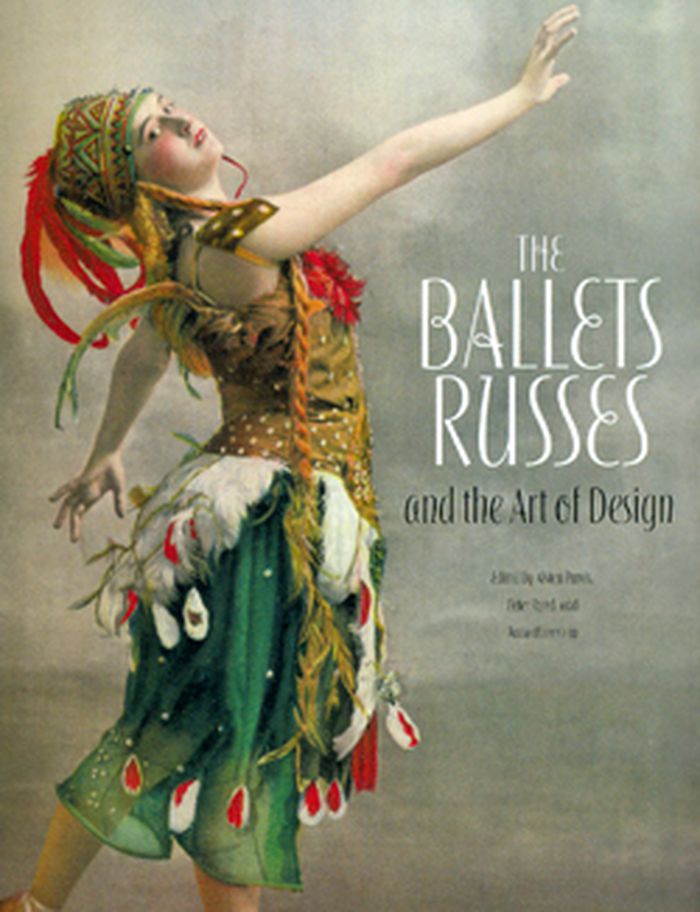
The Ballets Russes was a phenomenon of the early twentieth century, permeating daily life wherever the company traveled and leaving a lasting impact on dance, theater, and the visual arts. Sergei Diaghilev, impresario from 1909 until his death in 1929, fused the most avant-garde, groundbreaking movements in dance, choreography, art, design, and costume into unique and stunning productions. The work was exciting, and always new, and it stretched the limits of the possible in art. The color, form, and material in costume and set design astonished audiences, transforming every corner of Western culture in the twentieth century. The Ballets Russes and the Art of Design explores these revolutionary icons and ideas, illuminating Sergei Diaghilev's profound revitalization of the arts, which continues to influence us today. Ten essays by internationally recognized experts and 200 color and black-and-white illustrations—many from private collections and never-before-published—discuss a broad range of topics, including set and costume designs, graphic design and poster art, photographs and postcards, Diaghilev's presence in the media, and private and museum collections of Ballets Russes treasures.
The ballets russes and the art of design
Actions:
Prix:
$60.00
(disponible sur commande)
Résumé:
The Ballets Russes was a phenomenon of the early twentieth century, permeating daily life wherever the company traveled and leaving a lasting impact on dance, theater, and the visual arts. Sergei Diaghilev, impresario from 1909 until his death in 1929, fused the most avant-garde, groundbreaking movements in dance, choreography, art, design, and costume into unique and stunning productions. The work was exciting, and always new, and it stretched the limits of the possible in art. The color, form, and material in costume and set design astonished audiences, transforming every corner of Western culture in the twentieth century. The Ballets Russes and the Art of Design explores these revolutionary icons and ideas, illuminating Sergei Diaghilev's profound revitalization of the arts, which continues to influence us today. Ten essays by internationally recognized experts and 200 color and black-and-white illustrations—many from private collections and never-before-published—discuss a broad range of topics, including set and costume designs, graphic design and poster art, photographs and postcards, Diaghilev's presence in the media, and private and museum collections of Ballets Russes treasures.
Classification:
livres
livres
Publication:
décembre 2009
décembre 2009
Sujet:
Design, époques et styles
Design, époques et styles
Classification:
livres
livres
Titre:
Performing Xenakis
Performing Xenakis
Actions:
Prix:
$44.95
(disponible sur commande)
Résumé:
This volume is a collection of essays by thirty contributors, all internationally recognized performers of Xenakis' music. Many of these artists have worked closely with Xenakis and several works are discussed by their dedicatees. These testimonies prove, through real life experience and performance, the feasibility of realizing his very difficult writing, not only(...)
$44.95
(disponible sur commande)
Résumé:
This volume is a collection of essays by thirty contributors, all internationally recognized performers of Xenakis' music. Many of these artists have worked closely with Xenakis and several works are discussed by their dedicatees. These testimonies prove, through real life experience and performance, the feasibility of realizing his very difficult writing, not only(...)
Titre:
Performing Xenakis
Actions:
Prix:
$44.95
(disponible sur commande)
Résumé:
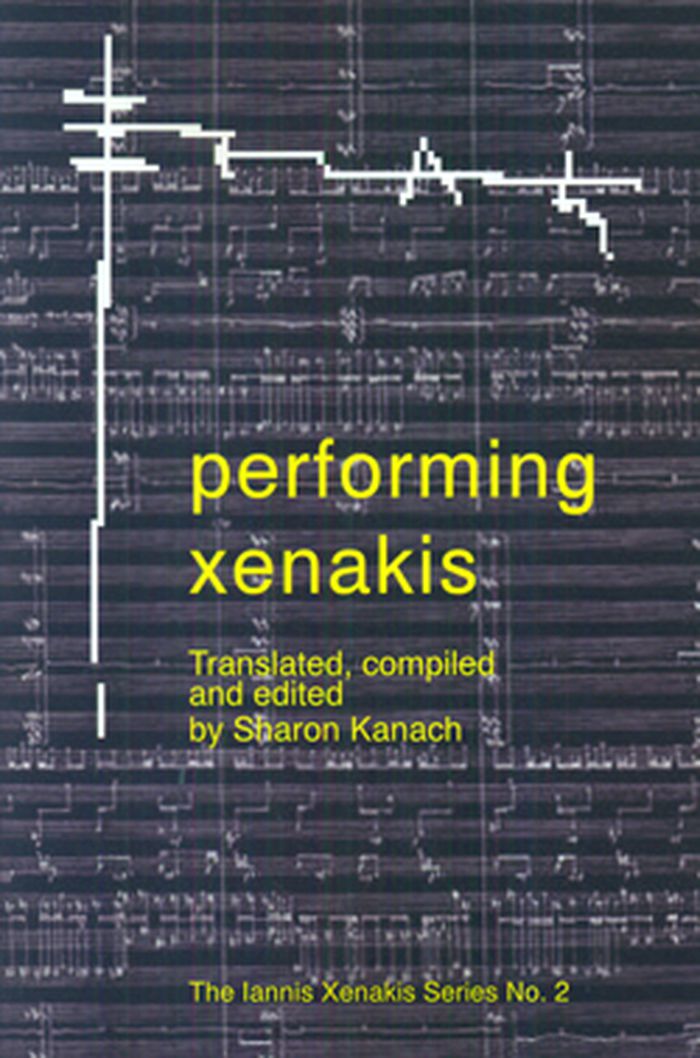
This volume is a collection of essays by thirty contributors, all internationally recognized performers of Xenakis' music. Many of these artists have worked closely with Xenakis and several works are discussed by their dedicatees. These testimonies prove, through real life experience and performance, the feasibility of realizing his very difficult writing, not only attested to by those close to the composer during his lifetime, but also by the younger generation that continues to be drawn to it. Each essay gives a new perspective: on what the composer was really looking for, on tricks of the trade for negotiating treacherously technical prowess, or on the attainment of an enhanced sense of self through the performance of this music. Following an extensive preface by Kanach, who collaborated closely with Xenakis from the late 1970s until his death in 2001, the book is divided into chapters organized by family of instruments. Every instrument of the orchestra is discussed by its practitioner; issues unique to the voice, as well as ensemble and orchestral works are explored, and two contributions concern the performance of Xenakis pioneering electronic works.
Performing Xenakis
Actions:
Prix:
$44.95
(disponible sur commande)
Résumé:
This volume is a collection of essays by thirty contributors, all internationally recognized performers of Xenakis' music. Many of these artists have worked closely with Xenakis and several works are discussed by their dedicatees. These testimonies prove, through real life experience and performance, the feasibility of realizing his very difficult writing, not only attested to by those close to the composer during his lifetime, but also by the younger generation that continues to be drawn to it. Each essay gives a new perspective: on what the composer was really looking for, on tricks of the trade for negotiating treacherously technical prowess, or on the attainment of an enhanced sense of self through the performance of this music. Following an extensive preface by Kanach, who collaborated closely with Xenakis from the late 1970s until his death in 2001, the book is divided into chapters organized by family of instruments. Every instrument of the orchestra is discussed by its practitioner; issues unique to the voice, as well as ensemble and orchestral works are explored, and two contributions concern the performance of Xenakis pioneering electronic works.
Classification:
livres
livres
Publication:
mai 2010
mai 2010
Sujet:
Acoustique
Acoustique
Classification:
livres
livres

Titre:
The phantom scientist
The phantom scientist
Actions:
Prix:
$33.95
(disponible sur commande)
Résumé:
An isolated institute laid out in a Fibonacci sequence, hidden deep in the forest. Twenty-four labs. Twenty-four researchers. Until one of them disappears . . . When physicist Stéphane Douasy arrives to occupy the vacant twenty-fourth lab at the Institute for the Study of Complex and Dynamic Systems, an ominous problem rises in his wake: what has happened to his(...)
$33.95
(disponible sur commande)
Résumé:
An isolated institute laid out in a Fibonacci sequence, hidden deep in the forest. Twenty-four labs. Twenty-four researchers. Until one of them disappears . . . When physicist Stéphane Douasy arrives to occupy the vacant twenty-fourth lab at the Institute for the Study of Complex and Dynamic Systems, an ominous problem rises in his wake: what has happened to his(...)
Titre:
The phantom scientist
Actions:
Prix:
$33.95
(disponible sur commande)
Résumé:
An isolated institute laid out in a Fibonacci sequence, hidden deep in the forest. Twenty-four labs. Twenty-four researchers. Until one of them disappears . . . When physicist Stéphane Douasy arrives to occupy the vacant twenty-fourth lab at the Institute for the Study of Complex and Dynamic Systems, an ominous problem rises in his wake: what has happened to his missing neighbor in Building F? When Stéphane’s neighbors, a discouraged linguist and a computer scientist bent on predicting the future, discover that the missing researcher may have solved the P versus NP problem—a coup in computer science with revolutionary implications for everything from mathematics to philosophy—before vanishing, things turn stranger still, and even more menacing. Solving the mystery of the Institute and its devolution into mayhem and violence every seventh year quickly shifts from being an intellectual exercise to a matter of life and death. ''The phantom scientist'' is part thriller, part mystery, part systems theory—and all enthralling. The tale slyly draws together linguistics, biology, astrophysics, and robotics in a mind-bending puzzle that will thrill and inform readers.
The phantom scientist
Actions:
Prix:
$33.95
(disponible sur commande)
Résumé:
An isolated institute laid out in a Fibonacci sequence, hidden deep in the forest. Twenty-four labs. Twenty-four researchers. Until one of them disappears . . . When physicist Stéphane Douasy arrives to occupy the vacant twenty-fourth lab at the Institute for the Study of Complex and Dynamic Systems, an ominous problem rises in his wake: what has happened to his missing neighbor in Building F? When Stéphane’s neighbors, a discouraged linguist and a computer scientist bent on predicting the future, discover that the missing researcher may have solved the P versus NP problem—a coup in computer science with revolutionary implications for everything from mathematics to philosophy—before vanishing, things turn stranger still, and even more menacing. Solving the mystery of the Institute and its devolution into mayhem and violence every seventh year quickly shifts from being an intellectual exercise to a matter of life and death. ''The phantom scientist'' is part thriller, part mystery, part systems theory—and all enthralling. The tale slyly draws together linguistics, biology, astrophysics, and robotics in a mind-bending puzzle that will thrill and inform readers.
Classification:
livres
livres
Publication:
février 2023
février 2023
Sujet:
Illustration
Illustration
Classification:
livres
livres

Actions:
Prix:
$33.50
(disponible en magasin)
Résumé:
In this collection of essays, Murray Bookchin's vision for an ecological society remains central as he addresses questions of urbanism and city planning, technology, self-management, energy, utopianism, and more. Throughout, he opposes efforts to reduce ecology to a toothless "environmentalism," a task as vital today as when these essays were first published. Written(...)
$33.50
(disponible en magasin)
Résumé:
In this collection of essays, Murray Bookchin's vision for an ecological society remains central as he addresses questions of urbanism and city planning, technology, self-management, energy, utopianism, and more. Throughout, he opposes efforts to reduce ecology to a toothless "environmentalism," a task as vital today as when these essays were first published. Written(...)
Titre:
Towards an ecological society
Actions:
Prix:
$33.50
(disponible en magasin)
Résumé:
In this collection of essays, Murray Bookchin's vision for an ecological society remains central as he addresses questions of urbanism and city planning, technology, self-management, energy, utopianism, and more. Throughout, he opposes efforts to reduce ecology to a toothless "environmentalism," a task as vital today as when these essays were first published. Written between 1969 and 1979, the essays in this collection represent a fascinating and fertile period in Bookchin’s life. Coming out of the unfulfilled promise of the sixties and trying to develop a revolutionary critique of social life that avoided the pitfalls of Marxism, he was entering his creative intellectual peak. He was laying the foundations of a truly social ecology: a society based on decentralization, interdependence, democratic self-management, mutual aid, and solidarity. Presented with clarity and fervor, these key works contain the kernels of concerns that would occupy him until his death in 2006. This edition also includes a new foreword by Dan Chodorkoff, someone who was with Bookchin at the founding of his Institute for Social Ecology and who understand his work better than anyone.
Towards an ecological society
Actions:
Prix:
$33.50
(disponible en magasin)
Résumé:
In this collection of essays, Murray Bookchin's vision for an ecological society remains central as he addresses questions of urbanism and city planning, technology, self-management, energy, utopianism, and more. Throughout, he opposes efforts to reduce ecology to a toothless "environmentalism," a task as vital today as when these essays were first published. Written between 1969 and 1979, the essays in this collection represent a fascinating and fertile period in Bookchin’s life. Coming out of the unfulfilled promise of the sixties and trying to develop a revolutionary critique of social life that avoided the pitfalls of Marxism, he was entering his creative intellectual peak. He was laying the foundations of a truly social ecology: a society based on decentralization, interdependence, democratic self-management, mutual aid, and solidarity. Presented with clarity and fervor, these key works contain the kernels of concerns that would occupy him until his death in 2006. This edition also includes a new foreword by Dan Chodorkoff, someone who was with Bookchin at the founding of his Institute for Social Ecology and who understand his work better than anyone.
Classification:
livres
livres
Publication:
mars 2024
mars 2024
Classification:
livres
livres

Actions:
Prix:
$19.95
(disponible sur commande)
Résumé:
The Utopie group was born in 1966 at Henri Lefebvre's house in the Pyrenees. The eponymous journal edited by Hubert Tonka brought together sociologists Jean Baudrillard, René Lourau, and Catherine Cot, architects Jean Aubert, Jean-Paul Jungmann, Antoine Stinco, and landscape architect Isabelle Auricoste. Over the next decade, both in theory and in practice, the group(...)
$19.95
(disponible sur commande)
Résumé:
The Utopie group was born in 1966 at Henri Lefebvre's house in the Pyrenees. The eponymous journal edited by Hubert Tonka brought together sociologists Jean Baudrillard, René Lourau, and Catherine Cot, architects Jean Aubert, Jean-Paul Jungmann, Antoine Stinco, and landscape architect Isabelle Auricoste. Over the next decade, both in theory and in practice, the group(...)
Titre:
Utopia deferred : Jean Baudrillard, writings for Utopie (1967-1978)
Actions:
Prix:
$19.95
(disponible sur commande)
Résumé:
The Utopie group was born in 1966 at Henri Lefebvre's house in the Pyrenees. The eponymous journal edited by Hubert Tonka brought together sociologists Jean Baudrillard, René Lourau, and Catherine Cot, architects Jean Aubert, Jean-Paul Jungmann, Antoine Stinco, and landscape architect Isabelle Auricoste. Over the next decade, both in theory and in practice, the group articulated a radical ultra-leftist critique of architecture, urbanism, and everyday life. "Utopia deferred" collects all of the essays Jean Baudrillard published in Utopie as well as recent interviews with Jean Baudrillard and Hubert Tonka. Utopie served as a workshop for Baudrillard's thought. Many of the essays he first published in Utopie were seminal for some of his books: "For a critique of the political economy of the sign", "The mirror of production", "Simulations", "Symbolic exchange and death", and "In the shadow of the silent majorities". But Utopie was also a topical journal and a political one; the topics of these essays are often torn from the headlines of the tumultuous decade following the uprisings of May 1968.
Utopia deferred : Jean Baudrillard, writings for Utopie (1967-1978)
Actions:
Prix:
$19.95
(disponible sur commande)
Résumé:
The Utopie group was born in 1966 at Henri Lefebvre's house in the Pyrenees. The eponymous journal edited by Hubert Tonka brought together sociologists Jean Baudrillard, René Lourau, and Catherine Cot, architects Jean Aubert, Jean-Paul Jungmann, Antoine Stinco, and landscape architect Isabelle Auricoste. Over the next decade, both in theory and in practice, the group articulated a radical ultra-leftist critique of architecture, urbanism, and everyday life. "Utopia deferred" collects all of the essays Jean Baudrillard published in Utopie as well as recent interviews with Jean Baudrillard and Hubert Tonka. Utopie served as a workshop for Baudrillard's thought. Many of the essays he first published in Utopie were seminal for some of his books: "For a critique of the political economy of the sign", "The mirror of production", "Simulations", "Symbolic exchange and death", and "In the shadow of the silent majorities". But Utopie was also a topical journal and a political one; the topics of these essays are often torn from the headlines of the tumultuous decade following the uprisings of May 1968.
Classification:
livres
livres
Publication:
octobre 2006, Cambridge (MA)
octobre 2006, Cambridge (MA)
Sujet:
Théorie/ philosophie
Théorie/ philosophie
Classification:
livres
livres

Titre:
The witch studies reader
The witch studies reader
Actions:
Prix:
$38.95
(disponible en magasin)
Résumé:
Stories about witches are by their nature stories about the most basic and profound of human experiences—healing, sex, violence, tragedies, aging, death, and encountering the mystery and magic of the unknown. It is no surprise, then, that witches loom large in our cultural imaginations. In academia, studies of witches rarely emerge from scholars who are themselves witches(...)
$38.95
(disponible en magasin)
Résumé:
Stories about witches are by their nature stories about the most basic and profound of human experiences—healing, sex, violence, tragedies, aging, death, and encountering the mystery and magic of the unknown. It is no surprise, then, that witches loom large in our cultural imaginations. In academia, studies of witches rarely emerge from scholars who are themselves witches(...)
Titre:
The witch studies reader
Actions:
Prix:
$38.95
(disponible en magasin)
Résumé:
Stories about witches are by their nature stories about the most basic and profound of human experiences—healing, sex, violence, tragedies, aging, death, and encountering the mystery and magic of the unknown. It is no surprise, then, that witches loom large in our cultural imaginations. In academia, studies of witches rarely emerge from scholars who are themselves witches and/or embedded in communities of witchcraft practitioners. ''The Witch Studies Reader'' brings together a diverse group of scholars, practitioners, and scholar-practitioners who examine witchcraft from a critical decolonial feminist perspective that decenters Europe and departs from exoticizing and pathologizing writing on witchcraft in the global South. The authors show how witches are keepers of suppressed knowledges, builders of new futures, exemplars of praxis, and theorists in their own right. Throughout, they account for the vastly different national, political-economic, and cultural contexts in which “the witch” is currently being claimed and repudiated. Offering a pathbreaking transnational feminist examination of witches and witchcraft that upends white supremacist, colonial, patriarchal knowledge regimes, this volume brings into being the interdisciplinary field of feminist witch studies.
The witch studies reader
Actions:
Prix:
$38.95
(disponible en magasin)
Résumé:
Stories about witches are by their nature stories about the most basic and profound of human experiences—healing, sex, violence, tragedies, aging, death, and encountering the mystery and magic of the unknown. It is no surprise, then, that witches loom large in our cultural imaginations. In academia, studies of witches rarely emerge from scholars who are themselves witches and/or embedded in communities of witchcraft practitioners. ''The Witch Studies Reader'' brings together a diverse group of scholars, practitioners, and scholar-practitioners who examine witchcraft from a critical decolonial feminist perspective that decenters Europe and departs from exoticizing and pathologizing writing on witchcraft in the global South. The authors show how witches are keepers of suppressed knowledges, builders of new futures, exemplars of praxis, and theorists in their own right. Throughout, they account for the vastly different national, political-economic, and cultural contexts in which “the witch” is currently being claimed and repudiated. Offering a pathbreaking transnational feminist examination of witches and witchcraft that upends white supremacist, colonial, patriarchal knowledge regimes, this volume brings into being the interdisciplinary field of feminist witch studies.
Classification:
livres
livres
Publication:
juin 2025
juin 2025
Sujet:
Social
Social
Classification:
livres
livres
Titre:
Vigil
Vigil
Actions:
Prix:
$37.99
(disponible en magasin)
Résumé:
Not for the first time, Jill "Doll" Blaine finds herself hurtling toward earth, reconstituting as she falls, right down to her favorite black pumps. She plummets towards her newest charge, yet another soul she must usher into the afterlife, and lands headfirst in the circular drive of his ornate mansion. She has performed this sacred duty 343 times since her own death.(...)
$37.99
(disponible en magasin)
Résumé:
Not for the first time, Jill "Doll" Blaine finds herself hurtling toward earth, reconstituting as she falls, right down to her favorite black pumps. She plummets towards her newest charge, yet another soul she must usher into the afterlife, and lands headfirst in the circular drive of his ornate mansion. She has performed this sacred duty 343 times since her own death.(...)
Titre:
Vigil
Actions:
Prix:
$37.99
(disponible en magasin)
Résumé:
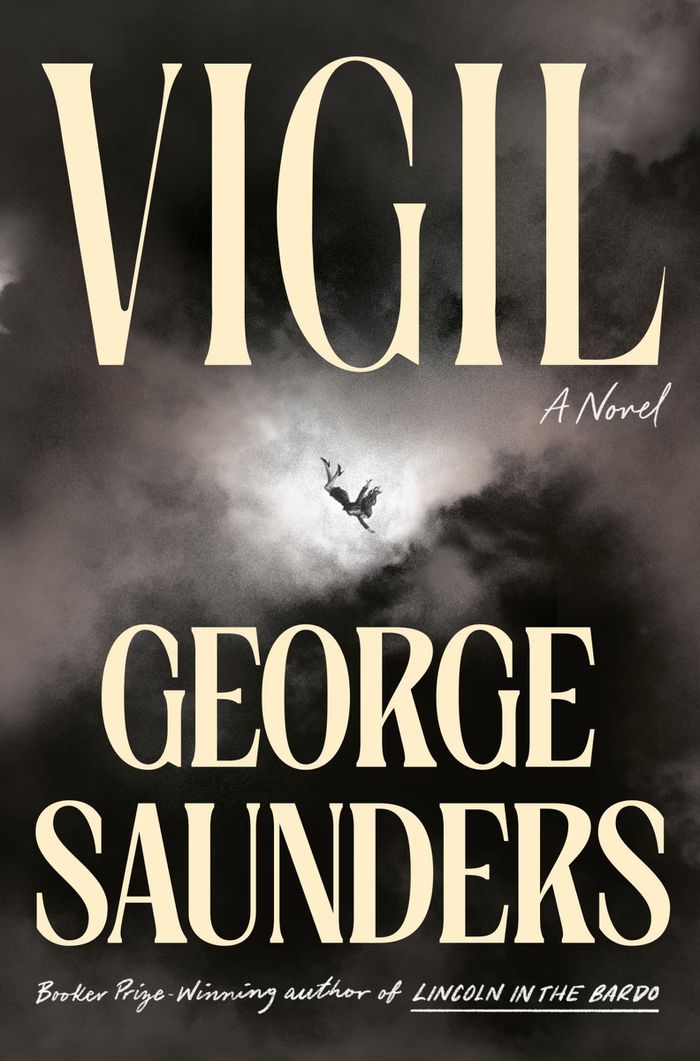
Not for the first time, Jill "Doll" Blaine finds herself hurtling toward earth, reconstituting as she falls, right down to her favorite black pumps. She plummets towards her newest charge, yet another soul she must usher into the afterlife, and lands headfirst in the circular drive of his ornate mansion. She has performed this sacred duty 343 times since her own death. Her charges, as a rule, have been greatly comforted in their final moments. But this charge, she soon discovers, isn’t like the others. The powerful K. J. Boone will not be consoled, because he has nothing to regret. He lived a big, bold, epic life, and the world is better for it. Isn’t it? "Vigil" transports us, careening, through the wild final evening of a complicated man. Visitors begin to arrive (worldly and otherworldly, alive and dead), clamoring for a reckoning. Birds swarm the dying man’s room; a black calf grazes on the love seat; a man from a distant, drought-ravaged village materializes; two oil-business cronies from decades past show up with chilling plans for Boone’s postdeath future.
Vigil
Actions:
Prix:
$37.99
(disponible en magasin)
Résumé:
Not for the first time, Jill "Doll" Blaine finds herself hurtling toward earth, reconstituting as she falls, right down to her favorite black pumps. She plummets towards her newest charge, yet another soul she must usher into the afterlife, and lands headfirst in the circular drive of his ornate mansion. She has performed this sacred duty 343 times since her own death. Her charges, as a rule, have been greatly comforted in their final moments. But this charge, she soon discovers, isn’t like the others. The powerful K. J. Boone will not be consoled, because he has nothing to regret. He lived a big, bold, epic life, and the world is better for it. Isn’t it? "Vigil" transports us, careening, through the wild final evening of a complicated man. Visitors begin to arrive (worldly and otherworldly, alive and dead), clamoring for a reckoning. Birds swarm the dying man’s room; a black calf grazes on the love seat; a man from a distant, drought-ravaged village materializes; two oil-business cronies from decades past show up with chilling plans for Boone’s postdeath future.
Classification:
livres
livres
Publication:
janvier 2026
janvier 2026
Sujet:
Littérature et poésie
Littérature et poésie


