


1910 Résultats
Classification:
livres
livres
Actions:
Prix:
$60.00
(disponible sur commande)
Résumé:
The Ballets Russes was a phenomenon of the early twentieth century, permeating daily life wherever the company traveled and leaving a lasting impact on dance, theater, and the visual arts. Sergei Diaghilev, impresario from 1909 until his death in 1929, fused the most avant-garde, groundbreaking movements in dance, choreography, art, design, and costume into unique and(...)
Sujet:
Design, époques et styles
Design, époques et styles
Publication:
décembre 2009
décembre 2009
Titre:
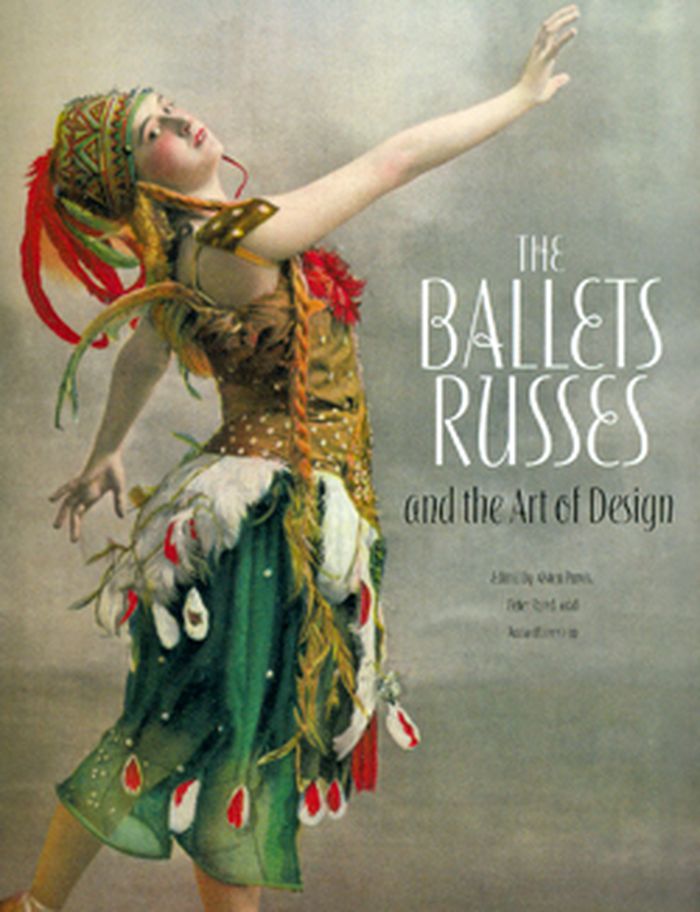
The ballets russes and the art of design
Actions:
Prix:
$60.00
(disponible sur commande)
Résumé:
The Ballets Russes was a phenomenon of the early twentieth century, permeating daily life wherever the company traveled and leaving a lasting impact on dance, theater, and the visual arts. Sergei Diaghilev, impresario from 1909 until his death in 1929, fused the most avant-garde, groundbreaking movements in dance, choreography, art, design, and costume into unique and stunning productions. The work was exciting, and always new, and it stretched the limits of the possible in art. The color, form, and material in costume and set design astonished audiences, transforming every corner of Western culture in the twentieth century. The Ballets Russes and the Art of Design explores these revolutionary icons and ideas, illuminating Sergei Diaghilev's profound revitalization of the arts, which continues to influence us today. Ten essays by internationally recognized experts and 200 color and black-and-white illustrations—many from private collections and never-before-published—discuss a broad range of topics, including set and costume designs, graphic design and poster art, photographs and postcards, Diaghilev's presence in the media, and private and museum collections of Ballets Russes treasures.
Classification:
livres
livres
Publication:
décembre 2009
décembre 2009
Sujet:
Design, époques et styles
Design, époques et styles
Classification:
livres
livres
Titre:
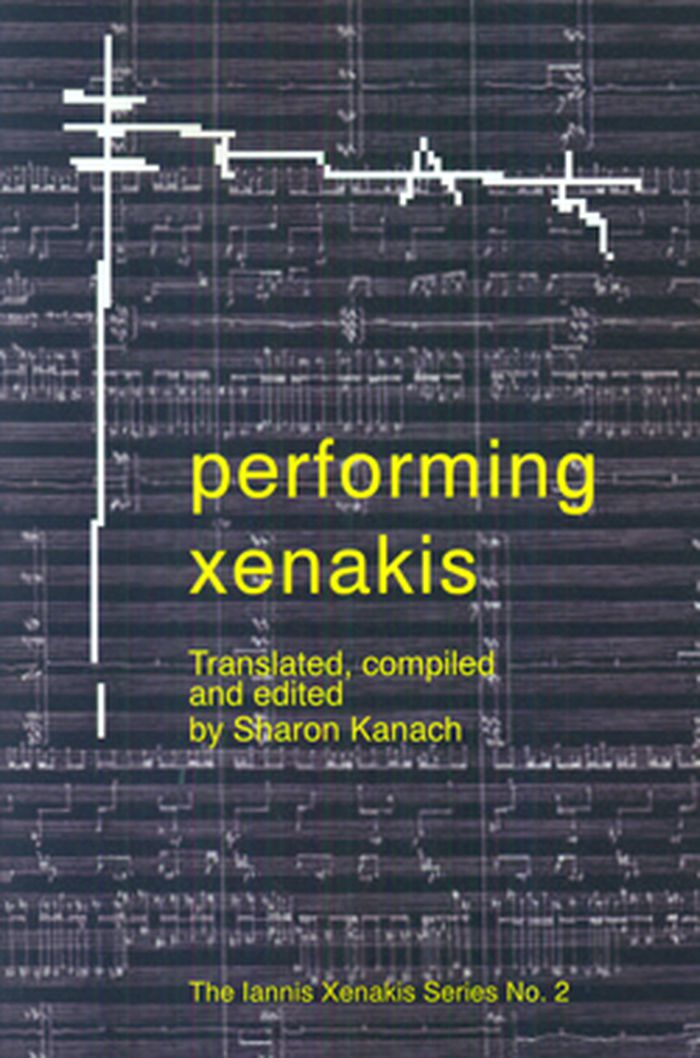
Performing Xenakis
Performing Xenakis
Actions:
Prix:
$44.95
(disponible sur commande)
Résumé:
This volume is a collection of essays by thirty contributors, all internationally recognized performers of Xenakis' music. Many of these artists have worked closely with Xenakis and several works are discussed by their dedicatees. These testimonies prove, through real life experience and performance, the feasibility of realizing his very difficult writing, not only(...)
Titre:
Performing Xenakis
Actions:
Prix:
$44.95
(disponible sur commande)
Résumé:
This volume is a collection of essays by thirty contributors, all internationally recognized performers of Xenakis' music. Many of these artists have worked closely with Xenakis and several works are discussed by their dedicatees. These testimonies prove, through real life experience and performance, the feasibility of realizing his very difficult writing, not only attested to by those close to the composer during his lifetime, but also by the younger generation that continues to be drawn to it. Each essay gives a new perspective: on what the composer was really looking for, on tricks of the trade for negotiating treacherously technical prowess, or on the attainment of an enhanced sense of self through the performance of this music. Following an extensive preface by Kanach, who collaborated closely with Xenakis from the late 1970s until his death in 2001, the book is divided into chapters organized by family of instruments. Every instrument of the orchestra is discussed by its practitioner; issues unique to the voice, as well as ensemble and orchestral works are explored, and two contributions concern the performance of Xenakis pioneering electronic works.
Classification:
livres
livres
Publication:
mai 2010
mai 2010
Sujet:
Acoustique
Acoustique
Classification:
périodiques
périodiques
Actions:
Prix:
$50.00
(disponible sur commande)
Résumé:
Despite the exaggerated news of the untimely 'death of the detail' by Greg Lynn, the architectural detail is now more lifelike and active than ever before. In this era of digital design and production technologies, new materials, parametrics, building information modeling (BIM), augmented realities and the nano-bio-information-computation consilience, the detail is now an(...)
Titre:
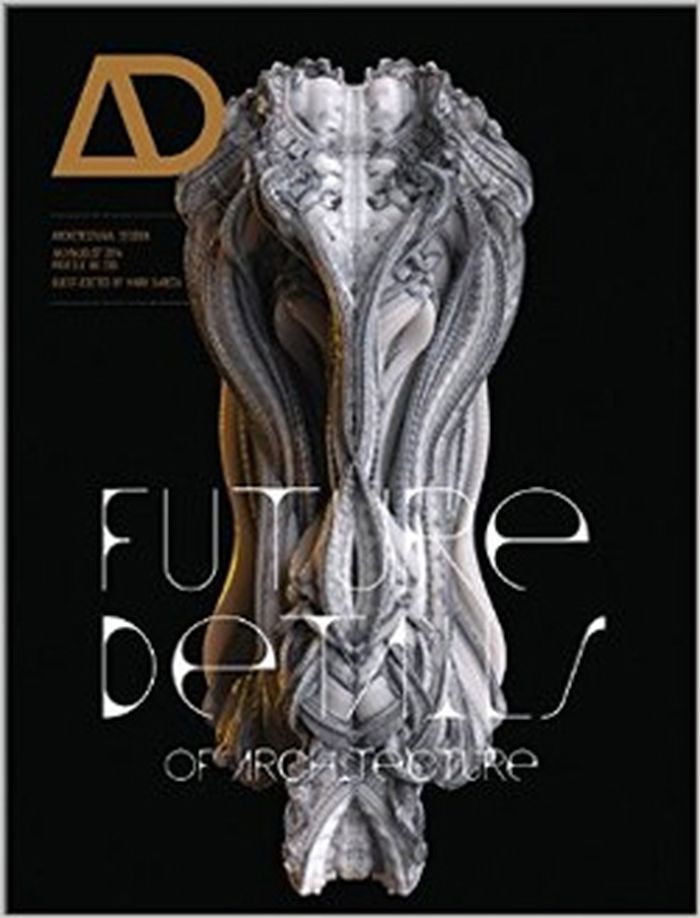
AD 84:4 Future details of architecture
Actions:
Prix:
$50.00
(disponible sur commande)
Résumé:
Despite the exaggerated news of the untimely 'death of the detail' by Greg Lynn, the architectural detail is now more lifelike and active than ever before. In this era of digital design and production technologies, new materials, parametrics, building information modeling (BIM), augmented realities and the nano-bio-information-computation consilience, the detail is now an increasingly vital force in architecture. Though such digitally designed and produced details are diminishing in size to the molecular and nano levels, they are increasingly becoming more complex, multi-functional, high performance and self-replicating. Far from being a non-essential and final finish, this new type of highly evolved high-tech detail is rapidly becoming the indispensable and critical core, the (sometimes iconic) DNA of an innovative new species of built environmental form that is spawning in scale and prominence, across product, interior, urban and landscape design. This issue of AD re-examines the history, theories and design of the world’s most significant spatial details, and explores their innovative potentials and possibilities for the future of architecture.
Classification:
périodiques
périodiques
Publication:
décembre 2014
décembre 2014
Sujet:
Revues
Revues
Classification:
livres
livres

Actions:
Prix:
$22.00
(disponible sur commande)
Résumé:
The internet does not exist. Maybe it did exist only a short time ago, but now it only remains as a blur, a cloud, a friend, a deadline, a redirect, or a 404. If it ever existed, we couldn't see it. Because it has no shape. It has no face, just this name that describes everything and nothing at the same time. Yet we are still trying to climb onboard, to get inside, to be(...)
Titre:
E-Flux journal: the internet does not exist
Actions:
Prix:
$22.00
(disponible sur commande)
Résumé:
The internet does not exist. Maybe it did exist only a short time ago, but now it only remains as a blur, a cloud, a friend, a deadline, a redirect, or a 404. If it ever existed, we couldn't see it. Because it has no shape. It has no face, just this name that describes everything and nothing at the same time. Yet we are still trying to climb onboard, to get inside, to be part of the network, to get in on the language game, to show up on searches, to appear to exist. But we will never get inside of something that isn t there. All this time we ve been bemoaning the death of any critical outside position, we should have taken a good look at information networks. Just try to get in. You can t. Networks are all edges, as Bruno Latour points out. We thought there were windows but actually they re mirrors. And in the meantime we are being faced with more and more not just information, but the world itself.
Classification:
livres
livres
Publication:
juillet 2015
juillet 2015
Sujet:
Théorie/ philosophie
Théorie/ philosophie
Classification:
audio
audio
Description:
1 online resource.
Auteur:
Sujet:
Publication:
[Place of publication not identified] : Lateral Addition, 2018.
[Place of publication not identified] : Lateral Addition, 2018.
Titre:
June 21, 2018 : Listening for Southwest Key in San Diego.
Actions:
Description:
1 online resource.
June 21, 2018 : Listening for Southwest Key in San Diego.
Actions:
Description:
1 online resource.
Classification:
audio
audio
Publication:
[Place of publication not identified] : Lateral Addition, 2018.
[Place of publication not identified] : Lateral Addition, 2018.
Auteur:
Sujet:
Classification:
livres
livres
Prix:
$54.00
(disponible en magasin)
Résumé:
The term 'style' has fallen spectacularly out of fashion in architectural circles. Once a conceptual key to understanding architecture’s inner workings, today style seems to be associated with superficiality, formalism, and obsolete periodization. But how did style—once defined by German sociologist Georg Simmel as a place where one is 'no longer alone'—in architecture(...)
Titre:
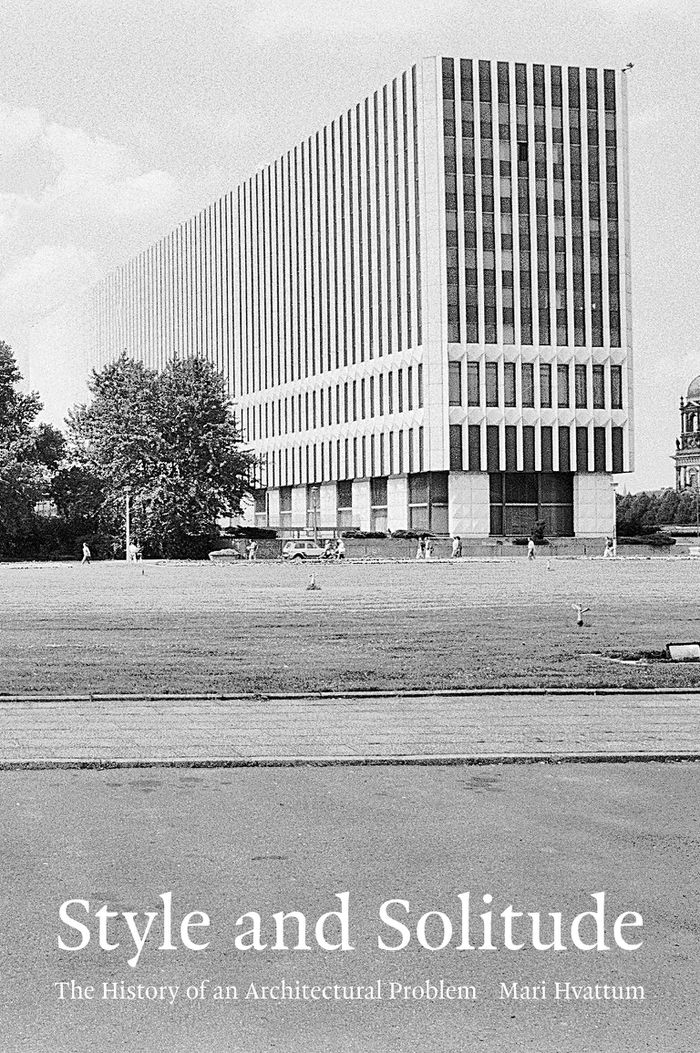
Style and solitude: The history of an architectural problem
Actions:
Prix:
$54.00
(disponible en magasin)
Résumé:
The term 'style' has fallen spectacularly out of fashion in architectural circles. Once a conceptual key to understanding architecture’s inner workings, today style seems to be associated with superficiality, formalism, and obsolete periodization. But how did style—once defined by German sociologist Georg Simmel as a place where one is 'no longer alone'—in architecture actually work? How was it used and what did it mean? In ''Style and solitude,'' Mari Hvattum seeks to understand the apparent death of style, returning to its birthplace in the late eighteenth century, and charting how it grew to influence modern architectural discourse and practice. As Hvattum explains, German thinkers of the eighteenth and nineteenth century offered competing ideas of what style was and how it should be applied in architecture. From Karl Friedrich Schinkel’s thoughtful eclecticism to King Maximilian II’s attempt to capture the zeitgeist in an architectural competition, style was at the center of fascinating experiments and furious disputes. Starting with Johann Joachim Winckelmann’s invention of the period style and ending a century later with Gottfried Semper’s generative theory of style, Hvattum explores critical debates that are still ongoing today.
Classification:
livres
livres
Publication:
juin 2023
juin 2023
Sujet:
Théorie de l’architecture
Théorie de l’architecture
Classification:
livres
livres
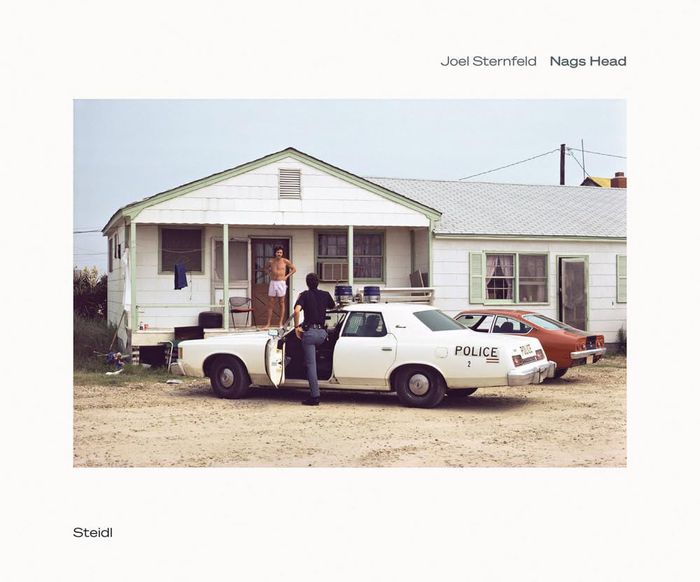
Titre:
Joel Sternfeld: Nags Head
Joel Sternfeld: Nags Head
Actions:
Prix:
$79.00
(disponible sur commande)
Résumé:
In the summer of 1975, facing surgery with the potential of paralysis, a young Joel Sternfeld went off in search of a last idyll-- and found it in Nags Head, on North Carolina’s Outer Banks. From June to August he captured the beach town floating in time, a sense of spatial and temporal fluidity. Sternfeld’s images show beachgoers of all ages enjoying scenes of leisure(...)
Titre:
Joel Sternfeld: Nags Head
Actions:
Prix:
$79.00
(disponible sur commande)
Résumé:
In the summer of 1975, facing surgery with the potential of paralysis, a young Joel Sternfeld went off in search of a last idyll-- and found it in Nags Head, on North Carolina’s Outer Banks. From June to August he captured the beach town floating in time, a sense of spatial and temporal fluidity. Sternfeld’s images show beachgoers of all ages enjoying scenes of leisure and partying in what became his first body of work addressing a season. Yet this summer sojourn was tragically broken by the news of the death of his brother; Sternfeld returned to New York, never to go back to Nags Head. Eventually he began working again and one day ventured to Rockaway Beach, Queens. Here he took a picture in which "all at once the ugly scene appeared beautiful to me": the hues of sand, apartments and sky fuse into a cohesive whole. This photo, with its conceptual roots in Nags Head, would lead to the color structures of Sternfeld’s magnum opus American Prospects, his ambitious realization of what he had always wanted to do: follow the seasons across America.
Classification:
livres
livres
Publication:
juin 2024
juin 2024
Sujet:
Monographies photo
Monographies photo
Classification:
livres
livres

Titre:
Degas and his model
Degas and his model
Actions:
Prix:
$16.95
(disponible sur commande)
Résumé:
"Monsieur Degas, you just said some things that would make an old soldier blush!" There are many myths about Edgar Degas—from Degas the misanthrope to Degas the deviant to Degas the obsessive. But there is no single text that better stokes the fire than Degas and His Model, a short memoir by Alice Michel, who purportedly modeled for Degas. Never before translated into(...)
Titre:
Degas and his model
Actions:
Prix:
$16.95
(disponible sur commande)
Résumé:
"Monsieur Degas, you just said some things that would make an old soldier blush!" There are many myths about Edgar Degas—from Degas the misanthrope to Degas the deviant to Degas the obsessive. But there is no single text that better stokes the fire than Degas and His Model, a short memoir by Alice Michel, who purportedly modeled for Degas. Never before translated into English, the text’s original publication in Mercure de France in 1919, shortly after the artist’s death, has been treated as an important account of the master sculptor at work. We know that Alice was writing under a pseudonym, but who the real person behind this account was remains a mystery. Yet the descriptions seem too accurate, the anecdotes too spot-on to discount; even the dialogue captures the artist’s tone and mannerisms. What is found in these pages is at times a woman’s flirtatious recollection of a bizarre “artistic type” and at others a moving attempt to connect with a great, often tragic man. The descriptions are limpid; the dialogue is lively and intimate, not unlike reading the very best kind of gossip, with world-historical significance.
Classification:
livres
livres
Publication:
août 2017
août 2017
Sujet:
Théorie de l’art
Théorie de l’art
Classification:
livres
livres

Prix:
$91.00
(disponible sur commande)
Résumé:
Joseph Gandy’s life is in many respects the familiar saga of genius unrecognized. Upon his death he seemed to the world, and to himself, a failure. Having begun his career with high hopes, great imagination and exceptional talent, he ended it in a state of neglect and obscurity. A century and a half later Gandy is recognized as one of the most original figures of(...)
Titre:
Joseph Gandy : an architectural visionary in Georgian England
Actions:
Prix:
$91.00
(disponible sur commande)
Résumé:
Joseph Gandy’s life is in many respects the familiar saga of genius unrecognized. Upon his death he seemed to the world, and to himself, a failure. Having begun his career with high hopes, great imagination and exceptional talent, he ended it in a state of neglect and obscurity. A century and a half later Gandy is recognized as one of the most original figures of English romanticism. Works such as "Pandemonium" or "Tomb of Merlin" have a hypnotic power that he brought to bear on Sir John Soane’s bizarre "Monk’s Parlour" at his renowned house-musuem in Lincoln’s Inn and on the lost masterpiece of Soane’s Bank of England in the City of London, buildings that we have come to see through Gandy’s eyes. Brian Lukacher, the acknowledged authority on Gandy, has now written the definitive life of this architect-artist who exemplified the cultural temper of the romantic period. It is a fresh, deeply researched biography and a critical assessment of Gandy’s work in its historical context. It is a tragic story but also an inspiring one, and a significant episode in the history of the architectural imagination and the visual arts during the nineteenth century.
Classification:
livres
livres
Publication:
mai 2006, London
mai 2006, London
Sujet:
Architecture, monographies
Architecture, monographies
Classification:
livres
livres
Titre:
In focus : Eugène Atget
In focus : Eugène Atget
Actions:
Prix:
$27.50
(disponible sur commande)
Résumé:
Eugène Atget (1857-1927) spent nearly thirty years photographing details of often-inconspicuous buildings, side streets, cul-de-sacs, and public sculptures in his beloved Paris. Yet before his death, he was practically unknown outside of that city. His genius was first recognized(...)
Sujet:
Monographies photo
Monographies photo
Publication:
juin 2000, Los Angeles
juin 2000, Los Angeles
Titre:
In focus : Eugène Atget
Actions:
Prix:
$27.50
(disponible sur commande)
Résumé:
Eugène Atget (1857-1927) spent nearly thirty years photographing details of often-inconspicuous buildings, side streets, cul-de-sacs, and public sculptures in his beloved Paris. Yet before his death, he was practically unknown outside of that city. His genius was first recognized about 1924 by two young Americans living and working in Paris—Man Ray and his studio assistant, Berenice Abbott—who appreciated the elements of contradiction, ambivalence, and ambiguity in Atget's images of Parisian architecture, streets, and parks. Presented in this volume are more than fifty of the Getty Museum's two hundred ninety-five pictures by Atget, with commentary on each image by Gordon Baldwin, associate curator of photographs at the J. Paul Getty Museum. "In Focus: Eugène Atget" also contains a chronological overview of his life and an edited transcript of a colloquium on his career, with participants Baldwin; David Featherstone, independent editor and curator; photographer Robbert Flick, professor of art at the University of Southern California; independent scholar David Harris; Weston Naef, curator of photographs, Getty Museum; Francoise Reynaud, curator of photographs at the Musée Carnavalet, Paris; and Michael S. Roth, president, California College of Arts and Crafts.
Classification:
livres
livres
Publication:
juin 2000, Los Angeles
juin 2000, Los Angeles
Sujet:
Monographies photo
Monographies photo


