


4469 Results
Level of archival description:
Project
Project
Reference number:
AP075.S1.1989.PR04
Description:
Project series documents Cornelia Hahn Oberlander's landscape project for Ottawa City Hall, located on Sussex Drive, on Green Island, surrounded by Ottawa and Rideau Rivers, in Ottawa, Ontario. Oberlander worked on this project in 1989-1994 with architect Moshe Safdie. The old City Hall, a heritage building, was retained, and the new landscape design had to include the old structures. Oberlander landscape concept was to create a park-like space used for strolling as well as public functions. She also designed a courtyard with water features, including a pool, trees and flowers. The project also included a play area for the day care centre of the City Hall. The project was completed in 1994. The project series comprises sketches, design development drawings, such as grading plans, landscape plans, sections, elevations and details for the play area, working drawings, including site grading plans, and presentation drawings. The project is also documented through concept notes by Oberlander, specifications, correspondence, including with architects, clients, and consultants, financial documents and photographs of the construction.
AP075.S1.1989.PR04
Description:
Project series documents Cornelia Hahn Oberlander's landscape project for Ottawa City Hall, located on Sussex Drive, on Green Island, surrounded by Ottawa and Rideau Rivers, in Ottawa, Ontario. Oberlander worked on this project in 1989-1994 with architect Moshe Safdie. The old City Hall, a heritage building, was retained, and the new landscape design had to include the old structures. Oberlander landscape concept was to create a park-like space used for strolling as well as public functions. She also designed a courtyard with water features, including a pool, trees and flowers. The project also included a play area for the day care centre of the City Hall. The project was completed in 1994. The project series comprises sketches, design development drawings, such as grading plans, landscape plans, sections, elevations and details for the play area, working drawings, including site grading plans, and presentation drawings. The project is also documented through concept notes by Oberlander, specifications, correspondence, including with architects, clients, and consultants, financial documents and photographs of the construction.
People:
Date:
1989-1994
1989-1994
Title:
Ottawa City Hall, Ottawa, Ontario (1989)
Actions:
AP075.S1.1989.PR04
Description:
Project series documents Cornelia Hahn Oberlander's landscape project for Ottawa City Hall, located on Sussex Drive, on Green Island, surrounded by Ottawa and Rideau Rivers, in Ottawa, Ontario. Oberlander worked on this project in 1989-1994 with architect Moshe Safdie. The old City Hall, a heritage building, was retained, and the new landscape design had to include the old structures. Oberlander landscape concept was to create a park-like space used for strolling as well as public functions. She also designed a courtyard with water features, including a pool, trees and flowers. The project also included a play area for the day care centre of the City Hall. The project was completed in 1994. The project series comprises sketches, design development drawings, such as grading plans, landscape plans, sections, elevations and details for the play area, working drawings, including site grading plans, and presentation drawings. The project is also documented through concept notes by Oberlander, specifications, correspondence, including with architects, clients, and consultants, financial documents and photographs of the construction.
Ottawa City Hall, Ottawa, Ontario (1989)
Actions:
AP075.S1.1989.PR04
Description:
Project series documents Cornelia Hahn Oberlander's landscape project for Ottawa City Hall, located on Sussex Drive, on Green Island, surrounded by Ottawa and Rideau Rivers, in Ottawa, Ontario. Oberlander worked on this project in 1989-1994 with architect Moshe Safdie. The old City Hall, a heritage building, was retained, and the new landscape design had to include the old structures. Oberlander landscape concept was to create a park-like space used for strolling as well as public functions. She also designed a courtyard with water features, including a pool, trees and flowers. The project also included a play area for the day care centre of the City Hall. The project was completed in 1994. The project series comprises sketches, design development drawings, such as grading plans, landscape plans, sections, elevations and details for the play area, working drawings, including site grading plans, and presentation drawings. The project is also documented through concept notes by Oberlander, specifications, correspondence, including with architects, clients, and consultants, financial documents and photographs of the construction.
Level of archival description:
Project
Project
Date:
1989-1994
1989-1994
People:
Form:
events
events
Actions:
Description:
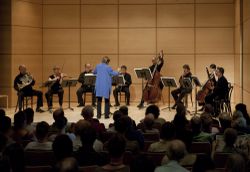
Although it has hosted concerts in the past, the Paul-Desmarais Theatre is better known for holding conferences and film screenings. Concerts traditionally held in the historic Chapelle historique du Bon-Pasteur will temporarily take place at the CCA and music will be reintroduced in the theatre, initiating new perceptions of sound, and of this space. Mindful of the(...)
Although it has hosted concerts in the past, the Paul-Desmarais Theatre is better known for holding conferences and film screenings. Concerts traditionally held in the historic Chapelle historique du Bon-Pasteur will temporarily take place at the CCA and music will be reintroduced in the theatre, initiating new perceptions of sound, and of this space. Mindful of the(...)
Location:
Paul-Desmarais Theatre Keyword(s):
CCA, Chapelle historique du Bon-Pasteur, concerts, chamber music, classical music, up-and-coming musicians.
Paul-Desmarais Theatre Keyword(s):
CCA, Chapelle historique du Bon-Pasteur, concerts, chamber music, classical music, up-and-coming musicians.
Date:
31 January 2024 to 17 May 2024
31 January 2024 to 17 May 2024
Title:
Chapelle historique du Bon-Pasteur Concerts
Actions:
Description:
Although it has hosted concerts in the past, the Paul-Desmarais Theatre is better known for holding conferences and film screenings. Concerts traditionally held in the historic Chapelle historique du Bon-Pasteur will temporarily take place at the CCA and music will be reintroduced in the theatre, initiating new perceptions of sound, and of this space. Mindful of the(...)
Chapelle historique du Bon-Pasteur Concerts
Actions:
Description:
Although it has hosted concerts in the past, the Paul-Desmarais Theatre is better known for holding conferences and film screenings. Concerts traditionally held in the historic Chapelle historique du Bon-Pasteur will temporarily take place at the CCA and music will be reintroduced in the theatre, initiating new perceptions of sound, and of this space. Mindful of the(...)
Form:
events
events
Date:
31 January 2024 to
17 May 2024
31 January 2024 to
17 May 2024
Location:
Paul-Desmarais Theatre Keyword(s):
CCA, Chapelle historique du Bon-Pasteur, concerts, chamber music, classical music, up-and-coming musicians.
Paul-Desmarais Theatre Keyword(s):
CCA, Chapelle historique du Bon-Pasteur, concerts, chamber music, classical music, up-and-coming musicians.
Level of archival description:
Project
Project
Reference number:
AP164.S1.2002.D16
Description:
The project series documents the competition entry for the development of the International fair of the South, in the municipality of Getafe, Spain. The firm identified this project as number 159a. “The project puts the emphasis on two esencial [sic] questions: on the one hand a system which allows to resolve the fair’s pavillons simple and elegantly joining criteria of light, structure and water in a system of constructive rationality and average economy. On the other han[d a]n organization of the public and constructed space in phases which allow to understand the technology area of the south as something complete and shaped since the first of them has been developed. The proposed exhibition pavillions [sic] come from a technical reasoning based in the balance of structural width, central light and drainage of the roof, a result of several projects of similar scale which the office has developed in the last years.” (ARCH270975) Abalos & Herreros initially grouped this project with the competition Fira 2000 - Barcelona (AP164.S1.2002.D14). Documenting the project are presentation drawings, project descriptions, correspondence, studies, competition documents and specifications.
AP164.S1.2002.D16
Description:
The project series documents the competition entry for the development of the International fair of the South, in the municipality of Getafe, Spain. The firm identified this project as number 159a. “The project puts the emphasis on two esencial [sic] questions: on the one hand a system which allows to resolve the fair’s pavillons simple and elegantly joining criteria of light, structure and water in a system of constructive rationality and average economy. On the other han[d a]n organization of the public and constructed space in phases which allow to understand the technology area of the south as something complete and shaped since the first of them has been developed. The proposed exhibition pavillions [sic] come from a technical reasoning based in the balance of structural width, central light and drainage of the roof, a result of several projects of similar scale which the office has developed in the last years.” (ARCH270975) Abalos & Herreros initially grouped this project with the competition Fira 2000 - Barcelona (AP164.S1.2002.D14). Documenting the project are presentation drawings, project descriptions, correspondence, studies, competition documents and specifications.
People:
Date:
circa 2002-2003
circa 2002-2003
Title:
Fisur-Getafe (Concurso), Getafe, Spain (2002)
Actions:
AP164.S1.2002.D16
Description:
The project series documents the competition entry for the development of the International fair of the South, in the municipality of Getafe, Spain. The firm identified this project as number 159a. “The project puts the emphasis on two esencial [sic] questions: on the one hand a system which allows to resolve the fair’s pavillons simple and elegantly joining criteria of light, structure and water in a system of constructive rationality and average economy. On the other han[d a]n organization of the public and constructed space in phases which allow to understand the technology area of the south as something complete and shaped since the first of them has been developed. The proposed exhibition pavillions [sic] come from a technical reasoning based in the balance of structural width, central light and drainage of the roof, a result of several projects of similar scale which the office has developed in the last years.” (ARCH270975) Abalos & Herreros initially grouped this project with the competition Fira 2000 - Barcelona (AP164.S1.2002.D14). Documenting the project are presentation drawings, project descriptions, correspondence, studies, competition documents and specifications.
Fisur-Getafe (Concurso), Getafe, Spain (2002)
Actions:
AP164.S1.2002.D16
Description:
The project series documents the competition entry for the development of the International fair of the South, in the municipality of Getafe, Spain. The firm identified this project as number 159a. “The project puts the emphasis on two esencial [sic] questions: on the one hand a system which allows to resolve the fair’s pavillons simple and elegantly joining criteria of light, structure and water in a system of constructive rationality and average economy. On the other han[d a]n organization of the public and constructed space in phases which allow to understand the technology area of the south as something complete and shaped since the first of them has been developed. The proposed exhibition pavillions [sic] come from a technical reasoning based in the balance of structural width, central light and drainage of the roof, a result of several projects of similar scale which the office has developed in the last years.” (ARCH270975) Abalos & Herreros initially grouped this project with the competition Fira 2000 - Barcelona (AP164.S1.2002.D14). Documenting the project are presentation drawings, project descriptions, correspondence, studies, competition documents and specifications.
Level of archival description:
Project
Project
Date:
circa 2002-2003
circa 2002-2003
People:
Level of archival description:
Project
Project
Reference number:
AP075.S1.1992.PR01
Description:
Project series documents Cornelia Hahn Oberlander’s project for the landscape design for Library Square, the new central branch of the Vancouver’s public library on West Georgia Street. Oberlander worked on this project in 1992-1995 with architect Moshe Safdie and architectural firm Downs/Archambault & Patners. Oberlander landscape design included a roof garden, planned to be accessible by the public, and terraces with integral planting of cascading roses of the southeast edge of the building. She was also consulted for the landscape for the street-level spaces: “Along the streets bordering the site, Oberlander selected tulip trees, except on W. Georgia Street where the city required maples.” [1] The project was completed in 1995. The project series contains sketches, design development drawings, including planting plans, landscape plans for the green roof and the plaza, working drawings, such as site plans, planting plans, irrigation plans, landscape sections and elevations, and drawings of the building used as reference. The project is also recorded through textual records, such as concept notes by Oberlander, research material, specifications, including landscape specifications, correspondence, including correspondence with architects, client and contractors, contract, financial documents, documents for plan selection, and press and articles on the project. The project series also includes photographs of the construction and landscaping work, and photographs of the completed project. Source: [1] Herrington, Susan. Cornelia Hahn Oberlander: Making the Modern Landscape, University of Virginia Press, 2014, 304 pages. p. 176.
AP075.S1.1992.PR01
Description:
Project series documents Cornelia Hahn Oberlander’s project for the landscape design for Library Square, the new central branch of the Vancouver’s public library on West Georgia Street. Oberlander worked on this project in 1992-1995 with architect Moshe Safdie and architectural firm Downs/Archambault & Patners. Oberlander landscape design included a roof garden, planned to be accessible by the public, and terraces with integral planting of cascading roses of the southeast edge of the building. She was also consulted for the landscape for the street-level spaces: “Along the streets bordering the site, Oberlander selected tulip trees, except on W. Georgia Street where the city required maples.” [1] The project was completed in 1995. The project series contains sketches, design development drawings, including planting plans, landscape plans for the green roof and the plaza, working drawings, such as site plans, planting plans, irrigation plans, landscape sections and elevations, and drawings of the building used as reference. The project is also recorded through textual records, such as concept notes by Oberlander, research material, specifications, including landscape specifications, correspondence, including correspondence with architects, client and contractors, contract, financial documents, documents for plan selection, and press and articles on the project. The project series also includes photographs of the construction and landscaping work, and photographs of the completed project. Source: [1] Herrington, Susan. Cornelia Hahn Oberlander: Making the Modern Landscape, University of Virginia Press, 2014, 304 pages. p. 176.
People:
Date:
1989-2009
1989-2009
Title:
Library Square, Vancouver, British Columbia (1992-1995)
Actions:
AP075.S1.1992.PR01
Description:
Project series documents Cornelia Hahn Oberlander’s project for the landscape design for Library Square, the new central branch of the Vancouver’s public library on West Georgia Street. Oberlander worked on this project in 1992-1995 with architect Moshe Safdie and architectural firm Downs/Archambault & Patners. Oberlander landscape design included a roof garden, planned to be accessible by the public, and terraces with integral planting of cascading roses of the southeast edge of the building. She was also consulted for the landscape for the street-level spaces: “Along the streets bordering the site, Oberlander selected tulip trees, except on W. Georgia Street where the city required maples.” [1] The project was completed in 1995. The project series contains sketches, design development drawings, including planting plans, landscape plans for the green roof and the plaza, working drawings, such as site plans, planting plans, irrigation plans, landscape sections and elevations, and drawings of the building used as reference. The project is also recorded through textual records, such as concept notes by Oberlander, research material, specifications, including landscape specifications, correspondence, including correspondence with architects, client and contractors, contract, financial documents, documents for plan selection, and press and articles on the project. The project series also includes photographs of the construction and landscaping work, and photographs of the completed project. Source: [1] Herrington, Susan. Cornelia Hahn Oberlander: Making the Modern Landscape, University of Virginia Press, 2014, 304 pages. p. 176.
Library Square, Vancouver, British Columbia (1992-1995)
Actions:
AP075.S1.1992.PR01
Description:
Project series documents Cornelia Hahn Oberlander’s project for the landscape design for Library Square, the new central branch of the Vancouver’s public library on West Georgia Street. Oberlander worked on this project in 1992-1995 with architect Moshe Safdie and architectural firm Downs/Archambault & Patners. Oberlander landscape design included a roof garden, planned to be accessible by the public, and terraces with integral planting of cascading roses of the southeast edge of the building. She was also consulted for the landscape for the street-level spaces: “Along the streets bordering the site, Oberlander selected tulip trees, except on W. Georgia Street where the city required maples.” [1] The project was completed in 1995. The project series contains sketches, design development drawings, including planting plans, landscape plans for the green roof and the plaza, working drawings, such as site plans, planting plans, irrigation plans, landscape sections and elevations, and drawings of the building used as reference. The project is also recorded through textual records, such as concept notes by Oberlander, research material, specifications, including landscape specifications, correspondence, including correspondence with architects, client and contractors, contract, financial documents, documents for plan selection, and press and articles on the project. The project series also includes photographs of the construction and landscaping work, and photographs of the completed project. Source: [1] Herrington, Susan. Cornelia Hahn Oberlander: Making the Modern Landscape, University of Virginia Press, 2014, 304 pages. p. 176.
Level of archival description:
Project
Project
Date:
1989-2009
1989-2009
People:
Form:
archives
Level of archival description:
Fonds
archives
Level of archival description:
Fonds
Title:
Paul-Philippe Cret fonds
Paul-Philippe Cret fonds
Actions:
Reference number:
AP031
Synopsis:
Paul-Philippe Cret fonds, 1907-1950, documents Cret’s project for the International Bureau of American Republics (Pan American Union Building) in Washington D.C. (1907 – 1950). The fond is comprised of drawings showing plans, elevations, wiring and plumbing diagrams, and furniture layout.
AP031
Synopsis:
Paul-Philippe Cret fonds, 1907-1950, documents Cret’s project for the International Bureau of American Republics (Pan American Union Building) in Washington D.C. (1907 – 1950). The fond is comprised of drawings showing plans, elevations, wiring and plumbing diagrams, and furniture layout.
People:
Date:
circa 1907-1950
circa 1907-1950
Title:
Paul-Philippe Cret fonds
Actions:
AP031
Synopsis:
Paul-Philippe Cret fonds, 1907-1950, documents Cret’s project for the International Bureau of American Republics (Pan American Union Building) in Washington D.C. (1907 – 1950). The fond is comprised of drawings showing plans, elevations, wiring and plumbing diagrams, and furniture layout.
Paul-Philippe Cret fonds
Actions:
AP031
Synopsis:
Paul-Philippe Cret fonds, 1907-1950, documents Cret’s project for the International Bureau of American Republics (Pan American Union Building) in Washington D.C. (1907 – 1950). The fond is comprised of drawings showing plans, elevations, wiring and plumbing diagrams, and furniture layout.
Form:
archives
Level of archival description:
Fonds
archives
Level of archival description:
Fonds
Date:
circa 1907-1950
circa 1907-1950
People:
Level of archival description:
Project
Project
Reference number:
AP206.S1.1983.PR01
Description:
This project series documents residential housing for officers at the Reserve Bank of India in Chandigarh, India from 1983-1986. The project consisted of four-storey apartment blocks located on twelve blocks totalling 2.87 acres. The apartment blocks had oblong-shaped spiraling staircases at exterior openings along the buildings' elevations. Located in Sector 44B, the apartments observed both the norms of the bank's staff quarters guidelines and the architectural control established in Chandigarh. This project was proposed in two phases, the second of which integrated public spaces, amenities and maintenance quarters into the campus. The project is recorded through drawings, textual records and a photograph dating from 1983-2003. About half the drawings are originals and included are plans, elevations, sections, details and structural and electrical drawings. Many of these are working drawings, but some presentation drawings are included. The textual records consist of specifications, reports, correspondence and the project contract. The photograph shows Aditya Prakash on the roof of the finished building.
AP206.S1.1983.PR01
Description:
This project series documents residential housing for officers at the Reserve Bank of India in Chandigarh, India from 1983-1986. The project consisted of four-storey apartment blocks located on twelve blocks totalling 2.87 acres. The apartment blocks had oblong-shaped spiraling staircases at exterior openings along the buildings' elevations. Located in Sector 44B, the apartments observed both the norms of the bank's staff quarters guidelines and the architectural control established in Chandigarh. This project was proposed in two phases, the second of which integrated public spaces, amenities and maintenance quarters into the campus. The project is recorded through drawings, textual records and a photograph dating from 1983-2003. About half the drawings are originals and included are plans, elevations, sections, details and structural and electrical drawings. Many of these are working drawings, but some presentation drawings are included. The textual records consist of specifications, reports, correspondence and the project contract. The photograph shows Aditya Prakash on the roof of the finished building.
People:
Date:
1983-2003
1983-2003
Title:
Reserve Bank of India officers' quarters, Chandigarh, India (1983-1986)
Actions:
AP206.S1.1983.PR01
Description:
This project series documents residential housing for officers at the Reserve Bank of India in Chandigarh, India from 1983-1986. The project consisted of four-storey apartment blocks located on twelve blocks totalling 2.87 acres. The apartment blocks had oblong-shaped spiraling staircases at exterior openings along the buildings' elevations. Located in Sector 44B, the apartments observed both the norms of the bank's staff quarters guidelines and the architectural control established in Chandigarh. This project was proposed in two phases, the second of which integrated public spaces, amenities and maintenance quarters into the campus. The project is recorded through drawings, textual records and a photograph dating from 1983-2003. About half the drawings are originals and included are plans, elevations, sections, details and structural and electrical drawings. Many of these are working drawings, but some presentation drawings are included. The textual records consist of specifications, reports, correspondence and the project contract. The photograph shows Aditya Prakash on the roof of the finished building.
Reserve Bank of India officers' quarters, Chandigarh, India (1983-1986)
Actions:
AP206.S1.1983.PR01
Description:
This project series documents residential housing for officers at the Reserve Bank of India in Chandigarh, India from 1983-1986. The project consisted of four-storey apartment blocks located on twelve blocks totalling 2.87 acres. The apartment blocks had oblong-shaped spiraling staircases at exterior openings along the buildings' elevations. Located in Sector 44B, the apartments observed both the norms of the bank's staff quarters guidelines and the architectural control established in Chandigarh. This project was proposed in two phases, the second of which integrated public spaces, amenities and maintenance quarters into the campus. The project is recorded through drawings, textual records and a photograph dating from 1983-2003. About half the drawings are originals and included are plans, elevations, sections, details and structural and electrical drawings. Many of these are working drawings, but some presentation drawings are included. The textual records consist of specifications, reports, correspondence and the project contract. The photograph shows Aditya Prakash on the roof of the finished building.
Level of archival description:
Project
Project
Date:
1983-2003
1983-2003
People:
Level of archival description:
Project
Project
Actions:
Reference number:
AP075.S1.1997.PR02
Description:
Project series documents Cornelia Hahn Oberlander's landscape project for the Waterfall Building on West 2nd Avenue, near the entrance of Granville Island, in Vancouver, British Columbia. Oberlander worked on this project in 1998-2001 with architect Arthur Erickson and architectural firm Nick Milkovich Architects, who designed the building. The building consists in five separated structures to accomodate studios spaces as well as split-level residences. It also included a courtyard and roof gardens on all five building structures for which Oberlander was responsible of the design. The courtyard, formed by in the roof of the underground parking space, consists "a simple tapestry of pavers, ground cover, trees and a small reflecting basin [...]." [1] The roofs garden included planting of white roses at the edge of the building and ornemental grass. The rooftops serve as communal patio for the residents and was accesible to the public. The project was completed in 2001. The Waterfall Building was the last project Oberlander realized in collaboration with Arthur Erickson. The project series includes sketches, design development drawings, including planting plans for the courtyard and the rooftops, working drawings, such as landscape plans for the courtyard and planting plans. The drawings in this series also includes drawings of the building used as reference. The project is also documented through research material for the project, specifications, plant lists, correspondence, including correspondence with architects and client, meeting notes, reports, financial document, a promotional poster on the project, and photographs of the landscaping work and plant selection. Source: [1] Herrington, Susan. Cornelia Hahn Oberlander: Making the Modern Landscape, University of Virginia Press, 2014, 304 pages. p. 142.
AP075.S1.1997.PR02
Description:
Project series documents Cornelia Hahn Oberlander's landscape project for the Waterfall Building on West 2nd Avenue, near the entrance of Granville Island, in Vancouver, British Columbia. Oberlander worked on this project in 1998-2001 with architect Arthur Erickson and architectural firm Nick Milkovich Architects, who designed the building. The building consists in five separated structures to accomodate studios spaces as well as split-level residences. It also included a courtyard and roof gardens on all five building structures for which Oberlander was responsible of the design. The courtyard, formed by in the roof of the underground parking space, consists "a simple tapestry of pavers, ground cover, trees and a small reflecting basin [...]." [1] The roofs garden included planting of white roses at the edge of the building and ornemental grass. The rooftops serve as communal patio for the residents and was accesible to the public. The project was completed in 2001. The Waterfall Building was the last project Oberlander realized in collaboration with Arthur Erickson. The project series includes sketches, design development drawings, including planting plans for the courtyard and the rooftops, working drawings, such as landscape plans for the courtyard and planting plans. The drawings in this series also includes drawings of the building used as reference. The project is also documented through research material for the project, specifications, plant lists, correspondence, including correspondence with architects and client, meeting notes, reports, financial document, a promotional poster on the project, and photographs of the landscaping work and plant selection. Source: [1] Herrington, Susan. Cornelia Hahn Oberlander: Making the Modern Landscape, University of Virginia Press, 2014, 304 pages. p. 142.
People:
Date:
1997-2001
1997-2001
Title:
The Waterfall Building, Vancouver, British Columbia (1997)
Actions:
AP075.S1.1997.PR02
Description:
Project series documents Cornelia Hahn Oberlander's landscape project for the Waterfall Building on West 2nd Avenue, near the entrance of Granville Island, in Vancouver, British Columbia. Oberlander worked on this project in 1998-2001 with architect Arthur Erickson and architectural firm Nick Milkovich Architects, who designed the building. The building consists in five separated structures to accomodate studios spaces as well as split-level residences. It also included a courtyard and roof gardens on all five building structures for which Oberlander was responsible of the design. The courtyard, formed by in the roof of the underground parking space, consists "a simple tapestry of pavers, ground cover, trees and a small reflecting basin [...]." [1] The roofs garden included planting of white roses at the edge of the building and ornemental grass. The rooftops serve as communal patio for the residents and was accesible to the public. The project was completed in 2001. The Waterfall Building was the last project Oberlander realized in collaboration with Arthur Erickson. The project series includes sketches, design development drawings, including planting plans for the courtyard and the rooftops, working drawings, such as landscape plans for the courtyard and planting plans. The drawings in this series also includes drawings of the building used as reference. The project is also documented through research material for the project, specifications, plant lists, correspondence, including correspondence with architects and client, meeting notes, reports, financial document, a promotional poster on the project, and photographs of the landscaping work and plant selection. Source: [1] Herrington, Susan. Cornelia Hahn Oberlander: Making the Modern Landscape, University of Virginia Press, 2014, 304 pages. p. 142.
The Waterfall Building, Vancouver, British Columbia (1997)
Actions:
AP075.S1.1997.PR02
Description:
Project series documents Cornelia Hahn Oberlander's landscape project for the Waterfall Building on West 2nd Avenue, near the entrance of Granville Island, in Vancouver, British Columbia. Oberlander worked on this project in 1998-2001 with architect Arthur Erickson and architectural firm Nick Milkovich Architects, who designed the building. The building consists in five separated structures to accomodate studios spaces as well as split-level residences. It also included a courtyard and roof gardens on all five building structures for which Oberlander was responsible of the design. The courtyard, formed by in the roof of the underground parking space, consists "a simple tapestry of pavers, ground cover, trees and a small reflecting basin [...]." [1] The roofs garden included planting of white roses at the edge of the building and ornemental grass. The rooftops serve as communal patio for the residents and was accesible to the public. The project was completed in 2001. The Waterfall Building was the last project Oberlander realized in collaboration with Arthur Erickson. The project series includes sketches, design development drawings, including planting plans for the courtyard and the rooftops, working drawings, such as landscape plans for the courtyard and planting plans. The drawings in this series also includes drawings of the building used as reference. The project is also documented through research material for the project, specifications, plant lists, correspondence, including correspondence with architects and client, meeting notes, reports, financial document, a promotional poster on the project, and photographs of the landscaping work and plant selection. Source: [1] Herrington, Susan. Cornelia Hahn Oberlander: Making the Modern Landscape, University of Virginia Press, 2014, 304 pages. p. 142.
Level of archival description:
Project
Project
Date:
1997-2001
1997-2001
People:
Level of archival description:
Sub-series
Sub-series
Actions:
Reference number:
AP178.S1.1988.PR07.SS6
Description:
This project series documents the restoration of the Leonel building in Lisbon, Portugal. While the records were held in the office’s archives this project was assigned the number 58/80 N19. The office assigned the date 1988-1998 for this project. The construction work includes restorations of windows, doors, façades, painting, stonework, as well as work on the structure and mechanical systems. The Leonel building was part of Bloco A and identified as building 19 in Siza reconstruction plan. Located between the lower and upper part of town, Siza used the building to create a path and an public elevator to link the two parts of Lisbon. Documenting this project subseries are sketches, studies, floor plans, elevations, mechanical drawings, technical drawings, and working drawings. Textual material includes correspondence, minutes of meeting and project documentation. It is important to note that documentation about this project can also be found in subseries Master plans and exterior spaces (AP178.S1.1988.PR07.SS1) and Bloco B (AP178.S1.1988.PR07.SS5).
AP178.S1.1988.PR07.SS6
Description:
This project series documents the restoration of the Leonel building in Lisbon, Portugal. While the records were held in the office’s archives this project was assigned the number 58/80 N19. The office assigned the date 1988-1998 for this project. The construction work includes restorations of windows, doors, façades, painting, stonework, as well as work on the structure and mechanical systems. The Leonel building was part of Bloco A and identified as building 19 in Siza reconstruction plan. Located between the lower and upper part of town, Siza used the building to create a path and an public elevator to link the two parts of Lisbon. Documenting this project subseries are sketches, studies, floor plans, elevations, mechanical drawings, technical drawings, and working drawings. Textual material includes correspondence, minutes of meeting and project documentation. It is important to note that documentation about this project can also be found in subseries Master plans and exterior spaces (AP178.S1.1988.PR07.SS1) and Bloco B (AP178.S1.1988.PR07.SS5).
People:
Date:
1988-2005
1988-2005
Title:
Edifício Leonel, Bloco B, Reconstrução do Chiado [Leonel building, Block B, Reconstruction of the Chiado] Lisbon, Portugal (1988-1998)
Actions:
AP178.S1.1988.PR07.SS6
Description:
This project series documents the restoration of the Leonel building in Lisbon, Portugal. While the records were held in the office’s archives this project was assigned the number 58/80 N19. The office assigned the date 1988-1998 for this project. The construction work includes restorations of windows, doors, façades, painting, stonework, as well as work on the structure and mechanical systems. The Leonel building was part of Bloco A and identified as building 19 in Siza reconstruction plan. Located between the lower and upper part of town, Siza used the building to create a path and an public elevator to link the two parts of Lisbon. Documenting this project subseries are sketches, studies, floor plans, elevations, mechanical drawings, technical drawings, and working drawings. Textual material includes correspondence, minutes of meeting and project documentation. It is important to note that documentation about this project can also be found in subseries Master plans and exterior spaces (AP178.S1.1988.PR07.SS1) and Bloco B (AP178.S1.1988.PR07.SS5).
Edifício Leonel, Bloco B, Reconstrução do Chiado [Leonel building, Block B, Reconstruction of the Chiado] Lisbon, Portugal (1988-1998)
Actions:
AP178.S1.1988.PR07.SS6
Description:
This project series documents the restoration of the Leonel building in Lisbon, Portugal. While the records were held in the office’s archives this project was assigned the number 58/80 N19. The office assigned the date 1988-1998 for this project. The construction work includes restorations of windows, doors, façades, painting, stonework, as well as work on the structure and mechanical systems. The Leonel building was part of Bloco A and identified as building 19 in Siza reconstruction plan. Located between the lower and upper part of town, Siza used the building to create a path and an public elevator to link the two parts of Lisbon. Documenting this project subseries are sketches, studies, floor plans, elevations, mechanical drawings, technical drawings, and working drawings. Textual material includes correspondence, minutes of meeting and project documentation. It is important to note that documentation about this project can also be found in subseries Master plans and exterior spaces (AP178.S1.1988.PR07.SS1) and Bloco B (AP178.S1.1988.PR07.SS5).
Level of archival description:
Project
Project
Date:
1988-2005
1988-2005
People:
Form:
exhibitions
exhibitions
Title:
Mel Ziegler: Growing Concern
Mel Ziegler: Growing Concern
Actions:
Description:
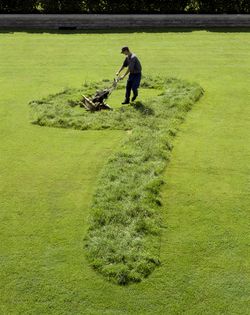
The front garden is a sign, a place both public and private, conveying the convictions and values of the households they frame. Growing Concern, a grass relief in Baile Park by American artist Mel Ziegler (b.1956), represents the North American obsession with the lawn. The artist considers the cultural obsession with the growth of our lawns to be symbolic of the taming(...)
The front garden is a sign, a place both public and private, conveying the convictions and values of the households they frame. Growing Concern, a grass relief in Baile Park by American artist Mel Ziegler (b.1956), represents the North American obsession with the lawn. The artist considers the cultural obsession with the growth of our lawns to be symbolic of the taming(...)
Location:
Baile Park
Baile Park
Date:
16 June 1998 to 8 November 1998
16 June 1998 to 8 November 1998
Title:
Mel Ziegler: Growing Concern
Actions:
Description:
The front garden is a sign, a place both public and private, conveying the convictions and values of the households they frame. Growing Concern, a grass relief in Baile Park by American artist Mel Ziegler (b.1956), represents the North American obsession with the lawn. The artist considers the cultural obsession with the growth of our lawns to be symbolic of the taming(...)
Mel Ziegler: Growing Concern
Actions:
Description:
The front garden is a sign, a place both public and private, conveying the convictions and values of the households they frame. Growing Concern, a grass relief in Baile Park by American artist Mel Ziegler (b.1956), represents the North American obsession with the lawn. The artist considers the cultural obsession with the growth of our lawns to be symbolic of the taming(...)
Form:
exhibitions
exhibitions
Date:
16 June 1998 to
8 November 1998
16 June 1998 to
8 November 1998
Location:
Baile Park
Baile Park
Form:
events
events
Title:
Learning from... Bahrain
Learning from... Bahrain
Actions:
Description:
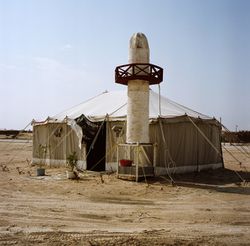
Noura al Sayeh presents the third lecture in the Learning From… the Middle East series. The presentation will survey the photographic documentation of the Bahrain coast by photographer Camille Zakharia. The urban transformations in the last 30 years have redrawn the Bahraini landscape and triggered the development of a contemporary vernacular culture. The presentation(...)
Noura al Sayeh presents the third lecture in the Learning From… the Middle East series. The presentation will survey the photographic documentation of the Bahrain coast by photographer Camille Zakharia. The urban transformations in the last 30 years have redrawn the Bahraini landscape and triggered the development of a contemporary vernacular culture. The presentation(...)
Location:
Paul-Desmarais Theatre
Paul-Desmarais Theatre
Date:
6 October 2011 , 7pm
6 October 2011 , 7pm
Title:
Learning from... Bahrain
Actions:
Description:
Noura al Sayeh presents the third lecture in the Learning From… the Middle East series. The presentation will survey the photographic documentation of the Bahrain coast by photographer Camille Zakharia. The urban transformations in the last 30 years have redrawn the Bahraini landscape and triggered the development of a contemporary vernacular culture. The presentation(...)
Learning from... Bahrain
Actions:
Description:
Noura al Sayeh presents the third lecture in the Learning From… the Middle East series. The presentation will survey the photographic documentation of the Bahrain coast by photographer Camille Zakharia. The urban transformations in the last 30 years have redrawn the Bahraini landscape and triggered the development of a contemporary vernacular culture. The presentation(...)
Form:
events
events
Date:
6 October 2011
7pm
6 October 2011
7pm
Location:
Paul-Desmarais Theatre
Paul-Desmarais Theatre


