


44145 Results
Level of archival description:
Series
Series
Reference number:
AP027.S1
Description:
The abbreviation "n.c.", which represents "no client", occasionally appears in the project descriptions. This indicates that the client is unknown for that particular project or that the project was initiated by Van Ginkel Associates. Throughout its practice, Van Ginkel Associates devoted much of its time to research and design projects that were generated and paid for by the firm itself. Several of these projects were initiated by members of the staff. Project drawings, because of the multi-disciplinary nature of the firm's work and the scale of some of its commissions, differ greatly in extent, content, format, and size. The drawings therefore have been kept in their original groupings. The original titles assigned to the material by the creators while stored in tubes was transferred to their present folders.
AP027.S1
Description:
The abbreviation "n.c.", which represents "no client", occasionally appears in the project descriptions. This indicates that the client is unknown for that particular project or that the project was initiated by Van Ginkel Associates. Throughout its practice, Van Ginkel Associates devoted much of its time to research and design projects that were generated and paid for by the firm itself. Several of these projects were initiated by members of the staff. Project drawings, because of the multi-disciplinary nature of the firm's work and the scale of some of its commissions, differ greatly in extent, content, format, and size. The drawings therefore have been kept in their original groupings. The original titles assigned to the material by the creators while stored in tubes was transferred to their present folders.
People:
Date:
1957-1991
1957-1991
Title:
Project and Proposal Documentation
Actions:
AP027.S1
Description:
The abbreviation "n.c.", which represents "no client", occasionally appears in the project descriptions. This indicates that the client is unknown for that particular project or that the project was initiated by Van Ginkel Associates. Throughout its practice, Van Ginkel Associates devoted much of its time to research and design projects that were generated and paid for by the firm itself. Several of these projects were initiated by members of the staff. Project drawings, because of the multi-disciplinary nature of the firm's work and the scale of some of its commissions, differ greatly in extent, content, format, and size. The drawings therefore have been kept in their original groupings. The original titles assigned to the material by the creators while stored in tubes was transferred to their present folders.
Project and Proposal Documentation
Actions:
AP027.S1
Description:
The abbreviation "n.c.", which represents "no client", occasionally appears in the project descriptions. This indicates that the client is unknown for that particular project or that the project was initiated by Van Ginkel Associates. Throughout its practice, Van Ginkel Associates devoted much of its time to research and design projects that were generated and paid for by the firm itself. Several of these projects were initiated by members of the staff. Project drawings, because of the multi-disciplinary nature of the firm's work and the scale of some of its commissions, differ greatly in extent, content, format, and size. The drawings therefore have been kept in their original groupings. The original titles assigned to the material by the creators while stored in tubes was transferred to their present folders.
Level of archival description:
Series
Series
Date:
1957-1991
1957-1991
People:
Level of archival description:
Series
Series
Reference number:
CI007.S3
Description:
The series documents the work of the students of Mies van der Rohe's architectural design class at the Armour Institute of Technology in Chicago, Illinois.The material in this series was produced between 1939 and 1940. The series contains drawings related or produced by Mies' students during the class he taught. The drawings are predominantly by George Danforth during the first and second year Mies taught this class and also include copies of Mies' sketches for some of his past projects, as well as photographs of the graduate students of 1940 at the Armour Institure of Technology, including George Danforth. The series also includes photographs by Pius E. Pahl of Mies van der Rohe during a seminar at the Bauhaus in Germany, in 1931.
CI007.S3
Description:
The series documents the work of the students of Mies van der Rohe's architectural design class at the Armour Institute of Technology in Chicago, Illinois.The material in this series was produced between 1939 and 1940. The series contains drawings related or produced by Mies' students during the class he taught. The drawings are predominantly by George Danforth during the first and second year Mies taught this class and also include copies of Mies' sketches for some of his past projects, as well as photographs of the graduate students of 1940 at the Armour Institure of Technology, including George Danforth. The series also includes photographs by Pius E. Pahl of Mies van der Rohe during a seminar at the Bauhaus in Germany, in 1931.
People:
Date:
1938-1943
1938-1943
Title:
Architectural projects by Mies' students
CI007.S3
Description:
The series documents the work of the students of Mies van der Rohe's architectural design class at the Armour Institute of Technology in Chicago, Illinois.The material in this series was produced between 1939 and 1940. The series contains drawings related or produced by Mies' students during the class he taught. The drawings are predominantly by George Danforth during the first and second year Mies taught this class and also include copies of Mies' sketches for some of his past projects, as well as photographs of the graduate students of 1940 at the Armour Institure of Technology, including George Danforth. The series also includes photographs by Pius E. Pahl of Mies van der Rohe during a seminar at the Bauhaus in Germany, in 1931.
Architectural projects by Mies' students
CI007.S3
Description:
The series documents the work of the students of Mies van der Rohe's architectural design class at the Armour Institute of Technology in Chicago, Illinois.The material in this series was produced between 1939 and 1940. The series contains drawings related or produced by Mies' students during the class he taught. The drawings are predominantly by George Danforth during the first and second year Mies taught this class and also include copies of Mies' sketches for some of his past projects, as well as photographs of the graduate students of 1940 at the Armour Institure of Technology, including George Danforth. The series also includes photographs by Pius E. Pahl of Mies van der Rohe during a seminar at the Bauhaus in Germany, in 1931.
Level of archival description:
series
series
Date:
1938-1943
1938-1943
People:
Level of archival description:
Sub-series
Sub-series
Title:
Photographs and negatives
Photographs and negatives
Reference number:
AP140.S2.SS7.D1
Description:
The sub-series documents some of the early architectural interests of James Stirling, the work and activities of the successive firms of Stirling and Gowan; James Stirling; James Stirling and Partner; and James Stirling, Michael Wilford, and Associates, as well as office personnel and events and travels. Material in this file was produced between probably the 1950s and 1992. The subs-series contains photographs, including views of Liverpool and of Le Corbusier's buildings taken by James Stirling. It also contains several portraits of James Stirling, Michael Wilford and colleagues, interior views of the office, and views of drawings, models and of completed buildings by the firm, by photographers Geoff Beeckman, Martin Charles, John Donat Photography, Marlies Hentrup, Klaus Lehnartz, and Ray Williams.
AP140.S2.SS7.D1
Description:
The sub-series documents some of the early architectural interests of James Stirling, the work and activities of the successive firms of Stirling and Gowan; James Stirling; James Stirling and Partner; and James Stirling, Michael Wilford, and Associates, as well as office personnel and events and travels. Material in this file was produced between probably the 1950s and 1992. The subs-series contains photographs, including views of Liverpool and of Le Corbusier's buildings taken by James Stirling. It also contains several portraits of James Stirling, Michael Wilford and colleagues, interior views of the office, and views of drawings, models and of completed buildings by the firm, by photographers Geoff Beeckman, Martin Charles, John Donat Photography, Marlies Hentrup, Klaus Lehnartz, and Ray Williams.
People:
Date:
circa 1950s-1992
circa 1950s-1992
Title:
Photographs and negatives
Actions:
AP140.S2.SS7.D1
Description:
The sub-series documents some of the early architectural interests of James Stirling, the work and activities of the successive firms of Stirling and Gowan; James Stirling; James Stirling and Partner; and James Stirling, Michael Wilford, and Associates, as well as office personnel and events and travels. Material in this file was produced between probably the 1950s and 1992. The subs-series contains photographs, including views of Liverpool and of Le Corbusier's buildings taken by James Stirling. It also contains several portraits of James Stirling, Michael Wilford and colleagues, interior views of the office, and views of drawings, models and of completed buildings by the firm, by photographers Geoff Beeckman, Martin Charles, John Donat Photography, Marlies Hentrup, Klaus Lehnartz, and Ray Williams.
Photographs and negatives
Actions:
AP140.S2.SS7.D1
Description:
The sub-series documents some of the early architectural interests of James Stirling, the work and activities of the successive firms of Stirling and Gowan; James Stirling; James Stirling and Partner; and James Stirling, Michael Wilford, and Associates, as well as office personnel and events and travels. Material in this file was produced between probably the 1950s and 1992. The subs-series contains photographs, including views of Liverpool and of Le Corbusier's buildings taken by James Stirling. It also contains several portraits of James Stirling, Michael Wilford and colleagues, interior views of the office, and views of drawings, models and of completed buildings by the firm, by photographers Geoff Beeckman, Martin Charles, John Donat Photography, Marlies Hentrup, Klaus Lehnartz, and Ray Williams.
Level of archival description:
File 1
File 1
Date:
circa 1950s-1992
circa 1950s-1992
People:
Level of archival description:
Project
Project
Reference number:
AP075.S1.2000.PR04
Description:
Project series documents Cornelia Hahn Oberlander's landscape project for the redesign of low-income housing development New Holly Park III in South Beacon Hill, outside Seattle, Washington. Oberlander was hired by Daniel Solomon ETC Artchitects to work on the landscape. She worked on this project in the early 2000s. The housing development was original called Holly Park. The project in the redesign of the existing housing development built in the 1940s and adding 219 rentals and 121 owned properties. For the landscaping, Oberlander "planned not only central market park but also numerous pocket parks and a greenhouse" [1]. The project series contains design development drawings, presentation drawings and working drawings, such as site plans, landscape plans, planting plans, and irrigations plans. The drawings also includes housing construction plans used as reference. The project is also documented through correspondence with client, architect, consultant and contractors, specifications, contract, financial documents, plant selection and documentation. The project series also includes photographs of the project and digital photographs of a site visit by Oberlander. Sources: [1] Herrington, Susan. Cornelia Hahn Oberlander: Making the Modern Landscape, University of Virginia Press, 2014, 304 pages, p. 69.
AP075.S1.2000.PR04
Description:
Project series documents Cornelia Hahn Oberlander's landscape project for the redesign of low-income housing development New Holly Park III in South Beacon Hill, outside Seattle, Washington. Oberlander was hired by Daniel Solomon ETC Artchitects to work on the landscape. She worked on this project in the early 2000s. The housing development was original called Holly Park. The project in the redesign of the existing housing development built in the 1940s and adding 219 rentals and 121 owned properties. For the landscaping, Oberlander "planned not only central market park but also numerous pocket parks and a greenhouse" [1]. The project series contains design development drawings, presentation drawings and working drawings, such as site plans, landscape plans, planting plans, and irrigations plans. The drawings also includes housing construction plans used as reference. The project is also documented through correspondence with client, architect, consultant and contractors, specifications, contract, financial documents, plant selection and documentation. The project series also includes photographs of the project and digital photographs of a site visit by Oberlander. Sources: [1] Herrington, Susan. Cornelia Hahn Oberlander: Making the Modern Landscape, University of Virginia Press, 2014, 304 pages, p. 69.
People:
Date:
2000-2005
2000-2005
Title:
New Holly Park III, Seattle, Washington (2000)
Actions:
AP075.S1.2000.PR04
Description:
Project series documents Cornelia Hahn Oberlander's landscape project for the redesign of low-income housing development New Holly Park III in South Beacon Hill, outside Seattle, Washington. Oberlander was hired by Daniel Solomon ETC Artchitects to work on the landscape. She worked on this project in the early 2000s. The housing development was original called Holly Park. The project in the redesign of the existing housing development built in the 1940s and adding 219 rentals and 121 owned properties. For the landscaping, Oberlander "planned not only central market park but also numerous pocket parks and a greenhouse" [1]. The project series contains design development drawings, presentation drawings and working drawings, such as site plans, landscape plans, planting plans, and irrigations plans. The drawings also includes housing construction plans used as reference. The project is also documented through correspondence with client, architect, consultant and contractors, specifications, contract, financial documents, plant selection and documentation. The project series also includes photographs of the project and digital photographs of a site visit by Oberlander. Sources: [1] Herrington, Susan. Cornelia Hahn Oberlander: Making the Modern Landscape, University of Virginia Press, 2014, 304 pages, p. 69.
New Holly Park III, Seattle, Washington (2000)
Actions:
AP075.S1.2000.PR04
Description:
Project series documents Cornelia Hahn Oberlander's landscape project for the redesign of low-income housing development New Holly Park III in South Beacon Hill, outside Seattle, Washington. Oberlander was hired by Daniel Solomon ETC Artchitects to work on the landscape. She worked on this project in the early 2000s. The housing development was original called Holly Park. The project in the redesign of the existing housing development built in the 1940s and adding 219 rentals and 121 owned properties. For the landscaping, Oberlander "planned not only central market park but also numerous pocket parks and a greenhouse" [1]. The project series contains design development drawings, presentation drawings and working drawings, such as site plans, landscape plans, planting plans, and irrigations plans. The drawings also includes housing construction plans used as reference. The project is also documented through correspondence with client, architect, consultant and contractors, specifications, contract, financial documents, plant selection and documentation. The project series also includes photographs of the project and digital photographs of a site visit by Oberlander. Sources: [1] Herrington, Susan. Cornelia Hahn Oberlander: Making the Modern Landscape, University of Virginia Press, 2014, 304 pages, p. 69.
Level of archival description:
Project
Project
Date:
2000-2005
2000-2005
People:
Level of archival description:
Series
Series
Reference number:
AP175.S1
Description:
Series 1, Erasmus Bridge, Rotterdam, Netherlands, 1990-1996, documents the design, conception and construction of a third bridge for Rotterdam over the Nieuwe Maas River. The bridge connects the Kop van Zuid neighborhood, located on the south side of the river, to Willemsplein, located on the north side. The bridge is considered as a landmark in Rotterdam’s landscape. The Erasmus Bridge was a formative project in the thinking of UNStudio. It was originally supposed to be designed by architect Maarten Struijs who was the city of Rotterdam principal architect and who is responsible for the concept of the neighboring Willem Bridge. Ben van Berkel came later into the project and was hired as a designing consultant along with architect Wim Quist. Ben van Berkel proposed design was selected allowing him and his firm, which was called Van Berkel & Bos Architectuurbureau at that time, to supervise the conception and construction of the project, from the original concept to piers design to the selection of every item of bridge furniture such as traffic lights, bridge camera and handrails. The bridge was designed to fit the distinct character and industrial past of Rotterdam. The construction of this landmark was one component of a larger redevelopment project, coinciding with other major developments in the city of Rotterdam. The goal was to develop a dense urban intervention on the southern shore of the Nieuwe Maas, in the Kop van Zuid neighborhood. This explains the implication of UNStudio in the planning of urban configuration of the neighborhoods on both sides of the river and their work for Spido, a ferry company operating on the Nieuwe Maas, work spaces and parking garage. This commercial building was designed by the firm and also hosts The Grand Café and Jazz Café. This commercial building is integrated to one of the bridge pillar on the north shore of the river. For the design the firm used AutoCAD to work along with engineers and to conceptualize 3D models. They also used the software to evaluate the circulation flow of drivers, pedestrians and streetcars, measuring its impact on the structure and the urban configuration of the neighborhoods on both sides of the river. The records contain sketches for bridge and pier design, plans and sections for pier, Spido and bridge, architectural and construction details created by engineering companies for every component of the bridge, from drawbridge, to cable car system, to bridge furnitures such as traffic light, handrails and cameras and photographs documenting the research for precedent and the original configuration of the neighborhoods on both sides of the river. The record contains AutoCAD plans, details and sections for both the bridge and Spido parking garage. The records also contain one physical model: a small scale plastic, glass and metal model of the bridge.
AP175.S1
Description:
Series 1, Erasmus Bridge, Rotterdam, Netherlands, 1990-1996, documents the design, conception and construction of a third bridge for Rotterdam over the Nieuwe Maas River. The bridge connects the Kop van Zuid neighborhood, located on the south side of the river, to Willemsplein, located on the north side. The bridge is considered as a landmark in Rotterdam’s landscape. The Erasmus Bridge was a formative project in the thinking of UNStudio. It was originally supposed to be designed by architect Maarten Struijs who was the city of Rotterdam principal architect and who is responsible for the concept of the neighboring Willem Bridge. Ben van Berkel came later into the project and was hired as a designing consultant along with architect Wim Quist. Ben van Berkel proposed design was selected allowing him and his firm, which was called Van Berkel & Bos Architectuurbureau at that time, to supervise the conception and construction of the project, from the original concept to piers design to the selection of every item of bridge furniture such as traffic lights, bridge camera and handrails. The bridge was designed to fit the distinct character and industrial past of Rotterdam. The construction of this landmark was one component of a larger redevelopment project, coinciding with other major developments in the city of Rotterdam. The goal was to develop a dense urban intervention on the southern shore of the Nieuwe Maas, in the Kop van Zuid neighborhood. This explains the implication of UNStudio in the planning of urban configuration of the neighborhoods on both sides of the river and their work for Spido, a ferry company operating on the Nieuwe Maas, work spaces and parking garage. This commercial building was designed by the firm and also hosts The Grand Café and Jazz Café. This commercial building is integrated to one of the bridge pillar on the north shore of the river. For the design the firm used AutoCAD to work along with engineers and to conceptualize 3D models. They also used the software to evaluate the circulation flow of drivers, pedestrians and streetcars, measuring its impact on the structure and the urban configuration of the neighborhoods on both sides of the river. The records contain sketches for bridge and pier design, plans and sections for pier, Spido and bridge, architectural and construction details created by engineering companies for every component of the bridge, from drawbridge, to cable car system, to bridge furnitures such as traffic light, handrails and cameras and photographs documenting the research for precedent and the original configuration of the neighborhoods on both sides of the river. The record contains AutoCAD plans, details and sections for both the bridge and Spido parking garage. The records also contain one physical model: a small scale plastic, glass and metal model of the bridge.
People:
Date:
1990-1996
1990-1996
Title:
Erasmus Bridge, Rotterdam, Netherlands, 1990-1996
Actions:
AP175.S1
Description:
Series 1, Erasmus Bridge, Rotterdam, Netherlands, 1990-1996, documents the design, conception and construction of a third bridge for Rotterdam over the Nieuwe Maas River. The bridge connects the Kop van Zuid neighborhood, located on the south side of the river, to Willemsplein, located on the north side. The bridge is considered as a landmark in Rotterdam’s landscape. The Erasmus Bridge was a formative project in the thinking of UNStudio. It was originally supposed to be designed by architect Maarten Struijs who was the city of Rotterdam principal architect and who is responsible for the concept of the neighboring Willem Bridge. Ben van Berkel came later into the project and was hired as a designing consultant along with architect Wim Quist. Ben van Berkel proposed design was selected allowing him and his firm, which was called Van Berkel & Bos Architectuurbureau at that time, to supervise the conception and construction of the project, from the original concept to piers design to the selection of every item of bridge furniture such as traffic lights, bridge camera and handrails. The bridge was designed to fit the distinct character and industrial past of Rotterdam. The construction of this landmark was one component of a larger redevelopment project, coinciding with other major developments in the city of Rotterdam. The goal was to develop a dense urban intervention on the southern shore of the Nieuwe Maas, in the Kop van Zuid neighborhood. This explains the implication of UNStudio in the planning of urban configuration of the neighborhoods on both sides of the river and their work for Spido, a ferry company operating on the Nieuwe Maas, work spaces and parking garage. This commercial building was designed by the firm and also hosts The Grand Café and Jazz Café. This commercial building is integrated to one of the bridge pillar on the north shore of the river. For the design the firm used AutoCAD to work along with engineers and to conceptualize 3D models. They also used the software to evaluate the circulation flow of drivers, pedestrians and streetcars, measuring its impact on the structure and the urban configuration of the neighborhoods on both sides of the river. The records contain sketches for bridge and pier design, plans and sections for pier, Spido and bridge, architectural and construction details created by engineering companies for every component of the bridge, from drawbridge, to cable car system, to bridge furnitures such as traffic light, handrails and cameras and photographs documenting the research for precedent and the original configuration of the neighborhoods on both sides of the river. The record contains AutoCAD plans, details and sections for both the bridge and Spido parking garage. The records also contain one physical model: a small scale plastic, glass and metal model of the bridge.
Erasmus Bridge, Rotterdam, Netherlands, 1990-1996
Actions:
AP175.S1
Description:
Series 1, Erasmus Bridge, Rotterdam, Netherlands, 1990-1996, documents the design, conception and construction of a third bridge for Rotterdam over the Nieuwe Maas River. The bridge connects the Kop van Zuid neighborhood, located on the south side of the river, to Willemsplein, located on the north side. The bridge is considered as a landmark in Rotterdam’s landscape. The Erasmus Bridge was a formative project in the thinking of UNStudio. It was originally supposed to be designed by architect Maarten Struijs who was the city of Rotterdam principal architect and who is responsible for the concept of the neighboring Willem Bridge. Ben van Berkel came later into the project and was hired as a designing consultant along with architect Wim Quist. Ben van Berkel proposed design was selected allowing him and his firm, which was called Van Berkel & Bos Architectuurbureau at that time, to supervise the conception and construction of the project, from the original concept to piers design to the selection of every item of bridge furniture such as traffic lights, bridge camera and handrails. The bridge was designed to fit the distinct character and industrial past of Rotterdam. The construction of this landmark was one component of a larger redevelopment project, coinciding with other major developments in the city of Rotterdam. The goal was to develop a dense urban intervention on the southern shore of the Nieuwe Maas, in the Kop van Zuid neighborhood. This explains the implication of UNStudio in the planning of urban configuration of the neighborhoods on both sides of the river and their work for Spido, a ferry company operating on the Nieuwe Maas, work spaces and parking garage. This commercial building was designed by the firm and also hosts The Grand Café and Jazz Café. This commercial building is integrated to one of the bridge pillar on the north shore of the river. For the design the firm used AutoCAD to work along with engineers and to conceptualize 3D models. They also used the software to evaluate the circulation flow of drivers, pedestrians and streetcars, measuring its impact on the structure and the urban configuration of the neighborhoods on both sides of the river. The records contain sketches for bridge and pier design, plans and sections for pier, Spido and bridge, architectural and construction details created by engineering companies for every component of the bridge, from drawbridge, to cable car system, to bridge furnitures such as traffic light, handrails and cameras and photographs documenting the research for precedent and the original configuration of the neighborhoods on both sides of the river. The record contains AutoCAD plans, details and sections for both the bridge and Spido parking garage. The records also contain one physical model: a small scale plastic, glass and metal model of the bridge.
Level of archival description:
Series
Series
Date:
1990-1996
1990-1996
People:
Level of archival description:
Project
Project
Reference number:
AP164.S1.2002.D9
Description:
The project series documents the urban planning project under the consortium “Chamartin Operation” for the extension of the avenue Paseo de la Castellana. The firm identified the project as number 153. “Abalos & Herreros developed the architectural consultancy for this ambitious project initiated by R. Bofill and nowadays its in time of adaptation to the urban conditions and the real conditions under the direction of J. M. Ezquiaga. The prime aim of [their] work consists of the establishment of the constructed typologies, the occupation models and the relation between public and housing space for searching a possible compatibility in an environment that soon will be seen as centric in the urban map of Madrid.” (ARCH270975) Documenting the project are conceptual and design development drawings, photographic materials, project descriptions, and notes.
AP164.S1.2002.D9
Description:
The project series documents the urban planning project under the consortium “Chamartin Operation” for the extension of the avenue Paseo de la Castellana. The firm identified the project as number 153. “Abalos & Herreros developed the architectural consultancy for this ambitious project initiated by R. Bofill and nowadays its in time of adaptation to the urban conditions and the real conditions under the direction of J. M. Ezquiaga. The prime aim of [their] work consists of the establishment of the constructed typologies, the occupation models and the relation between public and housing space for searching a possible compatibility in an environment that soon will be seen as centric in the urban map of Madrid.” (ARCH270975) Documenting the project are conceptual and design development drawings, photographic materials, project descriptions, and notes.
People:
Date:
circa 2002
circa 2002
Title:
Operación Chamartin, Madrid, Spain (2002)
Actions:
AP164.S1.2002.D9
Description:
The project series documents the urban planning project under the consortium “Chamartin Operation” for the extension of the avenue Paseo de la Castellana. The firm identified the project as number 153. “Abalos & Herreros developed the architectural consultancy for this ambitious project initiated by R. Bofill and nowadays its in time of adaptation to the urban conditions and the real conditions under the direction of J. M. Ezquiaga. The prime aim of [their] work consists of the establishment of the constructed typologies, the occupation models and the relation between public and housing space for searching a possible compatibility in an environment that soon will be seen as centric in the urban map of Madrid.” (ARCH270975) Documenting the project are conceptual and design development drawings, photographic materials, project descriptions, and notes.
Operación Chamartin, Madrid, Spain (2002)
Actions:
AP164.S1.2002.D9
Description:
The project series documents the urban planning project under the consortium “Chamartin Operation” for the extension of the avenue Paseo de la Castellana. The firm identified the project as number 153. “Abalos & Herreros developed the architectural consultancy for this ambitious project initiated by R. Bofill and nowadays its in time of adaptation to the urban conditions and the real conditions under the direction of J. M. Ezquiaga. The prime aim of [their] work consists of the establishment of the constructed typologies, the occupation models and the relation between public and housing space for searching a possible compatibility in an environment that soon will be seen as centric in the urban map of Madrid.” (ARCH270975) Documenting the project are conceptual and design development drawings, photographic materials, project descriptions, and notes.
Level of archival description:
Project
Project
Date:
circa 2002
circa 2002
People:
Form:
events
events
Actions:
Description:
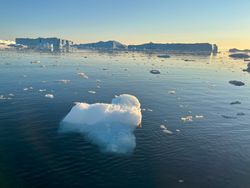
Glaciers tell us of the past and the present, archiving histories of climate and revealing our impending climate futures. Join us on 9 October for a talk by Cymene Howe, presented in the context of the exhibition Oscillating Spaces, in which she describes how we can recognize the work that glaciers do to mark time and history. She will discuss a handful of her(...)
Glaciers tell us of the past and the present, archiving histories of climate and revealing our impending climate futures. Join us on 9 October for a talk by Cymene Howe, presented in the context of the exhibition Oscillating Spaces, in which she describes how we can recognize the work that glaciers do to mark time and history. She will discuss a handful of her(...)
Location:
Paul-Desmarais Theatre
Paul-Desmarais Theatre
Date:
9 October 2025, 6pm
9 October 2025, 6pm
Title:
The Life and Death of Ice with Cymene Howe
Actions:
Description:
Glaciers tell us of the past and the present, archiving histories of climate and revealing our impending climate futures. Join us on 9 October for a talk by Cymene Howe, presented in the context of the exhibition Oscillating Spaces, in which she describes how we can recognize the work that glaciers do to mark time and history. She will discuss a handful of her(...)
The Life and Death of Ice with Cymene Howe
Actions:
Description:
Glaciers tell us of the past and the present, archiving histories of climate and revealing our impending climate futures. Join us on 9 October for a talk by Cymene Howe, presented in the context of the exhibition Oscillating Spaces, in which she describes how we can recognize the work that glaciers do to mark time and history. She will discuss a handful of her(...)
Form:
events
events
Date:
9 October 2025
6pm
9 October 2025
6pm
Location:
Paul-Desmarais Theatre
Paul-Desmarais Theatre
Level of archival description:
Series
Series
Title:
Works
Works
Reference number:
AP207.S1
Description:
The series documents Pettena’s artistic, architectural and design projects from 1966 to 2018. It includes material related to his performances, installations, furniture designs, architectural projects, films he produced, and series of photographic projects. The series includes projects created during Pettena’s residencies in the United States, such as “Vestirsi Di Siede [Wearable Chairs]” (1971), “Ice House I” (1971) and “Ice House II” (1972), and “Tumbleweeds Catcher” (1972). The series also contains material showing Pettena’s growing interest in the preservation and conservation of historical buildings with projects like the new Town Hall of Canazei (1990-1997) and the preservation and conversion of the Forte Inglese in Portoferraio (1992). The presence of nature in architecture and it’s influence on the architect’s work, a recurring theme in Pettena’s work, is also documented in this series with projects such as his proposal “Grass architecture” for the Trigon competition in 1971, the photographic series “Case Conquistate Dal Verde” (1985), and the installation “Architecture forgiven by nature” (2017). The series contains sketches, renderings, and plans, either originals or reprographic copies, and photographs for installation projects and his furniture designs. It also contains drawings, notes, storyboards, and photographs of the performances. There are also films, in digital formats, and film stills for short movie projects produced by Pettena. Also included, are two models: a small wooden model for ”Rumble” sofa” (1967) and a model of for “Archipensierio” (2001-2018) installation of 2001. Finally, the series contains, sketches, floor plans, site plans, sections and elevations, reference drawings and photographs, proposals, and cost estimates for architectural projects such as the Canazei Town Hall (1990-1997), Fort Inglese conversion (1992), and for Pettena’s residence on Elba (1972-2012).
AP207.S1
Description:
The series documents Pettena’s artistic, architectural and design projects from 1966 to 2018. It includes material related to his performances, installations, furniture designs, architectural projects, films he produced, and series of photographic projects. The series includes projects created during Pettena’s residencies in the United States, such as “Vestirsi Di Siede [Wearable Chairs]” (1971), “Ice House I” (1971) and “Ice House II” (1972), and “Tumbleweeds Catcher” (1972). The series also contains material showing Pettena’s growing interest in the preservation and conservation of historical buildings with projects like the new Town Hall of Canazei (1990-1997) and the preservation and conversion of the Forte Inglese in Portoferraio (1992). The presence of nature in architecture and it’s influence on the architect’s work, a recurring theme in Pettena’s work, is also documented in this series with projects such as his proposal “Grass architecture” for the Trigon competition in 1971, the photographic series “Case Conquistate Dal Verde” (1985), and the installation “Architecture forgiven by nature” (2017). The series contains sketches, renderings, and plans, either originals or reprographic copies, and photographs for installation projects and his furniture designs. It also contains drawings, notes, storyboards, and photographs of the performances. There are also films, in digital formats, and film stills for short movie projects produced by Pettena. Also included, are two models: a small wooden model for ”Rumble” sofa” (1967) and a model of for “Archipensierio” (2001-2018) installation of 2001. Finally, the series contains, sketches, floor plans, site plans, sections and elevations, reference drawings and photographs, proposals, and cost estimates for architectural projects such as the Canazei Town Hall (1990-1997), Fort Inglese conversion (1992), and for Pettena’s residence on Elba (1972-2012).
People:
Date:
1966-2018
1966-2018
Title:
Works
Actions:
AP207.S1
Description:
The series documents Pettena’s artistic, architectural and design projects from 1966 to 2018. It includes material related to his performances, installations, furniture designs, architectural projects, films he produced, and series of photographic projects. The series includes projects created during Pettena’s residencies in the United States, such as “Vestirsi Di Siede [Wearable Chairs]” (1971), “Ice House I” (1971) and “Ice House II” (1972), and “Tumbleweeds Catcher” (1972). The series also contains material showing Pettena’s growing interest in the preservation and conservation of historical buildings with projects like the new Town Hall of Canazei (1990-1997) and the preservation and conversion of the Forte Inglese in Portoferraio (1992). The presence of nature in architecture and it’s influence on the architect’s work, a recurring theme in Pettena’s work, is also documented in this series with projects such as his proposal “Grass architecture” for the Trigon competition in 1971, the photographic series “Case Conquistate Dal Verde” (1985), and the installation “Architecture forgiven by nature” (2017). The series contains sketches, renderings, and plans, either originals or reprographic copies, and photographs for installation projects and his furniture designs. It also contains drawings, notes, storyboards, and photographs of the performances. There are also films, in digital formats, and film stills for short movie projects produced by Pettena. Also included, are two models: a small wooden model for ”Rumble” sofa” (1967) and a model of for “Archipensierio” (2001-2018) installation of 2001. Finally, the series contains, sketches, floor plans, site plans, sections and elevations, reference drawings and photographs, proposals, and cost estimates for architectural projects such as the Canazei Town Hall (1990-1997), Fort Inglese conversion (1992), and for Pettena’s residence on Elba (1972-2012).
Works
Actions:
AP207.S1
Description:
The series documents Pettena’s artistic, architectural and design projects from 1966 to 2018. It includes material related to his performances, installations, furniture designs, architectural projects, films he produced, and series of photographic projects. The series includes projects created during Pettena’s residencies in the United States, such as “Vestirsi Di Siede [Wearable Chairs]” (1971), “Ice House I” (1971) and “Ice House II” (1972), and “Tumbleweeds Catcher” (1972). The series also contains material showing Pettena’s growing interest in the preservation and conservation of historical buildings with projects like the new Town Hall of Canazei (1990-1997) and the preservation and conversion of the Forte Inglese in Portoferraio (1992). The presence of nature in architecture and it’s influence on the architect’s work, a recurring theme in Pettena’s work, is also documented in this series with projects such as his proposal “Grass architecture” for the Trigon competition in 1971, the photographic series “Case Conquistate Dal Verde” (1985), and the installation “Architecture forgiven by nature” (2017). The series contains sketches, renderings, and plans, either originals or reprographic copies, and photographs for installation projects and his furniture designs. It also contains drawings, notes, storyboards, and photographs of the performances. There are also films, in digital formats, and film stills for short movie projects produced by Pettena. Also included, are two models: a small wooden model for ”Rumble” sofa” (1967) and a model of for “Archipensierio” (2001-2018) installation of 2001. Finally, the series contains, sketches, floor plans, site plans, sections and elevations, reference drawings and photographs, proposals, and cost estimates for architectural projects such as the Canazei Town Hall (1990-1997), Fort Inglese conversion (1992), and for Pettena’s residence on Elba (1972-2012).
Level of archival description:
Series
Series
Date:
1966-2018
1966-2018
People:
Level of archival description:
Series
Series
Title:
Architectural projects
Architectural projects
Reference number:
AP056.S1
Description:
The Architectural Projects series, 1984-2003, records 125 architectural projects from Canada, the United States, Germany and Switzerland. These projects include university buildings and campuses, public spaces, civic buildings, offices, interior and industrial design, residences, museums, theatres and concert halls, a winery, and retail stores. The projects include built work, proposals and competition entries. Projects were identified and separated based on distinct project numbers assigned by the creating office, along with the project dates and titles when further clarification was necessary. The project numbering scheme used by the office was not consistent, but most of the numbers are four digits and begin with last two digits of the project start year. These projects are recorded primarily through drawings, but some photographs, paintings, textual records, periodicals, and models are also included in this series. The majority of drawings for each project are originals and a large part of reprographic copies have annotations. The drawings for each project typically consist of surveys, sketches, plans, sections, elevations, axonometric drawings, details, perspectives, and drawings issued for construction. Some of the drawings are mounted for presentation purposes. A large number of furnishing drawings are also included for interior design projects. Photographs in this series show finished work completed by the firm, the project models, and reproductions of drawings and paintings. The paintings in this series are mostly watercolours used for presentation. The textual records are very sparse in this series and consist of rough notes used to supplement drawings. The periodicals are magazines that highlight the completed projects. The amount of materials for each project vary greatly, with built projects having the most complete records and project proposals having the least.
AP056.S1
Description:
The Architectural Projects series, 1984-2003, records 125 architectural projects from Canada, the United States, Germany and Switzerland. These projects include university buildings and campuses, public spaces, civic buildings, offices, interior and industrial design, residences, museums, theatres and concert halls, a winery, and retail stores. The projects include built work, proposals and competition entries. Projects were identified and separated based on distinct project numbers assigned by the creating office, along with the project dates and titles when further clarification was necessary. The project numbering scheme used by the office was not consistent, but most of the numbers are four digits and begin with last two digits of the project start year. These projects are recorded primarily through drawings, but some photographs, paintings, textual records, periodicals, and models are also included in this series. The majority of drawings for each project are originals and a large part of reprographic copies have annotations. The drawings for each project typically consist of surveys, sketches, plans, sections, elevations, axonometric drawings, details, perspectives, and drawings issued for construction. Some of the drawings are mounted for presentation purposes. A large number of furnishing drawings are also included for interior design projects. Photographs in this series show finished work completed by the firm, the project models, and reproductions of drawings and paintings. The paintings in this series are mostly watercolours used for presentation. The textual records are very sparse in this series and consist of rough notes used to supplement drawings. The periodicals are magazines that highlight the completed projects. The amount of materials for each project vary greatly, with built projects having the most complete records and project proposals having the least.
People:
Date:
1984-2003
1984-2003
Title:
Architectural projects
Actions:
AP056.S1
Description:
The Architectural Projects series, 1984-2003, records 125 architectural projects from Canada, the United States, Germany and Switzerland. These projects include university buildings and campuses, public spaces, civic buildings, offices, interior and industrial design, residences, museums, theatres and concert halls, a winery, and retail stores. The projects include built work, proposals and competition entries. Projects were identified and separated based on distinct project numbers assigned by the creating office, along with the project dates and titles when further clarification was necessary. The project numbering scheme used by the office was not consistent, but most of the numbers are four digits and begin with last two digits of the project start year. These projects are recorded primarily through drawings, but some photographs, paintings, textual records, periodicals, and models are also included in this series. The majority of drawings for each project are originals and a large part of reprographic copies have annotations. The drawings for each project typically consist of surveys, sketches, plans, sections, elevations, axonometric drawings, details, perspectives, and drawings issued for construction. Some of the drawings are mounted for presentation purposes. A large number of furnishing drawings are also included for interior design projects. Photographs in this series show finished work completed by the firm, the project models, and reproductions of drawings and paintings. The paintings in this series are mostly watercolours used for presentation. The textual records are very sparse in this series and consist of rough notes used to supplement drawings. The periodicals are magazines that highlight the completed projects. The amount of materials for each project vary greatly, with built projects having the most complete records and project proposals having the least.
Architectural projects
Actions:
AP056.S1
Description:
The Architectural Projects series, 1984-2003, records 125 architectural projects from Canada, the United States, Germany and Switzerland. These projects include university buildings and campuses, public spaces, civic buildings, offices, interior and industrial design, residences, museums, theatres and concert halls, a winery, and retail stores. The projects include built work, proposals and competition entries. Projects were identified and separated based on distinct project numbers assigned by the creating office, along with the project dates and titles when further clarification was necessary. The project numbering scheme used by the office was not consistent, but most of the numbers are four digits and begin with last two digits of the project start year. These projects are recorded primarily through drawings, but some photographs, paintings, textual records, periodicals, and models are also included in this series. The majority of drawings for each project are originals and a large part of reprographic copies have annotations. The drawings for each project typically consist of surveys, sketches, plans, sections, elevations, axonometric drawings, details, perspectives, and drawings issued for construction. Some of the drawings are mounted for presentation purposes. A large number of furnishing drawings are also included for interior design projects. Photographs in this series show finished work completed by the firm, the project models, and reproductions of drawings and paintings. The paintings in this series are mostly watercolours used for presentation. The textual records are very sparse in this series and consist of rough notes used to supplement drawings. The periodicals are magazines that highlight the completed projects. The amount of materials for each project vary greatly, with built projects having the most complete records and project proposals having the least.
Level of archival description:
Series
Series
Date:
1984-2003
1984-2003
People:
Level of archival description:
Project
Project
Actions:
Reference number:
CI007.S1.1962.PR01
Description:
This project series documents Mies van der Rohe work as a consultant for the Toronto-Dominion Centre bank distrinct of Toronto, Ontario. between 1962 to 1985, including the Commerce Court West Tower (built in 1972), the Commercial Union Tower (built in 1974, now TD West Tower), the First Canadian Place (built in 1975), the IBM Tower (built in 1985), the Royal Trust Tower (built in 1969), the Scotia Bank Tower, and the Toronto-Dominion Bank Tower. The material in this series was produced in between 1987 and 1999. The series contains exterior and interio views predominantly photographed by Edward Burtynsky, Giovanni Chiaramonte, Peter MacCallum, and George A. Tice, and a letter of Mies van der Rohe to John Parkin and Sidney Bregman.
CI007.S1.1962.PR01
Description:
This project series documents Mies van der Rohe work as a consultant for the Toronto-Dominion Centre bank distrinct of Toronto, Ontario. between 1962 to 1985, including the Commerce Court West Tower (built in 1972), the Commercial Union Tower (built in 1974, now TD West Tower), the First Canadian Place (built in 1975), the IBM Tower (built in 1985), the Royal Trust Tower (built in 1969), the Scotia Bank Tower, and the Toronto-Dominion Bank Tower. The material in this series was produced in between 1987 and 1999. The series contains exterior and interio views predominantly photographed by Edward Burtynsky, Giovanni Chiaramonte, Peter MacCallum, and George A. Tice, and a letter of Mies van der Rohe to John Parkin and Sidney Bregman.
People:
Date:
1987-1999
1987-1999
Title:
Toronto-Dominion Centre, Toronto, Ontario (1962-1985)
Actions:
CI007.S1.1962.PR01
Description:
This project series documents Mies van der Rohe work as a consultant for the Toronto-Dominion Centre bank distrinct of Toronto, Ontario. between 1962 to 1985, including the Commerce Court West Tower (built in 1972), the Commercial Union Tower (built in 1974, now TD West Tower), the First Canadian Place (built in 1975), the IBM Tower (built in 1985), the Royal Trust Tower (built in 1969), the Scotia Bank Tower, and the Toronto-Dominion Bank Tower. The material in this series was produced in between 1987 and 1999. The series contains exterior and interio views predominantly photographed by Edward Burtynsky, Giovanni Chiaramonte, Peter MacCallum, and George A. Tice, and a letter of Mies van der Rohe to John Parkin and Sidney Bregman.
Toronto-Dominion Centre, Toronto, Ontario (1962-1985)
Actions:
CI007.S1.1962.PR01
Description:
This project series documents Mies van der Rohe work as a consultant for the Toronto-Dominion Centre bank distrinct of Toronto, Ontario. between 1962 to 1985, including the Commerce Court West Tower (built in 1972), the Commercial Union Tower (built in 1974, now TD West Tower), the First Canadian Place (built in 1975), the IBM Tower (built in 1985), the Royal Trust Tower (built in 1969), the Scotia Bank Tower, and the Toronto-Dominion Bank Tower. The material in this series was produced in between 1987 and 1999. The series contains exterior and interio views predominantly photographed by Edward Burtynsky, Giovanni Chiaramonte, Peter MacCallum, and George A. Tice, and a letter of Mies van der Rohe to John Parkin and Sidney Bregman.
Level of archival description:
project
project
Date:
1987-1999
1987-1999
People:


