


4522 Results
Level of archival description:
Project
Project
Actions:
Reference number:
AP075.S1.2003.PR07
Description:
Project series documents Cornelia Hahn Oberlander's landscape project for Wellesley Central Health Corporation Neighbourhood Project, in Toronto. Orberlander worked in this project in the first half of the 2000s. She was hired to prepare the masterplan for the redevelopment of the four-acre MCHC's property bounded by Wellesley Street, Sherbourne Street, Wellesley place, and Wellesley Lane. The project was planned to comprise the construction of townhomes, condominum towers and a long-term-care facility. Oberlander also design the landscape for the Wellesley Central Place park, for which she collaborated with Diana Gerrard of gh3. The project consists in a one-acre park for a long-term-care facility for senior citizens and individuals who have suffered a traumatic injury or illness. The project series contains predominantly documents related to Oberlander's work for the landscape masterplan of the WCHC property. The material comprises correspondence, including correspondence with clients and consultants, scope of work, proposed work plan by Oberlander, financial documents, a plant list, and specifications. The project series also includes a site plan, design development drawings, such as details and sections for planting, and reference drawings, such as site surveys and grading plans. Source: Herrington, Susan. Cornelia Hahn Oberlander: Making the Modern Landscape, University of Virginia Press, 2014, 304 pages.
AP075.S1.2003.PR07
Description:
Project series documents Cornelia Hahn Oberlander's landscape project for Wellesley Central Health Corporation Neighbourhood Project, in Toronto. Orberlander worked in this project in the first half of the 2000s. She was hired to prepare the masterplan for the redevelopment of the four-acre MCHC's property bounded by Wellesley Street, Sherbourne Street, Wellesley place, and Wellesley Lane. The project was planned to comprise the construction of townhomes, condominum towers and a long-term-care facility. Oberlander also design the landscape for the Wellesley Central Place park, for which she collaborated with Diana Gerrard of gh3. The project consists in a one-acre park for a long-term-care facility for senior citizens and individuals who have suffered a traumatic injury or illness. The project series contains predominantly documents related to Oberlander's work for the landscape masterplan of the WCHC property. The material comprises correspondence, including correspondence with clients and consultants, scope of work, proposed work plan by Oberlander, financial documents, a plant list, and specifications. The project series also includes a site plan, design development drawings, such as details and sections for planting, and reference drawings, such as site surveys and grading plans. Source: Herrington, Susan. Cornelia Hahn Oberlander: Making the Modern Landscape, University of Virginia Press, 2014, 304 pages.
People:
Date:
2003-2007
2003-2007
Title:
Wellesley Central Health Corporation Neighbourhood Project, Toronto, Ontario (2003)
Actions:
AP075.S1.2003.PR07
Description:
Project series documents Cornelia Hahn Oberlander's landscape project for Wellesley Central Health Corporation Neighbourhood Project, in Toronto. Orberlander worked in this project in the first half of the 2000s. She was hired to prepare the masterplan for the redevelopment of the four-acre MCHC's property bounded by Wellesley Street, Sherbourne Street, Wellesley place, and Wellesley Lane. The project was planned to comprise the construction of townhomes, condominum towers and a long-term-care facility. Oberlander also design the landscape for the Wellesley Central Place park, for which she collaborated with Diana Gerrard of gh3. The project consists in a one-acre park for a long-term-care facility for senior citizens and individuals who have suffered a traumatic injury or illness. The project series contains predominantly documents related to Oberlander's work for the landscape masterplan of the WCHC property. The material comprises correspondence, including correspondence with clients and consultants, scope of work, proposed work plan by Oberlander, financial documents, a plant list, and specifications. The project series also includes a site plan, design development drawings, such as details and sections for planting, and reference drawings, such as site surveys and grading plans. Source: Herrington, Susan. Cornelia Hahn Oberlander: Making the Modern Landscape, University of Virginia Press, 2014, 304 pages.
Wellesley Central Health Corporation Neighbourhood Project, Toronto, Ontario (2003)
Actions:
AP075.S1.2003.PR07
Description:
Project series documents Cornelia Hahn Oberlander's landscape project for Wellesley Central Health Corporation Neighbourhood Project, in Toronto. Orberlander worked in this project in the first half of the 2000s. She was hired to prepare the masterplan for the redevelopment of the four-acre MCHC's property bounded by Wellesley Street, Sherbourne Street, Wellesley place, and Wellesley Lane. The project was planned to comprise the construction of townhomes, condominum towers and a long-term-care facility. Oberlander also design the landscape for the Wellesley Central Place park, for which she collaborated with Diana Gerrard of gh3. The project consists in a one-acre park for a long-term-care facility for senior citizens and individuals who have suffered a traumatic injury or illness. The project series contains predominantly documents related to Oberlander's work for the landscape masterplan of the WCHC property. The material comprises correspondence, including correspondence with clients and consultants, scope of work, proposed work plan by Oberlander, financial documents, a plant list, and specifications. The project series also includes a site plan, design development drawings, such as details and sections for planting, and reference drawings, such as site surveys and grading plans. Source: Herrington, Susan. Cornelia Hahn Oberlander: Making the Modern Landscape, University of Virginia Press, 2014, 304 pages.
Level of archival description:
Project
Project
Date:
2003-2007
2003-2007
People:
Form:
archives
Level of archival description:
Fonds
archives
Level of archival description:
Fonds
Reference number:
AP075
Synopsis:
The Cornelia Hahn Oberlander fonds documents Oberlander's professional activities as a landscape architect. It contains over 203 projects that span from 1950 to 2018 predominantly in Canada and in the United States, but also in Germany. The fonds is a complete record of Oberlander's work, and comprises her playground projects, roof gardens, and public space landscapes, as well as landscape designs for private residences, as well as administrative records from her practice, her professional engagements, and her research materials. The material in this fonds is dated from 1936 to 2021.
AP075
Synopsis:
The Cornelia Hahn Oberlander fonds documents Oberlander's professional activities as a landscape architect. It contains over 203 projects that span from 1950 to 2018 predominantly in Canada and in the United States, but also in Germany. The fonds is a complete record of Oberlander's work, and comprises her playground projects, roof gardens, and public space landscapes, as well as landscape designs for private residences, as well as administrative records from her practice, her professional engagements, and her research materials. The material in this fonds is dated from 1936 to 2021.
People:
Date:
1936-2021
1936-2021
Title:
Cornelia Hahn Oberlander fonds
Actions:
AP075
Synopsis:
The Cornelia Hahn Oberlander fonds documents Oberlander's professional activities as a landscape architect. It contains over 203 projects that span from 1950 to 2018 predominantly in Canada and in the United States, but also in Germany. The fonds is a complete record of Oberlander's work, and comprises her playground projects, roof gardens, and public space landscapes, as well as landscape designs for private residences, as well as administrative records from her practice, her professional engagements, and her research materials. The material in this fonds is dated from 1936 to 2021.
Cornelia Hahn Oberlander fonds
Actions:
AP075
Synopsis:
The Cornelia Hahn Oberlander fonds documents Oberlander's professional activities as a landscape architect. It contains over 203 projects that span from 1950 to 2018 predominantly in Canada and in the United States, but also in Germany. The fonds is a complete record of Oberlander's work, and comprises her playground projects, roof gardens, and public space landscapes, as well as landscape designs for private residences, as well as administrative records from her practice, her professional engagements, and her research materials. The material in this fonds is dated from 1936 to 2021.
Form:
archives
Level of archival description:
Fonds
archives
Level of archival description:
Fonds
Date:
1936-2021
1936-2021
People:
Level of archival description:
Project
Project
Actions:
Reference number:
AP018.S1.1974.PR07
Description:
This project series documents long-term planning for airports near Kabul, Afghanistan from 1974-1990. The office identified the project number as 7408. This project consisted of the planning of airports near Kabul for the years 1974-1990. This work was undertaken in joint venture with other Canadian firms who worked together on airport planning projects around the world. The firms, which consisted of Parkin Architects Planners as the architects, the Montreal Engineering Company Limited, and Peat, Marwick and Partners, joined with the local Afghan Bureau of Consulting Architects and Engineers for this project. It was to be funded by the Islamic Bank, with the Canadian government paying the design fees. The proposed airport, referred to as Logar Airport, consisted of a rectangular passenger terminal with each level set back to create the look of a staircase roofline. A 225 car parking lot, an administration building and a tower in the parking lot area were also included. The long-term plan showed a symmetrical addition built onto the passenger building and symmetrical 225 car parking lot to compliment it in the years following the original construction. An airport hotel was also proposed for future additions. A feasibility study for this project investigated Logar as a site for the airport, based on the ability to expand the terminal size for passenger processing and traffic, and the flexibility of the local topography. Planing, deplaning, processing and passenger flows were all investigated in this project, along with phasing and development plans. It is not clear from the project documentation if this project was ever built. The project is recorded through drawings, a photograph, and textual records dating from 1974-1976. The drawings include a large number of base plans with overlays to study planing and deplaning flows, natural lighting, and passenger movements. Plans, sections and presentation drawings are also included. The textual records consist of reports on the project program and costs, interoffice memos, correspondence, and financial records.
AP018.S1.1974.PR07
Description:
This project series documents long-term planning for airports near Kabul, Afghanistan from 1974-1990. The office identified the project number as 7408. This project consisted of the planning of airports near Kabul for the years 1974-1990. This work was undertaken in joint venture with other Canadian firms who worked together on airport planning projects around the world. The firms, which consisted of Parkin Architects Planners as the architects, the Montreal Engineering Company Limited, and Peat, Marwick and Partners, joined with the local Afghan Bureau of Consulting Architects and Engineers for this project. It was to be funded by the Islamic Bank, with the Canadian government paying the design fees. The proposed airport, referred to as Logar Airport, consisted of a rectangular passenger terminal with each level set back to create the look of a staircase roofline. A 225 car parking lot, an administration building and a tower in the parking lot area were also included. The long-term plan showed a symmetrical addition built onto the passenger building and symmetrical 225 car parking lot to compliment it in the years following the original construction. An airport hotel was also proposed for future additions. A feasibility study for this project investigated Logar as a site for the airport, based on the ability to expand the terminal size for passenger processing and traffic, and the flexibility of the local topography. Planing, deplaning, processing and passenger flows were all investigated in this project, along with phasing and development plans. It is not clear from the project documentation if this project was ever built. The project is recorded through drawings, a photograph, and textual records dating from 1974-1976. The drawings include a large number of base plans with overlays to study planing and deplaning flows, natural lighting, and passenger movements. Plans, sections and presentation drawings are also included. The textual records consist of reports on the project program and costs, interoffice memos, correspondence, and financial records.
People:
Date:
1974-1976
1974-1976
Title:
Kabul Area Airport Developments, Afghanistan (1974-1990)
Actions:
AP018.S1.1974.PR07
Description:
This project series documents long-term planning for airports near Kabul, Afghanistan from 1974-1990. The office identified the project number as 7408. This project consisted of the planning of airports near Kabul for the years 1974-1990. This work was undertaken in joint venture with other Canadian firms who worked together on airport planning projects around the world. The firms, which consisted of Parkin Architects Planners as the architects, the Montreal Engineering Company Limited, and Peat, Marwick and Partners, joined with the local Afghan Bureau of Consulting Architects and Engineers for this project. It was to be funded by the Islamic Bank, with the Canadian government paying the design fees. The proposed airport, referred to as Logar Airport, consisted of a rectangular passenger terminal with each level set back to create the look of a staircase roofline. A 225 car parking lot, an administration building and a tower in the parking lot area were also included. The long-term plan showed a symmetrical addition built onto the passenger building and symmetrical 225 car parking lot to compliment it in the years following the original construction. An airport hotel was also proposed for future additions. A feasibility study for this project investigated Logar as a site for the airport, based on the ability to expand the terminal size for passenger processing and traffic, and the flexibility of the local topography. Planing, deplaning, processing and passenger flows were all investigated in this project, along with phasing and development plans. It is not clear from the project documentation if this project was ever built. The project is recorded through drawings, a photograph, and textual records dating from 1974-1976. The drawings include a large number of base plans with overlays to study planing and deplaning flows, natural lighting, and passenger movements. Plans, sections and presentation drawings are also included. The textual records consist of reports on the project program and costs, interoffice memos, correspondence, and financial records.
Kabul Area Airport Developments, Afghanistan (1974-1990)
Actions:
AP018.S1.1974.PR07
Description:
This project series documents long-term planning for airports near Kabul, Afghanistan from 1974-1990. The office identified the project number as 7408. This project consisted of the planning of airports near Kabul for the years 1974-1990. This work was undertaken in joint venture with other Canadian firms who worked together on airport planning projects around the world. The firms, which consisted of Parkin Architects Planners as the architects, the Montreal Engineering Company Limited, and Peat, Marwick and Partners, joined with the local Afghan Bureau of Consulting Architects and Engineers for this project. It was to be funded by the Islamic Bank, with the Canadian government paying the design fees. The proposed airport, referred to as Logar Airport, consisted of a rectangular passenger terminal with each level set back to create the look of a staircase roofline. A 225 car parking lot, an administration building and a tower in the parking lot area were also included. The long-term plan showed a symmetrical addition built onto the passenger building and symmetrical 225 car parking lot to compliment it in the years following the original construction. An airport hotel was also proposed for future additions. A feasibility study for this project investigated Logar as a site for the airport, based on the ability to expand the terminal size for passenger processing and traffic, and the flexibility of the local topography. Planing, deplaning, processing and passenger flows were all investigated in this project, along with phasing and development plans. It is not clear from the project documentation if this project was ever built. The project is recorded through drawings, a photograph, and textual records dating from 1974-1976. The drawings include a large number of base plans with overlays to study planing and deplaning flows, natural lighting, and passenger movements. Plans, sections and presentation drawings are also included. The textual records consist of reports on the project program and costs, interoffice memos, correspondence, and financial records.
Level of archival description:
Project
Project
Date:
1974-1976
1974-1976
People:
Form:
photographs
photographs
Actions:
Reference number:
ARCH274358
Description:
Documentation and research relating to various projects, proposals and studies by Erickson/Massey Architects, includes: Stadhuis City Hall, Artaban, Banff School of Fine Arts, B.C. Research Council, Beaulieu Estates, Vancouver Botanical Gardens (proposal), British Virgin Islands (survey maps), Computime Canada Computer Centre, Dilworth, False Creek Development, F.P.19 Hostel, Federated Investments building, Goda, Alta Lake, Harbour Park, Nanaimo Marathon, Massey College, Mendel Gallery, Mitchell House, Osaka Competition presentation, Playhouse Theatre Co. (proposal), Russell and Dumoulin interiors, Sengara Residence, Simon Fraser University (men's residences, water tower section and construction plans), Simons, Skrog building, Standard Oil station airport, Staples House, traffic study, U.P.I. Hotel, Woodcraft Estates.
ARCH274358
Description:
Documentation and research relating to various projects, proposals and studies by Erickson/Massey Architects, includes: Stadhuis City Hall, Artaban, Banff School of Fine Arts, B.C. Research Council, Beaulieu Estates, Vancouver Botanical Gardens (proposal), British Virgin Islands (survey maps), Computime Canada Computer Centre, Dilworth, False Creek Development, F.P.19 Hostel, Federated Investments building, Goda, Alta Lake, Harbour Park, Nanaimo Marathon, Massey College, Mendel Gallery, Mitchell House, Osaka Competition presentation, Playhouse Theatre Co. (proposal), Russell and Dumoulin interiors, Sengara Residence, Simon Fraser University (men's residences, water tower section and construction plans), Simons, Skrog building, Standard Oil station airport, Staples House, traffic study, U.P.I. Hotel, Woodcraft Estates.
People:
Date:
1967-1971
1967-1971
Title:
Documentation and research relating to various projects, proposals and studies by Erickson/Massey Architects
Actions:
ARCH274358
Description:
Documentation and research relating to various projects, proposals and studies by Erickson/Massey Architects, includes: Stadhuis City Hall, Artaban, Banff School of Fine Arts, B.C. Research Council, Beaulieu Estates, Vancouver Botanical Gardens (proposal), British Virgin Islands (survey maps), Computime Canada Computer Centre, Dilworth, False Creek Development, F.P.19 Hostel, Federated Investments building, Goda, Alta Lake, Harbour Park, Nanaimo Marathon, Massey College, Mendel Gallery, Mitchell House, Osaka Competition presentation, Playhouse Theatre Co. (proposal), Russell and Dumoulin interiors, Sengara Residence, Simon Fraser University (men's residences, water tower section and construction plans), Simons, Skrog building, Standard Oil station airport, Staples House, traffic study, U.P.I. Hotel, Woodcraft Estates.
Documentation and research relating to various projects, proposals and studies by Erickson/Massey Architects
Actions:
ARCH274358
Description:
Documentation and research relating to various projects, proposals and studies by Erickson/Massey Architects, includes: Stadhuis City Hall, Artaban, Banff School of Fine Arts, B.C. Research Council, Beaulieu Estates, Vancouver Botanical Gardens (proposal), British Virgin Islands (survey maps), Computime Canada Computer Centre, Dilworth, False Creek Development, F.P.19 Hostel, Federated Investments building, Goda, Alta Lake, Harbour Park, Nanaimo Marathon, Massey College, Mendel Gallery, Mitchell House, Osaka Competition presentation, Playhouse Theatre Co. (proposal), Russell and Dumoulin interiors, Sengara Residence, Simon Fraser University (men's residences, water tower section and construction plans), Simons, Skrog building, Standard Oil station airport, Staples House, traffic study, U.P.I. Hotel, Woodcraft Estates.
Form:
photographs
photographs
Date:
1967-1971
1967-1971
People:
Form:
textual records
textual records
Actions:
Reference number:
ARCH257321
Description:
mixed reports: Transit Station and Large Public assembly Facilities, Office Buildings, Science, Technology and Computer Centres, Museum Packet, Mid East Projects, Hotel List, Law Courts, Office buildings and Data Centres, Project Descriptions R-Z, Projects list, Notes AEA Projects, miscellaneous Photographs: miscellaneous unidentified, Yordale Subway Station, The World Bank, Western Washington, Woodside Residence, Robson Sqaure, Witting Place, U.C Irvine, USCD, Vancouver Art Gallery, Wall Street, Westin Bayshore, Wilshire Art Complex, Village Lake Louise, Taos Resort Study Model, SunLife Building, U.B.C Facility Club, University of Victoria, Tokyo international Trade Fair Pavillon, Teck Mining, Sunkin House, Saudi Embassy, Sawaber Housing, Spadina Quay, Songhees Seniors Tower, Shangai Culture, Saskatoon Hospital
ARCH257321
Description:
mixed reports: Transit Station and Large Public assembly Facilities, Office Buildings, Science, Technology and Computer Centres, Museum Packet, Mid East Projects, Hotel List, Law Courts, Office buildings and Data Centres, Project Descriptions R-Z, Projects list, Notes AEA Projects, miscellaneous Photographs: miscellaneous unidentified, Yordale Subway Station, The World Bank, Western Washington, Woodside Residence, Robson Sqaure, Witting Place, U.C Irvine, USCD, Vancouver Art Gallery, Wall Street, Westin Bayshore, Wilshire Art Complex, Village Lake Louise, Taos Resort Study Model, SunLife Building, U.B.C Facility Club, University of Victoria, Tokyo international Trade Fair Pavillon, Teck Mining, Sunkin House, Saudi Embassy, Sawaber Housing, Spadina Quay, Songhees Seniors Tower, Shangai Culture, Saskatoon Hospital
People:
Title:
Reports, projects descriptions and projects photographs for promotion
Actions:
ARCH257321
Description:
mixed reports: Transit Station and Large Public assembly Facilities, Office Buildings, Science, Technology and Computer Centres, Museum Packet, Mid East Projects, Hotel List, Law Courts, Office buildings and Data Centres, Project Descriptions R-Z, Projects list, Notes AEA Projects, miscellaneous Photographs: miscellaneous unidentified, Yordale Subway Station, The World Bank, Western Washington, Woodside Residence, Robson Sqaure, Witting Place, U.C Irvine, USCD, Vancouver Art Gallery, Wall Street, Westin Bayshore, Wilshire Art Complex, Village Lake Louise, Taos Resort Study Model, SunLife Building, U.B.C Facility Club, University of Victoria, Tokyo international Trade Fair Pavillon, Teck Mining, Sunkin House, Saudi Embassy, Sawaber Housing, Spadina Quay, Songhees Seniors Tower, Shangai Culture, Saskatoon Hospital
Reports, projects descriptions and projects photographs for promotion
Actions:
ARCH257321
Description:
mixed reports: Transit Station and Large Public assembly Facilities, Office Buildings, Science, Technology and Computer Centres, Museum Packet, Mid East Projects, Hotel List, Law Courts, Office buildings and Data Centres, Project Descriptions R-Z, Projects list, Notes AEA Projects, miscellaneous Photographs: miscellaneous unidentified, Yordale Subway Station, The World Bank, Western Washington, Woodside Residence, Robson Sqaure, Witting Place, U.C Irvine, USCD, Vancouver Art Gallery, Wall Street, Westin Bayshore, Wilshire Art Complex, Village Lake Louise, Taos Resort Study Model, SunLife Building, U.B.C Facility Club, University of Victoria, Tokyo international Trade Fair Pavillon, Teck Mining, Sunkin House, Saudi Embassy, Sawaber Housing, Spadina Quay, Songhees Seniors Tower, Shangai Culture, Saskatoon Hospital
Form:
textual records
textual records
People:
Form:
drawings
drawings
Actions:
Reference number:
DR1988:0138
Description:
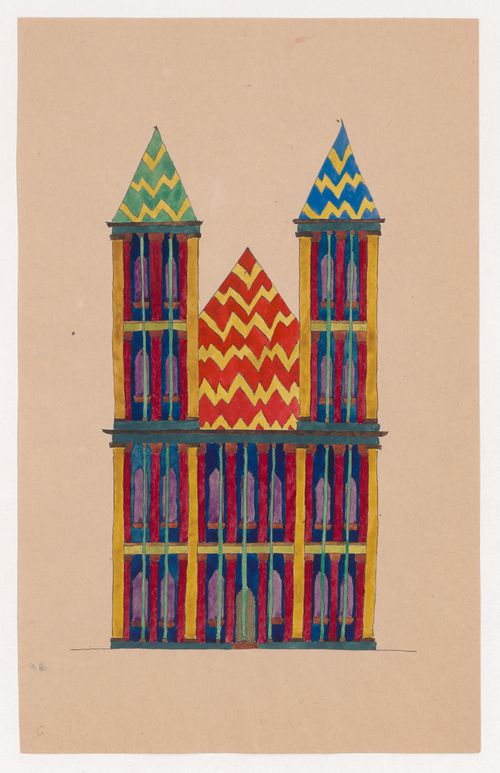
- Visionary design for the façade of a building, with colonnettes and columns. Although many of the forms used are fantastic or imaginary, the building resembles a church in the tripartite division of its façade into a central section flanked by two towers.
DR1988:0138
Description:
- Visionary design for the façade of a building, with colonnettes and columns. Although many of the forms used are fantastic or imaginary, the building resembles a church in the tripartite division of its façade into a central section flanked by two towers.
People:
Subject:
architecture
architecture
Date:
circa 1920-1921
circa 1920-1921
Title:
Visionary design for the west façade of a cathedral
Actions:
DR1988:0138
Description:
- Visionary design for the façade of a building, with colonnettes and columns. Although many of the forms used are fantastic or imaginary, the building resembles a church in the tripartite division of its façade into a central section flanked by two towers.
Visionary design for the west façade of a cathedral
Actions:
DR1988:0138
Description:
- Visionary design for the façade of a building, with colonnettes and columns. Although many of the forms used are fantastic or imaginary, the building resembles a church in the tripartite division of its façade into a central section flanked by two towers.
Form:
drawings
drawings
Date:
circa 1920-1921
circa 1920-1921
People:
Subject:
architecture
architecture
Form:
archives
Level of archival description:
Fonds
archives
Level of archival description:
Fonds
Actions:
Reference number:
AP009
Synopsis:
The Arcop Associates Maison Alcan project records, 1979 – 1983, document Arcop’s (Architects in Co-Partnership) design and construction of Alcan’s Montreal head office, Maison Alcan. These project records consist of the following: approximately 6000 drawings (including reprographic copies), 915 photographic materials, 15 l.m. of textual records, 2 models, 2 panels, 2 plaster mouldings, 1 book, and 1 mullion extrusion.
AP009
Synopsis:
The Arcop Associates Maison Alcan project records, 1979 – 1983, document Arcop’s (Architects in Co-Partnership) design and construction of Alcan’s Montreal head office, Maison Alcan. These project records consist of the following: approximately 6000 drawings (including reprographic copies), 915 photographic materials, 15 l.m. of textual records, 2 models, 2 panels, 2 plaster mouldings, 1 book, and 1 mullion extrusion.
People:
Date:
1979-1983
1979-1983
Title:
Arcop Associates Maison Alcan project records
Actions:
AP009
Synopsis:
The Arcop Associates Maison Alcan project records, 1979 – 1983, document Arcop’s (Architects in Co-Partnership) design and construction of Alcan’s Montreal head office, Maison Alcan. These project records consist of the following: approximately 6000 drawings (including reprographic copies), 915 photographic materials, 15 l.m. of textual records, 2 models, 2 panels, 2 plaster mouldings, 1 book, and 1 mullion extrusion.
Arcop Associates Maison Alcan project records
Actions:
AP009
Synopsis:
The Arcop Associates Maison Alcan project records, 1979 – 1983, document Arcop’s (Architects in Co-Partnership) design and construction of Alcan’s Montreal head office, Maison Alcan. These project records consist of the following: approximately 6000 drawings (including reprographic copies), 915 photographic materials, 15 l.m. of textual records, 2 models, 2 panels, 2 plaster mouldings, 1 book, and 1 mullion extrusion.
Form:
archives
Level of archival description:
Fonds
archives
Level of archival description:
Fonds
Date:
1979-1983
1979-1983
People:
Form:
archives
Level of archival description:
Fonds
archives
Level of archival description:
Fonds
Reference number:
AP096
Synopsis:
The Charles B.K. Van Norman fonds consists of photographs, drawings, albums, a presentation panel, and textual records. The material ranges in date from ca. 1942 to 1967, and shows the variety of building types that Van Norman designed, primarily for corporate and government clients, through the busiest period of his career.
AP096
Synopsis:
The Charles B.K. Van Norman fonds consists of photographs, drawings, albums, a presentation panel, and textual records. The material ranges in date from ca. 1942 to 1967, and shows the variety of building types that Van Norman designed, primarily for corporate and government clients, through the busiest period of his career.
People:
Date:
[ca. 1942-1967]
[ca. 1942-1967]
Title:
Charles B.K. Van Norman fonds
Actions:
AP096
Synopsis:
The Charles B.K. Van Norman fonds consists of photographs, drawings, albums, a presentation panel, and textual records. The material ranges in date from ca. 1942 to 1967, and shows the variety of building types that Van Norman designed, primarily for corporate and government clients, through the busiest period of his career.
Charles B.K. Van Norman fonds
Actions:
AP096
Synopsis:
The Charles B.K. Van Norman fonds consists of photographs, drawings, albums, a presentation panel, and textual records. The material ranges in date from ca. 1942 to 1967, and shows the variety of building types that Van Norman designed, primarily for corporate and government clients, through the busiest period of his career.
Form:
archives
Level of archival description:
Fonds
archives
Level of archival description:
Fonds
Date:
[ca. 1942-1967]
[ca. 1942-1967]
People:
Form:
drawings
drawings

Actions:
Reference number:
DR1986:0704
Description:
- DR1986:0704X represents a bird's-eye view of an imagined zoological garden. In the foreground, immediately behind an iron and stone fence, appear a series of small, whimsical structures in a Chinese or mixed Chinese-Indian style. These structures, together with their adjoining enclosures, house a variety of animals and are scattered among a number of fountains, ponds and clustered shrubs. - In the middle ground, on the central axis of the garden, rises a long, two-storey structure with a large, projecting pavilion in the centre and a tower at either end. Both levels of this structure are encased in verandas and the end towers and central pavilion are capped with pointed domes in an Indian style. The oval area before this structure is enclosed by two curved colonnades open on both sides and supporting a peaked, tile roof. This construction is obviously an orientalized version of St. Peter's Colonnade in Rome. - Further back and behind the long structure occur additional pavilions in a Chinese style, most notably a three-storey pagoda. On axis, and still further back, rises a second long, palace-like structure, sketched in a vaguely Mogul style. The entire ensemble is set in a nondescript, generalized landscape.
DR1986:0704
Description:
- DR1986:0704X represents a bird's-eye view of an imagined zoological garden. In the foreground, immediately behind an iron and stone fence, appear a series of small, whimsical structures in a Chinese or mixed Chinese-Indian style. These structures, together with their adjoining enclosures, house a variety of animals and are scattered among a number of fountains, ponds and clustered shrubs. - In the middle ground, on the central axis of the garden, rises a long, two-storey structure with a large, projecting pavilion in the centre and a tower at either end. Both levels of this structure are encased in verandas and the end towers and central pavilion are capped with pointed domes in an Indian style. The oval area before this structure is enclosed by two curved colonnades open on both sides and supporting a peaked, tile roof. This construction is obviously an orientalized version of St. Peter's Colonnade in Rome. - Further back and behind the long structure occur additional pavilions in a Chinese style, most notably a three-storey pagoda. On axis, and still further back, rises a second long, palace-like structure, sketched in a vaguely Mogul style. The entire ensemble is set in a nondescript, generalized landscape.
People:
Subject:
architecture, landscape architecture
architecture, landscape architecture
Date:
ca. 1830-1840
ca. 1830-1840
Title:
Design for a zoological garden in an oriental style
Actions:
DR1986:0704
Description:
- DR1986:0704X represents a bird's-eye view of an imagined zoological garden. In the foreground, immediately behind an iron and stone fence, appear a series of small, whimsical structures in a Chinese or mixed Chinese-Indian style. These structures, together with their adjoining enclosures, house a variety of animals and are scattered among a number of fountains, ponds and clustered shrubs. - In the middle ground, on the central axis of the garden, rises a long, two-storey structure with a large, projecting pavilion in the centre and a tower at either end. Both levels of this structure are encased in verandas and the end towers and central pavilion are capped with pointed domes in an Indian style. The oval area before this structure is enclosed by two curved colonnades open on both sides and supporting a peaked, tile roof. This construction is obviously an orientalized version of St. Peter's Colonnade in Rome. - Further back and behind the long structure occur additional pavilions in a Chinese style, most notably a three-storey pagoda. On axis, and still further back, rises a second long, palace-like structure, sketched in a vaguely Mogul style. The entire ensemble is set in a nondescript, generalized landscape.
Design for a zoological garden in an oriental style
Actions:
DR1986:0704
Description:
- DR1986:0704X represents a bird's-eye view of an imagined zoological garden. In the foreground, immediately behind an iron and stone fence, appear a series of small, whimsical structures in a Chinese or mixed Chinese-Indian style. These structures, together with their adjoining enclosures, house a variety of animals and are scattered among a number of fountains, ponds and clustered shrubs. - In the middle ground, on the central axis of the garden, rises a long, two-storey structure with a large, projecting pavilion in the centre and a tower at either end. Both levels of this structure are encased in verandas and the end towers and central pavilion are capped with pointed domes in an Indian style. The oval area before this structure is enclosed by two curved colonnades open on both sides and supporting a peaked, tile roof. This construction is obviously an orientalized version of St. Peter's Colonnade in Rome. - Further back and behind the long structure occur additional pavilions in a Chinese style, most notably a three-storey pagoda. On axis, and still further back, rises a second long, palace-like structure, sketched in a vaguely Mogul style. The entire ensemble is set in a nondescript, generalized landscape.
Form:
drawings
drawings
Date:
ca. 1830-1840
ca. 1830-1840
People:
Subject:
architecture, landscape architecture
architecture, landscape architecture
Form:
drawings
drawings
Reference number:
DR1988:0433:010
Description:
- Abrasion marks at the t. indicate that the finial on the tallest turret of the great tower was erased. - One of a group of working drawings for William Burn's October 1849 project for Fonthill House, Wiltshire, a country house designed in the Jacobethan style. This group represents only one of the projects that Burn proposed for Fonthill House; the final project, executed in 1856, was much smaller (Walker, 31, illustrated in Hitchcock, vol. 2, fig. VIII 31). Drawings include plans, elevations, and sections, as well as full-scale drawings of masonry details. Approximately half of the drawings are part of a numbered series from one to twenty-two, while the other drawings, mostly masonry details, were not numbered. These latter drawings are not as carefully finished, and a few are incomplete.
DR1988:0433:010
Description:
- Abrasion marks at the t. indicate that the finial on the tallest turret of the great tower was erased. - One of a group of working drawings for William Burn's October 1849 project for Fonthill House, Wiltshire, a country house designed in the Jacobethan style. This group represents only one of the projects that Burn proposed for Fonthill House; the final project, executed in 1856, was much smaller (Walker, 31, illustrated in Hitchcock, vol. 2, fig. VIII 31). Drawings include plans, elevations, and sections, as well as full-scale drawings of masonry details. Approximately half of the drawings are part of a numbered series from one to twenty-two, while the other drawings, mostly masonry details, were not numbered. These latter drawings are not as carefully finished, and a few are incomplete.
People:
Subject:
architecture
architecture
Date:
October 1849
October 1849
Title:
East elevation for Fonthill House, with section on line IK
Actions:
DR1988:0433:010
Description:
- Abrasion marks at the t. indicate that the finial on the tallest turret of the great tower was erased. - One of a group of working drawings for William Burn's October 1849 project for Fonthill House, Wiltshire, a country house designed in the Jacobethan style. This group represents only one of the projects that Burn proposed for Fonthill House; the final project, executed in 1856, was much smaller (Walker, 31, illustrated in Hitchcock, vol. 2, fig. VIII 31). Drawings include plans, elevations, and sections, as well as full-scale drawings of masonry details. Approximately half of the drawings are part of a numbered series from one to twenty-two, while the other drawings, mostly masonry details, were not numbered. These latter drawings are not as carefully finished, and a few are incomplete.
East elevation for Fonthill House, with section on line IK
Actions:
DR1988:0433:010
Description:
- Abrasion marks at the t. indicate that the finial on the tallest turret of the great tower was erased. - One of a group of working drawings for William Burn's October 1849 project for Fonthill House, Wiltshire, a country house designed in the Jacobethan style. This group represents only one of the projects that Burn proposed for Fonthill House; the final project, executed in 1856, was much smaller (Walker, 31, illustrated in Hitchcock, vol. 2, fig. VIII 31). Drawings include plans, elevations, and sections, as well as full-scale drawings of masonry details. Approximately half of the drawings are part of a numbered series from one to twenty-two, while the other drawings, mostly masonry details, were not numbered. These latter drawings are not as carefully finished, and a few are incomplete.
Form:
drawings
drawings
Date:
October 1849
October 1849
People:
Subject:
architecture
architecture


