


9271 Results
Form:
photographs
photographs
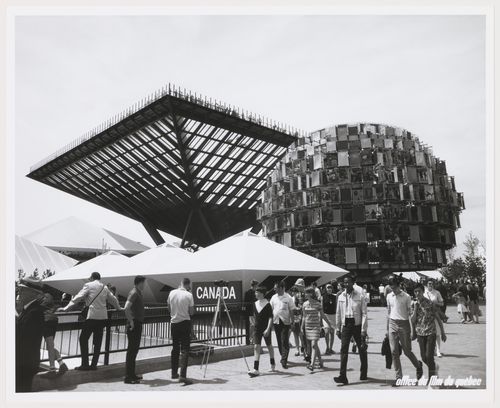
Actions:
Reference number:
ARCH256097
ARCH256097
People:
Date:
1967
1967
Form:
photographs
photographs
Date:
1967
1967
People:
Form:
photographs
photographs
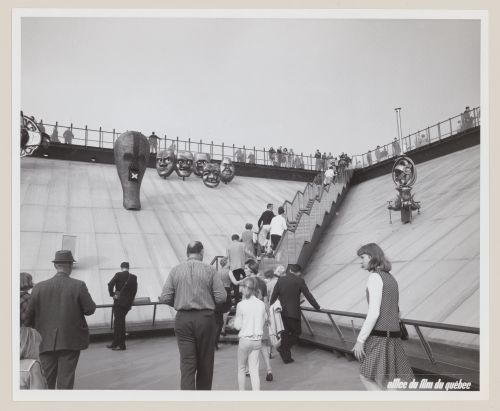
Title:
Partial view of the interior of the Katimavik at the Canada's Pavilion, Expo 67, Montréal, Québec
Partial view of the interior of the Katimavik at the Canada's Pavilion, Expo 67, Montréal, Québec
Actions:
Reference number:
ARCH256102
ARCH256102
People:
Date:
1967
1967
Form:
photographs
photographs
Date:
1967
1967
People:
Form:
photographs
photographs
Actions:
Reference number:
ARCH256103
ARCH256103
People:
Date:
1967
1967
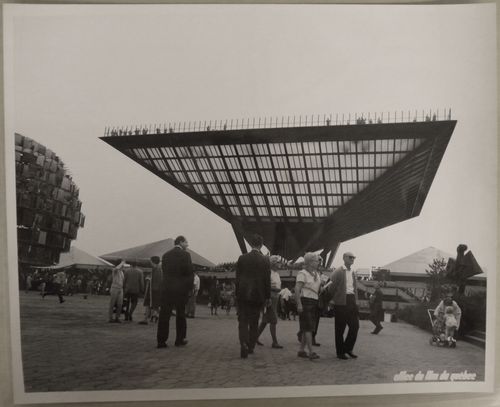
Title:
View of the Katimavik at the Canada's Pavilion, Expo 67, Montréal, Québec
Actions:
ARCH256103
View of the Katimavik at the Canada's Pavilion, Expo 67, Montréal, Québec
Actions:
ARCH256103
Form:
photographs
photographs
Date:
1967
1967
People:
Form:
photographs
photographs
Actions:
Reference number:
ARCH256121
ARCH256121
People:
Date:
1967?
1967?
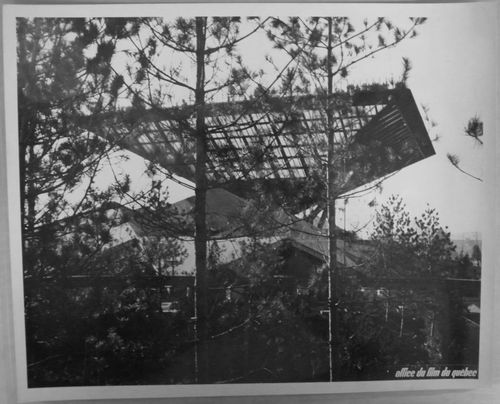
Title:
View of the Katimavik at the Canada's Pavilion, Expo 67, Montréal, Québec
Actions:
ARCH256121
View of the Katimavik at the Canada's Pavilion, Expo 67, Montréal, Québec
Actions:
ARCH256121
Form:
photographs
photographs
Date:
1967?
1967?
People:
Form:
textual records
textual records
Reference number:
ARCH255581
Description:
20 publications including: Werner Sobek, The architecture of Peter and Mary Doyle 1970-1990; Representative projects of SOM March 1975; Nuove possibilita per le construzioni navali in cemento armato / Ing P.L. Nervi; Rassegna critica di architettura / Nervi 1954; World Trade CEnter: new headquarters for international business; Architecture Aug. 1962; Engineering News Record 10 Feb. 1972; The effect of steel and glass upon architectural design 1952; Dome structures, reprinted from Consulting Engineer Dec. 1959; Nuova Sede Pirelli in Milano; Technique and aesthetics in the design of tall buildings / Fazler Khan memorial session; L'architettura Aug. 1961; House Beautiful: your heritage from Frank Lloyd Wright Oct. 1959; Architectural Forum May 1958 and April 1965; Progressive Architecture Jan 1979; Kenchiku Bunka Oct. 1965; L'architettura Jan-Feb. 1956
ARCH255581
Description:
20 publications including: Werner Sobek, The architecture of Peter and Mary Doyle 1970-1990; Representative projects of SOM March 1975; Nuove possibilita per le construzioni navali in cemento armato / Ing P.L. Nervi; Rassegna critica di architettura / Nervi 1954; World Trade CEnter: new headquarters for international business; Architecture Aug. 1962; Engineering News Record 10 Feb. 1972; The effect of steel and glass upon architectural design 1952; Dome structures, reprinted from Consulting Engineer Dec. 1959; Nuova Sede Pirelli in Milano; Technique and aesthetics in the design of tall buildings / Fazler Khan memorial session; L'architettura Aug. 1961; House Beautiful: your heritage from Frank Lloyd Wright Oct. 1959; Architectural Forum May 1958 and April 1965; Progressive Architecture Jan 1979; Kenchiku Bunka Oct. 1965; L'architettura Jan-Feb. 1956
People:
Date:
1954-1979
1954-1979
Title:
Misc. publications and magazines of architecture
Actions:
ARCH255581
Description:
20 publications including: Werner Sobek, The architecture of Peter and Mary Doyle 1970-1990; Representative projects of SOM March 1975; Nuove possibilita per le construzioni navali in cemento armato / Ing P.L. Nervi; Rassegna critica di architettura / Nervi 1954; World Trade CEnter: new headquarters for international business; Architecture Aug. 1962; Engineering News Record 10 Feb. 1972; The effect of steel and glass upon architectural design 1952; Dome structures, reprinted from Consulting Engineer Dec. 1959; Nuova Sede Pirelli in Milano; Technique and aesthetics in the design of tall buildings / Fazler Khan memorial session; L'architettura Aug. 1961; House Beautiful: your heritage from Frank Lloyd Wright Oct. 1959; Architectural Forum May 1958 and April 1965; Progressive Architecture Jan 1979; Kenchiku Bunka Oct. 1965; L'architettura Jan-Feb. 1956
Misc. publications and magazines of architecture
Actions:
ARCH255581
Description:
20 publications including: Werner Sobek, The architecture of Peter and Mary Doyle 1970-1990; Representative projects of SOM March 1975; Nuove possibilita per le construzioni navali in cemento armato / Ing P.L. Nervi; Rassegna critica di architettura / Nervi 1954; World Trade CEnter: new headquarters for international business; Architecture Aug. 1962; Engineering News Record 10 Feb. 1972; The effect of steel and glass upon architectural design 1952; Dome structures, reprinted from Consulting Engineer Dec. 1959; Nuova Sede Pirelli in Milano; Technique and aesthetics in the design of tall buildings / Fazler Khan memorial session; L'architettura Aug. 1961; House Beautiful: your heritage from Frank Lloyd Wright Oct. 1959; Architectural Forum May 1958 and April 1965; Progressive Architecture Jan 1979; Kenchiku Bunka Oct. 1965; L'architettura Jan-Feb. 1956
Form:
textual records
textual records
Date:
1954-1979
1954-1979
People:
Form:
photographs
photographs
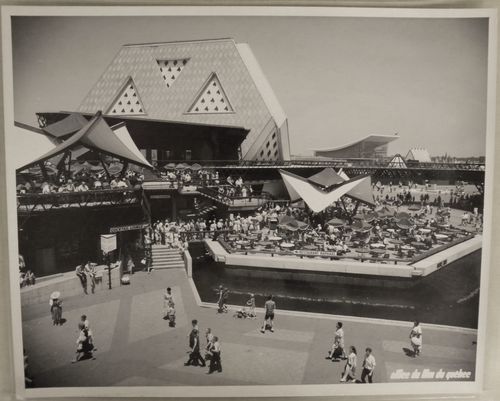
Actions:
Reference number:
ARCH256003
ARCH256003
People:
Date:
1967
1967
Form:
photographs
photographs
Date:
1967
1967
People:
Level of archival description:
Series
Series
Reference number:
AP189.S2
Description:
Series 2, Software for producing the projection and narration, 2007-2008, is composed of ten different versions of the module that generates the projection and narration in the open gallery. Seven of the versions were among the files saved to a compact disc following the CCA exhibition and have been kept together as group ARCH275207. Three of the versions were on a hard drive that was used in Rovereto and comprise group ARCH275212. The core elements of each module are two application files. One of these, whose name begins with "VE1" uses parameters contained in a file called "config.txt". The other application file, called "VECalibration" displays the entire volume of the projected architectural space. The geometric parameters for a room are recorded in a separate image file called "ecan-angles.jpg". A readme file in each module explains how the different files interact with one another. It also identifies the version of the "VE1" application files and any issues that may be related to the version. Each module includes hundreds of Shockwave Flash files (.swf), each containing an animated or still image of a person or persons and/or one or more pieces of furniture. Some of the .swf files contain an image of one or more furnished rooms inhabited by one or more persons. In most versions, the config.txt file contains a URL that accesses the database containing the sensor data. The URL references the file "captorsxml.aspx". As mentioned earlier, the config.txt file also contains parameters for the projected image, including scene geometry, colors and space occupation, and lists of the .swf files for persons and objects. Most versions of the module also include twenty-one .mp3 files, one of which is "empty". The other twenty each contain an audio recording of a female voice that states values for temperature, illumination and relative humidity and narrates a scenario written by Alain Robbe-Grillet. There is a French- and English-language version of each scenario
AP189.S2
Description:
Series 2, Software for producing the projection and narration, 2007-2008, is composed of ten different versions of the module that generates the projection and narration in the open gallery. Seven of the versions were among the files saved to a compact disc following the CCA exhibition and have been kept together as group ARCH275207. Three of the versions were on a hard drive that was used in Rovereto and comprise group ARCH275212. The core elements of each module are two application files. One of these, whose name begins with "VE1" uses parameters contained in a file called "config.txt". The other application file, called "VECalibration" displays the entire volume of the projected architectural space. The geometric parameters for a room are recorded in a separate image file called "ecan-angles.jpg". A readme file in each module explains how the different files interact with one another. It also identifies the version of the "VE1" application files and any issues that may be related to the version. Each module includes hundreds of Shockwave Flash files (.swf), each containing an animated or still image of a person or persons and/or one or more pieces of furniture. Some of the .swf files contain an image of one or more furnished rooms inhabited by one or more persons. In most versions, the config.txt file contains a URL that accesses the database containing the sensor data. The URL references the file "captorsxml.aspx". As mentioned earlier, the config.txt file also contains parameters for the projected image, including scene geometry, colors and space occupation, and lists of the .swf files for persons and objects. Most versions of the module also include twenty-one .mp3 files, one of which is "empty". The other twenty each contain an audio recording of a female voice that states values for temperature, illumination and relative humidity and narrates a scenario written by Alain Robbe-Grillet. There is a French- and English-language version of each scenario
People:
Date:
2007-2008
2007-2008
Title:
Software for producing the projection and narration
Actions:
AP189.S2
Description:
Series 2, Software for producing the projection and narration, 2007-2008, is composed of ten different versions of the module that generates the projection and narration in the open gallery. Seven of the versions were among the files saved to a compact disc following the CCA exhibition and have been kept together as group ARCH275207. Three of the versions were on a hard drive that was used in Rovereto and comprise group ARCH275212. The core elements of each module are two application files. One of these, whose name begins with "VE1" uses parameters contained in a file called "config.txt". The other application file, called "VECalibration" displays the entire volume of the projected architectural space. The geometric parameters for a room are recorded in a separate image file called "ecan-angles.jpg". A readme file in each module explains how the different files interact with one another. It also identifies the version of the "VE1" application files and any issues that may be related to the version. Each module includes hundreds of Shockwave Flash files (.swf), each containing an animated or still image of a person or persons and/or one or more pieces of furniture. Some of the .swf files contain an image of one or more furnished rooms inhabited by one or more persons. In most versions, the config.txt file contains a URL that accesses the database containing the sensor data. The URL references the file "captorsxml.aspx". As mentioned earlier, the config.txt file also contains parameters for the projected image, including scene geometry, colors and space occupation, and lists of the .swf files for persons and objects. Most versions of the module also include twenty-one .mp3 files, one of which is "empty". The other twenty each contain an audio recording of a female voice that states values for temperature, illumination and relative humidity and narrates a scenario written by Alain Robbe-Grillet. There is a French- and English-language version of each scenario
Software for producing the projection and narration
Actions:
AP189.S2
Description:
Series 2, Software for producing the projection and narration, 2007-2008, is composed of ten different versions of the module that generates the projection and narration in the open gallery. Seven of the versions were among the files saved to a compact disc following the CCA exhibition and have been kept together as group ARCH275207. Three of the versions were on a hard drive that was used in Rovereto and comprise group ARCH275212. The core elements of each module are two application files. One of these, whose name begins with "VE1" uses parameters contained in a file called "config.txt". The other application file, called "VECalibration" displays the entire volume of the projected architectural space. The geometric parameters for a room are recorded in a separate image file called "ecan-angles.jpg". A readme file in each module explains how the different files interact with one another. It also identifies the version of the "VE1" application files and any issues that may be related to the version. Each module includes hundreds of Shockwave Flash files (.swf), each containing an animated or still image of a person or persons and/or one or more pieces of furniture. Some of the .swf files contain an image of one or more furnished rooms inhabited by one or more persons. In most versions, the config.txt file contains a URL that accesses the database containing the sensor data. The URL references the file "captorsxml.aspx". As mentioned earlier, the config.txt file also contains parameters for the projected image, including scene geometry, colors and space occupation, and lists of the .swf files for persons and objects. Most versions of the module also include twenty-one .mp3 files, one of which is "empty". The other twenty each contain an audio recording of a female voice that states values for temperature, illumination and relative humidity and narrates a scenario written by Alain Robbe-Grillet. There is a French- and English-language version of each scenario
Level of archival description:
Series 2
Series 2
Date:
2007-2008
2007-2008
People:
Form:
photographs
photographs
Actions:
Reference number:
PH1998:0001:001
Description:
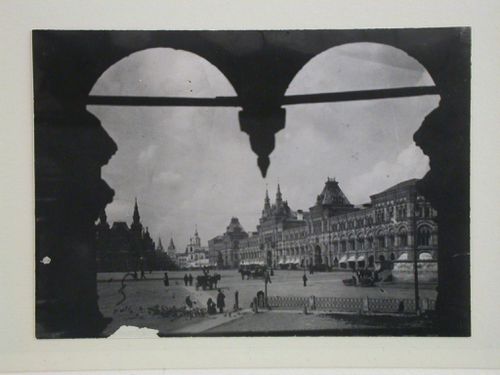
- Photographs PH1998:0001:001-058 show images of Red Square in Moscow before and during the construction of the three Lenin Mausoleums designed by A. Shchusev (before construction: PH1998:0001:001-004; the first wooden mausoleum: 25 - 27 January 1924, PH1998:0001:005-010 and PH1998:0001:012-015; the second wooden mausoleum: March - 1 May 1924, PH1998:0001:017-050; and the third stone mausoleum: June 1929 - 12 October 1930, PH1998:0001:051-058). Photographs PH1998:0001:001-058 also show images of some of the buildings in Red Square, including: the Kremlin Towers, Nikol'skaya Tower (Nicholas Tower), Spasskaia Tower, Corner Arsenal Tower, and Senate Tower; the Upper Shopping Arcades; the Historical Museum; Saint Basil Cathedral; the monument to Minin and Pozharsky; the Voskresenskie Iverskie Gates (Resurrection Gates); and the Senate Building.
PH1998:0001:001
Description:
- Photographs PH1998:0001:001-058 show images of Red Square in Moscow before and during the construction of the three Lenin Mausoleums designed by A. Shchusev (before construction: PH1998:0001:001-004; the first wooden mausoleum: 25 - 27 January 1924, PH1998:0001:005-010 and PH1998:0001:012-015; the second wooden mausoleum: March - 1 May 1924, PH1998:0001:017-050; and the third stone mausoleum: June 1929 - 12 October 1930, PH1998:0001:051-058). Photographs PH1998:0001:001-058 also show images of some of the buildings in Red Square, including: the Kremlin Towers, Nikol'skaya Tower (Nicholas Tower), Spasskaia Tower, Corner Arsenal Tower, and Senate Tower; the Upper Shopping Arcades; the Historical Museum; Saint Basil Cathedral; the monument to Minin and Pozharsky; the Voskresenskie Iverskie Gates (Resurrection Gates); and the Senate Building.
People:
Subject:
architecture
architecture
Date:
between 1893 and 1899
between 1893 and 1899
Title:
View of Red Square from a window showing the Historical Museum in the background and the Upper Shopping Arcades on the right, Moscow
Actions:
PH1998:0001:001
Description:
- Photographs PH1998:0001:001-058 show images of Red Square in Moscow before and during the construction of the three Lenin Mausoleums designed by A. Shchusev (before construction: PH1998:0001:001-004; the first wooden mausoleum: 25 - 27 January 1924, PH1998:0001:005-010 and PH1998:0001:012-015; the second wooden mausoleum: March - 1 May 1924, PH1998:0001:017-050; and the third stone mausoleum: June 1929 - 12 October 1930, PH1998:0001:051-058). Photographs PH1998:0001:001-058 also show images of some of the buildings in Red Square, including: the Kremlin Towers, Nikol'skaya Tower (Nicholas Tower), Spasskaia Tower, Corner Arsenal Tower, and Senate Tower; the Upper Shopping Arcades; the Historical Museum; Saint Basil Cathedral; the monument to Minin and Pozharsky; the Voskresenskie Iverskie Gates (Resurrection Gates); and the Senate Building.
View of Red Square from a window showing the Historical Museum in the background and the Upper Shopping Arcades on the right, Moscow
Actions:
PH1998:0001:001
Description:
- Photographs PH1998:0001:001-058 show images of Red Square in Moscow before and during the construction of the three Lenin Mausoleums designed by A. Shchusev (before construction: PH1998:0001:001-004; the first wooden mausoleum: 25 - 27 January 1924, PH1998:0001:005-010 and PH1998:0001:012-015; the second wooden mausoleum: March - 1 May 1924, PH1998:0001:017-050; and the third stone mausoleum: June 1929 - 12 October 1930, PH1998:0001:051-058). Photographs PH1998:0001:001-058 also show images of some of the buildings in Red Square, including: the Kremlin Towers, Nikol'skaya Tower (Nicholas Tower), Spasskaia Tower, Corner Arsenal Tower, and Senate Tower; the Upper Shopping Arcades; the Historical Museum; Saint Basil Cathedral; the monument to Minin and Pozharsky; the Voskresenskie Iverskie Gates (Resurrection Gates); and the Senate Building.
Form:
photographs
photographs
Date:
between 1893 and 1899
between 1893 and 1899
People:
Subject:
architecture
architecture
Form:
photographs
photographs
Actions:
Reference number:
PH1998:0001:002
Description:
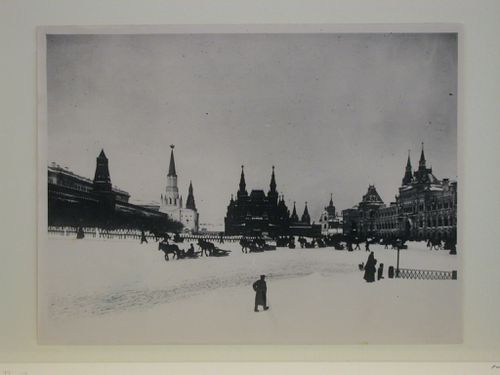
- Photographs PH1998:0001:001-058 show images of Red Square in Moscow before and during the construction of the three Lenin Mausoleums designed by A. Shchusev (before construction: PH1998:0001:001-004; the first wooden mausoleum: 25 - 27 January 1924, PH1998:0001:005-010 and PH1998:0001:012-015; the second wooden mausoleum: March - 1 May 1924, PH1998:0001:017-050; and the third stone mausoleum: June 1929 - 12 October 1930, PH1998:0001:051-058). Photographs PH1998:0001:001-058 also show images of some of the buildings in Red Square, including: the Kremlin Towers, Nikol'skaya Tower (Nicholas Tower), Spasskaia Tower, Corner Arsenal Tower, and Senate Tower; the Upper Shopping Arcades; the Historical Museum; Saint Basil Cathedral; the monument to Minin and Pozharsky; the Voskresenskie Iverskie Gates (Resurrection Gates); and the Senate Building.
PH1998:0001:002
Description:
- Photographs PH1998:0001:001-058 show images of Red Square in Moscow before and during the construction of the three Lenin Mausoleums designed by A. Shchusev (before construction: PH1998:0001:001-004; the first wooden mausoleum: 25 - 27 January 1924, PH1998:0001:005-010 and PH1998:0001:012-015; the second wooden mausoleum: March - 1 May 1924, PH1998:0001:017-050; and the third stone mausoleum: June 1929 - 12 October 1930, PH1998:0001:051-058). Photographs PH1998:0001:001-058 also show images of some of the buildings in Red Square, including: the Kremlin Towers, Nikol'skaya Tower (Nicholas Tower), Spasskaia Tower, Corner Arsenal Tower, and Senate Tower; the Upper Shopping Arcades; the Historical Museum; Saint Basil Cathedral; the monument to Minin and Pozharsky; the Voskresenskie Iverskie Gates (Resurrection Gates); and the Senate Building.
People:
Subject:
architecture
architecture
Date:
early 20th century
early 20th century
Title:
View of Red Square showing the Kremlin Wall and towers on the left, the Historical Museum in the center, and the Upper Shopping Arcades on the right, Moscow
Actions:
PH1998:0001:002
Description:
- Photographs PH1998:0001:001-058 show images of Red Square in Moscow before and during the construction of the three Lenin Mausoleums designed by A. Shchusev (before construction: PH1998:0001:001-004; the first wooden mausoleum: 25 - 27 January 1924, PH1998:0001:005-010 and PH1998:0001:012-015; the second wooden mausoleum: March - 1 May 1924, PH1998:0001:017-050; and the third stone mausoleum: June 1929 - 12 October 1930, PH1998:0001:051-058). Photographs PH1998:0001:001-058 also show images of some of the buildings in Red Square, including: the Kremlin Towers, Nikol'skaya Tower (Nicholas Tower), Spasskaia Tower, Corner Arsenal Tower, and Senate Tower; the Upper Shopping Arcades; the Historical Museum; Saint Basil Cathedral; the monument to Minin and Pozharsky; the Voskresenskie Iverskie Gates (Resurrection Gates); and the Senate Building.
View of Red Square showing the Kremlin Wall and towers on the left, the Historical Museum in the center, and the Upper Shopping Arcades on the right, Moscow
Actions:
PH1998:0001:002
Description:
- Photographs PH1998:0001:001-058 show images of Red Square in Moscow before and during the construction of the three Lenin Mausoleums designed by A. Shchusev (before construction: PH1998:0001:001-004; the first wooden mausoleum: 25 - 27 January 1924, PH1998:0001:005-010 and PH1998:0001:012-015; the second wooden mausoleum: March - 1 May 1924, PH1998:0001:017-050; and the third stone mausoleum: June 1929 - 12 October 1930, PH1998:0001:051-058). Photographs PH1998:0001:001-058 also show images of some of the buildings in Red Square, including: the Kremlin Towers, Nikol'skaya Tower (Nicholas Tower), Spasskaia Tower, Corner Arsenal Tower, and Senate Tower; the Upper Shopping Arcades; the Historical Museum; Saint Basil Cathedral; the monument to Minin and Pozharsky; the Voskresenskie Iverskie Gates (Resurrection Gates); and the Senate Building.
Form:
photographs
photographs
Date:
early 20th century
early 20th century
People:
Subject:
architecture
architecture
Form:
photographs
photographs
Actions:
Reference number:
PH1998:0001:003
Description:
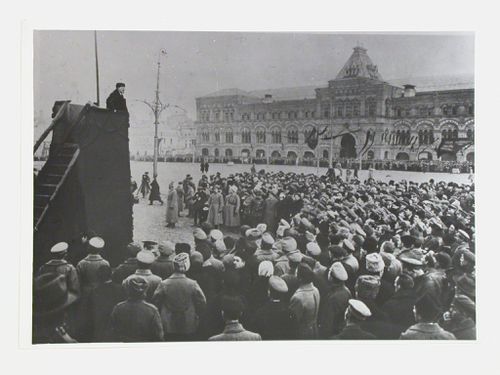
- Photographs PH1998:0001:001-058 show images of Red Square in Moscow before and during the construction of the three Lenin Mausoleums designed by A. Shchusev (before construction: PH1998:0001:001-004; the first wooden mausoleum: 25 - 27 January 1924, PH1998:0001:005-010 and PH1998:0001:012-015; the second wooden mausoleum: March - 1 May 1924, PH1998:0001:017-050; and the third stone mausoleum: June 1929 - 12 October 1930, PH1998:0001:051-058). Photographs PH1998:0001:001-058 also show images of some of the buildings in Red Square, including: the Kremlin Towers, Nikol'skaya Tower (Nicholas Tower), Spasskaia Tower, Corner Arsenal Tower, and Senate Tower; the Upper Shopping Arcades; the Historical Museum; Saint Basil Cathedral; the monument to Minin and Pozharsky; the Voskresenskie Iverskie Gates (Resurrection Gates); and the Senate Building.
PH1998:0001:003
Description:
- Photographs PH1998:0001:001-058 show images of Red Square in Moscow before and during the construction of the three Lenin Mausoleums designed by A. Shchusev (before construction: PH1998:0001:001-004; the first wooden mausoleum: 25 - 27 January 1924, PH1998:0001:005-010 and PH1998:0001:012-015; the second wooden mausoleum: March - 1 May 1924, PH1998:0001:017-050; and the third stone mausoleum: June 1929 - 12 October 1930, PH1998:0001:051-058). Photographs PH1998:0001:001-058 also show images of some of the buildings in Red Square, including: the Kremlin Towers, Nikol'skaya Tower (Nicholas Tower), Spasskaia Tower, Corner Arsenal Tower, and Senate Tower; the Upper Shopping Arcades; the Historical Museum; Saint Basil Cathedral; the monument to Minin and Pozharsky; the Voskresenskie Iverskie Gates (Resurrection Gates); and the Senate Building.
People:
Subject:
architecture
architecture
Date:
7 November 1918
7 November 1918
Title:
View of a meeting in Red Square showing Lenin addressing a group of soldiers from a podium with the Upper Shopping Arcades in the background, Moscow
Actions:
PH1998:0001:003
Description:
- Photographs PH1998:0001:001-058 show images of Red Square in Moscow before and during the construction of the three Lenin Mausoleums designed by A. Shchusev (before construction: PH1998:0001:001-004; the first wooden mausoleum: 25 - 27 January 1924, PH1998:0001:005-010 and PH1998:0001:012-015; the second wooden mausoleum: March - 1 May 1924, PH1998:0001:017-050; and the third stone mausoleum: June 1929 - 12 October 1930, PH1998:0001:051-058). Photographs PH1998:0001:001-058 also show images of some of the buildings in Red Square, including: the Kremlin Towers, Nikol'skaya Tower (Nicholas Tower), Spasskaia Tower, Corner Arsenal Tower, and Senate Tower; the Upper Shopping Arcades; the Historical Museum; Saint Basil Cathedral; the monument to Minin and Pozharsky; the Voskresenskie Iverskie Gates (Resurrection Gates); and the Senate Building.
View of a meeting in Red Square showing Lenin addressing a group of soldiers from a podium with the Upper Shopping Arcades in the background, Moscow
Actions:
PH1998:0001:003
Description:
- Photographs PH1998:0001:001-058 show images of Red Square in Moscow before and during the construction of the three Lenin Mausoleums designed by A. Shchusev (before construction: PH1998:0001:001-004; the first wooden mausoleum: 25 - 27 January 1924, PH1998:0001:005-010 and PH1998:0001:012-015; the second wooden mausoleum: March - 1 May 1924, PH1998:0001:017-050; and the third stone mausoleum: June 1929 - 12 October 1930, PH1998:0001:051-058). Photographs PH1998:0001:001-058 also show images of some of the buildings in Red Square, including: the Kremlin Towers, Nikol'skaya Tower (Nicholas Tower), Spasskaia Tower, Corner Arsenal Tower, and Senate Tower; the Upper Shopping Arcades; the Historical Museum; Saint Basil Cathedral; the monument to Minin and Pozharsky; the Voskresenskie Iverskie Gates (Resurrection Gates); and the Senate Building.
Form:
photographs
photographs
Date:
7 November 1918
7 November 1918
People:
Subject:
architecture
architecture


