


6245 Results
Level of archival description:
Sub-series
Sub-series
Actions:
Reference number:
AP058.S2.SS2
Description:
This subseries documents Blanche Lemco van Ginkel’s involvement, participation, and attendance in various conferences and lectures, like the XIII World Congress of International Union of Architects in Mexico City, Mexico (1978), the National Endowment for the Arts, an urban design educators retreat in San Juan, Porto Rico (1981), the Colloquy on Rural Development and Design, in Washington, D.C. (1987), and the Construct Canada Conference, in Toronto, Ontario (1988). The subseries contains correspondence, brochures, agendas, reports, lists of participants, papers, programmes and scheduled activities, and notes, dating from 1977 to 1990. Among the papers, there are draughts and final versions of text entitled ‘An Education in architecture’ and ‘To Critical Risk-Quality Care’.
AP058.S2.SS2
Description:
This subseries documents Blanche Lemco van Ginkel’s involvement, participation, and attendance in various conferences and lectures, like the XIII World Congress of International Union of Architects in Mexico City, Mexico (1978), the National Endowment for the Arts, an urban design educators retreat in San Juan, Porto Rico (1981), the Colloquy on Rural Development and Design, in Washington, D.C. (1987), and the Construct Canada Conference, in Toronto, Ontario (1988). The subseries contains correspondence, brochures, agendas, reports, lists of participants, papers, programmes and scheduled activities, and notes, dating from 1977 to 1990. Among the papers, there are draughts and final versions of text entitled ‘An Education in architecture’ and ‘To Critical Risk-Quality Care’.
People:
Date:
1977-1990
1977-1990
Title:
Other conferences and lectures
Actions:
AP058.S2.SS2
Description:
This subseries documents Blanche Lemco van Ginkel’s involvement, participation, and attendance in various conferences and lectures, like the XIII World Congress of International Union of Architects in Mexico City, Mexico (1978), the National Endowment for the Arts, an urban design educators retreat in San Juan, Porto Rico (1981), the Colloquy on Rural Development and Design, in Washington, D.C. (1987), and the Construct Canada Conference, in Toronto, Ontario (1988). The subseries contains correspondence, brochures, agendas, reports, lists of participants, papers, programmes and scheduled activities, and notes, dating from 1977 to 1990. Among the papers, there are draughts and final versions of text entitled ‘An Education in architecture’ and ‘To Critical Risk-Quality Care’.
Other conferences and lectures
Actions:
AP058.S2.SS2
Description:
This subseries documents Blanche Lemco van Ginkel’s involvement, participation, and attendance in various conferences and lectures, like the XIII World Congress of International Union of Architects in Mexico City, Mexico (1978), the National Endowment for the Arts, an urban design educators retreat in San Juan, Porto Rico (1981), the Colloquy on Rural Development and Design, in Washington, D.C. (1987), and the Construct Canada Conference, in Toronto, Ontario (1988). The subseries contains correspondence, brochures, agendas, reports, lists of participants, papers, programmes and scheduled activities, and notes, dating from 1977 to 1990. Among the papers, there are draughts and final versions of text entitled ‘An Education in architecture’ and ‘To Critical Risk-Quality Care’.
Level of archival description:
Subseries
Subseries
Date:
1977-1990
1977-1990
People:
Form:
films
films
Title:
Where We Grow Older
Where We Grow Older
Actions:
Description:
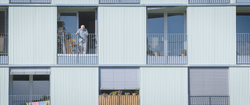
The documentary Where We Grow Older (CCA, 2023, 30 min) looks at how the growing ageing population is reshaping architectural and social constructs and questions the role of urban design and politics in facing these challenges. The film investigates two models of how care and housing can be reconceived in light of prolonged lives: public housing and the creation of a new(...)
The documentary Where We Grow Older (CCA, 2023, 30 min) looks at how the growing ageing population is reshaping architectural and social constructs and questions the role of urban design and politics in facing these challenges. The film investigates two models of how care and housing can be reconceived in light of prolonged lives: public housing and the creation of a new(...)
Title:
Where We Grow Older
Actions:
Description:
The documentary Where We Grow Older (CCA, 2023, 30 min) looks at how the growing ageing population is reshaping architectural and social constructs and questions the role of urban design and politics in facing these challenges. The film investigates two models of how care and housing can be reconceived in light of prolonged lives: public housing and the creation of a new(...)
Where We Grow Older
Actions:
Description:
The documentary Where We Grow Older (CCA, 2023, 30 min) looks at how the growing ageing population is reshaping architectural and social constructs and questions the role of urban design and politics in facing these challenges. The film investigates two models of how care and housing can be reconceived in light of prolonged lives: public housing and the creation of a new(...)
Form:
films
films
Date:
June 2023
June 2023
Level of archival description:
Project
Project
Reference number:
AP178.S1.1984.PR03
Description:
This project series documents the Duas habitações e duas loja in Schilderswijk, The Hague, The Netherlands. While the records were held in the office’s archives this project was assigned the number 31/80. The office assigned the date 1985 to this project. This project was part of the urban renewal program in Schilderswijk for which Siza designed the urban plan for Deelgebied Zone 5 Schilderswijk-West, the Punt en Komma social housing, Plano de Doedijnstraat, and Van der Vennerpark. The project consisted of two houses, two retail/office spaces, and a parking garage situated on Van der Vennestraat. One house was made with red brick, while the other was given a white exterior. The project was realised with project architect Carlos Castenheira in cooperation with Architektengroep Mecanoo. This project was designed in connection with the Van der Vennepark (project series AP178.S1.1985.PR01 in this fonds). The project series contains sketches, studies, plans, elevations and details. Textual documentation includes a letter from Adri Duivesteijn, The Hague alderman responsible for the urban renewal program, letters from Architektengroep Mecanoo (engeneering firm), notes from meetings on construction, and a letter from Castanheira. Documentation regarding the Van der Vennerpark (file AP178.S1.1985.PR01.001 in this fonds) also contains information related to the housing and shopping complex. Also included are photographs of the model, as well as slides of the model, drawings, and the built project. Note that photographs of the built project can also be found among photographic materials for Punt en Komma (file AP178.S1.1984.PR02.SS1.015 in this fonds).
AP178.S1.1984.PR03
Description:
This project series documents the Duas habitações e duas loja in Schilderswijk, The Hague, The Netherlands. While the records were held in the office’s archives this project was assigned the number 31/80. The office assigned the date 1985 to this project. This project was part of the urban renewal program in Schilderswijk for which Siza designed the urban plan for Deelgebied Zone 5 Schilderswijk-West, the Punt en Komma social housing, Plano de Doedijnstraat, and Van der Vennerpark. The project consisted of two houses, two retail/office spaces, and a parking garage situated on Van der Vennestraat. One house was made with red brick, while the other was given a white exterior. The project was realised with project architect Carlos Castenheira in cooperation with Architektengroep Mecanoo. This project was designed in connection with the Van der Vennepark (project series AP178.S1.1985.PR01 in this fonds). The project series contains sketches, studies, plans, elevations and details. Textual documentation includes a letter from Adri Duivesteijn, The Hague alderman responsible for the urban renewal program, letters from Architektengroep Mecanoo (engeneering firm), notes from meetings on construction, and a letter from Castanheira. Documentation regarding the Van der Vennerpark (file AP178.S1.1985.PR01.001 in this fonds) also contains information related to the housing and shopping complex. Also included are photographs of the model, as well as slides of the model, drawings, and the built project. Note that photographs of the built project can also be found among photographic materials for Punt en Komma (file AP178.S1.1984.PR02.SS1.015 in this fonds).
People:
Date:
1985-1988
1985-1988
Title:
Duas habitações e duas lojas [Housing and shopping complex, Schilderswijk], The Hague, The Netherlands (1985-1988)
Actions:
AP178.S1.1984.PR03
Description:
This project series documents the Duas habitações e duas loja in Schilderswijk, The Hague, The Netherlands. While the records were held in the office’s archives this project was assigned the number 31/80. The office assigned the date 1985 to this project. This project was part of the urban renewal program in Schilderswijk for which Siza designed the urban plan for Deelgebied Zone 5 Schilderswijk-West, the Punt en Komma social housing, Plano de Doedijnstraat, and Van der Vennerpark. The project consisted of two houses, two retail/office spaces, and a parking garage situated on Van der Vennestraat. One house was made with red brick, while the other was given a white exterior. The project was realised with project architect Carlos Castenheira in cooperation with Architektengroep Mecanoo. This project was designed in connection with the Van der Vennepark (project series AP178.S1.1985.PR01 in this fonds). The project series contains sketches, studies, plans, elevations and details. Textual documentation includes a letter from Adri Duivesteijn, The Hague alderman responsible for the urban renewal program, letters from Architektengroep Mecanoo (engeneering firm), notes from meetings on construction, and a letter from Castanheira. Documentation regarding the Van der Vennerpark (file AP178.S1.1985.PR01.001 in this fonds) also contains information related to the housing and shopping complex. Also included are photographs of the model, as well as slides of the model, drawings, and the built project. Note that photographs of the built project can also be found among photographic materials for Punt en Komma (file AP178.S1.1984.PR02.SS1.015 in this fonds).
Duas habitações e duas lojas [Housing and shopping complex, Schilderswijk], The Hague, The Netherlands (1985-1988)
Actions:
AP178.S1.1984.PR03
Description:
This project series documents the Duas habitações e duas loja in Schilderswijk, The Hague, The Netherlands. While the records were held in the office’s archives this project was assigned the number 31/80. The office assigned the date 1985 to this project. This project was part of the urban renewal program in Schilderswijk for which Siza designed the urban plan for Deelgebied Zone 5 Schilderswijk-West, the Punt en Komma social housing, Plano de Doedijnstraat, and Van der Vennerpark. The project consisted of two houses, two retail/office spaces, and a parking garage situated on Van der Vennestraat. One house was made with red brick, while the other was given a white exterior. The project was realised with project architect Carlos Castenheira in cooperation with Architektengroep Mecanoo. This project was designed in connection with the Van der Vennepark (project series AP178.S1.1985.PR01 in this fonds). The project series contains sketches, studies, plans, elevations and details. Textual documentation includes a letter from Adri Duivesteijn, The Hague alderman responsible for the urban renewal program, letters from Architektengroep Mecanoo (engeneering firm), notes from meetings on construction, and a letter from Castanheira. Documentation regarding the Van der Vennerpark (file AP178.S1.1985.PR01.001 in this fonds) also contains information related to the housing and shopping complex. Also included are photographs of the model, as well as slides of the model, drawings, and the built project. Note that photographs of the built project can also be found among photographic materials for Punt en Komma (file AP178.S1.1984.PR02.SS1.015 in this fonds).
Level of archival description:
Project
Project
Date:
1985-1988
1985-1988
People:
Level of archival description:
Project
Project
Title:
Rehri study, India (1972)
Rehri study, India (1972)
Reference number:
AP206.S1.1972.PR03
Description:
This project series documents proposed improvements to the rehri, small carts used as mobile stores, in India around 1972. While rehri were technically illegal, they outnumbered traditional stores in urban areas at this time. Prakash studied their use and effect on city life and argued for the improvement of their design in order to elevate the rehriwallas (rehri owners) and improve conditions in the city. Prakash studied the rehri throughout his time as principal at the Chandigarh College of Architecture. This project is recorded through a reprographic copy of a drawing of improved rehri designs dating from around 1972.
AP206.S1.1972.PR03
Description:
This project series documents proposed improvements to the rehri, small carts used as mobile stores, in India around 1972. While rehri were technically illegal, they outnumbered traditional stores in urban areas at this time. Prakash studied their use and effect on city life and argued for the improvement of their design in order to elevate the rehriwallas (rehri owners) and improve conditions in the city. Prakash studied the rehri throughout his time as principal at the Chandigarh College of Architecture. This project is recorded through a reprographic copy of a drawing of improved rehri designs dating from around 1972.
People:
Date:
circa 1972
circa 1972
Title:
Rehri study, India (1972)
Actions:
AP206.S1.1972.PR03
Description:
This project series documents proposed improvements to the rehri, small carts used as mobile stores, in India around 1972. While rehri were technically illegal, they outnumbered traditional stores in urban areas at this time. Prakash studied their use and effect on city life and argued for the improvement of their design in order to elevate the rehriwallas (rehri owners) and improve conditions in the city. Prakash studied the rehri throughout his time as principal at the Chandigarh College of Architecture. This project is recorded through a reprographic copy of a drawing of improved rehri designs dating from around 1972.
Rehri study, India (1972)
Actions:
AP206.S1.1972.PR03
Description:
This project series documents proposed improvements to the rehri, small carts used as mobile stores, in India around 1972. While rehri were technically illegal, they outnumbered traditional stores in urban areas at this time. Prakash studied their use and effect on city life and argued for the improvement of their design in order to elevate the rehriwallas (rehri owners) and improve conditions in the city. Prakash studied the rehri throughout his time as principal at the Chandigarh College of Architecture. This project is recorded through a reprographic copy of a drawing of improved rehri designs dating from around 1972.
Level of archival description:
Project
Project
Date:
circa 1972
circa 1972
People:
Form:
archives
Level of archival description:
Fonds
archives
Level of archival description:
Fonds
Title:
Office dA project records
Office dA project records
Actions:
Reference number:
AP179
Synopsis:
The Office dA project records, 1991-2007, document the firm’s work on the Casa La Roca, Witte Arts Center, and Tongxian Arts Center projects. All three projects involved the use of traditional and locally-sourced materials, such as brick and terracotta block, to create continuous surfaces that appear structural despite remaining an architectural effect in the skin of the building. The archive consists of approximately 8362 digital files (8.5 GB), 1461 drawings and reproductions, four models and approximately 40 model pieces, as well as photographic materials, textual records and ephemera.
AP179
Synopsis:
The Office dA project records, 1991-2007, document the firm’s work on the Casa La Roca, Witte Arts Center, and Tongxian Arts Center projects. All three projects involved the use of traditional and locally-sourced materials, such as brick and terracotta block, to create continuous surfaces that appear structural despite remaining an architectural effect in the skin of the building. The archive consists of approximately 8362 digital files (8.5 GB), 1461 drawings and reproductions, four models and approximately 40 model pieces, as well as photographic materials, textual records and ephemera.
People:
Date:
1991-2007
1991-2007
Title:
Office dA project records
Actions:
AP179
Synopsis:
The Office dA project records, 1991-2007, document the firm’s work on the Casa La Roca, Witte Arts Center, and Tongxian Arts Center projects. All three projects involved the use of traditional and locally-sourced materials, such as brick and terracotta block, to create continuous surfaces that appear structural despite remaining an architectural effect in the skin of the building. The archive consists of approximately 8362 digital files (8.5 GB), 1461 drawings and reproductions, four models and approximately 40 model pieces, as well as photographic materials, textual records and ephemera.
Office dA project records
Actions:
AP179
Synopsis:
The Office dA project records, 1991-2007, document the firm’s work on the Casa La Roca, Witte Arts Center, and Tongxian Arts Center projects. All three projects involved the use of traditional and locally-sourced materials, such as brick and terracotta block, to create continuous surfaces that appear structural despite remaining an architectural effect in the skin of the building. The archive consists of approximately 8362 digital files (8.5 GB), 1461 drawings and reproductions, four models and approximately 40 model pieces, as well as photographic materials, textual records and ephemera.
Form:
archives
Level of archival description:
Fonds
archives
Level of archival description:
Fonds
Date:
1991-2007
1991-2007
People:
Level of archival description:
Sub-series
Sub-series
Reference number:
AP156.S3.SS4
Description:
La sous-série documente les projets d'architecture et d'urbanisme de Pierre Jeanneret et autres architectes ailleurs en Inde entre 1961 et 1972. Le matériel dans cette sous-série a été produit entre 1961 et 1972. La sous-série contient des reprographies, dont des dessins de développement du design, des dessins d'exécution et des dessins de présentation. Sub-series documents architectural and urban planning projects of Pierre Jeanneret and other architects elsewhere in India between 1961 and 1972. Material in this sub-series was produced between 1961 and 1972. The sub-series contains reprographic drawings such as design development drawings, working drawings and presentation drawings.
AP156.S3.SS4
Description:
La sous-série documente les projets d'architecture et d'urbanisme de Pierre Jeanneret et autres architectes ailleurs en Inde entre 1961 et 1972. Le matériel dans cette sous-série a été produit entre 1961 et 1972. La sous-série contient des reprographies, dont des dessins de développement du design, des dessins d'exécution et des dessins de présentation. Sub-series documents architectural and urban planning projects of Pierre Jeanneret and other architects elsewhere in India between 1961 and 1972. Material in this sub-series was produced between 1961 and 1972. The sub-series contains reprographic drawings such as design development drawings, working drawings and presentation drawings.
People:
Date:
1961-1972
1961-1972
Title:
Ailleurs en India = Elsewhere in India
Actions:
AP156.S3.SS4
Description:
La sous-série documente les projets d'architecture et d'urbanisme de Pierre Jeanneret et autres architectes ailleurs en Inde entre 1961 et 1972. Le matériel dans cette sous-série a été produit entre 1961 et 1972. La sous-série contient des reprographies, dont des dessins de développement du design, des dessins d'exécution et des dessins de présentation. Sub-series documents architectural and urban planning projects of Pierre Jeanneret and other architects elsewhere in India between 1961 and 1972. Material in this sub-series was produced between 1961 and 1972. The sub-series contains reprographic drawings such as design development drawings, working drawings and presentation drawings.
Ailleurs en India = Elsewhere in India
Actions:
AP156.S3.SS4
Description:
La sous-série documente les projets d'architecture et d'urbanisme de Pierre Jeanneret et autres architectes ailleurs en Inde entre 1961 et 1972. Le matériel dans cette sous-série a été produit entre 1961 et 1972. La sous-série contient des reprographies, dont des dessins de développement du design, des dessins d'exécution et des dessins de présentation. Sub-series documents architectural and urban planning projects of Pierre Jeanneret and other architects elsewhere in India between 1961 and 1972. Material in this sub-series was produced between 1961 and 1972. The sub-series contains reprographic drawings such as design development drawings, working drawings and presentation drawings.
Level of archival description:
Sous-série 4
Sous-série 4
Date:
1961-1972
1961-1972
People:
Level of archival description:
Series
Series
Reference number:
AP175.S1
Description:
Series 1, Erasmus Bridge, Rotterdam, Netherlands, 1990-1996, documents the design, conception and construction of a third bridge for Rotterdam over the Nieuwe Maas River. The bridge connects the Kop van Zuid neighborhood, located on the south side of the river, to Willemsplein, located on the north side. The bridge is considered as a landmark in Rotterdam’s landscape. The Erasmus Bridge was a formative project in the thinking of UNStudio. It was originally supposed to be designed by architect Maarten Struijs who was the city of Rotterdam principal architect and who is responsible for the concept of the neighboring Willem Bridge. Ben van Berkel came later into the project and was hired as a designing consultant along with architect Wim Quist. Ben van Berkel proposed design was selected allowing him and his firm, which was called Van Berkel & Bos Architectuurbureau at that time, to supervise the conception and construction of the project, from the original concept to piers design to the selection of every item of bridge furniture such as traffic lights, bridge camera and handrails. The bridge was designed to fit the distinct character and industrial past of Rotterdam. The construction of this landmark was one component of a larger redevelopment project, coinciding with other major developments in the city of Rotterdam. The goal was to develop a dense urban intervention on the southern shore of the Nieuwe Maas, in the Kop van Zuid neighborhood. This explains the implication of UNStudio in the planning of urban configuration of the neighborhoods on both sides of the river and their work for Spido, a ferry company operating on the Nieuwe Maas, work spaces and parking garage. This commercial building was designed by the firm and also hosts The Grand Café and Jazz Café. This commercial building is integrated to one of the bridge pillar on the north shore of the river. For the design the firm used AutoCAD to work along with engineers and to conceptualize 3D models. They also used the software to evaluate the circulation flow of drivers, pedestrians and streetcars, measuring its impact on the structure and the urban configuration of the neighborhoods on both sides of the river. The records contain sketches for bridge and pier design, plans and sections for pier, Spido and bridge, architectural and construction details created by engineering companies for every component of the bridge, from drawbridge, to cable car system, to bridge furnitures such as traffic light, handrails and cameras and photographs documenting the research for precedent and the original configuration of the neighborhoods on both sides of the river. The record contains AutoCAD plans, details and sections for both the bridge and Spido parking garage. The records also contain one physical model: a small scale plastic, glass and metal model of the bridge.
AP175.S1
Description:
Series 1, Erasmus Bridge, Rotterdam, Netherlands, 1990-1996, documents the design, conception and construction of a third bridge for Rotterdam over the Nieuwe Maas River. The bridge connects the Kop van Zuid neighborhood, located on the south side of the river, to Willemsplein, located on the north side. The bridge is considered as a landmark in Rotterdam’s landscape. The Erasmus Bridge was a formative project in the thinking of UNStudio. It was originally supposed to be designed by architect Maarten Struijs who was the city of Rotterdam principal architect and who is responsible for the concept of the neighboring Willem Bridge. Ben van Berkel came later into the project and was hired as a designing consultant along with architect Wim Quist. Ben van Berkel proposed design was selected allowing him and his firm, which was called Van Berkel & Bos Architectuurbureau at that time, to supervise the conception and construction of the project, from the original concept to piers design to the selection of every item of bridge furniture such as traffic lights, bridge camera and handrails. The bridge was designed to fit the distinct character and industrial past of Rotterdam. The construction of this landmark was one component of a larger redevelopment project, coinciding with other major developments in the city of Rotterdam. The goal was to develop a dense urban intervention on the southern shore of the Nieuwe Maas, in the Kop van Zuid neighborhood. This explains the implication of UNStudio in the planning of urban configuration of the neighborhoods on both sides of the river and their work for Spido, a ferry company operating on the Nieuwe Maas, work spaces and parking garage. This commercial building was designed by the firm and also hosts The Grand Café and Jazz Café. This commercial building is integrated to one of the bridge pillar on the north shore of the river. For the design the firm used AutoCAD to work along with engineers and to conceptualize 3D models. They also used the software to evaluate the circulation flow of drivers, pedestrians and streetcars, measuring its impact on the structure and the urban configuration of the neighborhoods on both sides of the river. The records contain sketches for bridge and pier design, plans and sections for pier, Spido and bridge, architectural and construction details created by engineering companies for every component of the bridge, from drawbridge, to cable car system, to bridge furnitures such as traffic light, handrails and cameras and photographs documenting the research for precedent and the original configuration of the neighborhoods on both sides of the river. The record contains AutoCAD plans, details and sections for both the bridge and Spido parking garage. The records also contain one physical model: a small scale plastic, glass and metal model of the bridge.
People:
Date:
1990-1996
1990-1996
Title:
Erasmus Bridge, Rotterdam, Netherlands, 1990-1996
Actions:
AP175.S1
Description:
Series 1, Erasmus Bridge, Rotterdam, Netherlands, 1990-1996, documents the design, conception and construction of a third bridge for Rotterdam over the Nieuwe Maas River. The bridge connects the Kop van Zuid neighborhood, located on the south side of the river, to Willemsplein, located on the north side. The bridge is considered as a landmark in Rotterdam’s landscape. The Erasmus Bridge was a formative project in the thinking of UNStudio. It was originally supposed to be designed by architect Maarten Struijs who was the city of Rotterdam principal architect and who is responsible for the concept of the neighboring Willem Bridge. Ben van Berkel came later into the project and was hired as a designing consultant along with architect Wim Quist. Ben van Berkel proposed design was selected allowing him and his firm, which was called Van Berkel & Bos Architectuurbureau at that time, to supervise the conception and construction of the project, from the original concept to piers design to the selection of every item of bridge furniture such as traffic lights, bridge camera and handrails. The bridge was designed to fit the distinct character and industrial past of Rotterdam. The construction of this landmark was one component of a larger redevelopment project, coinciding with other major developments in the city of Rotterdam. The goal was to develop a dense urban intervention on the southern shore of the Nieuwe Maas, in the Kop van Zuid neighborhood. This explains the implication of UNStudio in the planning of urban configuration of the neighborhoods on both sides of the river and their work for Spido, a ferry company operating on the Nieuwe Maas, work spaces and parking garage. This commercial building was designed by the firm and also hosts The Grand Café and Jazz Café. This commercial building is integrated to one of the bridge pillar on the north shore of the river. For the design the firm used AutoCAD to work along with engineers and to conceptualize 3D models. They also used the software to evaluate the circulation flow of drivers, pedestrians and streetcars, measuring its impact on the structure and the urban configuration of the neighborhoods on both sides of the river. The records contain sketches for bridge and pier design, plans and sections for pier, Spido and bridge, architectural and construction details created by engineering companies for every component of the bridge, from drawbridge, to cable car system, to bridge furnitures such as traffic light, handrails and cameras and photographs documenting the research for precedent and the original configuration of the neighborhoods on both sides of the river. The record contains AutoCAD plans, details and sections for both the bridge and Spido parking garage. The records also contain one physical model: a small scale plastic, glass and metal model of the bridge.
Erasmus Bridge, Rotterdam, Netherlands, 1990-1996
Actions:
AP175.S1
Description:
Series 1, Erasmus Bridge, Rotterdam, Netherlands, 1990-1996, documents the design, conception and construction of a third bridge for Rotterdam over the Nieuwe Maas River. The bridge connects the Kop van Zuid neighborhood, located on the south side of the river, to Willemsplein, located on the north side. The bridge is considered as a landmark in Rotterdam’s landscape. The Erasmus Bridge was a formative project in the thinking of UNStudio. It was originally supposed to be designed by architect Maarten Struijs who was the city of Rotterdam principal architect and who is responsible for the concept of the neighboring Willem Bridge. Ben van Berkel came later into the project and was hired as a designing consultant along with architect Wim Quist. Ben van Berkel proposed design was selected allowing him and his firm, which was called Van Berkel & Bos Architectuurbureau at that time, to supervise the conception and construction of the project, from the original concept to piers design to the selection of every item of bridge furniture such as traffic lights, bridge camera and handrails. The bridge was designed to fit the distinct character and industrial past of Rotterdam. The construction of this landmark was one component of a larger redevelopment project, coinciding with other major developments in the city of Rotterdam. The goal was to develop a dense urban intervention on the southern shore of the Nieuwe Maas, in the Kop van Zuid neighborhood. This explains the implication of UNStudio in the planning of urban configuration of the neighborhoods on both sides of the river and their work for Spido, a ferry company operating on the Nieuwe Maas, work spaces and parking garage. This commercial building was designed by the firm and also hosts The Grand Café and Jazz Café. This commercial building is integrated to one of the bridge pillar on the north shore of the river. For the design the firm used AutoCAD to work along with engineers and to conceptualize 3D models. They also used the software to evaluate the circulation flow of drivers, pedestrians and streetcars, measuring its impact on the structure and the urban configuration of the neighborhoods on both sides of the river. The records contain sketches for bridge and pier design, plans and sections for pier, Spido and bridge, architectural and construction details created by engineering companies for every component of the bridge, from drawbridge, to cable car system, to bridge furnitures such as traffic light, handrails and cameras and photographs documenting the research for precedent and the original configuration of the neighborhoods on both sides of the river. The record contains AutoCAD plans, details and sections for both the bridge and Spido parking garage. The records also contain one physical model: a small scale plastic, glass and metal model of the bridge.
Level of archival description:
Series
Series
Date:
1990-1996
1990-1996
People:
Form:
archives
Level of archival description:
Fonds
archives
Level of archival description:
Fonds
Title:
Umberto Riva fonds
Umberto Riva fonds
Reference number:
AP180
Synopsis:
The Umberto Riva fonds documents Riva’s work as an architect and designer, predominantly in Italy, between the 1960s to the early 2010s. Included are drawings related to over 80 architectural projects, furniture designs, and exhibition designs.
AP180
Synopsis:
The Umberto Riva fonds documents Riva’s work as an architect and designer, predominantly in Italy, between the 1960s to the early 2010s. Included are drawings related to over 80 architectural projects, furniture designs, and exhibition designs.
People:
Date:
1959-2012
1959-2012
Title:
Umberto Riva fonds
Actions:
AP180
Synopsis:
The Umberto Riva fonds documents Riva’s work as an architect and designer, predominantly in Italy, between the 1960s to the early 2010s. Included are drawings related to over 80 architectural projects, furniture designs, and exhibition designs.
Umberto Riva fonds
Actions:
AP180
Synopsis:
The Umberto Riva fonds documents Riva’s work as an architect and designer, predominantly in Italy, between the 1960s to the early 2010s. Included are drawings related to over 80 architectural projects, furniture designs, and exhibition designs.
Form:
archives
Level of archival description:
Fonds
archives
Level of archival description:
Fonds
Date:
1959-2012
1959-2012
People:
Level of archival description:
Project
Project
Actions:
Reference number:
AP164.S1.2004.D10
Description:
The project series documents the competition entry and curriculum, won by Abalos & Herreros, and the development of a masterplan for the urban development and integration of the railroad in Logroño, Spain. The project included a train and bus station, residential towers and green areas for pedestrians. The firm identified this project as number 188. After the dissolution of the firm, Iñaki Abalos and Renata Sentkiewicz took over the project. Documenting the project are conceptual, design development, presentation and working drawings, reference, digital and graphic materials, correspondence, project descriptions, invoices, proposals, notes, specifications, budgets, clippings, geotecnical profiles, and a few photographs.
AP164.S1.2004.D10
Description:
The project series documents the competition entry and curriculum, won by Abalos & Herreros, and the development of a masterplan for the urban development and integration of the railroad in Logroño, Spain. The project included a train and bus station, residential towers and green areas for pedestrians. The firm identified this project as number 188. After the dissolution of the firm, Iñaki Abalos and Renata Sentkiewicz took over the project. Documenting the project are conceptual, design development, presentation and working drawings, reference, digital and graphic materials, correspondence, project descriptions, invoices, proposals, notes, specifications, budgets, clippings, geotecnical profiles, and a few photographs.
People:
Date:
1998-2009, predominant 2003-2006
1998-2009, predominant 2003-2006
Title:
Integración del ferrocarril, Logroño, Spain (2004)
Actions:
AP164.S1.2004.D10
Description:
The project series documents the competition entry and curriculum, won by Abalos & Herreros, and the development of a masterplan for the urban development and integration of the railroad in Logroño, Spain. The project included a train and bus station, residential towers and green areas for pedestrians. The firm identified this project as number 188. After the dissolution of the firm, Iñaki Abalos and Renata Sentkiewicz took over the project. Documenting the project are conceptual, design development, presentation and working drawings, reference, digital and graphic materials, correspondence, project descriptions, invoices, proposals, notes, specifications, budgets, clippings, geotecnical profiles, and a few photographs.
Integración del ferrocarril, Logroño, Spain (2004)
Actions:
AP164.S1.2004.D10
Description:
The project series documents the competition entry and curriculum, won by Abalos & Herreros, and the development of a masterplan for the urban development and integration of the railroad in Logroño, Spain. The project included a train and bus station, residential towers and green areas for pedestrians. The firm identified this project as number 188. After the dissolution of the firm, Iñaki Abalos and Renata Sentkiewicz took over the project. Documenting the project are conceptual, design development, presentation and working drawings, reference, digital and graphic materials, correspondence, project descriptions, invoices, proposals, notes, specifications, budgets, clippings, geotecnical profiles, and a few photographs.
Level of archival description:
Project
Project
Date:
1998-2009, predominant 2003-2006
1998-2009, predominant 2003-2006
People:
Level of archival description:
Project
Project
Title:
Place Ville Marie
Place Ville Marie
Actions:
Reference number:
AP137.D2
Description:
File documents Place Ville Marie, Montréal, Québec, a large urban development project consisting of an open plaza, a 43-storey cruciform-shaped aluminum-clad office tower (Royal Bank of Canada Building), an underground pedestrian walkway with shopping promenades and cinemas, and two smaller commercial / office buildings that bordered the plaza - a 3-storey building on Cathcart St. and a 13-storey building fronting Mansfield St. File contains design development, working, and shop drawings, and a presentation panel produced between 1958-64. The design development drawings include drawings from the I.M. Pei office in New York (indicated by N.Y. after the drawing number), and the office of the Montreal architects (indicated by an M after the drawing number).
AP137.D2
Description:
File documents Place Ville Marie, Montréal, Québec, a large urban development project consisting of an open plaza, a 43-storey cruciform-shaped aluminum-clad office tower (Royal Bank of Canada Building), an underground pedestrian walkway with shopping promenades and cinemas, and two smaller commercial / office buildings that bordered the plaza - a 3-storey building on Cathcart St. and a 13-storey building fronting Mansfield St. File contains design development, working, and shop drawings, and a presentation panel produced between 1958-64. The design development drawings include drawings from the I.M. Pei office in New York (indicated by N.Y. after the drawing number), and the office of the Montreal architects (indicated by an M after the drawing number).
People:
Date:
1958-1964
1958-1964
Title:
Place Ville Marie
Actions:
AP137.D2
Description:
File documents Place Ville Marie, Montréal, Québec, a large urban development project consisting of an open plaza, a 43-storey cruciform-shaped aluminum-clad office tower (Royal Bank of Canada Building), an underground pedestrian walkway with shopping promenades and cinemas, and two smaller commercial / office buildings that bordered the plaza - a 3-storey building on Cathcart St. and a 13-storey building fronting Mansfield St. File contains design development, working, and shop drawings, and a presentation panel produced between 1958-64. The design development drawings include drawings from the I.M. Pei office in New York (indicated by N.Y. after the drawing number), and the office of the Montreal architects (indicated by an M after the drawing number).
Place Ville Marie
Actions:
AP137.D2
Description:
File documents Place Ville Marie, Montréal, Québec, a large urban development project consisting of an open plaza, a 43-storey cruciform-shaped aluminum-clad office tower (Royal Bank of Canada Building), an underground pedestrian walkway with shopping promenades and cinemas, and two smaller commercial / office buildings that bordered the plaza - a 3-storey building on Cathcart St. and a 13-storey building fronting Mansfield St. File contains design development, working, and shop drawings, and a presentation panel produced between 1958-64. The design development drawings include drawings from the I.M. Pei office in New York (indicated by N.Y. after the drawing number), and the office of the Montreal architects (indicated by an M after the drawing number).
Level of archival description:
File 2
File 2
Date:
1958-1964
1958-1964
People:


