


5752 Results
Form:
textual records
textual records
Actions:
Reference number:
AP075.S3.SS2.068
Description:
Submittal by Resources for Community and Equity Community Builders, possibly used as documentation by Cornelia Hahn Oberlander. Original folder entitled "OXFORD PLAZA AND DAVID BROWER CENTRE SAN FRANCISCO".
AP075.S3.SS2.068
Description:
Submittal by Resources for Community and Equity Community Builders, possibly used as documentation by Cornelia Hahn Oberlander. Original folder entitled "OXFORD PLAZA AND DAVID BROWER CENTRE SAN FRANCISCO".
People:
Date:
2002
2002
Title:
Proposal for the Oxford Plaza and Brower Center in San Francisco
Actions:
AP075.S3.SS2.068
Description:
Submittal by Resources for Community and Equity Community Builders, possibly used as documentation by Cornelia Hahn Oberlander. Original folder entitled "OXFORD PLAZA AND DAVID BROWER CENTRE SAN FRANCISCO".
Proposal for the Oxford Plaza and Brower Center in San Francisco
Actions:
AP075.S3.SS2.068
Description:
Submittal by Resources for Community and Equity Community Builders, possibly used as documentation by Cornelia Hahn Oberlander. Original folder entitled "OXFORD PLAZA AND DAVID BROWER CENTRE SAN FRANCISCO".
Form:
textual records
textual records
Date:
2002
2002
People:
Level of archival description:
Series
Series
Actions:
Reference number:
AP193.S1
Description:
Series 1, Water Flux and Scrambled Flat, 2002-2010, documents the conception and evolution of a project that was originally a farm building and later became a geology and glaciology museum and research center focused on the Swiss Alps. The project was never realized. R&Sie(n) conceptualized Scrambled Flat as an experimental farm. The project goal was to reconcile European Union’s agricultural regulations, imposing a separation between animal and human living, to the community of Évolène traditional way of living, contiguously with animals, benefiting from the resources they offer. As conceived, Scrambled Flat creates an environment where fluidity between the existence of the animals and the humans is materialized. The size of the form is also adapted from a typical local rural house and exploits the heat of the animals and the insulation of the hay. For this project, R&Sie(n) approached the mayor of the community with the design proposition. The mayor then called for a competition, while also changing the program to an ecology museum and research center illustrating the local effects of global warming and the thawing of the Alps. R&Sie(n) won the competition with Water Flux, a reinterpretation of Scrambled Flat. The project was intended to uncover and exorcise the anxieties of ecological disaster, and the principle of flux related to seasonal change and, more broadly, climate change. The firm designed rooms that reproduce the geological and meteorological environment of the high mountains making it visible and experimental, offering refrigerated spaces for art installations and scientific demonstrations. The concept was also to build with the use of new technologies such as digital modelling, point scanning, and computer numerical control (CNC), combined with ancient local knowledge of knocking on trees to decide which specific pines have the best wood for construction. The building is designed to be constructed with local lamellar wood milled by nearby CNC. The resulting parts would be used for the structure, the insulation, the waterproofing and both the interior and exterior finishes. The design includes a grille wrapping the building, reproducing the profile of traditional houses and enclosure and making it possible to hold the snow inside a typo-morphological imprint. Therefore, the transformable envelope of the building reacts to the rhythm of the seasons. In the winter, the structure would appear like a solid cut-out of ice and snow, with cavities similar to those found in glaciers. In the summer, it would resemble piles of stones used in these areas to make borders. A small pool would collect rainwater and supply it to an interior artificial snowmaking system designed for the gallery. Transformation of the water is an integral part of the design. The records contain images of plans, sections, details for the structure of the façade, renderings, plans of the engineered structure, and photographs documenting the conception of the models with the CNC machinery. The Rhino 3D modelling files are also part of the records along with AutoCAD models and a video documenting the process. The records contain two physical models: a smaller polymer model at 1:20 scale representing the whole structure of the building, and a larger 1:1 latch wood fragment representing detail of the structure in its integrality.
AP193.S1
Description:
Series 1, Water Flux and Scrambled Flat, 2002-2010, documents the conception and evolution of a project that was originally a farm building and later became a geology and glaciology museum and research center focused on the Swiss Alps. The project was never realized. R&Sie(n) conceptualized Scrambled Flat as an experimental farm. The project goal was to reconcile European Union’s agricultural regulations, imposing a separation between animal and human living, to the community of Évolène traditional way of living, contiguously with animals, benefiting from the resources they offer. As conceived, Scrambled Flat creates an environment where fluidity between the existence of the animals and the humans is materialized. The size of the form is also adapted from a typical local rural house and exploits the heat of the animals and the insulation of the hay. For this project, R&Sie(n) approached the mayor of the community with the design proposition. The mayor then called for a competition, while also changing the program to an ecology museum and research center illustrating the local effects of global warming and the thawing of the Alps. R&Sie(n) won the competition with Water Flux, a reinterpretation of Scrambled Flat. The project was intended to uncover and exorcise the anxieties of ecological disaster, and the principle of flux related to seasonal change and, more broadly, climate change. The firm designed rooms that reproduce the geological and meteorological environment of the high mountains making it visible and experimental, offering refrigerated spaces for art installations and scientific demonstrations. The concept was also to build with the use of new technologies such as digital modelling, point scanning, and computer numerical control (CNC), combined with ancient local knowledge of knocking on trees to decide which specific pines have the best wood for construction. The building is designed to be constructed with local lamellar wood milled by nearby CNC. The resulting parts would be used for the structure, the insulation, the waterproofing and both the interior and exterior finishes. The design includes a grille wrapping the building, reproducing the profile of traditional houses and enclosure and making it possible to hold the snow inside a typo-morphological imprint. Therefore, the transformable envelope of the building reacts to the rhythm of the seasons. In the winter, the structure would appear like a solid cut-out of ice and snow, with cavities similar to those found in glaciers. In the summer, it would resemble piles of stones used in these areas to make borders. A small pool would collect rainwater and supply it to an interior artificial snowmaking system designed for the gallery. Transformation of the water is an integral part of the design. The records contain images of plans, sections, details for the structure of the façade, renderings, plans of the engineered structure, and photographs documenting the conception of the models with the CNC machinery. The Rhino 3D modelling files are also part of the records along with AutoCAD models and a video documenting the process. The records contain two physical models: a smaller polymer model at 1:20 scale representing the whole structure of the building, and a larger 1:1 latch wood fragment representing detail of the structure in its integrality.
People:
Date:
2002-2010
2002-2010
Title:
Water Flux and Scrambled Flat
Actions:
AP193.S1
Description:
Series 1, Water Flux and Scrambled Flat, 2002-2010, documents the conception and evolution of a project that was originally a farm building and later became a geology and glaciology museum and research center focused on the Swiss Alps. The project was never realized. R&Sie(n) conceptualized Scrambled Flat as an experimental farm. The project goal was to reconcile European Union’s agricultural regulations, imposing a separation between animal and human living, to the community of Évolène traditional way of living, contiguously with animals, benefiting from the resources they offer. As conceived, Scrambled Flat creates an environment where fluidity between the existence of the animals and the humans is materialized. The size of the form is also adapted from a typical local rural house and exploits the heat of the animals and the insulation of the hay. For this project, R&Sie(n) approached the mayor of the community with the design proposition. The mayor then called for a competition, while also changing the program to an ecology museum and research center illustrating the local effects of global warming and the thawing of the Alps. R&Sie(n) won the competition with Water Flux, a reinterpretation of Scrambled Flat. The project was intended to uncover and exorcise the anxieties of ecological disaster, and the principle of flux related to seasonal change and, more broadly, climate change. The firm designed rooms that reproduce the geological and meteorological environment of the high mountains making it visible and experimental, offering refrigerated spaces for art installations and scientific demonstrations. The concept was also to build with the use of new technologies such as digital modelling, point scanning, and computer numerical control (CNC), combined with ancient local knowledge of knocking on trees to decide which specific pines have the best wood for construction. The building is designed to be constructed with local lamellar wood milled by nearby CNC. The resulting parts would be used for the structure, the insulation, the waterproofing and both the interior and exterior finishes. The design includes a grille wrapping the building, reproducing the profile of traditional houses and enclosure and making it possible to hold the snow inside a typo-morphological imprint. Therefore, the transformable envelope of the building reacts to the rhythm of the seasons. In the winter, the structure would appear like a solid cut-out of ice and snow, with cavities similar to those found in glaciers. In the summer, it would resemble piles of stones used in these areas to make borders. A small pool would collect rainwater and supply it to an interior artificial snowmaking system designed for the gallery. Transformation of the water is an integral part of the design. The records contain images of plans, sections, details for the structure of the façade, renderings, plans of the engineered structure, and photographs documenting the conception of the models with the CNC machinery. The Rhino 3D modelling files are also part of the records along with AutoCAD models and a video documenting the process. The records contain two physical models: a smaller polymer model at 1:20 scale representing the whole structure of the building, and a larger 1:1 latch wood fragment representing detail of the structure in its integrality.
Water Flux and Scrambled Flat
Actions:
AP193.S1
Description:
Series 1, Water Flux and Scrambled Flat, 2002-2010, documents the conception and evolution of a project that was originally a farm building and later became a geology and glaciology museum and research center focused on the Swiss Alps. The project was never realized. R&Sie(n) conceptualized Scrambled Flat as an experimental farm. The project goal was to reconcile European Union’s agricultural regulations, imposing a separation between animal and human living, to the community of Évolène traditional way of living, contiguously with animals, benefiting from the resources they offer. As conceived, Scrambled Flat creates an environment where fluidity between the existence of the animals and the humans is materialized. The size of the form is also adapted from a typical local rural house and exploits the heat of the animals and the insulation of the hay. For this project, R&Sie(n) approached the mayor of the community with the design proposition. The mayor then called for a competition, while also changing the program to an ecology museum and research center illustrating the local effects of global warming and the thawing of the Alps. R&Sie(n) won the competition with Water Flux, a reinterpretation of Scrambled Flat. The project was intended to uncover and exorcise the anxieties of ecological disaster, and the principle of flux related to seasonal change and, more broadly, climate change. The firm designed rooms that reproduce the geological and meteorological environment of the high mountains making it visible and experimental, offering refrigerated spaces for art installations and scientific demonstrations. The concept was also to build with the use of new technologies such as digital modelling, point scanning, and computer numerical control (CNC), combined with ancient local knowledge of knocking on trees to decide which specific pines have the best wood for construction. The building is designed to be constructed with local lamellar wood milled by nearby CNC. The resulting parts would be used for the structure, the insulation, the waterproofing and both the interior and exterior finishes. The design includes a grille wrapping the building, reproducing the profile of traditional houses and enclosure and making it possible to hold the snow inside a typo-morphological imprint. Therefore, the transformable envelope of the building reacts to the rhythm of the seasons. In the winter, the structure would appear like a solid cut-out of ice and snow, with cavities similar to those found in glaciers. In the summer, it would resemble piles of stones used in these areas to make borders. A small pool would collect rainwater and supply it to an interior artificial snowmaking system designed for the gallery. Transformation of the water is an integral part of the design. The records contain images of plans, sections, details for the structure of the façade, renderings, plans of the engineered structure, and photographs documenting the conception of the models with the CNC machinery. The Rhino 3D modelling files are also part of the records along with AutoCAD models and a video documenting the process. The records contain two physical models: a smaller polymer model at 1:20 scale representing the whole structure of the building, and a larger 1:1 latch wood fragment representing detail of the structure in its integrality.
Level of archival description:
Series
Series
Date:
2002-2010
2002-2010
People:
Form:
events
events
Title:
Learning from... Hong Kong
Learning from... Hong Kong
Actions:
Description:
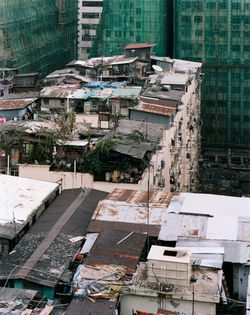
Self-built settlements on the roofs of high-rise buildings have been an integral part of Hong Kong’s history for over half a century. Rooftop structures range from basic shelters for the disadvantaged to intricate multi-storey constructions equipped with the amenities of modern life. Rufina Wu and Stefan Canham use the tools of an architect and a photographer to document(...)
Self-built settlements on the roofs of high-rise buildings have been an integral part of Hong Kong’s history for over half a century. Rooftop structures range from basic shelters for the disadvantaged to intricate multi-storey constructions equipped with the amenities of modern life. Rufina Wu and Stefan Canham use the tools of an architect and a photographer to document(...)
Location:
Paul-Desmarais Theatre
Paul-Desmarais Theatre
Date:
3 May 2012 , 7pm
3 May 2012 , 7pm
Title:
Learning from... Hong Kong
Actions:
Description:
Self-built settlements on the roofs of high-rise buildings have been an integral part of Hong Kong’s history for over half a century. Rooftop structures range from basic shelters for the disadvantaged to intricate multi-storey constructions equipped with the amenities of modern life. Rufina Wu and Stefan Canham use the tools of an architect and a photographer to document(...)
Learning from... Hong Kong
Actions:
Description:
Self-built settlements on the roofs of high-rise buildings have been an integral part of Hong Kong’s history for over half a century. Rooftop structures range from basic shelters for the disadvantaged to intricate multi-storey constructions equipped with the amenities of modern life. Rufina Wu and Stefan Canham use the tools of an architect and a photographer to document(...)
Form:
events
events
Date:
3 May 2012
7pm
3 May 2012
7pm
Location:
Paul-Desmarais Theatre
Paul-Desmarais Theatre
Form:
exhibitions
exhibitions
Actions:
Description:
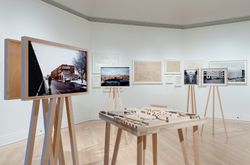
Wohnhaus Schlesisches Tor—also known as Bonjour Tristesse—in Berlin and Punt en Komma in The Hague are Álvaro Siza’s first built works outside his native Portugal. The two projects resemble one another in size, scale, program, and ambition: both were built in the 1980s, both are results of a distinct attitude towards the city, and both were social housing projects(...)
Wohnhaus Schlesisches Tor—also known as Bonjour Tristesse—in Berlin and Punt en Komma in The Hague are Álvaro Siza’s first built works outside his native Portugal. The two projects resemble one another in size, scale, program, and ambition: both were built in the 1980s, both are results of a distinct attitude towards the city, and both were social housing projects(...)
Location:
Octagonal gallery Keyword(s):
Álvaro Siza, Punt en Komma, The Hague, Bonjour Tristesse, Berlin
Octagonal gallery Keyword(s):
Álvaro Siza, Punt en Komma, The Hague, Bonjour Tristesse, Berlin
Date:
24 September 2015 to 22 May 2016
24 September 2015 to 22 May 2016
Title:
Corner, Block, Neighbourhood, Cities. Álvaro Siza in Berlin and The Hague
Actions:
Description:
Wohnhaus Schlesisches Tor—also known as Bonjour Tristesse—in Berlin and Punt en Komma in The Hague are Álvaro Siza’s first built works outside his native Portugal. The two projects resemble one another in size, scale, program, and ambition: both were built in the 1980s, both are results of a distinct attitude towards the city, and both were social housing projects(...)
Corner, Block, Neighbourhood, Cities. Álvaro Siza in Berlin and The Hague
Actions:
Description:
Wohnhaus Schlesisches Tor—also known as Bonjour Tristesse—in Berlin and Punt en Komma in The Hague are Álvaro Siza’s first built works outside his native Portugal. The two projects resemble one another in size, scale, program, and ambition: both were built in the 1980s, both are results of a distinct attitude towards the city, and both were social housing projects(...)
Form:
exhibitions
exhibitions
Date:
24 September 2015 to
22 May 2016
24 September 2015 to
22 May 2016
Location:
Octagonal gallery Keyword(s):
Álvaro Siza, Punt en Komma, The Hague, Bonjour Tristesse, Berlin
Octagonal gallery Keyword(s):
Álvaro Siza, Punt en Komma, The Hague, Bonjour Tristesse, Berlin
Level of archival description:
Project
Project
Title:
Casal das Figueiras, Setubal
Casal das Figueiras, Setubal
Actions:
Reference number:
CD034.S1.1975.PR02
Description:
This project series contains seven reproductions of drawings displayed in the exhibit to document the Casal das Figueiras neighbourhood, in Setúbal, south of Lisbon, Portugal. The exhibit text explained that: ... the Setúbal port-city experienced the political vibrations of the revolutionary year with great intensity. The Casal das Figueiras neighbourhood was designed for a fishing community living in a difficult area to build on due to its steep incline. The challenge that the project architect Gonçalo Byrne faced was to maintain the structure of single-family housing with the outhouse or courtyard, the typology that the local populations requested, while making a large urban gesture. The proposal was based on two types of housing (the square and rectangular plans). This overcame the problem of the 36 percent slope in an architecturally striking manner, while it also managed to fulfil the major requirement inherent in any SAAL operation of minimizing costs. (The SAAL Process, Housing in Portugal 1974–76) Gonçalo Byrne worked for SAAL/Lisbon and Central South with Ana Ferreira Rebocho, Berta Sá Caetano and the residents' association Casal das Figueiras, that was founded on October 30th, 1975. The project included 420 dwellings. The operation began in July 1975 , with a construction date in October 1976. This project series contains reproductions of implementation plans and design development drawings. The original drawings were produced in 1978-1979 and were reproduced in 2015 for the exhibit.
CD034.S1.1975.PR02
Description:
This project series contains seven reproductions of drawings displayed in the exhibit to document the Casal das Figueiras neighbourhood, in Setúbal, south of Lisbon, Portugal. The exhibit text explained that: ... the Setúbal port-city experienced the political vibrations of the revolutionary year with great intensity. The Casal das Figueiras neighbourhood was designed for a fishing community living in a difficult area to build on due to its steep incline. The challenge that the project architect Gonçalo Byrne faced was to maintain the structure of single-family housing with the outhouse or courtyard, the typology that the local populations requested, while making a large urban gesture. The proposal was based on two types of housing (the square and rectangular plans). This overcame the problem of the 36 percent slope in an architecturally striking manner, while it also managed to fulfil the major requirement inherent in any SAAL operation of minimizing costs. (The SAAL Process, Housing in Portugal 1974–76) Gonçalo Byrne worked for SAAL/Lisbon and Central South with Ana Ferreira Rebocho, Berta Sá Caetano and the residents' association Casal das Figueiras, that was founded on October 30th, 1975. The project included 420 dwellings. The operation began in July 1975 , with a construction date in October 1976. This project series contains reproductions of implementation plans and design development drawings. The original drawings were produced in 1978-1979 and were reproduced in 2015 for the exhibit.
People:
Date:
1978-1979
1978-1979
Title:
Casal das Figueiras, Setubal
Actions:
CD034.S1.1975.PR02
Description:
This project series contains seven reproductions of drawings displayed in the exhibit to document the Casal das Figueiras neighbourhood, in Setúbal, south of Lisbon, Portugal. The exhibit text explained that: ... the Setúbal port-city experienced the political vibrations of the revolutionary year with great intensity. The Casal das Figueiras neighbourhood was designed for a fishing community living in a difficult area to build on due to its steep incline. The challenge that the project architect Gonçalo Byrne faced was to maintain the structure of single-family housing with the outhouse or courtyard, the typology that the local populations requested, while making a large urban gesture. The proposal was based on two types of housing (the square and rectangular plans). This overcame the problem of the 36 percent slope in an architecturally striking manner, while it also managed to fulfil the major requirement inherent in any SAAL operation of minimizing costs. (The SAAL Process, Housing in Portugal 1974–76) Gonçalo Byrne worked for SAAL/Lisbon and Central South with Ana Ferreira Rebocho, Berta Sá Caetano and the residents' association Casal das Figueiras, that was founded on October 30th, 1975. The project included 420 dwellings. The operation began in July 1975 , with a construction date in October 1976. This project series contains reproductions of implementation plans and design development drawings. The original drawings were produced in 1978-1979 and were reproduced in 2015 for the exhibit.
Casal das Figueiras, Setubal
Actions:
CD034.S1.1975.PR02
Description:
This project series contains seven reproductions of drawings displayed in the exhibit to document the Casal das Figueiras neighbourhood, in Setúbal, south of Lisbon, Portugal. The exhibit text explained that: ... the Setúbal port-city experienced the political vibrations of the revolutionary year with great intensity. The Casal das Figueiras neighbourhood was designed for a fishing community living in a difficult area to build on due to its steep incline. The challenge that the project architect Gonçalo Byrne faced was to maintain the structure of single-family housing with the outhouse or courtyard, the typology that the local populations requested, while making a large urban gesture. The proposal was based on two types of housing (the square and rectangular plans). This overcame the problem of the 36 percent slope in an architecturally striking manner, while it also managed to fulfil the major requirement inherent in any SAAL operation of minimizing costs. (The SAAL Process, Housing in Portugal 1974–76) Gonçalo Byrne worked for SAAL/Lisbon and Central South with Ana Ferreira Rebocho, Berta Sá Caetano and the residents' association Casal das Figueiras, that was founded on October 30th, 1975. The project included 420 dwellings. The operation began in July 1975 , with a construction date in October 1976. This project series contains reproductions of implementation plans and design development drawings. The original drawings were produced in 1978-1979 and were reproduced in 2015 for the exhibit.
Level of archival description:
Project
Project
Date:
1978-1979
1978-1979
People:
Level of archival description:
Project
Project
Actions:
Reference number:
AP056.S1.1991.PR02
Description:
This project series documents the design of Cité Collégiale in Ottawa, Ontario from in 1991. The project number assigned by the office is unidentifiable. This project consisted of a competition entry for the first French language community college to be built in Ontario. The design proposed focused on the balance between the natural landscape of the site, located on Montreal Road at Aviation Parkway, the rigor of the study program and the relaxation of student life. Large wooded areas surrounding the campus would be preserved and four functional outdoor spaces would be created: La Place des Festivals (an esplanade), the theatre (for outdoor festivities), Le Carrefour des Étudiants (the student square), and le Foyer (next to the cafeteria). The campus also proposed la Grande Galerie, a triple-height space filled with natural light to serve as the main area where students could meet and study. Two types of school buildings were included in the proposal, consisting of a long, rectangular building for classrooms and offices, and the other, a less formal, open space with classrooms, amphitheatres, studios and laboratories. The scheme had two main entrances, with a large central tower that was visible when arriving from either direction. This was not the winning entry for the competition and the campus was eventually built by Brook, Brisbin and Baynon. The project is recorded through drawings, presentation paintings and a model dating from 1991. The drawings include site condition maps, sketches, perspectives, plans, elevations, axonometric drawings and presentation panels.
AP056.S1.1991.PR02
Description:
This project series documents the design of Cité Collégiale in Ottawa, Ontario from in 1991. The project number assigned by the office is unidentifiable. This project consisted of a competition entry for the first French language community college to be built in Ontario. The design proposed focused on the balance between the natural landscape of the site, located on Montreal Road at Aviation Parkway, the rigor of the study program and the relaxation of student life. Large wooded areas surrounding the campus would be preserved and four functional outdoor spaces would be created: La Place des Festivals (an esplanade), the theatre (for outdoor festivities), Le Carrefour des Étudiants (the student square), and le Foyer (next to the cafeteria). The campus also proposed la Grande Galerie, a triple-height space filled with natural light to serve as the main area where students could meet and study. Two types of school buildings were included in the proposal, consisting of a long, rectangular building for classrooms and offices, and the other, a less formal, open space with classrooms, amphitheatres, studios and laboratories. The scheme had two main entrances, with a large central tower that was visible when arriving from either direction. This was not the winning entry for the competition and the campus was eventually built by Brook, Brisbin and Baynon. The project is recorded through drawings, presentation paintings and a model dating from 1991. The drawings include site condition maps, sketches, perspectives, plans, elevations, axonometric drawings and presentation panels.
People:
Date:
1991
1991
Title:
Cité Collégiale Competition, Ottawa, Ontario (1991)
Actions:
AP056.S1.1991.PR02
Description:
This project series documents the design of Cité Collégiale in Ottawa, Ontario from in 1991. The project number assigned by the office is unidentifiable. This project consisted of a competition entry for the first French language community college to be built in Ontario. The design proposed focused on the balance between the natural landscape of the site, located on Montreal Road at Aviation Parkway, the rigor of the study program and the relaxation of student life. Large wooded areas surrounding the campus would be preserved and four functional outdoor spaces would be created: La Place des Festivals (an esplanade), the theatre (for outdoor festivities), Le Carrefour des Étudiants (the student square), and le Foyer (next to the cafeteria). The campus also proposed la Grande Galerie, a triple-height space filled with natural light to serve as the main area where students could meet and study. Two types of school buildings were included in the proposal, consisting of a long, rectangular building for classrooms and offices, and the other, a less formal, open space with classrooms, amphitheatres, studios and laboratories. The scheme had two main entrances, with a large central tower that was visible when arriving from either direction. This was not the winning entry for the competition and the campus was eventually built by Brook, Brisbin and Baynon. The project is recorded through drawings, presentation paintings and a model dating from 1991. The drawings include site condition maps, sketches, perspectives, plans, elevations, axonometric drawings and presentation panels.
Cité Collégiale Competition, Ottawa, Ontario (1991)
Actions:
AP056.S1.1991.PR02
Description:
This project series documents the design of Cité Collégiale in Ottawa, Ontario from in 1991. The project number assigned by the office is unidentifiable. This project consisted of a competition entry for the first French language community college to be built in Ontario. The design proposed focused on the balance between the natural landscape of the site, located on Montreal Road at Aviation Parkway, the rigor of the study program and the relaxation of student life. Large wooded areas surrounding the campus would be preserved and four functional outdoor spaces would be created: La Place des Festivals (an esplanade), the theatre (for outdoor festivities), Le Carrefour des Étudiants (the student square), and le Foyer (next to the cafeteria). The campus also proposed la Grande Galerie, a triple-height space filled with natural light to serve as the main area where students could meet and study. Two types of school buildings were included in the proposal, consisting of a long, rectangular building for classrooms and offices, and the other, a less formal, open space with classrooms, amphitheatres, studios and laboratories. The scheme had two main entrances, with a large central tower that was visible when arriving from either direction. This was not the winning entry for the competition and the campus was eventually built by Brook, Brisbin and Baynon. The project is recorded through drawings, presentation paintings and a model dating from 1991. The drawings include site condition maps, sketches, perspectives, plans, elevations, axonometric drawings and presentation panels.
Level of archival description:
Project
Project
Date:
1991
1991
People:
Form:
articles
articles
Title:
Shooting the Breeze
Shooting the Breeze
Actions:
Mae-ling Lokko and Elizabeth (Lizzie) Biney-Amissah on the interconnectedness of energy, materials, and rebuilding community
Title:
Shooting the Breeze
Mae-ling Lokko and Elizabeth (Lizzie) Biney-Amissah on the interconnectedness of energy, materials, and rebuilding community
Actions:
Shooting the Breeze
Mae-ling Lokko and Elizabeth (Lizzie) Biney-Amissah on the interconnectedness of energy, materials, and rebuilding community
Actions:
Issue:
Forces of Friction
Forces of Friction
Form:
exhibitions
exhibitions
Actions:
Description:
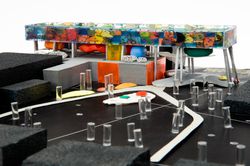
This exhibition features British architect Will Alsop’s preparatory work for the Sharp Centre for Design at the Ontario College of Art Design (OCAD) in Toronto and explores the role of painting in his design process. Completed in 2004, OCAD’s Sharp Centre for Design was designed by Alsop Architects in collaboration with the Toronto-based firm Robbie/Young + Wright. The(...)
This exhibition features British architect Will Alsop’s preparatory work for the Sharp Centre for Design at the Ontario College of Art Design (OCAD) in Toronto and explores the role of painting in his design process. Completed in 2004, OCAD’s Sharp Centre for Design was designed by Alsop Architects in collaboration with the Toronto-based firm Robbie/Young + Wright. The(...)
Location:
Octagonal gallery
Octagonal gallery
Date:
13 June 2008 to 5 October 2008
13 June 2008 to 5 October 2008
Title:
Will Alsop: OCAD, An Urban Manifesto
Actions:
Description:
This exhibition features British architect Will Alsop’s preparatory work for the Sharp Centre for Design at the Ontario College of Art Design (OCAD) in Toronto and explores the role of painting in his design process. Completed in 2004, OCAD’s Sharp Centre for Design was designed by Alsop Architects in collaboration with the Toronto-based firm Robbie/Young + Wright. The(...)
Will Alsop: OCAD, An Urban Manifesto
Actions:
Description:
This exhibition features British architect Will Alsop’s preparatory work for the Sharp Centre for Design at the Ontario College of Art Design (OCAD) in Toronto and explores the role of painting in his design process. Completed in 2004, OCAD’s Sharp Centre for Design was designed by Alsop Architects in collaboration with the Toronto-based firm Robbie/Young + Wright. The(...)
Form:
exhibitions
exhibitions
Date:
13 June 2008 to
5 October 2008
13 June 2008 to
5 October 2008
Location:
Octagonal gallery
Octagonal gallery
Form:
textual records
textual records
Title:
Speeches and Articles
Speeches and Articles
Actions:
Reference number:
ARCH186972
Description:
drafts for "Planning for Leisure" - National Social Life Conference - The Christian in the Community, 1965
ARCH186972
Description:
drafts for "Planning for Leisure" - National Social Life Conference - The Christian in the Community, 1965
People:
Date:
1965
1965
Title:
Speeches and Articles
Actions:
ARCH186972
Description:
drafts for "Planning for Leisure" - National Social Life Conference - The Christian in the Community, 1965
Speeches and Articles
Actions:
ARCH186972
Description:
drafts for "Planning for Leisure" - National Social Life Conference - The Christian in the Community, 1965
Form:
textual records
textual records
Date:
1965
1965
People:
Form:
articles
articles
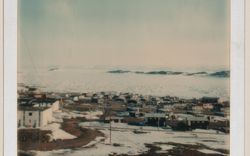
Title:
Calling Home
Calling Home
Actions:
Rafico Ruiz speaks with Geronimo Inutiq about community radio, what constitutes home, and media art
Title:
Calling Home
Rafico Ruiz speaks with Geronimo Inutiq about community radio, what constitutes home, and media art
Actions:
Calling Home
Rafico Ruiz speaks with Geronimo Inutiq about community radio, what constitutes home, and media art
Actions:


