


1910 Results
Form:
archives
Level of archival description:
Fonds
archives
Level of archival description:
Fonds
Title:
Ross & Macdonald fonds
Ross & Macdonald fonds
Reference number:
AP013
Synopsis:
The Ross & Macdonald fonds is comprised of documents concerning the work of six successive architectural firms: Ross & MacFarlane (1905-1912), Ross & Macdonald (1913-1944), Ross & Ross (1944-1946), Ross, Patterson, Townsend & Heughan (1946-1950), Ross, Patterson, Townsend & Fish (1950-1958), and Ross, Fish, Duschenes & Barrett (1958-1976). The greatest concentration of work was produced in Montreal where each of the firms maintained their head office, but there were also a large number of works executed in New Brunswick and Nova Scotia. The fonds contains 27 884 drawings (24 294 originals plus 3 590 reproductions), 236 photographs, and 18.6 metres of textual documents.
AP013
Synopsis:
The Ross & Macdonald fonds is comprised of documents concerning the work of six successive architectural firms: Ross & MacFarlane (1905-1912), Ross & Macdonald (1913-1944), Ross & Ross (1944-1946), Ross, Patterson, Townsend & Heughan (1946-1950), Ross, Patterson, Townsend & Fish (1950-1958), and Ross, Fish, Duschenes & Barrett (1958-1976). The greatest concentration of work was produced in Montreal where each of the firms maintained their head office, but there were also a large number of works executed in New Brunswick and Nova Scotia. The fonds contains 27 884 drawings (24 294 originals plus 3 590 reproductions), 236 photographs, and 18.6 metres of textual documents.
People:
Date:
1902-1982
1902-1982
Title:
Ross & Macdonald fonds
Actions:
AP013
Synopsis:
The Ross & Macdonald fonds is comprised of documents concerning the work of six successive architectural firms: Ross & MacFarlane (1905-1912), Ross & Macdonald (1913-1944), Ross & Ross (1944-1946), Ross, Patterson, Townsend & Heughan (1946-1950), Ross, Patterson, Townsend & Fish (1950-1958), and Ross, Fish, Duschenes & Barrett (1958-1976). The greatest concentration of work was produced in Montreal where each of the firms maintained their head office, but there were also a large number of works executed in New Brunswick and Nova Scotia. The fonds contains 27 884 drawings (24 294 originals plus 3 590 reproductions), 236 photographs, and 18.6 metres of textual documents.
Ross & Macdonald fonds
Actions:
AP013
Synopsis:
The Ross & Macdonald fonds is comprised of documents concerning the work of six successive architectural firms: Ross & MacFarlane (1905-1912), Ross & Macdonald (1913-1944), Ross & Ross (1944-1946), Ross, Patterson, Townsend & Heughan (1946-1950), Ross, Patterson, Townsend & Fish (1950-1958), and Ross, Fish, Duschenes & Barrett (1958-1976). The greatest concentration of work was produced in Montreal where each of the firms maintained their head office, but there were also a large number of works executed in New Brunswick and Nova Scotia. The fonds contains 27 884 drawings (24 294 originals plus 3 590 reproductions), 236 photographs, and 18.6 metres of textual documents.
Form:
archives
Level of archival description:
Fonds
archives
Level of archival description:
Fonds
Date:
1902-1982
1902-1982
People:
Level of archival description:
Sub-series
Sub-series
Reference number:
CI001.S1.D3
Description:
The urban and public architecture of Hubert Rohault de Fleury is insightful concerning both the stylistic directions of utilitarian architecture in France and the structure and role of the government architectural services (1) in the Empire and the Restoration. The drawings in the CCA collection depict built and unbuilt projects undertaken in the context of Hubert's positions in the government architectural services as well as private commissions. Hubert's principal official positions related to three branches of the French government: the Préfecture de la police, the Conseil général des hospices and the Conseil des Bâtiments Civils, a "division" of the Ministère de l'interieur. Hubert's work for the Préfecture de la police (which was also responsible for the gendarmerie and the sapeurs-pompiers barracks) is represented in the CCA collection by projects for four gendarmerie barracks (1821-1830) and alterations to the Préfecture de la Police (1833 ?) and nearby prison in Paris (1819)(DR1974:0002:016:001-070 / DR1974:0002:011:001-089 and DR1974:0002: 015:001-070). The drawings in these albums emphasize the planning (or re-arrangement) of the interior spaces. The album for the Préfecture de la police also includes record drawings for prisons in England and France as background material for Hubert's work and/or related to reports for the Conseil des Bâtiments Civils, which had an active role in the design of prisons throughout France during the early years of the nineteenth century (2). Although the CCA collection has no drawings directly related to Hubert's position as the architecte des hospices (3), drawings and prints are included for his earlier ideal hospitals (ca. 1810) (DR1974:0002:008:001-077). These projects continue the late 17th and 18th century tradition of monumental geometrically laid-out ideal hospitals. This album also contains prints and drawings of medical buildings by other architects (probably reference material), and drawings of Hubert's unexecuted proposal for the re-development of the École de médecine (Paris) and the surrounding buildings and urban spaces. Hubert was the architecte de l'École de medicine (4); a position that probably related to his work for the Ministère d'Interieur, which would have been responsible for this building. In general, Hubert's role and responsibilities within the Ministère de l'interieur and the associated Conseil de Bâtiment Civils (especially prior to his appointment to the position of inspecteur gènèral in 1830) are the least clear of his government positions. In addition to the École de medicine album, two other albums contain projects relating to the Ministère de l'Interieur: two proposals for Place Louis XV commissioned by the Ministre de l'interieur, Duc Decazes in 1821 (DR1974:0002:037:001-031), and drawings for the conversion or renovation of several Parisian hôtel particuliers (probably between 1810 and ca. 1820) including those used by the Ministère de l'interieur, Ministère de la Guerre and the Ministère des affaires étrangères (DR1974:0002;011:001-089). On other government commission of significance is represented in the CCA collection. In 1819, Hubert Rohault de Fleury in collaboration with Etienne Hyppolite Godde was commissioned to direct the restoration of the Thermes de Julien located under the Hôtel de Cluny. The CCA collection includes several letters and drawings, and a report related to this commission (DR1974:0002 :037:001-031). Hubert's private urban projects, mostly commissioned by private entrepreneurs or societies, were concerned with the expansion of the infrastructure of Paris and the surrounding communities as well as, to some extent, larger issues of urban development. One album contains projects dating from between 1819 and 1836 related horses - an essential part of 19th century urban life (5): a stud-farm (Haras de Madrid, Bois de Boulogne), an auction house and an infirmary (Clos St. Charles, Clos d'équarrissage, fôret de Bondy) and three slaughterhouses (Plaine de Grenelle, an unnamed project and La Villete (6))(DR1974:0002:014:001-104). These album also includes developmental studies for a new quartier of Paris - Nouveau Quartier Poissonière (the site of today's 10e arrondissement). A second album (ca. 1825) includes designs for a "maison de blanchisseur", an "entrepot de vins" with adjacent "guingette" and designs for structures at Parc de Clichy - a reservoir, a washhouse and a manège (DR1974:0002:009:001-079) (7). The drawings in these albums are particularly informative regarding the materials, structures and mechanical systems utilized. As with most of his government commissions, for these buildings, Hubert adopted a sparse architectural syntax of pared-down classical motifs and regimented plans grounded in the ideas of Durand and commonly used in utilitarian buildings during the 19th century. (1) These are discussed in some detail in Chapter 2 of David Van Zanten, 'Building Paris' (Cambridge: Cambridge University Press, 1994). (2) Van Zanten, 'Building Paris', 51-52. (3) The Cabinet des Estampes at the Musée Carnavalet in Paris has drawings related to Hubert's work for the Conseil général des hospices. (4) Evidence of this position is based on inscriptions on drawings in album, DR1974:0002:008:001-77. (5) Bergdoll, 4. (6) The La Villete slaughterhouse was designed by Charles Rohault de Fleury. (7) The source(s) of these commissions is unknown.
CI001.S1.D3
Description:
The urban and public architecture of Hubert Rohault de Fleury is insightful concerning both the stylistic directions of utilitarian architecture in France and the structure and role of the government architectural services (1) in the Empire and the Restoration. The drawings in the CCA collection depict built and unbuilt projects undertaken in the context of Hubert's positions in the government architectural services as well as private commissions. Hubert's principal official positions related to three branches of the French government: the Préfecture de la police, the Conseil général des hospices and the Conseil des Bâtiments Civils, a "division" of the Ministère de l'interieur. Hubert's work for the Préfecture de la police (which was also responsible for the gendarmerie and the sapeurs-pompiers barracks) is represented in the CCA collection by projects for four gendarmerie barracks (1821-1830) and alterations to the Préfecture de la Police (1833 ?) and nearby prison in Paris (1819)(DR1974:0002:016:001-070 / DR1974:0002:011:001-089 and DR1974:0002: 015:001-070). The drawings in these albums emphasize the planning (or re-arrangement) of the interior spaces. The album for the Préfecture de la police also includes record drawings for prisons in England and France as background material for Hubert's work and/or related to reports for the Conseil des Bâtiments Civils, which had an active role in the design of prisons throughout France during the early years of the nineteenth century (2). Although the CCA collection has no drawings directly related to Hubert's position as the architecte des hospices (3), drawings and prints are included for his earlier ideal hospitals (ca. 1810) (DR1974:0002:008:001-077). These projects continue the late 17th and 18th century tradition of monumental geometrically laid-out ideal hospitals. This album also contains prints and drawings of medical buildings by other architects (probably reference material), and drawings of Hubert's unexecuted proposal for the re-development of the École de médecine (Paris) and the surrounding buildings and urban spaces. Hubert was the architecte de l'École de medicine (4); a position that probably related to his work for the Ministère d'Interieur, which would have been responsible for this building. In general, Hubert's role and responsibilities within the Ministère de l'interieur and the associated Conseil de Bâtiment Civils (especially prior to his appointment to the position of inspecteur gènèral in 1830) are the least clear of his government positions. In addition to the École de medicine album, two other albums contain projects relating to the Ministère de l'Interieur: two proposals for Place Louis XV commissioned by the Ministre de l'interieur, Duc Decazes in 1821 (DR1974:0002:037:001-031), and drawings for the conversion or renovation of several Parisian hôtel particuliers (probably between 1810 and ca. 1820) including those used by the Ministère de l'interieur, Ministère de la Guerre and the Ministère des affaires étrangères (DR1974:0002;011:001-089). On other government commission of significance is represented in the CCA collection. In 1819, Hubert Rohault de Fleury in collaboration with Etienne Hyppolite Godde was commissioned to direct the restoration of the Thermes de Julien located under the Hôtel de Cluny. The CCA collection includes several letters and drawings, and a report related to this commission (DR1974:0002 :037:001-031). Hubert's private urban projects, mostly commissioned by private entrepreneurs or societies, were concerned with the expansion of the infrastructure of Paris and the surrounding communities as well as, to some extent, larger issues of urban development. One album contains projects dating from between 1819 and 1836 related horses - an essential part of 19th century urban life (5): a stud-farm (Haras de Madrid, Bois de Boulogne), an auction house and an infirmary (Clos St. Charles, Clos d'équarrissage, fôret de Bondy) and three slaughterhouses (Plaine de Grenelle, an unnamed project and La Villete (6))(DR1974:0002:014:001-104). These album also includes developmental studies for a new quartier of Paris - Nouveau Quartier Poissonière (the site of today's 10e arrondissement). A second album (ca. 1825) includes designs for a "maison de blanchisseur", an "entrepot de vins" with adjacent "guingette" and designs for structures at Parc de Clichy - a reservoir, a washhouse and a manège (DR1974:0002:009:001-079) (7). The drawings in these albums are particularly informative regarding the materials, structures and mechanical systems utilized. As with most of his government commissions, for these buildings, Hubert adopted a sparse architectural syntax of pared-down classical motifs and regimented plans grounded in the ideas of Durand and commonly used in utilitarian buildings during the 19th century. (1) These are discussed in some detail in Chapter 2 of David Van Zanten, 'Building Paris' (Cambridge: Cambridge University Press, 1994). (2) Van Zanten, 'Building Paris', 51-52. (3) The Cabinet des Estampes at the Musée Carnavalet in Paris has drawings related to Hubert's work for the Conseil général des hospices. (4) Evidence of this position is based on inscriptions on drawings in album, DR1974:0002:008:001-77. (5) Bergdoll, 4. (6) The La Villete slaughterhouse was designed by Charles Rohault de Fleury. (7) The source(s) of these commissions is unknown.
People:
Date:
1754-1875
1754-1875
Title:
Public and Urban architecture
CI001.S1.D3
Description:
The urban and public architecture of Hubert Rohault de Fleury is insightful concerning both the stylistic directions of utilitarian architecture in France and the structure and role of the government architectural services (1) in the Empire and the Restoration. The drawings in the CCA collection depict built and unbuilt projects undertaken in the context of Hubert's positions in the government architectural services as well as private commissions. Hubert's principal official positions related to three branches of the French government: the Préfecture de la police, the Conseil général des hospices and the Conseil des Bâtiments Civils, a "division" of the Ministère de l'interieur. Hubert's work for the Préfecture de la police (which was also responsible for the gendarmerie and the sapeurs-pompiers barracks) is represented in the CCA collection by projects for four gendarmerie barracks (1821-1830) and alterations to the Préfecture de la Police (1833 ?) and nearby prison in Paris (1819)(DR1974:0002:016:001-070 / DR1974:0002:011:001-089 and DR1974:0002: 015:001-070). The drawings in these albums emphasize the planning (or re-arrangement) of the interior spaces. The album for the Préfecture de la police also includes record drawings for prisons in England and France as background material for Hubert's work and/or related to reports for the Conseil des Bâtiments Civils, which had an active role in the design of prisons throughout France during the early years of the nineteenth century (2). Although the CCA collection has no drawings directly related to Hubert's position as the architecte des hospices (3), drawings and prints are included for his earlier ideal hospitals (ca. 1810) (DR1974:0002:008:001-077). These projects continue the late 17th and 18th century tradition of monumental geometrically laid-out ideal hospitals. This album also contains prints and drawings of medical buildings by other architects (probably reference material), and drawings of Hubert's unexecuted proposal for the re-development of the École de médecine (Paris) and the surrounding buildings and urban spaces. Hubert was the architecte de l'École de medicine (4); a position that probably related to his work for the Ministère d'Interieur, which would have been responsible for this building. In general, Hubert's role and responsibilities within the Ministère de l'interieur and the associated Conseil de Bâtiment Civils (especially prior to his appointment to the position of inspecteur gènèral in 1830) are the least clear of his government positions. In addition to the École de medicine album, two other albums contain projects relating to the Ministère de l'Interieur: two proposals for Place Louis XV commissioned by the Ministre de l'interieur, Duc Decazes in 1821 (DR1974:0002:037:001-031), and drawings for the conversion or renovation of several Parisian hôtel particuliers (probably between 1810 and ca. 1820) including those used by the Ministère de l'interieur, Ministère de la Guerre and the Ministère des affaires étrangères (DR1974:0002;011:001-089). On other government commission of significance is represented in the CCA collection. In 1819, Hubert Rohault de Fleury in collaboration with Etienne Hyppolite Godde was commissioned to direct the restoration of the Thermes de Julien located under the Hôtel de Cluny. The CCA collection includes several letters and drawings, and a report related to this commission (DR1974:0002 :037:001-031). Hubert's private urban projects, mostly commissioned by private entrepreneurs or societies, were concerned with the expansion of the infrastructure of Paris and the surrounding communities as well as, to some extent, larger issues of urban development. One album contains projects dating from between 1819 and 1836 related horses - an essential part of 19th century urban life (5): a stud-farm (Haras de Madrid, Bois de Boulogne), an auction house and an infirmary (Clos St. Charles, Clos d'équarrissage, fôret de Bondy) and three slaughterhouses (Plaine de Grenelle, an unnamed project and La Villete (6))(DR1974:0002:014:001-104). These album also includes developmental studies for a new quartier of Paris - Nouveau Quartier Poissonière (the site of today's 10e arrondissement). A second album (ca. 1825) includes designs for a "maison de blanchisseur", an "entrepot de vins" with adjacent "guingette" and designs for structures at Parc de Clichy - a reservoir, a washhouse and a manège (DR1974:0002:009:001-079) (7). The drawings in these albums are particularly informative regarding the materials, structures and mechanical systems utilized. As with most of his government commissions, for these buildings, Hubert adopted a sparse architectural syntax of pared-down classical motifs and regimented plans grounded in the ideas of Durand and commonly used in utilitarian buildings during the 19th century. (1) These are discussed in some detail in Chapter 2 of David Van Zanten, 'Building Paris' (Cambridge: Cambridge University Press, 1994). (2) Van Zanten, 'Building Paris', 51-52. (3) The Cabinet des Estampes at the Musée Carnavalet in Paris has drawings related to Hubert's work for the Conseil général des hospices. (4) Evidence of this position is based on inscriptions on drawings in album, DR1974:0002:008:001-77. (5) Bergdoll, 4. (6) The La Villete slaughterhouse was designed by Charles Rohault de Fleury. (7) The source(s) of these commissions is unknown.
Public and Urban architecture
CI001.S1.D3
Description:
The urban and public architecture of Hubert Rohault de Fleury is insightful concerning both the stylistic directions of utilitarian architecture in France and the structure and role of the government architectural services (1) in the Empire and the Restoration. The drawings in the CCA collection depict built and unbuilt projects undertaken in the context of Hubert's positions in the government architectural services as well as private commissions. Hubert's principal official positions related to three branches of the French government: the Préfecture de la police, the Conseil général des hospices and the Conseil des Bâtiments Civils, a "division" of the Ministère de l'interieur. Hubert's work for the Préfecture de la police (which was also responsible for the gendarmerie and the sapeurs-pompiers barracks) is represented in the CCA collection by projects for four gendarmerie barracks (1821-1830) and alterations to the Préfecture de la Police (1833 ?) and nearby prison in Paris (1819)(DR1974:0002:016:001-070 / DR1974:0002:011:001-089 and DR1974:0002: 015:001-070). The drawings in these albums emphasize the planning (or re-arrangement) of the interior spaces. The album for the Préfecture de la police also includes record drawings for prisons in England and France as background material for Hubert's work and/or related to reports for the Conseil des Bâtiments Civils, which had an active role in the design of prisons throughout France during the early years of the nineteenth century (2). Although the CCA collection has no drawings directly related to Hubert's position as the architecte des hospices (3), drawings and prints are included for his earlier ideal hospitals (ca. 1810) (DR1974:0002:008:001-077). These projects continue the late 17th and 18th century tradition of monumental geometrically laid-out ideal hospitals. This album also contains prints and drawings of medical buildings by other architects (probably reference material), and drawings of Hubert's unexecuted proposal for the re-development of the École de médecine (Paris) and the surrounding buildings and urban spaces. Hubert was the architecte de l'École de medicine (4); a position that probably related to his work for the Ministère d'Interieur, which would have been responsible for this building. In general, Hubert's role and responsibilities within the Ministère de l'interieur and the associated Conseil de Bâtiment Civils (especially prior to his appointment to the position of inspecteur gènèral in 1830) are the least clear of his government positions. In addition to the École de medicine album, two other albums contain projects relating to the Ministère de l'Interieur: two proposals for Place Louis XV commissioned by the Ministre de l'interieur, Duc Decazes in 1821 (DR1974:0002:037:001-031), and drawings for the conversion or renovation of several Parisian hôtel particuliers (probably between 1810 and ca. 1820) including those used by the Ministère de l'interieur, Ministère de la Guerre and the Ministère des affaires étrangères (DR1974:0002;011:001-089). On other government commission of significance is represented in the CCA collection. In 1819, Hubert Rohault de Fleury in collaboration with Etienne Hyppolite Godde was commissioned to direct the restoration of the Thermes de Julien located under the Hôtel de Cluny. The CCA collection includes several letters and drawings, and a report related to this commission (DR1974:0002 :037:001-031). Hubert's private urban projects, mostly commissioned by private entrepreneurs or societies, were concerned with the expansion of the infrastructure of Paris and the surrounding communities as well as, to some extent, larger issues of urban development. One album contains projects dating from between 1819 and 1836 related horses - an essential part of 19th century urban life (5): a stud-farm (Haras de Madrid, Bois de Boulogne), an auction house and an infirmary (Clos St. Charles, Clos d'équarrissage, fôret de Bondy) and three slaughterhouses (Plaine de Grenelle, an unnamed project and La Villete (6))(DR1974:0002:014:001-104). These album also includes developmental studies for a new quartier of Paris - Nouveau Quartier Poissonière (the site of today's 10e arrondissement). A second album (ca. 1825) includes designs for a "maison de blanchisseur", an "entrepot de vins" with adjacent "guingette" and designs for structures at Parc de Clichy - a reservoir, a washhouse and a manège (DR1974:0002:009:001-079) (7). The drawings in these albums are particularly informative regarding the materials, structures and mechanical systems utilized. As with most of his government commissions, for these buildings, Hubert adopted a sparse architectural syntax of pared-down classical motifs and regimented plans grounded in the ideas of Durand and commonly used in utilitarian buildings during the 19th century. (1) These are discussed in some detail in Chapter 2 of David Van Zanten, 'Building Paris' (Cambridge: Cambridge University Press, 1994). (2) Van Zanten, 'Building Paris', 51-52. (3) The Cabinet des Estampes at the Musée Carnavalet in Paris has drawings related to Hubert's work for the Conseil général des hospices. (4) Evidence of this position is based on inscriptions on drawings in album, DR1974:0002:008:001-77. (5) Bergdoll, 4. (6) The La Villete slaughterhouse was designed by Charles Rohault de Fleury. (7) The source(s) of these commissions is unknown.
Level of archival description:
File 3
File 3
Date:
1754-1875
1754-1875
People:
Form:
textual records
textual records
Actions:
Reference number:
DR1995:0316:001-001
Description:
clippings, including material relating to the Cedric Price projects: New Aviary, Zoological Society (AP144.S2.D31), Robson Translloyd, London W.1 (AP144.S2.D36), Radome Development (AP144.S2.D40), Auditorium, Claverton Bath (AP144.S2.D41), House, Selsdon (AP144.S2.D42), Tone Vale Hospital, Taunton (AP144.S2.D47), Circlorama (AP144.S2.D51), Barking Flyover (AP144.S2.D57), Whyte Lion Development (AP144.S2.D60), Bath Festival (AP144.S2.D62), BAA/LHA/North (AP144.S2.D65), (AP144.S2.D70 BTDB Computer), Shantasea Development (AP144.S2.D72), BMI/HQ (AP144.S2.D74), Phun City (AP144.S2.D77), Olympia (AP144.S2.D83), Two Tree Island (AP144.S2.D84), McAppy (AP144.S2.D89), River Clyde Competition (AP144.S2.D90), Trucksafe Air Portable Dock Ahoy (AP144.S2.D93), Water Wall (AP144.S2.D94), Scotswhim (AP144.S2.D95), G.T.R. (AP144.S2.D97), Whitehall (AP144.S2.D98), Strike (AP144.S2.D99), Generator (AP144.S2.D100), Domain (AP144.S2.D108), Castel (AP144.S2.D109), CP Aviary (AP144.S2.D113), and for Picstate, Polyark (AP144.S3.D33), and a project for Tunisia
DR1995:0316:001-001
Description:
clippings, including material relating to the Cedric Price projects: New Aviary, Zoological Society (AP144.S2.D31), Robson Translloyd, London W.1 (AP144.S2.D36), Radome Development (AP144.S2.D40), Auditorium, Claverton Bath (AP144.S2.D41), House, Selsdon (AP144.S2.D42), Tone Vale Hospital, Taunton (AP144.S2.D47), Circlorama (AP144.S2.D51), Barking Flyover (AP144.S2.D57), Whyte Lion Development (AP144.S2.D60), Bath Festival (AP144.S2.D62), BAA/LHA/North (AP144.S2.D65), (AP144.S2.D70 BTDB Computer), Shantasea Development (AP144.S2.D72), BMI/HQ (AP144.S2.D74), Phun City (AP144.S2.D77), Olympia (AP144.S2.D83), Two Tree Island (AP144.S2.D84), McAppy (AP144.S2.D89), River Clyde Competition (AP144.S2.D90), Trucksafe Air Portable Dock Ahoy (AP144.S2.D93), Water Wall (AP144.S2.D94), Scotswhim (AP144.S2.D95), G.T.R. (AP144.S2.D97), Whitehall (AP144.S2.D98), Strike (AP144.S2.D99), Generator (AP144.S2.D100), Domain (AP144.S2.D108), Castel (AP144.S2.D109), CP Aviary (AP144.S2.D113), and for Picstate, Polyark (AP144.S3.D33), and a project for Tunisia
People:
Date:
1962-1993
1962-1993
Title:
Press clippings for various projects
Actions:
DR1995:0316:001-001
Description:
clippings, including material relating to the Cedric Price projects: New Aviary, Zoological Society (AP144.S2.D31), Robson Translloyd, London W.1 (AP144.S2.D36), Radome Development (AP144.S2.D40), Auditorium, Claverton Bath (AP144.S2.D41), House, Selsdon (AP144.S2.D42), Tone Vale Hospital, Taunton (AP144.S2.D47), Circlorama (AP144.S2.D51), Barking Flyover (AP144.S2.D57), Whyte Lion Development (AP144.S2.D60), Bath Festival (AP144.S2.D62), BAA/LHA/North (AP144.S2.D65), (AP144.S2.D70 BTDB Computer), Shantasea Development (AP144.S2.D72), BMI/HQ (AP144.S2.D74), Phun City (AP144.S2.D77), Olympia (AP144.S2.D83), Two Tree Island (AP144.S2.D84), McAppy (AP144.S2.D89), River Clyde Competition (AP144.S2.D90), Trucksafe Air Portable Dock Ahoy (AP144.S2.D93), Water Wall (AP144.S2.D94), Scotswhim (AP144.S2.D95), G.T.R. (AP144.S2.D97), Whitehall (AP144.S2.D98), Strike (AP144.S2.D99), Generator (AP144.S2.D100), Domain (AP144.S2.D108), Castel (AP144.S2.D109), CP Aviary (AP144.S2.D113), and for Picstate, Polyark (AP144.S3.D33), and a project for Tunisia
Press clippings for various projects
Actions:
DR1995:0316:001-001
Description:
clippings, including material relating to the Cedric Price projects: New Aviary, Zoological Society (AP144.S2.D31), Robson Translloyd, London W.1 (AP144.S2.D36), Radome Development (AP144.S2.D40), Auditorium, Claverton Bath (AP144.S2.D41), House, Selsdon (AP144.S2.D42), Tone Vale Hospital, Taunton (AP144.S2.D47), Circlorama (AP144.S2.D51), Barking Flyover (AP144.S2.D57), Whyte Lion Development (AP144.S2.D60), Bath Festival (AP144.S2.D62), BAA/LHA/North (AP144.S2.D65), (AP144.S2.D70 BTDB Computer), Shantasea Development (AP144.S2.D72), BMI/HQ (AP144.S2.D74), Phun City (AP144.S2.D77), Olympia (AP144.S2.D83), Two Tree Island (AP144.S2.D84), McAppy (AP144.S2.D89), River Clyde Competition (AP144.S2.D90), Trucksafe Air Portable Dock Ahoy (AP144.S2.D93), Water Wall (AP144.S2.D94), Scotswhim (AP144.S2.D95), G.T.R. (AP144.S2.D97), Whitehall (AP144.S2.D98), Strike (AP144.S2.D99), Generator (AP144.S2.D100), Domain (AP144.S2.D108), Castel (AP144.S2.D109), CP Aviary (AP144.S2.D113), and for Picstate, Polyark (AP144.S3.D33), and a project for Tunisia
Form:
textual records
textual records
Date:
1962-1993
1962-1993
People:
Actions:
Reference number:
ARCH264226:024
Description:
La lettre fait référence à Eulie Chowdhury et à Jacqueline Jeanneret. La lettre est à propos de l’hospitalisation de Eulie Chowdhury à Paris, en France.
ARCH264226:024
Description:
La lettre fait référence à Eulie Chowdhury et à Jacqueline Jeanneret. La lettre est à propos de l’hospitalisation de Eulie Chowdhury à Paris, en France.
People:
Date:
2 mai 1963
2 mai 1963
Title:
Lettre de Jeanne Heilbuth, secrétaire de Le Corbusier, à Pierre Jeanneret relative à Chandigarh, Inde
Actions:
ARCH264226:024
Description:
La lettre fait référence à Eulie Chowdhury et à Jacqueline Jeanneret. La lettre est à propos de l’hospitalisation de Eulie Chowdhury à Paris, en France.
Lettre de Jeanne Heilbuth, secrétaire de Le Corbusier, à Pierre Jeanneret relative à Chandigarh, Inde
Actions:
ARCH264226:024
Description:
La lettre fait référence à Eulie Chowdhury et à Jacqueline Jeanneret. La lettre est à propos de l’hospitalisation de Eulie Chowdhury à Paris, en France.
Date:
2 mai 1963
2 mai 1963
People:
Title:
Various awards and honours
Various awards and honours
Actions:
Reference number:
ARCH277083
Description:
File contains awards and honours in recognition of Arthur Erickson or his firms Erickson/Massey Architects, Arthur Erickson Architects or Arthur Erickson Corporation. Includes: National Design Award from the Canadian Housing Design Council for 5185 Keith Road, W. Vancouver and 3281 W. 35 Avenue, Vancouver (1964), Associate Member of the American Hospital Association (1975), Qualification to practice architecture in the state of New York (1979), Honorary Fellowship from the American Institute of Architects (1978), Charter Member of the American Planning Association (1978), Honorary Doctor of Laws from the University of Manitoba (1978), Festival of Architecture Honor Awards for Eppich House, Robson Square/The Law Courts, Habitat Pavilion, Sikh Temple and Museum of Anthropology (1980), Governor General's Medal for Architecture for the Yorkdale Rapit Transit Station, Certification of Practice firn the California State Boad of Architectural Examiners (1981), Second Prize in the Concours Europeen Cembureau for Napp Laboratories (1985), President's Award for Excellence from The American Society of Landscape Architects for Robson Square - first phase, Citation confered upon Cornelia Oberlander from the Canadian Society of Landscape Architects for the landscape architecture of the Canadian Chancery (1991), Award for Excellence in the graphic representation of architecture for the Hotel and Convention Centre and Malaysiana (1993), Honorary Member Diploma from La Sociedad de Arquitectos Mexicanos (1993), architectural licence from the National Council of Architecturall Registration Boards (1994).
ARCH277083
Description:
File contains awards and honours in recognition of Arthur Erickson or his firms Erickson/Massey Architects, Arthur Erickson Architects or Arthur Erickson Corporation. Includes: National Design Award from the Canadian Housing Design Council for 5185 Keith Road, W. Vancouver and 3281 W. 35 Avenue, Vancouver (1964), Associate Member of the American Hospital Association (1975), Qualification to practice architecture in the state of New York (1979), Honorary Fellowship from the American Institute of Architects (1978), Charter Member of the American Planning Association (1978), Honorary Doctor of Laws from the University of Manitoba (1978), Festival of Architecture Honor Awards for Eppich House, Robson Square/The Law Courts, Habitat Pavilion, Sikh Temple and Museum of Anthropology (1980), Governor General's Medal for Architecture for the Yorkdale Rapit Transit Station, Certification of Practice firn the California State Boad of Architectural Examiners (1981), Second Prize in the Concours Europeen Cembureau for Napp Laboratories (1985), President's Award for Excellence from The American Society of Landscape Architects for Robson Square - first phase, Citation confered upon Cornelia Oberlander from the Canadian Society of Landscape Architects for the landscape architecture of the Canadian Chancery (1991), Award for Excellence in the graphic representation of architecture for the Hotel and Convention Centre and Malaysiana (1993), Honorary Member Diploma from La Sociedad de Arquitectos Mexicanos (1993), architectural licence from the National Council of Architecturall Registration Boards (1994).
People:
Date:
1964-1994
1964-1994
Title:
Various awards and honours
Actions:
ARCH277083
Description:
File contains awards and honours in recognition of Arthur Erickson or his firms Erickson/Massey Architects, Arthur Erickson Architects or Arthur Erickson Corporation. Includes: National Design Award from the Canadian Housing Design Council for 5185 Keith Road, W. Vancouver and 3281 W. 35 Avenue, Vancouver (1964), Associate Member of the American Hospital Association (1975), Qualification to practice architecture in the state of New York (1979), Honorary Fellowship from the American Institute of Architects (1978), Charter Member of the American Planning Association (1978), Honorary Doctor of Laws from the University of Manitoba (1978), Festival of Architecture Honor Awards for Eppich House, Robson Square/The Law Courts, Habitat Pavilion, Sikh Temple and Museum of Anthropology (1980), Governor General's Medal for Architecture for the Yorkdale Rapit Transit Station, Certification of Practice firn the California State Boad of Architectural Examiners (1981), Second Prize in the Concours Europeen Cembureau for Napp Laboratories (1985), President's Award for Excellence from The American Society of Landscape Architects for Robson Square - first phase, Citation confered upon Cornelia Oberlander from the Canadian Society of Landscape Architects for the landscape architecture of the Canadian Chancery (1991), Award for Excellence in the graphic representation of architecture for the Hotel and Convention Centre and Malaysiana (1993), Honorary Member Diploma from La Sociedad de Arquitectos Mexicanos (1993), architectural licence from the National Council of Architecturall Registration Boards (1994).
Various awards and honours
Actions:
ARCH277083
Description:
File contains awards and honours in recognition of Arthur Erickson or his firms Erickson/Massey Architects, Arthur Erickson Architects or Arthur Erickson Corporation. Includes: National Design Award from the Canadian Housing Design Council for 5185 Keith Road, W. Vancouver and 3281 W. 35 Avenue, Vancouver (1964), Associate Member of the American Hospital Association (1975), Qualification to practice architecture in the state of New York (1979), Honorary Fellowship from the American Institute of Architects (1978), Charter Member of the American Planning Association (1978), Honorary Doctor of Laws from the University of Manitoba (1978), Festival of Architecture Honor Awards for Eppich House, Robson Square/The Law Courts, Habitat Pavilion, Sikh Temple and Museum of Anthropology (1980), Governor General's Medal for Architecture for the Yorkdale Rapit Transit Station, Certification of Practice firn the California State Boad of Architectural Examiners (1981), Second Prize in the Concours Europeen Cembureau for Napp Laboratories (1985), President's Award for Excellence from The American Society of Landscape Architects for Robson Square - first phase, Citation confered upon Cornelia Oberlander from the Canadian Society of Landscape Architects for the landscape architecture of the Canadian Chancery (1991), Award for Excellence in the graphic representation of architecture for the Hotel and Convention Centre and Malaysiana (1993), Honorary Member Diploma from La Sociedad de Arquitectos Mexicanos (1993), architectural licence from the National Council of Architecturall Registration Boards (1994).
Date:
1964-1994
1964-1994
People:
Form:
photographs
photographs
Title:
Our Old Home
Our Old Home
Actions:
Reference number:
PH1979:0602.01
Description:
Nathaniel Hawthorne was born in 1804 in Salem, Massachusetts. He started writing seriously in 1846 and spent the years 1853 to 1857 in England as the American Consul in Liverpool. The collection of essays that constitute 'Our Old Home' comes from the journals he kept during his stay in England. After spending two years in Italy he returned to the United States and completed his final novel, 'The Marble Faun' and 'Our Old Home'. This 279-page book comprises 16 photogravures. Title page: Our Old Home by Nathaniel Hawthorne annotated with passages from the author's note-book, and illustrated with photogravures. Volume I. Cambridge printed at the Riverside Press MDCCCXCI. Verso of title page: Copyright,1863, by Nathaniel Hawthorne. Copyright, 1870, by Sophia Hawthorne Copyright, 1883, 1890, by Houghton, Mifflin & Co. All rights reserved. Two hundred and fifty copies printed. No. 69 Contents and list of illustations: Nathaniel Hawthorne - Frontispiece CONSULAR EXPERIENCES A Street in Leamington Warwick Castle and the Country around A Devonshire Farmhouse ABOUT WARWICK Arched Bridge over the Avon, showing Warwick Castle Leicester Hospital and West Gate, Warwick RECOLLECTING OF A GIFTED WOMAN A Country Lane The room in which Shakespeare was born Delia Bacon Charlecote Hall LICHFIELD AND UTTOXETER Lichfield Cathedral from the West Statue of Dr. Johnson, St. Mary's Square, Lichfield PILGRIMAGE TO OLD BOSTON Lincoln Cathedral Salisbury Cathedral and Bishop's Palace Roman Arch, Lincoln St. Botolph's Tower, Old Boston
PH1979:0602.01
Description:
Nathaniel Hawthorne was born in 1804 in Salem, Massachusetts. He started writing seriously in 1846 and spent the years 1853 to 1857 in England as the American Consul in Liverpool. The collection of essays that constitute 'Our Old Home' comes from the journals he kept during his stay in England. After spending two years in Italy he returned to the United States and completed his final novel, 'The Marble Faun' and 'Our Old Home'. This 279-page book comprises 16 photogravures. Title page: Our Old Home by Nathaniel Hawthorne annotated with passages from the author's note-book, and illustrated with photogravures. Volume I. Cambridge printed at the Riverside Press MDCCCXCI. Verso of title page: Copyright,1863, by Nathaniel Hawthorne. Copyright, 1870, by Sophia Hawthorne Copyright, 1883, 1890, by Houghton, Mifflin & Co. All rights reserved. Two hundred and fifty copies printed. No. 69 Contents and list of illustations: Nathaniel Hawthorne - Frontispiece CONSULAR EXPERIENCES A Street in Leamington Warwick Castle and the Country around A Devonshire Farmhouse ABOUT WARWICK Arched Bridge over the Avon, showing Warwick Castle Leicester Hospital and West Gate, Warwick RECOLLECTING OF A GIFTED WOMAN A Country Lane The room in which Shakespeare was born Delia Bacon Charlecote Hall LICHFIELD AND UTTOXETER Lichfield Cathedral from the West Statue of Dr. Johnson, St. Mary's Square, Lichfield PILGRIMAGE TO OLD BOSTON Lincoln Cathedral Salisbury Cathedral and Bishop's Palace Roman Arch, Lincoln St. Botolph's Tower, Old Boston
People:
Subject:
architecture
architecture
Date:
1891
1891
Title:
Our Old Home
Actions:
PH1979:0602.01
Description:
Nathaniel Hawthorne was born in 1804 in Salem, Massachusetts. He started writing seriously in 1846 and spent the years 1853 to 1857 in England as the American Consul in Liverpool. The collection of essays that constitute 'Our Old Home' comes from the journals he kept during his stay in England. After spending two years in Italy he returned to the United States and completed his final novel, 'The Marble Faun' and 'Our Old Home'. This 279-page book comprises 16 photogravures. Title page: Our Old Home by Nathaniel Hawthorne annotated with passages from the author's note-book, and illustrated with photogravures. Volume I. Cambridge printed at the Riverside Press MDCCCXCI. Verso of title page: Copyright,1863, by Nathaniel Hawthorne. Copyright, 1870, by Sophia Hawthorne Copyright, 1883, 1890, by Houghton, Mifflin & Co. All rights reserved. Two hundred and fifty copies printed. No. 69 Contents and list of illustations: Nathaniel Hawthorne - Frontispiece CONSULAR EXPERIENCES A Street in Leamington Warwick Castle and the Country around A Devonshire Farmhouse ABOUT WARWICK Arched Bridge over the Avon, showing Warwick Castle Leicester Hospital and West Gate, Warwick RECOLLECTING OF A GIFTED WOMAN A Country Lane The room in which Shakespeare was born Delia Bacon Charlecote Hall LICHFIELD AND UTTOXETER Lichfield Cathedral from the West Statue of Dr. Johnson, St. Mary's Square, Lichfield PILGRIMAGE TO OLD BOSTON Lincoln Cathedral Salisbury Cathedral and Bishop's Palace Roman Arch, Lincoln St. Botolph's Tower, Old Boston
Our Old Home
Actions:
PH1979:0602.01
Description:
Nathaniel Hawthorne was born in 1804 in Salem, Massachusetts. He started writing seriously in 1846 and spent the years 1853 to 1857 in England as the American Consul in Liverpool. The collection of essays that constitute 'Our Old Home' comes from the journals he kept during his stay in England. After spending two years in Italy he returned to the United States and completed his final novel, 'The Marble Faun' and 'Our Old Home'. This 279-page book comprises 16 photogravures. Title page: Our Old Home by Nathaniel Hawthorne annotated with passages from the author's note-book, and illustrated with photogravures. Volume I. Cambridge printed at the Riverside Press MDCCCXCI. Verso of title page: Copyright,1863, by Nathaniel Hawthorne. Copyright, 1870, by Sophia Hawthorne Copyright, 1883, 1890, by Houghton, Mifflin & Co. All rights reserved. Two hundred and fifty copies printed. No. 69 Contents and list of illustations: Nathaniel Hawthorne - Frontispiece CONSULAR EXPERIENCES A Street in Leamington Warwick Castle and the Country around A Devonshire Farmhouse ABOUT WARWICK Arched Bridge over the Avon, showing Warwick Castle Leicester Hospital and West Gate, Warwick RECOLLECTING OF A GIFTED WOMAN A Country Lane The room in which Shakespeare was born Delia Bacon Charlecote Hall LICHFIELD AND UTTOXETER Lichfield Cathedral from the West Statue of Dr. Johnson, St. Mary's Square, Lichfield PILGRIMAGE TO OLD BOSTON Lincoln Cathedral Salisbury Cathedral and Bishop's Palace Roman Arch, Lincoln St. Botolph's Tower, Old Boston
Form:
photographs
photographs
Date:
1891
1891
People:
Subject:
architecture
architecture
Form:
photographs
photographs
Actions:
Reference number:
PH1990:0314:001-055
Description:
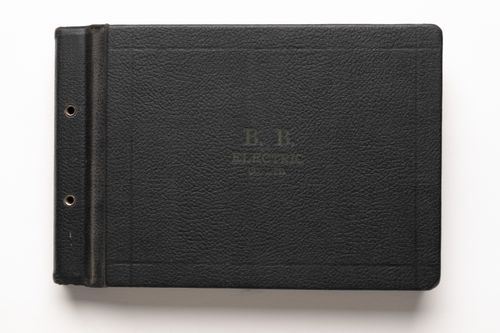
- Album PH1990:0314:001-055 comprises 55 photographs by S.J. Hayward. There are 32 exterior views and 23 interior views of 32 buildings. The B. B. Electric Co. Ltd. was involved in the construction and/or installation of the electrical systems of these buildings (Harris, n.p.). Most of the interior views show electrical systems installed in various buildings. There is one photograph of a model for the main pavilion of Université de Montréal. Twenty-six of the buildings are located in Montréal, two in Lachine, two in Outremont, one in Saint Laurent and one in Westmount. Buildings in Montréal include eight educational buildings, four warehouses or workshops, three service stations and one garage, three hospitals, three office buildings, two churches, two apartment buildings, and one distillery. Buildings in Lachine include one school and one convent school. Buildings in Outremont include a theatre and a post office. The building in Saint-Laurent is a seminary. The building in Westmount is an appartment building.
PH1990:0314:001-055
Description:
- Album PH1990:0314:001-055 comprises 55 photographs by S.J. Hayward. There are 32 exterior views and 23 interior views of 32 buildings. The B. B. Electric Co. Ltd. was involved in the construction and/or installation of the electrical systems of these buildings (Harris, n.p.). Most of the interior views show electrical systems installed in various buildings. There is one photograph of a model for the main pavilion of Université de Montréal. Twenty-six of the buildings are located in Montréal, two in Lachine, two in Outremont, one in Saint Laurent and one in Westmount. Buildings in Montréal include eight educational buildings, four warehouses or workshops, three service stations and one garage, three hospitals, three office buildings, two churches, two apartment buildings, and one distillery. Buildings in Lachine include one school and one convent school. Buildings in Outremont include a theatre and a post office. The building in Saint-Laurent is a seminary. The building in Westmount is an appartment building.
People:
Subject:
architecture, interior design, engineering
architecture, interior design, engineering
Date:
ca. 1931
ca. 1931
Title:
Album of exterior views of buildings, interior views of electrical systems, and one photograph of a model compiled by the B. B. Electric Co. Ltd., Montréal, Outremont, Lachine, Saint-Laurent and Westmount, Québec
Actions:
PH1990:0314:001-055
Description:
- Album PH1990:0314:001-055 comprises 55 photographs by S.J. Hayward. There are 32 exterior views and 23 interior views of 32 buildings. The B. B. Electric Co. Ltd. was involved in the construction and/or installation of the electrical systems of these buildings (Harris, n.p.). Most of the interior views show electrical systems installed in various buildings. There is one photograph of a model for the main pavilion of Université de Montréal. Twenty-six of the buildings are located in Montréal, two in Lachine, two in Outremont, one in Saint Laurent and one in Westmount. Buildings in Montréal include eight educational buildings, four warehouses or workshops, three service stations and one garage, three hospitals, three office buildings, two churches, two apartment buildings, and one distillery. Buildings in Lachine include one school and one convent school. Buildings in Outremont include a theatre and a post office. The building in Saint-Laurent is a seminary. The building in Westmount is an appartment building.
Album of exterior views of buildings, interior views of electrical systems, and one photograph of a model compiled by the B. B. Electric Co. Ltd., Montréal, Outremont, Lachine, Saint-Laurent and Westmount, Québec
Actions:
PH1990:0314:001-055
Description:
- Album PH1990:0314:001-055 comprises 55 photographs by S.J. Hayward. There are 32 exterior views and 23 interior views of 32 buildings. The B. B. Electric Co. Ltd. was involved in the construction and/or installation of the electrical systems of these buildings (Harris, n.p.). Most of the interior views show electrical systems installed in various buildings. There is one photograph of a model for the main pavilion of Université de Montréal. Twenty-six of the buildings are located in Montréal, two in Lachine, two in Outremont, one in Saint Laurent and one in Westmount. Buildings in Montréal include eight educational buildings, four warehouses or workshops, three service stations and one garage, three hospitals, three office buildings, two churches, two apartment buildings, and one distillery. Buildings in Lachine include one school and one convent school. Buildings in Outremont include a theatre and a post office. The building in Saint-Laurent is a seminary. The building in Westmount is an appartment building.
Form:
photographs
photographs
Date:
ca. 1931
ca. 1931
People:
Subject:
architecture, interior design, engineering
architecture, interior design, engineering
Form:
archives
Level of archival description:
Fonds
archives
Level of archival description:
Fonds
Reference number:
CP138
Synopsis:
The Gordon Matta-Clark collection documents the personal and professional activities of Gordon Matta-Clark through his correspondence, texts, library, artwork and films, created predominantly between 1969 and 1978. Additionally the collection contains correspondence and photographs collected by Anne Alpert, Matta-Clark's mother, and documentation on his work collected by his widow Jane Crawford following his death.
CP138
Synopsis:
The Gordon Matta-Clark collection documents the personal and professional activities of Gordon Matta-Clark through his correspondence, texts, library, artwork and films, created predominantly between 1969 and 1978. Additionally the collection contains correspondence and photographs collected by Anne Alpert, Matta-Clark's mother, and documentation on his work collected by his widow Jane Crawford following his death.
People:
Date:
1914-2008
1914-2008
Title:
Gordon Matta-Clark collection
Actions:
CP138
Synopsis:
The Gordon Matta-Clark collection documents the personal and professional activities of Gordon Matta-Clark through his correspondence, texts, library, artwork and films, created predominantly between 1969 and 1978. Additionally the collection contains correspondence and photographs collected by Anne Alpert, Matta-Clark's mother, and documentation on his work collected by his widow Jane Crawford following his death.
Gordon Matta-Clark collection
Actions:
CP138
Synopsis:
The Gordon Matta-Clark collection documents the personal and professional activities of Gordon Matta-Clark through his correspondence, texts, library, artwork and films, created predominantly between 1969 and 1978. Additionally the collection contains correspondence and photographs collected by Anne Alpert, Matta-Clark's mother, and documentation on his work collected by his widow Jane Crawford following his death.
Form:
archives
Level of archival description:
Collection
archives
Level of archival description:
Collection
Date:
1914-2008
1914-2008
People:
Form:
textual records
textual records
Actions:
Reference number:
AP075.S3.SS1.019
Description:
Contains typescript text for the following lectures by Cornelia Hahn Oberlander: - The Magic of Sand - Indoors and Out - Planning for Play Everywhere. Play in Hospitals, 1984. - Landscape Architecture in the 20th Century: The Relationship of Architecture and - Landscape Architecture. Museum of Modern Art October 21-22. - Lecture given at the Vancouver Art Gallery, 1954. - The TVA as creator of a Regional Landscape. - Greening the City. University of Texas. November 18, 1994. - The Garden in My Life and My Work. Western Washington University. June 14, 1988. - Nature in the City: or, the City in Nature. Architecture and Urban Studies Alliance, Calgary, Alberta. February 11, 1987. - Address to the Graduating Classes in Agrcultural Sciences, Applied Science, Architecture, Landscape Architecture, Community and Regional Planning, Forestry, - Interdisciplinary Studies. The University of British Columbia. May 29, 1991. - The Garden as Art. Van Dusen Botanical Garden. October 2, 1990. - Landscapes that Shaped Vancouver. The Society of Architectural Historians. October 13, 2000. - Breaking Ground. Smith College. March 26, 2001. - Green Spaces: Inspiring Landscapes by Women - Landscape Architecture in the Next Millenium. Hotel Vancouver. March 29, 1999. - Landscape Architecture: Bridge Between Buliding and Nature. Toronto, ON. November 26, 1999. - Limiting Footprints: An Ecological Approach to Landscape Architecture. Harvard University. March 27, 2001. - Leadership in Landscape: Sustainable Development Directions for the Future. Smith College. March 18, 1998. - Linking Places to Design: An Ecological Approach. Alaska Design Forum Lecture. April 1999. - Limiting Footprints: An Ecological Approach to Landscape Architecture. February 22, 2001. - The Meanings of Gardens… Transformed. University of Virginia. March 23, 2001. - Landscape Architecture North of the Arctic Circle. University of Massachusetts, Amherst. March 26, 2007. - Landscape Architecture Aesthetics and Sustainability. Palm Springs, CA. March 15, 2008. - Limiting Footprints: Low Impact Technologies. University of Arkansas. February 20, 2005. - Conservation of 20th Century Canadian Landscapes. ASLA CSLA Montreal. September 22, 2001. - Government Complex of the Province of British Columbia, Vancouver, BC: Changes of a City. October 11, 1979. - Heritage of Green Spaces: Robson Square. Vancouver Heritage Foundation. April 21, 2010. - Where Architecture Meets the Trees. Smith College. February 29, 1992. - Green Roofs and Sustainable Development: Ideas into Action. McGill University. October 21, 2005.
AP075.S3.SS1.019
Description:
Contains typescript text for the following lectures by Cornelia Hahn Oberlander: - The Magic of Sand - Indoors and Out - Planning for Play Everywhere. Play in Hospitals, 1984. - Landscape Architecture in the 20th Century: The Relationship of Architecture and - Landscape Architecture. Museum of Modern Art October 21-22. - Lecture given at the Vancouver Art Gallery, 1954. - The TVA as creator of a Regional Landscape. - Greening the City. University of Texas. November 18, 1994. - The Garden in My Life and My Work. Western Washington University. June 14, 1988. - Nature in the City: or, the City in Nature. Architecture and Urban Studies Alliance, Calgary, Alberta. February 11, 1987. - Address to the Graduating Classes in Agrcultural Sciences, Applied Science, Architecture, Landscape Architecture, Community and Regional Planning, Forestry, - Interdisciplinary Studies. The University of British Columbia. May 29, 1991. - The Garden as Art. Van Dusen Botanical Garden. October 2, 1990. - Landscapes that Shaped Vancouver. The Society of Architectural Historians. October 13, 2000. - Breaking Ground. Smith College. March 26, 2001. - Green Spaces: Inspiring Landscapes by Women - Landscape Architecture in the Next Millenium. Hotel Vancouver. March 29, 1999. - Landscape Architecture: Bridge Between Buliding and Nature. Toronto, ON. November 26, 1999. - Limiting Footprints: An Ecological Approach to Landscape Architecture. Harvard University. March 27, 2001. - Leadership in Landscape: Sustainable Development Directions for the Future. Smith College. March 18, 1998. - Linking Places to Design: An Ecological Approach. Alaska Design Forum Lecture. April 1999. - Limiting Footprints: An Ecological Approach to Landscape Architecture. February 22, 2001. - The Meanings of Gardens… Transformed. University of Virginia. March 23, 2001. - Landscape Architecture North of the Arctic Circle. University of Massachusetts, Amherst. March 26, 2007. - Landscape Architecture Aesthetics and Sustainability. Palm Springs, CA. March 15, 2008. - Limiting Footprints: Low Impact Technologies. University of Arkansas. February 20, 2005. - Conservation of 20th Century Canadian Landscapes. ASLA CSLA Montreal. September 22, 2001. - Government Complex of the Province of British Columbia, Vancouver, BC: Changes of a City. October 11, 1979. - Heritage of Green Spaces: Robson Square. Vancouver Heritage Foundation. April 21, 2010. - Where Architecture Meets the Trees. Smith College. February 29, 1992. - Green Roofs and Sustainable Development: Ideas into Action. McGill University. October 21, 2005.
People:
Date:
1954-2010
1954-2010
Title:
Texts of Cornelia Hahn Oberlander for various lectures
Actions:
AP075.S3.SS1.019
Description:
Contains typescript text for the following lectures by Cornelia Hahn Oberlander: - The Magic of Sand - Indoors and Out - Planning for Play Everywhere. Play in Hospitals, 1984. - Landscape Architecture in the 20th Century: The Relationship of Architecture and - Landscape Architecture. Museum of Modern Art October 21-22. - Lecture given at the Vancouver Art Gallery, 1954. - The TVA as creator of a Regional Landscape. - Greening the City. University of Texas. November 18, 1994. - The Garden in My Life and My Work. Western Washington University. June 14, 1988. - Nature in the City: or, the City in Nature. Architecture and Urban Studies Alliance, Calgary, Alberta. February 11, 1987. - Address to the Graduating Classes in Agrcultural Sciences, Applied Science, Architecture, Landscape Architecture, Community and Regional Planning, Forestry, - Interdisciplinary Studies. The University of British Columbia. May 29, 1991. - The Garden as Art. Van Dusen Botanical Garden. October 2, 1990. - Landscapes that Shaped Vancouver. The Society of Architectural Historians. October 13, 2000. - Breaking Ground. Smith College. March 26, 2001. - Green Spaces: Inspiring Landscapes by Women - Landscape Architecture in the Next Millenium. Hotel Vancouver. March 29, 1999. - Landscape Architecture: Bridge Between Buliding and Nature. Toronto, ON. November 26, 1999. - Limiting Footprints: An Ecological Approach to Landscape Architecture. Harvard University. March 27, 2001. - Leadership in Landscape: Sustainable Development Directions for the Future. Smith College. March 18, 1998. - Linking Places to Design: An Ecological Approach. Alaska Design Forum Lecture. April 1999. - Limiting Footprints: An Ecological Approach to Landscape Architecture. February 22, 2001. - The Meanings of Gardens… Transformed. University of Virginia. March 23, 2001. - Landscape Architecture North of the Arctic Circle. University of Massachusetts, Amherst. March 26, 2007. - Landscape Architecture Aesthetics and Sustainability. Palm Springs, CA. March 15, 2008. - Limiting Footprints: Low Impact Technologies. University of Arkansas. February 20, 2005. - Conservation of 20th Century Canadian Landscapes. ASLA CSLA Montreal. September 22, 2001. - Government Complex of the Province of British Columbia, Vancouver, BC: Changes of a City. October 11, 1979. - Heritage of Green Spaces: Robson Square. Vancouver Heritage Foundation. April 21, 2010. - Where Architecture Meets the Trees. Smith College. February 29, 1992. - Green Roofs and Sustainable Development: Ideas into Action. McGill University. October 21, 2005.
Texts of Cornelia Hahn Oberlander for various lectures
Actions:
AP075.S3.SS1.019
Description:
Contains typescript text for the following lectures by Cornelia Hahn Oberlander: - The Magic of Sand - Indoors and Out - Planning for Play Everywhere. Play in Hospitals, 1984. - Landscape Architecture in the 20th Century: The Relationship of Architecture and - Landscape Architecture. Museum of Modern Art October 21-22. - Lecture given at the Vancouver Art Gallery, 1954. - The TVA as creator of a Regional Landscape. - Greening the City. University of Texas. November 18, 1994. - The Garden in My Life and My Work. Western Washington University. June 14, 1988. - Nature in the City: or, the City in Nature. Architecture and Urban Studies Alliance, Calgary, Alberta. February 11, 1987. - Address to the Graduating Classes in Agrcultural Sciences, Applied Science, Architecture, Landscape Architecture, Community and Regional Planning, Forestry, - Interdisciplinary Studies. The University of British Columbia. May 29, 1991. - The Garden as Art. Van Dusen Botanical Garden. October 2, 1990. - Landscapes that Shaped Vancouver. The Society of Architectural Historians. October 13, 2000. - Breaking Ground. Smith College. March 26, 2001. - Green Spaces: Inspiring Landscapes by Women - Landscape Architecture in the Next Millenium. Hotel Vancouver. March 29, 1999. - Landscape Architecture: Bridge Between Buliding and Nature. Toronto, ON. November 26, 1999. - Limiting Footprints: An Ecological Approach to Landscape Architecture. Harvard University. March 27, 2001. - Leadership in Landscape: Sustainable Development Directions for the Future. Smith College. March 18, 1998. - Linking Places to Design: An Ecological Approach. Alaska Design Forum Lecture. April 1999. - Limiting Footprints: An Ecological Approach to Landscape Architecture. February 22, 2001. - The Meanings of Gardens… Transformed. University of Virginia. March 23, 2001. - Landscape Architecture North of the Arctic Circle. University of Massachusetts, Amherst. March 26, 2007. - Landscape Architecture Aesthetics and Sustainability. Palm Springs, CA. March 15, 2008. - Limiting Footprints: Low Impact Technologies. University of Arkansas. February 20, 2005. - Conservation of 20th Century Canadian Landscapes. ASLA CSLA Montreal. September 22, 2001. - Government Complex of the Province of British Columbia, Vancouver, BC: Changes of a City. October 11, 1979. - Heritage of Green Spaces: Robson Square. Vancouver Heritage Foundation. April 21, 2010. - Where Architecture Meets the Trees. Smith College. February 29, 1992. - Green Roofs and Sustainable Development: Ideas into Action. McGill University. October 21, 2005.
Form:
textual records
textual records
Date:
1954-2010
1954-2010
People:
Form:
books
books
Actions:
Holdings:
Description:
viii, 155 pages illustrations.
Description:
viii, 155 pages illustrations.
Author:
Subject:
Publication:
Edinburgh, 1965.
Edinburgh, 1965.
Form:
books
books
Publication:
Edinburgh, 1965.
Edinburgh, 1965.
Author:
Subject:


