


4081 Results
Form:
archives
Level of archival description:
Fonds
archives
Level of archival description:
Fonds
Reference number:
AP181
Synopsis:
The COOP HIMMELB(L)AU BMW Welt project records, 1994-2007, document the design of the firm’s BMW Welt project, also known as BMW World, in Munich, Germany. The archive consists of approximately 52, 400 born-digital files representing the greater part of the digital archive of the project, as well as 52 of the study models made in the earlier stages of the project.
AP181
Synopsis:
The COOP HIMMELB(L)AU BMW Welt project records, 1994-2007, document the design of the firm’s BMW Welt project, also known as BMW World, in Munich, Germany. The archive consists of approximately 52, 400 born-digital files representing the greater part of the digital archive of the project, as well as 52 of the study models made in the earlier stages of the project.
People:
Date:
1994-2015
1994-2015
Title:
COOP HIMMELB(L)AU BMW Welt project records
Actions:
AP181
Synopsis:
The COOP HIMMELB(L)AU BMW Welt project records, 1994-2007, document the design of the firm’s BMW Welt project, also known as BMW World, in Munich, Germany. The archive consists of approximately 52, 400 born-digital files representing the greater part of the digital archive of the project, as well as 52 of the study models made in the earlier stages of the project.
COOP HIMMELB(L)AU BMW Welt project records
Actions:
AP181
Synopsis:
The COOP HIMMELB(L)AU BMW Welt project records, 1994-2007, document the design of the firm’s BMW Welt project, also known as BMW World, in Munich, Germany. The archive consists of approximately 52, 400 born-digital files representing the greater part of the digital archive of the project, as well as 52 of the study models made in the earlier stages of the project.
Form:
archives
Level of archival description:
Fonds
archives
Level of archival description:
Fonds
Date:
1994-2015
1994-2015
People:
Level of archival description:
Project
Project
Actions:
Reference number:
AP207.S1.1973.PR04
Description:
The project series documents "Progetto D'Architettura n. 5" a three fold performance carried out at the Milan Triennale in 1973. The first group performing were two musicians, one accordionist, Davide Mosconi, and one cellist, Marino Vismara, playing while walking around the large entrance at the bottom of the grand staircase of the Triennale building. The performers constantly bumped into each other as they tried to get the upper hand on the other. At the same time, a 'fire eater', Nunzio Salvago, spat out flames in the staircase. Finally, on the second floor at the end of the stairs, Pettena, using vibraphone mallets, hit the ceramic tiles of the entrance walls off of which the sound was amplified by contact with microphones installed beforehand. The performance was thought of as "an operation of the “reading” of physical space, of occupation of the whole of the environment, realized through sound [...]." The project series contains video recordings and photographs of the performance. Source: [1] Gianni Pettena website, https://www.giannipettena.it/italiano/opere-1/perf-archi-n-5-project-1973/ (last accessed 12 November 2019)
AP207.S1.1973.PR04
Description:
The project series documents "Progetto D'Architettura n. 5" a three fold performance carried out at the Milan Triennale in 1973. The first group performing were two musicians, one accordionist, Davide Mosconi, and one cellist, Marino Vismara, playing while walking around the large entrance at the bottom of the grand staircase of the Triennale building. The performers constantly bumped into each other as they tried to get the upper hand on the other. At the same time, a 'fire eater', Nunzio Salvago, spat out flames in the staircase. Finally, on the second floor at the end of the stairs, Pettena, using vibraphone mallets, hit the ceramic tiles of the entrance walls off of which the sound was amplified by contact with microphones installed beforehand. The performance was thought of as "an operation of the “reading” of physical space, of occupation of the whole of the environment, realized through sound [...]." The project series contains video recordings and photographs of the performance. Source: [1] Gianni Pettena website, https://www.giannipettena.it/italiano/opere-1/perf-archi-n-5-project-1973/ (last accessed 12 November 2019)
People:
Date:
2009-2016
2009-2016
Title:
Progetto D'Architettura n. 5 [Architectural Project no. 5] (1973)
Actions:
AP207.S1.1973.PR04
Description:
The project series documents "Progetto D'Architettura n. 5" a three fold performance carried out at the Milan Triennale in 1973. The first group performing were two musicians, one accordionist, Davide Mosconi, and one cellist, Marino Vismara, playing while walking around the large entrance at the bottom of the grand staircase of the Triennale building. The performers constantly bumped into each other as they tried to get the upper hand on the other. At the same time, a 'fire eater', Nunzio Salvago, spat out flames in the staircase. Finally, on the second floor at the end of the stairs, Pettena, using vibraphone mallets, hit the ceramic tiles of the entrance walls off of which the sound was amplified by contact with microphones installed beforehand. The performance was thought of as "an operation of the “reading” of physical space, of occupation of the whole of the environment, realized through sound [...]." The project series contains video recordings and photographs of the performance. Source: [1] Gianni Pettena website, https://www.giannipettena.it/italiano/opere-1/perf-archi-n-5-project-1973/ (last accessed 12 November 2019)
Progetto D'Architettura n. 5 [Architectural Project no. 5] (1973)
Actions:
AP207.S1.1973.PR04
Description:
The project series documents "Progetto D'Architettura n. 5" a three fold performance carried out at the Milan Triennale in 1973. The first group performing were two musicians, one accordionist, Davide Mosconi, and one cellist, Marino Vismara, playing while walking around the large entrance at the bottom of the grand staircase of the Triennale building. The performers constantly bumped into each other as they tried to get the upper hand on the other. At the same time, a 'fire eater', Nunzio Salvago, spat out flames in the staircase. Finally, on the second floor at the end of the stairs, Pettena, using vibraphone mallets, hit the ceramic tiles of the entrance walls off of which the sound was amplified by contact with microphones installed beforehand. The performance was thought of as "an operation of the “reading” of physical space, of occupation of the whole of the environment, realized through sound [...]." The project series contains video recordings and photographs of the performance. Source: [1] Gianni Pettena website, https://www.giannipettena.it/italiano/opere-1/perf-archi-n-5-project-1973/ (last accessed 12 November 2019)
Level of archival description:
Project
Project
Date:
2009-2016
2009-2016
People:
Form:
exhibitions
exhibitions
Actions:
Description:
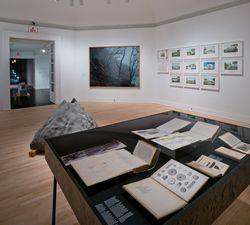
Between 1836 and 1848, the German-Dutch explorer Franz Wilhelm Junghuhn made several expeditions in Java in the service of the Dutch colonial authorities. He was among the first colonists to climb the island’s many volcanoes. His scientific works, books, maps, and lithographs made him the “Humboldt of Java.” This exhibition follows Junghuhn’s footsteps and explores(...)
Between 1836 and 1848, the German-Dutch explorer Franz Wilhelm Junghuhn made several expeditions in Java in the service of the Dutch colonial authorities. He was among the first colonists to climb the island’s many volcanoes. His scientific works, books, maps, and lithographs made him the “Humboldt of Java.” This exhibition follows Junghuhn’s footsteps and explores(...)
Location:
Octagonal gallery
Octagonal gallery
Date:
29 September 2016 to 22 January 2017
29 September 2016 to 22 January 2017
Title:
17 Volcanoes: Works by Franz Wilhelm Junghuhn, Armin Linke, and Bas Princen
Actions:
Description:
Between 1836 and 1848, the German-Dutch explorer Franz Wilhelm Junghuhn made several expeditions in Java in the service of the Dutch colonial authorities. He was among the first colonists to climb the island’s many volcanoes. His scientific works, books, maps, and lithographs made him the “Humboldt of Java.” This exhibition follows Junghuhn’s footsteps and explores(...)
17 Volcanoes: Works by Franz Wilhelm Junghuhn, Armin Linke, and Bas Princen
Actions:
Description:
Between 1836 and 1848, the German-Dutch explorer Franz Wilhelm Junghuhn made several expeditions in Java in the service of the Dutch colonial authorities. He was among the first colonists to climb the island’s many volcanoes. His scientific works, books, maps, and lithographs made him the “Humboldt of Java.” This exhibition follows Junghuhn’s footsteps and explores(...)
Form:
exhibitions
exhibitions
Date:
29 September 2016 to
22 January 2017
29 September 2016 to
22 January 2017
Location:
Octagonal gallery
Octagonal gallery
Actions:
Reference number:
AP140.S2.SS7.D3.P10.6
Description:
Episode of television program "Building sites". James Stirling presents the architecture of the Katherine Stephen Room, a room for rare books at Newnham College, Cambridge, England, designed by architects Joanna van Heyningen and Birkin Haward. Presented by James Stirling. Camera, David Swan; sound, David Jewitt; stills photography, Hugh Palmer, Martin Charles; graphics, Rose James, Joel Greenberg; video editor, John Paroussi; production assistant, Mary McKernan; researcher, Ruth Rosenthal; producer, Clare Paterson; director, Geoff Dunlop.
AP140.S2.SS7.D3.P10.6
Description:
Episode of television program "Building sites". James Stirling presents the architecture of the Katherine Stephen Room, a room for rare books at Newnham College, Cambridge, England, designed by architects Joanna van Heyningen and Birkin Haward. Presented by James Stirling. Camera, David Swan; sound, David Jewitt; stills photography, Hugh Palmer, Martin Charles; graphics, Rose James, Joel Greenberg; video editor, John Paroussi; production assistant, Mary McKernan; researcher, Ruth Rosenthal; producer, Clare Paterson; director, Geoff Dunlop.
People:
Date:
1989
1989
Title:
Building sights (Television program)
Actions:
AP140.S2.SS7.D3.P10.6
Description:
Episode of television program "Building sites". James Stirling presents the architecture of the Katherine Stephen Room, a room for rare books at Newnham College, Cambridge, England, designed by architects Joanna van Heyningen and Birkin Haward. Presented by James Stirling. Camera, David Swan; sound, David Jewitt; stills photography, Hugh Palmer, Martin Charles; graphics, Rose James, Joel Greenberg; video editor, John Paroussi; production assistant, Mary McKernan; researcher, Ruth Rosenthal; producer, Clare Paterson; director, Geoff Dunlop.
Building sights (Television program)
Actions:
AP140.S2.SS7.D3.P10.6
Description:
Episode of television program "Building sites". James Stirling presents the architecture of the Katherine Stephen Room, a room for rare books at Newnham College, Cambridge, England, designed by architects Joanna van Heyningen and Birkin Haward. Presented by James Stirling. Camera, David Swan; sound, David Jewitt; stills photography, Hugh Palmer, Martin Charles; graphics, Rose James, Joel Greenberg; video editor, John Paroussi; production assistant, Mary McKernan; researcher, Ruth Rosenthal; producer, Clare Paterson; director, Geoff Dunlop.
Date:
1989
1989
People:
Level of archival description:
Project
Project
Title:
Copper House II
Copper House II
Reference number:
AP182.S1.2009.D1
Description:
File documents an executed project for a private house in Chondi, Maharashtra, India. Copper House II is the second residence of a couple from Mumbai, who visit the house for a few days each week. It is located in a dense grove of mango trees near a brook that floods each year during the monsoon. To protect the inhabitants from the encroaching landscape, the house is set on an artificial high ground made of dirt dug for a well from the site itself. The open-air courtyard at the centre of the plan is paved in black basalt stones that also allow rainwater to drain below the house. On the ground floor, large horizontal windows are sheathed in slatted ironwood and copper mesh, providing a form of camouflage for the house while still permitting views out from the living spaces. The two boxy spaces upstairs are private: one contains a master bedroom and study, the second a smaller bedroom. The thin copper sheets that cover the upper floor are waterproof and will develop a verdigris over time, further concealing the house within its setting. File contains drawings, photographs, models, and a video recording.
AP182.S1.2009.D1
Description:
File documents an executed project for a private house in Chondi, Maharashtra, India. Copper House II is the second residence of a couple from Mumbai, who visit the house for a few days each week. It is located in a dense grove of mango trees near a brook that floods each year during the monsoon. To protect the inhabitants from the encroaching landscape, the house is set on an artificial high ground made of dirt dug for a well from the site itself. The open-air courtyard at the centre of the plan is paved in black basalt stones that also allow rainwater to drain below the house. On the ground floor, large horizontal windows are sheathed in slatted ironwood and copper mesh, providing a form of camouflage for the house while still permitting views out from the living spaces. The two boxy spaces upstairs are private: one contains a master bedroom and study, the second a smaller bedroom. The thin copper sheets that cover the upper floor are waterproof and will develop a verdigris over time, further concealing the house within its setting. File contains drawings, photographs, models, and a video recording.
People:
Date:
2009-2014
2009-2014
Title:
Copper House II
Actions:
AP182.S1.2009.D1
Description:
File documents an executed project for a private house in Chondi, Maharashtra, India. Copper House II is the second residence of a couple from Mumbai, who visit the house for a few days each week. It is located in a dense grove of mango trees near a brook that floods each year during the monsoon. To protect the inhabitants from the encroaching landscape, the house is set on an artificial high ground made of dirt dug for a well from the site itself. The open-air courtyard at the centre of the plan is paved in black basalt stones that also allow rainwater to drain below the house. On the ground floor, large horizontal windows are sheathed in slatted ironwood and copper mesh, providing a form of camouflage for the house while still permitting views out from the living spaces. The two boxy spaces upstairs are private: one contains a master bedroom and study, the second a smaller bedroom. The thin copper sheets that cover the upper floor are waterproof and will develop a verdigris over time, further concealing the house within its setting. File contains drawings, photographs, models, and a video recording.
Copper House II
Actions:
AP182.S1.2009.D1
Description:
File documents an executed project for a private house in Chondi, Maharashtra, India. Copper House II is the second residence of a couple from Mumbai, who visit the house for a few days each week. It is located in a dense grove of mango trees near a brook that floods each year during the monsoon. To protect the inhabitants from the encroaching landscape, the house is set on an artificial high ground made of dirt dug for a well from the site itself. The open-air courtyard at the centre of the plan is paved in black basalt stones that also allow rainwater to drain below the house. On the ground floor, large horizontal windows are sheathed in slatted ironwood and copper mesh, providing a form of camouflage for the house while still permitting views out from the living spaces. The two boxy spaces upstairs are private: one contains a master bedroom and study, the second a smaller bedroom. The thin copper sheets that cover the upper floor are waterproof and will develop a verdigris over time, further concealing the house within its setting. File contains drawings, photographs, models, and a video recording.
Level of archival description:
Project
Project
Date:
2009-2014
2009-2014
People:
Level of archival description:
Series
Series
Title:
Housings
Housings
Actions:
Reference number:
AP185.S1
Description:
This project, 1998-2000, documents the conception and design of Housings, mass-customized prefabricated residences, by the architecture firm KOL/MAC. KOL/MAC began by digitally blending a typical 3 bedroom, 2.5 bathroom colonial house with a range of other objects or use cases. The result was six related houses that explored the relationship between customization and mass prefabrication. Housings relates to KOL/MAC’s exploration of what they call chimerical projects, where form and function are combined to create uniquely hybridized structures. The project records are largely in CAD formats, including Alias Wire, Maya, and IGES files; there are a number of raster image formats, including TIF, Alias pix, Mac Pict images, and JPEG. The materials include renderings, wireframe drawings, and still images of the various Housings structures. There is also a body of material from and related to the concrete manufacturer, YTONG, as well as a small amount of video material, which is only partially accessible due to format obsolescence. Source: “Kolatan / MacDonald Studio.” Archilab. Published in 2000. Accessed 21 November 2017. http://www.archilab.org/public/2000/catalog/kolata/kolataen.htm.
AP185.S1
Description:
This project, 1998-2000, documents the conception and design of Housings, mass-customized prefabricated residences, by the architecture firm KOL/MAC. KOL/MAC began by digitally blending a typical 3 bedroom, 2.5 bathroom colonial house with a range of other objects or use cases. The result was six related houses that explored the relationship between customization and mass prefabrication. Housings relates to KOL/MAC’s exploration of what they call chimerical projects, where form and function are combined to create uniquely hybridized structures. The project records are largely in CAD formats, including Alias Wire, Maya, and IGES files; there are a number of raster image formats, including TIF, Alias pix, Mac Pict images, and JPEG. The materials include renderings, wireframe drawings, and still images of the various Housings structures. There is also a body of material from and related to the concrete manufacturer, YTONG, as well as a small amount of video material, which is only partially accessible due to format obsolescence. Source: “Kolatan / MacDonald Studio.” Archilab. Published in 2000. Accessed 21 November 2017. http://www.archilab.org/public/2000/catalog/kolata/kolataen.htm.
People:
Date:
1998-2000
1998-2000
Title:
Housings
Actions:
AP185.S1
Description:
This project, 1998-2000, documents the conception and design of Housings, mass-customized prefabricated residences, by the architecture firm KOL/MAC. KOL/MAC began by digitally blending a typical 3 bedroom, 2.5 bathroom colonial house with a range of other objects or use cases. The result was six related houses that explored the relationship between customization and mass prefabrication. Housings relates to KOL/MAC’s exploration of what they call chimerical projects, where form and function are combined to create uniquely hybridized structures. The project records are largely in CAD formats, including Alias Wire, Maya, and IGES files; there are a number of raster image formats, including TIF, Alias pix, Mac Pict images, and JPEG. The materials include renderings, wireframe drawings, and still images of the various Housings structures. There is also a body of material from and related to the concrete manufacturer, YTONG, as well as a small amount of video material, which is only partially accessible due to format obsolescence. Source: “Kolatan / MacDonald Studio.” Archilab. Published in 2000. Accessed 21 November 2017. http://www.archilab.org/public/2000/catalog/kolata/kolataen.htm.
Housings
Actions:
AP185.S1
Description:
This project, 1998-2000, documents the conception and design of Housings, mass-customized prefabricated residences, by the architecture firm KOL/MAC. KOL/MAC began by digitally blending a typical 3 bedroom, 2.5 bathroom colonial house with a range of other objects or use cases. The result was six related houses that explored the relationship between customization and mass prefabrication. Housings relates to KOL/MAC’s exploration of what they call chimerical projects, where form and function are combined to create uniquely hybridized structures. The project records are largely in CAD formats, including Alias Wire, Maya, and IGES files; there are a number of raster image formats, including TIF, Alias pix, Mac Pict images, and JPEG. The materials include renderings, wireframe drawings, and still images of the various Housings structures. There is also a body of material from and related to the concrete manufacturer, YTONG, as well as a small amount of video material, which is only partially accessible due to format obsolescence. Source: “Kolatan / MacDonald Studio.” Archilab. Published in 2000. Accessed 21 November 2017. http://www.archilab.org/public/2000/catalog/kolata/kolataen.htm.
Level of archival description:
Series
Series
Date:
1998-2000
1998-2000
People:
Form:
archives
Level of archival description:
Fonds
archives
Level of archival description:
Fonds
Actions:
Reference number:
AP074
Synopsis:
The Catherine Chard Wisnicki fonds contains photographs dating from about 1947, of a house project in West Vancouver which Chard Wisnicki, the first female graduate of the McGill School of Architecture, was assistant architect. The fonds also contains a videocassette recording of an interview with Chard Wisnicki from 1995, and one textual document from 1997.
AP074
Synopsis:
The Catherine Chard Wisnicki fonds contains photographs dating from about 1947, of a house project in West Vancouver which Chard Wisnicki, the first female graduate of the McGill School of Architecture, was assistant architect. The fonds also contains a videocassette recording of an interview with Chard Wisnicki from 1995, and one textual document from 1997.
People:
Date:
[ca. 1947], 1995, 1997
[ca. 1947], 1995, 1997
Title:
Catherine Chard Wisnicki fonds
Actions:
AP074
Synopsis:
The Catherine Chard Wisnicki fonds contains photographs dating from about 1947, of a house project in West Vancouver which Chard Wisnicki, the first female graduate of the McGill School of Architecture, was assistant architect. The fonds also contains a videocassette recording of an interview with Chard Wisnicki from 1995, and one textual document from 1997.
Catherine Chard Wisnicki fonds
Actions:
AP074
Synopsis:
The Catherine Chard Wisnicki fonds contains photographs dating from about 1947, of a house project in West Vancouver which Chard Wisnicki, the first female graduate of the McGill School of Architecture, was assistant architect. The fonds also contains a videocassette recording of an interview with Chard Wisnicki from 1995, and one textual document from 1997.
Form:
archives
Level of archival description:
Fonds
archives
Level of archival description:
Fonds
Date:
[ca. 1947], 1995, 1997
[ca. 1947], 1995, 1997
People:
Quantity:
15 videocassette(s)
15 videocassette(s)
Title:
Videocassettes
Videocassettes
Actions:
Reference number:
AP140.S2.SS7.D3.P13
Description:
videocassettes, including 'Seventh Praemium Imperial'; 'J.S. Memorial Video (B.B.C.)'; The Second Praemium Imperiale: Awards Ceremony', dated 1990; Praemium Imperiale Laureates Profiles 2001'; Praemium Imperiale Laureates Profiles 2003'; 'Sir James Stirling Memorial Celebration', dated 1992; 'Building Sights: Series Two, Katharine Stephen Room, Newnham College, Cambridge, Presenter James Stirling, Director Geoff Dunlop', dated 1989; 'Thema: "Stirling"', Hessischer Rundfunk, dated 1992; 'Stirling in Stuttgart', dated 1992; 'RIBA Building of the Year, Centenary Building, University of Salford', dated 1996
AP140.S2.SS7.D3.P13
Description:
videocassettes, including 'Seventh Praemium Imperial'; 'J.S. Memorial Video (B.B.C.)'; The Second Praemium Imperiale: Awards Ceremony', dated 1990; Praemium Imperiale Laureates Profiles 2001'; Praemium Imperiale Laureates Profiles 2003'; 'Sir James Stirling Memorial Celebration', dated 1992; 'Building Sights: Series Two, Katharine Stephen Room, Newnham College, Cambridge, Presenter James Stirling, Director Geoff Dunlop', dated 1989; 'Thema: "Stirling"', Hessischer Rundfunk, dated 1992; 'Stirling in Stuttgart', dated 1992; 'RIBA Building of the Year, Centenary Building, University of Salford', dated 1996
People:
Title:
Videocassettes
Actions:
AP140.S2.SS7.D3.P13
Description:
videocassettes, including 'Seventh Praemium Imperial'; 'J.S. Memorial Video (B.B.C.)'; The Second Praemium Imperiale: Awards Ceremony', dated 1990; Praemium Imperiale Laureates Profiles 2001'; Praemium Imperiale Laureates Profiles 2003'; 'Sir James Stirling Memorial Celebration', dated 1992; 'Building Sights: Series Two, Katharine Stephen Room, Newnham College, Cambridge, Presenter James Stirling, Director Geoff Dunlop', dated 1989; 'Thema: "Stirling"', Hessischer Rundfunk, dated 1992; 'Stirling in Stuttgart', dated 1992; 'RIBA Building of the Year, Centenary Building, University of Salford', dated 1996
Videocassettes
Actions:
AP140.S2.SS7.D3.P13
Description:
videocassettes, including 'Seventh Praemium Imperial'; 'J.S. Memorial Video (B.B.C.)'; The Second Praemium Imperiale: Awards Ceremony', dated 1990; Praemium Imperiale Laureates Profiles 2001'; Praemium Imperiale Laureates Profiles 2003'; 'Sir James Stirling Memorial Celebration', dated 1992; 'Building Sights: Series Two, Katharine Stephen Room, Newnham College, Cambridge, Presenter James Stirling, Director Geoff Dunlop', dated 1989; 'Thema: "Stirling"', Hessischer Rundfunk, dated 1992; 'Stirling in Stuttgart', dated 1992; 'RIBA Building of the Year, Centenary Building, University of Salford', dated 1996
Quantity:
15 videocassette(s)
15 videocassette(s)
People:
Form:
archives
Level of archival description:
Fonds
archives
Level of archival description:
Fonds
Reference number:
AP184
Synopsis:
The Asymptote Architecture New York Stock Exchange project records, 1990 - 2009, document the firm’s work on three major projects for the New York Stock Exchange (NYSE), in collaboration with the Securities Industry Automation Corporation (SIAC): the Three Dimensional Trading Floor (3DTF), MarkeTrac/OrderTrac, and the Advanced Trading Floor Operations Center. The majority of the records date from 1998 to 2004, and include textual, born-digital, audiovisual and over-sized materials.
AP184
Synopsis:
The Asymptote Architecture New York Stock Exchange project records, 1990 - 2009, document the firm’s work on three major projects for the New York Stock Exchange (NYSE), in collaboration with the Securities Industry Automation Corporation (SIAC): the Three Dimensional Trading Floor (3DTF), MarkeTrac/OrderTrac, and the Advanced Trading Floor Operations Center. The majority of the records date from 1998 to 2004, and include textual, born-digital, audiovisual and over-sized materials.
People:
Date:
1991-2009
1991-2009
Title:
Asymptote Architecture New York Stock Exchange project records
Actions:
AP184
Synopsis:
The Asymptote Architecture New York Stock Exchange project records, 1990 - 2009, document the firm’s work on three major projects for the New York Stock Exchange (NYSE), in collaboration with the Securities Industry Automation Corporation (SIAC): the Three Dimensional Trading Floor (3DTF), MarkeTrac/OrderTrac, and the Advanced Trading Floor Operations Center. The majority of the records date from 1998 to 2004, and include textual, born-digital, audiovisual and over-sized materials.
Asymptote Architecture New York Stock Exchange project records
Actions:
AP184
Synopsis:
The Asymptote Architecture New York Stock Exchange project records, 1990 - 2009, document the firm’s work on three major projects for the New York Stock Exchange (NYSE), in collaboration with the Securities Industry Automation Corporation (SIAC): the Three Dimensional Trading Floor (3DTF), MarkeTrac/OrderTrac, and the Advanced Trading Floor Operations Center. The majority of the records date from 1998 to 2004, and include textual, born-digital, audiovisual and over-sized materials.
Form:
archives
Level of archival description:
Fonds
archives
Level of archival description:
Fonds
Date:
1991-2009
1991-2009
People:
Form:
archives
Level of archival description:
Fonds
archives
Level of archival description:
Fonds
Reference number:
CP138
Synopsis:
The Gordon Matta-Clark collection documents the personal and professional activities of Gordon Matta-Clark through his correspondence, texts, library, artwork and films, created predominantly between 1969 and 1978. Additionally the collection contains correspondence and photographs collected by Anne Alpert, Matta-Clark's mother, and documentation on his work collected by his widow Jane Crawford following his death.
CP138
Synopsis:
The Gordon Matta-Clark collection documents the personal and professional activities of Gordon Matta-Clark through his correspondence, texts, library, artwork and films, created predominantly between 1969 and 1978. Additionally the collection contains correspondence and photographs collected by Anne Alpert, Matta-Clark's mother, and documentation on his work collected by his widow Jane Crawford following his death.
People:
Date:
1914-2008
1914-2008
Title:
Gordon Matta-Clark collection
Actions:
CP138
Synopsis:
The Gordon Matta-Clark collection documents the personal and professional activities of Gordon Matta-Clark through his correspondence, texts, library, artwork and films, created predominantly between 1969 and 1978. Additionally the collection contains correspondence and photographs collected by Anne Alpert, Matta-Clark's mother, and documentation on his work collected by his widow Jane Crawford following his death.
Gordon Matta-Clark collection
Actions:
CP138
Synopsis:
The Gordon Matta-Clark collection documents the personal and professional activities of Gordon Matta-Clark through his correspondence, texts, library, artwork and films, created predominantly between 1969 and 1978. Additionally the collection contains correspondence and photographs collected by Anne Alpert, Matta-Clark's mother, and documentation on his work collected by his widow Jane Crawford following his death.
Form:
archives
Level of archival description:
Collection
archives
Level of archival description:
Collection
Date:
1914-2008
1914-2008
People:


