


736 Results
Form:
events
events
Actions:
Keyword(s):
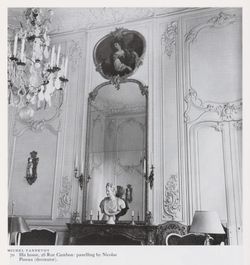
Rochelle Ziskin, Femininity and Masculinity, French Late Baroque, Domestic Design, Visiting Scholar
Rochelle Ziskin, Femininity and Masculinity, French Late Baroque, Domestic Design, Visiting Scholar
Date:
16 October 1998
16 October 1998
Form:
events
events
Date:
16 October 1998
16 October 1998
Form:
archives
Level of archival description:
Fonds
archives
Level of archival description:
Fonds
Reference number:
AP189
Synopsis:
L’installation Météorologie d’intérieur fut présentée au Centre Canadien d’Architecture (CCA) lors de l’exposition Environ(ne)ment (18 octobre 2006-10 juin 2007) et à Rovereto en Italie lors de l’exposition Manifesta 7 (19 juillet-2 novembre 2008). Les documents d’archives de l’installation comprennent le logiciel développé pour l’installation et une sélection des objets installés dans les deux espaces d’exposition. *** The installation Interior Weather was presented at the Candian Centre for Architecture (CCA) as part of the exhibition Environ(ne)ment (October 18, 2006-June 10, 2007) and in Rovereto, Italy as part of Manifesta 7 (July 19-November 2, 2008). The records of the installation Interior Weather include the software developed for the installation and a selection of objects installed in the exhibition spaces.
AP189
Synopsis:
L’installation Météorologie d’intérieur fut présentée au Centre Canadien d’Architecture (CCA) lors de l’exposition Environ(ne)ment (18 octobre 2006-10 juin 2007) et à Rovereto en Italie lors de l’exposition Manifesta 7 (19 juillet-2 novembre 2008). Les documents d’archives de l’installation comprennent le logiciel développé pour l’installation et une sélection des objets installés dans les deux espaces d’exposition. *** The installation Interior Weather was presented at the Candian Centre for Architecture (CCA) as part of the exhibition Environ(ne)ment (October 18, 2006-June 10, 2007) and in Rovereto, Italy as part of Manifesta 7 (July 19-November 2, 2008). The records of the installation Interior Weather include the software developed for the installation and a selection of objects installed in the exhibition spaces.
People:
Date:
2000-2008
2000-2008
Title:
Philippe Rahm "Interior Weather" installation records
Actions:
AP189
Synopsis:
L’installation Météorologie d’intérieur fut présentée au Centre Canadien d’Architecture (CCA) lors de l’exposition Environ(ne)ment (18 octobre 2006-10 juin 2007) et à Rovereto en Italie lors de l’exposition Manifesta 7 (19 juillet-2 novembre 2008). Les documents d’archives de l’installation comprennent le logiciel développé pour l’installation et une sélection des objets installés dans les deux espaces d’exposition. *** The installation Interior Weather was presented at the Candian Centre for Architecture (CCA) as part of the exhibition Environ(ne)ment (October 18, 2006-June 10, 2007) and in Rovereto, Italy as part of Manifesta 7 (July 19-November 2, 2008). The records of the installation Interior Weather include the software developed for the installation and a selection of objects installed in the exhibition spaces.
Philippe Rahm "Interior Weather" installation records
Actions:
AP189
Synopsis:
L’installation Météorologie d’intérieur fut présentée au Centre Canadien d’Architecture (CCA) lors de l’exposition Environ(ne)ment (18 octobre 2006-10 juin 2007) et à Rovereto en Italie lors de l’exposition Manifesta 7 (19 juillet-2 novembre 2008). Les documents d’archives de l’installation comprennent le logiciel développé pour l’installation et une sélection des objets installés dans les deux espaces d’exposition. *** The installation Interior Weather was presented at the Candian Centre for Architecture (CCA) as part of the exhibition Environ(ne)ment (October 18, 2006-June 10, 2007) and in Rovereto, Italy as part of Manifesta 7 (July 19-November 2, 2008). The records of the installation Interior Weather include the software developed for the installation and a selection of objects installed in the exhibition spaces.
Form:
archives
Level of archival description:
Fonds
archives
Level of archival description:
Fonds
Date:
2000-2008
2000-2008
People:
Level of archival description:
Project
Project
Title:
Swimming Bar/Billiard
Swimming Bar/Billiard
Actions:
Reference number:
AP066.S2.D27
Description:
Le dossier documente le projet d'aménagement intérieur (1991) et construction d'une marquise (1997) pour le Swimming Bar/Billard, situé au 3643 boulevard Saint-Laurent, à Montréal, Québec. Le budget aloué pour ce projet était de 120 000$ et la superficie est de 600 m2. Le dossier contient des photographies, des dessins, des reprographies, des documents textuels et une maquette. Description du projet par l'architecte: "Selon Jacques Rousseau […], l'idée était d'établir une enceinte, une peau sur le périmètre de l'espace. L'intervention est minimale mais d'un puissant effet. En effet, sur tout le périmètre, fenètres comprises, courent des éléments d'aluminium anodisé, l'ossature d'une paroie faite de panneaux d'acier perforé, de plaque de verre givré ainsi que d'une trentaine d'oeuvres créées par les peintres de La Raza […]" Odile Hénault, "Rue Saint-Laurent, deux joyaux du nouveau design." Le Devoir, 30 janvier 1991: B1.
AP066.S2.D27
Description:
Le dossier documente le projet d'aménagement intérieur (1991) et construction d'une marquise (1997) pour le Swimming Bar/Billard, situé au 3643 boulevard Saint-Laurent, à Montréal, Québec. Le budget aloué pour ce projet était de 120 000$ et la superficie est de 600 m2. Le dossier contient des photographies, des dessins, des reprographies, des documents textuels et une maquette. Description du projet par l'architecte: "Selon Jacques Rousseau […], l'idée était d'établir une enceinte, une peau sur le périmètre de l'espace. L'intervention est minimale mais d'un puissant effet. En effet, sur tout le périmètre, fenètres comprises, courent des éléments d'aluminium anodisé, l'ossature d'une paroie faite de panneaux d'acier perforé, de plaque de verre givré ainsi que d'une trentaine d'oeuvres créées par les peintres de La Raza […]" Odile Hénault, "Rue Saint-Laurent, deux joyaux du nouveau design." Le Devoir, 30 janvier 1991: B1.
People:
Date:
1990-1997
1990-1997
Title:
Swimming Bar/Billiard
Actions:
AP066.S2.D27
Description:
Le dossier documente le projet d'aménagement intérieur (1991) et construction d'une marquise (1997) pour le Swimming Bar/Billard, situé au 3643 boulevard Saint-Laurent, à Montréal, Québec. Le budget aloué pour ce projet était de 120 000$ et la superficie est de 600 m2. Le dossier contient des photographies, des dessins, des reprographies, des documents textuels et une maquette. Description du projet par l'architecte: "Selon Jacques Rousseau […], l'idée était d'établir une enceinte, une peau sur le périmètre de l'espace. L'intervention est minimale mais d'un puissant effet. En effet, sur tout le périmètre, fenètres comprises, courent des éléments d'aluminium anodisé, l'ossature d'une paroie faite de panneaux d'acier perforé, de plaque de verre givré ainsi que d'une trentaine d'oeuvres créées par les peintres de La Raza […]" Odile Hénault, "Rue Saint-Laurent, deux joyaux du nouveau design." Le Devoir, 30 janvier 1991: B1.
Swimming Bar/Billiard
Actions:
AP066.S2.D27
Description:
Le dossier documente le projet d'aménagement intérieur (1991) et construction d'une marquise (1997) pour le Swimming Bar/Billard, situé au 3643 boulevard Saint-Laurent, à Montréal, Québec. Le budget aloué pour ce projet était de 120 000$ et la superficie est de 600 m2. Le dossier contient des photographies, des dessins, des reprographies, des documents textuels et une maquette. Description du projet par l'architecte: "Selon Jacques Rousseau […], l'idée était d'établir une enceinte, une peau sur le périmètre de l'espace. L'intervention est minimale mais d'un puissant effet. En effet, sur tout le périmètre, fenètres comprises, courent des éléments d'aluminium anodisé, l'ossature d'une paroie faite de panneaux d'acier perforé, de plaque de verre givré ainsi que d'une trentaine d'oeuvres créées par les peintres de La Raza […]" Odile Hénault, "Rue Saint-Laurent, deux joyaux du nouveau design." Le Devoir, 30 janvier 1991: B1.
Level of archival description:
Projet
Projet
Date:
1990-1997
1990-1997
People:
Form:
events
events
Title:
The Unschool
The Unschool
Actions:
Description:
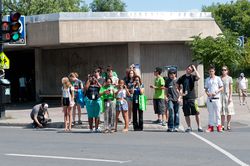
What could a school be? For a week over summer 2012, students of The Unschool explored the spaces in and around schools and pushed the limits of the camera as a social instrument with guest curator Monica Nouwens. Participants compared how people live in schools and cities, and how design can encourage and limit behaviours, relationships, and activities. “Could(...)
What could a school be? For a week over summer 2012, students of The Unschool explored the spaces in and around schools and pushed the limits of the camera as a social instrument with guest curator Monica Nouwens. Participants compared how people live in schools and cities, and how design can encourage and limit behaviours, relationships, and activities. “Could(...)
Date:
30 July 2012 to 3 August 2012
30 July 2012 to 3 August 2012
Title:
The Unschool
Actions:
Description:
What could a school be? For a week over summer 2012, students of The Unschool explored the spaces in and around schools and pushed the limits of the camera as a social instrument with guest curator Monica Nouwens. Participants compared how people live in schools and cities, and how design can encourage and limit behaviours, relationships, and activities. “Could(...)
The Unschool
Actions:
Description:
What could a school be? For a week over summer 2012, students of The Unschool explored the spaces in and around schools and pushed the limits of the camera as a social instrument with guest curator Monica Nouwens. Participants compared how people live in schools and cities, and how design can encourage and limit behaviours, relationships, and activities. “Could(...)
Form:
events
events
Date:
30 July 2012 to
3 August 2012
30 July 2012 to
3 August 2012
Form:
archives
Level of archival description:
Fonds
archives
Level of archival description:
Fonds
Title:
Hazen Sise fonds
Hazen Sise fonds
Reference number:
AP112
Synopsis:
The Hazen Sise fonds contains negatives, drawings, and other documents dating from 1933 to 1959. The negatives, taken in the early 1930s, mostly depict participants of the conferences CIAM IV and CIRPAC, including Le Corbusier, László Moholy-Nagy, Alvar Aalto and Fernand Léger. The drawings document the design of Beaver Lake Pavilion, built for the City of Montréal between 1955 and 1959 as part of the redevelopment of Mount Royal Park. Le fonds Hazen Sise est composé de négatifs, dessins, et autres documents datés entre 1933 et 1959. Les négatifs, pris au début des années 30s, présentent des participants des congres IVe CIAM et CIRPAC, incluant Le Corbusier, László Moholy-Nagy, Alvar Aalto et Fernand Léger. Les dessins documentent la conception du pavillon du Lac aux Castors, construit pour la Ville de Montréal entre 1955 et 1959 dans le cadre du réaménagement du Parc du Mont-Royal.
AP112
Synopsis:
The Hazen Sise fonds contains negatives, drawings, and other documents dating from 1933 to 1959. The negatives, taken in the early 1930s, mostly depict participants of the conferences CIAM IV and CIRPAC, including Le Corbusier, László Moholy-Nagy, Alvar Aalto and Fernand Léger. The drawings document the design of Beaver Lake Pavilion, built for the City of Montréal between 1955 and 1959 as part of the redevelopment of Mount Royal Park. Le fonds Hazen Sise est composé de négatifs, dessins, et autres documents datés entre 1933 et 1959. Les négatifs, pris au début des années 30s, présentent des participants des congres IVe CIAM et CIRPAC, incluant Le Corbusier, László Moholy-Nagy, Alvar Aalto et Fernand Léger. Les dessins documentent la conception du pavillon du Lac aux Castors, construit pour la Ville de Montréal entre 1955 et 1959 dans le cadre du réaménagement du Parc du Mont-Royal.
People:
Date:
1933-1959
1933-1959
Title:
Hazen Sise fonds
Actions:
AP112
Synopsis:
The Hazen Sise fonds contains negatives, drawings, and other documents dating from 1933 to 1959. The negatives, taken in the early 1930s, mostly depict participants of the conferences CIAM IV and CIRPAC, including Le Corbusier, László Moholy-Nagy, Alvar Aalto and Fernand Léger. The drawings document the design of Beaver Lake Pavilion, built for the City of Montréal between 1955 and 1959 as part of the redevelopment of Mount Royal Park. Le fonds Hazen Sise est composé de négatifs, dessins, et autres documents datés entre 1933 et 1959. Les négatifs, pris au début des années 30s, présentent des participants des congres IVe CIAM et CIRPAC, incluant Le Corbusier, László Moholy-Nagy, Alvar Aalto et Fernand Léger. Les dessins documentent la conception du pavillon du Lac aux Castors, construit pour la Ville de Montréal entre 1955 et 1959 dans le cadre du réaménagement du Parc du Mont-Royal.
Hazen Sise fonds
Actions:
AP112
Synopsis:
The Hazen Sise fonds contains negatives, drawings, and other documents dating from 1933 to 1959. The negatives, taken in the early 1930s, mostly depict participants of the conferences CIAM IV and CIRPAC, including Le Corbusier, László Moholy-Nagy, Alvar Aalto and Fernand Léger. The drawings document the design of Beaver Lake Pavilion, built for the City of Montréal between 1955 and 1959 as part of the redevelopment of Mount Royal Park. Le fonds Hazen Sise est composé de négatifs, dessins, et autres documents datés entre 1933 et 1959. Les négatifs, pris au début des années 30s, présentent des participants des congres IVe CIAM et CIRPAC, incluant Le Corbusier, László Moholy-Nagy, Alvar Aalto et Fernand Léger. Les dessins documentent la conception du pavillon du Lac aux Castors, construit pour la Ville de Montréal entre 1955 et 1959 dans le cadre du réaménagement du Parc du Mont-Royal.
Form:
archives
Level of archival description:
Fonds
archives
Level of archival description:
Fonds
Date:
1933-1959
1933-1959
People:
Form:
exhibitions
exhibitions
Actions:
Description:
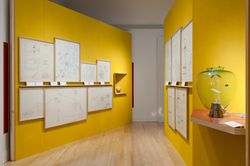
Rooms You May Have Missed reclaims the significance of inhabitation and is for that reason a collection of domestic spaces—entry porticos, kitchens, bedrooms, closets, dining rooms, courtyards, gardens, vestibules, living rooms, offices, dens, and washrooms—as reinvented in the work of two very different architects: Umberto Riva in Milan and Bijoy Jain in Mumbai. Common(...)
Rooms You May Have Missed reclaims the significance of inhabitation and is for that reason a collection of domestic spaces—entry porticos, kitchens, bedrooms, closets, dining rooms, courtyards, gardens, vestibules, living rooms, offices, dens, and washrooms—as reinvented in the work of two very different architects: Umberto Riva in Milan and Bijoy Jain in Mumbai. Common(...)
Location:
Main galleries
Main galleries
Date:
4 November 2014 to 19 April 2015
4 November 2014 to 19 April 2015
Title:
Rooms You May Have Missed
Actions:
Description:
Rooms You May Have Missed reclaims the significance of inhabitation and is for that reason a collection of domestic spaces—entry porticos, kitchens, bedrooms, closets, dining rooms, courtyards, gardens, vestibules, living rooms, offices, dens, and washrooms—as reinvented in the work of two very different architects: Umberto Riva in Milan and Bijoy Jain in Mumbai. Common(...)
Rooms You May Have Missed
Actions:
Description:
Rooms You May Have Missed reclaims the significance of inhabitation and is for that reason a collection of domestic spaces—entry porticos, kitchens, bedrooms, closets, dining rooms, courtyards, gardens, vestibules, living rooms, offices, dens, and washrooms—as reinvented in the work of two very different architects: Umberto Riva in Milan and Bijoy Jain in Mumbai. Common(...)
Form:
exhibitions
exhibitions
Date:
4 November 2014 to
19 April 2015
4 November 2014 to
19 April 2015
Location:
Main galleries
Main galleries
Form:
events
events
Actions:
Description:
2016 Visiting Scholar Farhan Karim presents his research: In the recent development of architectural history, the involvement of Western architects in emerging postcolonial nations has been reviewed within the broader geopolitics of decolonization and global cold war. That analysis is certainly correct, as far as it goes, but what is needed historiographically is nuanced(...)
2016 Visiting Scholar Farhan Karim presents his research: In the recent development of architectural history, the involvement of Western architects in emerging postcolonial nations has been reviewed within the broader geopolitics of decolonization and global cold war. That analysis is certainly correct, as far as it goes, but what is needed historiographically is nuanced(...)
Location:
Shaughnessy House
Shaughnessy House
Date:
7 July 2016, 6pm
7 July 2016, 6pm
Title:
Visiting Scholar Seminar: Farhan Karim
Actions:
Description:
2016 Visiting Scholar Farhan Karim presents his research: In the recent development of architectural history, the involvement of Western architects in emerging postcolonial nations has been reviewed within the broader geopolitics of decolonization and global cold war. That analysis is certainly correct, as far as it goes, but what is needed historiographically is nuanced(...)
Visiting Scholar Seminar: Farhan Karim
Actions:
Description:
2016 Visiting Scholar Farhan Karim presents his research: In the recent development of architectural history, the involvement of Western architects in emerging postcolonial nations has been reviewed within the broader geopolitics of decolonization and global cold war. That analysis is certainly correct, as far as it goes, but what is needed historiographically is nuanced(...)
Form:
events
events
Date:
7 July 2016
6pm
7 July 2016
6pm
Location:
Shaughnessy House
Shaughnessy House
Form:
archives
Level of archival description:
Collection
archives
Level of archival description:
Collection
Title:
Rohault de Fleury collection
Rohault de Fleury collection
Reference number:
CI001
Synopsis:
The Rohault de Fleury collection documents the work of three generations of French architects, Hubert, his son Charles, and his grandson Georges, spanning from the early 18th to late 19th century. The collection is extremely varied encompassing both private and government commissions and including domestic work, institutional buildings, commercial buildings, urban planning, and student work from both the École des beaux-arts and the École polytechnique, and archaeological studies. Stylistically, the projects incorporate the two dominant contemporary directions in French architecture - functionalism as advocated by Jean-Nicolas-Louis Durand and the classicism of the École des beaux-arts.
CI001
Synopsis:
The Rohault de Fleury collection documents the work of three generations of French architects, Hubert, his son Charles, and his grandson Georges, spanning from the early 18th to late 19th century. The collection is extremely varied encompassing both private and government commissions and including domestic work, institutional buildings, commercial buildings, urban planning, and student work from both the École des beaux-arts and the École polytechnique, and archaeological studies. Stylistically, the projects incorporate the two dominant contemporary directions in French architecture - functionalism as advocated by Jean-Nicolas-Louis Durand and the classicism of the École des beaux-arts.
People:
Date:
1717-[1884]
1717-[1884]
Title:
Rohault de Fleury collection
CI001
Synopsis:
The Rohault de Fleury collection documents the work of three generations of French architects, Hubert, his son Charles, and his grandson Georges, spanning from the early 18th to late 19th century. The collection is extremely varied encompassing both private and government commissions and including domestic work, institutional buildings, commercial buildings, urban planning, and student work from both the École des beaux-arts and the École polytechnique, and archaeological studies. Stylistically, the projects incorporate the two dominant contemporary directions in French architecture - functionalism as advocated by Jean-Nicolas-Louis Durand and the classicism of the École des beaux-arts.
Rohault de Fleury collection
CI001
Synopsis:
The Rohault de Fleury collection documents the work of three generations of French architects, Hubert, his son Charles, and his grandson Georges, spanning from the early 18th to late 19th century. The collection is extremely varied encompassing both private and government commissions and including domestic work, institutional buildings, commercial buildings, urban planning, and student work from both the École des beaux-arts and the École polytechnique, and archaeological studies. Stylistically, the projects incorporate the two dominant contemporary directions in French architecture - functionalism as advocated by Jean-Nicolas-Louis Durand and the classicism of the École des beaux-arts.
Form:
archives
Level of archival description:
Collection 1
archives
Level of archival description:
Collection 1
Date:
1717-[1884]
1717-[1884]
People:
Form:
exhibitions
exhibitions
Actions:
Description:
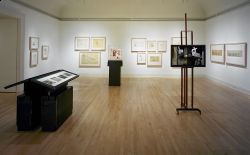
The exhibition addresses a central and timely aspect of the work of Carlo Scarpa: its distinctive approach to contending with the layers of history that mark the fabric of a city and a building. In addressing Scarpa’s ability to weave new work into, and often out of, the disparate fragments of the old, Carlo Scarpa, Architect: Intervening with History begins to unravel(...)
The exhibition addresses a central and timely aspect of the work of Carlo Scarpa: its distinctive approach to contending with the layers of history that mark the fabric of a city and a building. In addressing Scarpa’s ability to weave new work into, and often out of, the disparate fragments of the old, Carlo Scarpa, Architect: Intervening with History begins to unravel(...)
Location:
Main galleries
Main galleries
Date:
26 May 1999 to 31 October 1999
26 May 1999 to 31 October 1999
Title:
Carlo Scarpa, Architect: Intervening with History
Actions:
Description:
The exhibition addresses a central and timely aspect of the work of Carlo Scarpa: its distinctive approach to contending with the layers of history that mark the fabric of a city and a building. In addressing Scarpa’s ability to weave new work into, and often out of, the disparate fragments of the old, Carlo Scarpa, Architect: Intervening with History begins to unravel(...)
Carlo Scarpa, Architect: Intervening with History
Actions:
Description:
The exhibition addresses a central and timely aspect of the work of Carlo Scarpa: its distinctive approach to contending with the layers of history that mark the fabric of a city and a building. In addressing Scarpa’s ability to weave new work into, and often out of, the disparate fragments of the old, Carlo Scarpa, Architect: Intervening with History begins to unravel(...)
Form:
exhibitions
exhibitions
Date:
26 May 1999 to
31 October 1999
26 May 1999 to
31 October 1999
Location:
Main galleries
Main galleries
Form:
archives
Level of archival description:
Fonds
archives
Level of archival description:
Fonds
Title:
Robert Duchesnay fonds
Robert Duchesnay fonds
Actions:
Reference number:
AP115
Synopsis:
Le Fonds Robert Duchesnay consiste en une série de photographies montrant les divers structure (principalement des dômes géodésiques) conçus ou influencée par R. Buckminster Fuller. Les photographies, prises par l'artiste et photographe montréalais Robert Duchesnay, ont été créées entre 1985 et 1992.
AP115
Synopsis:
Le Fonds Robert Duchesnay consiste en une série de photographies montrant les divers structure (principalement des dômes géodésiques) conçus ou influencée par R. Buckminster Fuller. Les photographies, prises par l'artiste et photographe montréalais Robert Duchesnay, ont été créées entre 1985 et 1992.
People:
Date:
1985-1992
1985-1992
Title:
Robert Duchesnay fonds
Actions:
AP115
Synopsis:
Le Fonds Robert Duchesnay consiste en une série de photographies montrant les divers structure (principalement des dômes géodésiques) conçus ou influencée par R. Buckminster Fuller. Les photographies, prises par l'artiste et photographe montréalais Robert Duchesnay, ont été créées entre 1985 et 1992.
Robert Duchesnay fonds
Actions:
AP115
Synopsis:
Le Fonds Robert Duchesnay consiste en une série de photographies montrant les divers structure (principalement des dômes géodésiques) conçus ou influencée par R. Buckminster Fuller. Les photographies, prises par l'artiste et photographe montréalais Robert Duchesnay, ont été créées entre 1985 et 1992.
Form:
archives
Level of archival description:
Fonds
archives
Level of archival description:
Fonds
Date:
1985-1992
1985-1992
People:


