


322 Results
Form:
drawings, textual records
drawings, textual records
Actions:
Reference number:
PH1998:0013:024:001-005
PH1998:0013:024:001-005
People:
Subject:
architecture
architecture
Date:
between 1931 and 1933
between 1931 and 1933
Form:
drawings, textual records
drawings, textual records
Date:
between 1931 and 1933
between 1931 and 1933
People:
Subject:
architecture
architecture
Form:
events
events
Actions:
Description:
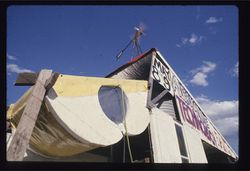
Topic: Designing Life Off-the-Grid: The 1970s Autonomy Moment Presentation: ’70s Cult Classic: The Autonomous House Movement
Topic: Designing Life Off-the-Grid: The 1970s Autonomy Moment Presentation: ’70s Cult Classic: The Autonomous House Movement
Date:
6 August 2015
6 August 2015
Title:
Visiting Scholar Seminar: Lee Stickells
Actions:
Description:
Topic: Designing Life Off-the-Grid: The 1970s Autonomy Moment Presentation: ’70s Cult Classic: The Autonomous House Movement
Visiting Scholar Seminar: Lee Stickells
Actions:
Description:
Topic: Designing Life Off-the-Grid: The 1970s Autonomy Moment Presentation: ’70s Cult Classic: The Autonomous House Movement
Form:
events
events
Date:
6 August 2015
6 August 2015
Form:
events
events
Description:
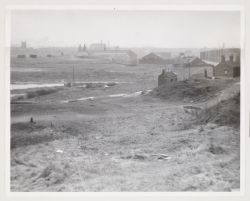
In response to the economic turbulence of the 1970s, British architects employed primarily by the welfare state became increasingly autonomous.
In response to the economic turbulence of the 1970s, British architects employed primarily by the welfare state became increasingly autonomous.
Location:
the Study Room Keyword(s):
1970s, welfare state, autonomous, postwar, flexibility, British architects
the Study Room Keyword(s):
1970s, welfare state, autonomous, postwar, flexibility, British architects
Date:
6 August 2026, 6pm to 7:30pm
6 August 2026, 6pm to 7:30pm
Title:
An Architecture of Flexibility
Actions:
Description:
In response to the economic turbulence of the 1970s, British architects employed primarily by the welfare state became increasingly autonomous.
An Architecture of Flexibility
Actions:
Description:
In response to the economic turbulence of the 1970s, British architects employed primarily by the welfare state became increasingly autonomous.
Form:
events
events
Date:
6 August 2026
6pm to 7:30pm
6 August 2026
6pm to 7:30pm
Location:
the Study Room Keyword(s):
1970s, welfare state, autonomous, postwar, flexibility, British architects
the Study Room Keyword(s):
1970s, welfare state, autonomous, postwar, flexibility, British architects
Level of archival description:
Project
Project
Actions:
Reference number:
AP142.S1.D73
Description:
File documents an unsuccessful competition entry for a new train terminal at the San Cristoforo Station in Milan, Italy. Precise recommendations were made by the "Azienda autonomous ferrovie dello stato" for this competition. Material in this file was produced in 1984. File contains design drawings and presentation drawings.
AP142.S1.D73
Description:
File documents an unsuccessful competition entry for a new train terminal at the San Cristoforo Station in Milan, Italy. Precise recommendations were made by the "Azienda autonomous ferrovie dello stato" for this competition. Material in this file was produced in 1984. File contains design drawings and presentation drawings.
People:
Date:
1984
1984
Title:
Nuovo terminal della stazione San Cristoforo di Milano
Actions:
AP142.S1.D73
Description:
File documents an unsuccessful competition entry for a new train terminal at the San Cristoforo Station in Milan, Italy. Precise recommendations were made by the "Azienda autonomous ferrovie dello stato" for this competition. Material in this file was produced in 1984. File contains design drawings and presentation drawings.
Nuovo terminal della stazione San Cristoforo di Milano
Actions:
AP142.S1.D73
Description:
File documents an unsuccessful competition entry for a new train terminal at the San Cristoforo Station in Milan, Italy. Precise recommendations were made by the "Azienda autonomous ferrovie dello stato" for this competition. Material in this file was produced in 1984. File contains design drawings and presentation drawings.
Level of archival description:
File 73
File 73
Date:
1984
1984
People:
Form:
archives
Level of archival description:
Fonds
archives
Level of archival description:
Fonds
Title:
Ábalos & Herreros fonds
Ábalos & Herreros fonds
Reference number:
AP164
Synopsis:
The Ábalos&Herreros fonds documents the activities of the architectural firm Ábalos&Herreros, founded by architects Iñaki Ábalos and Juan Herreros. The archive primarily consists of drawings, photographic materials and textual documentation, and covers the existance of the firm from 1985 to 2008. The concentration of the firm's work was produced in the city of Madrid and the Community of Madrid where the firm maintained its head office. However, the archive also documents projects for other Spanish autonomous communities as well as for other countries such as Portugal, Germany, the United States, and Brazil.
AP164
Synopsis:
The Ábalos&Herreros fonds documents the activities of the architectural firm Ábalos&Herreros, founded by architects Iñaki Ábalos and Juan Herreros. The archive primarily consists of drawings, photographic materials and textual documentation, and covers the existance of the firm from 1985 to 2008. The concentration of the firm's work was produced in the city of Madrid and the Community of Madrid where the firm maintained its head office. However, the archive also documents projects for other Spanish autonomous communities as well as for other countries such as Portugal, Germany, the United States, and Brazil.
People:
Date:
1920-2009
1920-2009
Title:
Ábalos & Herreros fonds
Actions:
AP164
Synopsis:
The Ábalos&Herreros fonds documents the activities of the architectural firm Ábalos&Herreros, founded by architects Iñaki Ábalos and Juan Herreros. The archive primarily consists of drawings, photographic materials and textual documentation, and covers the existance of the firm from 1985 to 2008. The concentration of the firm's work was produced in the city of Madrid and the Community of Madrid where the firm maintained its head office. However, the archive also documents projects for other Spanish autonomous communities as well as for other countries such as Portugal, Germany, the United States, and Brazil.
Ábalos & Herreros fonds
Actions:
AP164
Synopsis:
The Ábalos&Herreros fonds documents the activities of the architectural firm Ábalos&Herreros, founded by architects Iñaki Ábalos and Juan Herreros. The archive primarily consists of drawings, photographic materials and textual documentation, and covers the existance of the firm from 1985 to 2008. The concentration of the firm's work was produced in the city of Madrid and the Community of Madrid where the firm maintained its head office. However, the archive also documents projects for other Spanish autonomous communities as well as for other countries such as Portugal, Germany, the United States, and Brazil.
Form:
archives
Level of archival description:
Fonds
archives
Level of archival description:
Fonds
Date:
1920-2009
1920-2009
People:
Level of archival description:
Project
Project
Reference number:
AP178.S1.1988.PR03
Description:
This project series documents the Centro Galego de Arte Contemporânea in Santiago de Compostela, Spain. While the records were held in the office’s archives this project was assigned the number 54/80. The office assigned the date 1988 for this project. This project was commissioned by the Xunta de Galicia for the autonomous community of Galicia in Spain. The building was located near the Galego Pobo Museum and the Convento de Santo Domingo de Bonaval. The museum was approximately 75,000 square feet and divided into two L-shaped structures. The building had four floors and included exhibition halls, a terrace, a cafeteria, administrative spaces, an auditorium, and a library. The exterior was principally made of granite panels. The exhibition spaces were very bright, principally due to the natural light that came from multiple openings in the building as well as the white walls. The floors of the public spaces and exhibition rooms were made of Greek marble. Siza also transformed the Convento de Santo Domingo de Bonaval garden into a public park. The park was understood as an extension of the museum. Documenting this project are sketches, studies, preliminary drawings, plans and working drawings. Textual materials include project documentation and correspondence. Photographic materials document the models, project site and built project.
AP178.S1.1988.PR03
Description:
This project series documents the Centro Galego de Arte Contemporânea in Santiago de Compostela, Spain. While the records were held in the office’s archives this project was assigned the number 54/80. The office assigned the date 1988 for this project. This project was commissioned by the Xunta de Galicia for the autonomous community of Galicia in Spain. The building was located near the Galego Pobo Museum and the Convento de Santo Domingo de Bonaval. The museum was approximately 75,000 square feet and divided into two L-shaped structures. The building had four floors and included exhibition halls, a terrace, a cafeteria, administrative spaces, an auditorium, and a library. The exterior was principally made of granite panels. The exhibition spaces were very bright, principally due to the natural light that came from multiple openings in the building as well as the white walls. The floors of the public spaces and exhibition rooms were made of Greek marble. Siza also transformed the Convento de Santo Domingo de Bonaval garden into a public park. The park was understood as an extension of the museum. Documenting this project are sketches, studies, preliminary drawings, plans and working drawings. Textual materials include project documentation and correspondence. Photographic materials document the models, project site and built project.
People:
Date:
1988-1995
1988-1995
Title:
Centro Galego de Arte Contemporânea [Galician Centre of Contemporary Art], Santiago de Compostela, Spain, 1988-1993
Actions:
AP178.S1.1988.PR03
Description:
This project series documents the Centro Galego de Arte Contemporânea in Santiago de Compostela, Spain. While the records were held in the office’s archives this project was assigned the number 54/80. The office assigned the date 1988 for this project. This project was commissioned by the Xunta de Galicia for the autonomous community of Galicia in Spain. The building was located near the Galego Pobo Museum and the Convento de Santo Domingo de Bonaval. The museum was approximately 75,000 square feet and divided into two L-shaped structures. The building had four floors and included exhibition halls, a terrace, a cafeteria, administrative spaces, an auditorium, and a library. The exterior was principally made of granite panels. The exhibition spaces were very bright, principally due to the natural light that came from multiple openings in the building as well as the white walls. The floors of the public spaces and exhibition rooms were made of Greek marble. Siza also transformed the Convento de Santo Domingo de Bonaval garden into a public park. The park was understood as an extension of the museum. Documenting this project are sketches, studies, preliminary drawings, plans and working drawings. Textual materials include project documentation and correspondence. Photographic materials document the models, project site and built project.
Centro Galego de Arte Contemporânea [Galician Centre of Contemporary Art], Santiago de Compostela, Spain, 1988-1993
Actions:
AP178.S1.1988.PR03
Description:
This project series documents the Centro Galego de Arte Contemporânea in Santiago de Compostela, Spain. While the records were held in the office’s archives this project was assigned the number 54/80. The office assigned the date 1988 for this project. This project was commissioned by the Xunta de Galicia for the autonomous community of Galicia in Spain. The building was located near the Galego Pobo Museum and the Convento de Santo Domingo de Bonaval. The museum was approximately 75,000 square feet and divided into two L-shaped structures. The building had four floors and included exhibition halls, a terrace, a cafeteria, administrative spaces, an auditorium, and a library. The exterior was principally made of granite panels. The exhibition spaces were very bright, principally due to the natural light that came from multiple openings in the building as well as the white walls. The floors of the public spaces and exhibition rooms were made of Greek marble. Siza also transformed the Convento de Santo Domingo de Bonaval garden into a public park. The park was understood as an extension of the museum. Documenting this project are sketches, studies, preliminary drawings, plans and working drawings. Textual materials include project documentation and correspondence. Photographic materials document the models, project site and built project.
Level of archival description:
Project
Project
Date:
1988-1995
1988-1995
People:
Form:
events
events
Actions:
Description:
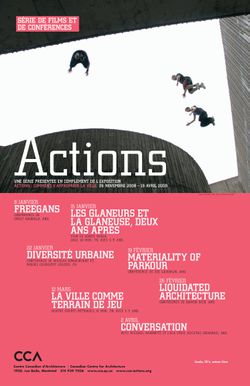
Chicago-based artist Michael Rakowitz speaks with Luca Stasi of Recetas Urbanas about their various projects. Rakowitz’s work explores the concepts of nomadic habitat and urban appropriation, while Recetas Urbanas uses strategies of urban intervention that take advantage of legal loopholes, opening up opportunities for autonomous architecture. The conversation is part of(...)
Chicago-based artist Michael Rakowitz speaks with Luca Stasi of Recetas Urbanas about their various projects. Rakowitz’s work explores the concepts of nomadic habitat and urban appropriation, while Recetas Urbanas uses strategies of urban intervention that take advantage of legal loopholes, opening up opportunities for autonomous architecture. The conversation is part of(...)
Location:
Paul Desmarais Theatre
Paul Desmarais Theatre
Date:
2 April 2009
2 April 2009
Title:
Michael Rakowitz and Luca Stasi of Recetas Urbanas
Actions:
Description:
Chicago-based artist Michael Rakowitz speaks with Luca Stasi of Recetas Urbanas about their various projects. Rakowitz’s work explores the concepts of nomadic habitat and urban appropriation, while Recetas Urbanas uses strategies of urban intervention that take advantage of legal loopholes, opening up opportunities for autonomous architecture. The conversation is part of(...)
Michael Rakowitz and Luca Stasi of Recetas Urbanas
Actions:
Description:
Chicago-based artist Michael Rakowitz speaks with Luca Stasi of Recetas Urbanas about their various projects. Rakowitz’s work explores the concepts of nomadic habitat and urban appropriation, while Recetas Urbanas uses strategies of urban intervention that take advantage of legal loopholes, opening up opportunities for autonomous architecture. The conversation is part of(...)
Form:
events
events
Date:
2 April 2009
2 April 2009
Location:
Paul Desmarais Theatre
Paul Desmarais Theatre
Form:
articles
articles

Actions:
Issue:
The planet is the client
The planet is the client
Keyword(s):
autonomous house, McGill University, Minimum Cost Housing Group (MCHG), Stop the Five Gallon Flush, toilets
autonomous house, McGill University, Minimum Cost Housing Group (MCHG), Stop the Five Gallon Flush, toilets
Published:
19 October 2015
19 October 2015
Issue:
The planet is the client
The planet is the client
Form:
photographs
Quantity:
82 photograph(s)
photographs
Quantity:
82 photograph(s)
Actions:
Reference number:
PH1996:0069:001-109
Description:
Group of 109 Polaroid photographs made by Aldo Rossi with some presented in the exhibition 'Luigi Ghirri - Aldo Rossi. Things Which Are Only Themselves' held at the CCA in 1996. The photographs represent several scenes from Rossi's travels in different countries: building façades, sacred images, billboards, houses from a Shaker village, baroque façades of churches (in Lecce, Italy), shops, street scenes, lakes, ports, showcases and furniture. Rossi's photography shows the interest he shares with photographer Luigi Ghirri in the belief in the autonomous eye of the photographer and in the potential of that eye to reveal something new to the architect. Ghirri sees in Rossi's Polaroids a "concealed passion, the 'secret' images of the architect, [...] puzzles that are solved with the heart". And according to his definition of photography, "a tangle of monuments, lights, thoughts, objects, moments and metaphors forming the landscape we are searching for in our minds... as would the points of an imaginary compass, which indicates a possible direction".
PH1996:0069:001-109
Description:
Group of 109 Polaroid photographs made by Aldo Rossi with some presented in the exhibition 'Luigi Ghirri - Aldo Rossi. Things Which Are Only Themselves' held at the CCA in 1996. The photographs represent several scenes from Rossi's travels in different countries: building façades, sacred images, billboards, houses from a Shaker village, baroque façades of churches (in Lecce, Italy), shops, street scenes, lakes, ports, showcases and furniture. Rossi's photography shows the interest he shares with photographer Luigi Ghirri in the belief in the autonomous eye of the photographer and in the potential of that eye to reveal something new to the architect. Ghirri sees in Rossi's Polaroids a "concealed passion, the 'secret' images of the architect, [...] puzzles that are solved with the heart". And according to his definition of photography, "a tangle of monuments, lights, thoughts, objects, moments and metaphors forming the landscape we are searching for in our minds... as would the points of an imaginary compass, which indicates a possible direction".
People:
Subject:
architecture, engineering, sculpture
architecture, engineering, sculpture
Date:
1980s-1990s
1980s-1990s
Title:
Group of views of architecture from Aldo Rossi's trips to Italy, France, Corsica, Greece, United States and unspecified countries
Actions:
PH1996:0069:001-109
Description:
Group of 109 Polaroid photographs made by Aldo Rossi with some presented in the exhibition 'Luigi Ghirri - Aldo Rossi. Things Which Are Only Themselves' held at the CCA in 1996. The photographs represent several scenes from Rossi's travels in different countries: building façades, sacred images, billboards, houses from a Shaker village, baroque façades of churches (in Lecce, Italy), shops, street scenes, lakes, ports, showcases and furniture. Rossi's photography shows the interest he shares with photographer Luigi Ghirri in the belief in the autonomous eye of the photographer and in the potential of that eye to reveal something new to the architect. Ghirri sees in Rossi's Polaroids a "concealed passion, the 'secret' images of the architect, [...] puzzles that are solved with the heart". And according to his definition of photography, "a tangle of monuments, lights, thoughts, objects, moments and metaphors forming the landscape we are searching for in our minds... as would the points of an imaginary compass, which indicates a possible direction".
Group of views of architecture from Aldo Rossi's trips to Italy, France, Corsica, Greece, United States and unspecified countries
Actions:
PH1996:0069:001-109
Description:
Group of 109 Polaroid photographs made by Aldo Rossi with some presented in the exhibition 'Luigi Ghirri - Aldo Rossi. Things Which Are Only Themselves' held at the CCA in 1996. The photographs represent several scenes from Rossi's travels in different countries: building façades, sacred images, billboards, houses from a Shaker village, baroque façades of churches (in Lecce, Italy), shops, street scenes, lakes, ports, showcases and furniture. Rossi's photography shows the interest he shares with photographer Luigi Ghirri in the belief in the autonomous eye of the photographer and in the potential of that eye to reveal something new to the architect. Ghirri sees in Rossi's Polaroids a "concealed passion, the 'secret' images of the architect, [...] puzzles that are solved with the heart". And according to his definition of photography, "a tangle of monuments, lights, thoughts, objects, moments and metaphors forming the landscape we are searching for in our minds... as would the points of an imaginary compass, which indicates a possible direction".
Form:
photographs
Quantity:
82 photograph(s)
photographs
Quantity:
82 photograph(s)
Date:
1980s-1990s
1980s-1990s
People:
Subject:
architecture, engineering, sculpture
architecture, engineering, sculpture
Form:
events
events
Description:
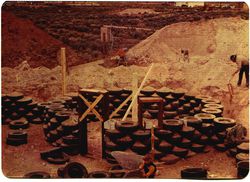
In the Yesterday Today lecture series, American architect Michael Reynolds discusses Earthship houses, which use recycled materials and sustainable energy technologies to create autonomous dwellings. The structure and systems of Earthships are integrated so that all materials have a secondary use, from the greywater system in bathrooms and kitchens to planter boxes in(...)
In the Yesterday Today lecture series, American architect Michael Reynolds discusses Earthship houses, which use recycled materials and sustainable energy technologies to create autonomous dwellings. The structure and systems of Earthships are integrated so that all materials have a secondary use, from the greywater system in bathrooms and kitchens to planter boxes in(...)
Location:
Paul-Desmarais Theatre
Paul-Desmarais Theatre
Date:
15 November 2007
15 November 2007
Title:
Michael Reynolds: The Earthship Sustainable Housing Concept
Actions:
Description:
In the Yesterday Today lecture series, American architect Michael Reynolds discusses Earthship houses, which use recycled materials and sustainable energy technologies to create autonomous dwellings. The structure and systems of Earthships are integrated so that all materials have a secondary use, from the greywater system in bathrooms and kitchens to planter boxes in(...)
Michael Reynolds: The Earthship Sustainable Housing Concept
Actions:
Description:
In the Yesterday Today lecture series, American architect Michael Reynolds discusses Earthship houses, which use recycled materials and sustainable energy technologies to create autonomous dwellings. The structure and systems of Earthships are integrated so that all materials have a secondary use, from the greywater system in bathrooms and kitchens to planter boxes in(...)
Form:
events
events
Date:
15 November 2007
15 November 2007
Location:
Paul-Desmarais Theatre
Paul-Desmarais Theatre


