


319 Résultats
Classification:
livres
livres
Actions:
Prix:
$33.95
(disponible sur commande)
Résumé:
En proposant un point de vue nouveau sur le monde et la société, la recherche-création s’éloigne de la conception traditionnelle du design, conçu comme pur développement de produits. Tout en dépassant les cadres universitaires de l’histoire, de l’esthétique ou de la sociologie, cette approche innovante ouvre un horizon concret de réflexions sur les enjeux contemporains du(...)
$33.95
(disponible sur commande)
Résumé:
En proposant un point de vue nouveau sur le monde et la société, la recherche-création s’éloigne de la conception traditionnelle du design, conçu comme pur développement de produits. Tout en dépassant les cadres universitaires de l’histoire, de l’esthétique ou de la sociologie, cette approche innovante ouvre un horizon concret de réflexions sur les enjeux contemporains du(...)
Titre:
Intelligences multiples du design
Actions:
Prix:
$33.95
(disponible sur commande)
Résumé:
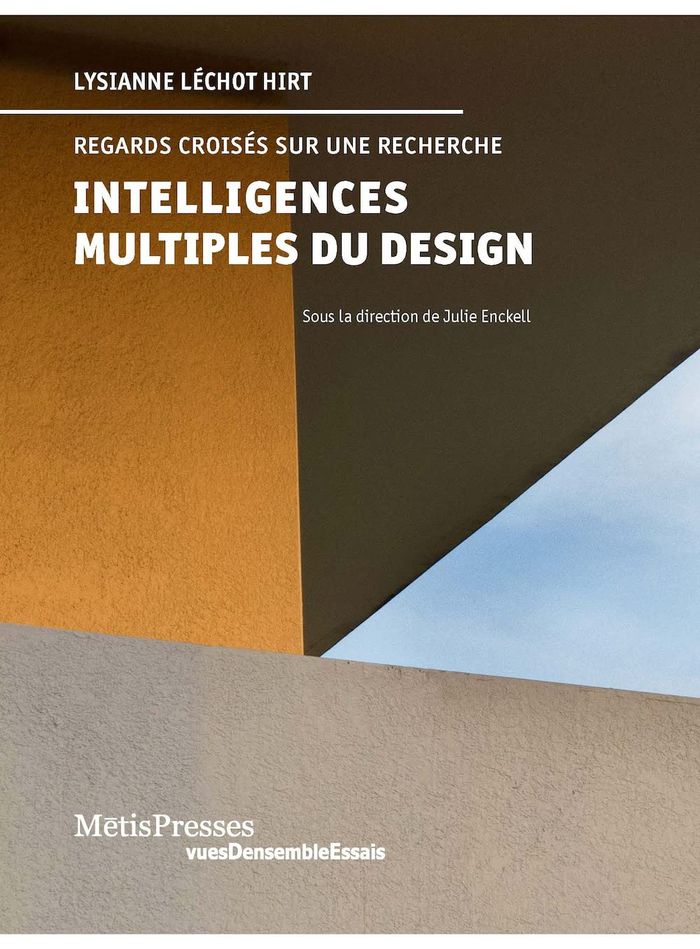
En proposant un point de vue nouveau sur le monde et la société, la recherche-création s’éloigne de la conception traditionnelle du design, conçu comme pur développement de produits. Tout en dépassant les cadres universitaires de l’histoire, de l’esthétique ou de la sociologie, cette approche innovante ouvre un horizon concret de réflexions sur les enjeux contemporains du design et des disciplines issues des sciences humaines. Elle permet également d’établir un dialogue fertile entre les différents champs de la création. Lysianne Léchot Hirt, qui a largement contribué à théoriser cette approche, envisageait son champ d’investigation comme une matière vivante, profondément ancrée dans le quotidien et nécessitant d’être observée avec le regard, disait-elle, d’une «ethnographe». Ce livre réunit une sélection de ses essais les plus marquants, suivis de plusieurs contributions de personnes ayant oeuvré dans son sillage.
Intelligences multiples du design
Actions:
Prix:
$33.95
(disponible sur commande)
Résumé:
En proposant un point de vue nouveau sur le monde et la société, la recherche-création s’éloigne de la conception traditionnelle du design, conçu comme pur développement de produits. Tout en dépassant les cadres universitaires de l’histoire, de l’esthétique ou de la sociologie, cette approche innovante ouvre un horizon concret de réflexions sur les enjeux contemporains du design et des disciplines issues des sciences humaines. Elle permet également d’établir un dialogue fertile entre les différents champs de la création. Lysianne Léchot Hirt, qui a largement contribué à théoriser cette approche, envisageait son champ d’investigation comme une matière vivante, profondément ancrée dans le quotidien et nécessitant d’être observée avec le regard, disait-elle, d’une «ethnographe». Ce livre réunit une sélection de ses essais les plus marquants, suivis de plusieurs contributions de personnes ayant oeuvré dans son sillage.
Classification:
livres
livres
Publication:
janvier 2023
janvier 2023
Sujet:
Théorie du design
Théorie du design
Classification:
livres
livres
Actions:
Prix:
$38.95
(disponible sur commande)
Résumé:
Life as a design student is filled with questions. Rochester Institute of Technology Associate Professor of Design Mitch Goldstein has many answers, shared in clear, clever, and sage advice that is helpful for students at any level of their education, as well as anyone thinking about attending design school and wondering what it's really all about. For design students(...)
$38.95
(disponible sur commande)
Résumé:
Life as a design student is filled with questions. Rochester Institute of Technology Associate Professor of Design Mitch Goldstein has many answers, shared in clear, clever, and sage advice that is helpful for students at any level of their education, as well as anyone thinking about attending design school and wondering what it's really all about. For design students(...)
Titre:
How to be a design student (and how to teach them)
Actions:
Prix:
$38.95
(disponible sur commande)
Résumé:
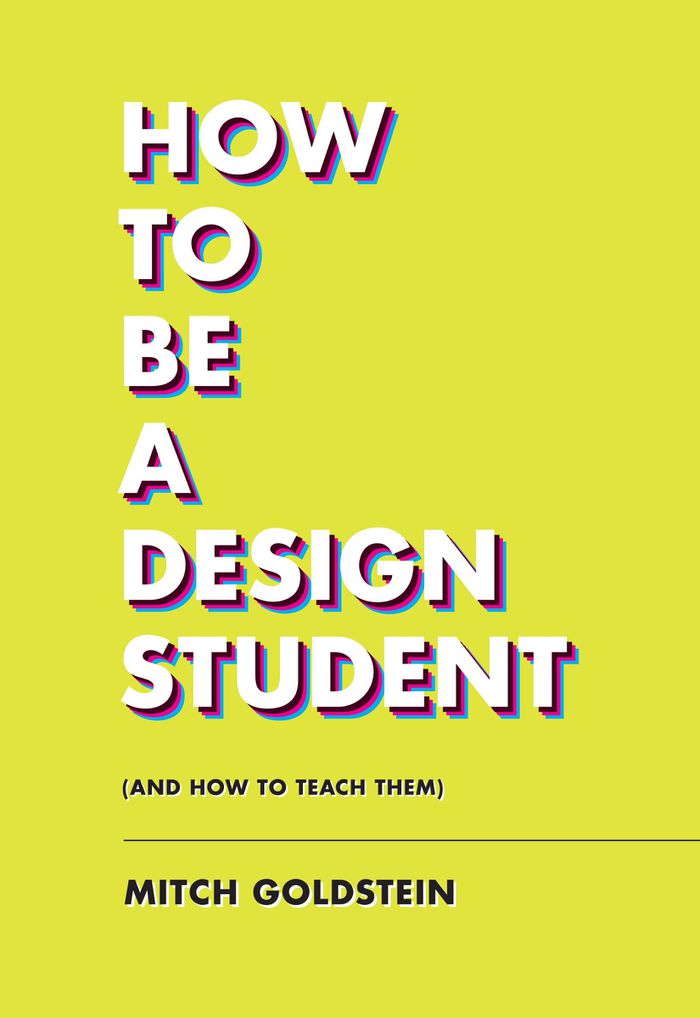
Life as a design student is filled with questions. Rochester Institute of Technology Associate Professor of Design Mitch Goldstein has many answers, shared in clear, clever, and sage advice that is helpful for students at any level of their education, as well as anyone thinking about attending design school and wondering what it's really all about. For design students and art professionals, Goldstein is a brilliant resource for real-world thoughts about design school and creative practice. Drawing on 16 years of teaching design and his popular "Dear Design Student" Twitter project, Goldstein explores all aspects of how to get the most out of the school experience, and beyond as a creative professional. From collaboration and critiques to practice and process, this is an inspiring roadmap for design students as well as a valuable guide for design professors to help them understand how to shape curriculum from a student's perspective and better the collaborative experience.
How to be a design student (and how to teach them)
Actions:
Prix:
$38.95
(disponible sur commande)
Résumé:
Life as a design student is filled with questions. Rochester Institute of Technology Associate Professor of Design Mitch Goldstein has many answers, shared in clear, clever, and sage advice that is helpful for students at any level of their education, as well as anyone thinking about attending design school and wondering what it's really all about. For design students and art professionals, Goldstein is a brilliant resource for real-world thoughts about design school and creative practice. Drawing on 16 years of teaching design and his popular "Dear Design Student" Twitter project, Goldstein explores all aspects of how to get the most out of the school experience, and beyond as a creative professional. From collaboration and critiques to practice and process, this is an inspiring roadmap for design students as well as a valuable guide for design professors to help them understand how to shape curriculum from a student's perspective and better the collaborative experience.
Classification:
livres
livres
Publication:
mars 2023
mars 2023
Sujet:
Théorie du design
Théorie du design
Classification:
livres
livres
Actions:
Prix:
$39.95
(disponible sur commande)
Résumé:
How human behavior brought our world to the brink, and how human behavior can save us. The world is a mess. Our dire predicament, from collapsing social structures to the climate crisis, has been millennia in the making and can be traced back to the erroneous belief that the earth's resources are infinite. The key to change, says Don Norman, is human behavior, covered(...)
$39.95
(disponible sur commande)
Résumé:
How human behavior brought our world to the brink, and how human behavior can save us. The world is a mess. Our dire predicament, from collapsing social structures to the climate crisis, has been millennia in the making and can be traced back to the erroneous belief that the earth's resources are infinite. The key to change, says Don Norman, is human behavior, covered(...)
Titre:
Design for a better world: meaningful, sustainable, humanity centered
Actions:
Prix:
$39.95
(disponible sur commande)
Résumé:
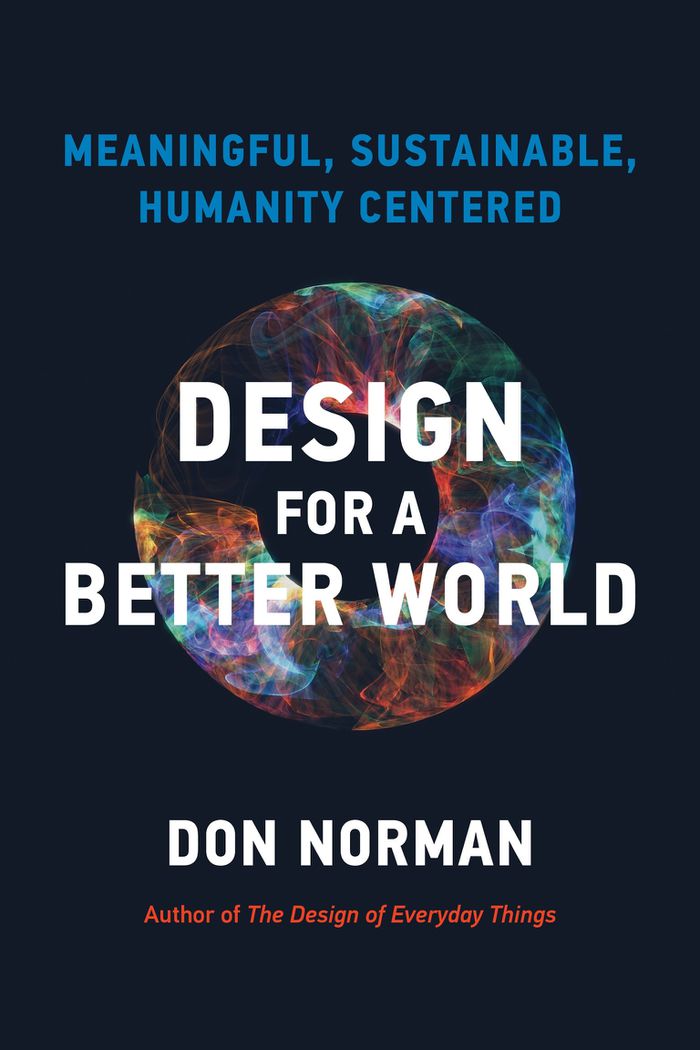
How human behavior brought our world to the brink, and how human behavior can save us. The world is a mess. Our dire predicament, from collapsing social structures to the climate crisis, has been millennia in the making and can be traced back to the erroneous belief that the earth's resources are infinite. The key to change, says Don Norman, is human behavior, covered in the book's three major themes: meaning, sustainability, and humanity-centeredness. Emphasize quality of life, not monetary rewards; restructure how we live to better protect the environment; and focus on all of humanity. ''Design for a better world'' presents an eye-opening diagnosis of where we've gone wrong and a clear prescription for making things better. Norman proposes a new way of thinking, one that recognizes our place in a complex global system where even simple behaviors affect the entire world. He identifies the economic metrics that contribute to the harmful effects of commerce and manufacturing and proposes a recalibration of what we consider important in life. His experience as both a scientist and business executive gives him the perspective to show how to make these changes while maintaining a thriving economy. Let the change begin with this book before it's too late.
Design for a better world: meaningful, sustainable, humanity centered
Actions:
Prix:
$39.95
(disponible sur commande)
Résumé:
How human behavior brought our world to the brink, and how human behavior can save us. The world is a mess. Our dire predicament, from collapsing social structures to the climate crisis, has been millennia in the making and can be traced back to the erroneous belief that the earth's resources are infinite. The key to change, says Don Norman, is human behavior, covered in the book's three major themes: meaning, sustainability, and humanity-centeredness. Emphasize quality of life, not monetary rewards; restructure how we live to better protect the environment; and focus on all of humanity. ''Design for a better world'' presents an eye-opening diagnosis of where we've gone wrong and a clear prescription for making things better. Norman proposes a new way of thinking, one that recognizes our place in a complex global system where even simple behaviors affect the entire world. He identifies the economic metrics that contribute to the harmful effects of commerce and manufacturing and proposes a recalibration of what we consider important in life. His experience as both a scientist and business executive gives him the perspective to show how to make these changes while maintaining a thriving economy. Let the change begin with this book before it's too late.
Classification:
livres
livres
Publication:
mars 2023
mars 2023
Sujet:
Théorie du design
Théorie du design
Classification:
livres
livres
Actions:
Prix:
$25.00
(disponible en magasin)
Résumé:
Afonso Matos is a Portuguese designer and researcher who is based in The Netherlands. This book is a collection of fanzines inspired by conversations and texts around four main themes: the bubble of the (critical) design school; the power of design and the agency of designers; the nature of design; and collective power. Included are excerpts from Matos’ thesis on the use(...)
$25.00
(disponible en magasin)
Résumé:
Afonso Matos is a Portuguese designer and researcher who is based in The Netherlands. This book is a collection of fanzines inspired by conversations and texts around four main themes: the bubble of the (critical) design school; the power of design and the agency of designers; the nature of design; and collective power. Included are excerpts from Matos’ thesis on the use(...)
Titre:
Who can afford to be critical?
Actions:
Prix:
$25.00
(disponible en magasin)
Résumé:
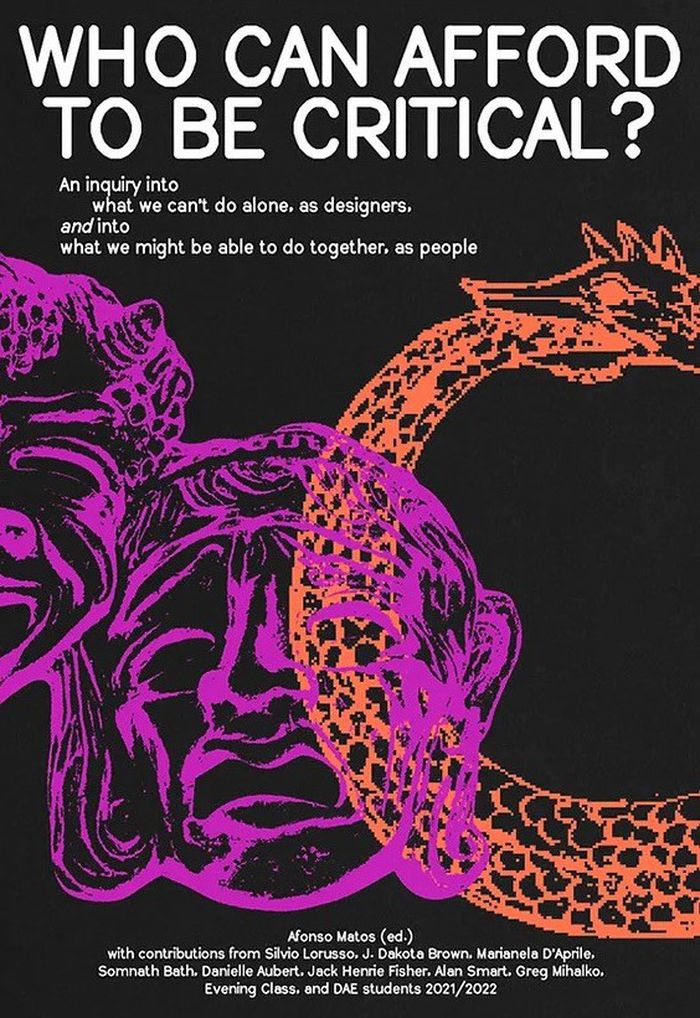
Afonso Matos is a Portuguese designer and researcher who is based in The Netherlands. This book is a collection of fanzines inspired by conversations and texts around four main themes: the bubble of the (critical) design school; the power of design and the agency of designers; the nature of design; and collective power. Included are excerpts from Matos’ thesis on the use of design as a social critique and agent of change, his transparent disclosures and personal investigation into the impact of privilege on critical design, as well as the contributions from Silvio Lorusso, J. Dakota Brown, Marianela D’Aprile, Somnath Bhatt, the DAE students of 2021/2022, and many more.
Who can afford to be critical?
Actions:
Prix:
$25.00
(disponible en magasin)
Résumé:
Afonso Matos is a Portuguese designer and researcher who is based in The Netherlands. This book is a collection of fanzines inspired by conversations and texts around four main themes: the bubble of the (critical) design school; the power of design and the agency of designers; the nature of design; and collective power. Included are excerpts from Matos’ thesis on the use of design as a social critique and agent of change, his transparent disclosures and personal investigation into the impact of privilege on critical design, as well as the contributions from Silvio Lorusso, J. Dakota Brown, Marianela D’Aprile, Somnath Bhatt, the DAE students of 2021/2022, and many more.
Classification:
livres
livres
Publication:
mai 2023
mai 2023
Sujet:
Théorie du design
Théorie du design
Classification:
livres
livres
Actions:
Prix:
$25.95
(disponible sur commande)
Résumé:
This book reconstructs the series of exercises that led Kostellow's students from the manipulation of simple forms to the creation of complex solutions to difficult design problems. It includes her exercises and commentary along with selected student solutions, and concludes with examples of work from former students who became leaders in the field, including such(...)
$25.95
(disponible sur commande)
Résumé:
This book reconstructs the series of exercises that led Kostellow's students from the manipulation of simple forms to the creation of complex solutions to difficult design problems. It includes her exercises and commentary along with selected student solutions, and concludes with examples of work from former students who became leaders in the field, including such(...)
Titre:
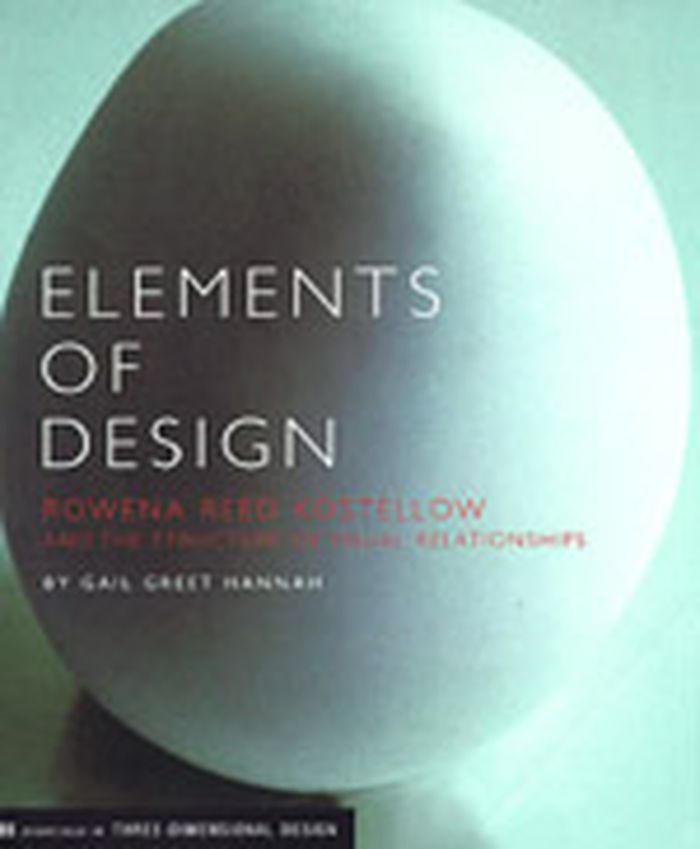
Elements of design : Rowena Reed Kostellow and the structure of visual relationships
Actions:
Prix:
$25.95
(disponible sur commande)
Résumé:
This book reconstructs the series of exercises that led Kostellow's students from the manipulation of simple forms to the creation of complex solutions to difficult design problems. It includes her exercises and commentary along with selected student solutions, and concludes with examples of work from former students who became leaders in the field, including such well-known figures as Tucker Viemeisater, Ralph Applebaum, Ted Muehling, and many others.
Elements of design : Rowena Reed Kostellow and the structure of visual relationships
Actions:
Prix:
$25.95
(disponible sur commande)
Résumé:
This book reconstructs the series of exercises that led Kostellow's students from the manipulation of simple forms to the creation of complex solutions to difficult design problems. It includes her exercises and commentary along with selected student solutions, and concludes with examples of work from former students who became leaders in the field, including such well-known figures as Tucker Viemeisater, Ralph Applebaum, Ted Muehling, and many others.
Classification:
livres
livres
Publication:
juillet 2002, New York
juillet 2002, New York
Sujet:
Théorie du design
Théorie du design
Classification:
livres
livres
Actions:
Prix:
$24.95
(disponible sur commande)
Résumé:
In the twenty-first century, commerce and culture are ever more closely entwined. This new collection of essays by design critic Rick Poynor takes a searching look at visual culture to discover the reality beneath the ultra-seductive surfaces. Poynor explores the thinking behind the emerging resistance to commercial rhetoric among designers, and offers critical insights(...)
$24.95
(disponible sur commande)
Résumé:
In the twenty-first century, commerce and culture are ever more closely entwined. This new collection of essays by design critic Rick Poynor takes a searching look at visual culture to discover the reality beneath the ultra-seductive surfaces. Poynor explores the thinking behind the emerging resistance to commercial rhetoric among designers, and offers critical insights(...)
Titre:
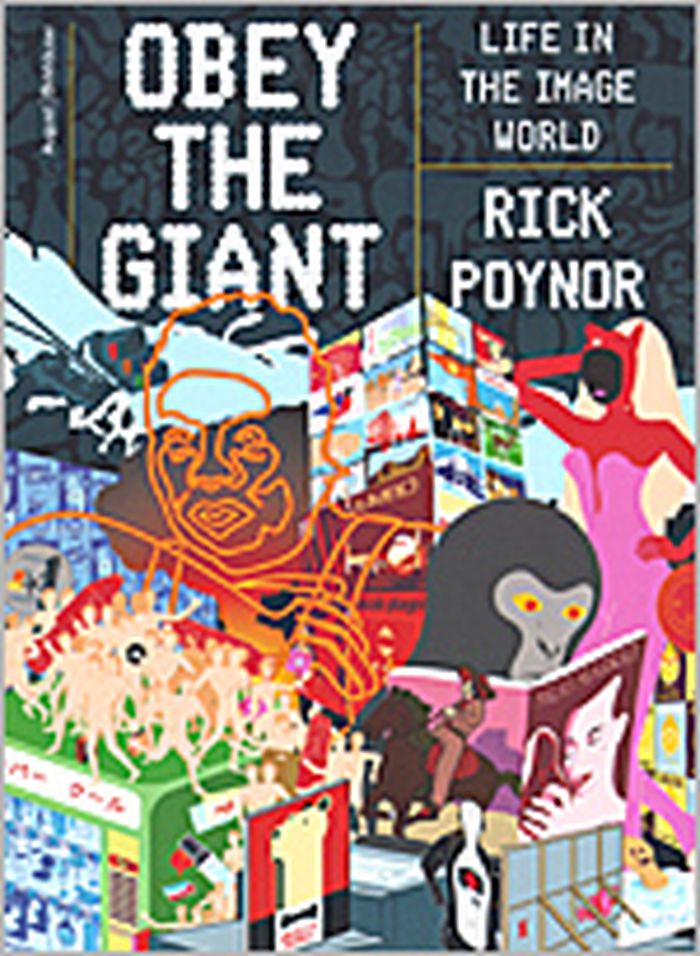
Obey the giant : life in the image world
Actions:
Prix:
$24.95
(disponible sur commande)
Résumé:
In the twenty-first century, commerce and culture are ever more closely entwined. This new collection of essays by design critic Rick Poynor takes a searching look at visual culture to discover the reality beneath the ultra-seductive surfaces. Poynor explores the thinking behind the emerging resistance to commercial rhetoric among designers, and offers critical insights into the changing dialogue between advertising and design. Other essays address the topics of visual journalism; brands as religion; the new solipsism; graphic memes; the pleasures of imperfect design; and the poverty of “cool”. Around the world, many are now waking up to the dominance of huge corporations – invariably expressed by visual means. This pointed and provocative counterblast arrives at a moment when critical responses are vital if this mono-culture is to be challenged. It offers inspirational evidence of alternative ways of engaging with design, and it will appeal to any reader with a questioning interest in design, advertising, cultural studies, media studies, and the visual arts.
Obey the giant : life in the image world
Actions:
Prix:
$24.95
(disponible sur commande)
Résumé:
In the twenty-first century, commerce and culture are ever more closely entwined. This new collection of essays by design critic Rick Poynor takes a searching look at visual culture to discover the reality beneath the ultra-seductive surfaces. Poynor explores the thinking behind the emerging resistance to commercial rhetoric among designers, and offers critical insights into the changing dialogue between advertising and design. Other essays address the topics of visual journalism; brands as religion; the new solipsism; graphic memes; the pleasures of imperfect design; and the poverty of “cool”. Around the world, many are now waking up to the dominance of huge corporations – invariably expressed by visual means. This pointed and provocative counterblast arrives at a moment when critical responses are vital if this mono-culture is to be challenged. It offers inspirational evidence of alternative ways of engaging with design, and it will appeal to any reader with a questioning interest in design, advertising, cultural studies, media studies, and the visual arts.
Classification:
livres
livres
Publication:
décembre 2001, London
décembre 2001, London
Sujet:
Théorie du design
Théorie du design
Classification:
livres
livres
Prix:
$30.00
(disponible sur commande)
Résumé:
In "Chasing the perfect" writer/designer Natalia Ilyin delivers her observations on design and the world it has molded. According to Ilyin, "Modern design is based on deeply idealist notions, and its inherent perfectionism has dovetailed beautifully with our commodity-based economy's need to keep people itching so that they will buy things and keep the society chugging(...)
$30.00
(disponible sur commande)
Résumé:
In "Chasing the perfect" writer/designer Natalia Ilyin delivers her observations on design and the world it has molded. According to Ilyin, "Modern design is based on deeply idealist notions, and its inherent perfectionism has dovetailed beautifully with our commodity-based economy's need to keep people itching so that they will buy things and keep the society chugging(...)
Titre:
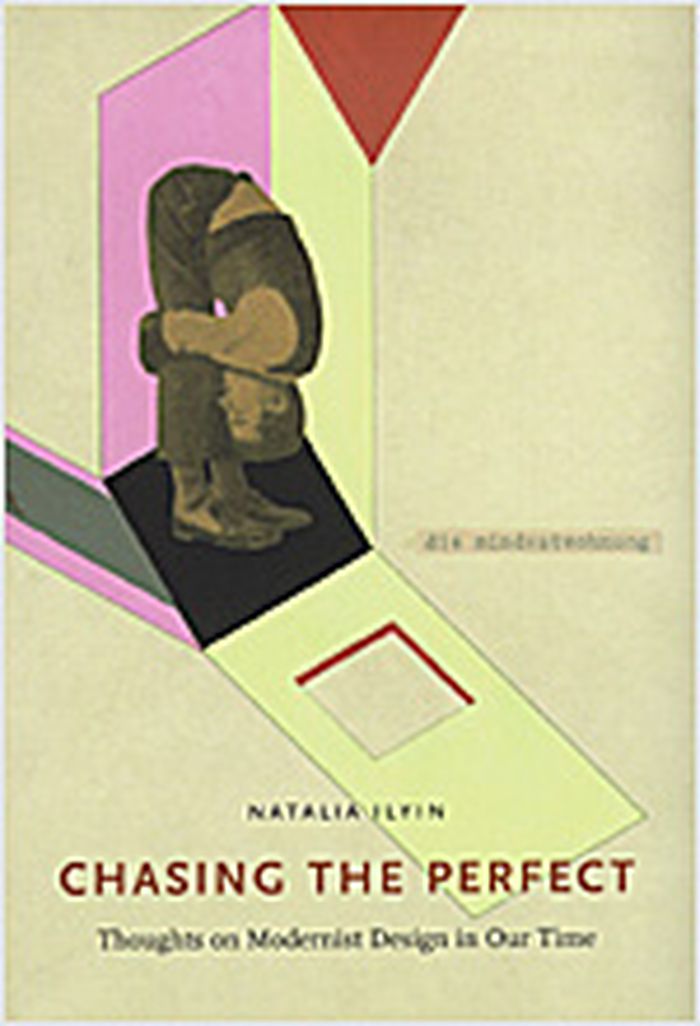
Chasing the perfect : thoughts on modernist design in our time
Actions:
Prix:
$30.00
(disponible sur commande)
Résumé:
In "Chasing the perfect" writer/designer Natalia Ilyin delivers her observations on design and the world it has molded. According to Ilyin, "Modern design is based on deeply idealist notions, and its inherent perfectionism has dovetailed beautifully with our commodity-based economy's need to keep people itching so that they will buy things and keep the society chugging along. I began "Chasing the perfect" because I started to become aware of this collusion, this silent pressure that a language of design based in perfectionism had brought to bear on how I developed as a person." "Chasing the perfect" is especially relevant in our times as interest in graphic, industrial, and architectural design moves more and more into mainstream culture. Each of the 10 chapters features Ilyin’s accessible and often hilarious writing, which is highlighted with a broad range of images-some quite unexpected-from the designed world around us.
Chasing the perfect : thoughts on modernist design in our time
Actions:
Prix:
$30.00
(disponible sur commande)
Résumé:
In "Chasing the perfect" writer/designer Natalia Ilyin delivers her observations on design and the world it has molded. According to Ilyin, "Modern design is based on deeply idealist notions, and its inherent perfectionism has dovetailed beautifully with our commodity-based economy's need to keep people itching so that they will buy things and keep the society chugging along. I began "Chasing the perfect" because I started to become aware of this collusion, this silent pressure that a language of design based in perfectionism had brought to bear on how I developed as a person." "Chasing the perfect" is especially relevant in our times as interest in graphic, industrial, and architectural design moves more and more into mainstream culture. Each of the 10 chapters features Ilyin’s accessible and often hilarious writing, which is highlighted with a broad range of images-some quite unexpected-from the designed world around us.
Classification:
livres
livres
Publication:
janvier 1900, New York
janvier 1900, New York
Sujet:
Théorie du design
Théorie du design
Classification:
livres
livres
Titre:
Shaping things
Shaping things
Actions:
Prix:
$27.50
(disponible sur commande)
Résumé:
Sterling offers a brilliant, often hilarious history of shaped things. We have moved from an age of artefacts, made by hand, through complex machines, to the current era of "gizmos." New forms of design and manufacture are appearing that lack historical precedent, he writes; but the production methods, using archaic forms of energy and materials that are finite and toxic,(...)
$27.50
(disponible sur commande)
Résumé:
Sterling offers a brilliant, often hilarious history of shaped things. We have moved from an age of artefacts, made by hand, through complex machines, to the current era of "gizmos." New forms of design and manufacture are appearing that lack historical precedent, he writes; but the production methods, using archaic forms of energy and materials that are finite and toxic,(...)
Sujet:
Théorie du design
Théorie du design
Publication:
septembre 2005, Cambridge, Massachusetts
septembre 2005, Cambridge, Massachusetts
Titre:
Shaping things
Actions:
Prix:
$27.50
(disponible sur commande)
Résumé:
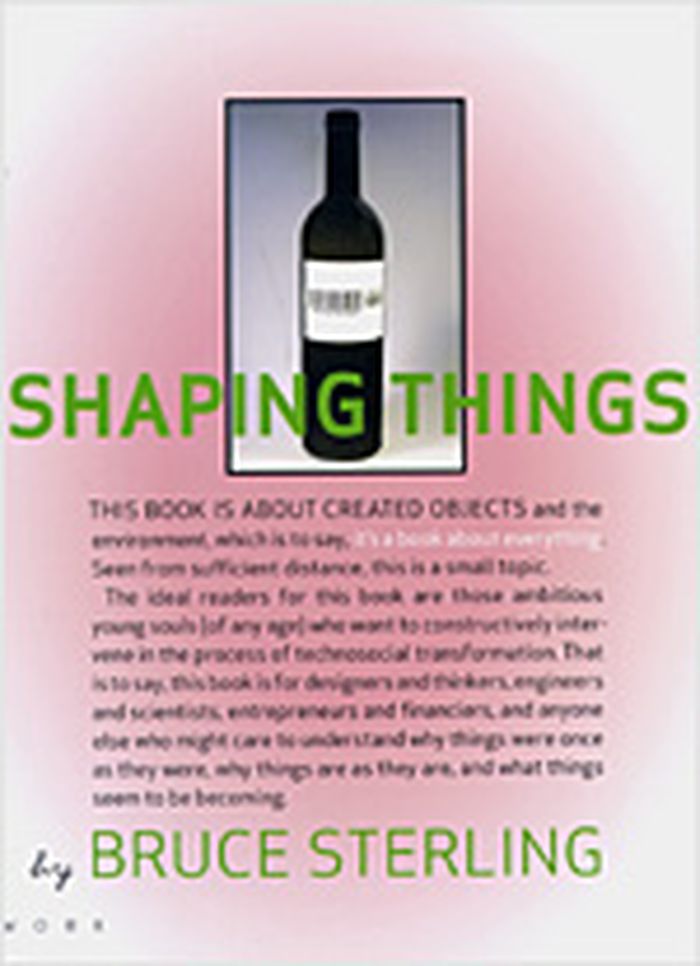
Sterling offers a brilliant, often hilarious history of shaped things. We have moved from an age of artefacts, made by hand, through complex machines, to the current era of "gizmos." New forms of design and manufacture are appearing that lack historical precedent, he writes; but the production methods, using archaic forms of energy and materials that are finite and toxic, are not sustainable. The future will see a new kind of object - we have the primitive forms of them now in our pockets and briefcases: user-alterable, baroquely multi-featured, and programmable - that will be sustainable, enhanceable, and uniquely identifiable. Sterling coins the term "spime" for them, these future manufactured objects with informational support so extensive and rich that they are regarded as material instantiations of an immaterial system. Spimes are designed on screens, fabricated by digital means, and precisely tracked through space and time. They are made of substances that can be folded back into the production stream of future spimes, challenging all of us to become involved in their production. Spimes are coming, says Sterling. We will need these objects in order to live; we won't be able to surrender their advantages without awful consequences. The vision of ‘Shaping Things’ is given material form by the intricate design of Lorraine Wild. ‘Shaping Things’ is for designers and thinkers, engineers and scientists, entrepreneurs and financiers - and anyone who wants to understand and be part of the process of techno-social transformation.
Shaping things
Actions:
Prix:
$27.50
(disponible sur commande)
Résumé:
Sterling offers a brilliant, often hilarious history of shaped things. We have moved from an age of artefacts, made by hand, through complex machines, to the current era of "gizmos." New forms of design and manufacture are appearing that lack historical precedent, he writes; but the production methods, using archaic forms of energy and materials that are finite and toxic, are not sustainable. The future will see a new kind of object - we have the primitive forms of them now in our pockets and briefcases: user-alterable, baroquely multi-featured, and programmable - that will be sustainable, enhanceable, and uniquely identifiable. Sterling coins the term "spime" for them, these future manufactured objects with informational support so extensive and rich that they are regarded as material instantiations of an immaterial system. Spimes are designed on screens, fabricated by digital means, and precisely tracked through space and time. They are made of substances that can be folded back into the production stream of future spimes, challenging all of us to become involved in their production. Spimes are coming, says Sterling. We will need these objects in order to live; we won't be able to surrender their advantages without awful consequences. The vision of ‘Shaping Things’ is given material form by the intricate design of Lorraine Wild. ‘Shaping Things’ is for designers and thinkers, engineers and scientists, entrepreneurs and financiers - and anyone who wants to understand and be part of the process of techno-social transformation.
Classification:
livres
livres
Publication:
septembre 2005, Cambridge, Massachusetts
septembre 2005, Cambridge, Massachusetts
Sujet:
Théorie du design
Théorie du design
Classification:
livres
livres
Actions:
Prix:
$74.95
(disponible sur commande)
Résumé:
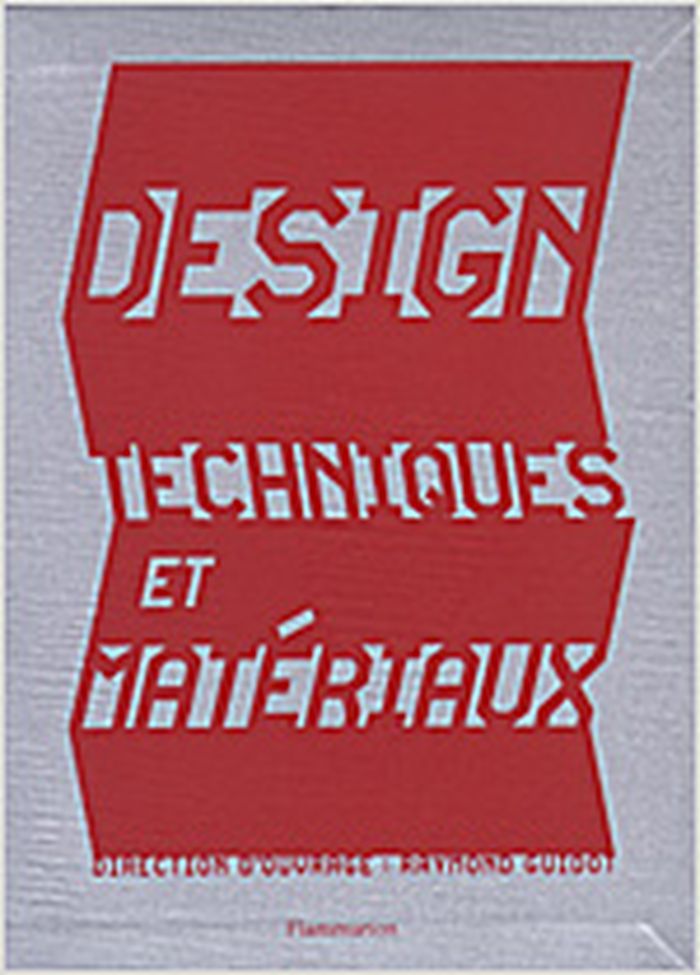
Expliquer le design, son histoire et ses recherches les plus contemporaines, en étudiant ses techniques de conception, de fabrication et de réalisation ainsi que les matériaux traditionnels et innovants utilisés: tel est l'objet de cet ouvrage. Sous la direction de Raymond Guidot, porte-parole reconnu du design, quatre textes, illustrés de nombreuses vues d'ateliers et(...)
$74.95
(disponible sur commande)
Résumé:
Expliquer le design, son histoire et ses recherches les plus contemporaines, en étudiant ses techniques de conception, de fabrication et de réalisation ainsi que les matériaux traditionnels et innovants utilisés: tel est l'objet de cet ouvrage. Sous la direction de Raymond Guidot, porte-parole reconnu du design, quatre textes, illustrés de nombreuses vues d'ateliers et(...)
Sujet:
Théorie du design
Théorie du design
Publication:
novembre 2005, Paris
novembre 2005, Paris
Titre:
Design : techniques et matériaux
Actions:
Prix:
$74.95
(disponible sur commande)
Résumé:
Expliquer le design, son histoire et ses recherches les plus contemporaines, en étudiant ses techniques de conception, de fabrication et de réalisation ainsi que les matériaux traditionnels et innovants utilisés: tel est l'objet de cet ouvrage. Sous la direction de Raymond Guidot, porte-parole reconnu du design, quatre textes, illustrés de nombreuses vues d'ateliers et d'usines, de documents préparatoires et didactiques, d'objets finis, abordent, à l'intention du grand public comme des spécialistes, de quelle manière concevoir et fabriquer le beau et l'utile, explicitent les enjeux technologiques de cette discipline.
Design : techniques et matériaux
Actions:
Prix:
$74.95
(disponible sur commande)
Résumé:
Expliquer le design, son histoire et ses recherches les plus contemporaines, en étudiant ses techniques de conception, de fabrication et de réalisation ainsi que les matériaux traditionnels et innovants utilisés: tel est l'objet de cet ouvrage. Sous la direction de Raymond Guidot, porte-parole reconnu du design, quatre textes, illustrés de nombreuses vues d'ateliers et d'usines, de documents préparatoires et didactiques, d'objets finis, abordent, à l'intention du grand public comme des spécialistes, de quelle manière concevoir et fabriquer le beau et l'utile, explicitent les enjeux technologiques de cette discipline.
Classification:
livres
livres
Publication:
novembre 2005, Paris
novembre 2005, Paris
Sujet:
Théorie du design
Théorie du design
Classification:
livres
livres
Actions:
Prix:
$39.95
(disponible sur commande)
Résumé:
We're filling up the world with technology and devices, but we've lost sight of an important question: What is this stuff for? What value does it add to our lives? So asks author John Thackara in his new book, “In the Bubble: Designing for a Complex World”. These are tough questions for the pushers of technology to answer. Our economic system is centred on technology,(...)
$39.95
(disponible sur commande)
Résumé:
We're filling up the world with technology and devices, but we've lost sight of an important question: What is this stuff for? What value does it add to our lives? So asks author John Thackara in his new book, “In the Bubble: Designing for a Complex World”. These are tough questions for the pushers of technology to answer. Our economic system is centred on technology,(...)
Titre:
In the bubble : designing in a complex world
Actions:
Prix:
$39.95
(disponible sur commande)
Résumé:
We're filling up the world with technology and devices, but we've lost sight of an important question: What is this stuff for? What value does it add to our lives? So asks author John Thackara in his new book, “In the Bubble: Designing for a Complex World”. These are tough questions for the pushers of technology to answer. Our economic system is centred on technology, so it would be no small matter if "tech" ceased to be an end-in-itself in our daily lives. Technology is not going to go away, but the time to discuss the end it will serve is before we deploy it, not after. We need to ask what purpose will be served by the broadband communications, smart materials, wearable computing, and connected appliances that we're unleashing upon the world. We need to ask what impact all this stuff will have on our daily lives. Who will look after it, and how? ”In the Bubble” is about a world based less on stuff and more on people. Thackara describes a transformation that is taking place now -- not in a remote science fiction future; it's not about, as he puts it, "the schlock of the new" but about radical innovation already emerging in daily life. We are regaining respect for what people can do that technology can't. In the Bubble describes services designed to help people carry out daily activities in new ways. Many of these services involve technology -- ranging from body implants to wide-bodied jets. But objects and systems play a supporting role in a people-centred world. The design focus is on services, not things. And new principles -- above all, lightness -- inform the way these services are designed and used. At the heart of In the Bubble is a belief, informed by a wealth of real-world examples, that ethics and responsibility can inform design decisions without impeding social and technical innovation.
In the bubble : designing in a complex world
Actions:
Prix:
$39.95
(disponible sur commande)
Résumé:
We're filling up the world with technology and devices, but we've lost sight of an important question: What is this stuff for? What value does it add to our lives? So asks author John Thackara in his new book, “In the Bubble: Designing for a Complex World”. These are tough questions for the pushers of technology to answer. Our economic system is centred on technology, so it would be no small matter if "tech" ceased to be an end-in-itself in our daily lives. Technology is not going to go away, but the time to discuss the end it will serve is before we deploy it, not after. We need to ask what purpose will be served by the broadband communications, smart materials, wearable computing, and connected appliances that we're unleashing upon the world. We need to ask what impact all this stuff will have on our daily lives. Who will look after it, and how? ”In the Bubble” is about a world based less on stuff and more on people. Thackara describes a transformation that is taking place now -- not in a remote science fiction future; it's not about, as he puts it, "the schlock of the new" but about radical innovation already emerging in daily life. We are regaining respect for what people can do that technology can't. In the Bubble describes services designed to help people carry out daily activities in new ways. Many of these services involve technology -- ranging from body implants to wide-bodied jets. But objects and systems play a supporting role in a people-centred world. The design focus is on services, not things. And new principles -- above all, lightness -- inform the way these services are designed and used. At the heart of In the Bubble is a belief, informed by a wealth of real-world examples, that ethics and responsibility can inform design decisions without impeding social and technical innovation.
Classification:
livres
livres
Publication:
avril 2005, London
avril 2005, London
Sujet:
Théorie du design
Théorie du design


