


12622 Résultats
Niveau de description archivistique:
Série(s)
Série(s)
Numéro de référence:
AP162.S7
Description:
Series documents the contribution of architect Hans Scharoun to the correspondence circle of Die gläserne Kette, with Scharoun writing under the pseudonym Hannes. Born in 1893 in Bremen, Germany, Scharoun studied archictecture at the Technische Hochschule at Berlin-Charlottenburg between 1912 and 1914. From 1915 to 1918 he worked on a military commission for the rebuilding of East Prussia. In 1919, he joined the Arbeitsrat für Kunst led by Bruno Taut. From 1919 to 1925 he worked independently, taking on private and public commissions as well as architectural projects for exhibitions. He taught at the Akademie für Kunst und Gewerbe in Breslau from 1925 to 1932, and at the Technische Universität Berlin as a town planning professor from 1946 to 1958. In 1956, he won the first prize of the competition for the Philharmonie concert hall in West Berlin. He died in Berlin in 1972. (Source: Ian Boyd Whyte, Bruno Taut and the Architecture of Activism. Cambridge: Cambridge University Press, 1982) The series comprises part of the correspondence of Hans Scharoun to the Die gläserne Kette circle and related drawings.
AP162.S7
Description:
Series documents the contribution of architect Hans Scharoun to the correspondence circle of Die gläserne Kette, with Scharoun writing under the pseudonym Hannes. Born in 1893 in Bremen, Germany, Scharoun studied archictecture at the Technische Hochschule at Berlin-Charlottenburg between 1912 and 1914. From 1915 to 1918 he worked on a military commission for the rebuilding of East Prussia. In 1919, he joined the Arbeitsrat für Kunst led by Bruno Taut. From 1919 to 1925 he worked independently, taking on private and public commissions as well as architectural projects for exhibitions. He taught at the Akademie für Kunst und Gewerbe in Breslau from 1925 to 1932, and at the Technische Universität Berlin as a town planning professor from 1946 to 1958. In 1956, he won the first prize of the competition for the Philharmonie concert hall in West Berlin. He died in Berlin in 1972. (Source: Ian Boyd Whyte, Bruno Taut and the Architecture of Activism. Cambridge: Cambridge University Press, 1982) The series comprises part of the correspondence of Hans Scharoun to the Die gläserne Kette circle and related drawings.
Personnes et institutions:
Date:
between 1919 and 1920
between 1919 and 1920
Titre:
Hans Scharoun
Actions:
AP162.S7
Description:
Series documents the contribution of architect Hans Scharoun to the correspondence circle of Die gläserne Kette, with Scharoun writing under the pseudonym Hannes. Born in 1893 in Bremen, Germany, Scharoun studied archictecture at the Technische Hochschule at Berlin-Charlottenburg between 1912 and 1914. From 1915 to 1918 he worked on a military commission for the rebuilding of East Prussia. In 1919, he joined the Arbeitsrat für Kunst led by Bruno Taut. From 1919 to 1925 he worked independently, taking on private and public commissions as well as architectural projects for exhibitions. He taught at the Akademie für Kunst und Gewerbe in Breslau from 1925 to 1932, and at the Technische Universität Berlin as a town planning professor from 1946 to 1958. In 1956, he won the first prize of the competition for the Philharmonie concert hall in West Berlin. He died in Berlin in 1972. (Source: Ian Boyd Whyte, Bruno Taut and the Architecture of Activism. Cambridge: Cambridge University Press, 1982) The series comprises part of the correspondence of Hans Scharoun to the Die gläserne Kette circle and related drawings.
Hans Scharoun
Actions:
AP162.S7
Description:
Series documents the contribution of architect Hans Scharoun to the correspondence circle of Die gläserne Kette, with Scharoun writing under the pseudonym Hannes. Born in 1893 in Bremen, Germany, Scharoun studied archictecture at the Technische Hochschule at Berlin-Charlottenburg between 1912 and 1914. From 1915 to 1918 he worked on a military commission for the rebuilding of East Prussia. In 1919, he joined the Arbeitsrat für Kunst led by Bruno Taut. From 1919 to 1925 he worked independently, taking on private and public commissions as well as architectural projects for exhibitions. He taught at the Akademie für Kunst und Gewerbe in Breslau from 1925 to 1932, and at the Technische Universität Berlin as a town planning professor from 1946 to 1958. In 1956, he won the first prize of the competition for the Philharmonie concert hall in West Berlin. He died in Berlin in 1972. (Source: Ian Boyd Whyte, Bruno Taut and the Architecture of Activism. Cambridge: Cambridge University Press, 1982) The series comprises part of the correspondence of Hans Scharoun to the Die gläserne Kette circle and related drawings.
Niveau de description archivistique:
series
series
Date:
between 1919 and 1920
between 1919 and 1920
Personnes et institutions:
Niveau de description archivistique:
Sous-série
Sous-série
Titre:
Photographs and negatives
Photographs and negatives
Numéro de référence:
AP140.S2.SS7.D1
Description:
The sub-series documents some of the early architectural interests of James Stirling, the work and activities of the successive firms of Stirling and Gowan; James Stirling; James Stirling and Partner; and James Stirling, Michael Wilford, and Associates, as well as office personnel and events and travels. Material in this file was produced between probably the 1950s and 1992. The subs-series contains photographs, including views of Liverpool and of Le Corbusier's buildings taken by James Stirling. It also contains several portraits of James Stirling, Michael Wilford and colleagues, interior views of the office, and views of drawings, models and of completed buildings by the firm, by photographers Geoff Beeckman, Martin Charles, John Donat Photography, Marlies Hentrup, Klaus Lehnartz, and Ray Williams.
AP140.S2.SS7.D1
Description:
The sub-series documents some of the early architectural interests of James Stirling, the work and activities of the successive firms of Stirling and Gowan; James Stirling; James Stirling and Partner; and James Stirling, Michael Wilford, and Associates, as well as office personnel and events and travels. Material in this file was produced between probably the 1950s and 1992. The subs-series contains photographs, including views of Liverpool and of Le Corbusier's buildings taken by James Stirling. It also contains several portraits of James Stirling, Michael Wilford and colleagues, interior views of the office, and views of drawings, models and of completed buildings by the firm, by photographers Geoff Beeckman, Martin Charles, John Donat Photography, Marlies Hentrup, Klaus Lehnartz, and Ray Williams.
Personnes et institutions:
Date:
circa 1950s-1992
circa 1950s-1992
Titre:
Photographs and negatives
Actions:
AP140.S2.SS7.D1
Description:
The sub-series documents some of the early architectural interests of James Stirling, the work and activities of the successive firms of Stirling and Gowan; James Stirling; James Stirling and Partner; and James Stirling, Michael Wilford, and Associates, as well as office personnel and events and travels. Material in this file was produced between probably the 1950s and 1992. The subs-series contains photographs, including views of Liverpool and of Le Corbusier's buildings taken by James Stirling. It also contains several portraits of James Stirling, Michael Wilford and colleagues, interior views of the office, and views of drawings, models and of completed buildings by the firm, by photographers Geoff Beeckman, Martin Charles, John Donat Photography, Marlies Hentrup, Klaus Lehnartz, and Ray Williams.
Photographs and negatives
Actions:
AP140.S2.SS7.D1
Description:
The sub-series documents some of the early architectural interests of James Stirling, the work and activities of the successive firms of Stirling and Gowan; James Stirling; James Stirling and Partner; and James Stirling, Michael Wilford, and Associates, as well as office personnel and events and travels. Material in this file was produced between probably the 1950s and 1992. The subs-series contains photographs, including views of Liverpool and of Le Corbusier's buildings taken by James Stirling. It also contains several portraits of James Stirling, Michael Wilford and colleagues, interior views of the office, and views of drawings, models and of completed buildings by the firm, by photographers Geoff Beeckman, Martin Charles, John Donat Photography, Marlies Hentrup, Klaus Lehnartz, and Ray Williams.
Niveau de description archivistique:
File 1
File 1
Date:
circa 1950s-1992
circa 1950s-1992
Personnes et institutions:
Niveau de description archivistique:
Projet
Projet
Titre:
Detroit Think Grid
Detroit Think Grid
Numéro de référence:
AP144.S2.D73
Description:
File documents Detroit Think Grid, an unrealized project for a series of experiments which were to be developed by Price in collaboration with various groups in the Greater Detroit and Oakland area and implemented over a five-year period. Collaborators were to include the municipality, industry, commerce, and the existing education network, particularly Oakland County Community College in Detroit, Michigan. The principle aim of the Detroit Think Grid was to make the education "system" flexible and responsive to the needs of the community and readily accessible to everyone. Detroit Think Grid components include mobile units such as swimming pools, public learning booths and packaged workshops. Material in this group consists of existing conditions documentation concerning Oakland County and Oakland Community College campuses, such as aerial photographs of streets, zoning maps and maps of various townships, maps of traffic flow in Oakland County, and site plans of Oakland Community College campuses. Design development drawings include zoning plans showing present and projected uses of various zones, major transportation modes, patterns, and access points, and predictions for general population, school population, and retail growth within Oakland County. Material from this file was published in "Cedric Price Supplement No. 3", 'Architectural Design', vol. 41, (June 1971), 353-363 and 'Cedric Price-Works II' (London: Architectural Press, 1984), 54, 66. Material in this file was produced between 1957 and 1975, but predominantly between 1969 and 1971. Cedric Price presented a conference at the Cranbrook Institute of Science, in Michigan in 1968 and produced 2 reports for them titled 'Oakland Community College: An Investigation into Educational Servicing' (1968) and 'Oakland Community College: An Investigation into New Forms of Learning' (1968). File contains cartographic materials, design development drawings, photographic materials, reference drawings, and textual records.
AP144.S2.D73
Description:
File documents Detroit Think Grid, an unrealized project for a series of experiments which were to be developed by Price in collaboration with various groups in the Greater Detroit and Oakland area and implemented over a five-year period. Collaborators were to include the municipality, industry, commerce, and the existing education network, particularly Oakland County Community College in Detroit, Michigan. The principle aim of the Detroit Think Grid was to make the education "system" flexible and responsive to the needs of the community and readily accessible to everyone. Detroit Think Grid components include mobile units such as swimming pools, public learning booths and packaged workshops. Material in this group consists of existing conditions documentation concerning Oakland County and Oakland Community College campuses, such as aerial photographs of streets, zoning maps and maps of various townships, maps of traffic flow in Oakland County, and site plans of Oakland Community College campuses. Design development drawings include zoning plans showing present and projected uses of various zones, major transportation modes, patterns, and access points, and predictions for general population, school population, and retail growth within Oakland County. Material from this file was published in "Cedric Price Supplement No. 3", 'Architectural Design', vol. 41, (June 1971), 353-363 and 'Cedric Price-Works II' (London: Architectural Press, 1984), 54, 66. Material in this file was produced between 1957 and 1975, but predominantly between 1969 and 1971. Cedric Price presented a conference at the Cranbrook Institute of Science, in Michigan in 1968 and produced 2 reports for them titled 'Oakland Community College: An Investigation into Educational Servicing' (1968) and 'Oakland Community College: An Investigation into New Forms of Learning' (1968). File contains cartographic materials, design development drawings, photographic materials, reference drawings, and textual records.
Personnes et institutions:
Date:
1957-1975, predominant 1969-1971
1957-1975, predominant 1969-1971
Titre:
Detroit Think Grid
Actions:
AP144.S2.D73
Description:
File documents Detroit Think Grid, an unrealized project for a series of experiments which were to be developed by Price in collaboration with various groups in the Greater Detroit and Oakland area and implemented over a five-year period. Collaborators were to include the municipality, industry, commerce, and the existing education network, particularly Oakland County Community College in Detroit, Michigan. The principle aim of the Detroit Think Grid was to make the education "system" flexible and responsive to the needs of the community and readily accessible to everyone. Detroit Think Grid components include mobile units such as swimming pools, public learning booths and packaged workshops. Material in this group consists of existing conditions documentation concerning Oakland County and Oakland Community College campuses, such as aerial photographs of streets, zoning maps and maps of various townships, maps of traffic flow in Oakland County, and site plans of Oakland Community College campuses. Design development drawings include zoning plans showing present and projected uses of various zones, major transportation modes, patterns, and access points, and predictions for general population, school population, and retail growth within Oakland County. Material from this file was published in "Cedric Price Supplement No. 3", 'Architectural Design', vol. 41, (June 1971), 353-363 and 'Cedric Price-Works II' (London: Architectural Press, 1984), 54, 66. Material in this file was produced between 1957 and 1975, but predominantly between 1969 and 1971. Cedric Price presented a conference at the Cranbrook Institute of Science, in Michigan in 1968 and produced 2 reports for them titled 'Oakland Community College: An Investigation into Educational Servicing' (1968) and 'Oakland Community College: An Investigation into New Forms of Learning' (1968). File contains cartographic materials, design development drawings, photographic materials, reference drawings, and textual records.
Detroit Think Grid
Actions:
AP144.S2.D73
Description:
File documents Detroit Think Grid, an unrealized project for a series of experiments which were to be developed by Price in collaboration with various groups in the Greater Detroit and Oakland area and implemented over a five-year period. Collaborators were to include the municipality, industry, commerce, and the existing education network, particularly Oakland County Community College in Detroit, Michigan. The principle aim of the Detroit Think Grid was to make the education "system" flexible and responsive to the needs of the community and readily accessible to everyone. Detroit Think Grid components include mobile units such as swimming pools, public learning booths and packaged workshops. Material in this group consists of existing conditions documentation concerning Oakland County and Oakland Community College campuses, such as aerial photographs of streets, zoning maps and maps of various townships, maps of traffic flow in Oakland County, and site plans of Oakland Community College campuses. Design development drawings include zoning plans showing present and projected uses of various zones, major transportation modes, patterns, and access points, and predictions for general population, school population, and retail growth within Oakland County. Material from this file was published in "Cedric Price Supplement No. 3", 'Architectural Design', vol. 41, (June 1971), 353-363 and 'Cedric Price-Works II' (London: Architectural Press, 1984), 54, 66. Material in this file was produced between 1957 and 1975, but predominantly between 1969 and 1971. Cedric Price presented a conference at the Cranbrook Institute of Science, in Michigan in 1968 and produced 2 reports for them titled 'Oakland Community College: An Investigation into Educational Servicing' (1968) and 'Oakland Community College: An Investigation into New Forms of Learning' (1968). File contains cartographic materials, design development drawings, photographic materials, reference drawings, and textual records.
Niveau de description archivistique:
File 73
File 73
Date:
1957-1975, predominant 1969-1971
1957-1975, predominant 1969-1971
Personnes et institutions:
Classification:
expositions
expositions
Actions:
Description:
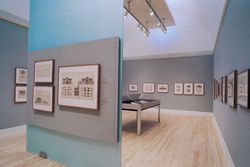
Comme directeur des Bâtiments du Bade, un petit État du sud-ouest de l’Allemagne, Friedrich Weinbrenner (1766-1826) aura la chance peu commune de pouvoir créer à Karlsruhe, sa ville natale, l’un des ensembles architecturaux les plus homogènes qui soit. L’exposition met en lumière l’influence des réformes scientifiques et administratives sur l’architecture urbaine et(...)
Comme directeur des Bâtiments du Bade, un petit État du sud-ouest de l’Allemagne, Friedrich Weinbrenner (1766-1826) aura la chance peu commune de pouvoir créer à Karlsruhe, sa ville natale, l’un des ensembles architecturaux les plus homogènes qui soit. L’exposition met en lumière l’influence des réformes scientifiques et administratives sur l’architecture urbaine et(...)
Localisation:
Salles principales
Salles principales
Date:
31 janvier 1990 au 18 mars 1990
31 janvier 1990 au 18 mars 1990
Titre:
Friedrich Weinbrenner, l'architecte de Karlsruhe
Actions:
Description:
Comme directeur des Bâtiments du Bade, un petit État du sud-ouest de l’Allemagne, Friedrich Weinbrenner (1766-1826) aura la chance peu commune de pouvoir créer à Karlsruhe, sa ville natale, l’un des ensembles architecturaux les plus homogènes qui soit. L’exposition met en lumière l’influence des réformes scientifiques et administratives sur l’architecture urbaine et(...)
Friedrich Weinbrenner, l'architecte de Karlsruhe
Actions:
Description:
Comme directeur des Bâtiments du Bade, un petit État du sud-ouest de l’Allemagne, Friedrich Weinbrenner (1766-1826) aura la chance peu commune de pouvoir créer à Karlsruhe, sa ville natale, l’un des ensembles architecturaux les plus homogènes qui soit. L’exposition met en lumière l’influence des réformes scientifiques et administratives sur l’architecture urbaine et(...)
Classification:
expositions
expositions
Date:
31 janvier 1990 au
18 mars 1990
31 janvier 1990 au
18 mars 1990
Localisation:
Salles principales
Salles principales
Niveau de description archivistique:
Projet
Projet
Numéro de référence:
AP144.S2.D93
Description:
File documents studies for temporary, moveable transportation exchanges. Three site-independent proposals are outlined for sea, land and air transportation: 'Dock Ahoy', a proposal for docks; 'Trucksafe', a truck park; and 'Air Portable', a limited-life airport. "The projects are concerned with finding flexible solutions to problems which occur when conditions change within a transportation network [...] the projects should be a further physical recognition of the value of short term toys." (Cedric Price, textual records). Preliminary design development drawings show plans for parking lot layouts for 'Air Portable'. Charts and graphs include aircraft and boat capacity studies, runway and cargo studies, and value/weight import graphs. Textual records contain correspondence regarding a possible exhibition of this material at the Walker Art Center in 1980. Some material from this file was published in 'Cedric Price-Works II' (London: Architectural Press, 1984), 18, 31. File contains conceptual drawings, design development drawings, and textual records.
AP144.S2.D93
Description:
File documents studies for temporary, moveable transportation exchanges. Three site-independent proposals are outlined for sea, land and air transportation: 'Dock Ahoy', a proposal for docks; 'Trucksafe', a truck park; and 'Air Portable', a limited-life airport. "The projects are concerned with finding flexible solutions to problems which occur when conditions change within a transportation network [...] the projects should be a further physical recognition of the value of short term toys." (Cedric Price, textual records). Preliminary design development drawings show plans for parking lot layouts for 'Air Portable'. Charts and graphs include aircraft and boat capacity studies, runway and cargo studies, and value/weight import graphs. Textual records contain correspondence regarding a possible exhibition of this material at the Walker Art Center in 1980. Some material from this file was published in 'Cedric Price-Works II' (London: Architectural Press, 1984), 18, 31. File contains conceptual drawings, design development drawings, and textual records.
Personnes et institutions:
Date:
1973-1990, predominant 1973-1979
1973-1990, predominant 1973-1979
Titre:
Trucksafe Air Portable Dock Ahoy
Actions:
AP144.S2.D93
Description:
File documents studies for temporary, moveable transportation exchanges. Three site-independent proposals are outlined for sea, land and air transportation: 'Dock Ahoy', a proposal for docks; 'Trucksafe', a truck park; and 'Air Portable', a limited-life airport. "The projects are concerned with finding flexible solutions to problems which occur when conditions change within a transportation network [...] the projects should be a further physical recognition of the value of short term toys." (Cedric Price, textual records). Preliminary design development drawings show plans for parking lot layouts for 'Air Portable'. Charts and graphs include aircraft and boat capacity studies, runway and cargo studies, and value/weight import graphs. Textual records contain correspondence regarding a possible exhibition of this material at the Walker Art Center in 1980. Some material from this file was published in 'Cedric Price-Works II' (London: Architectural Press, 1984), 18, 31. File contains conceptual drawings, design development drawings, and textual records.
Trucksafe Air Portable Dock Ahoy
Actions:
AP144.S2.D93
Description:
File documents studies for temporary, moveable transportation exchanges. Three site-independent proposals are outlined for sea, land and air transportation: 'Dock Ahoy', a proposal for docks; 'Trucksafe', a truck park; and 'Air Portable', a limited-life airport. "The projects are concerned with finding flexible solutions to problems which occur when conditions change within a transportation network [...] the projects should be a further physical recognition of the value of short term toys." (Cedric Price, textual records). Preliminary design development drawings show plans for parking lot layouts for 'Air Portable'. Charts and graphs include aircraft and boat capacity studies, runway and cargo studies, and value/weight import graphs. Textual records contain correspondence regarding a possible exhibition of this material at the Walker Art Center in 1980. Some material from this file was published in 'Cedric Price-Works II' (London: Architectural Press, 1984), 18, 31. File contains conceptual drawings, design development drawings, and textual records.
Niveau de description archivistique:
File 93
File 93
Date:
1973-1990, predominant 1973-1979
1973-1990, predominant 1973-1979
Personnes et institutions:
Niveau de description archivistique:
Projet
Projet
Numéro de référence:
AP018.S1.1967.PR02
Description:
This project series documents terminal 2 at Toronto International Airport in Mississauga, Ontario from 1967-1972. The office identified the project number as 67121. This project consisted of the first stage of phase two of the building's construction. The three-storey terminal had a linear design with 31 gates and was commissioned by the government Department of Transport Air Services. Terminal One, known as Aeroquay One and also designed by John B. Parkin Associates, could no longer accommodate the growing number of passengers and the wingspan of larger jets. This terminal was constructed to meet the new needs of the airport. The project is recorded through reprographic copies of drawings dating from 1970-1971, which include construction plans, elevations, details, and mechanical, electrical and structural drawings. Some drawings in this project series were created by the architectural firm Searle, Wilbee, Rowland, which was one of the names used for Parkin's firm after the merger of John B. Parkin Associates with Winnipeg-based firm Smith, Carter and Searle.
AP018.S1.1967.PR02
Description:
This project series documents terminal 2 at Toronto International Airport in Mississauga, Ontario from 1967-1972. The office identified the project number as 67121. This project consisted of the first stage of phase two of the building's construction. The three-storey terminal had a linear design with 31 gates and was commissioned by the government Department of Transport Air Services. Terminal One, known as Aeroquay One and also designed by John B. Parkin Associates, could no longer accommodate the growing number of passengers and the wingspan of larger jets. This terminal was constructed to meet the new needs of the airport. The project is recorded through reprographic copies of drawings dating from 1970-1971, which include construction plans, elevations, details, and mechanical, electrical and structural drawings. Some drawings in this project series were created by the architectural firm Searle, Wilbee, Rowland, which was one of the names used for Parkin's firm after the merger of John B. Parkin Associates with Winnipeg-based firm Smith, Carter and Searle.
Personnes et institutions:
Date:
1970-1971
1970-1971
Titre:
Toronto International Airport Terminal Number Two, Phase Two Stage One, Mississauga, Ontario (1967-1972)
Actions:
AP018.S1.1967.PR02
Description:
This project series documents terminal 2 at Toronto International Airport in Mississauga, Ontario from 1967-1972. The office identified the project number as 67121. This project consisted of the first stage of phase two of the building's construction. The three-storey terminal had a linear design with 31 gates and was commissioned by the government Department of Transport Air Services. Terminal One, known as Aeroquay One and also designed by John B. Parkin Associates, could no longer accommodate the growing number of passengers and the wingspan of larger jets. This terminal was constructed to meet the new needs of the airport. The project is recorded through reprographic copies of drawings dating from 1970-1971, which include construction plans, elevations, details, and mechanical, electrical and structural drawings. Some drawings in this project series were created by the architectural firm Searle, Wilbee, Rowland, which was one of the names used for Parkin's firm after the merger of John B. Parkin Associates with Winnipeg-based firm Smith, Carter and Searle.
Toronto International Airport Terminal Number Two, Phase Two Stage One, Mississauga, Ontario (1967-1972)
Actions:
AP018.S1.1967.PR02
Description:
This project series documents terminal 2 at Toronto International Airport in Mississauga, Ontario from 1967-1972. The office identified the project number as 67121. This project consisted of the first stage of phase two of the building's construction. The three-storey terminal had a linear design with 31 gates and was commissioned by the government Department of Transport Air Services. Terminal One, known as Aeroquay One and also designed by John B. Parkin Associates, could no longer accommodate the growing number of passengers and the wingspan of larger jets. This terminal was constructed to meet the new needs of the airport. The project is recorded through reprographic copies of drawings dating from 1970-1971, which include construction plans, elevations, details, and mechanical, electrical and structural drawings. Some drawings in this project series were created by the architectural firm Searle, Wilbee, Rowland, which was one of the names used for Parkin's firm after the merger of John B. Parkin Associates with Winnipeg-based firm Smith, Carter and Searle.
Niveau de description archivistique:
Project
Project
Date:
1970-1971
1970-1971
Personnes et institutions:
Classification:
dessins
dessins
![Plan, elevation and section for a bearing wall [?] for Notre-Dame de Montréal for the renovations of the 1860s](/img-collection/yhlqF2gHeRgyaFHuQPZYmznRFwY=/500x294/9335.jpg)
Numéro de référence:
AR1996:1001:232
Description:
- The inscribed titles on two drawings by Théophile Fahrland indicate that the subjects are a "tambour" [drum] (AR1996:1001:232) and details for a "tambour" (AR1996:1001:231) for Notre-Dame de Montréal. The subject of these drawings is identified as a "bearing wall [?]", since the definition of a "drum" - a vertical wall, either circular or polygonal in plan, that carries a dome - apparently does not apply in this case (Art and Architecture Thesaurus). Further research is required to determine the subject of these drawings more precisely.
AR1996:1001:232
Description:
- The inscribed titles on two drawings by Théophile Fahrland indicate that the subjects are a "tambour" [drum] (AR1996:1001:232) and details for a "tambour" (AR1996:1001:231) for Notre-Dame de Montréal. The subject of these drawings is identified as a "bearing wall [?]", since the definition of a "drum" - a vertical wall, either circular or polygonal in plan, that carries a dome - apparently does not apply in this case (Art and Architecture Thesaurus). Further research is required to determine the subject of these drawings more precisely.
Personnes et institutions:
Sujet:
architecture
architecture
Date:
contracted 20 September 1862
contracted 20 September 1862
Titre:
Plan, elevation and section for a bearing wall [?] for Notre-Dame de Montréal for the renovations of the 1860s
Actions:
AR1996:1001:232
Description:
- The inscribed titles on two drawings by Théophile Fahrland indicate that the subjects are a "tambour" [drum] (AR1996:1001:232) and details for a "tambour" (AR1996:1001:231) for Notre-Dame de Montréal. The subject of these drawings is identified as a "bearing wall [?]", since the definition of a "drum" - a vertical wall, either circular or polygonal in plan, that carries a dome - apparently does not apply in this case (Art and Architecture Thesaurus). Further research is required to determine the subject of these drawings more precisely.
Plan, elevation and section for a bearing wall [?] for Notre-Dame de Montréal for the renovations of the 1860s
Actions:
AR1996:1001:232
Description:
- The inscribed titles on two drawings by Théophile Fahrland indicate that the subjects are a "tambour" [drum] (AR1996:1001:232) and details for a "tambour" (AR1996:1001:231) for Notre-Dame de Montréal. The subject of these drawings is identified as a "bearing wall [?]", since the definition of a "drum" - a vertical wall, either circular or polygonal in plan, that carries a dome - apparently does not apply in this case (Art and Architecture Thesaurus). Further research is required to determine the subject of these drawings more precisely.
Classification:
dessins
dessins
Date:
contracted 20 September 1862
contracted 20 September 1862
Personnes et institutions:
Sujet:
architecture
architecture
Niveau de description archivistique:
Projet
Projet
Numéro de référence:
AP164.S1.2002.D9
Description:
The project series documents the urban planning project under the consortium “Chamartin Operation” for the extension of the avenue Paseo de la Castellana. The firm identified the project as number 153. “Abalos & Herreros developed the architectural consultancy for this ambitious project initiated by R. Bofill and nowadays its in time of adaptation to the urban conditions and the real conditions under the direction of J. M. Ezquiaga. The prime aim of [their] work consists of the establishment of the constructed typologies, the occupation models and the relation between public and housing space for searching a possible compatibility in an environment that soon will be seen as centric in the urban map of Madrid.” (ARCH270975) Documenting the project are conceptual and design development drawings, photographic materials, project descriptions, and notes.
AP164.S1.2002.D9
Description:
The project series documents the urban planning project under the consortium “Chamartin Operation” for the extension of the avenue Paseo de la Castellana. The firm identified the project as number 153. “Abalos & Herreros developed the architectural consultancy for this ambitious project initiated by R. Bofill and nowadays its in time of adaptation to the urban conditions and the real conditions under the direction of J. M. Ezquiaga. The prime aim of [their] work consists of the establishment of the constructed typologies, the occupation models and the relation between public and housing space for searching a possible compatibility in an environment that soon will be seen as centric in the urban map of Madrid.” (ARCH270975) Documenting the project are conceptual and design development drawings, photographic materials, project descriptions, and notes.
Personnes et institutions:
Date:
circa 2002
circa 2002
Titre:
Operación Chamartin, Madrid, Spain (2002)
Actions:
AP164.S1.2002.D9
Description:
The project series documents the urban planning project under the consortium “Chamartin Operation” for the extension of the avenue Paseo de la Castellana. The firm identified the project as number 153. “Abalos & Herreros developed the architectural consultancy for this ambitious project initiated by R. Bofill and nowadays its in time of adaptation to the urban conditions and the real conditions under the direction of J. M. Ezquiaga. The prime aim of [their] work consists of the establishment of the constructed typologies, the occupation models and the relation between public and housing space for searching a possible compatibility in an environment that soon will be seen as centric in the urban map of Madrid.” (ARCH270975) Documenting the project are conceptual and design development drawings, photographic materials, project descriptions, and notes.
Operación Chamartin, Madrid, Spain (2002)
Actions:
AP164.S1.2002.D9
Description:
The project series documents the urban planning project under the consortium “Chamartin Operation” for the extension of the avenue Paseo de la Castellana. The firm identified the project as number 153. “Abalos & Herreros developed the architectural consultancy for this ambitious project initiated by R. Bofill and nowadays its in time of adaptation to the urban conditions and the real conditions under the direction of J. M. Ezquiaga. The prime aim of [their] work consists of the establishment of the constructed typologies, the occupation models and the relation between public and housing space for searching a possible compatibility in an environment that soon will be seen as centric in the urban map of Madrid.” (ARCH270975) Documenting the project are conceptual and design development drawings, photographic materials, project descriptions, and notes.
Niveau de description archivistique:
Project
Project
Date:
circa 2002
circa 2002
Personnes et institutions:
Niveau de description archivistique:
Projet
Projet
Numéro de référence:
AP075.S1.1992.PR04
Description:
Project series documents Cornelia Hahn Oberlander's landscape project for Thunderbird Housing at University of British Columbia, in Vancouver, British Columbia. Orberlander worked on this project from 1992-1995 with architectural firm Waisman Dewar Grout Carter. Oberlander landscape design for this project included planting beds, trees and espaliers to screen the windows from the paved commun courtyard. The courtyard also includes a circular barbecue construsted by continuing pavers, the same used as pavement for the courtyard. She also included planting of trees along the facades of the building and along the pathway connecting the student housing to the rest of the campus pavilions. The project series includes sketches, design development drawings, including landscape concept plans with plant lists, landscape elevations and sections, presentation drawings, and working drawings, such as irrigation plans, site plans, landscape plans and planting plans. The project is also documented through working drawings for the new student housing used as reference and photographs of the landscaping work. Textual records for this project comprises a proposal, concept notes by Oberlander, correspondence, including with clients, architects and consultants, and specifications.
AP075.S1.1992.PR04
Description:
Project series documents Cornelia Hahn Oberlander's landscape project for Thunderbird Housing at University of British Columbia, in Vancouver, British Columbia. Orberlander worked on this project from 1992-1995 with architectural firm Waisman Dewar Grout Carter. Oberlander landscape design for this project included planting beds, trees and espaliers to screen the windows from the paved commun courtyard. The courtyard also includes a circular barbecue construsted by continuing pavers, the same used as pavement for the courtyard. She also included planting of trees along the facades of the building and along the pathway connecting the student housing to the rest of the campus pavilions. The project series includes sketches, design development drawings, including landscape concept plans with plant lists, landscape elevations and sections, presentation drawings, and working drawings, such as irrigation plans, site plans, landscape plans and planting plans. The project is also documented through working drawings for the new student housing used as reference and photographs of the landscaping work. Textual records for this project comprises a proposal, concept notes by Oberlander, correspondence, including with clients, architects and consultants, and specifications.
Personnes et institutions:
Date:
1991-2001
1991-2001
Titre:
Thunderbird Housing, University of British Columbia, Vancouver, British Columbia (1992-1996)
Actions:
AP075.S1.1992.PR04
Description:
Project series documents Cornelia Hahn Oberlander's landscape project for Thunderbird Housing at University of British Columbia, in Vancouver, British Columbia. Orberlander worked on this project from 1992-1995 with architectural firm Waisman Dewar Grout Carter. Oberlander landscape design for this project included planting beds, trees and espaliers to screen the windows from the paved commun courtyard. The courtyard also includes a circular barbecue construsted by continuing pavers, the same used as pavement for the courtyard. She also included planting of trees along the facades of the building and along the pathway connecting the student housing to the rest of the campus pavilions. The project series includes sketches, design development drawings, including landscape concept plans with plant lists, landscape elevations and sections, presentation drawings, and working drawings, such as irrigation plans, site plans, landscape plans and planting plans. The project is also documented through working drawings for the new student housing used as reference and photographs of the landscaping work. Textual records for this project comprises a proposal, concept notes by Oberlander, correspondence, including with clients, architects and consultants, and specifications.
Thunderbird Housing, University of British Columbia, Vancouver, British Columbia (1992-1996)
Actions:
AP075.S1.1992.PR04
Description:
Project series documents Cornelia Hahn Oberlander's landscape project for Thunderbird Housing at University of British Columbia, in Vancouver, British Columbia. Orberlander worked on this project from 1992-1995 with architectural firm Waisman Dewar Grout Carter. Oberlander landscape design for this project included planting beds, trees and espaliers to screen the windows from the paved commun courtyard. The courtyard also includes a circular barbecue construsted by continuing pavers, the same used as pavement for the courtyard. She also included planting of trees along the facades of the building and along the pathway connecting the student housing to the rest of the campus pavilions. The project series includes sketches, design development drawings, including landscape concept plans with plant lists, landscape elevations and sections, presentation drawings, and working drawings, such as irrigation plans, site plans, landscape plans and planting plans. The project is also documented through working drawings for the new student housing used as reference and photographs of the landscaping work. Textual records for this project comprises a proposal, concept notes by Oberlander, correspondence, including with clients, architects and consultants, and specifications.
Niveau de description archivistique:
Project
Project
Date:
1991-2001
1991-2001
Personnes et institutions:
Niveau de description archivistique:
Projet
Projet
Numéro de référence:
AP178.S1.1994.PR09
Description:
This project series documents the Casa Van Middelem-Dupont in Oudenbourg, Belgium. While the records were held in the office’s archives this project was assigned the number 61/90. The office assigned the date 1994 to this project. The project files document the repurposing of a 200 year old farmhouse and stables, as well as the addition of new buildings. Siza collaborated with Roberto Cremascoli, Andrea Smaniotto, Ueli Krauss, Daniela Antonucci, and Maurice Custer on the project. The project is divided into a residential unit, a guest house, and an art gallery. The original farmhouse was transformed into an art gallery and the new buildings serve as housing. The housing units located on agricultural land form a U shape around the courtyard. The forms and materials of the new units were selected in order to respect Flemish architectural typologies. The buildings were designed in 1994 and completed in 2001. Documenting this project are studies, design development drawings, working drawings, structural drawings, and technical drawings. Textual material includes project documentation. Photographic material documents the models, construction work, and the built project.
AP178.S1.1994.PR09
Description:
This project series documents the Casa Van Middelem-Dupont in Oudenbourg, Belgium. While the records were held in the office’s archives this project was assigned the number 61/90. The office assigned the date 1994 to this project. The project files document the repurposing of a 200 year old farmhouse and stables, as well as the addition of new buildings. Siza collaborated with Roberto Cremascoli, Andrea Smaniotto, Ueli Krauss, Daniela Antonucci, and Maurice Custer on the project. The project is divided into a residential unit, a guest house, and an art gallery. The original farmhouse was transformed into an art gallery and the new buildings serve as housing. The housing units located on agricultural land form a U shape around the courtyard. The forms and materials of the new units were selected in order to respect Flemish architectural typologies. The buildings were designed in 1994 and completed in 2001. Documenting this project are studies, design development drawings, working drawings, structural drawings, and technical drawings. Textual material includes project documentation. Photographic material documents the models, construction work, and the built project.
Personnes et institutions:
Date:
1992-2000
1992-2000
Titre:
Casa Van Middelem-Dupont [Van Middelem-Dupont house], Oudenbourg, Belgium (1994)
Actions:
AP178.S1.1994.PR09
Description:
This project series documents the Casa Van Middelem-Dupont in Oudenbourg, Belgium. While the records were held in the office’s archives this project was assigned the number 61/90. The office assigned the date 1994 to this project. The project files document the repurposing of a 200 year old farmhouse and stables, as well as the addition of new buildings. Siza collaborated with Roberto Cremascoli, Andrea Smaniotto, Ueli Krauss, Daniela Antonucci, and Maurice Custer on the project. The project is divided into a residential unit, a guest house, and an art gallery. The original farmhouse was transformed into an art gallery and the new buildings serve as housing. The housing units located on agricultural land form a U shape around the courtyard. The forms and materials of the new units were selected in order to respect Flemish architectural typologies. The buildings were designed in 1994 and completed in 2001. Documenting this project are studies, design development drawings, working drawings, structural drawings, and technical drawings. Textual material includes project documentation. Photographic material documents the models, construction work, and the built project.
Casa Van Middelem-Dupont [Van Middelem-Dupont house], Oudenbourg, Belgium (1994)
Actions:
AP178.S1.1994.PR09
Description:
This project series documents the Casa Van Middelem-Dupont in Oudenbourg, Belgium. While the records were held in the office’s archives this project was assigned the number 61/90. The office assigned the date 1994 to this project. The project files document the repurposing of a 200 year old farmhouse and stables, as well as the addition of new buildings. Siza collaborated with Roberto Cremascoli, Andrea Smaniotto, Ueli Krauss, Daniela Antonucci, and Maurice Custer on the project. The project is divided into a residential unit, a guest house, and an art gallery. The original farmhouse was transformed into an art gallery and the new buildings serve as housing. The housing units located on agricultural land form a U shape around the courtyard. The forms and materials of the new units were selected in order to respect Flemish architectural typologies. The buildings were designed in 1994 and completed in 2001. Documenting this project are studies, design development drawings, working drawings, structural drawings, and technical drawings. Textual material includes project documentation. Photographic material documents the models, construction work, and the built project.
Niveau de description archivistique:
Project
Project
Date:
1992-2000
1992-2000
Personnes et institutions:


