


5380 Résultats
Classification:
articles
articles
Titre:
Une façon d'être architecte
Une façon d'être architecte
Actions:
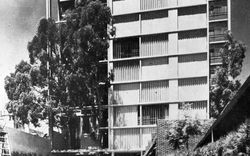
Sebastián Adamo et Marcelo Faiden retracent l’histoire architecturale récente de Buenos Aires
Publié:
26 avril 2021
26 avril 2021
Titre:
Une façon d'être architecte
Sebastián Adamo et Marcelo Faiden retracent l’histoire architecturale récente de Buenos Aires
Actions:
Une façon d'être architecte
Sebastián Adamo et Marcelo Faiden retracent l’histoire architecturale récente de Buenos Aires
Actions:
Classification:
archives
Niveau de description archivistique:
Fonds
archives
Niveau de description archivistique:
Fonds
Titre:
Gianni Pettena fonds
Gianni Pettena fonds
Numéro de référence:
AP207
Résumé:
The Gianni Pettena fonds documents Pettena’s work as an artist, architect, critic, and professor of history of contemporary architecture from the 1960s to the end of the 2010s. It includes one hundred artistic and architectural projects, material related to exhibitions he curated and designed, and his writings.
Personnes et institutions:
Date:
1960-2019
1960-2019
Titre:
Gianni Pettena fonds
Actions:
AP207
Résumé:
The Gianni Pettena fonds documents Pettena’s work as an artist, architect, critic, and professor of history of contemporary architecture from the 1960s to the end of the 2010s. It includes one hundred artistic and architectural projects, material related to exhibitions he curated and designed, and his writings.
Classification:
archives
Niveau de description archivistique:
Fonds
archives
Niveau de description archivistique:
Fonds
Date:
1960-2019
1960-2019
Personnes et institutions:
Classification:
dessins
Quantité:
33 drawing(s)
dessins
Quantité:
33 drawing(s)
Actions:
Numéro de référence:
DR1997:0063:001-033
Description:
- These drawings by Ludwig Mies van der Rohe were made in the context of a "crit" with his student George Danforth. They elucidate, critique or otherwise respond to some aspect of the thesis project. - The group includes a plan of Mies van der Rohe's unrealized project for the German Pavilion for the Brussels World's Fair (1934), elements of which were further developed in the thesis project (DR1997:0063:001). Danforth is the author of the inscriptions on this sheet.
Personnes et institutions:
Sujet:
architecture
architecture
Date:
1940-1941
1940-1941
Titre:
Sketches for a graduate thesis for a small museum, Department of Architecture, Illinois Institute of Technology
Actions:
DR1997:0063:001-033
Description:
- These drawings by Ludwig Mies van der Rohe were made in the context of a "crit" with his student George Danforth. They elucidate, critique or otherwise respond to some aspect of the thesis project. - The group includes a plan of Mies van der Rohe's unrealized project for the German Pavilion for the Brussels World's Fair (1934), elements of which were further developed in the thesis project (DR1997:0063:001). Danforth is the author of the inscriptions on this sheet.
Classification:
dessins
Quantité:
33 drawing(s)
dessins
Quantité:
33 drawing(s)
Date:
1940-1941
1940-1941
Personnes et institutions:
Sujet:
architecture
architecture
Niveau de description archivistique:
Projet
Projet
Numéro de référence:
AP004.S1.D4
Description:
*CONTENT WARNING* This project series documents the Caughnawaga United Church in Kahnawá:ke, Quebec, Canada, which ran the school Caughnawaga Mission (or Caughnawaga Methodist Mission School), recognized as part of the Federal Indian Day School system by the Federal Government of Canada.[1] Please take care in consulting these records and seek help when needed. For more information about the Day School system, please visit https://indiandayschools.com. Note that Kahnawá:ke was previously known as Caughnawaga and the name has been maintained in the project title to preserve the project's historical context. The church was built in 1928 to replace the existing building, which was becoming too small for the congregation. The stained glass of the church was done by Canadian artist Charles William Kelsey. The one-storey building was made from quarried stone, which congregation members moved from quarry to site on horse and buggy.[2] [1] Federal Indian Day School Class Action “Schedule K – List of Federal Indian Day Schools.” https://indiandayschools.com/en/wp-content/uploads/schedule-k.pdf [2] Kahnawake United Church “Kahnawake United Church - Voices of our Elders.” YouTube Video, 23:37, February 8, 2023, https://www.youtube.com/watch?v=xPLYQIJ4c98
Personnes et institutions:
Date:
1928
1928
Titre:
Caughnawaga United Church, Kahnawá:ke, Québec, Canada
Actions:
AP004.S1.D4
Description:
*CONTENT WARNING* This project series documents the Caughnawaga United Church in Kahnawá:ke, Quebec, Canada, which ran the school Caughnawaga Mission (or Caughnawaga Methodist Mission School), recognized as part of the Federal Indian Day School system by the Federal Government of Canada.[1] Please take care in consulting these records and seek help when needed. For more information about the Day School system, please visit https://indiandayschools.com. Note that Kahnawá:ke was previously known as Caughnawaga and the name has been maintained in the project title to preserve the project's historical context. The church was built in 1928 to replace the existing building, which was becoming too small for the congregation. The stained glass of the church was done by Canadian artist Charles William Kelsey. The one-storey building was made from quarried stone, which congregation members moved from quarry to site on horse and buggy.[2] [1] Federal Indian Day School Class Action “Schedule K – List of Federal Indian Day Schools.” https://indiandayschools.com/en/wp-content/uploads/schedule-k.pdf [2] Kahnawake United Church “Kahnawake United Church - Voices of our Elders.” YouTube Video, 23:37, February 8, 2023, https://www.youtube.com/watch?v=xPLYQIJ4c98
Niveau de description archivistique:
Project
Project
Date:
1928
1928
Personnes et institutions:
Classification:
documents textuels
documents textuels
Numéro de référence:
AP206.S2.069
Description:
File was originally housed in a binder along with content arranged in AP206.S2.070 and AP206.S2.071. This file includes the following papers: "A Conceptual Model of Urban Development" "Haryana's New Capital: Beyond Corbusier Planning and Urban Form" "The Capital Story" 1986 "Le Corbusier's Chandigarh: Architectural and the Cultural Context," 1990 "Delhi: The Deepening Urban Crisis edited by Patwant Singh and Ram Dhamija," review "Reflections on Art" "Modulor! A System of Proportions" "Le Corbusier and Later Development in Chandigarh," 1988
Personnes et institutions:
Date:
1985-1990
1985-1990
Titre:
Published and unpublished papers (folder 1 of 3)
Actions:
AP206.S2.069
Description:
File was originally housed in a binder along with content arranged in AP206.S2.070 and AP206.S2.071. This file includes the following papers: "A Conceptual Model of Urban Development" "Haryana's New Capital: Beyond Corbusier Planning and Urban Form" "The Capital Story" 1986 "Le Corbusier's Chandigarh: Architectural and the Cultural Context," 1990 "Delhi: The Deepening Urban Crisis edited by Patwant Singh and Ram Dhamija," review "Reflections on Art" "Modulor! A System of Proportions" "Le Corbusier and Later Development in Chandigarh," 1988
Classification:
documents textuels
documents textuels
Date:
1985-1990
1985-1990
Personnes et institutions:
Classification:
événements
événements
Description:
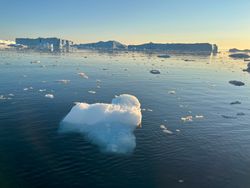
Véritables archives des changements climatiques, les glaciers nous renseignent à la fois sur le passé et le présent, annonçant les climats encore à venir. Rejoignez-nous le 9 octobre lors d’une conférence par Cymene Howe, présentée dans le cadre de l’exposition Espaces Oscillants, autour du rôle que jouent les glaciers sur notre manière de concevoir le temps et(...)
Véritables archives des changements climatiques, les glaciers nous renseignent à la fois sur le passé et le présent, annonçant les climats encore à venir. Rejoignez-nous le 9 octobre lors d’une conférence par Cymene Howe, présentée dans le cadre de l’exposition Espaces Oscillants, autour du rôle que jouent les glaciers sur notre manière de concevoir le temps et(...)
Localisation:
Théâtre Paul-Desmarais
Théâtre Paul-Desmarais
Date:
9 octobre 2025, 18h
9 octobre 2025, 18h
Titre:
La naissance et la disparition des glaces, par Cymene Howe
Actions:
Description:
Véritables archives des changements climatiques, les glaciers nous renseignent à la fois sur le passé et le présent, annonçant les climats encore à venir. Rejoignez-nous le 9 octobre lors d’une conférence par Cymene Howe, présentée dans le cadre de l’exposition Espaces Oscillants, autour du rôle que jouent les glaciers sur notre manière de concevoir le temps et(...)
Classification:
événements
événements
Date:
9 octobre 2025
18h
9 octobre 2025
18h
Localisation:
Théâtre Paul-Desmarais
Théâtre Paul-Desmarais
Classification:
événements
événements
Actions:
Description:
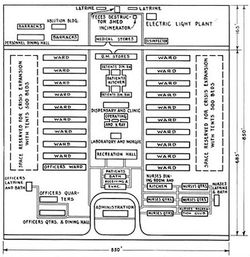
Geoff Manaugh se penche sur le design urbain dans le contexte d’études épidémiologiques, de pandémies et de quarantaines, à la lumière des mesures prises par les centres de contrôle et de prévention des maladies (CDC) mis en place par le gouvernement des États-Unis. Geoff Manaugh est l’auteur de BLDGBLOG et de The BLDGBLOG Book et il collabore régulièrement à titre(...)
Geoff Manaugh se penche sur le design urbain dans le contexte d’études épidémiologiques, de pandémies et de quarantaines, à la lumière des mesures prises par les centres de contrôle et de prévention des maladies (CDC) mis en place par le gouvernement des États-Unis. Geoff Manaugh est l’auteur de BLDGBLOG et de The BLDGBLOG Book et il collabore régulièrement à titre(...)
Localisation:
Théâtre Paul-Desmarais
Théâtre Paul-Desmarais
Date:
22 octobre 2009 , 19h
22 octobre 2009 , 19h
Titre:
Geoff Manaugh : Cities of the CDC
Actions:
Description:
Geoff Manaugh se penche sur le design urbain dans le contexte d’études épidémiologiques, de pandémies et de quarantaines, à la lumière des mesures prises par les centres de contrôle et de prévention des maladies (CDC) mis en place par le gouvernement des États-Unis. Geoff Manaugh est l’auteur de BLDGBLOG et de The BLDGBLOG Book et il collabore régulièrement à titre(...)
Classification:
événements
événements
Date:
22 octobre 2009
19h
22 octobre 2009
19h
Localisation:
Théâtre Paul-Desmarais
Théâtre Paul-Desmarais
Classification:
événements
événements
Actions:
Description:
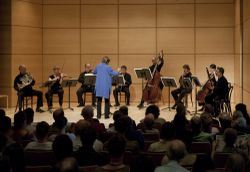
Bien qu’ayant accueilli par le passé des concerts, le théâtre Paul-Desmarais est plus réputé pour tenir des conférences et des projections de films. Alors que des concerts traditionnellement présentés dans la Chapelle historique du Bon-Pasteur se produiront momentanément au CCA, des phénomènes musicaux pourront être réintroduits dans le théâtre, ouvrant à de nouvelles(...)
Bien qu’ayant accueilli par le passé des concerts, le théâtre Paul-Desmarais est plus réputé pour tenir des conférences et des projections de films. Alors que des concerts traditionnellement présentés dans la Chapelle historique du Bon-Pasteur se produiront momentanément au CCA, des phénomènes musicaux pourront être réintroduits dans le théâtre, ouvrant à de nouvelles(...)
Localisation:
Théâtre Paul-Desmarais Mot(s)-clé(s):
CCA, Chapelle historique du Bon-Pasteur, concerts, musique de chambre, musique classique, relève musicale.
Théâtre Paul-Desmarais Mot(s)-clé(s):
CCA, Chapelle historique du Bon-Pasteur, concerts, musique de chambre, musique classique, relève musicale.
Date:
31 janvier 2024 au 17 mai 2024
31 janvier 2024 au 17 mai 2024
Titre:
Concerts de la Chapelle historique du Bon-Pasteur
Actions:
Description:
Bien qu’ayant accueilli par le passé des concerts, le théâtre Paul-Desmarais est plus réputé pour tenir des conférences et des projections de films. Alors que des concerts traditionnellement présentés dans la Chapelle historique du Bon-Pasteur se produiront momentanément au CCA, des phénomènes musicaux pourront être réintroduits dans le théâtre, ouvrant à de nouvelles(...)
Classification:
événements
événements
Date:
31 janvier 2024 au
17 mai 2024
31 janvier 2024 au
17 mai 2024
Localisation:
Théâtre Paul-Desmarais Mot(s)-clé(s):
CCA, Chapelle historique du Bon-Pasteur, concerts, musique de chambre, musique classique, relève musicale.
Théâtre Paul-Desmarais Mot(s)-clé(s):
CCA, Chapelle historique du Bon-Pasteur, concerts, musique de chambre, musique classique, relève musicale.
Classification:
documents textuels
documents textuels
Numéro de référence:
AP206.S2.074
Description:
File was originally housed in a binder along with content arranged in AP206.S2.072 and AP206.S2.073. This file includes the following papers: "Le Corbusier's Chandigarh: Architecture in the Cultural Context," symposium talk, 1990 "Why not Ruralisation," paper outline "Growing Problems of Cities," book review of "The Politics of Urban Redevelopment: A Study of Old Delhi by Ajay K. Mehra," 1991 "Housing as Consumer Commodity," book review of "Housing and Urbanisation: A Study of India by Cedric Pugh," 1991 "Air Pollution and Conservation of the Environment," speech
Personnes et institutions:
Date:
1986-1998
1986-1998
Titre:
Published and unpublished papers (folder 3 of 3)
Actions:
AP206.S2.074
Description:
File was originally housed in a binder along with content arranged in AP206.S2.072 and AP206.S2.073. This file includes the following papers: "Le Corbusier's Chandigarh: Architecture in the Cultural Context," symposium talk, 1990 "Why not Ruralisation," paper outline "Growing Problems of Cities," book review of "The Politics of Urban Redevelopment: A Study of Old Delhi by Ajay K. Mehra," 1991 "Housing as Consumer Commodity," book review of "Housing and Urbanisation: A Study of India by Cedric Pugh," 1991 "Air Pollution and Conservation of the Environment," speech
Classification:
documents textuels
documents textuels
Date:
1986-1998
1986-1998
Personnes et institutions:
Niveau de description archivistique:
Projet
Projet
Numéro de référence:
AP207.S1.1978.PR01
Description:
The project series documents "La Mia Casa All'Elba", Pettena's house in Viticcio on the Island of Elba. The project, started in 1978, remained an ongoing project as the house has undergone many transformations over the years. The residence "is conditioned by its relationship with the physical context, the material and the working of space." [1] Pettena even reused some of the material already on site to build the residence. The house is comprised of different pavilions and spaces interconnected by small paths: "The house has progressively been defined as a sequence of spaces connected by routes, just like in a village. So it goes on growing almost like a primitive village, through intentions, successive organizations of spaces that define one another and are linked together." [2] The project series contains a sketch, plans, perspective drawings of the house and later additions. The project series is also comprised of photographs, including interior views showing artworks, photographs of Elba possibly used for research, and two videocassettes possibly with recordings of TV shows presenting the house. Source: [1] Gianni Pettena website, https://www.giannipettena.it/italiano/opere-1/arch-my-house-on-elba-1978-12/ (last accessed 12 November 2019) [2] Gianni Pettena website, https://www.giannipettena.it/italiano/opere-1/arch-my-house-on-elba-1978-12/ (last accessed 12 November 2019)
Personnes et institutions:
Date:
circa 1978-2018
circa 1978-2018
Titre:
La Mia Casa All'Elba [My House on Elba], Vittocio, Italy (1978-2012)
Actions:
AP207.S1.1978.PR01
Description:
The project series documents "La Mia Casa All'Elba", Pettena's house in Viticcio on the Island of Elba. The project, started in 1978, remained an ongoing project as the house has undergone many transformations over the years. The residence "is conditioned by its relationship with the physical context, the material and the working of space." [1] Pettena even reused some of the material already on site to build the residence. The house is comprised of different pavilions and spaces interconnected by small paths: "The house has progressively been defined as a sequence of spaces connected by routes, just like in a village. So it goes on growing almost like a primitive village, through intentions, successive organizations of spaces that define one another and are linked together." [2] The project series contains a sketch, plans, perspective drawings of the house and later additions. The project series is also comprised of photographs, including interior views showing artworks, photographs of Elba possibly used for research, and two videocassettes possibly with recordings of TV shows presenting the house. Source: [1] Gianni Pettena website, https://www.giannipettena.it/italiano/opere-1/arch-my-house-on-elba-1978-12/ (last accessed 12 November 2019) [2] Gianni Pettena website, https://www.giannipettena.it/italiano/opere-1/arch-my-house-on-elba-1978-12/ (last accessed 12 November 2019)
Niveau de description archivistique:
Project
Project
Date:
circa 1978-2018
circa 1978-2018
Personnes et institutions:


