


10687 Résultats
Classification:
photographies
photographies
Actions:
Numéro de référence:
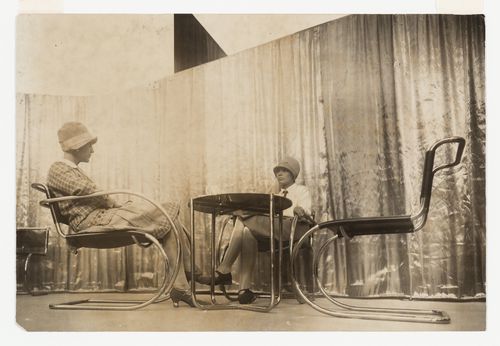
PH1982:0631
PH1982:0631
Personnes et institutions:
Sujet:
design d'intérieur
design d'intérieur
Date:
c. 1927
c. 1927
Classification:
photographies
photographies
Date:
c. 1927
c. 1927
Personnes et institutions:
Sujet:
design d'intérieur
design d'intérieur
Classification:
photographies
photographies

Actions:
Numéro de référence:
PH1982:0758
PH1982:0758
Personnes et institutions:
Sujet:
architecture, peinture
architecture, peinture
Date:
between 1882 and ca. 1890s
between 1882 and ca. 1890s
Classification:
photographies
photographies
Date:
between 1882 and ca. 1890s
between 1882 and ca. 1890s
Personnes et institutions:
Sujet:
architecture, peinture
architecture, peinture
Classification:
photographies
photographies
![View of Gendarmenmarkt [Soldier's Market] (formerly Platz der Akademie) showing the Deutsche Kirche [German Church] in the left foreground, Schauspielhaus [Concert Hall] on the left and Französische Kirche [French Church] in the centre, Berlin, Germany](/img-collection/7GZMcFhT8J3TYMtrDj09En45MHA=/500x375/11766.jpg)
Actions:
Numéro de référence:
PH1984:1184
PH1984:1184
Personnes et institutions:
Sujet:
architecture
architecture
Date:
1880s
1880s
Classification:
photographies
photographies
Date:
1880s
1880s
Personnes et institutions:
Sujet:
architecture
architecture
Classification:
photographies
photographies
Actions:
Numéro de référence:
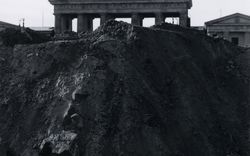
PH2004:0070:033
PH2004:0070:033
Personnes et institutions:
Sujet:
architecture
architecture
Date:
ca. 1930
ca. 1930
Classification:
photographies
photographies
Date:
ca. 1930
ca. 1930
Personnes et institutions:
Sujet:
architecture
architecture
Classification:
photographies
photographies
Actions:
Numéro de référence:
PH2004:0070:034
PH2004:0070:034
Personnes et institutions:
Sujet:
architecture
architecture
Date:
ca. 1946
ca. 1946
Classification:
photographies
photographies
Date:
ca. 1946
ca. 1946
Personnes et institutions:
Sujet:
architecture
architecture
Classification:
articles
articles
Dossier:
Perspectives de vie
Perspectives de vie
Classification:
archives
Niveau de description archivistique:
Fonds
archives
Niveau de description archivistique:
Fonds
Titre:
Fonds Peter Caspari
Fonds Peter Caspari
Numéro de référence:
AP123
Résumé:
The Peter Caspari fonds documents the education, personal and military activities of architect Peter Caspari from student work in Berlin to his immigration to England, and participation in WWII. The majority of the documents in the fonds consist of drawings relating to student building design projects, and textual records relating to architecture course notes, training for the Pioneer Corps, and professional registration as an architect.
AP123
Résumé:
The Peter Caspari fonds documents the education, personal and military activities of architect Peter Caspari from student work in Berlin to his immigration to England, and participation in WWII. The majority of the documents in the fonds consist of drawings relating to student building design projects, and textual records relating to architecture course notes, training for the Pioneer Corps, and professional registration as an architect.
Personnes et institutions:
Date:
1928-1941
1928-1941
Titre:
Fonds Peter Caspari
Actions:
AP123
Résumé:
The Peter Caspari fonds documents the education, personal and military activities of architect Peter Caspari from student work in Berlin to his immigration to England, and participation in WWII. The majority of the documents in the fonds consist of drawings relating to student building design projects, and textual records relating to architecture course notes, training for the Pioneer Corps, and professional registration as an architect.
Fonds Peter Caspari
Actions:
AP123
Résumé:
The Peter Caspari fonds documents the education, personal and military activities of architect Peter Caspari from student work in Berlin to his immigration to England, and participation in WWII. The majority of the documents in the fonds consist of drawings relating to student building design projects, and textual records relating to architecture course notes, training for the Pioneer Corps, and professional registration as an architect.
Classification:
archives
Niveau de description archivistique:
Fonds
archives
Niveau de description archivistique:
Fonds
Date:
1928-1941
1928-1941
Personnes et institutions:
Actions:
Numéro de référence:
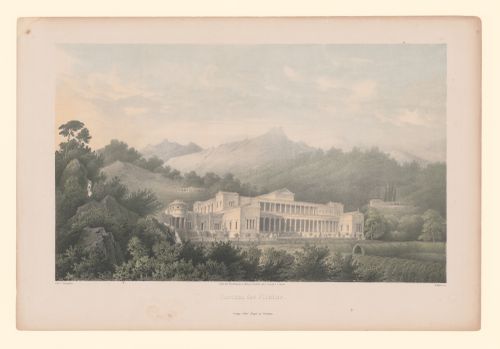
DR1984:0568:001-024
Description:
On title page: "redigirt vom Architekten-Verein zu Berlin, durch Stüler, Knoblauch, Salzenberg, Strack", "Siebentes Heft". This document is the seventh issue of a series that includes 20 parts in total.
DR1984:0568:001-024
Description:
On title page: "redigirt vom Architekten-Verein zu Berlin, durch Stüler, Knoblauch, Salzenberg, Strack", "Siebentes Heft". This document is the seventh issue of a series that includes 20 parts in total.
Personnes et institutions:
Date:
1841
1841
Titre:
Architektonisches Album. Siebentes Heft
Actions:
DR1984:0568:001-024
Description:
On title page: "redigirt vom Architekten-Verein zu Berlin, durch Stüler, Knoblauch, Salzenberg, Strack", "Siebentes Heft". This document is the seventh issue of a series that includes 20 parts in total.
Architektonisches Album. Siebentes Heft
Actions:
DR1984:0568:001-024
Description:
On title page: "redigirt vom Architekten-Verein zu Berlin, durch Stüler, Knoblauch, Salzenberg, Strack", "Siebentes Heft". This document is the seventh issue of a series that includes 20 parts in total.
Date:
1841
1841
Personnes et institutions:
Classification:
archives
Niveau de description archivistique:
Collection
archives
Niveau de description archivistique:
Collection
Numéro de référence:
AP162
Résumé:
The Die gläserne Kette CCA Collection documents the chain of correspondence exchanged between German architects Hermann Finsterlin, Paul Goesch, Wenzel Hablik, Hans Hansen, Carl Krayl, Hans and Wassili Luckhardt, Hans Scharoun, and Bruno and Max Taut between 1919 and 1920 on the subject of utopian architecture and society. This CCA collection features original copies and reproductions of the correspondence, as well as a limited number of drawings by the members of the group.
AP162
Résumé:
The Die gläserne Kette CCA Collection documents the chain of correspondence exchanged between German architects Hermann Finsterlin, Paul Goesch, Wenzel Hablik, Hans Hansen, Carl Krayl, Hans and Wassili Luckhardt, Hans Scharoun, and Bruno and Max Taut between 1919 and 1920 on the subject of utopian architecture and society. This CCA collection features original copies and reproductions of the correspondence, as well as a limited number of drawings by the members of the group.
Personnes et institutions:
Date:
1911-1977
1911-1977
Titre:
Collection Die gläserne Kette
Actions:
AP162
Résumé:
The Die gläserne Kette CCA Collection documents the chain of correspondence exchanged between German architects Hermann Finsterlin, Paul Goesch, Wenzel Hablik, Hans Hansen, Carl Krayl, Hans and Wassili Luckhardt, Hans Scharoun, and Bruno and Max Taut between 1919 and 1920 on the subject of utopian architecture and society. This CCA collection features original copies and reproductions of the correspondence, as well as a limited number of drawings by the members of the group.
Collection Die gläserne Kette
Actions:
AP162
Résumé:
The Die gläserne Kette CCA Collection documents the chain of correspondence exchanged between German architects Hermann Finsterlin, Paul Goesch, Wenzel Hablik, Hans Hansen, Carl Krayl, Hans and Wassili Luckhardt, Hans Scharoun, and Bruno and Max Taut between 1919 and 1920 on the subject of utopian architecture and society. This CCA collection features original copies and reproductions of the correspondence, as well as a limited number of drawings by the members of the group.
Classification:
archives
Niveau de description archivistique:
Collection AP162
archives
Niveau de description archivistique:
Collection AP162
Date:
1911-1977
1911-1977
Personnes et institutions:
Niveau de description archivistique:
Projet
Projet
Titre:
IBA
IBA
Numéro de référence:
AP143.S4.D32
Description:
File documents the partially executed project for the Restricted International Competition "South Friedrichstadt as a Place to Live and Work," West Berlin (now Berlin), West Germany (now in Germany). Material in this file was produced between 1980 and 1988. File documents the design for one of four urban blocks in the area of the Kochstrasse and Friedrichstrasse, Berlin. The competition required the preservation of three existing structures and the construction of mixed-used buildings on vacant lots. The architect develops an overall strategy to occupy the urban block by extending the geometry of the three existing buildings onto the site (DR1991:0018:002; DR1991:0018:004-006), on which he overlays what he calls the "Mercator grid", an orthogonal grid oriented according to the compass (DR1991:0018:016). The "el structures" used by Eisenman in House X, House 11a, and the Cannaregio project reappear in plan, and later as forms emerging from the square compartments delimited by the "Mercator grid", this time developed three-dimensionally (House X, 1975-1977, DR1994:0138:001-1546; House 11a, 1978, DR1994:0139:001-303; Cannaregio project, 1978, DR1991:0017:001-094). After finalizing the urban concept, Eisenman concentrates his efforts on the planning of individual buildings, developing the massing of the building facing Kochstrasse in a series of axonometrics (DR1991:0018:088-092), sections (DR1991:0018:088) and facade studies (DR1991:0018:204-210). A series of scrolled drawings study the L-shaped elements and thin slabs with characteristically gridded surfaces found in House X (DR1991:0018:204 and DR1991:0018:209-210). File contains record drawings, conceptual drawings, design development drawings, schematic drawings, competition drawings, presentation drawings, photographic material, and textual records.
AP143.S4.D32
Description:
File documents the partially executed project for the Restricted International Competition "South Friedrichstadt as a Place to Live and Work," West Berlin (now Berlin), West Germany (now in Germany). Material in this file was produced between 1980 and 1988. File documents the design for one of four urban blocks in the area of the Kochstrasse and Friedrichstrasse, Berlin. The competition required the preservation of three existing structures and the construction of mixed-used buildings on vacant lots. The architect develops an overall strategy to occupy the urban block by extending the geometry of the three existing buildings onto the site (DR1991:0018:002; DR1991:0018:004-006), on which he overlays what he calls the "Mercator grid", an orthogonal grid oriented according to the compass (DR1991:0018:016). The "el structures" used by Eisenman in House X, House 11a, and the Cannaregio project reappear in plan, and later as forms emerging from the square compartments delimited by the "Mercator grid", this time developed three-dimensionally (House X, 1975-1977, DR1994:0138:001-1546; House 11a, 1978, DR1994:0139:001-303; Cannaregio project, 1978, DR1991:0017:001-094). After finalizing the urban concept, Eisenman concentrates his efforts on the planning of individual buildings, developing the massing of the building facing Kochstrasse in a series of axonometrics (DR1991:0018:088-092), sections (DR1991:0018:088) and facade studies (DR1991:0018:204-210). A series of scrolled drawings study the L-shaped elements and thin slabs with characteristically gridded surfaces found in House X (DR1991:0018:204 and DR1991:0018:209-210). File contains record drawings, conceptual drawings, design development drawings, schematic drawings, competition drawings, presentation drawings, photographic material, and textual records.
Personnes et institutions:
Date:
1980-1988
1980-1988
Titre:
IBA
Actions:
AP143.S4.D32
Description:
File documents the partially executed project for the Restricted International Competition "South Friedrichstadt as a Place to Live and Work," West Berlin (now Berlin), West Germany (now in Germany). Material in this file was produced between 1980 and 1988. File documents the design for one of four urban blocks in the area of the Kochstrasse and Friedrichstrasse, Berlin. The competition required the preservation of three existing structures and the construction of mixed-used buildings on vacant lots. The architect develops an overall strategy to occupy the urban block by extending the geometry of the three existing buildings onto the site (DR1991:0018:002; DR1991:0018:004-006), on which he overlays what he calls the "Mercator grid", an orthogonal grid oriented according to the compass (DR1991:0018:016). The "el structures" used by Eisenman in House X, House 11a, and the Cannaregio project reappear in plan, and later as forms emerging from the square compartments delimited by the "Mercator grid", this time developed three-dimensionally (House X, 1975-1977, DR1994:0138:001-1546; House 11a, 1978, DR1994:0139:001-303; Cannaregio project, 1978, DR1991:0017:001-094). After finalizing the urban concept, Eisenman concentrates his efforts on the planning of individual buildings, developing the massing of the building facing Kochstrasse in a series of axonometrics (DR1991:0018:088-092), sections (DR1991:0018:088) and facade studies (DR1991:0018:204-210). A series of scrolled drawings study the L-shaped elements and thin slabs with characteristically gridded surfaces found in House X (DR1991:0018:204 and DR1991:0018:209-210). File contains record drawings, conceptual drawings, design development drawings, schematic drawings, competition drawings, presentation drawings, photographic material, and textual records.
IBA
Actions:
AP143.S4.D32
Description:
File documents the partially executed project for the Restricted International Competition "South Friedrichstadt as a Place to Live and Work," West Berlin (now Berlin), West Germany (now in Germany). Material in this file was produced between 1980 and 1988. File documents the design for one of four urban blocks in the area of the Kochstrasse and Friedrichstrasse, Berlin. The competition required the preservation of three existing structures and the construction of mixed-used buildings on vacant lots. The architect develops an overall strategy to occupy the urban block by extending the geometry of the three existing buildings onto the site (DR1991:0018:002; DR1991:0018:004-006), on which he overlays what he calls the "Mercator grid", an orthogonal grid oriented according to the compass (DR1991:0018:016). The "el structures" used by Eisenman in House X, House 11a, and the Cannaregio project reappear in plan, and later as forms emerging from the square compartments delimited by the "Mercator grid", this time developed three-dimensionally (House X, 1975-1977, DR1994:0138:001-1546; House 11a, 1978, DR1994:0139:001-303; Cannaregio project, 1978, DR1991:0017:001-094). After finalizing the urban concept, Eisenman concentrates his efforts on the planning of individual buildings, developing the massing of the building facing Kochstrasse in a series of axonometrics (DR1991:0018:088-092), sections (DR1991:0018:088) and facade studies (DR1991:0018:204-210). A series of scrolled drawings study the L-shaped elements and thin slabs with characteristically gridded surfaces found in House X (DR1991:0018:204 and DR1991:0018:209-210). File contains record drawings, conceptual drawings, design development drawings, schematic drawings, competition drawings, presentation drawings, photographic material, and textual records.
Niveau de description archivistique:
File 32
File 32
Date:
1980-1988
1980-1988
Personnes et institutions:


