


3892 Résultats
Classification:
dessins
dessins
Numéro de référence:
AP046.S1.1983.PR01.111
Description:
This file includes sketches for the spaces of the CCA open to the public and door elevations.
AP046.S1.1983.PR01.111
Description:
This file includes sketches for the spaces of the CCA open to the public and door elevations.
Personnes et institutions:
Date:
1983-1989
1983-1989
Titre:
Sketches of public spaces, Canadian Centre for Architecture, Montréal, Québec
Actions:
AP046.S1.1983.PR01.111
Description:
This file includes sketches for the spaces of the CCA open to the public and door elevations.
Sketches of public spaces, Canadian Centre for Architecture, Montréal, Québec
Actions:
AP046.S1.1983.PR01.111
Description:
This file includes sketches for the spaces of the CCA open to the public and door elevations.
Classification:
dessins
dessins
Date:
1983-1989
1983-1989
Personnes et institutions:
Classification:
dessins
dessins
Numéro de référence:
AP046.S1.1983.PR01.247
Description:
This file includes Phase 1-3 revised level, elevations, door types and link area.
AP046.S1.1983.PR01.247
Description:
This file includes Phase 1-3 revised level, elevations, door types and link area.
Personnes et institutions:
Date:
1986-1987
1986-1987
Titre:
Drawings issued to Erol Argun, Canadian Centre for Architecture, Montréal, Québec
Actions:
AP046.S1.1983.PR01.247
Description:
This file includes Phase 1-3 revised level, elevations, door types and link area.
Drawings issued to Erol Argun, Canadian Centre for Architecture, Montréal, Québec
Actions:
AP046.S1.1983.PR01.247
Description:
This file includes Phase 1-3 revised level, elevations, door types and link area.
Classification:
dessins
dessins
Date:
1986-1987
1986-1987
Personnes et institutions:
Classification:
photographies
photographies
![View of an information booth and elevator shaft on the ground floor level, Göteborgs rådhusets tillbyggnad [courthouse annex], Göteborg, Sweden](/img-collection/XalwHpuFpdzEqdlLtdE34hrxZjQ=/500x628/385385.jpg)
Actions:
Numéro de référence:
PH2003:0315
Description:
View of information glass booth with wicket and glass and metal elevator door on ground floor level
PH2003:0315
Description:
View of information glass booth with wicket and glass and metal elevator door on ground floor level
Personnes et institutions:
Sujet:
architecture
architecture
Date:
2000
2000
Titre:
View of an information booth and elevator shaft on the ground floor level, Göteborgs rådhusets tillbyggnad [courthouse annex], Göteborg, Sweden
Actions:
PH2003:0315
Description:
View of information glass booth with wicket and glass and metal elevator door on ground floor level
View of an information booth and elevator shaft on the ground floor level, Göteborgs rådhusets tillbyggnad [courthouse annex], Göteborg, Sweden
Actions:
PH2003:0315
Description:
View of information glass booth with wicket and glass and metal elevator door on ground floor level
Classification:
photographies
photographies
Date:
2000
2000
Personnes et institutions:
Sujet:
architecture
architecture
Classification:
dessins
dessins
Numéro de référence:
AP046.S1.1983.PR01.516
Description:
This file includes negatives of drawings for the CCA's north elevation, door types, and level 149'9".
AP046.S1.1983.PR01.516
Description:
This file includes negatives of drawings for the CCA's north elevation, door types, and level 149'9".
Personnes et institutions:
Date:
ca 1989
ca 1989
Titre:
Various negatives, Canadian Centre for Architecture, Montréal, Québec
Actions:
AP046.S1.1983.PR01.516
Description:
This file includes negatives of drawings for the CCA's north elevation, door types, and level 149'9".
Various negatives, Canadian Centre for Architecture, Montréal, Québec
Actions:
AP046.S1.1983.PR01.516
Description:
This file includes negatives of drawings for the CCA's north elevation, door types, and level 149'9".
Classification:
dessins
dessins
Date:
ca 1989
ca 1989
Personnes et institutions:
Classification:
dessins
dessins
Numéro de référence:
AP046.S1.1983.PR01.321
Description:
This file includes plans for reflected ceilings, various details, door chart, and CCA stair details.
AP046.S1.1983.PR01.321
Description:
This file includes plans for reflected ceilings, various details, door chart, and CCA stair details.
Personnes et institutions:
Date:
1985
1985
Titre:
Level plans, Canadian Centre for Architecture, Montréal, Québec
Actions:
AP046.S1.1983.PR01.321
Description:
This file includes plans for reflected ceilings, various details, door chart, and CCA stair details.
Level plans, Canadian Centre for Architecture, Montréal, Québec
Actions:
AP046.S1.1983.PR01.321
Description:
This file includes plans for reflected ceilings, various details, door chart, and CCA stair details.
Classification:
dessins
dessins
Date:
1985
1985
Personnes et institutions:
Classification:
dessins
dessins
Numéro de référence:
AP046.S1.1983.PR01.453
Description:
This file includes level plans, library sections and details, door schedule, auditorium plans and details.
AP046.S1.1983.PR01.453
Description:
This file includes level plans, library sections and details, door schedule, auditorium plans and details.
Personnes et institutions:
Date:
1986-1987
1986-1987
Titre:
Record set, Canadian Centre for Architecture, Montréal, Québec
Actions:
AP046.S1.1983.PR01.453
Description:
This file includes level plans, library sections and details, door schedule, auditorium plans and details.
Record set, Canadian Centre for Architecture, Montréal, Québec
Actions:
AP046.S1.1983.PR01.453
Description:
This file includes level plans, library sections and details, door schedule, auditorium plans and details.
Classification:
dessins
dessins
Date:
1986-1987
1986-1987
Personnes et institutions:
Niveau de description archivistique:
Projet
Projet
Numéro de référence:
AP178.S1.1984.PR02
Description:
The project series documents the Punt en Komma social housing project in The Hague, The Netherlands, with some materials related to the Urban plan for Deelgebied Zone 5, Schilderswijk-West. While the records were held in the office’s archives the urban plan for Deelgebied Zone 5 was assigned the number 30/80 and Punt en Komma was assigned the number 30/80 A/B (Punt (A) and Komma (B)). The office assigned the date 1984 for this project. In the mid to late1970s The Hague underwent an urban renewal program and in 1980 Adri Duivesteijn became the alderman responsible for this program. Dissatisfied with the results, in the early to mid-1980s Duivesteijn began a campaign to look at urban renewal as a cultural approach, and was interested in the participatory process that Siza incorporated for the Serviço Ambulatório de Apoio Local (SAAL) in Portugal and the Berlin projects submitted to the International Architectural Exhibition Berlin competition (International Bauaustellung, IBA, circa 1979-1987). After taking a trip to Portugal, Duivesteijn invited Siza to speak with residents of Schilderswijk. The urban plan for Schilderswijk was the first part of a redevelopment plan for the 19th century district and included two four story blocks of 106 apartments, named Punt en Komma. Schilderswijk is in the centre of The Hague and is nearby the Haag Spoor train station. The residents are made up of multi-ethnic communities and included immigrants from Turkey, Morocco, Tunisia, and Portugal. Similarly to the Berlin projects, Siza was faced with cultural tensions between the residents of the area. The urban plan was to take into account the preservation of the neighborhood's identity while accounting for the changes brought on by multi-ethnic communities. As with the SAAL and Berlin projects there was an element of participation from the residents and included the collaboration of a residents association. In the “Plan of Zone 5 of Schilderswijk Centrum…”, found in this project series [AP178.S1.1984.PR02.024.1, AP178.S1.1984.PR02.024.2], it is outlined that meetings were periodically held with technicians appointed by the Department of Urban Planning and Housing of The Hague, the Housing Cooperative, and each of the designers. Siza’s design for Punt en Komma incorporated elements prevalent in Dutch architecture such as the Haagse Portiek. However, he also included components in his design which accounted for the needs of residents living there at the time. One feature which gained much attention was the incorporation of sliding doors in the apartments. Siza included these doors in his design in consideration of the cultural practices of Muslim families. Documenting this project series are drawings, photographic materials, and textual documentation. Among the drawings are plans, elevations, sections, and details, as well as axonometric drawings, such as the proposed design for Deelgebied zone 5 (including Punt en Komma) and drawings of the Haagse Porteik. Photographic materials document both Duivesteijn’s trip to Portugal and Siza’s first trip to The Hague and include photographs, negatives, and slides of the built project, as well as slides of drawings. Note that the photographic materials include photographs related to the housing and shopping complex in Schilderswijk. Textual documentation includes brochures regarding rent increases, a copy of “Stadsvernieuwing als Kulturele Aktiviteit” by Duivesteijn, and information booklets for the residents. Also included are minutes of meeting and correspondence from the Woningbouwvereniging’s-Gravenhage. Among the correspondence are letters regarding construction costs, including a letter from Siza to the local architectural firm Architectengemeenschap Van den Broek en Bakema explaining that he does not wish to modify the detail he specified for the lintels of the Punt building. There is also correspondence from project architect Carlos Castenheira and Duivesteijn and a summary of the meeting between Siza and the Committee of the Corporation for Social Housing (17 April, 1985)[AP178.S1.1984.PR02.025.1] It is important to note that Siza also participated in other projects for this urban renewal program: the housing and shopping complex in Schilderswijk [AP178.S1.1984.PR03], the Van der Vennepark [AP178.S1.1985.PR01], and the residential settlement in Schilderswijk (Plano de Doedijnstraat [AP178.S1.1989.PR03]). All three of these projects are arranged in separate project series.
AP178.S1.1984.PR02
Description:
The project series documents the Punt en Komma social housing project in The Hague, The Netherlands, with some materials related to the Urban plan for Deelgebied Zone 5, Schilderswijk-West. While the records were held in the office’s archives the urban plan for Deelgebied Zone 5 was assigned the number 30/80 and Punt en Komma was assigned the number 30/80 A/B (Punt (A) and Komma (B)). The office assigned the date 1984 for this project. In the mid to late1970s The Hague underwent an urban renewal program and in 1980 Adri Duivesteijn became the alderman responsible for this program. Dissatisfied with the results, in the early to mid-1980s Duivesteijn began a campaign to look at urban renewal as a cultural approach, and was interested in the participatory process that Siza incorporated for the Serviço Ambulatório de Apoio Local (SAAL) in Portugal and the Berlin projects submitted to the International Architectural Exhibition Berlin competition (International Bauaustellung, IBA, circa 1979-1987). After taking a trip to Portugal, Duivesteijn invited Siza to speak with residents of Schilderswijk. The urban plan for Schilderswijk was the first part of a redevelopment plan for the 19th century district and included two four story blocks of 106 apartments, named Punt en Komma. Schilderswijk is in the centre of The Hague and is nearby the Haag Spoor train station. The residents are made up of multi-ethnic communities and included immigrants from Turkey, Morocco, Tunisia, and Portugal. Similarly to the Berlin projects, Siza was faced with cultural tensions between the residents of the area. The urban plan was to take into account the preservation of the neighborhood's identity while accounting for the changes brought on by multi-ethnic communities. As with the SAAL and Berlin projects there was an element of participation from the residents and included the collaboration of a residents association. In the “Plan of Zone 5 of Schilderswijk Centrum…”, found in this project series [AP178.S1.1984.PR02.024.1, AP178.S1.1984.PR02.024.2], it is outlined that meetings were periodically held with technicians appointed by the Department of Urban Planning and Housing of The Hague, the Housing Cooperative, and each of the designers. Siza’s design for Punt en Komma incorporated elements prevalent in Dutch architecture such as the Haagse Portiek. However, he also included components in his design which accounted for the needs of residents living there at the time. One feature which gained much attention was the incorporation of sliding doors in the apartments. Siza included these doors in his design in consideration of the cultural practices of Muslim families. Documenting this project series are drawings, photographic materials, and textual documentation. Among the drawings are plans, elevations, sections, and details, as well as axonometric drawings, such as the proposed design for Deelgebied zone 5 (including Punt en Komma) and drawings of the Haagse Porteik. Photographic materials document both Duivesteijn’s trip to Portugal and Siza’s first trip to The Hague and include photographs, negatives, and slides of the built project, as well as slides of drawings. Note that the photographic materials include photographs related to the housing and shopping complex in Schilderswijk. Textual documentation includes brochures regarding rent increases, a copy of “Stadsvernieuwing als Kulturele Aktiviteit” by Duivesteijn, and information booklets for the residents. Also included are minutes of meeting and correspondence from the Woningbouwvereniging’s-Gravenhage. Among the correspondence are letters regarding construction costs, including a letter from Siza to the local architectural firm Architectengemeenschap Van den Broek en Bakema explaining that he does not wish to modify the detail he specified for the lintels of the Punt building. There is also correspondence from project architect Carlos Castenheira and Duivesteijn and a summary of the meeting between Siza and the Committee of the Corporation for Social Housing (17 April, 1985)[AP178.S1.1984.PR02.025.1] It is important to note that Siza also participated in other projects for this urban renewal program: the housing and shopping complex in Schilderswijk [AP178.S1.1984.PR03], the Van der Vennepark [AP178.S1.1985.PR01], and the residential settlement in Schilderswijk (Plano de Doedijnstraat [AP178.S1.1989.PR03]). All three of these projects are arranged in separate project series.
Personnes et institutions:
Date:
circa 1981 - 1990
circa 1981 - 1990
Titre:
106 habitações, Punt en Komma [Punt en Komma social housing], Schilderswijk-West, The Hague, The Netherlands, (1981-1990)
Actions:
AP178.S1.1984.PR02
Description:
The project series documents the Punt en Komma social housing project in The Hague, The Netherlands, with some materials related to the Urban plan for Deelgebied Zone 5, Schilderswijk-West. While the records were held in the office’s archives the urban plan for Deelgebied Zone 5 was assigned the number 30/80 and Punt en Komma was assigned the number 30/80 A/B (Punt (A) and Komma (B)). The office assigned the date 1984 for this project. In the mid to late1970s The Hague underwent an urban renewal program and in 1980 Adri Duivesteijn became the alderman responsible for this program. Dissatisfied with the results, in the early to mid-1980s Duivesteijn began a campaign to look at urban renewal as a cultural approach, and was interested in the participatory process that Siza incorporated for the Serviço Ambulatório de Apoio Local (SAAL) in Portugal and the Berlin projects submitted to the International Architectural Exhibition Berlin competition (International Bauaustellung, IBA, circa 1979-1987). After taking a trip to Portugal, Duivesteijn invited Siza to speak with residents of Schilderswijk. The urban plan for Schilderswijk was the first part of a redevelopment plan for the 19th century district and included two four story blocks of 106 apartments, named Punt en Komma. Schilderswijk is in the centre of The Hague and is nearby the Haag Spoor train station. The residents are made up of multi-ethnic communities and included immigrants from Turkey, Morocco, Tunisia, and Portugal. Similarly to the Berlin projects, Siza was faced with cultural tensions between the residents of the area. The urban plan was to take into account the preservation of the neighborhood's identity while accounting for the changes brought on by multi-ethnic communities. As with the SAAL and Berlin projects there was an element of participation from the residents and included the collaboration of a residents association. In the “Plan of Zone 5 of Schilderswijk Centrum…”, found in this project series [AP178.S1.1984.PR02.024.1, AP178.S1.1984.PR02.024.2], it is outlined that meetings were periodically held with technicians appointed by the Department of Urban Planning and Housing of The Hague, the Housing Cooperative, and each of the designers. Siza’s design for Punt en Komma incorporated elements prevalent in Dutch architecture such as the Haagse Portiek. However, he also included components in his design which accounted for the needs of residents living there at the time. One feature which gained much attention was the incorporation of sliding doors in the apartments. Siza included these doors in his design in consideration of the cultural practices of Muslim families. Documenting this project series are drawings, photographic materials, and textual documentation. Among the drawings are plans, elevations, sections, and details, as well as axonometric drawings, such as the proposed design for Deelgebied zone 5 (including Punt en Komma) and drawings of the Haagse Porteik. Photographic materials document both Duivesteijn’s trip to Portugal and Siza’s first trip to The Hague and include photographs, negatives, and slides of the built project, as well as slides of drawings. Note that the photographic materials include photographs related to the housing and shopping complex in Schilderswijk. Textual documentation includes brochures regarding rent increases, a copy of “Stadsvernieuwing als Kulturele Aktiviteit” by Duivesteijn, and information booklets for the residents. Also included are minutes of meeting and correspondence from the Woningbouwvereniging’s-Gravenhage. Among the correspondence are letters regarding construction costs, including a letter from Siza to the local architectural firm Architectengemeenschap Van den Broek en Bakema explaining that he does not wish to modify the detail he specified for the lintels of the Punt building. There is also correspondence from project architect Carlos Castenheira and Duivesteijn and a summary of the meeting between Siza and the Committee of the Corporation for Social Housing (17 April, 1985)[AP178.S1.1984.PR02.025.1] It is important to note that Siza also participated in other projects for this urban renewal program: the housing and shopping complex in Schilderswijk [AP178.S1.1984.PR03], the Van der Vennepark [AP178.S1.1985.PR01], and the residential settlement in Schilderswijk (Plano de Doedijnstraat [AP178.S1.1989.PR03]). All three of these projects are arranged in separate project series.
106 habitações, Punt en Komma [Punt en Komma social housing], Schilderswijk-West, The Hague, The Netherlands, (1981-1990)
Actions:
AP178.S1.1984.PR02
Description:
The project series documents the Punt en Komma social housing project in The Hague, The Netherlands, with some materials related to the Urban plan for Deelgebied Zone 5, Schilderswijk-West. While the records were held in the office’s archives the urban plan for Deelgebied Zone 5 was assigned the number 30/80 and Punt en Komma was assigned the number 30/80 A/B (Punt (A) and Komma (B)). The office assigned the date 1984 for this project. In the mid to late1970s The Hague underwent an urban renewal program and in 1980 Adri Duivesteijn became the alderman responsible for this program. Dissatisfied with the results, in the early to mid-1980s Duivesteijn began a campaign to look at urban renewal as a cultural approach, and was interested in the participatory process that Siza incorporated for the Serviço Ambulatório de Apoio Local (SAAL) in Portugal and the Berlin projects submitted to the International Architectural Exhibition Berlin competition (International Bauaustellung, IBA, circa 1979-1987). After taking a trip to Portugal, Duivesteijn invited Siza to speak with residents of Schilderswijk. The urban plan for Schilderswijk was the first part of a redevelopment plan for the 19th century district and included two four story blocks of 106 apartments, named Punt en Komma. Schilderswijk is in the centre of The Hague and is nearby the Haag Spoor train station. The residents are made up of multi-ethnic communities and included immigrants from Turkey, Morocco, Tunisia, and Portugal. Similarly to the Berlin projects, Siza was faced with cultural tensions between the residents of the area. The urban plan was to take into account the preservation of the neighborhood's identity while accounting for the changes brought on by multi-ethnic communities. As with the SAAL and Berlin projects there was an element of participation from the residents and included the collaboration of a residents association. In the “Plan of Zone 5 of Schilderswijk Centrum…”, found in this project series [AP178.S1.1984.PR02.024.1, AP178.S1.1984.PR02.024.2], it is outlined that meetings were periodically held with technicians appointed by the Department of Urban Planning and Housing of The Hague, the Housing Cooperative, and each of the designers. Siza’s design for Punt en Komma incorporated elements prevalent in Dutch architecture such as the Haagse Portiek. However, he also included components in his design which accounted for the needs of residents living there at the time. One feature which gained much attention was the incorporation of sliding doors in the apartments. Siza included these doors in his design in consideration of the cultural practices of Muslim families. Documenting this project series are drawings, photographic materials, and textual documentation. Among the drawings are plans, elevations, sections, and details, as well as axonometric drawings, such as the proposed design for Deelgebied zone 5 (including Punt en Komma) and drawings of the Haagse Porteik. Photographic materials document both Duivesteijn’s trip to Portugal and Siza’s first trip to The Hague and include photographs, negatives, and slides of the built project, as well as slides of drawings. Note that the photographic materials include photographs related to the housing and shopping complex in Schilderswijk. Textual documentation includes brochures regarding rent increases, a copy of “Stadsvernieuwing als Kulturele Aktiviteit” by Duivesteijn, and information booklets for the residents. Also included are minutes of meeting and correspondence from the Woningbouwvereniging’s-Gravenhage. Among the correspondence are letters regarding construction costs, including a letter from Siza to the local architectural firm Architectengemeenschap Van den Broek en Bakema explaining that he does not wish to modify the detail he specified for the lintels of the Punt building. There is also correspondence from project architect Carlos Castenheira and Duivesteijn and a summary of the meeting between Siza and the Committee of the Corporation for Social Housing (17 April, 1985)[AP178.S1.1984.PR02.025.1] It is important to note that Siza also participated in other projects for this urban renewal program: the housing and shopping complex in Schilderswijk [AP178.S1.1984.PR03], the Van der Vennepark [AP178.S1.1985.PR01], and the residential settlement in Schilderswijk (Plano de Doedijnstraat [AP178.S1.1989.PR03]). All three of these projects are arranged in separate project series.
Niveau de description archivistique:
Project
Project
Date:
circa 1981 - 1990
circa 1981 - 1990
Personnes et institutions:
Classification:
dessins
dessins
Numéro de référence:
AP046.S1.1983.PR01.412
Description:
This file includes electrical layout drawings, plumbing layout, mechanical room and overhead garage door drawings.
AP046.S1.1983.PR01.412
Description:
This file includes electrical layout drawings, plumbing layout, mechanical room and overhead garage door drawings.
Personnes et institutions:
Date:
1986-1987
1986-1987
Titre:
Mechanical, electrical and plumbing drawings, Canadian Centre for Architecture, Montréal, Québec
Actions:
AP046.S1.1983.PR01.412
Description:
This file includes electrical layout drawings, plumbing layout, mechanical room and overhead garage door drawings.
Mechanical, electrical and plumbing drawings, Canadian Centre for Architecture, Montréal, Québec
Actions:
AP046.S1.1983.PR01.412
Description:
This file includes electrical layout drawings, plumbing layout, mechanical room and overhead garage door drawings.
Classification:
dessins
dessins
Date:
1986-1987
1986-1987
Personnes et institutions:
Classification:
expositions
expositions
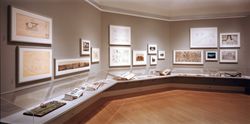
Titre:
Cedric Price : de tout temps
Cedric Price : de tout temps
Actions:
Description:
L’architecte britannique Cedric Price s’est servi de la collection du CCA pour établir des rapports complexes entre temps, espace et mouvement dans l’environnement bâti. Analysant des structures et des bâtiments de différentes époques, dont certains projets de Price lui-même, De tout temps présente des photographies d’un calendrier solaire aztèque, d’une gare de triage,(...)
L’architecte britannique Cedric Price s’est servi de la collection du CCA pour établir des rapports complexes entre temps, espace et mouvement dans l’environnement bâti. Analysant des structures et des bâtiments de différentes époques, dont certains projets de Price lui-même, De tout temps présente des photographies d’un calendrier solaire aztèque, d’une gare de triage,(...)
Localisation:
Salle octogonale
Salle octogonale
Date:
19 octobre 1999 au 27 février 2000
19 octobre 1999 au 27 février 2000
Titre:
Cedric Price : de tout temps
Actions:
Description:
L’architecte britannique Cedric Price s’est servi de la collection du CCA pour établir des rapports complexes entre temps, espace et mouvement dans l’environnement bâti. Analysant des structures et des bâtiments de différentes époques, dont certains projets de Price lui-même, De tout temps présente des photographies d’un calendrier solaire aztèque, d’une gare de triage,(...)
Cedric Price : de tout temps
Actions:
Description:
L’architecte britannique Cedric Price s’est servi de la collection du CCA pour établir des rapports complexes entre temps, espace et mouvement dans l’environnement bâti. Analysant des structures et des bâtiments de différentes époques, dont certains projets de Price lui-même, De tout temps présente des photographies d’un calendrier solaire aztèque, d’une gare de triage,(...)
Classification:
expositions
expositions
Date:
19 octobre 1999 au
27 février 2000
19 octobre 1999 au
27 février 2000
Localisation:
Salle octogonale
Salle octogonale
Classification:
dessins
dessins
Numéro de référence:
AP178.S1.1988.PR07.SS6.019.3
Description:
Original file title : Lionel This file includes details of the wardrobes, furnitures, elevators, bathrooms, and door frames.
AP178.S1.1988.PR07.SS6.019.3
Description:
Original file title : Lionel This file includes details of the wardrobes, furnitures, elevators, bathrooms, and door frames.
Personnes et institutions:
Date:
November 2004-December 2005
November 2004-December 2005
Titre:
Plans and working details, Edifício Leonel, Bloco B, Reconstrução do Chiado, Lisbon (folder 3 of 3)
Actions:
AP178.S1.1988.PR07.SS6.019.3
Description:
Original file title : Lionel This file includes details of the wardrobes, furnitures, elevators, bathrooms, and door frames.
Plans and working details, Edifício Leonel, Bloco B, Reconstrução do Chiado, Lisbon (folder 3 of 3)
Actions:
AP178.S1.1988.PR07.SS6.019.3
Description:
Original file title : Lionel This file includes details of the wardrobes, furnitures, elevators, bathrooms, and door frames.
Classification:
dessins
dessins
Date:
November 2004-December 2005
November 2004-December 2005
Personnes et institutions:


