


4975 Résultats
Classification:
dessins
Quantité:
24 conceptual drawing(s)
dessins
Quantité:
24 conceptual drawing(s)
Numéro de référence:
AP140.S2.SS1.D31.P2
Description:
conceptual and schematic sketches and drawings showing the earlier stages of the development of the design; conceptual sketches consist of several doodles and thumbnail sketches exploring different overall shapes for the building, and alternatives for an amphitheatre-shaped building; schematic sketches and drawings show more detailed alternatives for the planning of students' rooms, service rooms, and car park, and for the shape and position of the breakfast and seminar room, twin vertical circulation cores, and escape stairs; they include a revised schedule of accommodation, a drawing for diagrammatic cross and longitudinal sections for an amphitheatre-shaped building, diagrammatic floor plans, sections, partial sections, sectional elevations, and elevation obliques, showing more developed geometrical designs for the plan and the section for the building; some drawings depict a scheme with an underground parking garage and curved access ramp; some of the schematic drawings feature doodles and thumbnail sketches, some are hand-coloured, and some are annotated
AP140.S2.SS1.D31.P2
Description:
conceptual and schematic sketches and drawings showing the earlier stages of the development of the design; conceptual sketches consist of several doodles and thumbnail sketches exploring different overall shapes for the building, and alternatives for an amphitheatre-shaped building; schematic sketches and drawings show more detailed alternatives for the planning of students' rooms, service rooms, and car park, and for the shape and position of the breakfast and seminar room, twin vertical circulation cores, and escape stairs; they include a revised schedule of accommodation, a drawing for diagrammatic cross and longitudinal sections for an amphitheatre-shaped building, diagrammatic floor plans, sections, partial sections, sectional elevations, and elevation obliques, showing more developed geometrical designs for the plan and the section for the building; some drawings depict a scheme with an underground parking garage and curved access ramp; some of the schematic drawings feature doodles and thumbnail sketches, some are hand-coloured, and some are annotated
Personnes et institutions:
Titre:
Conceptual and schematic sketches and drawings
Actions:
AP140.S2.SS1.D31.P2
Description:
conceptual and schematic sketches and drawings showing the earlier stages of the development of the design; conceptual sketches consist of several doodles and thumbnail sketches exploring different overall shapes for the building, and alternatives for an amphitheatre-shaped building; schematic sketches and drawings show more detailed alternatives for the planning of students' rooms, service rooms, and car park, and for the shape and position of the breakfast and seminar room, twin vertical circulation cores, and escape stairs; they include a revised schedule of accommodation, a drawing for diagrammatic cross and longitudinal sections for an amphitheatre-shaped building, diagrammatic floor plans, sections, partial sections, sectional elevations, and elevation obliques, showing more developed geometrical designs for the plan and the section for the building; some drawings depict a scheme with an underground parking garage and curved access ramp; some of the schematic drawings feature doodles and thumbnail sketches, some are hand-coloured, and some are annotated
Conceptual and schematic sketches and drawings
Actions:
AP140.S2.SS1.D31.P2
Description:
conceptual and schematic sketches and drawings showing the earlier stages of the development of the design; conceptual sketches consist of several doodles and thumbnail sketches exploring different overall shapes for the building, and alternatives for an amphitheatre-shaped building; schematic sketches and drawings show more detailed alternatives for the planning of students' rooms, service rooms, and car park, and for the shape and position of the breakfast and seminar room, twin vertical circulation cores, and escape stairs; they include a revised schedule of accommodation, a drawing for diagrammatic cross and longitudinal sections for an amphitheatre-shaped building, diagrammatic floor plans, sections, partial sections, sectional elevations, and elevation obliques, showing more developed geometrical designs for the plan and the section for the building; some drawings depict a scheme with an underground parking garage and curved access ramp; some of the schematic drawings feature doodles and thumbnail sketches, some are hand-coloured, and some are annotated
Classification:
dessins
Quantité:
24 conceptual drawing(s)
dessins
Quantité:
24 conceptual drawing(s)
Personnes et institutions:
Classification:
événements
événements
Actions:
Description:
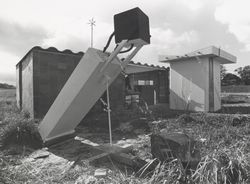
Dans la série de conférences Hier d’aujourd’hui, l’architecte et auteur canadien Witold Rybczynski expose les origines de l’Ecol House, prototype d’un modèle d’habitation autonome pour les pays en développement. Le projet a été créé à Montréal en 1972 par Ecol Operation, un groupe d’architectes et d’étudiants duquel il était membre et qui devient, au début des années(...)
Dans la série de conférences Hier d’aujourd’hui, l’architecte et auteur canadien Witold Rybczynski expose les origines de l’Ecol House, prototype d’un modèle d’habitation autonome pour les pays en développement. Le projet a été créé à Montréal en 1972 par Ecol Operation, un groupe d’architectes et d’étudiants duquel il était membre et qui devient, au début des années(...)
Localisation:
Théâtre Paul-Desmarais
Théâtre Paul-Desmarais
Date:
29 novembre 2007
29 novembre 2007
Titre:
Witold Rybczynski : Green Before Green
Actions:
Description:
Dans la série de conférences Hier d’aujourd’hui, l’architecte et auteur canadien Witold Rybczynski expose les origines de l’Ecol House, prototype d’un modèle d’habitation autonome pour les pays en développement. Le projet a été créé à Montréal en 1972 par Ecol Operation, un groupe d’architectes et d’étudiants duquel il était membre et qui devient, au début des années(...)
Witold Rybczynski : Green Before Green
Actions:
Description:
Dans la série de conférences Hier d’aujourd’hui, l’architecte et auteur canadien Witold Rybczynski expose les origines de l’Ecol House, prototype d’un modèle d’habitation autonome pour les pays en développement. Le projet a été créé à Montréal en 1972 par Ecol Operation, un groupe d’architectes et d’étudiants duquel il était membre et qui devient, au début des années(...)
Classification:
événements
événements
Date:
29 novembre 2007
29 novembre 2007
Localisation:
Théâtre Paul-Desmarais
Théâtre Paul-Desmarais
Niveau de description archivistique:
Projet
Projet
Numéro de référence:
AP178.S1.1980.PR02
Description:
The project series documents Block 121, better known as Bonjour Tristesse. While the records were held in the office’s archives this project was assigned the number 2/80. This project was one of several projects Siza submitted to the International Architectural Exhibition Berlin competition (International Bauaustellung, IBA, circa 1979-1987), and was Siza’s first international built project. The IBA was an urban renewal strategy for West Berlin and received submissions from several international architects. The IBA divided West Berlin into two parts: IBA Neubau ('new building'), led by Josef Paul Kleihues and IBA Altbau ('old building') led by Hardt-Walherr Hämer. IBA Nuebau's focus was to build new buildings while IBA Altbau's was to renovate existing buildings. The project site for Block 121 was in the district of Kreuzberg, a district on the eastern side of then West Berlin. Due to low rents, there was an influx of immigrants and students to Kreuzberg in the late 1970s. Bonjour Tristesse would serve as a residential complex for a predominantly Turkish immigrant population. In 1980, Hämer invited Siza to submit an entry for this complex to be built on the east side of Kreuzberg beside the Schlesisches Tor train station. Hämer encouraged the participatory model which Siza had become known for from his work with the Servicio Ambulatorio de Apoio Local (SAAL) in Portugal. This project series is arranged in four subseries: AP178.S1.1980.PR02.SS1, Competition, Block 121 (identified as 2/80); AP178.S1.1980.PR02.SS2, Bonjour Tristesse (identified as 2/80 A); AP178.S1.1980.PR02.SS3, Kita [Kindergarten] (identified as 2/80 B); and AP178.S1.1980.PR02.SS4, Senior Club Anziani [Senior citizens’ clubhouse] (identified as 2/80 C). The office’s archivist assigned the number 2/80 to materials related to the competition phase of this project; letters (A, B, and C) were then assigned to each subsequent portion of the project following the competition. All documentation for this project series, including the project subseries, has been kept together to maintain the order of the office’s arrangement.
AP178.S1.1980.PR02
Description:
The project series documents Block 121, better known as Bonjour Tristesse. While the records were held in the office’s archives this project was assigned the number 2/80. This project was one of several projects Siza submitted to the International Architectural Exhibition Berlin competition (International Bauaustellung, IBA, circa 1979-1987), and was Siza’s first international built project. The IBA was an urban renewal strategy for West Berlin and received submissions from several international architects. The IBA divided West Berlin into two parts: IBA Neubau ('new building'), led by Josef Paul Kleihues and IBA Altbau ('old building') led by Hardt-Walherr Hämer. IBA Nuebau's focus was to build new buildings while IBA Altbau's was to renovate existing buildings. The project site for Block 121 was in the district of Kreuzberg, a district on the eastern side of then West Berlin. Due to low rents, there was an influx of immigrants and students to Kreuzberg in the late 1970s. Bonjour Tristesse would serve as a residential complex for a predominantly Turkish immigrant population. In 1980, Hämer invited Siza to submit an entry for this complex to be built on the east side of Kreuzberg beside the Schlesisches Tor train station. Hämer encouraged the participatory model which Siza had become known for from his work with the Servicio Ambulatorio de Apoio Local (SAAL) in Portugal. This project series is arranged in four subseries: AP178.S1.1980.PR02.SS1, Competition, Block 121 (identified as 2/80); AP178.S1.1980.PR02.SS2, Bonjour Tristesse (identified as 2/80 A); AP178.S1.1980.PR02.SS3, Kita [Kindergarten] (identified as 2/80 B); and AP178.S1.1980.PR02.SS4, Senior Club Anziani [Senior citizens’ clubhouse] (identified as 2/80 C). The office’s archivist assigned the number 2/80 to materials related to the competition phase of this project; letters (A, B, and C) were then assigned to each subsequent portion of the project following the competition. All documentation for this project series, including the project subseries, has been kept together to maintain the order of the office’s arrangement.
Personnes et institutions:
Date:
circa 1980-1990
circa 1980-1990
Titre:
Block 121, Schlesisches Tor [Block 121, Schlesisches Tor residential complex], Berlin, Germany (1980-1990)
Actions:
AP178.S1.1980.PR02
Description:
The project series documents Block 121, better known as Bonjour Tristesse. While the records were held in the office’s archives this project was assigned the number 2/80. This project was one of several projects Siza submitted to the International Architectural Exhibition Berlin competition (International Bauaustellung, IBA, circa 1979-1987), and was Siza’s first international built project. The IBA was an urban renewal strategy for West Berlin and received submissions from several international architects. The IBA divided West Berlin into two parts: IBA Neubau ('new building'), led by Josef Paul Kleihues and IBA Altbau ('old building') led by Hardt-Walherr Hämer. IBA Nuebau's focus was to build new buildings while IBA Altbau's was to renovate existing buildings. The project site for Block 121 was in the district of Kreuzberg, a district on the eastern side of then West Berlin. Due to low rents, there was an influx of immigrants and students to Kreuzberg in the late 1970s. Bonjour Tristesse would serve as a residential complex for a predominantly Turkish immigrant population. In 1980, Hämer invited Siza to submit an entry for this complex to be built on the east side of Kreuzberg beside the Schlesisches Tor train station. Hämer encouraged the participatory model which Siza had become known for from his work with the Servicio Ambulatorio de Apoio Local (SAAL) in Portugal. This project series is arranged in four subseries: AP178.S1.1980.PR02.SS1, Competition, Block 121 (identified as 2/80); AP178.S1.1980.PR02.SS2, Bonjour Tristesse (identified as 2/80 A); AP178.S1.1980.PR02.SS3, Kita [Kindergarten] (identified as 2/80 B); and AP178.S1.1980.PR02.SS4, Senior Club Anziani [Senior citizens’ clubhouse] (identified as 2/80 C). The office’s archivist assigned the number 2/80 to materials related to the competition phase of this project; letters (A, B, and C) were then assigned to each subsequent portion of the project following the competition. All documentation for this project series, including the project subseries, has been kept together to maintain the order of the office’s arrangement.
Block 121, Schlesisches Tor [Block 121, Schlesisches Tor residential complex], Berlin, Germany (1980-1990)
Actions:
AP178.S1.1980.PR02
Description:
The project series documents Block 121, better known as Bonjour Tristesse. While the records were held in the office’s archives this project was assigned the number 2/80. This project was one of several projects Siza submitted to the International Architectural Exhibition Berlin competition (International Bauaustellung, IBA, circa 1979-1987), and was Siza’s first international built project. The IBA was an urban renewal strategy for West Berlin and received submissions from several international architects. The IBA divided West Berlin into two parts: IBA Neubau ('new building'), led by Josef Paul Kleihues and IBA Altbau ('old building') led by Hardt-Walherr Hämer. IBA Nuebau's focus was to build new buildings while IBA Altbau's was to renovate existing buildings. The project site for Block 121 was in the district of Kreuzberg, a district on the eastern side of then West Berlin. Due to low rents, there was an influx of immigrants and students to Kreuzberg in the late 1970s. Bonjour Tristesse would serve as a residential complex for a predominantly Turkish immigrant population. In 1980, Hämer invited Siza to submit an entry for this complex to be built on the east side of Kreuzberg beside the Schlesisches Tor train station. Hämer encouraged the participatory model which Siza had become known for from his work with the Servicio Ambulatorio de Apoio Local (SAAL) in Portugal. This project series is arranged in four subseries: AP178.S1.1980.PR02.SS1, Competition, Block 121 (identified as 2/80); AP178.S1.1980.PR02.SS2, Bonjour Tristesse (identified as 2/80 A); AP178.S1.1980.PR02.SS3, Kita [Kindergarten] (identified as 2/80 B); and AP178.S1.1980.PR02.SS4, Senior Club Anziani [Senior citizens’ clubhouse] (identified as 2/80 C). The office’s archivist assigned the number 2/80 to materials related to the competition phase of this project; letters (A, B, and C) were then assigned to each subsequent portion of the project following the competition. All documentation for this project series, including the project subseries, has been kept together to maintain the order of the office’s arrangement.
Niveau de description archivistique:
Project
Project
Date:
circa 1980-1990
circa 1980-1990
Personnes et institutions:
Classification:
expositions
expositions

Titre:
Tangente - Alain Paiement
Tangente - Alain Paiement
Actions:
Description:
Lartiste québécois Alain Paiement juxtapose dans cette exposition un large éventail de sujets photographiques – bâtiments en construction, maquettes de projets détudiants, abstractions architecturales, différents niveaux de transparence – avec sa propre imagerie du nouveau Palais des congrès de Montréal. Celle-ci est la première dune série dexpositions qui invite des(...)
Lartiste québécois Alain Paiement juxtapose dans cette exposition un large éventail de sujets photographiques – bâtiments en construction, maquettes de projets détudiants, abstractions architecturales, différents niveaux de transparence – avec sa propre imagerie du nouveau Palais des congrès de Montréal. Celle-ci est la première dune série dexpositions qui invite des(...)
Localisation:
Salle octagonale Mot(s)-clé(s):
Alain Paiement, Tangent, Tangente, Hubertus von Amelunxen
Salle octagonale Mot(s)-clé(s):
Alain Paiement, Tangent, Tangente, Hubertus von Amelunxen
Date:
23 avril 2003 au 23 novembre 2003
23 avril 2003 au 23 novembre 2003
Titre:
Tangente - Alain Paiement
Actions:
Description:
Lartiste québécois Alain Paiement juxtapose dans cette exposition un large éventail de sujets photographiques – bâtiments en construction, maquettes de projets détudiants, abstractions architecturales, différents niveaux de transparence – avec sa propre imagerie du nouveau Palais des congrès de Montréal. Celle-ci est la première dune série dexpositions qui invite des(...)
Tangente - Alain Paiement
Actions:
Description:
Lartiste québécois Alain Paiement juxtapose dans cette exposition un large éventail de sujets photographiques – bâtiments en construction, maquettes de projets détudiants, abstractions architecturales, différents niveaux de transparence – avec sa propre imagerie du nouveau Palais des congrès de Montréal. Celle-ci est la première dune série dexpositions qui invite des(...)
Classification:
expositions
expositions
Date:
23 avril 2003 au
23 novembre 2003
23 avril 2003 au
23 novembre 2003
Localisation:
Salle octagonale Mot(s)-clé(s):
Alain Paiement, Tangent, Tangente, Hubertus von Amelunxen
Salle octagonale Mot(s)-clé(s):
Alain Paiement, Tangent, Tangente, Hubertus von Amelunxen
Niveau de description archivistique:
Projet
Projet
Numéro de référence:
AP206.S1.2000.PR01
Description:
This project series documents buildings for the Guru Jambheshwar University of Science and Technology in Hisar, India around 2000. The project consisted of the design of many new campus buildings, including the Administrative Block, offices, Health Centre, student and employee hostels, professors' houses and VIP houses, the Teaching Block, cafeteria, library, and University Works buildings. The University, previously known as Punjab Agricultural University, was established in 1995 by the Haryana state government and had a campus that sprawled over 372 acres. By 2007, around 200 acres had been developed with buildings and landscaping. Prakash had previously worked on projects for this campus, formerly known as the Punjab Agricultural University, in the 1960s. This project series contains the records for three buildings: the library, the Health Centre, and the Sports Hall. The library was notable for it's round shape, large entrance arch and domed skylight ceiling. The materials also emphasize the development of a large mural in the library depicting the astrological signs. The Health Centre was a diamond shaped building with an outdoor courtyard at its centre. The Sports Hall was a rectangular building with a trussed roof consisting primarily of an open, multipurpose space. This project is recorded through drawings, photographs of the finished buildings, and textual records dating from 2000-2007. The drawings are largely originals and include plans, sections, elevations, perspectives and details. The textual records consist of correspondence and a brochure on the campus construction program.
AP206.S1.2000.PR01
Description:
This project series documents buildings for the Guru Jambheshwar University of Science and Technology in Hisar, India around 2000. The project consisted of the design of many new campus buildings, including the Administrative Block, offices, Health Centre, student and employee hostels, professors' houses and VIP houses, the Teaching Block, cafeteria, library, and University Works buildings. The University, previously known as Punjab Agricultural University, was established in 1995 by the Haryana state government and had a campus that sprawled over 372 acres. By 2007, around 200 acres had been developed with buildings and landscaping. Prakash had previously worked on projects for this campus, formerly known as the Punjab Agricultural University, in the 1960s. This project series contains the records for three buildings: the library, the Health Centre, and the Sports Hall. The library was notable for it's round shape, large entrance arch and domed skylight ceiling. The materials also emphasize the development of a large mural in the library depicting the astrological signs. The Health Centre was a diamond shaped building with an outdoor courtyard at its centre. The Sports Hall was a rectangular building with a trussed roof consisting primarily of an open, multipurpose space. This project is recorded through drawings, photographs of the finished buildings, and textual records dating from 2000-2007. The drawings are largely originals and include plans, sections, elevations, perspectives and details. The textual records consist of correspondence and a brochure on the campus construction program.
Personnes et institutions:
Date:
2000-2007
2000-2007
Titre:
Guru Jambheshwar University of Science and Technology, Hisar, India (2000-2004)
Actions:
AP206.S1.2000.PR01
Description:
This project series documents buildings for the Guru Jambheshwar University of Science and Technology in Hisar, India around 2000. The project consisted of the design of many new campus buildings, including the Administrative Block, offices, Health Centre, student and employee hostels, professors' houses and VIP houses, the Teaching Block, cafeteria, library, and University Works buildings. The University, previously known as Punjab Agricultural University, was established in 1995 by the Haryana state government and had a campus that sprawled over 372 acres. By 2007, around 200 acres had been developed with buildings and landscaping. Prakash had previously worked on projects for this campus, formerly known as the Punjab Agricultural University, in the 1960s. This project series contains the records for three buildings: the library, the Health Centre, and the Sports Hall. The library was notable for it's round shape, large entrance arch and domed skylight ceiling. The materials also emphasize the development of a large mural in the library depicting the astrological signs. The Health Centre was a diamond shaped building with an outdoor courtyard at its centre. The Sports Hall was a rectangular building with a trussed roof consisting primarily of an open, multipurpose space. This project is recorded through drawings, photographs of the finished buildings, and textual records dating from 2000-2007. The drawings are largely originals and include plans, sections, elevations, perspectives and details. The textual records consist of correspondence and a brochure on the campus construction program.
Guru Jambheshwar University of Science and Technology, Hisar, India (2000-2004)
Actions:
AP206.S1.2000.PR01
Description:
This project series documents buildings for the Guru Jambheshwar University of Science and Technology in Hisar, India around 2000. The project consisted of the design of many new campus buildings, including the Administrative Block, offices, Health Centre, student and employee hostels, professors' houses and VIP houses, the Teaching Block, cafeteria, library, and University Works buildings. The University, previously known as Punjab Agricultural University, was established in 1995 by the Haryana state government and had a campus that sprawled over 372 acres. By 2007, around 200 acres had been developed with buildings and landscaping. Prakash had previously worked on projects for this campus, formerly known as the Punjab Agricultural University, in the 1960s. This project series contains the records for three buildings: the library, the Health Centre, and the Sports Hall. The library was notable for it's round shape, large entrance arch and domed skylight ceiling. The materials also emphasize the development of a large mural in the library depicting the astrological signs. The Health Centre was a diamond shaped building with an outdoor courtyard at its centre. The Sports Hall was a rectangular building with a trussed roof consisting primarily of an open, multipurpose space. This project is recorded through drawings, photographs of the finished buildings, and textual records dating from 2000-2007. The drawings are largely originals and include plans, sections, elevations, perspectives and details. The textual records consist of correspondence and a brochure on the campus construction program.
Niveau de description archivistique:
Project
Project
Date:
2000-2007
2000-2007
Personnes et institutions:
Classification:
dessins, documents textuels, photographies
dessins, documents textuels, photographies
Numéro de référence:
DR1995:0296:045-045
Description:
brochures, drawings, sketches, fund raising documents, clippings, correspondence, notes, articles, photographs, views of site, views of model, reports, student grant application, material from the Westpen and Greenbird projects, texts, forms, academic prospectuses, memorandums, instructions, newsletter, views of a bird, key (text), poster, and map
DR1995:0296:045-045
Description:
brochures, drawings, sketches, fund raising documents, clippings, correspondence, notes, articles, photographs, views of site, views of model, reports, student grant application, material from the Westpen and Greenbird projects, texts, forms, academic prospectuses, memorandums, instructions, newsletter, views of a bird, key (text), poster, and map
Personnes et institutions:
Titre:
Brochures, drawings, sketches, fund raising documents
Actions:
DR1995:0296:045-045
Description:
brochures, drawings, sketches, fund raising documents, clippings, correspondence, notes, articles, photographs, views of site, views of model, reports, student grant application, material from the Westpen and Greenbird projects, texts, forms, academic prospectuses, memorandums, instructions, newsletter, views of a bird, key (text), poster, and map
Brochures, drawings, sketches, fund raising documents
Actions:
DR1995:0296:045-045
Description:
brochures, drawings, sketches, fund raising documents, clippings, correspondence, notes, articles, photographs, views of site, views of model, reports, student grant application, material from the Westpen and Greenbird projects, texts, forms, academic prospectuses, memorandums, instructions, newsletter, views of a bird, key (text), poster, and map
Classification:
dessins, documents textuels, photographies
dessins, documents textuels, photographies
Personnes et institutions:
Classification:
documents textuels, né numérique
documents textuels, né numérique
Numéro de référence:
AP075.S3.SS2.218
Description:
Most common file formats: WordPerfect for MS-DOS Document. Contains files related to Jarvis Residence (1988), Ottawa City Hall (1989), Halperin Residence (1989-1990), Kwantlen College (1991-1993), Ritsumeikan House (1990-1993), Les Terraces (1988), and Student Housing for Simon Fraser University (1991-1993).
AP075.S3.SS2.218
Description:
Most common file formats: WordPerfect for MS-DOS Document. Contains files related to Jarvis Residence (1988), Ottawa City Hall (1989), Halperin Residence (1989-1990), Kwantlen College (1991-1993), Ritsumeikan House (1990-1993), Les Terraces (1988), and Student Housing for Simon Fraser University (1991-1993).
Personnes et institutions:
Date:
1990 - 1991
1990 - 1991
Titre:
Cost estimates, plant lists and specifications for various landscaping projects
Actions:
AP075.S3.SS2.218
Description:
Most common file formats: WordPerfect for MS-DOS Document. Contains files related to Jarvis Residence (1988), Ottawa City Hall (1989), Halperin Residence (1989-1990), Kwantlen College (1991-1993), Ritsumeikan House (1990-1993), Les Terraces (1988), and Student Housing for Simon Fraser University (1991-1993).
Cost estimates, plant lists and specifications for various landscaping projects
Actions:
AP075.S3.SS2.218
Description:
Most common file formats: WordPerfect for MS-DOS Document. Contains files related to Jarvis Residence (1988), Ottawa City Hall (1989), Halperin Residence (1989-1990), Kwantlen College (1991-1993), Ritsumeikan House (1990-1993), Les Terraces (1988), and Student Housing for Simon Fraser University (1991-1993).
Classification:
documents textuels, né numérique
documents textuels, né numérique
Date:
1990 - 1991
1990 - 1991
Personnes et institutions:
Classification:
archives
Niveau de description archivistique:
Fonds
archives
Niveau de description archivistique:
Fonds
Titre:
Fonds Alessandro Poli
Fonds Alessandro Poli
Numéro de référence:
AP148
Résumé:
The Alessandro Poli fonds documents the work of Italian architect, designer and artist Alessandro Poli. Born in Fiesole in 1941, Poli studied architecture at the University of Florence, and was a member of Superstudio from 1970 to 1972. Poli’s involvement with Superstudio and engaged research on material culture constitute two strong components of his archive.
AP148
Résumé:
The Alessandro Poli fonds documents the work of Italian architect, designer and artist Alessandro Poli. Born in Fiesole in 1941, Poli studied architecture at the University of Florence, and was a member of Superstudio from 1970 to 1972. Poli’s involvement with Superstudio and engaged research on material culture constitute two strong components of his archive.
Personnes et institutions:
Date:
1963-1996
1963-1996
Titre:
Fonds Alessandro Poli
Actions:
AP148
Résumé:
The Alessandro Poli fonds documents the work of Italian architect, designer and artist Alessandro Poli. Born in Fiesole in 1941, Poli studied architecture at the University of Florence, and was a member of Superstudio from 1970 to 1972. Poli’s involvement with Superstudio and engaged research on material culture constitute two strong components of his archive.
Fonds Alessandro Poli
Actions:
AP148
Résumé:
The Alessandro Poli fonds documents the work of Italian architect, designer and artist Alessandro Poli. Born in Fiesole in 1941, Poli studied architecture at the University of Florence, and was a member of Superstudio from 1970 to 1972. Poli’s involvement with Superstudio and engaged research on material culture constitute two strong components of his archive.
Classification:
archives
Niveau de description archivistique:
Fonds
archives
Niveau de description archivistique:
Fonds
Date:
1963-1996
1963-1996
Personnes et institutions:
Niveau de description archivistique:
Sous-série
Sous-série
Titre:
Education
Education
Numéro de référence:
CI001.S2.D1
Description:
Like his father Hubert, Charles Rohault de Fleury also studied at the École polytechnique with Jean-Nicolas-Louis Durand (1820-1821), and at the École des Beaux-Arts (1823-1825), Charles studied under his father and Louis Hippolyte Lebas. The CCA collection contains his printed exercise book from the École polytechnique and an album of drawings of the orders executed at both schools. The printed exercise book (DR1974:0002:001:001-105), primarily dated to 1821, provides an overview of the first year curriculum at the École polytechnique reflecting the emphasis placed on the course in descriptive geometry. The exercises proceed from the simple to the complex; from the analysis of simple shapes to the interpretation of basic architectural elements. Many of the problems have been solved by Charles, and carry the approval seal of his professor. A large engraving included in the album provides a succinct table recording the career paths of graduating students in the various Écoles d'application, a description of the core curriculum, and a historical and chronological outline of the École polytechnique from its inception to 1828. Charles' studies of the architectural orders (DR1974:0002:019:001-033), many of which are copied directly from Charles Normand's 'Nouveau parallele des ordres d'architecture...,' demonstrate the continued application of Durand's methodology applied to typical Beaux-Arts studies. The orders executed at the École polytechnique are pared down to their essential form and porticos are abstracted and grouped according to their tetrastyle, hexastyle, or octastyle configurations, whereas the orders completed at the École des beaux-arts are simplified, but still reflect the traditional mimetic interpretation of classical antiquity, with its fidelity to mouldings and details. The conspicous abscence of the composite order and the addition of the 'Dorique Romain and Moderne', attest to the continued influence of Durand's ''Precis'. The information regarding George's architectural career is limited to twelve drawings for architectural ornament and sculpture (1858-1859) submitted to a newly introduced, and obligatory, 'dessin' Concours d'emulation at the École des beaux-arts (1). (1) R. Chaffe, "The teaching of architecture at the École des Beaux-Arts" in Arthur Drexler ed., 'The Architecture of the École des Beaux-Arts' (New York: MOMA, 1975), p.84 and fn. 120.)
CI001.S2.D1
Description:
Like his father Hubert, Charles Rohault de Fleury also studied at the École polytechnique with Jean-Nicolas-Louis Durand (1820-1821), and at the École des Beaux-Arts (1823-1825), Charles studied under his father and Louis Hippolyte Lebas. The CCA collection contains his printed exercise book from the École polytechnique and an album of drawings of the orders executed at both schools. The printed exercise book (DR1974:0002:001:001-105), primarily dated to 1821, provides an overview of the first year curriculum at the École polytechnique reflecting the emphasis placed on the course in descriptive geometry. The exercises proceed from the simple to the complex; from the analysis of simple shapes to the interpretation of basic architectural elements. Many of the problems have been solved by Charles, and carry the approval seal of his professor. A large engraving included in the album provides a succinct table recording the career paths of graduating students in the various Écoles d'application, a description of the core curriculum, and a historical and chronological outline of the École polytechnique from its inception to 1828. Charles' studies of the architectural orders (DR1974:0002:019:001-033), many of which are copied directly from Charles Normand's 'Nouveau parallele des ordres d'architecture...,' demonstrate the continued application of Durand's methodology applied to typical Beaux-Arts studies. The orders executed at the École polytechnique are pared down to their essential form and porticos are abstracted and grouped according to their tetrastyle, hexastyle, or octastyle configurations, whereas the orders completed at the École des beaux-arts are simplified, but still reflect the traditional mimetic interpretation of classical antiquity, with its fidelity to mouldings and details. The conspicous abscence of the composite order and the addition of the 'Dorique Romain and Moderne', attest to the continued influence of Durand's ''Precis'. The information regarding George's architectural career is limited to twelve drawings for architectural ornament and sculpture (1858-1859) submitted to a newly introduced, and obligatory, 'dessin' Concours d'emulation at the École des beaux-arts (1). (1) R. Chaffe, "The teaching of architecture at the École des Beaux-Arts" in Arthur Drexler ed., 'The Architecture of the École des Beaux-Arts' (New York: MOMA, 1975), p.84 and fn. 120.)
Personnes et institutions:
Date:
[1776?]-1868
[1776?]-1868
Titre:
Education
CI001.S2.D1
Description:
Like his father Hubert, Charles Rohault de Fleury also studied at the École polytechnique with Jean-Nicolas-Louis Durand (1820-1821), and at the École des Beaux-Arts (1823-1825), Charles studied under his father and Louis Hippolyte Lebas. The CCA collection contains his printed exercise book from the École polytechnique and an album of drawings of the orders executed at both schools. The printed exercise book (DR1974:0002:001:001-105), primarily dated to 1821, provides an overview of the first year curriculum at the École polytechnique reflecting the emphasis placed on the course in descriptive geometry. The exercises proceed from the simple to the complex; from the analysis of simple shapes to the interpretation of basic architectural elements. Many of the problems have been solved by Charles, and carry the approval seal of his professor. A large engraving included in the album provides a succinct table recording the career paths of graduating students in the various Écoles d'application, a description of the core curriculum, and a historical and chronological outline of the École polytechnique from its inception to 1828. Charles' studies of the architectural orders (DR1974:0002:019:001-033), many of which are copied directly from Charles Normand's 'Nouveau parallele des ordres d'architecture...,' demonstrate the continued application of Durand's methodology applied to typical Beaux-Arts studies. The orders executed at the École polytechnique are pared down to their essential form and porticos are abstracted and grouped according to their tetrastyle, hexastyle, or octastyle configurations, whereas the orders completed at the École des beaux-arts are simplified, but still reflect the traditional mimetic interpretation of classical antiquity, with its fidelity to mouldings and details. The conspicous abscence of the composite order and the addition of the 'Dorique Romain and Moderne', attest to the continued influence of Durand's ''Precis'. The information regarding George's architectural career is limited to twelve drawings for architectural ornament and sculpture (1858-1859) submitted to a newly introduced, and obligatory, 'dessin' Concours d'emulation at the École des beaux-arts (1). (1) R. Chaffe, "The teaching of architecture at the École des Beaux-Arts" in Arthur Drexler ed., 'The Architecture of the École des Beaux-Arts' (New York: MOMA, 1975), p.84 and fn. 120.)
Education
CI001.S2.D1
Description:
Like his father Hubert, Charles Rohault de Fleury also studied at the École polytechnique with Jean-Nicolas-Louis Durand (1820-1821), and at the École des Beaux-Arts (1823-1825), Charles studied under his father and Louis Hippolyte Lebas. The CCA collection contains his printed exercise book from the École polytechnique and an album of drawings of the orders executed at both schools. The printed exercise book (DR1974:0002:001:001-105), primarily dated to 1821, provides an overview of the first year curriculum at the École polytechnique reflecting the emphasis placed on the course in descriptive geometry. The exercises proceed from the simple to the complex; from the analysis of simple shapes to the interpretation of basic architectural elements. Many of the problems have been solved by Charles, and carry the approval seal of his professor. A large engraving included in the album provides a succinct table recording the career paths of graduating students in the various Écoles d'application, a description of the core curriculum, and a historical and chronological outline of the École polytechnique from its inception to 1828. Charles' studies of the architectural orders (DR1974:0002:019:001-033), many of which are copied directly from Charles Normand's 'Nouveau parallele des ordres d'architecture...,' demonstrate the continued application of Durand's methodology applied to typical Beaux-Arts studies. The orders executed at the École polytechnique are pared down to their essential form and porticos are abstracted and grouped according to their tetrastyle, hexastyle, or octastyle configurations, whereas the orders completed at the École des beaux-arts are simplified, but still reflect the traditional mimetic interpretation of classical antiquity, with its fidelity to mouldings and details. The conspicous abscence of the composite order and the addition of the 'Dorique Romain and Moderne', attest to the continued influence of Durand's ''Precis'. The information regarding George's architectural career is limited to twelve drawings for architectural ornament and sculpture (1858-1859) submitted to a newly introduced, and obligatory, 'dessin' Concours d'emulation at the École des beaux-arts (1). (1) R. Chaffe, "The teaching of architecture at the École des Beaux-Arts" in Arthur Drexler ed., 'The Architecture of the École des Beaux-Arts' (New York: MOMA, 1975), p.84 and fn. 120.)
Niveau de description archivistique:
File 1
File 1
Date:
[1776?]-1868
[1776?]-1868
Personnes et institutions:
Classification:
documents textuels
documents textuels
Numéro de référence:
DR2012:0012:088:006
Description:
Duo-Tang® folder containing assignments by Melvin Charney, written during his time as a student. Includes a sketch of the Globe Theatre, and a detail map of London, both pasted onto ruled sheets. Inscribed: THEATRES IN SHAKESPEAR[sic]'S LONDON CHARNEY M. SECTION 7 MONDAY CONF. MISS SIMPSON
DR2012:0012:088:006
Description:
Duo-Tang® folder containing assignments by Melvin Charney, written during his time as a student. Includes a sketch of the Globe Theatre, and a detail map of London, both pasted onto ruled sheets. Inscribed: THEATRES IN SHAKESPEAR[sic]'S LONDON CHARNEY M. SECTION 7 MONDAY CONF. MISS SIMPSON
Personnes et institutions:
Date:
1952-1953
1952-1953
Titre:
Notes and sketches of travel in London
Actions:
DR2012:0012:088:006
Description:
Duo-Tang® folder containing assignments by Melvin Charney, written during his time as a student. Includes a sketch of the Globe Theatre, and a detail map of London, both pasted onto ruled sheets. Inscribed: THEATRES IN SHAKESPEAR[sic]'S LONDON CHARNEY M. SECTION 7 MONDAY CONF. MISS SIMPSON
Notes and sketches of travel in London
Actions:
DR2012:0012:088:006
Description:
Duo-Tang® folder containing assignments by Melvin Charney, written during his time as a student. Includes a sketch of the Globe Theatre, and a detail map of London, both pasted onto ruled sheets. Inscribed: THEATRES IN SHAKESPEAR[sic]'S LONDON CHARNEY M. SECTION 7 MONDAY CONF. MISS SIMPSON
Classification:
documents textuels
documents textuels
Date:
1952-1953
1952-1953
Personnes et institutions:


