


14911 Résultats
Classification:
photographies
photographies
Numéro de référence:
AP178.S1.1993.PR06.018
Description:
Original file title: The J. Paul Getty Museum California Siza's office numbered slides in this file JPGM001- JPGM014
AP178.S1.1993.PR06.018
Description:
Original file title: The J. Paul Getty Museum California Siza's office numbered slides in this file JPGM001- JPGM014
Personnes et institutions:
Date:
1993
1993
Titre:
Slides of models, Museu J. Paul Getty, Malibu
Actions:
AP178.S1.1993.PR06.018
Description:
Original file title: The J. Paul Getty Museum California Siza's office numbered slides in this file JPGM001- JPGM014
Slides of models, Museu J. Paul Getty, Malibu
Actions:
AP178.S1.1993.PR06.018
Description:
Original file title: The J. Paul Getty Museum California Siza's office numbered slides in this file JPGM001- JPGM014
Classification:
photographies
photographies
Date:
1993
1993
Personnes et institutions:
Numéro de référence:
PHCON2003:0005:027
Description:
Inscriptions read: "#79046 Carnegie Museum of Art"; "Day's End (Pier 52) A/P"; "Reference Only (Base Out)"
PHCON2003:0005:027
Description:
Inscriptions read: "#79046 Carnegie Museum of Art"; "Day's End (Pier 52) A/P"; "Reference Only (Base Out)"
Personnes et institutions:
Date:
recorded 1975
recorded 1975
Titre:
16mm answer print of Day's End
Actions:
PHCON2003:0005:027
Description:
Inscriptions read: "#79046 Carnegie Museum of Art"; "Day's End (Pier 52) A/P"; "Reference Only (Base Out)"
16mm answer print of Day's End
Actions:
PHCON2003:0005:027
Description:
Inscriptions read: "#79046 Carnegie Museum of Art"; "Day's End (Pier 52) A/P"; "Reference Only (Base Out)"
Date:
recorded 1975
recorded 1975
Personnes et institutions:
Classification:
documents textuels
documents textuels
Numéro de référence:
ARCH276679
Description:
8 files and spiral bound documents (oversize) - primarily contains presentation and working materials (plans, notes, sketches) for projects that Arthur Erickson collaborated on as a design consultant while at Nick Milkovich Architects. Includes Robson Square Revitalization (1999), Canadian Canoe Museum (2002), 1133 West Georgia Street (ca. 2006), Denali Point, International Glass Museum (1998), Laxton Residence Renovations (ca. 2003), Trump Hotel and Tower (ca. 2005), Evrensel Residence (2006), Museum of Anthropology Renewal (2004).
ARCH276679
Description:
8 files and spiral bound documents (oversize) - primarily contains presentation and working materials (plans, notes, sketches) for projects that Arthur Erickson collaborated on as a design consultant while at Nick Milkovich Architects. Includes Robson Square Revitalization (1999), Canadian Canoe Museum (2002), 1133 West Georgia Street (ca. 2006), Denali Point, International Glass Museum (1998), Laxton Residence Renovations (ca. 2003), Trump Hotel and Tower (ca. 2005), Evrensel Residence (2006), Museum of Anthropology Renewal (2004).
Personnes et institutions:
Date:
1998-2006
1998-2006
Titre:
Presentation material and working material from Erickson's office
Actions:
ARCH276679
Description:
8 files and spiral bound documents (oversize) - primarily contains presentation and working materials (plans, notes, sketches) for projects that Arthur Erickson collaborated on as a design consultant while at Nick Milkovich Architects. Includes Robson Square Revitalization (1999), Canadian Canoe Museum (2002), 1133 West Georgia Street (ca. 2006), Denali Point, International Glass Museum (1998), Laxton Residence Renovations (ca. 2003), Trump Hotel and Tower (ca. 2005), Evrensel Residence (2006), Museum of Anthropology Renewal (2004).
Presentation material and working material from Erickson's office
Actions:
ARCH276679
Description:
8 files and spiral bound documents (oversize) - primarily contains presentation and working materials (plans, notes, sketches) for projects that Arthur Erickson collaborated on as a design consultant while at Nick Milkovich Architects. Includes Robson Square Revitalization (1999), Canadian Canoe Museum (2002), 1133 West Georgia Street (ca. 2006), Denali Point, International Glass Museum (1998), Laxton Residence Renovations (ca. 2003), Trump Hotel and Tower (ca. 2005), Evrensel Residence (2006), Museum of Anthropology Renewal (2004).
Classification:
documents textuels
documents textuels
Date:
1998-2006
1998-2006
Personnes et institutions:
Classification:
documents textuels
documents textuels
Numéro de référence:
PHCON2002:0016:006:043
PHCON2002:0016:006:043
Personnes et institutions:
Date:
18 April 1978
18 April 1978
Classification:
documents textuels
documents textuels
Date:
18 April 1978
18 April 1978
Personnes et institutions:
Classification:
dessins
dessins
Numéro de référence:
AP178.S2.2000.002
Description:
This sketchbook includes sketches for the Pousada, Fort Peniche, the Júlio Pomar Museum and workshop in Lisbon, the Headquarters of the National Bank of Cabo Verde, and of furniture for the Museum of Contemporary Art of the Serralves Foundation in Porto, Portugal. It also contains sketches of Huesca, man on a horse, and people.
AP178.S2.2000.002
Description:
This sketchbook includes sketches for the Pousada, Fort Peniche, the Júlio Pomar Museum and workshop in Lisbon, the Headquarters of the National Bank of Cabo Verde, and of furniture for the Museum of Contemporary Art of the Serralves Foundation in Porto, Portugal. It also contains sketches of Huesca, man on a horse, and people.
Personnes et institutions:
Date:
April 2000
April 2000
Titre:
Sketchbook 479: Mobiliario Serralves - Pomar I
Actions:
AP178.S2.2000.002
Description:
This sketchbook includes sketches for the Pousada, Fort Peniche, the Júlio Pomar Museum and workshop in Lisbon, the Headquarters of the National Bank of Cabo Verde, and of furniture for the Museum of Contemporary Art of the Serralves Foundation in Porto, Portugal. It also contains sketches of Huesca, man on a horse, and people.
Sketchbook 479: Mobiliario Serralves - Pomar I
Actions:
AP178.S2.2000.002
Description:
This sketchbook includes sketches for the Pousada, Fort Peniche, the Júlio Pomar Museum and workshop in Lisbon, the Headquarters of the National Bank of Cabo Verde, and of furniture for the Museum of Contemporary Art of the Serralves Foundation in Porto, Portugal. It also contains sketches of Huesca, man on a horse, and people.
Classification:
dessins
dessins
Date:
April 2000
April 2000
Personnes et institutions:
Niveau de description archivistique:
Projet
Projet
Numéro de référence:
CI005.S1.1931.PR1
Description:
Oud's international reputation was cemented due in part to his work on the Weissenhofsiedlung, in Stuttgart, as well as to the praise of contemporary American art historian, Henry-Russell Hitchcock. Oud was commissioned in 1931 to design a private home for the mother of Oud's American friend, Philip Johnson, although the project was never realized due to the client's financial struggles in the economic Depression. Oud submitted drawings and a model of the design for Mrs H.H. Johnson's home to the Museum of Modern Art's 1932 "Modern Architecture – International Exhibition." Although Oud was generally praised for his exhibition entries, especially photographs of Hoek van Holland, he received little positive attention with his model submission of the House of Mrs H.H. Johnson. Oud began design for the house late in 1931 and designed a large villa with an open, spacious living room and dining room, strategic garden views, and a detached sunroom with a retractable roof (Taverne et al. 2001, 320). Project series includes photographs of the model of House for Mrs H.H. Johnson, as well as drawings of plans for the house.
CI005.S1.1931.PR1
Description:
Oud's international reputation was cemented due in part to his work on the Weissenhofsiedlung, in Stuttgart, as well as to the praise of contemporary American art historian, Henry-Russell Hitchcock. Oud was commissioned in 1931 to design a private home for the mother of Oud's American friend, Philip Johnson, although the project was never realized due to the client's financial struggles in the economic Depression. Oud submitted drawings and a model of the design for Mrs H.H. Johnson's home to the Museum of Modern Art's 1932 "Modern Architecture – International Exhibition." Although Oud was generally praised for his exhibition entries, especially photographs of Hoek van Holland, he received little positive attention with his model submission of the House of Mrs H.H. Johnson. Oud began design for the house late in 1931 and designed a large villa with an open, spacious living room and dining room, strategic garden views, and a detached sunroom with a retractable roof (Taverne et al. 2001, 320). Project series includes photographs of the model of House for Mrs H.H. Johnson, as well as drawings of plans for the house.
Personnes et institutions:
Date:
1931
1931
Titre:
House for Mrs H. H. Johnson, Pinehurst, North Carolina (1931)
Actions:
CI005.S1.1931.PR1
Description:
Oud's international reputation was cemented due in part to his work on the Weissenhofsiedlung, in Stuttgart, as well as to the praise of contemporary American art historian, Henry-Russell Hitchcock. Oud was commissioned in 1931 to design a private home for the mother of Oud's American friend, Philip Johnson, although the project was never realized due to the client's financial struggles in the economic Depression. Oud submitted drawings and a model of the design for Mrs H.H. Johnson's home to the Museum of Modern Art's 1932 "Modern Architecture – International Exhibition." Although Oud was generally praised for his exhibition entries, especially photographs of Hoek van Holland, he received little positive attention with his model submission of the House of Mrs H.H. Johnson. Oud began design for the house late in 1931 and designed a large villa with an open, spacious living room and dining room, strategic garden views, and a detached sunroom with a retractable roof (Taverne et al. 2001, 320). Project series includes photographs of the model of House for Mrs H.H. Johnson, as well as drawings of plans for the house.
House for Mrs H. H. Johnson, Pinehurst, North Carolina (1931)
Actions:
CI005.S1.1931.PR1
Description:
Oud's international reputation was cemented due in part to his work on the Weissenhofsiedlung, in Stuttgart, as well as to the praise of contemporary American art historian, Henry-Russell Hitchcock. Oud was commissioned in 1931 to design a private home for the mother of Oud's American friend, Philip Johnson, although the project was never realized due to the client's financial struggles in the economic Depression. Oud submitted drawings and a model of the design for Mrs H.H. Johnson's home to the Museum of Modern Art's 1932 "Modern Architecture – International Exhibition." Although Oud was generally praised for his exhibition entries, especially photographs of Hoek van Holland, he received little positive attention with his model submission of the House of Mrs H.H. Johnson. Oud began design for the house late in 1931 and designed a large villa with an open, spacious living room and dining room, strategic garden views, and a detached sunroom with a retractable roof (Taverne et al. 2001, 320). Project series includes photographs of the model of House for Mrs H.H. Johnson, as well as drawings of plans for the house.
Niveau de description archivistique:
project
project
Date:
1931
1931
Personnes et institutions:
Numéro de référence:
ARCH264146
Description:
La lettre a pour sujet le projet à Chandigarh, notamment le Museum of Knowledge et les difficultés de Le Corbusier avec K.S. Narang.
ARCH264146
Description:
La lettre a pour sujet le projet à Chandigarh, notamment le Museum of Knowledge et les difficultés de Le Corbusier avec K.S. Narang.
Personnes et institutions:
Date:
26 octobre 1963
26 octobre 1963
Titre:
Lettre de Le Corbusier à Jawaharlal Nehru relative à Chandigarh, Inde
Actions:
ARCH264146
Description:
La lettre a pour sujet le projet à Chandigarh, notamment le Museum of Knowledge et les difficultés de Le Corbusier avec K.S. Narang.
Lettre de Le Corbusier à Jawaharlal Nehru relative à Chandigarh, Inde
Actions:
ARCH264146
Description:
La lettre a pour sujet le projet à Chandigarh, notamment le Museum of Knowledge et les difficultés de Le Corbusier avec K.S. Narang.
Date:
26 octobre 1963
26 octobre 1963
Personnes et institutions:
Numéro de référence:
ARCH242949
Description:
In ANY Event: Public Fear Panel Discussion. Symposium held at the Guggenheim Museum, New York. Item is labelled "Public Fear".
ARCH242949
Description:
In ANY Event: Public Fear Panel Discussion. Symposium held at the Guggenheim Museum, New York. Item is labelled "Public Fear".
Personnes et institutions:
Date:
1997-01-25
1997-01-25
Titre:
Audio recording of in ANY event: public fear tape 2
Actions:
ARCH242949
Description:
In ANY Event: Public Fear Panel Discussion. Symposium held at the Guggenheim Museum, New York. Item is labelled "Public Fear".
Audio recording of in ANY event: public fear tape 2
Actions:
ARCH242949
Description:
In ANY Event: Public Fear Panel Discussion. Symposium held at the Guggenheim Museum, New York. Item is labelled "Public Fear".
Date:
1997-01-25
1997-01-25
Personnes et institutions:
Classification:
livres
livres
Numéro de référence:
DR2012:0012:085:024
Description:
A program from the exhibition, Displacements: the work of Melvin Charney, at the Israel Museum, Jerusalem. Item is in English and Hebrew.
DR2012:0012:085:024
Description:
A program from the exhibition, Displacements: the work of Melvin Charney, at the Israel Museum, Jerusalem. Item is in English and Hebrew.
Personnes et institutions:
Date:
1996
1996
Titre:
Program of exhibition "Displacements: the work of Melvin Charney"
Actions:
DR2012:0012:085:024
Description:
A program from the exhibition, Displacements: the work of Melvin Charney, at the Israel Museum, Jerusalem. Item is in English and Hebrew.
Program of exhibition "Displacements: the work of Melvin Charney"
Actions:
DR2012:0012:085:024
Description:
A program from the exhibition, Displacements: the work of Melvin Charney, at the Israel Museum, Jerusalem. Item is in English and Hebrew.
Classification:
livres
livres
Date:
1996
1996
Personnes et institutions:
Classification:
expositions
expositions
Actions:
Description:
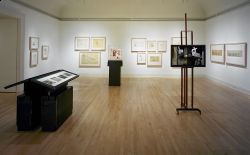
L’exposition se concentre sur un aspect déterminant et actuel de l’œuvre de Scarpa : l’approche originale qu’il utilisait pour composer avec les strates historiques qui forment le tissu d’une ville ou d’un bâtiment. En se concentrant sur l’habileté avec laquelle Scarpa pouvait développer une nouvelle œuvre à l’intérieur même, et souvent à partir, de fragments disparates(...)
L’exposition se concentre sur un aspect déterminant et actuel de l’œuvre de Scarpa : l’approche originale qu’il utilisait pour composer avec les strates historiques qui forment le tissu d’une ville ou d’un bâtiment. En se concentrant sur l’habileté avec laquelle Scarpa pouvait développer une nouvelle œuvre à l’intérieur même, et souvent à partir, de fragments disparates(...)
Localisation:
Salles principales
Salles principales
Date:
26 mai 1999 au 31 octobre 1999
26 mai 1999 au 31 octobre 1999
Titre:
Carlo Scarpa, architecte : composer avec l’histoire
Actions:
Description:
L’exposition se concentre sur un aspect déterminant et actuel de l’œuvre de Scarpa : l’approche originale qu’il utilisait pour composer avec les strates historiques qui forment le tissu d’une ville ou d’un bâtiment. En se concentrant sur l’habileté avec laquelle Scarpa pouvait développer une nouvelle œuvre à l’intérieur même, et souvent à partir, de fragments disparates(...)
Carlo Scarpa, architecte : composer avec l’histoire
Actions:
Description:
L’exposition se concentre sur un aspect déterminant et actuel de l’œuvre de Scarpa : l’approche originale qu’il utilisait pour composer avec les strates historiques qui forment le tissu d’une ville ou d’un bâtiment. En se concentrant sur l’habileté avec laquelle Scarpa pouvait développer une nouvelle œuvre à l’intérieur même, et souvent à partir, de fragments disparates(...)
Classification:
expositions
expositions
Date:
26 mai 1999 au
31 octobre 1999
26 mai 1999 au
31 octobre 1999
Localisation:
Salles principales
Salles principales


