


33566 Résultats
Niveau de description archivistique:
Sous-série
Sous-série
Titre:
Architectural projects
Architectural projects
Numéro de référence:
AP140.S2.SS1
Description:
Sub-series documents competition entries and projects by James Stirling, and by the successive firms of James Stirling; Stirling and Gowan; James Stirling and Partner; James Stirling, Michael Wilford, and Associates; Michael Wilford and Partners; and Michael Wilford GmbH. Several projects were carried out in association with other architects, including Léon Krier, Walter Nägeli, and the firms of Giancarlo de Carlo and of Marlies Hentrup Norbert Heyer. A majority of projects were designed for London, England and other locations in England and Scotland, Germany and the United States. Other projects were designed for Italy, Iran, Japan, France, Algeria, Spain, Netherlands, Kenya, Qatar, Canada, Singapore and Switzerland. Material in this sub-series was produced between 1951 and probably 2004. The publication drawings for Stirling's projects were often drawn by Leon Krier, Russell Bevington, or Ulrich Schaad ('British Architecture Today', 1991). Sub-series contains reference drawings, conceptual and design development drawings, publication and presentation drawings and panels, and working drawings. It also contains photographic materials, textual records, models and artefacts.
AP140.S2.SS1
Description:
Sub-series documents competition entries and projects by James Stirling, and by the successive firms of James Stirling; Stirling and Gowan; James Stirling and Partner; James Stirling, Michael Wilford, and Associates; Michael Wilford and Partners; and Michael Wilford GmbH. Several projects were carried out in association with other architects, including Léon Krier, Walter Nägeli, and the firms of Giancarlo de Carlo and of Marlies Hentrup Norbert Heyer. A majority of projects were designed for London, England and other locations in England and Scotland, Germany and the United States. Other projects were designed for Italy, Iran, Japan, France, Algeria, Spain, Netherlands, Kenya, Qatar, Canada, Singapore and Switzerland. Material in this sub-series was produced between 1951 and probably 2004. The publication drawings for Stirling's projects were often drawn by Leon Krier, Russell Bevington, or Ulrich Schaad ('British Architecture Today', 1991). Sub-series contains reference drawings, conceptual and design development drawings, publication and presentation drawings and panels, and working drawings. It also contains photographic materials, textual records, models and artefacts.
Personnes et institutions:
Date:
1951-2004
1951-2004
Titre:
Architectural projects
Actions:
AP140.S2.SS1
Description:
Sub-series documents competition entries and projects by James Stirling, and by the successive firms of James Stirling; Stirling and Gowan; James Stirling and Partner; James Stirling, Michael Wilford, and Associates; Michael Wilford and Partners; and Michael Wilford GmbH. Several projects were carried out in association with other architects, including Léon Krier, Walter Nägeli, and the firms of Giancarlo de Carlo and of Marlies Hentrup Norbert Heyer. A majority of projects were designed for London, England and other locations in England and Scotland, Germany and the United States. Other projects were designed for Italy, Iran, Japan, France, Algeria, Spain, Netherlands, Kenya, Qatar, Canada, Singapore and Switzerland. Material in this sub-series was produced between 1951 and probably 2004. The publication drawings for Stirling's projects were often drawn by Leon Krier, Russell Bevington, or Ulrich Schaad ('British Architecture Today', 1991). Sub-series contains reference drawings, conceptual and design development drawings, publication and presentation drawings and panels, and working drawings. It also contains photographic materials, textual records, models and artefacts.
Architectural projects
Actions:
AP140.S2.SS1
Description:
Sub-series documents competition entries and projects by James Stirling, and by the successive firms of James Stirling; Stirling and Gowan; James Stirling and Partner; James Stirling, Michael Wilford, and Associates; Michael Wilford and Partners; and Michael Wilford GmbH. Several projects were carried out in association with other architects, including Léon Krier, Walter Nägeli, and the firms of Giancarlo de Carlo and of Marlies Hentrup Norbert Heyer. A majority of projects were designed for London, England and other locations in England and Scotland, Germany and the United States. Other projects were designed for Italy, Iran, Japan, France, Algeria, Spain, Netherlands, Kenya, Qatar, Canada, Singapore and Switzerland. Material in this sub-series was produced between 1951 and probably 2004. The publication drawings for Stirling's projects were often drawn by Leon Krier, Russell Bevington, or Ulrich Schaad ('British Architecture Today', 1991). Sub-series contains reference drawings, conceptual and design development drawings, publication and presentation drawings and panels, and working drawings. It also contains photographic materials, textual records, models and artefacts.
Niveau de description archivistique:
Sub-Series 1
Sub-Series 1
Date:
1951-2004
1951-2004
Personnes et institutions:
Niveau de description archivistique:
Projet
Projet
Numéro de référence:
AP075.S1.1979.PR02
Description:
Project series documents Cornelia Hahn Oberlander's landscape project for Victoria General Hospital in Victoria. Oberlander worked in this project between 1979 and 1982. The architectural firm Beinhaker Irwin / Russell Vandiver Architects worked on the project, while Oberlander was in charge of the landscape for the whole hospital site. The intention for the landscape design was to preserve the site major natural features, such as the woodland and meadow, to create an outdoor recreational area for staff and patients and provide views and privacy for some of the hospital units. Oberlander's design included a play area and a treed parking lot to reduce the impact of the parking areas on the rest of the site. The project series contains concept design reports by architectural firm with Oberlander's annotations, design development drawings and working drawings, including grading plans, landscape plans and planting plans. The project is also documented through correspondence, research material, schematic design, specifications for the landscape and the building construction, contract and financial documents.
AP075.S1.1979.PR02
Description:
Project series documents Cornelia Hahn Oberlander's landscape project for Victoria General Hospital in Victoria. Oberlander worked in this project between 1979 and 1982. The architectural firm Beinhaker Irwin / Russell Vandiver Architects worked on the project, while Oberlander was in charge of the landscape for the whole hospital site. The intention for the landscape design was to preserve the site major natural features, such as the woodland and meadow, to create an outdoor recreational area for staff and patients and provide views and privacy for some of the hospital units. Oberlander's design included a play area and a treed parking lot to reduce the impact of the parking areas on the rest of the site. The project series contains concept design reports by architectural firm with Oberlander's annotations, design development drawings and working drawings, including grading plans, landscape plans and planting plans. The project is also documented through correspondence, research material, schematic design, specifications for the landscape and the building construction, contract and financial documents.
Personnes et institutions:
Date:
1977-1984
1977-1984
Titre:
Victoria General Hospital, Victoria, British Columbia (1979-1882)
Actions:
AP075.S1.1979.PR02
Description:
Project series documents Cornelia Hahn Oberlander's landscape project for Victoria General Hospital in Victoria. Oberlander worked in this project between 1979 and 1982. The architectural firm Beinhaker Irwin / Russell Vandiver Architects worked on the project, while Oberlander was in charge of the landscape for the whole hospital site. The intention for the landscape design was to preserve the site major natural features, such as the woodland and meadow, to create an outdoor recreational area for staff and patients and provide views and privacy for some of the hospital units. Oberlander's design included a play area and a treed parking lot to reduce the impact of the parking areas on the rest of the site. The project series contains concept design reports by architectural firm with Oberlander's annotations, design development drawings and working drawings, including grading plans, landscape plans and planting plans. The project is also documented through correspondence, research material, schematic design, specifications for the landscape and the building construction, contract and financial documents.
Victoria General Hospital, Victoria, British Columbia (1979-1882)
Actions:
AP075.S1.1979.PR02
Description:
Project series documents Cornelia Hahn Oberlander's landscape project for Victoria General Hospital in Victoria. Oberlander worked in this project between 1979 and 1982. The architectural firm Beinhaker Irwin / Russell Vandiver Architects worked on the project, while Oberlander was in charge of the landscape for the whole hospital site. The intention for the landscape design was to preserve the site major natural features, such as the woodland and meadow, to create an outdoor recreational area for staff and patients and provide views and privacy for some of the hospital units. Oberlander's design included a play area and a treed parking lot to reduce the impact of the parking areas on the rest of the site. The project series contains concept design reports by architectural firm with Oberlander's annotations, design development drawings and working drawings, including grading plans, landscape plans and planting plans. The project is also documented through correspondence, research material, schematic design, specifications for the landscape and the building construction, contract and financial documents.
Niveau de description archivistique:
Project
Project
Date:
1977-1984
1977-1984
Personnes et institutions:
Niveau de description archivistique:
Projet
Projet
Numéro de référence:
AP075.S1.1983.PR05
Description:
Project series documents Cornelia Hahn Oberlander's landscape project for Canada Place, located in Vancouver's downton harbour front in the Burrad Inlet, British Columbia. She worked on this project from 1983-1986 with architectural firms Downs/Archambault, Musson Cattell and Partners, Zeldler Roberts Partnership. The project was completed in 1986. The project was intented as a way of creating a link between the sea and the city. The project included a cruise ship terminal and a convention centre. Oberlander landscape design included an installation of planter boxes along the promenade deck of the pier with plants indigeneous to Burrad Inlet and a dry garden. The project series contains Oberlander's concept notes, research and reference material, correspondence, including correspondence with architects and clients, financial documents, plant selection documents, specifications and press clippings of arcticles on the project. Also comprises in the project series are photographs and design development drawings, including planting plans, plans of the differents types of planters, planters details and sections, and plans for the dry garden.
AP075.S1.1983.PR05
Description:
Project series documents Cornelia Hahn Oberlander's landscape project for Canada Place, located in Vancouver's downton harbour front in the Burrad Inlet, British Columbia. She worked on this project from 1983-1986 with architectural firms Downs/Archambault, Musson Cattell and Partners, Zeldler Roberts Partnership. The project was completed in 1986. The project was intented as a way of creating a link between the sea and the city. The project included a cruise ship terminal and a convention centre. Oberlander landscape design included an installation of planter boxes along the promenade deck of the pier with plants indigeneous to Burrad Inlet and a dry garden. The project series contains Oberlander's concept notes, research and reference material, correspondence, including correspondence with architects and clients, financial documents, plant selection documents, specifications and press clippings of arcticles on the project. Also comprises in the project series are photographs and design development drawings, including planting plans, plans of the differents types of planters, planters details and sections, and plans for the dry garden.
Personnes et institutions:
Date:
1983-2003
1983-2003
Titre:
Canada Place, Vancouver, British Columbia (1983)
Actions:
AP075.S1.1983.PR05
Description:
Project series documents Cornelia Hahn Oberlander's landscape project for Canada Place, located in Vancouver's downton harbour front in the Burrad Inlet, British Columbia. She worked on this project from 1983-1986 with architectural firms Downs/Archambault, Musson Cattell and Partners, Zeldler Roberts Partnership. The project was completed in 1986. The project was intented as a way of creating a link between the sea and the city. The project included a cruise ship terminal and a convention centre. Oberlander landscape design included an installation of planter boxes along the promenade deck of the pier with plants indigeneous to Burrad Inlet and a dry garden. The project series contains Oberlander's concept notes, research and reference material, correspondence, including correspondence with architects and clients, financial documents, plant selection documents, specifications and press clippings of arcticles on the project. Also comprises in the project series are photographs and design development drawings, including planting plans, plans of the differents types of planters, planters details and sections, and plans for the dry garden.
Canada Place, Vancouver, British Columbia (1983)
Actions:
AP075.S1.1983.PR05
Description:
Project series documents Cornelia Hahn Oberlander's landscape project for Canada Place, located in Vancouver's downton harbour front in the Burrad Inlet, British Columbia. She worked on this project from 1983-1986 with architectural firms Downs/Archambault, Musson Cattell and Partners, Zeldler Roberts Partnership. The project was completed in 1986. The project was intented as a way of creating a link between the sea and the city. The project included a cruise ship terminal and a convention centre. Oberlander landscape design included an installation of planter boxes along the promenade deck of the pier with plants indigeneous to Burrad Inlet and a dry garden. The project series contains Oberlander's concept notes, research and reference material, correspondence, including correspondence with architects and clients, financial documents, plant selection documents, specifications and press clippings of arcticles on the project. Also comprises in the project series are photographs and design development drawings, including planting plans, plans of the differents types of planters, planters details and sections, and plans for the dry garden.
Niveau de description archivistique:
Project
Project
Date:
1983-2003
1983-2003
Personnes et institutions:
Niveau de description archivistique:
Projet
Projet
Numéro de référence:
AP075.S1.1990.PR11
Description:
Project series documents Cornelia Hahn Oberlander's landscape project for Feigl Residence, located on Drummond Drive, in the University Endowment Land, in Vancouver, British Columbia. Oberlander worked on this project in the early 1990s. Oberlander's project for the Feigl residence consisted in redesigning the garden initally executed in the late 1950s by Justice & Webb Landscape Architects. She later returned in 2007-2008 for the design and the planting of an "green shield" of trees to improve to view from the residence and block the noises from the neighbouring developments. The project series contains only nine drawing, including preliminary grading plans, site plans, and land surveys used as reference.The project series also comprises textual records, including concept notes by Oberlander, correspondence with client and contractors, photographs of the existing landscaping, and cost estimates. The 2007-2008 addition is documented through a series of sketches of the view on the garden from the house, correspondence with contractors and client.
AP075.S1.1990.PR11
Description:
Project series documents Cornelia Hahn Oberlander's landscape project for Feigl Residence, located on Drummond Drive, in the University Endowment Land, in Vancouver, British Columbia. Oberlander worked on this project in the early 1990s. Oberlander's project for the Feigl residence consisted in redesigning the garden initally executed in the late 1950s by Justice & Webb Landscape Architects. She later returned in 2007-2008 for the design and the planting of an "green shield" of trees to improve to view from the residence and block the noises from the neighbouring developments. The project series contains only nine drawing, including preliminary grading plans, site plans, and land surveys used as reference.The project series also comprises textual records, including concept notes by Oberlander, correspondence with client and contractors, photographs of the existing landscaping, and cost estimates. The 2007-2008 addition is documented through a series of sketches of the view on the garden from the house, correspondence with contractors and client.
Personnes et institutions:
Date:
1978-2008
1978-2008
Titre:
Feigl Residence, Vancouver, British Columbia (1990-1991)
Actions:
AP075.S1.1990.PR11
Description:
Project series documents Cornelia Hahn Oberlander's landscape project for Feigl Residence, located on Drummond Drive, in the University Endowment Land, in Vancouver, British Columbia. Oberlander worked on this project in the early 1990s. Oberlander's project for the Feigl residence consisted in redesigning the garden initally executed in the late 1950s by Justice & Webb Landscape Architects. She later returned in 2007-2008 for the design and the planting of an "green shield" of trees to improve to view from the residence and block the noises from the neighbouring developments. The project series contains only nine drawing, including preliminary grading plans, site plans, and land surveys used as reference.The project series also comprises textual records, including concept notes by Oberlander, correspondence with client and contractors, photographs of the existing landscaping, and cost estimates. The 2007-2008 addition is documented through a series of sketches of the view on the garden from the house, correspondence with contractors and client.
Feigl Residence, Vancouver, British Columbia (1990-1991)
Actions:
AP075.S1.1990.PR11
Description:
Project series documents Cornelia Hahn Oberlander's landscape project for Feigl Residence, located on Drummond Drive, in the University Endowment Land, in Vancouver, British Columbia. Oberlander worked on this project in the early 1990s. Oberlander's project for the Feigl residence consisted in redesigning the garden initally executed in the late 1950s by Justice & Webb Landscape Architects. She later returned in 2007-2008 for the design and the planting of an "green shield" of trees to improve to view from the residence and block the noises from the neighbouring developments. The project series contains only nine drawing, including preliminary grading plans, site plans, and land surveys used as reference.The project series also comprises textual records, including concept notes by Oberlander, correspondence with client and contractors, photographs of the existing landscaping, and cost estimates. The 2007-2008 addition is documented through a series of sketches of the view on the garden from the house, correspondence with contractors and client.
Niveau de description archivistique:
Project
Project
Date:
1978-2008
1978-2008
Personnes et institutions:
Niveau de description archivistique:
Projet
Projet
Numéro de référence:
AP178.S1.1990.PR04
Description:
This project series documents the Ceramique Terrein Blocos de habitação e escritórios in Maastricht, The Netherlands. While the records were held in the office’s archives this project was assigned the number 6/90 A/B. The office assigned the date 1990 to this project. The project is located in the Ceramique district. The industrial area was revitalized during the nineties with buildings built by international architects, including Aldo Rossi's the Bonnefanten Museum and Jo Coenen's Centre Céramique. The building is divided into three independent buildings: Block 6, Block 7, and Block 8. Block 6 is made up of commercial space on the ground floor and residential units on the other six floors. Block 8 is the biggest unit of the project, with a double tower of 16 storeys. Block 7 is a four-storey building. The project was realized. Documenting this project are sketches and plans. Textual material includes correspondence and technical details. Photographic material documents the project site, construction work, and built project.
AP178.S1.1990.PR04
Description:
This project series documents the Ceramique Terrein Blocos de habitação e escritórios in Maastricht, The Netherlands. While the records were held in the office’s archives this project was assigned the number 6/90 A/B. The office assigned the date 1990 to this project. The project is located in the Ceramique district. The industrial area was revitalized during the nineties with buildings built by international architects, including Aldo Rossi's the Bonnefanten Museum and Jo Coenen's Centre Céramique. The building is divided into three independent buildings: Block 6, Block 7, and Block 8. Block 6 is made up of commercial space on the ground floor and residential units on the other six floors. Block 8 is the biggest unit of the project, with a double tower of 16 storeys. Block 7 is a four-storey building. The project was realized. Documenting this project are sketches and plans. Textual material includes correspondence and technical details. Photographic material documents the project site, construction work, and built project.
Personnes et institutions:
Date:
1991-2000
1991-2000
Titre:
Ceramique Terrein Blocos de habitação e escritórios [Ceramic Terrain apartments and offices], Maastricht, The Netherlands (1990)
Actions:
AP178.S1.1990.PR04
Description:
This project series documents the Ceramique Terrein Blocos de habitação e escritórios in Maastricht, The Netherlands. While the records were held in the office’s archives this project was assigned the number 6/90 A/B. The office assigned the date 1990 to this project. The project is located in the Ceramique district. The industrial area was revitalized during the nineties with buildings built by international architects, including Aldo Rossi's the Bonnefanten Museum and Jo Coenen's Centre Céramique. The building is divided into three independent buildings: Block 6, Block 7, and Block 8. Block 6 is made up of commercial space on the ground floor and residential units on the other six floors. Block 8 is the biggest unit of the project, with a double tower of 16 storeys. Block 7 is a four-storey building. The project was realized. Documenting this project are sketches and plans. Textual material includes correspondence and technical details. Photographic material documents the project site, construction work, and built project.
Ceramique Terrein Blocos de habitação e escritórios [Ceramic Terrain apartments and offices], Maastricht, The Netherlands (1990)
Actions:
AP178.S1.1990.PR04
Description:
This project series documents the Ceramique Terrein Blocos de habitação e escritórios in Maastricht, The Netherlands. While the records were held in the office’s archives this project was assigned the number 6/90 A/B. The office assigned the date 1990 to this project. The project is located in the Ceramique district. The industrial area was revitalized during the nineties with buildings built by international architects, including Aldo Rossi's the Bonnefanten Museum and Jo Coenen's Centre Céramique. The building is divided into three independent buildings: Block 6, Block 7, and Block 8. Block 6 is made up of commercial space on the ground floor and residential units on the other six floors. Block 8 is the biggest unit of the project, with a double tower of 16 storeys. Block 7 is a four-storey building. The project was realized. Documenting this project are sketches and plans. Textual material includes correspondence and technical details. Photographic material documents the project site, construction work, and built project.
Niveau de description archivistique:
Project
Project
Date:
1991-2000
1991-2000
Personnes et institutions:
Niveau de description archivistique:
Projet
Projet
Titre:
Inter-Action Centre
Inter-Action Centre
Numéro de référence:
AP144.S2.D82
Description:
File documents Inter-Action Centre, a completed project for a community centre commissioned by Ed Berman and the Inter-Action Trust, for a disused site at Talacre Public Open Space in Kentish Town, Camden, London. The construction was divided into two phases. Foundations, steel frame and trusses were constructed first and could be used for open-air community events while funds were being raised for the second phase. Phase II included cladding, fittings, finishes, services prefabricated units, and log cabins. The building was intended as a flexible short life-span building in which the interior spaces would be independent of the roof and exterior walls. Functional areas suggested by Cedric Price include: assembly halls, classrooms, rehearsal rooms, studios, areas for performance, media resources, lounging and dining, and a gym and a nursery. Cedric Price had been engaged by the concepts of flexible architecture, indeterminacy, impermanence, and the fusion of information technology, entertainment, and educational activities in earlier unrealized projects such as Fun Palace (AP144.S2.D46) and Oxford Corner House (AP144.S2.D59). Existing conditions drawings include photographs of the site; reprographic copies of electrical and drainage systems; ordinance surveys of Kentish Town; and landscape and playground layout. Conceptual drawings include sketches of overall massing; diagrammatic plans; drawings and diagrams of site conditions; notes for the structural framework; rendered interior elevations; plans showing impact of site context on building design; diagrammatic sketches of relationship between functional requirements and structural form. Schematic drawings include diagrammatic plans; sections of structural system and exterior wall; cladding details; and axonometric views of supports. Design development drawings and working drawings include plans, elevations, sections, details and axonometric views. Presentation drawings include watercolours and other renderings; reprographic copies, possibly for publication; and perspectives drawings. Some material from this file was published in "Inter-action Centre." 'RIBA Journal'. (November 1977), 458-465; "Intervista A Cedric Price: London Interaction Centre." 'Domus'. (April 1978), 17-21; "Kentish Town West Amalgam, London." 'Architectural Record'. (January 1973), 19; Lyall, Sutherland. 'The State of British Architecture'. (London: Architectural Press, 1980), 107-109; 130 and 'Cedric Price-Works II' (London: Architectural Press, 1984), 54, 62-63. Material in this file was produced between 1964 and 1992, but predominantly between 1970 and 1981. File contains technical drawings that are attributed to the following consultants, contractors, and manufacturers: Coseley Buildings Ltd; H.G. Deacon Ltd; Kayanson Engineers; H.J. Knights & Co. Ltd; Woodcemair; Metal Sections Ltd; Spaceway; Gascoigne, Gush & Dent (Engineering Ltd); UBM Engineering; J. Murphy & Sons Ltd; Maurice Pickering Associates, Architects & Landscape Consultants; David Lee Architect & Landscape Architect; J. Starkie Gardner Ltd; Dibben Structural Engineers; Zisman, Bowyer & Partners; Felix J. Samuely and Partners; Ruberoid Contracts Ltd; Whitbread London Limited; and Portakabin. Paul Hyett and Will Alsop were Cedric Price's main assistants for this project. 'Inter-Action Trust Limited', 'Inter-Action Centre', and 'Talacre Centre Limited' appear as the client(s) at various stages of this project. File contains cartographic materials, conceptual drawings, consultant drawings, design development drawings, models, panels, photographic materials, presentation drawings, an illustration, textual records, and working drawings.
AP144.S2.D82
Description:
File documents Inter-Action Centre, a completed project for a community centre commissioned by Ed Berman and the Inter-Action Trust, for a disused site at Talacre Public Open Space in Kentish Town, Camden, London. The construction was divided into two phases. Foundations, steel frame and trusses were constructed first and could be used for open-air community events while funds were being raised for the second phase. Phase II included cladding, fittings, finishes, services prefabricated units, and log cabins. The building was intended as a flexible short life-span building in which the interior spaces would be independent of the roof and exterior walls. Functional areas suggested by Cedric Price include: assembly halls, classrooms, rehearsal rooms, studios, areas for performance, media resources, lounging and dining, and a gym and a nursery. Cedric Price had been engaged by the concepts of flexible architecture, indeterminacy, impermanence, and the fusion of information technology, entertainment, and educational activities in earlier unrealized projects such as Fun Palace (AP144.S2.D46) and Oxford Corner House (AP144.S2.D59). Existing conditions drawings include photographs of the site; reprographic copies of electrical and drainage systems; ordinance surveys of Kentish Town; and landscape and playground layout. Conceptual drawings include sketches of overall massing; diagrammatic plans; drawings and diagrams of site conditions; notes for the structural framework; rendered interior elevations; plans showing impact of site context on building design; diagrammatic sketches of relationship between functional requirements and structural form. Schematic drawings include diagrammatic plans; sections of structural system and exterior wall; cladding details; and axonometric views of supports. Design development drawings and working drawings include plans, elevations, sections, details and axonometric views. Presentation drawings include watercolours and other renderings; reprographic copies, possibly for publication; and perspectives drawings. Some material from this file was published in "Inter-action Centre." 'RIBA Journal'. (November 1977), 458-465; "Intervista A Cedric Price: London Interaction Centre." 'Domus'. (April 1978), 17-21; "Kentish Town West Amalgam, London." 'Architectural Record'. (January 1973), 19; Lyall, Sutherland. 'The State of British Architecture'. (London: Architectural Press, 1980), 107-109; 130 and 'Cedric Price-Works II' (London: Architectural Press, 1984), 54, 62-63. Material in this file was produced between 1964 and 1992, but predominantly between 1970 and 1981. File contains technical drawings that are attributed to the following consultants, contractors, and manufacturers: Coseley Buildings Ltd; H.G. Deacon Ltd; Kayanson Engineers; H.J. Knights & Co. Ltd; Woodcemair; Metal Sections Ltd; Spaceway; Gascoigne, Gush & Dent (Engineering Ltd); UBM Engineering; J. Murphy & Sons Ltd; Maurice Pickering Associates, Architects & Landscape Consultants; David Lee Architect & Landscape Architect; J. Starkie Gardner Ltd; Dibben Structural Engineers; Zisman, Bowyer & Partners; Felix J. Samuely and Partners; Ruberoid Contracts Ltd; Whitbread London Limited; and Portakabin. Paul Hyett and Will Alsop were Cedric Price's main assistants for this project. 'Inter-Action Trust Limited', 'Inter-Action Centre', and 'Talacre Centre Limited' appear as the client(s) at various stages of this project. File contains cartographic materials, conceptual drawings, consultant drawings, design development drawings, models, panels, photographic materials, presentation drawings, an illustration, textual records, and working drawings.
Personnes et institutions:
Date:
1964-1992, predominant 1970-1981
1964-1992, predominant 1970-1981
Titre:
Inter-Action Centre
Actions:
AP144.S2.D82
Description:
File documents Inter-Action Centre, a completed project for a community centre commissioned by Ed Berman and the Inter-Action Trust, for a disused site at Talacre Public Open Space in Kentish Town, Camden, London. The construction was divided into two phases. Foundations, steel frame and trusses were constructed first and could be used for open-air community events while funds were being raised for the second phase. Phase II included cladding, fittings, finishes, services prefabricated units, and log cabins. The building was intended as a flexible short life-span building in which the interior spaces would be independent of the roof and exterior walls. Functional areas suggested by Cedric Price include: assembly halls, classrooms, rehearsal rooms, studios, areas for performance, media resources, lounging and dining, and a gym and a nursery. Cedric Price had been engaged by the concepts of flexible architecture, indeterminacy, impermanence, and the fusion of information technology, entertainment, and educational activities in earlier unrealized projects such as Fun Palace (AP144.S2.D46) and Oxford Corner House (AP144.S2.D59). Existing conditions drawings include photographs of the site; reprographic copies of electrical and drainage systems; ordinance surveys of Kentish Town; and landscape and playground layout. Conceptual drawings include sketches of overall massing; diagrammatic plans; drawings and diagrams of site conditions; notes for the structural framework; rendered interior elevations; plans showing impact of site context on building design; diagrammatic sketches of relationship between functional requirements and structural form. Schematic drawings include diagrammatic plans; sections of structural system and exterior wall; cladding details; and axonometric views of supports. Design development drawings and working drawings include plans, elevations, sections, details and axonometric views. Presentation drawings include watercolours and other renderings; reprographic copies, possibly for publication; and perspectives drawings. Some material from this file was published in "Inter-action Centre." 'RIBA Journal'. (November 1977), 458-465; "Intervista A Cedric Price: London Interaction Centre." 'Domus'. (April 1978), 17-21; "Kentish Town West Amalgam, London." 'Architectural Record'. (January 1973), 19; Lyall, Sutherland. 'The State of British Architecture'. (London: Architectural Press, 1980), 107-109; 130 and 'Cedric Price-Works II' (London: Architectural Press, 1984), 54, 62-63. Material in this file was produced between 1964 and 1992, but predominantly between 1970 and 1981. File contains technical drawings that are attributed to the following consultants, contractors, and manufacturers: Coseley Buildings Ltd; H.G. Deacon Ltd; Kayanson Engineers; H.J. Knights & Co. Ltd; Woodcemair; Metal Sections Ltd; Spaceway; Gascoigne, Gush & Dent (Engineering Ltd); UBM Engineering; J. Murphy & Sons Ltd; Maurice Pickering Associates, Architects & Landscape Consultants; David Lee Architect & Landscape Architect; J. Starkie Gardner Ltd; Dibben Structural Engineers; Zisman, Bowyer & Partners; Felix J. Samuely and Partners; Ruberoid Contracts Ltd; Whitbread London Limited; and Portakabin. Paul Hyett and Will Alsop were Cedric Price's main assistants for this project. 'Inter-Action Trust Limited', 'Inter-Action Centre', and 'Talacre Centre Limited' appear as the client(s) at various stages of this project. File contains cartographic materials, conceptual drawings, consultant drawings, design development drawings, models, panels, photographic materials, presentation drawings, an illustration, textual records, and working drawings.
Inter-Action Centre
Actions:
AP144.S2.D82
Description:
File documents Inter-Action Centre, a completed project for a community centre commissioned by Ed Berman and the Inter-Action Trust, for a disused site at Talacre Public Open Space in Kentish Town, Camden, London. The construction was divided into two phases. Foundations, steel frame and trusses were constructed first and could be used for open-air community events while funds were being raised for the second phase. Phase II included cladding, fittings, finishes, services prefabricated units, and log cabins. The building was intended as a flexible short life-span building in which the interior spaces would be independent of the roof and exterior walls. Functional areas suggested by Cedric Price include: assembly halls, classrooms, rehearsal rooms, studios, areas for performance, media resources, lounging and dining, and a gym and a nursery. Cedric Price had been engaged by the concepts of flexible architecture, indeterminacy, impermanence, and the fusion of information technology, entertainment, and educational activities in earlier unrealized projects such as Fun Palace (AP144.S2.D46) and Oxford Corner House (AP144.S2.D59). Existing conditions drawings include photographs of the site; reprographic copies of electrical and drainage systems; ordinance surveys of Kentish Town; and landscape and playground layout. Conceptual drawings include sketches of overall massing; diagrammatic plans; drawings and diagrams of site conditions; notes for the structural framework; rendered interior elevations; plans showing impact of site context on building design; diagrammatic sketches of relationship between functional requirements and structural form. Schematic drawings include diagrammatic plans; sections of structural system and exterior wall; cladding details; and axonometric views of supports. Design development drawings and working drawings include plans, elevations, sections, details and axonometric views. Presentation drawings include watercolours and other renderings; reprographic copies, possibly for publication; and perspectives drawings. Some material from this file was published in "Inter-action Centre." 'RIBA Journal'. (November 1977), 458-465; "Intervista A Cedric Price: London Interaction Centre." 'Domus'. (April 1978), 17-21; "Kentish Town West Amalgam, London." 'Architectural Record'. (January 1973), 19; Lyall, Sutherland. 'The State of British Architecture'. (London: Architectural Press, 1980), 107-109; 130 and 'Cedric Price-Works II' (London: Architectural Press, 1984), 54, 62-63. Material in this file was produced between 1964 and 1992, but predominantly between 1970 and 1981. File contains technical drawings that are attributed to the following consultants, contractors, and manufacturers: Coseley Buildings Ltd; H.G. Deacon Ltd; Kayanson Engineers; H.J. Knights & Co. Ltd; Woodcemair; Metal Sections Ltd; Spaceway; Gascoigne, Gush & Dent (Engineering Ltd); UBM Engineering; J. Murphy & Sons Ltd; Maurice Pickering Associates, Architects & Landscape Consultants; David Lee Architect & Landscape Architect; J. Starkie Gardner Ltd; Dibben Structural Engineers; Zisman, Bowyer & Partners; Felix J. Samuely and Partners; Ruberoid Contracts Ltd; Whitbread London Limited; and Portakabin. Paul Hyett and Will Alsop were Cedric Price's main assistants for this project. 'Inter-Action Trust Limited', 'Inter-Action Centre', and 'Talacre Centre Limited' appear as the client(s) at various stages of this project. File contains cartographic materials, conceptual drawings, consultant drawings, design development drawings, models, panels, photographic materials, presentation drawings, an illustration, textual records, and working drawings.
Niveau de description archivistique:
File 82
File 82
Date:
1964-1992, predominant 1970-1981
1964-1992, predominant 1970-1981
Personnes et institutions:
Classification:
dessins
dessins
Actions:
Numéro de référence:
DR2000:0009
Description:
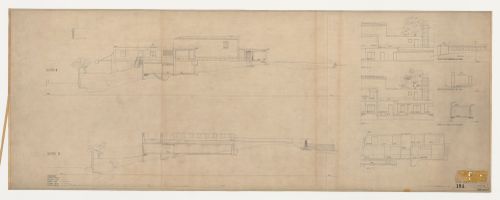
- Section 8 is for the Chapel of Faith, looking south, showing the Way of the Cross walkway, the waiting room and garden for the chapel, the ancillary rooms adjacent to and behind the chapel, the rooms below the main level and the driveway at the rear of the complex. Section 9 is for the columbaria, looking south, showing the stairs of the Way of the Cross walkway and the columbaria. Elevations 10-10 and 11-11 are for the east (rear) façades of the Chapel of Faith and section 12-12 is for the south façade of the ancillary rooms adjacent to the Chapel of the Holy Cross. There are two elevations for the west and north façades and section a-a for a lavatory and there is a sketch by the architect (?) for a pile at u.l. Section cuts 8-12 appear in ground plan DR2000:0007.
DR2000:0009
Description:
- Section 8 is for the Chapel of Faith, looking south, showing the Way of the Cross walkway, the waiting room and garden for the chapel, the ancillary rooms adjacent to and behind the chapel, the rooms below the main level and the driveway at the rear of the complex. Section 9 is for the columbaria, looking south, showing the stairs of the Way of the Cross walkway and the columbaria. Elevations 10-10 and 11-11 are for the east (rear) façades of the Chapel of Faith and section 12-12 is for the south façade of the ancillary rooms adjacent to the Chapel of the Holy Cross. There are two elevations for the west and north façades and section a-a for a lavatory and there is a sketch by the architect (?) for a pile at u.l. Section cuts 8-12 appear in ground plan DR2000:0007.
Personnes et institutions:
Sujet:
architecture, design d'intérieur
architecture, design d'intérieur
Date:
1 March 1937
1 March 1937
Titre:
Sections 8 to 12 and elevations for a lavatory for the Woodland Crematorium, Woodland Cemetery, Stockholm, Sweden
Actions:
DR2000:0009
Description:
- Section 8 is for the Chapel of Faith, looking south, showing the Way of the Cross walkway, the waiting room and garden for the chapel, the ancillary rooms adjacent to and behind the chapel, the rooms below the main level and the driveway at the rear of the complex. Section 9 is for the columbaria, looking south, showing the stairs of the Way of the Cross walkway and the columbaria. Elevations 10-10 and 11-11 are for the east (rear) façades of the Chapel of Faith and section 12-12 is for the south façade of the ancillary rooms adjacent to the Chapel of the Holy Cross. There are two elevations for the west and north façades and section a-a for a lavatory and there is a sketch by the architect (?) for a pile at u.l. Section cuts 8-12 appear in ground plan DR2000:0007.
Sections 8 to 12 and elevations for a lavatory for the Woodland Crematorium, Woodland Cemetery, Stockholm, Sweden
Actions:
DR2000:0009
Description:
- Section 8 is for the Chapel of Faith, looking south, showing the Way of the Cross walkway, the waiting room and garden for the chapel, the ancillary rooms adjacent to and behind the chapel, the rooms below the main level and the driveway at the rear of the complex. Section 9 is for the columbaria, looking south, showing the stairs of the Way of the Cross walkway and the columbaria. Elevations 10-10 and 11-11 are for the east (rear) façades of the Chapel of Faith and section 12-12 is for the south façade of the ancillary rooms adjacent to the Chapel of the Holy Cross. There are two elevations for the west and north façades and section a-a for a lavatory and there is a sketch by the architect (?) for a pile at u.l. Section cuts 8-12 appear in ground plan DR2000:0007.
Classification:
dessins
dessins
Date:
1 March 1937
1 March 1937
Personnes et institutions:
Sujet:
architecture, design d'intérieur
architecture, design d'intérieur
Classification:
photographies
photographies
Numéro de référence:
DR2012:0012:077:001:005
Description:
File containing photographs, printouts, a negative film frame, a stat, and notes related to the following events, locations, and/or projects: - Memo series (5 gelatin silver prints); - Montreal streets (3 gelatin silver prints); - A Kingston construction (2 gelatin silver prints); - Place Desjardins (2 gelatin silver prints); - Beaudry-Leman house, Outremont (1 gelatin silver print); - City of Maisonneuve, former fire station (1 gelatin silver print); - Aerial view of the construction Place Bonaventure (1 gelatin silver print); - The house of an architect (1 gelatin silver print); - Église Notre-Dame-des-Champs, Repentigny (2 gelatin silver prints); - Église Notre-Dame-de-Fatima, Jonquière, (1 gelatin silver print); - Unidentified house (1 gelatin silver print, 1 black-and-white negative); - Pliny on my mind, nos. 1 and 2 (1 gelatin silver print).
DR2012:0012:077:001:005
Description:
File containing photographs, printouts, a negative film frame, a stat, and notes related to the following events, locations, and/or projects: - Memo series (5 gelatin silver prints); - Montreal streets (3 gelatin silver prints); - A Kingston construction (2 gelatin silver prints); - Place Desjardins (2 gelatin silver prints); - Beaudry-Leman house, Outremont (1 gelatin silver print); - City of Maisonneuve, former fire station (1 gelatin silver print); - Aerial view of the construction Place Bonaventure (1 gelatin silver print); - The house of an architect (1 gelatin silver print); - Église Notre-Dame-des-Champs, Repentigny (2 gelatin silver prints); - Église Notre-Dame-de-Fatima, Jonquière, (1 gelatin silver print); - Unidentified house (1 gelatin silver print, 1 black-and-white negative); - Pliny on my mind, nos. 1 and 2 (1 gelatin silver print).
Personnes et institutions:
Date:
1964, 1976, 1983
1964, 1976, 1983
Titre:
Photographic materials related to events and projects
Actions:
DR2012:0012:077:001:005
Description:
File containing photographs, printouts, a negative film frame, a stat, and notes related to the following events, locations, and/or projects: - Memo series (5 gelatin silver prints); - Montreal streets (3 gelatin silver prints); - A Kingston construction (2 gelatin silver prints); - Place Desjardins (2 gelatin silver prints); - Beaudry-Leman house, Outremont (1 gelatin silver print); - City of Maisonneuve, former fire station (1 gelatin silver print); - Aerial view of the construction Place Bonaventure (1 gelatin silver print); - The house of an architect (1 gelatin silver print); - Église Notre-Dame-des-Champs, Repentigny (2 gelatin silver prints); - Église Notre-Dame-de-Fatima, Jonquière, (1 gelatin silver print); - Unidentified house (1 gelatin silver print, 1 black-and-white negative); - Pliny on my mind, nos. 1 and 2 (1 gelatin silver print).
Photographic materials related to events and projects
Actions:
DR2012:0012:077:001:005
Description:
File containing photographs, printouts, a negative film frame, a stat, and notes related to the following events, locations, and/or projects: - Memo series (5 gelatin silver prints); - Montreal streets (3 gelatin silver prints); - A Kingston construction (2 gelatin silver prints); - Place Desjardins (2 gelatin silver prints); - Beaudry-Leman house, Outremont (1 gelatin silver print); - City of Maisonneuve, former fire station (1 gelatin silver print); - Aerial view of the construction Place Bonaventure (1 gelatin silver print); - The house of an architect (1 gelatin silver print); - Église Notre-Dame-des-Champs, Repentigny (2 gelatin silver prints); - Église Notre-Dame-de-Fatima, Jonquière, (1 gelatin silver print); - Unidentified house (1 gelatin silver print, 1 black-and-white negative); - Pliny on my mind, nos. 1 and 2 (1 gelatin silver print).
Classification:
photographies
photographies
Date:
1964, 1976, 1983
1964, 1976, 1983
Personnes et institutions:
Actions:
Numéro de référence:
DR1987:0034:001-033
Description:
- This album contains 17 drawings, 13 photographs and 2 prints which record the design and construction of the Palais de l'Industrie, Paris. The drawings, DR1987:0034:001 - DR1987:0034:0017, were probably executed in the office of J.M.V. Viel, one of the building's architects, who signed them on 1 February 1859. These drawings are rendered in pen and watercolour, and appear to be an official record of the building. The printed plan with additions in pen, DR1987:0034:0018, was signed by Viel in 1856. The photographs, DR1987:0034:019 - DR1987:0034:0030, are views of the interior and the main entrance under construction, ca. 1854, and views of the completed main entrance of 1855 or after, including details of relief sculpture and the stained-glass window.
DR1987:0034:001-033
Description:
- This album contains 17 drawings, 13 photographs and 2 prints which record the design and construction of the Palais de l'Industrie, Paris. The drawings, DR1987:0034:001 - DR1987:0034:0017, were probably executed in the office of J.M.V. Viel, one of the building's architects, who signed them on 1 February 1859. These drawings are rendered in pen and watercolour, and appear to be an official record of the building. The printed plan with additions in pen, DR1987:0034:0018, was signed by Viel in 1856. The photographs, DR1987:0034:019 - DR1987:0034:0030, are views of the interior and the main entrance under construction, ca. 1854, and views of the completed main entrance of 1855 or after, including details of relief sculpture and the stained-glass window.
Personnes et institutions:
Sujet:
architecture
architecture
Date:
ca. 1853-1859
ca. 1853-1859
Titre:
Palais de l'Industrie: Atlas du Bâtiment
Actions:
DR1987:0034:001-033
Description:
- This album contains 17 drawings, 13 photographs and 2 prints which record the design and construction of the Palais de l'Industrie, Paris. The drawings, DR1987:0034:001 - DR1987:0034:0017, were probably executed in the office of J.M.V. Viel, one of the building's architects, who signed them on 1 February 1859. These drawings are rendered in pen and watercolour, and appear to be an official record of the building. The printed plan with additions in pen, DR1987:0034:0018, was signed by Viel in 1856. The photographs, DR1987:0034:019 - DR1987:0034:0030, are views of the interior and the main entrance under construction, ca. 1854, and views of the completed main entrance of 1855 or after, including details of relief sculpture and the stained-glass window.
Palais de l'Industrie: Atlas du Bâtiment
Actions:
DR1987:0034:001-033
Description:
- This album contains 17 drawings, 13 photographs and 2 prints which record the design and construction of the Palais de l'Industrie, Paris. The drawings, DR1987:0034:001 - DR1987:0034:0017, were probably executed in the office of J.M.V. Viel, one of the building's architects, who signed them on 1 February 1859. These drawings are rendered in pen and watercolour, and appear to be an official record of the building. The printed plan with additions in pen, DR1987:0034:0018, was signed by Viel in 1856. The photographs, DR1987:0034:019 - DR1987:0034:0030, are views of the interior and the main entrance under construction, ca. 1854, and views of the completed main entrance of 1855 or after, including details of relief sculpture and the stained-glass window.
Date:
ca. 1853-1859
ca. 1853-1859
Personnes et institutions:
Sujet:
architecture
architecture
Classification:
documents textuels
documents textuels
Numéro de référence:
AP075.S3.SS2.150
Description:
This box contains professional correspondence, organized in chronological order, from 1994-2001. This correspondence contains chiefly letters related to participation to exhibitions and publishing in landscape architecture publications, correspondence related to nominations and awards received by Oberlander, requests to serve on juries, correspondence with schools of architecture and landscape architects associations, about membership or attendance to events. It also comprises correspondence related to research and involvement in sustainable development. It also contains correspondence with city planning committees or other governmental institutions related to projects or consultation in landscape design, and letters of reference or received job applications. This box also includes correspondence related to Oberlander's trip to Australia This correspondence also comprises a few letters related to Oberlander's projects, mainly letters of congratulations or comments for her design.
AP075.S3.SS2.150
Description:
This box contains professional correspondence, organized in chronological order, from 1994-2001. This correspondence contains chiefly letters related to participation to exhibitions and publishing in landscape architecture publications, correspondence related to nominations and awards received by Oberlander, requests to serve on juries, correspondence with schools of architecture and landscape architects associations, about membership or attendance to events. It also comprises correspondence related to research and involvement in sustainable development. It also contains correspondence with city planning committees or other governmental institutions related to projects or consultation in landscape design, and letters of reference or received job applications. This box also includes correspondence related to Oberlander's trip to Australia This correspondence also comprises a few letters related to Oberlander's projects, mainly letters of congratulations or comments for her design.
Personnes et institutions:
Date:
1994-2001
1994-2001
Titre:
Professional correspondence from 1994-2001
Actions:
AP075.S3.SS2.150
Description:
This box contains professional correspondence, organized in chronological order, from 1994-2001. This correspondence contains chiefly letters related to participation to exhibitions and publishing in landscape architecture publications, correspondence related to nominations and awards received by Oberlander, requests to serve on juries, correspondence with schools of architecture and landscape architects associations, about membership or attendance to events. It also comprises correspondence related to research and involvement in sustainable development. It also contains correspondence with city planning committees or other governmental institutions related to projects or consultation in landscape design, and letters of reference or received job applications. This box also includes correspondence related to Oberlander's trip to Australia This correspondence also comprises a few letters related to Oberlander's projects, mainly letters of congratulations or comments for her design.
Professional correspondence from 1994-2001
Actions:
AP075.S3.SS2.150
Description:
This box contains professional correspondence, organized in chronological order, from 1994-2001. This correspondence contains chiefly letters related to participation to exhibitions and publishing in landscape architecture publications, correspondence related to nominations and awards received by Oberlander, requests to serve on juries, correspondence with schools of architecture and landscape architects associations, about membership or attendance to events. It also comprises correspondence related to research and involvement in sustainable development. It also contains correspondence with city planning committees or other governmental institutions related to projects or consultation in landscape design, and letters of reference or received job applications. This box also includes correspondence related to Oberlander's trip to Australia This correspondence also comprises a few letters related to Oberlander's projects, mainly letters of congratulations or comments for her design.
Classification:
documents textuels
documents textuels
Date:
1994-2001
1994-2001
Personnes et institutions:


