


9148 Résultats
Classification:
photographies
photographies
Actions:
Numéro de référence:
PH1986:0193
Description:
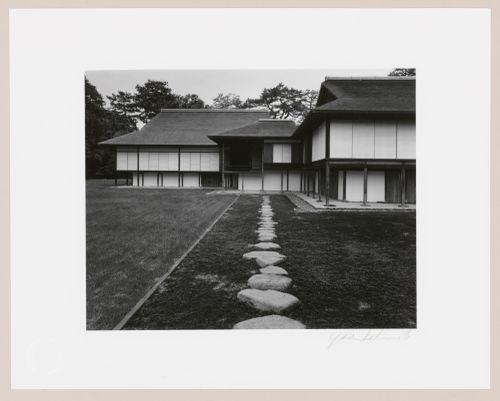
- Photographs PH1986:0148 - PH1986:0283 form a sequence of views. Accession numbers follow an order established by the photographer that is based on the temporal experience of walking through the grounds of Katsura Rikyu (also known as Katsura Imperial Villa) (see acquisition file). - After first photographing Katsura Rikyu (also known as Katsura Imperial Villa) in 1953, Yasuhiro Ishimoto returned there in 1982 and took another series of photographs, this time with many in colour, often using the same or very similar views to those of his 1953 photographs (Ishimoto, pp. 265-266). - This photograph shows the south lawn (also known as the court football [kemari] field) in the foreground, at left, and the moss garden in the foreground, at right (Isozaki, et al, pp. 52-53, repr.; pp. 68-69, repr.; pp. 78, repr.; p. 244; Ito, site plan; Tange, n.p., plan).
PH1986:0193
Description:
- Photographs PH1986:0148 - PH1986:0283 form a sequence of views. Accession numbers follow an order established by the photographer that is based on the temporal experience of walking through the grounds of Katsura Rikyu (also known as Katsura Imperial Villa) (see acquisition file). - After first photographing Katsura Rikyu (also known as Katsura Imperial Villa) in 1953, Yasuhiro Ishimoto returned there in 1982 and took another series of photographs, this time with many in colour, often using the same or very similar views to those of his 1953 photographs (Ishimoto, pp. 265-266). - This photograph shows the south lawn (also known as the court football [kemari] field) in the foreground, at left, and the moss garden in the foreground, at right (Isozaki, et al, pp. 52-53, repr.; pp. 68-69, repr.; pp. 78, repr.; p. 244; Ito, site plan; Tange, n.p., plan).
Personnes et institutions:
Sujet:
architecture, architecture de paysage
architecture, architecture de paysage
Date:
1982
1982
Titre:
View of the New Palace (also known as the New Goten), the Music Room and the Middle Shoin showing stepping-stones in the foreground, Katsura Rikyu (also known as Katsura Imperial Villa), Kyoto, Japan
Actions:
PH1986:0193
Description:
- Photographs PH1986:0148 - PH1986:0283 form a sequence of views. Accession numbers follow an order established by the photographer that is based on the temporal experience of walking through the grounds of Katsura Rikyu (also known as Katsura Imperial Villa) (see acquisition file). - After first photographing Katsura Rikyu (also known as Katsura Imperial Villa) in 1953, Yasuhiro Ishimoto returned there in 1982 and took another series of photographs, this time with many in colour, often using the same or very similar views to those of his 1953 photographs (Ishimoto, pp. 265-266). - This photograph shows the south lawn (also known as the court football [kemari] field) in the foreground, at left, and the moss garden in the foreground, at right (Isozaki, et al, pp. 52-53, repr.; pp. 68-69, repr.; pp. 78, repr.; p. 244; Ito, site plan; Tange, n.p., plan).
View of the New Palace (also known as the New Goten), the Music Room and the Middle Shoin showing stepping-stones in the foreground, Katsura Rikyu (also known as Katsura Imperial Villa), Kyoto, Japan
Actions:
PH1986:0193
Description:
- Photographs PH1986:0148 - PH1986:0283 form a sequence of views. Accession numbers follow an order established by the photographer that is based on the temporal experience of walking through the grounds of Katsura Rikyu (also known as Katsura Imperial Villa) (see acquisition file). - After first photographing Katsura Rikyu (also known as Katsura Imperial Villa) in 1953, Yasuhiro Ishimoto returned there in 1982 and took another series of photographs, this time with many in colour, often using the same or very similar views to those of his 1953 photographs (Ishimoto, pp. 265-266). - This photograph shows the south lawn (also known as the court football [kemari] field) in the foreground, at left, and the moss garden in the foreground, at right (Isozaki, et al, pp. 52-53, repr.; pp. 68-69, repr.; pp. 78, repr.; p. 244; Ito, site plan; Tange, n.p., plan).
Classification:
photographies
photographies
Date:
1982
1982
Personnes et institutions:
Sujet:
architecture, architecture de paysage
architecture, architecture de paysage
Classification:
photographies
photographies
Actions:
Numéro de référence:
PH1986:0901:040:001-002
Description:
- This panorama was taken from the base of the White Pagoda [Bai Ta] (now also known as the White Dagoba), Western Garden [Xi Yuan] (now Beihai Park), Peking (now Beijing), China (Harris, p. 147). In PH1986:0901:040:001, Jingshan [Hill of Commanding Views] (also known as Coal Hill [Meishan] and Prospect Hill) is visible at upper left, the Ta-kao hsuan Hall (now Dagaoxuan Dian) temple complex is visible from centre left to centre right, and Shengwumen [Gate of Divine Might], the northern gate to the Forbidden City, is visible at extreme centre right. In PH1986:0901:040:002, the Forbidden City is visible from centre left to centre right and the west wall and a building at the southwest corner of the Ta-kao hsuan Hall (now Dagaoxuan Dian) temple complex are visible at centre left.
PH1986:0901:040:001-002
Description:
- This panorama was taken from the base of the White Pagoda [Bai Ta] (now also known as the White Dagoba), Western Garden [Xi Yuan] (now Beihai Park), Peking (now Beijing), China (Harris, p. 147). In PH1986:0901:040:001, Jingshan [Hill of Commanding Views] (also known as Coal Hill [Meishan] and Prospect Hill) is visible at upper left, the Ta-kao hsuan Hall (now Dagaoxuan Dian) temple complex is visible from centre left to centre right, and Shengwumen [Gate of Divine Might], the northern gate to the Forbidden City, is visible at extreme centre right. In PH1986:0901:040:002, the Forbidden City is visible from centre left to centre right and the west wall and a building at the southwest corner of the Ta-kao hsuan Hall (now Dagaoxuan Dian) temple complex are visible at centre left.
Personnes et institutions:
Sujet:
architecture, architecture de paysage
architecture, architecture de paysage
Date:
after 24 October and before 16 November 1860
after 24 October and before 16 November 1860
Titre:
Panorama of Jingshan (also known as Coal Hill or Prospect Hill), Ta-kao hsuan Hall (now Dagaoxuan Dian) temple complex, and the Forbidden City (also known as Zijincheng and the Imperial Palace; now the Palace Museum), Peking (now Beijing), China
Actions:
PH1986:0901:040:001-002
Description:
- This panorama was taken from the base of the White Pagoda [Bai Ta] (now also known as the White Dagoba), Western Garden [Xi Yuan] (now Beihai Park), Peking (now Beijing), China (Harris, p. 147). In PH1986:0901:040:001, Jingshan [Hill of Commanding Views] (also known as Coal Hill [Meishan] and Prospect Hill) is visible at upper left, the Ta-kao hsuan Hall (now Dagaoxuan Dian) temple complex is visible from centre left to centre right, and Shengwumen [Gate of Divine Might], the northern gate to the Forbidden City, is visible at extreme centre right. In PH1986:0901:040:002, the Forbidden City is visible from centre left to centre right and the west wall and a building at the southwest corner of the Ta-kao hsuan Hall (now Dagaoxuan Dian) temple complex are visible at centre left.
Panorama of Jingshan (also known as Coal Hill or Prospect Hill), Ta-kao hsuan Hall (now Dagaoxuan Dian) temple complex, and the Forbidden City (also known as Zijincheng and the Imperial Palace; now the Palace Museum), Peking (now Beijing), China
Actions:
PH1986:0901:040:001-002
Description:
- This panorama was taken from the base of the White Pagoda [Bai Ta] (now also known as the White Dagoba), Western Garden [Xi Yuan] (now Beihai Park), Peking (now Beijing), China (Harris, p. 147). In PH1986:0901:040:001, Jingshan [Hill of Commanding Views] (also known as Coal Hill [Meishan] and Prospect Hill) is visible at upper left, the Ta-kao hsuan Hall (now Dagaoxuan Dian) temple complex is visible from centre left to centre right, and Shengwumen [Gate of Divine Might], the northern gate to the Forbidden City, is visible at extreme centre right. In PH1986:0901:040:002, the Forbidden City is visible from centre left to centre right and the west wall and a building at the southwest corner of the Ta-kao hsuan Hall (now Dagaoxuan Dian) temple complex are visible at centre left.
Classification:
photographies
photographies
Date:
after 24 October and before 16 November 1860
after 24 October and before 16 November 1860
Personnes et institutions:
Sujet:
architecture, architecture de paysage
architecture, architecture de paysage
Classification:
photographies
photographies
Numéro de référence:
DR2012:0012:112:002
Description:
Ring binder containing transparencies, related to the following projects from 1970 to 1989: - Une histoire, 1974-1977 (4 transparencies); - Fragments, 1975-1978 (1 transparency); - Streetwork, 1978 (3 transparencies); - Edifice, 1979 (2 transparencies, including 1 duplicate); - A Chicago construction, 1981-1983 (4 transparencies, including 1 duplicate); - A Toronto construction, 1982 (1 transparency); - A construction in Venice, 1985-1986 (2 transparencies); - Pliny on my mind, 1983 (1 transparency); - German series 1, 1980-1983 (6 transparencies, including 3 duplicates); - German series 2, 1981-1985 (2 transparencies, including 1 duplicate); - German series 3, 1980-1990 (3 transparencies, including 2 duplicates); - German series 4, 1983-1987 (3 transparencies); - From Laugier to Popova, 1985 (3 transparencies, including 1 duplicate); - A Lethbridge construction, 1985 (5 transparencies, including 2 duplicates); - CCA garden, 1987-1990 (40 transparencies, 1 negative, including 11 duplicates).
DR2012:0012:112:002
Description:
Ring binder containing transparencies, related to the following projects from 1970 to 1989: - Une histoire, 1974-1977 (4 transparencies); - Fragments, 1975-1978 (1 transparency); - Streetwork, 1978 (3 transparencies); - Edifice, 1979 (2 transparencies, including 1 duplicate); - A Chicago construction, 1981-1983 (4 transparencies, including 1 duplicate); - A Toronto construction, 1982 (1 transparency); - A construction in Venice, 1985-1986 (2 transparencies); - Pliny on my mind, 1983 (1 transparency); - German series 1, 1980-1983 (6 transparencies, including 3 duplicates); - German series 2, 1981-1985 (2 transparencies, including 1 duplicate); - German series 3, 1980-1990 (3 transparencies, including 2 duplicates); - German series 4, 1983-1987 (3 transparencies); - From Laugier to Popova, 1985 (3 transparencies, including 1 duplicate); - A Lethbridge construction, 1985 (5 transparencies, including 2 duplicates); - CCA garden, 1987-1990 (40 transparencies, 1 negative, including 11 duplicates).
Personnes et institutions:
Date:
1975-1990
1975-1990
Titre:
Photographs of various artworks from Melvin Charney's projects
Actions:
DR2012:0012:112:002
Description:
Ring binder containing transparencies, related to the following projects from 1970 to 1989: - Une histoire, 1974-1977 (4 transparencies); - Fragments, 1975-1978 (1 transparency); - Streetwork, 1978 (3 transparencies); - Edifice, 1979 (2 transparencies, including 1 duplicate); - A Chicago construction, 1981-1983 (4 transparencies, including 1 duplicate); - A Toronto construction, 1982 (1 transparency); - A construction in Venice, 1985-1986 (2 transparencies); - Pliny on my mind, 1983 (1 transparency); - German series 1, 1980-1983 (6 transparencies, including 3 duplicates); - German series 2, 1981-1985 (2 transparencies, including 1 duplicate); - German series 3, 1980-1990 (3 transparencies, including 2 duplicates); - German series 4, 1983-1987 (3 transparencies); - From Laugier to Popova, 1985 (3 transparencies, including 1 duplicate); - A Lethbridge construction, 1985 (5 transparencies, including 2 duplicates); - CCA garden, 1987-1990 (40 transparencies, 1 negative, including 11 duplicates).
Photographs of various artworks from Melvin Charney's projects
Actions:
DR2012:0012:112:002
Description:
Ring binder containing transparencies, related to the following projects from 1970 to 1989: - Une histoire, 1974-1977 (4 transparencies); - Fragments, 1975-1978 (1 transparency); - Streetwork, 1978 (3 transparencies); - Edifice, 1979 (2 transparencies, including 1 duplicate); - A Chicago construction, 1981-1983 (4 transparencies, including 1 duplicate); - A Toronto construction, 1982 (1 transparency); - A construction in Venice, 1985-1986 (2 transparencies); - Pliny on my mind, 1983 (1 transparency); - German series 1, 1980-1983 (6 transparencies, including 3 duplicates); - German series 2, 1981-1985 (2 transparencies, including 1 duplicate); - German series 3, 1980-1990 (3 transparencies, including 2 duplicates); - German series 4, 1983-1987 (3 transparencies); - From Laugier to Popova, 1985 (3 transparencies, including 1 duplicate); - A Lethbridge construction, 1985 (5 transparencies, including 2 duplicates); - CCA garden, 1987-1990 (40 transparencies, 1 negative, including 11 duplicates).
Classification:
photographies
photographies
Date:
1975-1990
1975-1990
Personnes et institutions:
Classification:
documents textuels
documents textuels
Numéro de référence:
AP197.S2.044
Description:
The box consists of articles, essays, students papers, publications clippings and CVs.Writings pertain to the Chinese gardens, uniqueness and typology in architecture, Greek architcture, Czeochoslovakian architecture, Gottfried Semper, Le Corbusier, Tadao Ando, Alvaro Siza, Aldo van Eyck, Fumihiko Maki, Vittorio Gregotti, Hannah Arendt and Alan Colquhoun.
AP197.S2.044
Description:
The box consists of articles, essays, students papers, publications clippings and CVs.Writings pertain to the Chinese gardens, uniqueness and typology in architecture, Greek architcture, Czeochoslovakian architecture, Gottfried Semper, Le Corbusier, Tadao Ando, Alvaro Siza, Aldo van Eyck, Fumihiko Maki, Vittorio Gregotti, Hannah Arendt and Alan Colquhoun.
Personnes et institutions:
Date:
1964-2010
1964-2010
Titre:
Unsorted articles, essays, student papers, publications and clippings about architecture, various architects and other subjects
Actions:
AP197.S2.044
Description:
The box consists of articles, essays, students papers, publications clippings and CVs.Writings pertain to the Chinese gardens, uniqueness and typology in architecture, Greek architcture, Czeochoslovakian architecture, Gottfried Semper, Le Corbusier, Tadao Ando, Alvaro Siza, Aldo van Eyck, Fumihiko Maki, Vittorio Gregotti, Hannah Arendt and Alan Colquhoun.
Unsorted articles, essays, student papers, publications and clippings about architecture, various architects and other subjects
Actions:
AP197.S2.044
Description:
The box consists of articles, essays, students papers, publications clippings and CVs.Writings pertain to the Chinese gardens, uniqueness and typology in architecture, Greek architcture, Czeochoslovakian architecture, Gottfried Semper, Le Corbusier, Tadao Ando, Alvaro Siza, Aldo van Eyck, Fumihiko Maki, Vittorio Gregotti, Hannah Arendt and Alan Colquhoun.
Classification:
documents textuels
documents textuels
Date:
1964-2010
1964-2010
Personnes et institutions:
Classification:
photographies
photographies
Numéro de référence:
ARCH276526
Description:
3 slide trays - documentation for projects filed under, "Housing." Includes: Oppenheimer Lodge, Manoah Ivy Development, Songhees Housing, Whistler Mountain Condominiums, Medina Housing Project, Sawaber Housing Development, Ghajere Ski Condominiums, Nelson Towers, Anchorage Hotel, Wilshire Gardens, Fort Launderdale Hotel, Victoria Hotel and others.
ARCH276526
Description:
3 slide trays - documentation for projects filed under, "Housing." Includes: Oppenheimer Lodge, Manoah Ivy Development, Songhees Housing, Whistler Mountain Condominiums, Medina Housing Project, Sawaber Housing Development, Ghajere Ski Condominiums, Nelson Towers, Anchorage Hotel, Wilshire Gardens, Fort Launderdale Hotel, Victoria Hotel and others.
Personnes et institutions:
Date:
1970s-1980s
1970s-1980s
Titre:
Documentation for various housing projects
Actions:
ARCH276526
Description:
3 slide trays - documentation for projects filed under, "Housing." Includes: Oppenheimer Lodge, Manoah Ivy Development, Songhees Housing, Whistler Mountain Condominiums, Medina Housing Project, Sawaber Housing Development, Ghajere Ski Condominiums, Nelson Towers, Anchorage Hotel, Wilshire Gardens, Fort Launderdale Hotel, Victoria Hotel and others.
Documentation for various housing projects
Actions:
ARCH276526
Description:
3 slide trays - documentation for projects filed under, "Housing." Includes: Oppenheimer Lodge, Manoah Ivy Development, Songhees Housing, Whistler Mountain Condominiums, Medina Housing Project, Sawaber Housing Development, Ghajere Ski Condominiums, Nelson Towers, Anchorage Hotel, Wilshire Gardens, Fort Launderdale Hotel, Victoria Hotel and others.
Classification:
photographies
photographies
Date:
1970s-1980s
1970s-1980s
Personnes et institutions:
Classification:
documents textuels, photographies
documents textuels, photographies
Numéro de référence:
AP197.S1.SS9.022
Description:
This box contains Kenneth Frampton's passports (1952, 1962, 1973), curriculum vitaes (circa 1978-1985), and covers he designed for the journal, Architectural Design(1962-1964). Photographs of Frampton's early projects such as the Singer Building/loft and the Maisonettes, Craven Hill Gardens are also included in this box.
AP197.S1.SS9.022
Description:
This box contains Kenneth Frampton's passports (1952, 1962, 1973), curriculum vitaes (circa 1978-1985), and covers he designed for the journal, Architectural Design(1962-1964). Photographs of Frampton's early projects such as the Singer Building/loft and the Maisonettes, Craven Hill Gardens are also included in this box.
Personnes et institutions:
Date:
circa 1952-1996
circa 1952-1996
Titre:
Kenneth Frampton early works, passports and covers of the Architectural Design
Actions:
AP197.S1.SS9.022
Description:
This box contains Kenneth Frampton's passports (1952, 1962, 1973), curriculum vitaes (circa 1978-1985), and covers he designed for the journal, Architectural Design(1962-1964). Photographs of Frampton's early projects such as the Singer Building/loft and the Maisonettes, Craven Hill Gardens are also included in this box.
Kenneth Frampton early works, passports and covers of the Architectural Design
Actions:
AP197.S1.SS9.022
Description:
This box contains Kenneth Frampton's passports (1952, 1962, 1973), curriculum vitaes (circa 1978-1985), and covers he designed for the journal, Architectural Design(1962-1964). Photographs of Frampton's early projects such as the Singer Building/loft and the Maisonettes, Craven Hill Gardens are also included in this box.
Classification:
documents textuels, photographies
documents textuels, photographies
Date:
circa 1952-1996
circa 1952-1996
Personnes et institutions:
Classification:
documents textuels
documents textuels
Numéro de référence:
AP075.S3.SS4.002
Description:
This box contains files of catalogues and leaflets for plants, including for roses, for drought tolerant plants, perrenials, poisonous plants, bulbs, plants for University of British Columbia's nurseries, vines, plants for water gardens, ferns and rhododendrons. Also contains catalogues fruit trees, interior plants, topiaries, moss and canadian native plants.
AP075.S3.SS4.002
Description:
This box contains files of catalogues and leaflets for plants, including for roses, for drought tolerant plants, perrenials, poisonous plants, bulbs, plants for University of British Columbia's nurseries, vines, plants for water gardens, ferns and rhododendrons. Also contains catalogues fruit trees, interior plants, topiaries, moss and canadian native plants.
Personnes et institutions:
Date:
1980-2017
1980-2017
Titre:
Industry catalogues for plants and seeds
Actions:
AP075.S3.SS4.002
Description:
This box contains files of catalogues and leaflets for plants, including for roses, for drought tolerant plants, perrenials, poisonous plants, bulbs, plants for University of British Columbia's nurseries, vines, plants for water gardens, ferns and rhododendrons. Also contains catalogues fruit trees, interior plants, topiaries, moss and canadian native plants.
Industry catalogues for plants and seeds
Actions:
AP075.S3.SS4.002
Description:
This box contains files of catalogues and leaflets for plants, including for roses, for drought tolerant plants, perrenials, poisonous plants, bulbs, plants for University of British Columbia's nurseries, vines, plants for water gardens, ferns and rhododendrons. Also contains catalogues fruit trees, interior plants, topiaries, moss and canadian native plants.
Classification:
documents textuels
documents textuels
Date:
1980-2017
1980-2017
Personnes et institutions:
Classification:
dessins, documents textuels
dessins, documents textuels
Actions:
Numéro de référence:
DR1974:0002:033:001-032
Description:
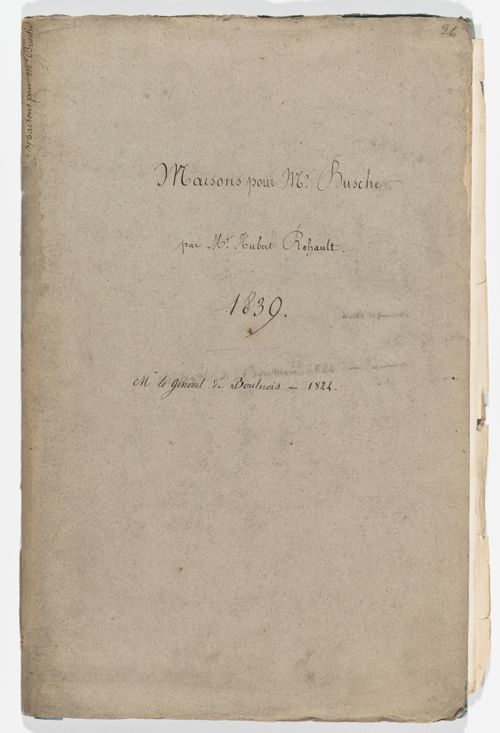
- This album contains preliminary and design development drawings - plans, sections and elevations - as well as rough cost estimates and specifications for several domestic commissions. The principal projects are both for M. Busche: an hôtel, possibly a double residence or apartment house (DR1974:0002:033:001 - DR1974:0002:033:017), and a housing project with apartment houses, row houses, and a porter's residence (DR1974:0002:033:018 - DR1974:0002:033:026). There are three alternative designs for the hôtel: two four-storey buildings, one with a courtyard and the other with a garden, and a five-storey building with a courtyard. Drawings for an apartment house for Louis-Jacques-François Boulnois include three elevations, a partial sketch plan and two plans (DR1974:0002:033:028 - DR1974:0002:022:032). These drawings are apparently for several projects, several buildings for a single project, or variant schemes for one project. All of the designs are rendered in an austere classical manner with minimal ornament.
DR1974:0002:033:001-032
Description:
- This album contains preliminary and design development drawings - plans, sections and elevations - as well as rough cost estimates and specifications for several domestic commissions. The principal projects are both for M. Busche: an hôtel, possibly a double residence or apartment house (DR1974:0002:033:001 - DR1974:0002:033:017), and a housing project with apartment houses, row houses, and a porter's residence (DR1974:0002:033:018 - DR1974:0002:033:026). There are three alternative designs for the hôtel: two four-storey buildings, one with a courtyard and the other with a garden, and a five-storey building with a courtyard. Drawings for an apartment house for Louis-Jacques-François Boulnois include three elevations, a partial sketch plan and two plans (DR1974:0002:033:028 - DR1974:0002:022:032). These drawings are apparently for several projects, several buildings for a single project, or variant schemes for one project. All of the designs are rendered in an austere classical manner with minimal ornament.
Personnes et institutions:
Sujet:
architecture, urbanisme
architecture, urbanisme
Date:
1824-1839
1824-1839
Titre:
Album of drawings and documents for a hôtel and for housing for M. Busche, and for an apartment house for M. Boulnois, France
Actions:
DR1974:0002:033:001-032
Description:
- This album contains preliminary and design development drawings - plans, sections and elevations - as well as rough cost estimates and specifications for several domestic commissions. The principal projects are both for M. Busche: an hôtel, possibly a double residence or apartment house (DR1974:0002:033:001 - DR1974:0002:033:017), and a housing project with apartment houses, row houses, and a porter's residence (DR1974:0002:033:018 - DR1974:0002:033:026). There are three alternative designs for the hôtel: two four-storey buildings, one with a courtyard and the other with a garden, and a five-storey building with a courtyard. Drawings for an apartment house for Louis-Jacques-François Boulnois include three elevations, a partial sketch plan and two plans (DR1974:0002:033:028 - DR1974:0002:022:032). These drawings are apparently for several projects, several buildings for a single project, or variant schemes for one project. All of the designs are rendered in an austere classical manner with minimal ornament.
Album of drawings and documents for a hôtel and for housing for M. Busche, and for an apartment house for M. Boulnois, France
Actions:
DR1974:0002:033:001-032
Description:
- This album contains preliminary and design development drawings - plans, sections and elevations - as well as rough cost estimates and specifications for several domestic commissions. The principal projects are both for M. Busche: an hôtel, possibly a double residence or apartment house (DR1974:0002:033:001 - DR1974:0002:033:017), and a housing project with apartment houses, row houses, and a porter's residence (DR1974:0002:033:018 - DR1974:0002:033:026). There are three alternative designs for the hôtel: two four-storey buildings, one with a courtyard and the other with a garden, and a five-storey building with a courtyard. Drawings for an apartment house for Louis-Jacques-François Boulnois include three elevations, a partial sketch plan and two plans (DR1974:0002:033:028 - DR1974:0002:022:032). These drawings are apparently for several projects, several buildings for a single project, or variant schemes for one project. All of the designs are rendered in an austere classical manner with minimal ornament.
Classification:
dessins, documents textuels
dessins, documents textuels
Date:
1824-1839
1824-1839
Personnes et institutions:
Sujet:
architecture, urbanisme
architecture, urbanisme
Classification:
dessins
dessins
Actions:
Numéro de référence:
DR1985:0414
Description:
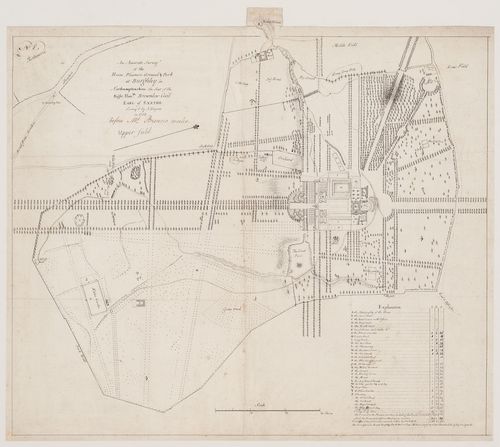
- DR1985:0414 presents a topographical survey of the country estate (Burghley House) of Lord Exeter -- including the main house, outbuildings, gardens, terraces, courts, canals, ponds, parterres, bosquets, rond-points, and tree-lined allées -- as it existed in 1755. Each feature of the grounds and park (along with its dimensions) is itemized in a legend entitled "Explanations".
DR1985:0414
Description:
- DR1985:0414 presents a topographical survey of the country estate (Burghley House) of Lord Exeter -- including the main house, outbuildings, gardens, terraces, courts, canals, ponds, parterres, bosquets, rond-points, and tree-lined allées -- as it existed in 1755. Each feature of the grounds and park (along with its dimensions) is itemized in a legend entitled "Explanations".
Personnes et institutions:
Sujet:
architecture de paysage, topographique
architecture de paysage, topographique
Date:
1755
1755
Titre:
A survey plan of Burghley House and its grounds
Actions:
DR1985:0414
Description:
- DR1985:0414 presents a topographical survey of the country estate (Burghley House) of Lord Exeter -- including the main house, outbuildings, gardens, terraces, courts, canals, ponds, parterres, bosquets, rond-points, and tree-lined allées -- as it existed in 1755. Each feature of the grounds and park (along with its dimensions) is itemized in a legend entitled "Explanations".
A survey plan of Burghley House and its grounds
Actions:
DR1985:0414
Description:
- DR1985:0414 presents a topographical survey of the country estate (Burghley House) of Lord Exeter -- including the main house, outbuildings, gardens, terraces, courts, canals, ponds, parterres, bosquets, rond-points, and tree-lined allées -- as it existed in 1755. Each feature of the grounds and park (along with its dimensions) is itemized in a legend entitled "Explanations".
Classification:
dessins
dessins
Date:
1755
1755
Personnes et institutions:
Sujet:
architecture de paysage, topographique
architecture de paysage, topographique
Classification:
archives
Niveau de description archivistique:
Collection
archives
Niveau de description archivistique:
Collection
Numéro de référence:
CD033
Résumé:
The Aldo Cibic Microrealities project collection primarily consists of presentation materials, publications and born digital materials, like videos and photographs, by Aldo Cibic produced between 2003 and 2008 for the project “Microrealities”.
CD033
Résumé:
The Aldo Cibic Microrealities project collection primarily consists of presentation materials, publications and born digital materials, like videos and photographs, by Aldo Cibic produced between 2003 and 2008 for the project “Microrealities”.
Personnes et institutions:
Date:
2003-2008
2003-2008
Titre:
Collection d’Aldo Cibic pour le projet Microrealities
Actions:
CD033
Résumé:
The Aldo Cibic Microrealities project collection primarily consists of presentation materials, publications and born digital materials, like videos and photographs, by Aldo Cibic produced between 2003 and 2008 for the project “Microrealities”.
Collection d’Aldo Cibic pour le projet Microrealities
Actions:
CD033
Résumé:
The Aldo Cibic Microrealities project collection primarily consists of presentation materials, publications and born digital materials, like videos and photographs, by Aldo Cibic produced between 2003 and 2008 for the project “Microrealities”.
Classification:
archives
Niveau de description archivistique:
collection
archives
Niveau de description archivistique:
collection
Date:
2003-2008
2003-2008
Personnes et institutions:


