


2990 Résultats
Classification:
expositions
expositions
Actions:
Description:
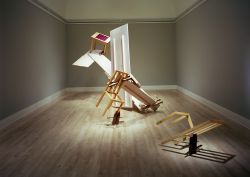
Paraboles et autres allégories : L’Œuvre de Melvin Charney 1975-1990 présente une centaine de dessins, dont plusieurs à grande échelle, des esquisses, des photographies, ainsi que trois grandes constructions. Réunissant des pièces issues de diverses collections publiques et privées, dont celle du CCA, l’exposition permet une analyse globale de la démarche artistique de(...)
Paraboles et autres allégories : L’Œuvre de Melvin Charney 1975-1990 présente une centaine de dessins, dont plusieurs à grande échelle, des esquisses, des photographies, ainsi que trois grandes constructions. Réunissant des pièces issues de diverses collections publiques et privées, dont celle du CCA, l’exposition permet une analyse globale de la démarche artistique de(...)
Localisation:
Salles principales
Salles principales
Date:
9 octobre 1991 au 12 janvier 1992
9 octobre 1991 au 12 janvier 1992
Titre:
Paraboles et autres allégories : L'oeuvre de Melvin Charney, 1975-1990
Actions:
Description:
Paraboles et autres allégories : L’Œuvre de Melvin Charney 1975-1990 présente une centaine de dessins, dont plusieurs à grande échelle, des esquisses, des photographies, ainsi que trois grandes constructions. Réunissant des pièces issues de diverses collections publiques et privées, dont celle du CCA, l’exposition permet une analyse globale de la démarche artistique de(...)
Paraboles et autres allégories : L'oeuvre de Melvin Charney, 1975-1990
Actions:
Description:
Paraboles et autres allégories : L’Œuvre de Melvin Charney 1975-1990 présente une centaine de dessins, dont plusieurs à grande échelle, des esquisses, des photographies, ainsi que trois grandes constructions. Réunissant des pièces issues de diverses collections publiques et privées, dont celle du CCA, l’exposition permet une analyse globale de la démarche artistique de(...)
Classification:
expositions
expositions
Date:
9 octobre 1991 au
12 janvier 1992
9 octobre 1991 au
12 janvier 1992
Localisation:
Salles principales
Salles principales
Titre:
Views of Japan
Views of Japan
Actions:
Numéro de référence:
PH1983:0516:001-051
Description:
Felice Beato was one of the first photographers to systematically survey Japan in his 'Photographic Views of Japan with Historical and Descriptive Notes' (1869), containing about one hundred landscapes. This present album does not have a title page but some of the photographs are also found in 'Views of Japan' and another Beato album from the CCA's collection (PH1981:0787:001-093). This present album shows 51 views of Japan in several villages, towns, places and countryside, such as Yokohama, the Tokaido link, Mayonashi, Hakoni, Fusi-Yama, Miyanoshita, Sakawa Nagawa, Gakaiso, Nagasaki, Eiyama, Harra, Omia, Narraiga, Miyanoshita, Tonosawa, Kamakura, Taikeins and Pappenburg. Also shown are peasants, girls, sumotori (wrestlers), northeners, officers, a musician, a doctor and patient, an executioner, firemen, a painter and a priest, etc. Captions with detailed annotations written by Beato's colleagues are pasted on to the facing pages. The photographer Baron Raimund Stillfried who also worked in Japan, acquired the stock and studio of Beato in 1877. A mixture of his own and Beato's work is contained in his subsequent albums, which makes it sometimes difficult to differentiate between a Beato and a Stillfried photograph (cf. Terry Bennett).
PH1983:0516:001-051
Description:
Felice Beato was one of the first photographers to systematically survey Japan in his 'Photographic Views of Japan with Historical and Descriptive Notes' (1869), containing about one hundred landscapes. This present album does not have a title page but some of the photographs are also found in 'Views of Japan' and another Beato album from the CCA's collection (PH1981:0787:001-093). This present album shows 51 views of Japan in several villages, towns, places and countryside, such as Yokohama, the Tokaido link, Mayonashi, Hakoni, Fusi-Yama, Miyanoshita, Sakawa Nagawa, Gakaiso, Nagasaki, Eiyama, Harra, Omia, Narraiga, Miyanoshita, Tonosawa, Kamakura, Taikeins and Pappenburg. Also shown are peasants, girls, sumotori (wrestlers), northeners, officers, a musician, a doctor and patient, an executioner, firemen, a painter and a priest, etc. Captions with detailed annotations written by Beato's colleagues are pasted on to the facing pages. The photographer Baron Raimund Stillfried who also worked in Japan, acquired the stock and studio of Beato in 1877. A mixture of his own and Beato's work is contained in his subsequent albums, which makes it sometimes difficult to differentiate between a Beato and a Stillfried photograph (cf. Terry Bennett).
Personnes et institutions:
Sujet:
architecture
architecture
Date:
ca. 1869
ca. 1869
Titre:
Views of Japan
Actions:
PH1983:0516:001-051
Description:
Felice Beato was one of the first photographers to systematically survey Japan in his 'Photographic Views of Japan with Historical and Descriptive Notes' (1869), containing about one hundred landscapes. This present album does not have a title page but some of the photographs are also found in 'Views of Japan' and another Beato album from the CCA's collection (PH1981:0787:001-093). This present album shows 51 views of Japan in several villages, towns, places and countryside, such as Yokohama, the Tokaido link, Mayonashi, Hakoni, Fusi-Yama, Miyanoshita, Sakawa Nagawa, Gakaiso, Nagasaki, Eiyama, Harra, Omia, Narraiga, Miyanoshita, Tonosawa, Kamakura, Taikeins and Pappenburg. Also shown are peasants, girls, sumotori (wrestlers), northeners, officers, a musician, a doctor and patient, an executioner, firemen, a painter and a priest, etc. Captions with detailed annotations written by Beato's colleagues are pasted on to the facing pages. The photographer Baron Raimund Stillfried who also worked in Japan, acquired the stock and studio of Beato in 1877. A mixture of his own and Beato's work is contained in his subsequent albums, which makes it sometimes difficult to differentiate between a Beato and a Stillfried photograph (cf. Terry Bennett).
Views of Japan
Actions:
PH1983:0516:001-051
Description:
Felice Beato was one of the first photographers to systematically survey Japan in his 'Photographic Views of Japan with Historical and Descriptive Notes' (1869), containing about one hundred landscapes. This present album does not have a title page but some of the photographs are also found in 'Views of Japan' and another Beato album from the CCA's collection (PH1981:0787:001-093). This present album shows 51 views of Japan in several villages, towns, places and countryside, such as Yokohama, the Tokaido link, Mayonashi, Hakoni, Fusi-Yama, Miyanoshita, Sakawa Nagawa, Gakaiso, Nagasaki, Eiyama, Harra, Omia, Narraiga, Miyanoshita, Tonosawa, Kamakura, Taikeins and Pappenburg. Also shown are peasants, girls, sumotori (wrestlers), northeners, officers, a musician, a doctor and patient, an executioner, firemen, a painter and a priest, etc. Captions with detailed annotations written by Beato's colleagues are pasted on to the facing pages. The photographer Baron Raimund Stillfried who also worked in Japan, acquired the stock and studio of Beato in 1877. A mixture of his own and Beato's work is contained in his subsequent albums, which makes it sometimes difficult to differentiate between a Beato and a Stillfried photograph (cf. Terry Bennett).
Date:
ca. 1869
ca. 1869
Personnes et institutions:
Sujet:
architecture
architecture
Classification:
expositions
expositions
Titre:
Mies en Amérique
Mies en Amérique
Actions:
Description:
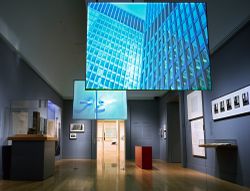
Grand penseur et artiste minutieux, et l’un des plus illustres architectes de l’histoire, Ludwig Mies van der Rohe est déjà une figure dominante de sa profession en Allemagne, lorsque, en 1938, dans la cinquantaine, il émigre aux États-Unis. Transplanté de l’école du Bauhaus (dont il a été le dernier directeur) à un institut technique de Chicago, délaissant le milieu de(...)
Grand penseur et artiste minutieux, et l’un des plus illustres architectes de l’histoire, Ludwig Mies van der Rohe est déjà une figure dominante de sa profession en Allemagne, lorsque, en 1938, dans la cinquantaine, il émigre aux États-Unis. Transplanté de l’école du Bauhaus (dont il a été le dernier directeur) à un institut technique de Chicago, délaissant le milieu de(...)
Localisation:
Salles principales
Salles principales
Date:
17 octobre 2001 au 20 janvier 2002
17 octobre 2001 au 20 janvier 2002
Titre:
Mies en Amérique
Actions:
Description:
Grand penseur et artiste minutieux, et l’un des plus illustres architectes de l’histoire, Ludwig Mies van der Rohe est déjà une figure dominante de sa profession en Allemagne, lorsque, en 1938, dans la cinquantaine, il émigre aux États-Unis. Transplanté de l’école du Bauhaus (dont il a été le dernier directeur) à un institut technique de Chicago, délaissant le milieu de(...)
Mies en Amérique
Actions:
Description:
Grand penseur et artiste minutieux, et l’un des plus illustres architectes de l’histoire, Ludwig Mies van der Rohe est déjà une figure dominante de sa profession en Allemagne, lorsque, en 1938, dans la cinquantaine, il émigre aux États-Unis. Transplanté de l’école du Bauhaus (dont il a été le dernier directeur) à un institut technique de Chicago, délaissant le milieu de(...)
Classification:
expositions
expositions
Date:
17 octobre 2001 au
20 janvier 2002
17 octobre 2001 au
20 janvier 2002
Localisation:
Salles principales
Salles principales
Niveau de description archivistique:
Série(s)
Série(s)
Numéro de référence:
CD041.S5
Description:
This series documents nine projects by the firm Vecsei Architects. In 1984, Eva Hollo Vecsei and André Vecsei opened a joint practice, Vecsei Architects. Both architects retired in 2005. Together they worked on several major planning studies, such as Les Hautières du Mont-Royal, Montréal, Québec (circa 1983-1988) and the Genome Centre and the Lorne M. Trottier Building, Montréal (1999-2000), documented in this series. Les Hautières du Mont-Royal was a residential complex adjacent to Montréal's Golden Square Mile, on Cedar Avenue. The project consisted of nine staggering buildings (29 villas) around a landscaped European-style courtyard on a sloping site facing Mount Royal while also preserving a turn of the century landmark situated within the Mount Royal Heritage Site . The project is also known as "Projet Cours Cedar". Through the Genome Centre, McGill University sought to fill a need for a modern and cross-disciplinary research space in genomics and proteomics. Vecsei Architects submitted a joint proposal with Dupuis, Le Tourneaux, architects, and NFOE et associés architectes. Ultimately, KPMB Architects and Fichten Soiferman et Associés, Architectes' proposal was chosen and built. The Lorne M. Trottier Building is a building for popular electrical engineering, computer science and telecommunications programs at McGill University. Vecsei Architects submitted a joint proposal for this project with Julian Jacobs Architectes and Architectes Lemay et associés. Jodoin Lamarre Pratte architectes and Marosi Troy's proposal was chosen and built. Also documented in this series are the following projects: Elementary school for College Marie de France, Montréal, Québec (circa 1984-1986); High-rise office tower, underground commercial centre tied to Montréal’s underground mall and subway network, Christ Church Cathedral, Montréal, Québec (circa 1987-1988); Seniors condominium, Manoir Montefiore, Côte-Saint-Luc, Québec (1988); Ark and artworks for the Beth Zion Synagogue, Côte-Saint-Luc, Québec (1989); Municipal library, Dollard-des-Ormeaux, Québec (circa 1990), Cultural Centre and extension of sport centre, Dollard-des-Ormeaux, Québec (circa 2001-2003); Renovation and new elevation for Schneider house, Montréal, Québec (2002). Collection material in this series was produced between 1983 and 2006. Documents include architectural records, such as presentation, conceptual, and design development drawings, and as well as photographs of facades and interior views. This series also includes digital material (mainly photographs), and a few project proposals and publications. The level of documentation varies greatly from project to project, from a single presentation drawing to complete project proposal.
CD041.S5
Description:
This series documents nine projects by the firm Vecsei Architects. In 1984, Eva Hollo Vecsei and André Vecsei opened a joint practice, Vecsei Architects. Both architects retired in 2005. Together they worked on several major planning studies, such as Les Hautières du Mont-Royal, Montréal, Québec (circa 1983-1988) and the Genome Centre and the Lorne M. Trottier Building, Montréal (1999-2000), documented in this series. Les Hautières du Mont-Royal was a residential complex adjacent to Montréal's Golden Square Mile, on Cedar Avenue. The project consisted of nine staggering buildings (29 villas) around a landscaped European-style courtyard on a sloping site facing Mount Royal while also preserving a turn of the century landmark situated within the Mount Royal Heritage Site . The project is also known as "Projet Cours Cedar". Through the Genome Centre, McGill University sought to fill a need for a modern and cross-disciplinary research space in genomics and proteomics. Vecsei Architects submitted a joint proposal with Dupuis, Le Tourneaux, architects, and NFOE et associés architectes. Ultimately, KPMB Architects and Fichten Soiferman et Associés, Architectes' proposal was chosen and built. The Lorne M. Trottier Building is a building for popular electrical engineering, computer science and telecommunications programs at McGill University. Vecsei Architects submitted a joint proposal for this project with Julian Jacobs Architectes and Architectes Lemay et associés. Jodoin Lamarre Pratte architectes and Marosi Troy's proposal was chosen and built. Also documented in this series are the following projects: Elementary school for College Marie de France, Montréal, Québec (circa 1984-1986); High-rise office tower, underground commercial centre tied to Montréal’s underground mall and subway network, Christ Church Cathedral, Montréal, Québec (circa 1987-1988); Seniors condominium, Manoir Montefiore, Côte-Saint-Luc, Québec (1988); Ark and artworks for the Beth Zion Synagogue, Côte-Saint-Luc, Québec (1989); Municipal library, Dollard-des-Ormeaux, Québec (circa 1990), Cultural Centre and extension of sport centre, Dollard-des-Ormeaux, Québec (circa 2001-2003); Renovation and new elevation for Schneider house, Montréal, Québec (2002). Collection material in this series was produced between 1983 and 2006. Documents include architectural records, such as presentation, conceptual, and design development drawings, and as well as photographs of facades and interior views. This series also includes digital material (mainly photographs), and a few project proposals and publications. The level of documentation varies greatly from project to project, from a single presentation drawing to complete project proposal.
Personnes et institutions:
Date:
1983-2006
1983-2006
Titre:
Vecsei Architects (1984-2005)
Actions:
CD041.S5
Description:
This series documents nine projects by the firm Vecsei Architects. In 1984, Eva Hollo Vecsei and André Vecsei opened a joint practice, Vecsei Architects. Both architects retired in 2005. Together they worked on several major planning studies, such as Les Hautières du Mont-Royal, Montréal, Québec (circa 1983-1988) and the Genome Centre and the Lorne M. Trottier Building, Montréal (1999-2000), documented in this series. Les Hautières du Mont-Royal was a residential complex adjacent to Montréal's Golden Square Mile, on Cedar Avenue. The project consisted of nine staggering buildings (29 villas) around a landscaped European-style courtyard on a sloping site facing Mount Royal while also preserving a turn of the century landmark situated within the Mount Royal Heritage Site . The project is also known as "Projet Cours Cedar". Through the Genome Centre, McGill University sought to fill a need for a modern and cross-disciplinary research space in genomics and proteomics. Vecsei Architects submitted a joint proposal with Dupuis, Le Tourneaux, architects, and NFOE et associés architectes. Ultimately, KPMB Architects and Fichten Soiferman et Associés, Architectes' proposal was chosen and built. The Lorne M. Trottier Building is a building for popular electrical engineering, computer science and telecommunications programs at McGill University. Vecsei Architects submitted a joint proposal for this project with Julian Jacobs Architectes and Architectes Lemay et associés. Jodoin Lamarre Pratte architectes and Marosi Troy's proposal was chosen and built. Also documented in this series are the following projects: Elementary school for College Marie de France, Montréal, Québec (circa 1984-1986); High-rise office tower, underground commercial centre tied to Montréal’s underground mall and subway network, Christ Church Cathedral, Montréal, Québec (circa 1987-1988); Seniors condominium, Manoir Montefiore, Côte-Saint-Luc, Québec (1988); Ark and artworks for the Beth Zion Synagogue, Côte-Saint-Luc, Québec (1989); Municipal library, Dollard-des-Ormeaux, Québec (circa 1990), Cultural Centre and extension of sport centre, Dollard-des-Ormeaux, Québec (circa 2001-2003); Renovation and new elevation for Schneider house, Montréal, Québec (2002). Collection material in this series was produced between 1983 and 2006. Documents include architectural records, such as presentation, conceptual, and design development drawings, and as well as photographs of facades and interior views. This series also includes digital material (mainly photographs), and a few project proposals and publications. The level of documentation varies greatly from project to project, from a single presentation drawing to complete project proposal.
Vecsei Architects (1984-2005)
Actions:
CD041.S5
Description:
This series documents nine projects by the firm Vecsei Architects. In 1984, Eva Hollo Vecsei and André Vecsei opened a joint practice, Vecsei Architects. Both architects retired in 2005. Together they worked on several major planning studies, such as Les Hautières du Mont-Royal, Montréal, Québec (circa 1983-1988) and the Genome Centre and the Lorne M. Trottier Building, Montréal (1999-2000), documented in this series. Les Hautières du Mont-Royal was a residential complex adjacent to Montréal's Golden Square Mile, on Cedar Avenue. The project consisted of nine staggering buildings (29 villas) around a landscaped European-style courtyard on a sloping site facing Mount Royal while also preserving a turn of the century landmark situated within the Mount Royal Heritage Site . The project is also known as "Projet Cours Cedar". Through the Genome Centre, McGill University sought to fill a need for a modern and cross-disciplinary research space in genomics and proteomics. Vecsei Architects submitted a joint proposal with Dupuis, Le Tourneaux, architects, and NFOE et associés architectes. Ultimately, KPMB Architects and Fichten Soiferman et Associés, Architectes' proposal was chosen and built. The Lorne M. Trottier Building is a building for popular electrical engineering, computer science and telecommunications programs at McGill University. Vecsei Architects submitted a joint proposal for this project with Julian Jacobs Architectes and Architectes Lemay et associés. Jodoin Lamarre Pratte architectes and Marosi Troy's proposal was chosen and built. Also documented in this series are the following projects: Elementary school for College Marie de France, Montréal, Québec (circa 1984-1986); High-rise office tower, underground commercial centre tied to Montréal’s underground mall and subway network, Christ Church Cathedral, Montréal, Québec (circa 1987-1988); Seniors condominium, Manoir Montefiore, Côte-Saint-Luc, Québec (1988); Ark and artworks for the Beth Zion Synagogue, Côte-Saint-Luc, Québec (1989); Municipal library, Dollard-des-Ormeaux, Québec (circa 1990), Cultural Centre and extension of sport centre, Dollard-des-Ormeaux, Québec (circa 2001-2003); Renovation and new elevation for Schneider house, Montréal, Québec (2002). Collection material in this series was produced between 1983 and 2006. Documents include architectural records, such as presentation, conceptual, and design development drawings, and as well as photographs of facades and interior views. This series also includes digital material (mainly photographs), and a few project proposals and publications. The level of documentation varies greatly from project to project, from a single presentation drawing to complete project proposal.
Niveau de description archivistique:
Series
Series
Date:
1983-2006
1983-2006
Personnes et institutions:
Classification:
expositions
expositions

Titre:
La preuve par l’architecture
La preuve par l’architecture
Actions:
Description:
La preuve par l’architecture présente une collection de pièces rassemblées dans le cadre d’une analyse technico-légale de l’architecture d’Auschwitz. L’exposition réunit des moulages en plâtre de bleus, de lettres, de factures d’entrepreneurs et de photographies, ainsi que deux reconstitutions de monuments (une colonne de gaz et une trappe étanche au gaz), qui, considérés(...)
La preuve par l’architecture présente une collection de pièces rassemblées dans le cadre d’une analyse technico-légale de l’architecture d’Auschwitz. L’exposition réunit des moulages en plâtre de bleus, de lettres, de factures d’entrepreneurs et de photographies, ainsi que deux reconstitutions de monuments (une colonne de gaz et une trappe étanche au gaz), qui, considérés(...)
Localisation:
Salle octogonale
Salle octogonale
Date:
16 juin 2016 au 11 septembre 2016
16 juin 2016 au 11 septembre 2016
Titre:
La preuve par l’architecture
Actions:
Description:
La preuve par l’architecture présente une collection de pièces rassemblées dans le cadre d’une analyse technico-légale de l’architecture d’Auschwitz. L’exposition réunit des moulages en plâtre de bleus, de lettres, de factures d’entrepreneurs et de photographies, ainsi que deux reconstitutions de monuments (une colonne de gaz et une trappe étanche au gaz), qui, considérés(...)
La preuve par l’architecture
Actions:
Description:
La preuve par l’architecture présente une collection de pièces rassemblées dans le cadre d’une analyse technico-légale de l’architecture d’Auschwitz. L’exposition réunit des moulages en plâtre de bleus, de lettres, de factures d’entrepreneurs et de photographies, ainsi que deux reconstitutions de monuments (une colonne de gaz et une trappe étanche au gaz), qui, considérés(...)
Classification:
expositions
expositions
Date:
16 juin 2016 au
11 septembre 2016
16 juin 2016 au
11 septembre 2016
Localisation:
Salle octogonale
Salle octogonale
Niveau de description archivistique:
Projet
Projet
Numéro de référence:
AP018.S1.1969.PR01
Description:
This project series documents the expansion of the Art Gallery of Ontario (AGO) in Toronto from 1969-1974. The office identified the project as number 69006. This project consisted of the vast expansion of the AGO that began in 1969, which largely came about due to a multi-million dollar donation from English sculpture Henry Moore. Most prominent in this project was the design and construction of the Henry Moore Sculpture Centre, a new gallery to house the extensive artworks of Henry Moore in the AGO’s collection. This included $15 million’s worth of art that Moore donated at the start of the project. The project was made up of two phases. The first included construction of the Henry Moore Sculpture Centre, the Sam and Ayala Zacks Wing, a link to the pre-existing Grange mansion, and updates to the art gallery’s finishes. The second phase proposed additional updates to existing finishes. By the end of this project, the architects had also added a public lounge, dining room and cafeteria, a members’ lounge, lecture areas (including the Henry Moore Lecture Hall), classrooms, and spaces for the gallery’s special services. The work was further divided into 4 physical areas of the art gallery (A, B, C and D) and the drawings for this project reflect this division. Before this work had been completed, a “Stage II” to the expansion had already been approved by the owners (Stage II is also included in this fonds, see AP018.S1.1972.PR08). In the documentation, this project was originally called the Henry Moore Sculpture Centre, Art Gallery of Ontario, Expansion Phases 1 and 2. However, as multiple stages to the expansion developed later on, this project eventually became known as the Stage I Expansion. While the project contract was originally given to John B. Parkin Associates, John C. Parkin continued the project under his new firm, Parkin Architects Planners, after parting ways with partner John B. Parkin in 1971. The project is recorded through drawings, textual records, and mounted photographs dating from 1968-1986. There are numerous original drawings showing the design development of the new galleries. Two presentation boards show photographs of the project model. The textual records consist of correspondence with contractors and clients, inspection and other site reports, specifications, contract data, consultancy records, schedules, change orders, financial documentation, conference reports, area calculations, research materials, detail planning records, and project notebooks. Box AP018.S1.1969.PR01.007 contains an index to the textual records, which was created by the office. This project series also contains one box of textual documentation that spans across multiple project series related to the AGO expansion within this fonds (see AP018.S1.1969.PR01.044). This includes press releases, newspaper articles, project proposals and studies, correspondence with Henry Moore, meeting minutes and reports.
AP018.S1.1969.PR01
Description:
This project series documents the expansion of the Art Gallery of Ontario (AGO) in Toronto from 1969-1974. The office identified the project as number 69006. This project consisted of the vast expansion of the AGO that began in 1969, which largely came about due to a multi-million dollar donation from English sculpture Henry Moore. Most prominent in this project was the design and construction of the Henry Moore Sculpture Centre, a new gallery to house the extensive artworks of Henry Moore in the AGO’s collection. This included $15 million’s worth of art that Moore donated at the start of the project. The project was made up of two phases. The first included construction of the Henry Moore Sculpture Centre, the Sam and Ayala Zacks Wing, a link to the pre-existing Grange mansion, and updates to the art gallery’s finishes. The second phase proposed additional updates to existing finishes. By the end of this project, the architects had also added a public lounge, dining room and cafeteria, a members’ lounge, lecture areas (including the Henry Moore Lecture Hall), classrooms, and spaces for the gallery’s special services. The work was further divided into 4 physical areas of the art gallery (A, B, C and D) and the drawings for this project reflect this division. Before this work had been completed, a “Stage II” to the expansion had already been approved by the owners (Stage II is also included in this fonds, see AP018.S1.1972.PR08). In the documentation, this project was originally called the Henry Moore Sculpture Centre, Art Gallery of Ontario, Expansion Phases 1 and 2. However, as multiple stages to the expansion developed later on, this project eventually became known as the Stage I Expansion. While the project contract was originally given to John B. Parkin Associates, John C. Parkin continued the project under his new firm, Parkin Architects Planners, after parting ways with partner John B. Parkin in 1971. The project is recorded through drawings, textual records, and mounted photographs dating from 1968-1986. There are numerous original drawings showing the design development of the new galleries. Two presentation boards show photographs of the project model. The textual records consist of correspondence with contractors and clients, inspection and other site reports, specifications, contract data, consultancy records, schedules, change orders, financial documentation, conference reports, area calculations, research materials, detail planning records, and project notebooks. Box AP018.S1.1969.PR01.007 contains an index to the textual records, which was created by the office. This project series also contains one box of textual documentation that spans across multiple project series related to the AGO expansion within this fonds (see AP018.S1.1969.PR01.044). This includes press releases, newspaper articles, project proposals and studies, correspondence with Henry Moore, meeting minutes and reports.
Personnes et institutions:
Date:
1968-1986
1968-1986
Titre:
Henry Moore Sculpture Centre, Art Gallery of Ontario, Stage I Expansion, Toronto (1969-1974)
Actions:
AP018.S1.1969.PR01
Description:
This project series documents the expansion of the Art Gallery of Ontario (AGO) in Toronto from 1969-1974. The office identified the project as number 69006. This project consisted of the vast expansion of the AGO that began in 1969, which largely came about due to a multi-million dollar donation from English sculpture Henry Moore. Most prominent in this project was the design and construction of the Henry Moore Sculpture Centre, a new gallery to house the extensive artworks of Henry Moore in the AGO’s collection. This included $15 million’s worth of art that Moore donated at the start of the project. The project was made up of two phases. The first included construction of the Henry Moore Sculpture Centre, the Sam and Ayala Zacks Wing, a link to the pre-existing Grange mansion, and updates to the art gallery’s finishes. The second phase proposed additional updates to existing finishes. By the end of this project, the architects had also added a public lounge, dining room and cafeteria, a members’ lounge, lecture areas (including the Henry Moore Lecture Hall), classrooms, and spaces for the gallery’s special services. The work was further divided into 4 physical areas of the art gallery (A, B, C and D) and the drawings for this project reflect this division. Before this work had been completed, a “Stage II” to the expansion had already been approved by the owners (Stage II is also included in this fonds, see AP018.S1.1972.PR08). In the documentation, this project was originally called the Henry Moore Sculpture Centre, Art Gallery of Ontario, Expansion Phases 1 and 2. However, as multiple stages to the expansion developed later on, this project eventually became known as the Stage I Expansion. While the project contract was originally given to John B. Parkin Associates, John C. Parkin continued the project under his new firm, Parkin Architects Planners, after parting ways with partner John B. Parkin in 1971. The project is recorded through drawings, textual records, and mounted photographs dating from 1968-1986. There are numerous original drawings showing the design development of the new galleries. Two presentation boards show photographs of the project model. The textual records consist of correspondence with contractors and clients, inspection and other site reports, specifications, contract data, consultancy records, schedules, change orders, financial documentation, conference reports, area calculations, research materials, detail planning records, and project notebooks. Box AP018.S1.1969.PR01.007 contains an index to the textual records, which was created by the office. This project series also contains one box of textual documentation that spans across multiple project series related to the AGO expansion within this fonds (see AP018.S1.1969.PR01.044). This includes press releases, newspaper articles, project proposals and studies, correspondence with Henry Moore, meeting minutes and reports.
Henry Moore Sculpture Centre, Art Gallery of Ontario, Stage I Expansion, Toronto (1969-1974)
Actions:
AP018.S1.1969.PR01
Description:
This project series documents the expansion of the Art Gallery of Ontario (AGO) in Toronto from 1969-1974. The office identified the project as number 69006. This project consisted of the vast expansion of the AGO that began in 1969, which largely came about due to a multi-million dollar donation from English sculpture Henry Moore. Most prominent in this project was the design and construction of the Henry Moore Sculpture Centre, a new gallery to house the extensive artworks of Henry Moore in the AGO’s collection. This included $15 million’s worth of art that Moore donated at the start of the project. The project was made up of two phases. The first included construction of the Henry Moore Sculpture Centre, the Sam and Ayala Zacks Wing, a link to the pre-existing Grange mansion, and updates to the art gallery’s finishes. The second phase proposed additional updates to existing finishes. By the end of this project, the architects had also added a public lounge, dining room and cafeteria, a members’ lounge, lecture areas (including the Henry Moore Lecture Hall), classrooms, and spaces for the gallery’s special services. The work was further divided into 4 physical areas of the art gallery (A, B, C and D) and the drawings for this project reflect this division. Before this work had been completed, a “Stage II” to the expansion had already been approved by the owners (Stage II is also included in this fonds, see AP018.S1.1972.PR08). In the documentation, this project was originally called the Henry Moore Sculpture Centre, Art Gallery of Ontario, Expansion Phases 1 and 2. However, as multiple stages to the expansion developed later on, this project eventually became known as the Stage I Expansion. While the project contract was originally given to John B. Parkin Associates, John C. Parkin continued the project under his new firm, Parkin Architects Planners, after parting ways with partner John B. Parkin in 1971. The project is recorded through drawings, textual records, and mounted photographs dating from 1968-1986. There are numerous original drawings showing the design development of the new galleries. Two presentation boards show photographs of the project model. The textual records consist of correspondence with contractors and clients, inspection and other site reports, specifications, contract data, consultancy records, schedules, change orders, financial documentation, conference reports, area calculations, research materials, detail planning records, and project notebooks. Box AP018.S1.1969.PR01.007 contains an index to the textual records, which was created by the office. This project series also contains one box of textual documentation that spans across multiple project series related to the AGO expansion within this fonds (see AP018.S1.1969.PR01.044). This includes press releases, newspaper articles, project proposals and studies, correspondence with Henry Moore, meeting minutes and reports.
Niveau de description archivistique:
Project
Project
Date:
1968-1986
1968-1986
Personnes et institutions:
Classification:
archives
Niveau de description archivistique:
Fonds
archives
Niveau de description archivistique:
Fonds
Numéro de référence:
AP196
Résumé:
Studio Gang Ford Calumet Environmental Center project records, 2003-2012, documents the design process for the Ford Calumet Environmental Center in Chicago, United-States. The records represent both phases during the competition and the full-term design, after the firm won the project. The records consist of born-digital material, sketches and drawings, textual records, photographs and seven models.
AP196
Résumé:
Studio Gang Ford Calumet Environmental Center project records, 2003-2012, documents the design process for the Ford Calumet Environmental Center in Chicago, United-States. The records represent both phases during the competition and the full-term design, after the firm won the project. The records consist of born-digital material, sketches and drawings, textual records, photographs and seven models.
Personnes et institutions:
Date:
2003-2011
2003-2011
Titre:
Documents d’archives de Studio Gang pour le projet Ford Calumet Environmental Center
Actions:
AP196
Résumé:
Studio Gang Ford Calumet Environmental Center project records, 2003-2012, documents the design process for the Ford Calumet Environmental Center in Chicago, United-States. The records represent both phases during the competition and the full-term design, after the firm won the project. The records consist of born-digital material, sketches and drawings, textual records, photographs and seven models.
Documents d’archives de Studio Gang pour le projet Ford Calumet Environmental Center
Actions:
AP196
Résumé:
Studio Gang Ford Calumet Environmental Center project records, 2003-2012, documents the design process for the Ford Calumet Environmental Center in Chicago, United-States. The records represent both phases during the competition and the full-term design, after the firm won the project. The records consist of born-digital material, sketches and drawings, textual records, photographs and seven models.
Classification:
archives
Niveau de description archivistique:
Fonds
archives
Niveau de description archivistique:
Fonds
Date:
2003-2011
2003-2011
Personnes et institutions:
Classification:
photographies
photographies
Numéro de référence:
PH1998:0031:001-109
Description:
- Album PH1998:0031:001-109 comprises 86 views of Italy, 19 views of France, and 4 views of Windsor Castle, New Windsor, England. The 86 views of Italy include: 10 views of Rome and 25 photographs of sculptures in two collections in Rome, 17 in the Vatican Museum and 8 in the Capitolano Museum; 11 views of Pisa and 3 photographs of paintings located in Pisa; 10 views of Naples and 2 photographs of sculptures located in Naples; 10 views of Genoa; 6 views of Italy; 4 views of Florence; 1 view of San Remo; one photograph of an unidentified architectural plan; one photograph of a drawing; and two photographs of frescoes. -- The 19 views of France include 2 views of Nice.
PH1998:0031:001-109
Description:
- Album PH1998:0031:001-109 comprises 86 views of Italy, 19 views of France, and 4 views of Windsor Castle, New Windsor, England. The 86 views of Italy include: 10 views of Rome and 25 photographs of sculptures in two collections in Rome, 17 in the Vatican Museum and 8 in the Capitolano Museum; 11 views of Pisa and 3 photographs of paintings located in Pisa; 10 views of Naples and 2 photographs of sculptures located in Naples; 10 views of Genoa; 6 views of Italy; 4 views of Florence; 1 view of San Remo; one photograph of an unidentified architectural plan; one photograph of a drawing; and two photographs of frescoes. -- The 19 views of France include 2 views of Nice.
Personnes et institutions:
Sujet:
architecture, peinture, portrait, sculpture
architecture, peinture, portrait, sculpture
Date:
1870s-1880s
1870s-1880s
Titre:
Album of photographic views of Italy, France and England
Actions:
PH1998:0031:001-109
Description:
- Album PH1998:0031:001-109 comprises 86 views of Italy, 19 views of France, and 4 views of Windsor Castle, New Windsor, England. The 86 views of Italy include: 10 views of Rome and 25 photographs of sculptures in two collections in Rome, 17 in the Vatican Museum and 8 in the Capitolano Museum; 11 views of Pisa and 3 photographs of paintings located in Pisa; 10 views of Naples and 2 photographs of sculptures located in Naples; 10 views of Genoa; 6 views of Italy; 4 views of Florence; 1 view of San Remo; one photograph of an unidentified architectural plan; one photograph of a drawing; and two photographs of frescoes. -- The 19 views of France include 2 views of Nice.
Album of photographic views of Italy, France and England
Actions:
PH1998:0031:001-109
Description:
- Album PH1998:0031:001-109 comprises 86 views of Italy, 19 views of France, and 4 views of Windsor Castle, New Windsor, England. The 86 views of Italy include: 10 views of Rome and 25 photographs of sculptures in two collections in Rome, 17 in the Vatican Museum and 8 in the Capitolano Museum; 11 views of Pisa and 3 photographs of paintings located in Pisa; 10 views of Naples and 2 photographs of sculptures located in Naples; 10 views of Genoa; 6 views of Italy; 4 views of Florence; 1 view of San Remo; one photograph of an unidentified architectural plan; one photograph of a drawing; and two photographs of frescoes. -- The 19 views of France include 2 views of Nice.
Classification:
photographies
photographies
Date:
1870s-1880s
1870s-1880s
Personnes et institutions:
Sujet:
architecture, peinture, portrait, sculpture
architecture, peinture, portrait, sculpture
Classification:
archives
Niveau de description archivistique:
Fonds
archives
Niveau de description archivistique:
Fonds
Titre:
Bernard Tschumi fonds
Bernard Tschumi fonds
Numéro de référence:
AP214
Résumé:
The Bernard Tschumi fonds, dating from approximately 1965-2015, documents the professional activities of Bernard Tschumi including Tschumi’s career in academia and his professional practice as an architect through approximately 75 projects dating from the late 1980s to 2012.
AP214
Résumé:
The Bernard Tschumi fonds, dating from approximately 1965-2015, documents the professional activities of Bernard Tschumi including Tschumi’s career in academia and his professional practice as an architect through approximately 75 projects dating from the late 1980s to 2012.
Personnes et institutions:
Date:
circa 1964-2015
circa 1964-2015
Titre:
Bernard Tschumi fonds
Actions:
AP214
Résumé:
The Bernard Tschumi fonds, dating from approximately 1965-2015, documents the professional activities of Bernard Tschumi including Tschumi’s career in academia and his professional practice as an architect through approximately 75 projects dating from the late 1980s to 2012.
Bernard Tschumi fonds
Actions:
AP214
Résumé:
The Bernard Tschumi fonds, dating from approximately 1965-2015, documents the professional activities of Bernard Tschumi including Tschumi’s career in academia and his professional practice as an architect through approximately 75 projects dating from the late 1980s to 2012.
Classification:
archives
Niveau de description archivistique:
Fonds
archives
Niveau de description archivistique:
Fonds
Date:
circa 1964-2015
circa 1964-2015
Personnes et institutions:
Classification:
expositions
expositions
Description:
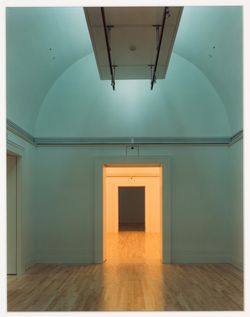
Dans le cadre des célébrations soulignant l’inauguration de son nouvel édifice de la rue Baile, Centre Canadien d’Architecture : Architecture et paysage révèle des motifs sous-jacents ayant influé sur la conception de l’architecture et l’aménagement du CCA. Les objets présentés se complètent pour dire le musée d’architecture : la nature des œuvres qu’il collectionne et(...)
Dans le cadre des célébrations soulignant l’inauguration de son nouvel édifice de la rue Baile, Centre Canadien d’Architecture : Architecture et paysage révèle des motifs sous-jacents ayant influé sur la conception de l’architecture et l’aménagement du CCA. Les objets présentés se complètent pour dire le musée d’architecture : la nature des œuvres qu’il collectionne et(...)
Localisation:
Salle octogonale
Salle octogonale
Date:
7 mai 1989 au 25 mars 1990
7 mai 1989 au 25 mars 1990
Titre:
Centre Canadien d'Architecture : architecture et paysage
Actions:
Description:
Dans le cadre des célébrations soulignant l’inauguration de son nouvel édifice de la rue Baile, Centre Canadien d’Architecture : Architecture et paysage révèle des motifs sous-jacents ayant influé sur la conception de l’architecture et l’aménagement du CCA. Les objets présentés se complètent pour dire le musée d’architecture : la nature des œuvres qu’il collectionne et(...)
Centre Canadien d'Architecture : architecture et paysage
Actions:
Description:
Dans le cadre des célébrations soulignant l’inauguration de son nouvel édifice de la rue Baile, Centre Canadien d’Architecture : Architecture et paysage révèle des motifs sous-jacents ayant influé sur la conception de l’architecture et l’aménagement du CCA. Les objets présentés se complètent pour dire le musée d’architecture : la nature des œuvres qu’il collectionne et(...)
Classification:
expositions
expositions
Date:
7 mai 1989 au
25 mars 1990
7 mai 1989 au
25 mars 1990
Localisation:
Salle octogonale
Salle octogonale


