


36938 Résultats
Classification:
cartes, dessins, documents textuels, photographies
cartes, dessins, documents textuels, photographies
Numéro de référence:
DR1995:0235:019-019
Description:
sketches, drawings, maps, photographic materials, promotional material, clippings, essays and drafts of essays, notes, transcripts of lectures, a report on the summer session of the Australasian Architecture Students Association, foldouts, programmes, resumes, and issues of various magazines and other publications
DR1995:0235:019-019
Description:
sketches, drawings, maps, photographic materials, promotional material, clippings, essays and drafts of essays, notes, transcripts of lectures, a report on the summer session of the Australasian Architecture Students Association, foldouts, programmes, resumes, and issues of various magazines and other publications
Personnes et institutions:
Date:
1965-1975
1965-1975
Titre:
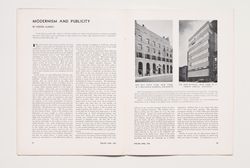
X15 Sketches, drawings, maps, photographic materials, promotional material, clippings
Actions:
DR1995:0235:019-019
Description:
sketches, drawings, maps, photographic materials, promotional material, clippings, essays and drafts of essays, notes, transcripts of lectures, a report on the summer session of the Australasian Architecture Students Association, foldouts, programmes, resumes, and issues of various magazines and other publications
X15 Sketches, drawings, maps, photographic materials, promotional material, clippings
Actions:
DR1995:0235:019-019
Description:
sketches, drawings, maps, photographic materials, promotional material, clippings, essays and drafts of essays, notes, transcripts of lectures, a report on the summer session of the Australasian Architecture Students Association, foldouts, programmes, resumes, and issues of various magazines and other publications
Classification:
cartes, dessins, documents textuels, photographies
cartes, dessins, documents textuels, photographies
Date:
1965-1975
1965-1975
Personnes et institutions:
Classification:
événements
événements
Classification:
événements
événements
Date:
24 mars 2000
24 mars 2000
Classification:
archives
Niveau de description archivistique:
Fonds
archives
Niveau de description archivistique:
Fonds
Titre:
Fonds Pierre Jeanneret
Fonds Pierre Jeanneret
Numéro de référence:
AP156
Résumé:
Le Fonds Pierre Jeanneret documente la pratique professionnelle et la vie personnelle de l'architect Pierre Jeanneret de ses études et ses projets professionels en Europe à ses projets architecturaux à Chandigarh, en Inde. Les documents du Fonds consistent en des photographies, des dessins et des documents textuels relatifs à plus de 100 projets, principalement son travail pour le projet de la nouvelle ville de Chandigarh, en Inde, en 1951 à 1965. *** The Pierre Jeanneret fonds documents the professional practice and the personal life of architect Pierre Jeanneret from student and professional work in Europe to architectural projects in Chandigarh, India. The documents in the fonds consist of photographs, drawings and textual records relating to over 100 projects, predominantly his work for the project of the new city of Chandigarh, in India, in 1951 to 1965.
AP156
Résumé:
Le Fonds Pierre Jeanneret documente la pratique professionnelle et la vie personnelle de l'architect Pierre Jeanneret de ses études et ses projets professionels en Europe à ses projets architecturaux à Chandigarh, en Inde. Les documents du Fonds consistent en des photographies, des dessins et des documents textuels relatifs à plus de 100 projets, principalement son travail pour le projet de la nouvelle ville de Chandigarh, en Inde, en 1951 à 1965. *** The Pierre Jeanneret fonds documents the professional practice and the personal life of architect Pierre Jeanneret from student and professional work in Europe to architectural projects in Chandigarh, India. The documents in the fonds consist of photographs, drawings and textual records relating to over 100 projects, predominantly his work for the project of the new city of Chandigarh, in India, in 1951 to 1965.
Personnes et institutions:
Date:
1870s-2011
1870s-2011
Titre:
Fonds Pierre Jeanneret
Actions:
AP156
Résumé:
Le Fonds Pierre Jeanneret documente la pratique professionnelle et la vie personnelle de l'architect Pierre Jeanneret de ses études et ses projets professionels en Europe à ses projets architecturaux à Chandigarh, en Inde. Les documents du Fonds consistent en des photographies, des dessins et des documents textuels relatifs à plus de 100 projets, principalement son travail pour le projet de la nouvelle ville de Chandigarh, en Inde, en 1951 à 1965. *** The Pierre Jeanneret fonds documents the professional practice and the personal life of architect Pierre Jeanneret from student and professional work in Europe to architectural projects in Chandigarh, India. The documents in the fonds consist of photographs, drawings and textual records relating to over 100 projects, predominantly his work for the project of the new city of Chandigarh, in India, in 1951 to 1965.
Fonds Pierre Jeanneret
Actions:
AP156
Résumé:
Le Fonds Pierre Jeanneret documente la pratique professionnelle et la vie personnelle de l'architect Pierre Jeanneret de ses études et ses projets professionels en Europe à ses projets architecturaux à Chandigarh, en Inde. Les documents du Fonds consistent en des photographies, des dessins et des documents textuels relatifs à plus de 100 projets, principalement son travail pour le projet de la nouvelle ville de Chandigarh, en Inde, en 1951 à 1965. *** The Pierre Jeanneret fonds documents the professional practice and the personal life of architect Pierre Jeanneret from student and professional work in Europe to architectural projects in Chandigarh, India. The documents in the fonds consist of photographs, drawings and textual records relating to over 100 projects, predominantly his work for the project of the new city of Chandigarh, in India, in 1951 to 1965.
Classification:
archives
Niveau de description archivistique:
Fonds
archives
Niveau de description archivistique:
Fonds
Date:
1870s-2011
1870s-2011
Personnes et institutions:
Classification:
archives
Niveau de description archivistique:
Fonds
archives
Niveau de description archivistique:
Fonds
Titre:
Fonds Amancio Williams
Fonds Amancio Williams
Numéro de référence:
AP205
Résumé:
The Amancio Williams fonds documents Williams' career as an architect and designer from the 1940s to the late 1980s. The fonds documents his work for over 80 architectural, urban planning and furniture design projects, as well as the administration of his architecture practice, and his professional activities through correspondence, photographic material, and promotional materials.
AP205
Résumé:
The Amancio Williams fonds documents Williams' career as an architect and designer from the 1940s to the late 1980s. The fonds documents his work for over 80 architectural, urban planning and furniture design projects, as well as the administration of his architecture practice, and his professional activities through correspondence, photographic material, and promotional materials.
Personnes et institutions:
Date:
1848-2010s
1848-2010s
Titre:
Fonds Amancio Williams
Actions:
AP205
Résumé:
The Amancio Williams fonds documents Williams' career as an architect and designer from the 1940s to the late 1980s. The fonds documents his work for over 80 architectural, urban planning and furniture design projects, as well as the administration of his architecture practice, and his professional activities through correspondence, photographic material, and promotional materials.
Fonds Amancio Williams
Actions:
AP205
Résumé:
The Amancio Williams fonds documents Williams' career as an architect and designer from the 1940s to the late 1980s. The fonds documents his work for over 80 architectural, urban planning and furniture design projects, as well as the administration of his architecture practice, and his professional activities through correspondence, photographic material, and promotional materials.
Classification:
archives
Niveau de description archivistique:
Fonds
archives
Niveau de description archivistique:
Fonds
Date:
1848-2010s
1848-2010s
Personnes et institutions:
Classification:
articles
articles
Actions:
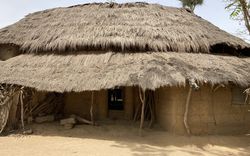
Nzinga B. Mboup discute avec Jean-Augustin Carvalho, Fodé Diop, Andrée Diop-Depret et Xavier Ricou
Publié:
24 février 2025
24 février 2025
Titre:
La valorisation du patrimoine architectural sénégalais, entre pédagogie et pratique
Nzinga B. Mboup discute avec Jean-Augustin Carvalho, Fodé Diop, Andrée Diop-Depret et Xavier Ricou
Actions:
La valorisation du patrimoine architectural sénégalais, entre pédagogie et pratique
Nzinga B. Mboup discute avec Jean-Augustin Carvalho, Fodé Diop, Andrée Diop-Depret et Xavier Ricou
Actions:
Classification:
articles
articles
Publié:
24 février 2025
24 février 2025
Classification:
expositions
expositions
Titre:
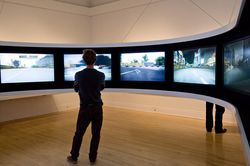
La vitesse et ses limites
La vitesse et ses limites
Actions:
Description:
La vitesse et ses limite traite de la place prépondérante qu’occupe la vitesse dans la vie moderne, dans les domaines de l’art, l’architecture, l’urbanisme, en passant par celui des arts graphiques, de l’économie et de la culture matérielle de l’ère industrielle et de celle de l’information. Elle souligne le centième anniversaire du futurisme italien, mouvement à qui l’on(...)
La vitesse et ses limite traite de la place prépondérante qu’occupe la vitesse dans la vie moderne, dans les domaines de l’art, l’architecture, l’urbanisme, en passant par celui des arts graphiques, de l’économie et de la culture matérielle de l’ère industrielle et de celle de l’information. Elle souligne le centième anniversaire du futurisme italien, mouvement à qui l’on(...)
Localisation:
Salles principales
Salles principales
Date:
20 mai 2009 au 8 novembre 2009
20 mai 2009 au 8 novembre 2009
Titre:
La vitesse et ses limites
Actions:
Description:
La vitesse et ses limite traite de la place prépondérante qu’occupe la vitesse dans la vie moderne, dans les domaines de l’art, l’architecture, l’urbanisme, en passant par celui des arts graphiques, de l’économie et de la culture matérielle de l’ère industrielle et de celle de l’information. Elle souligne le centième anniversaire du futurisme italien, mouvement à qui l’on(...)
La vitesse et ses limites
Actions:
Description:
La vitesse et ses limite traite de la place prépondérante qu’occupe la vitesse dans la vie moderne, dans les domaines de l’art, l’architecture, l’urbanisme, en passant par celui des arts graphiques, de l’économie et de la culture matérielle de l’ère industrielle et de celle de l’information. Elle souligne le centième anniversaire du futurisme italien, mouvement à qui l’on(...)
Classification:
expositions
expositions
Date:
20 mai 2009 au
8 novembre 2009
20 mai 2009 au
8 novembre 2009
Localisation:
Salles principales
Salles principales
Classification:
documents textuels
documents textuels
Titre:
Research on bank buildings
Research on bank buildings
Numéro de référence:
CD042.S1.003
Description:
Box contains research material on bank architecture, including photocopies of publications, documentation on architects or architectural firms, including leaflets and promotional material. Also includes labels and texts for the exhibition "Money Matters: A Critical Look at Bank Architecture" at the Columbia University.
CD042.S1.003
Description:
Box contains research material on bank architecture, including photocopies of publications, documentation on architects or architectural firms, including leaflets and promotional material. Also includes labels and texts for the exhibition "Money Matters: A Critical Look at Bank Architecture" at the Columbia University.
Personnes et institutions:
Date:
1926-1993
1926-1993
Titre:
Research on bank buildings
Actions:
CD042.S1.003
Description:
Box contains research material on bank architecture, including photocopies of publications, documentation on architects or architectural firms, including leaflets and promotional material. Also includes labels and texts for the exhibition "Money Matters: A Critical Look at Bank Architecture" at the Columbia University.
Research on bank buildings
Actions:
CD042.S1.003
Description:
Box contains research material on bank architecture, including photocopies of publications, documentation on architects or architectural firms, including leaflets and promotional material. Also includes labels and texts for the exhibition "Money Matters: A Critical Look at Bank Architecture" at the Columbia University.
Classification:
documents textuels
documents textuels
Date:
1926-1993
1926-1993
Personnes et institutions:
Numéro de référence:
ARCH197893
Description:
Résidences des filles de l'Université de Montréal Article de journal, " The Montreal Star ", 1964 3 photographies ÉPREUVE ARGENTIQUE À LA GÉLATINE, 1962 15,5 x 18 cm et 28 x 21,5 cm 2 publications : " Design ", 1965 et " Médailles Massey ", 1967
ARCH197893
Description:
Résidences des filles de l'Université de Montréal Article de journal, " The Montreal Star ", 1964 3 photographies ÉPREUVE ARGENTIQUE À LA GÉLATINE, 1962 15,5 x 18 cm et 28 x 21,5 cm 2 publications : " Design ", 1965 et " Médailles Massey ", 1967
Personnes et institutions:
Titre:
Résidences des filles de l'Université de Montréal
Actions:
ARCH197893
Description:
Résidences des filles de l'Université de Montréal Article de journal, " The Montreal Star ", 1964 3 photographies ÉPREUVE ARGENTIQUE À LA GÉLATINE, 1962 15,5 x 18 cm et 28 x 21,5 cm 2 publications : " Design ", 1965 et " Médailles Massey ", 1967
Résidences des filles de l'Université de Montréal
Actions:
ARCH197893
Description:
Résidences des filles de l'Université de Montréal Article de journal, " The Montreal Star ", 1964 3 photographies ÉPREUVE ARGENTIQUE À LA GÉLATINE, 1962 15,5 x 18 cm et 28 x 21,5 cm 2 publications : " Design ", 1965 et " Médailles Massey ", 1967
Personnes et institutions:
Classification:
documents textuels
documents textuels
Numéro de référence:
AP149.S2.SS3.036
Description:
Reference material from the reference library of the Minimum Cost Housing Group. Includes photocopies of publications, reports, promotional and commercial material, such as brochures, leaflets, on sanitation, water supply devices and construction material. Also includes annual report Brace Research Institute.
AP149.S2.SS3.036
Description:
Reference material from the reference library of the Minimum Cost Housing Group. Includes photocopies of publications, reports, promotional and commercial material, such as brochures, leaflets, on sanitation, water supply devices and construction material. Also includes annual report Brace Research Institute.
Personnes et institutions:
Date:
1970s-1990s
1970s-1990s
Titre:
Reference material on sanitation and water access and construction material
Actions:
AP149.S2.SS3.036
Description:
Reference material from the reference library of the Minimum Cost Housing Group. Includes photocopies of publications, reports, promotional and commercial material, such as brochures, leaflets, on sanitation, water supply devices and construction material. Also includes annual report Brace Research Institute.
Reference material on sanitation and water access and construction material
Actions:
AP149.S2.SS3.036
Description:
Reference material from the reference library of the Minimum Cost Housing Group. Includes photocopies of publications, reports, promotional and commercial material, such as brochures, leaflets, on sanitation, water supply devices and construction material. Also includes annual report Brace Research Institute.
Classification:
documents textuels
documents textuels
Date:
1970s-1990s
1970s-1990s
Personnes et institutions:
Classification:
événements
événements

Actions:
Description:
Yasser Elsheshtawy présente la deuxième conférence de la série L’enseignement du… Moyen-Orient.Si l’on présente souvent Dubaï comme un terrain de jeu pour les privilégiés, un lieu de consommation à outrance parfaitement assumé ou un cas d’étude par excellence de l’exploitation capitaliste, de tels portraits ne montrent finalement qu’une seule facette de la ville. La(...)
Yasser Elsheshtawy présente la deuxième conférence de la série L’enseignement du… Moyen-Orient.Si l’on présente souvent Dubaï comme un terrain de jeu pour les privilégiés, un lieu de consommation à outrance parfaitement assumé ou un cas d’étude par excellence de l’exploitation capitaliste, de tels portraits ne montrent finalement qu’une seule facette de la ville. La(...)
Localisation:
Théâtre Paul-Desmarais
Théâtre Paul-Desmarais
Date:
29 septembre 2011 , 19h
29 septembre 2011 , 19h
Titre:
L'enseignement de... Dubaï : Yasser Elsheshtawy
Actions:
Description:
Yasser Elsheshtawy présente la deuxième conférence de la série L’enseignement du… Moyen-Orient.Si l’on présente souvent Dubaï comme un terrain de jeu pour les privilégiés, un lieu de consommation à outrance parfaitement assumé ou un cas d’étude par excellence de l’exploitation capitaliste, de tels portraits ne montrent finalement qu’une seule facette de la ville. La(...)
L'enseignement de... Dubaï : Yasser Elsheshtawy
Actions:
Description:
Yasser Elsheshtawy présente la deuxième conférence de la série L’enseignement du… Moyen-Orient.Si l’on présente souvent Dubaï comme un terrain de jeu pour les privilégiés, un lieu de consommation à outrance parfaitement assumé ou un cas d’étude par excellence de l’exploitation capitaliste, de tels portraits ne montrent finalement qu’une seule facette de la ville. La(...)
Classification:
événements
événements
Date:
29 septembre 2011
19h
29 septembre 2011
19h
Localisation:
Théâtre Paul-Desmarais
Théâtre Paul-Desmarais


