


26258 Résultats
Classification:
expositions
expositions
Titre:
L’idée du pénitencier
L’idée du pénitencier
Actions:
Description:
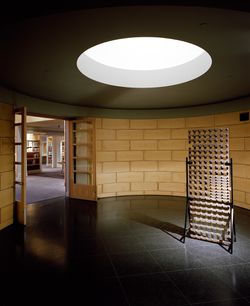
Cette exposition explore l’idée du pénitencier qui, au XIXe siècle, s’est frayée un chemin dans les consciences et les territoires d’Europe et d’Amérique du Nord. S’inspirant de la tendance rationaliste en architecture et des principes sociaux posés au XVIIIe siècle, les partisans de la prison se sont attachés à une claire géométrie de l’isolement, de la surveillance et(...)
Cette exposition explore l’idée du pénitencier qui, au XIXe siècle, s’est frayée un chemin dans les consciences et les territoires d’Europe et d’Amérique du Nord. S’inspirant de la tendance rationaliste en architecture et des principes sociaux posés au XVIIIe siècle, les partisans de la prison se sont attachés à une claire géométrie de l’isolement, de la surveillance et(...)
Localisation:
Vitrines
Vitrines
Date:
8 novembre 1995 au 31 mai 1996
8 novembre 1995 au 31 mai 1996
Titre:
L’idée du pénitencier
Actions:
Description:
Cette exposition explore l’idée du pénitencier qui, au XIXe siècle, s’est frayée un chemin dans les consciences et les territoires d’Europe et d’Amérique du Nord. S’inspirant de la tendance rationaliste en architecture et des principes sociaux posés au XVIIIe siècle, les partisans de la prison se sont attachés à une claire géométrie de l’isolement, de la surveillance et(...)
L’idée du pénitencier
Actions:
Description:
Cette exposition explore l’idée du pénitencier qui, au XIXe siècle, s’est frayée un chemin dans les consciences et les territoires d’Europe et d’Amérique du Nord. S’inspirant de la tendance rationaliste en architecture et des principes sociaux posés au XVIIIe siècle, les partisans de la prison se sont attachés à une claire géométrie de l’isolement, de la surveillance et(...)
Classification:
expositions
expositions
Date:
8 novembre 1995 au
31 mai 1996
8 novembre 1995 au
31 mai 1996
Localisation:
Vitrines
Vitrines
Niveau de description archivistique:
Sous-série
Sous-série
Numéro de référence:
CI001.S2.D5
Description:
Charles Rohault de Fleury was architect for the Muséum national d'histoire naturelle from 1833 to 1862. His work for the Muséum is represented in the CCA collection by a diverse group of prints and drawings. In addition to documenting his built and unbuilt projects, the inclusion of prints and drawings of museum and zoo buildings by other architects record, if only partially, the resources available to Charles in designing his buildings. This reference material provides insight into the influences on Charles' work as well as the nature of the design process itself. His built works, with the exception of the 1854 addition to the greenhouses, are illustrated in a book of prints with a brief accompanying text - "Muséum d'histoire naturelle: serres chaudes, galeries de minéralogie, etc. etc." (published 1837) (DR1974:0002:004:001; a second copy is held by the CCA library) (1). While prints are included for the Galerie de minéralogie et de géologie, the monkey house and the reservoirs, the majority of the prints are of the greenhouses (serres chaudes) begun 1833 (2). Known for their technological innovations in iron construction, these greenhouses utilized the first multi-storey load-bearing cast-iron façades for the central pavilions as well as space frame roof structures and prefabricated parts. This structural system is well documented in the prints in the CCA collection. The design was apparently inspired by the English greenhouses - a plate of which are included in the book - that Charles saw on a tour of England. The use of prestressed beams and curved roofs in the lateral wings attest to this influence. Charles' greenhouses, in turn, influenced the design of other greenhouses in Europe especially those at the Jardins Botanique in Liège and Ghent, Belgium (3). Although Joseph Paxton saw the greenhouses in 1833, it is unclear if they had an impact on the design of the Crystal Palace constructed 1850-1851 (4). The innovations of Charles' greenhouses continued to be acknowledged into the 20th century. Giedion in "Space, Time and Architecture", while erroneously attributing them to Rouhault (5)(6), refers to the greenhouses as "the prototype of all large iron-framed conservatories" (7). In addition to the greenhouses for the Muséum, the CCA collection includes three proposals (dated 1841) for a private greenhouse designed by Charles Rohault de Fleury (DR1974:0002:002:008 - DR1974:0002:002:013). The designs utilize the same curved roofs as the wings of the greenhouses at the Muséum combined with classically detailed stonework. An different aspect of Charles' work for the Muséum national d'histoire naturelle is represented in the album of unexecuted proposals -the only design drawings for the Muséum in the collection - for a Galerie de zoologie (DR1974:0002:024:001-079). Building on the typology of his earlier classical Galerie de minéralogie et de géologie (constructed 1833 -1841), the proposals, which date from between 1838 and 1862, illustrate a gradual enrichment of Charles' classical architectural vocabulary (8). They vary in their spatial configurations and façade treatments ranging from austere colonnaded designs with little ornament to more elaborate ones with richly encrusted facades, complex rooflines and more dramatic interior spaces characteristic of the Second Empire. The majority of the proposals consist of preliminary drawings illustrating the essential formal, spatial and ornamental aspects of the building. One proposal, dated January 1846, is substantially more developed than the others; in addition to general plans, sections and elevations, more detailed drawings are included for the layout of spaces, the elaboration of the facades, the configuration of the structure and even the designs for the specimen display cases. It is also worth noting that this album includes several plans outlining Rohault de Fleury's ideas for the overall development of the Muséum national d'histoire naturelle. In 1846, an album of prints of the Museo di fiscia e storia naturelle in Florence (DR1974:0002:005:001-018) was presented to Charles by the Grand Duke of Tuscany in response to his request for tracings of that building. These prints were probably used as reference material for the design of the new Galerie de zoologie described above. The portfolio of record drawings (ca. 1862) of the zoos in Antwerp, Brussels, Marseille and Amsterdam (DR1974:0002:018:001-027) is probably a dummy for a publication on zoological gardens as well as background documentation for the renovation and expansion of the zoo at the Muséum national d'histoire naturelle in Paris. Both drawings of the facilities for the animals and visitors and general plans of the zoological gardens are included. The Paris zoo project was apparently never undertaken. (1) These prints were reused in the "Oeuvre de C. Rohault de Fleury, architecte" (published 1884) (DR1974:0002:029:001-044). (2) Rohault de Fleury's greenhouses were destroyed in the Prussian bombardments of 1870. The greenhouses, which now stand in their place, are similar in layout and appearance to the original design, but their structural system is different. (3) John Hix, 'The Glass House' (Cambridge, Mass.: The MIT Press, 1981), p. 115. (4) Ibid., p. 115. (5) This error has been repeated by other authors including Henry-Russell Hitchcock, 'Architecture: Nineteenth and Twentieth Centuries' (Baltimore, Maryland: Penguin Books, 1968), p. 120. (6) Leonardo Benevolo, 'History of Modern Architecture' Volume 1: The tradition of modern architecture (Cambridge, Mass.: The M.I.T. Press, 1971), p. 22. (7) Sigfried Giedion, 'Space, Time and Architecture; the growth of a new tradition' (Cambridge: Harvard University Press, 1941), p. 181. (8) Barry Bergdoll, "Charles Rohault de Fleury: Part two: Muséum d'Histoire Naturelle and Studies on analogous Constructions in Europe", 'CCA Research Report", n.d., p. 1.
CI001.S2.D5
Description:
Charles Rohault de Fleury was architect for the Muséum national d'histoire naturelle from 1833 to 1862. His work for the Muséum is represented in the CCA collection by a diverse group of prints and drawings. In addition to documenting his built and unbuilt projects, the inclusion of prints and drawings of museum and zoo buildings by other architects record, if only partially, the resources available to Charles in designing his buildings. This reference material provides insight into the influences on Charles' work as well as the nature of the design process itself. His built works, with the exception of the 1854 addition to the greenhouses, are illustrated in a book of prints with a brief accompanying text - "Muséum d'histoire naturelle: serres chaudes, galeries de minéralogie, etc. etc." (published 1837) (DR1974:0002:004:001; a second copy is held by the CCA library) (1). While prints are included for the Galerie de minéralogie et de géologie, the monkey house and the reservoirs, the majority of the prints are of the greenhouses (serres chaudes) begun 1833 (2). Known for their technological innovations in iron construction, these greenhouses utilized the first multi-storey load-bearing cast-iron façades for the central pavilions as well as space frame roof structures and prefabricated parts. This structural system is well documented in the prints in the CCA collection. The design was apparently inspired by the English greenhouses - a plate of which are included in the book - that Charles saw on a tour of England. The use of prestressed beams and curved roofs in the lateral wings attest to this influence. Charles' greenhouses, in turn, influenced the design of other greenhouses in Europe especially those at the Jardins Botanique in Liège and Ghent, Belgium (3). Although Joseph Paxton saw the greenhouses in 1833, it is unclear if they had an impact on the design of the Crystal Palace constructed 1850-1851 (4). The innovations of Charles' greenhouses continued to be acknowledged into the 20th century. Giedion in "Space, Time and Architecture", while erroneously attributing them to Rouhault (5)(6), refers to the greenhouses as "the prototype of all large iron-framed conservatories" (7). In addition to the greenhouses for the Muséum, the CCA collection includes three proposals (dated 1841) for a private greenhouse designed by Charles Rohault de Fleury (DR1974:0002:002:008 - DR1974:0002:002:013). The designs utilize the same curved roofs as the wings of the greenhouses at the Muséum combined with classically detailed stonework. An different aspect of Charles' work for the Muséum national d'histoire naturelle is represented in the album of unexecuted proposals -the only design drawings for the Muséum in the collection - for a Galerie de zoologie (DR1974:0002:024:001-079). Building on the typology of his earlier classical Galerie de minéralogie et de géologie (constructed 1833 -1841), the proposals, which date from between 1838 and 1862, illustrate a gradual enrichment of Charles' classical architectural vocabulary (8). They vary in their spatial configurations and façade treatments ranging from austere colonnaded designs with little ornament to more elaborate ones with richly encrusted facades, complex rooflines and more dramatic interior spaces characteristic of the Second Empire. The majority of the proposals consist of preliminary drawings illustrating the essential formal, spatial and ornamental aspects of the building. One proposal, dated January 1846, is substantially more developed than the others; in addition to general plans, sections and elevations, more detailed drawings are included for the layout of spaces, the elaboration of the facades, the configuration of the structure and even the designs for the specimen display cases. It is also worth noting that this album includes several plans outlining Rohault de Fleury's ideas for the overall development of the Muséum national d'histoire naturelle. In 1846, an album of prints of the Museo di fiscia e storia naturelle in Florence (DR1974:0002:005:001-018) was presented to Charles by the Grand Duke of Tuscany in response to his request for tracings of that building. These prints were probably used as reference material for the design of the new Galerie de zoologie described above. The portfolio of record drawings (ca. 1862) of the zoos in Antwerp, Brussels, Marseille and Amsterdam (DR1974:0002:018:001-027) is probably a dummy for a publication on zoological gardens as well as background documentation for the renovation and expansion of the zoo at the Muséum national d'histoire naturelle in Paris. Both drawings of the facilities for the animals and visitors and general plans of the zoological gardens are included. The Paris zoo project was apparently never undertaken. (1) These prints were reused in the "Oeuvre de C. Rohault de Fleury, architecte" (published 1884) (DR1974:0002:029:001-044). (2) Rohault de Fleury's greenhouses were destroyed in the Prussian bombardments of 1870. The greenhouses, which now stand in their place, are similar in layout and appearance to the original design, but their structural system is different. (3) John Hix, 'The Glass House' (Cambridge, Mass.: The MIT Press, 1981), p. 115. (4) Ibid., p. 115. (5) This error has been repeated by other authors including Henry-Russell Hitchcock, 'Architecture: Nineteenth and Twentieth Centuries' (Baltimore, Maryland: Penguin Books, 1968), p. 120. (6) Leonardo Benevolo, 'History of Modern Architecture' Volume 1: The tradition of modern architecture (Cambridge, Mass.: The M.I.T. Press, 1971), p. 22. (7) Sigfried Giedion, 'Space, Time and Architecture; the growth of a new tradition' (Cambridge: Harvard University Press, 1941), p. 181. (8) Barry Bergdoll, "Charles Rohault de Fleury: Part two: Muséum d'Histoire Naturelle and Studies on analogous Constructions in Europe", 'CCA Research Report", n.d., p. 1.
Personnes et institutions:
Date:
[1837-ca. 1862]
[1837-ca. 1862]
Titre:
Muséum nationale d'histoire naturelle
CI001.S2.D5
Description:
Charles Rohault de Fleury was architect for the Muséum national d'histoire naturelle from 1833 to 1862. His work for the Muséum is represented in the CCA collection by a diverse group of prints and drawings. In addition to documenting his built and unbuilt projects, the inclusion of prints and drawings of museum and zoo buildings by other architects record, if only partially, the resources available to Charles in designing his buildings. This reference material provides insight into the influences on Charles' work as well as the nature of the design process itself. His built works, with the exception of the 1854 addition to the greenhouses, are illustrated in a book of prints with a brief accompanying text - "Muséum d'histoire naturelle: serres chaudes, galeries de minéralogie, etc. etc." (published 1837) (DR1974:0002:004:001; a second copy is held by the CCA library) (1). While prints are included for the Galerie de minéralogie et de géologie, the monkey house and the reservoirs, the majority of the prints are of the greenhouses (serres chaudes) begun 1833 (2). Known for their technological innovations in iron construction, these greenhouses utilized the first multi-storey load-bearing cast-iron façades for the central pavilions as well as space frame roof structures and prefabricated parts. This structural system is well documented in the prints in the CCA collection. The design was apparently inspired by the English greenhouses - a plate of which are included in the book - that Charles saw on a tour of England. The use of prestressed beams and curved roofs in the lateral wings attest to this influence. Charles' greenhouses, in turn, influenced the design of other greenhouses in Europe especially those at the Jardins Botanique in Liège and Ghent, Belgium (3). Although Joseph Paxton saw the greenhouses in 1833, it is unclear if they had an impact on the design of the Crystal Palace constructed 1850-1851 (4). The innovations of Charles' greenhouses continued to be acknowledged into the 20th century. Giedion in "Space, Time and Architecture", while erroneously attributing them to Rouhault (5)(6), refers to the greenhouses as "the prototype of all large iron-framed conservatories" (7). In addition to the greenhouses for the Muséum, the CCA collection includes three proposals (dated 1841) for a private greenhouse designed by Charles Rohault de Fleury (DR1974:0002:002:008 - DR1974:0002:002:013). The designs utilize the same curved roofs as the wings of the greenhouses at the Muséum combined with classically detailed stonework. An different aspect of Charles' work for the Muséum national d'histoire naturelle is represented in the album of unexecuted proposals -the only design drawings for the Muséum in the collection - for a Galerie de zoologie (DR1974:0002:024:001-079). Building on the typology of his earlier classical Galerie de minéralogie et de géologie (constructed 1833 -1841), the proposals, which date from between 1838 and 1862, illustrate a gradual enrichment of Charles' classical architectural vocabulary (8). They vary in their spatial configurations and façade treatments ranging from austere colonnaded designs with little ornament to more elaborate ones with richly encrusted facades, complex rooflines and more dramatic interior spaces characteristic of the Second Empire. The majority of the proposals consist of preliminary drawings illustrating the essential formal, spatial and ornamental aspects of the building. One proposal, dated January 1846, is substantially more developed than the others; in addition to general plans, sections and elevations, more detailed drawings are included for the layout of spaces, the elaboration of the facades, the configuration of the structure and even the designs for the specimen display cases. It is also worth noting that this album includes several plans outlining Rohault de Fleury's ideas for the overall development of the Muséum national d'histoire naturelle. In 1846, an album of prints of the Museo di fiscia e storia naturelle in Florence (DR1974:0002:005:001-018) was presented to Charles by the Grand Duke of Tuscany in response to his request for tracings of that building. These prints were probably used as reference material for the design of the new Galerie de zoologie described above. The portfolio of record drawings (ca. 1862) of the zoos in Antwerp, Brussels, Marseille and Amsterdam (DR1974:0002:018:001-027) is probably a dummy for a publication on zoological gardens as well as background documentation for the renovation and expansion of the zoo at the Muséum national d'histoire naturelle in Paris. Both drawings of the facilities for the animals and visitors and general plans of the zoological gardens are included. The Paris zoo project was apparently never undertaken. (1) These prints were reused in the "Oeuvre de C. Rohault de Fleury, architecte" (published 1884) (DR1974:0002:029:001-044). (2) Rohault de Fleury's greenhouses were destroyed in the Prussian bombardments of 1870. The greenhouses, which now stand in their place, are similar in layout and appearance to the original design, but their structural system is different. (3) John Hix, 'The Glass House' (Cambridge, Mass.: The MIT Press, 1981), p. 115. (4) Ibid., p. 115. (5) This error has been repeated by other authors including Henry-Russell Hitchcock, 'Architecture: Nineteenth and Twentieth Centuries' (Baltimore, Maryland: Penguin Books, 1968), p. 120. (6) Leonardo Benevolo, 'History of Modern Architecture' Volume 1: The tradition of modern architecture (Cambridge, Mass.: The M.I.T. Press, 1971), p. 22. (7) Sigfried Giedion, 'Space, Time and Architecture; the growth of a new tradition' (Cambridge: Harvard University Press, 1941), p. 181. (8) Barry Bergdoll, "Charles Rohault de Fleury: Part two: Muséum d'Histoire Naturelle and Studies on analogous Constructions in Europe", 'CCA Research Report", n.d., p. 1.
Muséum nationale d'histoire naturelle
CI001.S2.D5
Description:
Charles Rohault de Fleury was architect for the Muséum national d'histoire naturelle from 1833 to 1862. His work for the Muséum is represented in the CCA collection by a diverse group of prints and drawings. In addition to documenting his built and unbuilt projects, the inclusion of prints and drawings of museum and zoo buildings by other architects record, if only partially, the resources available to Charles in designing his buildings. This reference material provides insight into the influences on Charles' work as well as the nature of the design process itself. His built works, with the exception of the 1854 addition to the greenhouses, are illustrated in a book of prints with a brief accompanying text - "Muséum d'histoire naturelle: serres chaudes, galeries de minéralogie, etc. etc." (published 1837) (DR1974:0002:004:001; a second copy is held by the CCA library) (1). While prints are included for the Galerie de minéralogie et de géologie, the monkey house and the reservoirs, the majority of the prints are of the greenhouses (serres chaudes) begun 1833 (2). Known for their technological innovations in iron construction, these greenhouses utilized the first multi-storey load-bearing cast-iron façades for the central pavilions as well as space frame roof structures and prefabricated parts. This structural system is well documented in the prints in the CCA collection. The design was apparently inspired by the English greenhouses - a plate of which are included in the book - that Charles saw on a tour of England. The use of prestressed beams and curved roofs in the lateral wings attest to this influence. Charles' greenhouses, in turn, influenced the design of other greenhouses in Europe especially those at the Jardins Botanique in Liège and Ghent, Belgium (3). Although Joseph Paxton saw the greenhouses in 1833, it is unclear if they had an impact on the design of the Crystal Palace constructed 1850-1851 (4). The innovations of Charles' greenhouses continued to be acknowledged into the 20th century. Giedion in "Space, Time and Architecture", while erroneously attributing them to Rouhault (5)(6), refers to the greenhouses as "the prototype of all large iron-framed conservatories" (7). In addition to the greenhouses for the Muséum, the CCA collection includes three proposals (dated 1841) for a private greenhouse designed by Charles Rohault de Fleury (DR1974:0002:002:008 - DR1974:0002:002:013). The designs utilize the same curved roofs as the wings of the greenhouses at the Muséum combined with classically detailed stonework. An different aspect of Charles' work for the Muséum national d'histoire naturelle is represented in the album of unexecuted proposals -the only design drawings for the Muséum in the collection - for a Galerie de zoologie (DR1974:0002:024:001-079). Building on the typology of his earlier classical Galerie de minéralogie et de géologie (constructed 1833 -1841), the proposals, which date from between 1838 and 1862, illustrate a gradual enrichment of Charles' classical architectural vocabulary (8). They vary in their spatial configurations and façade treatments ranging from austere colonnaded designs with little ornament to more elaborate ones with richly encrusted facades, complex rooflines and more dramatic interior spaces characteristic of the Second Empire. The majority of the proposals consist of preliminary drawings illustrating the essential formal, spatial and ornamental aspects of the building. One proposal, dated January 1846, is substantially more developed than the others; in addition to general plans, sections and elevations, more detailed drawings are included for the layout of spaces, the elaboration of the facades, the configuration of the structure and even the designs for the specimen display cases. It is also worth noting that this album includes several plans outlining Rohault de Fleury's ideas for the overall development of the Muséum national d'histoire naturelle. In 1846, an album of prints of the Museo di fiscia e storia naturelle in Florence (DR1974:0002:005:001-018) was presented to Charles by the Grand Duke of Tuscany in response to his request for tracings of that building. These prints were probably used as reference material for the design of the new Galerie de zoologie described above. The portfolio of record drawings (ca. 1862) of the zoos in Antwerp, Brussels, Marseille and Amsterdam (DR1974:0002:018:001-027) is probably a dummy for a publication on zoological gardens as well as background documentation for the renovation and expansion of the zoo at the Muséum national d'histoire naturelle in Paris. Both drawings of the facilities for the animals and visitors and general plans of the zoological gardens are included. The Paris zoo project was apparently never undertaken. (1) These prints were reused in the "Oeuvre de C. Rohault de Fleury, architecte" (published 1884) (DR1974:0002:029:001-044). (2) Rohault de Fleury's greenhouses were destroyed in the Prussian bombardments of 1870. The greenhouses, which now stand in their place, are similar in layout and appearance to the original design, but their structural system is different. (3) John Hix, 'The Glass House' (Cambridge, Mass.: The MIT Press, 1981), p. 115. (4) Ibid., p. 115. (5) This error has been repeated by other authors including Henry-Russell Hitchcock, 'Architecture: Nineteenth and Twentieth Centuries' (Baltimore, Maryland: Penguin Books, 1968), p. 120. (6) Leonardo Benevolo, 'History of Modern Architecture' Volume 1: The tradition of modern architecture (Cambridge, Mass.: The M.I.T. Press, 1971), p. 22. (7) Sigfried Giedion, 'Space, Time and Architecture; the growth of a new tradition' (Cambridge: Harvard University Press, 1941), p. 181. (8) Barry Bergdoll, "Charles Rohault de Fleury: Part two: Muséum d'Histoire Naturelle and Studies on analogous Constructions in Europe", 'CCA Research Report", n.d., p. 1.
Niveau de description archivistique:
File 5
File 5
Date:
[1837-ca. 1862]
[1837-ca. 1862]
Personnes et institutions:
Classification:
événements
événements
Actions:
Description:
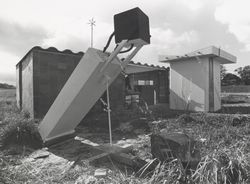
Dans la série de conférences Hier d’aujourd’hui, l’architecte et auteur canadien Witold Rybczynski expose les origines de l’Ecol House, prototype d’un modèle d’habitation autonome pour les pays en développement. Le projet a été créé à Montréal en 1972 par Ecol Operation, un groupe d’architectes et d’étudiants duquel il était membre et qui devient, au début des années(...)
Dans la série de conférences Hier d’aujourd’hui, l’architecte et auteur canadien Witold Rybczynski expose les origines de l’Ecol House, prototype d’un modèle d’habitation autonome pour les pays en développement. Le projet a été créé à Montréal en 1972 par Ecol Operation, un groupe d’architectes et d’étudiants duquel il était membre et qui devient, au début des années(...)
Localisation:
Théâtre Paul-Desmarais
Théâtre Paul-Desmarais
Date:
29 novembre 2007
29 novembre 2007
Titre:
Witold Rybczynski : Green Before Green
Actions:
Description:
Dans la série de conférences Hier d’aujourd’hui, l’architecte et auteur canadien Witold Rybczynski expose les origines de l’Ecol House, prototype d’un modèle d’habitation autonome pour les pays en développement. Le projet a été créé à Montréal en 1972 par Ecol Operation, un groupe d’architectes et d’étudiants duquel il était membre et qui devient, au début des années(...)
Witold Rybczynski : Green Before Green
Actions:
Description:
Dans la série de conférences Hier d’aujourd’hui, l’architecte et auteur canadien Witold Rybczynski expose les origines de l’Ecol House, prototype d’un modèle d’habitation autonome pour les pays en développement. Le projet a été créé à Montréal en 1972 par Ecol Operation, un groupe d’architectes et d’étudiants duquel il était membre et qui devient, au début des années(...)
Classification:
événements
événements
Date:
29 novembre 2007
29 novembre 2007
Localisation:
Théâtre Paul-Desmarais
Théâtre Paul-Desmarais
Classification:
expositions
expositions
Actions:
Description:
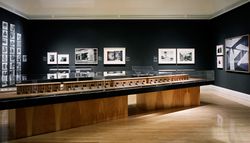
L’exposition, qui marque le 10e anniversaire de l’inauguration du CCA au public, met en valeur et en interaction les acquisitions dans ses dix premières années. En chantier propose plus de 350 estampes, dessins, photographies, livres rares, manuscrits, jouets et maquettes qui démontrent comment l’architecture a été imaginée, conçue, observée et perçue pendant cinq siècles(...)
L’exposition, qui marque le 10e anniversaire de l’inauguration du CCA au public, met en valeur et en interaction les acquisitions dans ses dix premières années. En chantier propose plus de 350 estampes, dessins, photographies, livres rares, manuscrits, jouets et maquettes qui démontrent comment l’architecture a été imaginée, conçue, observée et perçue pendant cinq siècles(...)
Localisation:
Salles principales et vitrines
Salles principales et vitrines
Date:
24 novembre 1999 au 30 avril 2000
24 novembre 1999 au 30 avril 2000
Titre:
En chantier : les collections du CCA, 1989-1999
Actions:
Description:
L’exposition, qui marque le 10e anniversaire de l’inauguration du CCA au public, met en valeur et en interaction les acquisitions dans ses dix premières années. En chantier propose plus de 350 estampes, dessins, photographies, livres rares, manuscrits, jouets et maquettes qui démontrent comment l’architecture a été imaginée, conçue, observée et perçue pendant cinq siècles(...)
En chantier : les collections du CCA, 1989-1999
Actions:
Description:
L’exposition, qui marque le 10e anniversaire de l’inauguration du CCA au public, met en valeur et en interaction les acquisitions dans ses dix premières années. En chantier propose plus de 350 estampes, dessins, photographies, livres rares, manuscrits, jouets et maquettes qui démontrent comment l’architecture a été imaginée, conçue, observée et perçue pendant cinq siècles(...)
Classification:
expositions
expositions
Date:
24 novembre 1999 au
30 avril 2000
24 novembre 1999 au
30 avril 2000
Localisation:
Salles principales et vitrines
Salles principales et vitrines
Niveau de description archivistique:
Sous-série
Sous-série
Numéro de référence:
AP197.S1.SS6
Description:
This subseries documents Kenneth Frampton’s writing of “Studies in Tectonic Culture: The Poetics of Construction in Nineteenth and Twentieth Century Architecture” (1995) as well as his other writings related to tectonics such as course materials for the “Studies in Tectonic Culture” seminar at the Graduate School of Architecture, Planning and Preservation (GSAPP) and some research materials on tectonics. Kenneth Frampton's research interest in tectonics began with four lectures he gave at Rice University in Texas in the 1980s. The lectures focused on the work of Louis Kahn, Mies van der Rohe, Auguste Perret, and Jørn Urzon. This research interest later became a book and teaching project in the early 1990s. Textual documentation in this subseries consists of contracts, book reviews, abstracts, correspondence, drafts for various chapters, notes, selected photographic materials for the publication and various articles on tectonics (written by others). Course outlines, course readers, lecture slides, student papers, and midterm exams from the Studies in Tectonic Culture seminar at GSAPP are also included in this subseries.
AP197.S1.SS6
Description:
This subseries documents Kenneth Frampton’s writing of “Studies in Tectonic Culture: The Poetics of Construction in Nineteenth and Twentieth Century Architecture” (1995) as well as his other writings related to tectonics such as course materials for the “Studies in Tectonic Culture” seminar at the Graduate School of Architecture, Planning and Preservation (GSAPP) and some research materials on tectonics. Kenneth Frampton's research interest in tectonics began with four lectures he gave at Rice University in Texas in the 1980s. The lectures focused on the work of Louis Kahn, Mies van der Rohe, Auguste Perret, and Jørn Urzon. This research interest later became a book and teaching project in the early 1990s. Textual documentation in this subseries consists of contracts, book reviews, abstracts, correspondence, drafts for various chapters, notes, selected photographic materials for the publication and various articles on tectonics (written by others). Course outlines, course readers, lecture slides, student papers, and midterm exams from the Studies in Tectonic Culture seminar at GSAPP are also included in this subseries.
Personnes et institutions:
Date:
1965- 2009
1965- 2009
Titre:
Studies in tectonic culture (1984-2018)
Actions:
AP197.S1.SS6
Description:
This subseries documents Kenneth Frampton’s writing of “Studies in Tectonic Culture: The Poetics of Construction in Nineteenth and Twentieth Century Architecture” (1995) as well as his other writings related to tectonics such as course materials for the “Studies in Tectonic Culture” seminar at the Graduate School of Architecture, Planning and Preservation (GSAPP) and some research materials on tectonics. Kenneth Frampton's research interest in tectonics began with four lectures he gave at Rice University in Texas in the 1980s. The lectures focused on the work of Louis Kahn, Mies van der Rohe, Auguste Perret, and Jørn Urzon. This research interest later became a book and teaching project in the early 1990s. Textual documentation in this subseries consists of contracts, book reviews, abstracts, correspondence, drafts for various chapters, notes, selected photographic materials for the publication and various articles on tectonics (written by others). Course outlines, course readers, lecture slides, student papers, and midterm exams from the Studies in Tectonic Culture seminar at GSAPP are also included in this subseries.
Studies in tectonic culture (1984-2018)
Actions:
AP197.S1.SS6
Description:
This subseries documents Kenneth Frampton’s writing of “Studies in Tectonic Culture: The Poetics of Construction in Nineteenth and Twentieth Century Architecture” (1995) as well as his other writings related to tectonics such as course materials for the “Studies in Tectonic Culture” seminar at the Graduate School of Architecture, Planning and Preservation (GSAPP) and some research materials on tectonics. Kenneth Frampton's research interest in tectonics began with four lectures he gave at Rice University in Texas in the 1980s. The lectures focused on the work of Louis Kahn, Mies van der Rohe, Auguste Perret, and Jørn Urzon. This research interest later became a book and teaching project in the early 1990s. Textual documentation in this subseries consists of contracts, book reviews, abstracts, correspondence, drafts for various chapters, notes, selected photographic materials for the publication and various articles on tectonics (written by others). Course outlines, course readers, lecture slides, student papers, and midterm exams from the Studies in Tectonic Culture seminar at GSAPP are also included in this subseries.
Niveau de description archivistique:
Subseries
Subseries
Date:
1965- 2009
1965- 2009
Personnes et institutions:
Classification:
expositions
expositions
Titre:
Jouets et transports
Jouets et transports
Actions:
Description:
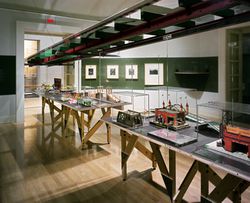
Tout nouveau moyen de transport ou toute modification apportée à un système existant de mobilité urbaine – l’élargissement des tranchées permettant aux voies ferrées de se relier à un terminus ou à une jonction, l’extension des gares de triage desservant les systèmes de transport métropolitains et de banlieue, la multiplication des bretelles des ponts, des autoroutes(...)
Tout nouveau moyen de transport ou toute modification apportée à un système existant de mobilité urbaine – l’élargissement des tranchées permettant aux voies ferrées de se relier à un terminus ou à une jonction, l’extension des gares de triage desservant les systèmes de transport métropolitains et de banlieue, la multiplication des bretelles des ponts, des autoroutes(...)
Localisation:
Salle octogonale
Salle octogonale
Date:
15 novembre 2000 au 1 avril 2001
15 novembre 2000 au 1 avril 2001
Titre:
Jouets et transports
Actions:
Description:
Tout nouveau moyen de transport ou toute modification apportée à un système existant de mobilité urbaine – l’élargissement des tranchées permettant aux voies ferrées de se relier à un terminus ou à une jonction, l’extension des gares de triage desservant les systèmes de transport métropolitains et de banlieue, la multiplication des bretelles des ponts, des autoroutes(...)
Jouets et transports
Actions:
Description:
Tout nouveau moyen de transport ou toute modification apportée à un système existant de mobilité urbaine – l’élargissement des tranchées permettant aux voies ferrées de se relier à un terminus ou à une jonction, l’extension des gares de triage desservant les systèmes de transport métropolitains et de banlieue, la multiplication des bretelles des ponts, des autoroutes(...)
Classification:
expositions
expositions
Date:
15 novembre 2000 au
1 avril 2001
15 novembre 2000 au
1 avril 2001
Localisation:
Salle octogonale
Salle octogonale
Niveau de description archivistique:
Série(s)
Série(s)
Titre:
Professional activities
Professional activities
Numéro de référence:
AP022.S4
Description:
Series documents professional activities of Arthur Erickson outside of designing buildings, including awards and honours, such as the Massey Medals for Architecture and others, Erickson involvement with professional associations as well as addresses and writings by Erickson, book projects, conferences and workshops. The series contains correspondence with professional associations, certificats and medals received by Erickson throughout his career, invitations to events, drafts, notes and texts for lectures, conferences programs, and recordings of various televisions appearances of Erickson.
AP022.S4
Description:
Series documents professional activities of Arthur Erickson outside of designing buildings, including awards and honours, such as the Massey Medals for Architecture and others, Erickson involvement with professional associations as well as addresses and writings by Erickson, book projects, conferences and workshops. The series contains correspondence with professional associations, certificats and medals received by Erickson throughout his career, invitations to events, drafts, notes and texts for lectures, conferences programs, and recordings of various televisions appearances of Erickson.
Personnes et institutions:
Date:
1955-1999 (predominant 1964-1989)
1955-1999 (predominant 1964-1989)
Titre:
Professional activities
Actions:
AP022.S4
Description:
Series documents professional activities of Arthur Erickson outside of designing buildings, including awards and honours, such as the Massey Medals for Architecture and others, Erickson involvement with professional associations as well as addresses and writings by Erickson, book projects, conferences and workshops. The series contains correspondence with professional associations, certificats and medals received by Erickson throughout his career, invitations to events, drafts, notes and texts for lectures, conferences programs, and recordings of various televisions appearances of Erickson.
Professional activities
Actions:
AP022.S4
Description:
Series documents professional activities of Arthur Erickson outside of designing buildings, including awards and honours, such as the Massey Medals for Architecture and others, Erickson involvement with professional associations as well as addresses and writings by Erickson, book projects, conferences and workshops. The series contains correspondence with professional associations, certificats and medals received by Erickson throughout his career, invitations to events, drafts, notes and texts for lectures, conferences programs, and recordings of various televisions appearances of Erickson.
Niveau de description archivistique:
Series
Series
Date:
1955-1999 (predominant 1964-1989)
1955-1999 (predominant 1964-1989)
Personnes et institutions:
Classification:
photographies
photographies
Numéro de référence:
ARCH260228
Description:
Photo reproductions of 2-page spreads from the book ''The Architecture of Arthur Erickson''
ARCH260228
Description:
Photo reproductions of 2-page spreads from the book ''The Architecture of Arthur Erickson''
Personnes et institutions:
Titre:
Photographs of residences, University of Lethbridge, and Simon Fraser University used for promotion
Actions:
ARCH260228
Description:
Photo reproductions of 2-page spreads from the book ''The Architecture of Arthur Erickson''
Photographs of residences, University of Lethbridge, and Simon Fraser University used for promotion
Actions:
ARCH260228
Description:
Photo reproductions of 2-page spreads from the book ''The Architecture of Arthur Erickson''
Classification:
photographies
photographies
Personnes et institutions:
Classification:
expositions
expositions
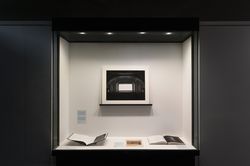
Titre:
Miroirs / Mirrors
Miroirs / Mirrors
Actions:
Description:
Miroirs/ Mirrors prend forme à travers un dialogue indirect avec l’exposition L’histoire, par ailleurs: Go Hasegawa, Kersten Geers, David Van Severen, qui prend racine dans les références et les résonnances partagées entre les travaux de deux pratiques contemporaines mises en présence de l’histoire. Alors que L’histoire, par ailleurs se fonde sur limpression que lon a du(...)
Miroirs/ Mirrors prend forme à travers un dialogue indirect avec l’exposition L’histoire, par ailleurs: Go Hasegawa, Kersten Geers, David Van Severen, qui prend racine dans les références et les résonnances partagées entre les travaux de deux pratiques contemporaines mises en présence de l’histoire. Alors que L’histoire, par ailleurs se fonde sur limpression que lon a du(...)
Localisation:
Vitrines
Vitrines
Date:
22 juin 2017 au 14 janvier 2018
22 juin 2017 au 14 janvier 2018
Titre:
Miroirs / Mirrors
Actions:
Description:
Miroirs/ Mirrors prend forme à travers un dialogue indirect avec l’exposition L’histoire, par ailleurs: Go Hasegawa, Kersten Geers, David Van Severen, qui prend racine dans les références et les résonnances partagées entre les travaux de deux pratiques contemporaines mises en présence de l’histoire. Alors que L’histoire, par ailleurs se fonde sur limpression que lon a du(...)
Miroirs / Mirrors
Actions:
Description:
Miroirs/ Mirrors prend forme à travers un dialogue indirect avec l’exposition L’histoire, par ailleurs: Go Hasegawa, Kersten Geers, David Van Severen, qui prend racine dans les références et les résonnances partagées entre les travaux de deux pratiques contemporaines mises en présence de l’histoire. Alors que L’histoire, par ailleurs se fonde sur limpression que lon a du(...)
Classification:
expositions
expositions
Date:
22 juin 2017 au
14 janvier 2018
22 juin 2017 au
14 janvier 2018
Localisation:
Vitrines
Vitrines
Classification:
expositions
expositions
Actions:
Description:
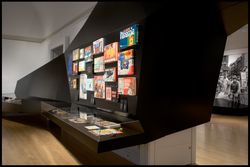
1973 : Désolé, plus d’essence analyse l’innovation architecturale à laquelle a donné naissance la crise énergétique de 1973, alors que la valeur du baril de pétrole augmentait de façon exponentielle, donnant lieu à des bouleversements économiques, politiques et sociaux dans de nombreux pays. Présentant plus de 350 objets – dessins d’architecture, photographies,(...)
1973 : Désolé, plus d’essence analyse l’innovation architecturale à laquelle a donné naissance la crise énergétique de 1973, alors que la valeur du baril de pétrole augmentait de façon exponentielle, donnant lieu à des bouleversements économiques, politiques et sociaux dans de nombreux pays. Présentant plus de 350 objets – dessins d’architecture, photographies,(...)
Localisation:
Salles principales Mot(s)-clé(s):
1973, désolé plus d'essence, crise du pétrole, énergie, environnement
Salles principales Mot(s)-clé(s):
1973, désolé plus d'essence, crise du pétrole, énergie, environnement
Date:
7 novembre 2007 au 20 avril 2008
7 novembre 2007 au 20 avril 2008
Titre:
1973 : désolé, plus d’essence
Actions:
Description:
1973 : Désolé, plus d’essence analyse l’innovation architecturale à laquelle a donné naissance la crise énergétique de 1973, alors que la valeur du baril de pétrole augmentait de façon exponentielle, donnant lieu à des bouleversements économiques, politiques et sociaux dans de nombreux pays. Présentant plus de 350 objets – dessins d’architecture, photographies,(...)
1973 : désolé, plus d’essence
Actions:
Description:
1973 : Désolé, plus d’essence analyse l’innovation architecturale à laquelle a donné naissance la crise énergétique de 1973, alors que la valeur du baril de pétrole augmentait de façon exponentielle, donnant lieu à des bouleversements économiques, politiques et sociaux dans de nombreux pays. Présentant plus de 350 objets – dessins d’architecture, photographies,(...)
Classification:
expositions
expositions
Date:
7 novembre 2007 au
20 avril 2008
7 novembre 2007 au
20 avril 2008
Localisation:
Salles principales Mot(s)-clé(s):
1973, désolé plus d'essence, crise du pétrole, énergie, environnement
Salles principales Mot(s)-clé(s):
1973, désolé plus d'essence, crise du pétrole, énergie, environnement


