


21400 Résultats
Niveau de description archivistique:
Projet
Projet
Numéro de référence:
AP148.S1.1970.PR02
Description:
The project series documents Poli's work on the Interplanetary Architecture project, which was also made into a film by Superstudio directed by Alessandro Poli (the film is not included in the fonds). The project reflects Poli's deep fascination with the moon landing in 1969. Poli uses this major media event as a catalyst for thinking about a new approach to architecture and tools for design, including the idea that film and the movie camera should become part of the toolset. The project also seems to be in some way a response to Epoch magazine's challenge for a "Primo concorso di architettura nello spazio" (the first architectural competition in space), and includes much imagery and textual references to a new road or architectural links between the earth and other planets, including an earth moon highway. In his storyboard, Poli also makes reference to his earlier Piper project, and some imagery features wheels and an amusement park. The Interplanetary Architecture project was exhibited by Superstudio in Rome in 1972 and featured in "Casabella" magazine in April 1972 (no. 364). The project was also featured in the 2010 CCA exhibition "Other Space Odysseys". In the accompanying CCA publication, Poli describes this project as "a voyage off earthbound routes in quest of architecture unfettered by the urban nightmare, by induced needs or by planning as the only tool for regulating and solving the world's problems" (Poli quoted in Borasi and Zardini, 2010, 110). Poli's work on this project is deeply tied to the Zeno project, which was also featured in this exhibition and is included in this fonds (see AP148.S1.1972.PR01). For the Zeno project, Poli envisioned a dialogue between astronaut Buzz Aldrin and an Italian peasant, Zeno of Riparbella. Poli felt that these two shared a similarity in that both their homes were isolated capsules, one that provided a lens from which to see the rest of the world and understand their place in it. The material in the series includes numerous photomontages and collages of astronauts in space, as well as drawings of plantery shapes and structures. There are also texts, some of which include calculations of distances and diameters of planets, as well as notebooks and sketchbooks, many of which Poli included in a folder he entitled "Storyboard." The series also includes an unsent letter from Poli to Adolfo Natalini which describes how, after the moon landing, everything - the planet, the moon, the stars - is architecture, and that this will necessitate the need for new design tools, such as the movie camera. Some works are signed Alessandro Poli-Superstudio. Source cited: Giovanna Borasi and Mirko Zardini, eds., Other Space Odysseys, Montreal and Baden: Canadian Centre for Architecture/Lars Müller Publishers, 2010.
AP148.S1.1970.PR02
Description:
The project series documents Poli's work on the Interplanetary Architecture project, which was also made into a film by Superstudio directed by Alessandro Poli (the film is not included in the fonds). The project reflects Poli's deep fascination with the moon landing in 1969. Poli uses this major media event as a catalyst for thinking about a new approach to architecture and tools for design, including the idea that film and the movie camera should become part of the toolset. The project also seems to be in some way a response to Epoch magazine's challenge for a "Primo concorso di architettura nello spazio" (the first architectural competition in space), and includes much imagery and textual references to a new road or architectural links between the earth and other planets, including an earth moon highway. In his storyboard, Poli also makes reference to his earlier Piper project, and some imagery features wheels and an amusement park. The Interplanetary Architecture project was exhibited by Superstudio in Rome in 1972 and featured in "Casabella" magazine in April 1972 (no. 364). The project was also featured in the 2010 CCA exhibition "Other Space Odysseys". In the accompanying CCA publication, Poli describes this project as "a voyage off earthbound routes in quest of architecture unfettered by the urban nightmare, by induced needs or by planning as the only tool for regulating and solving the world's problems" (Poli quoted in Borasi and Zardini, 2010, 110). Poli's work on this project is deeply tied to the Zeno project, which was also featured in this exhibition and is included in this fonds (see AP148.S1.1972.PR01). For the Zeno project, Poli envisioned a dialogue between astronaut Buzz Aldrin and an Italian peasant, Zeno of Riparbella. Poli felt that these two shared a similarity in that both their homes were isolated capsules, one that provided a lens from which to see the rest of the world and understand their place in it. The material in the series includes numerous photomontages and collages of astronauts in space, as well as drawings of plantery shapes and structures. There are also texts, some of which include calculations of distances and diameters of planets, as well as notebooks and sketchbooks, many of which Poli included in a folder he entitled "Storyboard." The series also includes an unsent letter from Poli to Adolfo Natalini which describes how, after the moon landing, everything - the planet, the moon, the stars - is architecture, and that this will necessitate the need for new design tools, such as the movie camera. Some works are signed Alessandro Poli-Superstudio. Source cited: Giovanna Borasi and Mirko Zardini, eds., Other Space Odysseys, Montreal and Baden: Canadian Centre for Architecture/Lars Müller Publishers, 2010.
Personnes et institutions:
Date:
1969-1971
1969-1971
Titre:
Architettura Interplanetaria [Interplanetary Architecture] (1970-1971)
Actions:
AP148.S1.1970.PR02
Description:
The project series documents Poli's work on the Interplanetary Architecture project, which was also made into a film by Superstudio directed by Alessandro Poli (the film is not included in the fonds). The project reflects Poli's deep fascination with the moon landing in 1969. Poli uses this major media event as a catalyst for thinking about a new approach to architecture and tools for design, including the idea that film and the movie camera should become part of the toolset. The project also seems to be in some way a response to Epoch magazine's challenge for a "Primo concorso di architettura nello spazio" (the first architectural competition in space), and includes much imagery and textual references to a new road or architectural links between the earth and other planets, including an earth moon highway. In his storyboard, Poli also makes reference to his earlier Piper project, and some imagery features wheels and an amusement park. The Interplanetary Architecture project was exhibited by Superstudio in Rome in 1972 and featured in "Casabella" magazine in April 1972 (no. 364). The project was also featured in the 2010 CCA exhibition "Other Space Odysseys". In the accompanying CCA publication, Poli describes this project as "a voyage off earthbound routes in quest of architecture unfettered by the urban nightmare, by induced needs or by planning as the only tool for regulating and solving the world's problems" (Poli quoted in Borasi and Zardini, 2010, 110). Poli's work on this project is deeply tied to the Zeno project, which was also featured in this exhibition and is included in this fonds (see AP148.S1.1972.PR01). For the Zeno project, Poli envisioned a dialogue between astronaut Buzz Aldrin and an Italian peasant, Zeno of Riparbella. Poli felt that these two shared a similarity in that both their homes were isolated capsules, one that provided a lens from which to see the rest of the world and understand their place in it. The material in the series includes numerous photomontages and collages of astronauts in space, as well as drawings of plantery shapes and structures. There are also texts, some of which include calculations of distances and diameters of planets, as well as notebooks and sketchbooks, many of which Poli included in a folder he entitled "Storyboard." The series also includes an unsent letter from Poli to Adolfo Natalini which describes how, after the moon landing, everything - the planet, the moon, the stars - is architecture, and that this will necessitate the need for new design tools, such as the movie camera. Some works are signed Alessandro Poli-Superstudio. Source cited: Giovanna Borasi and Mirko Zardini, eds., Other Space Odysseys, Montreal and Baden: Canadian Centre for Architecture/Lars Müller Publishers, 2010.
Architettura Interplanetaria [Interplanetary Architecture] (1970-1971)
Actions:
AP148.S1.1970.PR02
Description:
The project series documents Poli's work on the Interplanetary Architecture project, which was also made into a film by Superstudio directed by Alessandro Poli (the film is not included in the fonds). The project reflects Poli's deep fascination with the moon landing in 1969. Poli uses this major media event as a catalyst for thinking about a new approach to architecture and tools for design, including the idea that film and the movie camera should become part of the toolset. The project also seems to be in some way a response to Epoch magazine's challenge for a "Primo concorso di architettura nello spazio" (the first architectural competition in space), and includes much imagery and textual references to a new road or architectural links between the earth and other planets, including an earth moon highway. In his storyboard, Poli also makes reference to his earlier Piper project, and some imagery features wheels and an amusement park. The Interplanetary Architecture project was exhibited by Superstudio in Rome in 1972 and featured in "Casabella" magazine in April 1972 (no. 364). The project was also featured in the 2010 CCA exhibition "Other Space Odysseys". In the accompanying CCA publication, Poli describes this project as "a voyage off earthbound routes in quest of architecture unfettered by the urban nightmare, by induced needs or by planning as the only tool for regulating and solving the world's problems" (Poli quoted in Borasi and Zardini, 2010, 110). Poli's work on this project is deeply tied to the Zeno project, which was also featured in this exhibition and is included in this fonds (see AP148.S1.1972.PR01). For the Zeno project, Poli envisioned a dialogue between astronaut Buzz Aldrin and an Italian peasant, Zeno of Riparbella. Poli felt that these two shared a similarity in that both their homes were isolated capsules, one that provided a lens from which to see the rest of the world and understand their place in it. The material in the series includes numerous photomontages and collages of astronauts in space, as well as drawings of plantery shapes and structures. There are also texts, some of which include calculations of distances and diameters of planets, as well as notebooks and sketchbooks, many of which Poli included in a folder he entitled "Storyboard." The series also includes an unsent letter from Poli to Adolfo Natalini which describes how, after the moon landing, everything - the planet, the moon, the stars - is architecture, and that this will necessitate the need for new design tools, such as the movie camera. Some works are signed Alessandro Poli-Superstudio. Source cited: Giovanna Borasi and Mirko Zardini, eds., Other Space Odysseys, Montreal and Baden: Canadian Centre for Architecture/Lars Müller Publishers, 2010.
Niveau de description archivistique:
Project
Project
Date:
1969-1971
1969-1971
Personnes et institutions:
Niveau de description archivistique:
Projet
Projet
Numéro de référence:
AP198.S1.1997.PR02
Description:
Project records document the design process for OCEAN North’s competition entry for the Jyväskylä Music and Arts Centre in 1997. The project was titled Terra Cultura by OCEAN North. The international competition called to create a multi-usage space that would include a venue for the symphonic orchestra, a music school, exhibition spaces, and the possibility to host a variety of small cultural events in the Finnish city of Jyväskylä. The proposed site is in the center of the town, across the street from the Jyväskylä city church and its park, and nearby buildings designed by Alvar Aalto. OCEAN North’s concept presents a topological surface as an extension of the surrounding urban scape with two masses that would host the formal functions of the building (concert hall, music school, exhibition halls). The two volumes, or raised blocks, are divided along a diagonal elevated space, which is the extension of the ground’s topological surface filled and dubbed “Liquid Flow Space” by the design team. In their interview with Greg Lynn, Johan Bettum and Kivi Sotamaa mentioned that the idea for Jyväskylä was that it was a cloud. Digital files, in particular, show the process to achieve the projected design. Drawings provide views of streamed particles and of resulting peels. They also include plans, elevations and axonometric views of the structure. Most files are raster or vector images, likely saved from CAD software. A few files are in CAD formats such as Microstation, 3D Studio and form*Z. Digital files also present sine wave analysis and resulting charts for each component of the program. The analysis and charts present the relationships between various components of the building’s program such as the Art Museum, the Concert Halls, the technical space, and the Common facilities. These files are raster images and spreadsheets. Photographs of the site in Jyväskylä and of models built by OCEAN North were digitized and are included with the digital working files. Physical drawings are chiefly floor plans for the building, but also include sections and sketches. Finally, project files include photographic prints of two built models. One of these models, a small model of the conceptual masses of the building structure, is itself in the archive. Photographs show the model in the context of a city scape model. The second model, not part of the archive at CCA, was built at a bigger scale and was an intricate cardboard and wooden stick structure. Sources: Softspace: from a representation of form to a simulation of space, Edited by Sean Lally and Jessica Young. London, New York: Routledge, 2007. Greg Lynn, ed. Archaeology of the Digital 17: OCEAN North, Jyväskylä Music and Arts Centre, Montréal: Canadian Centre for Architecture, 2017. ePub.
AP198.S1.1997.PR02
Description:
Project records document the design process for OCEAN North’s competition entry for the Jyväskylä Music and Arts Centre in 1997. The project was titled Terra Cultura by OCEAN North. The international competition called to create a multi-usage space that would include a venue for the symphonic orchestra, a music school, exhibition spaces, and the possibility to host a variety of small cultural events in the Finnish city of Jyväskylä. The proposed site is in the center of the town, across the street from the Jyväskylä city church and its park, and nearby buildings designed by Alvar Aalto. OCEAN North’s concept presents a topological surface as an extension of the surrounding urban scape with two masses that would host the formal functions of the building (concert hall, music school, exhibition halls). The two volumes, or raised blocks, are divided along a diagonal elevated space, which is the extension of the ground’s topological surface filled and dubbed “Liquid Flow Space” by the design team. In their interview with Greg Lynn, Johan Bettum and Kivi Sotamaa mentioned that the idea for Jyväskylä was that it was a cloud. Digital files, in particular, show the process to achieve the projected design. Drawings provide views of streamed particles and of resulting peels. They also include plans, elevations and axonometric views of the structure. Most files are raster or vector images, likely saved from CAD software. A few files are in CAD formats such as Microstation, 3D Studio and form*Z. Digital files also present sine wave analysis and resulting charts for each component of the program. The analysis and charts present the relationships between various components of the building’s program such as the Art Museum, the Concert Halls, the technical space, and the Common facilities. These files are raster images and spreadsheets. Photographs of the site in Jyväskylä and of models built by OCEAN North were digitized and are included with the digital working files. Physical drawings are chiefly floor plans for the building, but also include sections and sketches. Finally, project files include photographic prints of two built models. One of these models, a small model of the conceptual masses of the building structure, is itself in the archive. Photographs show the model in the context of a city scape model. The second model, not part of the archive at CCA, was built at a bigger scale and was an intricate cardboard and wooden stick structure. Sources: Softspace: from a representation of form to a simulation of space, Edited by Sean Lally and Jessica Young. London, New York: Routledge, 2007. Greg Lynn, ed. Archaeology of the Digital 17: OCEAN North, Jyväskylä Music and Arts Centre, Montréal: Canadian Centre for Architecture, 2017. ePub.
Personnes et institutions:
Date:
1997
1997
Titre:
Terra Cultura – Jyväskylä Music and Arts Centre, international competition entry
Actions:
AP198.S1.1997.PR02
Description:
Project records document the design process for OCEAN North’s competition entry for the Jyväskylä Music and Arts Centre in 1997. The project was titled Terra Cultura by OCEAN North. The international competition called to create a multi-usage space that would include a venue for the symphonic orchestra, a music school, exhibition spaces, and the possibility to host a variety of small cultural events in the Finnish city of Jyväskylä. The proposed site is in the center of the town, across the street from the Jyväskylä city church and its park, and nearby buildings designed by Alvar Aalto. OCEAN North’s concept presents a topological surface as an extension of the surrounding urban scape with two masses that would host the formal functions of the building (concert hall, music school, exhibition halls). The two volumes, or raised blocks, are divided along a diagonal elevated space, which is the extension of the ground’s topological surface filled and dubbed “Liquid Flow Space” by the design team. In their interview with Greg Lynn, Johan Bettum and Kivi Sotamaa mentioned that the idea for Jyväskylä was that it was a cloud. Digital files, in particular, show the process to achieve the projected design. Drawings provide views of streamed particles and of resulting peels. They also include plans, elevations and axonometric views of the structure. Most files are raster or vector images, likely saved from CAD software. A few files are in CAD formats such as Microstation, 3D Studio and form*Z. Digital files also present sine wave analysis and resulting charts for each component of the program. The analysis and charts present the relationships between various components of the building’s program such as the Art Museum, the Concert Halls, the technical space, and the Common facilities. These files are raster images and spreadsheets. Photographs of the site in Jyväskylä and of models built by OCEAN North were digitized and are included with the digital working files. Physical drawings are chiefly floor plans for the building, but also include sections and sketches. Finally, project files include photographic prints of two built models. One of these models, a small model of the conceptual masses of the building structure, is itself in the archive. Photographs show the model in the context of a city scape model. The second model, not part of the archive at CCA, was built at a bigger scale and was an intricate cardboard and wooden stick structure. Sources: Softspace: from a representation of form to a simulation of space, Edited by Sean Lally and Jessica Young. London, New York: Routledge, 2007. Greg Lynn, ed. Archaeology of the Digital 17: OCEAN North, Jyväskylä Music and Arts Centre, Montréal: Canadian Centre for Architecture, 2017. ePub.
Terra Cultura – Jyväskylä Music and Arts Centre, international competition entry
Actions:
AP198.S1.1997.PR02
Description:
Project records document the design process for OCEAN North’s competition entry for the Jyväskylä Music and Arts Centre in 1997. The project was titled Terra Cultura by OCEAN North. The international competition called to create a multi-usage space that would include a venue for the symphonic orchestra, a music school, exhibition spaces, and the possibility to host a variety of small cultural events in the Finnish city of Jyväskylä. The proposed site is in the center of the town, across the street from the Jyväskylä city church and its park, and nearby buildings designed by Alvar Aalto. OCEAN North’s concept presents a topological surface as an extension of the surrounding urban scape with two masses that would host the formal functions of the building (concert hall, music school, exhibition halls). The two volumes, or raised blocks, are divided along a diagonal elevated space, which is the extension of the ground’s topological surface filled and dubbed “Liquid Flow Space” by the design team. In their interview with Greg Lynn, Johan Bettum and Kivi Sotamaa mentioned that the idea for Jyväskylä was that it was a cloud. Digital files, in particular, show the process to achieve the projected design. Drawings provide views of streamed particles and of resulting peels. They also include plans, elevations and axonometric views of the structure. Most files are raster or vector images, likely saved from CAD software. A few files are in CAD formats such as Microstation, 3D Studio and form*Z. Digital files also present sine wave analysis and resulting charts for each component of the program. The analysis and charts present the relationships between various components of the building’s program such as the Art Museum, the Concert Halls, the technical space, and the Common facilities. These files are raster images and spreadsheets. Photographs of the site in Jyväskylä and of models built by OCEAN North were digitized and are included with the digital working files. Physical drawings are chiefly floor plans for the building, but also include sections and sketches. Finally, project files include photographic prints of two built models. One of these models, a small model of the conceptual masses of the building structure, is itself in the archive. Photographs show the model in the context of a city scape model. The second model, not part of the archive at CCA, was built at a bigger scale and was an intricate cardboard and wooden stick structure. Sources: Softspace: from a representation of form to a simulation of space, Edited by Sean Lally and Jessica Young. London, New York: Routledge, 2007. Greg Lynn, ed. Archaeology of the Digital 17: OCEAN North, Jyväskylä Music and Arts Centre, Montréal: Canadian Centre for Architecture, 2017. ePub.
Niveau de description archivistique:
Project
Project
Date:
1997
1997
Personnes et institutions:
Niveau de description archivistique:
Projet
Projet
Numéro de référence:
AP194.S1.1997.PR02
Description:
Project records document the design process for OCEAN North’s competition entry for the Jyväskylä Music and Arts Centre in 1997. The project was titled Terra Cultura by OCEAN North. The competition was to create a multi-usage space that would include a venue for the symphonic orchestra, a music school, exhibition spaces and the possibility to host a variety of small cultural events in the Finnish city of Jyväskylä. The proposed site is in the center of the town, across the street from the Jyväskylä city church and its park, and nearby buildings designed by Alvar Aalto. OCEAN North’s concept presents a topological surface as an extension of the surrounding urban scape with two masses that would host the formal functions of the building (concert hall, music school, exhibition halls). The two volumes, or raised blocks, are divided along a diagonal elevated space, which is the extension of the ground’s topological surface filled and dubbed “Liquid Flow Space” by the design team. In their interview with Greg Lynn, Johan Bettum and Kivi Sotamaa mentioned that the idea for Jyväskylä was that it was a cloud. To reach this goal, the team used CAD software to trace streams of particles as a modelling approach. The masses of linear elements that were generated were further deconstructed and turned into “peels” and rearranged to create the masses of the building. Physical models were also used to test and further what had emerged from the digital design process, with results being fed back into the digital drawings. During the process, Bettum also brought in the idea of the internalisation of the outside, taking inspiration from the Centre Georges Pompidou. Digital records document the creative process with raster and vector images, CAD drawings and models, and few digital textual records describing the project and the program charts. Drawings and models show site and building plans, perspectives and sections; particles streaming and resulting linear masses; peels and sections identified per color; and renderings of aerials, perspectives and elevation views. OCEAN North seems to have mostly used Microstation for modelling, although there are a few files created with form*Z and 3D Studio. Some of the raster images might have been created with these software as well, showing a given stage of the design process and including renderings. There are also screen captures showing the top, front, left and perspective views of 3D models. Adobe Photoshop and Illustrator were also used to create and modify drawings and diagrams. Program charts were created in Microsoft Excel. Sources: Softspace: from a representation of form to a simulation of space, Edited by Sean Lally and Jessica Young. London, New York: Routledge, 2007. Greg Lynn, ed. Archaeology of the Digital 17: OCEAN North, Jyväskylä Music and Arts Centre, Montréal: Canadian Centre for Architecture, 2017. ePub.
AP194.S1.1997.PR02
Description:
Project records document the design process for OCEAN North’s competition entry for the Jyväskylä Music and Arts Centre in 1997. The project was titled Terra Cultura by OCEAN North. The competition was to create a multi-usage space that would include a venue for the symphonic orchestra, a music school, exhibition spaces and the possibility to host a variety of small cultural events in the Finnish city of Jyväskylä. The proposed site is in the center of the town, across the street from the Jyväskylä city church and its park, and nearby buildings designed by Alvar Aalto. OCEAN North’s concept presents a topological surface as an extension of the surrounding urban scape with two masses that would host the formal functions of the building (concert hall, music school, exhibition halls). The two volumes, or raised blocks, are divided along a diagonal elevated space, which is the extension of the ground’s topological surface filled and dubbed “Liquid Flow Space” by the design team. In their interview with Greg Lynn, Johan Bettum and Kivi Sotamaa mentioned that the idea for Jyväskylä was that it was a cloud. To reach this goal, the team used CAD software to trace streams of particles as a modelling approach. The masses of linear elements that were generated were further deconstructed and turned into “peels” and rearranged to create the masses of the building. Physical models were also used to test and further what had emerged from the digital design process, with results being fed back into the digital drawings. During the process, Bettum also brought in the idea of the internalisation of the outside, taking inspiration from the Centre Georges Pompidou. Digital records document the creative process with raster and vector images, CAD drawings and models, and few digital textual records describing the project and the program charts. Drawings and models show site and building plans, perspectives and sections; particles streaming and resulting linear masses; peels and sections identified per color; and renderings of aerials, perspectives and elevation views. OCEAN North seems to have mostly used Microstation for modelling, although there are a few files created with form*Z and 3D Studio. Some of the raster images might have been created with these software as well, showing a given stage of the design process and including renderings. There are also screen captures showing the top, front, left and perspective views of 3D models. Adobe Photoshop and Illustrator were also used to create and modify drawings and diagrams. Program charts were created in Microsoft Excel. Sources: Softspace: from a representation of form to a simulation of space, Edited by Sean Lally and Jessica Young. London, New York: Routledge, 2007. Greg Lynn, ed. Archaeology of the Digital 17: OCEAN North, Jyväskylä Music and Arts Centre, Montréal: Canadian Centre for Architecture, 2017. ePub.
Personnes et institutions:
Date:
1997-1998
1997-1998
Titre:
Terra Cultura – Jyväskylä Music and Arts Centre, international competition entry, Jyväskylä, Finland (1997)
Actions:
AP194.S1.1997.PR02
Description:
Project records document the design process for OCEAN North’s competition entry for the Jyväskylä Music and Arts Centre in 1997. The project was titled Terra Cultura by OCEAN North. The competition was to create a multi-usage space that would include a venue for the symphonic orchestra, a music school, exhibition spaces and the possibility to host a variety of small cultural events in the Finnish city of Jyväskylä. The proposed site is in the center of the town, across the street from the Jyväskylä city church and its park, and nearby buildings designed by Alvar Aalto. OCEAN North’s concept presents a topological surface as an extension of the surrounding urban scape with two masses that would host the formal functions of the building (concert hall, music school, exhibition halls). The two volumes, or raised blocks, are divided along a diagonal elevated space, which is the extension of the ground’s topological surface filled and dubbed “Liquid Flow Space” by the design team. In their interview with Greg Lynn, Johan Bettum and Kivi Sotamaa mentioned that the idea for Jyväskylä was that it was a cloud. To reach this goal, the team used CAD software to trace streams of particles as a modelling approach. The masses of linear elements that were generated were further deconstructed and turned into “peels” and rearranged to create the masses of the building. Physical models were also used to test and further what had emerged from the digital design process, with results being fed back into the digital drawings. During the process, Bettum also brought in the idea of the internalisation of the outside, taking inspiration from the Centre Georges Pompidou. Digital records document the creative process with raster and vector images, CAD drawings and models, and few digital textual records describing the project and the program charts. Drawings and models show site and building plans, perspectives and sections; particles streaming and resulting linear masses; peels and sections identified per color; and renderings of aerials, perspectives and elevation views. OCEAN North seems to have mostly used Microstation for modelling, although there are a few files created with form*Z and 3D Studio. Some of the raster images might have been created with these software as well, showing a given stage of the design process and including renderings. There are also screen captures showing the top, front, left and perspective views of 3D models. Adobe Photoshop and Illustrator were also used to create and modify drawings and diagrams. Program charts were created in Microsoft Excel. Sources: Softspace: from a representation of form to a simulation of space, Edited by Sean Lally and Jessica Young. London, New York: Routledge, 2007. Greg Lynn, ed. Archaeology of the Digital 17: OCEAN North, Jyväskylä Music and Arts Centre, Montréal: Canadian Centre for Architecture, 2017. ePub.
Terra Cultura – Jyväskylä Music and Arts Centre, international competition entry, Jyväskylä, Finland (1997)
Actions:
AP194.S1.1997.PR02
Description:
Project records document the design process for OCEAN North’s competition entry for the Jyväskylä Music and Arts Centre in 1997. The project was titled Terra Cultura by OCEAN North. The competition was to create a multi-usage space that would include a venue for the symphonic orchestra, a music school, exhibition spaces and the possibility to host a variety of small cultural events in the Finnish city of Jyväskylä. The proposed site is in the center of the town, across the street from the Jyväskylä city church and its park, and nearby buildings designed by Alvar Aalto. OCEAN North’s concept presents a topological surface as an extension of the surrounding urban scape with two masses that would host the formal functions of the building (concert hall, music school, exhibition halls). The two volumes, or raised blocks, are divided along a diagonal elevated space, which is the extension of the ground’s topological surface filled and dubbed “Liquid Flow Space” by the design team. In their interview with Greg Lynn, Johan Bettum and Kivi Sotamaa mentioned that the idea for Jyväskylä was that it was a cloud. To reach this goal, the team used CAD software to trace streams of particles as a modelling approach. The masses of linear elements that were generated were further deconstructed and turned into “peels” and rearranged to create the masses of the building. Physical models were also used to test and further what had emerged from the digital design process, with results being fed back into the digital drawings. During the process, Bettum also brought in the idea of the internalisation of the outside, taking inspiration from the Centre Georges Pompidou. Digital records document the creative process with raster and vector images, CAD drawings and models, and few digital textual records describing the project and the program charts. Drawings and models show site and building plans, perspectives and sections; particles streaming and resulting linear masses; peels and sections identified per color; and renderings of aerials, perspectives and elevation views. OCEAN North seems to have mostly used Microstation for modelling, although there are a few files created with form*Z and 3D Studio. Some of the raster images might have been created with these software as well, showing a given stage of the design process and including renderings. There are also screen captures showing the top, front, left and perspective views of 3D models. Adobe Photoshop and Illustrator were also used to create and modify drawings and diagrams. Program charts were created in Microsoft Excel. Sources: Softspace: from a representation of form to a simulation of space, Edited by Sean Lally and Jessica Young. London, New York: Routledge, 2007. Greg Lynn, ed. Archaeology of the Digital 17: OCEAN North, Jyväskylä Music and Arts Centre, Montréal: Canadian Centre for Architecture, 2017. ePub.
Niveau de description archivistique:
Project
Project
Date:
1997-1998
1997-1998
Personnes et institutions:
Classification:
événements
événements
Actions:
Description:
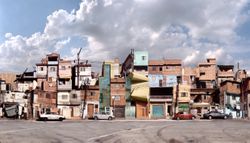
Ce jeudi au CCA, en collaboration avec le Cities Programme of the London School of Economics, Gerald Frug, conférencier James Stirling Memorial sur la ville 2010-2011, parle de la conception des systèmes de gouvernance urbaine et de ses répercussions sur le travail des urbanistes et des architectes. Cliquez ici pour l’événement Facebook.
Ce jeudi au CCA, en collaboration avec le Cities Programme of the London School of Economics, Gerald Frug, conférencier James Stirling Memorial sur la ville 2010-2011, parle de la conception des systèmes de gouvernance urbaine et de ses répercussions sur le travail des urbanistes et des architectes. Cliquez ici pour l’événement Facebook.
Date:
21 octobre 2010
21 octobre 2010
Titre:
Gerald Frug : L’architecture de la gouvernance
Actions:
Description:
Ce jeudi au CCA, en collaboration avec le Cities Programme of the London School of Economics, Gerald Frug, conférencier James Stirling Memorial sur la ville 2010-2011, parle de la conception des systèmes de gouvernance urbaine et de ses répercussions sur le travail des urbanistes et des architectes. Cliquez ici pour l’événement Facebook.
Gerald Frug : L’architecture de la gouvernance
Actions:
Description:
Ce jeudi au CCA, en collaboration avec le Cities Programme of the London School of Economics, Gerald Frug, conférencier James Stirling Memorial sur la ville 2010-2011, parle de la conception des systèmes de gouvernance urbaine et de ses répercussions sur le travail des urbanistes et des architectes. Cliquez ici pour l’événement Facebook.
Classification:
événements
événements
Date:
21 octobre 2010
21 octobre 2010
Classification:
événements
événements
Actions:
Description:
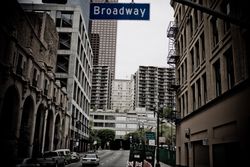
Richard Schave, un historien et guide de Los Angeles, analyse le développement de la ville depuis le tournage du documentaire urbain Reyner Banham Loves Los Angeles (R.-U.,1972), il y a 35 ans. Schave, un ancien étudiant de Banham, présente les recherches de son professeur en confrontant ses propres photographies documentaires à des extraits du film. Il analyse plus(...)
Richard Schave, un historien et guide de Los Angeles, analyse le développement de la ville depuis le tournage du documentaire urbain Reyner Banham Loves Los Angeles (R.-U.,1972), il y a 35 ans. Schave, un ancien étudiant de Banham, présente les recherches de son professeur en confrontant ses propres photographies documentaires à des extraits du film. Il analyse plus(...)
Localisation:
Théâtre Paul-Desmarais
Théâtre Paul-Desmarais
Date:
28 mai 2009
28 mai 2009
Titre:
L'enseignement de... Los Angeles
Actions:
Description:
Richard Schave, un historien et guide de Los Angeles, analyse le développement de la ville depuis le tournage du documentaire urbain Reyner Banham Loves Los Angeles (R.-U.,1972), il y a 35 ans. Schave, un ancien étudiant de Banham, présente les recherches de son professeur en confrontant ses propres photographies documentaires à des extraits du film. Il analyse plus(...)
L'enseignement de... Los Angeles
Actions:
Description:
Richard Schave, un historien et guide de Los Angeles, analyse le développement de la ville depuis le tournage du documentaire urbain Reyner Banham Loves Los Angeles (R.-U.,1972), il y a 35 ans. Schave, un ancien étudiant de Banham, présente les recherches de son professeur en confrontant ses propres photographies documentaires à des extraits du film. Il analyse plus(...)
Classification:
événements
événements
Date:
28 mai 2009
28 mai 2009
Localisation:
Théâtre Paul-Desmarais
Théâtre Paul-Desmarais
Classification:
expositions
expositions
Titre:
Le monticule de Vendôme
Le monticule de Vendôme
Actions:
Description:
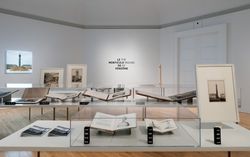
Le monticule de Vendôme est un artéfact simple d’aspect, mais provocateur par son propos : un ouvrage de terrassement au cœur d’une tentative radicale de transformation de l’iconographie urbaine pendant les deux mois de pouvoir de la Commune de Paris en 1871. Ce projet de recherche propose le récit de cette structure perdue et appelle à son historicisation ainsi qu’à sa(...)
Le monticule de Vendôme est un artéfact simple d’aspect, mais provocateur par son propos : un ouvrage de terrassement au cœur d’une tentative radicale de transformation de l’iconographie urbaine pendant les deux mois de pouvoir de la Commune de Paris en 1871. Ce projet de recherche propose le récit de cette structure perdue et appelle à son historicisation ainsi qu’à sa(...)
Localisation:
Salle octogonale
Salle octogonale
Date:
19 juin 2014 au 28 septembre 2014
19 juin 2014 au 28 septembre 2014
Titre:
Le monticule de Vendôme
Actions:
Description:
Le monticule de Vendôme est un artéfact simple d’aspect, mais provocateur par son propos : un ouvrage de terrassement au cœur d’une tentative radicale de transformation de l’iconographie urbaine pendant les deux mois de pouvoir de la Commune de Paris en 1871. Ce projet de recherche propose le récit de cette structure perdue et appelle à son historicisation ainsi qu’à sa(...)
Le monticule de Vendôme
Actions:
Description:
Le monticule de Vendôme est un artéfact simple d’aspect, mais provocateur par son propos : un ouvrage de terrassement au cœur d’une tentative radicale de transformation de l’iconographie urbaine pendant les deux mois de pouvoir de la Commune de Paris en 1871. Ce projet de recherche propose le récit de cette structure perdue et appelle à son historicisation ainsi qu’à sa(...)
Classification:
expositions
expositions
Date:
19 juin 2014 au
28 septembre 2014
19 juin 2014 au
28 septembre 2014
Localisation:
Salle octogonale
Salle octogonale
Classification:
événements
événements
Actions:
Description:
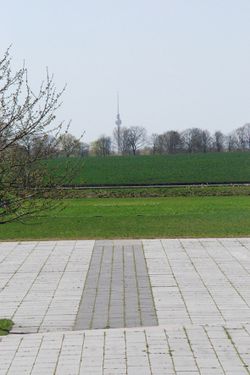
Corinne Jaquand présente, le 29 Juillet, Planning through Landscape, German and French Experiences, 2010 and Backwards, une présentation basée sur une sélection d’exemples de rénovation urbaine en France et en Allemagne, dans lesquels le projet de paysage est amorcé au début du processus de planification. Cliquer ici pour consulter la liste complète des séminaires d’été.
Corinne Jaquand présente, le 29 Juillet, Planning through Landscape, German and French Experiences, 2010 and Backwards, une présentation basée sur une sélection d’exemples de rénovation urbaine en France et en Allemagne, dans lesquels le projet de paysage est amorcé au début du processus de planification. Cliquer ici pour consulter la liste complète des séminaires d’été.
Localisation:
Maison Shaughnessy
Séminaire présenté en anglais Mot(s)-clé(s):
Corinne Jaquand, seminaire, chercheur en residence
Maison Shaughnessy
Séminaire présenté en anglais Mot(s)-clé(s):
Corinne Jaquand, seminaire, chercheur en residence
Date:
29 juillet 2010
29 juillet 2010
Titre:
Séminaire de chercheur en résidence : Corinne Jaquand
Actions:
Description:
Corinne Jaquand présente, le 29 Juillet, Planning through Landscape, German and French Experiences, 2010 and Backwards, une présentation basée sur une sélection d’exemples de rénovation urbaine en France et en Allemagne, dans lesquels le projet de paysage est amorcé au début du processus de planification. Cliquer ici pour consulter la liste complète des séminaires d’été.
Séminaire de chercheur en résidence : Corinne Jaquand
Actions:
Description:
Corinne Jaquand présente, le 29 Juillet, Planning through Landscape, German and French Experiences, 2010 and Backwards, une présentation basée sur une sélection d’exemples de rénovation urbaine en France et en Allemagne, dans lesquels le projet de paysage est amorcé au début du processus de planification. Cliquer ici pour consulter la liste complète des séminaires d’été.
Classification:
événements
événements
Date:
29 juillet 2010
29 juillet 2010
Localisation:
Maison Shaughnessy
Séminaire présenté en anglais Mot(s)-clé(s):
Corinne Jaquand, seminaire, chercheur en residence
Maison Shaughnessy
Séminaire présenté en anglais Mot(s)-clé(s):
Corinne Jaquand, seminaire, chercheur en residence
Classification:
dessins
dessins
Numéro de référence:
AP178.S2.1991.009
Description:
This sketchbook includes sketches for the Vitra International in Germany, Complexo de Habitação e Escritórios na Avenida da Boavista, urban and circulation study for Praça de Espanha and reconstruction of Chiado in Portugal, as well as residential settlement in Schilderswijk and Ceramic Terrain housing and offices in Netherlands. It also includes notes, sketches of people, animals, churches, and kitchen accessories.
AP178.S2.1991.009
Description:
This sketchbook includes sketches for the Vitra International in Germany, Complexo de Habitação e Escritórios na Avenida da Boavista, urban and circulation study for Praça de Espanha and reconstruction of Chiado in Portugal, as well as residential settlement in Schilderswijk and Ceramic Terrain housing and offices in Netherlands. It also includes notes, sketches of people, animals, churches, and kitchen accessories.
Personnes et institutions:
Date:
October 1991
October 1991
Titre:
Sketchbook 322: Boavista - Ceramica- Candeeiro - Vitra - Salemi - Lusitania - Holanda- V. do Conde
Actions:
AP178.S2.1991.009
Description:
This sketchbook includes sketches for the Vitra International in Germany, Complexo de Habitação e Escritórios na Avenida da Boavista, urban and circulation study for Praça de Espanha and reconstruction of Chiado in Portugal, as well as residential settlement in Schilderswijk and Ceramic Terrain housing and offices in Netherlands. It also includes notes, sketches of people, animals, churches, and kitchen accessories.
Sketchbook 322: Boavista - Ceramica- Candeeiro - Vitra - Salemi - Lusitania - Holanda- V. do Conde
Actions:
AP178.S2.1991.009
Description:
This sketchbook includes sketches for the Vitra International in Germany, Complexo de Habitação e Escritórios na Avenida da Boavista, urban and circulation study for Praça de Espanha and reconstruction of Chiado in Portugal, as well as residential settlement in Schilderswijk and Ceramic Terrain housing and offices in Netherlands. It also includes notes, sketches of people, animals, churches, and kitchen accessories.
Classification:
dessins
dessins
Date:
October 1991
October 1991
Personnes et institutions:
Classification:
photographies
Quantité:
12 photograph(s)
photographies
Quantité:
12 photograph(s)
Numéro de référence:
ARCH187131
Description:
David & Boulva, architects - exterior and interior views of Montreal Institute of Diagnostic and Clinical Research Building, model of Montreal Urban Renewal project, Dow Planetarium, Place-des-Arts metro station, Theatre Maisonneuve - Place des Arts, perspective drawing of Palais de Justice - Montreal, athletic stadium, interior of hockey arena, other un-identified
ARCH187131
Description:
David & Boulva, architects - exterior and interior views of Montreal Institute of Diagnostic and Clinical Research Building, model of Montreal Urban Renewal project, Dow Planetarium, Place-des-Arts metro station, Theatre Maisonneuve - Place des Arts, perspective drawing of Palais de Justice - Montreal, athletic stadium, interior of hockey arena, other un-identified
Personnes et institutions:
Titre:
Photographs of Miscellaneous Projects
Actions:
ARCH187131
Description:
David & Boulva, architects - exterior and interior views of Montreal Institute of Diagnostic and Clinical Research Building, model of Montreal Urban Renewal project, Dow Planetarium, Place-des-Arts metro station, Theatre Maisonneuve - Place des Arts, perspective drawing of Palais de Justice - Montreal, athletic stadium, interior of hockey arena, other un-identified
Photographs of Miscellaneous Projects
Actions:
ARCH187131
Description:
David & Boulva, architects - exterior and interior views of Montreal Institute of Diagnostic and Clinical Research Building, model of Montreal Urban Renewal project, Dow Planetarium, Place-des-Arts metro station, Theatre Maisonneuve - Place des Arts, perspective drawing of Palais de Justice - Montreal, athletic stadium, interior of hockey arena, other un-identified
Classification:
photographies
Quantité:
12 photograph(s)
photographies
Quantité:
12 photograph(s)
Personnes et institutions:
Classification:
documents textuels
documents textuels
Numéro de référence:
ARCH269031
Description:
Includes textual records: - "Avance de planeamiento" (Advance planning); - "Expediente de modificación de elementos del plan general de ordenación urbana de Santander" (Elements of modification to the general plan for the urban management of Santander); - "Informe técnico y situación urbanística" (Technical report and urbanistic situation) [3 copies]; - "Estudios previos" (Previous studies).
ARCH269031
Description:
Includes textual records: - "Avance de planeamiento" (Advance planning); - "Expediente de modificación de elementos del plan general de ordenación urbana de Santander" (Elements of modification to the general plan for the urban management of Santander); - "Informe técnico y situación urbanística" (Technical report and urbanistic situation) [3 copies]; - "Estudios previos" (Previous studies).
Personnes et institutions:
Date:
1987
1987
Titre:
Advance planning, Ordenación de Nueva Montaña Quijano en Santander, Spain
Actions:
ARCH269031
Description:
Includes textual records: - "Avance de planeamiento" (Advance planning); - "Expediente de modificación de elementos del plan general de ordenación urbana de Santander" (Elements of modification to the general plan for the urban management of Santander); - "Informe técnico y situación urbanística" (Technical report and urbanistic situation) [3 copies]; - "Estudios previos" (Previous studies).
Advance planning, Ordenación de Nueva Montaña Quijano en Santander, Spain
Actions:
ARCH269031
Description:
Includes textual records: - "Avance de planeamiento" (Advance planning); - "Expediente de modificación de elementos del plan general de ordenación urbana de Santander" (Elements of modification to the general plan for the urban management of Santander); - "Informe técnico y situación urbanística" (Technical report and urbanistic situation) [3 copies]; - "Estudios previos" (Previous studies).
Classification:
documents textuels
documents textuels
Date:
1987
1987
Personnes et institutions:


