


4223 Résultats
Classification:
événements
événements
Actions:
Description:
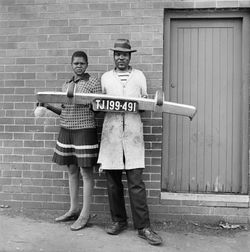
David Goldblatt et Ivan Vladislavić parlent de leur publication conjointe intitulée TJ/Double Negative, qui combine de façon novatrice des photographies et des textes de fiction afin de tenter de donner un sens à Johannesburg. Ils discutent de leur démarche visant à représenter en images et en mots cette ville trouble mais intrigante. Goldblatt est un documentariste(...)
David Goldblatt et Ivan Vladislavić parlent de leur publication conjointe intitulée TJ/Double Negative, qui combine de façon novatrice des photographies et des textes de fiction afin de tenter de donner un sens à Johannesburg. Ils discutent de leur démarche visant à représenter en images et en mots cette ville trouble mais intrigante. Goldblatt est un documentariste(...)
Localisation:
Théâtre Paul-Desmarais
Théâtre Paul-Desmarais
Date:
9 mai 2013 , 19h
9 mai 2013 , 19h
Titre:
L'enseignement de... Johannesburg
Actions:
Description:
David Goldblatt et Ivan Vladislavić parlent de leur publication conjointe intitulée TJ/Double Negative, qui combine de façon novatrice des photographies et des textes de fiction afin de tenter de donner un sens à Johannesburg. Ils discutent de leur démarche visant à représenter en images et en mots cette ville trouble mais intrigante. Goldblatt est un documentariste(...)
Classification:
événements
événements
Date:
9 mai 2013
19h
9 mai 2013
19h
Localisation:
Théâtre Paul-Desmarais
Théâtre Paul-Desmarais
Classification:
événements
événements
Titre:
L’enseignement de… Rome
L’enseignement de… Rome
Actions:
Description:
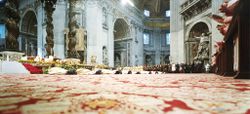
Le cinéaste et photographe Armin Linke fait le point sur les changements sociétaux, la complexité culturelle et la beauté de la Rome contemporaine à travers deux courts métrages et des photographies d’architecture tirées de ses propres archives. Le premier film capture l’envol de 100 000 étourneaux qui se révèle une véritable chorégraphie avec Rome en toile de fond. Linke(...)
Le cinéaste et photographe Armin Linke fait le point sur les changements sociétaux, la complexité culturelle et la beauté de la Rome contemporaine à travers deux courts métrages et des photographies d’architecture tirées de ses propres archives. Le premier film capture l’envol de 100 000 étourneaux qui se révèle une véritable chorégraphie avec Rome en toile de fond. Linke(...)
Localisation:
Théâtre Paul-Desmarais
Théâtre Paul-Desmarais
Date:
5 mars 2009
5 mars 2009
Titre:
L’enseignement de… Rome
Actions:
Description:
Le cinéaste et photographe Armin Linke fait le point sur les changements sociétaux, la complexité culturelle et la beauté de la Rome contemporaine à travers deux courts métrages et des photographies d’architecture tirées de ses propres archives. Le premier film capture l’envol de 100 000 étourneaux qui se révèle une véritable chorégraphie avec Rome en toile de fond. Linke(...)
Classification:
événements
événements
Date:
5 mars 2009
5 mars 2009
Localisation:
Théâtre Paul-Desmarais
Théâtre Paul-Desmarais
Classification:
articles
articles
Titre:
Rivages en mutation
Rivages en mutation
Actions:
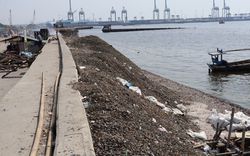
Kirsten Keller et Feifei Zhou sur les matérialités dynamiques de l’acquisition immobilière à Jakarta
Dossier:
Forces de friction
Forces de friction
Publié:
30 septembre 2024
30 septembre 2024
Titre:
Rivages en mutation
Kirsten Keller et Feifei Zhou sur les matérialités dynamiques de l’acquisition immobilière à Jakarta
Actions:
Rivages en mutation
Kirsten Keller et Feifei Zhou sur les matérialités dynamiques de l’acquisition immobilière à Jakarta
Actions:
Dossier:
Forces de friction
Forces de friction
Niveau de description archivistique:
Projet
Projet
Numéro de référence:
CD034.S1.1974.PR01
Description:
This project series contains four reproductions of drawings displayed in the exhibit to document the neighbourhood Quinta do Bacalhau-Monte Coxo, in Lisbon, Portugal. The exhibit text explained the following: The project architect Manuel Vicente was already working on a design for the intervention in the Quintas de Bacalhau and Monte Coxo when he was co-opted by SAAL. The proposed typology referred to another ambitious urban project of 615 housing units, Quinta das Fonsecas - Quinta da Calçada neighbourhood by the architect Raúl Hestnes Ferreira. The intention was to bring the city to the outlying shanty town areas. None of these projects was carried out in full, and they are now fragmented and besieged by the traffic system without having produced any of the essential community and socialising facilities. In Bacalhau-Monte Coxo the structure of the internal patios reveals the ways in which the public space and community was organised. The architecture assigned importance to the facades, although access to the community courtyards was also a central design concept. In a 1976 interview, the architect himself argued that the release of bourgeois guilt allowed for spatial beauty, adopting the slogan 'Facades First' in defence of architectural design. In a way, this proposal anticipated the post-modern, although in a form that did not deny architecture's social engagement. The design emphasizes a strong idea of architectural autonomy, unfortunately only a part of the project was actually built. (The SAAL Process, Housing in Portugal 1974–76) Manuel Vicente worked for SAAL/Lisbon and Central South with the following collaborators: Afonso José Baptista, Agostinho Xavier de Andrade, António Albano Leitão, Cristina Catela Martins Pereira, Eduardo Serrano de Sousa, Gentil Noras, José Manuel Diniz Cabral Caldeira, Manuel Augusto Lopes de Sousa, Nuno Matos Silva, Rita Cabral and the resident association Cooperativa de Habitação Económica Portugal Novo, that was founded on September 6th, 1974. The team built 384 dwellings. The operation began in September 1974, with a construction date in January 1977. This project series contains reproductions of design development drawings and a cadastral plan. The original drawings were produced in 1974 or after and were reproduced in 2015 for the exhibit.
Personnes et institutions:
Date:
circa 1974
circa 1974
Titre:
Bairro Quinta do Bacalhau–Monte Coxo, Lisbon
Actions:
CD034.S1.1974.PR01
Description:
This project series contains four reproductions of drawings displayed in the exhibit to document the neighbourhood Quinta do Bacalhau-Monte Coxo, in Lisbon, Portugal. The exhibit text explained the following: The project architect Manuel Vicente was already working on a design for the intervention in the Quintas de Bacalhau and Monte Coxo when he was co-opted by SAAL. The proposed typology referred to another ambitious urban project of 615 housing units, Quinta das Fonsecas - Quinta da Calçada neighbourhood by the architect Raúl Hestnes Ferreira. The intention was to bring the city to the outlying shanty town areas. None of these projects was carried out in full, and they are now fragmented and besieged by the traffic system without having produced any of the essential community and socialising facilities. In Bacalhau-Monte Coxo the structure of the internal patios reveals the ways in which the public space and community was organised. The architecture assigned importance to the facades, although access to the community courtyards was also a central design concept. In a 1976 interview, the architect himself argued that the release of bourgeois guilt allowed for spatial beauty, adopting the slogan 'Facades First' in defence of architectural design. In a way, this proposal anticipated the post-modern, although in a form that did not deny architecture's social engagement. The design emphasizes a strong idea of architectural autonomy, unfortunately only a part of the project was actually built. (The SAAL Process, Housing in Portugal 1974–76) Manuel Vicente worked for SAAL/Lisbon and Central South with the following collaborators: Afonso José Baptista, Agostinho Xavier de Andrade, António Albano Leitão, Cristina Catela Martins Pereira, Eduardo Serrano de Sousa, Gentil Noras, José Manuel Diniz Cabral Caldeira, Manuel Augusto Lopes de Sousa, Nuno Matos Silva, Rita Cabral and the resident association Cooperativa de Habitação Económica Portugal Novo, that was founded on September 6th, 1974. The team built 384 dwellings. The operation began in September 1974, with a construction date in January 1977. This project series contains reproductions of design development drawings and a cadastral plan. The original drawings were produced in 1974 or after and were reproduced in 2015 for the exhibit.
Niveau de description archivistique:
Project
Project
Date:
circa 1974
circa 1974
Personnes et institutions:
Classification:
événements
événements
Actions:
Description:
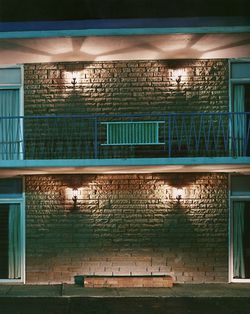
Barbara Penner, historienne de l’architecture, retrace l’évolution des Chutes du Niagara, de leur statut de destination phare pour jeunes mariés au XIXe siècle à celui d’icône postindustrielle kitsch, avant de redevenir la destination par excellence des jeunes mariés. Le photographe Alec Soth, dont les travaux constituent l’amorce de cette causerie présentée par Barbara(...)
Barbara Penner, historienne de l’architecture, retrace l’évolution des Chutes du Niagara, de leur statut de destination phare pour jeunes mariés au XIXe siècle à celui d’icône postindustrielle kitsch, avant de redevenir la destination par excellence des jeunes mariés. Le photographe Alec Soth, dont les travaux constituent l’amorce de cette causerie présentée par Barbara(...)
Localisation:
Théâtre Paul-Desmarais
Théâtre Paul-Desmarais
Date:
23 avril 2009
23 avril 2009
Titre:
L'enseignement de... Niagara Falls
Actions:
Description:
Barbara Penner, historienne de l’architecture, retrace l’évolution des Chutes du Niagara, de leur statut de destination phare pour jeunes mariés au XIXe siècle à celui d’icône postindustrielle kitsch, avant de redevenir la destination par excellence des jeunes mariés. Le photographe Alec Soth, dont les travaux constituent l’amorce de cette causerie présentée par Barbara(...)
Classification:
événements
événements
Date:
23 avril 2009
23 avril 2009
Localisation:
Théâtre Paul-Desmarais
Théâtre Paul-Desmarais
Classification:
événements
événements
Actions:
Description:
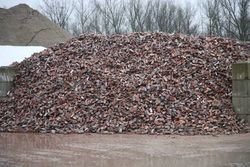
Michael Ghyoot et Maarten Gielen, membres du collectif Rotor, examinent les processus et les pratiques liés à la gestion matérielle des déchets dans Bruxelles et sa banlieue. La notion de déchet, construite à partir des visites rendues par centaines aux commerces, aux lieux de travail et aux centres de tri, a joué un rôle important dans cette recherche. En effet, l’étude(...)
Michael Ghyoot et Maarten Gielen, membres du collectif Rotor, examinent les processus et les pratiques liés à la gestion matérielle des déchets dans Bruxelles et sa banlieue. La notion de déchet, construite à partir des visites rendues par centaines aux commerces, aux lieux de travail et aux centres de tri, a joué un rôle important dans cette recherche. En effet, l’étude(...)
Localisation:
Théâtre Paul-Desmarais
Théâtre Paul-Desmarais
Date:
19 avril 2012 , 19h
19 avril 2012 , 19h
Titre:
L'enseignement de... Bruxelles : Rotor
Actions:
Description:
Michael Ghyoot et Maarten Gielen, membres du collectif Rotor, examinent les processus et les pratiques liés à la gestion matérielle des déchets dans Bruxelles et sa banlieue. La notion de déchet, construite à partir des visites rendues par centaines aux commerces, aux lieux de travail et aux centres de tri, a joué un rôle important dans cette recherche. En effet, l’étude(...)
Classification:
événements
événements
Date:
19 avril 2012
19h
19 avril 2012
19h
Localisation:
Théâtre Paul-Desmarais
Théâtre Paul-Desmarais
Classification:
événements
événements

Titre:
L’enseignement… d’Ordos
L’enseignement… d’Ordos
Actions:
Description:
Dans le nord de la Chine, la ville d’Ordos, riche en ressources charbonnières et gazières, possède un nouveau quartier central dépourvu de résidants. On a dépensé plus de 161 milliards de dollars pour bâtir entièrement à neuf ce nouveau centre-ville sur l’aride steppe mongolienne, et on espère y accueillir plus d’un million d’habitants. Le gouvernement a déclaré qu’à(...)
Dans le nord de la Chine, la ville d’Ordos, riche en ressources charbonnières et gazières, possède un nouveau quartier central dépourvu de résidants. On a dépensé plus de 161 milliards de dollars pour bâtir entièrement à neuf ce nouveau centre-ville sur l’aride steppe mongolienne, et on espère y accueillir plus d’un million d’habitants. Le gouvernement a déclaré qu’à(...)
Localisation:
Théâtre Paul-Desmarais
Théâtre Paul-Desmarais
Date:
8 novembre 2012 , 19h
8 novembre 2012 , 19h
Titre:
L’enseignement… d’Ordos
Actions:
Description:
Dans le nord de la Chine, la ville d’Ordos, riche en ressources charbonnières et gazières, possède un nouveau quartier central dépourvu de résidants. On a dépensé plus de 161 milliards de dollars pour bâtir entièrement à neuf ce nouveau centre-ville sur l’aride steppe mongolienne, et on espère y accueillir plus d’un million d’habitants. Le gouvernement a déclaré qu’à(...)
Classification:
événements
événements
Date:
8 novembre 2012
19h
8 novembre 2012
19h
Localisation:
Théâtre Paul-Desmarais
Théâtre Paul-Desmarais
Classification:
événements
événements

Actions:
Description:
Lance Blomgren se sert de son court roman intitulé Walkups – paru en 2009, le récit se passe entièrement à Montréal, dans des habitations en rangée – comme tremplin pour analyser le plan discursif de l’architecture de fiction. Examinant divers travaux dont ceux de John Hejduk, d’Ilya Kabakov et d’Alice Aycock, Blomgren affirme que les modes contemporains d’architecture(...)
Lance Blomgren se sert de son court roman intitulé Walkups – paru en 2009, le récit se passe entièrement à Montréal, dans des habitations en rangée – comme tremplin pour analyser le plan discursif de l’architecture de fiction. Examinant divers travaux dont ceux de John Hejduk, d’Ilya Kabakov et d’Alice Aycock, Blomgren affirme que les modes contemporains d’architecture(...)
Localisation:
Théâtre Paul-Desmarais
Théâtre Paul-Desmarais
Date:
2 mai 2013 , 19h
2 mai 2013 , 19h
Titre:
L'enseignement de... Montréal
Actions:
Description:
Lance Blomgren se sert de son court roman intitulé Walkups – paru en 2009, le récit se passe entièrement à Montréal, dans des habitations en rangée – comme tremplin pour analyser le plan discursif de l’architecture de fiction. Examinant divers travaux dont ceux de John Hejduk, d’Ilya Kabakov et d’Alice Aycock, Blomgren affirme que les modes contemporains d’architecture(...)
Classification:
événements
événements
Date:
2 mai 2013
19h
2 mai 2013
19h
Localisation:
Théâtre Paul-Desmarais
Théâtre Paul-Desmarais
Classification:
expositions
expositions
Actions:
Description:
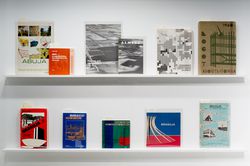
À la suite de la Seconde Guerre mondiale, le besoin urgent de reconstruire les villes, ainsi que la croissance soudaine de la population, conduit les instances publiques à assumer un rôle de plus en plus important dans la conception et la construction de l’environnement urbain. Sous différents régimes politiques, de grands aménagements urbains et même des villes entières(...)
À la suite de la Seconde Guerre mondiale, le besoin urgent de reconstruire les villes, ainsi que la croissance soudaine de la population, conduit les instances publiques à assumer un rôle de plus en plus important dans la conception et la construction de l’environnement urbain. Sous différents régimes politiques, de grands aménagements urbains et même des villes entières(...)
Localisation:
Vitrines
Vitrines
Date:
12 décembre 2013 au 15 juin 2014
12 décembre 2013 au 15 juin 2014
Titre:
Vieux livres nouvelles villes
Actions:
Description:
À la suite de la Seconde Guerre mondiale, le besoin urgent de reconstruire les villes, ainsi que la croissance soudaine de la population, conduit les instances publiques à assumer un rôle de plus en plus important dans la conception et la construction de l’environnement urbain. Sous différents régimes politiques, de grands aménagements urbains et même des villes entières(...)
Classification:
expositions
expositions
Date:
12 décembre 2013 au
15 juin 2014
12 décembre 2013 au
15 juin 2014
Localisation:
Vitrines
Vitrines
Classification:
archives
Niveau de description archivistique:
Fonds
archives
Niveau de description archivistique:
Fonds
Numéro de référence:
AP190
Résumé:
The Preston Scott Cohen Eyebeam project records, 2001-2016, consist of 281 digital files that document the architect’s competition entry for the Eyebeam Atelier Museum in New York City, developed in 2001. The archive includes 154 digital models in Rhinoceros, 30 digital models in STL, approximately 90 digital images, one video, and a number of Illustrator, Photoshop, PDF, and Microsoft Word files.
Personnes et institutions:
Date:
2001-2016
2001-2016
Titre:
Documents d’archives de Preston Scott Cohen pour le projet Eyebeam
Actions:
AP190
Résumé:
The Preston Scott Cohen Eyebeam project records, 2001-2016, consist of 281 digital files that document the architect’s competition entry for the Eyebeam Atelier Museum in New York City, developed in 2001. The archive includes 154 digital models in Rhinoceros, 30 digital models in STL, approximately 90 digital images, one video, and a number of Illustrator, Photoshop, PDF, and Microsoft Word files.
Classification:
archives
Niveau de description archivistique:
Fonds
archives
Niveau de description archivistique:
Fonds
Date:
2001-2016
2001-2016
Personnes et institutions:


