


3263 Résultats
Niveau de description archivistique:
Projet
Projet
Numéro de référence:
AP018.S1.1960.PR02
Description:
This project series documents the Imperial Oil Ontario region office in North York, Ontario from 1960-1962. The office identified the project number as 6049. This project consisted of a three-storey, 110,000 square foot building located at the corner of Don Mills Road and Eglington Avenue. The front entrance was accessed from a circular driveway off Wynford Drive, with parking lots on either side that held 330 vehicles. The basement level had storage rooms, machine and boiler rooms, a telephone switch gear room and shipping areas. The first floor included food service areas, offices, locker rooms, and a doctor's office complete with x-ray rooms, treatment areas and a quiet room for female employees, among others. The second floor contained administrative areas for accounting, data control and banking, while the third floor contained more offices. The building's frame consisted of a rectangular steel skeleton faced with concrete panels. The ground level was recessed 20 feet to allow for sidewalks around the building. Concrete columns at this level supported the upper two storeys. The landscaped surroundings include long, fountain-spotted reflecting pools. This project won the silver Massey Medal for Architecture in 1964, as well as an honourable distinction at the International Exhibition of Architects VIII Biennial of São Paula in 1965. The project is recorded through drawings, textual records and a photograph dating from 1961-1970. The drawings are mostly reprographic copies that include plans, sections, elevations, details, schedules and electrical, mechanical and structural drawings. The textual records consist of specifications originally arranged with the drawings. The photograph shows the finished buillding.
AP018.S1.1960.PR02
Description:
This project series documents the Imperial Oil Ontario region office in North York, Ontario from 1960-1962. The office identified the project number as 6049. This project consisted of a three-storey, 110,000 square foot building located at the corner of Don Mills Road and Eglington Avenue. The front entrance was accessed from a circular driveway off Wynford Drive, with parking lots on either side that held 330 vehicles. The basement level had storage rooms, machine and boiler rooms, a telephone switch gear room and shipping areas. The first floor included food service areas, offices, locker rooms, and a doctor's office complete with x-ray rooms, treatment areas and a quiet room for female employees, among others. The second floor contained administrative areas for accounting, data control and banking, while the third floor contained more offices. The building's frame consisted of a rectangular steel skeleton faced with concrete panels. The ground level was recessed 20 feet to allow for sidewalks around the building. Concrete columns at this level supported the upper two storeys. The landscaped surroundings include long, fountain-spotted reflecting pools. This project won the silver Massey Medal for Architecture in 1964, as well as an honourable distinction at the International Exhibition of Architects VIII Biennial of São Paula in 1965. The project is recorded through drawings, textual records and a photograph dating from 1961-1970. The drawings are mostly reprographic copies that include plans, sections, elevations, details, schedules and electrical, mechanical and structural drawings. The textual records consist of specifications originally arranged with the drawings. The photograph shows the finished buillding.
Personnes et institutions:
Date:
1961 - 1970
1961 - 1970
Titre:
Imperial Oil Limited, Ontario Region Office Building, North York (1960-1962)
Actions:
AP018.S1.1960.PR02
Description:
This project series documents the Imperial Oil Ontario region office in North York, Ontario from 1960-1962. The office identified the project number as 6049. This project consisted of a three-storey, 110,000 square foot building located at the corner of Don Mills Road and Eglington Avenue. The front entrance was accessed from a circular driveway off Wynford Drive, with parking lots on either side that held 330 vehicles. The basement level had storage rooms, machine and boiler rooms, a telephone switch gear room and shipping areas. The first floor included food service areas, offices, locker rooms, and a doctor's office complete with x-ray rooms, treatment areas and a quiet room for female employees, among others. The second floor contained administrative areas for accounting, data control and banking, while the third floor contained more offices. The building's frame consisted of a rectangular steel skeleton faced with concrete panels. The ground level was recessed 20 feet to allow for sidewalks around the building. Concrete columns at this level supported the upper two storeys. The landscaped surroundings include long, fountain-spotted reflecting pools. This project won the silver Massey Medal for Architecture in 1964, as well as an honourable distinction at the International Exhibition of Architects VIII Biennial of São Paula in 1965. The project is recorded through drawings, textual records and a photograph dating from 1961-1970. The drawings are mostly reprographic copies that include plans, sections, elevations, details, schedules and electrical, mechanical and structural drawings. The textual records consist of specifications originally arranged with the drawings. The photograph shows the finished buillding.
Imperial Oil Limited, Ontario Region Office Building, North York (1960-1962)
Actions:
AP018.S1.1960.PR02
Description:
This project series documents the Imperial Oil Ontario region office in North York, Ontario from 1960-1962. The office identified the project number as 6049. This project consisted of a three-storey, 110,000 square foot building located at the corner of Don Mills Road and Eglington Avenue. The front entrance was accessed from a circular driveway off Wynford Drive, with parking lots on either side that held 330 vehicles. The basement level had storage rooms, machine and boiler rooms, a telephone switch gear room and shipping areas. The first floor included food service areas, offices, locker rooms, and a doctor's office complete with x-ray rooms, treatment areas and a quiet room for female employees, among others. The second floor contained administrative areas for accounting, data control and banking, while the third floor contained more offices. The building's frame consisted of a rectangular steel skeleton faced with concrete panels. The ground level was recessed 20 feet to allow for sidewalks around the building. Concrete columns at this level supported the upper two storeys. The landscaped surroundings include long, fountain-spotted reflecting pools. This project won the silver Massey Medal for Architecture in 1964, as well as an honourable distinction at the International Exhibition of Architects VIII Biennial of São Paula in 1965. The project is recorded through drawings, textual records and a photograph dating from 1961-1970. The drawings are mostly reprographic copies that include plans, sections, elevations, details, schedules and electrical, mechanical and structural drawings. The textual records consist of specifications originally arranged with the drawings. The photograph shows the finished buillding.
Niveau de description archivistique:
Project
Project
Date:
1961 - 1970
1961 - 1970
Personnes et institutions:
Niveau de description archivistique:
Sous-série
Sous-série
Numéro de référence:
CI001.S1.D3
Description:
The urban and public architecture of Hubert Rohault de Fleury is insightful concerning both the stylistic directions of utilitarian architecture in France and the structure and role of the government architectural services (1) in the Empire and the Restoration. The drawings in the CCA collection depict built and unbuilt projects undertaken in the context of Hubert's positions in the government architectural services as well as private commissions. Hubert's principal official positions related to three branches of the French government: the Préfecture de la police, the Conseil général des hospices and the Conseil des Bâtiments Civils, a "division" of the Ministère de l'interieur. Hubert's work for the Préfecture de la police (which was also responsible for the gendarmerie and the sapeurs-pompiers barracks) is represented in the CCA collection by projects for four gendarmerie barracks (1821-1830) and alterations to the Préfecture de la Police (1833 ?) and nearby prison in Paris (1819)(DR1974:0002:016:001-070 / DR1974:0002:011:001-089 and DR1974:0002: 015:001-070). The drawings in these albums emphasize the planning (or re-arrangement) of the interior spaces. The album for the Préfecture de la police also includes record drawings for prisons in England and France as background material for Hubert's work and/or related to reports for the Conseil des Bâtiments Civils, which had an active role in the design of prisons throughout France during the early years of the nineteenth century (2). Although the CCA collection has no drawings directly related to Hubert's position as the architecte des hospices (3), drawings and prints are included for his earlier ideal hospitals (ca. 1810) (DR1974:0002:008:001-077). These projects continue the late 17th and 18th century tradition of monumental geometrically laid-out ideal hospitals. This album also contains prints and drawings of medical buildings by other architects (probably reference material), and drawings of Hubert's unexecuted proposal for the re-development of the École de médecine (Paris) and the surrounding buildings and urban spaces. Hubert was the architecte de l'École de medicine (4); a position that probably related to his work for the Ministère d'Interieur, which would have been responsible for this building. In general, Hubert's role and responsibilities within the Ministère de l'interieur and the associated Conseil de Bâtiment Civils (especially prior to his appointment to the position of inspecteur gènèral in 1830) are the least clear of his government positions. In addition to the École de medicine album, two other albums contain projects relating to the Ministère de l'Interieur: two proposals for Place Louis XV commissioned by the Ministre de l'interieur, Duc Decazes in 1821 (DR1974:0002:037:001-031), and drawings for the conversion or renovation of several Parisian hôtel particuliers (probably between 1810 and ca. 1820) including those used by the Ministère de l'interieur, Ministère de la Guerre and the Ministère des affaires étrangères (DR1974:0002;011:001-089). On other government commission of significance is represented in the CCA collection. In 1819, Hubert Rohault de Fleury in collaboration with Etienne Hyppolite Godde was commissioned to direct the restoration of the Thermes de Julien located under the Hôtel de Cluny. The CCA collection includes several letters and drawings, and a report related to this commission (DR1974:0002 :037:001-031). Hubert's private urban projects, mostly commissioned by private entrepreneurs or societies, were concerned with the expansion of the infrastructure of Paris and the surrounding communities as well as, to some extent, larger issues of urban development. One album contains projects dating from between 1819 and 1836 related horses - an essential part of 19th century urban life (5): a stud-farm (Haras de Madrid, Bois de Boulogne), an auction house and an infirmary (Clos St. Charles, Clos d'équarrissage, fôret de Bondy) and three slaughterhouses (Plaine de Grenelle, an unnamed project and La Villete (6))(DR1974:0002:014:001-104). These album also includes developmental studies for a new quartier of Paris - Nouveau Quartier Poissonière (the site of today's 10e arrondissement). A second album (ca. 1825) includes designs for a "maison de blanchisseur", an "entrepot de vins" with adjacent "guingette" and designs for structures at Parc de Clichy - a reservoir, a washhouse and a manège (DR1974:0002:009:001-079) (7). The drawings in these albums are particularly informative regarding the materials, structures and mechanical systems utilized. As with most of his government commissions, for these buildings, Hubert adopted a sparse architectural syntax of pared-down classical motifs and regimented plans grounded in the ideas of Durand and commonly used in utilitarian buildings during the 19th century. (1) These are discussed in some detail in Chapter 2 of David Van Zanten, 'Building Paris' (Cambridge: Cambridge University Press, 1994). (2) Van Zanten, 'Building Paris', 51-52. (3) The Cabinet des Estampes at the Musée Carnavalet in Paris has drawings related to Hubert's work for the Conseil général des hospices. (4) Evidence of this position is based on inscriptions on drawings in album, DR1974:0002:008:001-77. (5) Bergdoll, 4. (6) The La Villete slaughterhouse was designed by Charles Rohault de Fleury. (7) The source(s) of these commissions is unknown.
CI001.S1.D3
Description:
The urban and public architecture of Hubert Rohault de Fleury is insightful concerning both the stylistic directions of utilitarian architecture in France and the structure and role of the government architectural services (1) in the Empire and the Restoration. The drawings in the CCA collection depict built and unbuilt projects undertaken in the context of Hubert's positions in the government architectural services as well as private commissions. Hubert's principal official positions related to three branches of the French government: the Préfecture de la police, the Conseil général des hospices and the Conseil des Bâtiments Civils, a "division" of the Ministère de l'interieur. Hubert's work for the Préfecture de la police (which was also responsible for the gendarmerie and the sapeurs-pompiers barracks) is represented in the CCA collection by projects for four gendarmerie barracks (1821-1830) and alterations to the Préfecture de la Police (1833 ?) and nearby prison in Paris (1819)(DR1974:0002:016:001-070 / DR1974:0002:011:001-089 and DR1974:0002: 015:001-070). The drawings in these albums emphasize the planning (or re-arrangement) of the interior spaces. The album for the Préfecture de la police also includes record drawings for prisons in England and France as background material for Hubert's work and/or related to reports for the Conseil des Bâtiments Civils, which had an active role in the design of prisons throughout France during the early years of the nineteenth century (2). Although the CCA collection has no drawings directly related to Hubert's position as the architecte des hospices (3), drawings and prints are included for his earlier ideal hospitals (ca. 1810) (DR1974:0002:008:001-077). These projects continue the late 17th and 18th century tradition of monumental geometrically laid-out ideal hospitals. This album also contains prints and drawings of medical buildings by other architects (probably reference material), and drawings of Hubert's unexecuted proposal for the re-development of the École de médecine (Paris) and the surrounding buildings and urban spaces. Hubert was the architecte de l'École de medicine (4); a position that probably related to his work for the Ministère d'Interieur, which would have been responsible for this building. In general, Hubert's role and responsibilities within the Ministère de l'interieur and the associated Conseil de Bâtiment Civils (especially prior to his appointment to the position of inspecteur gènèral in 1830) are the least clear of his government positions. In addition to the École de medicine album, two other albums contain projects relating to the Ministère de l'Interieur: two proposals for Place Louis XV commissioned by the Ministre de l'interieur, Duc Decazes in 1821 (DR1974:0002:037:001-031), and drawings for the conversion or renovation of several Parisian hôtel particuliers (probably between 1810 and ca. 1820) including those used by the Ministère de l'interieur, Ministère de la Guerre and the Ministère des affaires étrangères (DR1974:0002;011:001-089). On other government commission of significance is represented in the CCA collection. In 1819, Hubert Rohault de Fleury in collaboration with Etienne Hyppolite Godde was commissioned to direct the restoration of the Thermes de Julien located under the Hôtel de Cluny. The CCA collection includes several letters and drawings, and a report related to this commission (DR1974:0002 :037:001-031). Hubert's private urban projects, mostly commissioned by private entrepreneurs or societies, were concerned with the expansion of the infrastructure of Paris and the surrounding communities as well as, to some extent, larger issues of urban development. One album contains projects dating from between 1819 and 1836 related horses - an essential part of 19th century urban life (5): a stud-farm (Haras de Madrid, Bois de Boulogne), an auction house and an infirmary (Clos St. Charles, Clos d'équarrissage, fôret de Bondy) and three slaughterhouses (Plaine de Grenelle, an unnamed project and La Villete (6))(DR1974:0002:014:001-104). These album also includes developmental studies for a new quartier of Paris - Nouveau Quartier Poissonière (the site of today's 10e arrondissement). A second album (ca. 1825) includes designs for a "maison de blanchisseur", an "entrepot de vins" with adjacent "guingette" and designs for structures at Parc de Clichy - a reservoir, a washhouse and a manège (DR1974:0002:009:001-079) (7). The drawings in these albums are particularly informative regarding the materials, structures and mechanical systems utilized. As with most of his government commissions, for these buildings, Hubert adopted a sparse architectural syntax of pared-down classical motifs and regimented plans grounded in the ideas of Durand and commonly used in utilitarian buildings during the 19th century. (1) These are discussed in some detail in Chapter 2 of David Van Zanten, 'Building Paris' (Cambridge: Cambridge University Press, 1994). (2) Van Zanten, 'Building Paris', 51-52. (3) The Cabinet des Estampes at the Musée Carnavalet in Paris has drawings related to Hubert's work for the Conseil général des hospices. (4) Evidence of this position is based on inscriptions on drawings in album, DR1974:0002:008:001-77. (5) Bergdoll, 4. (6) The La Villete slaughterhouse was designed by Charles Rohault de Fleury. (7) The source(s) of these commissions is unknown.
Personnes et institutions:
Date:
1754-1875
1754-1875
Titre:
Public and Urban architecture
CI001.S1.D3
Description:
The urban and public architecture of Hubert Rohault de Fleury is insightful concerning both the stylistic directions of utilitarian architecture in France and the structure and role of the government architectural services (1) in the Empire and the Restoration. The drawings in the CCA collection depict built and unbuilt projects undertaken in the context of Hubert's positions in the government architectural services as well as private commissions. Hubert's principal official positions related to three branches of the French government: the Préfecture de la police, the Conseil général des hospices and the Conseil des Bâtiments Civils, a "division" of the Ministère de l'interieur. Hubert's work for the Préfecture de la police (which was also responsible for the gendarmerie and the sapeurs-pompiers barracks) is represented in the CCA collection by projects for four gendarmerie barracks (1821-1830) and alterations to the Préfecture de la Police (1833 ?) and nearby prison in Paris (1819)(DR1974:0002:016:001-070 / DR1974:0002:011:001-089 and DR1974:0002: 015:001-070). The drawings in these albums emphasize the planning (or re-arrangement) of the interior spaces. The album for the Préfecture de la police also includes record drawings for prisons in England and France as background material for Hubert's work and/or related to reports for the Conseil des Bâtiments Civils, which had an active role in the design of prisons throughout France during the early years of the nineteenth century (2). Although the CCA collection has no drawings directly related to Hubert's position as the architecte des hospices (3), drawings and prints are included for his earlier ideal hospitals (ca. 1810) (DR1974:0002:008:001-077). These projects continue the late 17th and 18th century tradition of monumental geometrically laid-out ideal hospitals. This album also contains prints and drawings of medical buildings by other architects (probably reference material), and drawings of Hubert's unexecuted proposal for the re-development of the École de médecine (Paris) and the surrounding buildings and urban spaces. Hubert was the architecte de l'École de medicine (4); a position that probably related to his work for the Ministère d'Interieur, which would have been responsible for this building. In general, Hubert's role and responsibilities within the Ministère de l'interieur and the associated Conseil de Bâtiment Civils (especially prior to his appointment to the position of inspecteur gènèral in 1830) are the least clear of his government positions. In addition to the École de medicine album, two other albums contain projects relating to the Ministère de l'Interieur: two proposals for Place Louis XV commissioned by the Ministre de l'interieur, Duc Decazes in 1821 (DR1974:0002:037:001-031), and drawings for the conversion or renovation of several Parisian hôtel particuliers (probably between 1810 and ca. 1820) including those used by the Ministère de l'interieur, Ministère de la Guerre and the Ministère des affaires étrangères (DR1974:0002;011:001-089). On other government commission of significance is represented in the CCA collection. In 1819, Hubert Rohault de Fleury in collaboration with Etienne Hyppolite Godde was commissioned to direct the restoration of the Thermes de Julien located under the Hôtel de Cluny. The CCA collection includes several letters and drawings, and a report related to this commission (DR1974:0002 :037:001-031). Hubert's private urban projects, mostly commissioned by private entrepreneurs or societies, were concerned with the expansion of the infrastructure of Paris and the surrounding communities as well as, to some extent, larger issues of urban development. One album contains projects dating from between 1819 and 1836 related horses - an essential part of 19th century urban life (5): a stud-farm (Haras de Madrid, Bois de Boulogne), an auction house and an infirmary (Clos St. Charles, Clos d'équarrissage, fôret de Bondy) and three slaughterhouses (Plaine de Grenelle, an unnamed project and La Villete (6))(DR1974:0002:014:001-104). These album also includes developmental studies for a new quartier of Paris - Nouveau Quartier Poissonière (the site of today's 10e arrondissement). A second album (ca. 1825) includes designs for a "maison de blanchisseur", an "entrepot de vins" with adjacent "guingette" and designs for structures at Parc de Clichy - a reservoir, a washhouse and a manège (DR1974:0002:009:001-079) (7). The drawings in these albums are particularly informative regarding the materials, structures and mechanical systems utilized. As with most of his government commissions, for these buildings, Hubert adopted a sparse architectural syntax of pared-down classical motifs and regimented plans grounded in the ideas of Durand and commonly used in utilitarian buildings during the 19th century. (1) These are discussed in some detail in Chapter 2 of David Van Zanten, 'Building Paris' (Cambridge: Cambridge University Press, 1994). (2) Van Zanten, 'Building Paris', 51-52. (3) The Cabinet des Estampes at the Musée Carnavalet in Paris has drawings related to Hubert's work for the Conseil général des hospices. (4) Evidence of this position is based on inscriptions on drawings in album, DR1974:0002:008:001-77. (5) Bergdoll, 4. (6) The La Villete slaughterhouse was designed by Charles Rohault de Fleury. (7) The source(s) of these commissions is unknown.
Public and Urban architecture
CI001.S1.D3
Description:
The urban and public architecture of Hubert Rohault de Fleury is insightful concerning both the stylistic directions of utilitarian architecture in France and the structure and role of the government architectural services (1) in the Empire and the Restoration. The drawings in the CCA collection depict built and unbuilt projects undertaken in the context of Hubert's positions in the government architectural services as well as private commissions. Hubert's principal official positions related to three branches of the French government: the Préfecture de la police, the Conseil général des hospices and the Conseil des Bâtiments Civils, a "division" of the Ministère de l'interieur. Hubert's work for the Préfecture de la police (which was also responsible for the gendarmerie and the sapeurs-pompiers barracks) is represented in the CCA collection by projects for four gendarmerie barracks (1821-1830) and alterations to the Préfecture de la Police (1833 ?) and nearby prison in Paris (1819)(DR1974:0002:016:001-070 / DR1974:0002:011:001-089 and DR1974:0002: 015:001-070). The drawings in these albums emphasize the planning (or re-arrangement) of the interior spaces. The album for the Préfecture de la police also includes record drawings for prisons in England and France as background material for Hubert's work and/or related to reports for the Conseil des Bâtiments Civils, which had an active role in the design of prisons throughout France during the early years of the nineteenth century (2). Although the CCA collection has no drawings directly related to Hubert's position as the architecte des hospices (3), drawings and prints are included for his earlier ideal hospitals (ca. 1810) (DR1974:0002:008:001-077). These projects continue the late 17th and 18th century tradition of monumental geometrically laid-out ideal hospitals. This album also contains prints and drawings of medical buildings by other architects (probably reference material), and drawings of Hubert's unexecuted proposal for the re-development of the École de médecine (Paris) and the surrounding buildings and urban spaces. Hubert was the architecte de l'École de medicine (4); a position that probably related to his work for the Ministère d'Interieur, which would have been responsible for this building. In general, Hubert's role and responsibilities within the Ministère de l'interieur and the associated Conseil de Bâtiment Civils (especially prior to his appointment to the position of inspecteur gènèral in 1830) are the least clear of his government positions. In addition to the École de medicine album, two other albums contain projects relating to the Ministère de l'Interieur: two proposals for Place Louis XV commissioned by the Ministre de l'interieur, Duc Decazes in 1821 (DR1974:0002:037:001-031), and drawings for the conversion or renovation of several Parisian hôtel particuliers (probably between 1810 and ca. 1820) including those used by the Ministère de l'interieur, Ministère de la Guerre and the Ministère des affaires étrangères (DR1974:0002;011:001-089). On other government commission of significance is represented in the CCA collection. In 1819, Hubert Rohault de Fleury in collaboration with Etienne Hyppolite Godde was commissioned to direct the restoration of the Thermes de Julien located under the Hôtel de Cluny. The CCA collection includes several letters and drawings, and a report related to this commission (DR1974:0002 :037:001-031). Hubert's private urban projects, mostly commissioned by private entrepreneurs or societies, were concerned with the expansion of the infrastructure of Paris and the surrounding communities as well as, to some extent, larger issues of urban development. One album contains projects dating from between 1819 and 1836 related horses - an essential part of 19th century urban life (5): a stud-farm (Haras de Madrid, Bois de Boulogne), an auction house and an infirmary (Clos St. Charles, Clos d'équarrissage, fôret de Bondy) and three slaughterhouses (Plaine de Grenelle, an unnamed project and La Villete (6))(DR1974:0002:014:001-104). These album also includes developmental studies for a new quartier of Paris - Nouveau Quartier Poissonière (the site of today's 10e arrondissement). A second album (ca. 1825) includes designs for a "maison de blanchisseur", an "entrepot de vins" with adjacent "guingette" and designs for structures at Parc de Clichy - a reservoir, a washhouse and a manège (DR1974:0002:009:001-079) (7). The drawings in these albums are particularly informative regarding the materials, structures and mechanical systems utilized. As with most of his government commissions, for these buildings, Hubert adopted a sparse architectural syntax of pared-down classical motifs and regimented plans grounded in the ideas of Durand and commonly used in utilitarian buildings during the 19th century. (1) These are discussed in some detail in Chapter 2 of David Van Zanten, 'Building Paris' (Cambridge: Cambridge University Press, 1994). (2) Van Zanten, 'Building Paris', 51-52. (3) The Cabinet des Estampes at the Musée Carnavalet in Paris has drawings related to Hubert's work for the Conseil général des hospices. (4) Evidence of this position is based on inscriptions on drawings in album, DR1974:0002:008:001-77. (5) Bergdoll, 4. (6) The La Villete slaughterhouse was designed by Charles Rohault de Fleury. (7) The source(s) of these commissions is unknown.
Niveau de description archivistique:
File 3
File 3
Date:
1754-1875
1754-1875
Personnes et institutions:
Niveau de description archivistique:
Projet
Projet
Numéro de référence:
AP018.S1.1969.PR01
Description:
This project series documents the expansion of the Art Gallery of Ontario (AGO) in Toronto from 1969-1974. The office identified the project as number 69006. This project consisted of the vast expansion of the AGO that began in 1969, which largely came about due to a multi-million dollar donation from English sculpture Henry Moore. Most prominent in this project was the design and construction of the Henry Moore Sculpture Centre, a new gallery to house the extensive artworks of Henry Moore in the AGO’s collection. This included $15 million’s worth of art that Moore donated at the start of the project. The project was made up of two phases. The first included construction of the Henry Moore Sculpture Centre, the Sam and Ayala Zacks Wing, a link to the pre-existing Grange mansion, and updates to the art gallery’s finishes. The second phase proposed additional updates to existing finishes. By the end of this project, the architects had also added a public lounge, dining room and cafeteria, a members’ lounge, lecture areas (including the Henry Moore Lecture Hall), classrooms, and spaces for the gallery’s special services. The work was further divided into 4 physical areas of the art gallery (A, B, C and D) and the drawings for this project reflect this division. Before this work had been completed, a “Stage II” to the expansion had already been approved by the owners (Stage II is also included in this fonds, see AP018.S1.1972.PR08). In the documentation, this project was originally called the Henry Moore Sculpture Centre, Art Gallery of Ontario, Expansion Phases 1 and 2. However, as multiple stages to the expansion developed later on, this project eventually became known as the Stage I Expansion. While the project contract was originally given to John B. Parkin Associates, John C. Parkin continued the project under his new firm, Parkin Architects Planners, after parting ways with partner John B. Parkin in 1971. The project is recorded through drawings, textual records, and mounted photographs dating from 1968-1986. There are numerous original drawings showing the design development of the new galleries. Two presentation boards show photographs of the project model. The textual records consist of correspondence with contractors and clients, inspection and other site reports, specifications, contract data, consultancy records, schedules, change orders, financial documentation, conference reports, area calculations, research materials, detail planning records, and project notebooks. Box AP018.S1.1969.PR01.007 contains an index to the textual records, which was created by the office. This project series also contains one box of textual documentation that spans across multiple project series related to the AGO expansion within this fonds (see AP018.S1.1969.PR01.044). This includes press releases, newspaper articles, project proposals and studies, correspondence with Henry Moore, meeting minutes and reports.
AP018.S1.1969.PR01
Description:
This project series documents the expansion of the Art Gallery of Ontario (AGO) in Toronto from 1969-1974. The office identified the project as number 69006. This project consisted of the vast expansion of the AGO that began in 1969, which largely came about due to a multi-million dollar donation from English sculpture Henry Moore. Most prominent in this project was the design and construction of the Henry Moore Sculpture Centre, a new gallery to house the extensive artworks of Henry Moore in the AGO’s collection. This included $15 million’s worth of art that Moore donated at the start of the project. The project was made up of two phases. The first included construction of the Henry Moore Sculpture Centre, the Sam and Ayala Zacks Wing, a link to the pre-existing Grange mansion, and updates to the art gallery’s finishes. The second phase proposed additional updates to existing finishes. By the end of this project, the architects had also added a public lounge, dining room and cafeteria, a members’ lounge, lecture areas (including the Henry Moore Lecture Hall), classrooms, and spaces for the gallery’s special services. The work was further divided into 4 physical areas of the art gallery (A, B, C and D) and the drawings for this project reflect this division. Before this work had been completed, a “Stage II” to the expansion had already been approved by the owners (Stage II is also included in this fonds, see AP018.S1.1972.PR08). In the documentation, this project was originally called the Henry Moore Sculpture Centre, Art Gallery of Ontario, Expansion Phases 1 and 2. However, as multiple stages to the expansion developed later on, this project eventually became known as the Stage I Expansion. While the project contract was originally given to John B. Parkin Associates, John C. Parkin continued the project under his new firm, Parkin Architects Planners, after parting ways with partner John B. Parkin in 1971. The project is recorded through drawings, textual records, and mounted photographs dating from 1968-1986. There are numerous original drawings showing the design development of the new galleries. Two presentation boards show photographs of the project model. The textual records consist of correspondence with contractors and clients, inspection and other site reports, specifications, contract data, consultancy records, schedules, change orders, financial documentation, conference reports, area calculations, research materials, detail planning records, and project notebooks. Box AP018.S1.1969.PR01.007 contains an index to the textual records, which was created by the office. This project series also contains one box of textual documentation that spans across multiple project series related to the AGO expansion within this fonds (see AP018.S1.1969.PR01.044). This includes press releases, newspaper articles, project proposals and studies, correspondence with Henry Moore, meeting minutes and reports.
Personnes et institutions:
Date:
1968-1986
1968-1986
Titre:
Henry Moore Sculpture Centre, Art Gallery of Ontario, Stage I Expansion, Toronto (1969-1974)
Actions:
AP018.S1.1969.PR01
Description:
This project series documents the expansion of the Art Gallery of Ontario (AGO) in Toronto from 1969-1974. The office identified the project as number 69006. This project consisted of the vast expansion of the AGO that began in 1969, which largely came about due to a multi-million dollar donation from English sculpture Henry Moore. Most prominent in this project was the design and construction of the Henry Moore Sculpture Centre, a new gallery to house the extensive artworks of Henry Moore in the AGO’s collection. This included $15 million’s worth of art that Moore donated at the start of the project. The project was made up of two phases. The first included construction of the Henry Moore Sculpture Centre, the Sam and Ayala Zacks Wing, a link to the pre-existing Grange mansion, and updates to the art gallery’s finishes. The second phase proposed additional updates to existing finishes. By the end of this project, the architects had also added a public lounge, dining room and cafeteria, a members’ lounge, lecture areas (including the Henry Moore Lecture Hall), classrooms, and spaces for the gallery’s special services. The work was further divided into 4 physical areas of the art gallery (A, B, C and D) and the drawings for this project reflect this division. Before this work had been completed, a “Stage II” to the expansion had already been approved by the owners (Stage II is also included in this fonds, see AP018.S1.1972.PR08). In the documentation, this project was originally called the Henry Moore Sculpture Centre, Art Gallery of Ontario, Expansion Phases 1 and 2. However, as multiple stages to the expansion developed later on, this project eventually became known as the Stage I Expansion. While the project contract was originally given to John B. Parkin Associates, John C. Parkin continued the project under his new firm, Parkin Architects Planners, after parting ways with partner John B. Parkin in 1971. The project is recorded through drawings, textual records, and mounted photographs dating from 1968-1986. There are numerous original drawings showing the design development of the new galleries. Two presentation boards show photographs of the project model. The textual records consist of correspondence with contractors and clients, inspection and other site reports, specifications, contract data, consultancy records, schedules, change orders, financial documentation, conference reports, area calculations, research materials, detail planning records, and project notebooks. Box AP018.S1.1969.PR01.007 contains an index to the textual records, which was created by the office. This project series also contains one box of textual documentation that spans across multiple project series related to the AGO expansion within this fonds (see AP018.S1.1969.PR01.044). This includes press releases, newspaper articles, project proposals and studies, correspondence with Henry Moore, meeting minutes and reports.
Henry Moore Sculpture Centre, Art Gallery of Ontario, Stage I Expansion, Toronto (1969-1974)
Actions:
AP018.S1.1969.PR01
Description:
This project series documents the expansion of the Art Gallery of Ontario (AGO) in Toronto from 1969-1974. The office identified the project as number 69006. This project consisted of the vast expansion of the AGO that began in 1969, which largely came about due to a multi-million dollar donation from English sculpture Henry Moore. Most prominent in this project was the design and construction of the Henry Moore Sculpture Centre, a new gallery to house the extensive artworks of Henry Moore in the AGO’s collection. This included $15 million’s worth of art that Moore donated at the start of the project. The project was made up of two phases. The first included construction of the Henry Moore Sculpture Centre, the Sam and Ayala Zacks Wing, a link to the pre-existing Grange mansion, and updates to the art gallery’s finishes. The second phase proposed additional updates to existing finishes. By the end of this project, the architects had also added a public lounge, dining room and cafeteria, a members’ lounge, lecture areas (including the Henry Moore Lecture Hall), classrooms, and spaces for the gallery’s special services. The work was further divided into 4 physical areas of the art gallery (A, B, C and D) and the drawings for this project reflect this division. Before this work had been completed, a “Stage II” to the expansion had already been approved by the owners (Stage II is also included in this fonds, see AP018.S1.1972.PR08). In the documentation, this project was originally called the Henry Moore Sculpture Centre, Art Gallery of Ontario, Expansion Phases 1 and 2. However, as multiple stages to the expansion developed later on, this project eventually became known as the Stage I Expansion. While the project contract was originally given to John B. Parkin Associates, John C. Parkin continued the project under his new firm, Parkin Architects Planners, after parting ways with partner John B. Parkin in 1971. The project is recorded through drawings, textual records, and mounted photographs dating from 1968-1986. There are numerous original drawings showing the design development of the new galleries. Two presentation boards show photographs of the project model. The textual records consist of correspondence with contractors and clients, inspection and other site reports, specifications, contract data, consultancy records, schedules, change orders, financial documentation, conference reports, area calculations, research materials, detail planning records, and project notebooks. Box AP018.S1.1969.PR01.007 contains an index to the textual records, which was created by the office. This project series also contains one box of textual documentation that spans across multiple project series related to the AGO expansion within this fonds (see AP018.S1.1969.PR01.044). This includes press releases, newspaper articles, project proposals and studies, correspondence with Henry Moore, meeting minutes and reports.
Niveau de description archivistique:
Project
Project
Date:
1968-1986
1968-1986
Personnes et institutions:
Classification:
archives
Niveau de description archivistique:
Fonds
archives
Niveau de description archivistique:
Fonds
Numéro de référence:
AP137
Résumé:
The fonds documents architectural projects from 1955-1969 by the Montréal-based firm of Affleck, Desbarats, Dimakopoulos, Lebensold, Sise. Most of the 44 projects are located in Canada, and include major buildings such as Place Ville Marie, Place Bonaventure, and the National Arts Centre in Ottawa. Two projects are in Italy, and there is a proposed exhibition pavilion for Osaka, Japan. The fonds consists primarily of architectural drawings - design development, presentation and working drawings - and some presentation panels probably used for exhibition purposes.
AP137
Résumé:
The fonds documents architectural projects from 1955-1969 by the Montréal-based firm of Affleck, Desbarats, Dimakopoulos, Lebensold, Sise. Most of the 44 projects are located in Canada, and include major buildings such as Place Ville Marie, Place Bonaventure, and the National Arts Centre in Ottawa. Two projects are in Italy, and there is a proposed exhibition pavilion for Osaka, Japan. The fonds consists primarily of architectural drawings - design development, presentation and working drawings - and some presentation panels probably used for exhibition purposes.
Personnes et institutions:
Date:
1955, 1957-1969
1955, 1957-1969
Titre:
Fonds Affleck, Desbarats, Dimakopoulos, Lebensold, Sise
Actions:
AP137
Résumé:
The fonds documents architectural projects from 1955-1969 by the Montréal-based firm of Affleck, Desbarats, Dimakopoulos, Lebensold, Sise. Most of the 44 projects are located in Canada, and include major buildings such as Place Ville Marie, Place Bonaventure, and the National Arts Centre in Ottawa. Two projects are in Italy, and there is a proposed exhibition pavilion for Osaka, Japan. The fonds consists primarily of architectural drawings - design development, presentation and working drawings - and some presentation panels probably used for exhibition purposes.
Fonds Affleck, Desbarats, Dimakopoulos, Lebensold, Sise
Actions:
AP137
Résumé:
The fonds documents architectural projects from 1955-1969 by the Montréal-based firm of Affleck, Desbarats, Dimakopoulos, Lebensold, Sise. Most of the 44 projects are located in Canada, and include major buildings such as Place Ville Marie, Place Bonaventure, and the National Arts Centre in Ottawa. Two projects are in Italy, and there is a proposed exhibition pavilion for Osaka, Japan. The fonds consists primarily of architectural drawings - design development, presentation and working drawings - and some presentation panels probably used for exhibition purposes.
Classification:
archives
Niveau de description archivistique:
Fonds
archives
Niveau de description archivistique:
Fonds
Date:
1955, 1957-1969
1955, 1957-1969
Personnes et institutions:
Classification:
événements
événements
Description:
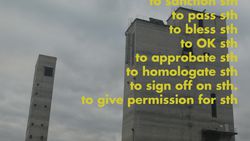
Legislating Architecture examine comment la loi et d’autres systèmes de règlementation sociétale façonnent l’architecture. Réalisé par Arno Brandlhuber et Christopher Roth, le film présente des extraits de conversations avec des architectes, dont Luigi Snozzi, Adam Caruso, Tom Emerson et Christian Kerez. Il a inspiré un numéro d’ARCH+ aussi intitulé Legislating(...)
Legislating Architecture examine comment la loi et d’autres systèmes de règlementation sociétale façonnent l’architecture. Réalisé par Arno Brandlhuber et Christopher Roth, le film présente des extraits de conversations avec des architectes, dont Luigi Snozzi, Adam Caruso, Tom Emerson et Christian Kerez. Il a inspiré un numéro d’ARCH+ aussi intitulé Legislating(...)
Date:
27 octobre 2016, 18h
27 octobre 2016, 18h
Titre:
Legislating Architecture : Arno Brandlhuber et Christopher Roth
Actions:
Description:
Legislating Architecture examine comment la loi et d’autres systèmes de règlementation sociétale façonnent l’architecture. Réalisé par Arno Brandlhuber et Christopher Roth, le film présente des extraits de conversations avec des architectes, dont Luigi Snozzi, Adam Caruso, Tom Emerson et Christian Kerez. Il a inspiré un numéro d’ARCH+ aussi intitulé Legislating(...)
Legislating Architecture : Arno Brandlhuber et Christopher Roth
Actions:
Description:
Legislating Architecture examine comment la loi et d’autres systèmes de règlementation sociétale façonnent l’architecture. Réalisé par Arno Brandlhuber et Christopher Roth, le film présente des extraits de conversations avec des architectes, dont Luigi Snozzi, Adam Caruso, Tom Emerson et Christian Kerez. Il a inspiré un numéro d’ARCH+ aussi intitulé Legislating(...)
Classification:
événements
événements
Date:
27 octobre 2016
18h
27 octobre 2016
18h
Classification:
dessins, documents textuels, photographies
dessins, documents textuels, photographies
Numéro de référence:
DR1988:0015:001-029
Description:
Part of a miscellaneous group of visual and textual documents collected by Oswald Mathias Ungers, apparently to represent the work of artists/architects in Die gläserne Kette. Primarily formal studies and other material relating to projects for buildings but also includes biographical material. Includes 17 drawings, 12 photographs, 9 prints, and 4 sheets of text. Most of the drawings are studies of architectonic massing of forms, a few are identified by project name, such as "Das Maler Haus" (the Painter's house) and the Christian Science Cathedral. Design of the subject of the photograph, drawing, or reproduction is attributed to Carl Krayl, following Ungers's attributions, unless otherwise stated. Many of the works in this group are inscribed with the name "Krayl" in blue ball-point pen; this might be the hand-writing of Frau L. Krayl who wrote the note on DR1988:0015:026 R/V. The photographs DR1988:0015:001 to DR1988:0015:006 are of the same model. Tim Benson has suggested that the model is a competition entry for changes to Alexanderplatz, Berlin (Shubert). DR1988:0015:007 to DR1988:0015:009 illustrate different views of the same plaster model. DR1988:0015:010 appears to be a photograph of a model for "Das Maler Haus", which is represented by the prints DR1988:0015:024 and DR1988:0015:025.
DR1988:0015:001-029
Description:
Part of a miscellaneous group of visual and textual documents collected by Oswald Mathias Ungers, apparently to represent the work of artists/architects in Die gläserne Kette. Primarily formal studies and other material relating to projects for buildings but also includes biographical material. Includes 17 drawings, 12 photographs, 9 prints, and 4 sheets of text. Most of the drawings are studies of architectonic massing of forms, a few are identified by project name, such as "Das Maler Haus" (the Painter's house) and the Christian Science Cathedral. Design of the subject of the photograph, drawing, or reproduction is attributed to Carl Krayl, following Ungers's attributions, unless otherwise stated. Many of the works in this group are inscribed with the name "Krayl" in blue ball-point pen; this might be the hand-writing of Frau L. Krayl who wrote the note on DR1988:0015:026 R/V. The photographs DR1988:0015:001 to DR1988:0015:006 are of the same model. Tim Benson has suggested that the model is a competition entry for changes to Alexanderplatz, Berlin (Shubert). DR1988:0015:007 to DR1988:0015:009 illustrate different views of the same plaster model. DR1988:0015:010 appears to be a photograph of a model for "Das Maler Haus", which is represented by the prints DR1988:0015:024 and DR1988:0015:025.
Personnes et institutions:
Date:
circa 1918-1945
circa 1918-1945
Titre:
Material from Carl Krayl mostly for Die gläserne Kette
Actions:
DR1988:0015:001-029
Description:
Part of a miscellaneous group of visual and textual documents collected by Oswald Mathias Ungers, apparently to represent the work of artists/architects in Die gläserne Kette. Primarily formal studies and other material relating to projects for buildings but also includes biographical material. Includes 17 drawings, 12 photographs, 9 prints, and 4 sheets of text. Most of the drawings are studies of architectonic massing of forms, a few are identified by project name, such as "Das Maler Haus" (the Painter's house) and the Christian Science Cathedral. Design of the subject of the photograph, drawing, or reproduction is attributed to Carl Krayl, following Ungers's attributions, unless otherwise stated. Many of the works in this group are inscribed with the name "Krayl" in blue ball-point pen; this might be the hand-writing of Frau L. Krayl who wrote the note on DR1988:0015:026 R/V. The photographs DR1988:0015:001 to DR1988:0015:006 are of the same model. Tim Benson has suggested that the model is a competition entry for changes to Alexanderplatz, Berlin (Shubert). DR1988:0015:007 to DR1988:0015:009 illustrate different views of the same plaster model. DR1988:0015:010 appears to be a photograph of a model for "Das Maler Haus", which is represented by the prints DR1988:0015:024 and DR1988:0015:025.
Material from Carl Krayl mostly for Die gläserne Kette
Actions:
DR1988:0015:001-029
Description:
Part of a miscellaneous group of visual and textual documents collected by Oswald Mathias Ungers, apparently to represent the work of artists/architects in Die gläserne Kette. Primarily formal studies and other material relating to projects for buildings but also includes biographical material. Includes 17 drawings, 12 photographs, 9 prints, and 4 sheets of text. Most of the drawings are studies of architectonic massing of forms, a few are identified by project name, such as "Das Maler Haus" (the Painter's house) and the Christian Science Cathedral. Design of the subject of the photograph, drawing, or reproduction is attributed to Carl Krayl, following Ungers's attributions, unless otherwise stated. Many of the works in this group are inscribed with the name "Krayl" in blue ball-point pen; this might be the hand-writing of Frau L. Krayl who wrote the note on DR1988:0015:026 R/V. The photographs DR1988:0015:001 to DR1988:0015:006 are of the same model. Tim Benson has suggested that the model is a competition entry for changes to Alexanderplatz, Berlin (Shubert). DR1988:0015:007 to DR1988:0015:009 illustrate different views of the same plaster model. DR1988:0015:010 appears to be a photograph of a model for "Das Maler Haus", which is represented by the prints DR1988:0015:024 and DR1988:0015:025.
Classification:
dessins, documents textuels, photographies
dessins, documents textuels, photographies
Date:
circa 1918-1945
circa 1918-1945
Personnes et institutions:
Classification:
expositions
expositions
Description:
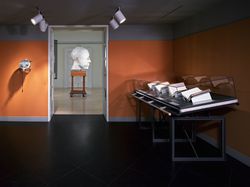
Piero en tête présente des sculptures contemporaines de l’artiste canado-britannique Geoffrey Smedley, ainsi que 30 livres rares datant du XVe au XVIIIe siècle. Les sculptures de Smedley s’inspirent d’une série de dessins de tête humaine, réalisés par le maître de la Renaissance Piero della Francesca. L’exposition relie ces dessins et les sculptures de Smedley à la(...)
Piero en tête présente des sculptures contemporaines de l’artiste canado-britannique Geoffrey Smedley, ainsi que 30 livres rares datant du XVe au XVIIIe siècle. Les sculptures de Smedley s’inspirent d’une série de dessins de tête humaine, réalisés par le maître de la Renaissance Piero della Francesca. L’exposition relie ces dessins et les sculptures de Smedley à la(...)
Localisation:
Salle octogonale
Salle octogonale
Date:
2 mai 2001 au 16 septembre 2001
2 mai 2001 au 16 septembre 2001
Titre:
Piero en tête
Actions:
Description:
Piero en tête présente des sculptures contemporaines de l’artiste canado-britannique Geoffrey Smedley, ainsi que 30 livres rares datant du XVe au XVIIIe siècle. Les sculptures de Smedley s’inspirent d’une série de dessins de tête humaine, réalisés par le maître de la Renaissance Piero della Francesca. L’exposition relie ces dessins et les sculptures de Smedley à la(...)
Piero en tête
Actions:
Description:
Piero en tête présente des sculptures contemporaines de l’artiste canado-britannique Geoffrey Smedley, ainsi que 30 livres rares datant du XVe au XVIIIe siècle. Les sculptures de Smedley s’inspirent d’une série de dessins de tête humaine, réalisés par le maître de la Renaissance Piero della Francesca. L’exposition relie ces dessins et les sculptures de Smedley à la(...)
Classification:
expositions
expositions
Date:
2 mai 2001 au
16 septembre 2001
2 mai 2001 au
16 septembre 2001
Localisation:
Salle octogonale
Salle octogonale
Classification:
événements
événements
Actions:
Description:
Hubert Damisch, chercheur principal et boursier Mellon au CCA en 2003-2004, examine la conséquence qu’aura, pour l’avenir de la pensée structurale, l’édifice-nuage Blur. Créé par la firme d’architectes new-yorkais Diller + Scofidio sur le lac de Neuchâtel en Suisse, cet édifice est la plus récente et radicale expression d’un désir de fluidité et d’évanescence en(...)
Hubert Damisch, chercheur principal et boursier Mellon au CCA en 2003-2004, examine la conséquence qu’aura, pour l’avenir de la pensée structurale, l’édifice-nuage Blur. Créé par la firme d’architectes new-yorkais Diller + Scofidio sur le lac de Neuchâtel en Suisse, cet édifice est la plus récente et radicale expression d’un désir de fluidité et d’évanescence en(...)
Localisation:
Théâtre Paul-Desmarais
Théâtre Paul-Desmarais
Date:
8 mai 2003
8 mai 2003
Titre:
Hubert Damisch : Effacer l’architecture?
Actions:
Description:
Hubert Damisch, chercheur principal et boursier Mellon au CCA en 2003-2004, examine la conséquence qu’aura, pour l’avenir de la pensée structurale, l’édifice-nuage Blur. Créé par la firme d’architectes new-yorkais Diller + Scofidio sur le lac de Neuchâtel en Suisse, cet édifice est la plus récente et radicale expression d’un désir de fluidité et d’évanescence en(...)
Hubert Damisch : Effacer l’architecture?
Actions:
Description:
Hubert Damisch, chercheur principal et boursier Mellon au CCA en 2003-2004, examine la conséquence qu’aura, pour l’avenir de la pensée structurale, l’édifice-nuage Blur. Créé par la firme d’architectes new-yorkais Diller + Scofidio sur le lac de Neuchâtel en Suisse, cet édifice est la plus récente et radicale expression d’un désir de fluidité et d’évanescence en(...)
Classification:
événements
événements
Date:
8 mai 2003
8 mai 2003
Localisation:
Théâtre Paul-Desmarais
Théâtre Paul-Desmarais
Classification:
documents textuels
documents textuels
Numéro de référence:
ARCH267991
Description:
Documents concern the following buildings in Chandigarh: the animal house and workshop at the Institute for Medical Research, the Institute for Medical Research (Sector 12), Saroop Krishan's house (Sector 8), various schools (nursery, primary and secondary), the Chandigarh Club, low-cost homes, and small office buildings. Texts also consider Pierre Jeanneret's furniture designs. Also includes: - "Social Sciences Research Journal," volume 4, number 2 (July 1979) concerning Chandigarh, India. - "An architect's plea to resolve the problems / of human settlement in South Asia / A design of composite organisation to prepare typical plans of hierarchy of human settlements in India and other parts of Suth [sic] Asia" by Jeet Malhotra, prepared for a symposium on human settlements with special reference to rural settlements in South Asia (March 18-21, 1976). - "A brief note on the conceptual man-made / environmental grid plan for Punjab / to avoid pollution of air, land, water / etc. - a preventative strategy" by Jeet Malhotra (n.d.). - "Architecture 2000 A.D. - Indian Context" by Jeet Malhotra, possibly prepared for the national convention of the Council of Architecture, New Delhi, which took place February 22-23, 1985.
ARCH267991
Description:
Documents concern the following buildings in Chandigarh: the animal house and workshop at the Institute for Medical Research, the Institute for Medical Research (Sector 12), Saroop Krishan's house (Sector 8), various schools (nursery, primary and secondary), the Chandigarh Club, low-cost homes, and small office buildings. Texts also consider Pierre Jeanneret's furniture designs. Also includes: - "Social Sciences Research Journal," volume 4, number 2 (July 1979) concerning Chandigarh, India. - "An architect's plea to resolve the problems / of human settlement in South Asia / A design of composite organisation to prepare typical plans of hierarchy of human settlements in India and other parts of Suth [sic] Asia" by Jeet Malhotra, prepared for a symposium on human settlements with special reference to rural settlements in South Asia (March 18-21, 1976). - "A brief note on the conceptual man-made / environmental grid plan for Punjab / to avoid pollution of air, land, water / etc. - a preventative strategy" by Jeet Malhotra (n.d.). - "Architecture 2000 A.D. - Indian Context" by Jeet Malhotra, possibly prepared for the national convention of the Council of Architecture, New Delhi, which took place February 22-23, 1985.
Personnes et institutions:
Titre:
Writings by Jeet Malhotra, predominantly pertaining to Chandigarh, with some concerning Talwara and Punjab, India
Actions:
ARCH267991
Description:
Documents concern the following buildings in Chandigarh: the animal house and workshop at the Institute for Medical Research, the Institute for Medical Research (Sector 12), Saroop Krishan's house (Sector 8), various schools (nursery, primary and secondary), the Chandigarh Club, low-cost homes, and small office buildings. Texts also consider Pierre Jeanneret's furniture designs. Also includes: - "Social Sciences Research Journal," volume 4, number 2 (July 1979) concerning Chandigarh, India. - "An architect's plea to resolve the problems / of human settlement in South Asia / A design of composite organisation to prepare typical plans of hierarchy of human settlements in India and other parts of Suth [sic] Asia" by Jeet Malhotra, prepared for a symposium on human settlements with special reference to rural settlements in South Asia (March 18-21, 1976). - "A brief note on the conceptual man-made / environmental grid plan for Punjab / to avoid pollution of air, land, water / etc. - a preventative strategy" by Jeet Malhotra (n.d.). - "Architecture 2000 A.D. - Indian Context" by Jeet Malhotra, possibly prepared for the national convention of the Council of Architecture, New Delhi, which took place February 22-23, 1985.
Writings by Jeet Malhotra, predominantly pertaining to Chandigarh, with some concerning Talwara and Punjab, India
Actions:
ARCH267991
Description:
Documents concern the following buildings in Chandigarh: the animal house and workshop at the Institute for Medical Research, the Institute for Medical Research (Sector 12), Saroop Krishan's house (Sector 8), various schools (nursery, primary and secondary), the Chandigarh Club, low-cost homes, and small office buildings. Texts also consider Pierre Jeanneret's furniture designs. Also includes: - "Social Sciences Research Journal," volume 4, number 2 (July 1979) concerning Chandigarh, India. - "An architect's plea to resolve the problems / of human settlement in South Asia / A design of composite organisation to prepare typical plans of hierarchy of human settlements in India and other parts of Suth [sic] Asia" by Jeet Malhotra, prepared for a symposium on human settlements with special reference to rural settlements in South Asia (March 18-21, 1976). - "A brief note on the conceptual man-made / environmental grid plan for Punjab / to avoid pollution of air, land, water / etc. - a preventative strategy" by Jeet Malhotra (n.d.). - "Architecture 2000 A.D. - Indian Context" by Jeet Malhotra, possibly prepared for the national convention of the Council of Architecture, New Delhi, which took place February 22-23, 1985.
Classification:
documents textuels
documents textuels
Personnes et institutions:
Niveau de description archivistique:
Série(s)
Série(s)
Titre:
CIAM IV, CIRPAC and London
CIAM IV, CIRPAC and London
Numéro de référence:
AP112.S1
Description:
The series contains seven bands of negatives, divided into groups of two and three negatives a band. The first five bands document the 4th Congrès International d'Architecture Moderne (CIAM) held on board the SS Patris II from 29 July to 13 August 1933, as it travelled between Marseilles, France, and Athens, Greece, and then returned. The conference, themed "The Functional City", presented and discussed the results of an analysis of more than thirty cities, and sought to establish new principles in urban planning. Sise participated at the conference as the Canadian delegate and presented the city of Los Angeles, California. The resolutions adopted at the conference were published for the first time in November under the title "Constatations du quatrième CIAM". These findings formed the base of the Charte d'Athenès written by Le Corbusier in 1941. The negatives show some of the participants of the conference including: Le Corbusier (1887-1965), from the French delegation; László Moholy-Nagy (1895-1946), from the German delegation, who was in charge of filming the presentations; Alvar Aalto (1898-1976), representing Finland; and the painter Fernand Léger (1881-1955), also from the French delegatation, who presented on the importance of colour in architecture. The two other bands of negatives provide evidence of Sise's attendance at Comité International pour la Résolution des Problèmes d'Architecture Contemporaine (CIRPAC), held in May 1934 at the Royal Institute of British Architects in London, England, to establish the program for the next CIAM (1). They also show his meeting in London with Georges Braque during the summer of the same year. (1) Eric Mumford states in "The CIAM Discourse on Urbanism, 1928-1960" that Le Corbusier did not participate at this conference (p. 92). _____________________ La série contient des bandes de négatifs, qui contiennent soit deux, soit trois images, et sont au nombre de sept. Les cinq premières bandes documentent le IVe Congrès International d'Architecture Moderne (CIAM) tenu à bord du SS Patris II du 29 juillet au 13 août 1933, entre Marseilles, France et Athènes, Grèce, à Athènes même, et sur le même bateau de croisière durant le retour à Marseilles. Le Congrès, qui se déroulait autour du thème de "The functional city", consistait en la communication des résultats de l'analyse de plus de trente villes et l'objectif visait à établir de nouveaux principes d'urbanisme. Hazen Sise participait au Congrès à titre de délégué du Canada et présenta la ville de Los Angeles, Californie. Les résolutions prises lors du Congrès ont été publiées pour la première fois au mois de novembre suivant sous le titre de "Constatations du quatrième CIAM". Ces "Constatations" seront ensuite à la base de la Charte d'Athènes que Le Corbusier rédigea en 1941. Les clichés montrent quelques-uns des participants au Congrès, dont Le Corbusier (1887-1965), de la délégation française, alors qu'il faisait une communication; László Moholy-Nagy (1895-1946), de la délégation allemande, à qui on avait confié la tâche de filmer les exposés; Alvar Aalto (1898-1976), représentant la Finlande; et le peintre Fernand Léger (1881-1955), délégué de la France, qui présenta un discours à l'attention des architectes au sujet de l'importance de la couleur en architecture. Les deux autres bandes de négatifs témoignent de la présence de Sise au (Comité International pour la Résolution des Problèmes d'Architecture Contemporaine (CIRPAC) à Londres, Angleterre, tenu en mai 1934 au Royal Institute of British Architects pour établir le programme du prochain CIAM (1) et de sa rencontre à Londres avec Georges Braque durant l'été de la même année. (1) Eric Mumford affirme cependant dans "The CIAM Discourse on Urbanism, 1928-1960" que Le Corbusier n'a pas participé à ce congrès (p. 92).
AP112.S1
Description:
The series contains seven bands of negatives, divided into groups of two and three negatives a band. The first five bands document the 4th Congrès International d'Architecture Moderne (CIAM) held on board the SS Patris II from 29 July to 13 August 1933, as it travelled between Marseilles, France, and Athens, Greece, and then returned. The conference, themed "The Functional City", presented and discussed the results of an analysis of more than thirty cities, and sought to establish new principles in urban planning. Sise participated at the conference as the Canadian delegate and presented the city of Los Angeles, California. The resolutions adopted at the conference were published for the first time in November under the title "Constatations du quatrième CIAM". These findings formed the base of the Charte d'Athenès written by Le Corbusier in 1941. The negatives show some of the participants of the conference including: Le Corbusier (1887-1965), from the French delegation; László Moholy-Nagy (1895-1946), from the German delegation, who was in charge of filming the presentations; Alvar Aalto (1898-1976), representing Finland; and the painter Fernand Léger (1881-1955), also from the French delegatation, who presented on the importance of colour in architecture. The two other bands of negatives provide evidence of Sise's attendance at Comité International pour la Résolution des Problèmes d'Architecture Contemporaine (CIRPAC), held in May 1934 at the Royal Institute of British Architects in London, England, to establish the program for the next CIAM (1). They also show his meeting in London with Georges Braque during the summer of the same year. (1) Eric Mumford states in "The CIAM Discourse on Urbanism, 1928-1960" that Le Corbusier did not participate at this conference (p. 92). _____________________ La série contient des bandes de négatifs, qui contiennent soit deux, soit trois images, et sont au nombre de sept. Les cinq premières bandes documentent le IVe Congrès International d'Architecture Moderne (CIAM) tenu à bord du SS Patris II du 29 juillet au 13 août 1933, entre Marseilles, France et Athènes, Grèce, à Athènes même, et sur le même bateau de croisière durant le retour à Marseilles. Le Congrès, qui se déroulait autour du thème de "The functional city", consistait en la communication des résultats de l'analyse de plus de trente villes et l'objectif visait à établir de nouveaux principes d'urbanisme. Hazen Sise participait au Congrès à titre de délégué du Canada et présenta la ville de Los Angeles, Californie. Les résolutions prises lors du Congrès ont été publiées pour la première fois au mois de novembre suivant sous le titre de "Constatations du quatrième CIAM". Ces "Constatations" seront ensuite à la base de la Charte d'Athènes que Le Corbusier rédigea en 1941. Les clichés montrent quelques-uns des participants au Congrès, dont Le Corbusier (1887-1965), de la délégation française, alors qu'il faisait une communication; László Moholy-Nagy (1895-1946), de la délégation allemande, à qui on avait confié la tâche de filmer les exposés; Alvar Aalto (1898-1976), représentant la Finlande; et le peintre Fernand Léger (1881-1955), délégué de la France, qui présenta un discours à l'attention des architectes au sujet de l'importance de la couleur en architecture. Les deux autres bandes de négatifs témoignent de la présence de Sise au (Comité International pour la Résolution des Problèmes d'Architecture Contemporaine (CIRPAC) à Londres, Angleterre, tenu en mai 1934 au Royal Institute of British Architects pour établir le programme du prochain CIAM (1) et de sa rencontre à Londres avec Georges Braque durant l'été de la même année. (1) Eric Mumford affirme cependant dans "The CIAM Discourse on Urbanism, 1928-1960" que Le Corbusier n'a pas participé à ce congrès (p. 92).
Personnes et institutions:
Date:
1933-1934
1933-1934
Titre:
CIAM IV, CIRPAC and London
Actions:
AP112.S1
Description:
The series contains seven bands of negatives, divided into groups of two and three negatives a band. The first five bands document the 4th Congrès International d'Architecture Moderne (CIAM) held on board the SS Patris II from 29 July to 13 August 1933, as it travelled between Marseilles, France, and Athens, Greece, and then returned. The conference, themed "The Functional City", presented and discussed the results of an analysis of more than thirty cities, and sought to establish new principles in urban planning. Sise participated at the conference as the Canadian delegate and presented the city of Los Angeles, California. The resolutions adopted at the conference were published for the first time in November under the title "Constatations du quatrième CIAM". These findings formed the base of the Charte d'Athenès written by Le Corbusier in 1941. The negatives show some of the participants of the conference including: Le Corbusier (1887-1965), from the French delegation; László Moholy-Nagy (1895-1946), from the German delegation, who was in charge of filming the presentations; Alvar Aalto (1898-1976), representing Finland; and the painter Fernand Léger (1881-1955), also from the French delegatation, who presented on the importance of colour in architecture. The two other bands of negatives provide evidence of Sise's attendance at Comité International pour la Résolution des Problèmes d'Architecture Contemporaine (CIRPAC), held in May 1934 at the Royal Institute of British Architects in London, England, to establish the program for the next CIAM (1). They also show his meeting in London with Georges Braque during the summer of the same year. (1) Eric Mumford states in "The CIAM Discourse on Urbanism, 1928-1960" that Le Corbusier did not participate at this conference (p. 92). _____________________ La série contient des bandes de négatifs, qui contiennent soit deux, soit trois images, et sont au nombre de sept. Les cinq premières bandes documentent le IVe Congrès International d'Architecture Moderne (CIAM) tenu à bord du SS Patris II du 29 juillet au 13 août 1933, entre Marseilles, France et Athènes, Grèce, à Athènes même, et sur le même bateau de croisière durant le retour à Marseilles. Le Congrès, qui se déroulait autour du thème de "The functional city", consistait en la communication des résultats de l'analyse de plus de trente villes et l'objectif visait à établir de nouveaux principes d'urbanisme. Hazen Sise participait au Congrès à titre de délégué du Canada et présenta la ville de Los Angeles, Californie. Les résolutions prises lors du Congrès ont été publiées pour la première fois au mois de novembre suivant sous le titre de "Constatations du quatrième CIAM". Ces "Constatations" seront ensuite à la base de la Charte d'Athènes que Le Corbusier rédigea en 1941. Les clichés montrent quelques-uns des participants au Congrès, dont Le Corbusier (1887-1965), de la délégation française, alors qu'il faisait une communication; László Moholy-Nagy (1895-1946), de la délégation allemande, à qui on avait confié la tâche de filmer les exposés; Alvar Aalto (1898-1976), représentant la Finlande; et le peintre Fernand Léger (1881-1955), délégué de la France, qui présenta un discours à l'attention des architectes au sujet de l'importance de la couleur en architecture. Les deux autres bandes de négatifs témoignent de la présence de Sise au (Comité International pour la Résolution des Problèmes d'Architecture Contemporaine (CIRPAC) à Londres, Angleterre, tenu en mai 1934 au Royal Institute of British Architects pour établir le programme du prochain CIAM (1) et de sa rencontre à Londres avec Georges Braque durant l'été de la même année. (1) Eric Mumford affirme cependant dans "The CIAM Discourse on Urbanism, 1928-1960" que Le Corbusier n'a pas participé à ce congrès (p. 92).
CIAM IV, CIRPAC and London
Actions:
AP112.S1
Description:
The series contains seven bands of negatives, divided into groups of two and three negatives a band. The first five bands document the 4th Congrès International d'Architecture Moderne (CIAM) held on board the SS Patris II from 29 July to 13 August 1933, as it travelled between Marseilles, France, and Athens, Greece, and then returned. The conference, themed "The Functional City", presented and discussed the results of an analysis of more than thirty cities, and sought to establish new principles in urban planning. Sise participated at the conference as the Canadian delegate and presented the city of Los Angeles, California. The resolutions adopted at the conference were published for the first time in November under the title "Constatations du quatrième CIAM". These findings formed the base of the Charte d'Athenès written by Le Corbusier in 1941. The negatives show some of the participants of the conference including: Le Corbusier (1887-1965), from the French delegation; László Moholy-Nagy (1895-1946), from the German delegation, who was in charge of filming the presentations; Alvar Aalto (1898-1976), representing Finland; and the painter Fernand Léger (1881-1955), also from the French delegatation, who presented on the importance of colour in architecture. The two other bands of negatives provide evidence of Sise's attendance at Comité International pour la Résolution des Problèmes d'Architecture Contemporaine (CIRPAC), held in May 1934 at the Royal Institute of British Architects in London, England, to establish the program for the next CIAM (1). They also show his meeting in London with Georges Braque during the summer of the same year. (1) Eric Mumford states in "The CIAM Discourse on Urbanism, 1928-1960" that Le Corbusier did not participate at this conference (p. 92). _____________________ La série contient des bandes de négatifs, qui contiennent soit deux, soit trois images, et sont au nombre de sept. Les cinq premières bandes documentent le IVe Congrès International d'Architecture Moderne (CIAM) tenu à bord du SS Patris II du 29 juillet au 13 août 1933, entre Marseilles, France et Athènes, Grèce, à Athènes même, et sur le même bateau de croisière durant le retour à Marseilles. Le Congrès, qui se déroulait autour du thème de "The functional city", consistait en la communication des résultats de l'analyse de plus de trente villes et l'objectif visait à établir de nouveaux principes d'urbanisme. Hazen Sise participait au Congrès à titre de délégué du Canada et présenta la ville de Los Angeles, Californie. Les résolutions prises lors du Congrès ont été publiées pour la première fois au mois de novembre suivant sous le titre de "Constatations du quatrième CIAM". Ces "Constatations" seront ensuite à la base de la Charte d'Athènes que Le Corbusier rédigea en 1941. Les clichés montrent quelques-uns des participants au Congrès, dont Le Corbusier (1887-1965), de la délégation française, alors qu'il faisait une communication; László Moholy-Nagy (1895-1946), de la délégation allemande, à qui on avait confié la tâche de filmer les exposés; Alvar Aalto (1898-1976), représentant la Finlande; et le peintre Fernand Léger (1881-1955), délégué de la France, qui présenta un discours à l'attention des architectes au sujet de l'importance de la couleur en architecture. Les deux autres bandes de négatifs témoignent de la présence de Sise au (Comité International pour la Résolution des Problèmes d'Architecture Contemporaine (CIRPAC) à Londres, Angleterre, tenu en mai 1934 au Royal Institute of British Architects pour établir le programme du prochain CIAM (1) et de sa rencontre à Londres avec Georges Braque durant l'été de la même année. (1) Eric Mumford affirme cependant dans "The CIAM Discourse on Urbanism, 1928-1960" que Le Corbusier n'a pas participé à ce congrès (p. 92).
Niveau de description archivistique:
Series
Series
Date:
1933-1934
1933-1934
Personnes et institutions:


