


11284 Résultats
Niveau de description archivistique:
Projet
Projet
Numéro de référence:
AP178.S1.1992.PR01
Description:
This project series documents the Remodelação do Cinema Condes in Santiago de Compostela, Spain. While the records were held in the office’s archives this project was assigned the number 22/90. The office assigned the dates 1991-1992 to this project. The Cinema Condes was built between 1949 and 1951. At the beginning of the 1990s, the owners of the building wanted to add offices and stores while maintaining the cinema. The renovations to the cinema were part of an urban rehabilitation project for the Avenida da Liberdade. Siza did a preliminary study for these renovations. The project was not realized. Documenting this project are sketches, studies, and working drawings. Textual materials include project documentation. Photographic materials document the existing building, models and project site.
AP178.S1.1992.PR01
Description:
This project series documents the Remodelação do Cinema Condes in Santiago de Compostela, Spain. While the records were held in the office’s archives this project was assigned the number 22/90. The office assigned the dates 1991-1992 to this project. The Cinema Condes was built between 1949 and 1951. At the beginning of the 1990s, the owners of the building wanted to add offices and stores while maintaining the cinema. The renovations to the cinema were part of an urban rehabilitation project for the Avenida da Liberdade. Siza did a preliminary study for these renovations. The project was not realized. Documenting this project are sketches, studies, and working drawings. Textual materials include project documentation. Photographic materials document the existing building, models and project site.
Personnes et institutions:
Date:
1991-2012
1991-2012
Titre:
Remodelação do Cinema Condes [Remodelling of Cinema Condes], Lisbon, Portugal (1991-1992)
Actions:
AP178.S1.1992.PR01
Description:
This project series documents the Remodelação do Cinema Condes in Santiago de Compostela, Spain. While the records were held in the office’s archives this project was assigned the number 22/90. The office assigned the dates 1991-1992 to this project. The Cinema Condes was built between 1949 and 1951. At the beginning of the 1990s, the owners of the building wanted to add offices and stores while maintaining the cinema. The renovations to the cinema were part of an urban rehabilitation project for the Avenida da Liberdade. Siza did a preliminary study for these renovations. The project was not realized. Documenting this project are sketches, studies, and working drawings. Textual materials include project documentation. Photographic materials document the existing building, models and project site.
Remodelação do Cinema Condes [Remodelling of Cinema Condes], Lisbon, Portugal (1991-1992)
Actions:
AP178.S1.1992.PR01
Description:
This project series documents the Remodelação do Cinema Condes in Santiago de Compostela, Spain. While the records were held in the office’s archives this project was assigned the number 22/90. The office assigned the dates 1991-1992 to this project. The Cinema Condes was built between 1949 and 1951. At the beginning of the 1990s, the owners of the building wanted to add offices and stores while maintaining the cinema. The renovations to the cinema were part of an urban rehabilitation project for the Avenida da Liberdade. Siza did a preliminary study for these renovations. The project was not realized. Documenting this project are sketches, studies, and working drawings. Textual materials include project documentation. Photographic materials document the existing building, models and project site.
Niveau de description archivistique:
Project
Project
Date:
1991-2012
1991-2012
Personnes et institutions:
Classification:
archives
Niveau de description archivistique:
Fonds
archives
Niveau de description archivistique:
Fonds
Titre:
Fonds Victor Prus
Fonds Victor Prus
Numéro de référence:
AP163
Résumé:
The Victor Prus fonds documents the professional practice of architect Victor Prus from student and professional work in England to architectural projects in Canada. The majority of the documents in the fonds consist of drawings and textual records relating to over 90 projects, such as Centre Rockland (1960), the Expo 67 Stadium (1967), the Grand Théâtre de Québec (1971) and the Palais des Congrès de Montréal (1983).
AP163
Résumé:
The Victor Prus fonds documents the professional practice of architect Victor Prus from student and professional work in England to architectural projects in Canada. The majority of the documents in the fonds consist of drawings and textual records relating to over 90 projects, such as Centre Rockland (1960), the Expo 67 Stadium (1967), the Grand Théâtre de Québec (1971) and the Palais des Congrès de Montréal (1983).
Personnes et institutions:
Date:
1945-1992
1945-1992
Titre:
Fonds Victor Prus
Actions:
AP163
Résumé:
The Victor Prus fonds documents the professional practice of architect Victor Prus from student and professional work in England to architectural projects in Canada. The majority of the documents in the fonds consist of drawings and textual records relating to over 90 projects, such as Centre Rockland (1960), the Expo 67 Stadium (1967), the Grand Théâtre de Québec (1971) and the Palais des Congrès de Montréal (1983).
Fonds Victor Prus
Actions:
AP163
Résumé:
The Victor Prus fonds documents the professional practice of architect Victor Prus from student and professional work in England to architectural projects in Canada. The majority of the documents in the fonds consist of drawings and textual records relating to over 90 projects, such as Centre Rockland (1960), the Expo 67 Stadium (1967), the Grand Théâtre de Québec (1971) and the Palais des Congrès de Montréal (1983).
Classification:
archives
Niveau de description archivistique:
Fonds
archives
Niveau de description archivistique:
Fonds
Date:
1945-1992
1945-1992
Personnes et institutions:
Classification:
articles
articles
Actions:
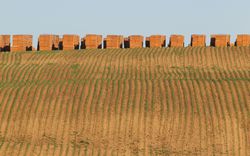
Amra Alagic, Hannah Whitlaw et Hiba Zubairi nous révèlent les différentes strates du paysage agricole
Titre:
À la rencontre de l’ordinaire agraire
Amra Alagic, Hannah Whitlaw et Hiba Zubairi nous révèlent les différentes strates du paysage agricole
Actions:
À la rencontre de l’ordinaire agraire
Amra Alagic, Hannah Whitlaw et Hiba Zubairi nous révèlent les différentes strates du paysage agricole
Actions:
Niveau de description archivistique:
Projet
Projet
Numéro de référence:
AP178.S1.1983.PR05
Description:
The project series documents the Boutique Nina in Porto, Portugal. While the records were held in the office’s archives this project was assigned the number 20/80. The office assigned the date 1983 for this project. This project consisted of a 50 square metre fashion boutique located on Rua Firmeza. The shop's focal point was a curved marble staircase that led to a balcony, visable through the shop's large windows from the street. The project is recorded through drawings, photographic materials and some textual records dating from 1983. The drawings are mostly originals and consist of sketches, plans, sections, perspectives, details and axonometric drawings. The textual records consist of invoices, correspondence, material schedules and notes, while photographs and slides show plans and the built project.
AP178.S1.1983.PR05
Description:
The project series documents the Boutique Nina in Porto, Portugal. While the records were held in the office’s archives this project was assigned the number 20/80. The office assigned the date 1983 for this project. This project consisted of a 50 square metre fashion boutique located on Rua Firmeza. The shop's focal point was a curved marble staircase that led to a balcony, visable through the shop's large windows from the street. The project is recorded through drawings, photographic materials and some textual records dating from 1983. The drawings are mostly originals and consist of sketches, plans, sections, perspectives, details and axonometric drawings. The textual records consist of invoices, correspondence, material schedules and notes, while photographs and slides show plans and the built project.
Personnes et institutions:
Date:
1983
1983
Titre:
Boutique Nina, Porto, Portugal (1983)
Actions:
AP178.S1.1983.PR05
Description:
The project series documents the Boutique Nina in Porto, Portugal. While the records were held in the office’s archives this project was assigned the number 20/80. The office assigned the date 1983 for this project. This project consisted of a 50 square metre fashion boutique located on Rua Firmeza. The shop's focal point was a curved marble staircase that led to a balcony, visable through the shop's large windows from the street. The project is recorded through drawings, photographic materials and some textual records dating from 1983. The drawings are mostly originals and consist of sketches, plans, sections, perspectives, details and axonometric drawings. The textual records consist of invoices, correspondence, material schedules and notes, while photographs and slides show plans and the built project.
Boutique Nina, Porto, Portugal (1983)
Actions:
AP178.S1.1983.PR05
Description:
The project series documents the Boutique Nina in Porto, Portugal. While the records were held in the office’s archives this project was assigned the number 20/80. The office assigned the date 1983 for this project. This project consisted of a 50 square metre fashion boutique located on Rua Firmeza. The shop's focal point was a curved marble staircase that led to a balcony, visable through the shop's large windows from the street. The project is recorded through drawings, photographic materials and some textual records dating from 1983. The drawings are mostly originals and consist of sketches, plans, sections, perspectives, details and axonometric drawings. The textual records consist of invoices, correspondence, material schedules and notes, while photographs and slides show plans and the built project.
Niveau de description archivistique:
Project
Project
Date:
1983
1983
Personnes et institutions:
Niveau de description archivistique:
Sous-série
Sous-série
Numéro de référence:
AP178.S1.1985.PR02.SS2
Description:
This project subseries documents the Projecto para um Edifício de Habitação em Campo di Marte in Giudecca, Italy. While the records were held in the office’s archives this project was assigned the number 34/80 A. The office assigned the date 1985 to this project. The building was part of Siza's intervention in Giudecca. The L-shaped housing building included three floors and 32 apartments. The building respected the Venetian architectural style. Due to financial problems, construction of the building stopped in 2010. Construction eventually continued later on and the project was finished in 2016. Documenting this project are sketches, studies and plans. Photographic materials include photographs and negatives of the project site and model. Textual materials include competition documentation, project documentation, notes and technical specifications.
AP178.S1.1985.PR02.SS2
Description:
This project subseries documents the Projecto para um Edifício de Habitação em Campo di Marte in Giudecca, Italy. While the records were held in the office’s archives this project was assigned the number 34/80 A. The office assigned the date 1985 to this project. The building was part of Siza's intervention in Giudecca. The L-shaped housing building included three floors and 32 apartments. The building respected the Venetian architectural style. Due to financial problems, construction of the building stopped in 2010. Construction eventually continued later on and the project was finished in 2016. Documenting this project are sketches, studies and plans. Photographic materials include photographs and negatives of the project site and model. Textual materials include competition documentation, project documentation, notes and technical specifications.
Personnes et institutions:
Date:
1984-2005
1984-2005
Titre:
Projecto para um Edifício de Habitação em Campo di Marte [Housing complex, Campo di Marte], Giudecca, Venice, Italy, (1985)
Actions:
AP178.S1.1985.PR02.SS2
Description:
This project subseries documents the Projecto para um Edifício de Habitação em Campo di Marte in Giudecca, Italy. While the records were held in the office’s archives this project was assigned the number 34/80 A. The office assigned the date 1985 to this project. The building was part of Siza's intervention in Giudecca. The L-shaped housing building included three floors and 32 apartments. The building respected the Venetian architectural style. Due to financial problems, construction of the building stopped in 2010. Construction eventually continued later on and the project was finished in 2016. Documenting this project are sketches, studies and plans. Photographic materials include photographs and negatives of the project site and model. Textual materials include competition documentation, project documentation, notes and technical specifications.
Projecto para um Edifício de Habitação em Campo di Marte [Housing complex, Campo di Marte], Giudecca, Venice, Italy, (1985)
Actions:
AP178.S1.1985.PR02.SS2
Description:
This project subseries documents the Projecto para um Edifício de Habitação em Campo di Marte in Giudecca, Italy. While the records were held in the office’s archives this project was assigned the number 34/80 A. The office assigned the date 1985 to this project. The building was part of Siza's intervention in Giudecca. The L-shaped housing building included three floors and 32 apartments. The building respected the Venetian architectural style. Due to financial problems, construction of the building stopped in 2010. Construction eventually continued later on and the project was finished in 2016. Documenting this project are sketches, studies and plans. Photographic materials include photographs and negatives of the project site and model. Textual materials include competition documentation, project documentation, notes and technical specifications.
Niveau de description archivistique:
Project
Project
Date:
1984-2005
1984-2005
Personnes et institutions:
Niveau de description archivistique:
Projet
Projet
Numéro de référence:
AP178.S1.1984.PR05
Description:
This project series documents the Casa Erhard Josef Pascher in Sintra, Portugal. While the records were held in the office’s archives this project was assigned the number 24/80. The office assigned the dates 1984-1985 to this project The project files document a house comissioned by Erhard Josef Pascher. The house included a library, garage, workshop, small garden, swimming pool, sauna and terrace. The client asked for a solar power system and for the interior to have whitewashed walls, tiled floors and built-in cupboards. Miguel Guedes de Carvalho collaborated with Siza on this project. The house was not built. Documenting this project are sketches, studies and working drawings. Textual materials include project documentation and correspondence. Photographic materials document the project site.
AP178.S1.1984.PR05
Description:
This project series documents the Casa Erhard Josef Pascher in Sintra, Portugal. While the records were held in the office’s archives this project was assigned the number 24/80. The office assigned the dates 1984-1985 to this project The project files document a house comissioned by Erhard Josef Pascher. The house included a library, garage, workshop, small garden, swimming pool, sauna and terrace. The client asked for a solar power system and for the interior to have whitewashed walls, tiled floors and built-in cupboards. Miguel Guedes de Carvalho collaborated with Siza on this project. The house was not built. Documenting this project are sketches, studies and working drawings. Textual materials include project documentation and correspondence. Photographic materials document the project site.
Personnes et institutions:
Date:
1983-1987
1983-1987
Titre:
Casa Erhard Josef Pascher [Erhard Josef Pascher house], Sintra, Portugal (1984)
Actions:
AP178.S1.1984.PR05
Description:
This project series documents the Casa Erhard Josef Pascher in Sintra, Portugal. While the records were held in the office’s archives this project was assigned the number 24/80. The office assigned the dates 1984-1985 to this project The project files document a house comissioned by Erhard Josef Pascher. The house included a library, garage, workshop, small garden, swimming pool, sauna and terrace. The client asked for a solar power system and for the interior to have whitewashed walls, tiled floors and built-in cupboards. Miguel Guedes de Carvalho collaborated with Siza on this project. The house was not built. Documenting this project are sketches, studies and working drawings. Textual materials include project documentation and correspondence. Photographic materials document the project site.
Casa Erhard Josef Pascher [Erhard Josef Pascher house], Sintra, Portugal (1984)
Actions:
AP178.S1.1984.PR05
Description:
This project series documents the Casa Erhard Josef Pascher in Sintra, Portugal. While the records were held in the office’s archives this project was assigned the number 24/80. The office assigned the dates 1984-1985 to this project The project files document a house comissioned by Erhard Josef Pascher. The house included a library, garage, workshop, small garden, swimming pool, sauna and terrace. The client asked for a solar power system and for the interior to have whitewashed walls, tiled floors and built-in cupboards. Miguel Guedes de Carvalho collaborated with Siza on this project. The house was not built. Documenting this project are sketches, studies and working drawings. Textual materials include project documentation and correspondence. Photographic materials document the project site.
Niveau de description archivistique:
Project
Project
Date:
1983-1987
1983-1987
Personnes et institutions:
Niveau de description archivistique:
Projet
Projet
Numéro de référence:
AP178.S1.1997.PR07
Description:
This project series documents the Centro Municipal no Distrito Sud in Rosario, Argentina. While the records were held in the office’s archives this project was assigned the number 89/90. The office assigned the date 1997 to this project. This was Siza's first building in South America. The Municipal center is one of six buildings for the decentralization of the city of Rosario. The buildings surround a public place. The building includes a 200 capacity auditorium, a workshop space, and offices. Documenting this project are studies, design development drawings, annotated plans, and details. Textual material includes documentation for the decentralization program, project documentation, and correspondence. Photographic material documents the project site, construction work, Siza's visit, and the built project. The project is also documented through study models.
AP178.S1.1997.PR07
Description:
This project series documents the Centro Municipal no Distrito Sud in Rosario, Argentina. While the records were held in the office’s archives this project was assigned the number 89/90. The office assigned the date 1997 to this project. This was Siza's first building in South America. The Municipal center is one of six buildings for the decentralization of the city of Rosario. The buildings surround a public place. The building includes a 200 capacity auditorium, a workshop space, and offices. Documenting this project are studies, design development drawings, annotated plans, and details. Textual material includes documentation for the decentralization program, project documentation, and correspondence. Photographic material documents the project site, construction work, Siza's visit, and the built project. The project is also documented through study models.
Personnes et institutions:
Date:
1996-2003
1996-2003
Titre:
Centro Municipal no Distrito Sud [South district Municipal center], Rosario, Argentina (1997)
Actions:
AP178.S1.1997.PR07
Description:
This project series documents the Centro Municipal no Distrito Sud in Rosario, Argentina. While the records were held in the office’s archives this project was assigned the number 89/90. The office assigned the date 1997 to this project. This was Siza's first building in South America. The Municipal center is one of six buildings for the decentralization of the city of Rosario. The buildings surround a public place. The building includes a 200 capacity auditorium, a workshop space, and offices. Documenting this project are studies, design development drawings, annotated plans, and details. Textual material includes documentation for the decentralization program, project documentation, and correspondence. Photographic material documents the project site, construction work, Siza's visit, and the built project. The project is also documented through study models.
Centro Municipal no Distrito Sud [South district Municipal center], Rosario, Argentina (1997)
Actions:
AP178.S1.1997.PR07
Description:
This project series documents the Centro Municipal no Distrito Sud in Rosario, Argentina. While the records were held in the office’s archives this project was assigned the number 89/90. The office assigned the date 1997 to this project. This was Siza's first building in South America. The Municipal center is one of six buildings for the decentralization of the city of Rosario. The buildings surround a public place. The building includes a 200 capacity auditorium, a workshop space, and offices. Documenting this project are studies, design development drawings, annotated plans, and details. Textual material includes documentation for the decentralization program, project documentation, and correspondence. Photographic material documents the project site, construction work, Siza's visit, and the built project. The project is also documented through study models.
Niveau de description archivistique:
Project
Project
Date:
1996-2003
1996-2003
Personnes et institutions:
Niveau de description archivistique:
Projet
Projet
Numéro de référence:
AP178.S1.1989.PR06
Description:
This project series documents the Edifício de Escritórios Ferreira de Castro Hotel in Oliveira de Azeméis, Portugal. While the records were held in the office’s archives this project was assigned the number 67/80. The office assigned the dates 1989-1990 to this project. The project consisted of a feasibility study for a hotel located on Avenida Dr. António José de Almeida, the site where Siza realized the Edifício de Escritórios Ferreira de Castro for another client in the years that followed (see project series AP178.S1.1990.PR10 in this fonds). This project is documented through drawings, specifications, notes, construction permit documentation, air conditioning documentation and correspondence. The drawings, which are largely reprographic copies, include sketches, plans, details, sections and structural, mechanical and electrical drawings.
AP178.S1.1989.PR06
Description:
This project series documents the Edifício de Escritórios Ferreira de Castro Hotel in Oliveira de Azeméis, Portugal. While the records were held in the office’s archives this project was assigned the number 67/80. The office assigned the dates 1989-1990 to this project. The project consisted of a feasibility study for a hotel located on Avenida Dr. António José de Almeida, the site where Siza realized the Edifício de Escritórios Ferreira de Castro for another client in the years that followed (see project series AP178.S1.1990.PR10 in this fonds). This project is documented through drawings, specifications, notes, construction permit documentation, air conditioning documentation and correspondence. The drawings, which are largely reprographic copies, include sketches, plans, details, sections and structural, mechanical and electrical drawings.
Personnes et institutions:
Date:
1990-1994
1990-1994
Titre:
Edifício de Escritórios Ferreira de Castro, Hotel [Hotel, Ferreira de Castro Office Building], Oliveira de Azeméis, Portugal (1989-1990)
Actions:
AP178.S1.1989.PR06
Description:
This project series documents the Edifício de Escritórios Ferreira de Castro Hotel in Oliveira de Azeméis, Portugal. While the records were held in the office’s archives this project was assigned the number 67/80. The office assigned the dates 1989-1990 to this project. The project consisted of a feasibility study for a hotel located on Avenida Dr. António José de Almeida, the site where Siza realized the Edifício de Escritórios Ferreira de Castro for another client in the years that followed (see project series AP178.S1.1990.PR10 in this fonds). This project is documented through drawings, specifications, notes, construction permit documentation, air conditioning documentation and correspondence. The drawings, which are largely reprographic copies, include sketches, plans, details, sections and structural, mechanical and electrical drawings.
Edifício de Escritórios Ferreira de Castro, Hotel [Hotel, Ferreira de Castro Office Building], Oliveira de Azeméis, Portugal (1989-1990)
Actions:
AP178.S1.1989.PR06
Description:
This project series documents the Edifício de Escritórios Ferreira de Castro Hotel in Oliveira de Azeméis, Portugal. While the records were held in the office’s archives this project was assigned the number 67/80. The office assigned the dates 1989-1990 to this project. The project consisted of a feasibility study for a hotel located on Avenida Dr. António José de Almeida, the site where Siza realized the Edifício de Escritórios Ferreira de Castro for another client in the years that followed (see project series AP178.S1.1990.PR10 in this fonds). This project is documented through drawings, specifications, notes, construction permit documentation, air conditioning documentation and correspondence. The drawings, which are largely reprographic copies, include sketches, plans, details, sections and structural, mechanical and electrical drawings.
Niveau de description archivistique:
Project
Project
Date:
1990-1994
1990-1994
Personnes et institutions:
Classification:
expositions
expositions

Actions:
Description:
L’exposition Architecture industrielle : ÁbalosHerreros revue par OFFICE Kersten Geers David Van Severen présente une lecture précise de l’approche industrielle à l’architecture dans le travail d’ÁbalosHerreros, firme qui fut active à Madrid entre 1984 et 2008. Divers objets sont présentés : des dessins CAO, des photographies prises par Stefano Graziani des objets tirés(...)
L’exposition Architecture industrielle : ÁbalosHerreros revue par OFFICE Kersten Geers David Van Severen présente une lecture précise de l’approche industrielle à l’architecture dans le travail d’ÁbalosHerreros, firme qui fut active à Madrid entre 1984 et 2008. Divers objets sont présentés : des dessins CAO, des photographies prises par Stefano Graziani des objets tirés(...)
Localisation:
Salle octogonale Mot(s)-clé(s):
Kersten Geers, David Van Severen, OFFICE, KGVDS, Ábalos, Herreros, Ábalos&Herreros, sortis du cadre
Salle octogonale Mot(s)-clé(s):
Kersten Geers, David Van Severen, OFFICE, KGVDS, Ábalos, Herreros, Ábalos&Herreros, sortis du cadre
Date:
12 mars 2015 au 17 mai 2015
12 mars 2015 au 17 mai 2015
Titre:
Architecture industrielle : Ábalos&Herreros revue par OFFICE Kersten Geers David Van Severen
Actions:
Description:
L’exposition Architecture industrielle : ÁbalosHerreros revue par OFFICE Kersten Geers David Van Severen présente une lecture précise de l’approche industrielle à l’architecture dans le travail d’ÁbalosHerreros, firme qui fut active à Madrid entre 1984 et 2008. Divers objets sont présentés : des dessins CAO, des photographies prises par Stefano Graziani des objets tirés(...)
Architecture industrielle : Ábalos&Herreros revue par OFFICE Kersten Geers David Van Severen
Actions:
Description:
L’exposition Architecture industrielle : ÁbalosHerreros revue par OFFICE Kersten Geers David Van Severen présente une lecture précise de l’approche industrielle à l’architecture dans le travail d’ÁbalosHerreros, firme qui fut active à Madrid entre 1984 et 2008. Divers objets sont présentés : des dessins CAO, des photographies prises par Stefano Graziani des objets tirés(...)
Classification:
expositions
expositions
Date:
12 mars 2015 au
17 mai 2015
12 mars 2015 au
17 mai 2015
Localisation:
Salle octogonale Mot(s)-clé(s):
Kersten Geers, David Van Severen, OFFICE, KGVDS, Ábalos, Herreros, Ábalos&Herreros, sortis du cadre
Salle octogonale Mot(s)-clé(s):
Kersten Geers, David Van Severen, OFFICE, KGVDS, Ábalos, Herreros, Ábalos&Herreros, sortis du cadre
Classification:
archives
Niveau de description archivistique:
Fonds
archives
Niveau de description archivistique:
Fonds
Titre:
Fonds Peter Caspari
Fonds Peter Caspari
Numéro de référence:
AP123
Résumé:
The Peter Caspari fonds documents the education, personal and military activities of architect Peter Caspari from student work in Berlin to his immigration to England, and participation in WWII. The majority of the documents in the fonds consist of drawings relating to student building design projects, and textual records relating to architecture course notes, training for the Pioneer Corps, and professional registration as an architect.
AP123
Résumé:
The Peter Caspari fonds documents the education, personal and military activities of architect Peter Caspari from student work in Berlin to his immigration to England, and participation in WWII. The majority of the documents in the fonds consist of drawings relating to student building design projects, and textual records relating to architecture course notes, training for the Pioneer Corps, and professional registration as an architect.
Personnes et institutions:
Date:
1928-1941
1928-1941
Titre:
Fonds Peter Caspari
Actions:
AP123
Résumé:
The Peter Caspari fonds documents the education, personal and military activities of architect Peter Caspari from student work in Berlin to his immigration to England, and participation in WWII. The majority of the documents in the fonds consist of drawings relating to student building design projects, and textual records relating to architecture course notes, training for the Pioneer Corps, and professional registration as an architect.
Fonds Peter Caspari
Actions:
AP123
Résumé:
The Peter Caspari fonds documents the education, personal and military activities of architect Peter Caspari from student work in Berlin to his immigration to England, and participation in WWII. The majority of the documents in the fonds consist of drawings relating to student building design projects, and textual records relating to architecture course notes, training for the Pioneer Corps, and professional registration as an architect.
Classification:
archives
Niveau de description archivistique:
Fonds
archives
Niveau de description archivistique:
Fonds
Date:
1928-1941
1928-1941
Personnes et institutions:


