


DR2007:0020
Description:
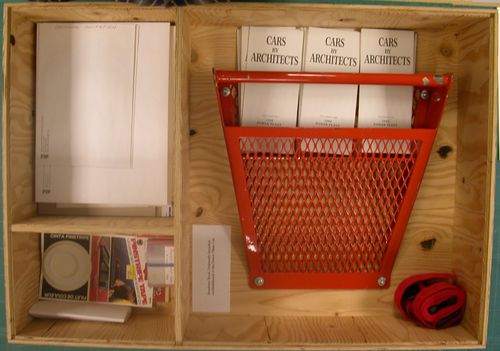
This consists of a boxed set of related pieces from L.W. Richards participation in "The Architecture Series" at the Power Plant contemporary art gallery in 1988-89. L.W. Richards renovated and drove a Pontiac Firebird, named "Power Plant". The project was the subject of Vikky Alexander's essay "Back to the Future" in the Power Plant Gallery's "The Architecture Series", 1989, pp.25-31. The project was reviewed by Adele Freedman (Globe and Mail, March 5, 1988, p.C12), Christopher Hume (Architect designs gallery on wheels, Toronto Star, Feb. 27, 1988, p. G15), and pictured and discussed in The Canadian Architect, Vol. 33, no. 4, April 1988, p.6. The set pf pieces includes: a) B&W photograph of the Power Plant car in an auto-body workshop, b) The Architecture Series, booklet with Alexander's essay, c)newspaper and magazine clippings/reviews, d)orangesteel brochure rack, that L.W. Richards designed, from the Power Plant car (~ 18" x 18" x 3"), e) nine B&W brochures titled "Cars by Architects" that fit into the red-orange rack, and f) ~ 20 colour slides of the Power Plant car in various locations in Toronto.
1988-1989
Power Plant (Cars by Architects), 1988-1989
Actions:
DR2007:0020
Description:
This consists of a boxed set of related pieces from L.W. Richards participation in "The Architecture Series" at the Power Plant contemporary art gallery in 1988-89. L.W. Richards renovated and drove a Pontiac Firebird, named "Power Plant". The project was the subject of Vikky Alexander's essay "Back to the Future" in the Power Plant Gallery's "The Architecture Series", 1989, pp.25-31. The project was reviewed by Adele Freedman (Globe and Mail, March 5, 1988, p.C12), Christopher Hume (Architect designs gallery on wheels, Toronto Star, Feb. 27, 1988, p. G15), and pictured and discussed in The Canadian Architect, Vol. 33, no. 4, April 1988, p.6. The set pf pieces includes: a) B&W photograph of the Power Plant car in an auto-body workshop, b) The Architecture Series, booklet with Alexander's essay, c)newspaper and magazine clippings/reviews, d)orangesteel brochure rack, that L.W. Richards designed, from the Power Plant car (~ 18" x 18" x 3"), e) nine B&W brochures titled "Cars by Architects" that fit into the red-orange rack, and f) ~ 20 colour slides of the Power Plant car in various locations in Toronto.
1988-1989
événements
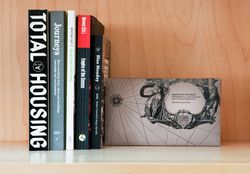
Joignez-vous à nous pour une discussion à bâtons rompus sur différentes approches de l’écriture contemporaine relative à l’architecture, à l’urbanisme et à la critique, réunissant des auteurs spécialistes de l’architecture et des rédacteurs en chef de revues comme Actar, Quaderns, Beyond et l’Architectural Theory Review. Présentée en anglais, avec les intervenants(...)
Théâtre Paul-Desmarais
10 février 2011 , 18h
À propos de l'écriture expérimentale : Albert Ferré, Pedro Gadanho, David Howes, Naomi Stead et Kazys Varnelis
Actions:
Description:
Joignez-vous à nous pour une discussion à bâtons rompus sur différentes approches de l’écriture contemporaine relative à l’architecture, à l’urbanisme et à la critique, réunissant des auteurs spécialistes de l’architecture et des rédacteurs en chef de revues comme Actar, Quaderns, Beyond et l’Architectural Theory Review. Présentée en anglais, avec les intervenants(...)
événements
10 février 2011
18h
Théâtre Paul-Desmarais
événements
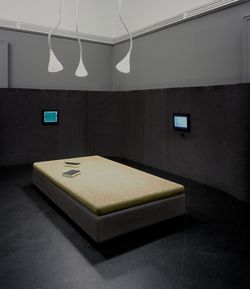
Philip Ursprung, commissaire invité de l’exposition Herzog de Meuron : archéologie de l’imaginaire tenue au CCA en 2002, discute du rapport collaboratif de Herzog de Meuron avec les artistes. La conférence fait partie d’une série présentée en complément de l’exposition qui explore les frontières entre l’art et l’architecture. Philip Ursprung est professeur en histoire(...)
17 octobre 2002
Philip Ursprung : Close Encounters : Herzog & de Meuron en collaboration avec des artistes
Actions:
Description:
Philip Ursprung, commissaire invité de l’exposition Herzog de Meuron : archéologie de l’imaginaire tenue au CCA en 2002, discute du rapport collaboratif de Herzog de Meuron avec les artistes. La conférence fait partie d’une série présentée en complément de l’exposition qui explore les frontières entre l’art et l’architecture. Philip Ursprung est professeur en histoire(...)
événements
17 octobre 2002
expositions
Dans leurs carnets, les architectes notent leurs premières réactions devant un site et leurs impressions de voyage. Ils esquissent des croquis, organisent leur travail, ébauchent de nouvelles conceptions, proposent des solutions, rédigent des brouillons d’essais, de conférences et de lettres; ils prennent des notes de recherche ou recopient des passages d’ouvrages qui les(...)
Vitrines
26 février 1992 au 24 mai 1992
Actualité du carnet d'architecte
Actions:
Description:
Dans leurs carnets, les architectes notent leurs premières réactions devant un site et leurs impressions de voyage. Ils esquissent des croquis, organisent leur travail, ébauchent de nouvelles conceptions, proposent des solutions, rédigent des brouillons d’essais, de conférences et de lettres; ils prennent des notes de recherche ou recopient des passages d’ouvrages qui les(...)
expositions
26 février 1992 au
24 mai 1992
Vitrines
articles
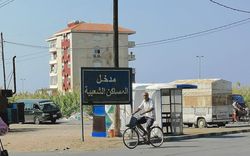
L’inertie du vide, Tripoli, Liban, crise du logement, planification urbaine, gestion urbaine, gouvernement de la ville, Public Works Studio
5 septembre 2023
Tripoli : Qui nous a pris notre terre ? (2e partie)
Public Works Studio présente les répercussions sociales et environnementales de la gestion publique de la ville
Actions:
articles
5 septembre 2023
événements
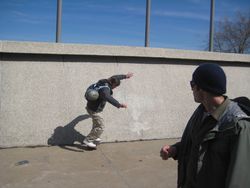
Le planchiste et architecte-paysagiste Mathieu Robichaud invite les participants à une visite guidée et analyse les opportunités qu’offrent les espaces urbains traversés pour la pratique de la planche à roulettes. Robichaud, de la firme Bloom Paysage, se spécialise dans la conception de parcs dédiés à la pratique de la planche à roulettes. En complément de l’exposition(...)
11 avril 2009
Découvrir les lieux propices à la pratique de la planche à roulettes
Actions:
Description:
Le planchiste et architecte-paysagiste Mathieu Robichaud invite les participants à une visite guidée et analyse les opportunités qu’offrent les espaces urbains traversés pour la pratique de la planche à roulettes. Robichaud, de la firme Bloom Paysage, se spécialise dans la conception de parcs dédiés à la pratique de la planche à roulettes. En complément de l’exposition(...)
événements
11 avril 2009
pages web
Ce projet dirigé par la commissaire émergente 2022-2023 du CCA Clarissa Lim Kye Lee s’engage auprès des collectifs artistiques et culturels de l’archipel malais dans le but de s’inspirer des écologies collectives malaisiennes et de leur relation à l’environnement urbain afin d’organiser des activités et des rencontres et de développer de nouvelles pratiques communautaires.
« Making Mamak » : Écologies collectives de l’espace urbain
Actions:
Résumé:
Ce projet dirigé par la commissaire émergente 2022-2023 du CCA Clarissa Lim Kye Lee s’engage auprès des collectifs artistiques et culturels de l’archipel malais dans le but de s’inspirer des écologies collectives malaisiennes et de leur relation à l’environnement urbain afin d’organiser des activités et des rencontres et de développer de nouvelles pratiques communautaires.
pages web
événements
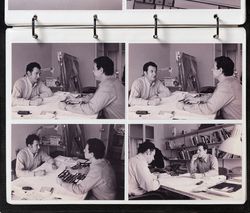
Joignez-vous à nous à Madrid pour une conversation avec Iñaki Ábalos et Juan Herreros, avec la participation d’Ángel Borrego, Enrique Encabo, Albert Ferré (Directeur associé, Publications CCA), María Auxiliadora Gálvez et Moisés Puente. « Existe-t-il une architecture de la conversation? » demandent Iñaki Ábalos et Juan Herreros dans leur texte « Une conversation »,(...)
Salón de Actos, COAM, Madrid Mot(s)-clé(s):
Ábalos&Herreros, Iñaki Ábalos, Juan Herreros
7 février 2017, 19h
AP164 : une conversation avec Iñaki Ábalos et Juan Herreros
Actions:
Description:
Joignez-vous à nous à Madrid pour une conversation avec Iñaki Ábalos et Juan Herreros, avec la participation d’Ángel Borrego, Enrique Encabo, Albert Ferré (Directeur associé, Publications CCA), María Auxiliadora Gálvez et Moisés Puente. « Existe-t-il une architecture de la conversation? » demandent Iñaki Ábalos et Juan Herreros dans leur texte « Une conversation »,(...)
événements
7 février 2017
19h
Salón de Actos, COAM, Madrid Mot(s)-clé(s):
Ábalos&Herreros, Iñaki Ábalos, Juan Herreros
expositions
Vues et points de vue : l'architecture de Borromini dans les photographies d'Edward Burtynsky
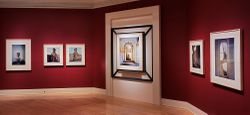
Vues et points de vue conjugue la photographie contemporaine avec des gravures datant des XVIIe et XVIIIe siècles, et établit un dialogue entre deux démarches différentes qui représentent les œuvres construites de Borromini. Les photographies, commandées au photographe torontois Edward Burtynsky, ont été prises à Rome en 1999; elles font partie d’une collection plus vaste(...)
Salle octogonale
15 mars 2000 au 7 mai 2000
Vues et points de vue : l'architecture de Borromini dans les photographies d'Edward Burtynsky
Actions:
Description:
Vues et points de vue conjugue la photographie contemporaine avec des gravures datant des XVIIe et XVIIIe siècles, et établit un dialogue entre deux démarches différentes qui représentent les œuvres construites de Borromini. Les photographies, commandées au photographe torontois Edward Burtynsky, ont été prises à Rome en 1999; elles font partie d’une collection plus vaste(...)
expositions
15 mars 2000 au
7 mai 2000
Salle octogonale
Sous-série
Opera Houses
CI001.S2.D3
Description:
Charles Rohault de Fleury's sustained involvement with the design of opera houses began with his appointment in 1846 as official architect of the existing Salle Le Pelletier, home to the *Paris Opera, and continued until an open competition was called in 1860 (Charles Garnier won this competition). During this period Rohault de Fleury submitted numerous proposals to replace theprovisional Salle Le Pelletier with a structure more appropriate to the grandeur and importance of France's national opera company. The CCA collection contains four projects related to his work for the Paris opera: two early projects (1846 and 1847) and one later one (1859) for a newopera house, and a portfolio of lithographs and drawings related to alterations and repairs to Salle Le Pelletier (1850-1854). The collection also includes Charles' earliest theatre project, a comprehensive plan for an opera house and surrounding infrastructure for the Theatre Royal Italien opera company (1838-1840), and an album containing drawings and prints of antique and contemporary theatres (1839-1854?). Charles' first project was for the Theatre Royal Italien opera company whose previous home, the Salle Favart, had burned down on the night of January 14 1838. The CCA collection contains an album of presentation drawings for a new theatre located on rue de la Paix with boutiques in the adjacent 'passages' (DR1974:0002:019:001-023). A second album consists of site plans including proposed 'maisons à loyers' (apartment buildings) and documents relating to the cost estimates and rental income for the entire project (DR1974:0002:036:001-016). The architectural style and interior arrangement of the theatre is heavily indebted to Francois Debret's Salle Le Pelletier. Charles' originality lies more in his conception of the social and economic role of the theatre in relation and integration, to its surrounding urban fabric. An explanation of the entire Theatre Royal Italien project, and Charles' role as architect in it, is found in two proposal letters (located in the Avery Library, Columbia University, NY) written by the entrepreneur Eugene Lecomte to the Minister of the Interior, Comte Duchatel, on May 15 and October 31 1839 (1). Charles' album of drawings at the CCA for the theatre and some of the cost and rental estimates are probably presentation copies directly related to the first letter, and most likely submitted to the Minister of the Interior. Charles' project was never executed, and the Italian opera company eventualy found a permanent home in the existing Salle Ventadour (1841). However, the inclusive nature of the Théâtre Royal Italien proposal, with its stress on urban development and contextuality, continued to play a seminal role in his later Paris Opera projects. Upon replacing Francois Debret as architect of Salle Le Pelletier in 1846, Charles proposed nine possible locations (site plans) for a new opera house for the Paris Opera (*Academie Royale de Musique) and, in the following year (1847) prepared a portfolio of drawings for the actual structure with an accompanying seven-page manuscript describing the project. Although executed in successive years, the site plans and 1847 drawings are conceptually related. Both components were undertaken in response to offical interest in a public competition that was never implemented (2)(3). The CCA has two sets of the nine site plans proposed in 1846 (DR1974:0002:036:001-016), one containing transfer lithographed site plans with a written analysis and cost estimate for each of the proposed locations, and the other with only the site plans (similar sets are located in the 'Archives Nationales' in France). They indicate that Charles, (heavily influenced by his Théâtre Royal Italien project) preferred the Rue de la Paix location (siteplan #3) for the new opera house. Although site plan number six, Boulevard des Capucines, was not favoured at this date, it is highly prophetic as it was the location officially chosen in 1860 for the new opera house. Apparently unique to the CCA collection is the 1847 manuscript and portfolio of drawings for the proposed opera house (DR1974:0002:036:001-016). The manuscript is both an indepth review of the requirements for a national opera house and a guide to his portfolio of drawings. Charles' conception and design continued to be strongly influenced by Debret's Salle Lepelletier, as well as his own Théâtre Italien project, and various antique and contemporary opera houses and theatres. Many of the French and Italian sources mentioned in the manuscript are collected in an album (DR1974:0002:010:001-048) as references for his own designs (4). As official architect of Salle Le pelletier, Charles was also responsible for repairs, restorations, and alterations to the existing structure. The drawings and transfer lithographs in the CCA collection (DR1974:0002:036:001-016) are primarily dated 1854, and relate to documented repair and restoration projects undertaken during this period (5)(6). The CCA collection has the presentation drawings and lithographs for the later 1859 project (DR1974:0002:027:001-027) for the Paris opera (*Theatre Imperiale de l'opera) that were sent to Achille Fould, the Minister of State. This project is probably a counterpart to a similiar one that he submitted to the Prefect of the Seine, Baron Haussmann, in the same year (7). Site plans show the opera house on an irregular polygonal site facing Boulevard des Capucines. The placement of the 'maisons à loyers' on the rear of the site reflects Charles' continued emphasis on integrating his opera projects into the surrounding urban context. In 1859, it appeared that Charles was favoured to build the new opera house. But late in the following year, a public competition was called in which Charles Garnier emerged as the victor. Although Charles did not build the final structure, his numerous projects, as exemplified in the CCA collection, were of prime importance in determining the location, configuration, and plan of the Place de l'Opera (8). * The 'Paris Opera' was France's national opera, and thus its name changed numerous times throughout its history according to altering perceptions of its role in French culture and/or changes in political regimes. For reasons of clarity, the national opera will be referred to as the Paris Opera. The names indicated in brackets with a star refer to the proper name of the opera company at the date of the project. (1) Eugene Le Comte, "Projet de Salle rue de la Paix, pour le Théâtre Royal Italien: Lettres à Monsieur le Ministre de l'Intérieur, en date des 15 mai et 31octobre 1839" (Paris: P. Dupont, 1839). (2) Christopher Curtis Mead, "Charles Garnier's Paris Opera and the Renaissance of Classicism in Nineteenth century French Architecture", 3 vols. (PhD thesis; Philadelphia: University of Pennsylvania, 1986), p. 234 and p. 956, fn. 30. (3) Monika Steinhauser, "Die Architektur des Pariser Oper" (Munich: Prestel Verlag, 1969), p. 45, fns. 143 and 144. (4) Barry Bergdoll, "Charles Rohault de Fleury: Part Three: Theatres and the Opera house", 'CCA Research Report', n.d., p. 3. (5) Larousse XIXth Century, s.v. "Rohault de Fleury, Charles". (6) Mead, p. 238. (7) Oeuvres de C. Rohault de Fleury, architecte" (Paris: Librarie centrale d'architecture, 1884).. (8) Macmillan, s.v. "Rohault de Fleury Familly".
1717-1868
Opera Houses
CI001.S2.D3
Description:
Charles Rohault de Fleury's sustained involvement with the design of opera houses began with his appointment in 1846 as official architect of the existing Salle Le Pelletier, home to the *Paris Opera, and continued until an open competition was called in 1860 (Charles Garnier won this competition). During this period Rohault de Fleury submitted numerous proposals to replace theprovisional Salle Le Pelletier with a structure more appropriate to the grandeur and importance of France's national opera company. The CCA collection contains four projects related to his work for the Paris opera: two early projects (1846 and 1847) and one later one (1859) for a newopera house, and a portfolio of lithographs and drawings related to alterations and repairs to Salle Le Pelletier (1850-1854). The collection also includes Charles' earliest theatre project, a comprehensive plan for an opera house and surrounding infrastructure for the Theatre Royal Italien opera company (1838-1840), and an album containing drawings and prints of antique and contemporary theatres (1839-1854?). Charles' first project was for the Theatre Royal Italien opera company whose previous home, the Salle Favart, had burned down on the night of January 14 1838. The CCA collection contains an album of presentation drawings for a new theatre located on rue de la Paix with boutiques in the adjacent 'passages' (DR1974:0002:019:001-023). A second album consists of site plans including proposed 'maisons à loyers' (apartment buildings) and documents relating to the cost estimates and rental income for the entire project (DR1974:0002:036:001-016). The architectural style and interior arrangement of the theatre is heavily indebted to Francois Debret's Salle Le Pelletier. Charles' originality lies more in his conception of the social and economic role of the theatre in relation and integration, to its surrounding urban fabric. An explanation of the entire Theatre Royal Italien project, and Charles' role as architect in it, is found in two proposal letters (located in the Avery Library, Columbia University, NY) written by the entrepreneur Eugene Lecomte to the Minister of the Interior, Comte Duchatel, on May 15 and October 31 1839 (1). Charles' album of drawings at the CCA for the theatre and some of the cost and rental estimates are probably presentation copies directly related to the first letter, and most likely submitted to the Minister of the Interior. Charles' project was never executed, and the Italian opera company eventualy found a permanent home in the existing Salle Ventadour (1841). However, the inclusive nature of the Théâtre Royal Italien proposal, with its stress on urban development and contextuality, continued to play a seminal role in his later Paris Opera projects. Upon replacing Francois Debret as architect of Salle Le Pelletier in 1846, Charles proposed nine possible locations (site plans) for a new opera house for the Paris Opera (*Academie Royale de Musique) and, in the following year (1847) prepared a portfolio of drawings for the actual structure with an accompanying seven-page manuscript describing the project. Although executed in successive years, the site plans and 1847 drawings are conceptually related. Both components were undertaken in response to offical interest in a public competition that was never implemented (2)(3). The CCA has two sets of the nine site plans proposed in 1846 (DR1974:0002:036:001-016), one containing transfer lithographed site plans with a written analysis and cost estimate for each of the proposed locations, and the other with only the site plans (similar sets are located in the 'Archives Nationales' in France). They indicate that Charles, (heavily influenced by his Théâtre Royal Italien project) preferred the Rue de la Paix location (siteplan #3) for the new opera house. Although site plan number six, Boulevard des Capucines, was not favoured at this date, it is highly prophetic as it was the location officially chosen in 1860 for the new opera house. Apparently unique to the CCA collection is the 1847 manuscript and portfolio of drawings for the proposed opera house (DR1974:0002:036:001-016). The manuscript is both an indepth review of the requirements for a national opera house and a guide to his portfolio of drawings. Charles' conception and design continued to be strongly influenced by Debret's Salle Lepelletier, as well as his own Théâtre Italien project, and various antique and contemporary opera houses and theatres. Many of the French and Italian sources mentioned in the manuscript are collected in an album (DR1974:0002:010:001-048) as references for his own designs (4). As official architect of Salle Le pelletier, Charles was also responsible for repairs, restorations, and alterations to the existing structure. The drawings and transfer lithographs in the CCA collection (DR1974:0002:036:001-016) are primarily dated 1854, and relate to documented repair and restoration projects undertaken during this period (5)(6). The CCA collection has the presentation drawings and lithographs for the later 1859 project (DR1974:0002:027:001-027) for the Paris opera (*Theatre Imperiale de l'opera) that were sent to Achille Fould, the Minister of State. This project is probably a counterpart to a similiar one that he submitted to the Prefect of the Seine, Baron Haussmann, in the same year (7). Site plans show the opera house on an irregular polygonal site facing Boulevard des Capucines. The placement of the 'maisons à loyers' on the rear of the site reflects Charles' continued emphasis on integrating his opera projects into the surrounding urban context. In 1859, it appeared that Charles was favoured to build the new opera house. But late in the following year, a public competition was called in which Charles Garnier emerged as the victor. Although Charles did not build the final structure, his numerous projects, as exemplified in the CCA collection, were of prime importance in determining the location, configuration, and plan of the Place de l'Opera (8). * The 'Paris Opera' was France's national opera, and thus its name changed numerous times throughout its history according to altering perceptions of its role in French culture and/or changes in political regimes. For reasons of clarity, the national opera will be referred to as the Paris Opera. The names indicated in brackets with a star refer to the proper name of the opera company at the date of the project. (1) Eugene Le Comte, "Projet de Salle rue de la Paix, pour le Théâtre Royal Italien: Lettres à Monsieur le Ministre de l'Intérieur, en date des 15 mai et 31octobre 1839" (Paris: P. Dupont, 1839). (2) Christopher Curtis Mead, "Charles Garnier's Paris Opera and the Renaissance of Classicism in Nineteenth century French Architecture", 3 vols. (PhD thesis; Philadelphia: University of Pennsylvania, 1986), p. 234 and p. 956, fn. 30. (3) Monika Steinhauser, "Die Architektur des Pariser Oper" (Munich: Prestel Verlag, 1969), p. 45, fns. 143 and 144. (4) Barry Bergdoll, "Charles Rohault de Fleury: Part Three: Theatres and the Opera house", 'CCA Research Report', n.d., p. 3. (5) Larousse XIXth Century, s.v. "Rohault de Fleury, Charles". (6) Mead, p. 238. (7) Oeuvres de C. Rohault de Fleury, architecte" (Paris: Librarie centrale d'architecture, 1884).. (8) Macmillan, s.v. "Rohault de Fleury Familly".
File 3
1717-1868


