


5707 Résultats
Classification:
expositions
expositions
Actions:
Description:
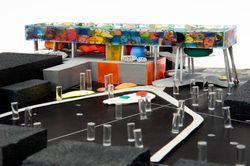
L’exposition présente les œuvres de l’architecte britannique Will Alsop, préparatoires au Sharp Centre for Design de l’Ontario College of Art and Design (OCAD) de Toronto, et s’attache en particulier au rôle qu’a joué la peinture dans son processus de création. La construction du Sharp Centre for Design de l’OCAD, conçu en collaboration avec Robbie/Young + Wright, s’est(...)
L’exposition présente les œuvres de l’architecte britannique Will Alsop, préparatoires au Sharp Centre for Design de l’Ontario College of Art and Design (OCAD) de Toronto, et s’attache en particulier au rôle qu’a joué la peinture dans son processus de création. La construction du Sharp Centre for Design de l’OCAD, conçu en collaboration avec Robbie/Young + Wright, s’est(...)
Localisation:
Salle octogonale
Salle octogonale
Date:
13 juin 2008 au 5 octobre 2008
13 juin 2008 au 5 octobre 2008
Titre:
Will Alsop : OCAD, un manifeste urbain
Actions:
Description:
L’exposition présente les œuvres de l’architecte britannique Will Alsop, préparatoires au Sharp Centre for Design de l’Ontario College of Art and Design (OCAD) de Toronto, et s’attache en particulier au rôle qu’a joué la peinture dans son processus de création. La construction du Sharp Centre for Design de l’OCAD, conçu en collaboration avec Robbie/Young + Wright, s’est(...)
Will Alsop : OCAD, un manifeste urbain
Actions:
Description:
L’exposition présente les œuvres de l’architecte britannique Will Alsop, préparatoires au Sharp Centre for Design de l’Ontario College of Art and Design (OCAD) de Toronto, et s’attache en particulier au rôle qu’a joué la peinture dans son processus de création. La construction du Sharp Centre for Design de l’OCAD, conçu en collaboration avec Robbie/Young + Wright, s’est(...)
Classification:
expositions
expositions
Date:
13 juin 2008 au
5 octobre 2008
13 juin 2008 au
5 octobre 2008
Localisation:
Salle octogonale
Salle octogonale
Niveau de description archivistique:
Projet
Projet
Titre:
Casal das Figueiras, Setubal
Casal das Figueiras, Setubal
Numéro de référence:
CD034.S1.1975.PR02
Description:
This project series contains seven reproductions of drawings displayed in the exhibit to document the Casal das Figueiras neighbourhood, in Setúbal, south of Lisbon, Portugal. The exhibit text explained that: ... the Setúbal port-city experienced the political vibrations of the revolutionary year with great intensity. The Casal das Figueiras neighbourhood was designed for a fishing community living in a difficult area to build on due to its steep incline. The challenge that the project architect Gonçalo Byrne faced was to maintain the structure of single-family housing with the outhouse or courtyard, the typology that the local populations requested, while making a large urban gesture. The proposal was based on two types of housing (the square and rectangular plans). This overcame the problem of the 36 percent slope in an architecturally striking manner, while it also managed to fulfil the major requirement inherent in any SAAL operation of minimizing costs. (The SAAL Process, Housing in Portugal 1974–76) Gonçalo Byrne worked for SAAL/Lisbon and Central South with Ana Ferreira Rebocho, Berta Sá Caetano and the residents' association Casal das Figueiras, that was founded on October 30th, 1975. The project included 420 dwellings. The operation began in July 1975 , with a construction date in October 1976. This project series contains reproductions of implementation plans and design development drawings. The original drawings were produced in 1978-1979 and were reproduced in 2015 for the exhibit.
CD034.S1.1975.PR02
Description:
This project series contains seven reproductions of drawings displayed in the exhibit to document the Casal das Figueiras neighbourhood, in Setúbal, south of Lisbon, Portugal. The exhibit text explained that: ... the Setúbal port-city experienced the political vibrations of the revolutionary year with great intensity. The Casal das Figueiras neighbourhood was designed for a fishing community living in a difficult area to build on due to its steep incline. The challenge that the project architect Gonçalo Byrne faced was to maintain the structure of single-family housing with the outhouse or courtyard, the typology that the local populations requested, while making a large urban gesture. The proposal was based on two types of housing (the square and rectangular plans). This overcame the problem of the 36 percent slope in an architecturally striking manner, while it also managed to fulfil the major requirement inherent in any SAAL operation of minimizing costs. (The SAAL Process, Housing in Portugal 1974–76) Gonçalo Byrne worked for SAAL/Lisbon and Central South with Ana Ferreira Rebocho, Berta Sá Caetano and the residents' association Casal das Figueiras, that was founded on October 30th, 1975. The project included 420 dwellings. The operation began in July 1975 , with a construction date in October 1976. This project series contains reproductions of implementation plans and design development drawings. The original drawings were produced in 1978-1979 and were reproduced in 2015 for the exhibit.
Personnes et institutions:
Date:
1978-1979
1978-1979
Titre:
Casal das Figueiras, Setubal
Actions:
CD034.S1.1975.PR02
Description:
This project series contains seven reproductions of drawings displayed in the exhibit to document the Casal das Figueiras neighbourhood, in Setúbal, south of Lisbon, Portugal. The exhibit text explained that: ... the Setúbal port-city experienced the political vibrations of the revolutionary year with great intensity. The Casal das Figueiras neighbourhood was designed for a fishing community living in a difficult area to build on due to its steep incline. The challenge that the project architect Gonçalo Byrne faced was to maintain the structure of single-family housing with the outhouse or courtyard, the typology that the local populations requested, while making a large urban gesture. The proposal was based on two types of housing (the square and rectangular plans). This overcame the problem of the 36 percent slope in an architecturally striking manner, while it also managed to fulfil the major requirement inherent in any SAAL operation of minimizing costs. (The SAAL Process, Housing in Portugal 1974–76) Gonçalo Byrne worked for SAAL/Lisbon and Central South with Ana Ferreira Rebocho, Berta Sá Caetano and the residents' association Casal das Figueiras, that was founded on October 30th, 1975. The project included 420 dwellings. The operation began in July 1975 , with a construction date in October 1976. This project series contains reproductions of implementation plans and design development drawings. The original drawings were produced in 1978-1979 and were reproduced in 2015 for the exhibit.
Casal das Figueiras, Setubal
Actions:
CD034.S1.1975.PR02
Description:
This project series contains seven reproductions of drawings displayed in the exhibit to document the Casal das Figueiras neighbourhood, in Setúbal, south of Lisbon, Portugal. The exhibit text explained that: ... the Setúbal port-city experienced the political vibrations of the revolutionary year with great intensity. The Casal das Figueiras neighbourhood was designed for a fishing community living in a difficult area to build on due to its steep incline. The challenge that the project architect Gonçalo Byrne faced was to maintain the structure of single-family housing with the outhouse or courtyard, the typology that the local populations requested, while making a large urban gesture. The proposal was based on two types of housing (the square and rectangular plans). This overcame the problem of the 36 percent slope in an architecturally striking manner, while it also managed to fulfil the major requirement inherent in any SAAL operation of minimizing costs. (The SAAL Process, Housing in Portugal 1974–76) Gonçalo Byrne worked for SAAL/Lisbon and Central South with Ana Ferreira Rebocho, Berta Sá Caetano and the residents' association Casal das Figueiras, that was founded on October 30th, 1975. The project included 420 dwellings. The operation began in July 1975 , with a construction date in October 1976. This project series contains reproductions of implementation plans and design development drawings. The original drawings were produced in 1978-1979 and were reproduced in 2015 for the exhibit.
Niveau de description archivistique:
Project
Project
Date:
1978-1979
1978-1979
Personnes et institutions:
Niveau de description archivistique:
Projet
Projet
Numéro de référence:
AP056.S1.1991.PR02
Description:
This project series documents the design of Cité Collégiale in Ottawa, Ontario from in 1991. The project number assigned by the office is unidentifiable. This project consisted of a competition entry for the first French language community college to be built in Ontario. The design proposed focused on the balance between the natural landscape of the site, located on Montreal Road at Aviation Parkway, the rigor of the study program and the relaxation of student life. Large wooded areas surrounding the campus would be preserved and four functional outdoor spaces would be created: La Place des Festivals (an esplanade), the theatre (for outdoor festivities), Le Carrefour des Étudiants (the student square), and le Foyer (next to the cafeteria). The campus also proposed la Grande Galerie, a triple-height space filled with natural light to serve as the main area where students could meet and study. Two types of school buildings were included in the proposal, consisting of a long, rectangular building for classrooms and offices, and the other, a less formal, open space with classrooms, amphitheatres, studios and laboratories. The scheme had two main entrances, with a large central tower that was visible when arriving from either direction. This was not the winning entry for the competition and the campus was eventually built by Brook, Brisbin and Baynon. The project is recorded through drawings, presentation paintings and a model dating from 1991. The drawings include site condition maps, sketches, perspectives, plans, elevations, axonometric drawings and presentation panels.
AP056.S1.1991.PR02
Description:
This project series documents the design of Cité Collégiale in Ottawa, Ontario from in 1991. The project number assigned by the office is unidentifiable. This project consisted of a competition entry for the first French language community college to be built in Ontario. The design proposed focused on the balance between the natural landscape of the site, located on Montreal Road at Aviation Parkway, the rigor of the study program and the relaxation of student life. Large wooded areas surrounding the campus would be preserved and four functional outdoor spaces would be created: La Place des Festivals (an esplanade), the theatre (for outdoor festivities), Le Carrefour des Étudiants (the student square), and le Foyer (next to the cafeteria). The campus also proposed la Grande Galerie, a triple-height space filled with natural light to serve as the main area where students could meet and study. Two types of school buildings were included in the proposal, consisting of a long, rectangular building for classrooms and offices, and the other, a less formal, open space with classrooms, amphitheatres, studios and laboratories. The scheme had two main entrances, with a large central tower that was visible when arriving from either direction. This was not the winning entry for the competition and the campus was eventually built by Brook, Brisbin and Baynon. The project is recorded through drawings, presentation paintings and a model dating from 1991. The drawings include site condition maps, sketches, perspectives, plans, elevations, axonometric drawings and presentation panels.
Personnes et institutions:
Date:
1991
1991
Titre:
Cité Collégiale Competition, Ottawa, Ontario (1991)
Actions:
AP056.S1.1991.PR02
Description:
This project series documents the design of Cité Collégiale in Ottawa, Ontario from in 1991. The project number assigned by the office is unidentifiable. This project consisted of a competition entry for the first French language community college to be built in Ontario. The design proposed focused on the balance between the natural landscape of the site, located on Montreal Road at Aviation Parkway, the rigor of the study program and the relaxation of student life. Large wooded areas surrounding the campus would be preserved and four functional outdoor spaces would be created: La Place des Festivals (an esplanade), the theatre (for outdoor festivities), Le Carrefour des Étudiants (the student square), and le Foyer (next to the cafeteria). The campus also proposed la Grande Galerie, a triple-height space filled with natural light to serve as the main area where students could meet and study. Two types of school buildings were included in the proposal, consisting of a long, rectangular building for classrooms and offices, and the other, a less formal, open space with classrooms, amphitheatres, studios and laboratories. The scheme had two main entrances, with a large central tower that was visible when arriving from either direction. This was not the winning entry for the competition and the campus was eventually built by Brook, Brisbin and Baynon. The project is recorded through drawings, presentation paintings and a model dating from 1991. The drawings include site condition maps, sketches, perspectives, plans, elevations, axonometric drawings and presentation panels.
Cité Collégiale Competition, Ottawa, Ontario (1991)
Actions:
AP056.S1.1991.PR02
Description:
This project series documents the design of Cité Collégiale in Ottawa, Ontario from in 1991. The project number assigned by the office is unidentifiable. This project consisted of a competition entry for the first French language community college to be built in Ontario. The design proposed focused on the balance between the natural landscape of the site, located on Montreal Road at Aviation Parkway, the rigor of the study program and the relaxation of student life. Large wooded areas surrounding the campus would be preserved and four functional outdoor spaces would be created: La Place des Festivals (an esplanade), the theatre (for outdoor festivities), Le Carrefour des Étudiants (the student square), and le Foyer (next to the cafeteria). The campus also proposed la Grande Galerie, a triple-height space filled with natural light to serve as the main area where students could meet and study. Two types of school buildings were included in the proposal, consisting of a long, rectangular building for classrooms and offices, and the other, a less formal, open space with classrooms, amphitheatres, studios and laboratories. The scheme had two main entrances, with a large central tower that was visible when arriving from either direction. This was not the winning entry for the competition and the campus was eventually built by Brook, Brisbin and Baynon. The project is recorded through drawings, presentation paintings and a model dating from 1991. The drawings include site condition maps, sketches, perspectives, plans, elevations, axonometric drawings and presentation panels.
Niveau de description archivistique:
Project
Project
Date:
1991
1991
Personnes et institutions:
Classification:
articles
articles
Titre:
Cultiver nos relations
Cultiver nos relations
Actions:
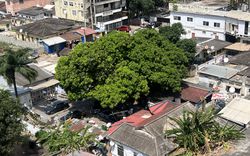
Mae-ling Lokko et Elizabeth (Lizzie) Biney-Amissah s’intéressent à l’interconnexion entre énergie, matériaux et reconstruction communautaire
Titre:
Cultiver nos relations
Mae-ling Lokko et Elizabeth (Lizzie) Biney-Amissah s’intéressent à l’interconnexion entre énergie, matériaux et reconstruction communautaire
Actions:
Cultiver nos relations
Mae-ling Lokko et Elizabeth (Lizzie) Biney-Amissah s’intéressent à l’interconnexion entre énergie, matériaux et reconstruction communautaire
Actions:
Dossier:
Forces de friction
Forces de friction
Classification:
documents textuels
documents textuels
Numéro de référence:
ARCH186972
Description:
drafts for "Planning for Leisure" - National Social Life Conference - The Christian in the Community, 1965
ARCH186972
Description:
drafts for "Planning for Leisure" - National Social Life Conference - The Christian in the Community, 1965
Personnes et institutions:
Date:
1965
1965
Titre:
Speeches and Articles
Actions:
ARCH186972
Description:
drafts for "Planning for Leisure" - National Social Life Conference - The Christian in the Community, 1965
Speeches and Articles
Actions:
ARCH186972
Description:
drafts for "Planning for Leisure" - National Social Life Conference - The Christian in the Community, 1965
Classification:
documents textuels
documents textuels
Date:
1965
1965
Personnes et institutions:
Classification:
articles
articles
Titre:
La rivière comme invitation
La rivière comme invitation
Actions:
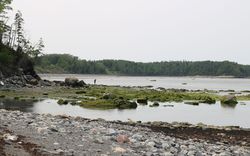
Jia Chen Mi, Marie-Ellen Houde-Hostland et Hannah Thiessen repensent les relations avec la rivière Mitis
Publié:
12 février 2024
12 février 2024
Titre:
La rivière comme invitation
Jia Chen Mi, Marie-Ellen Houde-Hostland et Hannah Thiessen repensent les relations avec la rivière Mitis
Actions:
La rivière comme invitation
Jia Chen Mi, Marie-Ellen Houde-Hostland et Hannah Thiessen repensent les relations avec la rivière Mitis
Actions:
Classification:
articles
articles
Titre:
Appeler chez nous
Appeler chez nous
Actions:
Rafico Ruiz s'entretient avec Geronimo Inutiq au sujet de la radio communautaire, de ce qui constitue le chez soi et de l'art médiatique
Titre:
Appeler chez nous
Rafico Ruiz s'entretient avec Geronimo Inutiq au sujet de la radio communautaire, de ce qui constitue le chez soi et de l'art médiatique
Actions:
Appeler chez nous
Rafico Ruiz s'entretient avec Geronimo Inutiq au sujet de la radio communautaire, de ce qui constitue le chez soi et de l'art médiatique
Actions:
Classification:
photographies
Quantité:
6 photograph(s)
photographies
Quantité:
6 photograph(s)
Numéro de référence:
ARCH272058
Description:
Group consists of exterior views of the Ike Williams Community Center in Trenton, New Jersey.
ARCH272058
Description:
Group consists of exterior views of the Ike Williams Community Center in Trenton, New Jersey.
Personnes et institutions:
Date:
1977 or after
1977 or after
Titre:
PHOTOGRAPHS / MILLS/WRIGHT RESIDENCE
Actions:
ARCH272058
Description:
Group consists of exterior views of the Ike Williams Community Center in Trenton, New Jersey.
PHOTOGRAPHS / MILLS/WRIGHT RESIDENCE
Actions:
ARCH272058
Description:
Group consists of exterior views of the Ike Williams Community Center in Trenton, New Jersey.
Classification:
photographies
Quantité:
6 photograph(s)
photographies
Quantité:
6 photograph(s)
Date:
1977 or after
1977 or after
Personnes et institutions:
Niveau de description archivistique:
Projet
Projet
Numéro de référence:
CD034.S1.1974.PR04
Description:
This project series contains reproductions of photographs, drawings and panels displayed in the exhibit to document the São Victor neighbourhood, in Porto, Portugal. The exhibit text explained that: ... the group of 12 houses built for the São Victor neighbourhood was one of SAAL's most important operations, despite the fact that only a small part of the project was carried out. Maintaining the urban fabric of the 'ilhas' (islands) and their internal community ties, the São Victor design combined the responsiveness inherent in the participatory nature of the project with architectural and technical precision. An important case study, it led Álvaro Siza Vieira, the project architect, being invited to design projects in Berlin and The Hague in the following decade. In many aspects, São Victor represents an ethically and politically-minded architectural practice, with a stress on understanding the link between being responsive to the voice of the people and the permanence of architectural design. (The SAAL Process, Housing in Portugal 1974–76) Álvaro Siza worked for SAAL/North with Adalberto Dias, Domingos Tavares, Eduardo Souto de Moura, Francisco Guedes, Graça Nieto, Manuel Borges, Manuela Sambade, Paula Cabral and the residents' association S. Victor, that was founded on April 14th, 1975. The first phase of the project included 32 dwellings and the second, 20 dwellings. The operation began in November 1974, with a construction date in October 1975. This project series contains reproductions of design development drawings, exhibition panels and photographs. The original material was produced around 1974-1975 and were reproduced in 2015 for the exhibit.
CD034.S1.1974.PR04
Description:
This project series contains reproductions of photographs, drawings and panels displayed in the exhibit to document the São Victor neighbourhood, in Porto, Portugal. The exhibit text explained that: ... the group of 12 houses built for the São Victor neighbourhood was one of SAAL's most important operations, despite the fact that only a small part of the project was carried out. Maintaining the urban fabric of the 'ilhas' (islands) and their internal community ties, the São Victor design combined the responsiveness inherent in the participatory nature of the project with architectural and technical precision. An important case study, it led Álvaro Siza Vieira, the project architect, being invited to design projects in Berlin and The Hague in the following decade. In many aspects, São Victor represents an ethically and politically-minded architectural practice, with a stress on understanding the link between being responsive to the voice of the people and the permanence of architectural design. (The SAAL Process, Housing in Portugal 1974–76) Álvaro Siza worked for SAAL/North with Adalberto Dias, Domingos Tavares, Eduardo Souto de Moura, Francisco Guedes, Graça Nieto, Manuel Borges, Manuela Sambade, Paula Cabral and the residents' association S. Victor, that was founded on April 14th, 1975. The first phase of the project included 32 dwellings and the second, 20 dwellings. The operation began in November 1974, with a construction date in October 1975. This project series contains reproductions of design development drawings, exhibition panels and photographs. The original material was produced around 1974-1975 and were reproduced in 2015 for the exhibit.
Personnes et institutions:
Date:
circa 1974-1975
circa 1974-1975
Titre:
São Victor, Porto
Actions:
CD034.S1.1974.PR04
Description:
This project series contains reproductions of photographs, drawings and panels displayed in the exhibit to document the São Victor neighbourhood, in Porto, Portugal. The exhibit text explained that: ... the group of 12 houses built for the São Victor neighbourhood was one of SAAL's most important operations, despite the fact that only a small part of the project was carried out. Maintaining the urban fabric of the 'ilhas' (islands) and their internal community ties, the São Victor design combined the responsiveness inherent in the participatory nature of the project with architectural and technical precision. An important case study, it led Álvaro Siza Vieira, the project architect, being invited to design projects in Berlin and The Hague in the following decade. In many aspects, São Victor represents an ethically and politically-minded architectural practice, with a stress on understanding the link between being responsive to the voice of the people and the permanence of architectural design. (The SAAL Process, Housing in Portugal 1974–76) Álvaro Siza worked for SAAL/North with Adalberto Dias, Domingos Tavares, Eduardo Souto de Moura, Francisco Guedes, Graça Nieto, Manuel Borges, Manuela Sambade, Paula Cabral and the residents' association S. Victor, that was founded on April 14th, 1975. The first phase of the project included 32 dwellings and the second, 20 dwellings. The operation began in November 1974, with a construction date in October 1975. This project series contains reproductions of design development drawings, exhibition panels and photographs. The original material was produced around 1974-1975 and were reproduced in 2015 for the exhibit.
São Victor, Porto
Actions:
CD034.S1.1974.PR04
Description:
This project series contains reproductions of photographs, drawings and panels displayed in the exhibit to document the São Victor neighbourhood, in Porto, Portugal. The exhibit text explained that: ... the group of 12 houses built for the São Victor neighbourhood was one of SAAL's most important operations, despite the fact that only a small part of the project was carried out. Maintaining the urban fabric of the 'ilhas' (islands) and their internal community ties, the São Victor design combined the responsiveness inherent in the participatory nature of the project with architectural and technical precision. An important case study, it led Álvaro Siza Vieira, the project architect, being invited to design projects in Berlin and The Hague in the following decade. In many aspects, São Victor represents an ethically and politically-minded architectural practice, with a stress on understanding the link between being responsive to the voice of the people and the permanence of architectural design. (The SAAL Process, Housing in Portugal 1974–76) Álvaro Siza worked for SAAL/North with Adalberto Dias, Domingos Tavares, Eduardo Souto de Moura, Francisco Guedes, Graça Nieto, Manuel Borges, Manuela Sambade, Paula Cabral and the residents' association S. Victor, that was founded on April 14th, 1975. The first phase of the project included 32 dwellings and the second, 20 dwellings. The operation began in November 1974, with a construction date in October 1975. This project series contains reproductions of design development drawings, exhibition panels and photographs. The original material was produced around 1974-1975 and were reproduced in 2015 for the exhibit.
Niveau de description archivistique:
Project
Project
Date:
circa 1974-1975
circa 1974-1975
Personnes et institutions:
Classification:
dessins
dessins
Numéro de référence:
ARCH262146
Description:
Includes the following projects: Man in the Community Pavilion, Expo '67, and Canadian Pavilion, Expo '70.
ARCH262146
Description:
Includes the following projects: Man in the Community Pavilion, Expo '67, and Canadian Pavilion, Expo '70.
Personnes et institutions:
Date:
circa 1953-2002
circa 1953-2002
Titre:
Drawings for various projects to be reduced for unknown publication
Actions:
ARCH262146
Description:
Includes the following projects: Man in the Community Pavilion, Expo '67, and Canadian Pavilion, Expo '70.
Drawings for various projects to be reduced for unknown publication
Actions:
ARCH262146
Description:
Includes the following projects: Man in the Community Pavilion, Expo '67, and Canadian Pavilion, Expo '70.
Classification:
dessins
dessins
Date:
circa 1953-2002
circa 1953-2002
Personnes et institutions:


