


4288 Résultats
Classification:
livres
livres

Actions:
Prix:
$60.00
(disponible sur commande)
Résumé:
Mouritsen takes readers on a comprehensive tour of seaweed, describing what seaweeds actually are (algae, not plants) and how people of different cultures have utilized them since prehistoric times for a whole array of purposes —as food and fodder, for the production of salt, in medicine and cosmetics, as fertilizer, in construction, and for a number of industrial end(...)
Titre:
Seaweeds: edible, available & sustainable
Actions:
Prix:
$60.00
(disponible sur commande)
Résumé:
Mouritsen takes readers on a comprehensive tour of seaweed, describing what seaweeds actually are (algae, not plants) and how people of different cultures have utilized them since prehistoric times for a whole array of purposes —as food and fodder, for the production of salt, in medicine and cosmetics, as fertilizer, in construction, and for a number of industrial end uses, to name just a few. He reveals the vast abundance of minerals, trace elements, proteins, vitamins, dietary fiber, and precious polyunsaturated fatty acids found in seaweeds, and provides instructions and recipes on how to prepare a variety of dishes that incorporate raw and processed seaweeds. Approaching the subject from not only a gastronomic but also a scientific point of view, Mouritsen sets out to examine the past and present uses of this sustainable resource, keeping in mind how it could be exploited for the future.
Classification:
livres
livres
Publication:
avril 2013
avril 2013
Classification:
livres
livres

Actions:
Prix:
$54.00
(disponible sur commande)
Résumé:
In "Designing a Garden", Van Valkenburgh presents the design of the Monk's Garden at the Isabella Stewart Gardner Museum, an intimate, walled garden that Laurie Olin has described as "a masterpiece, and not a minor one." The book documents the evolution of the garden's design, which is based on the concept of meandering paths through a dreamlike woodland to create a(...)
Publication:
octobre 2019
octobre 2019
Titre:
Designing a garden: Monk's Garden at the Isabella Stewart Gardner Museum
Actions:
Prix:
$54.00
(disponible sur commande)
Résumé:
In "Designing a Garden", Van Valkenburgh presents the design of the Monk's Garden at the Isabella Stewart Gardner Museum, an intimate, walled garden that Laurie Olin has described as "a masterpiece, and not a minor one." The book documents the evolution of the garden's design, which is based on the concept of meandering paths through a dreamlike woodland to create a contemplative space. Sketches and models show how the idea was worked out, and lush photographs reveal the completed garden through the seasons. Van Valkenburgh's text explores the origins of his love of landscape and plants in his family farm in Upstate New York and how this has influenced his intuitions as a designer. He shares the full background story of the Monk's Garden, focusing on the experimental nature of design work as well as the challenges and satisfactions of the small scale and the historic and cultural context.
Classification:
livres
livres
Publication:
octobre 2019
octobre 2019
Classification:
livres
livres
Actions:
Exemplaires:
Description:
xv, 275 pages ; 22 cm
Description:
xv, 275 pages ; 22 cm
Auteur:
Sujet:
Publication:
London : Printed for G. Nicol, G.G. and J. Robinson, and J. Debrett, 1795.
London : Printed for G. Nicol, G.G. and J. Robinson, and J. Debrett, 1795.
Titre:
A review of the Landscape, a didactic poem : also of an Essay on the picturesque, together with practical remarks on rural ornament / by the author of "Planting and ornamental gardening ; a practical treatise."
Actions:
Exemplaires:
Description:
xv, 275 pages ; 22 cm
A review of the Landscape, a didactic poem : also of an Essay on the picturesque, together with practical remarks on rural ornament / by the author of "Planting and ornamental gardening ; a practical treatise."
Actions:
Exemplaires:
Description:
xv, 275 pages ; 22 cm
Classification:
livres
livres
Publication:
London : Printed for G. Nicol, G.G. and J. Robinson, and J. Debrett, 1795.
London : Printed for G. Nicol, G.G. and J. Robinson, and J. Debrett, 1795.
Auteur:
Sujet:
Classification:
livres
livres
Actions:
Exemplaires:
Description:
xii, 237 pages : illustrations (some color), color map ; 29 cm
Description:
xii, 237 pages : illustrations (some color), color map ; 29 cm
Auteur:
Sujet:
Publication:
Baton Rouge : Louisiana State University Press, ©1997.
Baton Rouge : Louisiana State University Press, ©1997.
Titre:
The gardens of Louisiana : places of work and wonder / photographs by A.J. Meek ; text by Suzanne Turner.
Actions:
Exemplaires:
Description:
xii, 237 pages : illustrations (some color), color map ; 29 cm
The gardens of Louisiana : places of work and wonder / photographs by A.J. Meek ; text by Suzanne Turner.
Actions:
Exemplaires:
Description:
xii, 237 pages : illustrations (some color), color map ; 29 cm
Classification:
livres
livres
Publication:
Baton Rouge : Louisiana State University Press, ©1997.
Baton Rouge : Louisiana State University Press, ©1997.
Auteur:
Sujet:
Classification:
livres
livres
Exemplaires:
Description:
xxxi, 368 pages : illustrations, maps ; 25 cm
Description:
xxxi, 368 pages : illustrations, maps ; 25 cm
Auteur:
Sujet:
Publication:
Cambridge ; New York : Cambridge University Press, 1992.
Cambridge ; New York : Cambridge University Press, 1992.
Titre:
Architecture of Mughal India / Catherine B. Asher.
Actions:
Exemplaires:
Description:
xxxi, 368 pages : illustrations, maps ; 25 cm
Architecture of Mughal India / Catherine B. Asher.
Actions:
Exemplaires:
Description:
xxxi, 368 pages : illustrations, maps ; 25 cm
Classification:
livres
livres
Publication:
Cambridge ; New York : Cambridge University Press, 1992.
Cambridge ; New York : Cambridge University Press, 1992.
Auteur:
Sujet:
Classification:
livres
livres

Actions:
Prix:
$65.00
(disponible en magasin)
Résumé:
An extreme weather event hit north-eastern Italy in October 2018. The Sirocco wind blew up to 200 kilometres per hour through the Dolomite valleys, knocking some 14 million trees to the ground. The incessant rain caused torrents to overflow, dragging logs and debris downstream. Overnight, the inhabitants of a number of mountain communities in Trentino,Veneto and(...)
Titre:
Matteo de Mayda: There's no calm after the storm
Actions:
Prix:
$65.00
(disponible en magasin)
Résumé:
An extreme weather event hit north-eastern Italy in October 2018. The Sirocco wind blew up to 200 kilometres per hour through the Dolomite valleys, knocking some 14 million trees to the ground. The incessant rain caused torrents to overflow, dragging logs and debris downstream. Overnight, the inhabitants of a number of mountain communities in Trentino,Veneto and Friuli-Venezia Giulia found their cellars flooded and even their houses torn apart by the winds. More than six years later, the consequences of storm Vaia are still visible and tangible. The slopes of various mountains are barren. The remaining forests have been invaded by the spruce bark beetle: a parasite that feeds on wood. Without the plants, there is no protection against landslides and avalanches. While experts and locals are rolling up their sleeves to try and bring the situation back to normal, the total economic damage has been estimated at three billion euros.
Classification:
livres
livres
Publication:
juin 2025
juin 2025
Sujet:
Monographies photo
Monographies photo
Classification:
livres
livres
Actions:
Prix:
$23.95
(disponible sur commande)
Résumé:
Some thousands of years ago, the world was home to an immense variety of large mammals. From wooly mammoths and saber-toothed tigers to giant ground sloths and armadillos the size of automobiles, these spectacular creatures roamed freely. Then human beings arrived. Devouring their way down the food chain as they spread across the planet, they began a process of voracious(...)
Titre:
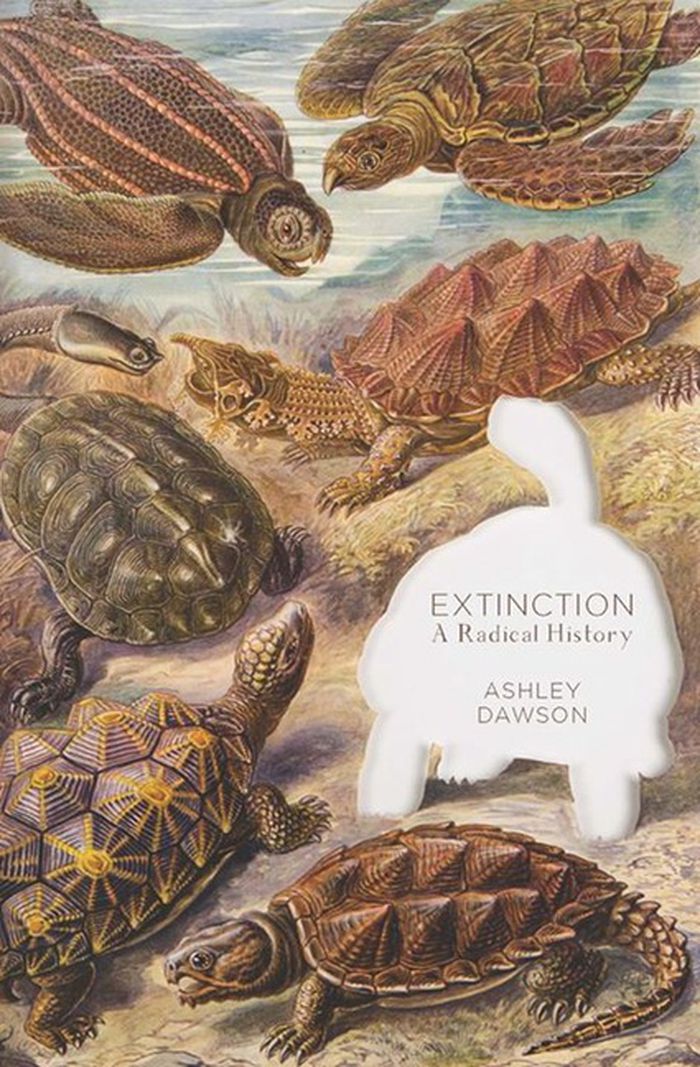
Extinction: a radical history
Actions:
Prix:
$23.95
(disponible sur commande)
Résumé:
Some thousands of years ago, the world was home to an immense variety of large mammals. From wooly mammoths and saber-toothed tigers to giant ground sloths and armadillos the size of automobiles, these spectacular creatures roamed freely. Then human beings arrived. Devouring their way down the food chain as they spread across the planet, they began a process of voracious extinction that has continued to the present. For Ashley Dawson, this is the product of a global attack on the commons, the great trove of air, water, plants and creatures, as well as collectively created cultural forms such as language, that have been regarded traditionally as the inheritance of humanity as a whole. This attack has its genesis in the need for capital to expand relentlessly into all spheres of life. Extinction, Dawson argues, cannot be understood in isolation from a critique of our economic system. To achieve this we need to transgress the boundaries between science, environmentalism and radical politics.
Classification:
livres
livres
Publication:
juillet 2016
juillet 2016
Classification:
livres
livres
Actions:
Prix:
$36.00
(disponible sur commande)
Résumé:
Coffee, tea, and chocolate were all the rage in Enlightenment Europe. These fashionable beverages profoundly shaped modes of sociability and patterns of consumption, yet none of the plants required for their preparation was native to the continent: coffee was imported from the Levant, tea from Asia, and chocolate from Mesoamerica. Their introduction to 17th-century Europe(...)
Titre:
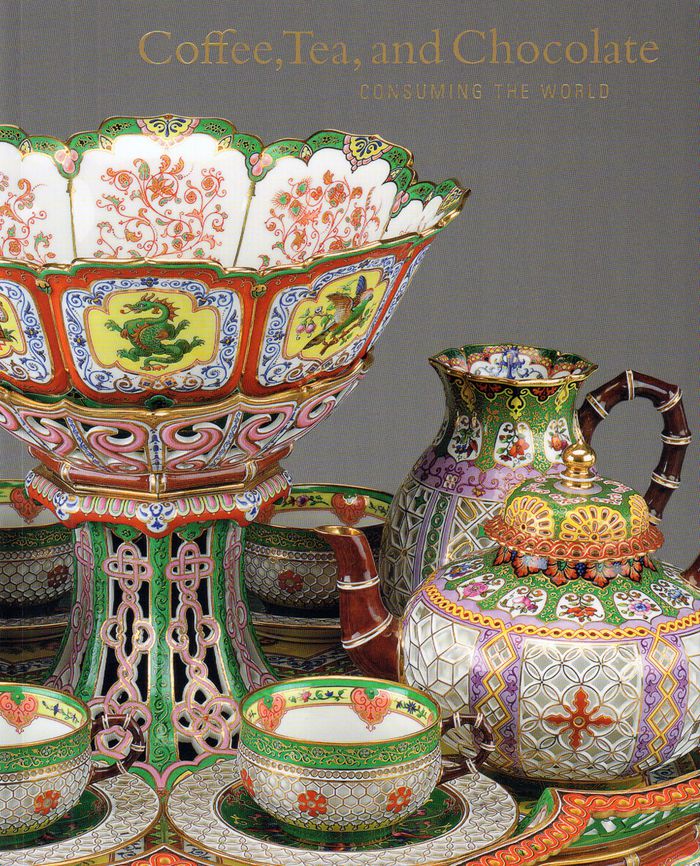
Coffee, tea, and chocolate: consuming the world
Actions:
Prix:
$36.00
(disponible sur commande)
Résumé:
Coffee, tea, and chocolate were all the rage in Enlightenment Europe. These fashionable beverages profoundly shaped modes of sociability and patterns of consumption, yet none of the plants required for their preparation was native to the continent: coffee was imported from the Levant, tea from Asia, and chocolate from Mesoamerica. Their introduction to 17th-century Europe revolutionized drinking habits and social customs. It also spurred an insatiable demand for specialized vessels such as hot beverage services and tea canisters, coffee cups and chocolate pots. This beautiful book demonstrates how the paraphernalia associated with coffee, tea, and chocolate can eloquently evoke the culture of these new beverages and the material pleasures that surrounded them. Contributors address such topics as the politics of coffee consumption in 18th-century Germany; 18th-century visual satires on the European consumption of tea, coffee, and chocolate; and the design history of coffee pots in the United States between the colonial period and the present.
Classification:
livres
livres
Publication:
novembre 2016
novembre 2016
Sujet:
Bouffe
Bouffe
Classification:
livres
livres

Actions:
Prix:
$78.95
(disponible sur commande)
Résumé:
South of Geneva, Switzerland, the Aire River runs across a plain that for centuries has been agricultural land. Since the late nineteenth century, the waterway has been embanked for flood protection, which has caused a gradual loss of habitat for a large variety of plants and animals. In 2001, a decision was made to renaturalize the river. Yet rather than merely(...)
Titre:
Aire: the river and its double
Actions:
Prix:
$78.95
(disponible sur commande)
Résumé:
South of Geneva, Switzerland, the Aire River runs across a plain that for centuries has been agricultural land. Since the late nineteenth century, the waterway has been embanked for flood protection, which has caused a gradual loss of habitat for a large variety of plants and animals. In 2001, a decision was made to renaturalize the river. Yet rather than merely reconstructing the river’s former natural bed, Superpositions, the association of firms commissioned with the project, applied “topographic imagination,” a method that combines the embanked channel with a newly designed pasture landscape. This new book documents that renaturalization project through drawings, images of construction work, and images of the new waterway. Essays and commentary by international contributors Jean-Marc Besse, Lorette Coen, Gerorges Descombes, G. Mathias Kondolf, Elissa Rosenberg, Gilles A. Tiberghien, and Marc Treib demonstrate how the restored river has been transformed, becoming again a characteristic feature of this landscape on the fringe of the city.
Classification:
livres
livres
Publication:
août 2018
août 2018
Sujet:
Jardins
Jardins
Classification:
livres
livres
Actions:
Prix:
$9.95
(disponible sur commande)
Résumé:
The use of glass as a building material was encouraged in particular by garden design, as the protection of exotic plants required the construction of greenhouses and orangeries. In a record time of just five months, Joseph Paxton, himself a garden designer, put up the Crystal Palace in London's Hyde Park for the Great Exhibition of 1851. A totally glazed exhibition hall,(...)
Publication:
octobre 2008, Köln
octobre 2008, Köln
Titre:
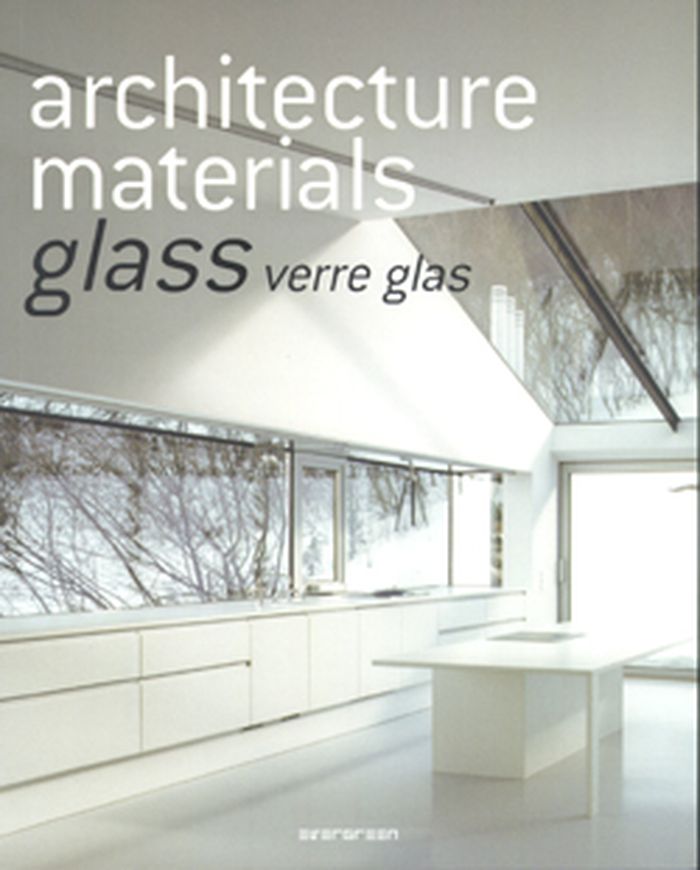
Architecture materials glass verre glas
Actions:
Prix:
$9.95
(disponible sur commande)
Résumé:
The use of glass as a building material was encouraged in particular by garden design, as the protection of exotic plants required the construction of greenhouses and orangeries. In a record time of just five months, Joseph Paxton, himself a garden designer, put up the Crystal Palace in London's Hyde Park for the Great Exhibition of 1851. A totally glazed exhibition hall, of gigantic proportions by the standards of the time, it was a milestone in the history of building in glass. The result was a totally new spatial quality and a new aesthetic, as interior and exterior could now enter into a quite unique mutual relationship. Since then, architecture without glass has been inconceivable, and glass has been used as a construction material by renowned architects worldwide for industrial buildings and private houses. Glass masterpieces, erected in particular in combination with other materials, for example, wood, stone or steel, demonstrate the potential and variety of glass architecture.
Classification:
livres
livres
Publication:
octobre 2008, Köln
octobre 2008, Köln


