


6146 Résultats
Classification:
archives
Niveau de description archivistique:
Fonds
archives
Niveau de description archivistique:
Fonds
Numéro de référence:
AP074
Résumé:
The Catherine Chard Wisnicki fonds contains photographs dating from about 1947, of a house project in West Vancouver which Chard Wisnicki, the first female graduate of the McGill School of Architecture, was assistant architect. The fonds also contains a videocassette recording of an interview with Chard Wisnicki from 1995, and one textual document from 1997.
AP074
Résumé:
The Catherine Chard Wisnicki fonds contains photographs dating from about 1947, of a house project in West Vancouver which Chard Wisnicki, the first female graduate of the McGill School of Architecture, was assistant architect. The fonds also contains a videocassette recording of an interview with Chard Wisnicki from 1995, and one textual document from 1997.
Personnes et institutions:
Date:
[ca. 1947], 1995, 1997
[ca. 1947], 1995, 1997
Titre:
Fonds Catherine Chard Wisnicki
Actions:
AP074
Résumé:
The Catherine Chard Wisnicki fonds contains photographs dating from about 1947, of a house project in West Vancouver which Chard Wisnicki, the first female graduate of the McGill School of Architecture, was assistant architect. The fonds also contains a videocassette recording of an interview with Chard Wisnicki from 1995, and one textual document from 1997.
Fonds Catherine Chard Wisnicki
Actions:
AP074
Résumé:
The Catherine Chard Wisnicki fonds contains photographs dating from about 1947, of a house project in West Vancouver which Chard Wisnicki, the first female graduate of the McGill School of Architecture, was assistant architect. The fonds also contains a videocassette recording of an interview with Chard Wisnicki from 1995, and one textual document from 1997.
Classification:
archives
Niveau de description archivistique:
Fonds
archives
Niveau de description archivistique:
Fonds
Date:
[ca. 1947], 1995, 1997
[ca. 1947], 1995, 1997
Personnes et institutions:
Classification:
événements
événements
Description:
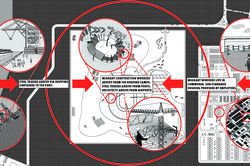
Mabel O. Wilson et Jordan Carver présentent le projet de plaidoyer en cours intitulé « Who Builds Your Architecture ? » (WBYA?), qui demande aux architectes et aux professionnels des disciplines associées de mieux comprendre comment la production de bâtiments lie leurs pratiques aux travailleurs migrants de la construction qui construisent leur design. WBYA?, un groupe de(...)
Mabel O. Wilson et Jordan Carver présentent le projet de plaidoyer en cours intitulé « Who Builds Your Architecture ? » (WBYA?), qui demande aux architectes et aux professionnels des disciplines associées de mieux comprendre comment la production de bâtiments lie leurs pratiques aux travailleurs migrants de la construction qui construisent leur design. WBYA?, un groupe de(...)
Date:
28 janvier 2016
28 janvier 2016
Titre:
Pratiquer le plaidoyer : Who Builds Your Architecture?
Actions:
Description:
Mabel O. Wilson et Jordan Carver présentent le projet de plaidoyer en cours intitulé « Who Builds Your Architecture ? » (WBYA?), qui demande aux architectes et aux professionnels des disciplines associées de mieux comprendre comment la production de bâtiments lie leurs pratiques aux travailleurs migrants de la construction qui construisent leur design. WBYA?, un groupe de(...)
Pratiquer le plaidoyer : Who Builds Your Architecture?
Actions:
Description:
Mabel O. Wilson et Jordan Carver présentent le projet de plaidoyer en cours intitulé « Who Builds Your Architecture ? » (WBYA?), qui demande aux architectes et aux professionnels des disciplines associées de mieux comprendre comment la production de bâtiments lie leurs pratiques aux travailleurs migrants de la construction qui construisent leur design. WBYA?, un groupe de(...)
Classification:
événements
événements
Date:
28 janvier 2016
28 janvier 2016
Niveau de description archivistique:
Projet
Projet
Numéro de référence:
AP194.S1.1997.PR02
Description:
Project records document the design process for OCEAN North’s competition entry for the Jyväskylä Music and Arts Centre in 1997. The project was titled Terra Cultura by OCEAN North. The competition was to create a multi-usage space that would include a venue for the symphonic orchestra, a music school, exhibition spaces and the possibility to host a variety of small cultural events in the Finnish city of Jyväskylä. The proposed site is in the center of the town, across the street from the Jyväskylä city church and its park, and nearby buildings designed by Alvar Aalto. OCEAN North’s concept presents a topological surface as an extension of the surrounding urban scape with two masses that would host the formal functions of the building (concert hall, music school, exhibition halls). The two volumes, or raised blocks, are divided along a diagonal elevated space, which is the extension of the ground’s topological surface filled and dubbed “Liquid Flow Space” by the design team. In their interview with Greg Lynn, Johan Bettum and Kivi Sotamaa mentioned that the idea for Jyväskylä was that it was a cloud. To reach this goal, the team used CAD software to trace streams of particles as a modelling approach. The masses of linear elements that were generated were further deconstructed and turned into “peels” and rearranged to create the masses of the building. Physical models were also used to test and further what had emerged from the digital design process, with results being fed back into the digital drawings. During the process, Bettum also brought in the idea of the internalisation of the outside, taking inspiration from the Centre Georges Pompidou. Digital records document the creative process with raster and vector images, CAD drawings and models, and few digital textual records describing the project and the program charts. Drawings and models show site and building plans, perspectives and sections; particles streaming and resulting linear masses; peels and sections identified per color; and renderings of aerials, perspectives and elevation views. OCEAN North seems to have mostly used Microstation for modelling, although there are a few files created with form*Z and 3D Studio. Some of the raster images might have been created with these software as well, showing a given stage of the design process and including renderings. There are also screen captures showing the top, front, left and perspective views of 3D models. Adobe Photoshop and Illustrator were also used to create and modify drawings and diagrams. Program charts were created in Microsoft Excel. Sources: Softspace: from a representation of form to a simulation of space, Edited by Sean Lally and Jessica Young. London, New York: Routledge, 2007. Greg Lynn, ed. Archaeology of the Digital 17: OCEAN North, Jyväskylä Music and Arts Centre, Montréal: Canadian Centre for Architecture, 2017. ePub.
AP194.S1.1997.PR02
Description:
Project records document the design process for OCEAN North’s competition entry for the Jyväskylä Music and Arts Centre in 1997. The project was titled Terra Cultura by OCEAN North. The competition was to create a multi-usage space that would include a venue for the symphonic orchestra, a music school, exhibition spaces and the possibility to host a variety of small cultural events in the Finnish city of Jyväskylä. The proposed site is in the center of the town, across the street from the Jyväskylä city church and its park, and nearby buildings designed by Alvar Aalto. OCEAN North’s concept presents a topological surface as an extension of the surrounding urban scape with two masses that would host the formal functions of the building (concert hall, music school, exhibition halls). The two volumes, or raised blocks, are divided along a diagonal elevated space, which is the extension of the ground’s topological surface filled and dubbed “Liquid Flow Space” by the design team. In their interview with Greg Lynn, Johan Bettum and Kivi Sotamaa mentioned that the idea for Jyväskylä was that it was a cloud. To reach this goal, the team used CAD software to trace streams of particles as a modelling approach. The masses of linear elements that were generated were further deconstructed and turned into “peels” and rearranged to create the masses of the building. Physical models were also used to test and further what had emerged from the digital design process, with results being fed back into the digital drawings. During the process, Bettum also brought in the idea of the internalisation of the outside, taking inspiration from the Centre Georges Pompidou. Digital records document the creative process with raster and vector images, CAD drawings and models, and few digital textual records describing the project and the program charts. Drawings and models show site and building plans, perspectives and sections; particles streaming and resulting linear masses; peels and sections identified per color; and renderings of aerials, perspectives and elevation views. OCEAN North seems to have mostly used Microstation for modelling, although there are a few files created with form*Z and 3D Studio. Some of the raster images might have been created with these software as well, showing a given stage of the design process and including renderings. There are also screen captures showing the top, front, left and perspective views of 3D models. Adobe Photoshop and Illustrator were also used to create and modify drawings and diagrams. Program charts were created in Microsoft Excel. Sources: Softspace: from a representation of form to a simulation of space, Edited by Sean Lally and Jessica Young. London, New York: Routledge, 2007. Greg Lynn, ed. Archaeology of the Digital 17: OCEAN North, Jyväskylä Music and Arts Centre, Montréal: Canadian Centre for Architecture, 2017. ePub.
Personnes et institutions:
Date:
1997-1998
1997-1998
Titre:
Terra Cultura – Jyväskylä Music and Arts Centre, international competition entry, Jyväskylä, Finland (1997)
Actions:
AP194.S1.1997.PR02
Description:
Project records document the design process for OCEAN North’s competition entry for the Jyväskylä Music and Arts Centre in 1997. The project was titled Terra Cultura by OCEAN North. The competition was to create a multi-usage space that would include a venue for the symphonic orchestra, a music school, exhibition spaces and the possibility to host a variety of small cultural events in the Finnish city of Jyväskylä. The proposed site is in the center of the town, across the street from the Jyväskylä city church and its park, and nearby buildings designed by Alvar Aalto. OCEAN North’s concept presents a topological surface as an extension of the surrounding urban scape with two masses that would host the formal functions of the building (concert hall, music school, exhibition halls). The two volumes, or raised blocks, are divided along a diagonal elevated space, which is the extension of the ground’s topological surface filled and dubbed “Liquid Flow Space” by the design team. In their interview with Greg Lynn, Johan Bettum and Kivi Sotamaa mentioned that the idea for Jyväskylä was that it was a cloud. To reach this goal, the team used CAD software to trace streams of particles as a modelling approach. The masses of linear elements that were generated were further deconstructed and turned into “peels” and rearranged to create the masses of the building. Physical models were also used to test and further what had emerged from the digital design process, with results being fed back into the digital drawings. During the process, Bettum also brought in the idea of the internalisation of the outside, taking inspiration from the Centre Georges Pompidou. Digital records document the creative process with raster and vector images, CAD drawings and models, and few digital textual records describing the project and the program charts. Drawings and models show site and building plans, perspectives and sections; particles streaming and resulting linear masses; peels and sections identified per color; and renderings of aerials, perspectives and elevation views. OCEAN North seems to have mostly used Microstation for modelling, although there are a few files created with form*Z and 3D Studio. Some of the raster images might have been created with these software as well, showing a given stage of the design process and including renderings. There are also screen captures showing the top, front, left and perspective views of 3D models. Adobe Photoshop and Illustrator were also used to create and modify drawings and diagrams. Program charts were created in Microsoft Excel. Sources: Softspace: from a representation of form to a simulation of space, Edited by Sean Lally and Jessica Young. London, New York: Routledge, 2007. Greg Lynn, ed. Archaeology of the Digital 17: OCEAN North, Jyväskylä Music and Arts Centre, Montréal: Canadian Centre for Architecture, 2017. ePub.
Terra Cultura – Jyväskylä Music and Arts Centre, international competition entry, Jyväskylä, Finland (1997)
Actions:
AP194.S1.1997.PR02
Description:
Project records document the design process for OCEAN North’s competition entry for the Jyväskylä Music and Arts Centre in 1997. The project was titled Terra Cultura by OCEAN North. The competition was to create a multi-usage space that would include a venue for the symphonic orchestra, a music school, exhibition spaces and the possibility to host a variety of small cultural events in the Finnish city of Jyväskylä. The proposed site is in the center of the town, across the street from the Jyväskylä city church and its park, and nearby buildings designed by Alvar Aalto. OCEAN North’s concept presents a topological surface as an extension of the surrounding urban scape with two masses that would host the formal functions of the building (concert hall, music school, exhibition halls). The two volumes, or raised blocks, are divided along a diagonal elevated space, which is the extension of the ground’s topological surface filled and dubbed “Liquid Flow Space” by the design team. In their interview with Greg Lynn, Johan Bettum and Kivi Sotamaa mentioned that the idea for Jyväskylä was that it was a cloud. To reach this goal, the team used CAD software to trace streams of particles as a modelling approach. The masses of linear elements that were generated were further deconstructed and turned into “peels” and rearranged to create the masses of the building. Physical models were also used to test and further what had emerged from the digital design process, with results being fed back into the digital drawings. During the process, Bettum also brought in the idea of the internalisation of the outside, taking inspiration from the Centre Georges Pompidou. Digital records document the creative process with raster and vector images, CAD drawings and models, and few digital textual records describing the project and the program charts. Drawings and models show site and building plans, perspectives and sections; particles streaming and resulting linear masses; peels and sections identified per color; and renderings of aerials, perspectives and elevation views. OCEAN North seems to have mostly used Microstation for modelling, although there are a few files created with form*Z and 3D Studio. Some of the raster images might have been created with these software as well, showing a given stage of the design process and including renderings. There are also screen captures showing the top, front, left and perspective views of 3D models. Adobe Photoshop and Illustrator were also used to create and modify drawings and diagrams. Program charts were created in Microsoft Excel. Sources: Softspace: from a representation of form to a simulation of space, Edited by Sean Lally and Jessica Young. London, New York: Routledge, 2007. Greg Lynn, ed. Archaeology of the Digital 17: OCEAN North, Jyväskylä Music and Arts Centre, Montréal: Canadian Centre for Architecture, 2017. ePub.
Niveau de description archivistique:
Project
Project
Date:
1997-1998
1997-1998
Personnes et institutions:
Niveau de description archivistique:
Série(s)
Série(s)
Titre:
Academic work and interviews
Academic work and interviews
Numéro de référence:
AP207.S4
Description:
The series documents Pettena’s academic work and his activities as an architecture critic from the 1970s to the mid 2010s. It documents Pettena’s teaching, including his work as professor of History of Contemporary Architecture at the University of Florence from 1973 to 2008, but also as professor of Design at California State University. It also includes materials related to lectures and conferences he gave either on his work or on subjects he studied, including lectures for the Domus Academy in 1993. The series also documents interviews he gave during his career to promote his projects, his exhibitions or publications, as well as for publications and exhibitions on him and his work. The series contains administrative material related to Pettena’s work as a professor, chiefly at the University of Florence, such as correspondence and course syllabi. The series also includes Pettena’s teaching material, such as notes and reference material, and photocopies of reading assignments for courses. This series also contains a large collection of reference slides, predominantly on contemporary architecture and design and on architects, such as Ettore Sottsass Sr. and Jr., Hans Hollein, Alessandro Mendini, Carlo Scarpa, Oscar Niemeyer, Buckminster Fuller, and Studio Alchimia, as well as on contemporary artistic movements. Also included is student work, such as student theses from University of Florence and one thesis from a student at the California State University. The series also contains materials related to Pettena’s lectures, including correspondence, presentation texts, and promotional material for lectures, seminars and courses. Finally, the series includes material from Pettena’s interviews, such as interview transcripts, copies of published interviews, and audio and video recordings of interviews.
AP207.S4
Description:
The series documents Pettena’s academic work and his activities as an architecture critic from the 1970s to the mid 2010s. It documents Pettena’s teaching, including his work as professor of History of Contemporary Architecture at the University of Florence from 1973 to 2008, but also as professor of Design at California State University. It also includes materials related to lectures and conferences he gave either on his work or on subjects he studied, including lectures for the Domus Academy in 1993. The series also documents interviews he gave during his career to promote his projects, his exhibitions or publications, as well as for publications and exhibitions on him and his work. The series contains administrative material related to Pettena’s work as a professor, chiefly at the University of Florence, such as correspondence and course syllabi. The series also includes Pettena’s teaching material, such as notes and reference material, and photocopies of reading assignments for courses. This series also contains a large collection of reference slides, predominantly on contemporary architecture and design and on architects, such as Ettore Sottsass Sr. and Jr., Hans Hollein, Alessandro Mendini, Carlo Scarpa, Oscar Niemeyer, Buckminster Fuller, and Studio Alchimia, as well as on contemporary artistic movements. Also included is student work, such as student theses from University of Florence and one thesis from a student at the California State University. The series also contains materials related to Pettena’s lectures, including correspondence, presentation texts, and promotional material for lectures, seminars and courses. Finally, the series includes material from Pettena’s interviews, such as interview transcripts, copies of published interviews, and audio and video recordings of interviews.
Personnes et institutions:
Date:
circa 1970-2015
circa 1970-2015
Titre:
Academic work and interviews
Actions:
AP207.S4
Description:
The series documents Pettena’s academic work and his activities as an architecture critic from the 1970s to the mid 2010s. It documents Pettena’s teaching, including his work as professor of History of Contemporary Architecture at the University of Florence from 1973 to 2008, but also as professor of Design at California State University. It also includes materials related to lectures and conferences he gave either on his work or on subjects he studied, including lectures for the Domus Academy in 1993. The series also documents interviews he gave during his career to promote his projects, his exhibitions or publications, as well as for publications and exhibitions on him and his work. The series contains administrative material related to Pettena’s work as a professor, chiefly at the University of Florence, such as correspondence and course syllabi. The series also includes Pettena’s teaching material, such as notes and reference material, and photocopies of reading assignments for courses. This series also contains a large collection of reference slides, predominantly on contemporary architecture and design and on architects, such as Ettore Sottsass Sr. and Jr., Hans Hollein, Alessandro Mendini, Carlo Scarpa, Oscar Niemeyer, Buckminster Fuller, and Studio Alchimia, as well as on contemporary artistic movements. Also included is student work, such as student theses from University of Florence and one thesis from a student at the California State University. The series also contains materials related to Pettena’s lectures, including correspondence, presentation texts, and promotional material for lectures, seminars and courses. Finally, the series includes material from Pettena’s interviews, such as interview transcripts, copies of published interviews, and audio and video recordings of interviews.
Academic work and interviews
Actions:
AP207.S4
Description:
The series documents Pettena’s academic work and his activities as an architecture critic from the 1970s to the mid 2010s. It documents Pettena’s teaching, including his work as professor of History of Contemporary Architecture at the University of Florence from 1973 to 2008, but also as professor of Design at California State University. It also includes materials related to lectures and conferences he gave either on his work or on subjects he studied, including lectures for the Domus Academy in 1993. The series also documents interviews he gave during his career to promote his projects, his exhibitions or publications, as well as for publications and exhibitions on him and his work. The series contains administrative material related to Pettena’s work as a professor, chiefly at the University of Florence, such as correspondence and course syllabi. The series also includes Pettena’s teaching material, such as notes and reference material, and photocopies of reading assignments for courses. This series also contains a large collection of reference slides, predominantly on contemporary architecture and design and on architects, such as Ettore Sottsass Sr. and Jr., Hans Hollein, Alessandro Mendini, Carlo Scarpa, Oscar Niemeyer, Buckminster Fuller, and Studio Alchimia, as well as on contemporary artistic movements. Also included is student work, such as student theses from University of Florence and one thesis from a student at the California State University. The series also contains materials related to Pettena’s lectures, including correspondence, presentation texts, and promotional material for lectures, seminars and courses. Finally, the series includes material from Pettena’s interviews, such as interview transcripts, copies of published interviews, and audio and video recordings of interviews.
Niveau de description archivistique:
Series
Series
Date:
circa 1970-2015
circa 1970-2015
Personnes et institutions:
Niveau de description archivistique:
Projet
Projet
Numéro de référence:
CD034.S1.1974.PR04
Description:
This project series contains reproductions of photographs, drawings and panels displayed in the exhibit to document the São Victor neighbourhood, in Porto, Portugal. The exhibit text explained that: ... the group of 12 houses built for the São Victor neighbourhood was one of SAAL's most important operations, despite the fact that only a small part of the project was carried out. Maintaining the urban fabric of the 'ilhas' (islands) and their internal community ties, the São Victor design combined the responsiveness inherent in the participatory nature of the project with architectural and technical precision. An important case study, it led Álvaro Siza Vieira, the project architect, being invited to design projects in Berlin and The Hague in the following decade. In many aspects, São Victor represents an ethically and politically-minded architectural practice, with a stress on understanding the link between being responsive to the voice of the people and the permanence of architectural design. (The SAAL Process, Housing in Portugal 1974–76) Álvaro Siza worked for SAAL/North with Adalberto Dias, Domingos Tavares, Eduardo Souto de Moura, Francisco Guedes, Graça Nieto, Manuel Borges, Manuela Sambade, Paula Cabral and the residents' association S. Victor, that was founded on April 14th, 1975. The first phase of the project included 32 dwellings and the second, 20 dwellings. The operation began in November 1974, with a construction date in October 1975. This project series contains reproductions of design development drawings, exhibition panels and photographs. The original material was produced around 1974-1975 and were reproduced in 2015 for the exhibit.
CD034.S1.1974.PR04
Description:
This project series contains reproductions of photographs, drawings and panels displayed in the exhibit to document the São Victor neighbourhood, in Porto, Portugal. The exhibit text explained that: ... the group of 12 houses built for the São Victor neighbourhood was one of SAAL's most important operations, despite the fact that only a small part of the project was carried out. Maintaining the urban fabric of the 'ilhas' (islands) and their internal community ties, the São Victor design combined the responsiveness inherent in the participatory nature of the project with architectural and technical precision. An important case study, it led Álvaro Siza Vieira, the project architect, being invited to design projects in Berlin and The Hague in the following decade. In many aspects, São Victor represents an ethically and politically-minded architectural practice, with a stress on understanding the link between being responsive to the voice of the people and the permanence of architectural design. (The SAAL Process, Housing in Portugal 1974–76) Álvaro Siza worked for SAAL/North with Adalberto Dias, Domingos Tavares, Eduardo Souto de Moura, Francisco Guedes, Graça Nieto, Manuel Borges, Manuela Sambade, Paula Cabral and the residents' association S. Victor, that was founded on April 14th, 1975. The first phase of the project included 32 dwellings and the second, 20 dwellings. The operation began in November 1974, with a construction date in October 1975. This project series contains reproductions of design development drawings, exhibition panels and photographs. The original material was produced around 1974-1975 and were reproduced in 2015 for the exhibit.
Personnes et institutions:
Date:
circa 1974-1975
circa 1974-1975
Titre:
São Victor, Porto
Actions:
CD034.S1.1974.PR04
Description:
This project series contains reproductions of photographs, drawings and panels displayed in the exhibit to document the São Victor neighbourhood, in Porto, Portugal. The exhibit text explained that: ... the group of 12 houses built for the São Victor neighbourhood was one of SAAL's most important operations, despite the fact that only a small part of the project was carried out. Maintaining the urban fabric of the 'ilhas' (islands) and their internal community ties, the São Victor design combined the responsiveness inherent in the participatory nature of the project with architectural and technical precision. An important case study, it led Álvaro Siza Vieira, the project architect, being invited to design projects in Berlin and The Hague in the following decade. In many aspects, São Victor represents an ethically and politically-minded architectural practice, with a stress on understanding the link between being responsive to the voice of the people and the permanence of architectural design. (The SAAL Process, Housing in Portugal 1974–76) Álvaro Siza worked for SAAL/North with Adalberto Dias, Domingos Tavares, Eduardo Souto de Moura, Francisco Guedes, Graça Nieto, Manuel Borges, Manuela Sambade, Paula Cabral and the residents' association S. Victor, that was founded on April 14th, 1975. The first phase of the project included 32 dwellings and the second, 20 dwellings. The operation began in November 1974, with a construction date in October 1975. This project series contains reproductions of design development drawings, exhibition panels and photographs. The original material was produced around 1974-1975 and were reproduced in 2015 for the exhibit.
São Victor, Porto
Actions:
CD034.S1.1974.PR04
Description:
This project series contains reproductions of photographs, drawings and panels displayed in the exhibit to document the São Victor neighbourhood, in Porto, Portugal. The exhibit text explained that: ... the group of 12 houses built for the São Victor neighbourhood was one of SAAL's most important operations, despite the fact that only a small part of the project was carried out. Maintaining the urban fabric of the 'ilhas' (islands) and their internal community ties, the São Victor design combined the responsiveness inherent in the participatory nature of the project with architectural and technical precision. An important case study, it led Álvaro Siza Vieira, the project architect, being invited to design projects in Berlin and The Hague in the following decade. In many aspects, São Victor represents an ethically and politically-minded architectural practice, with a stress on understanding the link between being responsive to the voice of the people and the permanence of architectural design. (The SAAL Process, Housing in Portugal 1974–76) Álvaro Siza worked for SAAL/North with Adalberto Dias, Domingos Tavares, Eduardo Souto de Moura, Francisco Guedes, Graça Nieto, Manuel Borges, Manuela Sambade, Paula Cabral and the residents' association S. Victor, that was founded on April 14th, 1975. The first phase of the project included 32 dwellings and the second, 20 dwellings. The operation began in November 1974, with a construction date in October 1975. This project series contains reproductions of design development drawings, exhibition panels and photographs. The original material was produced around 1974-1975 and were reproduced in 2015 for the exhibit.
Niveau de description archivistique:
Project
Project
Date:
circa 1974-1975
circa 1974-1975
Personnes et institutions:
Niveau de description archivistique:
Série(s)
Série(s)
Numéro de référence:
AP144.S3
Description:
Series documents the professional and personal activities of Cedric Price primarily through textual records. The organization of the documents follows Price's own filing system and reflects his activities and interests, which include education and teaching, lectures, exhibitions and writing, travel and politics, professional associations and the management of the office. Price's involvement in a wide variety of professional associations is documented, including: the Royal Agricultural Society (now Royal Agricultural Society of England), the International Institute of Design (IID), London Subterranean Survey Assocation (LSSA), Centre for Environmental Studies (C.E.S.), Royal Aeronautical Society (R.Ae.S.), and Society for Underwater Technology (SUWT). Material in the series includes correspondence relating to publications and annotated drafts of articles, original layouts for articles that were published in "Cedric Price Supplement", 'Architectural Design', (1970-1972) and clippings relating to projects and other subjects. Also included are office diaries dated between 1971 and 1994.
AP144.S3
Description:
Series documents the professional and personal activities of Cedric Price primarily through textual records. The organization of the documents follows Price's own filing system and reflects his activities and interests, which include education and teaching, lectures, exhibitions and writing, travel and politics, professional associations and the management of the office. Price's involvement in a wide variety of professional associations is documented, including: the Royal Agricultural Society (now Royal Agricultural Society of England), the International Institute of Design (IID), London Subterranean Survey Assocation (LSSA), Centre for Environmental Studies (C.E.S.), Royal Aeronautical Society (R.Ae.S.), and Society for Underwater Technology (SUWT). Material in the series includes correspondence relating to publications and annotated drafts of articles, original layouts for articles that were published in "Cedric Price Supplement", 'Architectural Design', (1970-1972) and clippings relating to projects and other subjects. Also included are office diaries dated between 1971 and 1994.
Personnes et institutions:
Date:
1955-2006
1955-2006
Titre:
Professional and Personal Records
Actions:
AP144.S3
Description:
Series documents the professional and personal activities of Cedric Price primarily through textual records. The organization of the documents follows Price's own filing system and reflects his activities and interests, which include education and teaching, lectures, exhibitions and writing, travel and politics, professional associations and the management of the office. Price's involvement in a wide variety of professional associations is documented, including: the Royal Agricultural Society (now Royal Agricultural Society of England), the International Institute of Design (IID), London Subterranean Survey Assocation (LSSA), Centre for Environmental Studies (C.E.S.), Royal Aeronautical Society (R.Ae.S.), and Society for Underwater Technology (SUWT). Material in the series includes correspondence relating to publications and annotated drafts of articles, original layouts for articles that were published in "Cedric Price Supplement", 'Architectural Design', (1970-1972) and clippings relating to projects and other subjects. Also included are office diaries dated between 1971 and 1994.
Professional and Personal Records
Actions:
AP144.S3
Description:
Series documents the professional and personal activities of Cedric Price primarily through textual records. The organization of the documents follows Price's own filing system and reflects his activities and interests, which include education and teaching, lectures, exhibitions and writing, travel and politics, professional associations and the management of the office. Price's involvement in a wide variety of professional associations is documented, including: the Royal Agricultural Society (now Royal Agricultural Society of England), the International Institute of Design (IID), London Subterranean Survey Assocation (LSSA), Centre for Environmental Studies (C.E.S.), Royal Aeronautical Society (R.Ae.S.), and Society for Underwater Technology (SUWT). Material in the series includes correspondence relating to publications and annotated drafts of articles, original layouts for articles that were published in "Cedric Price Supplement", 'Architectural Design', (1970-1972) and clippings relating to projects and other subjects. Also included are office diaries dated between 1971 and 1994.
Niveau de description archivistique:
Series
Series
Date:
1955-2006
1955-2006
Personnes et institutions:
Classification:
archives
Niveau de description archivistique:
Fonds
archives
Niveau de description archivistique:
Fonds
Numéro de référence:
AP140
Résumé:
The James Stirling/Michael Wilford fonds documents the personal activities and professional practice of architects James Stirling and Michael Wilford. It pertains to their work as architectural students, and to the architectural and urban planning projects by the successive firms of Stirling and Gowan; James Stirling; James Stirling and Partner; James Stirling, Michael Wilford, and Associates; Michael Wilford and Partners; Michael Wilford GmbH; and Wilford Schupp Architekten GmbH, as well as by the firms of Michael Wilford Architects and Michael Wilford + MUMA. Significant British and German projects designed by the firms of James Stirling and Partner and successive firms are particularly well represented in the fonds.
AP140
Résumé:
The James Stirling/Michael Wilford fonds documents the personal activities and professional practice of architects James Stirling and Michael Wilford. It pertains to their work as architectural students, and to the architectural and urban planning projects by the successive firms of Stirling and Gowan; James Stirling; James Stirling and Partner; James Stirling, Michael Wilford, and Associates; Michael Wilford and Partners; Michael Wilford GmbH; and Wilford Schupp Architekten GmbH, as well as by the firms of Michael Wilford Architects and Michael Wilford + MUMA. Significant British and German projects designed by the firms of James Stirling and Partner and successive firms are particularly well represented in the fonds.
Personnes et institutions:
Date:
circa 1939-2004
circa 1939-2004
Titre:
Fonds James Stirling/Michael Wilford
Actions:
AP140
Résumé:
The James Stirling/Michael Wilford fonds documents the personal activities and professional practice of architects James Stirling and Michael Wilford. It pertains to their work as architectural students, and to the architectural and urban planning projects by the successive firms of Stirling and Gowan; James Stirling; James Stirling and Partner; James Stirling, Michael Wilford, and Associates; Michael Wilford and Partners; Michael Wilford GmbH; and Wilford Schupp Architekten GmbH, as well as by the firms of Michael Wilford Architects and Michael Wilford + MUMA. Significant British and German projects designed by the firms of James Stirling and Partner and successive firms are particularly well represented in the fonds.
Fonds James Stirling/Michael Wilford
Actions:
AP140
Résumé:
The James Stirling/Michael Wilford fonds documents the personal activities and professional practice of architects James Stirling and Michael Wilford. It pertains to their work as architectural students, and to the architectural and urban planning projects by the successive firms of Stirling and Gowan; James Stirling; James Stirling and Partner; James Stirling, Michael Wilford, and Associates; Michael Wilford and Partners; Michael Wilford GmbH; and Wilford Schupp Architekten GmbH, as well as by the firms of Michael Wilford Architects and Michael Wilford + MUMA. Significant British and German projects designed by the firms of James Stirling and Partner and successive firms are particularly well represented in the fonds.
Classification:
archives
Niveau de description archivistique:
Fonds
archives
Niveau de description archivistique:
Fonds
Date:
circa 1939-2004
circa 1939-2004
Personnes et institutions:
Classification:
expositions
expositions
Titre:
Jouets et transports
Jouets et transports
Actions:
Description:
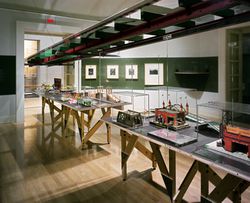
Tout nouveau moyen de transport ou toute modification apportée à un système existant de mobilité urbaine – l’élargissement des tranchées permettant aux voies ferrées de se relier à un terminus ou à une jonction, l’extension des gares de triage desservant les systèmes de transport métropolitains et de banlieue, la multiplication des bretelles des ponts, des autoroutes(...)
Tout nouveau moyen de transport ou toute modification apportée à un système existant de mobilité urbaine – l’élargissement des tranchées permettant aux voies ferrées de se relier à un terminus ou à une jonction, l’extension des gares de triage desservant les systèmes de transport métropolitains et de banlieue, la multiplication des bretelles des ponts, des autoroutes(...)
Localisation:
Salle octogonale
Salle octogonale
Date:
15 novembre 2000 au 1 avril 2001
15 novembre 2000 au 1 avril 2001
Titre:
Jouets et transports
Actions:
Description:
Tout nouveau moyen de transport ou toute modification apportée à un système existant de mobilité urbaine – l’élargissement des tranchées permettant aux voies ferrées de se relier à un terminus ou à une jonction, l’extension des gares de triage desservant les systèmes de transport métropolitains et de banlieue, la multiplication des bretelles des ponts, des autoroutes(...)
Jouets et transports
Actions:
Description:
Tout nouveau moyen de transport ou toute modification apportée à un système existant de mobilité urbaine – l’élargissement des tranchées permettant aux voies ferrées de se relier à un terminus ou à une jonction, l’extension des gares de triage desservant les systèmes de transport métropolitains et de banlieue, la multiplication des bretelles des ponts, des autoroutes(...)
Classification:
expositions
expositions
Date:
15 novembre 2000 au
1 avril 2001
15 novembre 2000 au
1 avril 2001
Localisation:
Salle octogonale
Salle octogonale
Classification:
expositions
expositions

Actions:
Localisation:
Salles principales Mot(s)-clé(s):
Joar Nango, Nicole Luke, Taqralik Partridge, Jocelyn Piirainen, Rafico Ruiz, le Nord circumpolaire, Inuit, Inuit Nunangat, Sami, Sapmi, Vers chez soi
Salles principales Mot(s)-clé(s):
Joar Nango, Nicole Luke, Taqralik Partridge, Jocelyn Piirainen, Rafico Ruiz, le Nord circumpolaire, Inuit, Inuit Nunangat, Sami, Sapmi, Vers chez soi
Date:
11 juin 2022 au 26 mars 2023
11 juin 2022 au 26 mars 2023
Classification:
expositions
expositions
Date:
11 juin 2022 au
26 mars 2023
11 juin 2022 au
26 mars 2023
Localisation:
Salles principales Mot(s)-clé(s):
Joar Nango, Nicole Luke, Taqralik Partridge, Jocelyn Piirainen, Rafico Ruiz, le Nord circumpolaire, Inuit, Inuit Nunangat, Sami, Sapmi, Vers chez soi
Salles principales Mot(s)-clé(s):
Joar Nango, Nicole Luke, Taqralik Partridge, Jocelyn Piirainen, Rafico Ruiz, le Nord circumpolaire, Inuit, Inuit Nunangat, Sami, Sapmi, Vers chez soi
Classification:
expositions
expositions
Actions:
Description:
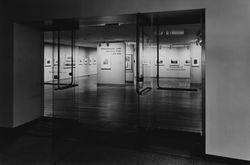
En 1982, le CCA organise sa première exposition, Photographie et architecture : 1839–1939, avant même que soit construit l’actuel bâtiment abritant le musée. L’exposition est présentée à la Galerie Lempertz Contempora à Cologne (1982), à l’Art Institute of Chicago (1983), au Cooper-Hewitt National Design Museum à New York (1983), au Centre Georges-Pompidou à Paris (1984)(...)
En 1982, le CCA organise sa première exposition, Photographie et architecture : 1839–1939, avant même que soit construit l’actuel bâtiment abritant le musée. L’exposition est présentée à la Galerie Lempertz Contempora à Cologne (1982), à l’Art Institute of Chicago (1983), au Cooper-Hewitt National Design Museum à New York (1983), au Centre Georges-Pompidou à Paris (1984)(...)
Date:
15 septembre 1982 au 16 octobre 1982
15 septembre 1982 au 16 octobre 1982
Titre:
Photographie et architecture : 1839–1939
Actions:
Description:
En 1982, le CCA organise sa première exposition, Photographie et architecture : 1839–1939, avant même que soit construit l’actuel bâtiment abritant le musée. L’exposition est présentée à la Galerie Lempertz Contempora à Cologne (1982), à l’Art Institute of Chicago (1983), au Cooper-Hewitt National Design Museum à New York (1983), au Centre Georges-Pompidou à Paris (1984)(...)
Photographie et architecture : 1839–1939
Actions:
Description:
En 1982, le CCA organise sa première exposition, Photographie et architecture : 1839–1939, avant même que soit construit l’actuel bâtiment abritant le musée. L’exposition est présentée à la Galerie Lempertz Contempora à Cologne (1982), à l’Art Institute of Chicago (1983), au Cooper-Hewitt National Design Museum à New York (1983), au Centre Georges-Pompidou à Paris (1984)(...)
Classification:
expositions
expositions
Date:
15 septembre 1982 au
16 octobre 1982
15 septembre 1982 au
16 octobre 1982


