


11284 Résultats
Classification:
expositions
expositions
Actions:
Description:
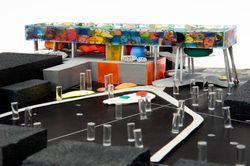
L’exposition présente les œuvres de l’architecte britannique Will Alsop, préparatoires au Sharp Centre for Design de l’Ontario College of Art and Design (OCAD) de Toronto, et s’attache en particulier au rôle qu’a joué la peinture dans son processus de création. La construction du Sharp Centre for Design de l’OCAD, conçu en collaboration avec Robbie/Young + Wright, s’est(...)
L’exposition présente les œuvres de l’architecte britannique Will Alsop, préparatoires au Sharp Centre for Design de l’Ontario College of Art and Design (OCAD) de Toronto, et s’attache en particulier au rôle qu’a joué la peinture dans son processus de création. La construction du Sharp Centre for Design de l’OCAD, conçu en collaboration avec Robbie/Young + Wright, s’est(...)
Localisation:
Salle octogonale
Salle octogonale
Date:
13 juin 2008 au 5 octobre 2008
13 juin 2008 au 5 octobre 2008
Titre:
Will Alsop : OCAD, un manifeste urbain
Actions:
Description:
L’exposition présente les œuvres de l’architecte britannique Will Alsop, préparatoires au Sharp Centre for Design de l’Ontario College of Art and Design (OCAD) de Toronto, et s’attache en particulier au rôle qu’a joué la peinture dans son processus de création. La construction du Sharp Centre for Design de l’OCAD, conçu en collaboration avec Robbie/Young + Wright, s’est(...)
Will Alsop : OCAD, un manifeste urbain
Actions:
Description:
L’exposition présente les œuvres de l’architecte britannique Will Alsop, préparatoires au Sharp Centre for Design de l’Ontario College of Art and Design (OCAD) de Toronto, et s’attache en particulier au rôle qu’a joué la peinture dans son processus de création. La construction du Sharp Centre for Design de l’OCAD, conçu en collaboration avec Robbie/Young + Wright, s’est(...)
Classification:
expositions
expositions
Date:
13 juin 2008 au
5 octobre 2008
13 juin 2008 au
5 octobre 2008
Localisation:
Salle octogonale
Salle octogonale
Niveau de description archivistique:
Projet
Projet
Numéro de référence:
AP178.S1.1961.PR02
Description:
This project series documents the Piscina de Marés in Leça da Palmeira, Matosinhos, Portugal. While the records were held in the office’s archives this project was assigned the number 9/60. The office assigned the date 1961. Piscina de Marés was built between 1961 and 1966. The project included two salt water pools, one for adults and another for children, and changing rooms. A restaurant was later added in 1965. The pools were embedded in rock formations situated on the northern coastline of the Atlantic Ocean in Matosinhos. Siza used concrete to build the pools and walls while preserving some of the rock formation. There was also restoration work done for both the pools and the restaurant in the mid 1990s. The project series includes sketches, elevations, plans, and details, as well as correspondence and project documentation. Photographic materials document the project site, the built project, the model, and drawings. Also included are panoramas of the built project and aerial views of the project site. Note that photographic materials related to the 1995 renovation are also found among these materials, however the rest of the materials related to the renovations are in subseries Recuperação da Piscina de Marés (AP178.S1.1995.PR01).
AP178.S1.1961.PR02
Description:
This project series documents the Piscina de Marés in Leça da Palmeira, Matosinhos, Portugal. While the records were held in the office’s archives this project was assigned the number 9/60. The office assigned the date 1961. Piscina de Marés was built between 1961 and 1966. The project included two salt water pools, one for adults and another for children, and changing rooms. A restaurant was later added in 1965. The pools were embedded in rock formations situated on the northern coastline of the Atlantic Ocean in Matosinhos. Siza used concrete to build the pools and walls while preserving some of the rock formation. There was also restoration work done for both the pools and the restaurant in the mid 1990s. The project series includes sketches, elevations, plans, and details, as well as correspondence and project documentation. Photographic materials document the project site, the built project, the model, and drawings. Also included are panoramas of the built project and aerial views of the project site. Note that photographic materials related to the 1995 renovation are also found among these materials, however the rest of the materials related to the renovations are in subseries Recuperação da Piscina de Marés (AP178.S1.1995.PR01).
Personnes et institutions:
Date:
1961-1995
1961-1995
Titre:
Piscina de Marés [Ocean swimming pool], Leça da Palmeira, Matosinhos, Portugal (1961-1966)
Actions:
AP178.S1.1961.PR02
Description:
This project series documents the Piscina de Marés in Leça da Palmeira, Matosinhos, Portugal. While the records were held in the office’s archives this project was assigned the number 9/60. The office assigned the date 1961. Piscina de Marés was built between 1961 and 1966. The project included two salt water pools, one for adults and another for children, and changing rooms. A restaurant was later added in 1965. The pools were embedded in rock formations situated on the northern coastline of the Atlantic Ocean in Matosinhos. Siza used concrete to build the pools and walls while preserving some of the rock formation. There was also restoration work done for both the pools and the restaurant in the mid 1990s. The project series includes sketches, elevations, plans, and details, as well as correspondence and project documentation. Photographic materials document the project site, the built project, the model, and drawings. Also included are panoramas of the built project and aerial views of the project site. Note that photographic materials related to the 1995 renovation are also found among these materials, however the rest of the materials related to the renovations are in subseries Recuperação da Piscina de Marés (AP178.S1.1995.PR01).
Piscina de Marés [Ocean swimming pool], Leça da Palmeira, Matosinhos, Portugal (1961-1966)
Actions:
AP178.S1.1961.PR02
Description:
This project series documents the Piscina de Marés in Leça da Palmeira, Matosinhos, Portugal. While the records were held in the office’s archives this project was assigned the number 9/60. The office assigned the date 1961. Piscina de Marés was built between 1961 and 1966. The project included two salt water pools, one for adults and another for children, and changing rooms. A restaurant was later added in 1965. The pools were embedded in rock formations situated on the northern coastline of the Atlantic Ocean in Matosinhos. Siza used concrete to build the pools and walls while preserving some of the rock formation. There was also restoration work done for both the pools and the restaurant in the mid 1990s. The project series includes sketches, elevations, plans, and details, as well as correspondence and project documentation. Photographic materials document the project site, the built project, the model, and drawings. Also included are panoramas of the built project and aerial views of the project site. Note that photographic materials related to the 1995 renovation are also found among these materials, however the rest of the materials related to the renovations are in subseries Recuperação da Piscina de Marés (AP178.S1.1995.PR01).
Niveau de description archivistique:
Project
Project
Date:
1961-1995
1961-1995
Personnes et institutions:
Niveau de description archivistique:
Projet
Projet
Numéro de référence:
AP178.S1.1995.PR10
Description:
This project series documents the Conjunto Habitações, Remodelação de Duas Habitações and BAC – Banco de Arte Contemporãnea in Quinta da Palmeira, Evora, Portugal. While the records were held in the office's archives, this project was assigned the number 66/90 and was further divided as follows : 66/90 A/B Conjunto Habitações; 66/90 [B] Remodelação de Duas Habitações; and 66/90 C BAC, Banco de Arte Contemporãnea. The office assigned the date 1995 to this project. These projects were commisioned as a part of Sociedade Hoteleira Do Arez's venture to maintain the historical zone of Quinta da Palmeira. Sociedade Hoteleira Do Arez contracted Siza to restore two existing houses, construct seven new houses to join to the Hotel da Cartuxa, and later, transform a warehouse building into an art museum. The BAC was not realized. Documenting this project are sketches, studies, and plans. Photographic material includes photographs, slides and negatives of the project sites and models. Textual material includes project documentation, notes, meeting minutes, contracts, technical specifications, and correpondence with Câmara Municipal de Évora, Sociedade Hoteleira Do Arez, and the Gabinete de Organização e Projectos.
AP178.S1.1995.PR10
Description:
This project series documents the Conjunto Habitações, Remodelação de Duas Habitações and BAC – Banco de Arte Contemporãnea in Quinta da Palmeira, Evora, Portugal. While the records were held in the office's archives, this project was assigned the number 66/90 and was further divided as follows : 66/90 A/B Conjunto Habitações; 66/90 [B] Remodelação de Duas Habitações; and 66/90 C BAC, Banco de Arte Contemporãnea. The office assigned the date 1995 to this project. These projects were commisioned as a part of Sociedade Hoteleira Do Arez's venture to maintain the historical zone of Quinta da Palmeira. Sociedade Hoteleira Do Arez contracted Siza to restore two existing houses, construct seven new houses to join to the Hotel da Cartuxa, and later, transform a warehouse building into an art museum. The BAC was not realized. Documenting this project are sketches, studies, and plans. Photographic material includes photographs, slides and negatives of the project sites and models. Textual material includes project documentation, notes, meeting minutes, contracts, technical specifications, and correpondence with Câmara Municipal de Évora, Sociedade Hoteleira Do Arez, and the Gabinete de Organização e Projectos.
Personnes et institutions:
Date:
1995-2008
1995-2008
Titre:
Sociedade Hoteleira do Arez, Quinta da Palmeira, Evora, Portugal (1995)
Actions:
AP178.S1.1995.PR10
Description:
This project series documents the Conjunto Habitações, Remodelação de Duas Habitações and BAC – Banco de Arte Contemporãnea in Quinta da Palmeira, Evora, Portugal. While the records were held in the office's archives, this project was assigned the number 66/90 and was further divided as follows : 66/90 A/B Conjunto Habitações; 66/90 [B] Remodelação de Duas Habitações; and 66/90 C BAC, Banco de Arte Contemporãnea. The office assigned the date 1995 to this project. These projects were commisioned as a part of Sociedade Hoteleira Do Arez's venture to maintain the historical zone of Quinta da Palmeira. Sociedade Hoteleira Do Arez contracted Siza to restore two existing houses, construct seven new houses to join to the Hotel da Cartuxa, and later, transform a warehouse building into an art museum. The BAC was not realized. Documenting this project are sketches, studies, and plans. Photographic material includes photographs, slides and negatives of the project sites and models. Textual material includes project documentation, notes, meeting minutes, contracts, technical specifications, and correpondence with Câmara Municipal de Évora, Sociedade Hoteleira Do Arez, and the Gabinete de Organização e Projectos.
Sociedade Hoteleira do Arez, Quinta da Palmeira, Evora, Portugal (1995)
Actions:
AP178.S1.1995.PR10
Description:
This project series documents the Conjunto Habitações, Remodelação de Duas Habitações and BAC – Banco de Arte Contemporãnea in Quinta da Palmeira, Evora, Portugal. While the records were held in the office's archives, this project was assigned the number 66/90 and was further divided as follows : 66/90 A/B Conjunto Habitações; 66/90 [B] Remodelação de Duas Habitações; and 66/90 C BAC, Banco de Arte Contemporãnea. The office assigned the date 1995 to this project. These projects were commisioned as a part of Sociedade Hoteleira Do Arez's venture to maintain the historical zone of Quinta da Palmeira. Sociedade Hoteleira Do Arez contracted Siza to restore two existing houses, construct seven new houses to join to the Hotel da Cartuxa, and later, transform a warehouse building into an art museum. The BAC was not realized. Documenting this project are sketches, studies, and plans. Photographic material includes photographs, slides and negatives of the project sites and models. Textual material includes project documentation, notes, meeting minutes, contracts, technical specifications, and correpondence with Câmara Municipal de Évora, Sociedade Hoteleira Do Arez, and the Gabinete de Organização e Projectos.
Niveau de description archivistique:
Project
Project
Date:
1995-2008
1995-2008
Personnes et institutions:
Classification:
archives
Niveau de description archivistique:
Fonds
archives
Niveau de description archivistique:
Fonds
Titre:
Fonds Ernest Isbell Barott
Fonds Ernest Isbell Barott
Numéro de référence:
AP003
Résumé:
The Ernest Isbell Barott fonds, 1912-1983, documents architect Ernest Isbell Barott’s design and construction of over 380 built projects in Canada. The fonds comprises of materials relating to projects executed by Ernest Isbell Barott during his active years at the firm, 1912-1962, as well as projects exclusively completed by the firm after Barott’s retirement, 1962-1983. Materials in this fonds consist of approximately 11 764 drawings (including reprographic copies), approximately 1795 photographic materials, 8.75 l.m. of textual records, 4 medals, and 1 key.
AP003
Résumé:
The Ernest Isbell Barott fonds, 1912-1983, documents architect Ernest Isbell Barott’s design and construction of over 380 built projects in Canada. The fonds comprises of materials relating to projects executed by Ernest Isbell Barott during his active years at the firm, 1912-1962, as well as projects exclusively completed by the firm after Barott’s retirement, 1962-1983. Materials in this fonds consist of approximately 11 764 drawings (including reprographic copies), approximately 1795 photographic materials, 8.75 l.m. of textual records, 4 medals, and 1 key.
Personnes et institutions:
Date:
1912-1983
1912-1983
Titre:
Fonds Ernest Isbell Barott
Actions:
AP003
Résumé:
The Ernest Isbell Barott fonds, 1912-1983, documents architect Ernest Isbell Barott’s design and construction of over 380 built projects in Canada. The fonds comprises of materials relating to projects executed by Ernest Isbell Barott during his active years at the firm, 1912-1962, as well as projects exclusively completed by the firm after Barott’s retirement, 1962-1983. Materials in this fonds consist of approximately 11 764 drawings (including reprographic copies), approximately 1795 photographic materials, 8.75 l.m. of textual records, 4 medals, and 1 key.
Fonds Ernest Isbell Barott
Actions:
AP003
Résumé:
The Ernest Isbell Barott fonds, 1912-1983, documents architect Ernest Isbell Barott’s design and construction of over 380 built projects in Canada. The fonds comprises of materials relating to projects executed by Ernest Isbell Barott during his active years at the firm, 1912-1962, as well as projects exclusively completed by the firm after Barott’s retirement, 1962-1983. Materials in this fonds consist of approximately 11 764 drawings (including reprographic copies), approximately 1795 photographic materials, 8.75 l.m. of textual records, 4 medals, and 1 key.
Classification:
archives
Niveau de description archivistique:
Fonds
archives
Niveau de description archivistique:
Fonds
Date:
1912-1983
1912-1983
Personnes et institutions:
Classification:
archives
Niveau de description archivistique:
Fonds
archives
Niveau de description archivistique:
Fonds
Numéro de référence:
AP170
Résumé:
The Mark Goulthorpe HypoSurface project records, 1990-2014, document the design development, technical implementation, exhibition, and marketing of various iterations of the HypoSurface wall. The wall has a “skin” divided up into pixel-like metallic facets manipulated by a network of actuating pistons in order to create images, texts and patterns in dynamic relief. Sensors allow people near the wall to influence its movement. The records include approximately 62,700 digital files, 3 folders of textual documents, and 44 prototype pieces, and a working HypoSurface wall module.
AP170
Résumé:
The Mark Goulthorpe HypoSurface project records, 1990-2014, document the design development, technical implementation, exhibition, and marketing of various iterations of the HypoSurface wall. The wall has a “skin” divided up into pixel-like metallic facets manipulated by a network of actuating pistons in order to create images, texts and patterns in dynamic relief. Sensors allow people near the wall to influence its movement. The records include approximately 62,700 digital files, 3 folders of textual documents, and 44 prototype pieces, and a working HypoSurface wall module.
Personnes et institutions:
Date:
1990 - 2014
1990 - 2014
Titre:
Mark Goulthorpe Hyposurface project records
Actions:
AP170
Résumé:
The Mark Goulthorpe HypoSurface project records, 1990-2014, document the design development, technical implementation, exhibition, and marketing of various iterations of the HypoSurface wall. The wall has a “skin” divided up into pixel-like metallic facets manipulated by a network of actuating pistons in order to create images, texts and patterns in dynamic relief. Sensors allow people near the wall to influence its movement. The records include approximately 62,700 digital files, 3 folders of textual documents, and 44 prototype pieces, and a working HypoSurface wall module.
Mark Goulthorpe Hyposurface project records
Actions:
AP170
Résumé:
The Mark Goulthorpe HypoSurface project records, 1990-2014, document the design development, technical implementation, exhibition, and marketing of various iterations of the HypoSurface wall. The wall has a “skin” divided up into pixel-like metallic facets manipulated by a network of actuating pistons in order to create images, texts and patterns in dynamic relief. Sensors allow people near the wall to influence its movement. The records include approximately 62,700 digital files, 3 folders of textual documents, and 44 prototype pieces, and a working HypoSurface wall module.
Classification:
archives
Niveau de description archivistique:
Fonds
archives
Niveau de description archivistique:
Fonds
Date:
1990 - 2014
1990 - 2014
Personnes et institutions:
Classification:
expositions
expositions
Description:
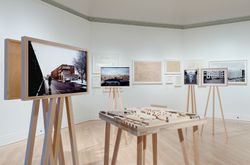
« Wohnhaus Schlesisches Tor » (aussi appelé « Bonjour Tristesse ») à Berlin et « Punt en Komma » à La Haye sont les premiers ouvrages d’Álvaro Siza construits hors du Portugal, sa terre natale. Ils ont en commun leur taille, envergure, vocation et ambition ; tous deux ont été érigés dans les années 80, tous deux découlent d’une perception particulière de la ville et tous(...)
« Wohnhaus Schlesisches Tor » (aussi appelé « Bonjour Tristesse ») à Berlin et « Punt en Komma » à La Haye sont les premiers ouvrages d’Álvaro Siza construits hors du Portugal, sa terre natale. Ils ont en commun leur taille, envergure, vocation et ambition ; tous deux ont été érigés dans les années 80, tous deux découlent d’une perception particulière de la ville et tous(...)
Localisation:
Salle octogonale Mot(s)-clé(s):
Álvaro Siza, Punt en Komma, The Hague, Bonjour Tristesse, Berlin
Salle octogonale Mot(s)-clé(s):
Álvaro Siza, Punt en Komma, The Hague, Bonjour Tristesse, Berlin
Date:
24 septembre 2015 au 22 mai 2016
24 septembre 2015 au 22 mai 2016
Titre:
Coin, îlot, quartier, villes. Álvaro Siza à Berlin et à La Haye
Actions:
Description:
« Wohnhaus Schlesisches Tor » (aussi appelé « Bonjour Tristesse ») à Berlin et « Punt en Komma » à La Haye sont les premiers ouvrages d’Álvaro Siza construits hors du Portugal, sa terre natale. Ils ont en commun leur taille, envergure, vocation et ambition ; tous deux ont été érigés dans les années 80, tous deux découlent d’une perception particulière de la ville et tous(...)
Coin, îlot, quartier, villes. Álvaro Siza à Berlin et à La Haye
Actions:
Description:
« Wohnhaus Schlesisches Tor » (aussi appelé « Bonjour Tristesse ») à Berlin et « Punt en Komma » à La Haye sont les premiers ouvrages d’Álvaro Siza construits hors du Portugal, sa terre natale. Ils ont en commun leur taille, envergure, vocation et ambition ; tous deux ont été érigés dans les années 80, tous deux découlent d’une perception particulière de la ville et tous(...)
Classification:
expositions
expositions
Date:
24 septembre 2015 au
22 mai 2016
24 septembre 2015 au
22 mai 2016
Localisation:
Salle octogonale Mot(s)-clé(s):
Álvaro Siza, Punt en Komma, The Hague, Bonjour Tristesse, Berlin
Salle octogonale Mot(s)-clé(s):
Álvaro Siza, Punt en Komma, The Hague, Bonjour Tristesse, Berlin
Niveau de description archivistique:
Projet
Projet
Numéro de référence:
AP178.S1.1978.PR01
Description:
This project series documents the Banco Borges & Irmão II in Vila do Conde, Portugal. While the records were held in the office’s archives this project was assigned the number 46/70. The office assigned the date 1978 to this project. The Banco Borges & Irmão bank was located in the historic part of Vila do Conde, near the Matriz Church. The project site was the same as for the Banco Borges & Irmão I (project series AP178.S1.1977.PR02 in this fonds). The old building was destroyed and Siza built a new bank. The documentation informs us that the design of the building was subject to several changes. This project series contains documentation for several different versions of the building. The building had two floors and a basement. The third floor was used for administrative offices, the second floor for services to the public, and the basement for safety deposits. In 1988, Siza received the Mies van der Rohe prize for this project. Drawings include sketches, studies and working drawings. Textual materials include project documentation, meeting minutes and correspondence. Photographic materials include photographs of the models and the built project. A study model is also included in these materials.
AP178.S1.1978.PR01
Description:
This project series documents the Banco Borges & Irmão II in Vila do Conde, Portugal. While the records were held in the office’s archives this project was assigned the number 46/70. The office assigned the date 1978 to this project. The Banco Borges & Irmão bank was located in the historic part of Vila do Conde, near the Matriz Church. The project site was the same as for the Banco Borges & Irmão I (project series AP178.S1.1977.PR02 in this fonds). The old building was destroyed and Siza built a new bank. The documentation informs us that the design of the building was subject to several changes. This project series contains documentation for several different versions of the building. The building had two floors and a basement. The third floor was used for administrative offices, the second floor for services to the public, and the basement for safety deposits. In 1988, Siza received the Mies van der Rohe prize for this project. Drawings include sketches, studies and working drawings. Textual materials include project documentation, meeting minutes and correspondence. Photographic materials include photographs of the models and the built project. A study model is also included in these materials.
Personnes et institutions:
Date:
1978-1986
1978-1986
Titre:
Banco Borges & Irmão II [Borges & Irmão bank II], Vila do Conde, Portugal (1978-1986)
Actions:
AP178.S1.1978.PR01
Description:
This project series documents the Banco Borges & Irmão II in Vila do Conde, Portugal. While the records were held in the office’s archives this project was assigned the number 46/70. The office assigned the date 1978 to this project. The Banco Borges & Irmão bank was located in the historic part of Vila do Conde, near the Matriz Church. The project site was the same as for the Banco Borges & Irmão I (project series AP178.S1.1977.PR02 in this fonds). The old building was destroyed and Siza built a new bank. The documentation informs us that the design of the building was subject to several changes. This project series contains documentation for several different versions of the building. The building had two floors and a basement. The third floor was used for administrative offices, the second floor for services to the public, and the basement for safety deposits. In 1988, Siza received the Mies van der Rohe prize for this project. Drawings include sketches, studies and working drawings. Textual materials include project documentation, meeting minutes and correspondence. Photographic materials include photographs of the models and the built project. A study model is also included in these materials.
Banco Borges & Irmão II [Borges & Irmão bank II], Vila do Conde, Portugal (1978-1986)
Actions:
AP178.S1.1978.PR01
Description:
This project series documents the Banco Borges & Irmão II in Vila do Conde, Portugal. While the records were held in the office’s archives this project was assigned the number 46/70. The office assigned the date 1978 to this project. The Banco Borges & Irmão bank was located in the historic part of Vila do Conde, near the Matriz Church. The project site was the same as for the Banco Borges & Irmão I (project series AP178.S1.1977.PR02 in this fonds). The old building was destroyed and Siza built a new bank. The documentation informs us that the design of the building was subject to several changes. This project series contains documentation for several different versions of the building. The building had two floors and a basement. The third floor was used for administrative offices, the second floor for services to the public, and the basement for safety deposits. In 1988, Siza received the Mies van der Rohe prize for this project. Drawings include sketches, studies and working drawings. Textual materials include project documentation, meeting minutes and correspondence. Photographic materials include photographs of the models and the built project. A study model is also included in these materials.
Niveau de description archivistique:
Project
Project
Date:
1978-1986
1978-1986
Personnes et institutions:
Niveau de description archivistique:
Projet
Projet
Numéro de référence:
AP178.S1.1996.PR01
Description:
This project series documents the Kolonihaven - Exposição ao ar livre in Copenhagen, Denmark. While the records were held in the office’s archives this project was assigned the number 73/90 The office assigned the date 1996 to this project. At the end of the 19th century, there was an important migration of people from the rural areas to the cities in Denmark. Some migrants missed the contact with the soil and decided to built small houses with gardens to help them to adapt to their new urban life. These small Danish houses we're later named Kolonihavehus and became emblematic in Denmark. The exhibition Kolonihaven - The International challenge was held in Copenhagen by the Arken Museum of Modern Art. Fourteen international architects, including Álvaro Siza, Aldo Rossi, Mario Botta, Michael Graves, Arata Isozaki, and Leon Krier were invited to design a 7.5 square meter Danish house. Siza's design was based on his idea of a house as a child mixed with his memories of a trip to Scandinavia. The fourteen architects also participated in the exhibition "Major Projects" at the Køge Museum, in Køge, Danmark. The exhibition focused on the sketches and preliminary drawings of majort projects by each architect. Documenting this project are sketches and documentation.
AP178.S1.1996.PR01
Description:
This project series documents the Kolonihaven - Exposição ao ar livre in Copenhagen, Denmark. While the records were held in the office’s archives this project was assigned the number 73/90 The office assigned the date 1996 to this project. At the end of the 19th century, there was an important migration of people from the rural areas to the cities in Denmark. Some migrants missed the contact with the soil and decided to built small houses with gardens to help them to adapt to their new urban life. These small Danish houses we're later named Kolonihavehus and became emblematic in Denmark. The exhibition Kolonihaven - The International challenge was held in Copenhagen by the Arken Museum of Modern Art. Fourteen international architects, including Álvaro Siza, Aldo Rossi, Mario Botta, Michael Graves, Arata Isozaki, and Leon Krier were invited to design a 7.5 square meter Danish house. Siza's design was based on his idea of a house as a child mixed with his memories of a trip to Scandinavia. The fourteen architects also participated in the exhibition "Major Projects" at the Køge Museum, in Køge, Danmark. The exhibition focused on the sketches and preliminary drawings of majort projects by each architect. Documenting this project are sketches and documentation.
Personnes et institutions:
Date:
1996
1996
Titre:
Kolonihaven - The International Challenge, Copenhagen, Denmark (1996)
Actions:
AP178.S1.1996.PR01
Description:
This project series documents the Kolonihaven - Exposição ao ar livre in Copenhagen, Denmark. While the records were held in the office’s archives this project was assigned the number 73/90 The office assigned the date 1996 to this project. At the end of the 19th century, there was an important migration of people from the rural areas to the cities in Denmark. Some migrants missed the contact with the soil and decided to built small houses with gardens to help them to adapt to their new urban life. These small Danish houses we're later named Kolonihavehus and became emblematic in Denmark. The exhibition Kolonihaven - The International challenge was held in Copenhagen by the Arken Museum of Modern Art. Fourteen international architects, including Álvaro Siza, Aldo Rossi, Mario Botta, Michael Graves, Arata Isozaki, and Leon Krier were invited to design a 7.5 square meter Danish house. Siza's design was based on his idea of a house as a child mixed with his memories of a trip to Scandinavia. The fourteen architects also participated in the exhibition "Major Projects" at the Køge Museum, in Køge, Danmark. The exhibition focused on the sketches and preliminary drawings of majort projects by each architect. Documenting this project are sketches and documentation.
Kolonihaven - The International Challenge, Copenhagen, Denmark (1996)
Actions:
AP178.S1.1996.PR01
Description:
This project series documents the Kolonihaven - Exposição ao ar livre in Copenhagen, Denmark. While the records were held in the office’s archives this project was assigned the number 73/90 The office assigned the date 1996 to this project. At the end of the 19th century, there was an important migration of people from the rural areas to the cities in Denmark. Some migrants missed the contact with the soil and decided to built small houses with gardens to help them to adapt to their new urban life. These small Danish houses we're later named Kolonihavehus and became emblematic in Denmark. The exhibition Kolonihaven - The International challenge was held in Copenhagen by the Arken Museum of Modern Art. Fourteen international architects, including Álvaro Siza, Aldo Rossi, Mario Botta, Michael Graves, Arata Isozaki, and Leon Krier were invited to design a 7.5 square meter Danish house. Siza's design was based on his idea of a house as a child mixed with his memories of a trip to Scandinavia. The fourteen architects also participated in the exhibition "Major Projects" at the Køge Museum, in Køge, Danmark. The exhibition focused on the sketches and preliminary drawings of majort projects by each architect. Documenting this project are sketches and documentation.
Niveau de description archivistique:
Project
Project
Date:
1996
1996
Personnes et institutions:
Niveau de description archivistique:
Sous-série
Sous-série
Numéro de référence:
AP178.S1.1988.PR07.SS2
Description:
This project subseries documents the Bloco A of the reconstruction of the Chiado in Lisbon, Portugal. The office's archives identified this project as 58/80. The office assigned the dates 1988-1998 for this project. The Bloco A was located between Rua Ivens, Rua Garrett, and Rua Nova Do Almada. In the reconstruction plan, Bloco A included buildings 7 (Camara Chaves building) 8/9 (Castro & Melo building), 10, 11, 20, 21, 22, 23, and 24. The construction work for the buildings of Bloco A included restorations of windows, doors, façades, painting, stonework, as well as work on the structure and mechanical systems. Drawings include plans prior to the fire, working drawings, and structural drawings. Textual material includes project documentation and studies. Photographic materials and slides document the buildings prior to the fire, damaged buildings, project site, construction work, and models. It is important to note that this subseries includes general details of the Bloco A. For more specific details, see individual project subseries: the Camara Chaves building (AP178.S1.1988.PR07.SS3) and Edifício Castro e Melo (AP178.S1.1988.PR07.SS4). General documentation can also be found in the master plans and exterior spaces work subseries (AP178.S1.1988.PR07.SS1).
AP178.S1.1988.PR07.SS2
Description:
This project subseries documents the Bloco A of the reconstruction of the Chiado in Lisbon, Portugal. The office's archives identified this project as 58/80. The office assigned the dates 1988-1998 for this project. The Bloco A was located between Rua Ivens, Rua Garrett, and Rua Nova Do Almada. In the reconstruction plan, Bloco A included buildings 7 (Camara Chaves building) 8/9 (Castro & Melo building), 10, 11, 20, 21, 22, 23, and 24. The construction work for the buildings of Bloco A included restorations of windows, doors, façades, painting, stonework, as well as work on the structure and mechanical systems. Drawings include plans prior to the fire, working drawings, and structural drawings. Textual material includes project documentation and studies. Photographic materials and slides document the buildings prior to the fire, damaged buildings, project site, construction work, and models. It is important to note that this subseries includes general details of the Bloco A. For more specific details, see individual project subseries: the Camara Chaves building (AP178.S1.1988.PR07.SS3) and Edifício Castro e Melo (AP178.S1.1988.PR07.SS4). General documentation can also be found in the master plans and exterior spaces work subseries (AP178.S1.1988.PR07.SS1).
Personnes et institutions:
Date:
1988-1998
1988-1998
Titre:
Bloco A, Reconstrução do Chiado [Block A, Reconstruction of the Chiado area] Lisbon, Portugal (1988-1998)
Actions:
AP178.S1.1988.PR07.SS2
Description:
This project subseries documents the Bloco A of the reconstruction of the Chiado in Lisbon, Portugal. The office's archives identified this project as 58/80. The office assigned the dates 1988-1998 for this project. The Bloco A was located between Rua Ivens, Rua Garrett, and Rua Nova Do Almada. In the reconstruction plan, Bloco A included buildings 7 (Camara Chaves building) 8/9 (Castro & Melo building), 10, 11, 20, 21, 22, 23, and 24. The construction work for the buildings of Bloco A included restorations of windows, doors, façades, painting, stonework, as well as work on the structure and mechanical systems. Drawings include plans prior to the fire, working drawings, and structural drawings. Textual material includes project documentation and studies. Photographic materials and slides document the buildings prior to the fire, damaged buildings, project site, construction work, and models. It is important to note that this subseries includes general details of the Bloco A. For more specific details, see individual project subseries: the Camara Chaves building (AP178.S1.1988.PR07.SS3) and Edifício Castro e Melo (AP178.S1.1988.PR07.SS4). General documentation can also be found in the master plans and exterior spaces work subseries (AP178.S1.1988.PR07.SS1).
Bloco A, Reconstrução do Chiado [Block A, Reconstruction of the Chiado area] Lisbon, Portugal (1988-1998)
Actions:
AP178.S1.1988.PR07.SS2
Description:
This project subseries documents the Bloco A of the reconstruction of the Chiado in Lisbon, Portugal. The office's archives identified this project as 58/80. The office assigned the dates 1988-1998 for this project. The Bloco A was located between Rua Ivens, Rua Garrett, and Rua Nova Do Almada. In the reconstruction plan, Bloco A included buildings 7 (Camara Chaves building) 8/9 (Castro & Melo building), 10, 11, 20, 21, 22, 23, and 24. The construction work for the buildings of Bloco A included restorations of windows, doors, façades, painting, stonework, as well as work on the structure and mechanical systems. Drawings include plans prior to the fire, working drawings, and structural drawings. Textual material includes project documentation and studies. Photographic materials and slides document the buildings prior to the fire, damaged buildings, project site, construction work, and models. It is important to note that this subseries includes general details of the Bloco A. For more specific details, see individual project subseries: the Camara Chaves building (AP178.S1.1988.PR07.SS3) and Edifício Castro e Melo (AP178.S1.1988.PR07.SS4). General documentation can also be found in the master plans and exterior spaces work subseries (AP178.S1.1988.PR07.SS1).
Niveau de description archivistique:
Project
Project
Date:
1988-1998
1988-1998
Personnes et institutions:
Classification:
articles
articles
Titre:
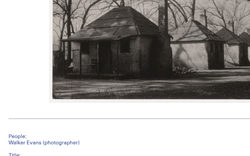
La découverte des manques
La découverte des manques
Actions:
Martien de Vletter esquisse un processus de description réparatrice
Mot(s)-clé(s):
Catalogage critique, terminologie, descriptions archivistiques, changement de termes, collection photographie
Catalogage critique, terminologie, descriptions archivistiques, changement de termes, collection photographie
Publié:
13 décembre 2021
13 décembre 2021
Titre:
La découverte des manques
Martien de Vletter esquisse un processus de description réparatrice
Actions:
La découverte des manques
Martien de Vletter esquisse un processus de description réparatrice
Actions:


