


7552 Résultats
Niveau de description archivistique:
Projet
Projet
Numéro de référence:
AP075.S1.1965.PR01
Description:
This project series documents Cornelia Hahn Oberlander's landscape project for the outdoor playground of the Children's Creative Centre. The Centre was part of the Canadian Federal Pavilion built for the Universal and International Exposition of 1967 (Expo 67), located at the south end of Notre-Dame Island in Montréal. Oberlander worked on this project from 1965-1966. She based her design on children's spontaneous exploration, to encourage self-motivation and creative play. The playground included a rolling terrain, looping paths, a wobble walk made of short logs embeded in the ground, a canal, and "giant wooden building pieces and a rocking boat in water replaced static sculptures". [1] The playground included a sand beach-like area with drifwood and plants to be used as play props. At the centre of the playground was a grass mound with an interior cave and a high wooden platform only reachable by a commando rope. A forty-foot long circulating water channel was situated in the east section of the playground and included two small islands linked by bridges, but was narrow enough to allow children to jump over it. The project series contains sketches, preliminary landscape concept plans, site plans, general landscape plans at different stages of design development, several sections and detail drawings for the playground's equipment and installations, and presentation drawings, including perspective views. The project series also contains architectural, electrical, and structural drawings of the Pavilion, which were provided to Oberlander for reference. Also included are photographs of the playground, research material on playgrounds, and articles and publications on the project, including Oberlander's writings, and publications on Expo '67. Source: [1] Herrington, Susan. Cornelia Hahn Oberlander: Making the Modern Landscape, University of Virginia Press, 2014, 304 pages. p. 106.
AP075.S1.1965.PR01
Description:
This project series documents Cornelia Hahn Oberlander's landscape project for the outdoor playground of the Children's Creative Centre. The Centre was part of the Canadian Federal Pavilion built for the Universal and International Exposition of 1967 (Expo 67), located at the south end of Notre-Dame Island in Montréal. Oberlander worked on this project from 1965-1966. She based her design on children's spontaneous exploration, to encourage self-motivation and creative play. The playground included a rolling terrain, looping paths, a wobble walk made of short logs embeded in the ground, a canal, and "giant wooden building pieces and a rocking boat in water replaced static sculptures". [1] The playground included a sand beach-like area with drifwood and plants to be used as play props. At the centre of the playground was a grass mound with an interior cave and a high wooden platform only reachable by a commando rope. A forty-foot long circulating water channel was situated in the east section of the playground and included two small islands linked by bridges, but was narrow enough to allow children to jump over it. The project series contains sketches, preliminary landscape concept plans, site plans, general landscape plans at different stages of design development, several sections and detail drawings for the playground's equipment and installations, and presentation drawings, including perspective views. The project series also contains architectural, electrical, and structural drawings of the Pavilion, which were provided to Oberlander for reference. Also included are photographs of the playground, research material on playgrounds, and articles and publications on the project, including Oberlander's writings, and publications on Expo '67. Source: [1] Herrington, Susan. Cornelia Hahn Oberlander: Making the Modern Landscape, University of Virginia Press, 2014, 304 pages. p. 106.
Personnes et institutions:
Date:
1965-1971
1965-1971
Titre:
Children's Creative Centre Playground, Canadian Federal Pavilion, Expo '67, Montréal, Québec (1965-1967)
Actions:
AP075.S1.1965.PR01
Description:
This project series documents Cornelia Hahn Oberlander's landscape project for the outdoor playground of the Children's Creative Centre. The Centre was part of the Canadian Federal Pavilion built for the Universal and International Exposition of 1967 (Expo 67), located at the south end of Notre-Dame Island in Montréal. Oberlander worked on this project from 1965-1966. She based her design on children's spontaneous exploration, to encourage self-motivation and creative play. The playground included a rolling terrain, looping paths, a wobble walk made of short logs embeded in the ground, a canal, and "giant wooden building pieces and a rocking boat in water replaced static sculptures". [1] The playground included a sand beach-like area with drifwood and plants to be used as play props. At the centre of the playground was a grass mound with an interior cave and a high wooden platform only reachable by a commando rope. A forty-foot long circulating water channel was situated in the east section of the playground and included two small islands linked by bridges, but was narrow enough to allow children to jump over it. The project series contains sketches, preliminary landscape concept plans, site plans, general landscape plans at different stages of design development, several sections and detail drawings for the playground's equipment and installations, and presentation drawings, including perspective views. The project series also contains architectural, electrical, and structural drawings of the Pavilion, which were provided to Oberlander for reference. Also included are photographs of the playground, research material on playgrounds, and articles and publications on the project, including Oberlander's writings, and publications on Expo '67. Source: [1] Herrington, Susan. Cornelia Hahn Oberlander: Making the Modern Landscape, University of Virginia Press, 2014, 304 pages. p. 106.
Children's Creative Centre Playground, Canadian Federal Pavilion, Expo '67, Montréal, Québec (1965-1967)
Actions:
AP075.S1.1965.PR01
Description:
This project series documents Cornelia Hahn Oberlander's landscape project for the outdoor playground of the Children's Creative Centre. The Centre was part of the Canadian Federal Pavilion built for the Universal and International Exposition of 1967 (Expo 67), located at the south end of Notre-Dame Island in Montréal. Oberlander worked on this project from 1965-1966. She based her design on children's spontaneous exploration, to encourage self-motivation and creative play. The playground included a rolling terrain, looping paths, a wobble walk made of short logs embeded in the ground, a canal, and "giant wooden building pieces and a rocking boat in water replaced static sculptures". [1] The playground included a sand beach-like area with drifwood and plants to be used as play props. At the centre of the playground was a grass mound with an interior cave and a high wooden platform only reachable by a commando rope. A forty-foot long circulating water channel was situated in the east section of the playground and included two small islands linked by bridges, but was narrow enough to allow children to jump over it. The project series contains sketches, preliminary landscape concept plans, site plans, general landscape plans at different stages of design development, several sections and detail drawings for the playground's equipment and installations, and presentation drawings, including perspective views. The project series also contains architectural, electrical, and structural drawings of the Pavilion, which were provided to Oberlander for reference. Also included are photographs of the playground, research material on playgrounds, and articles and publications on the project, including Oberlander's writings, and publications on Expo '67. Source: [1] Herrington, Susan. Cornelia Hahn Oberlander: Making the Modern Landscape, University of Virginia Press, 2014, 304 pages. p. 106.
Niveau de description archivistique:
Project
Project
Date:
1965-1971
1965-1971
Personnes et institutions:
Niveau de description archivistique:
Projet
Projet
Numéro de référence:
AP164.S1.2002.D5
Description:
The project series documents the competition entry for an architectural and landscape intervention at the eco park, located near the Rioja recycling plant for urban waste in Logroño, La Rioja, Spain. The firm identified this project as number 149. Abalos & Herreros won the competition and began the project with their masterplan. However, the construction was completed by Abalos+Sentkiewicz Arquitectos after the dissolution of Abalos & Herreros in 2008. Documenting the project are conceptual, design development and working drawings, project descriptions, budgets, notes, specifications and cartographic materials.
AP164.S1.2002.D5
Description:
The project series documents the competition entry for an architectural and landscape intervention at the eco park, located near the Rioja recycling plant for urban waste in Logroño, La Rioja, Spain. The firm identified this project as number 149. Abalos & Herreros won the competition and began the project with their masterplan. However, the construction was completed by Abalos+Sentkiewicz Arquitectos after the dissolution of Abalos & Herreros in 2008. Documenting the project are conceptual, design development and working drawings, project descriptions, budgets, notes, specifications and cartographic materials.
Personnes et institutions:
Date:
2000-2002
2000-2002
Titre:
Centro de reciclaje y revaloración, Logroño, Spain (2002)
Actions:
AP164.S1.2002.D5
Description:
The project series documents the competition entry for an architectural and landscape intervention at the eco park, located near the Rioja recycling plant for urban waste in Logroño, La Rioja, Spain. The firm identified this project as number 149. Abalos & Herreros won the competition and began the project with their masterplan. However, the construction was completed by Abalos+Sentkiewicz Arquitectos after the dissolution of Abalos & Herreros in 2008. Documenting the project are conceptual, design development and working drawings, project descriptions, budgets, notes, specifications and cartographic materials.
Centro de reciclaje y revaloración, Logroño, Spain (2002)
Actions:
AP164.S1.2002.D5
Description:
The project series documents the competition entry for an architectural and landscape intervention at the eco park, located near the Rioja recycling plant for urban waste in Logroño, La Rioja, Spain. The firm identified this project as number 149. Abalos & Herreros won the competition and began the project with their masterplan. However, the construction was completed by Abalos+Sentkiewicz Arquitectos after the dissolution of Abalos & Herreros in 2008. Documenting the project are conceptual, design development and working drawings, project descriptions, budgets, notes, specifications and cartographic materials.
Niveau de description archivistique:
Project
Project
Date:
2000-2002
2000-2002
Personnes et institutions:
Niveau de description archivistique:
Projet
Projet
Numéro de référence:
AP075.S1.1997.PR02
Description:
Project series documents Cornelia Hahn Oberlander's landscape project for the Waterfall Building on West 2nd Avenue, near the entrance of Granville Island, in Vancouver, British Columbia. Oberlander worked on this project in 1998-2001 with architect Arthur Erickson and architectural firm Nick Milkovich Architects, who designed the building. The building consists in five separated structures to accomodate studios spaces as well as split-level residences. It also included a courtyard and roof gardens on all five building structures for which Oberlander was responsible of the design. The courtyard, formed by in the roof of the underground parking space, consists "a simple tapestry of pavers, ground cover, trees and a small reflecting basin [...]." [1] The roofs garden included planting of white roses at the edge of the building and ornemental grass. The rooftops serve as communal patio for the residents and was accesible to the public. The project was completed in 2001. The Waterfall Building was the last project Oberlander realized in collaboration with Arthur Erickson. The project series includes sketches, design development drawings, including planting plans for the courtyard and the rooftops, working drawings, such as landscape plans for the courtyard and planting plans. The drawings in this series also includes drawings of the building used as reference. The project is also documented through research material for the project, specifications, plant lists, correspondence, including correspondence with architects and client, meeting notes, reports, financial document, a promotional poster on the project, and photographs of the landscaping work and plant selection. Source: [1] Herrington, Susan. Cornelia Hahn Oberlander: Making the Modern Landscape, University of Virginia Press, 2014, 304 pages. p. 142.
AP075.S1.1997.PR02
Description:
Project series documents Cornelia Hahn Oberlander's landscape project for the Waterfall Building on West 2nd Avenue, near the entrance of Granville Island, in Vancouver, British Columbia. Oberlander worked on this project in 1998-2001 with architect Arthur Erickson and architectural firm Nick Milkovich Architects, who designed the building. The building consists in five separated structures to accomodate studios spaces as well as split-level residences. It also included a courtyard and roof gardens on all five building structures for which Oberlander was responsible of the design. The courtyard, formed by in the roof of the underground parking space, consists "a simple tapestry of pavers, ground cover, trees and a small reflecting basin [...]." [1] The roofs garden included planting of white roses at the edge of the building and ornemental grass. The rooftops serve as communal patio for the residents and was accesible to the public. The project was completed in 2001. The Waterfall Building was the last project Oberlander realized in collaboration with Arthur Erickson. The project series includes sketches, design development drawings, including planting plans for the courtyard and the rooftops, working drawings, such as landscape plans for the courtyard and planting plans. The drawings in this series also includes drawings of the building used as reference. The project is also documented through research material for the project, specifications, plant lists, correspondence, including correspondence with architects and client, meeting notes, reports, financial document, a promotional poster on the project, and photographs of the landscaping work and plant selection. Source: [1] Herrington, Susan. Cornelia Hahn Oberlander: Making the Modern Landscape, University of Virginia Press, 2014, 304 pages. p. 142.
Personnes et institutions:
Date:
1997-2001
1997-2001
Titre:
The Waterfall Building, Vancouver, British Columbia (1997)
Actions:
AP075.S1.1997.PR02
Description:
Project series documents Cornelia Hahn Oberlander's landscape project for the Waterfall Building on West 2nd Avenue, near the entrance of Granville Island, in Vancouver, British Columbia. Oberlander worked on this project in 1998-2001 with architect Arthur Erickson and architectural firm Nick Milkovich Architects, who designed the building. The building consists in five separated structures to accomodate studios spaces as well as split-level residences. It also included a courtyard and roof gardens on all five building structures for which Oberlander was responsible of the design. The courtyard, formed by in the roof of the underground parking space, consists "a simple tapestry of pavers, ground cover, trees and a small reflecting basin [...]." [1] The roofs garden included planting of white roses at the edge of the building and ornemental grass. The rooftops serve as communal patio for the residents and was accesible to the public. The project was completed in 2001. The Waterfall Building was the last project Oberlander realized in collaboration with Arthur Erickson. The project series includes sketches, design development drawings, including planting plans for the courtyard and the rooftops, working drawings, such as landscape plans for the courtyard and planting plans. The drawings in this series also includes drawings of the building used as reference. The project is also documented through research material for the project, specifications, plant lists, correspondence, including correspondence with architects and client, meeting notes, reports, financial document, a promotional poster on the project, and photographs of the landscaping work and plant selection. Source: [1] Herrington, Susan. Cornelia Hahn Oberlander: Making the Modern Landscape, University of Virginia Press, 2014, 304 pages. p. 142.
The Waterfall Building, Vancouver, British Columbia (1997)
Actions:
AP075.S1.1997.PR02
Description:
Project series documents Cornelia Hahn Oberlander's landscape project for the Waterfall Building on West 2nd Avenue, near the entrance of Granville Island, in Vancouver, British Columbia. Oberlander worked on this project in 1998-2001 with architect Arthur Erickson and architectural firm Nick Milkovich Architects, who designed the building. The building consists in five separated structures to accomodate studios spaces as well as split-level residences. It also included a courtyard and roof gardens on all five building structures for which Oberlander was responsible of the design. The courtyard, formed by in the roof of the underground parking space, consists "a simple tapestry of pavers, ground cover, trees and a small reflecting basin [...]." [1] The roofs garden included planting of white roses at the edge of the building and ornemental grass. The rooftops serve as communal patio for the residents and was accesible to the public. The project was completed in 2001. The Waterfall Building was the last project Oberlander realized in collaboration with Arthur Erickson. The project series includes sketches, design development drawings, including planting plans for the courtyard and the rooftops, working drawings, such as landscape plans for the courtyard and planting plans. The drawings in this series also includes drawings of the building used as reference. The project is also documented through research material for the project, specifications, plant lists, correspondence, including correspondence with architects and client, meeting notes, reports, financial document, a promotional poster on the project, and photographs of the landscaping work and plant selection. Source: [1] Herrington, Susan. Cornelia Hahn Oberlander: Making the Modern Landscape, University of Virginia Press, 2014, 304 pages. p. 142.
Niveau de description archivistique:
Project
Project
Date:
1997-2001
1997-2001
Personnes et institutions:
Niveau de description archivistique:
Projet
Projet
Numéro de référence:
AP075.S1.1983.PR05
Description:
Project series documents Cornelia Hahn Oberlander's landscape project for Canada Place, located in Vancouver's downton harbour front in the Burrad Inlet, British Columbia. She worked on this project from 1983-1986 with architectural firms Downs/Archambault, Musson Cattell and Partners, Zeldler Roberts Partnership. The project was completed in 1986. The project was intented as a way of creating a link between the sea and the city. The project included a cruise ship terminal and a convention centre. Oberlander landscape design included an installation of planter boxes along the promenade deck of the pier with plants indigeneous to Burrad Inlet and a dry garden. The project series contains Oberlander's concept notes, research and reference material, correspondence, including correspondence with architects and clients, financial documents, plant selection documents, specifications and press clippings of arcticles on the project. Also comprises in the project series are photographs and design development drawings, including planting plans, plans of the differents types of planters, planters details and sections, and plans for the dry garden.
AP075.S1.1983.PR05
Description:
Project series documents Cornelia Hahn Oberlander's landscape project for Canada Place, located in Vancouver's downton harbour front in the Burrad Inlet, British Columbia. She worked on this project from 1983-1986 with architectural firms Downs/Archambault, Musson Cattell and Partners, Zeldler Roberts Partnership. The project was completed in 1986. The project was intented as a way of creating a link between the sea and the city. The project included a cruise ship terminal and a convention centre. Oberlander landscape design included an installation of planter boxes along the promenade deck of the pier with plants indigeneous to Burrad Inlet and a dry garden. The project series contains Oberlander's concept notes, research and reference material, correspondence, including correspondence with architects and clients, financial documents, plant selection documents, specifications and press clippings of arcticles on the project. Also comprises in the project series are photographs and design development drawings, including planting plans, plans of the differents types of planters, planters details and sections, and plans for the dry garden.
Personnes et institutions:
Date:
1983-2003
1983-2003
Titre:
Canada Place, Vancouver, British Columbia (1983)
Actions:
AP075.S1.1983.PR05
Description:
Project series documents Cornelia Hahn Oberlander's landscape project for Canada Place, located in Vancouver's downton harbour front in the Burrad Inlet, British Columbia. She worked on this project from 1983-1986 with architectural firms Downs/Archambault, Musson Cattell and Partners, Zeldler Roberts Partnership. The project was completed in 1986. The project was intented as a way of creating a link between the sea and the city. The project included a cruise ship terminal and a convention centre. Oberlander landscape design included an installation of planter boxes along the promenade deck of the pier with plants indigeneous to Burrad Inlet and a dry garden. The project series contains Oberlander's concept notes, research and reference material, correspondence, including correspondence with architects and clients, financial documents, plant selection documents, specifications and press clippings of arcticles on the project. Also comprises in the project series are photographs and design development drawings, including planting plans, plans of the differents types of planters, planters details and sections, and plans for the dry garden.
Canada Place, Vancouver, British Columbia (1983)
Actions:
AP075.S1.1983.PR05
Description:
Project series documents Cornelia Hahn Oberlander's landscape project for Canada Place, located in Vancouver's downton harbour front in the Burrad Inlet, British Columbia. She worked on this project from 1983-1986 with architectural firms Downs/Archambault, Musson Cattell and Partners, Zeldler Roberts Partnership. The project was completed in 1986. The project was intented as a way of creating a link between the sea and the city. The project included a cruise ship terminal and a convention centre. Oberlander landscape design included an installation of planter boxes along the promenade deck of the pier with plants indigeneous to Burrad Inlet and a dry garden. The project series contains Oberlander's concept notes, research and reference material, correspondence, including correspondence with architects and clients, financial documents, plant selection documents, specifications and press clippings of arcticles on the project. Also comprises in the project series are photographs and design development drawings, including planting plans, plans of the differents types of planters, planters details and sections, and plans for the dry garden.
Niveau de description archivistique:
Project
Project
Date:
1983-2003
1983-2003
Personnes et institutions:
Classification:
dessins
dessins
Titre:
Design for a city-park gate
Design for a city-park gate
Actions:
Numéro de référence:
DR1981:0034
Description:
- A rendered elevation (and a plan in the upper left corner) of a city-park gate comprised of a monumental central arch and lower lateral wings with fountains. The style of the architecture is Neo-Baroque. Set in a monochrome, wash-rendered park landscape with a vignette of an 18th-century horse-and-carriage in the left foreground, the line drawing of the gate is competent, although the shadow projections are incorrectly drawn.
DR1981:0034
Description:
- A rendered elevation (and a plan in the upper left corner) of a city-park gate comprised of a monumental central arch and lower lateral wings with fountains. The style of the architecture is Neo-Baroque. Set in a monochrome, wash-rendered park landscape with a vignette of an 18th-century horse-and-carriage in the left foreground, the line drawing of the gate is competent, although the shadow projections are incorrectly drawn.
Personnes et institutions:
Sujet:
architecture, architecture de paysage
architecture, architecture de paysage
Date:
late 19th century ?
late 19th century ?
Titre:
Design for a city-park gate
Actions:
DR1981:0034
Description:
- A rendered elevation (and a plan in the upper left corner) of a city-park gate comprised of a monumental central arch and lower lateral wings with fountains. The style of the architecture is Neo-Baroque. Set in a monochrome, wash-rendered park landscape with a vignette of an 18th-century horse-and-carriage in the left foreground, the line drawing of the gate is competent, although the shadow projections are incorrectly drawn.
Design for a city-park gate
Actions:
DR1981:0034
Description:
- A rendered elevation (and a plan in the upper left corner) of a city-park gate comprised of a monumental central arch and lower lateral wings with fountains. The style of the architecture is Neo-Baroque. Set in a monochrome, wash-rendered park landscape with a vignette of an 18th-century horse-and-carriage in the left foreground, the line drawing of the gate is competent, although the shadow projections are incorrectly drawn.
Classification:
dessins
dessins
Date:
late 19th century ?
late 19th century ?
Personnes et institutions:
Sujet:
architecture, architecture de paysage
architecture, architecture de paysage
Classification:
dessins
dessins
Numéro de référence:
AP178.S2.1987.014
Description:
Note that there were two sketchbooks that were numbered 258. This sketchbook includes sketches for the the Faculty of Architecture of the University of Porto, Portugal, the Setúbal College of Education (ESE), as well as landscapes, including one of Alcoy.
AP178.S2.1987.014
Description:
Note that there were two sketchbooks that were numbered 258. This sketchbook includes sketches for the the Faculty of Architecture of the University of Porto, Portugal, the Setúbal College of Education (ESE), as well as landscapes, including one of Alcoy.
Personnes et institutions:
Date:
July 1987
July 1987
Titre:
Sketchbook 258: Valencia
Actions:
AP178.S2.1987.014
Description:
Note that there were two sketchbooks that were numbered 258. This sketchbook includes sketches for the the Faculty of Architecture of the University of Porto, Portugal, the Setúbal College of Education (ESE), as well as landscapes, including one of Alcoy.
Sketchbook 258: Valencia
Actions:
AP178.S2.1987.014
Description:
Note that there were two sketchbooks that were numbered 258. This sketchbook includes sketches for the the Faculty of Architecture of the University of Porto, Portugal, the Setúbal College of Education (ESE), as well as landscapes, including one of Alcoy.
Classification:
dessins
dessins
Date:
July 1987
July 1987
Personnes et institutions:
Classification:
dessins
dessins
Numéro de référence:
AP178.S2.1987.015
Description:
Note that there were two sketchbooks that were numbered 258. This sketchbook includes sketches for the the Faculty of Architecture of the University of Porto, Portugal, the Setúbal College of Education (ESE), as well as landscapes, including one of Alcoy.
AP178.S2.1987.015
Description:
Note that there were two sketchbooks that were numbered 258. This sketchbook includes sketches for the the Faculty of Architecture of the University of Porto, Portugal, the Setúbal College of Education (ESE), as well as landscapes, including one of Alcoy.
Personnes et institutions:
Date:
July-August 1987
July-August 1987
Titre:
Sketchbook 258: Setubal - Fac. Arq.ra
Actions:
AP178.S2.1987.015
Description:
Note that there were two sketchbooks that were numbered 258. This sketchbook includes sketches for the the Faculty of Architecture of the University of Porto, Portugal, the Setúbal College of Education (ESE), as well as landscapes, including one of Alcoy.
Sketchbook 258: Setubal - Fac. Arq.ra
Actions:
AP178.S2.1987.015
Description:
Note that there were two sketchbooks that were numbered 258. This sketchbook includes sketches for the the Faculty of Architecture of the University of Porto, Portugal, the Setúbal College of Education (ESE), as well as landscapes, including one of Alcoy.
Classification:
dessins
dessins
Date:
July-August 1987
July-August 1987
Personnes et institutions:
Niveau de description archivistique:
Série(s)
Série(s)
Numéro de référence:
AP207.S2
Description:
The series documents Pettena’s activities as a curator and exhibition designer from 1980 to 2004 and includes materials for most of the related publications. The material in this series relates to fifteen out of the over twenty-five exhibitions designed by Pettena, which were presented in various galleries in Italy. Pettena’s exhibitions include installations on contemporary architecture, such as an exhibition on avant-garde architects from London, exhibitions on Hans Hollein, on Richard Meier, on Ettore Sottsass and on Ettore Sottsass Jr. He also designed many exhibitions on architects of the Radical movement and the evolution of their work from the beginning of the movement to more recent years. The series also contains material for Pettena’s work on exhibitions on contemporary landscape architecture and the evolution of urban parks. Also included are a few documents related to exhibitions on Pettena’s work, either group exhibitions or solo ones, and curated by others. The series contains research materials, such as publications and reference photographs, correspondence related to exhibition planning and the accompanying publications, exhibition proposals, and some installation designs and concept development notes. The series also contains draft texts, and documents related to the image selection process for the exhibition catalogues. Finally, the series contains installation views, photographs of exhibition openings and some draft exhibition and publication texts for exhibitions on Pettena’s work but that were not curated by him.
AP207.S2
Description:
The series documents Pettena’s activities as a curator and exhibition designer from 1980 to 2004 and includes materials for most of the related publications. The material in this series relates to fifteen out of the over twenty-five exhibitions designed by Pettena, which were presented in various galleries in Italy. Pettena’s exhibitions include installations on contemporary architecture, such as an exhibition on avant-garde architects from London, exhibitions on Hans Hollein, on Richard Meier, on Ettore Sottsass and on Ettore Sottsass Jr. He also designed many exhibitions on architects of the Radical movement and the evolution of their work from the beginning of the movement to more recent years. The series also contains material for Pettena’s work on exhibitions on contemporary landscape architecture and the evolution of urban parks. Also included are a few documents related to exhibitions on Pettena’s work, either group exhibitions or solo ones, and curated by others. The series contains research materials, such as publications and reference photographs, correspondence related to exhibition planning and the accompanying publications, exhibition proposals, and some installation designs and concept development notes. The series also contains draft texts, and documents related to the image selection process for the exhibition catalogues. Finally, the series contains installation views, photographs of exhibition openings and some draft exhibition and publication texts for exhibitions on Pettena’s work but that were not curated by him.
Personnes et institutions:
Date:
circa 1980--2019
circa 1980--2019
Titre:
Exhibitions
Actions:
AP207.S2
Description:
The series documents Pettena’s activities as a curator and exhibition designer from 1980 to 2004 and includes materials for most of the related publications. The material in this series relates to fifteen out of the over twenty-five exhibitions designed by Pettena, which were presented in various galleries in Italy. Pettena’s exhibitions include installations on contemporary architecture, such as an exhibition on avant-garde architects from London, exhibitions on Hans Hollein, on Richard Meier, on Ettore Sottsass and on Ettore Sottsass Jr. He also designed many exhibitions on architects of the Radical movement and the evolution of their work from the beginning of the movement to more recent years. The series also contains material for Pettena’s work on exhibitions on contemporary landscape architecture and the evolution of urban parks. Also included are a few documents related to exhibitions on Pettena’s work, either group exhibitions or solo ones, and curated by others. The series contains research materials, such as publications and reference photographs, correspondence related to exhibition planning and the accompanying publications, exhibition proposals, and some installation designs and concept development notes. The series also contains draft texts, and documents related to the image selection process for the exhibition catalogues. Finally, the series contains installation views, photographs of exhibition openings and some draft exhibition and publication texts for exhibitions on Pettena’s work but that were not curated by him.
Exhibitions
Actions:
AP207.S2
Description:
The series documents Pettena’s activities as a curator and exhibition designer from 1980 to 2004 and includes materials for most of the related publications. The material in this series relates to fifteen out of the over twenty-five exhibitions designed by Pettena, which were presented in various galleries in Italy. Pettena’s exhibitions include installations on contemporary architecture, such as an exhibition on avant-garde architects from London, exhibitions on Hans Hollein, on Richard Meier, on Ettore Sottsass and on Ettore Sottsass Jr. He also designed many exhibitions on architects of the Radical movement and the evolution of their work from the beginning of the movement to more recent years. The series also contains material for Pettena’s work on exhibitions on contemporary landscape architecture and the evolution of urban parks. Also included are a few documents related to exhibitions on Pettena’s work, either group exhibitions or solo ones, and curated by others. The series contains research materials, such as publications and reference photographs, correspondence related to exhibition planning and the accompanying publications, exhibition proposals, and some installation designs and concept development notes. The series also contains draft texts, and documents related to the image selection process for the exhibition catalogues. Finally, the series contains installation views, photographs of exhibition openings and some draft exhibition and publication texts for exhibitions on Pettena’s work but that were not curated by him.
Niveau de description archivistique:
Series
Series
Date:
circa 1980--2019
circa 1980--2019
Personnes et institutions:
Classification:
événements
événements
Actions:
Description:
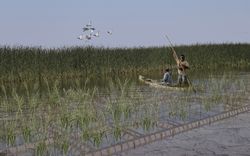
La bande indienne de St. Peter’s (désormais connue sous le nom de la Première Nation de Peguis) a été évacuée de force de son territoire d’origine, situé aux abords du marais Netley-Libau, à partir de 1908, à la suite d’un vote de cession illégal. Depuis, la santé de la région, autrefois patrie des Peguis, a décliné en raison d’impitoyables inondations et embâcles(...)
La bande indienne de St. Peter’s (désormais connue sous le nom de la Première Nation de Peguis) a été évacuée de force de son territoire d’origine, situé aux abords du marais Netley-Libau, à partir de 1908, à la suite d’un vote de cession illégal. Depuis, la santé de la région, autrefois patrie des Peguis, a décliné en raison d’impitoyables inondations et embâcles(...)
Localisation:
en ligne Mot(s)-clé(s):
Design mené par des Autochtones, boursière, Première Nation Peguis, réhabilitation des terres
en ligne Mot(s)-clé(s):
Design mené par des Autochtones, boursière, Première Nation Peguis, réhabilitation des terres
Date:
27 avril 2023, 18h à 19h30
27 avril 2023, 18h à 19h30
Titre:
La Première Nation de Peguis et le marais Netley-Libau : documenter l’utilisation et l’occupation des territoires autochtones à l’embouchure du lac Winnipeg
Actions:
Description:
La bande indienne de St. Peter’s (désormais connue sous le nom de la Première Nation de Peguis) a été évacuée de force de son territoire d’origine, situé aux abords du marais Netley-Libau, à partir de 1908, à la suite d’un vote de cession illégal. Depuis, la santé de la région, autrefois patrie des Peguis, a décliné en raison d’impitoyables inondations et embâcles(...)
La Première Nation de Peguis et le marais Netley-Libau : documenter l’utilisation et l’occupation des territoires autochtones à l’embouchure du lac Winnipeg
Actions:
Description:
La bande indienne de St. Peter’s (désormais connue sous le nom de la Première Nation de Peguis) a été évacuée de force de son territoire d’origine, situé aux abords du marais Netley-Libau, à partir de 1908, à la suite d’un vote de cession illégal. Depuis, la santé de la région, autrefois patrie des Peguis, a décliné en raison d’impitoyables inondations et embâcles(...)
Classification:
événements
événements
Date:
27 avril 2023
18h à 19h30
27 avril 2023
18h à 19h30
Localisation:
en ligne Mot(s)-clé(s):
Design mené par des Autochtones, boursière, Première Nation Peguis, réhabilitation des terres
en ligne Mot(s)-clé(s):
Design mené par des Autochtones, boursière, Première Nation Peguis, réhabilitation des terres
Niveau de description archivistique:
Projet
Projet
Titre:
Inter-Action Centre
Inter-Action Centre
Numéro de référence:
AP144.S2.D82
Description:
File documents Inter-Action Centre, a completed project for a community centre commissioned by Ed Berman and the Inter-Action Trust, for a disused site at Talacre Public Open Space in Kentish Town, Camden, London. The construction was divided into two phases. Foundations, steel frame and trusses were constructed first and could be used for open-air community events while funds were being raised for the second phase. Phase II included cladding, fittings, finishes, services prefabricated units, and log cabins. The building was intended as a flexible short life-span building in which the interior spaces would be independent of the roof and exterior walls. Functional areas suggested by Cedric Price include: assembly halls, classrooms, rehearsal rooms, studios, areas for performance, media resources, lounging and dining, and a gym and a nursery. Cedric Price had been engaged by the concepts of flexible architecture, indeterminacy, impermanence, and the fusion of information technology, entertainment, and educational activities in earlier unrealized projects such as Fun Palace (AP144.S2.D46) and Oxford Corner House (AP144.S2.D59). Existing conditions drawings include photographs of the site; reprographic copies of electrical and drainage systems; ordinance surveys of Kentish Town; and landscape and playground layout. Conceptual drawings include sketches of overall massing; diagrammatic plans; drawings and diagrams of site conditions; notes for the structural framework; rendered interior elevations; plans showing impact of site context on building design; diagrammatic sketches of relationship between functional requirements and structural form. Schematic drawings include diagrammatic plans; sections of structural system and exterior wall; cladding details; and axonometric views of supports. Design development drawings and working drawings include plans, elevations, sections, details and axonometric views. Presentation drawings include watercolours and other renderings; reprographic copies, possibly for publication; and perspectives drawings. Some material from this file was published in "Inter-action Centre." 'RIBA Journal'. (November 1977), 458-465; "Intervista A Cedric Price: London Interaction Centre." 'Domus'. (April 1978), 17-21; "Kentish Town West Amalgam, London." 'Architectural Record'. (January 1973), 19; Lyall, Sutherland. 'The State of British Architecture'. (London: Architectural Press, 1980), 107-109; 130 and 'Cedric Price-Works II' (London: Architectural Press, 1984), 54, 62-63. Material in this file was produced between 1964 and 1992, but predominantly between 1970 and 1981. File contains technical drawings that are attributed to the following consultants, contractors, and manufacturers: Coseley Buildings Ltd; H.G. Deacon Ltd; Kayanson Engineers; H.J. Knights & Co. Ltd; Woodcemair; Metal Sections Ltd; Spaceway; Gascoigne, Gush & Dent (Engineering Ltd); UBM Engineering; J. Murphy & Sons Ltd; Maurice Pickering Associates, Architects & Landscape Consultants; David Lee Architect & Landscape Architect; J. Starkie Gardner Ltd; Dibben Structural Engineers; Zisman, Bowyer & Partners; Felix J. Samuely and Partners; Ruberoid Contracts Ltd; Whitbread London Limited; and Portakabin. Paul Hyett and Will Alsop were Cedric Price's main assistants for this project. 'Inter-Action Trust Limited', 'Inter-Action Centre', and 'Talacre Centre Limited' appear as the client(s) at various stages of this project. File contains cartographic materials, conceptual drawings, consultant drawings, design development drawings, models, panels, photographic materials, presentation drawings, an illustration, textual records, and working drawings.
AP144.S2.D82
Description:
File documents Inter-Action Centre, a completed project for a community centre commissioned by Ed Berman and the Inter-Action Trust, for a disused site at Talacre Public Open Space in Kentish Town, Camden, London. The construction was divided into two phases. Foundations, steel frame and trusses were constructed first and could be used for open-air community events while funds were being raised for the second phase. Phase II included cladding, fittings, finishes, services prefabricated units, and log cabins. The building was intended as a flexible short life-span building in which the interior spaces would be independent of the roof and exterior walls. Functional areas suggested by Cedric Price include: assembly halls, classrooms, rehearsal rooms, studios, areas for performance, media resources, lounging and dining, and a gym and a nursery. Cedric Price had been engaged by the concepts of flexible architecture, indeterminacy, impermanence, and the fusion of information technology, entertainment, and educational activities in earlier unrealized projects such as Fun Palace (AP144.S2.D46) and Oxford Corner House (AP144.S2.D59). Existing conditions drawings include photographs of the site; reprographic copies of electrical and drainage systems; ordinance surveys of Kentish Town; and landscape and playground layout. Conceptual drawings include sketches of overall massing; diagrammatic plans; drawings and diagrams of site conditions; notes for the structural framework; rendered interior elevations; plans showing impact of site context on building design; diagrammatic sketches of relationship between functional requirements and structural form. Schematic drawings include diagrammatic plans; sections of structural system and exterior wall; cladding details; and axonometric views of supports. Design development drawings and working drawings include plans, elevations, sections, details and axonometric views. Presentation drawings include watercolours and other renderings; reprographic copies, possibly for publication; and perspectives drawings. Some material from this file was published in "Inter-action Centre." 'RIBA Journal'. (November 1977), 458-465; "Intervista A Cedric Price: London Interaction Centre." 'Domus'. (April 1978), 17-21; "Kentish Town West Amalgam, London." 'Architectural Record'. (January 1973), 19; Lyall, Sutherland. 'The State of British Architecture'. (London: Architectural Press, 1980), 107-109; 130 and 'Cedric Price-Works II' (London: Architectural Press, 1984), 54, 62-63. Material in this file was produced between 1964 and 1992, but predominantly between 1970 and 1981. File contains technical drawings that are attributed to the following consultants, contractors, and manufacturers: Coseley Buildings Ltd; H.G. Deacon Ltd; Kayanson Engineers; H.J. Knights & Co. Ltd; Woodcemair; Metal Sections Ltd; Spaceway; Gascoigne, Gush & Dent (Engineering Ltd); UBM Engineering; J. Murphy & Sons Ltd; Maurice Pickering Associates, Architects & Landscape Consultants; David Lee Architect & Landscape Architect; J. Starkie Gardner Ltd; Dibben Structural Engineers; Zisman, Bowyer & Partners; Felix J. Samuely and Partners; Ruberoid Contracts Ltd; Whitbread London Limited; and Portakabin. Paul Hyett and Will Alsop were Cedric Price's main assistants for this project. 'Inter-Action Trust Limited', 'Inter-Action Centre', and 'Talacre Centre Limited' appear as the client(s) at various stages of this project. File contains cartographic materials, conceptual drawings, consultant drawings, design development drawings, models, panels, photographic materials, presentation drawings, an illustration, textual records, and working drawings.
Personnes et institutions:
Date:
1964-1992, predominant 1970-1981
1964-1992, predominant 1970-1981
Titre:
Inter-Action Centre
Actions:
AP144.S2.D82
Description:
File documents Inter-Action Centre, a completed project for a community centre commissioned by Ed Berman and the Inter-Action Trust, for a disused site at Talacre Public Open Space in Kentish Town, Camden, London. The construction was divided into two phases. Foundations, steel frame and trusses were constructed first and could be used for open-air community events while funds were being raised for the second phase. Phase II included cladding, fittings, finishes, services prefabricated units, and log cabins. The building was intended as a flexible short life-span building in which the interior spaces would be independent of the roof and exterior walls. Functional areas suggested by Cedric Price include: assembly halls, classrooms, rehearsal rooms, studios, areas for performance, media resources, lounging and dining, and a gym and a nursery. Cedric Price had been engaged by the concepts of flexible architecture, indeterminacy, impermanence, and the fusion of information technology, entertainment, and educational activities in earlier unrealized projects such as Fun Palace (AP144.S2.D46) and Oxford Corner House (AP144.S2.D59). Existing conditions drawings include photographs of the site; reprographic copies of electrical and drainage systems; ordinance surveys of Kentish Town; and landscape and playground layout. Conceptual drawings include sketches of overall massing; diagrammatic plans; drawings and diagrams of site conditions; notes for the structural framework; rendered interior elevations; plans showing impact of site context on building design; diagrammatic sketches of relationship between functional requirements and structural form. Schematic drawings include diagrammatic plans; sections of structural system and exterior wall; cladding details; and axonometric views of supports. Design development drawings and working drawings include plans, elevations, sections, details and axonometric views. Presentation drawings include watercolours and other renderings; reprographic copies, possibly for publication; and perspectives drawings. Some material from this file was published in "Inter-action Centre." 'RIBA Journal'. (November 1977), 458-465; "Intervista A Cedric Price: London Interaction Centre." 'Domus'. (April 1978), 17-21; "Kentish Town West Amalgam, London." 'Architectural Record'. (January 1973), 19; Lyall, Sutherland. 'The State of British Architecture'. (London: Architectural Press, 1980), 107-109; 130 and 'Cedric Price-Works II' (London: Architectural Press, 1984), 54, 62-63. Material in this file was produced between 1964 and 1992, but predominantly between 1970 and 1981. File contains technical drawings that are attributed to the following consultants, contractors, and manufacturers: Coseley Buildings Ltd; H.G. Deacon Ltd; Kayanson Engineers; H.J. Knights & Co. Ltd; Woodcemair; Metal Sections Ltd; Spaceway; Gascoigne, Gush & Dent (Engineering Ltd); UBM Engineering; J. Murphy & Sons Ltd; Maurice Pickering Associates, Architects & Landscape Consultants; David Lee Architect & Landscape Architect; J. Starkie Gardner Ltd; Dibben Structural Engineers; Zisman, Bowyer & Partners; Felix J. Samuely and Partners; Ruberoid Contracts Ltd; Whitbread London Limited; and Portakabin. Paul Hyett and Will Alsop were Cedric Price's main assistants for this project. 'Inter-Action Trust Limited', 'Inter-Action Centre', and 'Talacre Centre Limited' appear as the client(s) at various stages of this project. File contains cartographic materials, conceptual drawings, consultant drawings, design development drawings, models, panels, photographic materials, presentation drawings, an illustration, textual records, and working drawings.
Inter-Action Centre
Actions:
AP144.S2.D82
Description:
File documents Inter-Action Centre, a completed project for a community centre commissioned by Ed Berman and the Inter-Action Trust, for a disused site at Talacre Public Open Space in Kentish Town, Camden, London. The construction was divided into two phases. Foundations, steel frame and trusses were constructed first and could be used for open-air community events while funds were being raised for the second phase. Phase II included cladding, fittings, finishes, services prefabricated units, and log cabins. The building was intended as a flexible short life-span building in which the interior spaces would be independent of the roof and exterior walls. Functional areas suggested by Cedric Price include: assembly halls, classrooms, rehearsal rooms, studios, areas for performance, media resources, lounging and dining, and a gym and a nursery. Cedric Price had been engaged by the concepts of flexible architecture, indeterminacy, impermanence, and the fusion of information technology, entertainment, and educational activities in earlier unrealized projects such as Fun Palace (AP144.S2.D46) and Oxford Corner House (AP144.S2.D59). Existing conditions drawings include photographs of the site; reprographic copies of electrical and drainage systems; ordinance surveys of Kentish Town; and landscape and playground layout. Conceptual drawings include sketches of overall massing; diagrammatic plans; drawings and diagrams of site conditions; notes for the structural framework; rendered interior elevations; plans showing impact of site context on building design; diagrammatic sketches of relationship between functional requirements and structural form. Schematic drawings include diagrammatic plans; sections of structural system and exterior wall; cladding details; and axonometric views of supports. Design development drawings and working drawings include plans, elevations, sections, details and axonometric views. Presentation drawings include watercolours and other renderings; reprographic copies, possibly for publication; and perspectives drawings. Some material from this file was published in "Inter-action Centre." 'RIBA Journal'. (November 1977), 458-465; "Intervista A Cedric Price: London Interaction Centre." 'Domus'. (April 1978), 17-21; "Kentish Town West Amalgam, London." 'Architectural Record'. (January 1973), 19; Lyall, Sutherland. 'The State of British Architecture'. (London: Architectural Press, 1980), 107-109; 130 and 'Cedric Price-Works II' (London: Architectural Press, 1984), 54, 62-63. Material in this file was produced between 1964 and 1992, but predominantly between 1970 and 1981. File contains technical drawings that are attributed to the following consultants, contractors, and manufacturers: Coseley Buildings Ltd; H.G. Deacon Ltd; Kayanson Engineers; H.J. Knights & Co. Ltd; Woodcemair; Metal Sections Ltd; Spaceway; Gascoigne, Gush & Dent (Engineering Ltd); UBM Engineering; J. Murphy & Sons Ltd; Maurice Pickering Associates, Architects & Landscape Consultants; David Lee Architect & Landscape Architect; J. Starkie Gardner Ltd; Dibben Structural Engineers; Zisman, Bowyer & Partners; Felix J. Samuely and Partners; Ruberoid Contracts Ltd; Whitbread London Limited; and Portakabin. Paul Hyett and Will Alsop were Cedric Price's main assistants for this project. 'Inter-Action Trust Limited', 'Inter-Action Centre', and 'Talacre Centre Limited' appear as the client(s) at various stages of this project. File contains cartographic materials, conceptual drawings, consultant drawings, design development drawings, models, panels, photographic materials, presentation drawings, an illustration, textual records, and working drawings.
Niveau de description archivistique:
File 82
File 82
Date:
1964-1992, predominant 1970-1981
1964-1992, predominant 1970-1981
Personnes et institutions:


