


35831 Résultats
Niveau de description archivistique:
Projet
Projet
Numéro de référence:
AP164.S1.1997.D7
Description:
The project series documents the restructuring of public space in Ramos, a neighborhood in Rio de Janeiro. The design was for an international competition “Rio cidade 2,” organized by Rio de Janeiro City Council. In 1997, Héctor Vigliecca (Héctor Vigliecca e Associados), Eduardo Horta and Fabiana Izaga (Izaga e Horta Arquitectos Associados Ltda.), and Abalos & Herreros won the competition. The project was built and final touches were left to German artist Albert Oehlen, who designed the pavement. The firm identified this project as number 106. Documenting this project are conceptual and design development drawings, correspondence, reports, guides, contracts, clippings and digital materials.
AP164.S1.1997.D7
Description:
The project series documents the restructuring of public space in Ramos, a neighborhood in Rio de Janeiro. The design was for an international competition “Rio cidade 2,” organized by Rio de Janeiro City Council. In 1997, Héctor Vigliecca (Héctor Vigliecca e Associados), Eduardo Horta and Fabiana Izaga (Izaga e Horta Arquitectos Associados Ltda.), and Abalos & Herreros won the competition. The project was built and final touches were left to German artist Albert Oehlen, who designed the pavement. The firm identified this project as number 106. Documenting this project are conceptual and design development drawings, correspondence, reports, guides, contracts, clippings and digital materials.
Personnes et institutions:
Date:
1996-1998
1996-1998
Titre:
Recualificación del espacio público de Ramos, Rio de Janeiro, Brazil (1997)
Actions:
AP164.S1.1997.D7
Description:
The project series documents the restructuring of public space in Ramos, a neighborhood in Rio de Janeiro. The design was for an international competition “Rio cidade 2,” organized by Rio de Janeiro City Council. In 1997, Héctor Vigliecca (Héctor Vigliecca e Associados), Eduardo Horta and Fabiana Izaga (Izaga e Horta Arquitectos Associados Ltda.), and Abalos & Herreros won the competition. The project was built and final touches were left to German artist Albert Oehlen, who designed the pavement. The firm identified this project as number 106. Documenting this project are conceptual and design development drawings, correspondence, reports, guides, contracts, clippings and digital materials.
Recualificación del espacio público de Ramos, Rio de Janeiro, Brazil (1997)
Actions:
AP164.S1.1997.D7
Description:
The project series documents the restructuring of public space in Ramos, a neighborhood in Rio de Janeiro. The design was for an international competition “Rio cidade 2,” organized by Rio de Janeiro City Council. In 1997, Héctor Vigliecca (Héctor Vigliecca e Associados), Eduardo Horta and Fabiana Izaga (Izaga e Horta Arquitectos Associados Ltda.), and Abalos & Herreros won the competition. The project was built and final touches were left to German artist Albert Oehlen, who designed the pavement. The firm identified this project as number 106. Documenting this project are conceptual and design development drawings, correspondence, reports, guides, contracts, clippings and digital materials.
Niveau de description archivistique:
Project
Project
Date:
1996-1998
1996-1998
Personnes et institutions:
Niveau de description archivistique:
Projet
Projet
Numéro de référence:
AP142.S1.D230
Description:
File documents an unexecuted project for a building complex and public square in Verbania, Italy. Material in this file was produced between 1990 and 1993. File contains a conceptual drawing, design development drawings and presentation drawings. File also contains textual records, including sketches, drawings, maps, photographs, Polaroids of a model, an architect's statement, a proposal, a building programme, specifications, standards, regulations, calculations, an administrative record, clippings, a technical report, schedules of drawings, labels for drawings, minutes of meetings, a business card, the 1 February 1991 edition of 'Il Giornale di Verbania', and the 2 February 1991 editions of 'Il VCO' and 'Il Verbano'.
AP142.S1.D230
Description:
File documents an unexecuted project for a building complex and public square in Verbania, Italy. Material in this file was produced between 1990 and 1993. File contains a conceptual drawing, design development drawings and presentation drawings. File also contains textual records, including sketches, drawings, maps, photographs, Polaroids of a model, an architect's statement, a proposal, a building programme, specifications, standards, regulations, calculations, an administrative record, clippings, a technical report, schedules of drawings, labels for drawings, minutes of meetings, a business card, the 1 February 1991 edition of 'Il Giornale di Verbania', and the 2 February 1991 editions of 'Il VCO' and 'Il Verbano'.
Personnes et institutions:
Date:
1990-1993
1990-1993
Titre:
Piazza del mercato, Verbania Intra
Actions:
AP142.S1.D230
Description:
File documents an unexecuted project for a building complex and public square in Verbania, Italy. Material in this file was produced between 1990 and 1993. File contains a conceptual drawing, design development drawings and presentation drawings. File also contains textual records, including sketches, drawings, maps, photographs, Polaroids of a model, an architect's statement, a proposal, a building programme, specifications, standards, regulations, calculations, an administrative record, clippings, a technical report, schedules of drawings, labels for drawings, minutes of meetings, a business card, the 1 February 1991 edition of 'Il Giornale di Verbania', and the 2 February 1991 editions of 'Il VCO' and 'Il Verbano'.
Piazza del mercato, Verbania Intra
Actions:
AP142.S1.D230
Description:
File documents an unexecuted project for a building complex and public square in Verbania, Italy. Material in this file was produced between 1990 and 1993. File contains a conceptual drawing, design development drawings and presentation drawings. File also contains textual records, including sketches, drawings, maps, photographs, Polaroids of a model, an architect's statement, a proposal, a building programme, specifications, standards, regulations, calculations, an administrative record, clippings, a technical report, schedules of drawings, labels for drawings, minutes of meetings, a business card, the 1 February 1991 edition of 'Il Giornale di Verbania', and the 2 February 1991 editions of 'Il VCO' and 'Il Verbano'.
Niveau de description archivistique:
File 230
File 230
Date:
1990-1993
1990-1993
Personnes et institutions:
Niveau de description archivistique:
Projet
Projet
Numéro de référence:
AP164.S1.1999.D10
Description:
The project series documents the competition entry for the mixed-use tower “El Mirador” in the Bay of Algeciras. The firm was invited to submit their design proposal which won second prize. The competition was organised by the Algeciras City Council. The firm identified this project as number 123. “The project attempts to express, with an architectural gesture, the beauty of the geography of Algeciras: the bay, the port, the Rock and the Straits of Gibraltar, the proximity of Ceuta and Africa, the cork-oak forests that surround the town. For this [Abalos & Herreros] propose a building that, from a single body, opens out into two towers from one great public viewing platform. This form has strategic holes giving onto the more notable topographical features, establishing a physical relationship with them, while the section is organized as a gradient of privacy that increases with height. The competition […] proposed a mixed programme in a posture parallel to the great avenue of the harbour of Algeciras. An evanescent building apparently fragile appears to let one being stimulated by the effects of the climate and the atmospheric phenomenons with an appearance changing with the function of the hours of the day or the season. Its layered section attends ascending to the different landscapes of the city: first public space, second the cities skyline and at last the 360° horizon rising above the city.” (ARCH270975) Abalos & Herreros worked with Ángel Jaramillo, Renata Sentkiewicz, Jakob Hense. Documenting this project are conceptual, design development and presentation drawings, cartographic and graphic materials, and competition records.
AP164.S1.1999.D10
Description:
The project series documents the competition entry for the mixed-use tower “El Mirador” in the Bay of Algeciras. The firm was invited to submit their design proposal which won second prize. The competition was organised by the Algeciras City Council. The firm identified this project as number 123. “The project attempts to express, with an architectural gesture, the beauty of the geography of Algeciras: the bay, the port, the Rock and the Straits of Gibraltar, the proximity of Ceuta and Africa, the cork-oak forests that surround the town. For this [Abalos & Herreros] propose a building that, from a single body, opens out into two towers from one great public viewing platform. This form has strategic holes giving onto the more notable topographical features, establishing a physical relationship with them, while the section is organized as a gradient of privacy that increases with height. The competition […] proposed a mixed programme in a posture parallel to the great avenue of the harbour of Algeciras. An evanescent building apparently fragile appears to let one being stimulated by the effects of the climate and the atmospheric phenomenons with an appearance changing with the function of the hours of the day or the season. Its layered section attends ascending to the different landscapes of the city: first public space, second the cities skyline and at last the 360° horizon rising above the city.” (ARCH270975) Abalos & Herreros worked with Ángel Jaramillo, Renata Sentkiewicz, Jakob Hense. Documenting this project are conceptual, design development and presentation drawings, cartographic and graphic materials, and competition records.
Personnes et institutions:
Date:
circa 1999
circa 1999
Titre:
El mirador: torre mixta en la Bahía de Algeciras, Spain (1999)
Actions:
AP164.S1.1999.D10
Description:
The project series documents the competition entry for the mixed-use tower “El Mirador” in the Bay of Algeciras. The firm was invited to submit their design proposal which won second prize. The competition was organised by the Algeciras City Council. The firm identified this project as number 123. “The project attempts to express, with an architectural gesture, the beauty of the geography of Algeciras: the bay, the port, the Rock and the Straits of Gibraltar, the proximity of Ceuta and Africa, the cork-oak forests that surround the town. For this [Abalos & Herreros] propose a building that, from a single body, opens out into two towers from one great public viewing platform. This form has strategic holes giving onto the more notable topographical features, establishing a physical relationship with them, while the section is organized as a gradient of privacy that increases with height. The competition […] proposed a mixed programme in a posture parallel to the great avenue of the harbour of Algeciras. An evanescent building apparently fragile appears to let one being stimulated by the effects of the climate and the atmospheric phenomenons with an appearance changing with the function of the hours of the day or the season. Its layered section attends ascending to the different landscapes of the city: first public space, second the cities skyline and at last the 360° horizon rising above the city.” (ARCH270975) Abalos & Herreros worked with Ángel Jaramillo, Renata Sentkiewicz, Jakob Hense. Documenting this project are conceptual, design development and presentation drawings, cartographic and graphic materials, and competition records.
El mirador: torre mixta en la Bahía de Algeciras, Spain (1999)
Actions:
AP164.S1.1999.D10
Description:
The project series documents the competition entry for the mixed-use tower “El Mirador” in the Bay of Algeciras. The firm was invited to submit their design proposal which won second prize. The competition was organised by the Algeciras City Council. The firm identified this project as number 123. “The project attempts to express, with an architectural gesture, the beauty of the geography of Algeciras: the bay, the port, the Rock and the Straits of Gibraltar, the proximity of Ceuta and Africa, the cork-oak forests that surround the town. For this [Abalos & Herreros] propose a building that, from a single body, opens out into two towers from one great public viewing platform. This form has strategic holes giving onto the more notable topographical features, establishing a physical relationship with them, while the section is organized as a gradient of privacy that increases with height. The competition […] proposed a mixed programme in a posture parallel to the great avenue of the harbour of Algeciras. An evanescent building apparently fragile appears to let one being stimulated by the effects of the climate and the atmospheric phenomenons with an appearance changing with the function of the hours of the day or the season. Its layered section attends ascending to the different landscapes of the city: first public space, second the cities skyline and at last the 360° horizon rising above the city.” (ARCH270975) Abalos & Herreros worked with Ángel Jaramillo, Renata Sentkiewicz, Jakob Hense. Documenting this project are conceptual, design development and presentation drawings, cartographic and graphic materials, and competition records.
Niveau de description archivistique:
Project
Project
Date:
circa 1999
circa 1999
Personnes et institutions:
Classification:
expositions
expositions
Titre:
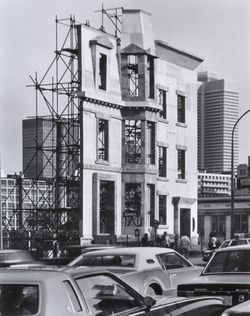
Melvin Charney 1935-2012
Melvin Charney 1935-2012
Actions:
Description:
L’artiste et théoricien Melvin Charney, mort un peu plus tôt cette année, a légué d’importantes contributions au CCA et à la ville de Montréal dans son ensemble. Au cours de sa carrière longue et variée, Charney a défendu le rôle public que joue l’architecte au sein du vaste environnement bâti, soutenant l’idée que la rue est la première ressource de la ville. Le CCA(...)
L’artiste et théoricien Melvin Charney, mort un peu plus tôt cette année, a légué d’importantes contributions au CCA et à la ville de Montréal dans son ensemble. Au cours de sa carrière longue et variée, Charney a défendu le rôle public que joue l’architecte au sein du vaste environnement bâti, soutenant l’idée que la rue est la première ressource de la ville. Le CCA(...)
Localisation:
Vitrines
Vitrines
Date:
24 octobre 2012 au 14 avril 2013
24 octobre 2012 au 14 avril 2013
Titre:
Melvin Charney 1935-2012
Actions:
Description:
L’artiste et théoricien Melvin Charney, mort un peu plus tôt cette année, a légué d’importantes contributions au CCA et à la ville de Montréal dans son ensemble. Au cours de sa carrière longue et variée, Charney a défendu le rôle public que joue l’architecte au sein du vaste environnement bâti, soutenant l’idée que la rue est la première ressource de la ville. Le CCA(...)
Melvin Charney 1935-2012
Actions:
Description:
L’artiste et théoricien Melvin Charney, mort un peu plus tôt cette année, a légué d’importantes contributions au CCA et à la ville de Montréal dans son ensemble. Au cours de sa carrière longue et variée, Charney a défendu le rôle public que joue l’architecte au sein du vaste environnement bâti, soutenant l’idée que la rue est la première ressource de la ville. Le CCA(...)
Classification:
expositions
expositions
Date:
24 octobre 2012 au
14 avril 2013
24 octobre 2012 au
14 avril 2013
Localisation:
Vitrines
Vitrines
Classification:
événements
événements
Actions:
Description:
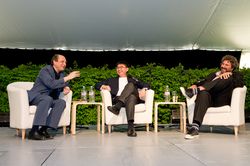
Reconnus pour leurs idées et projets novateurs, Greg Lynn et Yung Ho Chang abordent des questions d’importance vitale dans la pratique contemporaine. Les présentations individuelles de Lynn et de Chang sont suivies d’une conversation animée par le directeur du CCA, Mirko Zardini. La série Urgence témoigne de l’intérêt constant du CCA à explorer les questions cruciales(...)
Reconnus pour leurs idées et projets novateurs, Greg Lynn et Yung Ho Chang abordent des questions d’importance vitale dans la pratique contemporaine. Les présentations individuelles de Lynn et de Chang sont suivies d’une conversation animée par le directeur du CCA, Mirko Zardini. La série Urgence témoigne de l’intérêt constant du CCA à explorer les questions cruciales(...)
Date:
13 juin 2008
13 juin 2008
Titre:
Urgence 2008 : Greg Lynn et Yung Ho Chang
Actions:
Description:
Reconnus pour leurs idées et projets novateurs, Greg Lynn et Yung Ho Chang abordent des questions d’importance vitale dans la pratique contemporaine. Les présentations individuelles de Lynn et de Chang sont suivies d’une conversation animée par le directeur du CCA, Mirko Zardini. La série Urgence témoigne de l’intérêt constant du CCA à explorer les questions cruciales(...)
Urgence 2008 : Greg Lynn et Yung Ho Chang
Actions:
Description:
Reconnus pour leurs idées et projets novateurs, Greg Lynn et Yung Ho Chang abordent des questions d’importance vitale dans la pratique contemporaine. Les présentations individuelles de Lynn et de Chang sont suivies d’une conversation animée par le directeur du CCA, Mirko Zardini. La série Urgence témoigne de l’intérêt constant du CCA à explorer les questions cruciales(...)
Classification:
événements
événements
Date:
13 juin 2008
13 juin 2008
Classification:
documents textuels
documents textuels
Numéro de référence:
ARCH276909
Description:
11 files - newspaper and magazine clippings related to architectural projects by Arthur Erickson including Simon Fraser University, Habitat 1976 Pavilion, British Columbia Medical Centre, Teck Mining, Three Blocks Project and others. Also includes clippings related to Erickson as a public figure as well as his friends and acquaintances in the news.
ARCH276909
Description:
11 files - newspaper and magazine clippings related to architectural projects by Arthur Erickson including Simon Fraser University, Habitat 1976 Pavilion, British Columbia Medical Centre, Teck Mining, Three Blocks Project and others. Also includes clippings related to Erickson as a public figure as well as his friends and acquaintances in the news.
Personnes et institutions:
Date:
1967-1982
1967-1982
Titre:
Newspaper and magazine clippings related to architectural projects by Arthur Erickson
Actions:
ARCH276909
Description:
11 files - newspaper and magazine clippings related to architectural projects by Arthur Erickson including Simon Fraser University, Habitat 1976 Pavilion, British Columbia Medical Centre, Teck Mining, Three Blocks Project and others. Also includes clippings related to Erickson as a public figure as well as his friends and acquaintances in the news.
Newspaper and magazine clippings related to architectural projects by Arthur Erickson
Actions:
ARCH276909
Description:
11 files - newspaper and magazine clippings related to architectural projects by Arthur Erickson including Simon Fraser University, Habitat 1976 Pavilion, British Columbia Medical Centre, Teck Mining, Three Blocks Project and others. Also includes clippings related to Erickson as a public figure as well as his friends and acquaintances in the news.
Classification:
documents textuels
documents textuels
Date:
1967-1982
1967-1982
Personnes et institutions:
Niveau de description archivistique:
Projet
Projet
Titre:
Stark
Stark
Numéro de référence:
AP144.S2.D130
Description:
File documents a consultancy project to increase public access to the Stowe Gardens in Buckinghamshire, England, undertaken for the Stowe School, which owned the gardens. Included are proposals to improve vehicular access routes and parking; to improve and expand walking routes; and to introduce new tourist facilities and improve existing facilities. This project also includes proposals for alterations and additions to existing Stowe School buildings, and an earlier executed project for a new girls' boarding house, for which Price was also consultant. Material in this file was produced between 1978 and 1990, but predominantly between 1983 and 1986. File contains conceptual drawings, photographic materials, and textual records
AP144.S2.D130
Description:
File documents a consultancy project to increase public access to the Stowe Gardens in Buckinghamshire, England, undertaken for the Stowe School, which owned the gardens. Included are proposals to improve vehicular access routes and parking; to improve and expand walking routes; and to introduce new tourist facilities and improve existing facilities. This project also includes proposals for alterations and additions to existing Stowe School buildings, and an earlier executed project for a new girls' boarding house, for which Price was also consultant. Material in this file was produced between 1978 and 1990, but predominantly between 1983 and 1986. File contains conceptual drawings, photographic materials, and textual records
Personnes et institutions:
Date:
1978-1990, predominant 1983-1986
1978-1990, predominant 1983-1986
Titre:
Stark
Actions:
AP144.S2.D130
Description:
File documents a consultancy project to increase public access to the Stowe Gardens in Buckinghamshire, England, undertaken for the Stowe School, which owned the gardens. Included are proposals to improve vehicular access routes and parking; to improve and expand walking routes; and to introduce new tourist facilities and improve existing facilities. This project also includes proposals for alterations and additions to existing Stowe School buildings, and an earlier executed project for a new girls' boarding house, for which Price was also consultant. Material in this file was produced between 1978 and 1990, but predominantly between 1983 and 1986. File contains conceptual drawings, photographic materials, and textual records
Stark
Actions:
AP144.S2.D130
Description:
File documents a consultancy project to increase public access to the Stowe Gardens in Buckinghamshire, England, undertaken for the Stowe School, which owned the gardens. Included are proposals to improve vehicular access routes and parking; to improve and expand walking routes; and to introduce new tourist facilities and improve existing facilities. This project also includes proposals for alterations and additions to existing Stowe School buildings, and an earlier executed project for a new girls' boarding house, for which Price was also consultant. Material in this file was produced between 1978 and 1990, but predominantly between 1983 and 1986. File contains conceptual drawings, photographic materials, and textual records
Niveau de description archivistique:
File 130
File 130
Date:
1978-1990, predominant 1983-1986
1978-1990, predominant 1983-1986
Personnes et institutions:
Classification:
événements
événements
Actions:
Description:
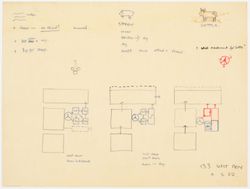
La viande et les produits laitiers sont des ingrédients omniprésents dans l’alimentation mondiale. Cependant, les bâtiments qui transforment les êtres vivants en marchandises sont généralement cachés aux yeux du public. L’architecture de l’élevage industriel peut sembler anonyme et banale, et pourtant elle est rendue possible par des technologies sophistiquées et des(...)
La viande et les produits laitiers sont des ingrédients omniprésents dans l’alimentation mondiale. Cependant, les bâtiments qui transforment les êtres vivants en marchandises sont généralement cachés aux yeux du public. L’architecture de l’élevage industriel peut sembler anonyme et banale, et pourtant elle est rendue possible par des technologies sophistiquées et des(...)
Date:
20 juillet 2023, 18h à 19h30
20 juillet 2023, 18h à 19h30
Titre:
Des cages pour les non-humains : une histoire architecturale de l'élevage
Actions:
Description:
La viande et les produits laitiers sont des ingrédients omniprésents dans l’alimentation mondiale. Cependant, les bâtiments qui transforment les êtres vivants en marchandises sont généralement cachés aux yeux du public. L’architecture de l’élevage industriel peut sembler anonyme et banale, et pourtant elle est rendue possible par des technologies sophistiquées et des(...)
Des cages pour les non-humains : une histoire architecturale de l'élevage
Actions:
Description:
La viande et les produits laitiers sont des ingrédients omniprésents dans l’alimentation mondiale. Cependant, les bâtiments qui transforment les êtres vivants en marchandises sont généralement cachés aux yeux du public. L’architecture de l’élevage industriel peut sembler anonyme et banale, et pourtant elle est rendue possible par des technologies sophistiquées et des(...)
Classification:
événements
événements
Date:
20 juillet 2023
18h à 19h30
20 juillet 2023
18h à 19h30
Classification:
documents textuels
documents textuels
Numéro de référence:
ARCH274251
Description:
4 files- includes draft of the policy and program for public art on the ocean plaza, Portside Trade and Convention Centre, meeting agendas, correspondence, project workplan, project cancellation information, plans, sketches, notes, the Comprehensive Development Agreement application to Council, design requirements and reports. Also includes some material relating to other projects.
ARCH274251
Description:
4 files- includes draft of the policy and program for public art on the ocean plaza, Portside Trade and Convention Centre, meeting agendas, correspondence, project workplan, project cancellation information, plans, sketches, notes, the Comprehensive Development Agreement application to Council, design requirements and reports. Also includes some material relating to other projects.
Personnes et institutions:
Date:
1995-1998
1995-1998
Titre:
Meetings, correspondence, project workplan, plans and sketches, notes, design requirements and reports
Actions:
ARCH274251
Description:
4 files- includes draft of the policy and program for public art on the ocean plaza, Portside Trade and Convention Centre, meeting agendas, correspondence, project workplan, project cancellation information, plans, sketches, notes, the Comprehensive Development Agreement application to Council, design requirements and reports. Also includes some material relating to other projects.
Meetings, correspondence, project workplan, plans and sketches, notes, design requirements and reports
Actions:
ARCH274251
Description:
4 files- includes draft of the policy and program for public art on the ocean plaza, Portside Trade and Convention Centre, meeting agendas, correspondence, project workplan, project cancellation information, plans, sketches, notes, the Comprehensive Development Agreement application to Council, design requirements and reports. Also includes some material relating to other projects.
Classification:
documents textuels
documents textuels
Date:
1995-1998
1995-1998
Personnes et institutions:
Niveau de description archivistique:
Projet
Projet
Numéro de référence:
AP056.S1.1989.PR08
Description:
This project series documents the winning competition entry and subsequent construction for Kitchener City Hall in Kitchener, Ontario from 1989-1993. The office identified the project number as 8928. This project consisted of a U-shaped civic building comprised of a circular rotunda in the centre, an office tower to the right, the council chambers to the left, and two rectangular arms on either side to create the arms of the U. These elements, which wrapped around a large reflecting pool that doubled as a skating rink, were visually separated but coherent in their design and use of materials. Located on the block between Young, College, Duke and King Streets, the interior and exteriors of the property were designed for city government, but also for the larger public with community, public spaces, and open interaction with local government as key design concepts for the project. After entering the Civic Square outside the building, patrons can pass through the main portico, into the Interior Civic Square were the round Civic Rotunda rests in the centre. The rotunda’s interior was designed for use as a public gathering space, where events and activities could be held. The top of the rotunda had sandblasted glass windows with patinated copper frames, letting natural light shine into the large space below. A staircase from the main Civic Square led to an exterior terrace that wrapped around the top of the rotunda. The Administrative Office Tower was ten-storeys with a mechanical penthouse, and was used for civic offices. The Council Chamber was comprised of limestone with refinished metal panels forming a curved roof on top. The two wings along the sides of the property contained tenant areas, a restaurant, information offices, alderman’s offices and the mayor’s office, among other spaces. The back of the property had landscaped exteriors and outdoor play areas for the building’s daycare. The project is recorded through drawings, photographic materials, presentation paintings and models dating from 1989-1993. The drawings consist of concepts for both the competition entry and the subsequent construction of the project. These include sketches, base maps and area surveys produced by the city and contractors, presentation boards and paintings, plans, elevations, sections, perspectives, details and axonometric drawings. There are also photographic reproductions of presentation drawings. The photographs show finished interiors and exteriors and the project model.
AP056.S1.1989.PR08
Description:
This project series documents the winning competition entry and subsequent construction for Kitchener City Hall in Kitchener, Ontario from 1989-1993. The office identified the project number as 8928. This project consisted of a U-shaped civic building comprised of a circular rotunda in the centre, an office tower to the right, the council chambers to the left, and two rectangular arms on either side to create the arms of the U. These elements, which wrapped around a large reflecting pool that doubled as a skating rink, were visually separated but coherent in their design and use of materials. Located on the block between Young, College, Duke and King Streets, the interior and exteriors of the property were designed for city government, but also for the larger public with community, public spaces, and open interaction with local government as key design concepts for the project. After entering the Civic Square outside the building, patrons can pass through the main portico, into the Interior Civic Square were the round Civic Rotunda rests in the centre. The rotunda’s interior was designed for use as a public gathering space, where events and activities could be held. The top of the rotunda had sandblasted glass windows with patinated copper frames, letting natural light shine into the large space below. A staircase from the main Civic Square led to an exterior terrace that wrapped around the top of the rotunda. The Administrative Office Tower was ten-storeys with a mechanical penthouse, and was used for civic offices. The Council Chamber was comprised of limestone with refinished metal panels forming a curved roof on top. The two wings along the sides of the property contained tenant areas, a restaurant, information offices, alderman’s offices and the mayor’s office, among other spaces. The back of the property had landscaped exteriors and outdoor play areas for the building’s daycare. The project is recorded through drawings, photographic materials, presentation paintings and models dating from 1989-1993. The drawings consist of concepts for both the competition entry and the subsequent construction of the project. These include sketches, base maps and area surveys produced by the city and contractors, presentation boards and paintings, plans, elevations, sections, perspectives, details and axonometric drawings. There are also photographic reproductions of presentation drawings. The photographs show finished interiors and exteriors and the project model.
Personnes et institutions:
Date:
1989-1993
1989-1993
Titre:
Kitchener City Hall Competition, Ontario (1989-1993)
Actions:
AP056.S1.1989.PR08
Description:
This project series documents the winning competition entry and subsequent construction for Kitchener City Hall in Kitchener, Ontario from 1989-1993. The office identified the project number as 8928. This project consisted of a U-shaped civic building comprised of a circular rotunda in the centre, an office tower to the right, the council chambers to the left, and two rectangular arms on either side to create the arms of the U. These elements, which wrapped around a large reflecting pool that doubled as a skating rink, were visually separated but coherent in their design and use of materials. Located on the block between Young, College, Duke and King Streets, the interior and exteriors of the property were designed for city government, but also for the larger public with community, public spaces, and open interaction with local government as key design concepts for the project. After entering the Civic Square outside the building, patrons can pass through the main portico, into the Interior Civic Square were the round Civic Rotunda rests in the centre. The rotunda’s interior was designed for use as a public gathering space, where events and activities could be held. The top of the rotunda had sandblasted glass windows with patinated copper frames, letting natural light shine into the large space below. A staircase from the main Civic Square led to an exterior terrace that wrapped around the top of the rotunda. The Administrative Office Tower was ten-storeys with a mechanical penthouse, and was used for civic offices. The Council Chamber was comprised of limestone with refinished metal panels forming a curved roof on top. The two wings along the sides of the property contained tenant areas, a restaurant, information offices, alderman’s offices and the mayor’s office, among other spaces. The back of the property had landscaped exteriors and outdoor play areas for the building’s daycare. The project is recorded through drawings, photographic materials, presentation paintings and models dating from 1989-1993. The drawings consist of concepts for both the competition entry and the subsequent construction of the project. These include sketches, base maps and area surveys produced by the city and contractors, presentation boards and paintings, plans, elevations, sections, perspectives, details and axonometric drawings. There are also photographic reproductions of presentation drawings. The photographs show finished interiors and exteriors and the project model.
Kitchener City Hall Competition, Ontario (1989-1993)
Actions:
AP056.S1.1989.PR08
Description:
This project series documents the winning competition entry and subsequent construction for Kitchener City Hall in Kitchener, Ontario from 1989-1993. The office identified the project number as 8928. This project consisted of a U-shaped civic building comprised of a circular rotunda in the centre, an office tower to the right, the council chambers to the left, and two rectangular arms on either side to create the arms of the U. These elements, which wrapped around a large reflecting pool that doubled as a skating rink, were visually separated but coherent in their design and use of materials. Located on the block between Young, College, Duke and King Streets, the interior and exteriors of the property were designed for city government, but also for the larger public with community, public spaces, and open interaction with local government as key design concepts for the project. After entering the Civic Square outside the building, patrons can pass through the main portico, into the Interior Civic Square were the round Civic Rotunda rests in the centre. The rotunda’s interior was designed for use as a public gathering space, where events and activities could be held. The top of the rotunda had sandblasted glass windows with patinated copper frames, letting natural light shine into the large space below. A staircase from the main Civic Square led to an exterior terrace that wrapped around the top of the rotunda. The Administrative Office Tower was ten-storeys with a mechanical penthouse, and was used for civic offices. The Council Chamber was comprised of limestone with refinished metal panels forming a curved roof on top. The two wings along the sides of the property contained tenant areas, a restaurant, information offices, alderman’s offices and the mayor’s office, among other spaces. The back of the property had landscaped exteriors and outdoor play areas for the building’s daycare. The project is recorded through drawings, photographic materials, presentation paintings and models dating from 1989-1993. The drawings consist of concepts for both the competition entry and the subsequent construction of the project. These include sketches, base maps and area surveys produced by the city and contractors, presentation boards and paintings, plans, elevations, sections, perspectives, details and axonometric drawings. There are also photographic reproductions of presentation drawings. The photographs show finished interiors and exteriors and the project model.
Niveau de description archivistique:
Project
Project
Date:
1989-1993
1989-1993
Personnes et institutions:


