


4081 Résultats
Classification:
événements
événements
Actions:
Description:
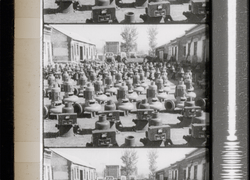
Cette présentation revisite l’héritage visuel controversé du documentaire Chung Kuo, Cina (1972) réalisé par Michelangelo Antonioni, en le replaçant au sein d’un réseau élargi d’échanges et de rencontres à l’époque de la guerre froide entre les cinéastes occidentaux et une République populaire de Chine à limage méticuleusement élaborée. En établissant des parallèles entre(...)
Cette présentation revisite l’héritage visuel controversé du documentaire Chung Kuo, Cina (1972) réalisé par Michelangelo Antonioni, en le replaçant au sein d’un réseau élargi d’échanges et de rencontres à l’époque de la guerre froide entre les cinéastes occidentaux et une République populaire de Chine à limage méticuleusement élaborée. En établissant des parallèles entre(...)
Localisation:
Théâtre Paul-Desmarais
Théâtre Paul-Desmarais
Date:
22 janvier 2026, 18h à 19h30
22 janvier 2026, 18h à 19h30
Titre:
Projection d’extraits de film et annotation en direct : Chung Kuo, Cina d’Antonioni (1972)
Actions:
Description:
Cette présentation revisite l’héritage visuel controversé du documentaire Chung Kuo, Cina (1972) réalisé par Michelangelo Antonioni, en le replaçant au sein d’un réseau élargi d’échanges et de rencontres à l’époque de la guerre froide entre les cinéastes occidentaux et une République populaire de Chine à limage méticuleusement élaborée. En établissant des parallèles entre(...)
Projection d’extraits de film et annotation en direct : Chung Kuo, Cina d’Antonioni (1972)
Actions:
Description:
Cette présentation revisite l’héritage visuel controversé du documentaire Chung Kuo, Cina (1972) réalisé par Michelangelo Antonioni, en le replaçant au sein d’un réseau élargi d’échanges et de rencontres à l’époque de la guerre froide entre les cinéastes occidentaux et une République populaire de Chine à limage méticuleusement élaborée. En établissant des parallèles entre(...)
Classification:
événements
événements
Date:
22 janvier 2026
18h à 19h30
22 janvier 2026
18h à 19h30
Localisation:
Théâtre Paul-Desmarais
Théâtre Paul-Desmarais
Classification:
articles
articles
Actions:
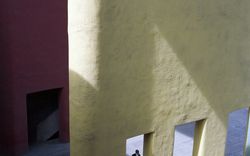
Takashi Homma sur la photographie de Chandigarh
Classification:
articles
articles

Titre:
Avec un autre angle
Avec un autre angle
Actions:
Wang Tuo présente *Intensity in Ten Cities*, une installation vidéo réalisée pour l’exposition [Quelle modernité : biographies de l’architecture en Chine 1949-1979](https://www.cca.qc.ca/fr/evenements/96996/quelle-modernite).
Publié:
7 avril 2026
7 avril 2026
Titre:
Avec un autre angle
Wang Tuo présente *Intensity in Ten Cities*, une installation vidéo réalisée pour l’exposition [Quelle modernité : biographies de l’architecture en Chine 1949-1979](https://www.cca.qc.ca/fr/evenements/96996/quelle-modernite).
Actions:
Avec un autre angle
Wang Tuo présente *Intensity in Ten Cities*, une installation vidéo réalisée pour l’exposition [Quelle modernité : biographies de l’architecture en Chine 1949-1979](https://www.cca.qc.ca/fr/evenements/96996/quelle-modernite).
Actions:
Classification:
expositions
expositions
Actions:
Description:
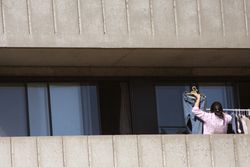
Un atlas, un bricolage, une collection de stratégies et d’interventions variés permettant de comprendre Montréal. ABC : MTL est un abécédaire urbain et une plateforme ouverte cartographiant la ville contemporaine de façons multiples et au travers de différentes techniques. Plus de 90 contributions comprenant des photographies, des vidéoclips, des sculptures, des(...)
Un atlas, un bricolage, une collection de stratégies et d’interventions variés permettant de comprendre Montréal. ABC : MTL est un abécédaire urbain et une plateforme ouverte cartographiant la ville contemporaine de façons multiples et au travers de différentes techniques. Plus de 90 contributions comprenant des photographies, des vidéoclips, des sculptures, des(...)
Localisation:
Salles principales
Salles principales
Date:
13 novembre 2012 au 31 mars 2013
13 novembre 2012 au 31 mars 2013
Titre:
ABC : MTL – Un autoportrait de Montréal
Actions:
Description:
Un atlas, un bricolage, une collection de stratégies et d’interventions variés permettant de comprendre Montréal. ABC : MTL est un abécédaire urbain et une plateforme ouverte cartographiant la ville contemporaine de façons multiples et au travers de différentes techniques. Plus de 90 contributions comprenant des photographies, des vidéoclips, des sculptures, des(...)
ABC : MTL – Un autoportrait de Montréal
Actions:
Description:
Un atlas, un bricolage, une collection de stratégies et d’interventions variés permettant de comprendre Montréal. ABC : MTL est un abécédaire urbain et une plateforme ouverte cartographiant la ville contemporaine de façons multiples et au travers de différentes techniques. Plus de 90 contributions comprenant des photographies, des vidéoclips, des sculptures, des(...)
Classification:
expositions
expositions
Date:
13 novembre 2012 au
31 mars 2013
13 novembre 2012 au
31 mars 2013
Localisation:
Salles principales
Salles principales
Niveau de description archivistique:
Série(s)
Série(s)
Numéro de référence:
AP184.S1
Description:
Series 1, Three Dimensional Trading Floor, 1990 - 2009, relates to Asymptote Architecture’s design of a virtualized NYSE Trading Floor that visualized real-time numerical and statistical data. This series includes textual, born-digital, and audiovisual components, as well as digital artefacts, and chiefly dates from 1997 to 2002. The intent of the New York Stock Exchange Three Dimensional Trading Floor (3DTF) was to detect suspicious trading activity, track the impact of global news events on the market and potentially predict a crash before it happened. In order to achieve this technically, Asymptote worked with Silicon Graphics Incorporated (SGI) RealityEngine hardware which had been built specifically for these visualization-intensive applications. They also worked with Softimage and Alias software for modeling, rendering and animating, and VRML (Virtual Reality Markup Language) and Macromedia Flash in order to integrate real-time data into a navigable three-dimensional environment. The main elements of the virtual environment include posts, containers, and back wall. The two container types, Index Container (IC) and Group Container (GC), allow for visualization and comparison of stock histories and behaviors. The posts display stock information, corresponding heat maps on floors, and alerts. The back wall integrates live news broadcasts. Materials in this series are largely digital and primarily include still raster images and video demonstrating 3DTF functionality. There is also a small body of CAD material in Maya, Alias, Microstation, and Form-Z formats. Other digital materials include Virtual Reality Markup Language (VRML) files, HTML files, Silicon Graphics Images databases, research material, press kits, presentations, and handout files. The textual records are largely materials that were handed out at presentation meetings for each phase of the project. These typically illustrate major virtual components of 3DTF, like the heat maps and posts, and overlap significantly with the related digital files. There is also one VHS tape which compiles nearly twenty minutes of animated renderings. Finally, this series includes 43 CDs. The CDs were processed and are included as part of the digital records; the CDs themselves were kept in instances where they may have artefactual value, especially if they were visually interesting or informationally important.
AP184.S1
Description:
Series 1, Three Dimensional Trading Floor, 1990 - 2009, relates to Asymptote Architecture’s design of a virtualized NYSE Trading Floor that visualized real-time numerical and statistical data. This series includes textual, born-digital, and audiovisual components, as well as digital artefacts, and chiefly dates from 1997 to 2002. The intent of the New York Stock Exchange Three Dimensional Trading Floor (3DTF) was to detect suspicious trading activity, track the impact of global news events on the market and potentially predict a crash before it happened. In order to achieve this technically, Asymptote worked with Silicon Graphics Incorporated (SGI) RealityEngine hardware which had been built specifically for these visualization-intensive applications. They also worked with Softimage and Alias software for modeling, rendering and animating, and VRML (Virtual Reality Markup Language) and Macromedia Flash in order to integrate real-time data into a navigable three-dimensional environment. The main elements of the virtual environment include posts, containers, and back wall. The two container types, Index Container (IC) and Group Container (GC), allow for visualization and comparison of stock histories and behaviors. The posts display stock information, corresponding heat maps on floors, and alerts. The back wall integrates live news broadcasts. Materials in this series are largely digital and primarily include still raster images and video demonstrating 3DTF functionality. There is also a small body of CAD material in Maya, Alias, Microstation, and Form-Z formats. Other digital materials include Virtual Reality Markup Language (VRML) files, HTML files, Silicon Graphics Images databases, research material, press kits, presentations, and handout files. The textual records are largely materials that were handed out at presentation meetings for each phase of the project. These typically illustrate major virtual components of 3DTF, like the heat maps and posts, and overlap significantly with the related digital files. There is also one VHS tape which compiles nearly twenty minutes of animated renderings. Finally, this series includes 43 CDs. The CDs were processed and are included as part of the digital records; the CDs themselves were kept in instances where they may have artefactual value, especially if they were visually interesting or informationally important.
Personnes et institutions:
Date:
1990-2009
1990-2009
Titre:
Three Dimensional Trading Floor
Actions:
AP184.S1
Description:
Series 1, Three Dimensional Trading Floor, 1990 - 2009, relates to Asymptote Architecture’s design of a virtualized NYSE Trading Floor that visualized real-time numerical and statistical data. This series includes textual, born-digital, and audiovisual components, as well as digital artefacts, and chiefly dates from 1997 to 2002. The intent of the New York Stock Exchange Three Dimensional Trading Floor (3DTF) was to detect suspicious trading activity, track the impact of global news events on the market and potentially predict a crash before it happened. In order to achieve this technically, Asymptote worked with Silicon Graphics Incorporated (SGI) RealityEngine hardware which had been built specifically for these visualization-intensive applications. They also worked with Softimage and Alias software for modeling, rendering and animating, and VRML (Virtual Reality Markup Language) and Macromedia Flash in order to integrate real-time data into a navigable three-dimensional environment. The main elements of the virtual environment include posts, containers, and back wall. The two container types, Index Container (IC) and Group Container (GC), allow for visualization and comparison of stock histories and behaviors. The posts display stock information, corresponding heat maps on floors, and alerts. The back wall integrates live news broadcasts. Materials in this series are largely digital and primarily include still raster images and video demonstrating 3DTF functionality. There is also a small body of CAD material in Maya, Alias, Microstation, and Form-Z formats. Other digital materials include Virtual Reality Markup Language (VRML) files, HTML files, Silicon Graphics Images databases, research material, press kits, presentations, and handout files. The textual records are largely materials that were handed out at presentation meetings for each phase of the project. These typically illustrate major virtual components of 3DTF, like the heat maps and posts, and overlap significantly with the related digital files. There is also one VHS tape which compiles nearly twenty minutes of animated renderings. Finally, this series includes 43 CDs. The CDs were processed and are included as part of the digital records; the CDs themselves were kept in instances where they may have artefactual value, especially if they were visually interesting or informationally important.
Three Dimensional Trading Floor
Actions:
AP184.S1
Description:
Series 1, Three Dimensional Trading Floor, 1990 - 2009, relates to Asymptote Architecture’s design of a virtualized NYSE Trading Floor that visualized real-time numerical and statistical data. This series includes textual, born-digital, and audiovisual components, as well as digital artefacts, and chiefly dates from 1997 to 2002. The intent of the New York Stock Exchange Three Dimensional Trading Floor (3DTF) was to detect suspicious trading activity, track the impact of global news events on the market and potentially predict a crash before it happened. In order to achieve this technically, Asymptote worked with Silicon Graphics Incorporated (SGI) RealityEngine hardware which had been built specifically for these visualization-intensive applications. They also worked with Softimage and Alias software for modeling, rendering and animating, and VRML (Virtual Reality Markup Language) and Macromedia Flash in order to integrate real-time data into a navigable three-dimensional environment. The main elements of the virtual environment include posts, containers, and back wall. The two container types, Index Container (IC) and Group Container (GC), allow for visualization and comparison of stock histories and behaviors. The posts display stock information, corresponding heat maps on floors, and alerts. The back wall integrates live news broadcasts. Materials in this series are largely digital and primarily include still raster images and video demonstrating 3DTF functionality. There is also a small body of CAD material in Maya, Alias, Microstation, and Form-Z formats. Other digital materials include Virtual Reality Markup Language (VRML) files, HTML files, Silicon Graphics Images databases, research material, press kits, presentations, and handout files. The textual records are largely materials that were handed out at presentation meetings for each phase of the project. These typically illustrate major virtual components of 3DTF, like the heat maps and posts, and overlap significantly with the related digital files. There is also one VHS tape which compiles nearly twenty minutes of animated renderings. Finally, this series includes 43 CDs. The CDs were processed and are included as part of the digital records; the CDs themselves were kept in instances where they may have artefactual value, especially if they were visually interesting or informationally important.
Niveau de description archivistique:
Series
Series
Date:
1990-2009
1990-2009
Personnes et institutions:
Classification:
articles
articles
Titre:
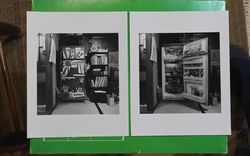
Observations familières
Observations familières
Actions:
Tokuko Ushioda en conversation avec Stefano Graziani et Bas Princen
Mot(s)-clé(s):
La vie des documents, la photographie en tant que projet, Stefano Graziani, Bas Princen, Tokuko Ushioda, Ice Box, My Husband
La vie des documents, la photographie en tant que projet, Stefano Graziani, Bas Princen, Tokuko Ushioda, Ice Box, My Husband
Publié:
17 juillet 2023
17 juillet 2023
Titre:
Observations familières
Tokuko Ushioda en conversation avec Stefano Graziani et Bas Princen
Actions:
Observations familières
Tokuko Ushioda en conversation avec Stefano Graziani et Bas Princen
Actions:
Classification:
archives
Niveau de description archivistique:
Fonds
archives
Niveau de description archivistique:
Fonds
Numéro de référence:
AP186
Résumé:
The Cloud 9 Villa Nurbs project records,1990s-2013, document the firm’s Villa Nurbs project, a private residence in Empuriabrava (Costa Brava), Spain. The archive consists of the firm’s total born-digital archive for the project, as well as physical materials in a number of formats, including drawings, textual records, slides, presentation materials, photographs, paintings, protoypes, material samples, and models.
AP186
Résumé:
The Cloud 9 Villa Nurbs project records,1990s-2013, document the firm’s Villa Nurbs project, a private residence in Empuriabrava (Costa Brava), Spain. The archive consists of the firm’s total born-digital archive for the project, as well as physical materials in a number of formats, including drawings, textual records, slides, presentation materials, photographs, paintings, protoypes, material samples, and models.
Personnes et institutions:
Date:
1990s-2013
1990s-2013
Titre:
Documents d’archives de Cloud 9 pour le projet Villa Nurbs
Actions:
AP186
Résumé:
The Cloud 9 Villa Nurbs project records,1990s-2013, document the firm’s Villa Nurbs project, a private residence in Empuriabrava (Costa Brava), Spain. The archive consists of the firm’s total born-digital archive for the project, as well as physical materials in a number of formats, including drawings, textual records, slides, presentation materials, photographs, paintings, protoypes, material samples, and models.
Documents d’archives de Cloud 9 pour le projet Villa Nurbs
Actions:
AP186
Résumé:
The Cloud 9 Villa Nurbs project records,1990s-2013, document the firm’s Villa Nurbs project, a private residence in Empuriabrava (Costa Brava), Spain. The archive consists of the firm’s total born-digital archive for the project, as well as physical materials in a number of formats, including drawings, textual records, slides, presentation materials, photographs, paintings, protoypes, material samples, and models.
Classification:
archives
Niveau de description archivistique:
Fonds
archives
Niveau de description archivistique:
Fonds
Date:
1990s-2013
1990s-2013
Personnes et institutions:
Niveau de description archivistique:
Série(s)
Série(s)
Titre:
Une architecture des humeurs
Une architecture des humeurs
Numéro de référence:
AP193.S4
Description:
Series 4, Une architecture des humeurs, 2008-2011, documents the conception and the presentation of exhibition and project Une architecture des humeurs. Presented at Le laboratoire art gallery in Paris between January and May 2010, Une architecture des humeurs is a conceptual, unbuilt, residential urban structure based on a potential future in which contemporary science reads human physiology and chemical balance. The idea is to acquire a chemistry of the “humors”, or the moods and temperament, of future purchasers. Taken as input, the information generates a diversity of habitable morphologies and relationships between them. With this process, the project attempts to make palpable and graspable, through technologies, the emotions of the participants captured via the chemistry of their body. The goal is to gather information on their capacity of adaptation, their level of sympathy and empathy while confronted to a situation or an environment. This information is then analyzed by computational, mathematical, and machinist procedures. This leads to the design and production of an urban structure submitted to the improbable and uncertain protocols produced by emotions, also creating aggregations and layouts that rearticulate the links between the individual and the collective. These structures are calculated following simultaneously incremental and recursive structural optimization protocols resulting in the physicality and morphology of architecture. The layout of the residential units and the structural trajectories are conceived and developed as posterior to the constructs supporting social life and not as an a priori. The structure of each components of the urban structure is generated by a secretion and weaving machine called Viab02. The machine is the second prototype of VIAB which was developed with Robotics Research Lab of the University of Southern California and takes its name from the terms viability and variability. With a process similar to contour crafting, the machine produces bio-cement, a mix between cement and bio-resin, giving form to the adapted residential structures. The records consist largely of images detailing the creative process of the firm, photographs of the exhibition, and 3D models. It also contains animated renderings representing the machine in action and sequences of the construction of the building or the structure. The records include a video orienting the project into François Roche theoretical stance, research as speculation, that can be summarize as the use of technological tools to take a critical and political position through esthetic in order to open new lines of thoughts. AP193.S2 contains updated previous version of the VIAB machine
AP193.S4
Description:
Series 4, Une architecture des humeurs, 2008-2011, documents the conception and the presentation of exhibition and project Une architecture des humeurs. Presented at Le laboratoire art gallery in Paris between January and May 2010, Une architecture des humeurs is a conceptual, unbuilt, residential urban structure based on a potential future in which contemporary science reads human physiology and chemical balance. The idea is to acquire a chemistry of the “humors”, or the moods and temperament, of future purchasers. Taken as input, the information generates a diversity of habitable morphologies and relationships between them. With this process, the project attempts to make palpable and graspable, through technologies, the emotions of the participants captured via the chemistry of their body. The goal is to gather information on their capacity of adaptation, their level of sympathy and empathy while confronted to a situation or an environment. This information is then analyzed by computational, mathematical, and machinist procedures. This leads to the design and production of an urban structure submitted to the improbable and uncertain protocols produced by emotions, also creating aggregations and layouts that rearticulate the links between the individual and the collective. These structures are calculated following simultaneously incremental and recursive structural optimization protocols resulting in the physicality and morphology of architecture. The layout of the residential units and the structural trajectories are conceived and developed as posterior to the constructs supporting social life and not as an a priori. The structure of each components of the urban structure is generated by a secretion and weaving machine called Viab02. The machine is the second prototype of VIAB which was developed with Robotics Research Lab of the University of Southern California and takes its name from the terms viability and variability. With a process similar to contour crafting, the machine produces bio-cement, a mix between cement and bio-resin, giving form to the adapted residential structures. The records consist largely of images detailing the creative process of the firm, photographs of the exhibition, and 3D models. It also contains animated renderings representing the machine in action and sequences of the construction of the building or the structure. The records include a video orienting the project into François Roche theoretical stance, research as speculation, that can be summarize as the use of technological tools to take a critical and political position through esthetic in order to open new lines of thoughts. AP193.S2 contains updated previous version of the VIAB machine
Personnes et institutions:
Date:
2008-2011
2008-2011
Titre:
Une architecture des humeurs
Actions:
AP193.S4
Description:
Series 4, Une architecture des humeurs, 2008-2011, documents the conception and the presentation of exhibition and project Une architecture des humeurs. Presented at Le laboratoire art gallery in Paris between January and May 2010, Une architecture des humeurs is a conceptual, unbuilt, residential urban structure based on a potential future in which contemporary science reads human physiology and chemical balance. The idea is to acquire a chemistry of the “humors”, or the moods and temperament, of future purchasers. Taken as input, the information generates a diversity of habitable morphologies and relationships between them. With this process, the project attempts to make palpable and graspable, through technologies, the emotions of the participants captured via the chemistry of their body. The goal is to gather information on their capacity of adaptation, their level of sympathy and empathy while confronted to a situation or an environment. This information is then analyzed by computational, mathematical, and machinist procedures. This leads to the design and production of an urban structure submitted to the improbable and uncertain protocols produced by emotions, also creating aggregations and layouts that rearticulate the links between the individual and the collective. These structures are calculated following simultaneously incremental and recursive structural optimization protocols resulting in the physicality and morphology of architecture. The layout of the residential units and the structural trajectories are conceived and developed as posterior to the constructs supporting social life and not as an a priori. The structure of each components of the urban structure is generated by a secretion and weaving machine called Viab02. The machine is the second prototype of VIAB which was developed with Robotics Research Lab of the University of Southern California and takes its name from the terms viability and variability. With a process similar to contour crafting, the machine produces bio-cement, a mix between cement and bio-resin, giving form to the adapted residential structures. The records consist largely of images detailing the creative process of the firm, photographs of the exhibition, and 3D models. It also contains animated renderings representing the machine in action and sequences of the construction of the building or the structure. The records include a video orienting the project into François Roche theoretical stance, research as speculation, that can be summarize as the use of technological tools to take a critical and political position through esthetic in order to open new lines of thoughts. AP193.S2 contains updated previous version of the VIAB machine
Une architecture des humeurs
Actions:
AP193.S4
Description:
Series 4, Une architecture des humeurs, 2008-2011, documents the conception and the presentation of exhibition and project Une architecture des humeurs. Presented at Le laboratoire art gallery in Paris between January and May 2010, Une architecture des humeurs is a conceptual, unbuilt, residential urban structure based on a potential future in which contemporary science reads human physiology and chemical balance. The idea is to acquire a chemistry of the “humors”, or the moods and temperament, of future purchasers. Taken as input, the information generates a diversity of habitable morphologies and relationships between them. With this process, the project attempts to make palpable and graspable, through technologies, the emotions of the participants captured via the chemistry of their body. The goal is to gather information on their capacity of adaptation, their level of sympathy and empathy while confronted to a situation or an environment. This information is then analyzed by computational, mathematical, and machinist procedures. This leads to the design and production of an urban structure submitted to the improbable and uncertain protocols produced by emotions, also creating aggregations and layouts that rearticulate the links between the individual and the collective. These structures are calculated following simultaneously incremental and recursive structural optimization protocols resulting in the physicality and morphology of architecture. The layout of the residential units and the structural trajectories are conceived and developed as posterior to the constructs supporting social life and not as an a priori. The structure of each components of the urban structure is generated by a secretion and weaving machine called Viab02. The machine is the second prototype of VIAB which was developed with Robotics Research Lab of the University of Southern California and takes its name from the terms viability and variability. With a process similar to contour crafting, the machine produces bio-cement, a mix between cement and bio-resin, giving form to the adapted residential structures. The records consist largely of images detailing the creative process of the firm, photographs of the exhibition, and 3D models. It also contains animated renderings representing the machine in action and sequences of the construction of the building or the structure. The records include a video orienting the project into François Roche theoretical stance, research as speculation, that can be summarize as the use of technological tools to take a critical and political position through esthetic in order to open new lines of thoughts. AP193.S2 contains updated previous version of the VIAB machine
Niveau de description archivistique:
Series
Series
Date:
2008-2011
2008-2011
Personnes et institutions:
Quantité:
19 file
19 file
Numéro de référence:
DR1999:0365
Description:
videocassettes include: - 2/18/86 - Texas A + M University "Arrows, Eros and More Errors" - 12/1/88 - P.E. Higgins Renovation - June 1988 - Philip Johnson at OSU - 8/17/89 - P.E./students/faculty/staff DAAP building - August 1989 - "Banyoles al Costat de Barcelona" in English - November 16th, 1989 - Wexner Symposium - OSU - Fall 1989 - All School Lecture Series Rice University, Texas - 7/19/90 - Greater Columbus Convention Center Promo video - 3/1/90 - DAAP students/faculty/staff meeting - March 1990 - lecture University of Tennessee - July 1st - 4th 1990 - Tokyo, Koizumi - 11/1/91 - P.E./Columbia - 3/25/91 - Columbia University lecture - 4/15/92 - Pacific Design Center, Westweek 1992 "Venice Biennale" - 8/19/92 & 11/4/92 - T.V. news monitoring service - August 1992 - Nunotani on Japan T.V. - June 24th, 1993 - Philip Johnson on Charlie Rose - October 25th, 1993 - DAAP - preground breaking lecture -Peter Eisenman, Penn State April 7, 1994
DR1999:0365
Description:
videocassettes include: - 2/18/86 - Texas A + M University "Arrows, Eros and More Errors" - 12/1/88 - P.E. Higgins Renovation - June 1988 - Philip Johnson at OSU - 8/17/89 - P.E./students/faculty/staff DAAP building - August 1989 - "Banyoles al Costat de Barcelona" in English - November 16th, 1989 - Wexner Symposium - OSU - Fall 1989 - All School Lecture Series Rice University, Texas - 7/19/90 - Greater Columbus Convention Center Promo video - 3/1/90 - DAAP students/faculty/staff meeting - March 1990 - lecture University of Tennessee - July 1st - 4th 1990 - Tokyo, Koizumi - 11/1/91 - P.E./Columbia - 3/25/91 - Columbia University lecture - 4/15/92 - Pacific Design Center, Westweek 1992 "Venice Biennale" - 8/19/92 & 11/4/92 - T.V. news monitoring service - August 1992 - Nunotani on Japan T.V. - June 24th, 1993 - Philip Johnson on Charlie Rose - October 25th, 1993 - DAAP - preground breaking lecture -Peter Eisenman, Penn State April 7, 1994
Personnes et institutions:
Titre:
Lectures for Wexner Center, Columbus, Ohio and Banyoles Olympic Hotel, Banyoles, Spain
Actions:
DR1999:0365
Description:
videocassettes include: - 2/18/86 - Texas A + M University "Arrows, Eros and More Errors" - 12/1/88 - P.E. Higgins Renovation - June 1988 - Philip Johnson at OSU - 8/17/89 - P.E./students/faculty/staff DAAP building - August 1989 - "Banyoles al Costat de Barcelona" in English - November 16th, 1989 - Wexner Symposium - OSU - Fall 1989 - All School Lecture Series Rice University, Texas - 7/19/90 - Greater Columbus Convention Center Promo video - 3/1/90 - DAAP students/faculty/staff meeting - March 1990 - lecture University of Tennessee - July 1st - 4th 1990 - Tokyo, Koizumi - 11/1/91 - P.E./Columbia - 3/25/91 - Columbia University lecture - 4/15/92 - Pacific Design Center, Westweek 1992 "Venice Biennale" - 8/19/92 & 11/4/92 - T.V. news monitoring service - August 1992 - Nunotani on Japan T.V. - June 24th, 1993 - Philip Johnson on Charlie Rose - October 25th, 1993 - DAAP - preground breaking lecture -Peter Eisenman, Penn State April 7, 1994
Lectures for Wexner Center, Columbus, Ohio and Banyoles Olympic Hotel, Banyoles, Spain
Actions:
DR1999:0365
Description:
videocassettes include: - 2/18/86 - Texas A + M University "Arrows, Eros and More Errors" - 12/1/88 - P.E. Higgins Renovation - June 1988 - Philip Johnson at OSU - 8/17/89 - P.E./students/faculty/staff DAAP building - August 1989 - "Banyoles al Costat de Barcelona" in English - November 16th, 1989 - Wexner Symposium - OSU - Fall 1989 - All School Lecture Series Rice University, Texas - 7/19/90 - Greater Columbus Convention Center Promo video - 3/1/90 - DAAP students/faculty/staff meeting - March 1990 - lecture University of Tennessee - July 1st - 4th 1990 - Tokyo, Koizumi - 11/1/91 - P.E./Columbia - 3/25/91 - Columbia University lecture - 4/15/92 - Pacific Design Center, Westweek 1992 "Venice Biennale" - 8/19/92 & 11/4/92 - T.V. news monitoring service - August 1992 - Nunotani on Japan T.V. - June 24th, 1993 - Philip Johnson on Charlie Rose - October 25th, 1993 - DAAP - preground breaking lecture -Peter Eisenman, Penn State April 7, 1994
Quantité:
19 file
19 file
Personnes et institutions:
Niveau de description archivistique:
Série(s)
Série(s)
Numéro de référence:
AP193.S2
Description:
Series 2, I’ve heard about and Hypnosis chamber, 2004-2006, relates to the conception of the urban structure “I’ve heard about”. The records contain algorithmically-generated images, renderings, pictures of models and exhibitions. There are also photographs of the contour crafting process, 3D models and animated renderings illustrating the construction process of the structure. The project is a conceptual, unbuilt project that is meant to be a habitable organism, an adaptive landscape in a constant state of evolution. By means of transitory scenarios in which the operational mode is entropy and uncertainty, it develops open algorithms based on growth scripts permeable not only to human expressions, but also to the most discrete data such as the chemical emissions (for example due to stress or anxiety) of those who inhabit it. The chemical information is harvested through nanoreceptors feeding the VIAB machine with information. This biostructure becomes the visible part of human contingencies and their negotiation in real time. The structure is conceptualized to be in constant construction through the VIAB machine which is also a constituent of the structure itself. It secretes fiber cement, shaping the landscape where it is located and through which it moves. It generates the reticular structure using a process modelled on contour crafting. The VIAB machine was developed with Robotics Research Lab of the University of Southern California and takes its name from the terms viability and variability. R&Sie(n) considers that due to its mode of emergence “I’ve heard about” fabrication is not subjugated to any political power. Hypnosis chamber is a component of “I’ve heard about”. It consists of an indoor chamber, which was realized as a full-scale sample constructed through automated machinery. The chamber is situated as a part of the whole urban structure presented by “I’ve heard about,” and its goal is to immerse the audience into the project, into a fictional environment only reachable by hypnosis. In this context, hypnosis is a way to help citizens escape from their social condition and experience the new condition of citizenship imagined in “I’ve heard about”, where democracy is re-evaluated as a process of self-determination. Both parts of the projects were shown in contemporary art museums. First at Musée d’art de la ville de Paris in Paris (2005), the Hypnotic chamber is permanently on view at Towada Art Center in Towanda, Japan. AP193.S4 contains a video orienting the project into François Roche theoretical stance, research as speculation, that can be summarize as the use of technological tools to take a critical and political position through esthetic in order to open new lines of thoughts. AP193.S4 contains an updated version of the VIAB machine
AP193.S2
Description:
Series 2, I’ve heard about and Hypnosis chamber, 2004-2006, relates to the conception of the urban structure “I’ve heard about”. The records contain algorithmically-generated images, renderings, pictures of models and exhibitions. There are also photographs of the contour crafting process, 3D models and animated renderings illustrating the construction process of the structure. The project is a conceptual, unbuilt project that is meant to be a habitable organism, an adaptive landscape in a constant state of evolution. By means of transitory scenarios in which the operational mode is entropy and uncertainty, it develops open algorithms based on growth scripts permeable not only to human expressions, but also to the most discrete data such as the chemical emissions (for example due to stress or anxiety) of those who inhabit it. The chemical information is harvested through nanoreceptors feeding the VIAB machine with information. This biostructure becomes the visible part of human contingencies and their negotiation in real time. The structure is conceptualized to be in constant construction through the VIAB machine which is also a constituent of the structure itself. It secretes fiber cement, shaping the landscape where it is located and through which it moves. It generates the reticular structure using a process modelled on contour crafting. The VIAB machine was developed with Robotics Research Lab of the University of Southern California and takes its name from the terms viability and variability. R&Sie(n) considers that due to its mode of emergence “I’ve heard about” fabrication is not subjugated to any political power. Hypnosis chamber is a component of “I’ve heard about”. It consists of an indoor chamber, which was realized as a full-scale sample constructed through automated machinery. The chamber is situated as a part of the whole urban structure presented by “I’ve heard about,” and its goal is to immerse the audience into the project, into a fictional environment only reachable by hypnosis. In this context, hypnosis is a way to help citizens escape from their social condition and experience the new condition of citizenship imagined in “I’ve heard about”, where democracy is re-evaluated as a process of self-determination. Both parts of the projects were shown in contemporary art museums. First at Musée d’art de la ville de Paris in Paris (2005), the Hypnotic chamber is permanently on view at Towada Art Center in Towanda, Japan. AP193.S4 contains a video orienting the project into François Roche theoretical stance, research as speculation, that can be summarize as the use of technological tools to take a critical and political position through esthetic in order to open new lines of thoughts. AP193.S4 contains an updated version of the VIAB machine
Personnes et institutions:
Date:
2004-2006
2004-2006
Titre:
I’ve heard about and Hypnosis chamber
Actions:
AP193.S2
Description:
Series 2, I’ve heard about and Hypnosis chamber, 2004-2006, relates to the conception of the urban structure “I’ve heard about”. The records contain algorithmically-generated images, renderings, pictures of models and exhibitions. There are also photographs of the contour crafting process, 3D models and animated renderings illustrating the construction process of the structure. The project is a conceptual, unbuilt project that is meant to be a habitable organism, an adaptive landscape in a constant state of evolution. By means of transitory scenarios in which the operational mode is entropy and uncertainty, it develops open algorithms based on growth scripts permeable not only to human expressions, but also to the most discrete data such as the chemical emissions (for example due to stress or anxiety) of those who inhabit it. The chemical information is harvested through nanoreceptors feeding the VIAB machine with information. This biostructure becomes the visible part of human contingencies and their negotiation in real time. The structure is conceptualized to be in constant construction through the VIAB machine which is also a constituent of the structure itself. It secretes fiber cement, shaping the landscape where it is located and through which it moves. It generates the reticular structure using a process modelled on contour crafting. The VIAB machine was developed with Robotics Research Lab of the University of Southern California and takes its name from the terms viability and variability. R&Sie(n) considers that due to its mode of emergence “I’ve heard about” fabrication is not subjugated to any political power. Hypnosis chamber is a component of “I’ve heard about”. It consists of an indoor chamber, which was realized as a full-scale sample constructed through automated machinery. The chamber is situated as a part of the whole urban structure presented by “I’ve heard about,” and its goal is to immerse the audience into the project, into a fictional environment only reachable by hypnosis. In this context, hypnosis is a way to help citizens escape from their social condition and experience the new condition of citizenship imagined in “I’ve heard about”, where democracy is re-evaluated as a process of self-determination. Both parts of the projects were shown in contemporary art museums. First at Musée d’art de la ville de Paris in Paris (2005), the Hypnotic chamber is permanently on view at Towada Art Center in Towanda, Japan. AP193.S4 contains a video orienting the project into François Roche theoretical stance, research as speculation, that can be summarize as the use of technological tools to take a critical and political position through esthetic in order to open new lines of thoughts. AP193.S4 contains an updated version of the VIAB machine
I’ve heard about and Hypnosis chamber
Actions:
AP193.S2
Description:
Series 2, I’ve heard about and Hypnosis chamber, 2004-2006, relates to the conception of the urban structure “I’ve heard about”. The records contain algorithmically-generated images, renderings, pictures of models and exhibitions. There are also photographs of the contour crafting process, 3D models and animated renderings illustrating the construction process of the structure. The project is a conceptual, unbuilt project that is meant to be a habitable organism, an adaptive landscape in a constant state of evolution. By means of transitory scenarios in which the operational mode is entropy and uncertainty, it develops open algorithms based on growth scripts permeable not only to human expressions, but also to the most discrete data such as the chemical emissions (for example due to stress or anxiety) of those who inhabit it. The chemical information is harvested through nanoreceptors feeding the VIAB machine with information. This biostructure becomes the visible part of human contingencies and their negotiation in real time. The structure is conceptualized to be in constant construction through the VIAB machine which is also a constituent of the structure itself. It secretes fiber cement, shaping the landscape where it is located and through which it moves. It generates the reticular structure using a process modelled on contour crafting. The VIAB machine was developed with Robotics Research Lab of the University of Southern California and takes its name from the terms viability and variability. R&Sie(n) considers that due to its mode of emergence “I’ve heard about” fabrication is not subjugated to any political power. Hypnosis chamber is a component of “I’ve heard about”. It consists of an indoor chamber, which was realized as a full-scale sample constructed through automated machinery. The chamber is situated as a part of the whole urban structure presented by “I’ve heard about,” and its goal is to immerse the audience into the project, into a fictional environment only reachable by hypnosis. In this context, hypnosis is a way to help citizens escape from their social condition and experience the new condition of citizenship imagined in “I’ve heard about”, where democracy is re-evaluated as a process of self-determination. Both parts of the projects were shown in contemporary art museums. First at Musée d’art de la ville de Paris in Paris (2005), the Hypnotic chamber is permanently on view at Towada Art Center in Towanda, Japan. AP193.S4 contains a video orienting the project into François Roche theoretical stance, research as speculation, that can be summarize as the use of technological tools to take a critical and political position through esthetic in order to open new lines of thoughts. AP193.S4 contains an updated version of the VIAB machine
Niveau de description archivistique:
Series
Series
Date:
2004-2006
2004-2006
Personnes et institutions:


