


44 Résultats
Classification:
archives
Niveau de description archivistique:
Collection
archives
Niveau de description archivistique:
Collection
Numéro de référence:
CD034
Résumé:
The SAAL Process exhibition collection consists of reproductions of several objects used in the exhibition “The SAAL Process, Housing in Portugal 1974–76.” It was created by the Museu Serralves and travelled to the Canadian Center for Architecture (CCA) in 2015. The collection contains reproductions of drawings, presentation panels and photographs dating from 1974 to 1979. Born out of the Portuguese Revolution of 25 April 1974, the Serviço Ambulatório de Apoio Local (Local Ambulatory Support Service) was a pioneering architectural and political experiment designed to address extreme housing shortages and poor living conditions in Portuguese cities.
CD034
Résumé:
The SAAL Process exhibition collection consists of reproductions of several objects used in the exhibition “The SAAL Process, Housing in Portugal 1974–76.” It was created by the Museu Serralves and travelled to the Canadian Center for Architecture (CCA) in 2015. The collection contains reproductions of drawings, presentation panels and photographs dating from 1974 to 1979. Born out of the Portuguese Revolution of 25 April 1974, the Serviço Ambulatório de Apoio Local (Local Ambulatory Support Service) was a pioneering architectural and political experiment designed to address extreme housing shortages and poor living conditions in Portuguese cities.
Personnes et institutions:
Date:
1974-1979
1974-1979
Titre:
Collection de l’exposition Le processus du SAAL
Actions:
CD034
Résumé:
The SAAL Process exhibition collection consists of reproductions of several objects used in the exhibition “The SAAL Process, Housing in Portugal 1974–76.” It was created by the Museu Serralves and travelled to the Canadian Center for Architecture (CCA) in 2015. The collection contains reproductions of drawings, presentation panels and photographs dating from 1974 to 1979. Born out of the Portuguese Revolution of 25 April 1974, the Serviço Ambulatório de Apoio Local (Local Ambulatory Support Service) was a pioneering architectural and political experiment designed to address extreme housing shortages and poor living conditions in Portuguese cities.
Collection de l’exposition Le processus du SAAL
Actions:
CD034
Résumé:
The SAAL Process exhibition collection consists of reproductions of several objects used in the exhibition “The SAAL Process, Housing in Portugal 1974–76.” It was created by the Museu Serralves and travelled to the Canadian Center for Architecture (CCA) in 2015. The collection contains reproductions of drawings, presentation panels and photographs dating from 1974 to 1979. Born out of the Portuguese Revolution of 25 April 1974, the Serviço Ambulatório de Apoio Local (Local Ambulatory Support Service) was a pioneering architectural and political experiment designed to address extreme housing shortages and poor living conditions in Portuguese cities.
Classification:
archives
Niveau de description archivistique:
collection
archives
Niveau de description archivistique:
collection
Date:
1974-1979
1974-1979
Personnes et institutions:
Classification:
articles
articles
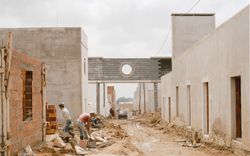
Titre:
Les chemins de désir
Les chemins de désir
Actions:
Giovanna Borasi s’entretient avec Álvaro Siza sur l’importance de l’engagement communautaire à Évora
Publié:
19 mai 2026
19 mai 2026
Titre:
Les chemins de désir
Giovanna Borasi s’entretient avec Álvaro Siza sur l’importance de l’engagement communautaire à Évora
Actions:
Les chemins de désir
Giovanna Borasi s’entretient avec Álvaro Siza sur l’importance de l’engagement communautaire à Évora
Actions:
Classification:
périodiques
périodiques
Numéro de référence:
ARCH271658
Description:
Issue of April 7, 1980, vol. XCV, no. 14 of "Newsweek" with an the article "The Solar Revolution" about solar homes including Kelbaugh House in Princeton, New Jersey.
ARCH271658
Description:
Issue of April 7, 1980, vol. XCV, no. 14 of "Newsweek" with an the article "The Solar Revolution" about solar homes including Kelbaugh House in Princeton, New Jersey.
Personnes et institutions:
Date:
April 7, 1980
April 7, 1980
Titre:
Article on solar energy featuring Kelbaugh House
Actions:
ARCH271658
Description:
Issue of April 7, 1980, vol. XCV, no. 14 of "Newsweek" with an the article "The Solar Revolution" about solar homes including Kelbaugh House in Princeton, New Jersey.
Article on solar energy featuring Kelbaugh House
Actions:
ARCH271658
Description:
Issue of April 7, 1980, vol. XCV, no. 14 of "Newsweek" with an the article "The Solar Revolution" about solar homes including Kelbaugh House in Princeton, New Jersey.
Classification:
périodiques
périodiques
Date:
April 7, 1980
April 7, 1980
Personnes et institutions:
Niveau de description archivistique:
Projet
Projet
Titre:
Leal, Porto
Leal, Porto
Numéro de référence:
CD034.S1.1974.PR02
Description:
This project series contains eight reproductions of drawings displayed in the exhibit to document the Leal neighbourhood, in Porto, Portugal. The exhibit text explained that the project: ... pioneered the concept of community association, with the first resident activities dating back to the early 1970s. In 1974, immediately after the revolution, the residents opposed the building of a car park that would have involved their relocation and resettlement. The project of the architect Sérgio Fernandez, which originated in a pre-revolutionary resident organization, was conceived through the dynamics of the resident process, and had a project-oriented clarity that came from an economic sense of design, adapting to the needs and political character of the intervention. (The SAAL Process, Housing in Portugal 1974–76) Sérgio Fernandez worked for SAAL/North with António Corte Real, Carlos Delfim, Emídio Fonseca, José Manuel Soares, Vítor Sinde and the residents' association Bairro do Leal, that was founded on April 30th, 1975. The first phase of the project included 16 dwellings and the second, 33 dwellings. The operation began in October 1974, with a construction date in April 1976. This project series contains reproductions of design development drawings, cadastral and implementation plans, and an axonometric view. The original drawings were produced in 1975 and were reproduced in 2015 for the exhibit.
CD034.S1.1974.PR02
Description:
This project series contains eight reproductions of drawings displayed in the exhibit to document the Leal neighbourhood, in Porto, Portugal. The exhibit text explained that the project: ... pioneered the concept of community association, with the first resident activities dating back to the early 1970s. In 1974, immediately after the revolution, the residents opposed the building of a car park that would have involved their relocation and resettlement. The project of the architect Sérgio Fernandez, which originated in a pre-revolutionary resident organization, was conceived through the dynamics of the resident process, and had a project-oriented clarity that came from an economic sense of design, adapting to the needs and political character of the intervention. (The SAAL Process, Housing in Portugal 1974–76) Sérgio Fernandez worked for SAAL/North with António Corte Real, Carlos Delfim, Emídio Fonseca, José Manuel Soares, Vítor Sinde and the residents' association Bairro do Leal, that was founded on April 30th, 1975. The first phase of the project included 16 dwellings and the second, 33 dwellings. The operation began in October 1974, with a construction date in April 1976. This project series contains reproductions of design development drawings, cadastral and implementation plans, and an axonometric view. The original drawings were produced in 1975 and were reproduced in 2015 for the exhibit.
Personnes et institutions:
Date:
1975
1975
Titre:
Leal, Porto
Actions:
CD034.S1.1974.PR02
Description:
This project series contains eight reproductions of drawings displayed in the exhibit to document the Leal neighbourhood, in Porto, Portugal. The exhibit text explained that the project: ... pioneered the concept of community association, with the first resident activities dating back to the early 1970s. In 1974, immediately after the revolution, the residents opposed the building of a car park that would have involved their relocation and resettlement. The project of the architect Sérgio Fernandez, which originated in a pre-revolutionary resident organization, was conceived through the dynamics of the resident process, and had a project-oriented clarity that came from an economic sense of design, adapting to the needs and political character of the intervention. (The SAAL Process, Housing in Portugal 1974–76) Sérgio Fernandez worked for SAAL/North with António Corte Real, Carlos Delfim, Emídio Fonseca, José Manuel Soares, Vítor Sinde and the residents' association Bairro do Leal, that was founded on April 30th, 1975. The first phase of the project included 16 dwellings and the second, 33 dwellings. The operation began in October 1974, with a construction date in April 1976. This project series contains reproductions of design development drawings, cadastral and implementation plans, and an axonometric view. The original drawings were produced in 1975 and were reproduced in 2015 for the exhibit.
Leal, Porto
Actions:
CD034.S1.1974.PR02
Description:
This project series contains eight reproductions of drawings displayed in the exhibit to document the Leal neighbourhood, in Porto, Portugal. The exhibit text explained that the project: ... pioneered the concept of community association, with the first resident activities dating back to the early 1970s. In 1974, immediately after the revolution, the residents opposed the building of a car park that would have involved their relocation and resettlement. The project of the architect Sérgio Fernandez, which originated in a pre-revolutionary resident organization, was conceived through the dynamics of the resident process, and had a project-oriented clarity that came from an economic sense of design, adapting to the needs and political character of the intervention. (The SAAL Process, Housing in Portugal 1974–76) Sérgio Fernandez worked for SAAL/North with António Corte Real, Carlos Delfim, Emídio Fonseca, José Manuel Soares, Vítor Sinde and the residents' association Bairro do Leal, that was founded on April 30th, 1975. The first phase of the project included 16 dwellings and the second, 33 dwellings. The operation began in October 1974, with a construction date in April 1976. This project series contains reproductions of design development drawings, cadastral and implementation plans, and an axonometric view. The original drawings were produced in 1975 and were reproduced in 2015 for the exhibit.
Niveau de description archivistique:
Project
Project
Date:
1975
1975
Personnes et institutions:
Classification:
événements
événements

Description:
À la suite de la révolution du 25 avril 1974 au Portugal, larchitecte Alexandre Alves Costa est devenu membre du comité de coordination du SAAL pour le secteur nord, responsable de la planification et du soutien de projet. Avec José António Bandeirinha, architecte et professeur agrégé titulaire à lUniversité de Coimbra, il abordera lors de cette conférence le rôle nouveau(...)
À la suite de la révolution du 25 avril 1974 au Portugal, larchitecte Alexandre Alves Costa est devenu membre du comité de coordination du SAAL pour le secteur nord, responsable de la planification et du soutien de projet. Avec José António Bandeirinha, architecte et professeur agrégé titulaire à lUniversité de Coimbra, il abordera lors de cette conférence le rôle nouveau(...)
Localisation:
Théâtre Paul-Desmarais
Théâtre Paul-Desmarais
Date:
17 septembre 2015, 18h
17 septembre 2015, 18h
Titre:
SAAL 1974 : l'architecture portugaise s'ouvre au monde
Actions:
Description:
À la suite de la révolution du 25 avril 1974 au Portugal, larchitecte Alexandre Alves Costa est devenu membre du comité de coordination du SAAL pour le secteur nord, responsable de la planification et du soutien de projet. Avec José António Bandeirinha, architecte et professeur agrégé titulaire à lUniversité de Coimbra, il abordera lors de cette conférence le rôle nouveau(...)
SAAL 1974 : l'architecture portugaise s'ouvre au monde
Actions:
Description:
À la suite de la révolution du 25 avril 1974 au Portugal, larchitecte Alexandre Alves Costa est devenu membre du comité de coordination du SAAL pour le secteur nord, responsable de la planification et du soutien de projet. Avec José António Bandeirinha, architecte et professeur agrégé titulaire à lUniversité de Coimbra, il abordera lors de cette conférence le rôle nouveau(...)
Classification:
événements
événements
Date:
17 septembre 2015
18h
17 septembre 2015
18h
Localisation:
Théâtre Paul-Desmarais
Théâtre Paul-Desmarais
Classification:
expositions
expositions
Description:
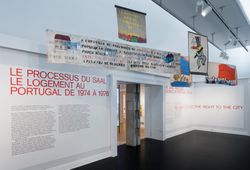
Issu de la révolution portugaise du 25 avril 1974, le SAAL ― Serviço Ambulatório de Apoio Local (Service ambulant de soutien local) ― fut une expérience architecturale et politique pionnière conçue afin d’adresser le manque de logement et les conditions de vie pauvres de nombreuses villes portugaises. On ne peut pas parler d’un seul SAAL : ses initiatives et résultats(...)
Issu de la révolution portugaise du 25 avril 1974, le SAAL ― Serviço Ambulatório de Apoio Local (Service ambulant de soutien local) ― fut une expérience architecturale et politique pionnière conçue afin d’adresser le manque de logement et les conditions de vie pauvres de nombreuses villes portugaises. On ne peut pas parler d’un seul SAAL : ses initiatives et résultats(...)
Localisation:
Salles principales
Salles principales
Date:
12 mai 2015 au 4 octobre 2015
12 mai 2015 au 4 octobre 2015
Titre:
Le processus du SAAL : Le logement au Portugal de 1974 à 1976-
Actions:
Description:
Issu de la révolution portugaise du 25 avril 1974, le SAAL ― Serviço Ambulatório de Apoio Local (Service ambulant de soutien local) ― fut une expérience architecturale et politique pionnière conçue afin d’adresser le manque de logement et les conditions de vie pauvres de nombreuses villes portugaises. On ne peut pas parler d’un seul SAAL : ses initiatives et résultats(...)
Le processus du SAAL : Le logement au Portugal de 1974 à 1976-
Actions:
Description:
Issu de la révolution portugaise du 25 avril 1974, le SAAL ― Serviço Ambulatório de Apoio Local (Service ambulant de soutien local) ― fut une expérience architecturale et politique pionnière conçue afin d’adresser le manque de logement et les conditions de vie pauvres de nombreuses villes portugaises. On ne peut pas parler d’un seul SAAL : ses initiatives et résultats(...)
Classification:
expositions
expositions
Date:
12 mai 2015 au
4 octobre 2015
12 mai 2015 au
4 octobre 2015
Localisation:
Salles principales
Salles principales
Classification:
archives
Niveau de description archivistique:
Fonds
archives
Niveau de description archivistique:
Fonds
Titre:
Fonds Álvaro Siza
Fonds Álvaro Siza
Numéro de référence:
AP178
Description:
The Álvaro Siza fonds documents the architectural work of Portuguese architect Álvaro Siza. Records in this fonds document Siza’s projects from 1958-2012, including built and unbuilt designs. A collaborative project was established between the Canadian Centre for Architecture (CCA), Fundação de Serralves, and Fundação Calouste Gulbenkian to allow for international research and access to the archive. The archive is shared by the three institutions with each institution holding different projects while collaborating on the descriptive work and increasing the visibility of the archive. The holdings at both the Fundação de Serralves and Fundação Calouste Gulbenkian focus on Siza’s Portuguese projects, while the portion of the archive held by the CCA mainly includes Siza’s projects abroad. All three institutions are committed to describing the archive and making it accessible for scholarly research. The processing of the Siza archive held by the CCA has been divided into four phases to allow for access to parts of the archive while still in process. For the first, second, and third phases, the processing archivist has described the projects from the fifties, sixties, and seventies, as well as projects for the IBA competition in Berlin, urban renewal projects in The Hague from the eighties, urban plans, museums, and individual houses between 1980 and 2000. The processing archivist has also described approximately 203 sketchbooks. Many of these sketchbooks include sketches related to architectural projects which were processed. The complete list of projects processed by the CCA to date can be found in series AP178.S1. The bulk of the Álvaro Siza fonds is arranged in Series AP178.S1, which contains documentation for over 200 of Siza’s architectural projects. Records in this archive are predominantly from 1970 to 2000. Series AP178.S1 mainly contains conceptual, design development, presentation, and working drawings. Also included are photographic materials, models, born digital records, and textual documentation, which include correspondence, project proposals, and notes. The architect’s creative process is captured in 282 sketchbooks arranged in Series AP178.S2. In all there are approximately 60 000 drawings, 3000 folders of textual documentation, 9.46 linear meters of photographs and negatives, 6,545 slides, 250 CD-ROMS, 101 floppy disks, and 371 models that document the architectural activities of Siza and his office. Among the drawings are sketches by Siza on various items, such as napkins, receipts, envelopes, or on the back of working drawings. The fonds contains several types of architectural projects including residential buildings, museums, universities, urban plans, offices, and city restorations. Of particular significance are the sketchbooks, comprised of sketches for architectural projects, Siza’s travels, people, and animals as well as notes and draft letters. The sketchbooks are organized in chronological order, starting in the late 1970’s to the beginning of the 2000’s. Locations, notes, and dates have also been identified on the front of each sketchbook along with the sketchbook number. The sketchbooks provide a unique perspective of Siza’s use of drawing as part of his work process.
AP178
Description:
The Álvaro Siza fonds documents the architectural work of Portuguese architect Álvaro Siza. Records in this fonds document Siza’s projects from 1958-2012, including built and unbuilt designs. A collaborative project was established between the Canadian Centre for Architecture (CCA), Fundação de Serralves, and Fundação Calouste Gulbenkian to allow for international research and access to the archive. The archive is shared by the three institutions with each institution holding different projects while collaborating on the descriptive work and increasing the visibility of the archive. The holdings at both the Fundação de Serralves and Fundação Calouste Gulbenkian focus on Siza’s Portuguese projects, while the portion of the archive held by the CCA mainly includes Siza’s projects abroad. All three institutions are committed to describing the archive and making it accessible for scholarly research. The processing of the Siza archive held by the CCA has been divided into four phases to allow for access to parts of the archive while still in process. For the first, second, and third phases, the processing archivist has described the projects from the fifties, sixties, and seventies, as well as projects for the IBA competition in Berlin, urban renewal projects in The Hague from the eighties, urban plans, museums, and individual houses between 1980 and 2000. The processing archivist has also described approximately 203 sketchbooks. Many of these sketchbooks include sketches related to architectural projects which were processed. The complete list of projects processed by the CCA to date can be found in series AP178.S1. The bulk of the Álvaro Siza fonds is arranged in Series AP178.S1, which contains documentation for over 200 of Siza’s architectural projects. Records in this archive are predominantly from 1970 to 2000. Series AP178.S1 mainly contains conceptual, design development, presentation, and working drawings. Also included are photographic materials, models, born digital records, and textual documentation, which include correspondence, project proposals, and notes. The architect’s creative process is captured in 282 sketchbooks arranged in Series AP178.S2. In all there are approximately 60 000 drawings, 3000 folders of textual documentation, 9.46 linear meters of photographs and negatives, 6,545 slides, 250 CD-ROMS, 101 floppy disks, and 371 models that document the architectural activities of Siza and his office. Among the drawings are sketches by Siza on various items, such as napkins, receipts, envelopes, or on the back of working drawings. The fonds contains several types of architectural projects including residential buildings, museums, universities, urban plans, offices, and city restorations. Of particular significance are the sketchbooks, comprised of sketches for architectural projects, Siza’s travels, people, and animals as well as notes and draft letters. The sketchbooks are organized in chronological order, starting in the late 1970’s to the beginning of the 2000’s. Locations, notes, and dates have also been identified on the front of each sketchbook along with the sketchbook number. The sketchbooks provide a unique perspective of Siza’s use of drawing as part of his work process.
Personnes et institutions:
Date:
1958-2002
1958-2002
Titre:
Fonds Álvaro Siza
Actions:
AP178
Description:
The Álvaro Siza fonds documents the architectural work of Portuguese architect Álvaro Siza. Records in this fonds document Siza’s projects from 1958-2012, including built and unbuilt designs. A collaborative project was established between the Canadian Centre for Architecture (CCA), Fundação de Serralves, and Fundação Calouste Gulbenkian to allow for international research and access to the archive. The archive is shared by the three institutions with each institution holding different projects while collaborating on the descriptive work and increasing the visibility of the archive. The holdings at both the Fundação de Serralves and Fundação Calouste Gulbenkian focus on Siza’s Portuguese projects, while the portion of the archive held by the CCA mainly includes Siza’s projects abroad. All three institutions are committed to describing the archive and making it accessible for scholarly research. The processing of the Siza archive held by the CCA has been divided into four phases to allow for access to parts of the archive while still in process. For the first, second, and third phases, the processing archivist has described the projects from the fifties, sixties, and seventies, as well as projects for the IBA competition in Berlin, urban renewal projects in The Hague from the eighties, urban plans, museums, and individual houses between 1980 and 2000. The processing archivist has also described approximately 203 sketchbooks. Many of these sketchbooks include sketches related to architectural projects which were processed. The complete list of projects processed by the CCA to date can be found in series AP178.S1. The bulk of the Álvaro Siza fonds is arranged in Series AP178.S1, which contains documentation for over 200 of Siza’s architectural projects. Records in this archive are predominantly from 1970 to 2000. Series AP178.S1 mainly contains conceptual, design development, presentation, and working drawings. Also included are photographic materials, models, born digital records, and textual documentation, which include correspondence, project proposals, and notes. The architect’s creative process is captured in 282 sketchbooks arranged in Series AP178.S2. In all there are approximately 60 000 drawings, 3000 folders of textual documentation, 9.46 linear meters of photographs and negatives, 6,545 slides, 250 CD-ROMS, 101 floppy disks, and 371 models that document the architectural activities of Siza and his office. Among the drawings are sketches by Siza on various items, such as napkins, receipts, envelopes, or on the back of working drawings. The fonds contains several types of architectural projects including residential buildings, museums, universities, urban plans, offices, and city restorations. Of particular significance are the sketchbooks, comprised of sketches for architectural projects, Siza’s travels, people, and animals as well as notes and draft letters. The sketchbooks are organized in chronological order, starting in the late 1970’s to the beginning of the 2000’s. Locations, notes, and dates have also been identified on the front of each sketchbook along with the sketchbook number. The sketchbooks provide a unique perspective of Siza’s use of drawing as part of his work process.
Fonds Álvaro Siza
Actions:
AP178
Description:
The Álvaro Siza fonds documents the architectural work of Portuguese architect Álvaro Siza. Records in this fonds document Siza’s projects from 1958-2012, including built and unbuilt designs. A collaborative project was established between the Canadian Centre for Architecture (CCA), Fundação de Serralves, and Fundação Calouste Gulbenkian to allow for international research and access to the archive. The archive is shared by the three institutions with each institution holding different projects while collaborating on the descriptive work and increasing the visibility of the archive. The holdings at both the Fundação de Serralves and Fundação Calouste Gulbenkian focus on Siza’s Portuguese projects, while the portion of the archive held by the CCA mainly includes Siza’s projects abroad. All three institutions are committed to describing the archive and making it accessible for scholarly research. The processing of the Siza archive held by the CCA has been divided into four phases to allow for access to parts of the archive while still in process. For the first, second, and third phases, the processing archivist has described the projects from the fifties, sixties, and seventies, as well as projects for the IBA competition in Berlin, urban renewal projects in The Hague from the eighties, urban plans, museums, and individual houses between 1980 and 2000. The processing archivist has also described approximately 203 sketchbooks. Many of these sketchbooks include sketches related to architectural projects which were processed. The complete list of projects processed by the CCA to date can be found in series AP178.S1. The bulk of the Álvaro Siza fonds is arranged in Series AP178.S1, which contains documentation for over 200 of Siza’s architectural projects. Records in this archive are predominantly from 1970 to 2000. Series AP178.S1 mainly contains conceptual, design development, presentation, and working drawings. Also included are photographic materials, models, born digital records, and textual documentation, which include correspondence, project proposals, and notes. The architect’s creative process is captured in 282 sketchbooks arranged in Series AP178.S2. In all there are approximately 60 000 drawings, 3000 folders of textual documentation, 9.46 linear meters of photographs and negatives, 6,545 slides, 250 CD-ROMS, 101 floppy disks, and 371 models that document the architectural activities of Siza and his office. Among the drawings are sketches by Siza on various items, such as napkins, receipts, envelopes, or on the back of working drawings. The fonds contains several types of architectural projects including residential buildings, museums, universities, urban plans, offices, and city restorations. Of particular significance are the sketchbooks, comprised of sketches for architectural projects, Siza’s travels, people, and animals as well as notes and draft letters. The sketchbooks are organized in chronological order, starting in the late 1970’s to the beginning of the 2000’s. Locations, notes, and dates have also been identified on the front of each sketchbook along with the sketchbook number. The sketchbooks provide a unique perspective of Siza’s use of drawing as part of his work process.
Classification:
archives
Niveau de description archivistique:
Fonds
archives
Niveau de description archivistique:
Fonds
Date:
1958-2002
1958-2002
Personnes et institutions:
Classification:
livres
livres
Exemplaires:
Description:
262 pages : illustrations, facsimiles ; 23 cm
Description:
262 pages : illustrations, facsimiles ; 23 cm
Auteur:
Sujet:
Publication:
Oakland, CA : PM Press, 2012.
Oakland, CA : PM Press, 2012.
Titre:
Portugal, the impossible revolution? / by Phil Mailer.
Actions:
Exemplaires:
Description:
262 pages : illustrations, facsimiles ; 23 cm
Portugal, the impossible revolution? / by Phil Mailer.
Actions:
Exemplaires:
Description:
262 pages : illustrations, facsimiles ; 23 cm
Classification:
livres
livres
Publication:
Oakland, CA : PM Press, 2012.
Oakland, CA : PM Press, 2012.
Auteur:
Sujet:
Classification:
livres
livres
Actions:
Exemplaires:
Description:
224 pages ; 23 cm
Description:
224 pages ; 23 cm
Auteur:
Sujet:
Publication:
London : Lawrence and Wishart, 1975.
London : Lawrence and Wishart, 1975.
Titre:
Art and revolution / by David Alfaro Siqueiros ; [translation made from the original Spanish texts by Sylvia Calles].
Actions:
Exemplaires:
Description:
224 pages ; 23 cm
Art and revolution / by David Alfaro Siqueiros ; [translation made from the original Spanish texts by Sylvia Calles].
Actions:
Exemplaires:
Description:
224 pages ; 23 cm
Classification:
livres
livres
Publication:
London : Lawrence and Wishart, 1975.
London : Lawrence and Wishart, 1975.
Auteur:
Sujet:
Classification:
livres
livres
Exemplaires:
Description:
2-113 pages illustrations (including 2 color), plans, portraits 26 cm
Description:
2-113 pages illustrations (including 2 color), plans, portraits 26 cm
Auteur:
Sujet:
Publication:
London, Arts Council of Great Britain [1971]
London, Arts Council of Great Britain [1971]
Titre:
Art in revolution: Soviet art and design since 1917.
Actions:
Exemplaires:
Description:
2-113 pages illustrations (including 2 color), plans, portraits 26 cm
Art in revolution: Soviet art and design since 1917.
Actions:
Exemplaires:
Description:
2-113 pages illustrations (including 2 color), plans, portraits 26 cm
Classification:
livres
livres
Publication:
London, Arts Council of Great Britain [1971]
London, Arts Council of Great Britain [1971]
Auteur:
Sujet:


