


Beyond the Ordinary
Elias Nafaa asks Montréal's youth what the city reveals when we slow down
This article is part of a series written by the CCA Public Programs division that provides insight into our Youth Programs, and how our young public interfaces with the built environment. The following text features responses from four 17- and 18-year-olds who took part in the CCA’s research and publishing studio The Urban Unknown - Youth Collective in fall 2025. They revisit the observations that shaped their ideas, perspectives, and zines, and the questions they pursued about the seemingly ordinary phenomena that make up the city.
What does Montréal reveal when we slow down our usual routes to look, listen, and pause? We often explain the city to young people before asking how it takes shape in their everyday lives. The CCA Youth Collective studio The Urban Unknown reversed that approach. The metro, libraries, music on public transit and in the street, artificial light, the particpants began with what already accompanied their daily routines and movements. By slowing down and observing, they considered the rhythms, inequalities, and subtle forms of coexistence that shape Montréal. Here, they reflect on what this closer attention brought into view.
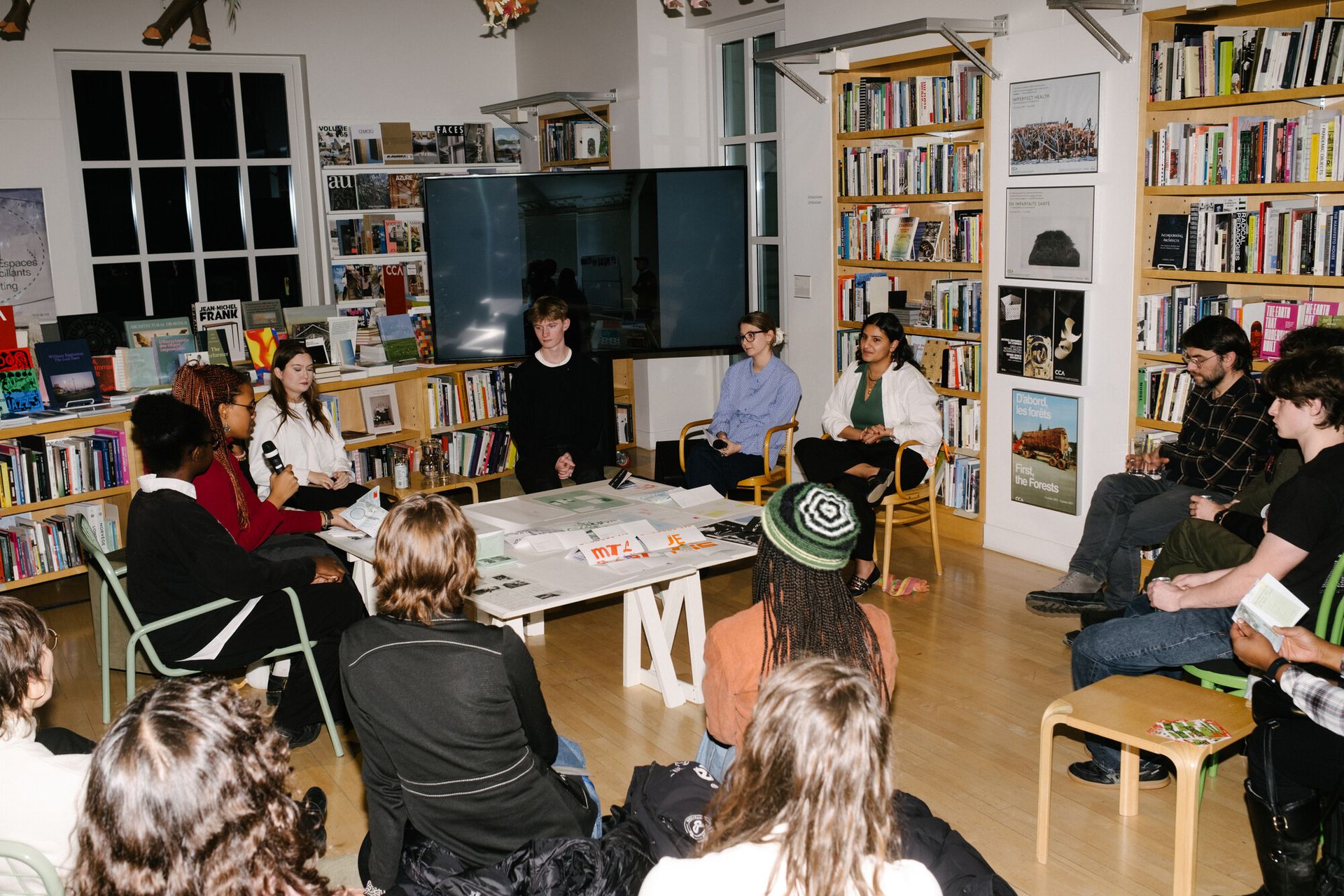
View of Zine Launch: The Urban Unknown / CCA Youth Collective, 2025. CCA © villedepluie
What made you see the city differently?
- Gabrielle
- When you walk through the city, you don’t always pay attention to the neighbourhood you’re in. Then you realize that each place has its own character. It’s interesting to observe how architecture changes from one neighbourhood to the next, and which elements disappear or reappear from place to place.
- Malcom
- The metro has been part of my life for a long time. I spend a lot of time down there, and I find it beautiful. But more than anything, I saw a paradox. People use it every day without really looking at it.
While doing the research, I realized that there are always things left to discover, even on a route you take every day. Just going to the CCA or to school made me more observant. I started taking a tunnel again that I had stopped using and noticed that the graffiti had changed. I found myself reading the messages on the walls as I walked. The commute became more enjoyable because I was no longer moving through it on autopilot. - Eunyce
- One day, on the Green Line, I got off at a station just to walk around and explore, for no particular reason. I came across a shopping centre and people playing music. Because I play a few instruments, I was drawn to them. I felt like we had something in common. Music is a way of connecting; it lets me step into other people’s bubbles.
- Andra
- The city is a community. The city is also something to analyze—we all question it. It reflects our values, our ideas, and our daily lives, and it forces us to look at the present, think about the future, and return to the past to understand what has and hasn’t worked.
Which places still allow us to linger?
- Gabrielle
- I’ve always loved reading and going to the library. To me, libraries are more than just places filled with books; they feel like other worlds. Some have stayed with me because of their architecture, like Maisonneuve, where old and new spaces coexist. Others have stayed with me because of their almost futuristic atmosphere, with elevators and large open voids. The history of each place matters too. One library, for example, was once a Hydro-Québec substation, while another in Montréal-Nord offers books in Creole.
These spaces offer me something that is often missing in the city: a free place to gather, stay late, and leave with books. It’s becoming harder to spend time together without spending money. Transit is expensive, and even simple things cost money. The library remains accessible.
Above all, it makes us slow down. The city can be fast and disconnected, but inside a library, you have to be present, calm, and respectful. You can be productive, but you can also simply take a moment to breathe. - Malcom
- There’s often pressure to get your driver’s licence and start driving, but I like taking the metro. It’s comfortable, and you can do something else during the trip. The metro isn’t just what you take “because you can’t drive.” It’s also a choice.
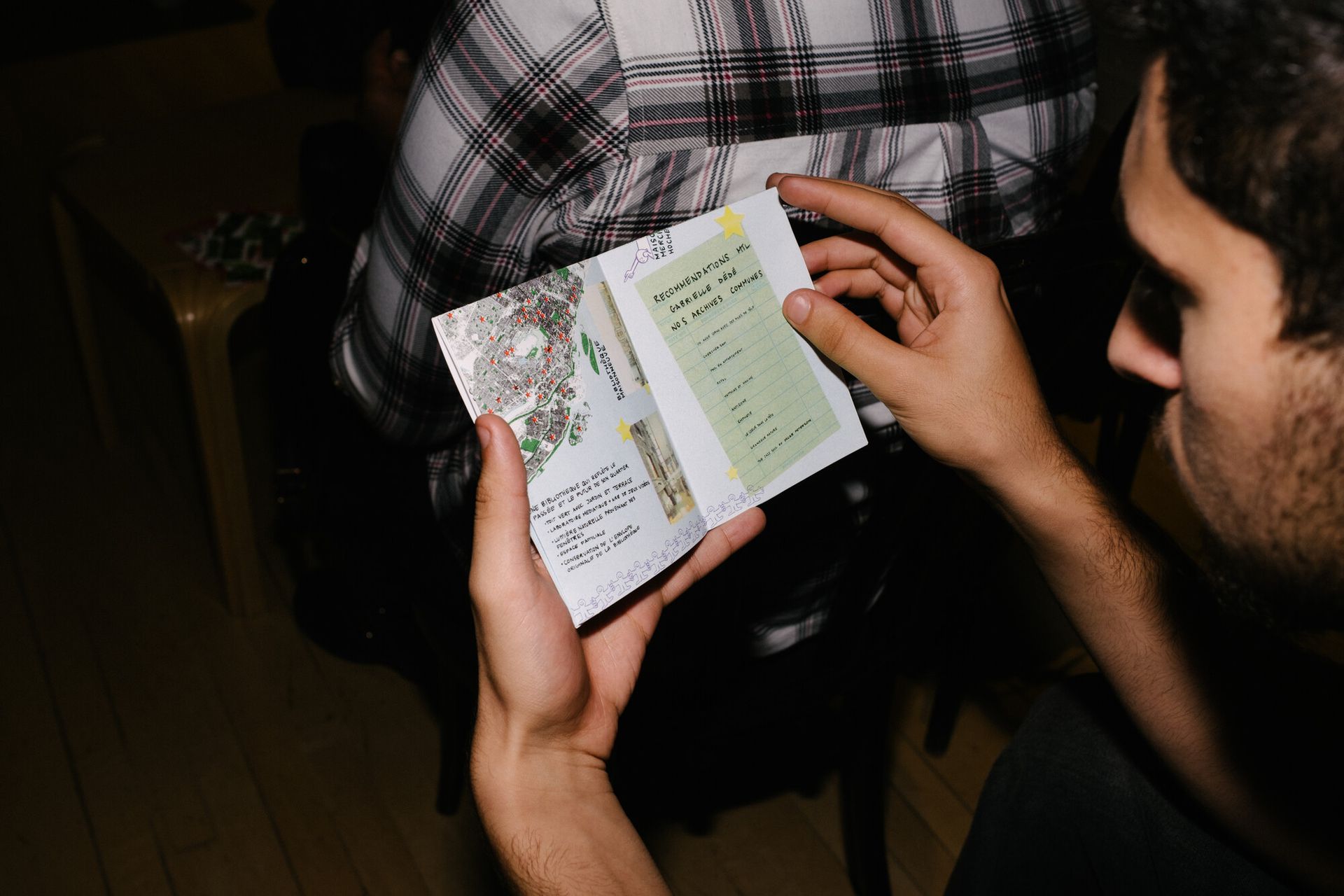
View of Participant 1’s zine (1/2), 2025. CCA © villedepluie
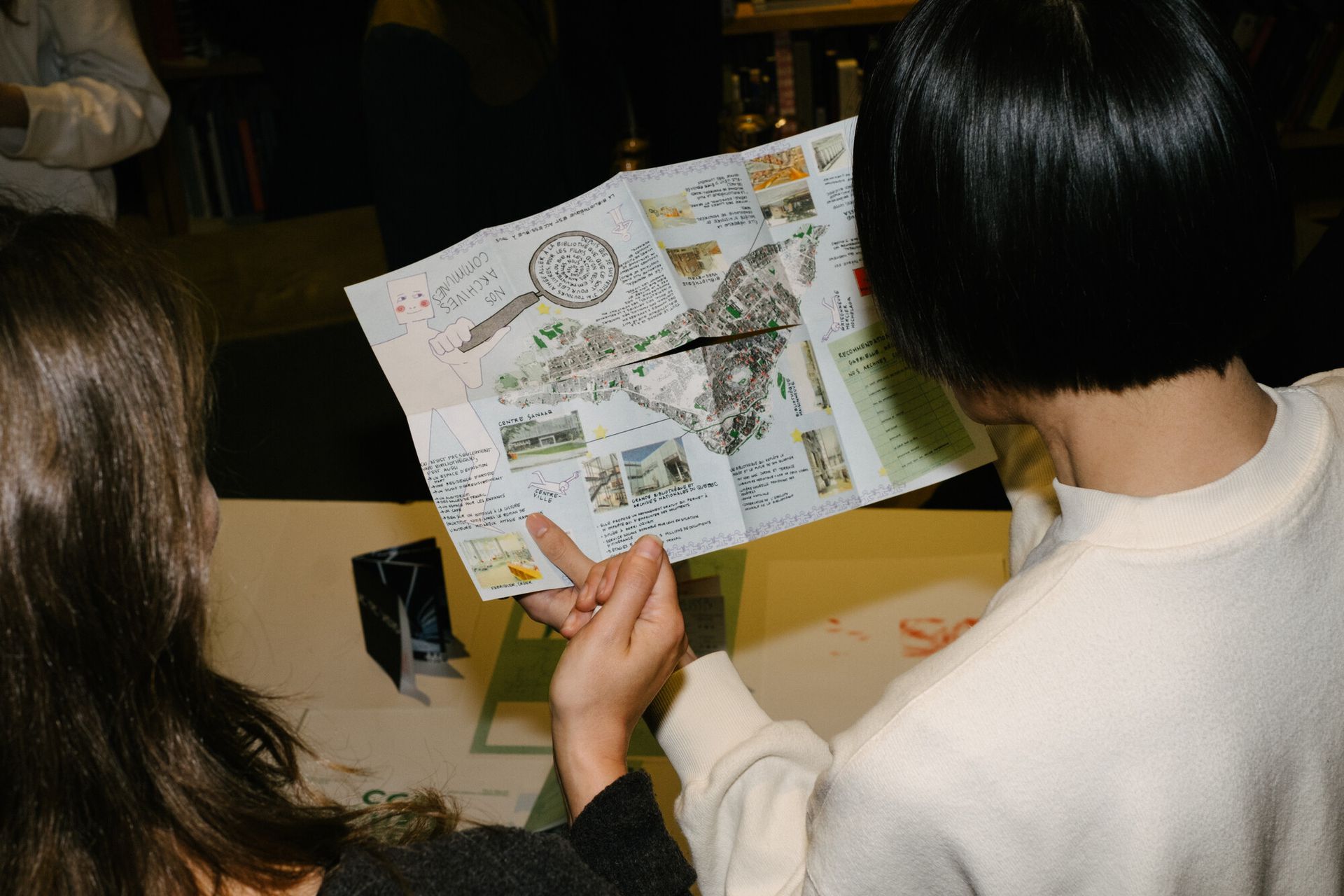
View of Participant 1’s zine (2/2), 2025. CCA © villedepluie


How does an observation become a project?
- Malcom
- I want people to stop, even for five seconds, and realize that the environment is not “neutral.” Someone chose that material, that opening, that light, and it has an effect on you.
My project was an invitation to look. There are no people in my images because I want people to focus on the architecture, light, and surfaces.
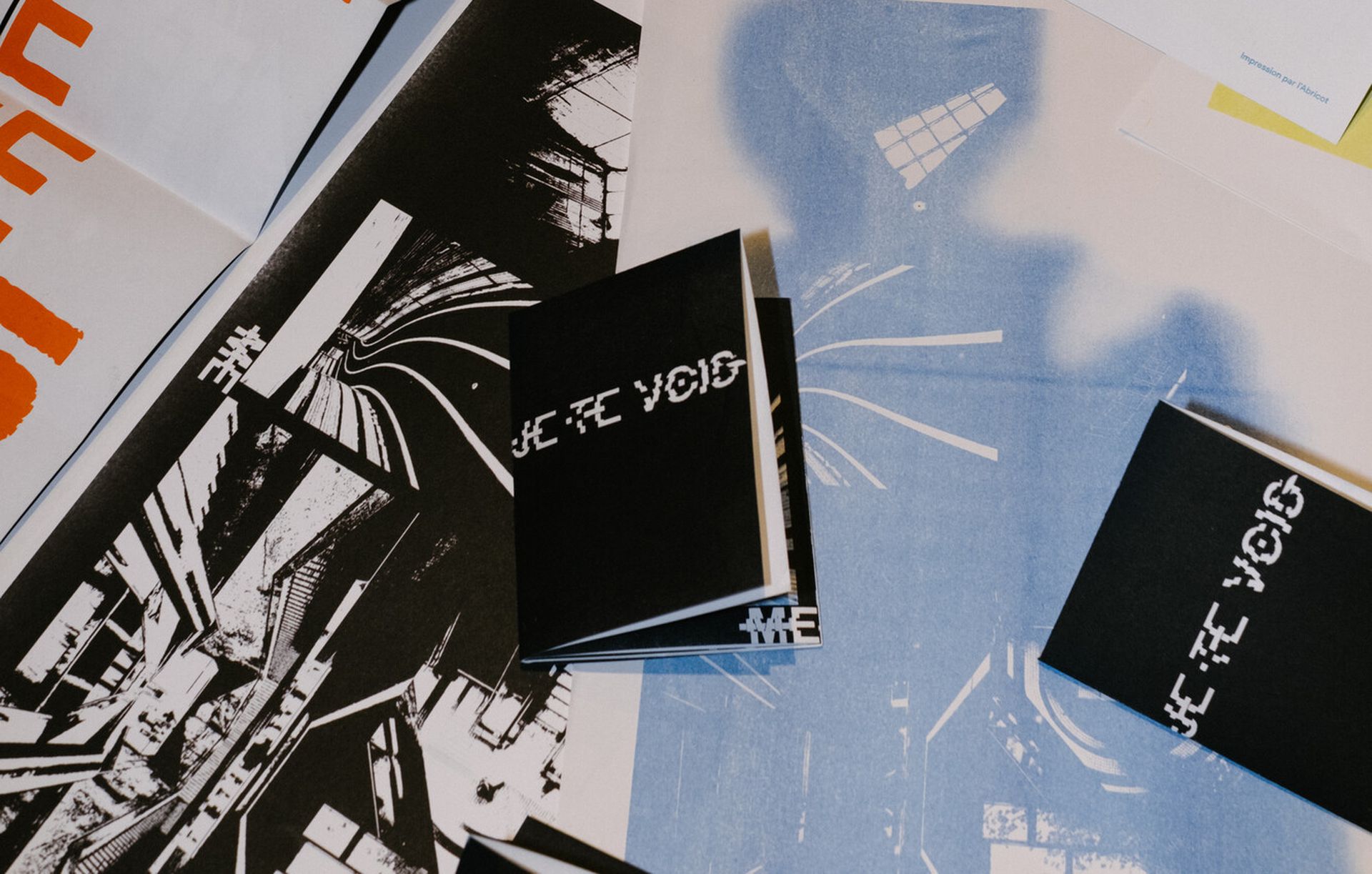
View of Participant 2’s zine, 2025. CCA © villedepluie
- Andra
- I wanted to understand how artificial light affects everyone, and how it is connected to poverty, surveillance, and a lack of infrastructure. At first, I thought mainly in terms of investment: “If there isn’t enough light, it means the area is being neglected.” Then I discovered another layer. Sometimes, on the contrary, stronger lighting is connected to systems of surveillance. I wanted to make the contradiction between the two visible.
When a place lacks light, it creates a sense of insecurity. People go out less, and this particularly affects certain groups, including women. But light can also erase part of the city when it is used primarily for control.
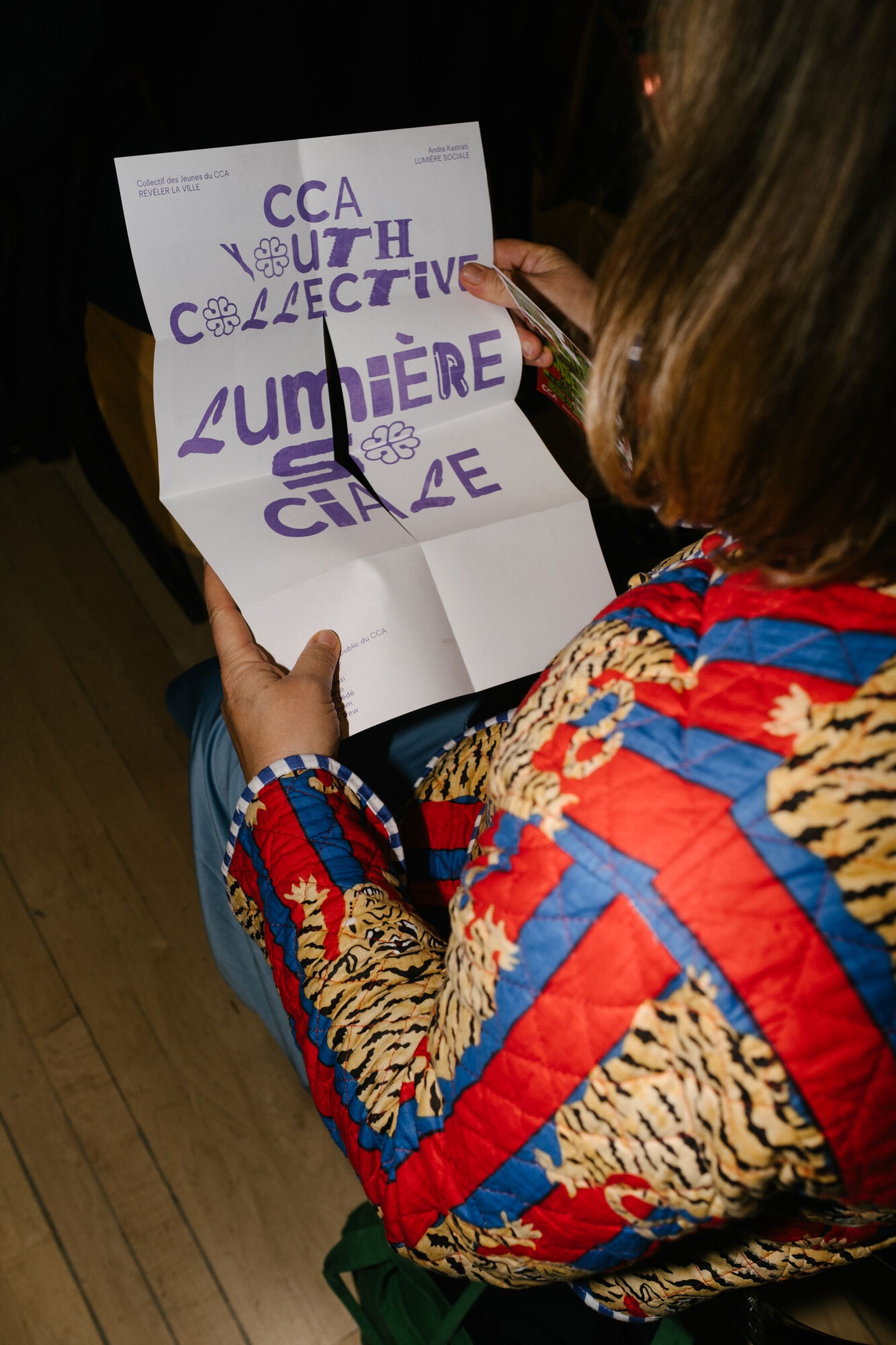
View of Participant 4’s zine, 2025. CCA © villedepluie
- Eunyce
- I wanted to show that there are people we don’t see or talk to. They are somewhat in the shadows, but they are there, they matter, and they are trying to communicate a message through music.
Now I pay much more attention to the city and to people playing music outside. Concerts connect people. At the same time, I notice a contrast with technology. We’re all on our phones in the metro, as if we no longer needed contact with one another. The project made me more attentive to those moments when music creates a sense of presence among strangers.
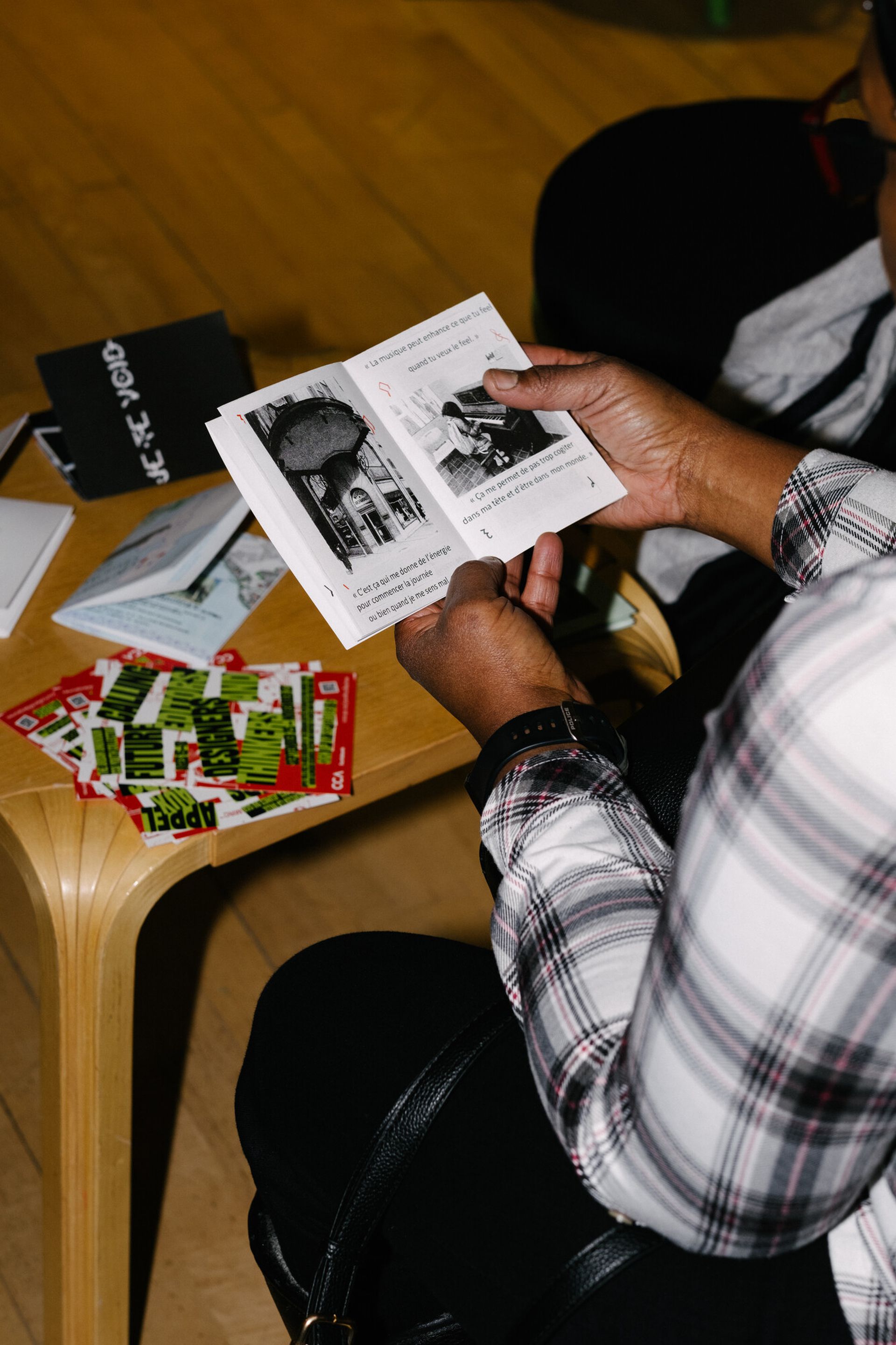
View of Participant 3’s zine, 2025. CCA © villedepluie
What role can young people play in the city?
- Eunyce
- Some young people care about the well-being of the city and want to explore and understand it. I wish we could move beyond stereotypes like “young people are only here to make trouble.” We can also contribute to the city.
To have an impact, we need to act collectively. I’d like to start by helping people feel less alone and more connected to one another. Technology makes people shy; we’re afraid to talk to each other. - Andra
- Young people are aware of the challenges facing the city, and they should be given more opportunities to act. We’re often asked for our opinions, but when it comes to taking action, we aren’t always trusted. You don’t need to be an adult or have formal training to have a point of view. Everyone experiences the city differently. What matters is making research and methods accessible so that more people can participate.
- Gabrielle
- I think that, as young adults, we can change things. Maybe I’m an optimist, but we already see it in student strikes supporting marginalized people. People my age take a day out of their studies to protest and come together to help, and I think that’s really beautiful. Student strikes have already had a significant impact. We have that power. We just have to get started.
We also need to find a community because it’s easier together. When we come together in support of a cause, change is much more likely to happen.


