


4759 Results
Form:
textual records
textual records
Actions:
Reference number:
AP197.S3.010
Description:
The box is comprised of correspondence for the year 2001. The box documents Frampton’s career as Ware professor at the Graduate School of Architecture, Planning and Preservation, Columbia University and his related professional activities. Correspondence in this box includes: offers of teaching positions; requests to write articles, reviews, books and recommendation letters; invitations to teach, present, or attend at lectures/symposiums/conferences; and requests to serve on juries. Throughout this period, Frampton corresponded with various universities, architects, professors, publishers, and editors of various publications such as: Yale University; Université de Montréal; Patkau Architects; Tadao Ando; Manuel de Sola-Morales; the Royal Institute of British Architects; ArquitecturaViva; Maki and Associates; and Kisho Kurakawa. Included in this box is correspondence with Oscar Niemeyer and Alvaro Siza in relation to the Michael Blackwood production on both these architects; correspondence about the Aga Khan Award; correspondence about writing an introduction essay to the publication Tadao Ando Light & Water; and correspondence about Frampton’s trip and itinerary to Japan and to meet with Tadao Ando.
AP197.S3.010
Description:
The box is comprised of correspondence for the year 2001. The box documents Frampton’s career as Ware professor at the Graduate School of Architecture, Planning and Preservation, Columbia University and his related professional activities. Correspondence in this box includes: offers of teaching positions; requests to write articles, reviews, books and recommendation letters; invitations to teach, present, or attend at lectures/symposiums/conferences; and requests to serve on juries. Throughout this period, Frampton corresponded with various universities, architects, professors, publishers, and editors of various publications such as: Yale University; Université de Montréal; Patkau Architects; Tadao Ando; Manuel de Sola-Morales; the Royal Institute of British Architects; ArquitecturaViva; Maki and Associates; and Kisho Kurakawa. Included in this box is correspondence with Oscar Niemeyer and Alvaro Siza in relation to the Michael Blackwood production on both these architects; correspondence about the Aga Khan Award; correspondence about writing an introduction essay to the publication Tadao Ando Light & Water; and correspondence about Frampton’s trip and itinerary to Japan and to meet with Tadao Ando.
People:
Date:
2001
2001
Title:
Personal and professional correspondence from 2001
Actions:
AP197.S3.010
Description:
The box is comprised of correspondence for the year 2001. The box documents Frampton’s career as Ware professor at the Graduate School of Architecture, Planning and Preservation, Columbia University and his related professional activities. Correspondence in this box includes: offers of teaching positions; requests to write articles, reviews, books and recommendation letters; invitations to teach, present, or attend at lectures/symposiums/conferences; and requests to serve on juries. Throughout this period, Frampton corresponded with various universities, architects, professors, publishers, and editors of various publications such as: Yale University; Université de Montréal; Patkau Architects; Tadao Ando; Manuel de Sola-Morales; the Royal Institute of British Architects; ArquitecturaViva; Maki and Associates; and Kisho Kurakawa. Included in this box is correspondence with Oscar Niemeyer and Alvaro Siza in relation to the Michael Blackwood production on both these architects; correspondence about the Aga Khan Award; correspondence about writing an introduction essay to the publication Tadao Ando Light & Water; and correspondence about Frampton’s trip and itinerary to Japan and to meet with Tadao Ando.
Personal and professional correspondence from 2001
Actions:
AP197.S3.010
Description:
The box is comprised of correspondence for the year 2001. The box documents Frampton’s career as Ware professor at the Graduate School of Architecture, Planning and Preservation, Columbia University and his related professional activities. Correspondence in this box includes: offers of teaching positions; requests to write articles, reviews, books and recommendation letters; invitations to teach, present, or attend at lectures/symposiums/conferences; and requests to serve on juries. Throughout this period, Frampton corresponded with various universities, architects, professors, publishers, and editors of various publications such as: Yale University; Université de Montréal; Patkau Architects; Tadao Ando; Manuel de Sola-Morales; the Royal Institute of British Architects; ArquitecturaViva; Maki and Associates; and Kisho Kurakawa. Included in this box is correspondence with Oscar Niemeyer and Alvaro Siza in relation to the Michael Blackwood production on both these architects; correspondence about the Aga Khan Award; correspondence about writing an introduction essay to the publication Tadao Ando Light & Water; and correspondence about Frampton’s trip and itinerary to Japan and to meet with Tadao Ando.
Form:
textual records
textual records
Date:
2001
2001
People:
Form:
textual records
textual records
Actions:
Reference number:
AP197.S3.002
Description:
This box is comprised of personal and professional correspondence, organized in chronological order, from 1984-1990. The box documents Frampton’s career as Ware professor at the Graduate School of Architecture, Planning and Preservation at Columbia University and his related professional activities. Correspondence in this box includes: various offers of teaching positions; requests to write articles, reviews, books and recommendation letters; invitations to teach, attend or present at lectures/symposiums/conferences; and requests to serve on juries such as the American Academy in Rome. Throughout this period, Frampton corresponded with architects, professors, publishers, and editors of various publications such as: Ignasi de Sola-Morales Rubio; Tadao Ando; Rafael Moneo; James Stirling; Marco Frascari; Alvaro Siza; Arata Isozaki; the Casabella; the Progressive Architecture; and Architecture and Urbanism. This correspondence includes Frampton’s invitation to be the Craig Francis Cullinan Visiting Lecturer at the School of Architecture, Rice University; correspondence with Rizzoli International Publications about the Tadao Ando book; correspondence with MIT Press for the Studies in Tectonic Culture publication; and correspondence about critical regionalism.
AP197.S3.002
Description:
This box is comprised of personal and professional correspondence, organized in chronological order, from 1984-1990. The box documents Frampton’s career as Ware professor at the Graduate School of Architecture, Planning and Preservation at Columbia University and his related professional activities. Correspondence in this box includes: various offers of teaching positions; requests to write articles, reviews, books and recommendation letters; invitations to teach, attend or present at lectures/symposiums/conferences; and requests to serve on juries such as the American Academy in Rome. Throughout this period, Frampton corresponded with architects, professors, publishers, and editors of various publications such as: Ignasi de Sola-Morales Rubio; Tadao Ando; Rafael Moneo; James Stirling; Marco Frascari; Alvaro Siza; Arata Isozaki; the Casabella; the Progressive Architecture; and Architecture and Urbanism. This correspondence includes Frampton’s invitation to be the Craig Francis Cullinan Visiting Lecturer at the School of Architecture, Rice University; correspondence with Rizzoli International Publications about the Tadao Ando book; correspondence with MIT Press for the Studies in Tectonic Culture publication; and correspondence about critical regionalism.
People:
Date:
1984-1990
1984-1990
Title:
Personal and professional correspondence from 1984-1990
Actions:
AP197.S3.002
Description:
This box is comprised of personal and professional correspondence, organized in chronological order, from 1984-1990. The box documents Frampton’s career as Ware professor at the Graduate School of Architecture, Planning and Preservation at Columbia University and his related professional activities. Correspondence in this box includes: various offers of teaching positions; requests to write articles, reviews, books and recommendation letters; invitations to teach, attend or present at lectures/symposiums/conferences; and requests to serve on juries such as the American Academy in Rome. Throughout this period, Frampton corresponded with architects, professors, publishers, and editors of various publications such as: Ignasi de Sola-Morales Rubio; Tadao Ando; Rafael Moneo; James Stirling; Marco Frascari; Alvaro Siza; Arata Isozaki; the Casabella; the Progressive Architecture; and Architecture and Urbanism. This correspondence includes Frampton’s invitation to be the Craig Francis Cullinan Visiting Lecturer at the School of Architecture, Rice University; correspondence with Rizzoli International Publications about the Tadao Ando book; correspondence with MIT Press for the Studies in Tectonic Culture publication; and correspondence about critical regionalism.
Personal and professional correspondence from 1984-1990
Actions:
AP197.S3.002
Description:
This box is comprised of personal and professional correspondence, organized in chronological order, from 1984-1990. The box documents Frampton’s career as Ware professor at the Graduate School of Architecture, Planning and Preservation at Columbia University and his related professional activities. Correspondence in this box includes: various offers of teaching positions; requests to write articles, reviews, books and recommendation letters; invitations to teach, attend or present at lectures/symposiums/conferences; and requests to serve on juries such as the American Academy in Rome. Throughout this period, Frampton corresponded with architects, professors, publishers, and editors of various publications such as: Ignasi de Sola-Morales Rubio; Tadao Ando; Rafael Moneo; James Stirling; Marco Frascari; Alvaro Siza; Arata Isozaki; the Casabella; the Progressive Architecture; and Architecture and Urbanism. This correspondence includes Frampton’s invitation to be the Craig Francis Cullinan Visiting Lecturer at the School of Architecture, Rice University; correspondence with Rizzoli International Publications about the Tadao Ando book; correspondence with MIT Press for the Studies in Tectonic Culture publication; and correspondence about critical regionalism.
Form:
textual records
textual records
Date:
1984-1990
1984-1990
People:
Form:
textual records
textual records
Actions:
Reference number:
AP197.S3.009
Description:
The box is comprised of correspondence for the years of 1999-2000, organized in chronological order. The box documents Frampton’s career as Ware professor at the Graduate School of Architecture, Planning and Preservation, Columbia University and his related professional activities. Correspondence in this box includes: offers of teaching positions; requests to write articles, reviews, books and recommendation letters; invitations to teach, present, or attend at lectures/symposiums/conferences; and requests to serve on juries. Throughout this period, Frampton corresponded with various universities, architects, professors, publishers, and editors of various publications such as: Tadao Ando; Alvaro Siza; Norman Foster; the Architectural Society of China; and the Università della Svizzera italiana. Correspondence relates to his participation/involvement in: the Centennial Conference; the International Committee for Documentation and Conservation of Buildings, Sites and Neighbourhoods of the Modern Movement’s (do.co,mo.mo) conference in Brasilia; the Le Corbusier Seminar in France; the Aga Khan Award for Architecture; the Le Corbusier publication; Journal of Architectural Education (JAE)’s "Technology and Place;" and the English version of his essay in the publication Alvaro Siza: Complete works.
AP197.S3.009
Description:
The box is comprised of correspondence for the years of 1999-2000, organized in chronological order. The box documents Frampton’s career as Ware professor at the Graduate School of Architecture, Planning and Preservation, Columbia University and his related professional activities. Correspondence in this box includes: offers of teaching positions; requests to write articles, reviews, books and recommendation letters; invitations to teach, present, or attend at lectures/symposiums/conferences; and requests to serve on juries. Throughout this period, Frampton corresponded with various universities, architects, professors, publishers, and editors of various publications such as: Tadao Ando; Alvaro Siza; Norman Foster; the Architectural Society of China; and the Università della Svizzera italiana. Correspondence relates to his participation/involvement in: the Centennial Conference; the International Committee for Documentation and Conservation of Buildings, Sites and Neighbourhoods of the Modern Movement’s (do.co,mo.mo) conference in Brasilia; the Le Corbusier Seminar in France; the Aga Khan Award for Architecture; the Le Corbusier publication; Journal of Architectural Education (JAE)’s "Technology and Place;" and the English version of his essay in the publication Alvaro Siza: Complete works.
People:
Date:
1999-2000
1999-2000
Title:
Personal and professional correspondence from 1999-2000
Actions:
AP197.S3.009
Description:
The box is comprised of correspondence for the years of 1999-2000, organized in chronological order. The box documents Frampton’s career as Ware professor at the Graduate School of Architecture, Planning and Preservation, Columbia University and his related professional activities. Correspondence in this box includes: offers of teaching positions; requests to write articles, reviews, books and recommendation letters; invitations to teach, present, or attend at lectures/symposiums/conferences; and requests to serve on juries. Throughout this period, Frampton corresponded with various universities, architects, professors, publishers, and editors of various publications such as: Tadao Ando; Alvaro Siza; Norman Foster; the Architectural Society of China; and the Università della Svizzera italiana. Correspondence relates to his participation/involvement in: the Centennial Conference; the International Committee for Documentation and Conservation of Buildings, Sites and Neighbourhoods of the Modern Movement’s (do.co,mo.mo) conference in Brasilia; the Le Corbusier Seminar in France; the Aga Khan Award for Architecture; the Le Corbusier publication; Journal of Architectural Education (JAE)’s "Technology and Place;" and the English version of his essay in the publication Alvaro Siza: Complete works.
Personal and professional correspondence from 1999-2000
Actions:
AP197.S3.009
Description:
The box is comprised of correspondence for the years of 1999-2000, organized in chronological order. The box documents Frampton’s career as Ware professor at the Graduate School of Architecture, Planning and Preservation, Columbia University and his related professional activities. Correspondence in this box includes: offers of teaching positions; requests to write articles, reviews, books and recommendation letters; invitations to teach, present, or attend at lectures/symposiums/conferences; and requests to serve on juries. Throughout this period, Frampton corresponded with various universities, architects, professors, publishers, and editors of various publications such as: Tadao Ando; Alvaro Siza; Norman Foster; the Architectural Society of China; and the Università della Svizzera italiana. Correspondence relates to his participation/involvement in: the Centennial Conference; the International Committee for Documentation and Conservation of Buildings, Sites and Neighbourhoods of the Modern Movement’s (do.co,mo.mo) conference in Brasilia; the Le Corbusier Seminar in France; the Aga Khan Award for Architecture; the Le Corbusier publication; Journal of Architectural Education (JAE)’s "Technology and Place;" and the English version of his essay in the publication Alvaro Siza: Complete works.
Form:
textual records
textual records
Date:
1999-2000
1999-2000
People:
Form:
textual records
textual records
Actions:
Reference number:
AP075.S3.SS1.019
Description:
Contains typescript text for the following lectures by Cornelia Hahn Oberlander: - The Magic of Sand - Indoors and Out - Planning for Play Everywhere. Play in Hospitals, 1984. - Landscape Architecture in the 20th Century: The Relationship of Architecture and - Landscape Architecture. Museum of Modern Art October 21-22. - Lecture given at the Vancouver Art Gallery, 1954. - The TVA as creator of a Regional Landscape. - Greening the City. University of Texas. November 18, 1994. - The Garden in My Life and My Work. Western Washington University. June 14, 1988. - Nature in the City: or, the City in Nature. Architecture and Urban Studies Alliance, Calgary, Alberta. February 11, 1987. - Address to the Graduating Classes in Agrcultural Sciences, Applied Science, Architecture, Landscape Architecture, Community and Regional Planning, Forestry, - Interdisciplinary Studies. The University of British Columbia. May 29, 1991. - The Garden as Art. Van Dusen Botanical Garden. October 2, 1990. - Landscapes that Shaped Vancouver. The Society of Architectural Historians. October 13, 2000. - Breaking Ground. Smith College. March 26, 2001. - Green Spaces: Inspiring Landscapes by Women - Landscape Architecture in the Next Millenium. Hotel Vancouver. March 29, 1999. - Landscape Architecture: Bridge Between Buliding and Nature. Toronto, ON. November 26, 1999. - Limiting Footprints: An Ecological Approach to Landscape Architecture. Harvard University. March 27, 2001. - Leadership in Landscape: Sustainable Development Directions for the Future. Smith College. March 18, 1998. - Linking Places to Design: An Ecological Approach. Alaska Design Forum Lecture. April 1999. - Limiting Footprints: An Ecological Approach to Landscape Architecture. February 22, 2001. - The Meanings of Gardens… Transformed. University of Virginia. March 23, 2001. - Landscape Architecture North of the Arctic Circle. University of Massachusetts, Amherst. March 26, 2007. - Landscape Architecture Aesthetics and Sustainability. Palm Springs, CA. March 15, 2008. - Limiting Footprints: Low Impact Technologies. University of Arkansas. February 20, 2005. - Conservation of 20th Century Canadian Landscapes. ASLA CSLA Montreal. September 22, 2001. - Government Complex of the Province of British Columbia, Vancouver, BC: Changes of a City. October 11, 1979. - Heritage of Green Spaces: Robson Square. Vancouver Heritage Foundation. April 21, 2010. - Where Architecture Meets the Trees. Smith College. February 29, 1992. - Green Roofs and Sustainable Development: Ideas into Action. McGill University. October 21, 2005.
AP075.S3.SS1.019
Description:
Contains typescript text for the following lectures by Cornelia Hahn Oberlander: - The Magic of Sand - Indoors and Out - Planning for Play Everywhere. Play in Hospitals, 1984. - Landscape Architecture in the 20th Century: The Relationship of Architecture and - Landscape Architecture. Museum of Modern Art October 21-22. - Lecture given at the Vancouver Art Gallery, 1954. - The TVA as creator of a Regional Landscape. - Greening the City. University of Texas. November 18, 1994. - The Garden in My Life and My Work. Western Washington University. June 14, 1988. - Nature in the City: or, the City in Nature. Architecture and Urban Studies Alliance, Calgary, Alberta. February 11, 1987. - Address to the Graduating Classes in Agrcultural Sciences, Applied Science, Architecture, Landscape Architecture, Community and Regional Planning, Forestry, - Interdisciplinary Studies. The University of British Columbia. May 29, 1991. - The Garden as Art. Van Dusen Botanical Garden. October 2, 1990. - Landscapes that Shaped Vancouver. The Society of Architectural Historians. October 13, 2000. - Breaking Ground. Smith College. March 26, 2001. - Green Spaces: Inspiring Landscapes by Women - Landscape Architecture in the Next Millenium. Hotel Vancouver. March 29, 1999. - Landscape Architecture: Bridge Between Buliding and Nature. Toronto, ON. November 26, 1999. - Limiting Footprints: An Ecological Approach to Landscape Architecture. Harvard University. March 27, 2001. - Leadership in Landscape: Sustainable Development Directions for the Future. Smith College. March 18, 1998. - Linking Places to Design: An Ecological Approach. Alaska Design Forum Lecture. April 1999. - Limiting Footprints: An Ecological Approach to Landscape Architecture. February 22, 2001. - The Meanings of Gardens… Transformed. University of Virginia. March 23, 2001. - Landscape Architecture North of the Arctic Circle. University of Massachusetts, Amherst. March 26, 2007. - Landscape Architecture Aesthetics and Sustainability. Palm Springs, CA. March 15, 2008. - Limiting Footprints: Low Impact Technologies. University of Arkansas. February 20, 2005. - Conservation of 20th Century Canadian Landscapes. ASLA CSLA Montreal. September 22, 2001. - Government Complex of the Province of British Columbia, Vancouver, BC: Changes of a City. October 11, 1979. - Heritage of Green Spaces: Robson Square. Vancouver Heritage Foundation. April 21, 2010. - Where Architecture Meets the Trees. Smith College. February 29, 1992. - Green Roofs and Sustainable Development: Ideas into Action. McGill University. October 21, 2005.
People:
Date:
1954-2010
1954-2010
Title:
Texts of Cornelia Hahn Oberlander for various lectures
Actions:
AP075.S3.SS1.019
Description:
Contains typescript text for the following lectures by Cornelia Hahn Oberlander: - The Magic of Sand - Indoors and Out - Planning for Play Everywhere. Play in Hospitals, 1984. - Landscape Architecture in the 20th Century: The Relationship of Architecture and - Landscape Architecture. Museum of Modern Art October 21-22. - Lecture given at the Vancouver Art Gallery, 1954. - The TVA as creator of a Regional Landscape. - Greening the City. University of Texas. November 18, 1994. - The Garden in My Life and My Work. Western Washington University. June 14, 1988. - Nature in the City: or, the City in Nature. Architecture and Urban Studies Alliance, Calgary, Alberta. February 11, 1987. - Address to the Graduating Classes in Agrcultural Sciences, Applied Science, Architecture, Landscape Architecture, Community and Regional Planning, Forestry, - Interdisciplinary Studies. The University of British Columbia. May 29, 1991. - The Garden as Art. Van Dusen Botanical Garden. October 2, 1990. - Landscapes that Shaped Vancouver. The Society of Architectural Historians. October 13, 2000. - Breaking Ground. Smith College. March 26, 2001. - Green Spaces: Inspiring Landscapes by Women - Landscape Architecture in the Next Millenium. Hotel Vancouver. March 29, 1999. - Landscape Architecture: Bridge Between Buliding and Nature. Toronto, ON. November 26, 1999. - Limiting Footprints: An Ecological Approach to Landscape Architecture. Harvard University. March 27, 2001. - Leadership in Landscape: Sustainable Development Directions for the Future. Smith College. March 18, 1998. - Linking Places to Design: An Ecological Approach. Alaska Design Forum Lecture. April 1999. - Limiting Footprints: An Ecological Approach to Landscape Architecture. February 22, 2001. - The Meanings of Gardens… Transformed. University of Virginia. March 23, 2001. - Landscape Architecture North of the Arctic Circle. University of Massachusetts, Amherst. March 26, 2007. - Landscape Architecture Aesthetics and Sustainability. Palm Springs, CA. March 15, 2008. - Limiting Footprints: Low Impact Technologies. University of Arkansas. February 20, 2005. - Conservation of 20th Century Canadian Landscapes. ASLA CSLA Montreal. September 22, 2001. - Government Complex of the Province of British Columbia, Vancouver, BC: Changes of a City. October 11, 1979. - Heritage of Green Spaces: Robson Square. Vancouver Heritage Foundation. April 21, 2010. - Where Architecture Meets the Trees. Smith College. February 29, 1992. - Green Roofs and Sustainable Development: Ideas into Action. McGill University. October 21, 2005.
Texts of Cornelia Hahn Oberlander for various lectures
Actions:
AP075.S3.SS1.019
Description:
Contains typescript text for the following lectures by Cornelia Hahn Oberlander: - The Magic of Sand - Indoors and Out - Planning for Play Everywhere. Play in Hospitals, 1984. - Landscape Architecture in the 20th Century: The Relationship of Architecture and - Landscape Architecture. Museum of Modern Art October 21-22. - Lecture given at the Vancouver Art Gallery, 1954. - The TVA as creator of a Regional Landscape. - Greening the City. University of Texas. November 18, 1994. - The Garden in My Life and My Work. Western Washington University. June 14, 1988. - Nature in the City: or, the City in Nature. Architecture and Urban Studies Alliance, Calgary, Alberta. February 11, 1987. - Address to the Graduating Classes in Agrcultural Sciences, Applied Science, Architecture, Landscape Architecture, Community and Regional Planning, Forestry, - Interdisciplinary Studies. The University of British Columbia. May 29, 1991. - The Garden as Art. Van Dusen Botanical Garden. October 2, 1990. - Landscapes that Shaped Vancouver. The Society of Architectural Historians. October 13, 2000. - Breaking Ground. Smith College. March 26, 2001. - Green Spaces: Inspiring Landscapes by Women - Landscape Architecture in the Next Millenium. Hotel Vancouver. March 29, 1999. - Landscape Architecture: Bridge Between Buliding and Nature. Toronto, ON. November 26, 1999. - Limiting Footprints: An Ecological Approach to Landscape Architecture. Harvard University. March 27, 2001. - Leadership in Landscape: Sustainable Development Directions for the Future. Smith College. March 18, 1998. - Linking Places to Design: An Ecological Approach. Alaska Design Forum Lecture. April 1999. - Limiting Footprints: An Ecological Approach to Landscape Architecture. February 22, 2001. - The Meanings of Gardens… Transformed. University of Virginia. March 23, 2001. - Landscape Architecture North of the Arctic Circle. University of Massachusetts, Amherst. March 26, 2007. - Landscape Architecture Aesthetics and Sustainability. Palm Springs, CA. March 15, 2008. - Limiting Footprints: Low Impact Technologies. University of Arkansas. February 20, 2005. - Conservation of 20th Century Canadian Landscapes. ASLA CSLA Montreal. September 22, 2001. - Government Complex of the Province of British Columbia, Vancouver, BC: Changes of a City. October 11, 1979. - Heritage of Green Spaces: Robson Square. Vancouver Heritage Foundation. April 21, 2010. - Where Architecture Meets the Trees. Smith College. February 29, 1992. - Green Roofs and Sustainable Development: Ideas into Action. McGill University. October 21, 2005.
Form:
textual records
textual records
Date:
1954-2010
1954-2010
People:
Form:
archives
Level of archival description:
Fonds
archives
Level of archival description:
Fonds
Title:
Victor Adegbite fonds
Victor Adegbite fonds
Reference number:
AP231
Description:
This fonds documents the architectural career of Victor Adegbite from around 1949 to 2012. It records his university studies in architecture, teaching career at Howard University, architectural projects in Ghana and the US, his writing, and other personal interests. Beginning in the early 50s, Adegbite’s university studies at Howard University and Centro Interamericano de vivendas (CINVA) in Bogota, Columbia are recorded through drawings, notes, assignments, syllabi, books and ephemera, and some alumni communications from later in his life. His teaching as a professor at Howard University is also evidenced through course assignments, ephemera and course packs. Adegbite’s professional work in both Ghana and the US are also present in the fonds. Adegbite’s work in Ghana with the Tema Development Corporation is well documented in the fonds but the architectural work he completed in Ghana is mostly absent, with the exception of some photos of earlier projects and architectural drawings from projects in the 1980s and 1990s . The Tema materials consist of reports, papers and talks, correspondence, maps and site plans, reference materials on town planning and low-cost housing, ephemera and publications by the corporation. Adegbite’s architectural projects in and around Washington DC are well recorded through drawings. Projects include the Chancery of Ghana, Embassy of Zambia, many residences and housing schemes, restaurants, and storage facilities, among others. The majority of these US projects date from the 1980s and 1990s but a few are from earlier. Adegbite’s writing and professional involvement at conferences are also present in the fonds and there are several manuscripts including one on the development of Tema, a memoir on the development of Accra, and a family memoir by Victor and his wife Jennette. There are also some photos of Victor Adegbite and memorabilia he collected related to his career and accomplishments, as well as personal materials related to hobbies outside of work such as dance, sewing and guitar.
AP231
Description:
This fonds documents the architectural career of Victor Adegbite from around 1949 to 2012. It records his university studies in architecture, teaching career at Howard University, architectural projects in Ghana and the US, his writing, and other personal interests. Beginning in the early 50s, Adegbite’s university studies at Howard University and Centro Interamericano de vivendas (CINVA) in Bogota, Columbia are recorded through drawings, notes, assignments, syllabi, books and ephemera, and some alumni communications from later in his life. His teaching as a professor at Howard University is also evidenced through course assignments, ephemera and course packs. Adegbite’s professional work in both Ghana and the US are also present in the fonds. Adegbite’s work in Ghana with the Tema Development Corporation is well documented in the fonds but the architectural work he completed in Ghana is mostly absent, with the exception of some photos of earlier projects and architectural drawings from projects in the 1980s and 1990s . The Tema materials consist of reports, papers and talks, correspondence, maps and site plans, reference materials on town planning and low-cost housing, ephemera and publications by the corporation. Adegbite’s architectural projects in and around Washington DC are well recorded through drawings. Projects include the Chancery of Ghana, Embassy of Zambia, many residences and housing schemes, restaurants, and storage facilities, among others. The majority of these US projects date from the 1980s and 1990s but a few are from earlier. Adegbite’s writing and professional involvement at conferences are also present in the fonds and there are several manuscripts including one on the development of Tema, a memoir on the development of Accra, and a family memoir by Victor and his wife Jennette. There are also some photos of Victor Adegbite and memorabilia he collected related to his career and accomplishments, as well as personal materials related to hobbies outside of work such as dance, sewing and guitar.
People:
Date:
1949-2012
1949-2012
Title:
Victor Adegbite fonds
Actions:
AP231
Description:
This fonds documents the architectural career of Victor Adegbite from around 1949 to 2012. It records his university studies in architecture, teaching career at Howard University, architectural projects in Ghana and the US, his writing, and other personal interests. Beginning in the early 50s, Adegbite’s university studies at Howard University and Centro Interamericano de vivendas (CINVA) in Bogota, Columbia are recorded through drawings, notes, assignments, syllabi, books and ephemera, and some alumni communications from later in his life. His teaching as a professor at Howard University is also evidenced through course assignments, ephemera and course packs. Adegbite’s professional work in both Ghana and the US are also present in the fonds. Adegbite’s work in Ghana with the Tema Development Corporation is well documented in the fonds but the architectural work he completed in Ghana is mostly absent, with the exception of some photos of earlier projects and architectural drawings from projects in the 1980s and 1990s . The Tema materials consist of reports, papers and talks, correspondence, maps and site plans, reference materials on town planning and low-cost housing, ephemera and publications by the corporation. Adegbite’s architectural projects in and around Washington DC are well recorded through drawings. Projects include the Chancery of Ghana, Embassy of Zambia, many residences and housing schemes, restaurants, and storage facilities, among others. The majority of these US projects date from the 1980s and 1990s but a few are from earlier. Adegbite’s writing and professional involvement at conferences are also present in the fonds and there are several manuscripts including one on the development of Tema, a memoir on the development of Accra, and a family memoir by Victor and his wife Jennette. There are also some photos of Victor Adegbite and memorabilia he collected related to his career and accomplishments, as well as personal materials related to hobbies outside of work such as dance, sewing and guitar.
Victor Adegbite fonds
Actions:
AP231
Description:
This fonds documents the architectural career of Victor Adegbite from around 1949 to 2012. It records his university studies in architecture, teaching career at Howard University, architectural projects in Ghana and the US, his writing, and other personal interests. Beginning in the early 50s, Adegbite’s university studies at Howard University and Centro Interamericano de vivendas (CINVA) in Bogota, Columbia are recorded through drawings, notes, assignments, syllabi, books and ephemera, and some alumni communications from later in his life. His teaching as a professor at Howard University is also evidenced through course assignments, ephemera and course packs. Adegbite’s professional work in both Ghana and the US are also present in the fonds. Adegbite’s work in Ghana with the Tema Development Corporation is well documented in the fonds but the architectural work he completed in Ghana is mostly absent, with the exception of some photos of earlier projects and architectural drawings from projects in the 1980s and 1990s . The Tema materials consist of reports, papers and talks, correspondence, maps and site plans, reference materials on town planning and low-cost housing, ephemera and publications by the corporation. Adegbite’s architectural projects in and around Washington DC are well recorded through drawings. Projects include the Chancery of Ghana, Embassy of Zambia, many residences and housing schemes, restaurants, and storage facilities, among others. The majority of these US projects date from the 1980s and 1990s but a few are from earlier. Adegbite’s writing and professional involvement at conferences are also present in the fonds and there are several manuscripts including one on the development of Tema, a memoir on the development of Accra, and a family memoir by Victor and his wife Jennette. There are also some photos of Victor Adegbite and memorabilia he collected related to his career and accomplishments, as well as personal materials related to hobbies outside of work such as dance, sewing and guitar.
Form:
archives
Level of archival description:
Fonds
archives
Level of archival description:
Fonds
Date:
1949-2012
1949-2012
People:
Form:
textual records
textual records
Reference number:
AP197.S3.008
Description:
The box is comprised of correspondence for the year 1999. The box documents Frampton’s career as Ware professor at the Graduate School of Architecture, Planning and Preservation, Columbia University and his related professional activities. Correspondence in this box includes: offers of teaching positions; requests to write articles, reviews, books and recommendation letters; invitations to teach, present, or attend at lectures/symposiums/conferences; and requests to serve on juries. Throughout this period, Frampton corresponded with various universities, architects, professors, publishers, and editors of various publications such as: David Chipperfield; J.C. Calderon; Steven Holl; Phaidon Press Ltd.; Monacelli Press; the Barragan Foundation; Rafael Moneo; Renzo Piano; and the Architectural Society of China. This correspondence relates to articles Frampton has written such as: “Reflections on Minimalism;” the “Labyrinth of Barragan;” and an essay for the publication Tadao Ando in Body and Building: Essays on the Changing Relationship of Body and Architecture. Correspondence relating to Frampton’s position as a visiting professor at the Università della Svizzera italiana, a jury member for the Aga Khan Award, and as General Editor of World Architecture: a Critical Mosaic 1900-2000 Vols: 1-10 is also included in this box.
AP197.S3.008
Description:
The box is comprised of correspondence for the year 1999. The box documents Frampton’s career as Ware professor at the Graduate School of Architecture, Planning and Preservation, Columbia University and his related professional activities. Correspondence in this box includes: offers of teaching positions; requests to write articles, reviews, books and recommendation letters; invitations to teach, present, or attend at lectures/symposiums/conferences; and requests to serve on juries. Throughout this period, Frampton corresponded with various universities, architects, professors, publishers, and editors of various publications such as: David Chipperfield; J.C. Calderon; Steven Holl; Phaidon Press Ltd.; Monacelli Press; the Barragan Foundation; Rafael Moneo; Renzo Piano; and the Architectural Society of China. This correspondence relates to articles Frampton has written such as: “Reflections on Minimalism;” the “Labyrinth of Barragan;” and an essay for the publication Tadao Ando in Body and Building: Essays on the Changing Relationship of Body and Architecture. Correspondence relating to Frampton’s position as a visiting professor at the Università della Svizzera italiana, a jury member for the Aga Khan Award, and as General Editor of World Architecture: a Critical Mosaic 1900-2000 Vols: 1-10 is also included in this box.
People:
Date:
1999
1999
Title:
Personal and professional correspondence from 1999
Actions:
AP197.S3.008
Description:
The box is comprised of correspondence for the year 1999. The box documents Frampton’s career as Ware professor at the Graduate School of Architecture, Planning and Preservation, Columbia University and his related professional activities. Correspondence in this box includes: offers of teaching positions; requests to write articles, reviews, books and recommendation letters; invitations to teach, present, or attend at lectures/symposiums/conferences; and requests to serve on juries. Throughout this period, Frampton corresponded with various universities, architects, professors, publishers, and editors of various publications such as: David Chipperfield; J.C. Calderon; Steven Holl; Phaidon Press Ltd.; Monacelli Press; the Barragan Foundation; Rafael Moneo; Renzo Piano; and the Architectural Society of China. This correspondence relates to articles Frampton has written such as: “Reflections on Minimalism;” the “Labyrinth of Barragan;” and an essay for the publication Tadao Ando in Body and Building: Essays on the Changing Relationship of Body and Architecture. Correspondence relating to Frampton’s position as a visiting professor at the Università della Svizzera italiana, a jury member for the Aga Khan Award, and as General Editor of World Architecture: a Critical Mosaic 1900-2000 Vols: 1-10 is also included in this box.
Personal and professional correspondence from 1999
Actions:
AP197.S3.008
Description:
The box is comprised of correspondence for the year 1999. The box documents Frampton’s career as Ware professor at the Graduate School of Architecture, Planning and Preservation, Columbia University and his related professional activities. Correspondence in this box includes: offers of teaching positions; requests to write articles, reviews, books and recommendation letters; invitations to teach, present, or attend at lectures/symposiums/conferences; and requests to serve on juries. Throughout this period, Frampton corresponded with various universities, architects, professors, publishers, and editors of various publications such as: David Chipperfield; J.C. Calderon; Steven Holl; Phaidon Press Ltd.; Monacelli Press; the Barragan Foundation; Rafael Moneo; Renzo Piano; and the Architectural Society of China. This correspondence relates to articles Frampton has written such as: “Reflections on Minimalism;” the “Labyrinth of Barragan;” and an essay for the publication Tadao Ando in Body and Building: Essays on the Changing Relationship of Body and Architecture. Correspondence relating to Frampton’s position as a visiting professor at the Università della Svizzera italiana, a jury member for the Aga Khan Award, and as General Editor of World Architecture: a Critical Mosaic 1900-2000 Vols: 1-10 is also included in this box.
Form:
textual records
textual records
Date:
1999
1999
People:
Form:
exhibitions
exhibitions
Actions:
Description:
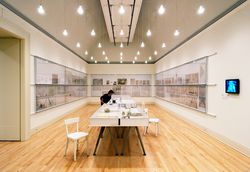
Starting from diverse premises and points of view, Cedric Price, Aldo Rossi, James Stirling, and Gordon Matta-Clark each engaged in a radical rethinking of the status, history, and purpose of architecture. out of the box: price rossi stirling + matta-clark brings the ideas of these four pivotal figures of the 1970s into dialogue through a group of archives that recently(...)
Starting from diverse premises and points of view, Cedric Price, Aldo Rossi, James Stirling, and Gordon Matta-Clark each engaged in a radical rethinking of the status, history, and purpose of architecture. out of the box: price rossi stirling + matta-clark brings the ideas of these four pivotal figures of the 1970s into dialogue through a group of archives that recently(...)
Location:
Main galleries
Main galleries
Date:
23 October 2003 to 6 September 2004
23 October 2003 to 6 September 2004
Title:
out of the box: price rossi stirling + matta-clark
Actions:
Description:
Starting from diverse premises and points of view, Cedric Price, Aldo Rossi, James Stirling, and Gordon Matta-Clark each engaged in a radical rethinking of the status, history, and purpose of architecture. out of the box: price rossi stirling + matta-clark brings the ideas of these four pivotal figures of the 1970s into dialogue through a group of archives that recently(...)
out of the box: price rossi stirling + matta-clark
Actions:
Description:
Starting from diverse premises and points of view, Cedric Price, Aldo Rossi, James Stirling, and Gordon Matta-Clark each engaged in a radical rethinking of the status, history, and purpose of architecture. out of the box: price rossi stirling + matta-clark brings the ideas of these four pivotal figures of the 1970s into dialogue through a group of archives that recently(...)
Form:
exhibitions
exhibitions
Date:
23 October 2003 to
6 September 2004
23 October 2003 to
6 September 2004
Location:
Main galleries
Main galleries
Form:
textual records
textual records
Actions:
Reference number:
AP197.S3.011
Description:
The box is comprised of correspondence for the years of 2002-2014, organized in chronological order. The box documents Frampton’s career as Ware professor at the Graduate School of Architecture, Planning and Preservation, Columbia University and his related professional activities. Correspondence in this box includes: offers of teaching positions; requests to write articles, reviews, books and recommendation letters; invitations to teach, present, or attend at lectures/symposiums/conferences; and requests to serve on juries. Throughout this period, Frampton corresponded with various universities, architects, professors, publishers, and editors of various publications such as: Alvaro Siza; Mario Botta; Glenn Murcutt; Angelo Bucci; Kengo Kuma; Charles Correa; Rafael Moneo; Raj Rewal; Harry Wolf; Tadao Ando; and David Chipperfield. Correspondence relates to Frampton participation/involvement in: writing Richard Meier and Steven Holl essays for Electa Architecture and the Labor, Work and Architecture publication; in the Chinese translation of Studies in Tectonic Culture; in the International Committee for Documentation and Conservation of Buildings, Sites and Neighbourhoods of the Modern Movement’s (do.co,mo.mo) "The Challenge of the Modern Movement;" lecturing at the Bard Graduate Center; providing the keynote address at the Architectural Association of Ireland Symposium; acting as a jury member for the Museum of the History of Polish Jews.
AP197.S3.011
Description:
The box is comprised of correspondence for the years of 2002-2014, organized in chronological order. The box documents Frampton’s career as Ware professor at the Graduate School of Architecture, Planning and Preservation, Columbia University and his related professional activities. Correspondence in this box includes: offers of teaching positions; requests to write articles, reviews, books and recommendation letters; invitations to teach, present, or attend at lectures/symposiums/conferences; and requests to serve on juries. Throughout this period, Frampton corresponded with various universities, architects, professors, publishers, and editors of various publications such as: Alvaro Siza; Mario Botta; Glenn Murcutt; Angelo Bucci; Kengo Kuma; Charles Correa; Rafael Moneo; Raj Rewal; Harry Wolf; Tadao Ando; and David Chipperfield. Correspondence relates to Frampton participation/involvement in: writing Richard Meier and Steven Holl essays for Electa Architecture and the Labor, Work and Architecture publication; in the Chinese translation of Studies in Tectonic Culture; in the International Committee for Documentation and Conservation of Buildings, Sites and Neighbourhoods of the Modern Movement’s (do.co,mo.mo) "The Challenge of the Modern Movement;" lecturing at the Bard Graduate Center; providing the keynote address at the Architectural Association of Ireland Symposium; acting as a jury member for the Museum of the History of Polish Jews.
People:
Date:
2002-2014
2002-2014
Title:
Personal and professional correspondence from 2002-2014
Actions:
AP197.S3.011
Description:
The box is comprised of correspondence for the years of 2002-2014, organized in chronological order. The box documents Frampton’s career as Ware professor at the Graduate School of Architecture, Planning and Preservation, Columbia University and his related professional activities. Correspondence in this box includes: offers of teaching positions; requests to write articles, reviews, books and recommendation letters; invitations to teach, present, or attend at lectures/symposiums/conferences; and requests to serve on juries. Throughout this period, Frampton corresponded with various universities, architects, professors, publishers, and editors of various publications such as: Alvaro Siza; Mario Botta; Glenn Murcutt; Angelo Bucci; Kengo Kuma; Charles Correa; Rafael Moneo; Raj Rewal; Harry Wolf; Tadao Ando; and David Chipperfield. Correspondence relates to Frampton participation/involvement in: writing Richard Meier and Steven Holl essays for Electa Architecture and the Labor, Work and Architecture publication; in the Chinese translation of Studies in Tectonic Culture; in the International Committee for Documentation and Conservation of Buildings, Sites and Neighbourhoods of the Modern Movement’s (do.co,mo.mo) "The Challenge of the Modern Movement;" lecturing at the Bard Graduate Center; providing the keynote address at the Architectural Association of Ireland Symposium; acting as a jury member for the Museum of the History of Polish Jews.
Personal and professional correspondence from 2002-2014
Actions:
AP197.S3.011
Description:
The box is comprised of correspondence for the years of 2002-2014, organized in chronological order. The box documents Frampton’s career as Ware professor at the Graduate School of Architecture, Planning and Preservation, Columbia University and his related professional activities. Correspondence in this box includes: offers of teaching positions; requests to write articles, reviews, books and recommendation letters; invitations to teach, present, or attend at lectures/symposiums/conferences; and requests to serve on juries. Throughout this period, Frampton corresponded with various universities, architects, professors, publishers, and editors of various publications such as: Alvaro Siza; Mario Botta; Glenn Murcutt; Angelo Bucci; Kengo Kuma; Charles Correa; Rafael Moneo; Raj Rewal; Harry Wolf; Tadao Ando; and David Chipperfield. Correspondence relates to Frampton participation/involvement in: writing Richard Meier and Steven Holl essays for Electa Architecture and the Labor, Work and Architecture publication; in the Chinese translation of Studies in Tectonic Culture; in the International Committee for Documentation and Conservation of Buildings, Sites and Neighbourhoods of the Modern Movement’s (do.co,mo.mo) "The Challenge of the Modern Movement;" lecturing at the Bard Graduate Center; providing the keynote address at the Architectural Association of Ireland Symposium; acting as a jury member for the Museum of the History of Polish Jews.
Form:
textual records
textual records
Date:
2002-2014
2002-2014
People:
Form:
textual records
textual records
Reference number:
AP197.S3.001
Description:
This box is comprised of personal and professional correspondence, organized in chronological order, from 1958- 1983. Correspondence documents the beginning of Frampton's professional career and includes letters from his time as: a tutor at the Royal College of Art; the technical editor of the magazine Architectural Design; a visiting professor at Princeton University; an associate professor and, subsequently, Ware Professor of the Graduate School of Architecture, Planning and Preservation; a Fellow of the Institute for Architecture and Urban Studies; and an editor of Oppositions. This correspondence includes a letter inviting Frampton to teach at Princeton University and his acceptance of the position, his appointment to the Loeb Fellowship, and his appointment as an Associate Professor at Columbia University as well as correspondence concerning the first and second editions of Modern Architecture: a critical history. Throughout this period, Frampton corresponded with various architects, professors, publishers, and editors of various publications such as: Peter Eisenman; Robert Vickery; Anthony Hill; Melvin Charney; Richard Meier; Max Bill; Panos Koulermos; Tadao Ando; Tomás Maldonado; Manfredo Tafuri; Arata Isozaki; the Casabella; Architecture and Urbanism; DOMUS; and Thames and Hudson. Activities documented in this box include: various offers of teaching positions; requests to write articles, reviews, books and recommendation letters; invitations to attend or present lectures/symposiums/conferences; and requests to serve on juries.
AP197.S3.001
Description:
This box is comprised of personal and professional correspondence, organized in chronological order, from 1958- 1983. Correspondence documents the beginning of Frampton's professional career and includes letters from his time as: a tutor at the Royal College of Art; the technical editor of the magazine Architectural Design; a visiting professor at Princeton University; an associate professor and, subsequently, Ware Professor of the Graduate School of Architecture, Planning and Preservation; a Fellow of the Institute for Architecture and Urban Studies; and an editor of Oppositions. This correspondence includes a letter inviting Frampton to teach at Princeton University and his acceptance of the position, his appointment to the Loeb Fellowship, and his appointment as an Associate Professor at Columbia University as well as correspondence concerning the first and second editions of Modern Architecture: a critical history. Throughout this period, Frampton corresponded with various architects, professors, publishers, and editors of various publications such as: Peter Eisenman; Robert Vickery; Anthony Hill; Melvin Charney; Richard Meier; Max Bill; Panos Koulermos; Tadao Ando; Tomás Maldonado; Manfredo Tafuri; Arata Isozaki; the Casabella; Architecture and Urbanism; DOMUS; and Thames and Hudson. Activities documented in this box include: various offers of teaching positions; requests to write articles, reviews, books and recommendation letters; invitations to attend or present lectures/symposiums/conferences; and requests to serve on juries.
People:
Date:
1958-1984
1958-1984
Title:
Personal and professional correspondence from 1958-1984
Actions:
AP197.S3.001
Description:
This box is comprised of personal and professional correspondence, organized in chronological order, from 1958- 1983. Correspondence documents the beginning of Frampton's professional career and includes letters from his time as: a tutor at the Royal College of Art; the technical editor of the magazine Architectural Design; a visiting professor at Princeton University; an associate professor and, subsequently, Ware Professor of the Graduate School of Architecture, Planning and Preservation; a Fellow of the Institute for Architecture and Urban Studies; and an editor of Oppositions. This correspondence includes a letter inviting Frampton to teach at Princeton University and his acceptance of the position, his appointment to the Loeb Fellowship, and his appointment as an Associate Professor at Columbia University as well as correspondence concerning the first and second editions of Modern Architecture: a critical history. Throughout this period, Frampton corresponded with various architects, professors, publishers, and editors of various publications such as: Peter Eisenman; Robert Vickery; Anthony Hill; Melvin Charney; Richard Meier; Max Bill; Panos Koulermos; Tadao Ando; Tomás Maldonado; Manfredo Tafuri; Arata Isozaki; the Casabella; Architecture and Urbanism; DOMUS; and Thames and Hudson. Activities documented in this box include: various offers of teaching positions; requests to write articles, reviews, books and recommendation letters; invitations to attend or present lectures/symposiums/conferences; and requests to serve on juries.
Personal and professional correspondence from 1958-1984
Actions:
AP197.S3.001
Description:
This box is comprised of personal and professional correspondence, organized in chronological order, from 1958- 1983. Correspondence documents the beginning of Frampton's professional career and includes letters from his time as: a tutor at the Royal College of Art; the technical editor of the magazine Architectural Design; a visiting professor at Princeton University; an associate professor and, subsequently, Ware Professor of the Graduate School of Architecture, Planning and Preservation; a Fellow of the Institute for Architecture and Urban Studies; and an editor of Oppositions. This correspondence includes a letter inviting Frampton to teach at Princeton University and his acceptance of the position, his appointment to the Loeb Fellowship, and his appointment as an Associate Professor at Columbia University as well as correspondence concerning the first and second editions of Modern Architecture: a critical history. Throughout this period, Frampton corresponded with various architects, professors, publishers, and editors of various publications such as: Peter Eisenman; Robert Vickery; Anthony Hill; Melvin Charney; Richard Meier; Max Bill; Panos Koulermos; Tadao Ando; Tomás Maldonado; Manfredo Tafuri; Arata Isozaki; the Casabella; Architecture and Urbanism; DOMUS; and Thames and Hudson. Activities documented in this box include: various offers of teaching positions; requests to write articles, reviews, books and recommendation letters; invitations to attend or present lectures/symposiums/conferences; and requests to serve on juries.
Form:
textual records
textual records
Date:
1958-1984
1958-1984
People:
Form:
textual records
textual records
Actions:
Reference number:
AP197.S3.006
Description:
The box is comprised of correspondence for the years of 1995-1997, organized in chronological order. The box documents Frampton’s career as Ware professor at the Graduate School of Architecture, Planning and Preservation, Columbia University and his related professional activities. Correspondence in this box includes: offers of teaching positions; requests to write articles, reviews, books and recommendation letters; invitations to teach, present, or attend at lectures/symposiums/conferences; and requests to serve on juries. Throughout this period, Frampton corresponded with various architects, professors, publishers, and editors of various publications such as: Thames and Hudson Ltd.; the Berlage Institute; the Italian Cultural Institute; Yukio Futagawa of GA/ADA Edita Tokyo Co CD; and the MIT Press. Correspondence relates to his participation/involvement in: the Michael Blackwood Production “In search of Louis Kahn: Six Buildings;” the Japanese and German translations for the Studies in Tectonic Culture publication; organizing lectures on Studies in tectonic Culture; the Jerusalem Seminar in Architecture “Technology, Place & and Architecture;” teaching at the École polytechnique fédérale de Lausanne; the Aga Khan Program for Islamic Architecture; and the Architectural Society of China. Correspondence concerning the following publications and lectures is included: “the Megaform as City in Miniature;” “Critical regionalism revisited,” a lecture at the Berlage Institute; the Le Corbusier publication; “Tradition and Innovation in the Work of Christoph Mackler;” and the forward for Vittorio Gregotti`s Inside Architecture.
AP197.S3.006
Description:
The box is comprised of correspondence for the years of 1995-1997, organized in chronological order. The box documents Frampton’s career as Ware professor at the Graduate School of Architecture, Planning and Preservation, Columbia University and his related professional activities. Correspondence in this box includes: offers of teaching positions; requests to write articles, reviews, books and recommendation letters; invitations to teach, present, or attend at lectures/symposiums/conferences; and requests to serve on juries. Throughout this period, Frampton corresponded with various architects, professors, publishers, and editors of various publications such as: Thames and Hudson Ltd.; the Berlage Institute; the Italian Cultural Institute; Yukio Futagawa of GA/ADA Edita Tokyo Co CD; and the MIT Press. Correspondence relates to his participation/involvement in: the Michael Blackwood Production “In search of Louis Kahn: Six Buildings;” the Japanese and German translations for the Studies in Tectonic Culture publication; organizing lectures on Studies in tectonic Culture; the Jerusalem Seminar in Architecture “Technology, Place & and Architecture;” teaching at the École polytechnique fédérale de Lausanne; the Aga Khan Program for Islamic Architecture; and the Architectural Society of China. Correspondence concerning the following publications and lectures is included: “the Megaform as City in Miniature;” “Critical regionalism revisited,” a lecture at the Berlage Institute; the Le Corbusier publication; “Tradition and Innovation in the Work of Christoph Mackler;” and the forward for Vittorio Gregotti`s Inside Architecture.
People:
Date:
1995-1997
1995-1997
Title:
Personal and professional correspondence from 1995-1997
Actions:
AP197.S3.006
Description:
The box is comprised of correspondence for the years of 1995-1997, organized in chronological order. The box documents Frampton’s career as Ware professor at the Graduate School of Architecture, Planning and Preservation, Columbia University and his related professional activities. Correspondence in this box includes: offers of teaching positions; requests to write articles, reviews, books and recommendation letters; invitations to teach, present, or attend at lectures/symposiums/conferences; and requests to serve on juries. Throughout this period, Frampton corresponded with various architects, professors, publishers, and editors of various publications such as: Thames and Hudson Ltd.; the Berlage Institute; the Italian Cultural Institute; Yukio Futagawa of GA/ADA Edita Tokyo Co CD; and the MIT Press. Correspondence relates to his participation/involvement in: the Michael Blackwood Production “In search of Louis Kahn: Six Buildings;” the Japanese and German translations for the Studies in Tectonic Culture publication; organizing lectures on Studies in tectonic Culture; the Jerusalem Seminar in Architecture “Technology, Place & and Architecture;” teaching at the École polytechnique fédérale de Lausanne; the Aga Khan Program for Islamic Architecture; and the Architectural Society of China. Correspondence concerning the following publications and lectures is included: “the Megaform as City in Miniature;” “Critical regionalism revisited,” a lecture at the Berlage Institute; the Le Corbusier publication; “Tradition and Innovation in the Work of Christoph Mackler;” and the forward for Vittorio Gregotti`s Inside Architecture.
Personal and professional correspondence from 1995-1997
Actions:
AP197.S3.006
Description:
The box is comprised of correspondence for the years of 1995-1997, organized in chronological order. The box documents Frampton’s career as Ware professor at the Graduate School of Architecture, Planning and Preservation, Columbia University and his related professional activities. Correspondence in this box includes: offers of teaching positions; requests to write articles, reviews, books and recommendation letters; invitations to teach, present, or attend at lectures/symposiums/conferences; and requests to serve on juries. Throughout this period, Frampton corresponded with various architects, professors, publishers, and editors of various publications such as: Thames and Hudson Ltd.; the Berlage Institute; the Italian Cultural Institute; Yukio Futagawa of GA/ADA Edita Tokyo Co CD; and the MIT Press. Correspondence relates to his participation/involvement in: the Michael Blackwood Production “In search of Louis Kahn: Six Buildings;” the Japanese and German translations for the Studies in Tectonic Culture publication; organizing lectures on Studies in tectonic Culture; the Jerusalem Seminar in Architecture “Technology, Place & and Architecture;” teaching at the École polytechnique fédérale de Lausanne; the Aga Khan Program for Islamic Architecture; and the Architectural Society of China. Correspondence concerning the following publications and lectures is included: “the Megaform as City in Miniature;” “Critical regionalism revisited,” a lecture at the Berlage Institute; the Le Corbusier publication; “Tradition and Innovation in the Work of Christoph Mackler;” and the forward for Vittorio Gregotti`s Inside Architecture.
Form:
textual records
textual records
Date:
1995-1997
1995-1997
People:


