


2990 Résultats
Classification:
archives
Niveau de description archivistique:
Fonds
archives
Niveau de description archivistique:
Fonds
Titre:
Fonds Anyone Corporation
Fonds Anyone Corporation
Numéro de référence:
AP116
Résumé:
The Anyone Corporation fonds is composed primarily of textual and photographic records which document the activities of the Anyone Corporation over the course of its planned ten year life span from 1990 to 2001. The non-profit, New York City based organization, was founded by Peter Eisenman, Cynthia Davidson, Arata Isozaki, and Ignasi de Solà-Morales Rubio in order to stimulate a fruitful dialogue between architecture and general culture at the dawn of the new millennium. To this end, ANY (acronym for Architecture New York) organised ten international conferences and numerous public seminars, as well as publishing conference journals, a series of architecture related books, and ANY, a theory driven bi-monthly magazine.
AP116
Résumé:
The Anyone Corporation fonds is composed primarily of textual and photographic records which document the activities of the Anyone Corporation over the course of its planned ten year life span from 1990 to 2001. The non-profit, New York City based organization, was founded by Peter Eisenman, Cynthia Davidson, Arata Isozaki, and Ignasi de Solà-Morales Rubio in order to stimulate a fruitful dialogue between architecture and general culture at the dawn of the new millennium. To this end, ANY (acronym for Architecture New York) organised ten international conferences and numerous public seminars, as well as publishing conference journals, a series of architecture related books, and ANY, a theory driven bi-monthly magazine.
Personnes et institutions:
Date:
1990-2001
1990-2001
Titre:
Fonds Anyone Corporation
Actions:
AP116
Résumé:
The Anyone Corporation fonds is composed primarily of textual and photographic records which document the activities of the Anyone Corporation over the course of its planned ten year life span from 1990 to 2001. The non-profit, New York City based organization, was founded by Peter Eisenman, Cynthia Davidson, Arata Isozaki, and Ignasi de Solà-Morales Rubio in order to stimulate a fruitful dialogue between architecture and general culture at the dawn of the new millennium. To this end, ANY (acronym for Architecture New York) organised ten international conferences and numerous public seminars, as well as publishing conference journals, a series of architecture related books, and ANY, a theory driven bi-monthly magazine.
Fonds Anyone Corporation
Actions:
AP116
Résumé:
The Anyone Corporation fonds is composed primarily of textual and photographic records which document the activities of the Anyone Corporation over the course of its planned ten year life span from 1990 to 2001. The non-profit, New York City based organization, was founded by Peter Eisenman, Cynthia Davidson, Arata Isozaki, and Ignasi de Solà-Morales Rubio in order to stimulate a fruitful dialogue between architecture and general culture at the dawn of the new millennium. To this end, ANY (acronym for Architecture New York) organised ten international conferences and numerous public seminars, as well as publishing conference journals, a series of architecture related books, and ANY, a theory driven bi-monthly magazine.
Classification:
archives
Niveau de description archivistique:
Fonds
archives
Niveau de description archivistique:
Fonds
Date:
1990-2001
1990-2001
Personnes et institutions:
Classification:
archives
Niveau de description archivistique:
Fonds
archives
Niveau de description archivistique:
Fonds
Numéro de référence:
AP185
Résumé:
The KOL/MAC project records, 1994-2001, document the conceptualization, design, and installation of two projects: the Ost/Kuttner Apartment and Housings. The records consist of physical drawings, textual records, Hi-8 cassette tapes, and material samples, as well as a substantial body of digital materials. These primarily document the design, construction and installation of the O/K Apartment and Housings through drawings, 3D models, photographs, still images, construction documentation, and material samples.
AP185
Résumé:
The KOL/MAC project records, 1994-2001, document the conceptualization, design, and installation of two projects: the Ost/Kuttner Apartment and Housings. The records consist of physical drawings, textual records, Hi-8 cassette tapes, and material samples, as well as a substantial body of digital materials. These primarily document the design, construction and installation of the O/K Apartment and Housings through drawings, 3D models, photographs, still images, construction documentation, and material samples.
Personnes et institutions:
Date:
1994-2001
1994-2001
Titre:
Document d’archives des projets de KOL/MAC
Actions:
AP185
Résumé:
The KOL/MAC project records, 1994-2001, document the conceptualization, design, and installation of two projects: the Ost/Kuttner Apartment and Housings. The records consist of physical drawings, textual records, Hi-8 cassette tapes, and material samples, as well as a substantial body of digital materials. These primarily document the design, construction and installation of the O/K Apartment and Housings through drawings, 3D models, photographs, still images, construction documentation, and material samples.
Document d’archives des projets de KOL/MAC
Actions:
AP185
Résumé:
The KOL/MAC project records, 1994-2001, document the conceptualization, design, and installation of two projects: the Ost/Kuttner Apartment and Housings. The records consist of physical drawings, textual records, Hi-8 cassette tapes, and material samples, as well as a substantial body of digital materials. These primarily document the design, construction and installation of the O/K Apartment and Housings through drawings, 3D models, photographs, still images, construction documentation, and material samples.
Classification:
archives
Niveau de description archivistique:
Fonds
archives
Niveau de description archivistique:
Fonds
Date:
1994-2001
1994-2001
Personnes et institutions:
Classification:
photographies
photographies
Titre:
Destruction of Festival Hall by dynamite, Panama-Pacific International Exposition, San Francisco
Destruction of Festival Hall by dynamite, Panama-Pacific International Exposition, San Francisco
Actions:
Numéro de référence:
PH1993:0432
Description:
4 photographs printed on one sheet of paper showing four different views of the Festival Hall Building being destroyed by dynamite
PH1993:0432
Description:
4 photographs printed on one sheet of paper showing four different views of the Festival Hall Building being destroyed by dynamite
Personnes et institutions:
Date:
16 July 1916
16 July 1916
Titre:
Destruction of Festival Hall by dynamite, Panama-Pacific International Exposition, San Francisco
Actions:
PH1993:0432
Description:
4 photographs printed on one sheet of paper showing four different views of the Festival Hall Building being destroyed by dynamite
Destruction of Festival Hall by dynamite, Panama-Pacific International Exposition, San Francisco
Actions:
PH1993:0432
Description:
4 photographs printed on one sheet of paper showing four different views of the Festival Hall Building being destroyed by dynamite
Classification:
photographies
photographies
Date:
16 July 1916
16 July 1916
Personnes et institutions:
Niveau de description archivistique:
Série(s)
Série(s)
Titre:
Architectural projects
Architectural projects
Numéro de référence:
AP178.S1
Description:
Series AP178.S1 is the largest series of the Álvaro Siza fonds and documents over 200 of Siza’s built and unbuilt architectural projects. The series is divided into project series which are arranged chronologically by project year. Presently, materials in this series range from 1958-2012. The CCA will also receive materials documenting Siza’s more recent work in future additions. Documenting the projects are conceptual, design, presentation, and working drawings, as well as photographic materials, textual documentation, and models. Although the drawings for each project have been identified, Siza often sketches or doodles on textual documentation, such as minutes of meetings or notes. When possible, folders that include textual documents with sketches or doodles have been identified. Amounts and types of materials vary from project to project. Project documentation is usually in Portuguese, with some exceptions including French, English, German, and Dutch. Most project series include sketches, studies, and working drawings. Other drawings included are site plans, floor plans, topographic surveys, elevations, sections, as well as technical and mechanical details. Also documenting the projects are photographic materials and textual documentation, such as correspondence, building programs, contracts, notes, and other working details. Photographic materials found within this archive are slides, negatives, photomontages and photographs of project sites and models.The photomontages were often used to study the function of the project site. To fully understand Siza’s methodology, sketchbooks (Series AP178.S2) should be viewed alongside the project drawings, when possible. Each project series description highlights sketchbooks in series AP178.S2 which contain related sketches. It is important to note that not all projects are represented in the sketchbooks in Series AP178.S2. Moreover, project series descriptions only list related sketchbooks when sketches have been positively identified as related to the corresponding project. The Siza fonds will be processed in four phases. The materials processed in the first, second, and third phases are architectural projects from the 1950’s, 1960’s, and 1970’s; urban planning projects; Reconstrução do Chiado; Berlin projects submitted to the IBA competition; cultural institutions; individual houses; and the Plano de urbanização Deelgebied 5 Schilderswijk-West in The Hague. Among The Hague and the Berlin projects are the Punt en Komma social housing, Bonjour Tristesse, and the Residential settlement in Schilderswijk. This series is better understood in the context of how the records for architectural projects were arranged by Siza’s office. Earlier projects were initially numbered by Siza’s office and then received new project numbers by the office archivist, who joined the office in the 1990s. Project files have been kept in the order in which they were received by the CCA, which is how they were arranged by the office archivist. The project numbers and dates assigned by Siza’s office archivist are included in the descriptions for each project and form the basis for the arrangement of this series. The office archivist numbered projects consecutively by decade, for instance, 58/80 was the 58th project during the 1980s. Numbers which were included in square brackets, ex. [14]/75, show that the project was not a ‘full’ project and contains a small amount of documentation. When projects are followed by a letter (A, B, C) this signifies a project is connected to the first. When the project number is followed by a number (1, 2, 3) this signifies a separate building within a larger project. For the purposes of arrangement, project numbers that were assigned a letter or number are arranged as sub-series of the related project series. Exceptions to this numbering convention are projects 23/60, 25/60, 28/60, 33/60, 34/60 and 35/60. These projects were not in the office’s original project list and were not officially considered projects. The office archivist assembled documentation related to these projects and assigned them numbers. In the early 2000s a large number of photographic materials were gathered together by the office archivist from various correspondence files for a digitization project initiated by the office. These materials remained housed together as a photograph collection in the office. Not all of these materials were digitized by the office. Those that were digitized were assigned numbers which have been identified in the file descriptions. It is important to note that several photographic materials were left with the textual documentation or drawings. When this is the case they are identified in the file description. There are also several panoramic photomontages which were created by either gluing or taping several photographs together to make panoramas of project sites.
AP178.S1
Description:
Series AP178.S1 is the largest series of the Álvaro Siza fonds and documents over 200 of Siza’s built and unbuilt architectural projects. The series is divided into project series which are arranged chronologically by project year. Presently, materials in this series range from 1958-2012. The CCA will also receive materials documenting Siza’s more recent work in future additions. Documenting the projects are conceptual, design, presentation, and working drawings, as well as photographic materials, textual documentation, and models. Although the drawings for each project have been identified, Siza often sketches or doodles on textual documentation, such as minutes of meetings or notes. When possible, folders that include textual documents with sketches or doodles have been identified. Amounts and types of materials vary from project to project. Project documentation is usually in Portuguese, with some exceptions including French, English, German, and Dutch. Most project series include sketches, studies, and working drawings. Other drawings included are site plans, floor plans, topographic surveys, elevations, sections, as well as technical and mechanical details. Also documenting the projects are photographic materials and textual documentation, such as correspondence, building programs, contracts, notes, and other working details. Photographic materials found within this archive are slides, negatives, photomontages and photographs of project sites and models.The photomontages were often used to study the function of the project site. To fully understand Siza’s methodology, sketchbooks (Series AP178.S2) should be viewed alongside the project drawings, when possible. Each project series description highlights sketchbooks in series AP178.S2 which contain related sketches. It is important to note that not all projects are represented in the sketchbooks in Series AP178.S2. Moreover, project series descriptions only list related sketchbooks when sketches have been positively identified as related to the corresponding project. The Siza fonds will be processed in four phases. The materials processed in the first, second, and third phases are architectural projects from the 1950’s, 1960’s, and 1970’s; urban planning projects; Reconstrução do Chiado; Berlin projects submitted to the IBA competition; cultural institutions; individual houses; and the Plano de urbanização Deelgebied 5 Schilderswijk-West in The Hague. Among The Hague and the Berlin projects are the Punt en Komma social housing, Bonjour Tristesse, and the Residential settlement in Schilderswijk. This series is better understood in the context of how the records for architectural projects were arranged by Siza’s office. Earlier projects were initially numbered by Siza’s office and then received new project numbers by the office archivist, who joined the office in the 1990s. Project files have been kept in the order in which they were received by the CCA, which is how they were arranged by the office archivist. The project numbers and dates assigned by Siza’s office archivist are included in the descriptions for each project and form the basis for the arrangement of this series. The office archivist numbered projects consecutively by decade, for instance, 58/80 was the 58th project during the 1980s. Numbers which were included in square brackets, ex. [14]/75, show that the project was not a ‘full’ project and contains a small amount of documentation. When projects are followed by a letter (A, B, C) this signifies a project is connected to the first. When the project number is followed by a number (1, 2, 3) this signifies a separate building within a larger project. For the purposes of arrangement, project numbers that were assigned a letter or number are arranged as sub-series of the related project series. Exceptions to this numbering convention are projects 23/60, 25/60, 28/60, 33/60, 34/60 and 35/60. These projects were not in the office’s original project list and were not officially considered projects. The office archivist assembled documentation related to these projects and assigned them numbers. In the early 2000s a large number of photographic materials were gathered together by the office archivist from various correspondence files for a digitization project initiated by the office. These materials remained housed together as a photograph collection in the office. Not all of these materials were digitized by the office. Those that were digitized were assigned numbers which have been identified in the file descriptions. It is important to note that several photographic materials were left with the textual documentation or drawings. When this is the case they are identified in the file description. There are also several panoramic photomontages which were created by either gluing or taping several photographs together to make panoramas of project sites.
Personnes et institutions:
Date:
1948-2012
1948-2012
Titre:
Architectural projects
Actions:
AP178.S1
Description:
Series AP178.S1 is the largest series of the Álvaro Siza fonds and documents over 200 of Siza’s built and unbuilt architectural projects. The series is divided into project series which are arranged chronologically by project year. Presently, materials in this series range from 1958-2012. The CCA will also receive materials documenting Siza’s more recent work in future additions. Documenting the projects are conceptual, design, presentation, and working drawings, as well as photographic materials, textual documentation, and models. Although the drawings for each project have been identified, Siza often sketches or doodles on textual documentation, such as minutes of meetings or notes. When possible, folders that include textual documents with sketches or doodles have been identified. Amounts and types of materials vary from project to project. Project documentation is usually in Portuguese, with some exceptions including French, English, German, and Dutch. Most project series include sketches, studies, and working drawings. Other drawings included are site plans, floor plans, topographic surveys, elevations, sections, as well as technical and mechanical details. Also documenting the projects are photographic materials and textual documentation, such as correspondence, building programs, contracts, notes, and other working details. Photographic materials found within this archive are slides, negatives, photomontages and photographs of project sites and models.The photomontages were often used to study the function of the project site. To fully understand Siza’s methodology, sketchbooks (Series AP178.S2) should be viewed alongside the project drawings, when possible. Each project series description highlights sketchbooks in series AP178.S2 which contain related sketches. It is important to note that not all projects are represented in the sketchbooks in Series AP178.S2. Moreover, project series descriptions only list related sketchbooks when sketches have been positively identified as related to the corresponding project. The Siza fonds will be processed in four phases. The materials processed in the first, second, and third phases are architectural projects from the 1950’s, 1960’s, and 1970’s; urban planning projects; Reconstrução do Chiado; Berlin projects submitted to the IBA competition; cultural institutions; individual houses; and the Plano de urbanização Deelgebied 5 Schilderswijk-West in The Hague. Among The Hague and the Berlin projects are the Punt en Komma social housing, Bonjour Tristesse, and the Residential settlement in Schilderswijk. This series is better understood in the context of how the records for architectural projects were arranged by Siza’s office. Earlier projects were initially numbered by Siza’s office and then received new project numbers by the office archivist, who joined the office in the 1990s. Project files have been kept in the order in which they were received by the CCA, which is how they were arranged by the office archivist. The project numbers and dates assigned by Siza’s office archivist are included in the descriptions for each project and form the basis for the arrangement of this series. The office archivist numbered projects consecutively by decade, for instance, 58/80 was the 58th project during the 1980s. Numbers which were included in square brackets, ex. [14]/75, show that the project was not a ‘full’ project and contains a small amount of documentation. When projects are followed by a letter (A, B, C) this signifies a project is connected to the first. When the project number is followed by a number (1, 2, 3) this signifies a separate building within a larger project. For the purposes of arrangement, project numbers that were assigned a letter or number are arranged as sub-series of the related project series. Exceptions to this numbering convention are projects 23/60, 25/60, 28/60, 33/60, 34/60 and 35/60. These projects were not in the office’s original project list and were not officially considered projects. The office archivist assembled documentation related to these projects and assigned them numbers. In the early 2000s a large number of photographic materials were gathered together by the office archivist from various correspondence files for a digitization project initiated by the office. These materials remained housed together as a photograph collection in the office. Not all of these materials were digitized by the office. Those that were digitized were assigned numbers which have been identified in the file descriptions. It is important to note that several photographic materials were left with the textual documentation or drawings. When this is the case they are identified in the file description. There are also several panoramic photomontages which were created by either gluing or taping several photographs together to make panoramas of project sites.
Architectural projects
Actions:
AP178.S1
Description:
Series AP178.S1 is the largest series of the Álvaro Siza fonds and documents over 200 of Siza’s built and unbuilt architectural projects. The series is divided into project series which are arranged chronologically by project year. Presently, materials in this series range from 1958-2012. The CCA will also receive materials documenting Siza’s more recent work in future additions. Documenting the projects are conceptual, design, presentation, and working drawings, as well as photographic materials, textual documentation, and models. Although the drawings for each project have been identified, Siza often sketches or doodles on textual documentation, such as minutes of meetings or notes. When possible, folders that include textual documents with sketches or doodles have been identified. Amounts and types of materials vary from project to project. Project documentation is usually in Portuguese, with some exceptions including French, English, German, and Dutch. Most project series include sketches, studies, and working drawings. Other drawings included are site plans, floor plans, topographic surveys, elevations, sections, as well as technical and mechanical details. Also documenting the projects are photographic materials and textual documentation, such as correspondence, building programs, contracts, notes, and other working details. Photographic materials found within this archive are slides, negatives, photomontages and photographs of project sites and models.The photomontages were often used to study the function of the project site. To fully understand Siza’s methodology, sketchbooks (Series AP178.S2) should be viewed alongside the project drawings, when possible. Each project series description highlights sketchbooks in series AP178.S2 which contain related sketches. It is important to note that not all projects are represented in the sketchbooks in Series AP178.S2. Moreover, project series descriptions only list related sketchbooks when sketches have been positively identified as related to the corresponding project. The Siza fonds will be processed in four phases. The materials processed in the first, second, and third phases are architectural projects from the 1950’s, 1960’s, and 1970’s; urban planning projects; Reconstrução do Chiado; Berlin projects submitted to the IBA competition; cultural institutions; individual houses; and the Plano de urbanização Deelgebied 5 Schilderswijk-West in The Hague. Among The Hague and the Berlin projects are the Punt en Komma social housing, Bonjour Tristesse, and the Residential settlement in Schilderswijk. This series is better understood in the context of how the records for architectural projects were arranged by Siza’s office. Earlier projects were initially numbered by Siza’s office and then received new project numbers by the office archivist, who joined the office in the 1990s. Project files have been kept in the order in which they were received by the CCA, which is how they were arranged by the office archivist. The project numbers and dates assigned by Siza’s office archivist are included in the descriptions for each project and form the basis for the arrangement of this series. The office archivist numbered projects consecutively by decade, for instance, 58/80 was the 58th project during the 1980s. Numbers which were included in square brackets, ex. [14]/75, show that the project was not a ‘full’ project and contains a small amount of documentation. When projects are followed by a letter (A, B, C) this signifies a project is connected to the first. When the project number is followed by a number (1, 2, 3) this signifies a separate building within a larger project. For the purposes of arrangement, project numbers that were assigned a letter or number are arranged as sub-series of the related project series. Exceptions to this numbering convention are projects 23/60, 25/60, 28/60, 33/60, 34/60 and 35/60. These projects were not in the office’s original project list and were not officially considered projects. The office archivist assembled documentation related to these projects and assigned them numbers. In the early 2000s a large number of photographic materials were gathered together by the office archivist from various correspondence files for a digitization project initiated by the office. These materials remained housed together as a photograph collection in the office. Not all of these materials were digitized by the office. Those that were digitized were assigned numbers which have been identified in the file descriptions. It is important to note that several photographic materials were left with the textual documentation or drawings. When this is the case they are identified in the file description. There are also several panoramic photomontages which were created by either gluing or taping several photographs together to make panoramas of project sites.
Niveau de description archivistique:
Series
Series
Date:
1948-2012
1948-2012
Personnes et institutions:
Classification:
expositions
expositions
Actions:
Description:
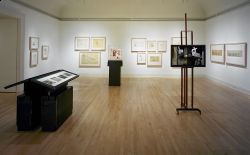
L’exposition se concentre sur un aspect déterminant et actuel de l’œuvre de Scarpa : l’approche originale qu’il utilisait pour composer avec les strates historiques qui forment le tissu d’une ville ou d’un bâtiment. En se concentrant sur l’habileté avec laquelle Scarpa pouvait développer une nouvelle œuvre à l’intérieur même, et souvent à partir, de fragments disparates(...)
L’exposition se concentre sur un aspect déterminant et actuel de l’œuvre de Scarpa : l’approche originale qu’il utilisait pour composer avec les strates historiques qui forment le tissu d’une ville ou d’un bâtiment. En se concentrant sur l’habileté avec laquelle Scarpa pouvait développer une nouvelle œuvre à l’intérieur même, et souvent à partir, de fragments disparates(...)
Localisation:
Salles principales
Salles principales
Date:
26 mai 1999 au 31 octobre 1999
26 mai 1999 au 31 octobre 1999
Titre:
Carlo Scarpa, architecte : composer avec l’histoire
Actions:
Description:
L’exposition se concentre sur un aspect déterminant et actuel de l’œuvre de Scarpa : l’approche originale qu’il utilisait pour composer avec les strates historiques qui forment le tissu d’une ville ou d’un bâtiment. En se concentrant sur l’habileté avec laquelle Scarpa pouvait développer une nouvelle œuvre à l’intérieur même, et souvent à partir, de fragments disparates(...)
Carlo Scarpa, architecte : composer avec l’histoire
Actions:
Description:
L’exposition se concentre sur un aspect déterminant et actuel de l’œuvre de Scarpa : l’approche originale qu’il utilisait pour composer avec les strates historiques qui forment le tissu d’une ville ou d’un bâtiment. En se concentrant sur l’habileté avec laquelle Scarpa pouvait développer une nouvelle œuvre à l’intérieur même, et souvent à partir, de fragments disparates(...)
Classification:
expositions
expositions
Date:
26 mai 1999 au
31 octobre 1999
26 mai 1999 au
31 octobre 1999
Localisation:
Salles principales
Salles principales
Classification:
archives
Niveau de description archivistique:
Fonds
archives
Niveau de description archivistique:
Fonds
Numéro de référence:
AP181
Résumé:
The COOP HIMMELB(L)AU BMW Welt project records, 1994-2007, document the design of the firm’s BMW Welt project, also known as BMW World, in Munich, Germany. The archive consists of approximately 52, 400 born-digital files representing the greater part of the digital archive of the project, as well as 52 of the study models made in the earlier stages of the project.
AP181
Résumé:
The COOP HIMMELB(L)AU BMW Welt project records, 1994-2007, document the design of the firm’s BMW Welt project, also known as BMW World, in Munich, Germany. The archive consists of approximately 52, 400 born-digital files representing the greater part of the digital archive of the project, as well as 52 of the study models made in the earlier stages of the project.
Personnes et institutions:
Date:
1994-2015
1994-2015
Titre:
Documents d’archives de COOP HIMMELB(L)AU pour le projet BMW Welt
Actions:
AP181
Résumé:
The COOP HIMMELB(L)AU BMW Welt project records, 1994-2007, document the design of the firm’s BMW Welt project, also known as BMW World, in Munich, Germany. The archive consists of approximately 52, 400 born-digital files representing the greater part of the digital archive of the project, as well as 52 of the study models made in the earlier stages of the project.
Documents d’archives de COOP HIMMELB(L)AU pour le projet BMW Welt
Actions:
AP181
Résumé:
The COOP HIMMELB(L)AU BMW Welt project records, 1994-2007, document the design of the firm’s BMW Welt project, also known as BMW World, in Munich, Germany. The archive consists of approximately 52, 400 born-digital files representing the greater part of the digital archive of the project, as well as 52 of the study models made in the earlier stages of the project.
Classification:
archives
Niveau de description archivistique:
Fonds
archives
Niveau de description archivistique:
Fonds
Date:
1994-2015
1994-2015
Personnes et institutions:
Classification:
archives
Niveau de description archivistique:
Fonds
archives
Niveau de description archivistique:
Fonds
Numéro de référence:
AP186
Résumé:
The Cloud 9 Villa Nurbs project records,1990s-2013, document the firm’s Villa Nurbs project, a private residence in Empuriabrava (Costa Brava), Spain. The archive consists of the firm’s total born-digital archive for the project, as well as physical materials in a number of formats, including drawings, textual records, slides, presentation materials, photographs, paintings, protoypes, material samples, and models.
AP186
Résumé:
The Cloud 9 Villa Nurbs project records,1990s-2013, document the firm’s Villa Nurbs project, a private residence in Empuriabrava (Costa Brava), Spain. The archive consists of the firm’s total born-digital archive for the project, as well as physical materials in a number of formats, including drawings, textual records, slides, presentation materials, photographs, paintings, protoypes, material samples, and models.
Personnes et institutions:
Date:
1990s-2013
1990s-2013
Titre:
Documents d’archives de Cloud 9 pour le projet Villa Nurbs
Actions:
AP186
Résumé:
The Cloud 9 Villa Nurbs project records,1990s-2013, document the firm’s Villa Nurbs project, a private residence in Empuriabrava (Costa Brava), Spain. The archive consists of the firm’s total born-digital archive for the project, as well as physical materials in a number of formats, including drawings, textual records, slides, presentation materials, photographs, paintings, protoypes, material samples, and models.
Documents d’archives de Cloud 9 pour le projet Villa Nurbs
Actions:
AP186
Résumé:
The Cloud 9 Villa Nurbs project records,1990s-2013, document the firm’s Villa Nurbs project, a private residence in Empuriabrava (Costa Brava), Spain. The archive consists of the firm’s total born-digital archive for the project, as well as physical materials in a number of formats, including drawings, textual records, slides, presentation materials, photographs, paintings, protoypes, material samples, and models.
Classification:
archives
Niveau de description archivistique:
Fonds
archives
Niveau de description archivistique:
Fonds
Date:
1990s-2013
1990s-2013
Personnes et institutions:
Classification:
archives
Niveau de description archivistique:
Fonds
archives
Niveau de description archivistique:
Fonds
Titre:
Fonds PGL architectes
Fonds PGL architectes
Numéro de référence:
AP014
Résumé:
Le fonds PGL architectes, 1959 – 1994, témoigne des activités de la firme d’architecture montréalaise, Papineau Gérin-Lajoie Le Blanc architectes, autant que ses sociétés affiliées et firmes remplaçantes. La majorité du fonds comprend des documents qui représentent 70 projets architecturaux, incluant des projets entrepris à travers le Québec, à Ottawa, à de multiples endroits au Nunavut, ainsi que des projets internationaux. Le fonds met en évidence la participation du PGL dans la construction d'infrastructure coloniale au Nunavik et au Nunavut, y compris les travaux sur des écoles associées avec des foyers fédéraux, qui sont reconnus comme faisant partie du système des pensionnats autochtones du Canada. De plus, le fonds documente l’utilisation des panneaux de fibre de verre modulaires employés par PGL. Pour la plupart, les documents dans ce fonds se composent des dessins, des documents photographiques, et des documents textuels. _____________________________________________________________________________________________________________ The PGL architectes fonds, 1959 - 1994, documents the work and activities of the Montréal-based architecture firm, Papineau Gérin-Lajoie Le Blanc architectes, and its successor and affiliate companies. The records within this fonds represent 70 architectural projects undertaken by the firm, which include projects throughout Québec, Ottawa, and various locations in Nunavut, as well as some international projects. The fonds offers evidence of PGL’s participation in the construction of colonial infrastructure in Nunavik and Nunavut, including work on schools that are connected to Federal Hostels which are recognised as part of Canada's Indian Residential School system. The fonds also contains records documenting PGL’s use of modular, fiberglass-reinforced plastic panels in construction. The records within this fonds largely consist of drawings, photographic materials, and textual records.
AP014
Résumé:
Le fonds PGL architectes, 1959 – 1994, témoigne des activités de la firme d’architecture montréalaise, Papineau Gérin-Lajoie Le Blanc architectes, autant que ses sociétés affiliées et firmes remplaçantes. La majorité du fonds comprend des documents qui représentent 70 projets architecturaux, incluant des projets entrepris à travers le Québec, à Ottawa, à de multiples endroits au Nunavut, ainsi que des projets internationaux. Le fonds met en évidence la participation du PGL dans la construction d'infrastructure coloniale au Nunavik et au Nunavut, y compris les travaux sur des écoles associées avec des foyers fédéraux, qui sont reconnus comme faisant partie du système des pensionnats autochtones du Canada. De plus, le fonds documente l’utilisation des panneaux de fibre de verre modulaires employés par PGL. Pour la plupart, les documents dans ce fonds se composent des dessins, des documents photographiques, et des documents textuels. _____________________________________________________________________________________________________________ The PGL architectes fonds, 1959 - 1994, documents the work and activities of the Montréal-based architecture firm, Papineau Gérin-Lajoie Le Blanc architectes, and its successor and affiliate companies. The records within this fonds represent 70 architectural projects undertaken by the firm, which include projects throughout Québec, Ottawa, and various locations in Nunavut, as well as some international projects. The fonds offers evidence of PGL’s participation in the construction of colonial infrastructure in Nunavik and Nunavut, including work on schools that are connected to Federal Hostels which are recognised as part of Canada's Indian Residential School system. The fonds also contains records documenting PGL’s use of modular, fiberglass-reinforced plastic panels in construction. The records within this fonds largely consist of drawings, photographic materials, and textual records.
Personnes et institutions:
Date:
1959 - 1994
1959 - 1994
Titre:
Fonds PGL architectes
Actions:
AP014
Résumé:
Le fonds PGL architectes, 1959 – 1994, témoigne des activités de la firme d’architecture montréalaise, Papineau Gérin-Lajoie Le Blanc architectes, autant que ses sociétés affiliées et firmes remplaçantes. La majorité du fonds comprend des documents qui représentent 70 projets architecturaux, incluant des projets entrepris à travers le Québec, à Ottawa, à de multiples endroits au Nunavut, ainsi que des projets internationaux. Le fonds met en évidence la participation du PGL dans la construction d'infrastructure coloniale au Nunavik et au Nunavut, y compris les travaux sur des écoles associées avec des foyers fédéraux, qui sont reconnus comme faisant partie du système des pensionnats autochtones du Canada. De plus, le fonds documente l’utilisation des panneaux de fibre de verre modulaires employés par PGL. Pour la plupart, les documents dans ce fonds se composent des dessins, des documents photographiques, et des documents textuels. _____________________________________________________________________________________________________________ The PGL architectes fonds, 1959 - 1994, documents the work and activities of the Montréal-based architecture firm, Papineau Gérin-Lajoie Le Blanc architectes, and its successor and affiliate companies. The records within this fonds represent 70 architectural projects undertaken by the firm, which include projects throughout Québec, Ottawa, and various locations in Nunavut, as well as some international projects. The fonds offers evidence of PGL’s participation in the construction of colonial infrastructure in Nunavik and Nunavut, including work on schools that are connected to Federal Hostels which are recognised as part of Canada's Indian Residential School system. The fonds also contains records documenting PGL’s use of modular, fiberglass-reinforced plastic panels in construction. The records within this fonds largely consist of drawings, photographic materials, and textual records.
Fonds PGL architectes
Actions:
AP014
Résumé:
Le fonds PGL architectes, 1959 – 1994, témoigne des activités de la firme d’architecture montréalaise, Papineau Gérin-Lajoie Le Blanc architectes, autant que ses sociétés affiliées et firmes remplaçantes. La majorité du fonds comprend des documents qui représentent 70 projets architecturaux, incluant des projets entrepris à travers le Québec, à Ottawa, à de multiples endroits au Nunavut, ainsi que des projets internationaux. Le fonds met en évidence la participation du PGL dans la construction d'infrastructure coloniale au Nunavik et au Nunavut, y compris les travaux sur des écoles associées avec des foyers fédéraux, qui sont reconnus comme faisant partie du système des pensionnats autochtones du Canada. De plus, le fonds documente l’utilisation des panneaux de fibre de verre modulaires employés par PGL. Pour la plupart, les documents dans ce fonds se composent des dessins, des documents photographiques, et des documents textuels. _____________________________________________________________________________________________________________ The PGL architectes fonds, 1959 - 1994, documents the work and activities of the Montréal-based architecture firm, Papineau Gérin-Lajoie Le Blanc architectes, and its successor and affiliate companies. The records within this fonds represent 70 architectural projects undertaken by the firm, which include projects throughout Québec, Ottawa, and various locations in Nunavut, as well as some international projects. The fonds offers evidence of PGL’s participation in the construction of colonial infrastructure in Nunavik and Nunavut, including work on schools that are connected to Federal Hostels which are recognised as part of Canada's Indian Residential School system. The fonds also contains records documenting PGL’s use of modular, fiberglass-reinforced plastic panels in construction. The records within this fonds largely consist of drawings, photographic materials, and textual records.
Classification:
archives
Niveau de description archivistique:
Fonds
archives
Niveau de description archivistique:
Fonds
Date:
1959 - 1994
1959 - 1994
Personnes et institutions:
Classification:
dessins, documents textuels, graphique, photographies
dessins, documents textuels, graphique, photographies
Actions:
Numéro de référence:
DR1989:0026:001-051
Description:
- This group is comprised of drawings and photographs for Francis Fowke's winning entry in the 1864 competition for the Natural History and Patent Museums, South Kensington, London, and correspondence and pamphlets related to John Liddell's subsequent claim (1866) of sole authorship of the external treatment of Fowke's design. A hand-coloured reprographic copy (DR1989:0026:005) is apparently an elevation for Fowke's final design for the Natural History and Patent Museum, and a photograph of the section through the Patent Museum (DR1989:0026:001) is also possibly for Fowke's final design. Other drawings (DR1989:0026:003, DR1989:0026:006, and DR1989:0026:007 R/V) and another photograph (DR1989:0026:002) are possibly for preliminary designs for the competition. Many of the letters are by John Liddell to the First Commissioner of Works (W.F. Cowper and later, Lord John Manners), and Alfred Waterhouse asserting his claim to authorship of the external treatment of Fowke's design (DR1989:0026:013, DR1989:0026:015, DR1989:0026:017, DR1989:0026:029, DR1989:0026:031-33, DR1989:0026:036, DR1989:0026:040). The First Commissioner's secretaries' replies to these are also included (DR1989:0026:016, DR1989:0026:035, DR1989:0026:041-043). Liddell compiled many of these letters, as well as some not included in this group, into a pamphlet in order to publicize his case (DR1989:0026:020, DR1989:0026:023-24, DR1989:0026:026-27, DR1989:0026:039, DR1989:0026:044-045). There are ten copies of this transcribed correspondence as well letters to the editors of four London newspapers (DR1989:0026:022, DR1989:0026:025, DR1989:0026:028, DR1989:0026:030, DR1989:0026:051). Also included is Liddell's correspondence to two of the competition judges (DR1989:0026:019, DR1989:0026:037, DR1989:0026:038) and several Members of Parliament (DR1989:0026:014, DR1989:0026:018, DR1989:0026:021, DR1989:0026:034) solicting support for his claims. A letter from Fowke to Liddell accompanies the payment of Liddell's portion of the competition premium (DR1989:0026:009). Three letters discuss a recommendation for Liddell from Sir Henry Cole (DR1989:0026:010-012). Pamphlets include two copies of pamphlets (one incomplete) published in 1863 by the House of Commons describing Sir Richard Owens' ideas for the Natural History Museum, with hand-coloured plans and sections drawn by Sir Henry A. Hunt and printed by Henry Hansard (DR1989:0026:046-47); two copies of the competition guidelines, each annotated with sketches, probably by Fowke and Liddell (DR1989:0026:048-049); and two copies of the description of Fowke's design, one with his motto and modifications (DR1989:0026:050 ?). The tabletop designs on the verso of some of the sketches date to 1907 and are unrelated to the other material in the collection (DR1989:0026:006 R/V and DR1989:0026:007 R/V).
DR1989:0026:001-051
Description:
- This group is comprised of drawings and photographs for Francis Fowke's winning entry in the 1864 competition for the Natural History and Patent Museums, South Kensington, London, and correspondence and pamphlets related to John Liddell's subsequent claim (1866) of sole authorship of the external treatment of Fowke's design. A hand-coloured reprographic copy (DR1989:0026:005) is apparently an elevation for Fowke's final design for the Natural History and Patent Museum, and a photograph of the section through the Patent Museum (DR1989:0026:001) is also possibly for Fowke's final design. Other drawings (DR1989:0026:003, DR1989:0026:006, and DR1989:0026:007 R/V) and another photograph (DR1989:0026:002) are possibly for preliminary designs for the competition. Many of the letters are by John Liddell to the First Commissioner of Works (W.F. Cowper and later, Lord John Manners), and Alfred Waterhouse asserting his claim to authorship of the external treatment of Fowke's design (DR1989:0026:013, DR1989:0026:015, DR1989:0026:017, DR1989:0026:029, DR1989:0026:031-33, DR1989:0026:036, DR1989:0026:040). The First Commissioner's secretaries' replies to these are also included (DR1989:0026:016, DR1989:0026:035, DR1989:0026:041-043). Liddell compiled many of these letters, as well as some not included in this group, into a pamphlet in order to publicize his case (DR1989:0026:020, DR1989:0026:023-24, DR1989:0026:026-27, DR1989:0026:039, DR1989:0026:044-045). There are ten copies of this transcribed correspondence as well letters to the editors of four London newspapers (DR1989:0026:022, DR1989:0026:025, DR1989:0026:028, DR1989:0026:030, DR1989:0026:051). Also included is Liddell's correspondence to two of the competition judges (DR1989:0026:019, DR1989:0026:037, DR1989:0026:038) and several Members of Parliament (DR1989:0026:014, DR1989:0026:018, DR1989:0026:021, DR1989:0026:034) solicting support for his claims. A letter from Fowke to Liddell accompanies the payment of Liddell's portion of the competition premium (DR1989:0026:009). Three letters discuss a recommendation for Liddell from Sir Henry Cole (DR1989:0026:010-012). Pamphlets include two copies of pamphlets (one incomplete) published in 1863 by the House of Commons describing Sir Richard Owens' ideas for the Natural History Museum, with hand-coloured plans and sections drawn by Sir Henry A. Hunt and printed by Henry Hansard (DR1989:0026:046-47); two copies of the competition guidelines, each annotated with sketches, probably by Fowke and Liddell (DR1989:0026:048-049); and two copies of the description of Fowke's design, one with his motto and modifications (DR1989:0026:050 ?). The tabletop designs on the verso of some of the sketches date to 1907 and are unrelated to the other material in the collection (DR1989:0026:006 R/V and DR1989:0026:007 R/V).
Personnes et institutions:
Sujet:
architecture
architecture
Date:
drawings executed between 1864 and 1907
drawings executed between 1864 and 1907
Titre:
Documents and drawings related to the winning entry in the 1864 competition for a Natural History Museum and Patent Museum, South Kensington, London, England
Actions:
DR1989:0026:001-051
Description:
- This group is comprised of drawings and photographs for Francis Fowke's winning entry in the 1864 competition for the Natural History and Patent Museums, South Kensington, London, and correspondence and pamphlets related to John Liddell's subsequent claim (1866) of sole authorship of the external treatment of Fowke's design. A hand-coloured reprographic copy (DR1989:0026:005) is apparently an elevation for Fowke's final design for the Natural History and Patent Museum, and a photograph of the section through the Patent Museum (DR1989:0026:001) is also possibly for Fowke's final design. Other drawings (DR1989:0026:003, DR1989:0026:006, and DR1989:0026:007 R/V) and another photograph (DR1989:0026:002) are possibly for preliminary designs for the competition. Many of the letters are by John Liddell to the First Commissioner of Works (W.F. Cowper and later, Lord John Manners), and Alfred Waterhouse asserting his claim to authorship of the external treatment of Fowke's design (DR1989:0026:013, DR1989:0026:015, DR1989:0026:017, DR1989:0026:029, DR1989:0026:031-33, DR1989:0026:036, DR1989:0026:040). The First Commissioner's secretaries' replies to these are also included (DR1989:0026:016, DR1989:0026:035, DR1989:0026:041-043). Liddell compiled many of these letters, as well as some not included in this group, into a pamphlet in order to publicize his case (DR1989:0026:020, DR1989:0026:023-24, DR1989:0026:026-27, DR1989:0026:039, DR1989:0026:044-045). There are ten copies of this transcribed correspondence as well letters to the editors of four London newspapers (DR1989:0026:022, DR1989:0026:025, DR1989:0026:028, DR1989:0026:030, DR1989:0026:051). Also included is Liddell's correspondence to two of the competition judges (DR1989:0026:019, DR1989:0026:037, DR1989:0026:038) and several Members of Parliament (DR1989:0026:014, DR1989:0026:018, DR1989:0026:021, DR1989:0026:034) solicting support for his claims. A letter from Fowke to Liddell accompanies the payment of Liddell's portion of the competition premium (DR1989:0026:009). Three letters discuss a recommendation for Liddell from Sir Henry Cole (DR1989:0026:010-012). Pamphlets include two copies of pamphlets (one incomplete) published in 1863 by the House of Commons describing Sir Richard Owens' ideas for the Natural History Museum, with hand-coloured plans and sections drawn by Sir Henry A. Hunt and printed by Henry Hansard (DR1989:0026:046-47); two copies of the competition guidelines, each annotated with sketches, probably by Fowke and Liddell (DR1989:0026:048-049); and two copies of the description of Fowke's design, one with his motto and modifications (DR1989:0026:050 ?). The tabletop designs on the verso of some of the sketches date to 1907 and are unrelated to the other material in the collection (DR1989:0026:006 R/V and DR1989:0026:007 R/V).
Documents and drawings related to the winning entry in the 1864 competition for a Natural History Museum and Patent Museum, South Kensington, London, England
Actions:
DR1989:0026:001-051
Description:
- This group is comprised of drawings and photographs for Francis Fowke's winning entry in the 1864 competition for the Natural History and Patent Museums, South Kensington, London, and correspondence and pamphlets related to John Liddell's subsequent claim (1866) of sole authorship of the external treatment of Fowke's design. A hand-coloured reprographic copy (DR1989:0026:005) is apparently an elevation for Fowke's final design for the Natural History and Patent Museum, and a photograph of the section through the Patent Museum (DR1989:0026:001) is also possibly for Fowke's final design. Other drawings (DR1989:0026:003, DR1989:0026:006, and DR1989:0026:007 R/V) and another photograph (DR1989:0026:002) are possibly for preliminary designs for the competition. Many of the letters are by John Liddell to the First Commissioner of Works (W.F. Cowper and later, Lord John Manners), and Alfred Waterhouse asserting his claim to authorship of the external treatment of Fowke's design (DR1989:0026:013, DR1989:0026:015, DR1989:0026:017, DR1989:0026:029, DR1989:0026:031-33, DR1989:0026:036, DR1989:0026:040). The First Commissioner's secretaries' replies to these are also included (DR1989:0026:016, DR1989:0026:035, DR1989:0026:041-043). Liddell compiled many of these letters, as well as some not included in this group, into a pamphlet in order to publicize his case (DR1989:0026:020, DR1989:0026:023-24, DR1989:0026:026-27, DR1989:0026:039, DR1989:0026:044-045). There are ten copies of this transcribed correspondence as well letters to the editors of four London newspapers (DR1989:0026:022, DR1989:0026:025, DR1989:0026:028, DR1989:0026:030, DR1989:0026:051). Also included is Liddell's correspondence to two of the competition judges (DR1989:0026:019, DR1989:0026:037, DR1989:0026:038) and several Members of Parliament (DR1989:0026:014, DR1989:0026:018, DR1989:0026:021, DR1989:0026:034) solicting support for his claims. A letter from Fowke to Liddell accompanies the payment of Liddell's portion of the competition premium (DR1989:0026:009). Three letters discuss a recommendation for Liddell from Sir Henry Cole (DR1989:0026:010-012). Pamphlets include two copies of pamphlets (one incomplete) published in 1863 by the House of Commons describing Sir Richard Owens' ideas for the Natural History Museum, with hand-coloured plans and sections drawn by Sir Henry A. Hunt and printed by Henry Hansard (DR1989:0026:046-47); two copies of the competition guidelines, each annotated with sketches, probably by Fowke and Liddell (DR1989:0026:048-049); and two copies of the description of Fowke's design, one with his motto and modifications (DR1989:0026:050 ?). The tabletop designs on the verso of some of the sketches date to 1907 and are unrelated to the other material in the collection (DR1989:0026:006 R/V and DR1989:0026:007 R/V).
Classification:
dessins, documents textuels, graphique, photographies
dessins, documents textuels, graphique, photographies
Date:
drawings executed between 1864 and 1907
drawings executed between 1864 and 1907
Personnes et institutions:
Sujet:
architecture
architecture
Classification:
archives
Niveau de description archivistique:
Fonds
archives
Niveau de description archivistique:
Fonds
Numéro de référence:
AP193
Résumé:
R&Sie(n) project records, 2002-2015, document the development and design process of four projects of the firm: Water Flux (2002-2010), I’ve heard about (2004-2006), Olzweg (2006) and Une architecture des humeurs (2008-2011). The records consist of original born-digital material in addition to two models for Water Flux.
AP193
Résumé:
R&Sie(n) project records, 2002-2015, document the development and design process of four projects of the firm: Water Flux (2002-2010), I’ve heard about (2004-2006), Olzweg (2006) and Une architecture des humeurs (2008-2011). The records consist of original born-digital material in addition to two models for Water Flux.
Personnes et institutions:
Date:
2005-2015
2005-2015
Titre:
Document d’archives des projets de R&Sie(n)
Actions:
AP193
Résumé:
R&Sie(n) project records, 2002-2015, document the development and design process of four projects of the firm: Water Flux (2002-2010), I’ve heard about (2004-2006), Olzweg (2006) and Une architecture des humeurs (2008-2011). The records consist of original born-digital material in addition to two models for Water Flux.
Document d’archives des projets de R&Sie(n)
Actions:
AP193
Résumé:
R&Sie(n) project records, 2002-2015, document the development and design process of four projects of the firm: Water Flux (2002-2010), I’ve heard about (2004-2006), Olzweg (2006) and Une architecture des humeurs (2008-2011). The records consist of original born-digital material in addition to two models for Water Flux.
Classification:
archives
Niveau de description archivistique:
Fonds
archives
Niveau de description archivistique:
Fonds
Date:
2005-2015
2005-2015
Personnes et institutions:


