


21400 Résultats
Classification:
événements
événements
Actions:
Description:
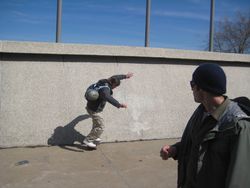
Le planchiste et architecte-paysagiste Mathieu Robichaud invite les participants à une visite guidée et analyse les opportunités qu’offrent les espaces urbains traversés pour la pratique de la planche à roulettes. Robichaud, de la firme Bloom Paysage, se spécialise dans la conception de parcs dédiés à la pratique de la planche à roulettes. En complément de l’exposition(...)
Le planchiste et architecte-paysagiste Mathieu Robichaud invite les participants à une visite guidée et analyse les opportunités qu’offrent les espaces urbains traversés pour la pratique de la planche à roulettes. Robichaud, de la firme Bloom Paysage, se spécialise dans la conception de parcs dédiés à la pratique de la planche à roulettes. En complément de l’exposition(...)
Date:
11 avril 2009
11 avril 2009
Titre:
Découvrir les lieux propices à la pratique de la planche à roulettes
Actions:
Description:
Le planchiste et architecte-paysagiste Mathieu Robichaud invite les participants à une visite guidée et analyse les opportunités qu’offrent les espaces urbains traversés pour la pratique de la planche à roulettes. Robichaud, de la firme Bloom Paysage, se spécialise dans la conception de parcs dédiés à la pratique de la planche à roulettes. En complément de l’exposition(...)
Découvrir les lieux propices à la pratique de la planche à roulettes
Actions:
Description:
Le planchiste et architecte-paysagiste Mathieu Robichaud invite les participants à une visite guidée et analyse les opportunités qu’offrent les espaces urbains traversés pour la pratique de la planche à roulettes. Robichaud, de la firme Bloom Paysage, se spécialise dans la conception de parcs dédiés à la pratique de la planche à roulettes. En complément de l’exposition(...)
Classification:
événements
événements
Date:
11 avril 2009
11 avril 2009
Classification:
événements
événements
Actions:
Description:
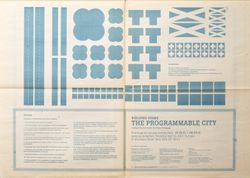
Et si on jouait à ré-imaginer Montréal? Après avoir découvert les politiques du plan d’aménagement urbain de la ville, c’est à votre tour de repenser le tissu urbain et de combiner les maisons, commerces, parcs, usines et dépanneurs qui le composent. Montréal se transforme en une planche de jeu de société alors que ses bâtiments et routes deviennent des pièces de jeu. La(...)
Et si on jouait à ré-imaginer Montréal? Après avoir découvert les politiques du plan d’aménagement urbain de la ville, c’est à votre tour de repenser le tissu urbain et de combiner les maisons, commerces, parcs, usines et dépanneurs qui le composent. Montréal se transforme en une planche de jeu de société alors que ses bâtiments et routes deviennent des pièces de jeu. La(...)
Date:
7 février 2016 au 21 février 2016
7 février 2016 au 21 février 2016
Titre:
Dans une ville près de chez vous
Actions:
Description:
Et si on jouait à ré-imaginer Montréal? Après avoir découvert les politiques du plan d’aménagement urbain de la ville, c’est à votre tour de repenser le tissu urbain et de combiner les maisons, commerces, parcs, usines et dépanneurs qui le composent. Montréal se transforme en une planche de jeu de société alors que ses bâtiments et routes deviennent des pièces de jeu. La(...)
Dans une ville près de chez vous
Actions:
Description:
Et si on jouait à ré-imaginer Montréal? Après avoir découvert les politiques du plan d’aménagement urbain de la ville, c’est à votre tour de repenser le tissu urbain et de combiner les maisons, commerces, parcs, usines et dépanneurs qui le composent. Montréal se transforme en une planche de jeu de société alors que ses bâtiments et routes deviennent des pièces de jeu. La(...)
Classification:
événements
événements
Date:
7 février 2016 au
21 février 2016
7 février 2016 au
21 février 2016
Classification:
événements
événements
Titre:
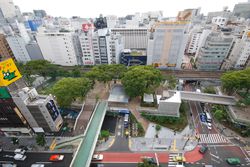
L’enseignement de… Tokyo
L’enseignement de… Tokyo
Actions:
Description:
Dans sa conférence intitulée Tokyo Nine Flux, Yoshiharu Tsukamoto interprète l’espace urbain de Tokyo comme une chaîne causale de réactions à des courants, qu’il s’agisse de phénomènes naturels comme les séismes et les typhons qui exercent une menace constante sur la ville ou de l’augmentation de la population, de la circulation et des déchets. Yoshiharu Tsukamoto est(...)
Dans sa conférence intitulée Tokyo Nine Flux, Yoshiharu Tsukamoto interprète l’espace urbain de Tokyo comme une chaîne causale de réactions à des courants, qu’il s’agisse de phénomènes naturels comme les séismes et les typhons qui exercent une menace constante sur la ville ou de l’augmentation de la population, de la circulation et des déchets. Yoshiharu Tsukamoto est(...)
Localisation:
Théâtre Paul-Desmarais
Théâtre Paul-Desmarais
Date:
26 avril 2007 , 19h
26 avril 2007 , 19h
Titre:
L’enseignement de… Tokyo
Actions:
Description:
Dans sa conférence intitulée Tokyo Nine Flux, Yoshiharu Tsukamoto interprète l’espace urbain de Tokyo comme une chaîne causale de réactions à des courants, qu’il s’agisse de phénomènes naturels comme les séismes et les typhons qui exercent une menace constante sur la ville ou de l’augmentation de la population, de la circulation et des déchets. Yoshiharu Tsukamoto est(...)
L’enseignement de… Tokyo
Actions:
Description:
Dans sa conférence intitulée Tokyo Nine Flux, Yoshiharu Tsukamoto interprète l’espace urbain de Tokyo comme une chaîne causale de réactions à des courants, qu’il s’agisse de phénomènes naturels comme les séismes et les typhons qui exercent une menace constante sur la ville ou de l’augmentation de la population, de la circulation et des déchets. Yoshiharu Tsukamoto est(...)
Classification:
événements
événements
Date:
26 avril 2007
19h
26 avril 2007
19h
Localisation:
Théâtre Paul-Desmarais
Théâtre Paul-Desmarais
Classification:
expositions
expositions
Titre:
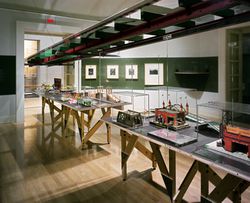
Jouets et transports
Jouets et transports
Actions:
Description:
Tout nouveau moyen de transport ou toute modification apportée à un système existant de mobilité urbaine – l’élargissement des tranchées permettant aux voies ferrées de se relier à un terminus ou à une jonction, l’extension des gares de triage desservant les systèmes de transport métropolitains et de banlieue, la multiplication des bretelles des ponts, des autoroutes(...)
Tout nouveau moyen de transport ou toute modification apportée à un système existant de mobilité urbaine – l’élargissement des tranchées permettant aux voies ferrées de se relier à un terminus ou à une jonction, l’extension des gares de triage desservant les systèmes de transport métropolitains et de banlieue, la multiplication des bretelles des ponts, des autoroutes(...)
Localisation:
Salle octogonale
Salle octogonale
Date:
15 novembre 2000 au 1 avril 2001
15 novembre 2000 au 1 avril 2001
Titre:
Jouets et transports
Actions:
Description:
Tout nouveau moyen de transport ou toute modification apportée à un système existant de mobilité urbaine – l’élargissement des tranchées permettant aux voies ferrées de se relier à un terminus ou à une jonction, l’extension des gares de triage desservant les systèmes de transport métropolitains et de banlieue, la multiplication des bretelles des ponts, des autoroutes(...)
Jouets et transports
Actions:
Description:
Tout nouveau moyen de transport ou toute modification apportée à un système existant de mobilité urbaine – l’élargissement des tranchées permettant aux voies ferrées de se relier à un terminus ou à une jonction, l’extension des gares de triage desservant les systèmes de transport métropolitains et de banlieue, la multiplication des bretelles des ponts, des autoroutes(...)
Classification:
expositions
expositions
Date:
15 novembre 2000 au
1 avril 2001
15 novembre 2000 au
1 avril 2001
Localisation:
Salle octogonale
Salle octogonale
Classification:
dessins
dessins
Numéro de référence:
AP140.S2.SS1.D70.P151
Description:
Topographic maps of Bilbao, rendered cadastral maps of Bilbao for alternative urban design schemes and superposed site plans of Abando Passenger Interchange over aerial views of Bilbao for first Interchange project, also schematic perspective for Stadium Development in Seville
AP140.S2.SS1.D70.P151
Description:
Topographic maps of Bilbao, rendered cadastral maps of Bilbao for alternative urban design schemes and superposed site plans of Abando Passenger Interchange over aerial views of Bilbao for first Interchange project, also schematic perspective for Stadium Development in Seville
Personnes et institutions:
Date:
circa 1974-1999
circa 1974-1999
Titre:
Topographic maps of Bilbao, rendered cadastral maps of Bilbao, Abando Passenger Interchange, Bilbao, Spain
Actions:
AP140.S2.SS1.D70.P151
Description:
Topographic maps of Bilbao, rendered cadastral maps of Bilbao for alternative urban design schemes and superposed site plans of Abando Passenger Interchange over aerial views of Bilbao for first Interchange project, also schematic perspective for Stadium Development in Seville
Topographic maps of Bilbao, rendered cadastral maps of Bilbao, Abando Passenger Interchange, Bilbao, Spain
Actions:
AP140.S2.SS1.D70.P151
Description:
Topographic maps of Bilbao, rendered cadastral maps of Bilbao for alternative urban design schemes and superposed site plans of Abando Passenger Interchange over aerial views of Bilbao for first Interchange project, also schematic perspective for Stadium Development in Seville
Classification:
dessins
dessins
Date:
circa 1974-1999
circa 1974-1999
Personnes et institutions:
Classification:
documents textuels
documents textuels
Numéro de référence:
AP206.S2.033
Description:
File was originally housed in a binder along with content arranged in AP206.S2.031, AP206.S2.032 and AP206.S2.034. This file includes the following papers: “A Note on the Conditions of Service in Schools of Architecture” "Introspection," 1976 "Housing the Urban Poor," 1976 "Chandigarh in Retrospect"
AP206.S2.033
Description:
File was originally housed in a binder along with content arranged in AP206.S2.031, AP206.S2.032 and AP206.S2.034. This file includes the following papers: “A Note on the Conditions of Service in Schools of Architecture” "Introspection," 1976 "Housing the Urban Poor," 1976 "Chandigarh in Retrospect"
Personnes et institutions:
Date:
1973-1978
1973-1978
Titre:
Unpublished papers (folder 3 of 4)
Actions:
AP206.S2.033
Description:
File was originally housed in a binder along with content arranged in AP206.S2.031, AP206.S2.032 and AP206.S2.034. This file includes the following papers: “A Note on the Conditions of Service in Schools of Architecture” "Introspection," 1976 "Housing the Urban Poor," 1976 "Chandigarh in Retrospect"
Unpublished papers (folder 3 of 4)
Actions:
AP206.S2.033
Description:
File was originally housed in a binder along with content arranged in AP206.S2.031, AP206.S2.032 and AP206.S2.034. This file includes the following papers: “A Note on the Conditions of Service in Schools of Architecture” "Introspection," 1976 "Housing the Urban Poor," 1976 "Chandigarh in Retrospect"
Classification:
documents textuels
documents textuels
Date:
1973-1978
1973-1978
Personnes et institutions:
Classification:
dessins
dessins
Numéro de référence:
AP178.S2.1990.005
Description:
This sketchbook contains notes and sketches of the Santa Maria church and parish centre in Marco de Canavezes, Portugal, the urban and circulation study for Praça de Espanha in Lisbon, and Macau City expansion plan in China. It also includes sketches of people and dogs.
AP178.S2.1990.005
Description:
This sketchbook contains notes and sketches of the Santa Maria church and parish centre in Marco de Canavezes, Portugal, the urban and circulation study for Praça de Espanha in Lisbon, and Macau City expansion plan in China. It also includes sketches of people and dogs.
Personnes et institutions:
Date:
July 1990
July 1990
Titre:
Sketchbook 309: Igreja M. Canaveses- Moveis Escritorio -Pr. Espanha estimativa- Macau- Restau. Porto Santiago
Actions:
AP178.S2.1990.005
Description:
This sketchbook contains notes and sketches of the Santa Maria church and parish centre in Marco de Canavezes, Portugal, the urban and circulation study for Praça de Espanha in Lisbon, and Macau City expansion plan in China. It also includes sketches of people and dogs.
Sketchbook 309: Igreja M. Canaveses- Moveis Escritorio -Pr. Espanha estimativa- Macau- Restau. Porto Santiago
Actions:
AP178.S2.1990.005
Description:
This sketchbook contains notes and sketches of the Santa Maria church and parish centre in Marco de Canavezes, Portugal, the urban and circulation study for Praça de Espanha in Lisbon, and Macau City expansion plan in China. It also includes sketches of people and dogs.
Classification:
dessins
dessins
Date:
July 1990
July 1990
Personnes et institutions:
Classification:
archives
Niveau de description archivistique:
Fonds
archives
Niveau de description archivistique:
Fonds
Titre:
Fonds Maxwell Levinson
Fonds Maxwell Levinson
Numéro de référence:
AP037
Résumé:
The Maxwell Levison fonds (Shelter, T. Square) illustrates primarily the activities of Maxwell Levinson as editor of T-Square Club Journal, T-Square, Shelter and USA Tomorrow. It documents the various aspects of the publication of these magazines. It includes editorial, production and promotional material as well as documentation and research files. The fonds also contains records pertaining to the professional practice of Maxwell Levinson as architect and city planning consultant.
AP037
Résumé:
The Maxwell Levison fonds (Shelter, T. Square) illustrates primarily the activities of Maxwell Levinson as editor of T-Square Club Journal, T-Square, Shelter and USA Tomorrow. It documents the various aspects of the publication of these magazines. It includes editorial, production and promotional material as well as documentation and research files. The fonds also contains records pertaining to the professional practice of Maxwell Levinson as architect and city planning consultant.
Personnes et institutions:
Date:
1926-1990
1926-1990
Titre:
Fonds Maxwell Levinson
Actions:
AP037
Résumé:
The Maxwell Levison fonds (Shelter, T. Square) illustrates primarily the activities of Maxwell Levinson as editor of T-Square Club Journal, T-Square, Shelter and USA Tomorrow. It documents the various aspects of the publication of these magazines. It includes editorial, production and promotional material as well as documentation and research files. The fonds also contains records pertaining to the professional practice of Maxwell Levinson as architect and city planning consultant.
Fonds Maxwell Levinson
Actions:
AP037
Résumé:
The Maxwell Levison fonds (Shelter, T. Square) illustrates primarily the activities of Maxwell Levinson as editor of T-Square Club Journal, T-Square, Shelter and USA Tomorrow. It documents the various aspects of the publication of these magazines. It includes editorial, production and promotional material as well as documentation and research files. The fonds also contains records pertaining to the professional practice of Maxwell Levinson as architect and city planning consultant.
Classification:
archives
Niveau de description archivistique:
Fonds
archives
Niveau de description archivistique:
Fonds
Date:
1926-1990
1926-1990
Personnes et institutions:
Classification:
archives
Niveau de description archivistique:
Fonds
archives
Niveau de description archivistique:
Fonds
Numéro de référence:
AP196
Résumé:
Studio Gang Ford Calumet Environmental Center project records, 2003-2012, documents the design process for the Ford Calumet Environmental Center in Chicago, United-States. The records represent both phases during the competition and the full-term design, after the firm won the project. The records consist of born-digital material, sketches and drawings, textual records, photographs and seven models.
AP196
Résumé:
Studio Gang Ford Calumet Environmental Center project records, 2003-2012, documents the design process for the Ford Calumet Environmental Center in Chicago, United-States. The records represent both phases during the competition and the full-term design, after the firm won the project. The records consist of born-digital material, sketches and drawings, textual records, photographs and seven models.
Personnes et institutions:
Date:
2003-2011
2003-2011
Titre:
Documents d’archives de Studio Gang pour le projet Ford Calumet Environmental Center
Actions:
AP196
Résumé:
Studio Gang Ford Calumet Environmental Center project records, 2003-2012, documents the design process for the Ford Calumet Environmental Center in Chicago, United-States. The records represent both phases during the competition and the full-term design, after the firm won the project. The records consist of born-digital material, sketches and drawings, textual records, photographs and seven models.
Documents d’archives de Studio Gang pour le projet Ford Calumet Environmental Center
Actions:
AP196
Résumé:
Studio Gang Ford Calumet Environmental Center project records, 2003-2012, documents the design process for the Ford Calumet Environmental Center in Chicago, United-States. The records represent both phases during the competition and the full-term design, after the firm won the project. The records consist of born-digital material, sketches and drawings, textual records, photographs and seven models.
Classification:
archives
Niveau de description archivistique:
Fonds
archives
Niveau de description archivistique:
Fonds
Date:
2003-2011
2003-2011
Personnes et institutions:
Classification:
expositions
expositions
Titre:
L’architecte, autrement
L’architecte, autrement
Actions:
Description:
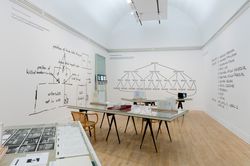
Dès lors que l’architecture ait été réduite à un service de la société ou à une « industrie » dont la finalité est de construire, il y a toujours eut quelqu’un pour l’imaginer plutôt comme un champ de recherche intellectuelle : dynamique, critique et radical. À partir d’une série d’approches provenant de personnes, de périodes et d’endroits divers, l’architecte apparaît,(...)
Dès lors que l’architecture ait été réduite à un service de la société ou à une « industrie » dont la finalité est de construire, il y a toujours eut quelqu’un pour l’imaginer plutôt comme un champ de recherche intellectuelle : dynamique, critique et radical. À partir d’une série d’approches provenant de personnes, de périodes et d’endroits divers, l’architecte apparaît,(...)
Localisation:
Salles principales Mot(s)-clé(s):
L'architecte, autrement, CCA, Montréal, exposition, salles principales
Salles principales Mot(s)-clé(s):
L'architecte, autrement, CCA, Montréal, exposition, salles principales
Date:
28 octobre 2015 au 10 avril 2016
28 octobre 2015 au 10 avril 2016
Titre:
L’architecte, autrement
Actions:
Description:
Dès lors que l’architecture ait été réduite à un service de la société ou à une « industrie » dont la finalité est de construire, il y a toujours eut quelqu’un pour l’imaginer plutôt comme un champ de recherche intellectuelle : dynamique, critique et radical. À partir d’une série d’approches provenant de personnes, de périodes et d’endroits divers, l’architecte apparaît,(...)
L’architecte, autrement
Actions:
Description:
Dès lors que l’architecture ait été réduite à un service de la société ou à une « industrie » dont la finalité est de construire, il y a toujours eut quelqu’un pour l’imaginer plutôt comme un champ de recherche intellectuelle : dynamique, critique et radical. À partir d’une série d’approches provenant de personnes, de périodes et d’endroits divers, l’architecte apparaît,(...)
Classification:
expositions
expositions
Date:
28 octobre 2015 au
10 avril 2016
28 octobre 2015 au
10 avril 2016
Localisation:
Salles principales Mot(s)-clé(s):
L'architecte, autrement, CCA, Montréal, exposition, salles principales
Salles principales Mot(s)-clé(s):
L'architecte, autrement, CCA, Montréal, exposition, salles principales


