


5458 Résultats
Niveau de description archivistique:
Projet
Projet
Titre:
Castel
Castel
Numéro de référence:
AP144.S2.D109
Description:
File documents a project in which Cedric Price was invited to submit a design for a single house to an exhibition entitled "Architecture II: Houses for Sale" organized by the Leo Castelli Gallery, New York City, New York, United States. The four components of Price's submission entitled "Platforms, Pavilions, Pylons and Plants" could be regrouped and redistributed on the one-acre site if and when required. Conceptual, design development and schematic sketches include preliminary plans, sections, and elevations for the house as well as details for the arrangement of the four components. Trees are stamped in black ink on the site plans with a generic rubber "tree" stamp. Design development drawings include preliminary drawings for layouts done in graphite, and a complete sequence of design development drawings done in ink numbered 001 to 013. Several reprographic copies of design development drawings were coloured with adhesive film and pencil and annotated in order to develop preliminary versions for the final presentation drawings. Three panels for the "Houses for Sale" exhibition consist of text describing the project concept mounted on boards, and a photomechanical print enlarged from an original sketch perspective entitled "general view-pavilions and totems". Material in this file was produced between 1979 and 1982, and in 1987, but predominantly in 1980. File contains conceptual drawings, design development drawings, presentation panels, a presentation model, photographic materials, and textual records.
AP144.S2.D109
Description:
File documents a project in which Cedric Price was invited to submit a design for a single house to an exhibition entitled "Architecture II: Houses for Sale" organized by the Leo Castelli Gallery, New York City, New York, United States. The four components of Price's submission entitled "Platforms, Pavilions, Pylons and Plants" could be regrouped and redistributed on the one-acre site if and when required. Conceptual, design development and schematic sketches include preliminary plans, sections, and elevations for the house as well as details for the arrangement of the four components. Trees are stamped in black ink on the site plans with a generic rubber "tree" stamp. Design development drawings include preliminary drawings for layouts done in graphite, and a complete sequence of design development drawings done in ink numbered 001 to 013. Several reprographic copies of design development drawings were coloured with adhesive film and pencil and annotated in order to develop preliminary versions for the final presentation drawings. Three panels for the "Houses for Sale" exhibition consist of text describing the project concept mounted on boards, and a photomechanical print enlarged from an original sketch perspective entitled "general view-pavilions and totems". Material in this file was produced between 1979 and 1982, and in 1987, but predominantly in 1980. File contains conceptual drawings, design development drawings, presentation panels, a presentation model, photographic materials, and textual records.
Personnes et institutions:
Date:
1979-1982, 1987, predominant 1980
1979-1982, 1987, predominant 1980
Titre:
Castel
Actions:
AP144.S2.D109
Description:
File documents a project in which Cedric Price was invited to submit a design for a single house to an exhibition entitled "Architecture II: Houses for Sale" organized by the Leo Castelli Gallery, New York City, New York, United States. The four components of Price's submission entitled "Platforms, Pavilions, Pylons and Plants" could be regrouped and redistributed on the one-acre site if and when required. Conceptual, design development and schematic sketches include preliminary plans, sections, and elevations for the house as well as details for the arrangement of the four components. Trees are stamped in black ink on the site plans with a generic rubber "tree" stamp. Design development drawings include preliminary drawings for layouts done in graphite, and a complete sequence of design development drawings done in ink numbered 001 to 013. Several reprographic copies of design development drawings were coloured with adhesive film and pencil and annotated in order to develop preliminary versions for the final presentation drawings. Three panels for the "Houses for Sale" exhibition consist of text describing the project concept mounted on boards, and a photomechanical print enlarged from an original sketch perspective entitled "general view-pavilions and totems". Material in this file was produced between 1979 and 1982, and in 1987, but predominantly in 1980. File contains conceptual drawings, design development drawings, presentation panels, a presentation model, photographic materials, and textual records.
Castel
Actions:
AP144.S2.D109
Description:
File documents a project in which Cedric Price was invited to submit a design for a single house to an exhibition entitled "Architecture II: Houses for Sale" organized by the Leo Castelli Gallery, New York City, New York, United States. The four components of Price's submission entitled "Platforms, Pavilions, Pylons and Plants" could be regrouped and redistributed on the one-acre site if and when required. Conceptual, design development and schematic sketches include preliminary plans, sections, and elevations for the house as well as details for the arrangement of the four components. Trees are stamped in black ink on the site plans with a generic rubber "tree" stamp. Design development drawings include preliminary drawings for layouts done in graphite, and a complete sequence of design development drawings done in ink numbered 001 to 013. Several reprographic copies of design development drawings were coloured with adhesive film and pencil and annotated in order to develop preliminary versions for the final presentation drawings. Three panels for the "Houses for Sale" exhibition consist of text describing the project concept mounted on boards, and a photomechanical print enlarged from an original sketch perspective entitled "general view-pavilions and totems". Material in this file was produced between 1979 and 1982, and in 1987, but predominantly in 1980. File contains conceptual drawings, design development drawings, presentation panels, a presentation model, photographic materials, and textual records.
Niveau de description archivistique:
File 109
File 109
Date:
1979-1982, 1987, predominant 1980
1979-1982, 1987, predominant 1980
Personnes et institutions:
Classification:
expositions
expositions
Actions:
Description:
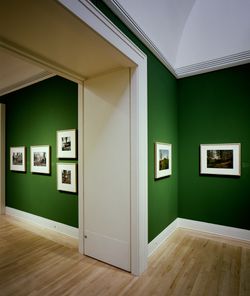
En réponse à une commande du CCA, trois photographes contemporains ont consacré six ans à l’interprétation de l’œuvre de Frederick Law Olmsted (1822-1903), qui a marqué l’histoire de l’architecture du paysage en Amérique du Nord. *Frederick Law Olmsted en perspective : Photographies de Robert Burley, Lee Friedlander et Geoffrey James* présente 155 photographies issues de(...)
En réponse à une commande du CCA, trois photographes contemporains ont consacré six ans à l’interprétation de l’œuvre de Frederick Law Olmsted (1822-1903), qui a marqué l’histoire de l’architecture du paysage en Amérique du Nord. *Frederick Law Olmsted en perspective : Photographies de Robert Burley, Lee Friedlander et Geoffrey James* présente 155 photographies issues de(...)
Localisation:
Salles principales
Salles principales
Date:
16 octobre 1996 au 2 février 1997
16 octobre 1996 au 2 février 1997
Titre:
Frederick Law Olmsted en perspective : Photographies de Robert Burley, Lee Friedlander et Geoffrey James
Actions:
Description:
En réponse à une commande du CCA, trois photographes contemporains ont consacré six ans à l’interprétation de l’œuvre de Frederick Law Olmsted (1822-1903), qui a marqué l’histoire de l’architecture du paysage en Amérique du Nord. *Frederick Law Olmsted en perspective : Photographies de Robert Burley, Lee Friedlander et Geoffrey James* présente 155 photographies issues de(...)
Frederick Law Olmsted en perspective : Photographies de Robert Burley, Lee Friedlander et Geoffrey James
Actions:
Description:
En réponse à une commande du CCA, trois photographes contemporains ont consacré six ans à l’interprétation de l’œuvre de Frederick Law Olmsted (1822-1903), qui a marqué l’histoire de l’architecture du paysage en Amérique du Nord. *Frederick Law Olmsted en perspective : Photographies de Robert Burley, Lee Friedlander et Geoffrey James* présente 155 photographies issues de(...)
Classification:
expositions
expositions
Date:
16 octobre 1996 au
2 février 1997
16 octobre 1996 au
2 février 1997
Localisation:
Salles principales
Salles principales
Niveau de description archivistique:
Série(s)
Série(s)
Titre:
Une architecture des humeurs
Une architecture des humeurs
Numéro de référence:
AP193.S4
Description:
Series 4, Une architecture des humeurs, 2008-2011, documents the conception and the presentation of exhibition and project Une architecture des humeurs. Presented at Le laboratoire art gallery in Paris between January and May 2010, Une architecture des humeurs is a conceptual, unbuilt, residential urban structure based on a potential future in which contemporary science reads human physiology and chemical balance. The idea is to acquire a chemistry of the “humors”, or the moods and temperament, of future purchasers. Taken as input, the information generates a diversity of habitable morphologies and relationships between them. With this process, the project attempts to make palpable and graspable, through technologies, the emotions of the participants captured via the chemistry of their body. The goal is to gather information on their capacity of adaptation, their level of sympathy and empathy while confronted to a situation or an environment. This information is then analyzed by computational, mathematical, and machinist procedures. This leads to the design and production of an urban structure submitted to the improbable and uncertain protocols produced by emotions, also creating aggregations and layouts that rearticulate the links between the individual and the collective. These structures are calculated following simultaneously incremental and recursive structural optimization protocols resulting in the physicality and morphology of architecture. The layout of the residential units and the structural trajectories are conceived and developed as posterior to the constructs supporting social life and not as an a priori. The structure of each components of the urban structure is generated by a secretion and weaving machine called Viab02. The machine is the second prototype of VIAB which was developed with Robotics Research Lab of the University of Southern California and takes its name from the terms viability and variability. With a process similar to contour crafting, the machine produces bio-cement, a mix between cement and bio-resin, giving form to the adapted residential structures. The records consist largely of images detailing the creative process of the firm, photographs of the exhibition, and 3D models. It also contains animated renderings representing the machine in action and sequences of the construction of the building or the structure. The records include a video orienting the project into François Roche theoretical stance, research as speculation, that can be summarize as the use of technological tools to take a critical and political position through esthetic in order to open new lines of thoughts. AP193.S2 contains updated previous version of the VIAB machine
AP193.S4
Description:
Series 4, Une architecture des humeurs, 2008-2011, documents the conception and the presentation of exhibition and project Une architecture des humeurs. Presented at Le laboratoire art gallery in Paris between January and May 2010, Une architecture des humeurs is a conceptual, unbuilt, residential urban structure based on a potential future in which contemporary science reads human physiology and chemical balance. The idea is to acquire a chemistry of the “humors”, or the moods and temperament, of future purchasers. Taken as input, the information generates a diversity of habitable morphologies and relationships between them. With this process, the project attempts to make palpable and graspable, through technologies, the emotions of the participants captured via the chemistry of their body. The goal is to gather information on their capacity of adaptation, their level of sympathy and empathy while confronted to a situation or an environment. This information is then analyzed by computational, mathematical, and machinist procedures. This leads to the design and production of an urban structure submitted to the improbable and uncertain protocols produced by emotions, also creating aggregations and layouts that rearticulate the links between the individual and the collective. These structures are calculated following simultaneously incremental and recursive structural optimization protocols resulting in the physicality and morphology of architecture. The layout of the residential units and the structural trajectories are conceived and developed as posterior to the constructs supporting social life and not as an a priori. The structure of each components of the urban structure is generated by a secretion and weaving machine called Viab02. The machine is the second prototype of VIAB which was developed with Robotics Research Lab of the University of Southern California and takes its name from the terms viability and variability. With a process similar to contour crafting, the machine produces bio-cement, a mix between cement and bio-resin, giving form to the adapted residential structures. The records consist largely of images detailing the creative process of the firm, photographs of the exhibition, and 3D models. It also contains animated renderings representing the machine in action and sequences of the construction of the building or the structure. The records include a video orienting the project into François Roche theoretical stance, research as speculation, that can be summarize as the use of technological tools to take a critical and political position through esthetic in order to open new lines of thoughts. AP193.S2 contains updated previous version of the VIAB machine
Personnes et institutions:
Date:
2008-2011
2008-2011
Titre:
Une architecture des humeurs
Actions:
AP193.S4
Description:
Series 4, Une architecture des humeurs, 2008-2011, documents the conception and the presentation of exhibition and project Une architecture des humeurs. Presented at Le laboratoire art gallery in Paris between January and May 2010, Une architecture des humeurs is a conceptual, unbuilt, residential urban structure based on a potential future in which contemporary science reads human physiology and chemical balance. The idea is to acquire a chemistry of the “humors”, or the moods and temperament, of future purchasers. Taken as input, the information generates a diversity of habitable morphologies and relationships between them. With this process, the project attempts to make palpable and graspable, through technologies, the emotions of the participants captured via the chemistry of their body. The goal is to gather information on their capacity of adaptation, their level of sympathy and empathy while confronted to a situation or an environment. This information is then analyzed by computational, mathematical, and machinist procedures. This leads to the design and production of an urban structure submitted to the improbable and uncertain protocols produced by emotions, also creating aggregations and layouts that rearticulate the links between the individual and the collective. These structures are calculated following simultaneously incremental and recursive structural optimization protocols resulting in the physicality and morphology of architecture. The layout of the residential units and the structural trajectories are conceived and developed as posterior to the constructs supporting social life and not as an a priori. The structure of each components of the urban structure is generated by a secretion and weaving machine called Viab02. The machine is the second prototype of VIAB which was developed with Robotics Research Lab of the University of Southern California and takes its name from the terms viability and variability. With a process similar to contour crafting, the machine produces bio-cement, a mix between cement and bio-resin, giving form to the adapted residential structures. The records consist largely of images detailing the creative process of the firm, photographs of the exhibition, and 3D models. It also contains animated renderings representing the machine in action and sequences of the construction of the building or the structure. The records include a video orienting the project into François Roche theoretical stance, research as speculation, that can be summarize as the use of technological tools to take a critical and political position through esthetic in order to open new lines of thoughts. AP193.S2 contains updated previous version of the VIAB machine
Une architecture des humeurs
Actions:
AP193.S4
Description:
Series 4, Une architecture des humeurs, 2008-2011, documents the conception and the presentation of exhibition and project Une architecture des humeurs. Presented at Le laboratoire art gallery in Paris between January and May 2010, Une architecture des humeurs is a conceptual, unbuilt, residential urban structure based on a potential future in which contemporary science reads human physiology and chemical balance. The idea is to acquire a chemistry of the “humors”, or the moods and temperament, of future purchasers. Taken as input, the information generates a diversity of habitable morphologies and relationships between them. With this process, the project attempts to make palpable and graspable, through technologies, the emotions of the participants captured via the chemistry of their body. The goal is to gather information on their capacity of adaptation, their level of sympathy and empathy while confronted to a situation or an environment. This information is then analyzed by computational, mathematical, and machinist procedures. This leads to the design and production of an urban structure submitted to the improbable and uncertain protocols produced by emotions, also creating aggregations and layouts that rearticulate the links between the individual and the collective. These structures are calculated following simultaneously incremental and recursive structural optimization protocols resulting in the physicality and morphology of architecture. The layout of the residential units and the structural trajectories are conceived and developed as posterior to the constructs supporting social life and not as an a priori. The structure of each components of the urban structure is generated by a secretion and weaving machine called Viab02. The machine is the second prototype of VIAB which was developed with Robotics Research Lab of the University of Southern California and takes its name from the terms viability and variability. With a process similar to contour crafting, the machine produces bio-cement, a mix between cement and bio-resin, giving form to the adapted residential structures. The records consist largely of images detailing the creative process of the firm, photographs of the exhibition, and 3D models. It also contains animated renderings representing the machine in action and sequences of the construction of the building or the structure. The records include a video orienting the project into François Roche theoretical stance, research as speculation, that can be summarize as the use of technological tools to take a critical and political position through esthetic in order to open new lines of thoughts. AP193.S2 contains updated previous version of the VIAB machine
Niveau de description archivistique:
Series
Series
Date:
2008-2011
2008-2011
Personnes et institutions:
Classification:
expositions
expositions
Actions:
Description:
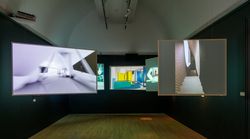
Archéologie du numérique : complexité et convention représente le troisième et dernier volet d’une série d’expositions liées à la constitution d’archives numériques au CCA. Le programme Archéologie du numérique comprend vingt-cinq projets pour lesquels les documents numériques constituent des éléments essentiels à la compréhension du processus de conception(...)
Archéologie du numérique : complexité et convention représente le troisième et dernier volet d’une série d’expositions liées à la constitution d’archives numériques au CCA. Le programme Archéologie du numérique comprend vingt-cinq projets pour lesquels les documents numériques constituent des éléments essentiels à la compréhension du processus de conception(...)
Date:
11 mai 2016 au 16 octobre 2016
11 mai 2016 au 16 octobre 2016
Titre:
Archéologie du numérique : complexité et convention
Actions:
Description:
Archéologie du numérique : complexité et convention représente le troisième et dernier volet d’une série d’expositions liées à la constitution d’archives numériques au CCA. Le programme Archéologie du numérique comprend vingt-cinq projets pour lesquels les documents numériques constituent des éléments essentiels à la compréhension du processus de conception(...)
Archéologie du numérique : complexité et convention
Actions:
Description:
Archéologie du numérique : complexité et convention représente le troisième et dernier volet d’une série d’expositions liées à la constitution d’archives numériques au CCA. Le programme Archéologie du numérique comprend vingt-cinq projets pour lesquels les documents numériques constituent des éléments essentiels à la compréhension du processus de conception(...)
Classification:
expositions
expositions
Date:
11 mai 2016 au
16 octobre 2016
11 mai 2016 au
16 octobre 2016
Niveau de description archivistique:
Sous-série
Sous-série
Numéro de référence:
AP156.S3.SS3
Description:
La sous-série documente les projets d'architecture et d'urbanisme de Pierre Jeanneret, de Le Corbusier et d'autres architectes à Chandigarh, Inde. La sous-série comprend des documents sur des projets comme les résidences gouvernementaux ou privées, certains des bâtiments du Capitol et de l'Université du Punjab. Le matériel dans ce dossier a probablement été produit entre 1945 et 1972. Le sous-série contient des dessins et des reprographies d'études, de dessin conceptuel, de dessin de développement du design, de dessin d'exécution et de dessins de présentation. Il y a aussi 2 albums de plans, l'un contenant des divers plans signés par Pierre Jeanneret de logements et l'autres contenant des plans pour la Musée de la Connaissance de Le Corbusier. La sous-série comprend aussi des documents textuels et quelques photographies reliées à des projets. Sub-series documents architectural and urban planning projects of Pierre Jeanneret, Le Corbusier and other architects in Chandigarh, India. The sub-series contains documents on projects like government or private residences, some of the Capitol's or Punjab University's buildings. Material in this sub-series was produced between 1945 and 1972. The sub-series contains drawings and reprographic copies of studies, conceptual drawings, design developement drawings, working drawings and presentation drawings. There is also 2 albums of plans, one containing various plans signed by Pierre Jeanneret of various dwellings and the other containing plans for the Museum of Knowledge by Le Corbusier. The sub-series contains also textual records and some photographs related to projects.
AP156.S3.SS3
Description:
La sous-série documente les projets d'architecture et d'urbanisme de Pierre Jeanneret, de Le Corbusier et d'autres architectes à Chandigarh, Inde. La sous-série comprend des documents sur des projets comme les résidences gouvernementaux ou privées, certains des bâtiments du Capitol et de l'Université du Punjab. Le matériel dans ce dossier a probablement été produit entre 1945 et 1972. Le sous-série contient des dessins et des reprographies d'études, de dessin conceptuel, de dessin de développement du design, de dessin d'exécution et de dessins de présentation. Il y a aussi 2 albums de plans, l'un contenant des divers plans signés par Pierre Jeanneret de logements et l'autres contenant des plans pour la Musée de la Connaissance de Le Corbusier. La sous-série comprend aussi des documents textuels et quelques photographies reliées à des projets. Sub-series documents architectural and urban planning projects of Pierre Jeanneret, Le Corbusier and other architects in Chandigarh, India. The sub-series contains documents on projects like government or private residences, some of the Capitol's or Punjab University's buildings. Material in this sub-series was produced between 1945 and 1972. The sub-series contains drawings and reprographic copies of studies, conceptual drawings, design developement drawings, working drawings and presentation drawings. There is also 2 albums of plans, one containing various plans signed by Pierre Jeanneret of various dwellings and the other containing plans for the Museum of Knowledge by Le Corbusier. The sub-series contains also textual records and some photographs related to projects.
Personnes et institutions:
Date:
1945-1975
1945-1975
Titre:
Chandigarh, Inde = Chandigarh, India
Actions:
AP156.S3.SS3
Description:
La sous-série documente les projets d'architecture et d'urbanisme de Pierre Jeanneret, de Le Corbusier et d'autres architectes à Chandigarh, Inde. La sous-série comprend des documents sur des projets comme les résidences gouvernementaux ou privées, certains des bâtiments du Capitol et de l'Université du Punjab. Le matériel dans ce dossier a probablement été produit entre 1945 et 1972. Le sous-série contient des dessins et des reprographies d'études, de dessin conceptuel, de dessin de développement du design, de dessin d'exécution et de dessins de présentation. Il y a aussi 2 albums de plans, l'un contenant des divers plans signés par Pierre Jeanneret de logements et l'autres contenant des plans pour la Musée de la Connaissance de Le Corbusier. La sous-série comprend aussi des documents textuels et quelques photographies reliées à des projets. Sub-series documents architectural and urban planning projects of Pierre Jeanneret, Le Corbusier and other architects in Chandigarh, India. The sub-series contains documents on projects like government or private residences, some of the Capitol's or Punjab University's buildings. Material in this sub-series was produced between 1945 and 1972. The sub-series contains drawings and reprographic copies of studies, conceptual drawings, design developement drawings, working drawings and presentation drawings. There is also 2 albums of plans, one containing various plans signed by Pierre Jeanneret of various dwellings and the other containing plans for the Museum of Knowledge by Le Corbusier. The sub-series contains also textual records and some photographs related to projects.
Chandigarh, Inde = Chandigarh, India
Actions:
AP156.S3.SS3
Description:
La sous-série documente les projets d'architecture et d'urbanisme de Pierre Jeanneret, de Le Corbusier et d'autres architectes à Chandigarh, Inde. La sous-série comprend des documents sur des projets comme les résidences gouvernementaux ou privées, certains des bâtiments du Capitol et de l'Université du Punjab. Le matériel dans ce dossier a probablement été produit entre 1945 et 1972. Le sous-série contient des dessins et des reprographies d'études, de dessin conceptuel, de dessin de développement du design, de dessin d'exécution et de dessins de présentation. Il y a aussi 2 albums de plans, l'un contenant des divers plans signés par Pierre Jeanneret de logements et l'autres contenant des plans pour la Musée de la Connaissance de Le Corbusier. La sous-série comprend aussi des documents textuels et quelques photographies reliées à des projets. Sub-series documents architectural and urban planning projects of Pierre Jeanneret, Le Corbusier and other architects in Chandigarh, India. The sub-series contains documents on projects like government or private residences, some of the Capitol's or Punjab University's buildings. Material in this sub-series was produced between 1945 and 1972. The sub-series contains drawings and reprographic copies of studies, conceptual drawings, design developement drawings, working drawings and presentation drawings. There is also 2 albums of plans, one containing various plans signed by Pierre Jeanneret of various dwellings and the other containing plans for the Museum of Knowledge by Le Corbusier. The sub-series contains also textual records and some photographs related to projects.
Niveau de description archivistique:
Sous-série 3
Sous-série 3
Date:
1945-1975
1945-1975
Personnes et institutions:
Classification:
archives
Niveau de description archivistique:
Fonds
archives
Niveau de description archivistique:
Fonds
Titre:
Fonds PGL architectes
Fonds PGL architectes
Numéro de référence:
AP014
Résumé:
Le fonds PGL architectes, 1959 – 1994, témoigne des activités de la firme d’architecture montréalaise, Papineau Gérin-Lajoie Le Blanc architectes, autant que ses sociétés affiliées et firmes remplaçantes. La majorité du fonds comprend des documents qui représentent 70 projets architecturaux, incluant des projets entrepris à travers le Québec, à Ottawa, à de multiples endroits au Nunavut, ainsi que des projets internationaux. Le fonds met en évidence la participation du PGL dans la construction d'infrastructure coloniale au Nunavik et au Nunavut, y compris les travaux sur des écoles associées avec des foyers fédéraux, qui sont reconnus comme faisant partie du système des pensionnats autochtones du Canada. De plus, le fonds documente l’utilisation des panneaux de fibre de verre modulaires employés par PGL. Pour la plupart, les documents dans ce fonds se composent des dessins, des documents photographiques, et des documents textuels. _____________________________________________________________________________________________________________ The PGL architectes fonds, 1959 - 1994, documents the work and activities of the Montréal-based architecture firm, Papineau Gérin-Lajoie Le Blanc architectes, and its successor and affiliate companies. The records within this fonds represent 70 architectural projects undertaken by the firm, which include projects throughout Québec, Ottawa, and various locations in Nunavut, as well as some international projects. The fonds offers evidence of PGL’s participation in the construction of colonial infrastructure in Nunavik and Nunavut, including work on schools that are connected to Federal Hostels which are recognised as part of Canada's Indian Residential School system. The fonds also contains records documenting PGL’s use of modular, fiberglass-reinforced plastic panels in construction. The records within this fonds largely consist of drawings, photographic materials, and textual records.
AP014
Résumé:
Le fonds PGL architectes, 1959 – 1994, témoigne des activités de la firme d’architecture montréalaise, Papineau Gérin-Lajoie Le Blanc architectes, autant que ses sociétés affiliées et firmes remplaçantes. La majorité du fonds comprend des documents qui représentent 70 projets architecturaux, incluant des projets entrepris à travers le Québec, à Ottawa, à de multiples endroits au Nunavut, ainsi que des projets internationaux. Le fonds met en évidence la participation du PGL dans la construction d'infrastructure coloniale au Nunavik et au Nunavut, y compris les travaux sur des écoles associées avec des foyers fédéraux, qui sont reconnus comme faisant partie du système des pensionnats autochtones du Canada. De plus, le fonds documente l’utilisation des panneaux de fibre de verre modulaires employés par PGL. Pour la plupart, les documents dans ce fonds se composent des dessins, des documents photographiques, et des documents textuels. _____________________________________________________________________________________________________________ The PGL architectes fonds, 1959 - 1994, documents the work and activities of the Montréal-based architecture firm, Papineau Gérin-Lajoie Le Blanc architectes, and its successor and affiliate companies. The records within this fonds represent 70 architectural projects undertaken by the firm, which include projects throughout Québec, Ottawa, and various locations in Nunavut, as well as some international projects. The fonds offers evidence of PGL’s participation in the construction of colonial infrastructure in Nunavik and Nunavut, including work on schools that are connected to Federal Hostels which are recognised as part of Canada's Indian Residential School system. The fonds also contains records documenting PGL’s use of modular, fiberglass-reinforced plastic panels in construction. The records within this fonds largely consist of drawings, photographic materials, and textual records.
Personnes et institutions:
Date:
1959 - 1994
1959 - 1994
Titre:
Fonds PGL architectes
Actions:
AP014
Résumé:
Le fonds PGL architectes, 1959 – 1994, témoigne des activités de la firme d’architecture montréalaise, Papineau Gérin-Lajoie Le Blanc architectes, autant que ses sociétés affiliées et firmes remplaçantes. La majorité du fonds comprend des documents qui représentent 70 projets architecturaux, incluant des projets entrepris à travers le Québec, à Ottawa, à de multiples endroits au Nunavut, ainsi que des projets internationaux. Le fonds met en évidence la participation du PGL dans la construction d'infrastructure coloniale au Nunavik et au Nunavut, y compris les travaux sur des écoles associées avec des foyers fédéraux, qui sont reconnus comme faisant partie du système des pensionnats autochtones du Canada. De plus, le fonds documente l’utilisation des panneaux de fibre de verre modulaires employés par PGL. Pour la plupart, les documents dans ce fonds se composent des dessins, des documents photographiques, et des documents textuels. _____________________________________________________________________________________________________________ The PGL architectes fonds, 1959 - 1994, documents the work and activities of the Montréal-based architecture firm, Papineau Gérin-Lajoie Le Blanc architectes, and its successor and affiliate companies. The records within this fonds represent 70 architectural projects undertaken by the firm, which include projects throughout Québec, Ottawa, and various locations in Nunavut, as well as some international projects. The fonds offers evidence of PGL’s participation in the construction of colonial infrastructure in Nunavik and Nunavut, including work on schools that are connected to Federal Hostels which are recognised as part of Canada's Indian Residential School system. The fonds also contains records documenting PGL’s use of modular, fiberglass-reinforced plastic panels in construction. The records within this fonds largely consist of drawings, photographic materials, and textual records.
Fonds PGL architectes
Actions:
AP014
Résumé:
Le fonds PGL architectes, 1959 – 1994, témoigne des activités de la firme d’architecture montréalaise, Papineau Gérin-Lajoie Le Blanc architectes, autant que ses sociétés affiliées et firmes remplaçantes. La majorité du fonds comprend des documents qui représentent 70 projets architecturaux, incluant des projets entrepris à travers le Québec, à Ottawa, à de multiples endroits au Nunavut, ainsi que des projets internationaux. Le fonds met en évidence la participation du PGL dans la construction d'infrastructure coloniale au Nunavik et au Nunavut, y compris les travaux sur des écoles associées avec des foyers fédéraux, qui sont reconnus comme faisant partie du système des pensionnats autochtones du Canada. De plus, le fonds documente l’utilisation des panneaux de fibre de verre modulaires employés par PGL. Pour la plupart, les documents dans ce fonds se composent des dessins, des documents photographiques, et des documents textuels. _____________________________________________________________________________________________________________ The PGL architectes fonds, 1959 - 1994, documents the work and activities of the Montréal-based architecture firm, Papineau Gérin-Lajoie Le Blanc architectes, and its successor and affiliate companies. The records within this fonds represent 70 architectural projects undertaken by the firm, which include projects throughout Québec, Ottawa, and various locations in Nunavut, as well as some international projects. The fonds offers evidence of PGL’s participation in the construction of colonial infrastructure in Nunavik and Nunavut, including work on schools that are connected to Federal Hostels which are recognised as part of Canada's Indian Residential School system. The fonds also contains records documenting PGL’s use of modular, fiberglass-reinforced plastic panels in construction. The records within this fonds largely consist of drawings, photographic materials, and textual records.
Classification:
archives
Niveau de description archivistique:
Fonds
archives
Niveau de description archivistique:
Fonds
Date:
1959 - 1994
1959 - 1994
Personnes et institutions:
Niveau de description archivistique:
Série(s)
Série(s)
Numéro de référence:
AP041.S1
Description:
This series documents Melvin Charney's artistic, architecture and design projects from 1950 to 2012. It includes material related to his installations, architectural projects, his artworks and photographic projects. This series contains over 70 projects, including Charney's proposal for the Canadian government pavilion for the Japan world exposition, in Osaka, in 1967, his design for the Canadian tribute to human rights, in Ottawa, in 1986-1987, his installation Les maison de la rue Sherbrooke presented during the Corridart in 1976 for the Montréal Summer Olympics and Un dictionnaire presented, amongts others, at the 7th Venice Biennale in 2000. The series drawings and sketches, such as conceptual, design development, presentation and working drawings as well as some his mixed media artworks. It also contains some photographs including photographs of the installations design by Charney, reference photographs, textual documents, such as notes, rapports and proposals, correspondence and reference materials.
AP041.S1
Description:
This series documents Melvin Charney's artistic, architecture and design projects from 1950 to 2012. It includes material related to his installations, architectural projects, his artworks and photographic projects. This series contains over 70 projects, including Charney's proposal for the Canadian government pavilion for the Japan world exposition, in Osaka, in 1967, his design for the Canadian tribute to human rights, in Ottawa, in 1986-1987, his installation Les maison de la rue Sherbrooke presented during the Corridart in 1976 for the Montréal Summer Olympics and Un dictionnaire presented, amongts others, at the 7th Venice Biennale in 2000. The series drawings and sketches, such as conceptual, design development, presentation and working drawings as well as some his mixed media artworks. It also contains some photographs including photographs of the installations design by Charney, reference photographs, textual documents, such as notes, rapports and proposals, correspondence and reference materials.
Personnes et institutions:
Date:
1955-2012
1955-2012
Titre:
Projects
Actions:
AP041.S1
Description:
This series documents Melvin Charney's artistic, architecture and design projects from 1950 to 2012. It includes material related to his installations, architectural projects, his artworks and photographic projects. This series contains over 70 projects, including Charney's proposal for the Canadian government pavilion for the Japan world exposition, in Osaka, in 1967, his design for the Canadian tribute to human rights, in Ottawa, in 1986-1987, his installation Les maison de la rue Sherbrooke presented during the Corridart in 1976 for the Montréal Summer Olympics and Un dictionnaire presented, amongts others, at the 7th Venice Biennale in 2000. The series drawings and sketches, such as conceptual, design development, presentation and working drawings as well as some his mixed media artworks. It also contains some photographs including photographs of the installations design by Charney, reference photographs, textual documents, such as notes, rapports and proposals, correspondence and reference materials.
Projects
Actions:
AP041.S1
Description:
This series documents Melvin Charney's artistic, architecture and design projects from 1950 to 2012. It includes material related to his installations, architectural projects, his artworks and photographic projects. This series contains over 70 projects, including Charney's proposal for the Canadian government pavilion for the Japan world exposition, in Osaka, in 1967, his design for the Canadian tribute to human rights, in Ottawa, in 1986-1987, his installation Les maison de la rue Sherbrooke presented during the Corridart in 1976 for the Montréal Summer Olympics and Un dictionnaire presented, amongts others, at the 7th Venice Biennale in 2000. The series drawings and sketches, such as conceptual, design development, presentation and working drawings as well as some his mixed media artworks. It also contains some photographs including photographs of the installations design by Charney, reference photographs, textual documents, such as notes, rapports and proposals, correspondence and reference materials.
Niveau de description archivistique:
Series
Series
Date:
1955-2012
1955-2012
Personnes et institutions:
Niveau de description archivistique:
Série(s)
Série(s)
Numéro de référence:
AP082.S1
Description:
The series “Project for a Universal Headquarters Building, Universal City, Los Angeles County, California (1995-1999)” documents an unexecuted project by the Office for Metropolitan Architecture (OMA) and collaborators for a Headquarters Building for Universal Studios at the Universal City site in Los Angeles County, California. The first two years of the design process (1996-1997) are documented by about 500 drawings, over 150 small-scale study models, 105 presentation panels, two flip-books, and a few proposals—including a book illustrating “a day in the life” of the building. Three proposals in the series were produced by OMA or by the engineering firm Ove Arup & Partners at the end of the schematic design phase of the project (March-December 1997). The design development phase of the project (August 1998-July 1999) is documented by a progress report produced for the “50%” stage and project manuals produced for the “60%” and “100%” stages. The series includes a set of reproductions of architectural, structural and mechanical drawings produced at the 100% design development stage together with concept drawings for interiors. Materials produced for a final design development presentation in July 1999 include a book and a large-scale (1:50) presentation model. The series also includes prospectuses and pre-construction proposals from contractors, some graphic design samples, technical reports-- including a ground motion study and a report on wind tunnel tests, and a preliminary furniture budget.
AP082.S1
Description:
The series “Project for a Universal Headquarters Building, Universal City, Los Angeles County, California (1995-1999)” documents an unexecuted project by the Office for Metropolitan Architecture (OMA) and collaborators for a Headquarters Building for Universal Studios at the Universal City site in Los Angeles County, California. The first two years of the design process (1996-1997) are documented by about 500 drawings, over 150 small-scale study models, 105 presentation panels, two flip-books, and a few proposals—including a book illustrating “a day in the life” of the building. Three proposals in the series were produced by OMA or by the engineering firm Ove Arup & Partners at the end of the schematic design phase of the project (March-December 1997). The design development phase of the project (August 1998-July 1999) is documented by a progress report produced for the “50%” stage and project manuals produced for the “60%” and “100%” stages. The series includes a set of reproductions of architectural, structural and mechanical drawings produced at the 100% design development stage together with concept drawings for interiors. Materials produced for a final design development presentation in July 1999 include a book and a large-scale (1:50) presentation model. The series also includes prospectuses and pre-construction proposals from contractors, some graphic design samples, technical reports-- including a ground motion study and a report on wind tunnel tests, and a preliminary furniture budget.
Personnes et institutions:
Date:
1996-1999
1996-1999
Titre:
Project for a Universal Headquarters Building, Universal City, Los Angeles County, California (1995-1999)
Actions:
AP082.S1
Description:
The series “Project for a Universal Headquarters Building, Universal City, Los Angeles County, California (1995-1999)” documents an unexecuted project by the Office for Metropolitan Architecture (OMA) and collaborators for a Headquarters Building for Universal Studios at the Universal City site in Los Angeles County, California. The first two years of the design process (1996-1997) are documented by about 500 drawings, over 150 small-scale study models, 105 presentation panels, two flip-books, and a few proposals—including a book illustrating “a day in the life” of the building. Three proposals in the series were produced by OMA or by the engineering firm Ove Arup & Partners at the end of the schematic design phase of the project (March-December 1997). The design development phase of the project (August 1998-July 1999) is documented by a progress report produced for the “50%” stage and project manuals produced for the “60%” and “100%” stages. The series includes a set of reproductions of architectural, structural and mechanical drawings produced at the 100% design development stage together with concept drawings for interiors. Materials produced for a final design development presentation in July 1999 include a book and a large-scale (1:50) presentation model. The series also includes prospectuses and pre-construction proposals from contractors, some graphic design samples, technical reports-- including a ground motion study and a report on wind tunnel tests, and a preliminary furniture budget.
Project for a Universal Headquarters Building, Universal City, Los Angeles County, California (1995-1999)
Actions:
AP082.S1
Description:
The series “Project for a Universal Headquarters Building, Universal City, Los Angeles County, California (1995-1999)” documents an unexecuted project by the Office for Metropolitan Architecture (OMA) and collaborators for a Headquarters Building for Universal Studios at the Universal City site in Los Angeles County, California. The first two years of the design process (1996-1997) are documented by about 500 drawings, over 150 small-scale study models, 105 presentation panels, two flip-books, and a few proposals—including a book illustrating “a day in the life” of the building. Three proposals in the series were produced by OMA or by the engineering firm Ove Arup & Partners at the end of the schematic design phase of the project (March-December 1997). The design development phase of the project (August 1998-July 1999) is documented by a progress report produced for the “50%” stage and project manuals produced for the “60%” and “100%” stages. The series includes a set of reproductions of architectural, structural and mechanical drawings produced at the 100% design development stage together with concept drawings for interiors. Materials produced for a final design development presentation in July 1999 include a book and a large-scale (1:50) presentation model. The series also includes prospectuses and pre-construction proposals from contractors, some graphic design samples, technical reports-- including a ground motion study and a report on wind tunnel tests, and a preliminary furniture budget.
Niveau de description archivistique:
Series
Series
Date:
1996-1999
1996-1999
Personnes et institutions:
Niveau de description archivistique:
Série(s)
Série(s)
Titre:
Professional work in Canada
Professional work in Canada
Numéro de référence:
AP163.S2
Description:
Series documents Victor Prus's projects, including his early work when he arrived in Canada, in 1952, and his projects dating from the time that he created his own pratice in Montréal in 1954 to the mid 1990s. Material includes competition entries, built and unbuilt projects and conceptual projects. The series contains commissions from the early 1950s, such as single-family residences for individual clients or friends, housing design competitions and building design competitions, including unrealized projects. The majority of the documents in the series are related to his major projects such as the Centre commercial Rockland (1960), the Mont-Royal and Bonaventure Metro Stations (1966), the Expo'67 Stadium (1967), St. Augustine's Church and James Lyng High School (1968), the Royal Canadian Air Force Memorial (1969), Brudenell River Recreational Park (1970), the Langelier Metro Station (1971), the Grand Théâtre de Québec (1971) and the Palais des Congrès de Montréal (1983). The series also documents Victor Prus's activities as visiting professor or professor at the École d'architecture de Québec or at McGill University as well as his lectures. Promotional documents from Victor Prus and Associates are also included in the series. The series contains conceptual, design development, working and presentation drawings, presentation panels (particularly for competitions), study and presentation models and photographs. A significant amount of textual records related to most of his projects are included. The series also contains publications, such as issues of periodicals, and index cards and microfiches listing some of Prus's architectural projects.
AP163.S2
Description:
Series documents Victor Prus's projects, including his early work when he arrived in Canada, in 1952, and his projects dating from the time that he created his own pratice in Montréal in 1954 to the mid 1990s. Material includes competition entries, built and unbuilt projects and conceptual projects. The series contains commissions from the early 1950s, such as single-family residences for individual clients or friends, housing design competitions and building design competitions, including unrealized projects. The majority of the documents in the series are related to his major projects such as the Centre commercial Rockland (1960), the Mont-Royal and Bonaventure Metro Stations (1966), the Expo'67 Stadium (1967), St. Augustine's Church and James Lyng High School (1968), the Royal Canadian Air Force Memorial (1969), Brudenell River Recreational Park (1970), the Langelier Metro Station (1971), the Grand Théâtre de Québec (1971) and the Palais des Congrès de Montréal (1983). The series also documents Victor Prus's activities as visiting professor or professor at the École d'architecture de Québec or at McGill University as well as his lectures. Promotional documents from Victor Prus and Associates are also included in the series. The series contains conceptual, design development, working and presentation drawings, presentation panels (particularly for competitions), study and presentation models and photographs. A significant amount of textual records related to most of his projects are included. The series also contains publications, such as issues of periodicals, and index cards and microfiches listing some of Prus's architectural projects.
Personnes et institutions:
Date:
1952-1993
1952-1993
Titre:
Professional work in Canada
Actions:
AP163.S2
Description:
Series documents Victor Prus's projects, including his early work when he arrived in Canada, in 1952, and his projects dating from the time that he created his own pratice in Montréal in 1954 to the mid 1990s. Material includes competition entries, built and unbuilt projects and conceptual projects. The series contains commissions from the early 1950s, such as single-family residences for individual clients or friends, housing design competitions and building design competitions, including unrealized projects. The majority of the documents in the series are related to his major projects such as the Centre commercial Rockland (1960), the Mont-Royal and Bonaventure Metro Stations (1966), the Expo'67 Stadium (1967), St. Augustine's Church and James Lyng High School (1968), the Royal Canadian Air Force Memorial (1969), Brudenell River Recreational Park (1970), the Langelier Metro Station (1971), the Grand Théâtre de Québec (1971) and the Palais des Congrès de Montréal (1983). The series also documents Victor Prus's activities as visiting professor or professor at the École d'architecture de Québec or at McGill University as well as his lectures. Promotional documents from Victor Prus and Associates are also included in the series. The series contains conceptual, design development, working and presentation drawings, presentation panels (particularly for competitions), study and presentation models and photographs. A significant amount of textual records related to most of his projects are included. The series also contains publications, such as issues of periodicals, and index cards and microfiches listing some of Prus's architectural projects.
Professional work in Canada
Actions:
AP163.S2
Description:
Series documents Victor Prus's projects, including his early work when he arrived in Canada, in 1952, and his projects dating from the time that he created his own pratice in Montréal in 1954 to the mid 1990s. Material includes competition entries, built and unbuilt projects and conceptual projects. The series contains commissions from the early 1950s, such as single-family residences for individual clients or friends, housing design competitions and building design competitions, including unrealized projects. The majority of the documents in the series are related to his major projects such as the Centre commercial Rockland (1960), the Mont-Royal and Bonaventure Metro Stations (1966), the Expo'67 Stadium (1967), St. Augustine's Church and James Lyng High School (1968), the Royal Canadian Air Force Memorial (1969), Brudenell River Recreational Park (1970), the Langelier Metro Station (1971), the Grand Théâtre de Québec (1971) and the Palais des Congrès de Montréal (1983). The series also documents Victor Prus's activities as visiting professor or professor at the École d'architecture de Québec or at McGill University as well as his lectures. Promotional documents from Victor Prus and Associates are also included in the series. The series contains conceptual, design development, working and presentation drawings, presentation panels (particularly for competitions), study and presentation models and photographs. A significant amount of textual records related to most of his projects are included. The series also contains publications, such as issues of periodicals, and index cards and microfiches listing some of Prus's architectural projects.
Niveau de description archivistique:
Series 2
Series 2
Date:
1952-1993
1952-1993
Personnes et institutions:
Classification:
documents textuels
documents textuels
Numéro de référence:
AP197.S3.009
Description:
The box is comprised of correspondence for the years of 1999-2000, organized in chronological order. The box documents Frampton’s career as Ware professor at the Graduate School of Architecture, Planning and Preservation, Columbia University and his related professional activities. Correspondence in this box includes: offers of teaching positions; requests to write articles, reviews, books and recommendation letters; invitations to teach, present, or attend at lectures/symposiums/conferences; and requests to serve on juries. Throughout this period, Frampton corresponded with various universities, architects, professors, publishers, and editors of various publications such as: Tadao Ando; Alvaro Siza; Norman Foster; the Architectural Society of China; and the Università della Svizzera italiana. Correspondence relates to his participation/involvement in: the Centennial Conference; the International Committee for Documentation and Conservation of Buildings, Sites and Neighbourhoods of the Modern Movement’s (do.co,mo.mo) conference in Brasilia; the Le Corbusier Seminar in France; the Aga Khan Award for Architecture; the Le Corbusier publication; Journal of Architectural Education (JAE)’s "Technology and Place;" and the English version of his essay in the publication Alvaro Siza: Complete works.
AP197.S3.009
Description:
The box is comprised of correspondence for the years of 1999-2000, organized in chronological order. The box documents Frampton’s career as Ware professor at the Graduate School of Architecture, Planning and Preservation, Columbia University and his related professional activities. Correspondence in this box includes: offers of teaching positions; requests to write articles, reviews, books and recommendation letters; invitations to teach, present, or attend at lectures/symposiums/conferences; and requests to serve on juries. Throughout this period, Frampton corresponded with various universities, architects, professors, publishers, and editors of various publications such as: Tadao Ando; Alvaro Siza; Norman Foster; the Architectural Society of China; and the Università della Svizzera italiana. Correspondence relates to his participation/involvement in: the Centennial Conference; the International Committee for Documentation and Conservation of Buildings, Sites and Neighbourhoods of the Modern Movement’s (do.co,mo.mo) conference in Brasilia; the Le Corbusier Seminar in France; the Aga Khan Award for Architecture; the Le Corbusier publication; Journal of Architectural Education (JAE)’s "Technology and Place;" and the English version of his essay in the publication Alvaro Siza: Complete works.
Personnes et institutions:
Date:
1999-2000
1999-2000
Titre:
Personal and professional correspondence from 1999-2000
Actions:
AP197.S3.009
Description:
The box is comprised of correspondence for the years of 1999-2000, organized in chronological order. The box documents Frampton’s career as Ware professor at the Graduate School of Architecture, Planning and Preservation, Columbia University and his related professional activities. Correspondence in this box includes: offers of teaching positions; requests to write articles, reviews, books and recommendation letters; invitations to teach, present, or attend at lectures/symposiums/conferences; and requests to serve on juries. Throughout this period, Frampton corresponded with various universities, architects, professors, publishers, and editors of various publications such as: Tadao Ando; Alvaro Siza; Norman Foster; the Architectural Society of China; and the Università della Svizzera italiana. Correspondence relates to his participation/involvement in: the Centennial Conference; the International Committee for Documentation and Conservation of Buildings, Sites and Neighbourhoods of the Modern Movement’s (do.co,mo.mo) conference in Brasilia; the Le Corbusier Seminar in France; the Aga Khan Award for Architecture; the Le Corbusier publication; Journal of Architectural Education (JAE)’s "Technology and Place;" and the English version of his essay in the publication Alvaro Siza: Complete works.
Personal and professional correspondence from 1999-2000
Actions:
AP197.S3.009
Description:
The box is comprised of correspondence for the years of 1999-2000, organized in chronological order. The box documents Frampton’s career as Ware professor at the Graduate School of Architecture, Planning and Preservation, Columbia University and his related professional activities. Correspondence in this box includes: offers of teaching positions; requests to write articles, reviews, books and recommendation letters; invitations to teach, present, or attend at lectures/symposiums/conferences; and requests to serve on juries. Throughout this period, Frampton corresponded with various universities, architects, professors, publishers, and editors of various publications such as: Tadao Ando; Alvaro Siza; Norman Foster; the Architectural Society of China; and the Università della Svizzera italiana. Correspondence relates to his participation/involvement in: the Centennial Conference; the International Committee for Documentation and Conservation of Buildings, Sites and Neighbourhoods of the Modern Movement’s (do.co,mo.mo) conference in Brasilia; the Le Corbusier Seminar in France; the Aga Khan Award for Architecture; the Le Corbusier publication; Journal of Architectural Education (JAE)’s "Technology and Place;" and the English version of his essay in the publication Alvaro Siza: Complete works.
Classification:
documents textuels
documents textuels
Date:
1999-2000
1999-2000
Personnes et institutions:


