


4184 Résultats
Classification:
photographies
Quantité:
100 photograph(s)
photographies
Quantité:
100 photograph(s)
Numéro de référence:
ARCH270004
Description:
Group consists of photographs from an album assembled by Jacqueline Jeanneret. The group includes photographs of Albert Jeanneret, interior views of family's residences and interior and exteriors views of the Immeuble Clarté designed by Le Corbusier. There is also photographs of furniture and old cars. The group also includes a press clipping of an article about the death of Albert Jeanneret.
ARCH270004
Description:
Group consists of photographs from an album assembled by Jacqueline Jeanneret. The group includes photographs of Albert Jeanneret, interior views of family's residences and interior and exteriors views of the Immeuble Clarté designed by Le Corbusier. There is also photographs of furniture and old cars. The group also includes a press clipping of an article about the death of Albert Jeanneret.
Personnes et institutions:
Date:
n.d.
n.d.
Titre:
Photographs from an album assembled by Jacqueline Jeanneret
Actions:
ARCH270004
Description:
Group consists of photographs from an album assembled by Jacqueline Jeanneret. The group includes photographs of Albert Jeanneret, interior views of family's residences and interior and exteriors views of the Immeuble Clarté designed by Le Corbusier. There is also photographs of furniture and old cars. The group also includes a press clipping of an article about the death of Albert Jeanneret.
Photographs from an album assembled by Jacqueline Jeanneret
Actions:
ARCH270004
Description:
Group consists of photographs from an album assembled by Jacqueline Jeanneret. The group includes photographs of Albert Jeanneret, interior views of family's residences and interior and exteriors views of the Immeuble Clarté designed by Le Corbusier. There is also photographs of furniture and old cars. The group also includes a press clipping of an article about the death of Albert Jeanneret.
Classification:
photographies
Quantité:
100 photograph(s)
photographies
Quantité:
100 photograph(s)
Date:
n.d.
n.d.
Personnes et institutions:
Classification:
dessins, oeuvres d'art
Quantité:
4 portfolio(s)
dessins, oeuvres d'art
Quantité:
4 portfolio(s)
Actions:
Numéro de référence:
DR1974:0002:030:001-065
Description:
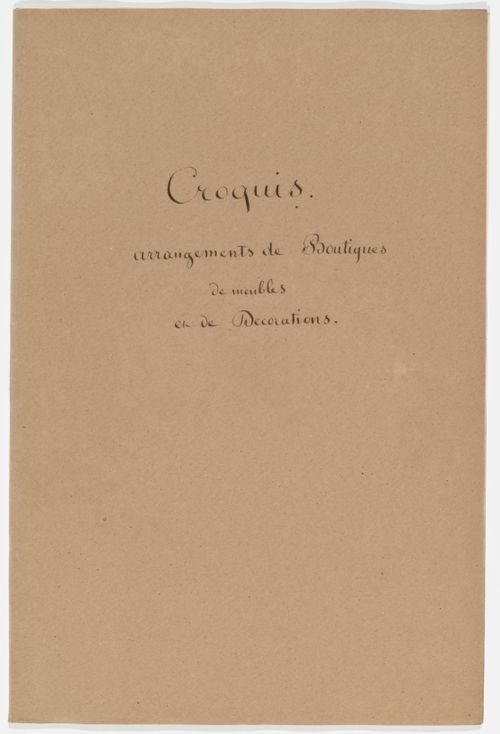
The four portfolios of drawings and prints in this group are entitled: Croquis à placer en papier; Croquis divers; Vues d'Italie; and Croquis arrangement de boutiques, de meubles, et de decorations (DR1974:0002:030:001 - DR1974:0002:030:008; DR1974:0002:030:009 - DR1974:0002:030:030; DR1974:0002:030:031 - DR1974:0002:030:050; DR1974:0002:030:051 - DR1974:0002:030:065. -- Porfolio Croquis à placer en papier, comprises three unidentified topographical views in graphite, a drawing of furnishings from the Palais Matteï, Italy [?], a still life of fruit, and a drawing of an elephant. -- Portfolio Croquis divers, comprises both record and design drawings - ranging from sketches to renderings - of varied subject matter. The record drawings include a rendering of the Hôtel de ville, Brussels, and line drawings of a baldachin and an urban square. The design drawings for buildings and interiors in Classical, Gothic and Exotic Revival styles are probably by Hubert Rohault de Fleury and include: line and finished drawings for a dairy after Jean François Joseph LeCointre; an imaginary church, perhaps inspired by Pugin; and a hôtel on rue de Varennes, Paris. Several drawings and prints depict military subject matter: fortifications after Louis de Cormontaigne, a battery, a cannon, and revolutionary battle scenes, some in Paris. Also included are several drawings of non-architectural subject matter - a coat of arms, perhaps of the Bougainville family, cossack soldiers, a boar hunt, a rock formation and lithographic maps of Istria and Rhodes. -- Portfolio Vues d'Italie, consists of mostly freehand drawings of Italian views and buildings in Paestum, Arezzo, Naples, Rome, Caprarola, Florence, Fidenza, Genoa, and Tivoli. The buildings and urban spaces include: Villa Belvedere, Naples; the Cathedral of Borgo S. Donino; the Temple of Vesta, Tivoli; the Campidoglio, Piazza del Popolo, Palais Maccarani, Arc de Septimus Severus, Ste. Pudenziana, and Baslica of Constantine, all in Rome. The presence of preparatory drawings for some of these views suggests they were intended to be published, either as individual prints or in a book. -- Portfolio Croquis arrangement de boutiques, de meuble et de decorations, comprises mostly finished watercolour drawings for Empire style interiors and furniture, probably designed by Hubert Rohault de Fleury. Also included are an elevation for a storefront for Batton Magasin de Fleurs Fines, drawings for two garden structures, and elevations for classical interiors and mouldings.
DR1974:0002:030:001-065
Description:
The four portfolios of drawings and prints in this group are entitled: Croquis à placer en papier; Croquis divers; Vues d'Italie; and Croquis arrangement de boutiques, de meubles, et de decorations (DR1974:0002:030:001 - DR1974:0002:030:008; DR1974:0002:030:009 - DR1974:0002:030:030; DR1974:0002:030:031 - DR1974:0002:030:050; DR1974:0002:030:051 - DR1974:0002:030:065. -- Porfolio Croquis à placer en papier, comprises three unidentified topographical views in graphite, a drawing of furnishings from the Palais Matteï, Italy [?], a still life of fruit, and a drawing of an elephant. -- Portfolio Croquis divers, comprises both record and design drawings - ranging from sketches to renderings - of varied subject matter. The record drawings include a rendering of the Hôtel de ville, Brussels, and line drawings of a baldachin and an urban square. The design drawings for buildings and interiors in Classical, Gothic and Exotic Revival styles are probably by Hubert Rohault de Fleury and include: line and finished drawings for a dairy after Jean François Joseph LeCointre; an imaginary church, perhaps inspired by Pugin; and a hôtel on rue de Varennes, Paris. Several drawings and prints depict military subject matter: fortifications after Louis de Cormontaigne, a battery, a cannon, and revolutionary battle scenes, some in Paris. Also included are several drawings of non-architectural subject matter - a coat of arms, perhaps of the Bougainville family, cossack soldiers, a boar hunt, a rock formation and lithographic maps of Istria and Rhodes. -- Portfolio Vues d'Italie, consists of mostly freehand drawings of Italian views and buildings in Paestum, Arezzo, Naples, Rome, Caprarola, Florence, Fidenza, Genoa, and Tivoli. The buildings and urban spaces include: Villa Belvedere, Naples; the Cathedral of Borgo S. Donino; the Temple of Vesta, Tivoli; the Campidoglio, Piazza del Popolo, Palais Maccarani, Arc de Septimus Severus, Ste. Pudenziana, and Baslica of Constantine, all in Rome. The presence of preparatory drawings for some of these views suggests they were intended to be published, either as individual prints or in a book. -- Portfolio Croquis arrangement de boutiques, de meuble et de decorations, comprises mostly finished watercolour drawings for Empire style interiors and furniture, probably designed by Hubert Rohault de Fleury. Also included are an elevation for a storefront for Batton Magasin de Fleurs Fines, drawings for two garden structures, and elevations for classical interiors and mouldings.
Personnes et institutions:
Sujet:
architecture, design d'intérieur, ingénierie, militaire, sculpture, topographique, urbanisme
architecture, design d'intérieur, ingénierie, militaire, sculpture, topographique, urbanisme
Date:
printed first half of the 19th century
printed first half of the 19th century
Titre:
Four portfolios of drawings of Italian views, interior designs, Empire style furniture, military subjects, and other diverse subject matter
Actions:
DR1974:0002:030:001-065
Description:
The four portfolios of drawings and prints in this group are entitled: Croquis à placer en papier; Croquis divers; Vues d'Italie; and Croquis arrangement de boutiques, de meubles, et de decorations (DR1974:0002:030:001 - DR1974:0002:030:008; DR1974:0002:030:009 - DR1974:0002:030:030; DR1974:0002:030:031 - DR1974:0002:030:050; DR1974:0002:030:051 - DR1974:0002:030:065. -- Porfolio Croquis à placer en papier, comprises three unidentified topographical views in graphite, a drawing of furnishings from the Palais Matteï, Italy [?], a still life of fruit, and a drawing of an elephant. -- Portfolio Croquis divers, comprises both record and design drawings - ranging from sketches to renderings - of varied subject matter. The record drawings include a rendering of the Hôtel de ville, Brussels, and line drawings of a baldachin and an urban square. The design drawings for buildings and interiors in Classical, Gothic and Exotic Revival styles are probably by Hubert Rohault de Fleury and include: line and finished drawings for a dairy after Jean François Joseph LeCointre; an imaginary church, perhaps inspired by Pugin; and a hôtel on rue de Varennes, Paris. Several drawings and prints depict military subject matter: fortifications after Louis de Cormontaigne, a battery, a cannon, and revolutionary battle scenes, some in Paris. Also included are several drawings of non-architectural subject matter - a coat of arms, perhaps of the Bougainville family, cossack soldiers, a boar hunt, a rock formation and lithographic maps of Istria and Rhodes. -- Portfolio Vues d'Italie, consists of mostly freehand drawings of Italian views and buildings in Paestum, Arezzo, Naples, Rome, Caprarola, Florence, Fidenza, Genoa, and Tivoli. The buildings and urban spaces include: Villa Belvedere, Naples; the Cathedral of Borgo S. Donino; the Temple of Vesta, Tivoli; the Campidoglio, Piazza del Popolo, Palais Maccarani, Arc de Septimus Severus, Ste. Pudenziana, and Baslica of Constantine, all in Rome. The presence of preparatory drawings for some of these views suggests they were intended to be published, either as individual prints or in a book. -- Portfolio Croquis arrangement de boutiques, de meuble et de decorations, comprises mostly finished watercolour drawings for Empire style interiors and furniture, probably designed by Hubert Rohault de Fleury. Also included are an elevation for a storefront for Batton Magasin de Fleurs Fines, drawings for two garden structures, and elevations for classical interiors and mouldings.
Four portfolios of drawings of Italian views, interior designs, Empire style furniture, military subjects, and other diverse subject matter
Actions:
DR1974:0002:030:001-065
Description:
The four portfolios of drawings and prints in this group are entitled: Croquis à placer en papier; Croquis divers; Vues d'Italie; and Croquis arrangement de boutiques, de meubles, et de decorations (DR1974:0002:030:001 - DR1974:0002:030:008; DR1974:0002:030:009 - DR1974:0002:030:030; DR1974:0002:030:031 - DR1974:0002:030:050; DR1974:0002:030:051 - DR1974:0002:030:065. -- Porfolio Croquis à placer en papier, comprises three unidentified topographical views in graphite, a drawing of furnishings from the Palais Matteï, Italy [?], a still life of fruit, and a drawing of an elephant. -- Portfolio Croquis divers, comprises both record and design drawings - ranging from sketches to renderings - of varied subject matter. The record drawings include a rendering of the Hôtel de ville, Brussels, and line drawings of a baldachin and an urban square. The design drawings for buildings and interiors in Classical, Gothic and Exotic Revival styles are probably by Hubert Rohault de Fleury and include: line and finished drawings for a dairy after Jean François Joseph LeCointre; an imaginary church, perhaps inspired by Pugin; and a hôtel on rue de Varennes, Paris. Several drawings and prints depict military subject matter: fortifications after Louis de Cormontaigne, a battery, a cannon, and revolutionary battle scenes, some in Paris. Also included are several drawings of non-architectural subject matter - a coat of arms, perhaps of the Bougainville family, cossack soldiers, a boar hunt, a rock formation and lithographic maps of Istria and Rhodes. -- Portfolio Vues d'Italie, consists of mostly freehand drawings of Italian views and buildings in Paestum, Arezzo, Naples, Rome, Caprarola, Florence, Fidenza, Genoa, and Tivoli. The buildings and urban spaces include: Villa Belvedere, Naples; the Cathedral of Borgo S. Donino; the Temple of Vesta, Tivoli; the Campidoglio, Piazza del Popolo, Palais Maccarani, Arc de Septimus Severus, Ste. Pudenziana, and Baslica of Constantine, all in Rome. The presence of preparatory drawings for some of these views suggests they were intended to be published, either as individual prints or in a book. -- Portfolio Croquis arrangement de boutiques, de meuble et de decorations, comprises mostly finished watercolour drawings for Empire style interiors and furniture, probably designed by Hubert Rohault de Fleury. Also included are an elevation for a storefront for Batton Magasin de Fleurs Fines, drawings for two garden structures, and elevations for classical interiors and mouldings.
Classification:
dessins, oeuvres d'art
Quantité:
4 portfolio(s)
dessins, oeuvres d'art
Quantité:
4 portfolio(s)
Date:
printed first half of the 19th century
printed first half of the 19th century
Personnes et institutions:
Sujet:
architecture, design d'intérieur, ingénierie, militaire, sculpture, topographique, urbanisme
architecture, design d'intérieur, ingénierie, militaire, sculpture, topographique, urbanisme
Classification:
dessins
dessins
Actions:
Numéro de référence:
DR1974:0002:035:001-034
Description:
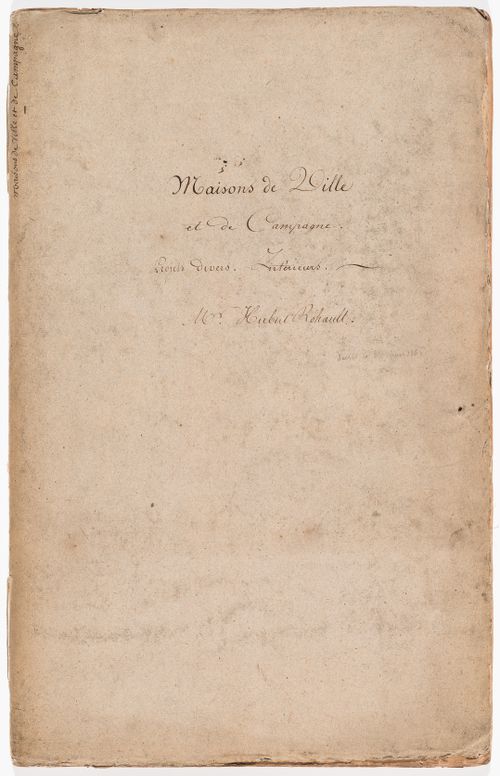
- This album consists primarily of preliminary and design development drawings for diverse projects - mostly domestic - from the early years of Hubert Rohault de Fleury's career. Some of the fifteen more finished drawings in wash and watercolour are probably presentation drawings. Many of the drawings are inscribed with illegible or partially legible notations concerning the project's location, client, date and other particulars. There are seven drawings for a house on rue d'Aguesseau, Paris, probably the Rohault de Fleury family residence (DR1974:0002:035:002 - DR1974:OOO2:035:006 R/V) and several drawings for a house for Rohault de Fleury's uncle on rue Saint-Romain, Paris (DR1974:0002:035:012 V). Several drawings are after plates published in Durand's "Précis des Leçons d'architecture données à l'école Royale Polytechnique (1802-1805)": plans on drawings DR1974:0002:035:011 V, DR1974:0002:035:012 R are adapted from plate 25 and combined with façades designed by Rohault de Fleury, and drawing DR1974:0002:035:013 R is based on an engraving by Charles-Pierre-Joseph Normand (pl. 23) of Hôtel Lathuille in Paris which was designed by Jean-Nicolas-Louis Durand (1788). Perspective sketches and plans are included for the restoration of a château in Rocheux [?] for M. le Trône (DR1974:0002:035:017 R) and for the renovation for the house at Domaine de la Vallée (DR1974:0002:035:020). The drawing for a country villa was executed in 1804, while Rohault de Fleury was in Rome studying at the French Academy (DR1974:0002:035:021 R). The conceptual drawing of a small "orchestre" and the elevations of a gallery and portico gate are inscribed "Jardin du Frascati", and are perhaps travel sketches or projects executed while Rohault de Fleury was in Rome (DR1974:0002:035:032 V, DR1974:002:035:033 R, and DR1974:0002:035:034). Also included in the album are two plans for part of the Passage du saumon in Paris (DR1974:0002:035:014 R), a plan, elevation and section for a rustic pavilion for M. Abrial (DR1974:0002:035:024 V), a plan for a shepherd's house in St. Cueufin [?] (DR1974:0002:035:021 V), a house for M. Quitton in Paris (DR1974:0002:035:026 - DR1974:0002:035:027), a section, elevation and plan for a sheepfold (DR1974:0002:035:033 V) and a perspective for a rustic cabin (DR1974:0002:035:034). The album also contains a number of drawings for Empire-style interior design projects: interior wall elevations, furniture drawings, and plans, elevations and perspectives for a bed alcove.
DR1974:0002:035:001-034
Description:
- This album consists primarily of preliminary and design development drawings for diverse projects - mostly domestic - from the early years of Hubert Rohault de Fleury's career. Some of the fifteen more finished drawings in wash and watercolour are probably presentation drawings. Many of the drawings are inscribed with illegible or partially legible notations concerning the project's location, client, date and other particulars. There are seven drawings for a house on rue d'Aguesseau, Paris, probably the Rohault de Fleury family residence (DR1974:0002:035:002 - DR1974:OOO2:035:006 R/V) and several drawings for a house for Rohault de Fleury's uncle on rue Saint-Romain, Paris (DR1974:0002:035:012 V). Several drawings are after plates published in Durand's "Précis des Leçons d'architecture données à l'école Royale Polytechnique (1802-1805)": plans on drawings DR1974:0002:035:011 V, DR1974:0002:035:012 R are adapted from plate 25 and combined with façades designed by Rohault de Fleury, and drawing DR1974:0002:035:013 R is based on an engraving by Charles-Pierre-Joseph Normand (pl. 23) of Hôtel Lathuille in Paris which was designed by Jean-Nicolas-Louis Durand (1788). Perspective sketches and plans are included for the restoration of a château in Rocheux [?] for M. le Trône (DR1974:0002:035:017 R) and for the renovation for the house at Domaine de la Vallée (DR1974:0002:035:020). The drawing for a country villa was executed in 1804, while Rohault de Fleury was in Rome studying at the French Academy (DR1974:0002:035:021 R). The conceptual drawing of a small "orchestre" and the elevations of a gallery and portico gate are inscribed "Jardin du Frascati", and are perhaps travel sketches or projects executed while Rohault de Fleury was in Rome (DR1974:0002:035:032 V, DR1974:002:035:033 R, and DR1974:0002:035:034). Also included in the album are two plans for part of the Passage du saumon in Paris (DR1974:0002:035:014 R), a plan, elevation and section for a rustic pavilion for M. Abrial (DR1974:0002:035:024 V), a plan for a shepherd's house in St. Cueufin [?] (DR1974:0002:035:021 V), a house for M. Quitton in Paris (DR1974:0002:035:026 - DR1974:0002:035:027), a section, elevation and plan for a sheepfold (DR1974:0002:035:033 V) and a perspective for a rustic cabin (DR1974:0002:035:034). The album also contains a number of drawings for Empire-style interior design projects: interior wall elevations, furniture drawings, and plans, elevations and perspectives for a bed alcove.
Personnes et institutions:
Sujet:
architecture, architecture de paysage, design d'intérieur
architecture, architecture de paysage, design d'intérieur
Date:
early 19th century
early 19th century
Titre:
Album of drawings, mostly for French town and country houses, including some drawings for interiors and furniture, and one drawing for the Passage du saumon, Paris
Actions:
DR1974:0002:035:001-034
Description:
- This album consists primarily of preliminary and design development drawings for diverse projects - mostly domestic - from the early years of Hubert Rohault de Fleury's career. Some of the fifteen more finished drawings in wash and watercolour are probably presentation drawings. Many of the drawings are inscribed with illegible or partially legible notations concerning the project's location, client, date and other particulars. There are seven drawings for a house on rue d'Aguesseau, Paris, probably the Rohault de Fleury family residence (DR1974:0002:035:002 - DR1974:OOO2:035:006 R/V) and several drawings for a house for Rohault de Fleury's uncle on rue Saint-Romain, Paris (DR1974:0002:035:012 V). Several drawings are after plates published in Durand's "Précis des Leçons d'architecture données à l'école Royale Polytechnique (1802-1805)": plans on drawings DR1974:0002:035:011 V, DR1974:0002:035:012 R are adapted from plate 25 and combined with façades designed by Rohault de Fleury, and drawing DR1974:0002:035:013 R is based on an engraving by Charles-Pierre-Joseph Normand (pl. 23) of Hôtel Lathuille in Paris which was designed by Jean-Nicolas-Louis Durand (1788). Perspective sketches and plans are included for the restoration of a château in Rocheux [?] for M. le Trône (DR1974:0002:035:017 R) and for the renovation for the house at Domaine de la Vallée (DR1974:0002:035:020). The drawing for a country villa was executed in 1804, while Rohault de Fleury was in Rome studying at the French Academy (DR1974:0002:035:021 R). The conceptual drawing of a small "orchestre" and the elevations of a gallery and portico gate are inscribed "Jardin du Frascati", and are perhaps travel sketches or projects executed while Rohault de Fleury was in Rome (DR1974:0002:035:032 V, DR1974:002:035:033 R, and DR1974:0002:035:034). Also included in the album are two plans for part of the Passage du saumon in Paris (DR1974:0002:035:014 R), a plan, elevation and section for a rustic pavilion for M. Abrial (DR1974:0002:035:024 V), a plan for a shepherd's house in St. Cueufin [?] (DR1974:0002:035:021 V), a house for M. Quitton in Paris (DR1974:0002:035:026 - DR1974:0002:035:027), a section, elevation and plan for a sheepfold (DR1974:0002:035:033 V) and a perspective for a rustic cabin (DR1974:0002:035:034). The album also contains a number of drawings for Empire-style interior design projects: interior wall elevations, furniture drawings, and plans, elevations and perspectives for a bed alcove.
Album of drawings, mostly for French town and country houses, including some drawings for interiors and furniture, and one drawing for the Passage du saumon, Paris
Actions:
DR1974:0002:035:001-034
Description:
- This album consists primarily of preliminary and design development drawings for diverse projects - mostly domestic - from the early years of Hubert Rohault de Fleury's career. Some of the fifteen more finished drawings in wash and watercolour are probably presentation drawings. Many of the drawings are inscribed with illegible or partially legible notations concerning the project's location, client, date and other particulars. There are seven drawings for a house on rue d'Aguesseau, Paris, probably the Rohault de Fleury family residence (DR1974:0002:035:002 - DR1974:OOO2:035:006 R/V) and several drawings for a house for Rohault de Fleury's uncle on rue Saint-Romain, Paris (DR1974:0002:035:012 V). Several drawings are after plates published in Durand's "Précis des Leçons d'architecture données à l'école Royale Polytechnique (1802-1805)": plans on drawings DR1974:0002:035:011 V, DR1974:0002:035:012 R are adapted from plate 25 and combined with façades designed by Rohault de Fleury, and drawing DR1974:0002:035:013 R is based on an engraving by Charles-Pierre-Joseph Normand (pl. 23) of Hôtel Lathuille in Paris which was designed by Jean-Nicolas-Louis Durand (1788). Perspective sketches and plans are included for the restoration of a château in Rocheux [?] for M. le Trône (DR1974:0002:035:017 R) and for the renovation for the house at Domaine de la Vallée (DR1974:0002:035:020). The drawing for a country villa was executed in 1804, while Rohault de Fleury was in Rome studying at the French Academy (DR1974:0002:035:021 R). The conceptual drawing of a small "orchestre" and the elevations of a gallery and portico gate are inscribed "Jardin du Frascati", and are perhaps travel sketches or projects executed while Rohault de Fleury was in Rome (DR1974:0002:035:032 V, DR1974:002:035:033 R, and DR1974:0002:035:034). Also included in the album are two plans for part of the Passage du saumon in Paris (DR1974:0002:035:014 R), a plan, elevation and section for a rustic pavilion for M. Abrial (DR1974:0002:035:024 V), a plan for a shepherd's house in St. Cueufin [?] (DR1974:0002:035:021 V), a house for M. Quitton in Paris (DR1974:0002:035:026 - DR1974:0002:035:027), a section, elevation and plan for a sheepfold (DR1974:0002:035:033 V) and a perspective for a rustic cabin (DR1974:0002:035:034). The album also contains a number of drawings for Empire-style interior design projects: interior wall elevations, furniture drawings, and plans, elevations and perspectives for a bed alcove.
Classification:
dessins
dessins
Date:
early 19th century
early 19th century
Personnes et institutions:
Sujet:
architecture, architecture de paysage, design d'intérieur
architecture, architecture de paysage, design d'intérieur
Classification:
documents textuels, photographies
documents textuels, photographies
Actions:
Numéro de référence:
PH1984:0800 R/V
Description:
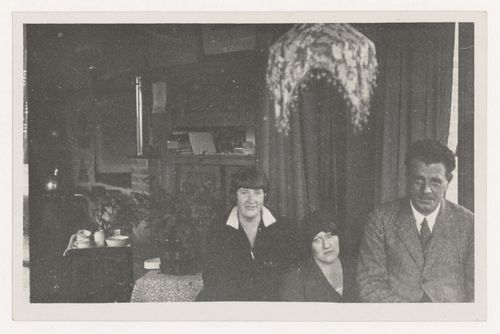
- Photographs PH1984:0800 R/V and PH1984:0801 R/V were apparently taken by Helena Syrkus during a trip to Rotterdam in March 1929. The letter by Syrkus to Miss Annie on the verso of these photographs indicates that the two correspondents visited J.J.P. Oud and his family during the trip. Photograph PH1984:0800 R/V shows J.J.P. Oud and his wife (and possibly Helena Syrkus), while photograph PH1984:0801 R/V shows Miss Annie's son. - Text of letter on PH1984:0800 reads as follows: Liebe Frau Annie, Heute erst kommen wir dazu, die Photos zu vergrössern, ich bin glücklich, dass die Bilder gelungen sind und dass ich Ihren das Bild Ihres Sohnes zu Ostern senden kann. Die Reise war wunderschön - aber doch unsere schönsten Erinnerungen sind aus Rotterdam und aus Kijkduin. Wir sind glücklich, dass wir die paar Stunden mit Ihnen und mit Ihren Manne verplaudert haben - man muss sich schnell wiedersehen. Dann haben wir in Warschau so viel zu tun gehabt, dass wir gar nicht atmen könnten - dazu haben wir auch [letter continues on PH1984:0801 as follows] die Grippe mitgemacht - jetzt sind wir furchtbar in Anspruch genommen. Aber die Bilder haben uns so viel Freude gemacht - es schien mir, dass wir noch in Rotterdam sind. Also habe ich gleich an sie geschrieben - denn dann könnte es wieder ad calendas graecas verschoben sein [Latin ?] Und jetzt habe ich Frau Annie aufwiedersehn - fröhliche Ostern ! Herzlichste Grüsse für sie, Ihren Mann und den Jungen Oud Ihre Helena Syrkus - Translation of letter on PH1984:0800: Dear Miss Annie, Today we developed the photographs - I am glad that the pictures turned out so well and that I can send the picture of your son to you for Easter. The trip was wonderful - but our fondest memories were of Rotterdam and Kijkduin. We are happy that we had a few hours to spend with you and your husband - it would be nice if we could see each other soon. We were so busy we barely had time to catch our breath - as a result we caught the flu - [letter continues on PH1984:0801] now we are consumed by illness. But the pictures brought us so much joy - I feel as if we are back in Rotterdam. So I wrote you immediately to shift back the hands of time [Latin ?] And now Miss Annie I must say goodbye - Happy Easter ! Kindest regards to you your husband and your youngster. Yours Helena Syrkus
PH1984:0800 R/V
Description:
- Photographs PH1984:0800 R/V and PH1984:0801 R/V were apparently taken by Helena Syrkus during a trip to Rotterdam in March 1929. The letter by Syrkus to Miss Annie on the verso of these photographs indicates that the two correspondents visited J.J.P. Oud and his family during the trip. Photograph PH1984:0800 R/V shows J.J.P. Oud and his wife (and possibly Helena Syrkus), while photograph PH1984:0801 R/V shows Miss Annie's son. - Text of letter on PH1984:0800 reads as follows: Liebe Frau Annie, Heute erst kommen wir dazu, die Photos zu vergrössern, ich bin glücklich, dass die Bilder gelungen sind und dass ich Ihren das Bild Ihres Sohnes zu Ostern senden kann. Die Reise war wunderschön - aber doch unsere schönsten Erinnerungen sind aus Rotterdam und aus Kijkduin. Wir sind glücklich, dass wir die paar Stunden mit Ihnen und mit Ihren Manne verplaudert haben - man muss sich schnell wiedersehen. Dann haben wir in Warschau so viel zu tun gehabt, dass wir gar nicht atmen könnten - dazu haben wir auch [letter continues on PH1984:0801 as follows] die Grippe mitgemacht - jetzt sind wir furchtbar in Anspruch genommen. Aber die Bilder haben uns so viel Freude gemacht - es schien mir, dass wir noch in Rotterdam sind. Also habe ich gleich an sie geschrieben - denn dann könnte es wieder ad calendas graecas verschoben sein [Latin ?] Und jetzt habe ich Frau Annie aufwiedersehn - fröhliche Ostern ! Herzlichste Grüsse für sie, Ihren Mann und den Jungen Oud Ihre Helena Syrkus - Translation of letter on PH1984:0800: Dear Miss Annie, Today we developed the photographs - I am glad that the pictures turned out so well and that I can send the picture of your son to you for Easter. The trip was wonderful - but our fondest memories were of Rotterdam and Kijkduin. We are happy that we had a few hours to spend with you and your husband - it would be nice if we could see each other soon. We were so busy we barely had time to catch our breath - as a result we caught the flu - [letter continues on PH1984:0801] now we are consumed by illness. But the pictures brought us so much joy - I feel as if we are back in Rotterdam. So I wrote you immediately to shift back the hands of time [Latin ?] And now Miss Annie I must say goodbye - Happy Easter ! Kindest regards to you your husband and your youngster. Yours Helena Syrkus
Personnes et institutions:
Sujet:
architecture, portrait
architecture, portrait
Date:
March 1929
March 1929
Titre:
Portrait of J.J.P. Oud, his wife and possibly Helena Syrkus, Kijkduin, The Hague, Netherlands; verso: Letter from Helena Syrkus to Miss Annie, 27 March 1929
Actions:
PH1984:0800 R/V
Description:
- Photographs PH1984:0800 R/V and PH1984:0801 R/V were apparently taken by Helena Syrkus during a trip to Rotterdam in March 1929. The letter by Syrkus to Miss Annie on the verso of these photographs indicates that the two correspondents visited J.J.P. Oud and his family during the trip. Photograph PH1984:0800 R/V shows J.J.P. Oud and his wife (and possibly Helena Syrkus), while photograph PH1984:0801 R/V shows Miss Annie's son. - Text of letter on PH1984:0800 reads as follows: Liebe Frau Annie, Heute erst kommen wir dazu, die Photos zu vergrössern, ich bin glücklich, dass die Bilder gelungen sind und dass ich Ihren das Bild Ihres Sohnes zu Ostern senden kann. Die Reise war wunderschön - aber doch unsere schönsten Erinnerungen sind aus Rotterdam und aus Kijkduin. Wir sind glücklich, dass wir die paar Stunden mit Ihnen und mit Ihren Manne verplaudert haben - man muss sich schnell wiedersehen. Dann haben wir in Warschau so viel zu tun gehabt, dass wir gar nicht atmen könnten - dazu haben wir auch [letter continues on PH1984:0801 as follows] die Grippe mitgemacht - jetzt sind wir furchtbar in Anspruch genommen. Aber die Bilder haben uns so viel Freude gemacht - es schien mir, dass wir noch in Rotterdam sind. Also habe ich gleich an sie geschrieben - denn dann könnte es wieder ad calendas graecas verschoben sein [Latin ?] Und jetzt habe ich Frau Annie aufwiedersehn - fröhliche Ostern ! Herzlichste Grüsse für sie, Ihren Mann und den Jungen Oud Ihre Helena Syrkus - Translation of letter on PH1984:0800: Dear Miss Annie, Today we developed the photographs - I am glad that the pictures turned out so well and that I can send the picture of your son to you for Easter. The trip was wonderful - but our fondest memories were of Rotterdam and Kijkduin. We are happy that we had a few hours to spend with you and your husband - it would be nice if we could see each other soon. We were so busy we barely had time to catch our breath - as a result we caught the flu - [letter continues on PH1984:0801] now we are consumed by illness. But the pictures brought us so much joy - I feel as if we are back in Rotterdam. So I wrote you immediately to shift back the hands of time [Latin ?] And now Miss Annie I must say goodbye - Happy Easter ! Kindest regards to you your husband and your youngster. Yours Helena Syrkus
Portrait of J.J.P. Oud, his wife and possibly Helena Syrkus, Kijkduin, The Hague, Netherlands; verso: Letter from Helena Syrkus to Miss Annie, 27 March 1929
Actions:
PH1984:0800 R/V
Description:
- Photographs PH1984:0800 R/V and PH1984:0801 R/V were apparently taken by Helena Syrkus during a trip to Rotterdam in March 1929. The letter by Syrkus to Miss Annie on the verso of these photographs indicates that the two correspondents visited J.J.P. Oud and his family during the trip. Photograph PH1984:0800 R/V shows J.J.P. Oud and his wife (and possibly Helena Syrkus), while photograph PH1984:0801 R/V shows Miss Annie's son. - Text of letter on PH1984:0800 reads as follows: Liebe Frau Annie, Heute erst kommen wir dazu, die Photos zu vergrössern, ich bin glücklich, dass die Bilder gelungen sind und dass ich Ihren das Bild Ihres Sohnes zu Ostern senden kann. Die Reise war wunderschön - aber doch unsere schönsten Erinnerungen sind aus Rotterdam und aus Kijkduin. Wir sind glücklich, dass wir die paar Stunden mit Ihnen und mit Ihren Manne verplaudert haben - man muss sich schnell wiedersehen. Dann haben wir in Warschau so viel zu tun gehabt, dass wir gar nicht atmen könnten - dazu haben wir auch [letter continues on PH1984:0801 as follows] die Grippe mitgemacht - jetzt sind wir furchtbar in Anspruch genommen. Aber die Bilder haben uns so viel Freude gemacht - es schien mir, dass wir noch in Rotterdam sind. Also habe ich gleich an sie geschrieben - denn dann könnte es wieder ad calendas graecas verschoben sein [Latin ?] Und jetzt habe ich Frau Annie aufwiedersehn - fröhliche Ostern ! Herzlichste Grüsse für sie, Ihren Mann und den Jungen Oud Ihre Helena Syrkus - Translation of letter on PH1984:0800: Dear Miss Annie, Today we developed the photographs - I am glad that the pictures turned out so well and that I can send the picture of your son to you for Easter. The trip was wonderful - but our fondest memories were of Rotterdam and Kijkduin. We are happy that we had a few hours to spend with you and your husband - it would be nice if we could see each other soon. We were so busy we barely had time to catch our breath - as a result we caught the flu - [letter continues on PH1984:0801] now we are consumed by illness. But the pictures brought us so much joy - I feel as if we are back in Rotterdam. So I wrote you immediately to shift back the hands of time [Latin ?] And now Miss Annie I must say goodbye - Happy Easter ! Kindest regards to you your husband and your youngster. Yours Helena Syrkus
Classification:
documents textuels, photographies
documents textuels, photographies
Date:
March 1929
March 1929
Personnes et institutions:
Sujet:
architecture, portrait
architecture, portrait
Classification:
photographies
photographies
Actions:
Numéro de référence:
PH1985:0413
Description:
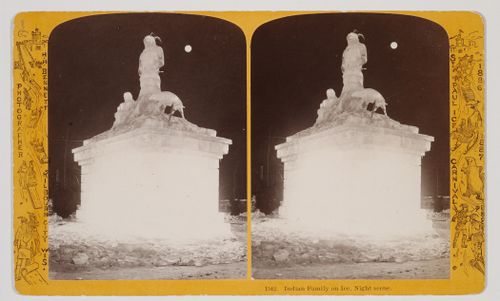
The sculpture depicts what seems to be a man standing, dressed in Indigenous clothing with regalia and tomahawk, and a woman seated on his right side and an animal (dog?) standing on his left. This way of representing an Indigenous couple reflects 19th century settler notions of gender roles. In Indigenous families the woman is the head of the house and would be the one standing, with the man beside her as her equal. The Saint Paul Ice Carnival, founded in 1886, is now known as the Saint Paul Winter Carnival.
PH1985:0413
Description:
The sculpture depicts what seems to be a man standing, dressed in Indigenous clothing with regalia and tomahawk, and a woman seated on his right side and an animal (dog?) standing on his left. This way of representing an Indigenous couple reflects 19th century settler notions of gender roles. In Indigenous families the woman is the head of the house and would be the one standing, with the man beside her as her equal. The Saint Paul Ice Carnival, founded in 1886, is now known as the Saint Paul Winter Carnival.
Personnes et institutions:
Date:
circa 1886-1888
circa 1886-1888
Titre:
Stereoview of an illuminated ice sculpture at the Saint Paul Ice Carnival representing two Indigenous persons and animal on a base, Saint Paul, Minnesota, United States
Actions:
PH1985:0413
Description:
The sculpture depicts what seems to be a man standing, dressed in Indigenous clothing with regalia and tomahawk, and a woman seated on his right side and an animal (dog?) standing on his left. This way of representing an Indigenous couple reflects 19th century settler notions of gender roles. In Indigenous families the woman is the head of the house and would be the one standing, with the man beside her as her equal. The Saint Paul Ice Carnival, founded in 1886, is now known as the Saint Paul Winter Carnival.
Stereoview of an illuminated ice sculpture at the Saint Paul Ice Carnival representing two Indigenous persons and animal on a base, Saint Paul, Minnesota, United States
Actions:
PH1985:0413
Description:
The sculpture depicts what seems to be a man standing, dressed in Indigenous clothing with regalia and tomahawk, and a woman seated on his right side and an animal (dog?) standing on his left. This way of representing an Indigenous couple reflects 19th century settler notions of gender roles. In Indigenous families the woman is the head of the house and would be the one standing, with the man beside her as her equal. The Saint Paul Ice Carnival, founded in 1886, is now known as the Saint Paul Winter Carnival.
Classification:
photographies
photographies
Date:
circa 1886-1888
circa 1886-1888
Personnes et institutions:
Niveau de description archivistique:
Série(s)
Série(s)
Numéro de référence:
AP144.S2
Description:
Series documents Cedric Price's projects from his early work in the late 1950s to work dating from the time he founded his own practice in 1960 until 2000. Material includes numerous competition entries, planning and building projects, transportation-related projects, exhibitions, conceptual projects, furniture and interior designs, and monuments, follies, and decorations. Some projects also reflect his teaching, research, lecture and publication activities. Price also worked on several competition juries (see projects Musique, Elephant). Many of Cedric Price's projects in the series are unexecuted. Significant unrealized projects from the 1960s and 1970s include Fun Palace (1961-1974), Potteries Thinkbelt (1963-1967), Oxford Corner House (1965-1966), and Generator (1976-1980). Significant built projects from the same period include the New Aviary (1960-1966), his first major realized project (with Lord Snowdon and Frank Newby), and Inter-Action Centre (1971-1979). Other realized projects include an office building (BTDB Computer, 1968-1973) and restaurant (Blackpool Project, 1971-1975). Planning projects from the 1960s and 1970s include Potteries Thinkbelt, Detroit Think Grid (1969-1971) and Rice University's design charette, Atom (1967). In the 1980s and 1990s, Cedric Price worked on several building proposals including greenhouses (Serre, Serre (2)), museums, galleries, and pavilions (Trafalgar, Pertpavs, Snake), a railway station (Strate (2)), a cultural centre (Tiff), houses (Perthut, Castel), a bus station (Walsall), an aviary (CP Aviary) and office buildings (Domain, Berlin). Planning projects from the same time include parks and cultural complexes, (Parc, South Bank), urban areas, (Strate, Stratton, IFPRI, Haven, Mills), university campuses (Frankfurt, Unibad, Bedford), and rural areas (Stark, Arkage). Transportation-related projects include railways (Strate, Control, Rink), roadways (Stratton) and pedestrian links (Magnet, Halmag, South Bank). Only a few of his projects from that period were executed and those include the renovation projects Congress and SAS 29; a mobile market stall design for Westminster City Council (Westal) for which prototypes were built; a coffee cup design (Crowbar); and building conversion projects Gatard and Juke. Exhibition projects in the series include some devoted to Cedric Price's works (AA Exhibition, Aedes, AFX, Afella), some designed by him (Strike, Food for the Future, Topolski/Waterloo, Ashmole, Mean, AFX), as well as projects designed for exhibition (Citlin, Castel). The series also contains self-financed research and client-less projects, which form a significant part of Cedric Price's practice. Undertaken in anticipation of future clients or new planning needs, they include research into air structures and lightweight enclosures as well as integrated construction and transportation solutions (Trucksafe Air Portable Dock Ahoy), and housing research. South Bank, Magnet, and Duck Land represent a few of the client-less projects. The material in this series documents Cedric Price's work in the United Kingdom, in particular England (the Greater London area, and other areas) and Scotland, Germany, France, Austria, Australia, Japan, the United Arab Emirates, and the United States and other locations such as Canada, Nigeria, and Norway. Major clients include J. Lyons & Co. (Oxford Corner House), David Keddie (Two Tree Island, Southend Roof), Howard Gilman (Generator), British Railways (Strate and Strate (2), and others), the McAlpine family , particularly Alistair McAlpine, and their company Sir Robert McAlpine & Sons Ltd. (McAppy, Perthut, Trafalgar, Pertpavs, Ashmole, Perth, Obeliq, McVance); Établissement Public du Parc de la Villette (Parc, Serre, Serre (2), Musique) and the Canadian Centre for Architecture (IFPRI, Mean). He collaborated with several architects and engineers during the course of his career, his closest association being with engineer Frank Newby and quantity surveyor Douglas Smith. Some of his other collaborators include engineer Max Fordham (Strate (2), Tiff, Berlin), engineering firms Scott Wilson Kirkpatrick and Partners (Stratton, Rink, Control), and Sir Frederick Snow & Partners (South Bank), cybernetician Gordon Pask (Kawasaki/Japnet), architectural firm YRM/Yorke Rosenberg Mardall (Unibad), and architect Richard Rogers (Marman). He also collaborated with members of Archigram on the Trondheim Competition, (1972-1974), and with John and Julia Frazer who provided the computer modelling for Generator. David Price, Cedric Price's brother was the model maker for several projects. The series contains conceptual drawings, design development drawings, reference drawings and maps, presentation drawings (particularly for competitions), and working drawings. A significant amount of textual records are included, especially for projects involving a large amount of research or publicity (Air Structures, Lightweight Enclosures, South Bank, CP Aviary, Stratton), for executed projects, and for the larger unrealized projects like Fun Palace and Generator. Also includes photographic materials of project sites and models. Some models included in the series are made from durable materials (wood, metal, plastic), while others are in-office constructions made out of paper, cardboard and Fome-Cor (TM). Of particular note are the 11 models for Magnet, and a full-size prototype of a market stall for Westal. Series also contains publication layouts, including material for the "Cedric Price Supplement", 'Architectural Design' vols. 40- 42 (1970-1972). Changes in office practice are noted around 1971, evident in the Blackpool Project and later, including the adoption of the metric system, and the creation of working and detail drawings on A4 size paper and filed with textual records (e.g. approximately 300 such drawings are included in the textual records for Blackpool Project). At the same time fewer preamble drawings that relate to site sensing, progress and life-cycle graphs and tables are created for the projects (a common feature from the 1960s), although project progress tables are still used. Of particular interest is material in the Early Work and Miscellaneous Records file (AP144.S2.D1) that relates to office work methods and programmes.
AP144.S2
Description:
Series documents Cedric Price's projects from his early work in the late 1950s to work dating from the time he founded his own practice in 1960 until 2000. Material includes numerous competition entries, planning and building projects, transportation-related projects, exhibitions, conceptual projects, furniture and interior designs, and monuments, follies, and decorations. Some projects also reflect his teaching, research, lecture and publication activities. Price also worked on several competition juries (see projects Musique, Elephant). Many of Cedric Price's projects in the series are unexecuted. Significant unrealized projects from the 1960s and 1970s include Fun Palace (1961-1974), Potteries Thinkbelt (1963-1967), Oxford Corner House (1965-1966), and Generator (1976-1980). Significant built projects from the same period include the New Aviary (1960-1966), his first major realized project (with Lord Snowdon and Frank Newby), and Inter-Action Centre (1971-1979). Other realized projects include an office building (BTDB Computer, 1968-1973) and restaurant (Blackpool Project, 1971-1975). Planning projects from the 1960s and 1970s include Potteries Thinkbelt, Detroit Think Grid (1969-1971) and Rice University's design charette, Atom (1967). In the 1980s and 1990s, Cedric Price worked on several building proposals including greenhouses (Serre, Serre (2)), museums, galleries, and pavilions (Trafalgar, Pertpavs, Snake), a railway station (Strate (2)), a cultural centre (Tiff), houses (Perthut, Castel), a bus station (Walsall), an aviary (CP Aviary) and office buildings (Domain, Berlin). Planning projects from the same time include parks and cultural complexes, (Parc, South Bank), urban areas, (Strate, Stratton, IFPRI, Haven, Mills), university campuses (Frankfurt, Unibad, Bedford), and rural areas (Stark, Arkage). Transportation-related projects include railways (Strate, Control, Rink), roadways (Stratton) and pedestrian links (Magnet, Halmag, South Bank). Only a few of his projects from that period were executed and those include the renovation projects Congress and SAS 29; a mobile market stall design for Westminster City Council (Westal) for which prototypes were built; a coffee cup design (Crowbar); and building conversion projects Gatard and Juke. Exhibition projects in the series include some devoted to Cedric Price's works (AA Exhibition, Aedes, AFX, Afella), some designed by him (Strike, Food for the Future, Topolski/Waterloo, Ashmole, Mean, AFX), as well as projects designed for exhibition (Citlin, Castel). The series also contains self-financed research and client-less projects, which form a significant part of Cedric Price's practice. Undertaken in anticipation of future clients or new planning needs, they include research into air structures and lightweight enclosures as well as integrated construction and transportation solutions (Trucksafe Air Portable Dock Ahoy), and housing research. South Bank, Magnet, and Duck Land represent a few of the client-less projects. The material in this series documents Cedric Price's work in the United Kingdom, in particular England (the Greater London area, and other areas) and Scotland, Germany, France, Austria, Australia, Japan, the United Arab Emirates, and the United States and other locations such as Canada, Nigeria, and Norway. Major clients include J. Lyons & Co. (Oxford Corner House), David Keddie (Two Tree Island, Southend Roof), Howard Gilman (Generator), British Railways (Strate and Strate (2), and others), the McAlpine family , particularly Alistair McAlpine, and their company Sir Robert McAlpine & Sons Ltd. (McAppy, Perthut, Trafalgar, Pertpavs, Ashmole, Perth, Obeliq, McVance); Établissement Public du Parc de la Villette (Parc, Serre, Serre (2), Musique) and the Canadian Centre for Architecture (IFPRI, Mean). He collaborated with several architects and engineers during the course of his career, his closest association being with engineer Frank Newby and quantity surveyor Douglas Smith. Some of his other collaborators include engineer Max Fordham (Strate (2), Tiff, Berlin), engineering firms Scott Wilson Kirkpatrick and Partners (Stratton, Rink, Control), and Sir Frederick Snow & Partners (South Bank), cybernetician Gordon Pask (Kawasaki/Japnet), architectural firm YRM/Yorke Rosenberg Mardall (Unibad), and architect Richard Rogers (Marman). He also collaborated with members of Archigram on the Trondheim Competition, (1972-1974), and with John and Julia Frazer who provided the computer modelling for Generator. David Price, Cedric Price's brother was the model maker for several projects. The series contains conceptual drawings, design development drawings, reference drawings and maps, presentation drawings (particularly for competitions), and working drawings. A significant amount of textual records are included, especially for projects involving a large amount of research or publicity (Air Structures, Lightweight Enclosures, South Bank, CP Aviary, Stratton), for executed projects, and for the larger unrealized projects like Fun Palace and Generator. Also includes photographic materials of project sites and models. Some models included in the series are made from durable materials (wood, metal, plastic), while others are in-office constructions made out of paper, cardboard and Fome-Cor (TM). Of particular note are the 11 models for Magnet, and a full-size prototype of a market stall for Westal. Series also contains publication layouts, including material for the "Cedric Price Supplement", 'Architectural Design' vols. 40- 42 (1970-1972). Changes in office practice are noted around 1971, evident in the Blackpool Project and later, including the adoption of the metric system, and the creation of working and detail drawings on A4 size paper and filed with textual records (e.g. approximately 300 such drawings are included in the textual records for Blackpool Project). At the same time fewer preamble drawings that relate to site sensing, progress and life-cycle graphs and tables are created for the projects (a common feature from the 1960s), although project progress tables are still used. Of particular interest is material in the Early Work and Miscellaneous Records file (AP144.S2.D1) that relates to office work methods and programmes.
Personnes et institutions:
Date:
1903-2003, predominant 1960-2000
1903-2003, predominant 1960-2000
Titre:
Projects
Actions:
AP144.S2
Description:
Series documents Cedric Price's projects from his early work in the late 1950s to work dating from the time he founded his own practice in 1960 until 2000. Material includes numerous competition entries, planning and building projects, transportation-related projects, exhibitions, conceptual projects, furniture and interior designs, and monuments, follies, and decorations. Some projects also reflect his teaching, research, lecture and publication activities. Price also worked on several competition juries (see projects Musique, Elephant). Many of Cedric Price's projects in the series are unexecuted. Significant unrealized projects from the 1960s and 1970s include Fun Palace (1961-1974), Potteries Thinkbelt (1963-1967), Oxford Corner House (1965-1966), and Generator (1976-1980). Significant built projects from the same period include the New Aviary (1960-1966), his first major realized project (with Lord Snowdon and Frank Newby), and Inter-Action Centre (1971-1979). Other realized projects include an office building (BTDB Computer, 1968-1973) and restaurant (Blackpool Project, 1971-1975). Planning projects from the 1960s and 1970s include Potteries Thinkbelt, Detroit Think Grid (1969-1971) and Rice University's design charette, Atom (1967). In the 1980s and 1990s, Cedric Price worked on several building proposals including greenhouses (Serre, Serre (2)), museums, galleries, and pavilions (Trafalgar, Pertpavs, Snake), a railway station (Strate (2)), a cultural centre (Tiff), houses (Perthut, Castel), a bus station (Walsall), an aviary (CP Aviary) and office buildings (Domain, Berlin). Planning projects from the same time include parks and cultural complexes, (Parc, South Bank), urban areas, (Strate, Stratton, IFPRI, Haven, Mills), university campuses (Frankfurt, Unibad, Bedford), and rural areas (Stark, Arkage). Transportation-related projects include railways (Strate, Control, Rink), roadways (Stratton) and pedestrian links (Magnet, Halmag, South Bank). Only a few of his projects from that period were executed and those include the renovation projects Congress and SAS 29; a mobile market stall design for Westminster City Council (Westal) for which prototypes were built; a coffee cup design (Crowbar); and building conversion projects Gatard and Juke. Exhibition projects in the series include some devoted to Cedric Price's works (AA Exhibition, Aedes, AFX, Afella), some designed by him (Strike, Food for the Future, Topolski/Waterloo, Ashmole, Mean, AFX), as well as projects designed for exhibition (Citlin, Castel). The series also contains self-financed research and client-less projects, which form a significant part of Cedric Price's practice. Undertaken in anticipation of future clients or new planning needs, they include research into air structures and lightweight enclosures as well as integrated construction and transportation solutions (Trucksafe Air Portable Dock Ahoy), and housing research. South Bank, Magnet, and Duck Land represent a few of the client-less projects. The material in this series documents Cedric Price's work in the United Kingdom, in particular England (the Greater London area, and other areas) and Scotland, Germany, France, Austria, Australia, Japan, the United Arab Emirates, and the United States and other locations such as Canada, Nigeria, and Norway. Major clients include J. Lyons & Co. (Oxford Corner House), David Keddie (Two Tree Island, Southend Roof), Howard Gilman (Generator), British Railways (Strate and Strate (2), and others), the McAlpine family , particularly Alistair McAlpine, and their company Sir Robert McAlpine & Sons Ltd. (McAppy, Perthut, Trafalgar, Pertpavs, Ashmole, Perth, Obeliq, McVance); Établissement Public du Parc de la Villette (Parc, Serre, Serre (2), Musique) and the Canadian Centre for Architecture (IFPRI, Mean). He collaborated with several architects and engineers during the course of his career, his closest association being with engineer Frank Newby and quantity surveyor Douglas Smith. Some of his other collaborators include engineer Max Fordham (Strate (2), Tiff, Berlin), engineering firms Scott Wilson Kirkpatrick and Partners (Stratton, Rink, Control), and Sir Frederick Snow & Partners (South Bank), cybernetician Gordon Pask (Kawasaki/Japnet), architectural firm YRM/Yorke Rosenberg Mardall (Unibad), and architect Richard Rogers (Marman). He also collaborated with members of Archigram on the Trondheim Competition, (1972-1974), and with John and Julia Frazer who provided the computer modelling for Generator. David Price, Cedric Price's brother was the model maker for several projects. The series contains conceptual drawings, design development drawings, reference drawings and maps, presentation drawings (particularly for competitions), and working drawings. A significant amount of textual records are included, especially for projects involving a large amount of research or publicity (Air Structures, Lightweight Enclosures, South Bank, CP Aviary, Stratton), for executed projects, and for the larger unrealized projects like Fun Palace and Generator. Also includes photographic materials of project sites and models. Some models included in the series are made from durable materials (wood, metal, plastic), while others are in-office constructions made out of paper, cardboard and Fome-Cor (TM). Of particular note are the 11 models for Magnet, and a full-size prototype of a market stall for Westal. Series also contains publication layouts, including material for the "Cedric Price Supplement", 'Architectural Design' vols. 40- 42 (1970-1972). Changes in office practice are noted around 1971, evident in the Blackpool Project and later, including the adoption of the metric system, and the creation of working and detail drawings on A4 size paper and filed with textual records (e.g. approximately 300 such drawings are included in the textual records for Blackpool Project). At the same time fewer preamble drawings that relate to site sensing, progress and life-cycle graphs and tables are created for the projects (a common feature from the 1960s), although project progress tables are still used. Of particular interest is material in the Early Work and Miscellaneous Records file (AP144.S2.D1) that relates to office work methods and programmes.
Projects
Actions:
AP144.S2
Description:
Series documents Cedric Price's projects from his early work in the late 1950s to work dating from the time he founded his own practice in 1960 until 2000. Material includes numerous competition entries, planning and building projects, transportation-related projects, exhibitions, conceptual projects, furniture and interior designs, and monuments, follies, and decorations. Some projects also reflect his teaching, research, lecture and publication activities. Price also worked on several competition juries (see projects Musique, Elephant). Many of Cedric Price's projects in the series are unexecuted. Significant unrealized projects from the 1960s and 1970s include Fun Palace (1961-1974), Potteries Thinkbelt (1963-1967), Oxford Corner House (1965-1966), and Generator (1976-1980). Significant built projects from the same period include the New Aviary (1960-1966), his first major realized project (with Lord Snowdon and Frank Newby), and Inter-Action Centre (1971-1979). Other realized projects include an office building (BTDB Computer, 1968-1973) and restaurant (Blackpool Project, 1971-1975). Planning projects from the 1960s and 1970s include Potteries Thinkbelt, Detroit Think Grid (1969-1971) and Rice University's design charette, Atom (1967). In the 1980s and 1990s, Cedric Price worked on several building proposals including greenhouses (Serre, Serre (2)), museums, galleries, and pavilions (Trafalgar, Pertpavs, Snake), a railway station (Strate (2)), a cultural centre (Tiff), houses (Perthut, Castel), a bus station (Walsall), an aviary (CP Aviary) and office buildings (Domain, Berlin). Planning projects from the same time include parks and cultural complexes, (Parc, South Bank), urban areas, (Strate, Stratton, IFPRI, Haven, Mills), university campuses (Frankfurt, Unibad, Bedford), and rural areas (Stark, Arkage). Transportation-related projects include railways (Strate, Control, Rink), roadways (Stratton) and pedestrian links (Magnet, Halmag, South Bank). Only a few of his projects from that period were executed and those include the renovation projects Congress and SAS 29; a mobile market stall design for Westminster City Council (Westal) for which prototypes were built; a coffee cup design (Crowbar); and building conversion projects Gatard and Juke. Exhibition projects in the series include some devoted to Cedric Price's works (AA Exhibition, Aedes, AFX, Afella), some designed by him (Strike, Food for the Future, Topolski/Waterloo, Ashmole, Mean, AFX), as well as projects designed for exhibition (Citlin, Castel). The series also contains self-financed research and client-less projects, which form a significant part of Cedric Price's practice. Undertaken in anticipation of future clients or new planning needs, they include research into air structures and lightweight enclosures as well as integrated construction and transportation solutions (Trucksafe Air Portable Dock Ahoy), and housing research. South Bank, Magnet, and Duck Land represent a few of the client-less projects. The material in this series documents Cedric Price's work in the United Kingdom, in particular England (the Greater London area, and other areas) and Scotland, Germany, France, Austria, Australia, Japan, the United Arab Emirates, and the United States and other locations such as Canada, Nigeria, and Norway. Major clients include J. Lyons & Co. (Oxford Corner House), David Keddie (Two Tree Island, Southend Roof), Howard Gilman (Generator), British Railways (Strate and Strate (2), and others), the McAlpine family , particularly Alistair McAlpine, and their company Sir Robert McAlpine & Sons Ltd. (McAppy, Perthut, Trafalgar, Pertpavs, Ashmole, Perth, Obeliq, McVance); Établissement Public du Parc de la Villette (Parc, Serre, Serre (2), Musique) and the Canadian Centre for Architecture (IFPRI, Mean). He collaborated with several architects and engineers during the course of his career, his closest association being with engineer Frank Newby and quantity surveyor Douglas Smith. Some of his other collaborators include engineer Max Fordham (Strate (2), Tiff, Berlin), engineering firms Scott Wilson Kirkpatrick and Partners (Stratton, Rink, Control), and Sir Frederick Snow & Partners (South Bank), cybernetician Gordon Pask (Kawasaki/Japnet), architectural firm YRM/Yorke Rosenberg Mardall (Unibad), and architect Richard Rogers (Marman). He also collaborated with members of Archigram on the Trondheim Competition, (1972-1974), and with John and Julia Frazer who provided the computer modelling for Generator. David Price, Cedric Price's brother was the model maker for several projects. The series contains conceptual drawings, design development drawings, reference drawings and maps, presentation drawings (particularly for competitions), and working drawings. A significant amount of textual records are included, especially for projects involving a large amount of research or publicity (Air Structures, Lightweight Enclosures, South Bank, CP Aviary, Stratton), for executed projects, and for the larger unrealized projects like Fun Palace and Generator. Also includes photographic materials of project sites and models. Some models included in the series are made from durable materials (wood, metal, plastic), while others are in-office constructions made out of paper, cardboard and Fome-Cor (TM). Of particular note are the 11 models for Magnet, and a full-size prototype of a market stall for Westal. Series also contains publication layouts, including material for the "Cedric Price Supplement", 'Architectural Design' vols. 40- 42 (1970-1972). Changes in office practice are noted around 1971, evident in the Blackpool Project and later, including the adoption of the metric system, and the creation of working and detail drawings on A4 size paper and filed with textual records (e.g. approximately 300 such drawings are included in the textual records for Blackpool Project). At the same time fewer preamble drawings that relate to site sensing, progress and life-cycle graphs and tables are created for the projects (a common feature from the 1960s), although project progress tables are still used. Of particular interest is material in the Early Work and Miscellaneous Records file (AP144.S2.D1) that relates to office work methods and programmes.
Niveau de description archivistique:
Series
Series
Date:
1903-2003, predominant 1960-2000
1903-2003, predominant 1960-2000
Personnes et institutions:
Classification:
archives
Niveau de description archivistique:
Fonds
archives
Niveau de description archivistique:
Fonds
Titre:
Fonds John Bird
Fonds John Bird
Numéro de référence:
AP108
Résumé:
The John Bird fonds documents the professional practice of the Westmount-based architect, and includes drawings and photographs of 24 architectural projects carried out in and around Montréal, Québec between 1954 and 1992. The fonds also contains a number of published articles that document John Bird's professional activities. Key projects that are represented include the Canadian Technical Tape Building, St. Laurent (1955-1963), Saint Gabriel's Church, Montréal (1959-1960), and Saint John Brebeuf Church, Lasalle (1962-1966). The fonds also includes numerous projects for Toronto-Dominion Bank buildings (1959-1992) as well as residential designs completed for the Central Mortgage and Housing Corporation (1956-1969).
AP108
Résumé:
The John Bird fonds documents the professional practice of the Westmount-based architect, and includes drawings and photographs of 24 architectural projects carried out in and around Montréal, Québec between 1954 and 1992. The fonds also contains a number of published articles that document John Bird's professional activities. Key projects that are represented include the Canadian Technical Tape Building, St. Laurent (1955-1963), Saint Gabriel's Church, Montréal (1959-1960), and Saint John Brebeuf Church, Lasalle (1962-1966). The fonds also includes numerous projects for Toronto-Dominion Bank buildings (1959-1992) as well as residential designs completed for the Central Mortgage and Housing Corporation (1956-1969).
Personnes et institutions:
Date:
1942 - 1992
1942 - 1992
Titre:
Fonds John Bird
Actions:
AP108
Résumé:
The John Bird fonds documents the professional practice of the Westmount-based architect, and includes drawings and photographs of 24 architectural projects carried out in and around Montréal, Québec between 1954 and 1992. The fonds also contains a number of published articles that document John Bird's professional activities. Key projects that are represented include the Canadian Technical Tape Building, St. Laurent (1955-1963), Saint Gabriel's Church, Montréal (1959-1960), and Saint John Brebeuf Church, Lasalle (1962-1966). The fonds also includes numerous projects for Toronto-Dominion Bank buildings (1959-1992) as well as residential designs completed for the Central Mortgage and Housing Corporation (1956-1969).
Fonds John Bird
Actions:
AP108
Résumé:
The John Bird fonds documents the professional practice of the Westmount-based architect, and includes drawings and photographs of 24 architectural projects carried out in and around Montréal, Québec between 1954 and 1992. The fonds also contains a number of published articles that document John Bird's professional activities. Key projects that are represented include the Canadian Technical Tape Building, St. Laurent (1955-1963), Saint Gabriel's Church, Montréal (1959-1960), and Saint John Brebeuf Church, Lasalle (1962-1966). The fonds also includes numerous projects for Toronto-Dominion Bank buildings (1959-1992) as well as residential designs completed for the Central Mortgage and Housing Corporation (1956-1969).
Classification:
archives
Niveau de description archivistique:
Fonds
archives
Niveau de description archivistique:
Fonds
Date:
1942 - 1992
1942 - 1992
Personnes et institutions:
Niveau de description archivistique:
Projet
Projet
Numéro de référence:
AP178.S1.1984.PR02
Description:
The project series documents the Punt en Komma social housing project in The Hague, The Netherlands, with some materials related to the Urban plan for Deelgebied Zone 5, Schilderswijk-West. While the records were held in the office’s archives the urban plan for Deelgebied Zone 5 was assigned the number 30/80 and Punt en Komma was assigned the number 30/80 A/B (Punt (A) and Komma (B)). The office assigned the date 1984 for this project. In the mid to late1970s The Hague underwent an urban renewal program and in 1980 Adri Duivesteijn became the alderman responsible for this program. Dissatisfied with the results, in the early to mid-1980s Duivesteijn began a campaign to look at urban renewal as a cultural approach, and was interested in the participatory process that Siza incorporated for the Serviço Ambulatório de Apoio Local (SAAL) in Portugal and the Berlin projects submitted to the International Architectural Exhibition Berlin competition (International Bauaustellung, IBA, circa 1979-1987). After taking a trip to Portugal, Duivesteijn invited Siza to speak with residents of Schilderswijk. The urban plan for Schilderswijk was the first part of a redevelopment plan for the 19th century district and included two four story blocks of 106 apartments, named Punt en Komma. Schilderswijk is in the centre of The Hague and is nearby the Haag Spoor train station. The residents are made up of multi-ethnic communities and included immigrants from Turkey, Morocco, Tunisia, and Portugal. Similarly to the Berlin projects, Siza was faced with cultural tensions between the residents of the area. The urban plan was to take into account the preservation of the neighborhood's identity while accounting for the changes brought on by multi-ethnic communities. As with the SAAL and Berlin projects there was an element of participation from the residents and included the collaboration of a residents association. In the “Plan of Zone 5 of Schilderswijk Centrum…”, found in this project series [AP178.S1.1984.PR02.024.1, AP178.S1.1984.PR02.024.2], it is outlined that meetings were periodically held with technicians appointed by the Department of Urban Planning and Housing of The Hague, the Housing Cooperative, and each of the designers. Siza’s design for Punt en Komma incorporated elements prevalent in Dutch architecture such as the Haagse Portiek. However, he also included components in his design which accounted for the needs of residents living there at the time. One feature which gained much attention was the incorporation of sliding doors in the apartments. Siza included these doors in his design in consideration of the cultural practices of Muslim families. Documenting this project series are drawings, photographic materials, and textual documentation. Among the drawings are plans, elevations, sections, and details, as well as axonometric drawings, such as the proposed design for Deelgebied zone 5 (including Punt en Komma) and drawings of the Haagse Porteik. Photographic materials document both Duivesteijn’s trip to Portugal and Siza’s first trip to The Hague and include photographs, negatives, and slides of the built project, as well as slides of drawings. Note that the photographic materials include photographs related to the housing and shopping complex in Schilderswijk. Textual documentation includes brochures regarding rent increases, a copy of “Stadsvernieuwing als Kulturele Aktiviteit” by Duivesteijn, and information booklets for the residents. Also included are minutes of meeting and correspondence from the Woningbouwvereniging’s-Gravenhage. Among the correspondence are letters regarding construction costs, including a letter from Siza to the local architectural firm Architectengemeenschap Van den Broek en Bakema explaining that he does not wish to modify the detail he specified for the lintels of the Punt building. There is also correspondence from project architect Carlos Castenheira and Duivesteijn and a summary of the meeting between Siza and the Committee of the Corporation for Social Housing (17 April, 1985)[AP178.S1.1984.PR02.025.1] It is important to note that Siza also participated in other projects for this urban renewal program: the housing and shopping complex in Schilderswijk [AP178.S1.1984.PR03], the Van der Vennepark [AP178.S1.1985.PR01], and the residential settlement in Schilderswijk (Plano de Doedijnstraat [AP178.S1.1989.PR03]). All three of these projects are arranged in separate project series.
AP178.S1.1984.PR02
Description:
The project series documents the Punt en Komma social housing project in The Hague, The Netherlands, with some materials related to the Urban plan for Deelgebied Zone 5, Schilderswijk-West. While the records were held in the office’s archives the urban plan for Deelgebied Zone 5 was assigned the number 30/80 and Punt en Komma was assigned the number 30/80 A/B (Punt (A) and Komma (B)). The office assigned the date 1984 for this project. In the mid to late1970s The Hague underwent an urban renewal program and in 1980 Adri Duivesteijn became the alderman responsible for this program. Dissatisfied with the results, in the early to mid-1980s Duivesteijn began a campaign to look at urban renewal as a cultural approach, and was interested in the participatory process that Siza incorporated for the Serviço Ambulatório de Apoio Local (SAAL) in Portugal and the Berlin projects submitted to the International Architectural Exhibition Berlin competition (International Bauaustellung, IBA, circa 1979-1987). After taking a trip to Portugal, Duivesteijn invited Siza to speak with residents of Schilderswijk. The urban plan for Schilderswijk was the first part of a redevelopment plan for the 19th century district and included two four story blocks of 106 apartments, named Punt en Komma. Schilderswijk is in the centre of The Hague and is nearby the Haag Spoor train station. The residents are made up of multi-ethnic communities and included immigrants from Turkey, Morocco, Tunisia, and Portugal. Similarly to the Berlin projects, Siza was faced with cultural tensions between the residents of the area. The urban plan was to take into account the preservation of the neighborhood's identity while accounting for the changes brought on by multi-ethnic communities. As with the SAAL and Berlin projects there was an element of participation from the residents and included the collaboration of a residents association. In the “Plan of Zone 5 of Schilderswijk Centrum…”, found in this project series [AP178.S1.1984.PR02.024.1, AP178.S1.1984.PR02.024.2], it is outlined that meetings were periodically held with technicians appointed by the Department of Urban Planning and Housing of The Hague, the Housing Cooperative, and each of the designers. Siza’s design for Punt en Komma incorporated elements prevalent in Dutch architecture such as the Haagse Portiek. However, he also included components in his design which accounted for the needs of residents living there at the time. One feature which gained much attention was the incorporation of sliding doors in the apartments. Siza included these doors in his design in consideration of the cultural practices of Muslim families. Documenting this project series are drawings, photographic materials, and textual documentation. Among the drawings are plans, elevations, sections, and details, as well as axonometric drawings, such as the proposed design for Deelgebied zone 5 (including Punt en Komma) and drawings of the Haagse Porteik. Photographic materials document both Duivesteijn’s trip to Portugal and Siza’s first trip to The Hague and include photographs, negatives, and slides of the built project, as well as slides of drawings. Note that the photographic materials include photographs related to the housing and shopping complex in Schilderswijk. Textual documentation includes brochures regarding rent increases, a copy of “Stadsvernieuwing als Kulturele Aktiviteit” by Duivesteijn, and information booklets for the residents. Also included are minutes of meeting and correspondence from the Woningbouwvereniging’s-Gravenhage. Among the correspondence are letters regarding construction costs, including a letter from Siza to the local architectural firm Architectengemeenschap Van den Broek en Bakema explaining that he does not wish to modify the detail he specified for the lintels of the Punt building. There is also correspondence from project architect Carlos Castenheira and Duivesteijn and a summary of the meeting between Siza and the Committee of the Corporation for Social Housing (17 April, 1985)[AP178.S1.1984.PR02.025.1] It is important to note that Siza also participated in other projects for this urban renewal program: the housing and shopping complex in Schilderswijk [AP178.S1.1984.PR03], the Van der Vennepark [AP178.S1.1985.PR01], and the residential settlement in Schilderswijk (Plano de Doedijnstraat [AP178.S1.1989.PR03]). All three of these projects are arranged in separate project series.
Personnes et institutions:
Date:
circa 1981 - 1990
circa 1981 - 1990
Titre:
106 habitações, Punt en Komma [Punt en Komma social housing], Schilderswijk-West, The Hague, The Netherlands, (1981-1990)
Actions:
AP178.S1.1984.PR02
Description:
The project series documents the Punt en Komma social housing project in The Hague, The Netherlands, with some materials related to the Urban plan for Deelgebied Zone 5, Schilderswijk-West. While the records were held in the office’s archives the urban plan for Deelgebied Zone 5 was assigned the number 30/80 and Punt en Komma was assigned the number 30/80 A/B (Punt (A) and Komma (B)). The office assigned the date 1984 for this project. In the mid to late1970s The Hague underwent an urban renewal program and in 1980 Adri Duivesteijn became the alderman responsible for this program. Dissatisfied with the results, in the early to mid-1980s Duivesteijn began a campaign to look at urban renewal as a cultural approach, and was interested in the participatory process that Siza incorporated for the Serviço Ambulatório de Apoio Local (SAAL) in Portugal and the Berlin projects submitted to the International Architectural Exhibition Berlin competition (International Bauaustellung, IBA, circa 1979-1987). After taking a trip to Portugal, Duivesteijn invited Siza to speak with residents of Schilderswijk. The urban plan for Schilderswijk was the first part of a redevelopment plan for the 19th century district and included two four story blocks of 106 apartments, named Punt en Komma. Schilderswijk is in the centre of The Hague and is nearby the Haag Spoor train station. The residents are made up of multi-ethnic communities and included immigrants from Turkey, Morocco, Tunisia, and Portugal. Similarly to the Berlin projects, Siza was faced with cultural tensions between the residents of the area. The urban plan was to take into account the preservation of the neighborhood's identity while accounting for the changes brought on by multi-ethnic communities. As with the SAAL and Berlin projects there was an element of participation from the residents and included the collaboration of a residents association. In the “Plan of Zone 5 of Schilderswijk Centrum…”, found in this project series [AP178.S1.1984.PR02.024.1, AP178.S1.1984.PR02.024.2], it is outlined that meetings were periodically held with technicians appointed by the Department of Urban Planning and Housing of The Hague, the Housing Cooperative, and each of the designers. Siza’s design for Punt en Komma incorporated elements prevalent in Dutch architecture such as the Haagse Portiek. However, he also included components in his design which accounted for the needs of residents living there at the time. One feature which gained much attention was the incorporation of sliding doors in the apartments. Siza included these doors in his design in consideration of the cultural practices of Muslim families. Documenting this project series are drawings, photographic materials, and textual documentation. Among the drawings are plans, elevations, sections, and details, as well as axonometric drawings, such as the proposed design for Deelgebied zone 5 (including Punt en Komma) and drawings of the Haagse Porteik. Photographic materials document both Duivesteijn’s trip to Portugal and Siza’s first trip to The Hague and include photographs, negatives, and slides of the built project, as well as slides of drawings. Note that the photographic materials include photographs related to the housing and shopping complex in Schilderswijk. Textual documentation includes brochures regarding rent increases, a copy of “Stadsvernieuwing als Kulturele Aktiviteit” by Duivesteijn, and information booklets for the residents. Also included are minutes of meeting and correspondence from the Woningbouwvereniging’s-Gravenhage. Among the correspondence are letters regarding construction costs, including a letter from Siza to the local architectural firm Architectengemeenschap Van den Broek en Bakema explaining that he does not wish to modify the detail he specified for the lintels of the Punt building. There is also correspondence from project architect Carlos Castenheira and Duivesteijn and a summary of the meeting between Siza and the Committee of the Corporation for Social Housing (17 April, 1985)[AP178.S1.1984.PR02.025.1] It is important to note that Siza also participated in other projects for this urban renewal program: the housing and shopping complex in Schilderswijk [AP178.S1.1984.PR03], the Van der Vennepark [AP178.S1.1985.PR01], and the residential settlement in Schilderswijk (Plano de Doedijnstraat [AP178.S1.1989.PR03]). All three of these projects are arranged in separate project series.
106 habitações, Punt en Komma [Punt en Komma social housing], Schilderswijk-West, The Hague, The Netherlands, (1981-1990)
Actions:
AP178.S1.1984.PR02
Description:
The project series documents the Punt en Komma social housing project in The Hague, The Netherlands, with some materials related to the Urban plan for Deelgebied Zone 5, Schilderswijk-West. While the records were held in the office’s archives the urban plan for Deelgebied Zone 5 was assigned the number 30/80 and Punt en Komma was assigned the number 30/80 A/B (Punt (A) and Komma (B)). The office assigned the date 1984 for this project. In the mid to late1970s The Hague underwent an urban renewal program and in 1980 Adri Duivesteijn became the alderman responsible for this program. Dissatisfied with the results, in the early to mid-1980s Duivesteijn began a campaign to look at urban renewal as a cultural approach, and was interested in the participatory process that Siza incorporated for the Serviço Ambulatório de Apoio Local (SAAL) in Portugal and the Berlin projects submitted to the International Architectural Exhibition Berlin competition (International Bauaustellung, IBA, circa 1979-1987). After taking a trip to Portugal, Duivesteijn invited Siza to speak with residents of Schilderswijk. The urban plan for Schilderswijk was the first part of a redevelopment plan for the 19th century district and included two four story blocks of 106 apartments, named Punt en Komma. Schilderswijk is in the centre of The Hague and is nearby the Haag Spoor train station. The residents are made up of multi-ethnic communities and included immigrants from Turkey, Morocco, Tunisia, and Portugal. Similarly to the Berlin projects, Siza was faced with cultural tensions between the residents of the area. The urban plan was to take into account the preservation of the neighborhood's identity while accounting for the changes brought on by multi-ethnic communities. As with the SAAL and Berlin projects there was an element of participation from the residents and included the collaboration of a residents association. In the “Plan of Zone 5 of Schilderswijk Centrum…”, found in this project series [AP178.S1.1984.PR02.024.1, AP178.S1.1984.PR02.024.2], it is outlined that meetings were periodically held with technicians appointed by the Department of Urban Planning and Housing of The Hague, the Housing Cooperative, and each of the designers. Siza’s design for Punt en Komma incorporated elements prevalent in Dutch architecture such as the Haagse Portiek. However, he also included components in his design which accounted for the needs of residents living there at the time. One feature which gained much attention was the incorporation of sliding doors in the apartments. Siza included these doors in his design in consideration of the cultural practices of Muslim families. Documenting this project series are drawings, photographic materials, and textual documentation. Among the drawings are plans, elevations, sections, and details, as well as axonometric drawings, such as the proposed design for Deelgebied zone 5 (including Punt en Komma) and drawings of the Haagse Porteik. Photographic materials document both Duivesteijn’s trip to Portugal and Siza’s first trip to The Hague and include photographs, negatives, and slides of the built project, as well as slides of drawings. Note that the photographic materials include photographs related to the housing and shopping complex in Schilderswijk. Textual documentation includes brochures regarding rent increases, a copy of “Stadsvernieuwing als Kulturele Aktiviteit” by Duivesteijn, and information booklets for the residents. Also included are minutes of meeting and correspondence from the Woningbouwvereniging’s-Gravenhage. Among the correspondence are letters regarding construction costs, including a letter from Siza to the local architectural firm Architectengemeenschap Van den Broek en Bakema explaining that he does not wish to modify the detail he specified for the lintels of the Punt building. There is also correspondence from project architect Carlos Castenheira and Duivesteijn and a summary of the meeting between Siza and the Committee of the Corporation for Social Housing (17 April, 1985)[AP178.S1.1984.PR02.025.1] It is important to note that Siza also participated in other projects for this urban renewal program: the housing and shopping complex in Schilderswijk [AP178.S1.1984.PR03], the Van der Vennepark [AP178.S1.1985.PR01], and the residential settlement in Schilderswijk (Plano de Doedijnstraat [AP178.S1.1989.PR03]). All three of these projects are arranged in separate project series.
Niveau de description archivistique:
Project
Project
Date:
circa 1981 - 1990
circa 1981 - 1990
Personnes et institutions:
Classification:
archives
Niveau de description archivistique:
Fonds
archives
Niveau de description archivistique:
Fonds
Numéro de référence:
AP140
Résumé:
The James Stirling/Michael Wilford fonds documents the personal activities and professional practice of architects James Stirling and Michael Wilford. It pertains to their work as architectural students, and to the architectural and urban planning projects by the successive firms of Stirling and Gowan; James Stirling; James Stirling and Partner; James Stirling, Michael Wilford, and Associates; Michael Wilford and Partners; Michael Wilford GmbH; and Wilford Schupp Architekten GmbH, as well as by the firms of Michael Wilford Architects and Michael Wilford + MUMA. Significant British and German projects designed by the firms of James Stirling and Partner and successive firms are particularly well represented in the fonds.
AP140
Résumé:
The James Stirling/Michael Wilford fonds documents the personal activities and professional practice of architects James Stirling and Michael Wilford. It pertains to their work as architectural students, and to the architectural and urban planning projects by the successive firms of Stirling and Gowan; James Stirling; James Stirling and Partner; James Stirling, Michael Wilford, and Associates; Michael Wilford and Partners; Michael Wilford GmbH; and Wilford Schupp Architekten GmbH, as well as by the firms of Michael Wilford Architects and Michael Wilford + MUMA. Significant British and German projects designed by the firms of James Stirling and Partner and successive firms are particularly well represented in the fonds.
Personnes et institutions:
Date:
circa 1939-2004
circa 1939-2004
Titre:
Fonds James Stirling/Michael Wilford
Actions:
AP140
Résumé:
The James Stirling/Michael Wilford fonds documents the personal activities and professional practice of architects James Stirling and Michael Wilford. It pertains to their work as architectural students, and to the architectural and urban planning projects by the successive firms of Stirling and Gowan; James Stirling; James Stirling and Partner; James Stirling, Michael Wilford, and Associates; Michael Wilford and Partners; Michael Wilford GmbH; and Wilford Schupp Architekten GmbH, as well as by the firms of Michael Wilford Architects and Michael Wilford + MUMA. Significant British and German projects designed by the firms of James Stirling and Partner and successive firms are particularly well represented in the fonds.
Fonds James Stirling/Michael Wilford
Actions:
AP140
Résumé:
The James Stirling/Michael Wilford fonds documents the personal activities and professional practice of architects James Stirling and Michael Wilford. It pertains to their work as architectural students, and to the architectural and urban planning projects by the successive firms of Stirling and Gowan; James Stirling; James Stirling and Partner; James Stirling, Michael Wilford, and Associates; Michael Wilford and Partners; Michael Wilford GmbH; and Wilford Schupp Architekten GmbH, as well as by the firms of Michael Wilford Architects and Michael Wilford + MUMA. Significant British and German projects designed by the firms of James Stirling and Partner and successive firms are particularly well represented in the fonds.
Classification:
archives
Niveau de description archivistique:
Fonds
archives
Niveau de description archivistique:
Fonds
Date:
circa 1939-2004
circa 1939-2004
Personnes et institutions:
Classification:
archives
Niveau de description archivistique:
Collection
archives
Niveau de description archivistique:
Collection
Titre:
Futurecasting collection
Futurecasting collection
Numéro de référence:
CD048
Résumé:
This collection documents the activities of the “Futurecasting: Indigenous-led Architecture and Design in the Arctic” group formed by Jenni Hakovirta, Naomi Ratte, Nicole Luke, Magnus Antaris Tuolja, Andrea McIntosh, Robyn Adams, Berit Kristine Andersen Guvsám, Laila Susanna Kuhmunen, Johanna Minde, and Reanna Merasty. It contains materials related to the planning of seminars and workshops, and the creative process and projects created by its participants in 2022-2023 that were later presented in the Canadian Centre for Architecture’s exhibition and related publication “ᐊᖏᕐᕋᒧᑦ / Ruovttu Guvlui / Towards home” (2022-2023).
CD048
Résumé:
This collection documents the activities of the “Futurecasting: Indigenous-led Architecture and Design in the Arctic” group formed by Jenni Hakovirta, Naomi Ratte, Nicole Luke, Magnus Antaris Tuolja, Andrea McIntosh, Robyn Adams, Berit Kristine Andersen Guvsám, Laila Susanna Kuhmunen, Johanna Minde, and Reanna Merasty. It contains materials related to the planning of seminars and workshops, and the creative process and projects created by its participants in 2022-2023 that were later presented in the Canadian Centre for Architecture’s exhibition and related publication “ᐊᖏᕐᕋᒧᑦ / Ruovttu Guvlui / Towards home” (2022-2023).
Personnes et institutions:
Date:
2008-2023
2008-2023
Titre:
Futurecasting collection
Actions:
CD048
Résumé:
This collection documents the activities of the “Futurecasting: Indigenous-led Architecture and Design in the Arctic” group formed by Jenni Hakovirta, Naomi Ratte, Nicole Luke, Magnus Antaris Tuolja, Andrea McIntosh, Robyn Adams, Berit Kristine Andersen Guvsám, Laila Susanna Kuhmunen, Johanna Minde, and Reanna Merasty. It contains materials related to the planning of seminars and workshops, and the creative process and projects created by its participants in 2022-2023 that were later presented in the Canadian Centre for Architecture’s exhibition and related publication “ᐊᖏᕐᕋᒧᑦ / Ruovttu Guvlui / Towards home” (2022-2023).
Futurecasting collection
Actions:
CD048
Résumé:
This collection documents the activities of the “Futurecasting: Indigenous-led Architecture and Design in the Arctic” group formed by Jenni Hakovirta, Naomi Ratte, Nicole Luke, Magnus Antaris Tuolja, Andrea McIntosh, Robyn Adams, Berit Kristine Andersen Guvsám, Laila Susanna Kuhmunen, Johanna Minde, and Reanna Merasty. It contains materials related to the planning of seminars and workshops, and the creative process and projects created by its participants in 2022-2023 that were later presented in the Canadian Centre for Architecture’s exhibition and related publication “ᐊᖏᕐᕋᒧᑦ / Ruovttu Guvlui / Towards home” (2022-2023).
Classification:
archives
Niveau de description archivistique:
Collection
archives
Niveau de description archivistique:
Collection
Date:
2008-2023
2008-2023
Personnes et institutions:


