


3015 Résultats
Classification:
archives
Niveau de description archivistique:
Fonds
archives
Niveau de description archivistique:
Fonds
Titre:
Fonds Cedric Price
Fonds Cedric Price
Numéro de référence:
AP144
Résumé:
The Cedric Price fonds documents the personal activities and professional practice of architect Cedric Price, and includes his student work and architectural and urban planning projects. The fonds also contains records that document Cedric Price's teaching, publication, and exhibition activities. The archive comprises over 200 projects, from Price's student work in the 1950s at the University of Cambridge and the Architectural Association to projects he undertook as late as 2000. Key projects that are represented include New Aviary (1960-1966), Fun Palace (1961-1974), Potteries Thinkbelt (1963-1967), Inter-Action Centre (1971-1979), Generator (1976-1980), and Magnet (1995-1996).
AP144
Résumé:
The Cedric Price fonds documents the personal activities and professional practice of architect Cedric Price, and includes his student work and architectural and urban planning projects. The fonds also contains records that document Cedric Price's teaching, publication, and exhibition activities. The archive comprises over 200 projects, from Price's student work in the 1950s at the University of Cambridge and the Architectural Association to projects he undertook as late as 2000. Key projects that are represented include New Aviary (1960-1966), Fun Palace (1961-1974), Potteries Thinkbelt (1963-1967), Inter-Action Centre (1971-1979), Generator (1976-1980), and Magnet (1995-1996).
Personnes et institutions:
Date:
1903-2006, predominant 1953-2000
1903-2006, predominant 1953-2000
Titre:
Fonds Cedric Price
Actions:
AP144
Résumé:
The Cedric Price fonds documents the personal activities and professional practice of architect Cedric Price, and includes his student work and architectural and urban planning projects. The fonds also contains records that document Cedric Price's teaching, publication, and exhibition activities. The archive comprises over 200 projects, from Price's student work in the 1950s at the University of Cambridge and the Architectural Association to projects he undertook as late as 2000. Key projects that are represented include New Aviary (1960-1966), Fun Palace (1961-1974), Potteries Thinkbelt (1963-1967), Inter-Action Centre (1971-1979), Generator (1976-1980), and Magnet (1995-1996).
Fonds Cedric Price
Actions:
AP144
Résumé:
The Cedric Price fonds documents the personal activities and professional practice of architect Cedric Price, and includes his student work and architectural and urban planning projects. The fonds also contains records that document Cedric Price's teaching, publication, and exhibition activities. The archive comprises over 200 projects, from Price's student work in the 1950s at the University of Cambridge and the Architectural Association to projects he undertook as late as 2000. Key projects that are represented include New Aviary (1960-1966), Fun Palace (1961-1974), Potteries Thinkbelt (1963-1967), Inter-Action Centre (1971-1979), Generator (1976-1980), and Magnet (1995-1996).
Classification:
archives
Niveau de description archivistique:
Fonds
archives
Niveau de description archivistique:
Fonds
Date:
1903-2006, predominant 1953-2000
1903-2006, predominant 1953-2000
Personnes et institutions:
Classification:
archives
Niveau de description archivistique:
Fonds
archives
Niveau de description archivistique:
Fonds
Titre:
Fonds Ray Affleck
Fonds Ray Affleck
Numéro de référence:
AP088
Résumé:
The Ray Affleck fonds, 1952-1989, documents Raymond Tait Affleck’s professional career as an associate at Affleck, Desbarats, Dimakopoulos, Lebensold, Michaud, Sise (1958-1970) and a principal at Arcop Associates (1970-1989). The fonds comprises of approximately 370 administrative files that were collected by Affleck’s personal secretaries from 1952 to 1989.
AP088
Résumé:
The Ray Affleck fonds, 1952-1989, documents Raymond Tait Affleck’s professional career as an associate at Affleck, Desbarats, Dimakopoulos, Lebensold, Michaud, Sise (1958-1970) and a principal at Arcop Associates (1970-1989). The fonds comprises of approximately 370 administrative files that were collected by Affleck’s personal secretaries from 1952 to 1989.
Personnes et institutions:
Date:
1952-1989
1952-1989
Titre:
Fonds Ray Affleck
Actions:
AP088
Résumé:
The Ray Affleck fonds, 1952-1989, documents Raymond Tait Affleck’s professional career as an associate at Affleck, Desbarats, Dimakopoulos, Lebensold, Michaud, Sise (1958-1970) and a principal at Arcop Associates (1970-1989). The fonds comprises of approximately 370 administrative files that were collected by Affleck’s personal secretaries from 1952 to 1989.
Fonds Ray Affleck
Actions:
AP088
Résumé:
The Ray Affleck fonds, 1952-1989, documents Raymond Tait Affleck’s professional career as an associate at Affleck, Desbarats, Dimakopoulos, Lebensold, Michaud, Sise (1958-1970) and a principal at Arcop Associates (1970-1989). The fonds comprises of approximately 370 administrative files that were collected by Affleck’s personal secretaries from 1952 to 1989.
Classification:
archives
Niveau de description archivistique:
Fonds
archives
Niveau de description archivistique:
Fonds
Date:
1952-1989
1952-1989
Personnes et institutions:
Classification:
expositions
expositions
Actions:
Description:
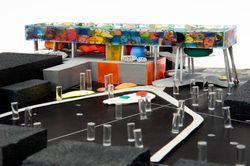
L’exposition présente les œuvres de l’architecte britannique Will Alsop, préparatoires au Sharp Centre for Design de l’Ontario College of Art and Design (OCAD) de Toronto, et s’attache en particulier au rôle qu’a joué la peinture dans son processus de création. La construction du Sharp Centre for Design de l’OCAD, conçu en collaboration avec Robbie/Young + Wright, s’est(...)
L’exposition présente les œuvres de l’architecte britannique Will Alsop, préparatoires au Sharp Centre for Design de l’Ontario College of Art and Design (OCAD) de Toronto, et s’attache en particulier au rôle qu’a joué la peinture dans son processus de création. La construction du Sharp Centre for Design de l’OCAD, conçu en collaboration avec Robbie/Young + Wright, s’est(...)
Localisation:
Salle octogonale
Salle octogonale
Date:
13 juin 2008 au 5 octobre 2008
13 juin 2008 au 5 octobre 2008
Titre:
Will Alsop : OCAD, un manifeste urbain
Actions:
Description:
L’exposition présente les œuvres de l’architecte britannique Will Alsop, préparatoires au Sharp Centre for Design de l’Ontario College of Art and Design (OCAD) de Toronto, et s’attache en particulier au rôle qu’a joué la peinture dans son processus de création. La construction du Sharp Centre for Design de l’OCAD, conçu en collaboration avec Robbie/Young + Wright, s’est(...)
Will Alsop : OCAD, un manifeste urbain
Actions:
Description:
L’exposition présente les œuvres de l’architecte britannique Will Alsop, préparatoires au Sharp Centre for Design de l’Ontario College of Art and Design (OCAD) de Toronto, et s’attache en particulier au rôle qu’a joué la peinture dans son processus de création. La construction du Sharp Centre for Design de l’OCAD, conçu en collaboration avec Robbie/Young + Wright, s’est(...)
Classification:
expositions
expositions
Date:
13 juin 2008 au
5 octobre 2008
13 juin 2008 au
5 octobre 2008
Localisation:
Salle octogonale
Salle octogonale
Classification:
archives
Niveau de description archivistique:
Fonds
archives
Niveau de description archivistique:
Fonds
Numéro de référence:
AP009
Résumé:
The Arcop Associates Maison Alcan project records, 1979 – 1983, document Arcop’s (Architects in Co-Partnership) design and construction of Alcan’s Montreal head office, Maison Alcan. These project records consist of the following: approximately 6000 drawings (including reprographic copies), 915 photographic materials, 15 l.m. of textual records, 2 models, 2 panels, 2 plaster mouldings, 1 book, and 1 mullion extrusion.
AP009
Résumé:
The Arcop Associates Maison Alcan project records, 1979 – 1983, document Arcop’s (Architects in Co-Partnership) design and construction of Alcan’s Montreal head office, Maison Alcan. These project records consist of the following: approximately 6000 drawings (including reprographic copies), 915 photographic materials, 15 l.m. of textual records, 2 models, 2 panels, 2 plaster mouldings, 1 book, and 1 mullion extrusion.
Personnes et institutions:
Date:
1979-1983
1979-1983
Titre:
Documents d’archives d’Arcop Associates pour le projet Maison Alcan
Actions:
AP009
Résumé:
The Arcop Associates Maison Alcan project records, 1979 – 1983, document Arcop’s (Architects in Co-Partnership) design and construction of Alcan’s Montreal head office, Maison Alcan. These project records consist of the following: approximately 6000 drawings (including reprographic copies), 915 photographic materials, 15 l.m. of textual records, 2 models, 2 panels, 2 plaster mouldings, 1 book, and 1 mullion extrusion.
Documents d’archives d’Arcop Associates pour le projet Maison Alcan
Actions:
AP009
Résumé:
The Arcop Associates Maison Alcan project records, 1979 – 1983, document Arcop’s (Architects in Co-Partnership) design and construction of Alcan’s Montreal head office, Maison Alcan. These project records consist of the following: approximately 6000 drawings (including reprographic copies), 915 photographic materials, 15 l.m. of textual records, 2 models, 2 panels, 2 plaster mouldings, 1 book, and 1 mullion extrusion.
Classification:
archives
Niveau de description archivistique:
Fonds
archives
Niveau de description archivistique:
Fonds
Date:
1979-1983
1979-1983
Personnes et institutions:
Niveau de description archivistique:
Sous-série
Sous-série
Numéro de référence:
AP140.S1.SS1
Description:
Sub-series documents James Stirling's student work, probably from his third to fifth year at the Liverpool School of Architecture in Liverpool, England, from 1947 to 1950, and during his studies at the Association for Planning and Regional Reconstruction in London, England, from 1950 to 1952. A project for a Community Centre for a Small Town in the Middle West was probably produced during a student exchange in New York City, New York in the fall of 1948. Sub-series include projects for a Forest Rangers Lookout Station, a House for an Architect, Organic Chemistry Laboratories, Stirling's thesis project for a Town Centre and Community Centre and a student competition entry for the Merseyside Film Institute. Material in this sub-series was probably produced between 1947 and 1975. The publication drawings for James Stirling's projects were often drawn by Leon Krier, Russell Bevington, or Ulrich Schaad ('British Architecture Today', 1991). Sub-series contains several presentation drawings and panels, publication drawings, a small number of working drawings, photographic materials, a presentation model and Stirling's 1950 bound thesis 'Plan of Town Centre and Development of Community Centre for Newton Aycliffe, Co. Durham'.
AP140.S1.SS1
Description:
Sub-series documents James Stirling's student work, probably from his third to fifth year at the Liverpool School of Architecture in Liverpool, England, from 1947 to 1950, and during his studies at the Association for Planning and Regional Reconstruction in London, England, from 1950 to 1952. A project for a Community Centre for a Small Town in the Middle West was probably produced during a student exchange in New York City, New York in the fall of 1948. Sub-series include projects for a Forest Rangers Lookout Station, a House for an Architect, Organic Chemistry Laboratories, Stirling's thesis project for a Town Centre and Community Centre and a student competition entry for the Merseyside Film Institute. Material in this sub-series was probably produced between 1947 and 1975. The publication drawings for James Stirling's projects were often drawn by Leon Krier, Russell Bevington, or Ulrich Schaad ('British Architecture Today', 1991). Sub-series contains several presentation drawings and panels, publication drawings, a small number of working drawings, photographic materials, a presentation model and Stirling's 1950 bound thesis 'Plan of Town Centre and Development of Community Centre for Newton Aycliffe, Co. Durham'.
Personnes et institutions:
Date:
[between 1947? and 1975?], predominant 1947-1952
[between 1947? and 1975?], predominant 1947-1952
Titre:
Student work
Actions:
AP140.S1.SS1
Description:
Sub-series documents James Stirling's student work, probably from his third to fifth year at the Liverpool School of Architecture in Liverpool, England, from 1947 to 1950, and during his studies at the Association for Planning and Regional Reconstruction in London, England, from 1950 to 1952. A project for a Community Centre for a Small Town in the Middle West was probably produced during a student exchange in New York City, New York in the fall of 1948. Sub-series include projects for a Forest Rangers Lookout Station, a House for an Architect, Organic Chemistry Laboratories, Stirling's thesis project for a Town Centre and Community Centre and a student competition entry for the Merseyside Film Institute. Material in this sub-series was probably produced between 1947 and 1975. The publication drawings for James Stirling's projects were often drawn by Leon Krier, Russell Bevington, or Ulrich Schaad ('British Architecture Today', 1991). Sub-series contains several presentation drawings and panels, publication drawings, a small number of working drawings, photographic materials, a presentation model and Stirling's 1950 bound thesis 'Plan of Town Centre and Development of Community Centre for Newton Aycliffe, Co. Durham'.
Student work
Actions:
AP140.S1.SS1
Description:
Sub-series documents James Stirling's student work, probably from his third to fifth year at the Liverpool School of Architecture in Liverpool, England, from 1947 to 1950, and during his studies at the Association for Planning and Regional Reconstruction in London, England, from 1950 to 1952. A project for a Community Centre for a Small Town in the Middle West was probably produced during a student exchange in New York City, New York in the fall of 1948. Sub-series include projects for a Forest Rangers Lookout Station, a House for an Architect, Organic Chemistry Laboratories, Stirling's thesis project for a Town Centre and Community Centre and a student competition entry for the Merseyside Film Institute. Material in this sub-series was probably produced between 1947 and 1975. The publication drawings for James Stirling's projects were often drawn by Leon Krier, Russell Bevington, or Ulrich Schaad ('British Architecture Today', 1991). Sub-series contains several presentation drawings and panels, publication drawings, a small number of working drawings, photographic materials, a presentation model and Stirling's 1950 bound thesis 'Plan of Town Centre and Development of Community Centre for Newton Aycliffe, Co. Durham'.
Niveau de description archivistique:
Sub-series 1
Sub-series 1
Date:
[between 1947? and 1975?], predominant 1947-1952
[between 1947? and 1975?], predominant 1947-1952
Personnes et institutions:
Classification:
archives
Niveau de description archivistique:
Fonds
archives
Niveau de description archivistique:
Fonds
Titre:
Fonds Hazen Sise
Fonds Hazen Sise
Numéro de référence:
AP112
Résumé:
The Hazen Sise fonds contains negatives, drawings, and other documents dating from 1933 to 1959. The negatives, taken in the early 1930s, mostly depict participants of the conferences CIAM IV and CIRPAC, including Le Corbusier, László Moholy-Nagy, Alvar Aalto and Fernand Léger. The drawings document the design of Beaver Lake Pavilion, built for the City of Montréal between 1955 and 1959 as part of the redevelopment of Mount Royal Park. Le fonds Hazen Sise est composé de négatifs, dessins, et autres documents datés entre 1933 et 1959. Les négatifs, pris au début des années 30s, présentent des participants des congres IVe CIAM et CIRPAC, incluant Le Corbusier, László Moholy-Nagy, Alvar Aalto et Fernand Léger. Les dessins documentent la conception du pavillon du Lac aux Castors, construit pour la Ville de Montréal entre 1955 et 1959 dans le cadre du réaménagement du Parc du Mont-Royal.
AP112
Résumé:
The Hazen Sise fonds contains negatives, drawings, and other documents dating from 1933 to 1959. The negatives, taken in the early 1930s, mostly depict participants of the conferences CIAM IV and CIRPAC, including Le Corbusier, László Moholy-Nagy, Alvar Aalto and Fernand Léger. The drawings document the design of Beaver Lake Pavilion, built for the City of Montréal between 1955 and 1959 as part of the redevelopment of Mount Royal Park. Le fonds Hazen Sise est composé de négatifs, dessins, et autres documents datés entre 1933 et 1959. Les négatifs, pris au début des années 30s, présentent des participants des congres IVe CIAM et CIRPAC, incluant Le Corbusier, László Moholy-Nagy, Alvar Aalto et Fernand Léger. Les dessins documentent la conception du pavillon du Lac aux Castors, construit pour la Ville de Montréal entre 1955 et 1959 dans le cadre du réaménagement du Parc du Mont-Royal.
Personnes et institutions:
Date:
1933-1959
1933-1959
Titre:
Fonds Hazen Sise
Actions:
AP112
Résumé:
The Hazen Sise fonds contains negatives, drawings, and other documents dating from 1933 to 1959. The negatives, taken in the early 1930s, mostly depict participants of the conferences CIAM IV and CIRPAC, including Le Corbusier, László Moholy-Nagy, Alvar Aalto and Fernand Léger. The drawings document the design of Beaver Lake Pavilion, built for the City of Montréal between 1955 and 1959 as part of the redevelopment of Mount Royal Park. Le fonds Hazen Sise est composé de négatifs, dessins, et autres documents datés entre 1933 et 1959. Les négatifs, pris au début des années 30s, présentent des participants des congres IVe CIAM et CIRPAC, incluant Le Corbusier, László Moholy-Nagy, Alvar Aalto et Fernand Léger. Les dessins documentent la conception du pavillon du Lac aux Castors, construit pour la Ville de Montréal entre 1955 et 1959 dans le cadre du réaménagement du Parc du Mont-Royal.
Fonds Hazen Sise
Actions:
AP112
Résumé:
The Hazen Sise fonds contains negatives, drawings, and other documents dating from 1933 to 1959. The negatives, taken in the early 1930s, mostly depict participants of the conferences CIAM IV and CIRPAC, including Le Corbusier, László Moholy-Nagy, Alvar Aalto and Fernand Léger. The drawings document the design of Beaver Lake Pavilion, built for the City of Montréal between 1955 and 1959 as part of the redevelopment of Mount Royal Park. Le fonds Hazen Sise est composé de négatifs, dessins, et autres documents datés entre 1933 et 1959. Les négatifs, pris au début des années 30s, présentent des participants des congres IVe CIAM et CIRPAC, incluant Le Corbusier, László Moholy-Nagy, Alvar Aalto et Fernand Léger. Les dessins documentent la conception du pavillon du Lac aux Castors, construit pour la Ville de Montréal entre 1955 et 1959 dans le cadre du réaménagement du Parc du Mont-Royal.
Classification:
archives
Niveau de description archivistique:
Fonds
archives
Niveau de description archivistique:
Fonds
Date:
1933-1959
1933-1959
Personnes et institutions:
Classification:
archives
Niveau de description archivistique:
Fonds
archives
Niveau de description archivistique:
Fonds
Titre:
Fonds Álvaro Siza
Fonds Álvaro Siza
Numéro de référence:
AP178
Description:
The Álvaro Siza fonds documents the architectural work of Portuguese architect Álvaro Siza. Records in this fonds document Siza’s projects from 1958-2012, including built and unbuilt designs. A collaborative project was established between the Canadian Centre for Architecture (CCA), Fundação de Serralves, and Fundação Calouste Gulbenkian to allow for international research and access to the archive. The archive is shared by the three institutions with each institution holding different projects while collaborating on the descriptive work and increasing the visibility of the archive. The holdings at both the Fundação de Serralves and Fundação Calouste Gulbenkian focus on Siza’s Portuguese projects, while the portion of the archive held by the CCA mainly includes Siza’s projects abroad. All three institutions are committed to describing the archive and making it accessible for scholarly research. The processing of the Siza archive held by the CCA has been divided into four phases to allow for access to parts of the archive while still in process. For the first, second, and third phases, the processing archivist has described the projects from the fifties, sixties, and seventies, as well as projects for the IBA competition in Berlin, urban renewal projects in The Hague from the eighties, urban plans, museums, and individual houses between 1980 and 2000. The processing archivist has also described approximately 203 sketchbooks. Many of these sketchbooks include sketches related to architectural projects which were processed. The complete list of projects processed by the CCA to date can be found in series AP178.S1. The bulk of the Álvaro Siza fonds is arranged in Series AP178.S1, which contains documentation for over 200 of Siza’s architectural projects. Records in this archive are predominantly from 1970 to 2000. Series AP178.S1 mainly contains conceptual, design development, presentation, and working drawings. Also included are photographic materials, models, born digital records, and textual documentation, which include correspondence, project proposals, and notes. The architect’s creative process is captured in 282 sketchbooks arranged in Series AP178.S2. In all there are approximately 60 000 drawings, 3000 folders of textual documentation, 9.46 linear meters of photographs and negatives, 6,545 slides, 250 CD-ROMS, 101 floppy disks, and 371 models that document the architectural activities of Siza and his office. Among the drawings are sketches by Siza on various items, such as napkins, receipts, envelopes, or on the back of working drawings. The fonds contains several types of architectural projects including residential buildings, museums, universities, urban plans, offices, and city restorations. Of particular significance are the sketchbooks, comprised of sketches for architectural projects, Siza’s travels, people, and animals as well as notes and draft letters. The sketchbooks are organized in chronological order, starting in the late 1970’s to the beginning of the 2000’s. Locations, notes, and dates have also been identified on the front of each sketchbook along with the sketchbook number. The sketchbooks provide a unique perspective of Siza’s use of drawing as part of his work process.
AP178
Description:
The Álvaro Siza fonds documents the architectural work of Portuguese architect Álvaro Siza. Records in this fonds document Siza’s projects from 1958-2012, including built and unbuilt designs. A collaborative project was established between the Canadian Centre for Architecture (CCA), Fundação de Serralves, and Fundação Calouste Gulbenkian to allow for international research and access to the archive. The archive is shared by the three institutions with each institution holding different projects while collaborating on the descriptive work and increasing the visibility of the archive. The holdings at both the Fundação de Serralves and Fundação Calouste Gulbenkian focus on Siza’s Portuguese projects, while the portion of the archive held by the CCA mainly includes Siza’s projects abroad. All three institutions are committed to describing the archive and making it accessible for scholarly research. The processing of the Siza archive held by the CCA has been divided into four phases to allow for access to parts of the archive while still in process. For the first, second, and third phases, the processing archivist has described the projects from the fifties, sixties, and seventies, as well as projects for the IBA competition in Berlin, urban renewal projects in The Hague from the eighties, urban plans, museums, and individual houses between 1980 and 2000. The processing archivist has also described approximately 203 sketchbooks. Many of these sketchbooks include sketches related to architectural projects which were processed. The complete list of projects processed by the CCA to date can be found in series AP178.S1. The bulk of the Álvaro Siza fonds is arranged in Series AP178.S1, which contains documentation for over 200 of Siza’s architectural projects. Records in this archive are predominantly from 1970 to 2000. Series AP178.S1 mainly contains conceptual, design development, presentation, and working drawings. Also included are photographic materials, models, born digital records, and textual documentation, which include correspondence, project proposals, and notes. The architect’s creative process is captured in 282 sketchbooks arranged in Series AP178.S2. In all there are approximately 60 000 drawings, 3000 folders of textual documentation, 9.46 linear meters of photographs and negatives, 6,545 slides, 250 CD-ROMS, 101 floppy disks, and 371 models that document the architectural activities of Siza and his office. Among the drawings are sketches by Siza on various items, such as napkins, receipts, envelopes, or on the back of working drawings. The fonds contains several types of architectural projects including residential buildings, museums, universities, urban plans, offices, and city restorations. Of particular significance are the sketchbooks, comprised of sketches for architectural projects, Siza’s travels, people, and animals as well as notes and draft letters. The sketchbooks are organized in chronological order, starting in the late 1970’s to the beginning of the 2000’s. Locations, notes, and dates have also been identified on the front of each sketchbook along with the sketchbook number. The sketchbooks provide a unique perspective of Siza’s use of drawing as part of his work process.
Personnes et institutions:
Date:
1958-2002
1958-2002
Titre:
Fonds Álvaro Siza
Actions:
AP178
Description:
The Álvaro Siza fonds documents the architectural work of Portuguese architect Álvaro Siza. Records in this fonds document Siza’s projects from 1958-2012, including built and unbuilt designs. A collaborative project was established between the Canadian Centre for Architecture (CCA), Fundação de Serralves, and Fundação Calouste Gulbenkian to allow for international research and access to the archive. The archive is shared by the three institutions with each institution holding different projects while collaborating on the descriptive work and increasing the visibility of the archive. The holdings at both the Fundação de Serralves and Fundação Calouste Gulbenkian focus on Siza’s Portuguese projects, while the portion of the archive held by the CCA mainly includes Siza’s projects abroad. All three institutions are committed to describing the archive and making it accessible for scholarly research. The processing of the Siza archive held by the CCA has been divided into four phases to allow for access to parts of the archive while still in process. For the first, second, and third phases, the processing archivist has described the projects from the fifties, sixties, and seventies, as well as projects for the IBA competition in Berlin, urban renewal projects in The Hague from the eighties, urban plans, museums, and individual houses between 1980 and 2000. The processing archivist has also described approximately 203 sketchbooks. Many of these sketchbooks include sketches related to architectural projects which were processed. The complete list of projects processed by the CCA to date can be found in series AP178.S1. The bulk of the Álvaro Siza fonds is arranged in Series AP178.S1, which contains documentation for over 200 of Siza’s architectural projects. Records in this archive are predominantly from 1970 to 2000. Series AP178.S1 mainly contains conceptual, design development, presentation, and working drawings. Also included are photographic materials, models, born digital records, and textual documentation, which include correspondence, project proposals, and notes. The architect’s creative process is captured in 282 sketchbooks arranged in Series AP178.S2. In all there are approximately 60 000 drawings, 3000 folders of textual documentation, 9.46 linear meters of photographs and negatives, 6,545 slides, 250 CD-ROMS, 101 floppy disks, and 371 models that document the architectural activities of Siza and his office. Among the drawings are sketches by Siza on various items, such as napkins, receipts, envelopes, or on the back of working drawings. The fonds contains several types of architectural projects including residential buildings, museums, universities, urban plans, offices, and city restorations. Of particular significance are the sketchbooks, comprised of sketches for architectural projects, Siza’s travels, people, and animals as well as notes and draft letters. The sketchbooks are organized in chronological order, starting in the late 1970’s to the beginning of the 2000’s. Locations, notes, and dates have also been identified on the front of each sketchbook along with the sketchbook number. The sketchbooks provide a unique perspective of Siza’s use of drawing as part of his work process.
Fonds Álvaro Siza
Actions:
AP178
Description:
The Álvaro Siza fonds documents the architectural work of Portuguese architect Álvaro Siza. Records in this fonds document Siza’s projects from 1958-2012, including built and unbuilt designs. A collaborative project was established between the Canadian Centre for Architecture (CCA), Fundação de Serralves, and Fundação Calouste Gulbenkian to allow for international research and access to the archive. The archive is shared by the three institutions with each institution holding different projects while collaborating on the descriptive work and increasing the visibility of the archive. The holdings at both the Fundação de Serralves and Fundação Calouste Gulbenkian focus on Siza’s Portuguese projects, while the portion of the archive held by the CCA mainly includes Siza’s projects abroad. All three institutions are committed to describing the archive and making it accessible for scholarly research. The processing of the Siza archive held by the CCA has been divided into four phases to allow for access to parts of the archive while still in process. For the first, second, and third phases, the processing archivist has described the projects from the fifties, sixties, and seventies, as well as projects for the IBA competition in Berlin, urban renewal projects in The Hague from the eighties, urban plans, museums, and individual houses between 1980 and 2000. The processing archivist has also described approximately 203 sketchbooks. Many of these sketchbooks include sketches related to architectural projects which were processed. The complete list of projects processed by the CCA to date can be found in series AP178.S1. The bulk of the Álvaro Siza fonds is arranged in Series AP178.S1, which contains documentation for over 200 of Siza’s architectural projects. Records in this archive are predominantly from 1970 to 2000. Series AP178.S1 mainly contains conceptual, design development, presentation, and working drawings. Also included are photographic materials, models, born digital records, and textual documentation, which include correspondence, project proposals, and notes. The architect’s creative process is captured in 282 sketchbooks arranged in Series AP178.S2. In all there are approximately 60 000 drawings, 3000 folders of textual documentation, 9.46 linear meters of photographs and negatives, 6,545 slides, 250 CD-ROMS, 101 floppy disks, and 371 models that document the architectural activities of Siza and his office. Among the drawings are sketches by Siza on various items, such as napkins, receipts, envelopes, or on the back of working drawings. The fonds contains several types of architectural projects including residential buildings, museums, universities, urban plans, offices, and city restorations. Of particular significance are the sketchbooks, comprised of sketches for architectural projects, Siza’s travels, people, and animals as well as notes and draft letters. The sketchbooks are organized in chronological order, starting in the late 1970’s to the beginning of the 2000’s. Locations, notes, and dates have also been identified on the front of each sketchbook along with the sketchbook number. The sketchbooks provide a unique perspective of Siza’s use of drawing as part of his work process.
Classification:
archives
Niveau de description archivistique:
Fonds
archives
Niveau de description archivistique:
Fonds
Date:
1958-2002
1958-2002
Personnes et institutions:
Niveau de description archivistique:
Série(s)
Série(s)
Titre:
CIAM IV, CIRPAC and London
CIAM IV, CIRPAC and London
Numéro de référence:
AP112.S1
Description:
The series contains seven bands of negatives, divided into groups of two and three negatives a band. The first five bands document the 4th Congrès International d'Architecture Moderne (CIAM) held on board the SS Patris II from 29 July to 13 August 1933, as it travelled between Marseilles, France, and Athens, Greece, and then returned. The conference, themed "The Functional City", presented and discussed the results of an analysis of more than thirty cities, and sought to establish new principles in urban planning. Sise participated at the conference as the Canadian delegate and presented the city of Los Angeles, California. The resolutions adopted at the conference were published for the first time in November under the title "Constatations du quatrième CIAM". These findings formed the base of the Charte d'Athenès written by Le Corbusier in 1941. The negatives show some of the participants of the conference including: Le Corbusier (1887-1965), from the French delegation; László Moholy-Nagy (1895-1946), from the German delegation, who was in charge of filming the presentations; Alvar Aalto (1898-1976), representing Finland; and the painter Fernand Léger (1881-1955), also from the French delegatation, who presented on the importance of colour in architecture. The two other bands of negatives provide evidence of Sise's attendance at Comité International pour la Résolution des Problèmes d'Architecture Contemporaine (CIRPAC), held in May 1934 at the Royal Institute of British Architects in London, England, to establish the program for the next CIAM (1). They also show his meeting in London with Georges Braque during the summer of the same year. (1) Eric Mumford states in "The CIAM Discourse on Urbanism, 1928-1960" that Le Corbusier did not participate at this conference (p. 92). _____________________ La série contient des bandes de négatifs, qui contiennent soit deux, soit trois images, et sont au nombre de sept. Les cinq premières bandes documentent le IVe Congrès International d'Architecture Moderne (CIAM) tenu à bord du SS Patris II du 29 juillet au 13 août 1933, entre Marseilles, France et Athènes, Grèce, à Athènes même, et sur le même bateau de croisière durant le retour à Marseilles. Le Congrès, qui se déroulait autour du thème de "The functional city", consistait en la communication des résultats de l'analyse de plus de trente villes et l'objectif visait à établir de nouveaux principes d'urbanisme. Hazen Sise participait au Congrès à titre de délégué du Canada et présenta la ville de Los Angeles, Californie. Les résolutions prises lors du Congrès ont été publiées pour la première fois au mois de novembre suivant sous le titre de "Constatations du quatrième CIAM". Ces "Constatations" seront ensuite à la base de la Charte d'Athènes que Le Corbusier rédigea en 1941. Les clichés montrent quelques-uns des participants au Congrès, dont Le Corbusier (1887-1965), de la délégation française, alors qu'il faisait une communication; László Moholy-Nagy (1895-1946), de la délégation allemande, à qui on avait confié la tâche de filmer les exposés; Alvar Aalto (1898-1976), représentant la Finlande; et le peintre Fernand Léger (1881-1955), délégué de la France, qui présenta un discours à l'attention des architectes au sujet de l'importance de la couleur en architecture. Les deux autres bandes de négatifs témoignent de la présence de Sise au (Comité International pour la Résolution des Problèmes d'Architecture Contemporaine (CIRPAC) à Londres, Angleterre, tenu en mai 1934 au Royal Institute of British Architects pour établir le programme du prochain CIAM (1) et de sa rencontre à Londres avec Georges Braque durant l'été de la même année. (1) Eric Mumford affirme cependant dans "The CIAM Discourse on Urbanism, 1928-1960" que Le Corbusier n'a pas participé à ce congrès (p. 92).
AP112.S1
Description:
The series contains seven bands of negatives, divided into groups of two and three negatives a band. The first five bands document the 4th Congrès International d'Architecture Moderne (CIAM) held on board the SS Patris II from 29 July to 13 August 1933, as it travelled between Marseilles, France, and Athens, Greece, and then returned. The conference, themed "The Functional City", presented and discussed the results of an analysis of more than thirty cities, and sought to establish new principles in urban planning. Sise participated at the conference as the Canadian delegate and presented the city of Los Angeles, California. The resolutions adopted at the conference were published for the first time in November under the title "Constatations du quatrième CIAM". These findings formed the base of the Charte d'Athenès written by Le Corbusier in 1941. The negatives show some of the participants of the conference including: Le Corbusier (1887-1965), from the French delegation; László Moholy-Nagy (1895-1946), from the German delegation, who was in charge of filming the presentations; Alvar Aalto (1898-1976), representing Finland; and the painter Fernand Léger (1881-1955), also from the French delegatation, who presented on the importance of colour in architecture. The two other bands of negatives provide evidence of Sise's attendance at Comité International pour la Résolution des Problèmes d'Architecture Contemporaine (CIRPAC), held in May 1934 at the Royal Institute of British Architects in London, England, to establish the program for the next CIAM (1). They also show his meeting in London with Georges Braque during the summer of the same year. (1) Eric Mumford states in "The CIAM Discourse on Urbanism, 1928-1960" that Le Corbusier did not participate at this conference (p. 92). _____________________ La série contient des bandes de négatifs, qui contiennent soit deux, soit trois images, et sont au nombre de sept. Les cinq premières bandes documentent le IVe Congrès International d'Architecture Moderne (CIAM) tenu à bord du SS Patris II du 29 juillet au 13 août 1933, entre Marseilles, France et Athènes, Grèce, à Athènes même, et sur le même bateau de croisière durant le retour à Marseilles. Le Congrès, qui se déroulait autour du thème de "The functional city", consistait en la communication des résultats de l'analyse de plus de trente villes et l'objectif visait à établir de nouveaux principes d'urbanisme. Hazen Sise participait au Congrès à titre de délégué du Canada et présenta la ville de Los Angeles, Californie. Les résolutions prises lors du Congrès ont été publiées pour la première fois au mois de novembre suivant sous le titre de "Constatations du quatrième CIAM". Ces "Constatations" seront ensuite à la base de la Charte d'Athènes que Le Corbusier rédigea en 1941. Les clichés montrent quelques-uns des participants au Congrès, dont Le Corbusier (1887-1965), de la délégation française, alors qu'il faisait une communication; László Moholy-Nagy (1895-1946), de la délégation allemande, à qui on avait confié la tâche de filmer les exposés; Alvar Aalto (1898-1976), représentant la Finlande; et le peintre Fernand Léger (1881-1955), délégué de la France, qui présenta un discours à l'attention des architectes au sujet de l'importance de la couleur en architecture. Les deux autres bandes de négatifs témoignent de la présence de Sise au (Comité International pour la Résolution des Problèmes d'Architecture Contemporaine (CIRPAC) à Londres, Angleterre, tenu en mai 1934 au Royal Institute of British Architects pour établir le programme du prochain CIAM (1) et de sa rencontre à Londres avec Georges Braque durant l'été de la même année. (1) Eric Mumford affirme cependant dans "The CIAM Discourse on Urbanism, 1928-1960" que Le Corbusier n'a pas participé à ce congrès (p. 92).
Personnes et institutions:
Date:
1933-1934
1933-1934
Titre:
CIAM IV, CIRPAC and London
Actions:
AP112.S1
Description:
The series contains seven bands of negatives, divided into groups of two and three negatives a band. The first five bands document the 4th Congrès International d'Architecture Moderne (CIAM) held on board the SS Patris II from 29 July to 13 August 1933, as it travelled between Marseilles, France, and Athens, Greece, and then returned. The conference, themed "The Functional City", presented and discussed the results of an analysis of more than thirty cities, and sought to establish new principles in urban planning. Sise participated at the conference as the Canadian delegate and presented the city of Los Angeles, California. The resolutions adopted at the conference were published for the first time in November under the title "Constatations du quatrième CIAM". These findings formed the base of the Charte d'Athenès written by Le Corbusier in 1941. The negatives show some of the participants of the conference including: Le Corbusier (1887-1965), from the French delegation; László Moholy-Nagy (1895-1946), from the German delegation, who was in charge of filming the presentations; Alvar Aalto (1898-1976), representing Finland; and the painter Fernand Léger (1881-1955), also from the French delegatation, who presented on the importance of colour in architecture. The two other bands of negatives provide evidence of Sise's attendance at Comité International pour la Résolution des Problèmes d'Architecture Contemporaine (CIRPAC), held in May 1934 at the Royal Institute of British Architects in London, England, to establish the program for the next CIAM (1). They also show his meeting in London with Georges Braque during the summer of the same year. (1) Eric Mumford states in "The CIAM Discourse on Urbanism, 1928-1960" that Le Corbusier did not participate at this conference (p. 92). _____________________ La série contient des bandes de négatifs, qui contiennent soit deux, soit trois images, et sont au nombre de sept. Les cinq premières bandes documentent le IVe Congrès International d'Architecture Moderne (CIAM) tenu à bord du SS Patris II du 29 juillet au 13 août 1933, entre Marseilles, France et Athènes, Grèce, à Athènes même, et sur le même bateau de croisière durant le retour à Marseilles. Le Congrès, qui se déroulait autour du thème de "The functional city", consistait en la communication des résultats de l'analyse de plus de trente villes et l'objectif visait à établir de nouveaux principes d'urbanisme. Hazen Sise participait au Congrès à titre de délégué du Canada et présenta la ville de Los Angeles, Californie. Les résolutions prises lors du Congrès ont été publiées pour la première fois au mois de novembre suivant sous le titre de "Constatations du quatrième CIAM". Ces "Constatations" seront ensuite à la base de la Charte d'Athènes que Le Corbusier rédigea en 1941. Les clichés montrent quelques-uns des participants au Congrès, dont Le Corbusier (1887-1965), de la délégation française, alors qu'il faisait une communication; László Moholy-Nagy (1895-1946), de la délégation allemande, à qui on avait confié la tâche de filmer les exposés; Alvar Aalto (1898-1976), représentant la Finlande; et le peintre Fernand Léger (1881-1955), délégué de la France, qui présenta un discours à l'attention des architectes au sujet de l'importance de la couleur en architecture. Les deux autres bandes de négatifs témoignent de la présence de Sise au (Comité International pour la Résolution des Problèmes d'Architecture Contemporaine (CIRPAC) à Londres, Angleterre, tenu en mai 1934 au Royal Institute of British Architects pour établir le programme du prochain CIAM (1) et de sa rencontre à Londres avec Georges Braque durant l'été de la même année. (1) Eric Mumford affirme cependant dans "The CIAM Discourse on Urbanism, 1928-1960" que Le Corbusier n'a pas participé à ce congrès (p. 92).
CIAM IV, CIRPAC and London
Actions:
AP112.S1
Description:
The series contains seven bands of negatives, divided into groups of two and three negatives a band. The first five bands document the 4th Congrès International d'Architecture Moderne (CIAM) held on board the SS Patris II from 29 July to 13 August 1933, as it travelled between Marseilles, France, and Athens, Greece, and then returned. The conference, themed "The Functional City", presented and discussed the results of an analysis of more than thirty cities, and sought to establish new principles in urban planning. Sise participated at the conference as the Canadian delegate and presented the city of Los Angeles, California. The resolutions adopted at the conference were published for the first time in November under the title "Constatations du quatrième CIAM". These findings formed the base of the Charte d'Athenès written by Le Corbusier in 1941. The negatives show some of the participants of the conference including: Le Corbusier (1887-1965), from the French delegation; László Moholy-Nagy (1895-1946), from the German delegation, who was in charge of filming the presentations; Alvar Aalto (1898-1976), representing Finland; and the painter Fernand Léger (1881-1955), also from the French delegatation, who presented on the importance of colour in architecture. The two other bands of negatives provide evidence of Sise's attendance at Comité International pour la Résolution des Problèmes d'Architecture Contemporaine (CIRPAC), held in May 1934 at the Royal Institute of British Architects in London, England, to establish the program for the next CIAM (1). They also show his meeting in London with Georges Braque during the summer of the same year. (1) Eric Mumford states in "The CIAM Discourse on Urbanism, 1928-1960" that Le Corbusier did not participate at this conference (p. 92). _____________________ La série contient des bandes de négatifs, qui contiennent soit deux, soit trois images, et sont au nombre de sept. Les cinq premières bandes documentent le IVe Congrès International d'Architecture Moderne (CIAM) tenu à bord du SS Patris II du 29 juillet au 13 août 1933, entre Marseilles, France et Athènes, Grèce, à Athènes même, et sur le même bateau de croisière durant le retour à Marseilles. Le Congrès, qui se déroulait autour du thème de "The functional city", consistait en la communication des résultats de l'analyse de plus de trente villes et l'objectif visait à établir de nouveaux principes d'urbanisme. Hazen Sise participait au Congrès à titre de délégué du Canada et présenta la ville de Los Angeles, Californie. Les résolutions prises lors du Congrès ont été publiées pour la première fois au mois de novembre suivant sous le titre de "Constatations du quatrième CIAM". Ces "Constatations" seront ensuite à la base de la Charte d'Athènes que Le Corbusier rédigea en 1941. Les clichés montrent quelques-uns des participants au Congrès, dont Le Corbusier (1887-1965), de la délégation française, alors qu'il faisait une communication; László Moholy-Nagy (1895-1946), de la délégation allemande, à qui on avait confié la tâche de filmer les exposés; Alvar Aalto (1898-1976), représentant la Finlande; et le peintre Fernand Léger (1881-1955), délégué de la France, qui présenta un discours à l'attention des architectes au sujet de l'importance de la couleur en architecture. Les deux autres bandes de négatifs témoignent de la présence de Sise au (Comité International pour la Résolution des Problèmes d'Architecture Contemporaine (CIRPAC) à Londres, Angleterre, tenu en mai 1934 au Royal Institute of British Architects pour établir le programme du prochain CIAM (1) et de sa rencontre à Londres avec Georges Braque durant l'été de la même année. (1) Eric Mumford affirme cependant dans "The CIAM Discourse on Urbanism, 1928-1960" que Le Corbusier n'a pas participé à ce congrès (p. 92).
Niveau de description archivistique:
Series
Series
Date:
1933-1934
1933-1934
Personnes et institutions:
Classification:
expositions
expositions
Description:
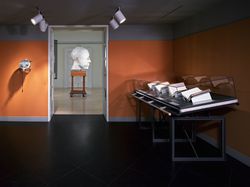
Piero en tête présente des sculptures contemporaines de l’artiste canado-britannique Geoffrey Smedley, ainsi que 30 livres rares datant du XVe au XVIIIe siècle. Les sculptures de Smedley s’inspirent d’une série de dessins de tête humaine, réalisés par le maître de la Renaissance Piero della Francesca. L’exposition relie ces dessins et les sculptures de Smedley à la(...)
Piero en tête présente des sculptures contemporaines de l’artiste canado-britannique Geoffrey Smedley, ainsi que 30 livres rares datant du XVe au XVIIIe siècle. Les sculptures de Smedley s’inspirent d’une série de dessins de tête humaine, réalisés par le maître de la Renaissance Piero della Francesca. L’exposition relie ces dessins et les sculptures de Smedley à la(...)
Localisation:
Salle octogonale
Salle octogonale
Date:
2 mai 2001 au 16 septembre 2001
2 mai 2001 au 16 septembre 2001
Titre:
Piero en tête
Actions:
Description:
Piero en tête présente des sculptures contemporaines de l’artiste canado-britannique Geoffrey Smedley, ainsi que 30 livres rares datant du XVe au XVIIIe siècle. Les sculptures de Smedley s’inspirent d’une série de dessins de tête humaine, réalisés par le maître de la Renaissance Piero della Francesca. L’exposition relie ces dessins et les sculptures de Smedley à la(...)
Piero en tête
Actions:
Description:
Piero en tête présente des sculptures contemporaines de l’artiste canado-britannique Geoffrey Smedley, ainsi que 30 livres rares datant du XVe au XVIIIe siècle. Les sculptures de Smedley s’inspirent d’une série de dessins de tête humaine, réalisés par le maître de la Renaissance Piero della Francesca. L’exposition relie ces dessins et les sculptures de Smedley à la(...)
Classification:
expositions
expositions
Date:
2 mai 2001 au
16 septembre 2001
2 mai 2001 au
16 septembre 2001
Localisation:
Salle octogonale
Salle octogonale
Classification:
archives
Niveau de description archivistique:
Fonds
archives
Niveau de description archivistique:
Fonds
Numéro de référence:
AP196
Résumé:
Studio Gang Ford Calumet Environmental Center project records, 2003-2012, documents the design process for the Ford Calumet Environmental Center in Chicago, United-States. The records represent both phases during the competition and the full-term design, after the firm won the project. The records consist of born-digital material, sketches and drawings, textual records, photographs and seven models.
AP196
Résumé:
Studio Gang Ford Calumet Environmental Center project records, 2003-2012, documents the design process for the Ford Calumet Environmental Center in Chicago, United-States. The records represent both phases during the competition and the full-term design, after the firm won the project. The records consist of born-digital material, sketches and drawings, textual records, photographs and seven models.
Personnes et institutions:
Date:
2003-2011
2003-2011
Titre:
Documents d’archives de Studio Gang pour le projet Ford Calumet Environmental Center
Actions:
AP196
Résumé:
Studio Gang Ford Calumet Environmental Center project records, 2003-2012, documents the design process for the Ford Calumet Environmental Center in Chicago, United-States. The records represent both phases during the competition and the full-term design, after the firm won the project. The records consist of born-digital material, sketches and drawings, textual records, photographs and seven models.
Documents d’archives de Studio Gang pour le projet Ford Calumet Environmental Center
Actions:
AP196
Résumé:
Studio Gang Ford Calumet Environmental Center project records, 2003-2012, documents the design process for the Ford Calumet Environmental Center in Chicago, United-States. The records represent both phases during the competition and the full-term design, after the firm won the project. The records consist of born-digital material, sketches and drawings, textual records, photographs and seven models.
Classification:
archives
Niveau de description archivistique:
Fonds
archives
Niveau de description archivistique:
Fonds
Date:
2003-2011
2003-2011
Personnes et institutions:


