


3314 Résultats
Niveau de description archivistique:
Série(s)
Série(s)
Titre:
Carnet de croquis
Carnet de croquis
Numéro de référence:
AP066.S1
Description:
La série est composée d'un groupe de onze carnets contenant des notes et des croquis relatifs aux projets conçus par Jacques Rousseau entre 1982 et 1997. Presque tous les projets de Rousseau y sont représentés. On y retrouve aussi des ébauches de projets qui ont été soit abandonnés, comme la transformation de la maison Coloniale en " Maison de l'architecture ", soit développés dans d'autres projets, comme, par exemple, le projet de Montréal " sous-terrain " qui a servi à la fois au projet du Musée des Beaux-Arts de Montréal et à l'exposition Du poétique de la maquette et de ses répliques.
AP066.S1
Description:
La série est composée d'un groupe de onze carnets contenant des notes et des croquis relatifs aux projets conçus par Jacques Rousseau entre 1982 et 1997. Presque tous les projets de Rousseau y sont représentés. On y retrouve aussi des ébauches de projets qui ont été soit abandonnés, comme la transformation de la maison Coloniale en " Maison de l'architecture ", soit développés dans d'autres projets, comme, par exemple, le projet de Montréal " sous-terrain " qui a servi à la fois au projet du Musée des Beaux-Arts de Montréal et à l'exposition Du poétique de la maquette et de ses répliques.
Personnes et institutions:
Date:
1982-1997
1982-1997
Titre:
Carnet de croquis
Actions:
AP066.S1
Description:
La série est composée d'un groupe de onze carnets contenant des notes et des croquis relatifs aux projets conçus par Jacques Rousseau entre 1982 et 1997. Presque tous les projets de Rousseau y sont représentés. On y retrouve aussi des ébauches de projets qui ont été soit abandonnés, comme la transformation de la maison Coloniale en " Maison de l'architecture ", soit développés dans d'autres projets, comme, par exemple, le projet de Montréal " sous-terrain " qui a servi à la fois au projet du Musée des Beaux-Arts de Montréal et à l'exposition Du poétique de la maquette et de ses répliques.
Carnet de croquis
Actions:
AP066.S1
Description:
La série est composée d'un groupe de onze carnets contenant des notes et des croquis relatifs aux projets conçus par Jacques Rousseau entre 1982 et 1997. Presque tous les projets de Rousseau y sont représentés. On y retrouve aussi des ébauches de projets qui ont été soit abandonnés, comme la transformation de la maison Coloniale en " Maison de l'architecture ", soit développés dans d'autres projets, comme, par exemple, le projet de Montréal " sous-terrain " qui a servi à la fois au projet du Musée des Beaux-Arts de Montréal et à l'exposition Du poétique de la maquette et de ses répliques.
Niveau de description archivistique:
Series
Series
Date:
1982-1997
1982-1997
Personnes et institutions:
Niveau de description archivistique:
Sous-série
Sous-série
Numéro de référence:
AP156.S6.SS4.D4
Description:
Le dossier documente les rénovations et les transformations à l'Immeuble Clarté à Genève, en Suisse. Le matériel dans ce dossier a été produit entre 1972 et 1995. Le dossier contient des dessins et des reprographies. File documents the renovations and alterations to the Immeuble Clarté in Geneva, Switzerland. The material in this file was produced between 1972 and 1995. The file contains drawings and reprographic copies.
AP156.S6.SS4.D4
Description:
Le dossier documente les rénovations et les transformations à l'Immeuble Clarté à Genève, en Suisse. Le matériel dans ce dossier a été produit entre 1972 et 1995. Le dossier contient des dessins et des reprographies. File documents the renovations and alterations to the Immeuble Clarté in Geneva, Switzerland. The material in this file was produced between 1972 and 1995. The file contains drawings and reprographic copies.
Personnes et institutions:
Date:
1972-1995
1972-1995
Titre:
Immeuble Clarté = Immeuble Clarté
Actions:
AP156.S6.SS4.D4
Description:
Le dossier documente les rénovations et les transformations à l'Immeuble Clarté à Genève, en Suisse. Le matériel dans ce dossier a été produit entre 1972 et 1995. Le dossier contient des dessins et des reprographies. File documents the renovations and alterations to the Immeuble Clarté in Geneva, Switzerland. The material in this file was produced between 1972 and 1995. The file contains drawings and reprographic copies.
Immeuble Clarté = Immeuble Clarté
Actions:
AP156.S6.SS4.D4
Description:
Le dossier documente les rénovations et les transformations à l'Immeuble Clarté à Genève, en Suisse. Le matériel dans ce dossier a été produit entre 1972 et 1995. Le dossier contient des dessins et des reprographies. File documents the renovations and alterations to the Immeuble Clarté in Geneva, Switzerland. The material in this file was produced between 1972 and 1995. The file contains drawings and reprographic copies.
Niveau de description archivistique:
Dossier 4
Dossier 4
Date:
1972-1995
1972-1995
Personnes et institutions:
Niveau de description archivistique:
Projet
Projet
Numéro de référence:
AP207.S1.2012.PR02
Description:
The project series documents a series of photographs entitled "Progetti D'Architettura" by Pettena in 2012. The photographs series consists of a landscape photographs showing geological formations similar to the one seen from the city of Bolzano, Pettena's birthplace. This project is "reflections on architecture inspired by the mountains of his birthplace, symbol of a presence that conceptually, and often unconsciously, accompanies us in our aesthetic choices. Choices that are translated in architecture through the awareness of the transformation of spaces through time and of the effects of different lights and different perceptions." [1] The project series contains a photo montage of landscape photographs. Source: [1] Gianni Pettena website, https://www.giannipettena.it/italiano/opere-1/nat-architecture-projects-2012/ (last accessed 27 January 2020)
AP207.S1.2012.PR02
Description:
The project series documents a series of photographs entitled "Progetti D'Architettura" by Pettena in 2012. The photographs series consists of a landscape photographs showing geological formations similar to the one seen from the city of Bolzano, Pettena's birthplace. This project is "reflections on architecture inspired by the mountains of his birthplace, symbol of a presence that conceptually, and often unconsciously, accompanies us in our aesthetic choices. Choices that are translated in architecture through the awareness of the transformation of spaces through time and of the effects of different lights and different perceptions." [1] The project series contains a photo montage of landscape photographs. Source: [1] Gianni Pettena website, https://www.giannipettena.it/italiano/opere-1/nat-architecture-projects-2012/ (last accessed 27 January 2020)
Personnes et institutions:
Date:
2012-2015
2012-2015
Titre:
Progetti D'Architettura [Architecture Projects] (2012)
Actions:
AP207.S1.2012.PR02
Description:
The project series documents a series of photographs entitled "Progetti D'Architettura" by Pettena in 2012. The photographs series consists of a landscape photographs showing geological formations similar to the one seen from the city of Bolzano, Pettena's birthplace. This project is "reflections on architecture inspired by the mountains of his birthplace, symbol of a presence that conceptually, and often unconsciously, accompanies us in our aesthetic choices. Choices that are translated in architecture through the awareness of the transformation of spaces through time and of the effects of different lights and different perceptions." [1] The project series contains a photo montage of landscape photographs. Source: [1] Gianni Pettena website, https://www.giannipettena.it/italiano/opere-1/nat-architecture-projects-2012/ (last accessed 27 January 2020)
Progetti D'Architettura [Architecture Projects] (2012)
Actions:
AP207.S1.2012.PR02
Description:
The project series documents a series of photographs entitled "Progetti D'Architettura" by Pettena in 2012. The photographs series consists of a landscape photographs showing geological formations similar to the one seen from the city of Bolzano, Pettena's birthplace. This project is "reflections on architecture inspired by the mountains of his birthplace, symbol of a presence that conceptually, and often unconsciously, accompanies us in our aesthetic choices. Choices that are translated in architecture through the awareness of the transformation of spaces through time and of the effects of different lights and different perceptions." [1] The project series contains a photo montage of landscape photographs. Source: [1] Gianni Pettena website, https://www.giannipettena.it/italiano/opere-1/nat-architecture-projects-2012/ (last accessed 27 January 2020)
Niveau de description archivistique:
Project
Project
Date:
2012-2015
2012-2015
Personnes et institutions:
Classification:
dessins
Quantité:
6 dessin(s)
dessins
Quantité:
6 dessin(s)
Numéro de référence:
ARCH171307
Description:
Relevé du sous-sol et du rez-de-chaussée Relevé de l'étage et des combles Plans pour les transformations du sous-sol et du rez-de-chaussée Plans pour les transformations à l'étage et dans les combles Élévations et coupes des transformations
ARCH171307
Description:
Relevé du sous-sol et du rez-de-chaussée Relevé de l'étage et des combles Plans pour les transformations du sous-sol et du rez-de-chaussée Plans pour les transformations à l'étage et dans les combles Élévations et coupes des transformations
Personnes et institutions:
Titre:
Relevé et plans du sous-sol, du rez-de-chaussée et de l'étage et des combles
Actions:
ARCH171307
Description:
Relevé du sous-sol et du rez-de-chaussée Relevé de l'étage et des combles Plans pour les transformations du sous-sol et du rez-de-chaussée Plans pour les transformations à l'étage et dans les combles Élévations et coupes des transformations
Relevé et plans du sous-sol, du rez-de-chaussée et de l'étage et des combles
Actions:
ARCH171307
Description:
Relevé du sous-sol et du rez-de-chaussée Relevé de l'étage et des combles Plans pour les transformations du sous-sol et du rez-de-chaussée Plans pour les transformations à l'étage et dans les combles Élévations et coupes des transformations
Classification:
dessins
Quantité:
6 dessin(s)
dessins
Quantité:
6 dessin(s)
Personnes et institutions:
Niveau de description archivistique:
Projet
Projet
Numéro de référence:
AP148.S1.1967.PR01
Description:
This project series documents Poli's contribution to the competition entry for the restoration of a 16th century fort in Florence, the Fortezza da Bassa and its transformation into a National Centre for Arts and Crafts. This competition design was a Superstudio project led by Adolfo Natalini, reflecting the group's interest at the time in architecture on a "monumental' scale" (Lang and Menking, 2003, 100). Project material consists of study sketches in coloured pencil and graphite, many with annotations, and a page of typed notes, also with smaller sketches. Poli's sketches and notes seem to focus on designs for the entrance to the fort -- "ingresso alla Fortezza" -- and the movement of spectators into the fort. The typed notes and some sketches suggest the idea of a pinball machine with flippers and multi coloured lights lighting up a path.
AP148.S1.1967.PR01
Description:
This project series documents Poli's contribution to the competition entry for the restoration of a 16th century fort in Florence, the Fortezza da Bassa and its transformation into a National Centre for Arts and Crafts. This competition design was a Superstudio project led by Adolfo Natalini, reflecting the group's interest at the time in architecture on a "monumental' scale" (Lang and Menking, 2003, 100). Project material consists of study sketches in coloured pencil and graphite, many with annotations, and a page of typed notes, also with smaller sketches. Poli's sketches and notes seem to focus on designs for the entrance to the fort -- "ingresso alla Fortezza" -- and the movement of spectators into the fort. The typed notes and some sketches suggest the idea of a pinball machine with flippers and multi coloured lights lighting up a path.
Personnes et institutions:
Date:
1967-1968
1967-1968
Titre:
Competition Fortezza da Basso, National Centre for Arts and Crafts, Florence, Italy (1967)
Actions:
AP148.S1.1967.PR01
Description:
This project series documents Poli's contribution to the competition entry for the restoration of a 16th century fort in Florence, the Fortezza da Bassa and its transformation into a National Centre for Arts and Crafts. This competition design was a Superstudio project led by Adolfo Natalini, reflecting the group's interest at the time in architecture on a "monumental' scale" (Lang and Menking, 2003, 100). Project material consists of study sketches in coloured pencil and graphite, many with annotations, and a page of typed notes, also with smaller sketches. Poli's sketches and notes seem to focus on designs for the entrance to the fort -- "ingresso alla Fortezza" -- and the movement of spectators into the fort. The typed notes and some sketches suggest the idea of a pinball machine with flippers and multi coloured lights lighting up a path.
Competition Fortezza da Basso, National Centre for Arts and Crafts, Florence, Italy (1967)
Actions:
AP148.S1.1967.PR01
Description:
This project series documents Poli's contribution to the competition entry for the restoration of a 16th century fort in Florence, the Fortezza da Bassa and its transformation into a National Centre for Arts and Crafts. This competition design was a Superstudio project led by Adolfo Natalini, reflecting the group's interest at the time in architecture on a "monumental' scale" (Lang and Menking, 2003, 100). Project material consists of study sketches in coloured pencil and graphite, many with annotations, and a page of typed notes, also with smaller sketches. Poli's sketches and notes seem to focus on designs for the entrance to the fort -- "ingresso alla Fortezza" -- and the movement of spectators into the fort. The typed notes and some sketches suggest the idea of a pinball machine with flippers and multi coloured lights lighting up a path.
Niveau de description archivistique:
Project
Project
Date:
1967-1968
1967-1968
Personnes et institutions:
Niveau de description archivistique:
Projet
Projet
Numéro de référence:
AP066.S2.D26
Description:
Le dossier documente la rénovation du Bar l'oeuf- Brasserie Holder situé au 3816 boulevard Saint-Laurent, à Montréal, Québec. Le budget aloué pour ce projet était de 350 000$ et la superficie est de 660 m2. Aussi, le projet s'est mérité le Prix d'excellence de l'OAQ, Mention en architecture 1992, catégorie "bâtiment commercial". Le dossier contient des dessins et des documents photographiques. Description du projet par l'architecte: "Transformation d'une quincaillerie en un bar-causerie "à l'européenne" qui, après quelques mois d'exploitation, sera modifié en restaurant. Le bâtiment voit son volume et sa superficie presque doublés. Cette dernière passant de quelque 340 m2 à 660 m2." ARQ: Architecture-Québec, nº 70, janvier 1993, p. 24.
AP066.S2.D26
Description:
Le dossier documente la rénovation du Bar l'oeuf- Brasserie Holder situé au 3816 boulevard Saint-Laurent, à Montréal, Québec. Le budget aloué pour ce projet était de 350 000$ et la superficie est de 660 m2. Aussi, le projet s'est mérité le Prix d'excellence de l'OAQ, Mention en architecture 1992, catégorie "bâtiment commercial". Le dossier contient des dessins et des documents photographiques. Description du projet par l'architecte: "Transformation d'une quincaillerie en un bar-causerie "à l'européenne" qui, après quelques mois d'exploitation, sera modifié en restaurant. Le bâtiment voit son volume et sa superficie presque doublés. Cette dernière passant de quelque 340 m2 à 660 m2." ARQ: Architecture-Québec, nº 70, janvier 1993, p. 24.
Personnes et institutions:
Date:
1990-1991
1990-1991
Titre:
Bar L'oeuf - Brasserie Holder
Actions:
AP066.S2.D26
Description:
Le dossier documente la rénovation du Bar l'oeuf- Brasserie Holder situé au 3816 boulevard Saint-Laurent, à Montréal, Québec. Le budget aloué pour ce projet était de 350 000$ et la superficie est de 660 m2. Aussi, le projet s'est mérité le Prix d'excellence de l'OAQ, Mention en architecture 1992, catégorie "bâtiment commercial". Le dossier contient des dessins et des documents photographiques. Description du projet par l'architecte: "Transformation d'une quincaillerie en un bar-causerie "à l'européenne" qui, après quelques mois d'exploitation, sera modifié en restaurant. Le bâtiment voit son volume et sa superficie presque doublés. Cette dernière passant de quelque 340 m2 à 660 m2." ARQ: Architecture-Québec, nº 70, janvier 1993, p. 24.
Bar L'oeuf - Brasserie Holder
Actions:
AP066.S2.D26
Description:
Le dossier documente la rénovation du Bar l'oeuf- Brasserie Holder situé au 3816 boulevard Saint-Laurent, à Montréal, Québec. Le budget aloué pour ce projet était de 350 000$ et la superficie est de 660 m2. Aussi, le projet s'est mérité le Prix d'excellence de l'OAQ, Mention en architecture 1992, catégorie "bâtiment commercial". Le dossier contient des dessins et des documents photographiques. Description du projet par l'architecte: "Transformation d'une quincaillerie en un bar-causerie "à l'européenne" qui, après quelques mois d'exploitation, sera modifié en restaurant. Le bâtiment voit son volume et sa superficie presque doublés. Cette dernière passant de quelque 340 m2 à 660 m2." ARQ: Architecture-Québec, nº 70, janvier 1993, p. 24.
Niveau de description archivistique:
Projet
Projet
Date:
1990-1991
1990-1991
Personnes et institutions:
Niveau de description archivistique:
Projet
Projet
Titre:
Ice House I (1971)
Ice House I (1971)
Numéro de référence:
AP207.S1.1971.PR06
Description:
The project series documents the project "Ice House I" for which Pettena once again studied the transformation of a building overtaken by nature. The project consisted of pouring water on the walls of an abandoned school building in Minneapolis and letting it freeze during the night to obtain a building covered by ice. "The school preserved its typology, the typical form of that typology, but once coated in ice it was the material that transformed it: it came alive, for it had been worked by nature." It is unclear if this project was ever performed. The project series contains photographs of the frozen building, sketches, a perspective drawing, and project descriptions in English and in Italian. Source: [1] Gianni Pettena website, https://www.giannipettena.it/italiano/opere-1/nat-ice-house-i-1971-1/ (last accessed 11 November 2019)
AP207.S1.1971.PR06
Description:
The project series documents the project "Ice House I" for which Pettena once again studied the transformation of a building overtaken by nature. The project consisted of pouring water on the walls of an abandoned school building in Minneapolis and letting it freeze during the night to obtain a building covered by ice. "The school preserved its typology, the typical form of that typology, but once coated in ice it was the material that transformed it: it came alive, for it had been worked by nature." It is unclear if this project was ever performed. The project series contains photographs of the frozen building, sketches, a perspective drawing, and project descriptions in English and in Italian. Source: [1] Gianni Pettena website, https://www.giannipettena.it/italiano/opere-1/nat-ice-house-i-1971-1/ (last accessed 11 November 2019)
Personnes et institutions:
Date:
circa 1971-2015
circa 1971-2015
Titre:
Ice House I (1971)
Actions:
AP207.S1.1971.PR06
Description:
The project series documents the project "Ice House I" for which Pettena once again studied the transformation of a building overtaken by nature. The project consisted of pouring water on the walls of an abandoned school building in Minneapolis and letting it freeze during the night to obtain a building covered by ice. "The school preserved its typology, the typical form of that typology, but once coated in ice it was the material that transformed it: it came alive, for it had been worked by nature." It is unclear if this project was ever performed. The project series contains photographs of the frozen building, sketches, a perspective drawing, and project descriptions in English and in Italian. Source: [1] Gianni Pettena website, https://www.giannipettena.it/italiano/opere-1/nat-ice-house-i-1971-1/ (last accessed 11 November 2019)
Ice House I (1971)
Actions:
AP207.S1.1971.PR06
Description:
The project series documents the project "Ice House I" for which Pettena once again studied the transformation of a building overtaken by nature. The project consisted of pouring water on the walls of an abandoned school building in Minneapolis and letting it freeze during the night to obtain a building covered by ice. "The school preserved its typology, the typical form of that typology, but once coated in ice it was the material that transformed it: it came alive, for it had been worked by nature." It is unclear if this project was ever performed. The project series contains photographs of the frozen building, sketches, a perspective drawing, and project descriptions in English and in Italian. Source: [1] Gianni Pettena website, https://www.giannipettena.it/italiano/opere-1/nat-ice-house-i-1971-1/ (last accessed 11 November 2019)
Niveau de description archivistique:
Project
Project
Date:
circa 1971-2015
circa 1971-2015
Personnes et institutions:
Classification:
livres
livres
Numéro de référence:
ARCH268072
Description:
Commemorative publication containing messages of success for the Chandigarh Chapter of the Indian Institute of Architects. Contains Chapter Activity Report, extracts from Le Corbusier texts, and the “Edict of Chandigarh.” Includes texts by Jeet Malhotra, O.P. Mehta, and S.S. Bhatti: - “Glimpses of an architect’s experience” by Jeet Malhotra. - “A turning point in architecture” by O.P. Mehta. - “Housing in Chandigarh / A socio-economic transformation” by S.S. Bhatti.
ARCH268072
Description:
Commemorative publication containing messages of success for the Chandigarh Chapter of the Indian Institute of Architects. Contains Chapter Activity Report, extracts from Le Corbusier texts, and the “Edict of Chandigarh.” Includes texts by Jeet Malhotra, O.P. Mehta, and S.S. Bhatti: - “Glimpses of an architect’s experience” by Jeet Malhotra. - “A turning point in architecture” by O.P. Mehta. - “Housing in Chandigarh / A socio-economic transformation” by S.S. Bhatti.
Personnes et institutions:
Date:
1985
1985
Titre:
Commemorative publication concerning the inauguration of the Indian Institute of Architects, Chandigarh, Haryana, and Punjab Chapter
Actions:
ARCH268072
Description:
Commemorative publication containing messages of success for the Chandigarh Chapter of the Indian Institute of Architects. Contains Chapter Activity Report, extracts from Le Corbusier texts, and the “Edict of Chandigarh.” Includes texts by Jeet Malhotra, O.P. Mehta, and S.S. Bhatti: - “Glimpses of an architect’s experience” by Jeet Malhotra. - “A turning point in architecture” by O.P. Mehta. - “Housing in Chandigarh / A socio-economic transformation” by S.S. Bhatti.
Commemorative publication concerning the inauguration of the Indian Institute of Architects, Chandigarh, Haryana, and Punjab Chapter
Actions:
ARCH268072
Description:
Commemorative publication containing messages of success for the Chandigarh Chapter of the Indian Institute of Architects. Contains Chapter Activity Report, extracts from Le Corbusier texts, and the “Edict of Chandigarh.” Includes texts by Jeet Malhotra, O.P. Mehta, and S.S. Bhatti: - “Glimpses of an architect’s experience” by Jeet Malhotra. - “A turning point in architecture” by O.P. Mehta. - “Housing in Chandigarh / A socio-economic transformation” by S.S. Bhatti.
Classification:
livres
livres
Date:
1985
1985
Personnes et institutions:
Niveau de description archivistique:
Projet
Projet
Numéro de référence:
AP178.S1.1990.PR10
Description:
This project series documents the Edifício de Escritórios Ferreira de Castro in Oliveira de Azeméis, Portugal. While the records were held in the office’s archives this project was assigned the number 8/90. The office assigned the dates 1990-1995 to this project. The project consisted of the transformation of the building into commerical and office spaces. The structure of the existing building was kept. The project included renovations to the structure, stairs, ventilation and lighting. A feasibility study to convert this building into a hotel was also conducted by Siza for another client (see project series AP178.S1.1989.PR06). Documenting the project are drawings and photographic materials dating from 1990-2012. The drawings include plans, elevations, sections, details, perspectives and axonometric drawings. The photographic materials consist of slides, photos and negatives showing the original building, model, construction work and finished project.
AP178.S1.1990.PR10
Description:
This project series documents the Edifício de Escritórios Ferreira de Castro in Oliveira de Azeméis, Portugal. While the records were held in the office’s archives this project was assigned the number 8/90. The office assigned the dates 1990-1995 to this project. The project consisted of the transformation of the building into commerical and office spaces. The structure of the existing building was kept. The project included renovations to the structure, stairs, ventilation and lighting. A feasibility study to convert this building into a hotel was also conducted by Siza for another client (see project series AP178.S1.1989.PR06). Documenting the project are drawings and photographic materials dating from 1990-2012. The drawings include plans, elevations, sections, details, perspectives and axonometric drawings. The photographic materials consist of slides, photos and negatives showing the original building, model, construction work and finished project.
Personnes et institutions:
Date:
1990-2012
1990-2012
Titre:
Edifício de Escritórios Ferreira de Castro [Ferreira de Castro Office Building], Oliveira de Azeméis, Portugal (1990-1995)
Actions:
AP178.S1.1990.PR10
Description:
This project series documents the Edifício de Escritórios Ferreira de Castro in Oliveira de Azeméis, Portugal. While the records were held in the office’s archives this project was assigned the number 8/90. The office assigned the dates 1990-1995 to this project. The project consisted of the transformation of the building into commerical and office spaces. The structure of the existing building was kept. The project included renovations to the structure, stairs, ventilation and lighting. A feasibility study to convert this building into a hotel was also conducted by Siza for another client (see project series AP178.S1.1989.PR06). Documenting the project are drawings and photographic materials dating from 1990-2012. The drawings include plans, elevations, sections, details, perspectives and axonometric drawings. The photographic materials consist of slides, photos and negatives showing the original building, model, construction work and finished project.
Edifício de Escritórios Ferreira de Castro [Ferreira de Castro Office Building], Oliveira de Azeméis, Portugal (1990-1995)
Actions:
AP178.S1.1990.PR10
Description:
This project series documents the Edifício de Escritórios Ferreira de Castro in Oliveira de Azeméis, Portugal. While the records were held in the office’s archives this project was assigned the number 8/90. The office assigned the dates 1990-1995 to this project. The project consisted of the transformation of the building into commerical and office spaces. The structure of the existing building was kept. The project included renovations to the structure, stairs, ventilation and lighting. A feasibility study to convert this building into a hotel was also conducted by Siza for another client (see project series AP178.S1.1989.PR06). Documenting the project are drawings and photographic materials dating from 1990-2012. The drawings include plans, elevations, sections, details, perspectives and axonometric drawings. The photographic materials consist of slides, photos and negatives showing the original building, model, construction work and finished project.
Niveau de description archivistique:
Project
Project
Date:
1990-2012
1990-2012
Personnes et institutions:
Classification:
expositions
expositions
Actions:
Description:
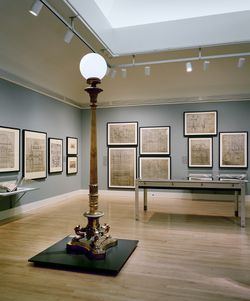
L’exposition se penche sur la période durant laquelle Montréal, cité marchande du XIXe siècle, se transforme et devient métropole du Canada. Y sont mis en lumière les éléments qui ont fait de Montréal une ville de grande influence aux plans politique, social et économique ainsi que le caractère unique de son architecture. Parmi les quelque 350 pièces regroupées, on(...)
L’exposition se penche sur la période durant laquelle Montréal, cité marchande du XIXe siècle, se transforme et devient métropole du Canada. Y sont mis en lumière les éléments qui ont fait de Montréal une ville de grande influence aux plans politique, social et économique ainsi que le caractère unique de son architecture. Parmi les quelque 350 pièces regroupées, on(...)
Localisation:
Salles principales
Salles principales
Date:
18 mars 1998 au 24 mai 1998
18 mars 1998 au 24 mai 1998
Titre:
Montréal métropole, 1880-1930
Actions:
Description:
L’exposition se penche sur la période durant laquelle Montréal, cité marchande du XIXe siècle, se transforme et devient métropole du Canada. Y sont mis en lumière les éléments qui ont fait de Montréal une ville de grande influence aux plans politique, social et économique ainsi que le caractère unique de son architecture. Parmi les quelque 350 pièces regroupées, on(...)
Montréal métropole, 1880-1930
Actions:
Description:
L’exposition se penche sur la période durant laquelle Montréal, cité marchande du XIXe siècle, se transforme et devient métropole du Canada. Y sont mis en lumière les éléments qui ont fait de Montréal une ville de grande influence aux plans politique, social et économique ainsi que le caractère unique de son architecture. Parmi les quelque 350 pièces regroupées, on(...)
Classification:
expositions
expositions
Date:
18 mars 1998 au
24 mai 1998
18 mars 1998 au
24 mai 1998
Localisation:
Salles principales
Salles principales


